
Cyberpunk Meets Modern Rustic: Home Office
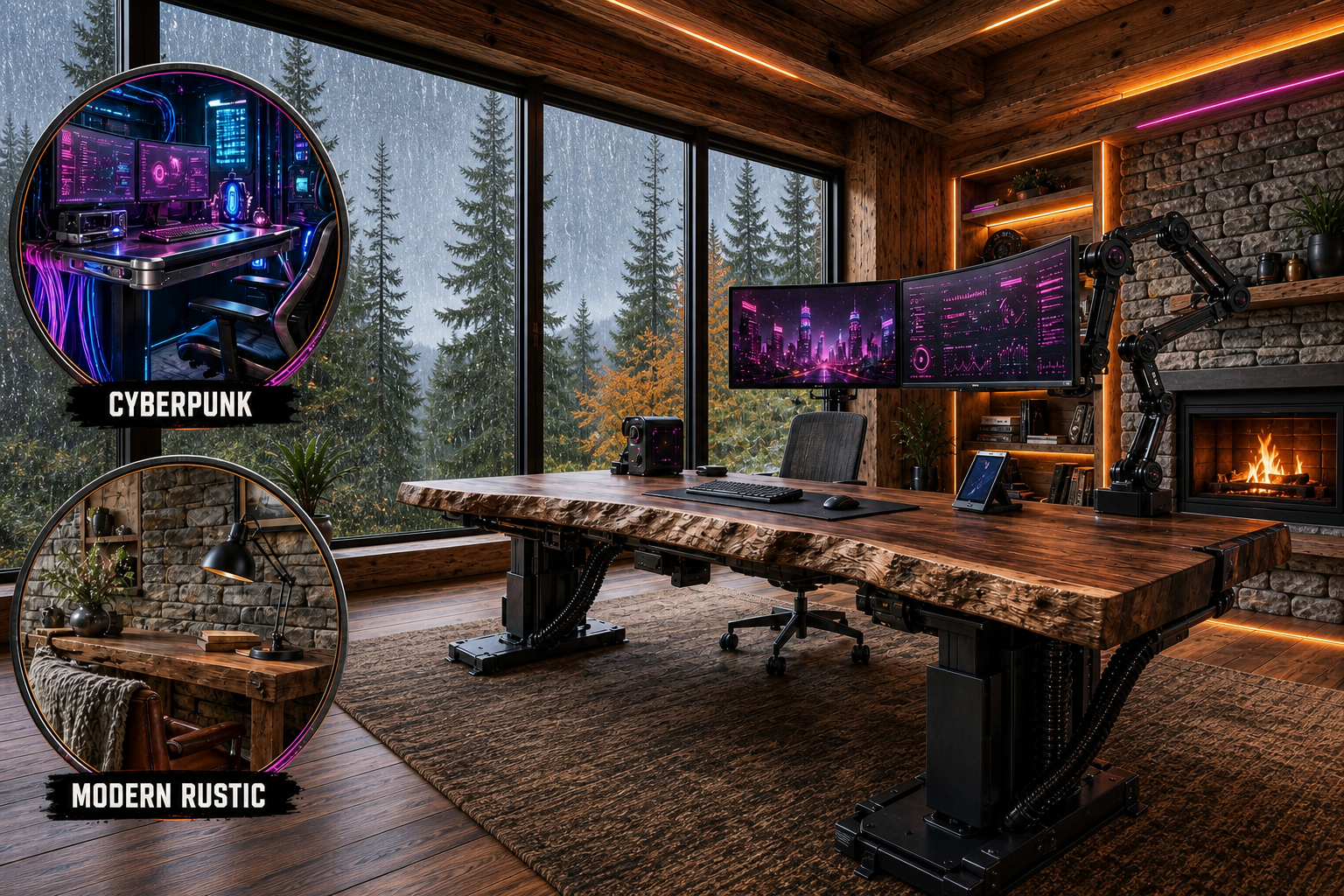
The hyper-synthetic, machine-driven aesthetic of the future clashes remarkably with the organic, hand-hewn grounding of the natural world. Cyberpunk dictates the functional hardware, while Modern Rustic provides the architectural shell, bridged beautifully by shared matte black metals and warm light.
The Cyberpunk Hardware
Cyberpunk demands unapologetic, high-performance infrastructure for your daily workflow. Instead of hiding technology behind cabinet doors, this aesthetic elevates articulated robotic monitor arms and exposed fiber-optic cable runs into deliberate focal points that command immediate visual attention in the room.
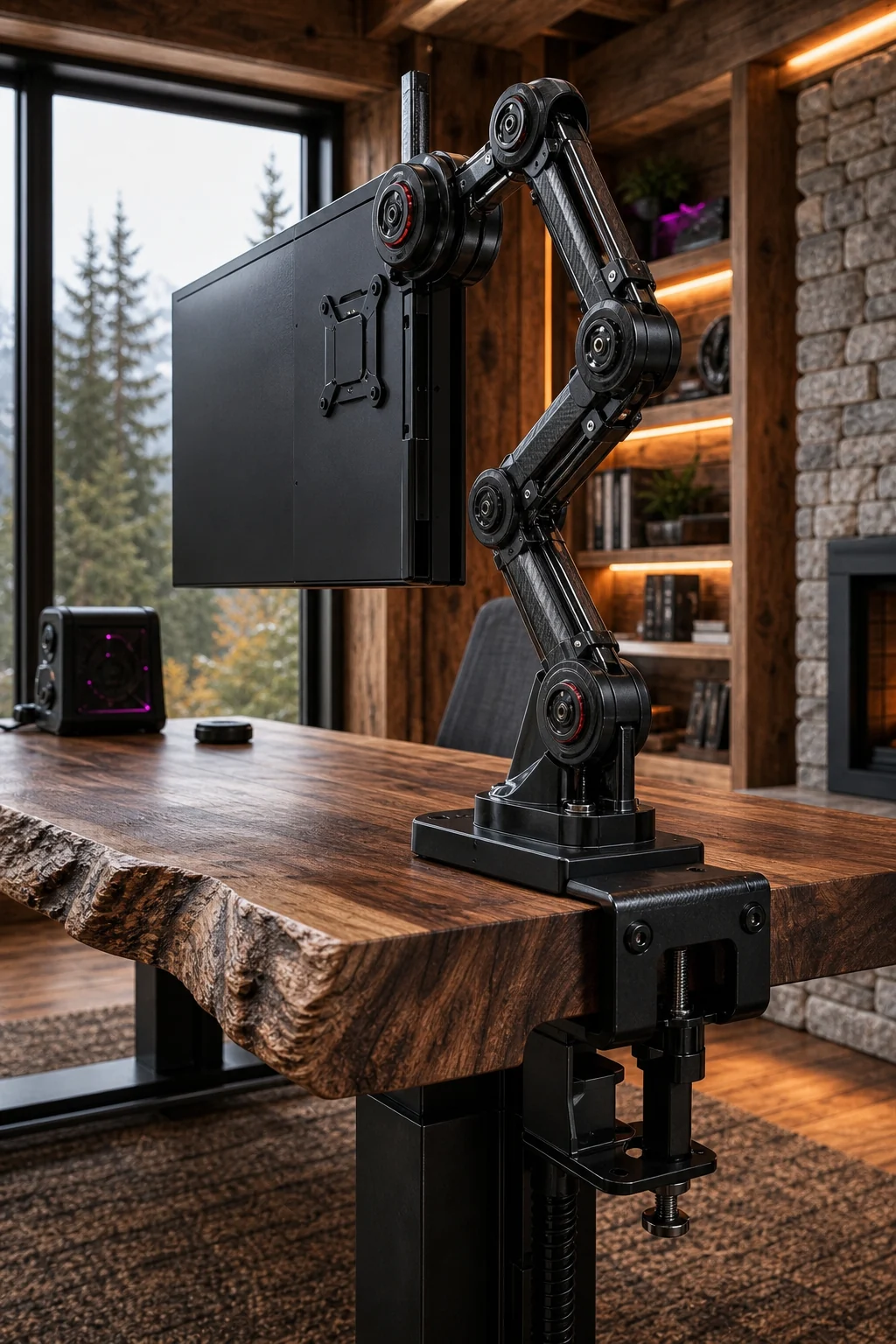
To prevent these synthetic elements from feeling sterile or cold, they must anchor directly into organic textures. The design tension thrives when futuristic hardware physically grips natural timber, creating a workspace that feels both highly advanced and deeply rooted physically.
This deliberate exposure of functional technology requires impeccable cable management. Every wire and conduit must follow strict architectural lines, transforming potential visual noise into a structured, high-tech grid that complements the surrounding organic environment perfectly without overwhelming the senses.
The Modern Rustic Shell
Modern Rustic grounds the room, providing a tactile, hand-hewn counterweight to glowing screens. Massive live-edge walnut slabs and raw Douglas fir architectural beams establish a heavy, permanent foundation that firmly anchors the floating digital interfaces in physical, tactile reality.
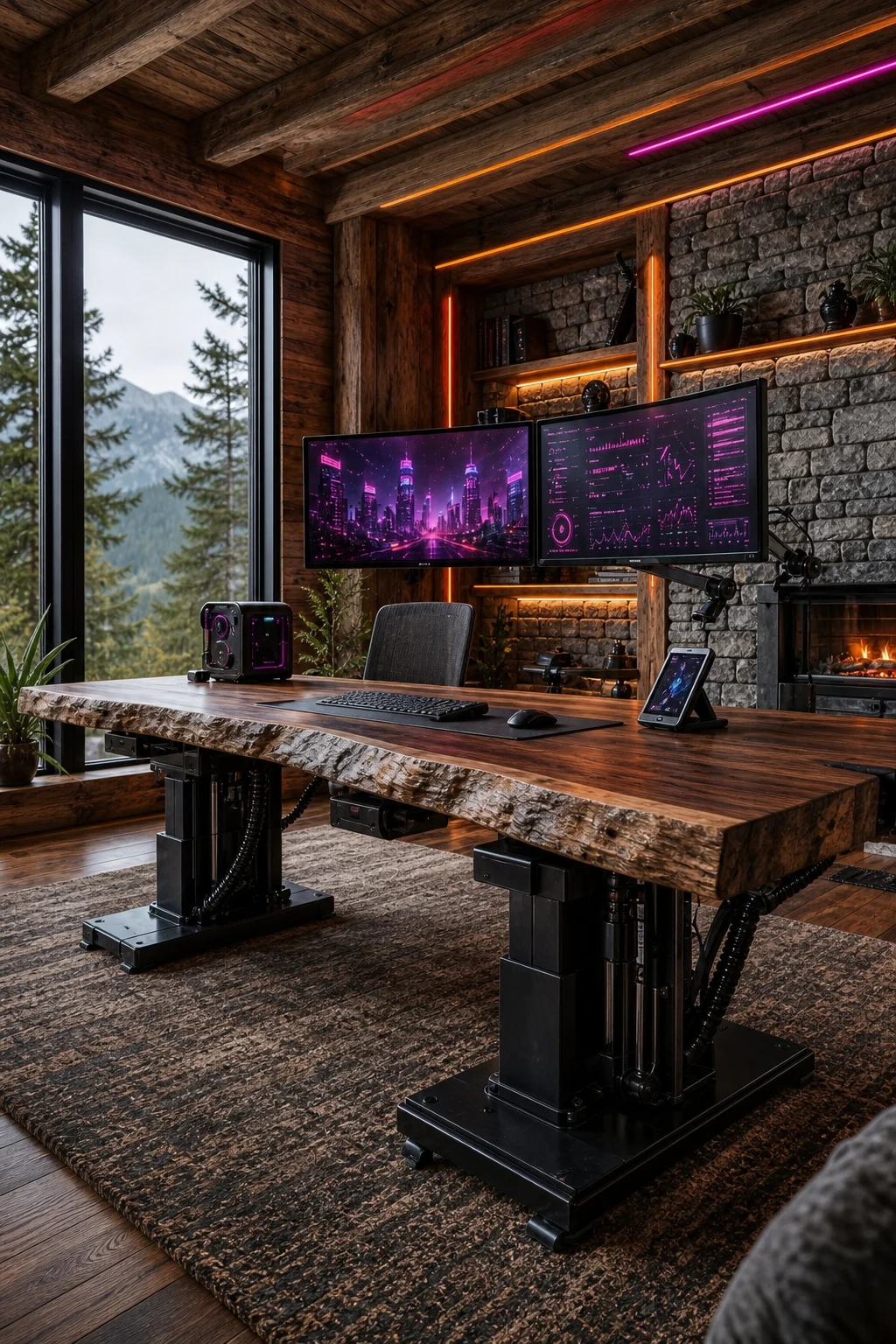
This organic shell expertly absorbs the harshness of the technology. The natural knots, deep grain, and rough stone surfaces offer necessary visual rest from the digital intensity of your workspace, creating a balanced, aspirational environment designed for sustained daily focus.
- Prioritize thick, solid timber over veneers to match the heavy visual weight of tech mounts.
- Leave natural wood edges completely raw to create a sharp contrast with machined metal bezels.
- Use stacked natural stone to absorb and beautifully diffuse harsh LED screen reflections effectively.
- Select woods with prominent, deep grain patterns to emphasize the organic grounding of the space.
Bridging the Divide
The success of this room relies entirely on shared materials that transition smoothly between the two extremes. Matte black iron hardware seamlessly shifts into anodized aluminum without jarring the eye, creating a cohesive visual language across the entire workspace.
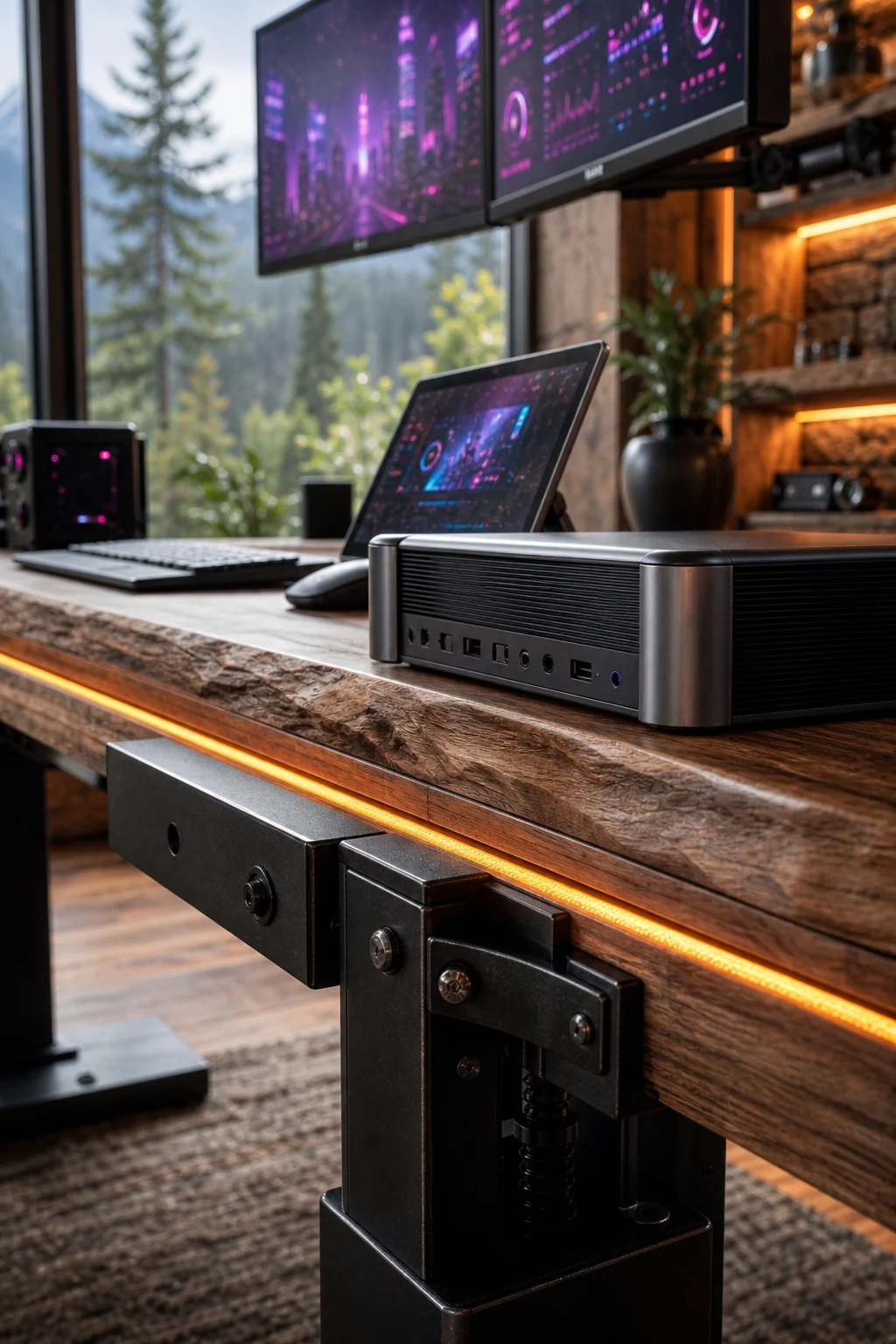
Ambient color temperature also plays a vital role in unifying the space. The visual grit of the machine age translates perfectly into the natural imperfections of the timber, proving that these seemingly opposite styles share a fundamental appreciation for texture.
When these material transitions are handled correctly, the room feels like a single, unified concept. The eye glides effortlessly from a glowing holographic interface down to a heavy iron bracket, reading both elements as equal partners in the overall design.
Build the Room
Assembling the primary workspace requires carefully balancing the visual mass of both styles. The desk must be substantial enough to support heavy multi-monitor tech setups without looking top-heavy, anchoring the room’s energy directly in the center of the floorplan.
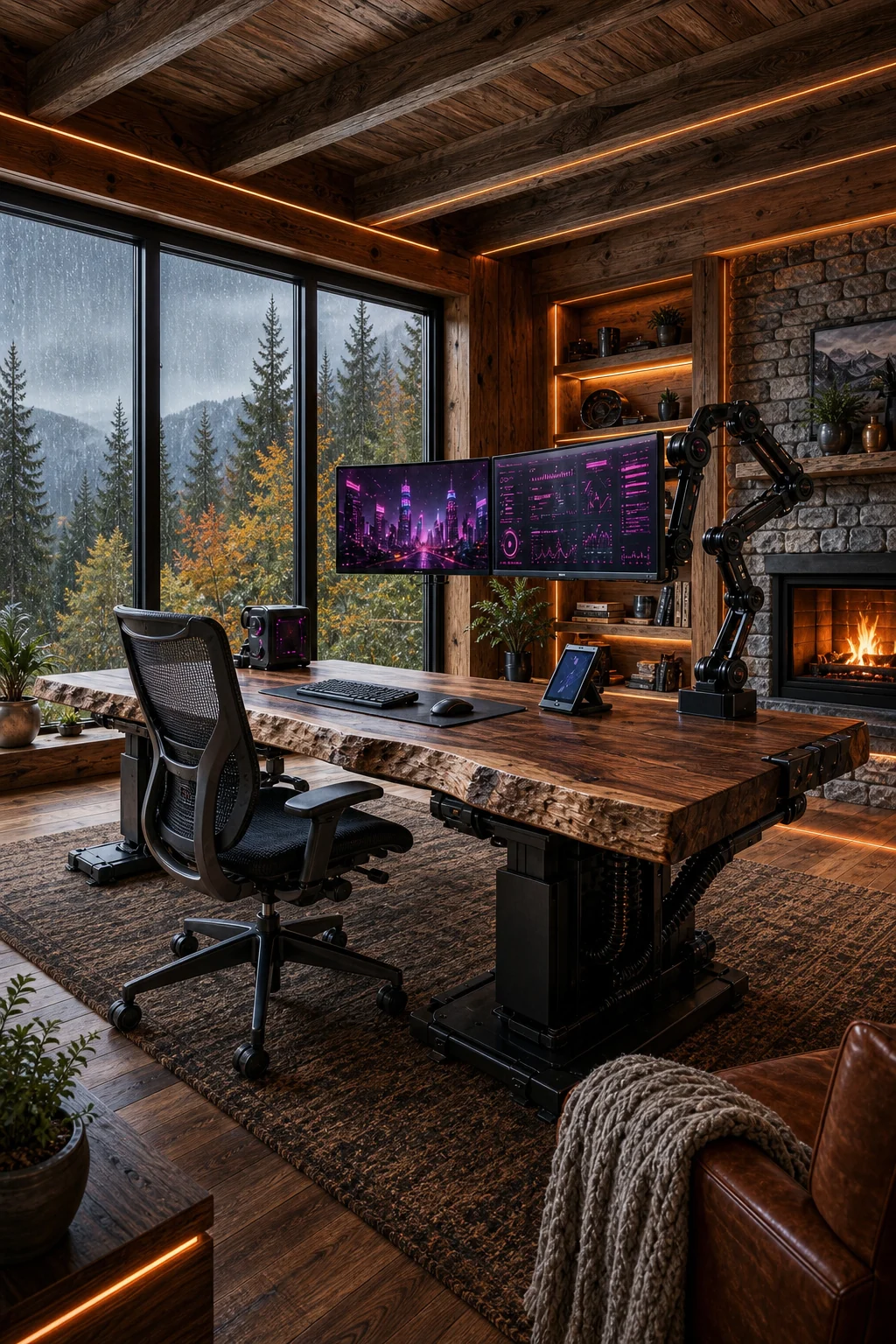
By assigning specific roles to each design layer, you prevent the aesthetics from fighting for dominance. The architecture provides the warmth, while the accessories deliver the function, creating a harmonious environment that supports intensive digital workflows seamlessly and beautifully.
| Design Layer | Cyberpunk Role | Modern Rustic Role | Bridge Decision |
|---|---|---|---|
| Architectural Shell | High-tech cable management channels and exposed fiber-optics | Raw Douglas fir architectural beams and natural stone | Matte black iron brackets and structural fittings |
| Large Furniture | Ergonomic mesh seating and articulated robotic mounts | Massive live-edge walnut slab desk foundation | Hydraulic-style heavy metal legs and supports |
| Soft Textiles | Synthetic carbon-fiber mousepads and grid textures | Woven wool throws and thick area rugs | Deep charcoal gray tones unifying the fabrics |
| Ambient Lighting | Magenta and amber LED strips embedded cleanly | Hearth fire glow and diffuse silver daylight | Diffused, indirect warm glowing illumination across surfaces |
| Desk Accents | Holographic interfaces and glowing tech accessories | Matte black iron desk lamps and tools | Industrial anodized aluminum casings and shared metals |
This layered approach guarantees that neither style overwhelms the other. By strictly defining which aesthetic controls the architecture and which dictates the technology, you create a highly functional workspace that never loses its cozy, inviting cabin atmosphere during long hours.
Light and Architecture
Lighting serves as the ultimate unifier in this hybrid space. Embedded amber LED lighting mimics the inviting glow of a hearth fire against the raw wood paneling, merging futuristic technology with primal comfort effortlessly and elegantly.
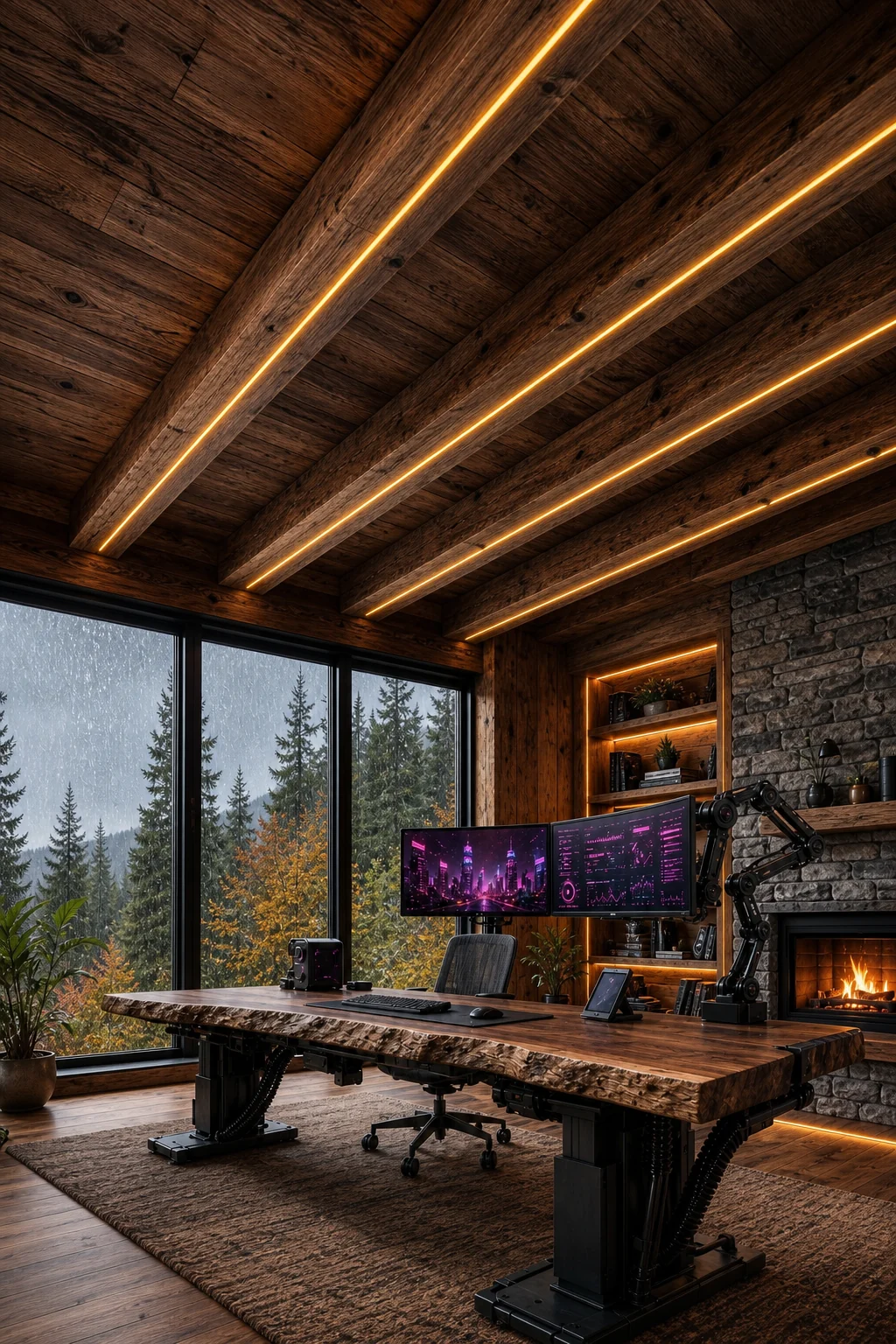
Rather than gloomy cinematic darkness, diffuse silver daylight from large windows fills the room. This ensures the space remains a highly functional, aspirational home office throughout the day, preventing the dark materials from feeling oppressive, heavy, or visually exhausting.
- Embed LED strips directly into wood channels to achieve a seamless, integrated architectural look.
- Match your digital screen wallpapers to the ambient room lighting temperatures for total visual cohesion.
- Position monitors to avoid glare while maximizing the diffuse silver daylight from nearby windows.
- Rely on natural daylight to keep the dark carbon fiber and iron materials feeling balanced.
Style the Details
Secondary surfaces require careful curation to maintain the narrative. A nearby console or floating shelf is the perfect place to blend organic textures with precise, machined accessories, extending the design logic outward from the primary workspace into the surrounding room.
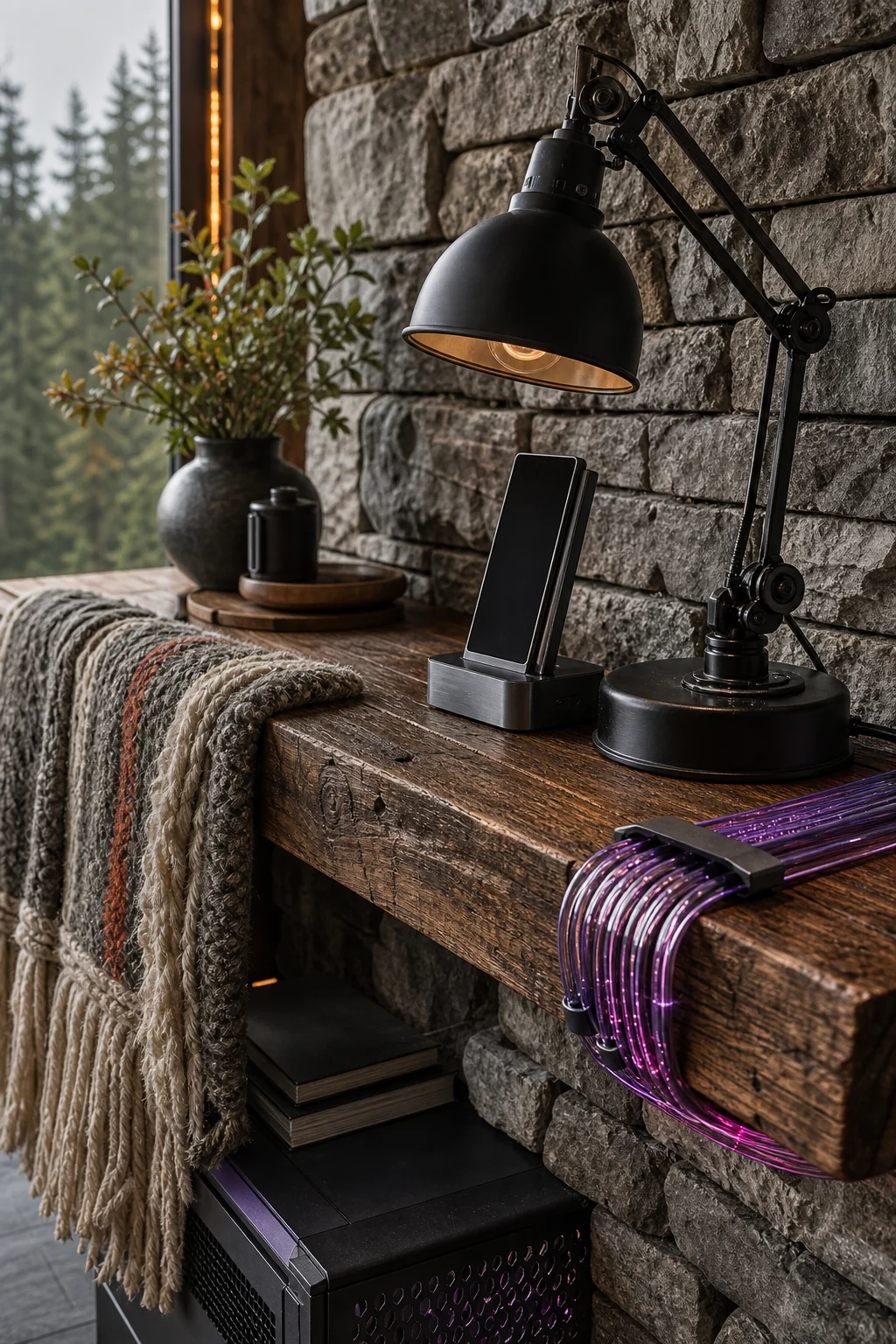
Avoid cluttering these surfaces with generic office supplies. Every object should reinforce either the hyper-synthetic future or the hand-hewn grounding of the natural world, ensuring that even the smallest details contribute to the broader aesthetic resolution of the space.
- Look for matte carbon fiber desk mats to ground your high-performance peripherals visually.
- Source industrial anodized aluminum charging stands to display modern mobile devices elegantly and securely.
- Select heavy iron bookends to support reference materials on raw timber floating shelves perfectly.
- Install woven wool acoustic panels to dampen room echo while adding crucial organic texture.
Adapt It
This aesthetic easily translates beyond the main desk. Consider the threshold or entryway to the office, where the transition from the rest of your home begins, introducing the hybrid concept before you even reach the primary workspace or sit down.
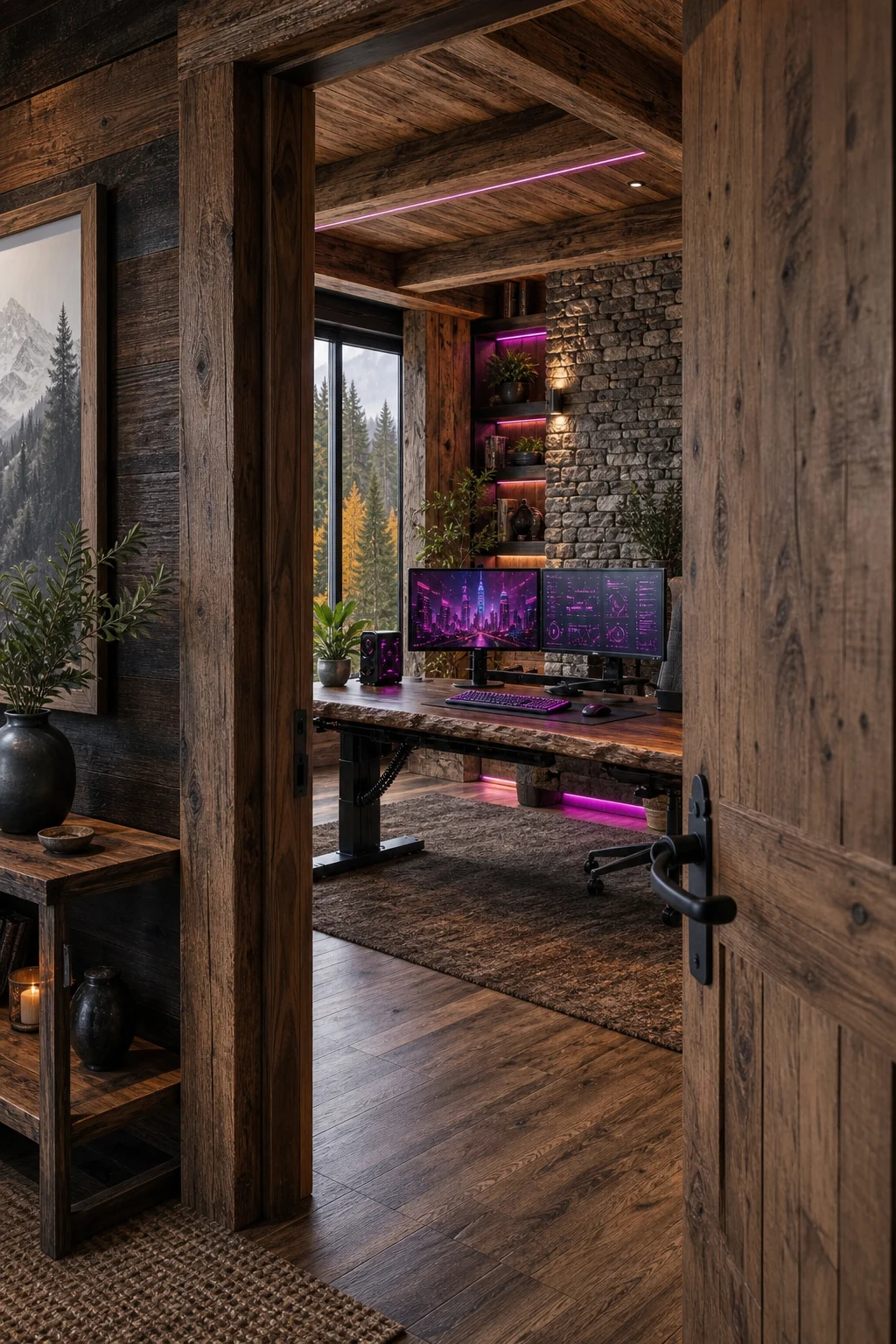
You can apply this logic to a reading nook or a secondary lounge area within the room. The key is maintaining the exact same ratio of organic mass to technological precision across every distinct zone to ensure total visual harmony.
- Install matte black smart-home control panels directly onto rough, natural stacked stone walls.
- Use heavy timber shelving to display modern server gear or complex network infrastructure proudly.
- Frame glowing digital art displays in thick, reclaimed Douglas fir lumber for instant contrast.
- Extend the matte black iron hardware to door hinges and light switches for consistency.
Avoid the Costume
The most common failure mode is creating a split personality, where one half of the room looks like a futuristic spaceship and the other resembles a traditional log cabin. True integration requires constant, deliberate overlap between the two distinct styles.
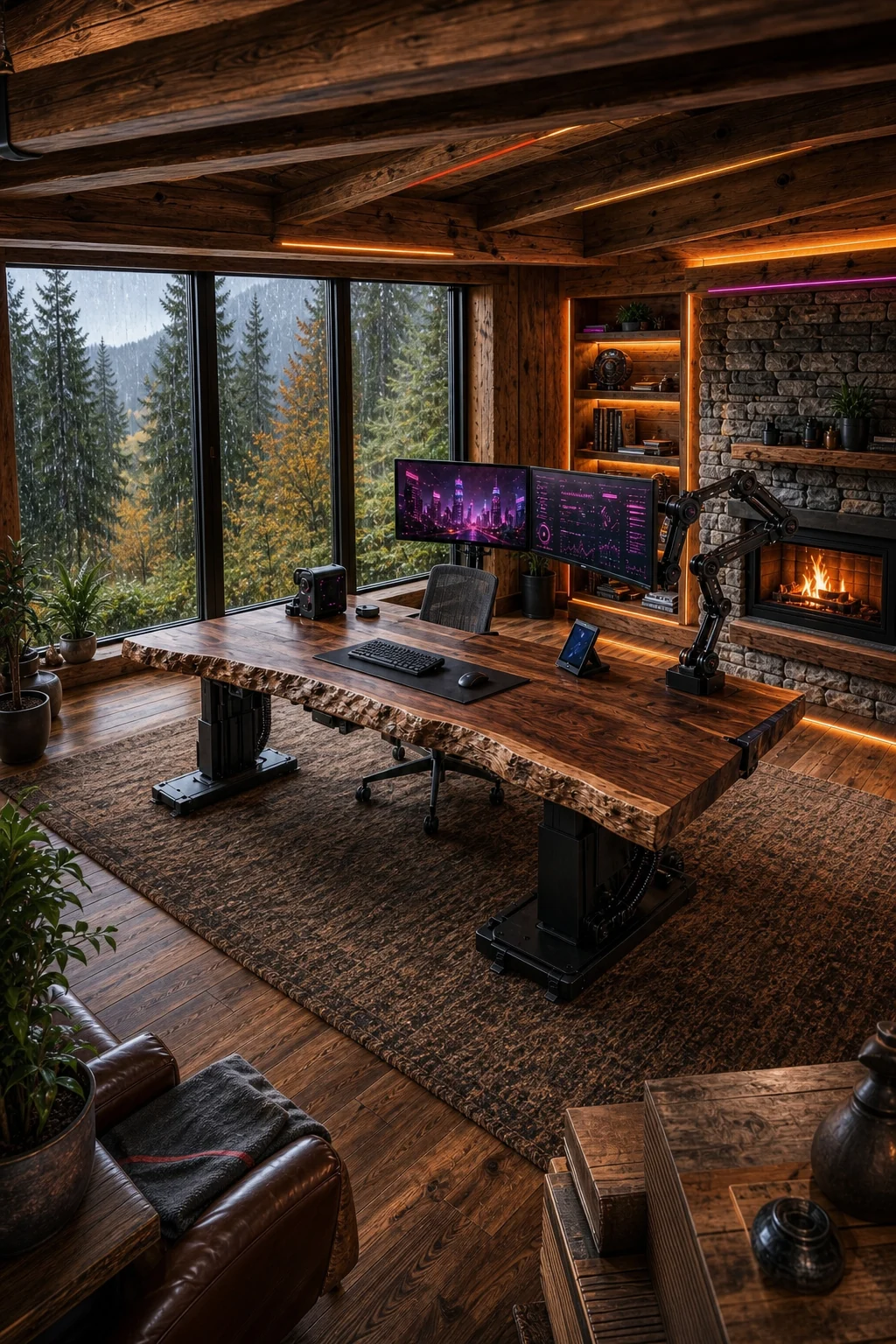
Complete integration means neither style can exist without the other. The technology relies entirely on the wood for warmth, and the rustic shell relies on the high-performance tech to provide modern purpose and functional daily utility for your workflow.
When executed with discipline, this resolved contradiction creates a space that is both technologically advanced and deeply comforting. The resulting home office proves that you never have to sacrifice organic warmth to accommodate a heavy, multi-monitor tech setup.