
Scandinavian Meets English Country House: Library
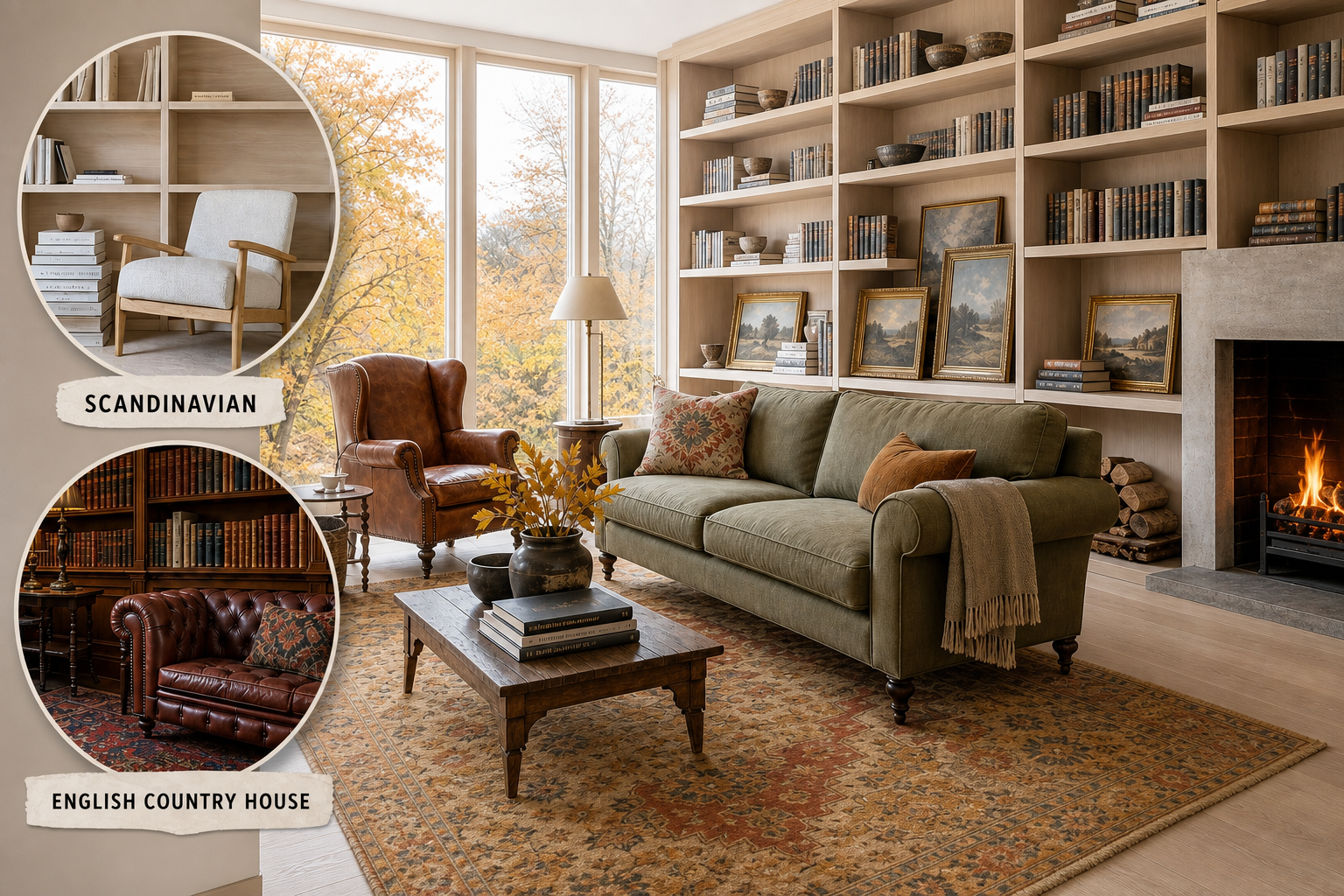
The austere restraint of Scandinavian modernism often clashes with the heavily layered, pattern-rich accumulation of a traditional English Country House. We resolve this contradiction by using clean-lined pale oak architecture as a breathable vessel for heritage textiles and antique silhouettes.
The Scandinavian Foundation
Scandinavian design excels at controlling negative space and maximizing natural light. By establishing a minimalist architectural shell, we create a quiet, breathable foundation that prevents traditional decor from feeling heavy or cluttered, ensuring the room remains airy and structurally disciplined.
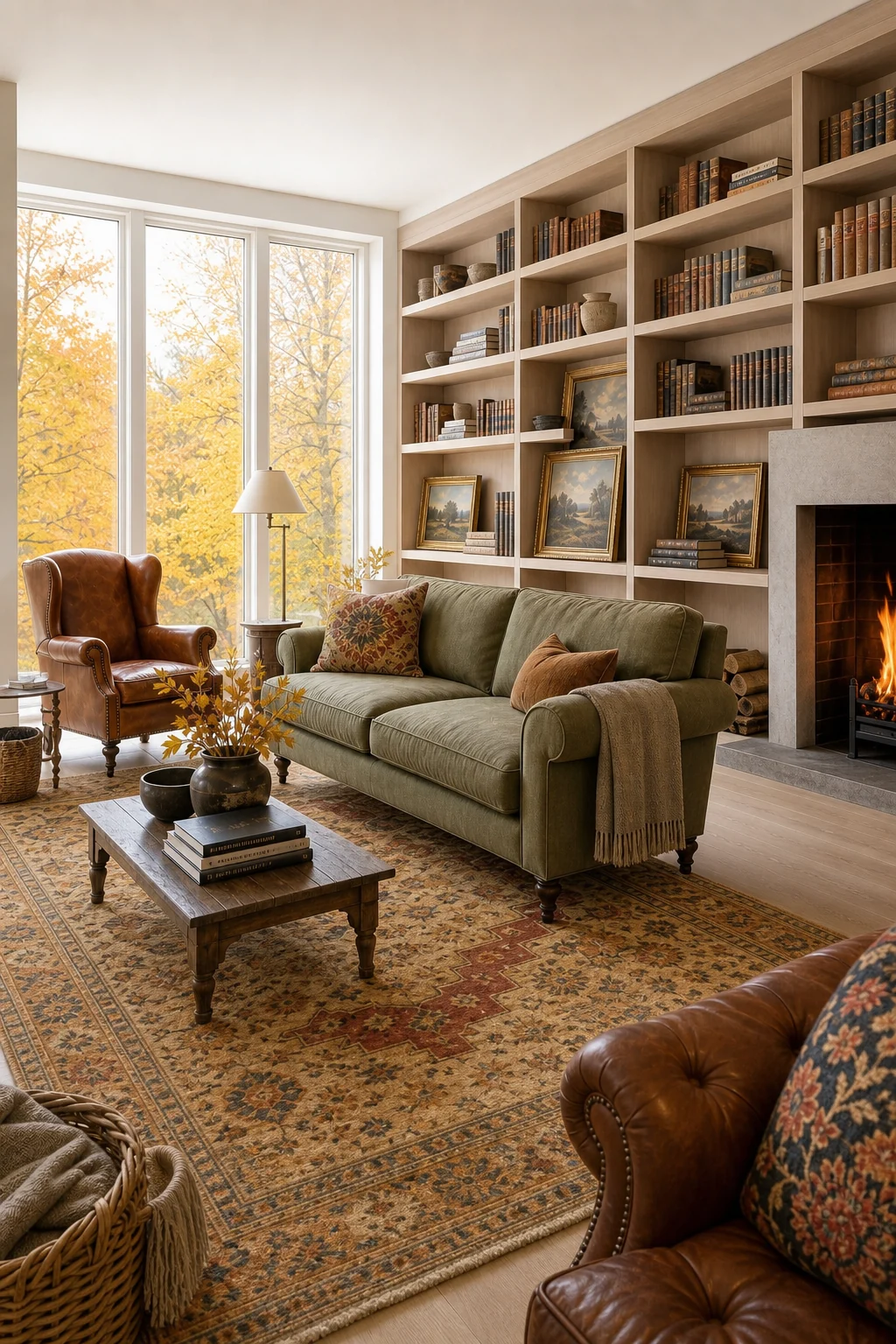
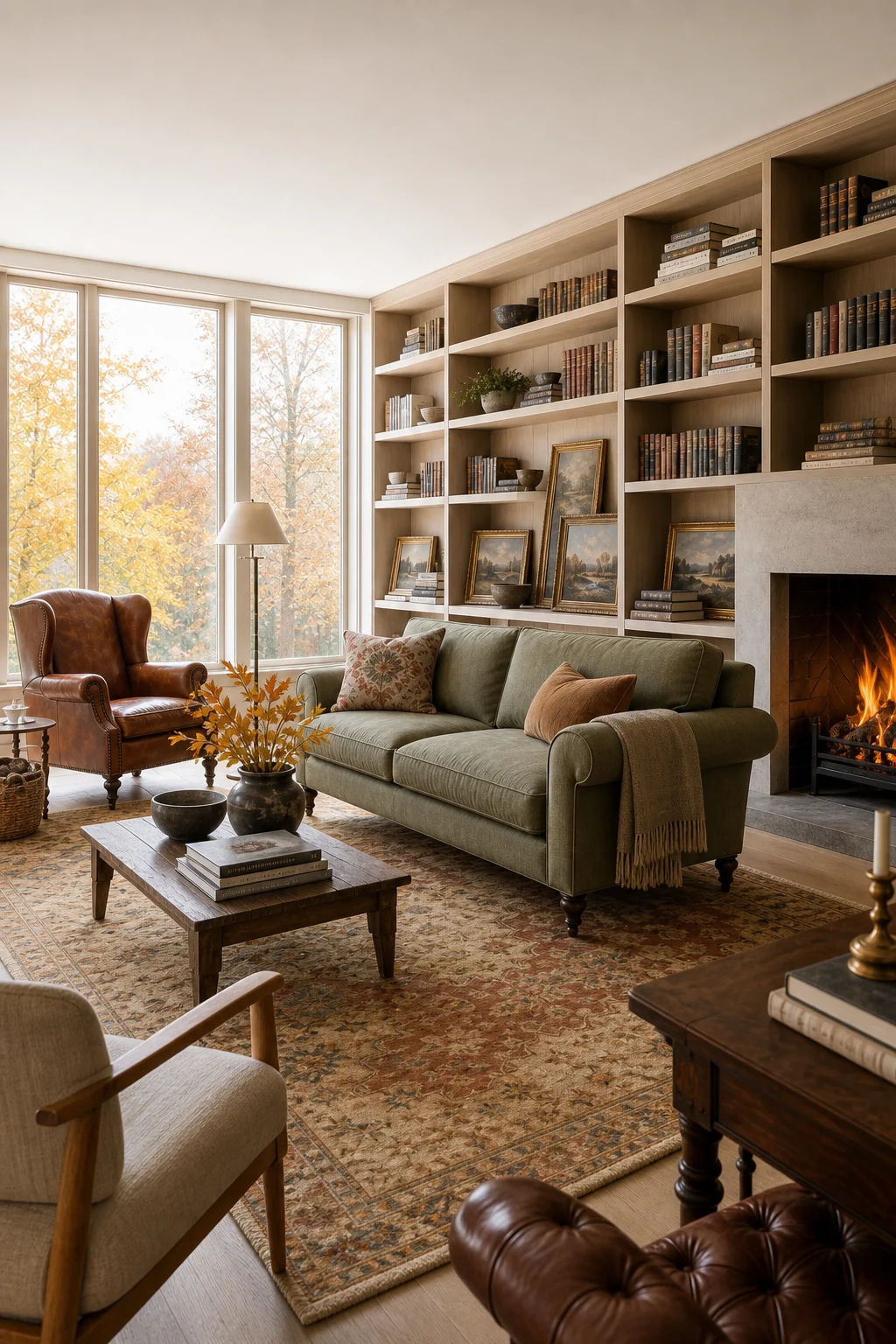
Notice how the pale white-oiled oak built-ins provide essential structural rigor. This crisp, unadorned backdrop allows the room to hold centuries of history without succumbing to visual clutter, keeping the focus entirely on the beautiful interplay between light and natural wood grain.
English Country House Warmth
Against a crisp modern backdrop, the rich history of an English Country House finds room to breathe. Heritage silhouettes and worn patina provide the necessary warmth to soften modern edges, transforming what could be a sterile gallery into a warm, inviting residential sanctuary.
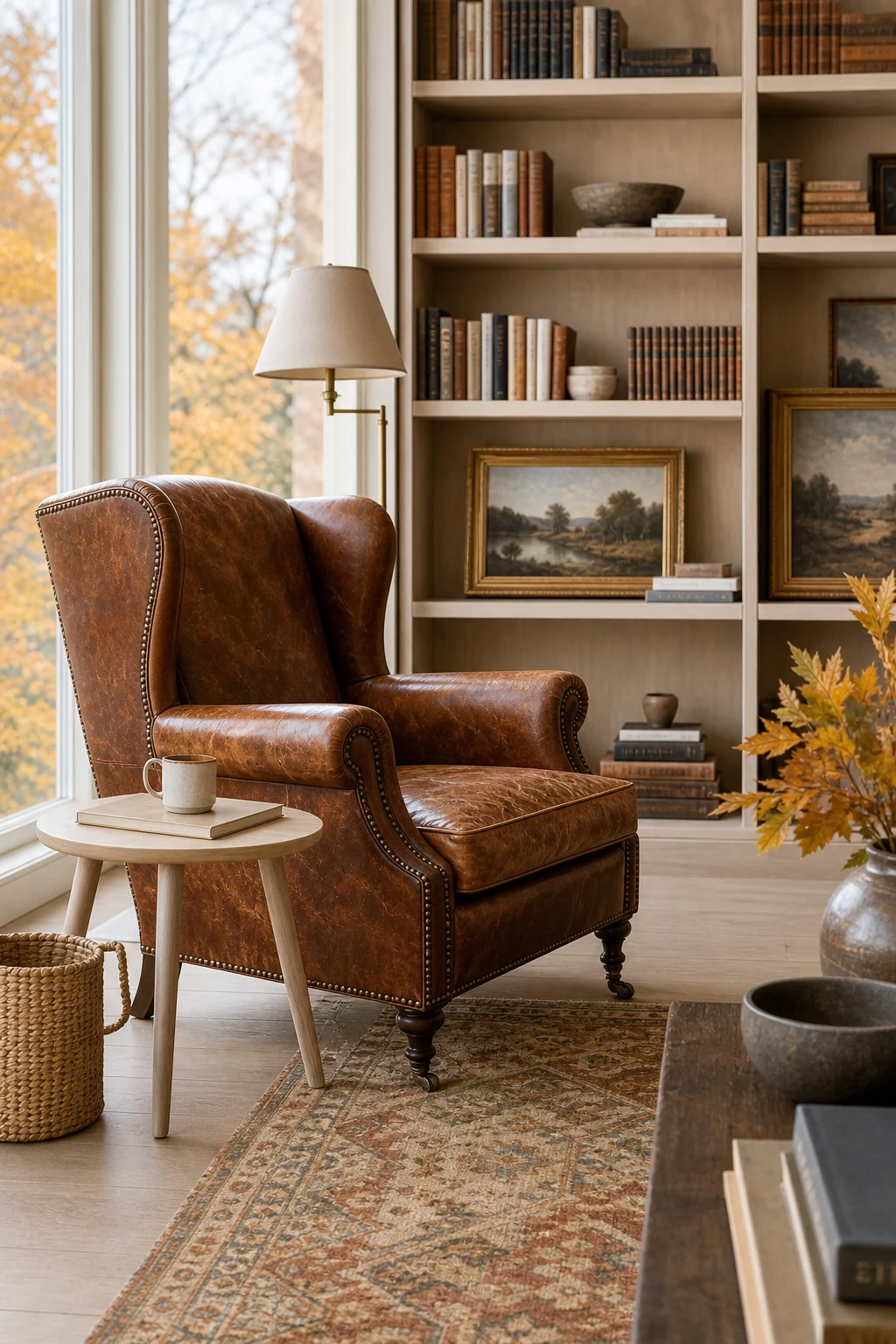
The introduction of a worn saddle leather wingback chair immediately anchors the corner with historic gravity. This tactile friction between sleek ash joinery and cracked, aged hide prevents the space from feeling unapproachable, proving that antique forms belong in minimalist rooms.
- Start your layering process with a single, highly textured heritage seating silhouette to anchor the room.
- Prioritize cracked leather, faded wool, and deeply patinated finishes over highly polished or newly manufactured woods.
- Ensure every traditional piece sits within generous negative space to emphasize its unique sculptural qualities.
- Evaluate the balance by temporarily removing antiques to see if the room suddenly feels uncomfortably cold.
Bridging the Divide
Successful integration requires deliberate material transitions between the two distinct eras. We unite the starkness of modernism with historic accumulation through a shared autumnal palette, allowing color and texture to act as the diplomatic envoys between two contrasting design philosophies.
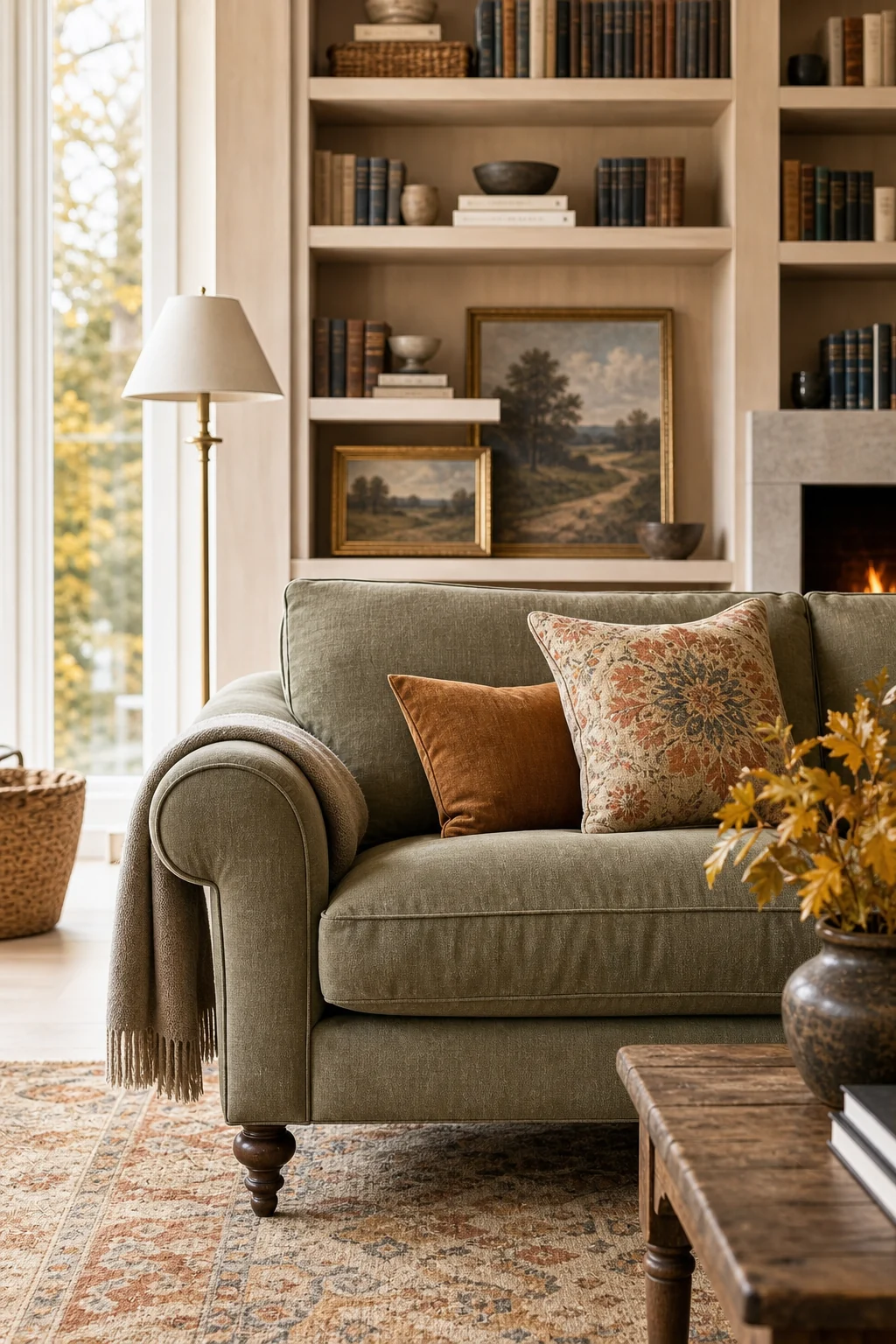
By stripping heavy floral patterns from traditional upholstery, the furniture speaks a much cleaner visual language. Upholstering a classic rolled-arm frame in restrained, unpatterned linen bridges the two eras perfectly, merging a recognizable historic shape with a distinctly modern tactile restraint.
- Select faded bracken green to bring the muted autumn landscape directly into the seating arrangement.
- Use pale mustard yellow in small doses to warm the cooler tones of the crisp white walls.
- Rely on chalk white as the ultimate equalizer to blend traditional trim with modern flat surfaces.
- Incorporate worn leather accents to bridge the gap between soft linen upholstery and hard oak shelving.
Assembling the Seating Area
A beautifully balanced library requires comfortable, layered seating that actively avoids looking like a stuffy period set. The furniture arrangement must facilitate intimate conversation while strictly respecting the architectural voids, ensuring the room remains highly functional without feeling overcrowded by antiques.
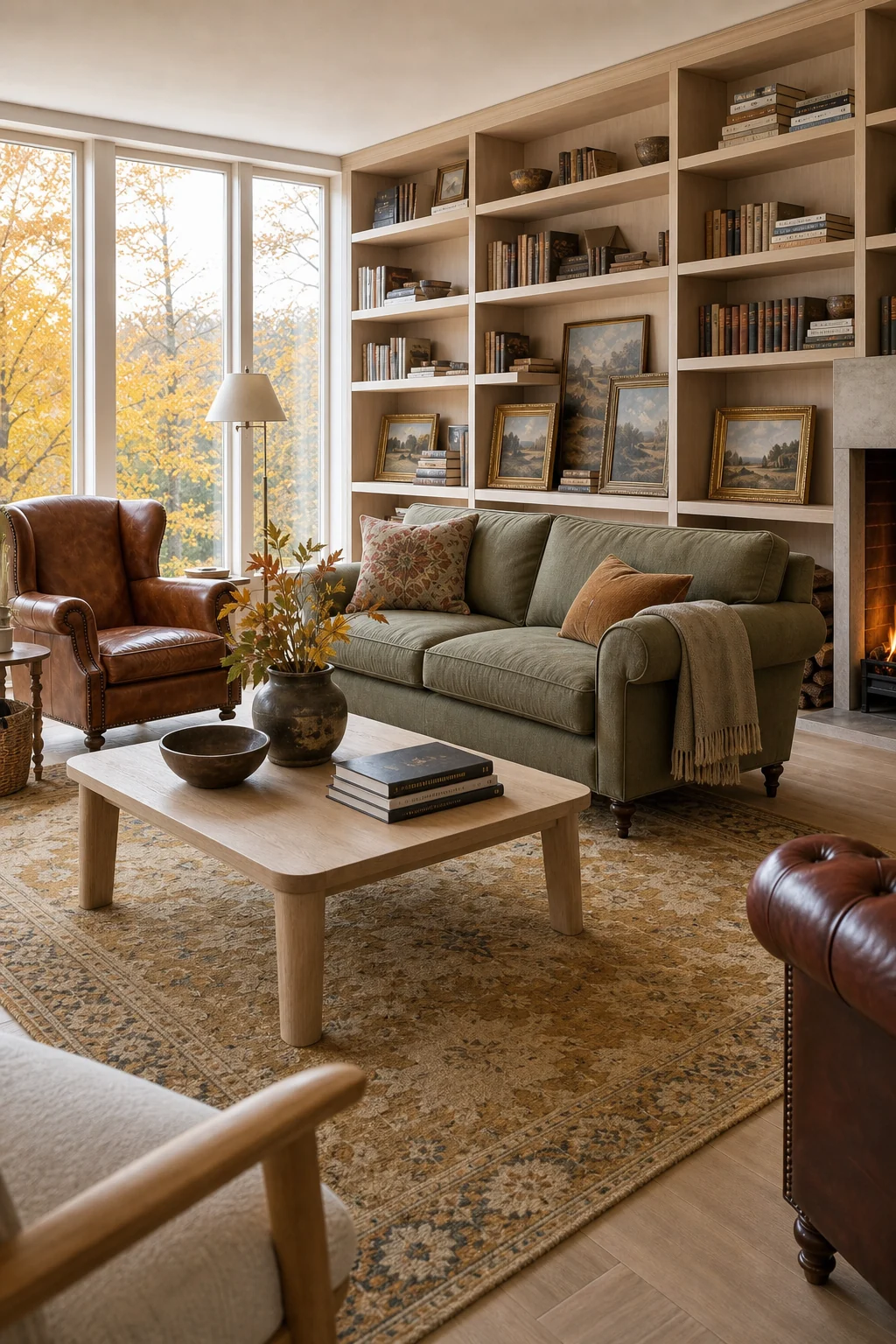
Grounding the arrangement with a faded Oushak rug introduces muted mustard and terracotta tones to the floor plan. This historic textile anchors the visually light modern coffee table sitting above it, proving that heavy patterns can yield to modern architecture successfully.
| Design Layer | Scandinavian Role | English Country House Role | The Bridge |
|---|---|---|---|
| Shell | Chalk-white walls and pale oak built-ins | Yields entirely to the crisp modern architecture | Clean, unadorned negative space |
| Furniture | Minimalist bentwood and sleek modern tables | Howard-style rolled-arm sofa and wingback chairs | Mixing heavy heritage silhouettes with visually light modern frames |
| Textiles | Unpatterned, restrained linen in muted tones | Faded Oushak rugs and worn saddle leather | Solid autumnal tones applied to traditional upholstery |
| Lighting | Maximized natural daylight through bare windows | Warm ambient table lamps for cozy evenings | Simple fabric shades on clean brass bases |
| Accents | Matte ceramics and deliberate negative space | Antique oil landscapes and stacked vintage books | Leaning traditional art casually on modern shelves |
Illuminating the Architecture
Generous natural daylight is the ultimate equalizer in this hybrid space. Expansive, unadorned windows wash the entire room in cool light, highlighting the matte wood grain of the sleek modern shelves and the glossy varnishes of the antique oil paints equally.
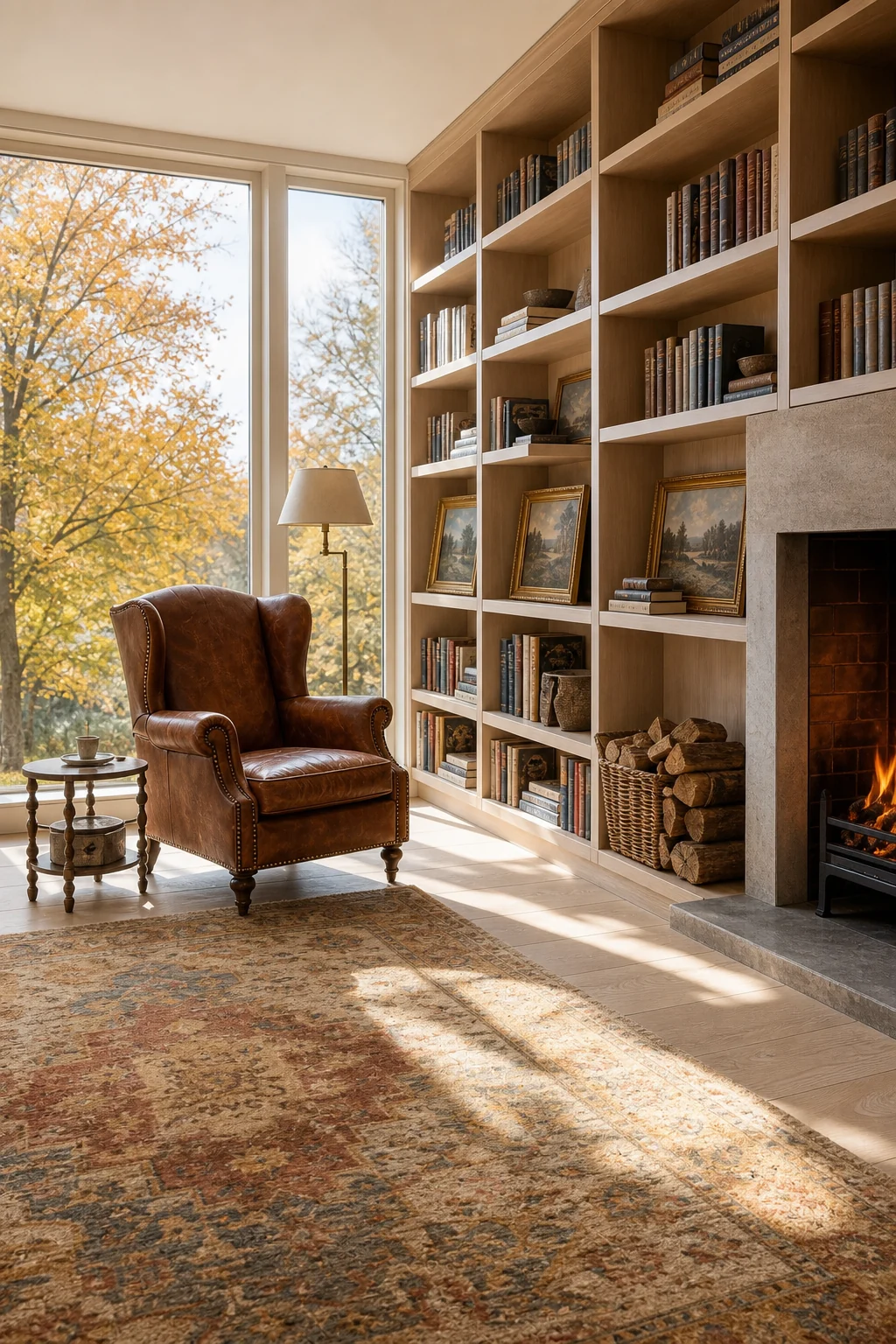
As the afternoon sun hits the faded Persian rug, the tension between the crisp chalk-white walls and the historic dyes becomes the focal point. Lighting fixtures must straddle both worlds, offering warm ambient glow without introducing overly ornate detailing.
Curating the Shelves
Shelf styling reveals the true balance of this specific hybrid aesthetic. Instead of packing shelves tightly with endless volumes, treat antique books and gilt-framed landscapes as isolated sculptural objects within the beautifully crafted pale oak voids to maintain essential visual breathability.
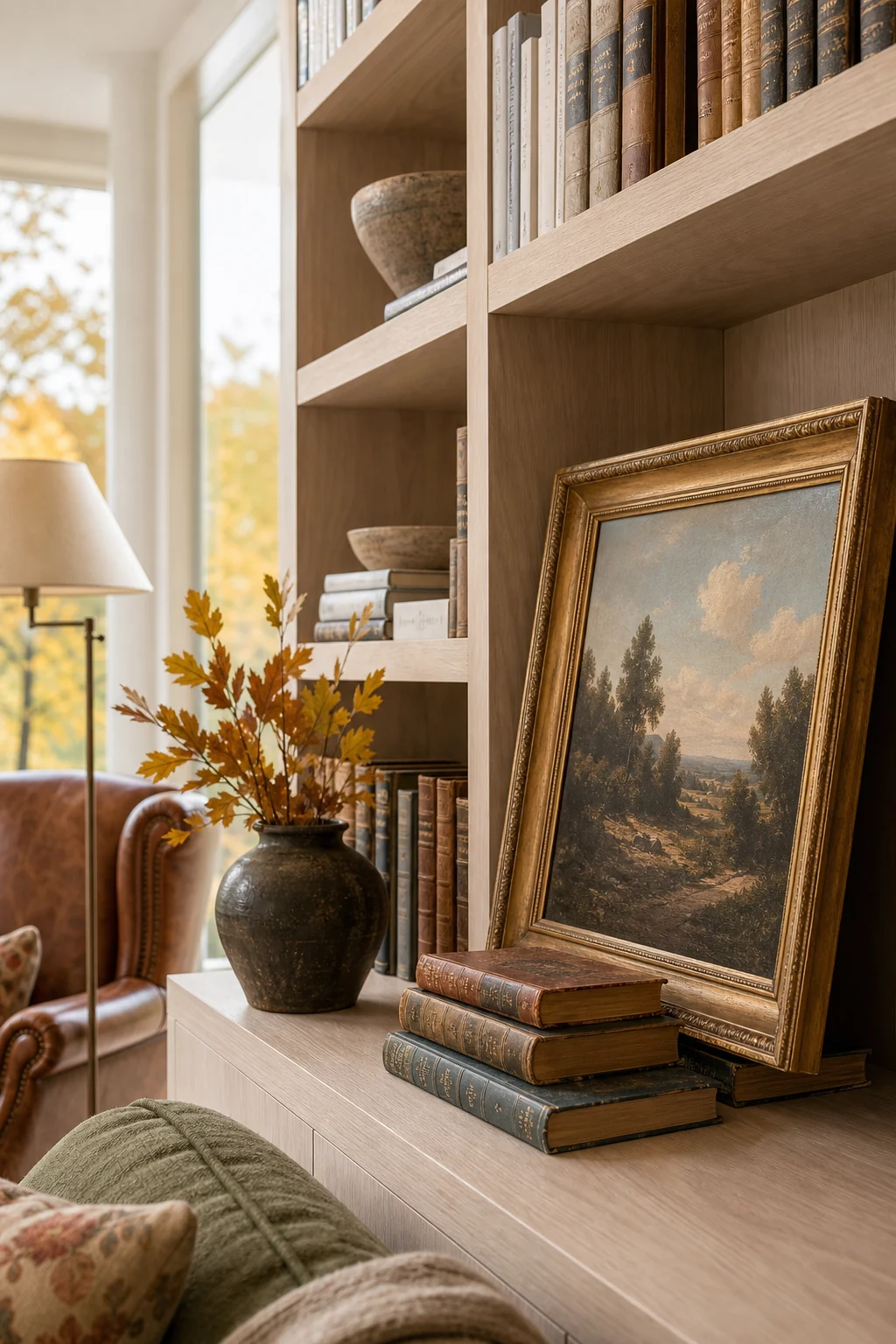
Deliberately casual placement prevents the heritage items from feeling overly stuffy or museum-like. Leaning antique oil paintings against the wooden backboard introduces a relaxed, distinctly modern attitude to centuries-old subjects, perfectly capturing the resolved contradiction at the heart of the room.
- Source unpatterned green linen sofas to provide comfortable, visually quiet seating that respects the minimalist architectural shell.
- Hunt for faded Oushak rugs in muted mustard and terracotta tones to anchor the wide-plank wood floors.
- Collect antique gilt-framed landscapes specifically to lean casually against modern surfaces rather than hanging them formally.
- Mix matte ceramic vessels with stacked vintage books to balance the glossy finishes of the heritage items.
Beyond the Main Library
This foundational logic translates easily to transitional spaces throughout the rest of the home. A hallway or a small reading nook can capture the exact same aesthetic tension using just a single antique chair, a vintage rug, and the appropriate minimalist wall treatment.
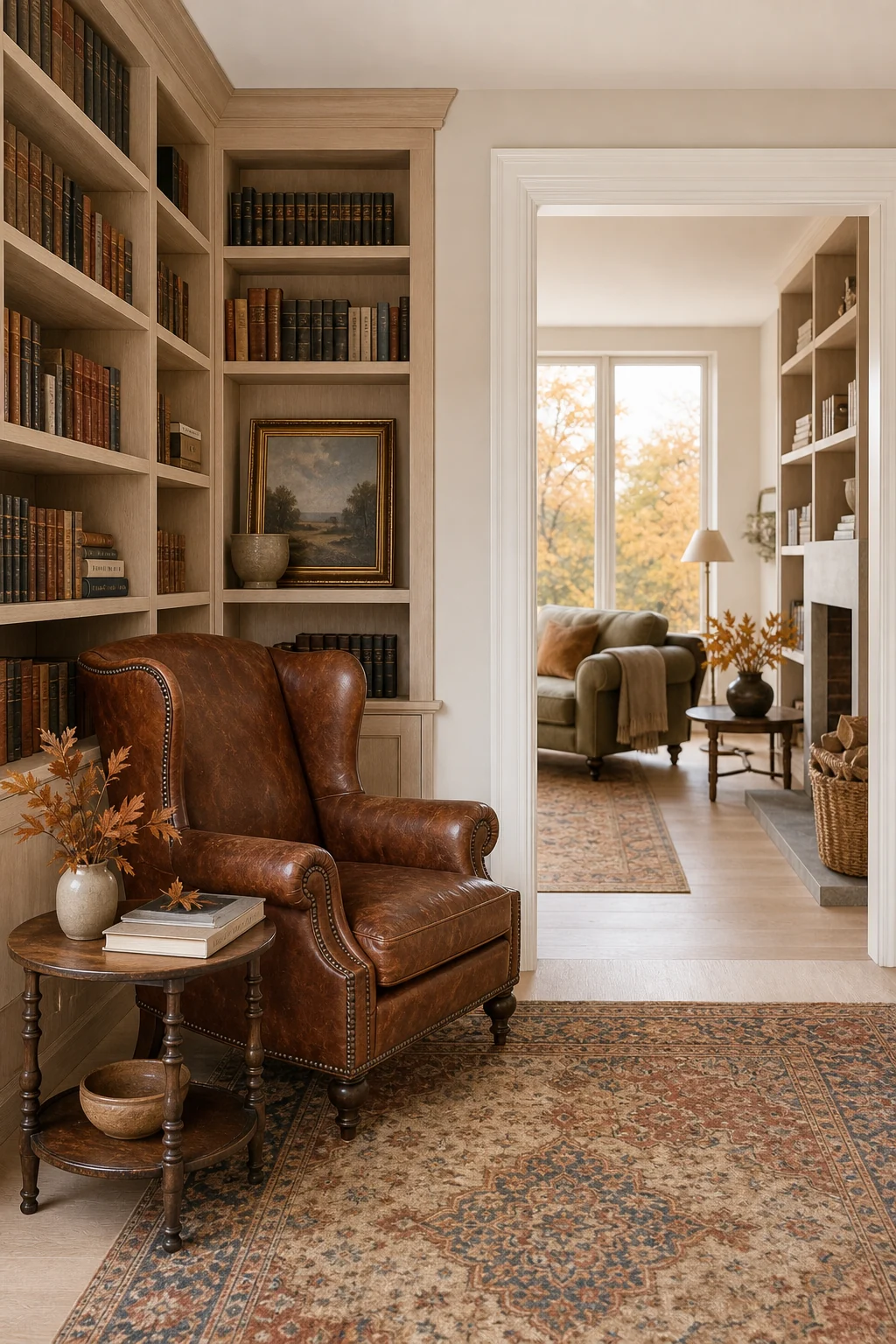
Focus your attention on the flooring and wall finishes before adding furniture. Once the crisp, minimalist envelope is firmly established, a single piece of heritage furniture instantly defines the zone without requiring a massive collection of expensive historic artifacts.
Maintaining the Balance
The greatest risk in this hybrid is creating a split personality where two styles fight for dominance. The room must feel like a single, coherent thought rather than a compromised negotiation between a modern architect and a traditional decorator.
If the space feels like a museum, you have accumulated too much heritage. If it feels sterile, the modernism has taken over completely. Trust the shared autumnal palette to hold the elements together, ensuring a perfectly resolved, incredibly inviting autumn sanctuary.
- Avoid heavy floral drapery that blocks natural light and disrupts the clean architectural lines of the windows.
- Never mix dark mahogany shelves with modern seating, as this reverses the crucial balance of the room.
- Keep upholstery patterns incredibly minimal to prevent visual clutter from overwhelming the quiet, breathable negative space.
- Group vintage books strictly by color to create visual calm within the highly structured oak shelving units.