
Antique Meets Korean Minimal: Reading Nook
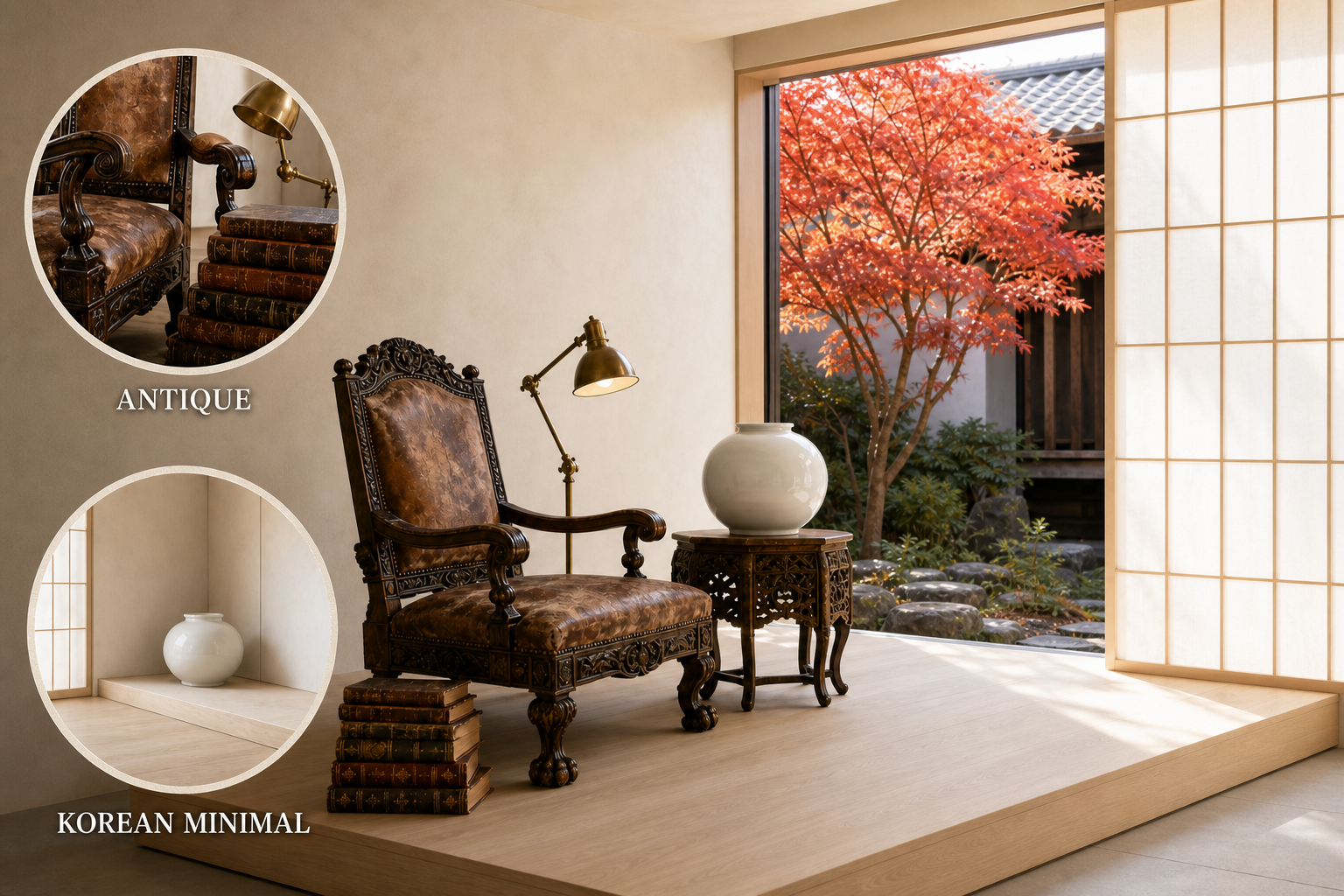
Heavy, ornate antique objects naturally clash with the austere restraint of modern korean minimal interiors. You can resolve this tension by designing a pale, void-centric architectural shell that treats heavily patinated heritage pieces as isolated, sculptural focal points.
Style A language
Antique furniture demands attention through intricate carvings, heavy profiles, and dark walnut tones. These ornate heritage pieces carry centuries of visual weight, constantly threatening to overpower a quiet room if left unchecked.
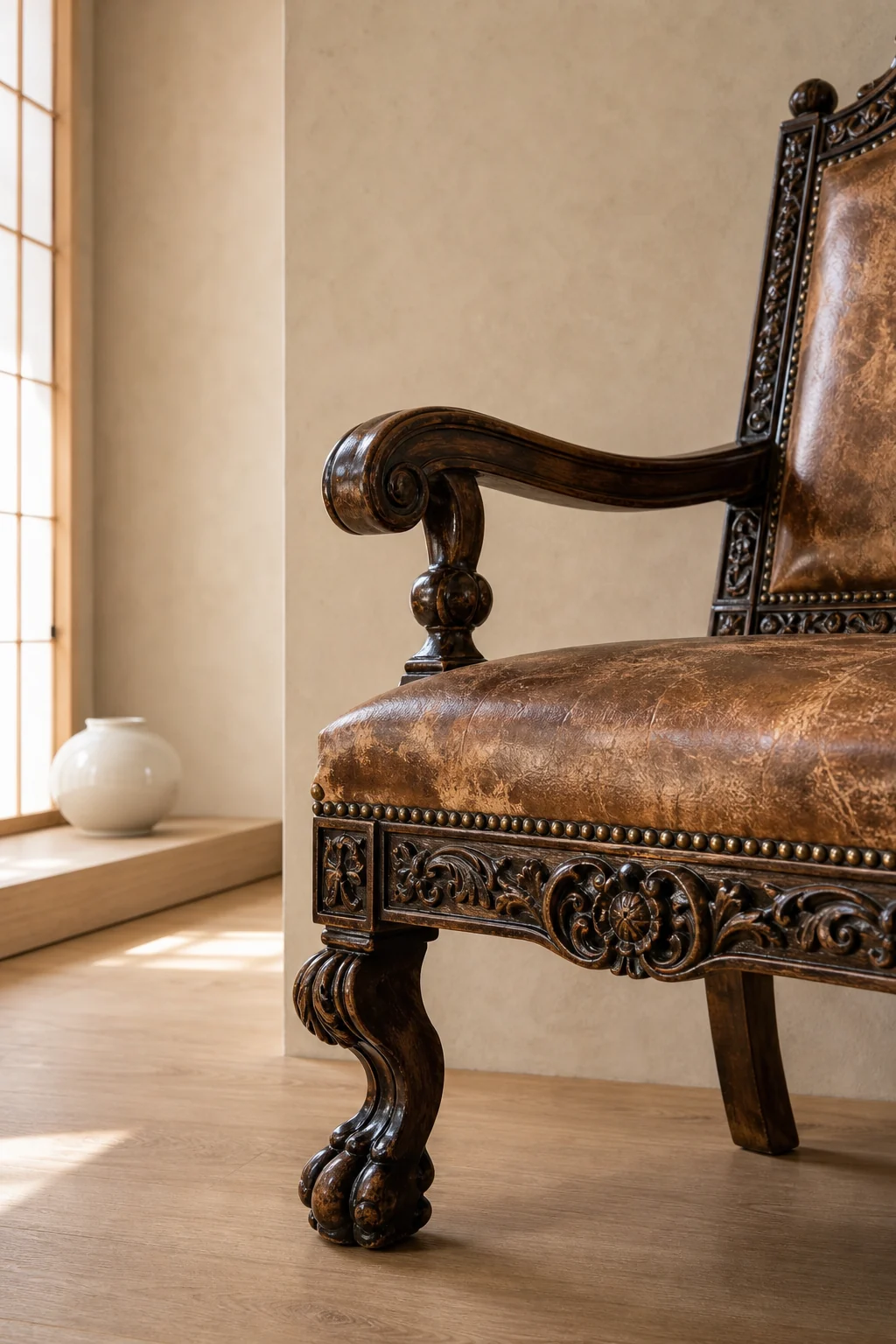
To appreciate the craftsmanship of a heritage armchair, you must strip away all competing traditional elements. Forcing the eye to trace every worn groove requires an absolutely stark background that refuses to compete for your daily visual attention.
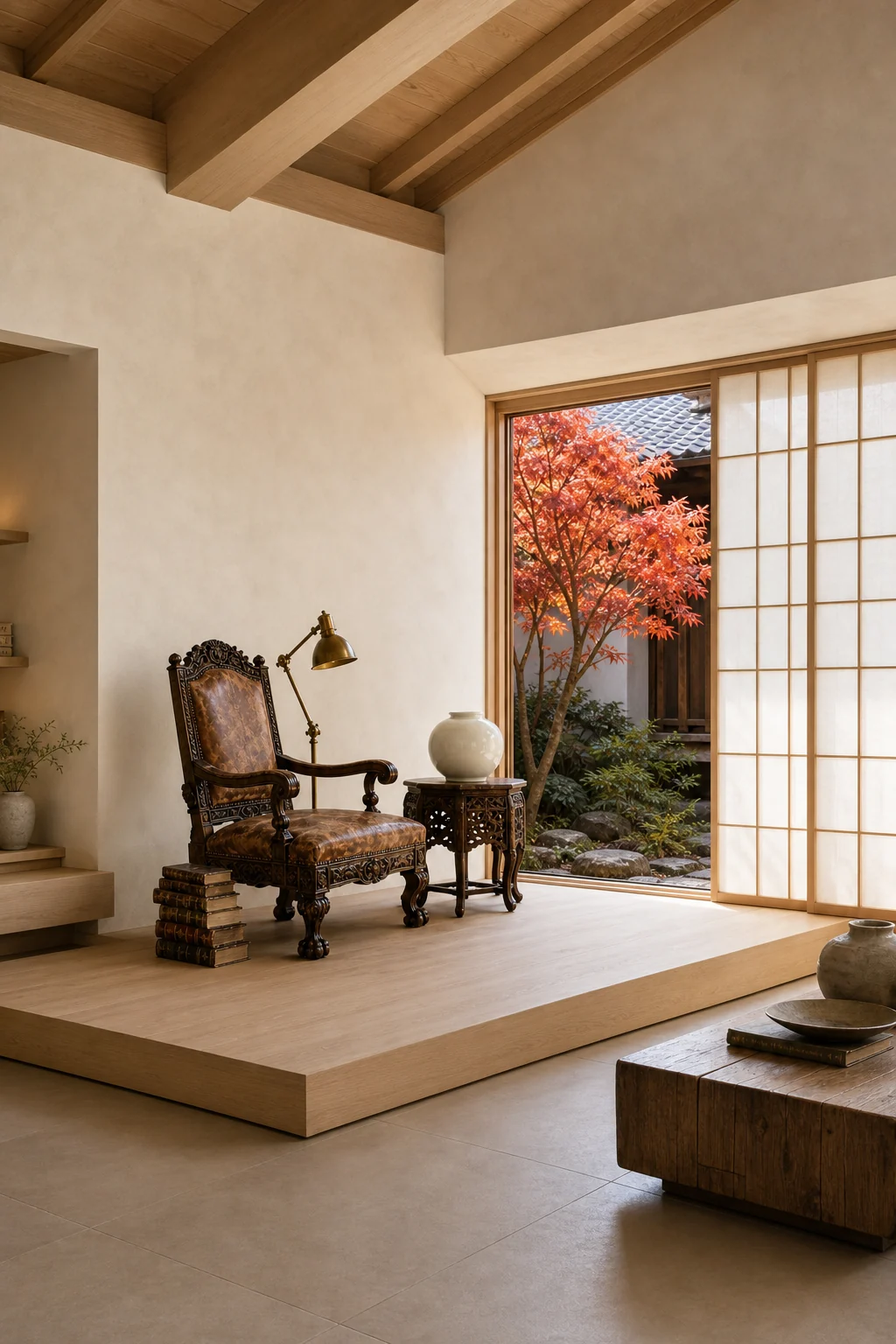
When you isolate a heavily patinated piece against a blank wall, it transforms from mere furniture into a striking sculptural anchor. This deliberate isolation is the foundational step in resolving the inherent tension between heavy history and modern architectural restraint.
Style B language
Modern korean minimal design relies on pristine surfaces and expansive negative space to create deep serenity. It is an architecture of subtraction, where the deliberate absence of clutter becomes the primary feature, calming the mind through strict spatial discipline.
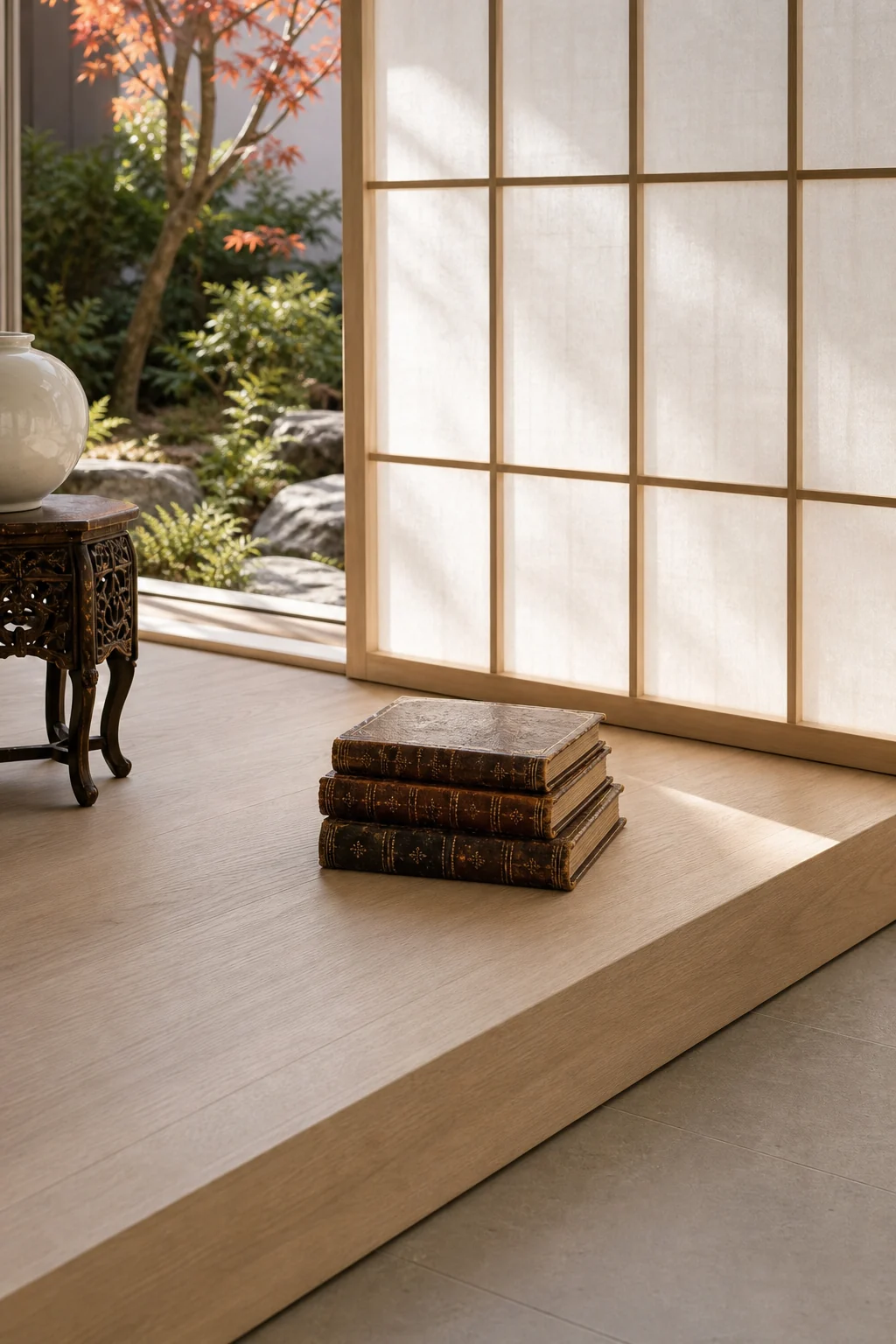
A pristine pale white-oak platform acts as the grounding canvas for the entire room. By keeping floors completely clear of unnecessary rugs, you establish an uninterrupted architectural plane that instantly calms the eye and powerfully anchors the heavy furniture.
- Embrace wide expanses of bare alabaster plaster to maximize the feeling of calming emptiness.
- Keep floors completely clear of unnecessary rugs to maintain an unbroken, serene visual plane.
- Use translucent hanji screens to soften harsh daylight and gently blur the outside world.
- Rely on low-to-the-ground spatial layouts to emphasize the impressive height of the bare plaster walls.
The bridge
Connecting these opposing aesthetic languages requires careful, deliberate material transitions. A shared emphasis on tactile matte finishes connects these eras seamlessly without visual jarring, allowing heavy history and stark minimalism to coexist peacefully within the exact same curated visual frame.
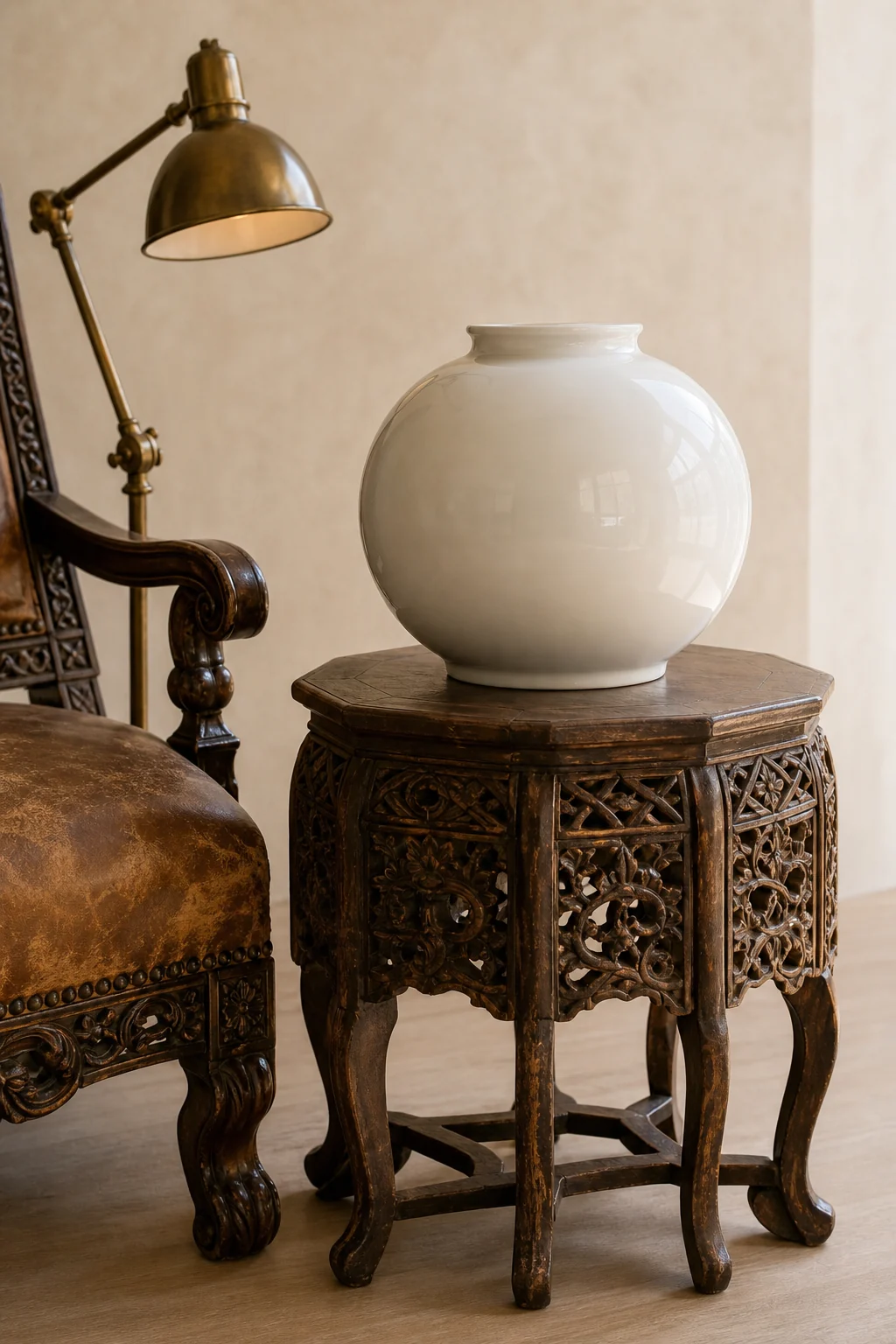
The smooth, unglazed surface of a white Joseon-style moon jar perfectly complements worn heritage seating. Placing this minimal ceramic directly onto an ornate antique table merges both worlds instantly, proving that contrasting eras can share a beautifully unified tactile language.
By ensuring every surface absorbs rather than reflects light, you eliminate the harsh glare that typically separates old and new objects. This shared matte quality becomes the invisible thread tying the heavy, dark walnut to the pristine pale oak floors.
Build the room
Constructing this reading nook requires strict discipline regarding spatial layout and object placement. The minimalist shell must dictate the low-to-the-ground arrangement, forcing the heritage pieces to conform to a much quieter, more deliberate rhythm than they originally intended to project.
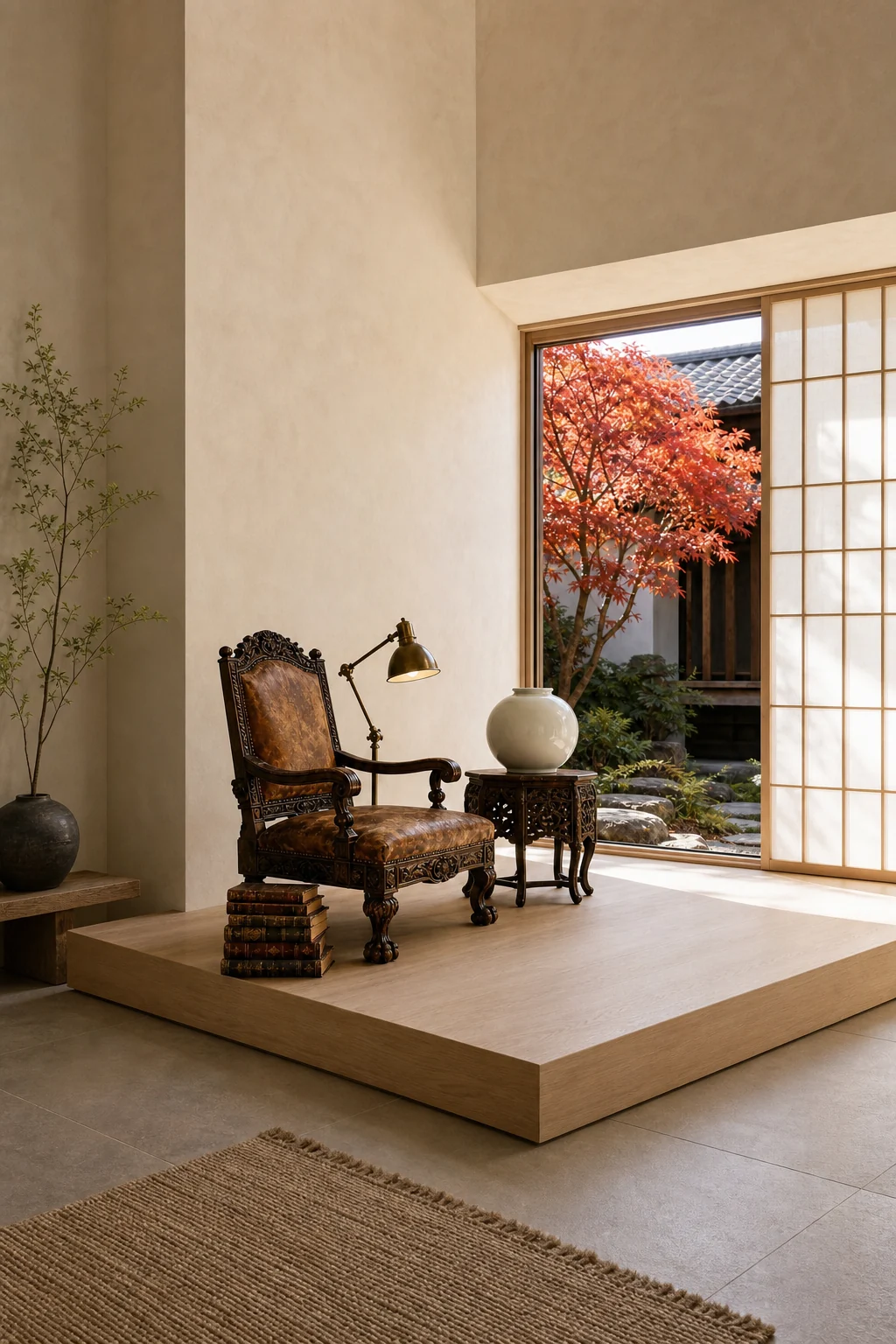
Assign distinct roles to every layer of the room to prevent visual chaos. The modern architecture must step back entirely, allowing the dark walnut profiles to command the negative space without fighting against decorative moldings or busy, distracting wallpapers.
| Design layer | antique role | korean minimal role | Bridge decision |
|---|---|---|---|
| Architectural shell | Steps back entirely to avoid visual clutter | Provides expansive alabaster plaster walls and oak platforms | Matte finishes on architectural surfaces absorb light softly |
| Large furniture | Contributes primary focal point via heavily carved armchairs | Dictates the low-to-the-ground spatial layout and negative space | Dark ornate side tables holding smooth minimal ceramics |
| Room textiles | Introduces cracked brown leather upholstery with rich patina | Provides translucent hanji-paper screens for window treatments | Earthy warm tones connect leather to autumn light |
| Lighting plan | Adds a tarnished brass articulated floor reading lamp | Maximizes bright diffused daylight through paper architecture | Lifted midtones and open shadows keep woods clear |
| Small accents | Stacks of aged gold-tooled leather-bound reading books | A single perfectly smooth white porcelain moon jar | Placing minimal jars directly on ornate antique tables |
This strict division of labor guarantees that neither aesthetic overwhelms the other. The heavy pieces provide necessary character, while the stark shell ensures the mind always has a quiet, peaceful place to rest between the ornate historical details.
Light and architecture
Golden autumn daylight filtered through traditional paper screens lifts the heavy midtones of aged wood. This glowing, diffused illumination unifies the dark seating and the pale plaster walls, preventing the heritage furniture from turning into heavy, unreadable black silhouettes.
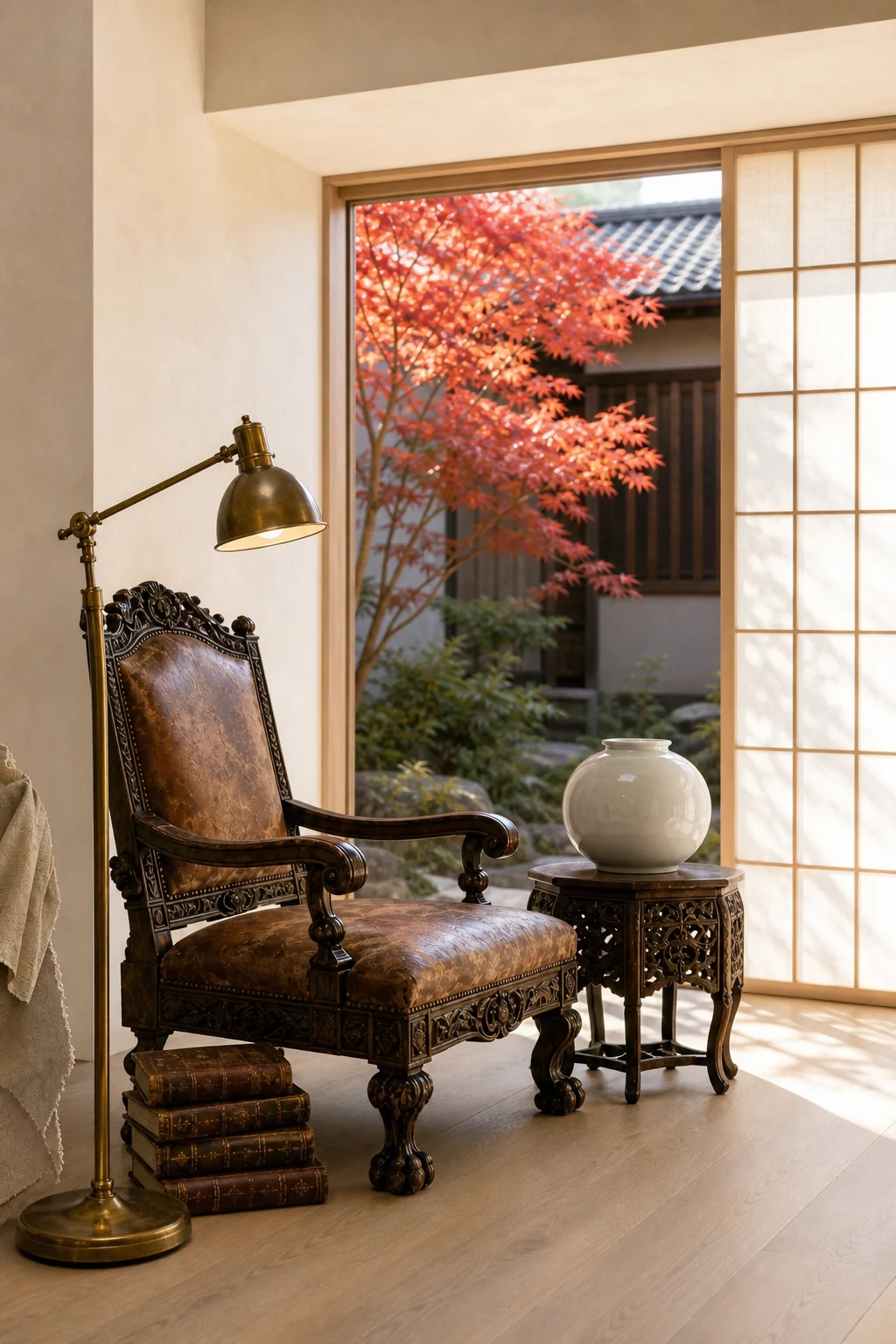
Harsh directional lighting creates aggressive shadows that exaggerate ornate carvings and disrupt serenity. Softening the light through paper architecture ensures the tarnished brass reading lamp reads as a gentle, glowing accent rather than a stark, imposing metal fixture.
Maintaining lifted midtones and open shadows is critical for this specific aesthetic combination. The bright, enveloping daylight ensures that the rich patina of the antique pieces remains visible, celebrating their age without darkening the overall mood of the minimalist void.
Style the details
Small styling moments must maintain the tension between ornate history and austere voids. Every accessory requires careful consideration to avoid tipping the delicate balance toward traditional clutter or, conversely, toward stark, uninviting emptiness that feels far too clinical.
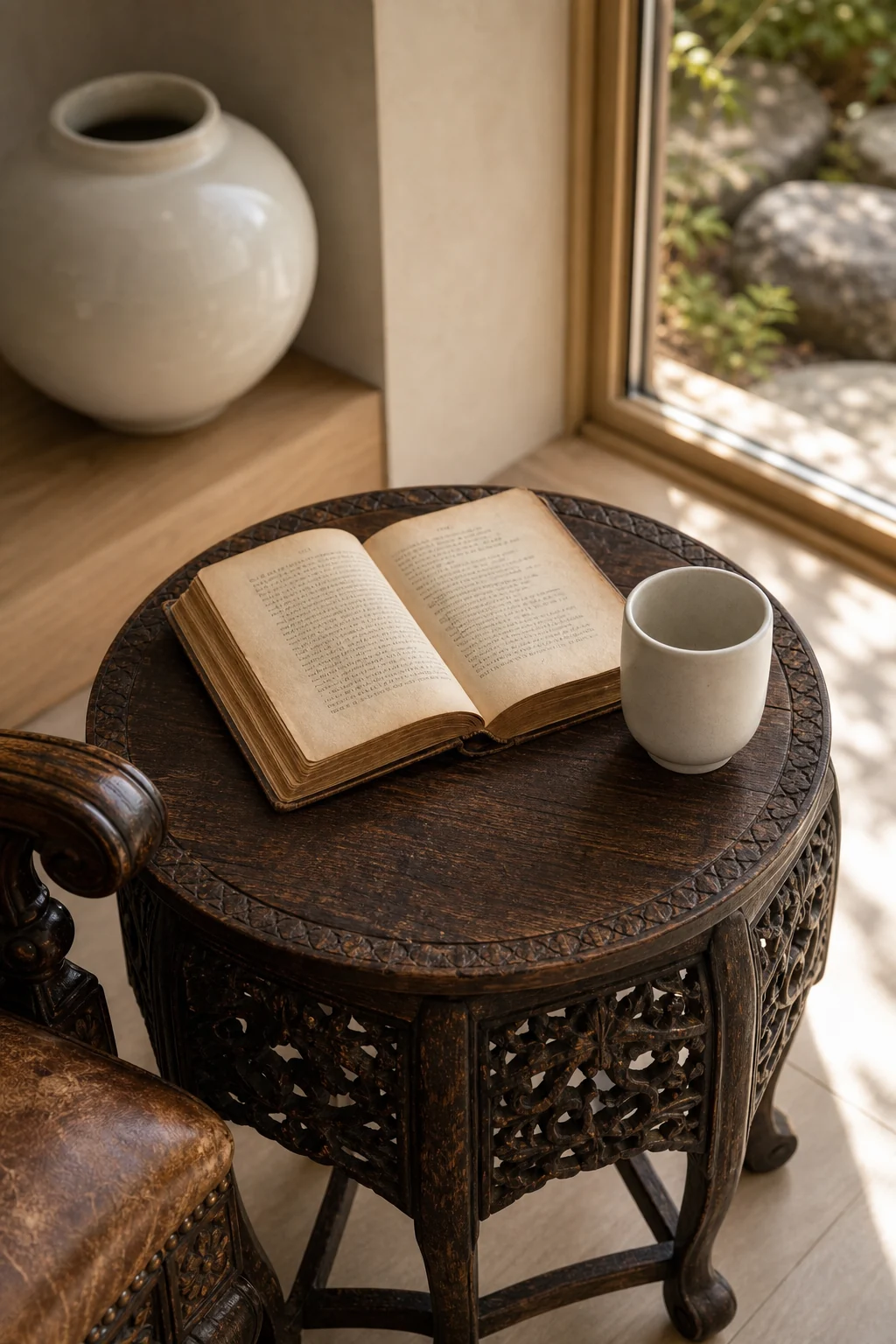
Sourcing the right pieces involves hunting for specific, contrasting textures. You must prioritize unglazed ceramics and raw, untreated woods to maintain the necessary tactile harmony across both styles, ensuring every single object feels equally grounded and deeply intentional.
- Source warm alabaster interior plaster finishes to create a soft, enveloping architectural shell.
- Install pale white-oak low platform flooring to ground the heavy furniture in negative space.
- Hunt for tarnished brass reading lamps that offer rich patina without excessive ornamentation.
- Select reproduction Joseon-style white porcelain jars to bridge the visual gap between old and new.
Adapt it
You can translate this logic to hallways or entryways by maintaining the pale architectural shell. The underlying principle of isolating heavy history works beautifully in any transitional space, turning a simple corridor into a striking, gallery-like experience for guests.
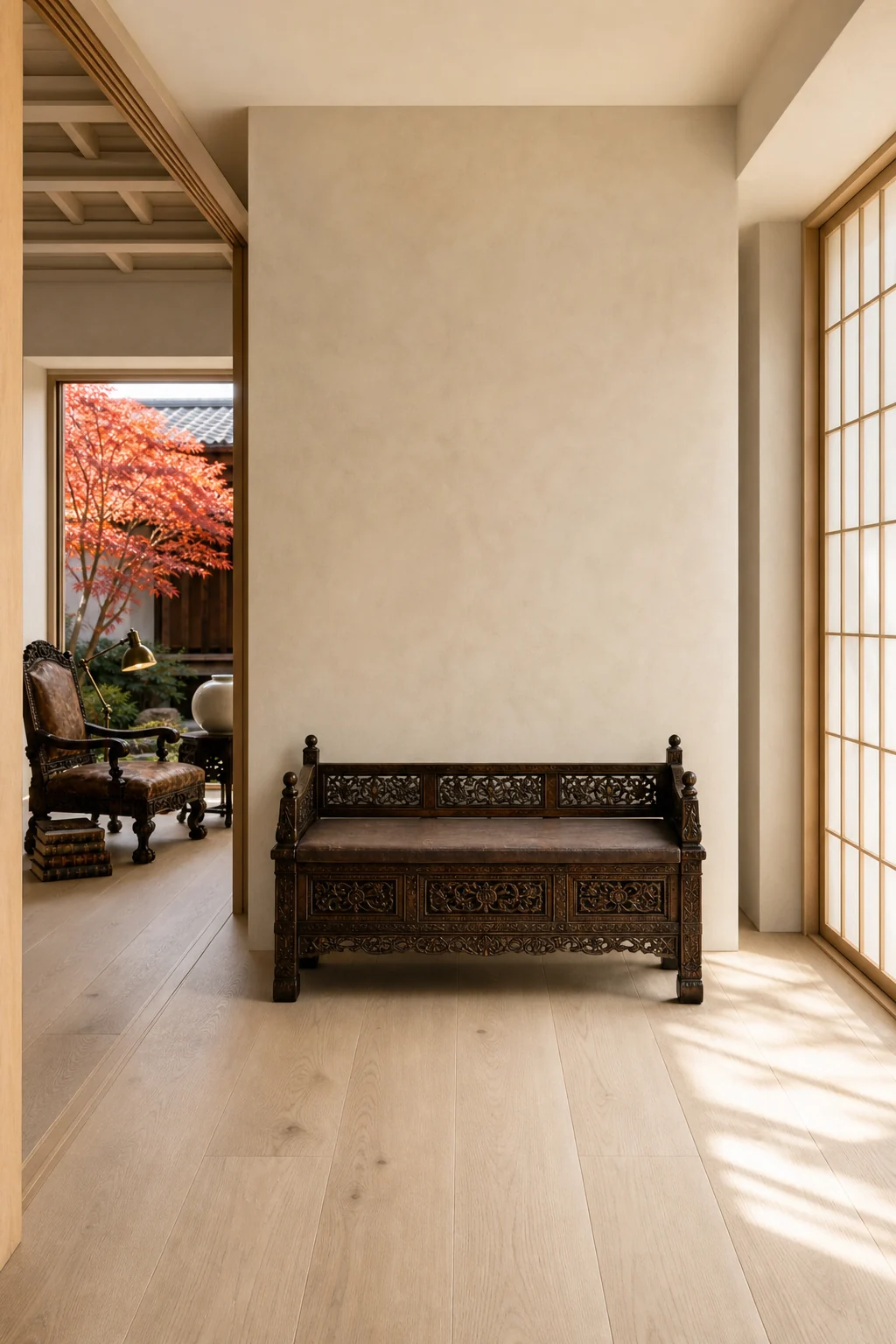
A single, heavily patinated focal piece establishes the aesthetic immediately. A carved wooden bench against an empty plaster wall delivers the exact same visual impact as a fully furnished nook, proving this concept scales down effortlessly to smaller footprints.
- Keep the hallway walls entirely bare to maximize the striking impact of the negative space.
- Place one antique bench centrally in the void to serve as the singular visual anchor.
- Ensure the flooring remains a pale, seamless plane to connect smoothly with the main rooms.
- Rely on diffused natural light to soften the heavy wood tones in narrow, tight corridors.
Avoid the costume
A successful room avoids feeling like a museum exhibit or a disjointed split personality. The tension between the eras must feel incredibly intentional, grounded at all times by the quiet, unifying power of the architectural void and soft natural light.
Overcrowding the floor plan destroys this delicate balance instantly. Matching all wood tones creates a generic, flat result, while using glossy modern finishes ruins the balanced tactile harmony that makes this specific aesthetic combination work so beautifully.
- Do not overcrowd the floor plan; the void is just as important as the furniture.
- Avoid matching all wood tones perfectly, which flattens the intended historical contrast and visual depth.
- Isolate heavily patinated antiques within warm alabaster plaster to create a resolved, peaceful sanctuary.