
Light Academia Meets Biophilic Modern: Home Office
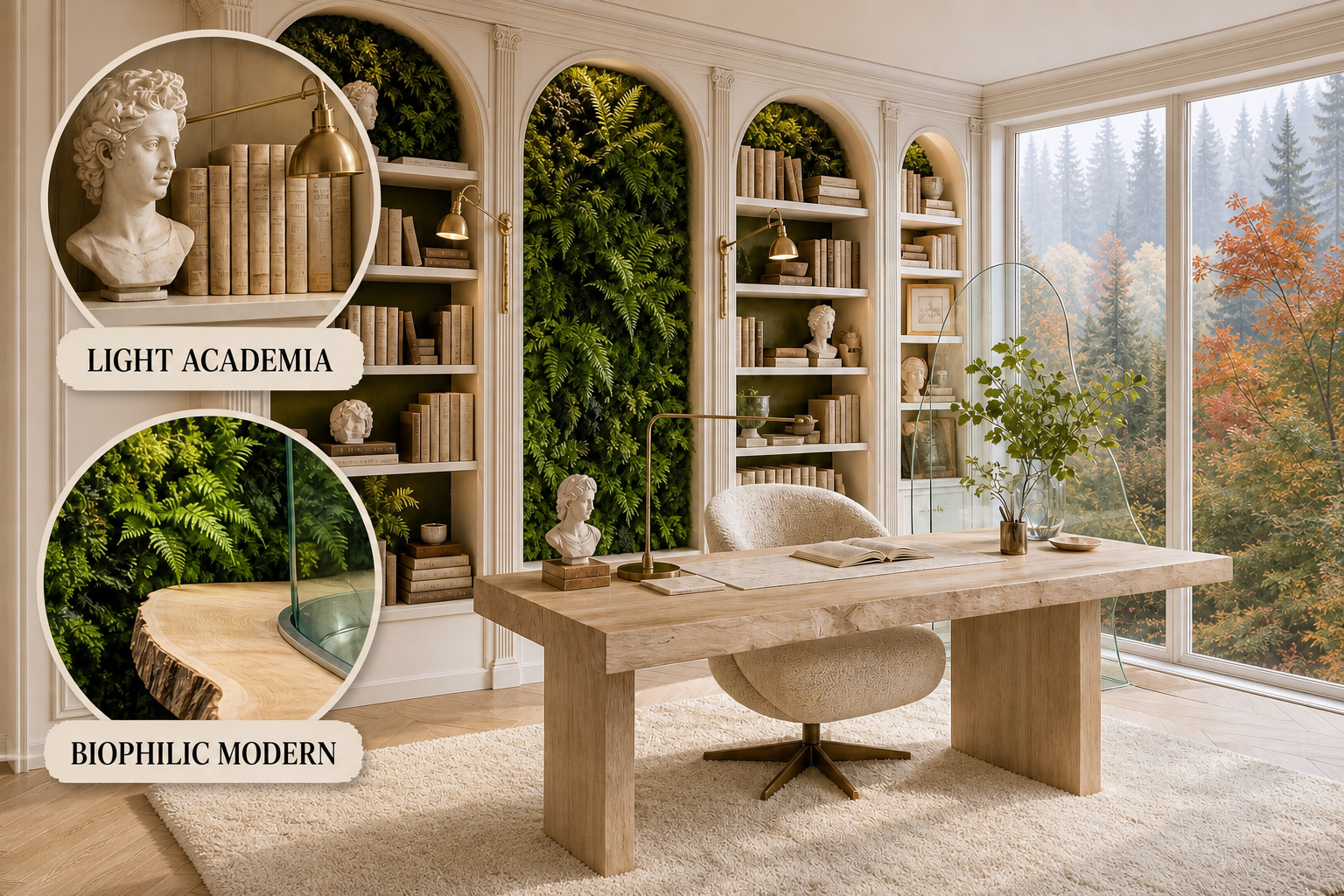
Light academia relies on structured millwork and dry permanence, while biophilic modern demands fluid, living ecosystems. By letting classical architecture frame untamed organic materials, this home office resolves the tension into a cohesive, breathable workspace.
Framing the Classical Shell
Light academia establishes order through cream-painted arched bookcases and vintage linen bindings. This structured permanence creates a necessary, quiet backdrop before introducing any wilder organic elements into the Pacific Northwest home office environment, ensuring the room feels grounded and intentional.
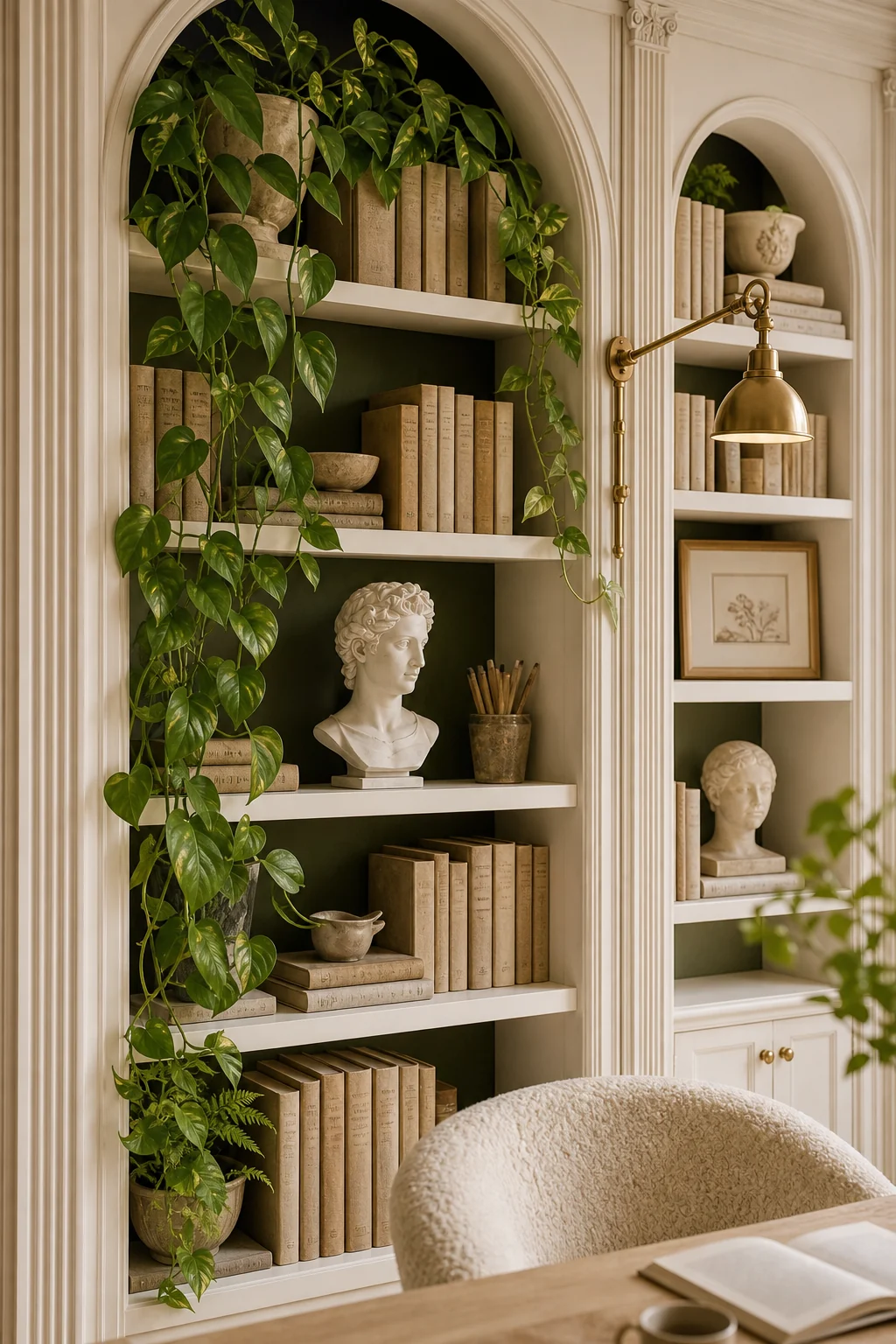
The rigid geometry of the classical shelving immediately contains the untamed energy of the trailing pothos vines. Notice how the cascading greenery softens the strict architectural lines without overwhelming the room’s foundational historical preservation, creating a perfectly balanced visual tension.
Introducing Living Ecosystems
Biophilic modern design thrives on raw, untamed energy and living ecosystems. Installing dense living fern walls directly inside the classical architectural voids gives the room immediate vitality without disrupting the established footprint of the workspace, merging nature with structured human history.
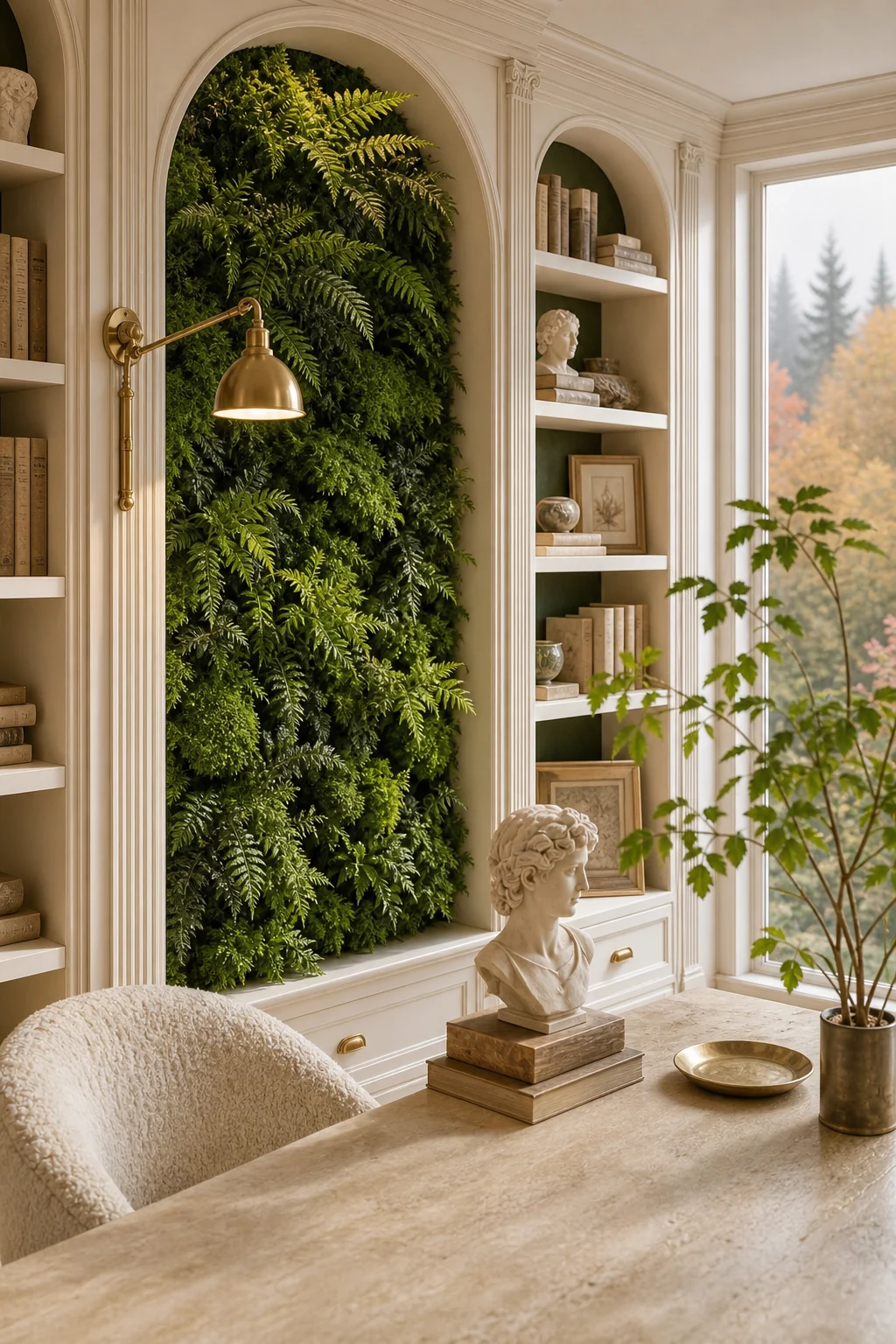
Vibrant greenery naturally breaks up the dry permanence of plaster and paper. This deliberate juxtaposition transforms a traditional library into a breathing, dynamic environment that stimulates focus and invites the misty autumn landscape indoors, proving that workspaces can be both rigorous and alive.
- Select specific low-light ferns and mosses that thrive indoors without requiring direct, harsh sunlight throughout the Pacific Northwest autumn.
- Use concealed self-watering vertical planters inside the shelving to protect the historical millwork from accidental moisture damage over time.
- Contrast the soft, dewy texture of living moss with the dry, rigid plaster busts of classical antiquity for visual depth.
- Maintain the health of the living wall by monitoring the ambient indoor humidity, ensuring the natural ecosystems continue to flourish.
- Prune the trailing pothos vines regularly so they frame the classical arches beautifully rather than completely obscuring the architectural details.
Bridging Form and Material
Shared pale palettes of parchment, cream, and ash wood seamlessly connect both aesthetics. This deliberate color bridge allows raw, untamed textures to coexist peacefully with refined historical artifacts in the same visual field, preventing either style from dominating the delicate spatial composition.
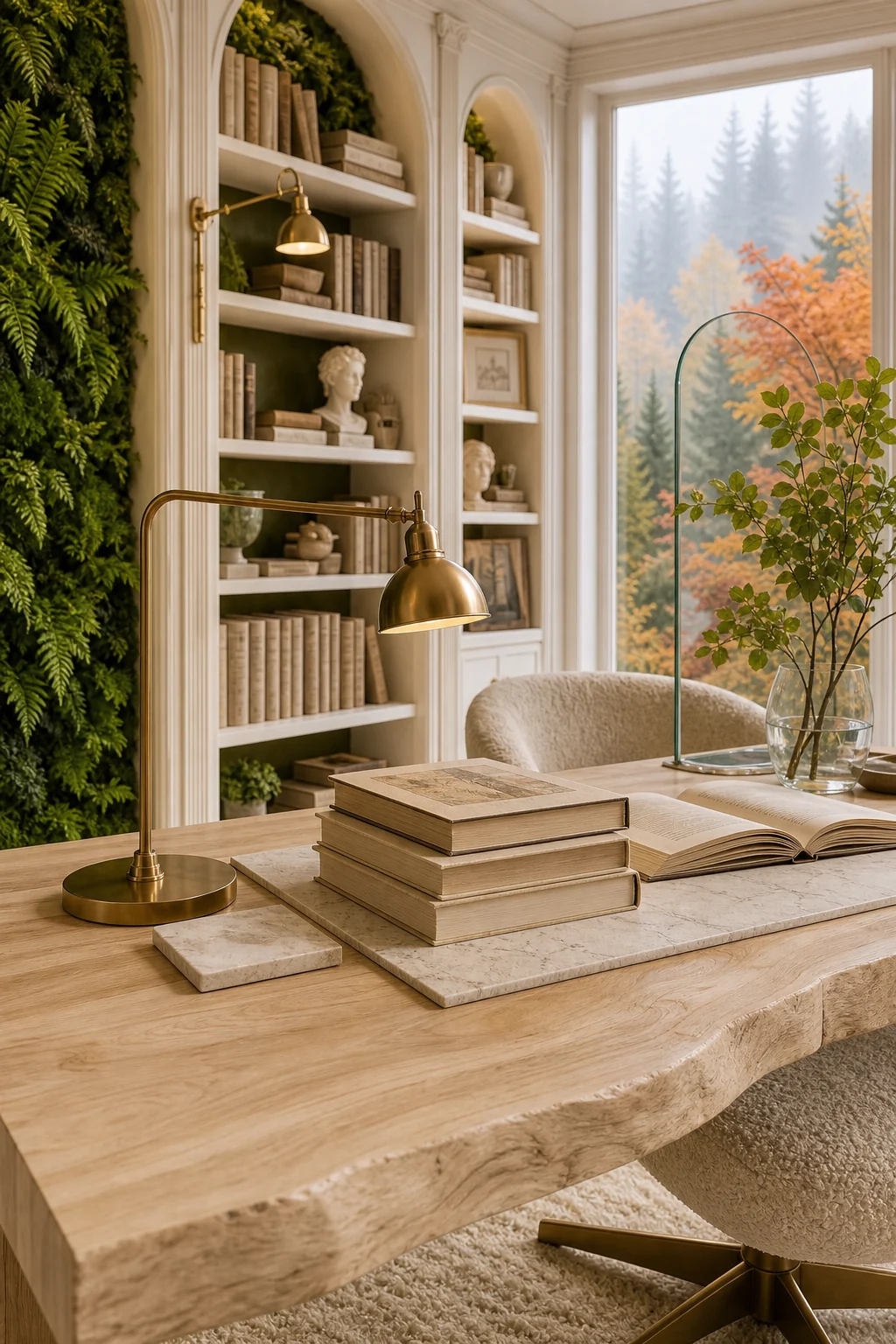
The subtle veining in a pale marble desk blotter perfectly mimics the organic root structures of the surrounding plants. This material echo proves that classical elegance and natural rawness can share the exact same visual language, creating a deeply unified and calming atmosphere.
Anchoring the Workspace
A pale, raw-edge ash wood modern desk grounds the center of the room. Paired with a curved ergonomic boucle chair, this functional zone softens the rigid library geometry while supporting hours of focused work, proving that historical spaces can adapt to modern needs.
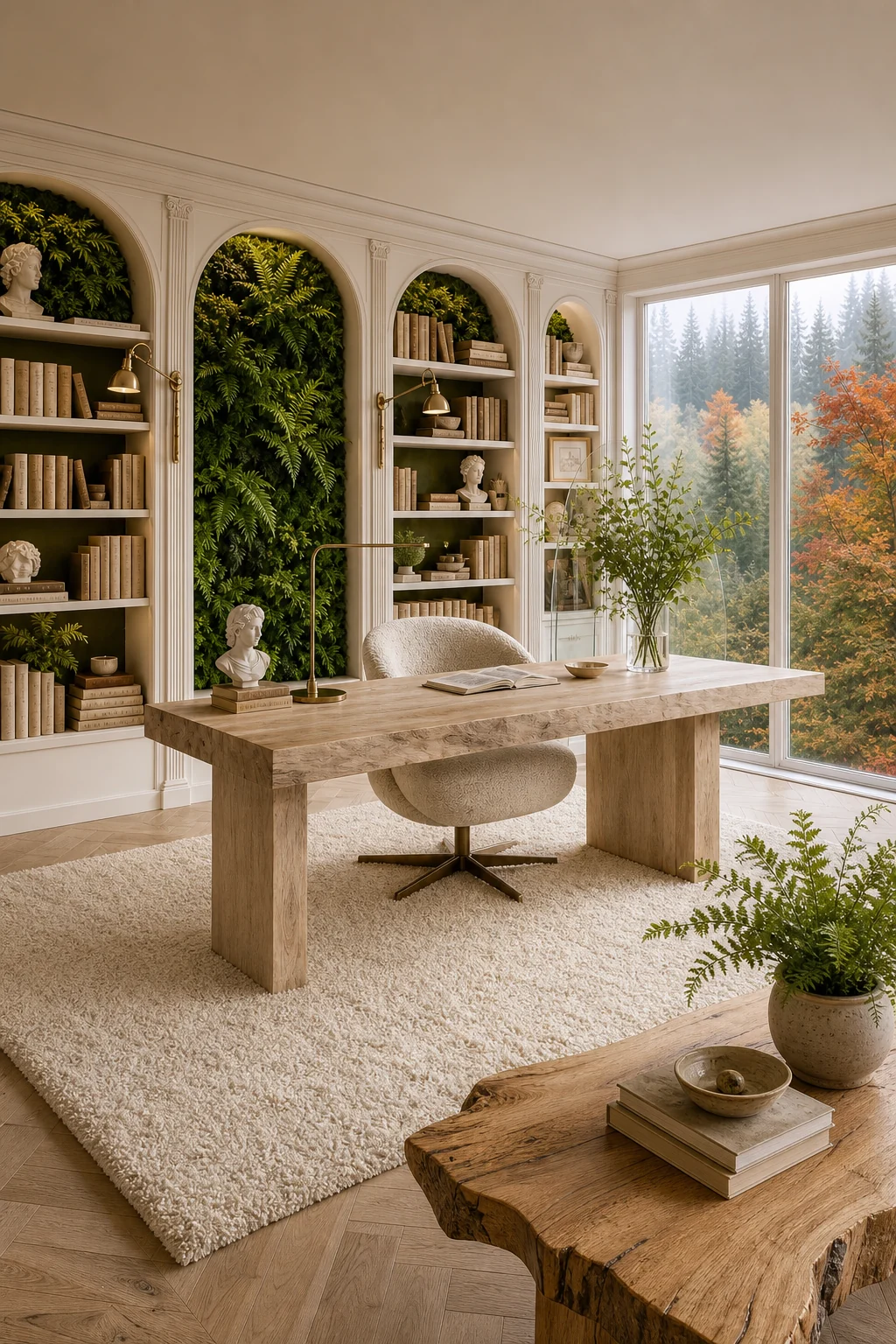
By placing modern organic shapes against historical built-ins, the workspace bridges the gap between structured order and natural comfort. The resulting layout feels highly intentional, transforming a potentially chaotic mix into a practical, trustworthy sanctuary that inspires deep, uninterrupted creative focus.
| Design Layer | light academia Role | biophilic modern Role | Bridge Decision |
|---|---|---|---|
| Architectural Shell | Cream-painted arched floor-to-ceiling library bookcases. | Dense living fern and vibrant moss installations. | Integrating living plant systems directly into the classical architectural voids. |
| Large Furniture | Structured, symmetrical classical spatial placement. | Pale raw-edge ash wood modern desk surfaces. | Shared pale parchment and ash wood color palette anchoring the room. |
| Soft Textiles | Vintage linen-bound book covers and parchment pages. | Curved ergonomic boucle office seating upholstery. | Emphasizing tactile, dry textures in unified cream and parchment tones. |
| Room Lighting | Antique brass swing-arm reading lamps and sconces. | Unobstructed natural silvery Pacific Northwest window light. | Using warm metallic accents to lift the cool autumn daylight. |
| Small Accents | Weathered plaster classical portrait busts and artifacts. | Trailing pothos vines and clear organic glass. | Juxtaposing rigid historical artifacts with fluid, living natural elements. |
Illuminating the Geometry
Classical arches naturally echo the rounded, ergonomic edges of the modern furniture. Soft, silvery-grey autumn daylight from large windows lifts all midtones, keeping shadows open and highlighting the tactile differences between plaster and bark, unifying the disparate materials under one luminous canopy.
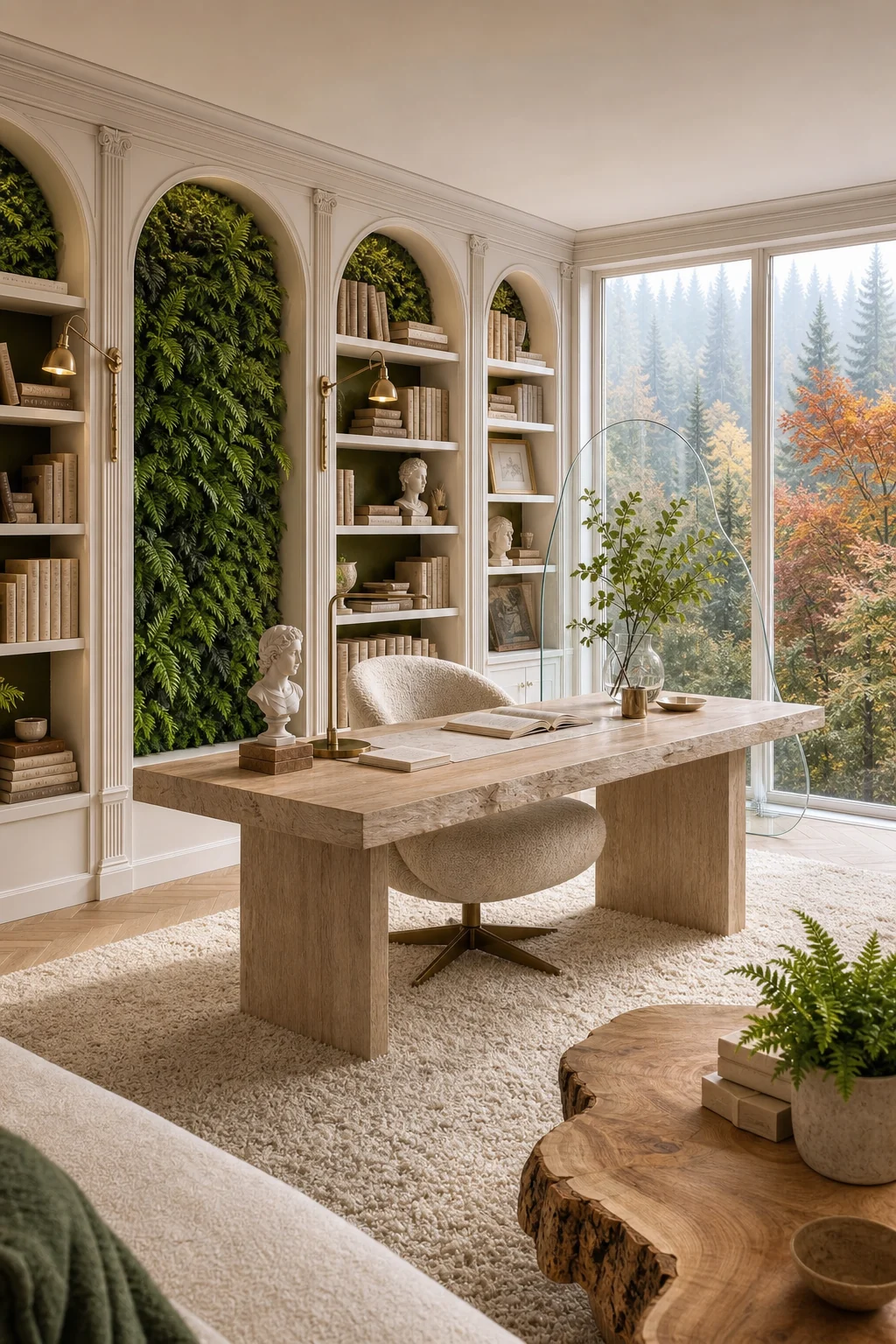
Unobstructed natural light is crucial for sustaining the living ecosystems while illuminating the historical artifacts. Antique brass fixtures warm up the cool Pacific Northwest daylight, ensuring the home office remains an inviting retreat throughout the season, balancing the temperature of the room perfectly.
- Leave large architectural windows completely uncurtained to maximize the soft, silvery-grey daylight entering the workspace.
- Match the sweeping curve of modern ergonomic furniture directly to the classical arches of the built-in shelving.
- Position the pale ash wood desk to capture the best natural light for both reading and working.
- Use antique brass lamps to intentionally warm up the cool shadows created by the misty autumn weather.
- Direct the swing-arm sconces to highlight the tactile textures of both the plaster busts and the living moss.
Curating the Shelves
Small vignettes require a careful hand to avoid looking cluttered or chaotic. Grouping weathered plaster artifacts with sleek curved glass elements ensures every surface reflects both historical preservation and modern organic fluidity in equal measure, demanding a highly curated approach to daily styling.
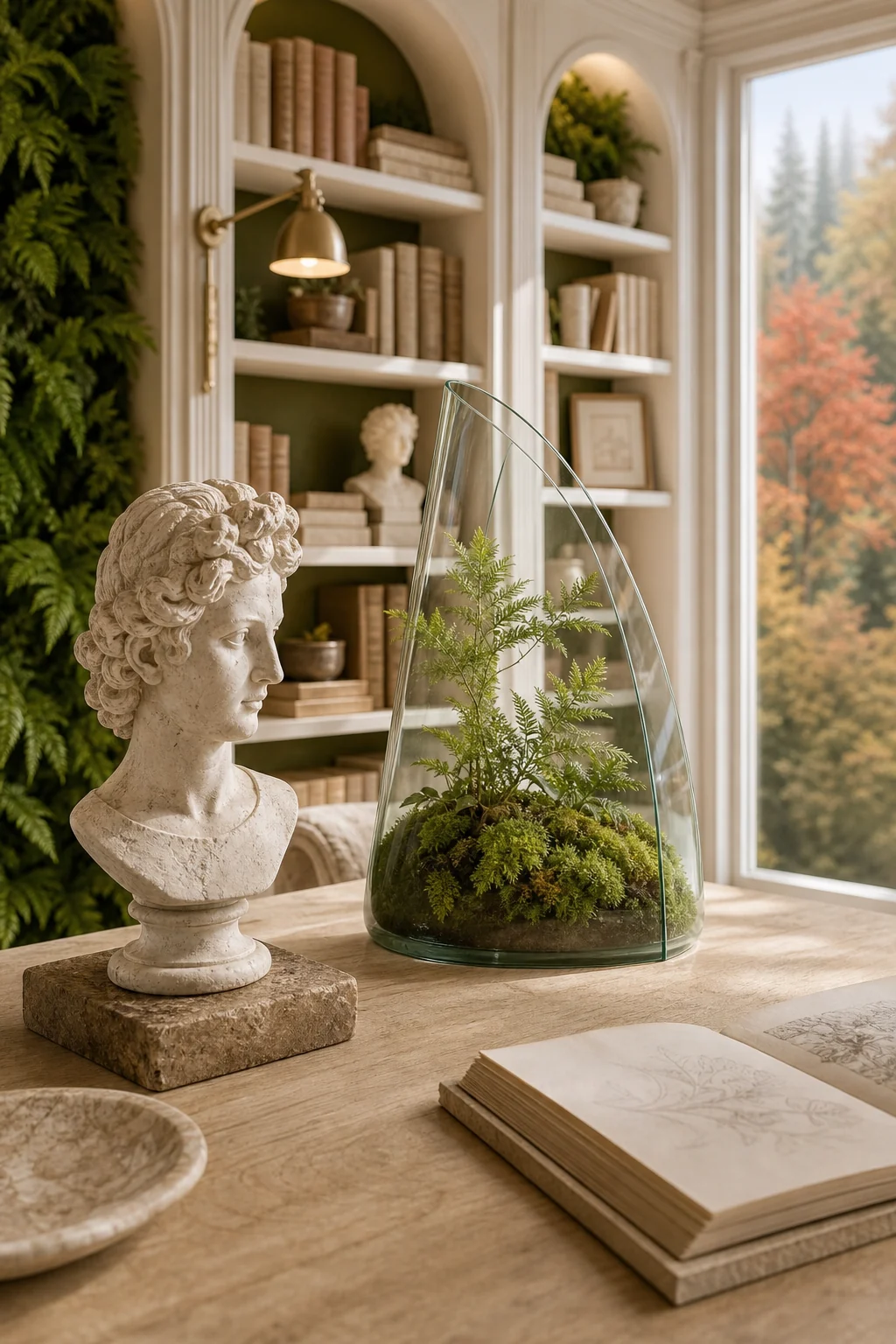
Stacking vintage linen-bound books horizontally creates stable, elegant platforms for vibrant moss bowls. This deliberate styling technique prevents the extensive library collections from feeling visually overwhelming, maintaining the breathable atmosphere required by the modern aesthetic while celebrating the rich legacy of the past.
- Source authentic vintage linen-bound books to provide a dry, tactile foundation for the shelving displays and ground the historical aesthetic.
- Invest in raw-edge ash wood side tables to echo the organic silhouette of the primary workspace desk across the room.
- Install antique brass swing-arm wall sconces directly onto the cream-painted millwork for targeted task lighting that warms the cool shadows.
- Select curved boucle office chairs that provide ergonomic support while visually softening the rigid classical geometry of the surrounding architecture.
- Incorporate clear architectural glass accents to reflect the silvery daylight and add a necessary layer of modern polish and refinement.
Extending the Logic
This hybrid approach easily translates to smaller corners or transitional passages throughout the home. A simple raw-wood console table instantly establishes the exact same historical-meets-organic tension when placed in a narrow hallway or entry vestibule, proving the versatility of the combined design language.
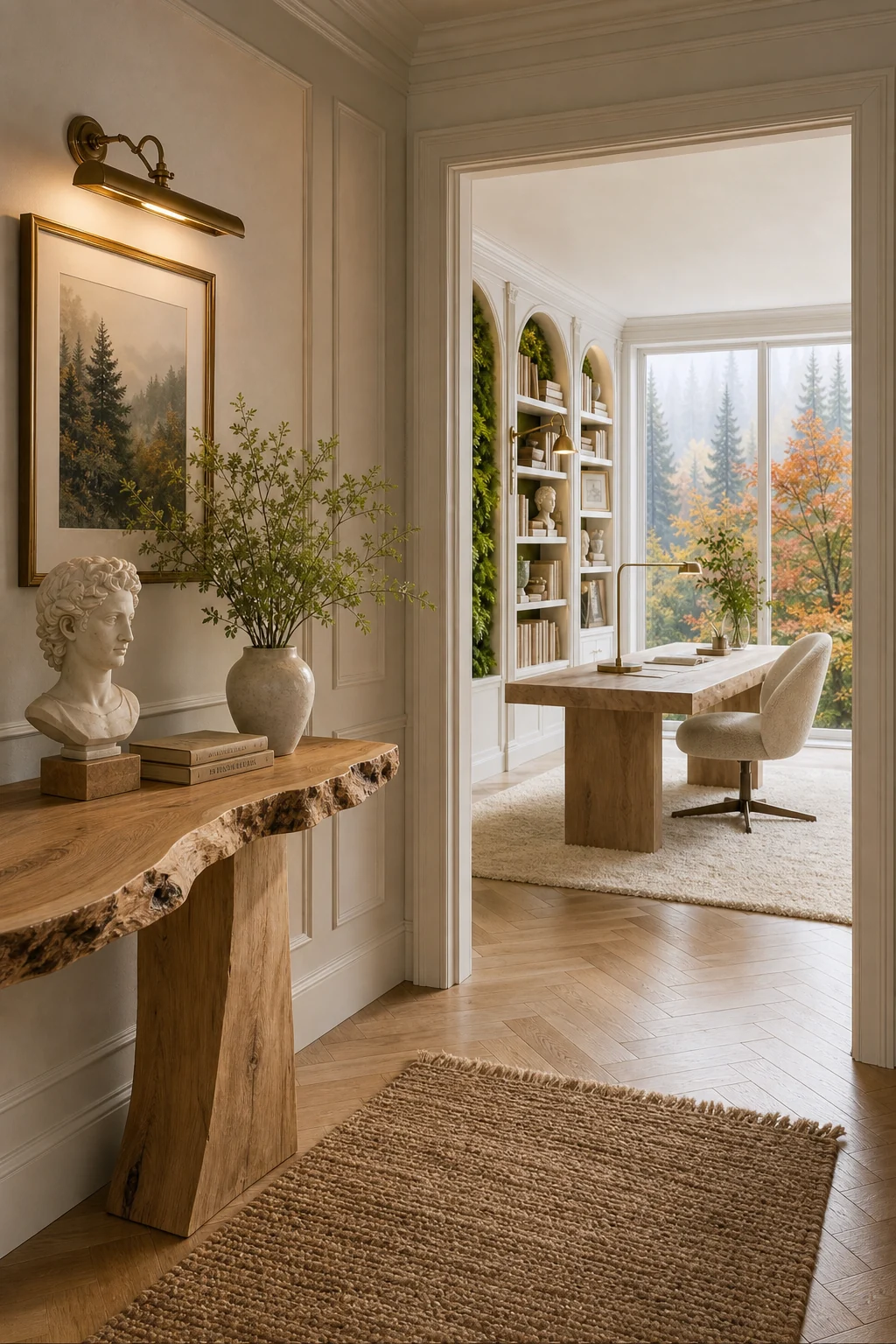
Placing a traditional brass picture light above an untamed organic surface proves the concept works anywhere. The beautiful tension between refined classical metal and raw, living timber requires minimal square footage to make a significant impact, elevating even the most overlooked architectural spaces.
Achieving Cohesive Balance
A successful room avoids feeling like a split personality or a thematic movie set. By letting the classical architectural shell contain the wilder organic materials, the home office remains a practical, trustworthy sanctuary for daily work, preventing the design from becoming a chaotic distraction.
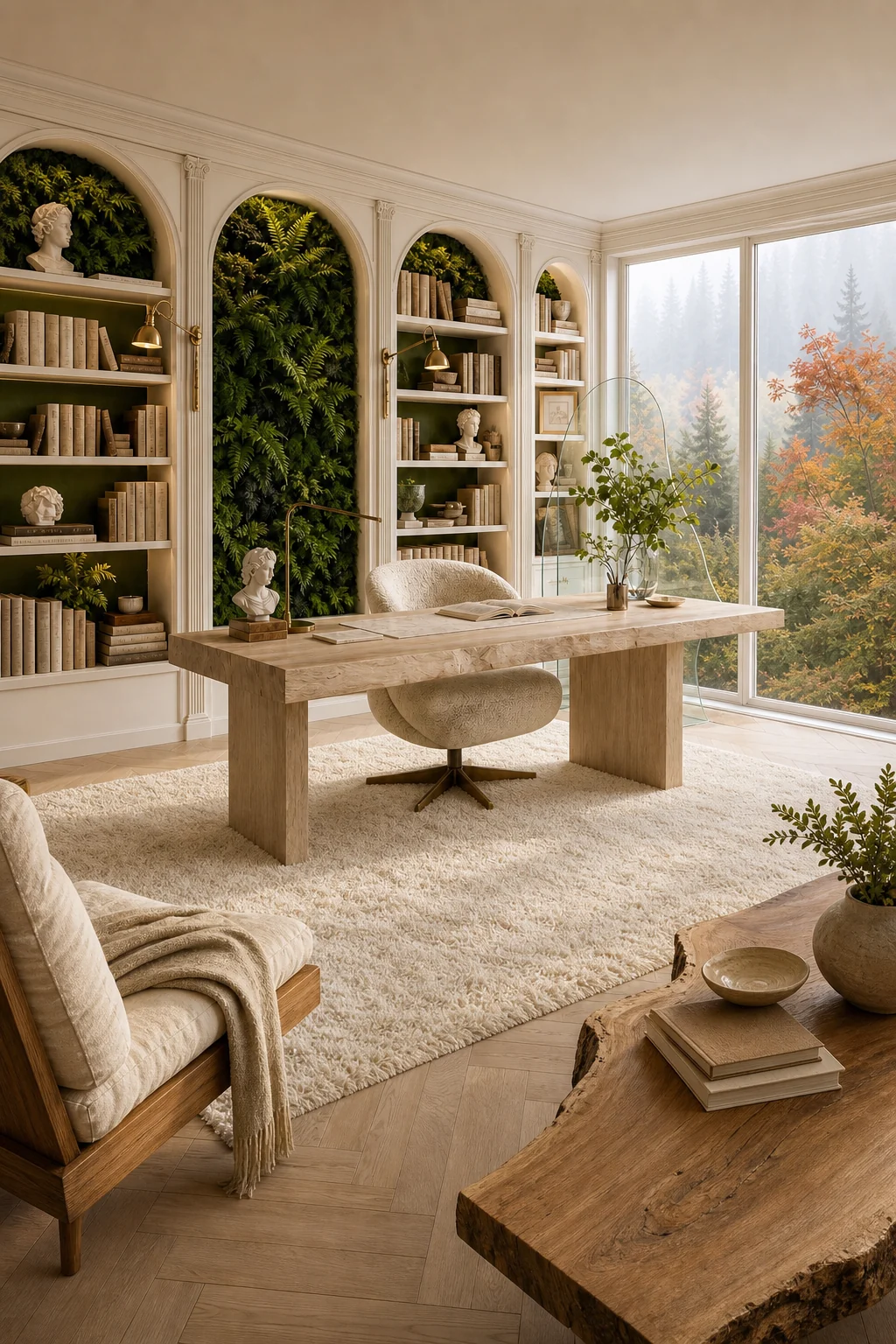
The space succeeds because the foundational color palette remains strictly constrained to pale, unifying tones. By perfectly balancing dry historical permanence with living indoor ecosystems, the initial aesthetic contradiction is finally and beautifully resolved, resulting in a timeless, breathable environment for modern productivity.
- Avoid dark, heavy traditional mahogany furniture entirely, as it will crush the delicate modern organic textures.
- Do not scatter potted plants randomly across every surface; contain them within specific architectural voids.
- Keep the color palette strictly constrained to parchment, pale ash wood, sage green, and antique brass.
- Resist the urge to add modern synthetic materials that clash with the historical preservation of the room.
- Ensure the ergonomic modern seating remains the functional anchor of the entire workspace composition.