
Desert Boho Meets Noir: Living Room
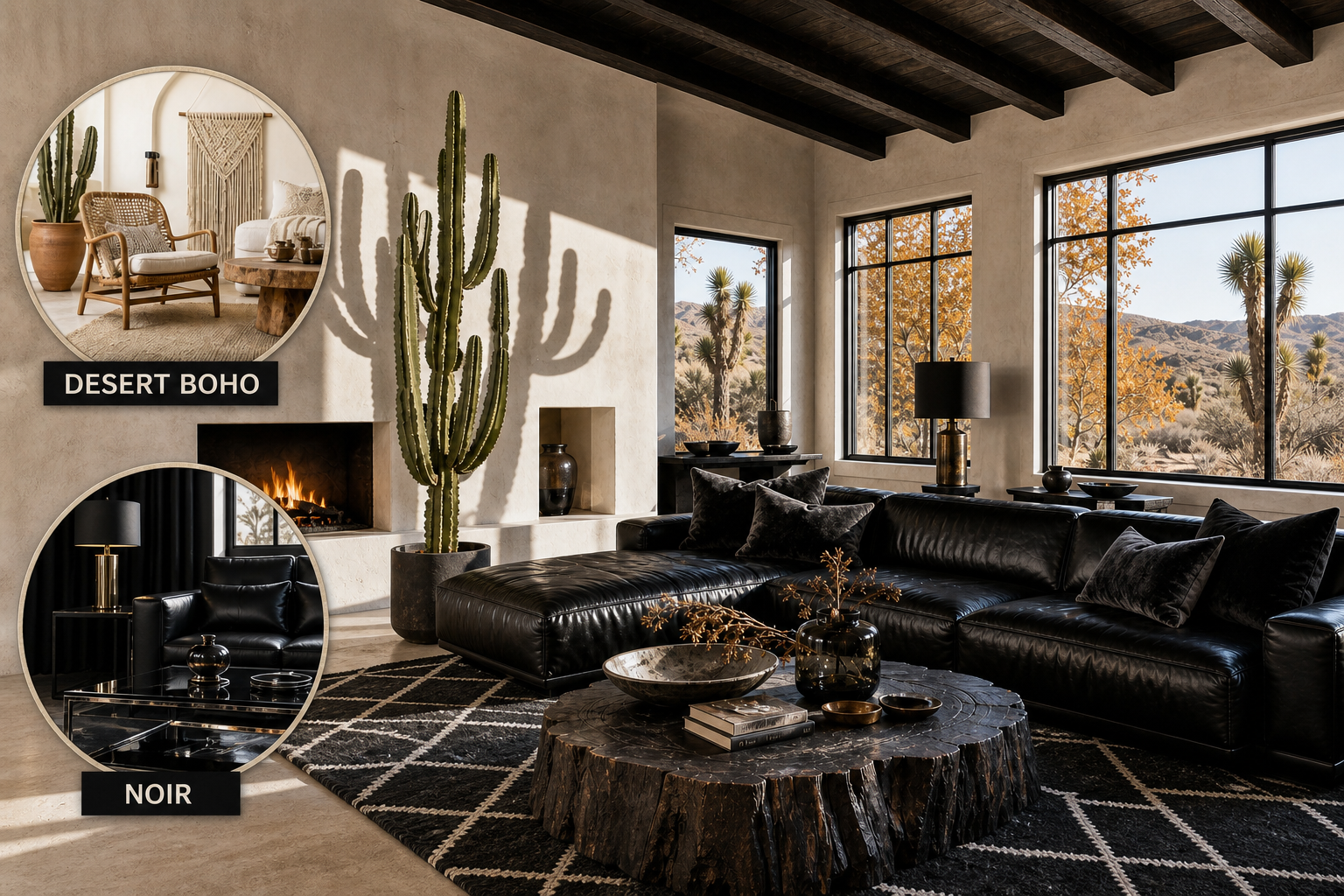
Desert boho thrives on sun-bleached, loose organic warmth, while noir demands slick, shadow-drenched formality. We resolve this contradiction by letting desert boho dictate the raw architectural shell, while noir controls the strict high-contrast palette and tailored upholstery.
Desert Boho Language: Organic Architecture
Establishing the room begins with the unpolished surfaces that give desert boho its signature relaxed, sun-bleached foundation. Before introducing any dark contrast, the space requires a highly textured, earthy envelope to ground the incoming cinematic severity and prevent a sterile atmosphere.
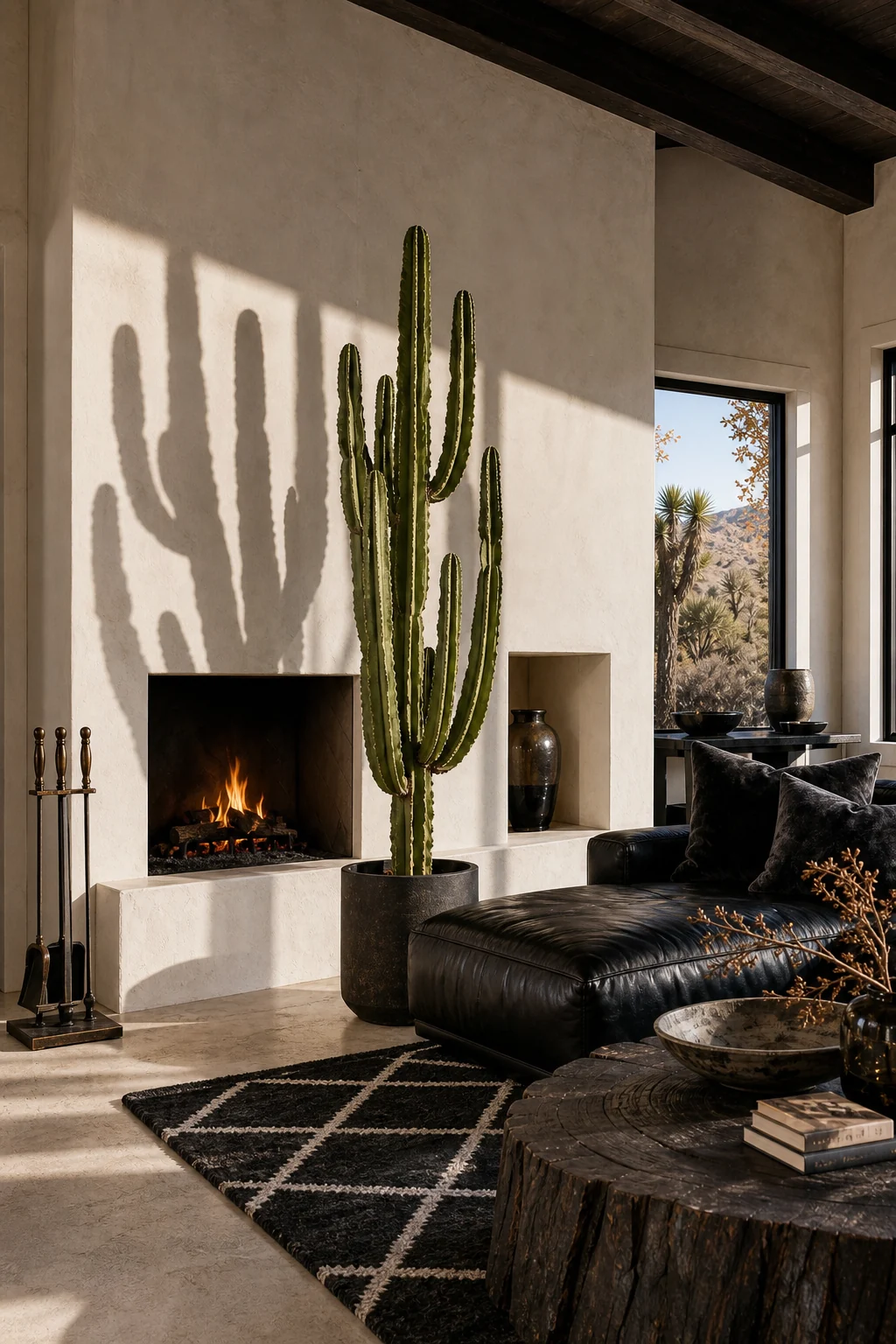
Notice how bone-white adobe plaster walls and low-slung modular seating proportions immediately set a loose, organic stage. This tactile, imperfect perimeter prevents the heavier, darker elements from feeling overly rigid or disconnected from the surrounding autumn desert landscape outside.
By prioritizing these raw architectural details, you ensure the living room retains its essential warmth. The unrefined shell acts as a crucial buffer, absorbing the intensity of the dark furniture and allowing the high-contrast aesthetic to feel effortlessly lived-in rather than strictly curated.
Noir Language: Tailored Upholstery
With the earthy perimeter established, noir introduces a demand for slick, shadow-drenched formality. This strict, high-contrast aesthetic cuts through the airy looseness, injecting a sophisticated edge that transforms a casual lounge into a highly deliberate, tailored environment with distinct boundaries.
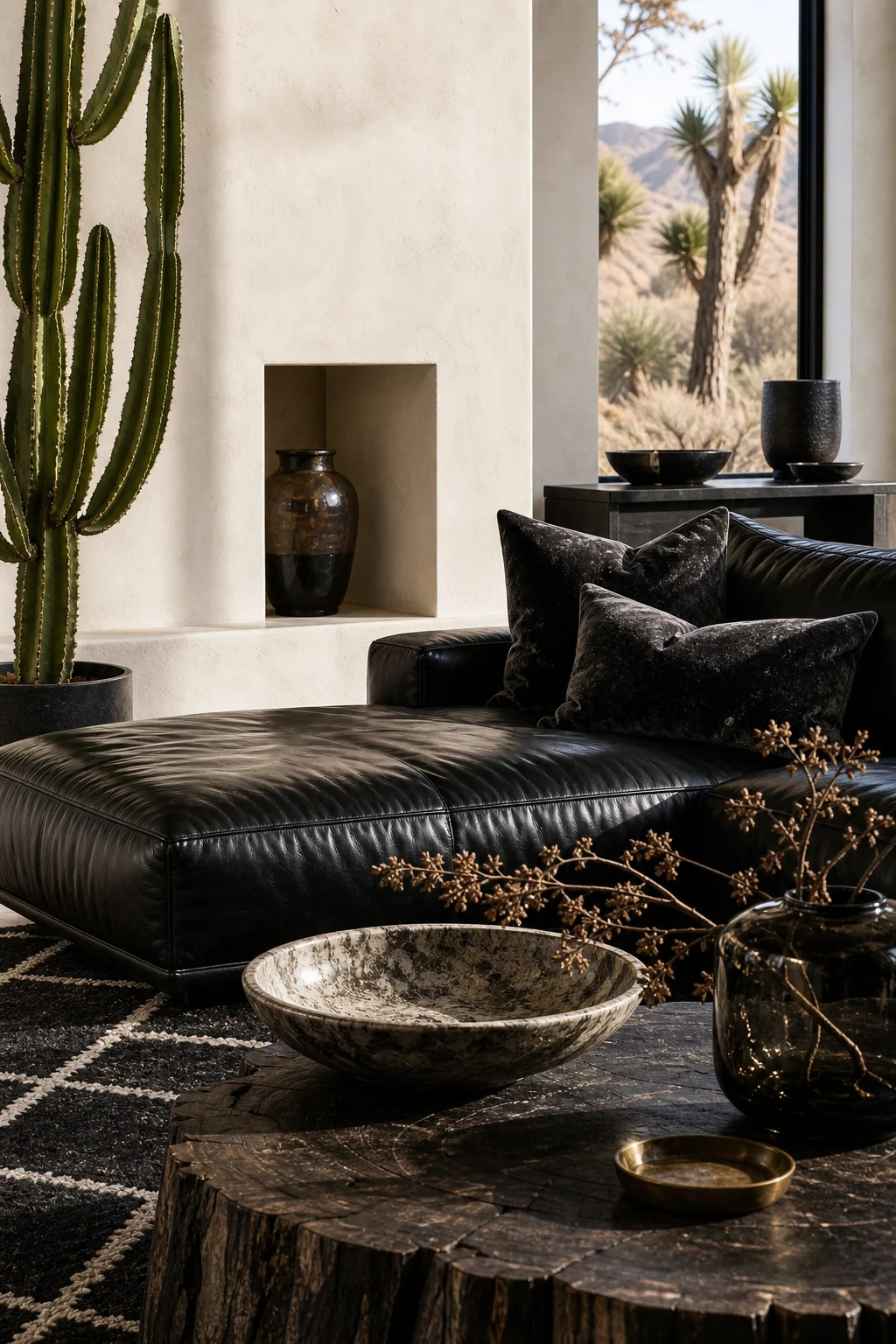
Smooth black leather upholstery provides a sharp, tailored counterpoint to the raw plaster walls. By utilizing clean lines and deep obsidian hues, the seating anchors the airy room with a dense, visually heavy center of gravity that demands immediate attention.
- Choose matte or semi-aniline leather finishes over high-shine gloss to maintain a degree of tactile warmth.
- Keep sofa and chair silhouettes sharp and tailored rather than slouchy, oversized, or casually overstuffed.
- Incorporate dark charcoal velvet pillows to subtly soften the stark black seating surfaces without losing edge.
The Bridge: Ebonized Raw Wood
Bridging these two distinct aesthetics requires specific material interventions that speak both visual languages simultaneously. Without a transitional element, the dark upholstery would look entirely alien against the sun-baked, bone-white architectural shell of the relaxed desert living room.
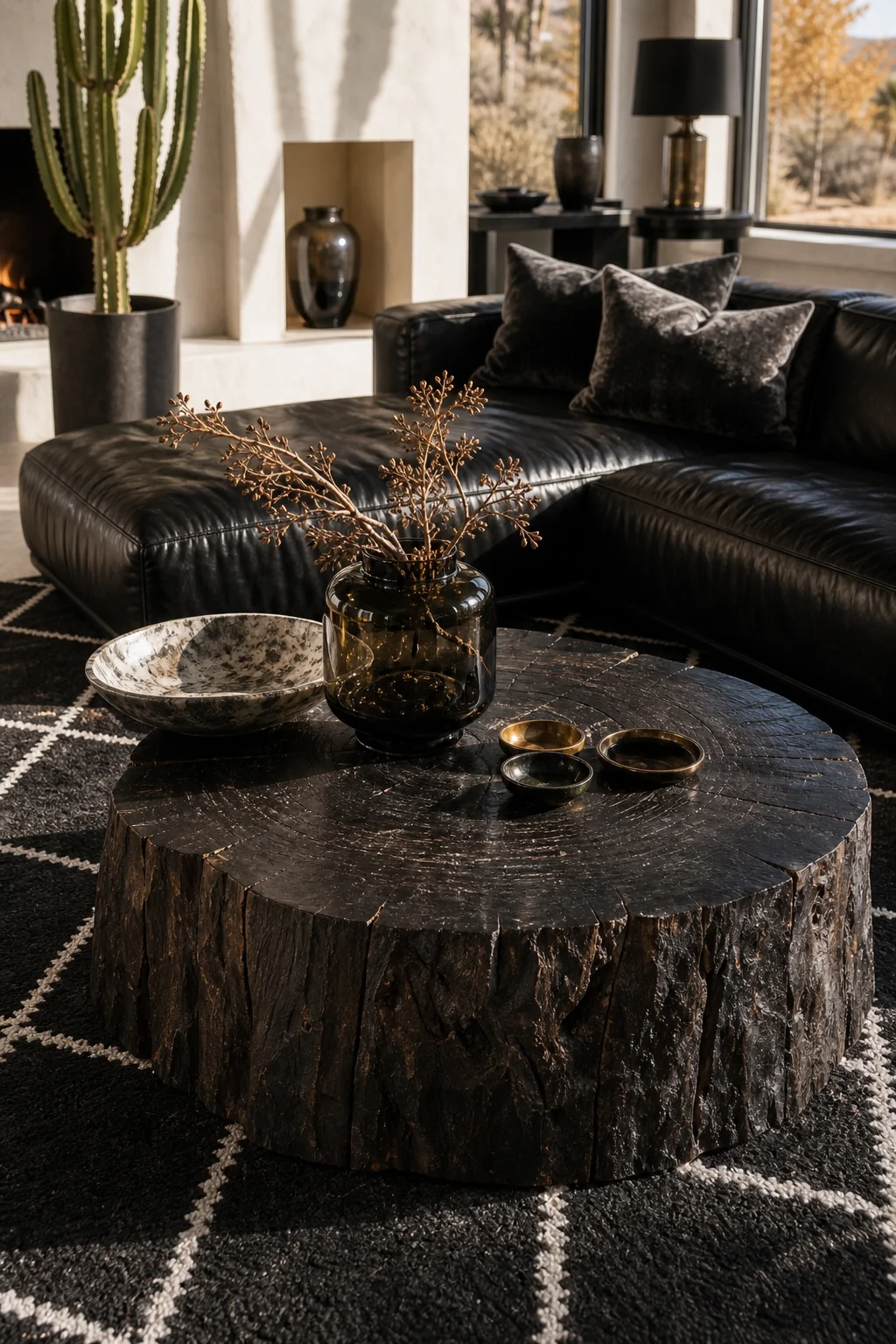
An ebonized raw wood stump table flawlessly applies a strict noir color palette to a heavily textured desert boho material. This single piece harmonizes the contradiction, linking the room’s organic origins with its sophisticated, cinematic ambitions through shared tactile properties.
These bridging materials prevent the room from feeling like two separate concepts fighting for dominance. When a piece exhibits the physical texture of the desert but the moody coloration of a cinematic thriller, it locks the entire interior design scheme perfectly into place.
Build the Room: The Seating Vignette
Assembling the living room requires assigning clear, uncompromising roles to each style without muddying the waters. The goal is to build a cohesive seating arrangement where the relaxed proportions of the desert meet the formal materials of the city effortlessly.
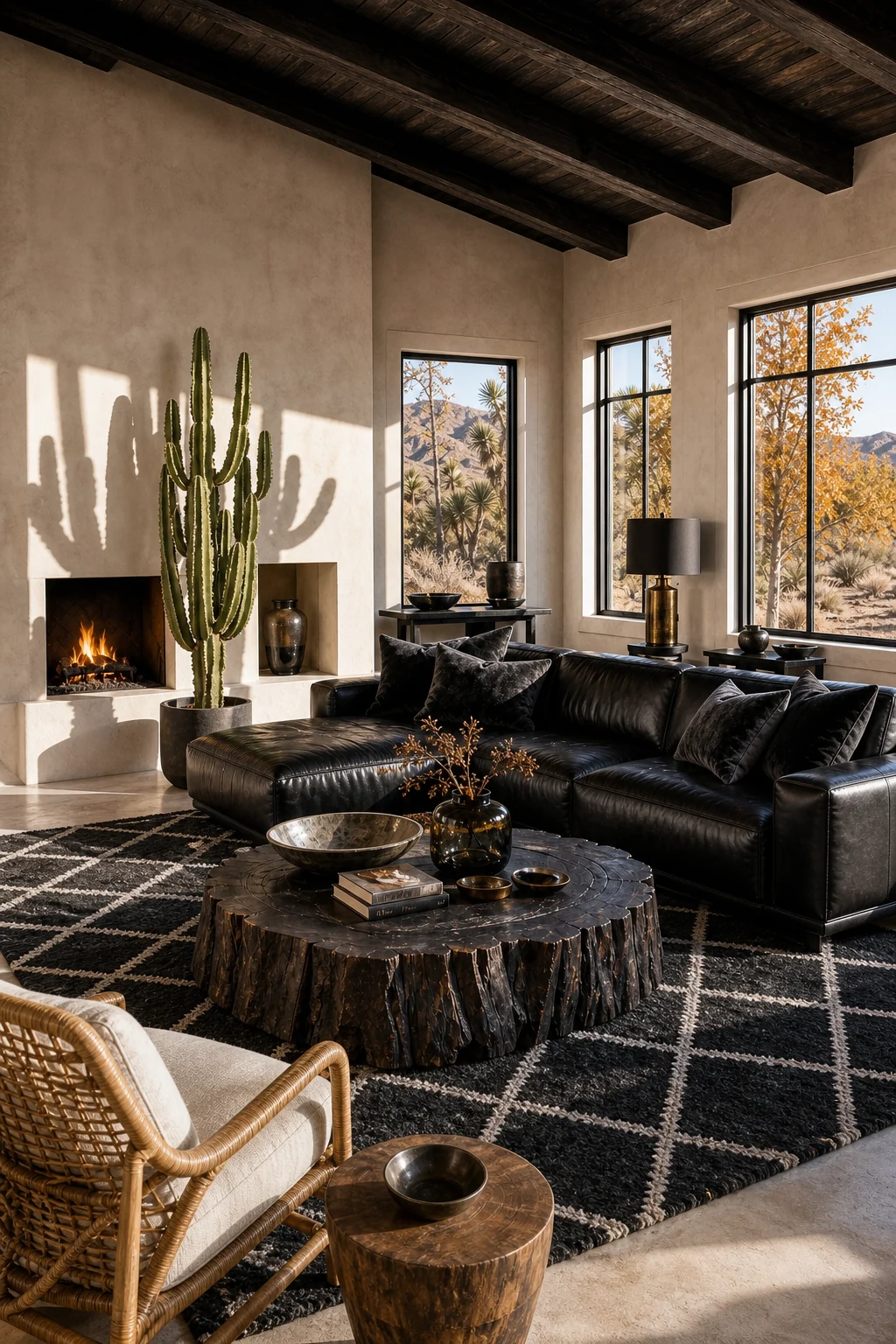
This translation table serves as your definitive guide to balancing the room’s layers. By adhering to these specific material assignments, you prevent visual chaos and maintain the deliberate tension between the earthy shell and the slick, shadow-drenched furnishings.
| Design Layer | Desert Boho Role | Noir Role | The Bridge Decision |
|---|---|---|---|
| Shell | Bone-white adobe plaster walls | Black steel window frames | High-contrast, raw architectural envelope |
| Large Furniture | Low-slung, modular lounge proportions | Tailored black leather upholstery | Relaxed seating in formal materials |
| Textiles | Chunky, tactile woven textures | Dark charcoal and obsidian tones | Graphic black-and-white geometric flatweaves |
| Lighting | Earthy, heavy-weight bases | Smoked glass and dark bronze | Sculptural fixtures with polished finishes |
| Accents | Foraged branches and large cacti | Sharp geometry and high gloss | Organic shapes casting cinematic silhouettes |
Using this framework ensures that neither aesthetic accidentally bleeds into the other’s designated territory. The architecture remains exclusively organic, the primary seating remains strictly tailored, and the accents negotiate the space between them with calculated, high-contrast precision.
Light and Architecture: Cinematic Shadows
Lighting acts as a crucial bridge, shifting bright desert daylight into dramatic, cinematic shadows. The architectural framing of the windows dictates how the natural environment interacts with the interior, turning the landscape into a graphic, high-contrast composition that emphasizes depth.
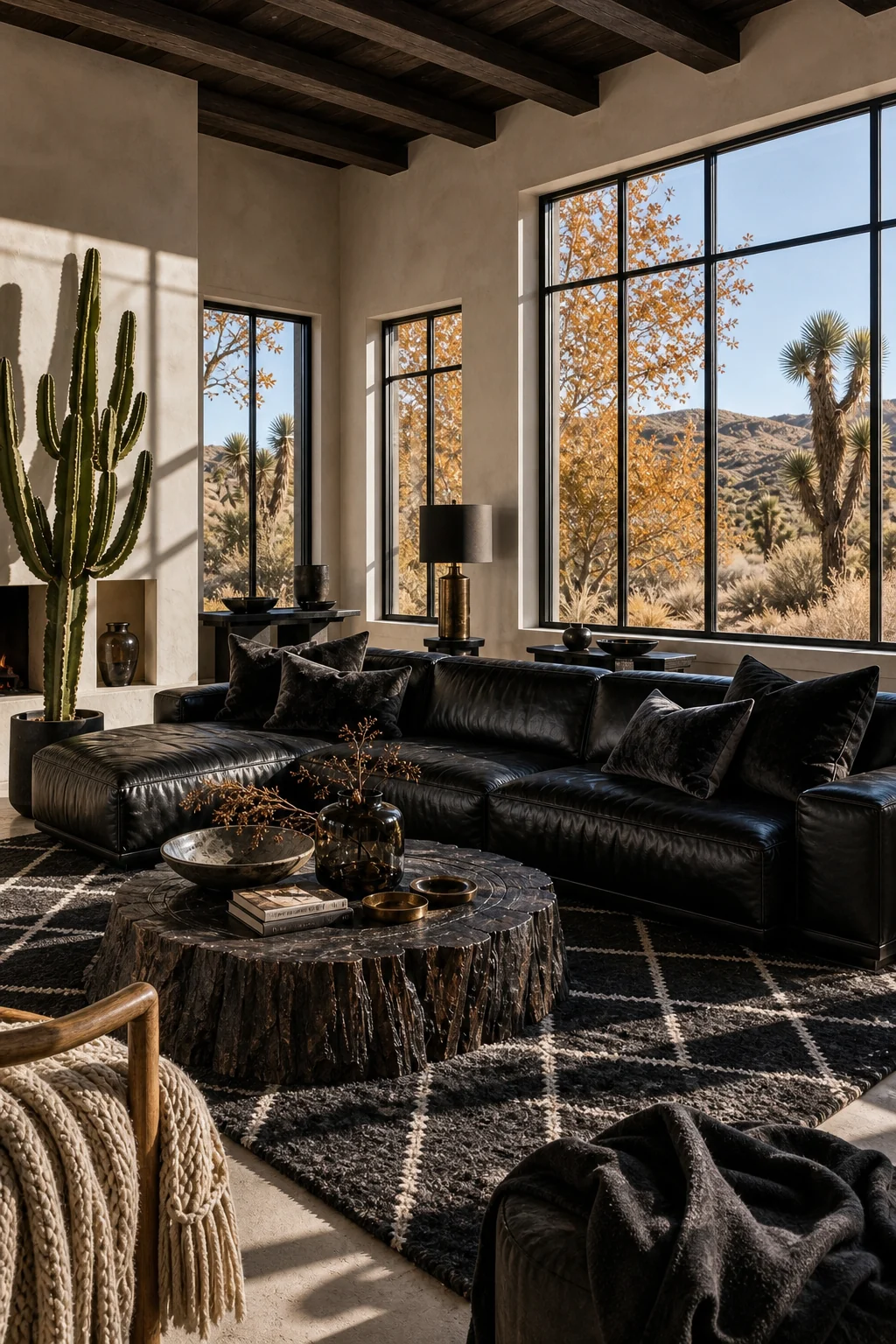
Large black steel frames act as a strict noir lens for the organic desert boho landscape outside. As autumn sunlight pours through, it casts cinematic, high-contrast graphic shadows across the dark charcoal rug, unifying both visual languages in a single moment.
- Prioritize bright, balanced daylight to keep dark, obsidian surfaces clearly readable and inviting rather than gloomy.
- Position large architectural plants near windows to generate graphic, high-contrast shadow play across the interior walls.
- Frame the organic, sun-bleached exterior views with strict, geometric black steel mullions for instant visual tension.
Style the Details: Tactile Restraint
Small styling moments are where the high-contrast tension feels the most deliberate and polished. Accessories must be chosen carefully to ensure the room never tips too far into rustic territory or becomes overwhelmingly sleek, modern, and devoid of natural character.
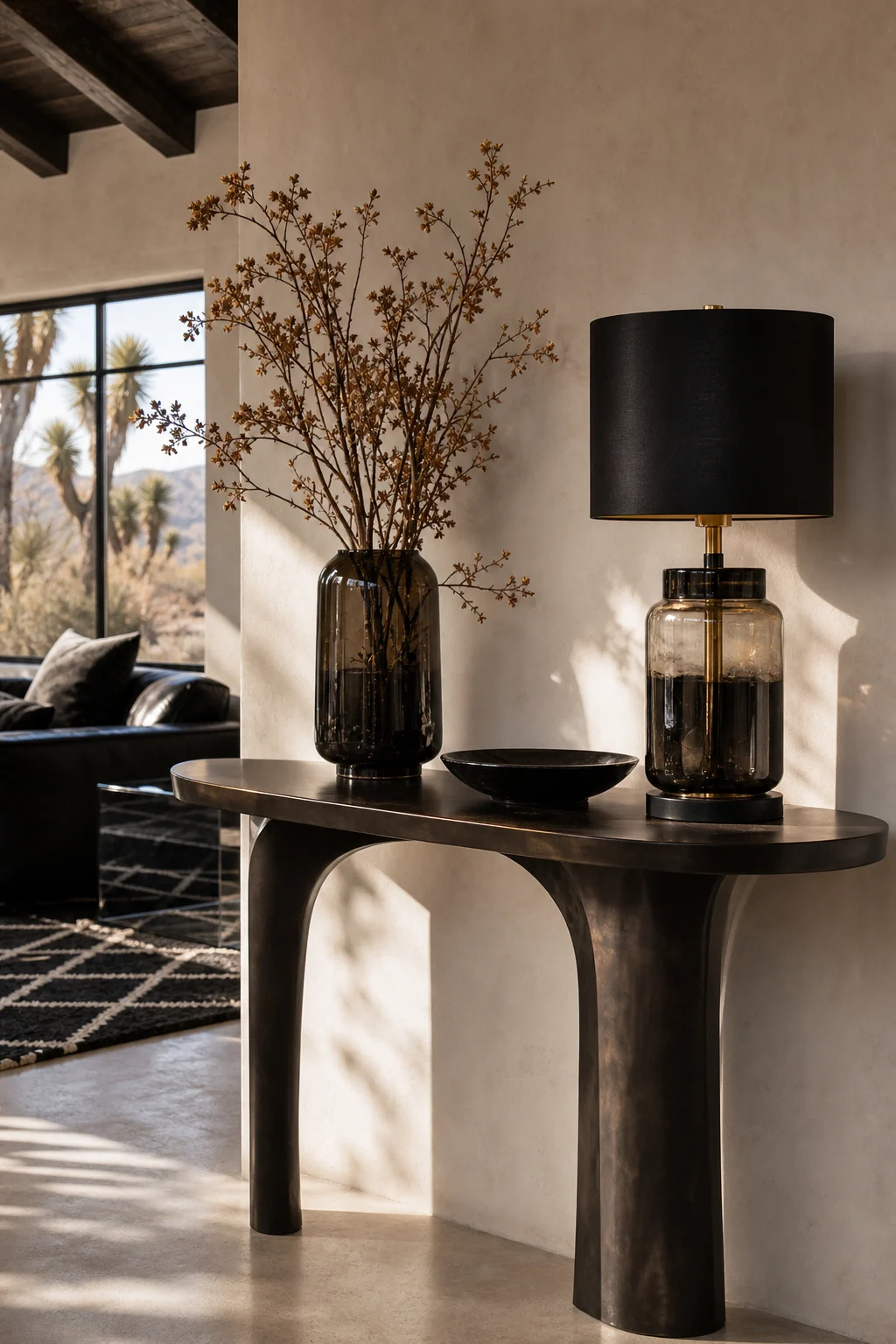
Balancing slick smoked glass and dark bronze metal accents with dry, foraged desert flora achieves perfect equilibrium. These smaller items reinforce the core concept, ensuring that every tabletop vignette reflects the broader architectural contradiction introduced by the walls and sofa.
- Source ebonized raw wood accent tables to maintain dark, textured warmth throughout the seating arrangement.
- Install smoked glass and dark bronze table lamps for polished, moody illumination during the evening hours.
- Anchor the primary seating zone with a dark charcoal geometric Moroccan flatweave rug for graphic impact.
- Display dry, foraged branches inside sleek, matte black ceramic vessels to merge organic shapes with dark hues.
Adapt It: Transitional Hallways
This specific design tension translates effortlessly to transitional spaces by scaling down the heavy furniture. Corridors and entryways offer excellent opportunities to experiment with the aesthetic balance before committing to a massive living room overhaul or purchasing a large sectional.
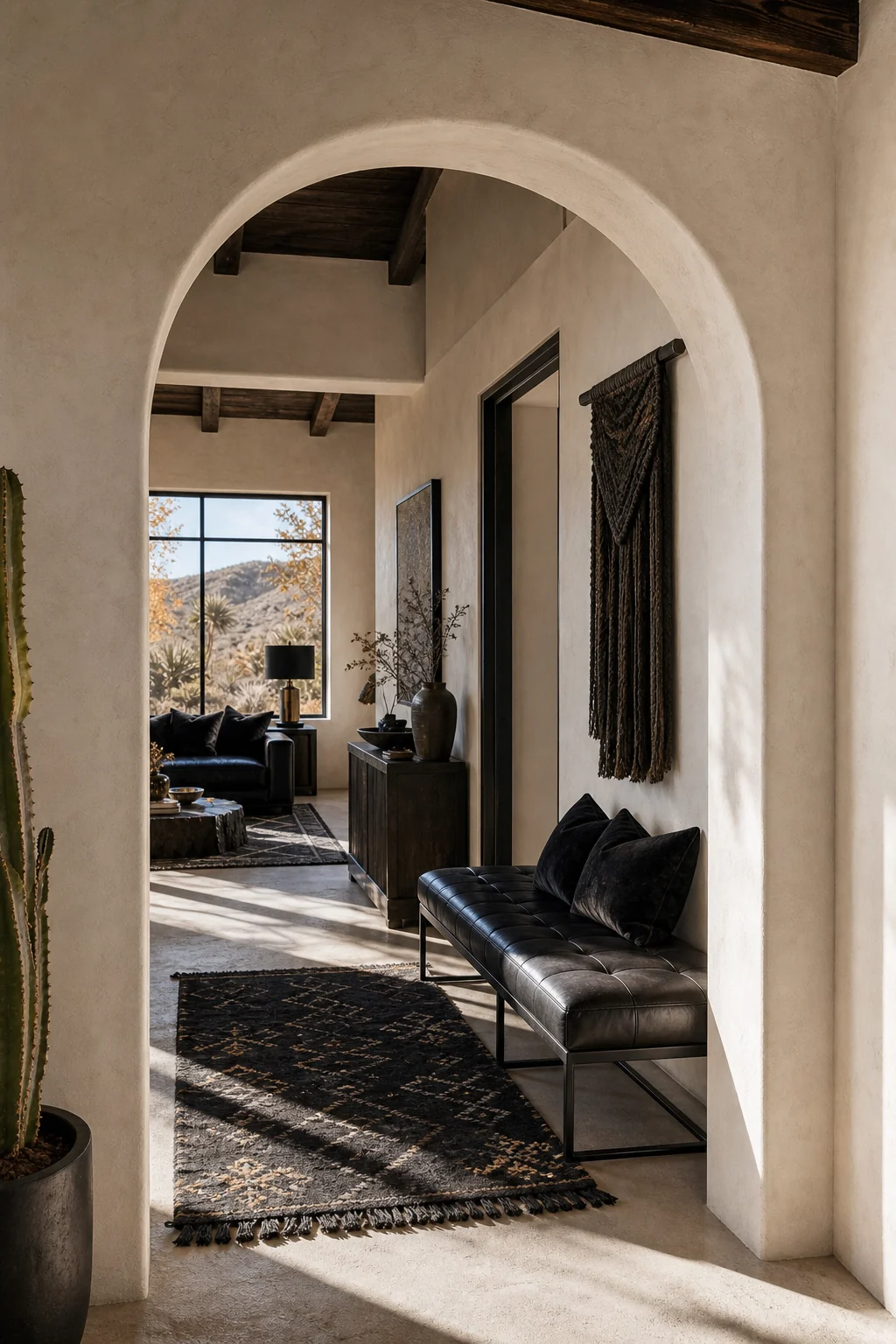
Deploy dark hardware and sleek leather benches against raw plaster archways to activate these narrow passages. The stark contrast immediately establishes the home’s dual personality, ensuring the aesthetic flows logically and beautifully from the front door directly to the lounge.
- Scale down the furniture footprint to prevent narrow corridors from feeling visually oppressive or overly crowded.
- Rely on dark bronze hardware against bone-white doors for immediate, low-effort noir contrast in small spaces.
- Place a single, tailored black leather bench beneath a raw, organic plaster archway for maximum visual impact.
- Use minimal, sculptural lighting fixtures to keep the ceiling plane clean, unobstructed, and highly sophisticated.
Avoid the Costume: Balanced Integration
A successful room avoids looking like a themed movie set or a confused split personality. The execution requires restraint, ensuring that the moody cinematic elements never completely overpower the relaxed, sun-bleached origins of the space, maintaining a highly curated equilibrium.
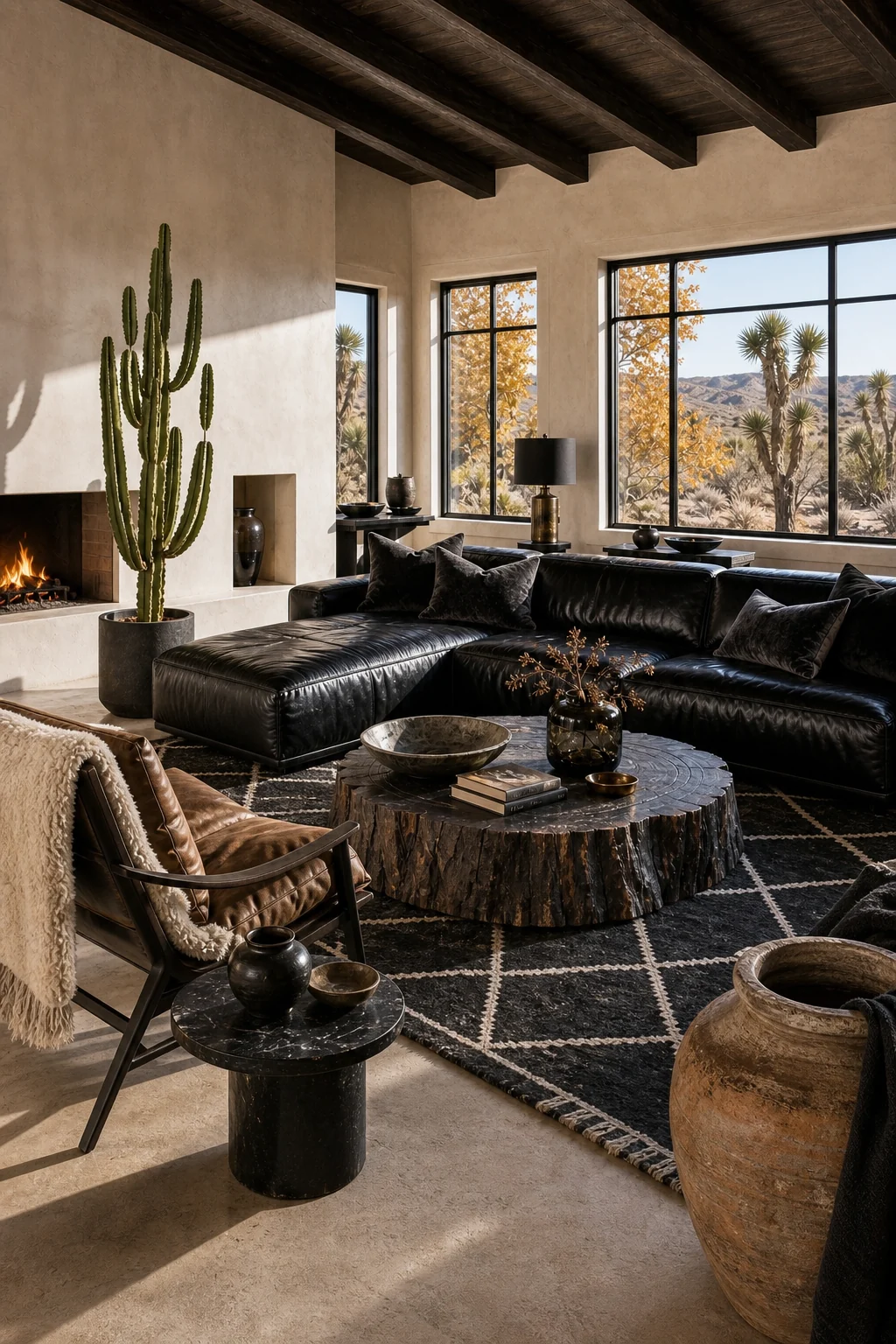
Neither style should dominate the final composition; the magic lies entirely in their constant, balanced friction. When the dark, tailored upholstery and the raw, organic architecture are woven together evenly, the resulting living room feels effortlessly sophisticated and deeply intentional.
Ultimately, the success of this space relies on its unwavering commitment to contradiction. By forcing the airy looseness of the desert to coexist with the sharp tailoring of a cinematic shadowscape, you create a living room that is entirely unforgettable.