
Adobe Meets Bauhaus: Dining Room
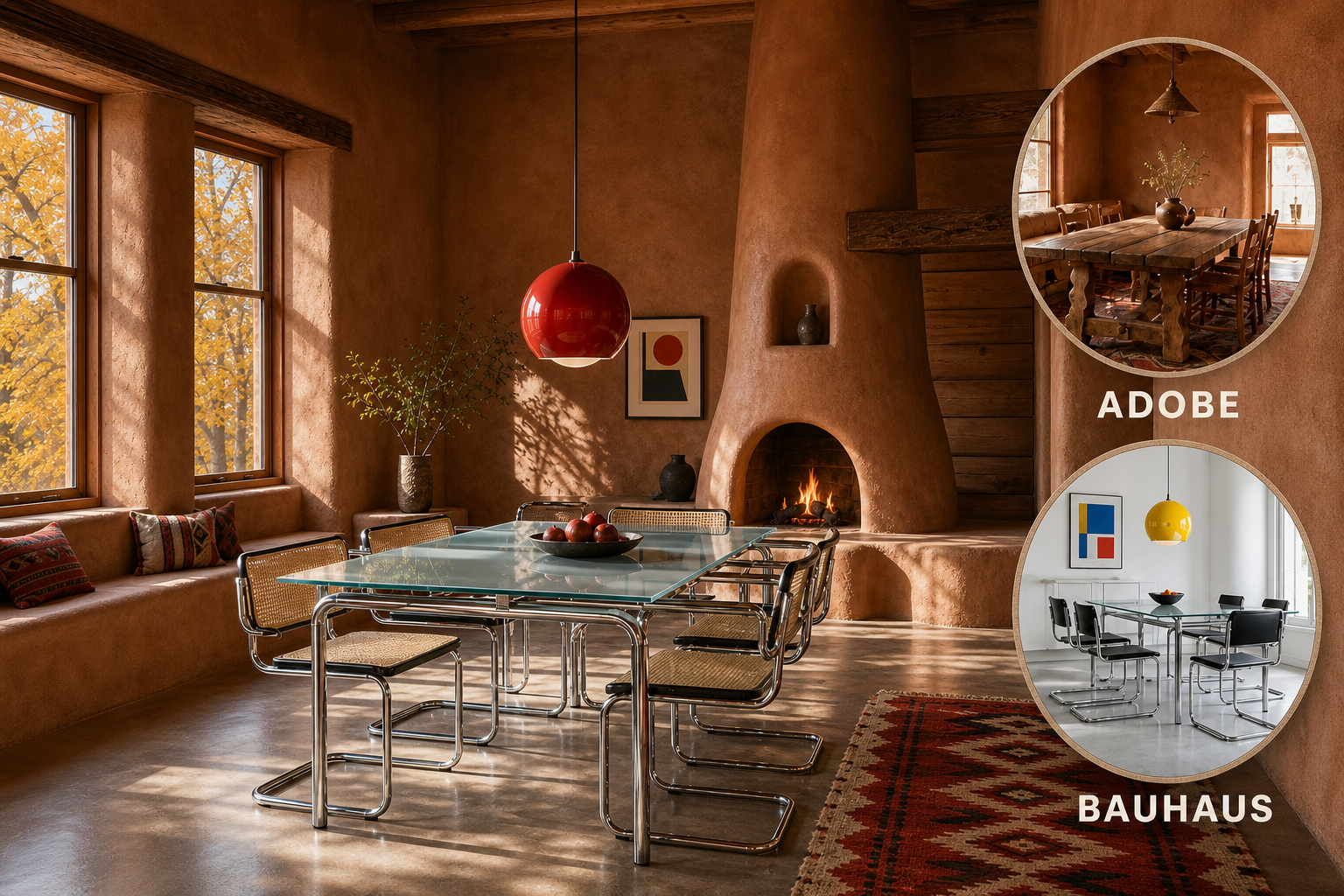
The heavy, hand-molded organic mass of traditional earth architecture clashes instantly with the weightless precision of industrial steel. We resolve this profound tension by letting Adobe dictate the sweeping architectural shell while Bauhaus controls the crisp, cantilevered furniture.
Style A language
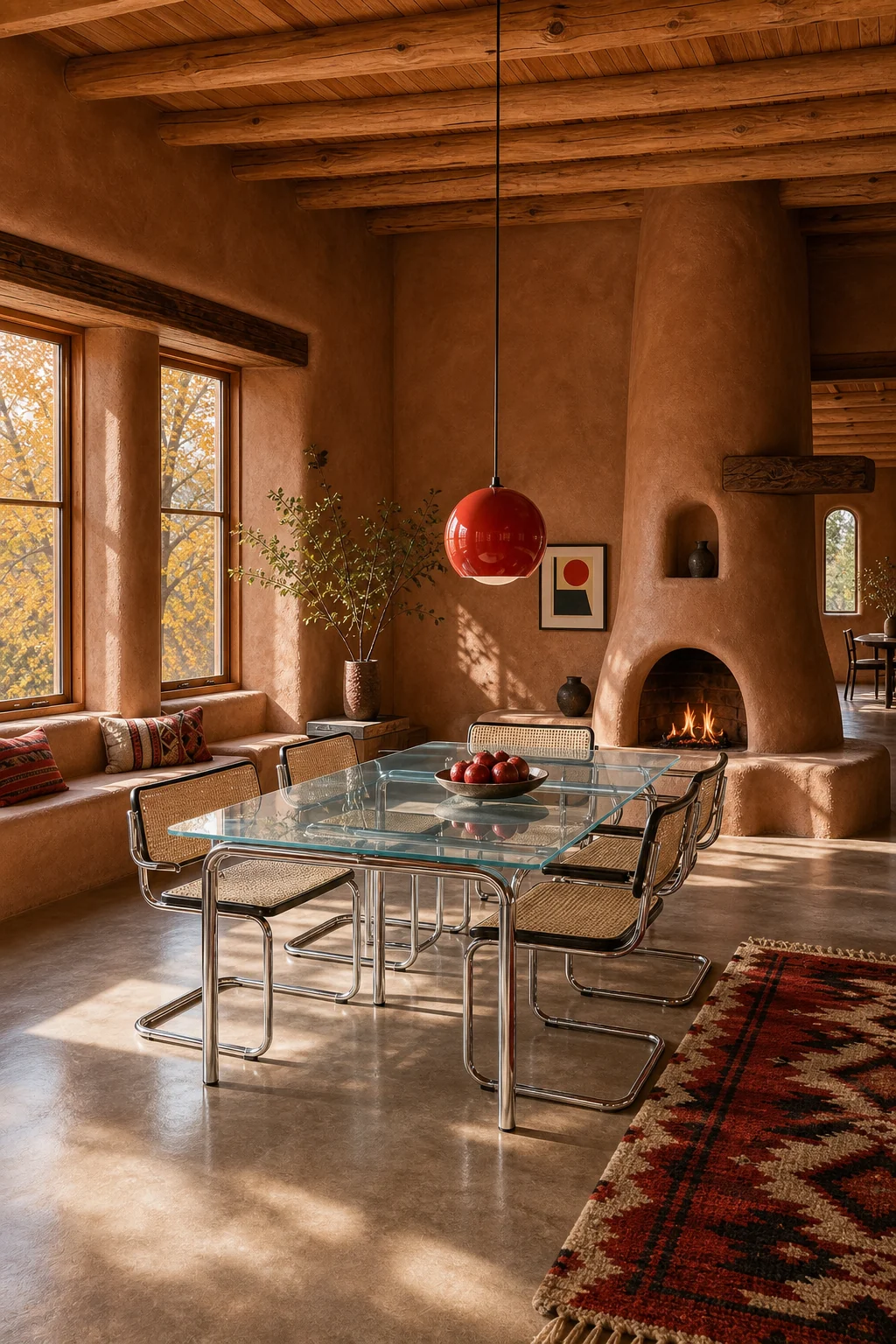
Traditional earth architecture demands immense physical space, establishing a heavy, organic baseline that profoundly grounds the entire dining room. Thick, hand-troweled terracotta plaster walls and softly rounded corners define this architectural shell, rooting the home deeply into its environment.
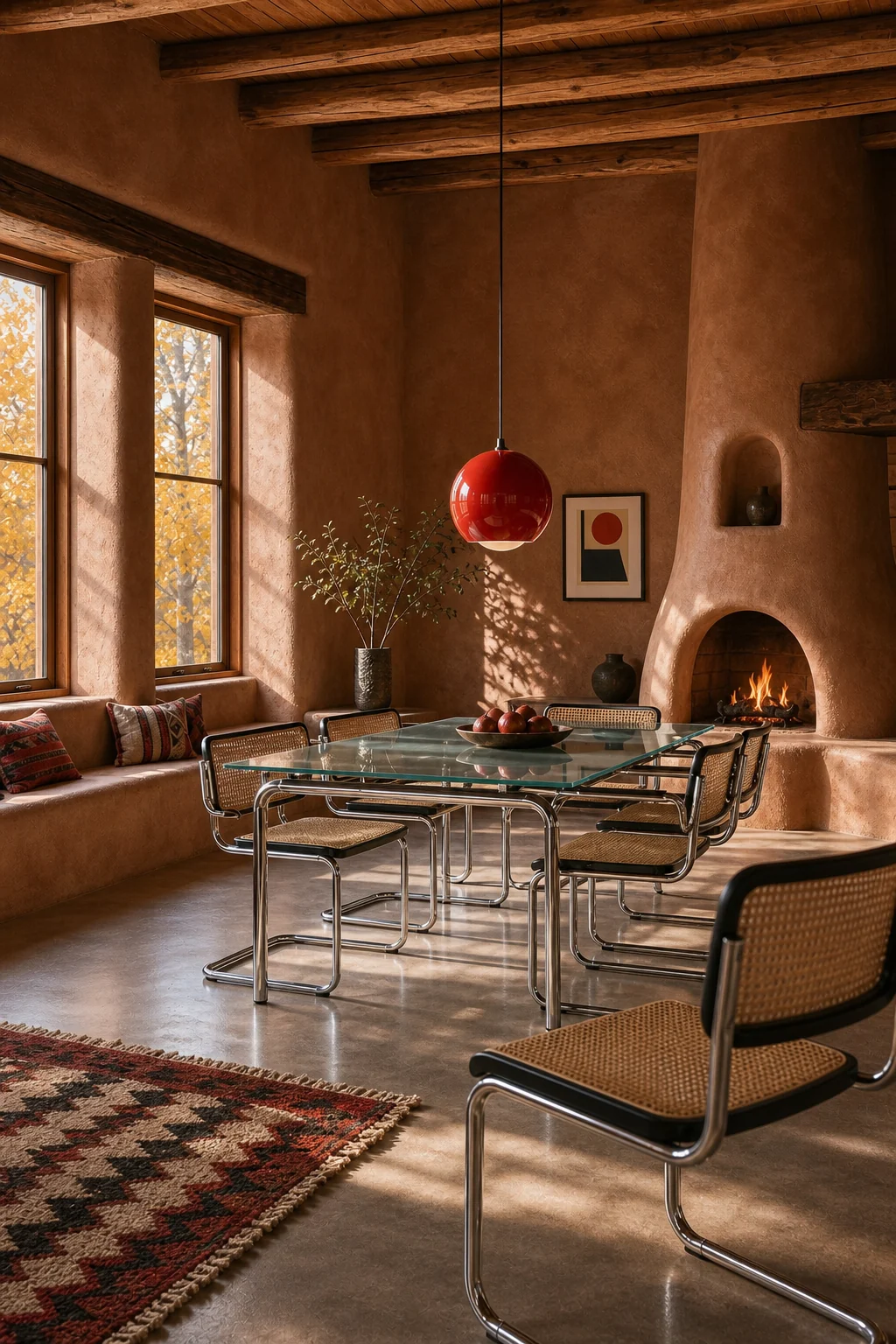
This earthen envelope creates a remarkably warm, tactile backdrop that actively prevents industrial additions from feeling sterile. The sweeping curves and built-in bancos of Adobe architecture offer a forgiving, human-centric environment that perfectly absorbs strict interventions without losing warmth.
By allowing the masonry to dominate the perimeter, you create a protective visual boundary. This deep sense of enclosure is exactly what gives you the freedom to experiment with radically lightweight, transparent furnishings in the center of the room.
Style B language
Against these sweeping earthen curves, machine-age modernism introduces a necessary, razor-sharp contrast. This precise geometry keeps the dining room from feeling bogged down by historical weight, injecting a crisp, forward-looking energy that successfully wakes up the heavy foundational space.
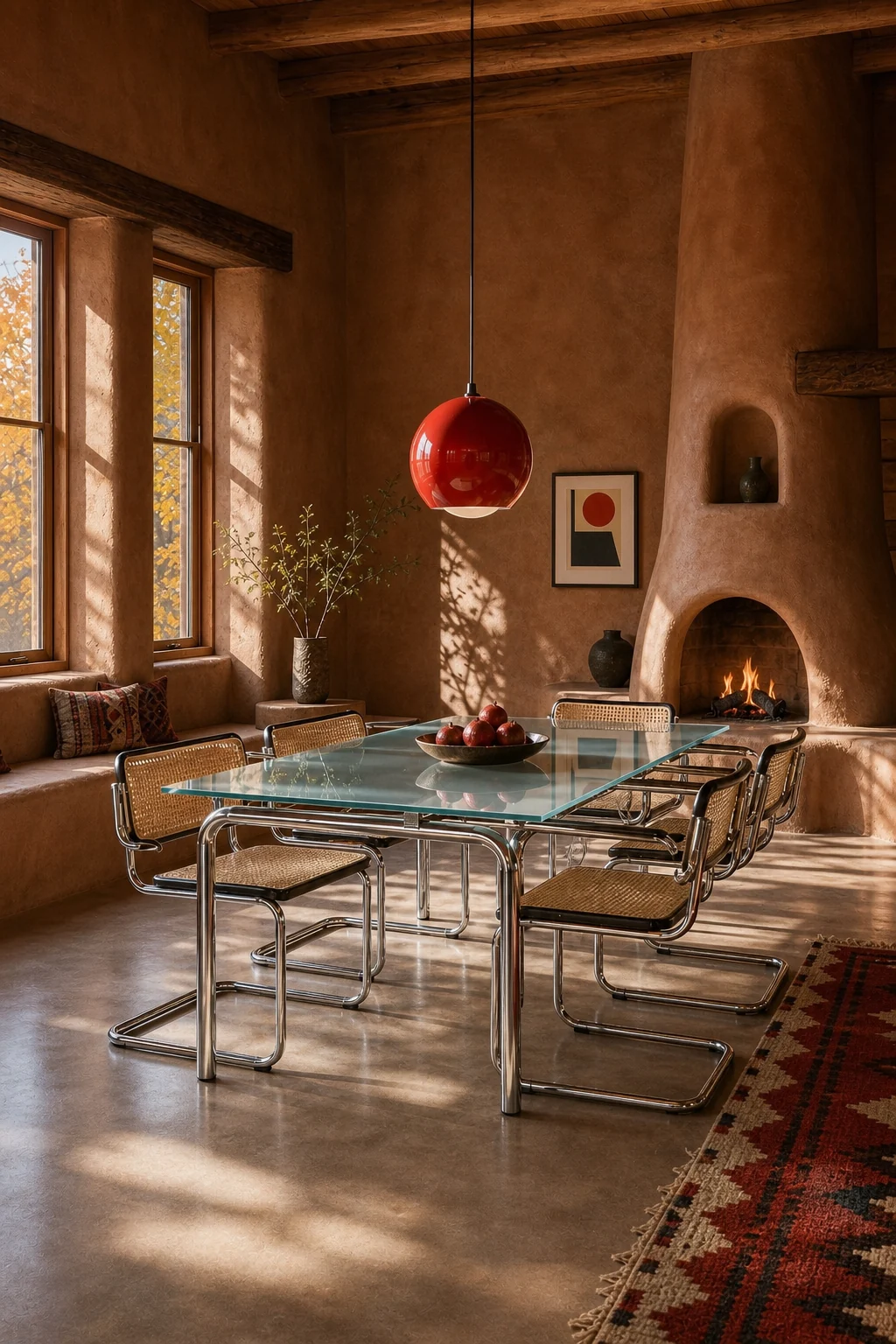
Weightless precision cuts through the rustic mass with undeniable clarity. A strict frosted glass table and cantilevered tubular steel chairs float lightly within the heavy space, proving that industrial materials can feel incredibly elegant when framed by organic earth.
- Choose polished tubular steel chair frames that actively reflect ambient natural light to reduce visual weight.
- Select woven natural cane seating to introduce a breathable, lightweight texture that softens the rigid metal framework.
- Prioritize strict, right-angled glass tables to aggressively contrast the softly rounded corners of the hand-plastered walls.
The bridge
Connecting raw earth to polished chrome requires a shared philosophical foundation rather than a shared historical era. Both aesthetics champion honest, unadorned materials above all else, refusing to hide their structural realities behind decorative facades or unnecessary ornamental layers.
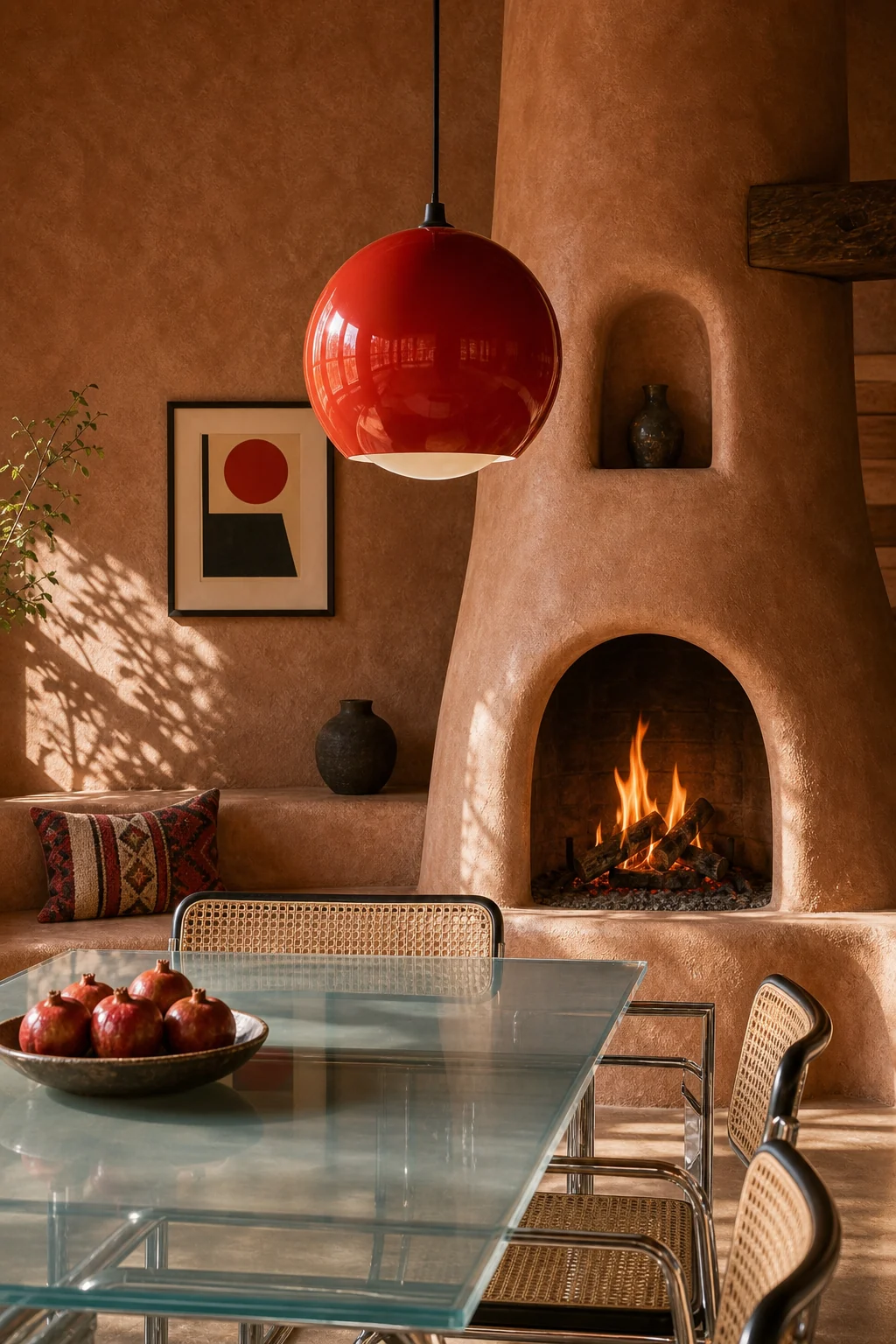
We emphasize this profound connection by deliberately aligning specific shapes across the two distinct styles. A spherical primary-red pendant light directly echoes the rounded, cylindrical volume of the traditional kiva fireplace, creating a brilliant geometric dialogue between contrasting materials.
When you strip away the excess ornamentation from both eras, you are left with pure, undeniable structural truth. This shared dedication to functionalism allows a hand-carved wooden lintel to exist perfectly alongside a machine-extruded steel tube without visual friction.
Build the room
Assembling this dining space means assigning strict, uncompromising roles to your chosen materials. They must seamlessly complement the architectural envelope rather than compete with it, ensuring the heavy walls and the lightweight furniture operate together in perfect functional harmony.
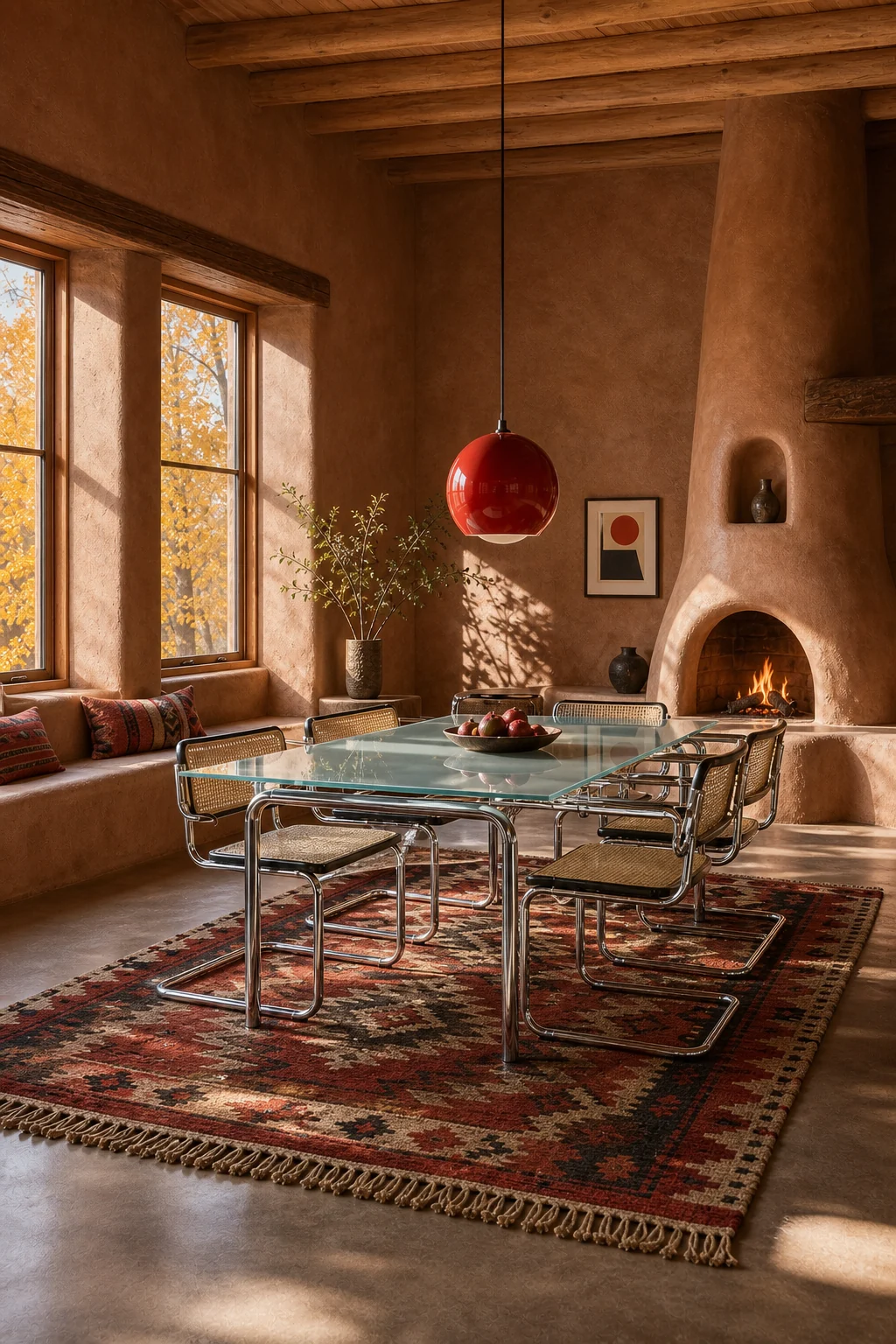
A successful Bauhaus dining set floats effortlessly inside the thick Adobe envelope. Achieving this delicate balance requires a precise translation of materials across every single design layer, ensuring neither aesthetic overwhelms the core function of the welcoming dining space.
| Layer | Style A role | Style B role | Bridge |
|---|---|---|---|
| Shell | Thick terracotta plaster walls, exposed wooden lintels, and sweeping organic curves | Crisp white gallery moments offering necessary visual relief from the heavy masonry | Unadorned surfaces that highlight raw structural shapes rather than applied decoration |
| Furniture | Built-in curved plaster bancos grounding the perimeter of the room | Cantilevered tubular steel chairs and strict frosted glass dining tables | Functional seating solutions executed purely without any excess visual bulk or ornamentation |
| Textiles | Woven geometric Southwestern rugs anchoring the floor with deep regional history | Black leather upholstery and natural cane chair backings for lightweight breathability | Flat, highly durable textures presented in warm, honest, and natural tones |
| Lighting | Deep-set window frames casting heavy, high-desert shadows across the plaster | Enameled spherical pendants delivering precise, machine-made illumination from above | Unobstructed directional light designed to highlight bold, singular architectural fixtures |
| Accents | Hand-molded raw clay vessels resting quietly on solid masonry surfaces | Primary-colored abstract art injecting concentrated bursts of modernism into wall niches | Pure geometric shapes executed exclusively in raw, uncompromised natural materials |
Reviewing this translation table reveals the underlying logic of the entire space. Every single object must justify its presence through either heavy, grounding mass or sharp, reflective geometry, leaving absolutely no room for confused, hybrid transitional pieces.
Light and architecture
The ultimate success of this pairing relies heavily on how natural daylight interacts with the contrasting surfaces. Golden autumn sunlight becomes a unifying material itself, washing over the disparate textures to create a cohesive, emotionally resonant dining experience.
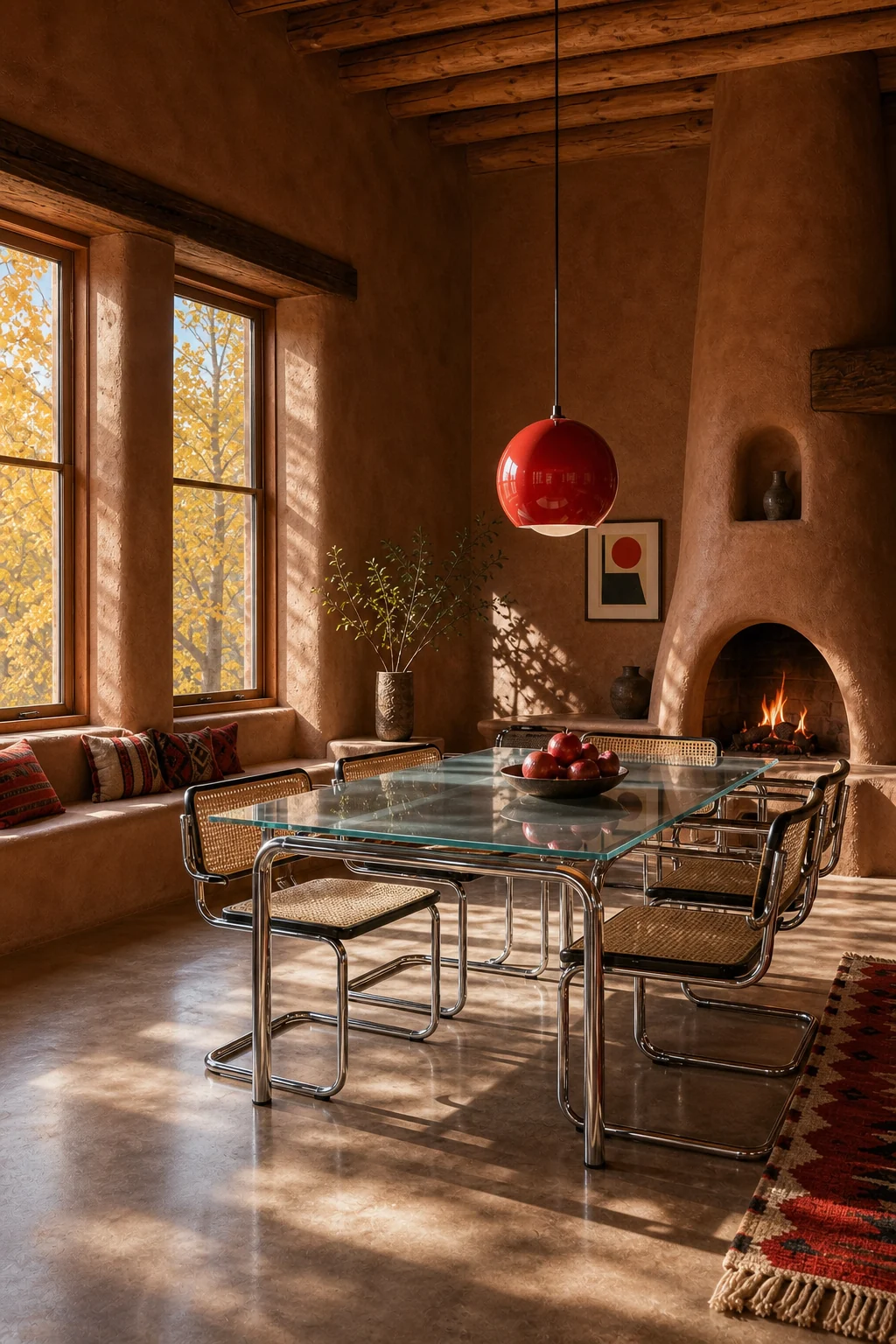
Generous daylight pours through deep-set windows, reflecting brilliantly off the cold chrome table legs. This shared illumination physically warms the industrial steel while simultaneously highlighting the rich plaster textures, proving that thoughtfully managed light can bridge centuries of design.
- Leave deep-set windows completely bare to maximize the incoming directional sunlight throughout the afternoon.
- Position polished chrome furniture strategically where it can catch and reflect the warmest golden rays.
- Allow crisp shadows to naturally emphasize the tactile imperfections of the hand-troweled wall textures.
Style the details
Smaller accessories must rigorously maintain the strict material honesty established by the larger furniture. Every object brought into the dining room should serve a distinct geometric or textural purpose, avoiding the trap of meaningless decorative clutter entirely.
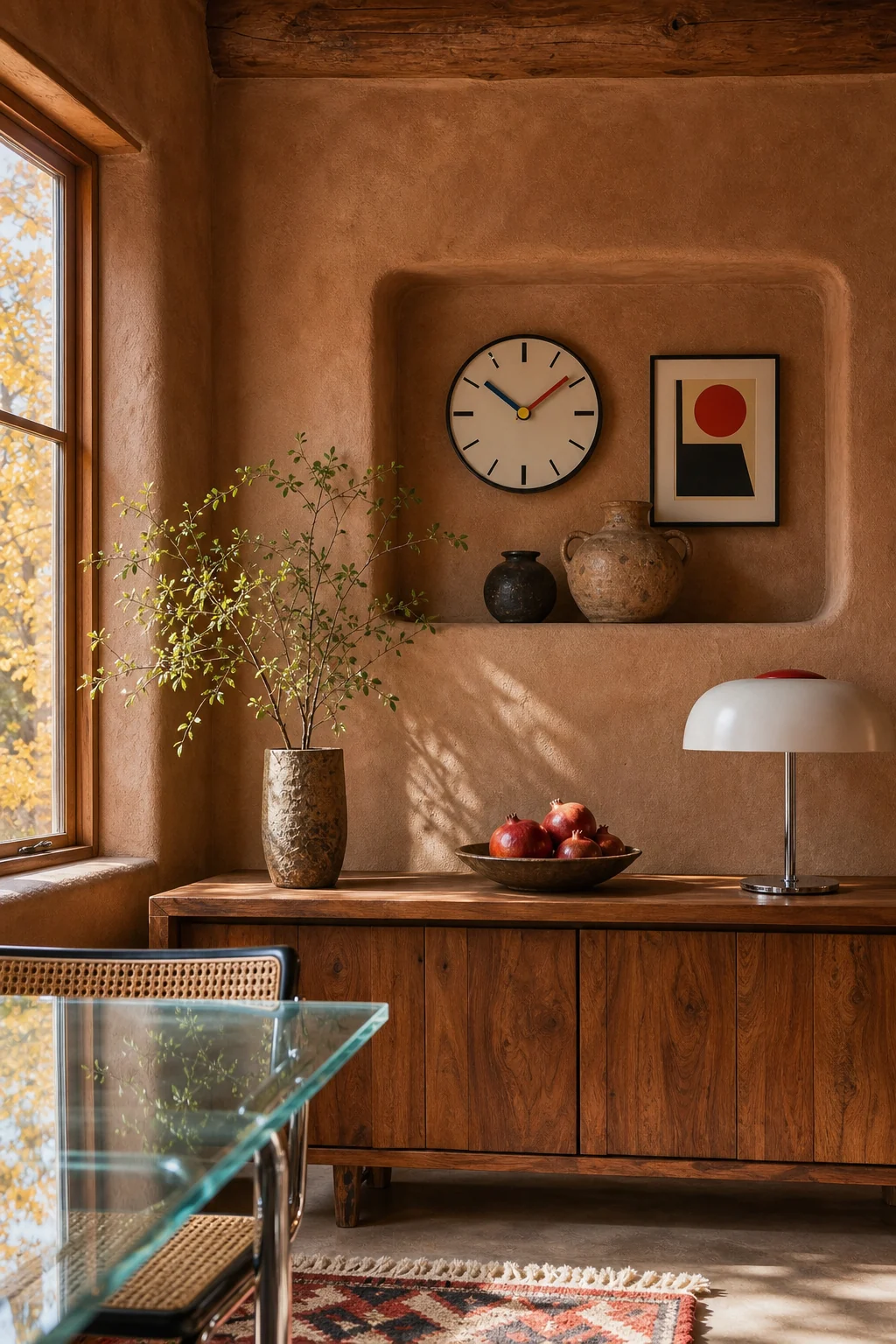
Primary-red enameled accents and strict geometric art prints pop brilliantly against the muted terracotta background. These concentrated bursts of modernism require immense restraint to remain effective, acting as precise punctuation marks rather than overwhelming the organic earthen canvas.
Restricting your palette to these specific categories prevents the room from feeling like a chaotic antique store. The disciplined application of primary colors ensures that every modernist addition feels like a deliberate, highly curated architectural intervention.
Adapt it
You can confidently carry this exact tension into transitional spaces by maintaining the same strict material boundaries. The visual weight remains perfectly balanced even as the primary function of the room shifts from formal dining to simple hallway navigation.
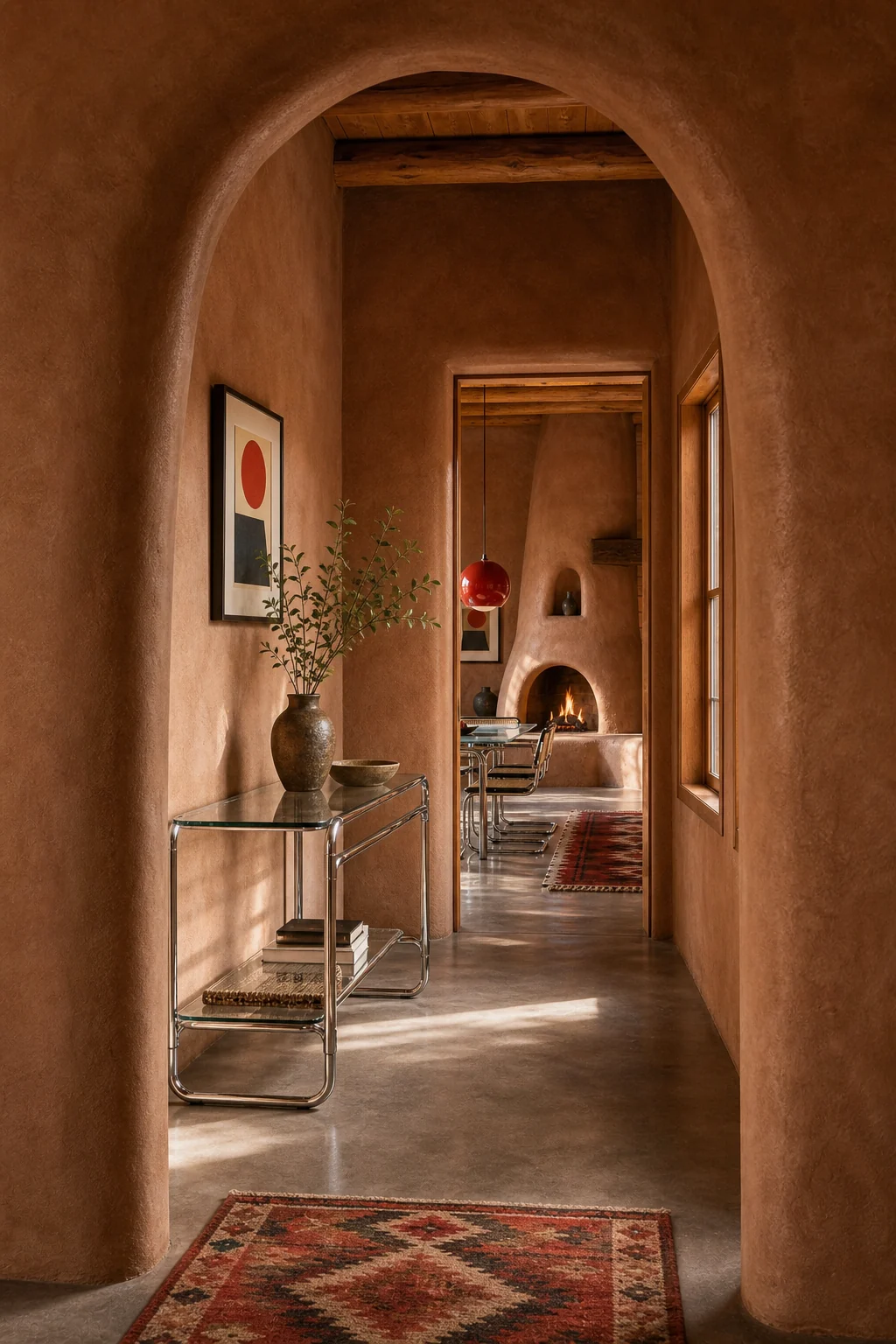
Framing a sleek, glass-topped Bauhaus console table within a thick, arched adobe hallway extends the logic beautifully. The architecture remains undeniably heavy while the furniture continues to float, proving the immense versatility of this specific, hard-won stylistic contradiction.
- Reject any items featuring faux finishes or simulated age that inherently compromises essential material integrity.
- Eliminate decorative wood veneers that intentionally hide the underlying structural reality of modernist steel furniture.
- Embrace raw timber, dried clay, and solid steel exclusively to ensure a truly authentic aesthetic.
Avoid the costume
Pushing too far in either direction turns a highly curated home into a historical diorama or a sterile showroom. Maintaining the balance requires constant, deliberate tension, ensuring neither the rustic earth nor the industrial machine takes total control.
If industrial elements dominate, the room feels like a cold factory. When properly balanced, honest unadorned materials bridge the gap, resolving the contradiction beautifully and leaving you with a dining room that feels profoundly ancient and sharply contemporary.
- Avoid the split personality by ensuring polished chrome touches every functional zone of the room.
- Prevent dominance by keeping the architectural shell entirely earthen, resisting the urge to paint walls.
- Dodge a generic result by insisting on primary Bauhaus colors rather than muted pastel shades.