
Desert Modern Meets Beaux-Arts: Library
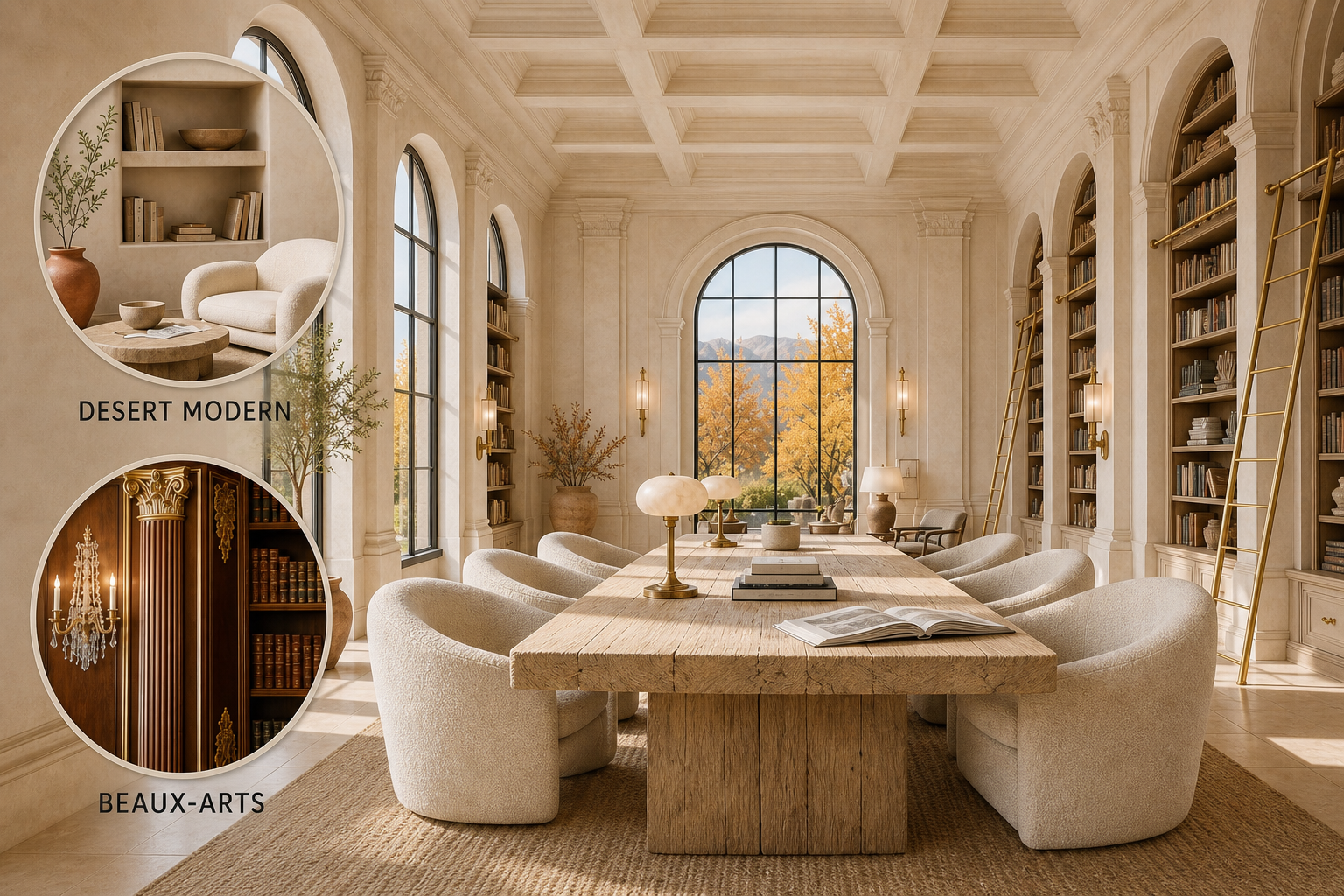
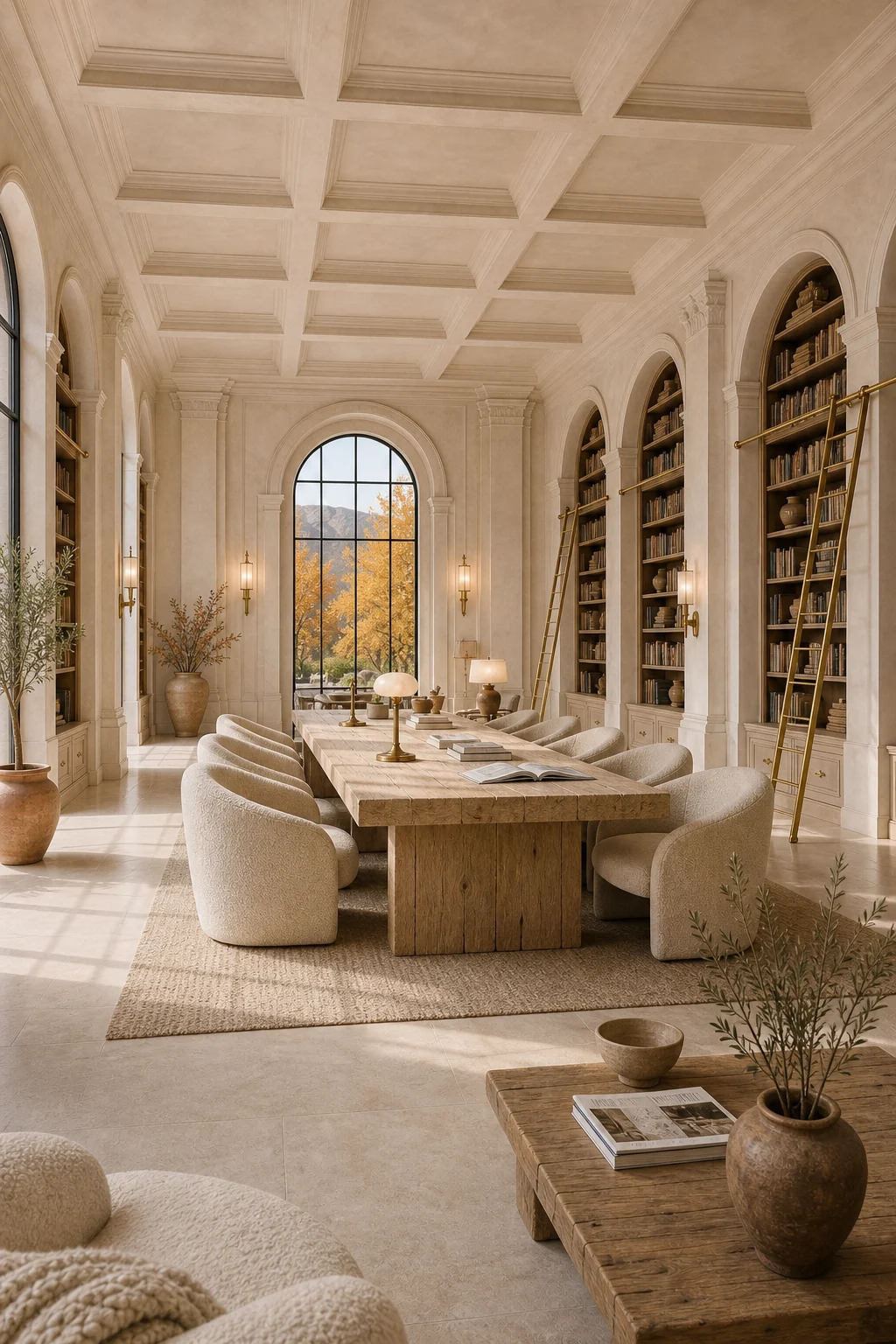
The stripped-down rawness of desert modernism directly opposes the heavily ornamented formality of Beaux-Arts tradition. We resolve this by executing classical proportions and monumental shelving entirely in earthy materials like bone plaster and bleached oak.
Grounding the Grandeur
Bone-colored plaster strips the pretension from classical fluted pilasters, creating a highly tactile shell. This matte, hand-troweled finish grounds the room in the desert modern aesthetic, ensuring the formal architecture feels ancient and earthy rather than stiff, unapproachable, or overly polished.
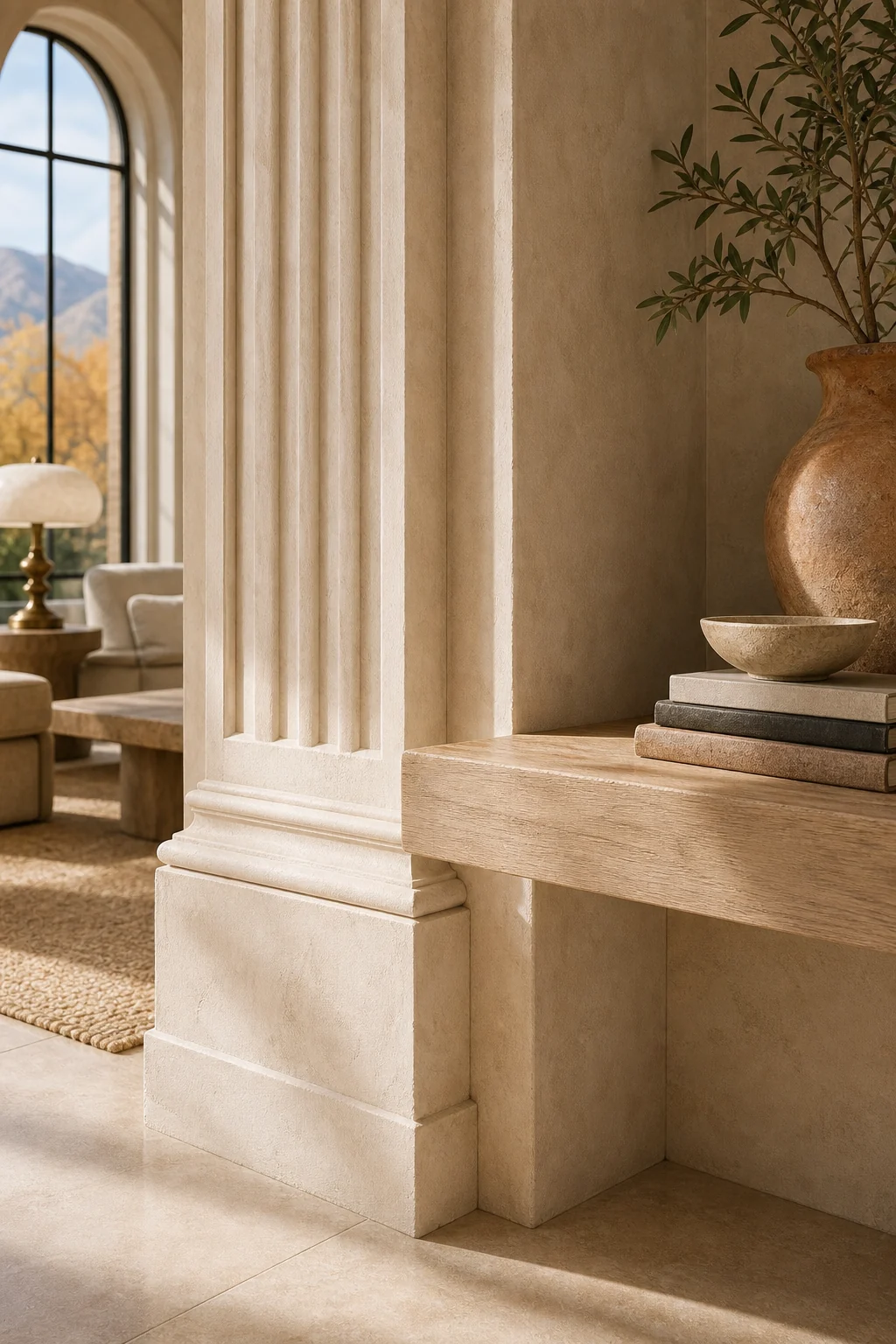
By replacing glossy paint with a monolithic matte application, the ornate classical moldings absorb light rather than reflecting it. This crucial material shift softens the rigid geometry, allowing the grand room to breathe while preparing the eye for rigorous architectural framing.
This foundational rule guarantees that the walls recede into a warm, textural background. By maintaining this strict material discipline, the plaster seamlessly bridges the gap between horizontal desert expanses and the vertical ambition of classical European interior architecture.
Elevating the Earthy
Floor-to-ceiling arched bookcases provide a rigorous Beaux-Arts framework that prevents organic materials from feeling visually messy. Strict symmetry organizes the relaxed textures, elevating the casual nature of desert modernism into something monumental, deeply intentional, and undeniably architecturally significant.
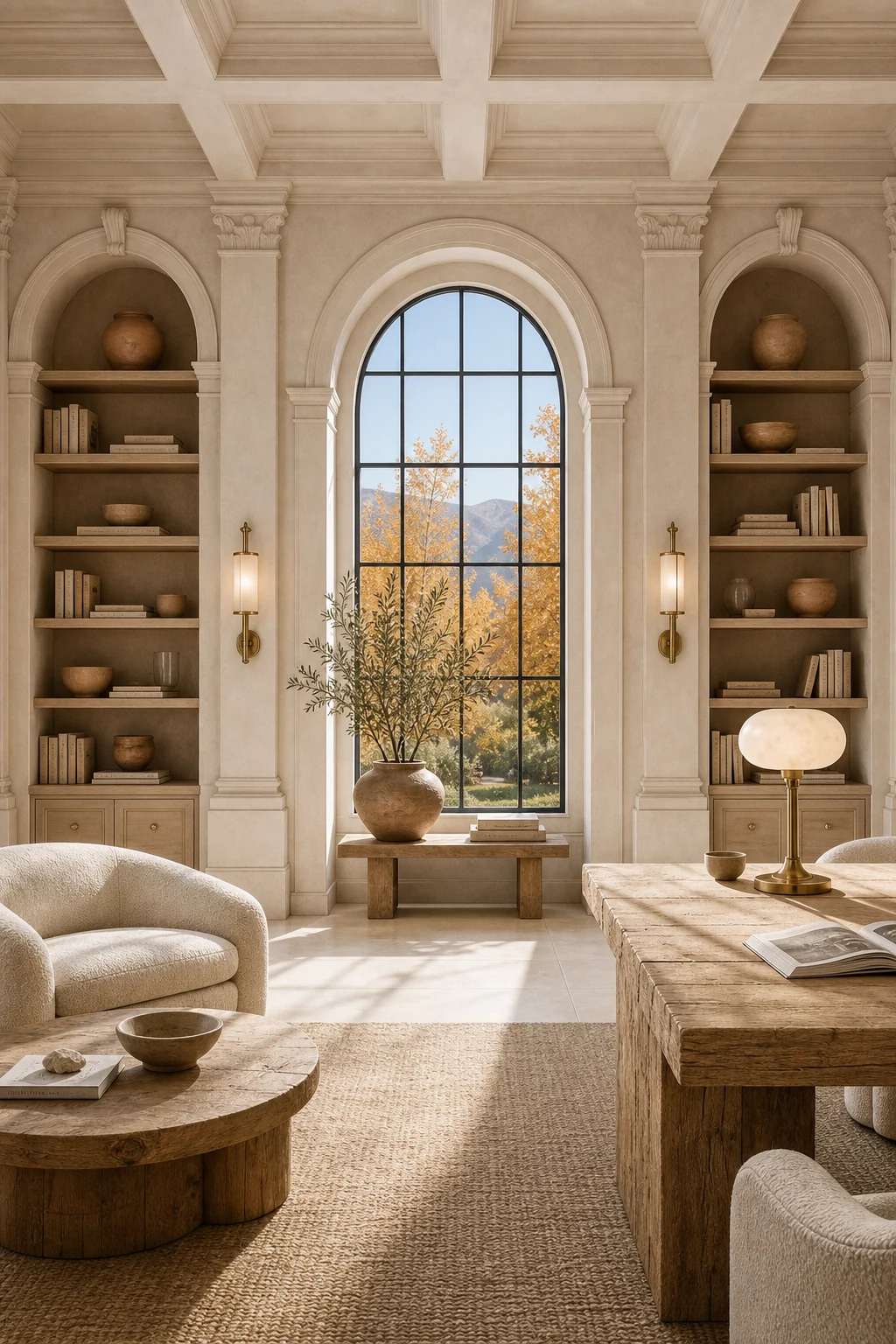
Without this classical skeleton, the earthy finishes could easily blur into an unstructured, cavernous space. The architectural grid demands discipline, framing every raw element with mathematical precision and setting a pristine stage for specific bridging materials to take the spotlight.
- First, align major architectural elements across a strict central axis to enforce formal Beaux-Arts symmetry perfectly.
- Next, mirror your primary shelving units to create balanced visual weight on opposing library walls.
- Then, center the low-slung seating arrangement directly beneath the primary ceiling detail for geometric alignment.
- Finally, maintain identical spacing between all arched bookcases to preserve the rigorous classical rhythm seamlessly.
Materials That Mediate
Alabaster and unlacquered brass offer the elegance of the Gilded Age paired with the raw minerality of the desert. These bridging materials possess an inherent earthiness that respects both the formal classical lineage and the rugged, sun-baked New Mexico landscape.
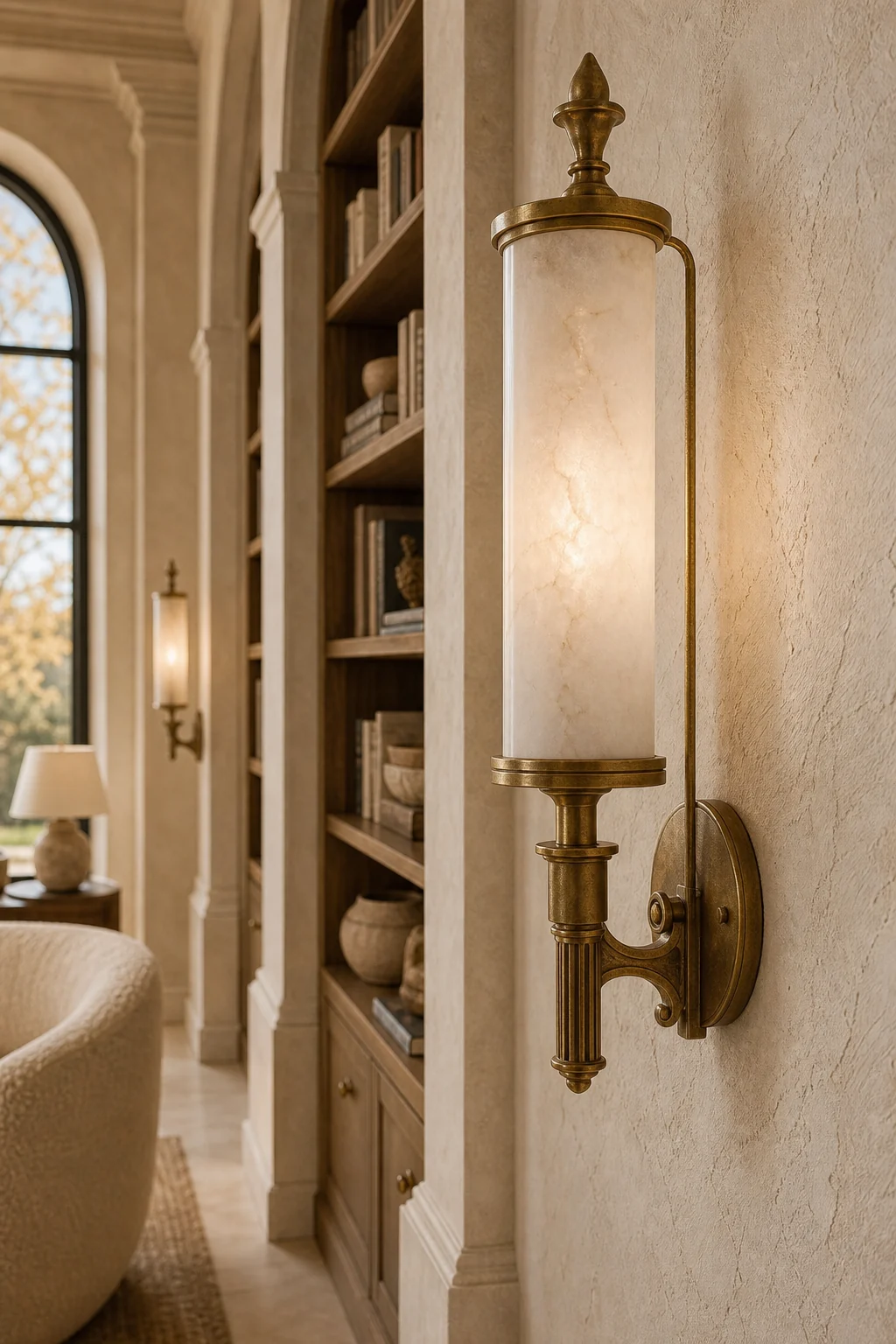
Because alabaster diffuses light like natural stone and brass oxidizes beautifully over time, they feel excavated rather than manufactured. They act as the crucial handshake between the two opposing styles, anchoring the room’s central furniture layout with undeniable tactile grace.
Selecting the right fixtures prevents the space from slipping back into traditional opulence. When these metals tarnish and the stone emits a warm glow, the library feels distinctly grounded, proving that historical grandeur can coexist with an unpretentious, natural soul.
Seating the Contradiction
A monumental, formal reading table introduces immediate Beaux-Arts gravity, but surrounding it with low-slung, nubby lounge chairs disrupts the expected stiffness. This deliberate tension between rigid bleached oak and relaxed bouclé defines the room’s unique, highly inviting character.
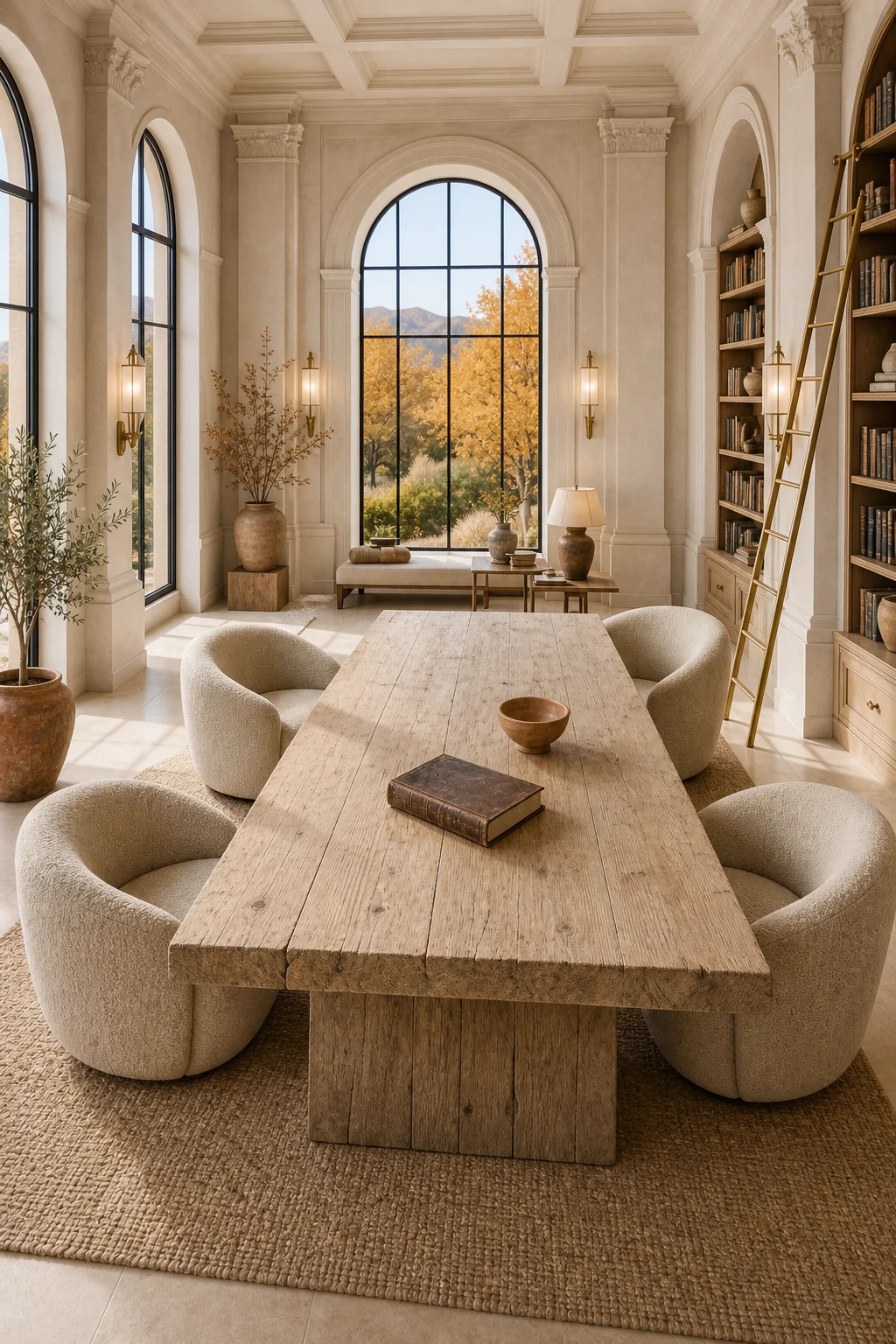
Mapping these interactions across every layer ensures neither aesthetic overwhelms the curated space. The translation table below outlines the exact material and form handoffs required to maintain this delicate equilibrium before addressing the dramatic ceiling architecture hovering directly above.
| Design Layer | desert modern Role | Beaux-Arts Role | Bridge Decision |
|---|---|---|---|
| Shell | Hand-troweled bone plaster walls | Coffered ceilings and fluted pilasters | Monolithic matte application |
| Furniture | Low-slung organic lounge seating | Strictly symmetrical room layout | Monumental bleached oak reading table |
| Textiles | Warm sand nubby bouclé | Tailored, tight upholstery profiles | Heavyweight matte linen drapery |
| Lighting | Earthy, stone-like translucence | Formal sconces and chandeliers | Carved alabaster fixtures |
| Accents | Matte terracotta vessels | Floor-to-ceiling library ladders | Aged unlacquered brass hardware |
By adhering to this strict material distribution, the furniture layout supports the architectural shell rather than fighting it. The heavy oak grounds the center, while the soft, tactile seating invites lingering, perfectly resolving the core stylistic contradiction.
Sculpting with Shadows
Deep ceiling coffers rendered entirely in matte plaster catch autumn daylight to create soft, gradient shadows. This architectural repetition draws the eye upward, celebrating grand Beaux-Arts scale while maintaining a muted, deeply grounded desert modern atmosphere throughout the library.
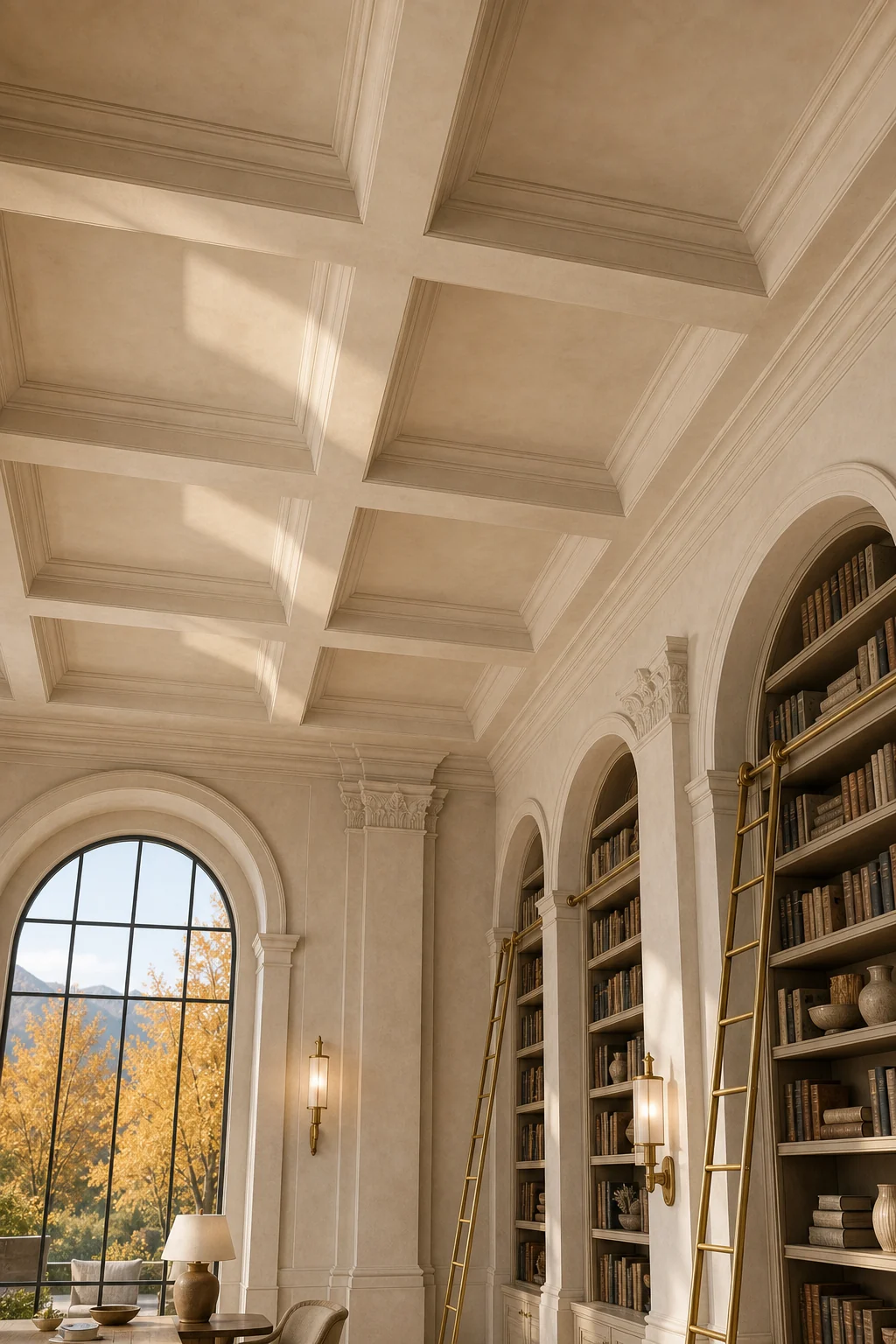
The matte surfaces prevent harsh glare, allowing the natural light to carve out the classical geometry gently. Managing this illumination is critical to keeping the dark surfaces detailed, open, and ready for carefully curated shelf displays along the perimeter.
- Leave tall arched windows uncovered to maximize directional autumn sunlight throughout the entire day.
- Rely on deep architectural reveals to generate natural shadow lines without using dark, heavy paint.
- Use matte finishes exclusively to ensure light diffuses softly across the entire coffered ceiling structure.
- Position alabaster sconces to cast warm, upward illumination into the deep plaster ceiling coffers.
Curating the Shelves
Mixing matte terracotta vessels with antique leather-bound books balances the visual weight on open bookcases. The ceramics provide necessary desert modern negative space against the dense, formal blocks of traditional Beaux-Arts literature and historical reference volumes.
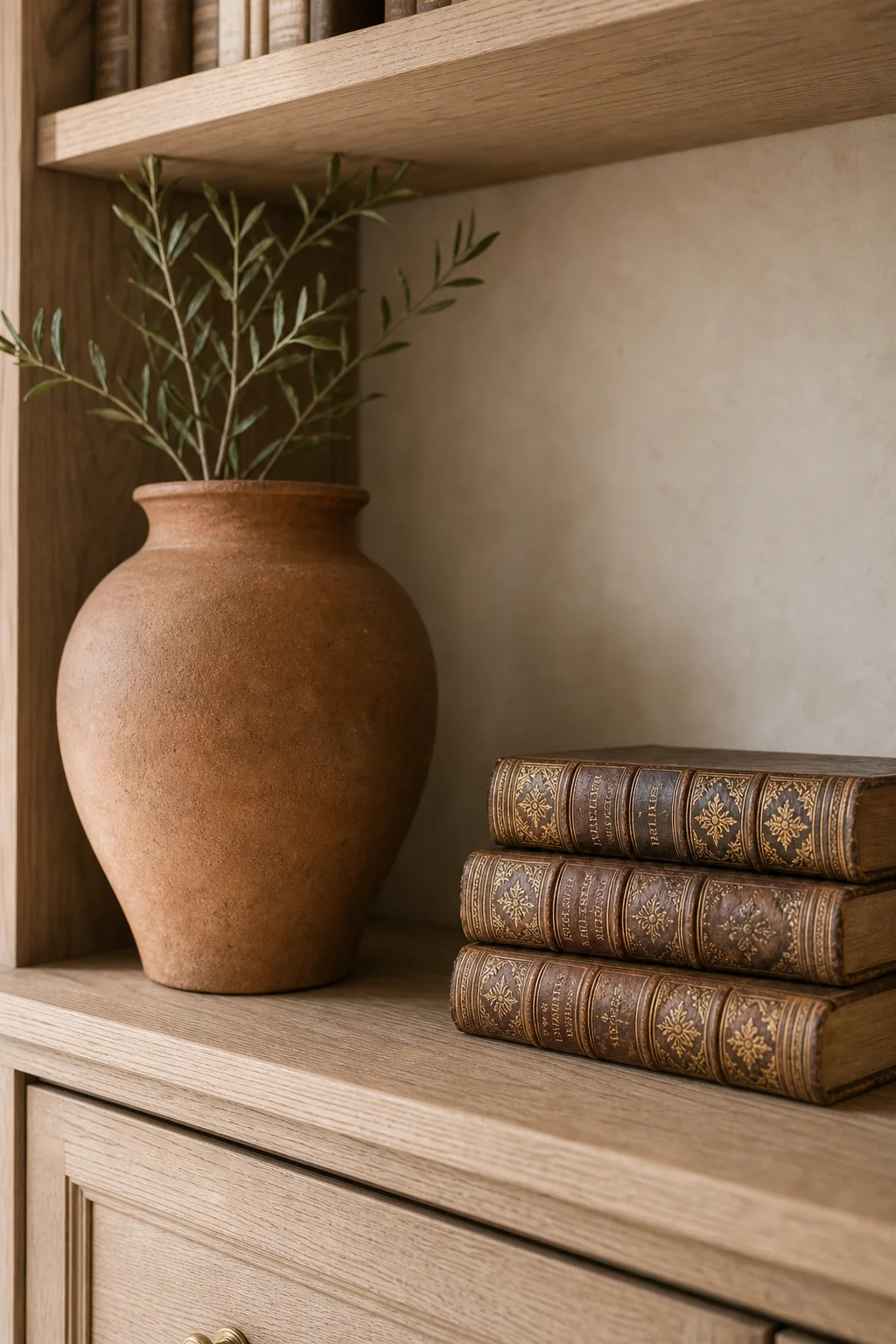
Styling these shelves requires a disciplined edit to prevent visual clutter from ruining the classical symmetry. Every object must justify its placement by contributing either raw, earthy texture or undeniable historical gravity to the broader room narrative.
When sourcing these items, prioritize tactile quality over ornate detailing. The success of the shelves relies on the stark contrast between the smooth, gold-tooled leather spines and the porous, unglazed surfaces of the oversized desert ceramics.
Translating the Threshold
You can carry this aesthetic into adjacent hallways or reading nooks by continuing the plaster finish and brass hardware. Even small transitional spaces benefit immensely from the tension between raw walls and elegant, historically inspired metallic accents.
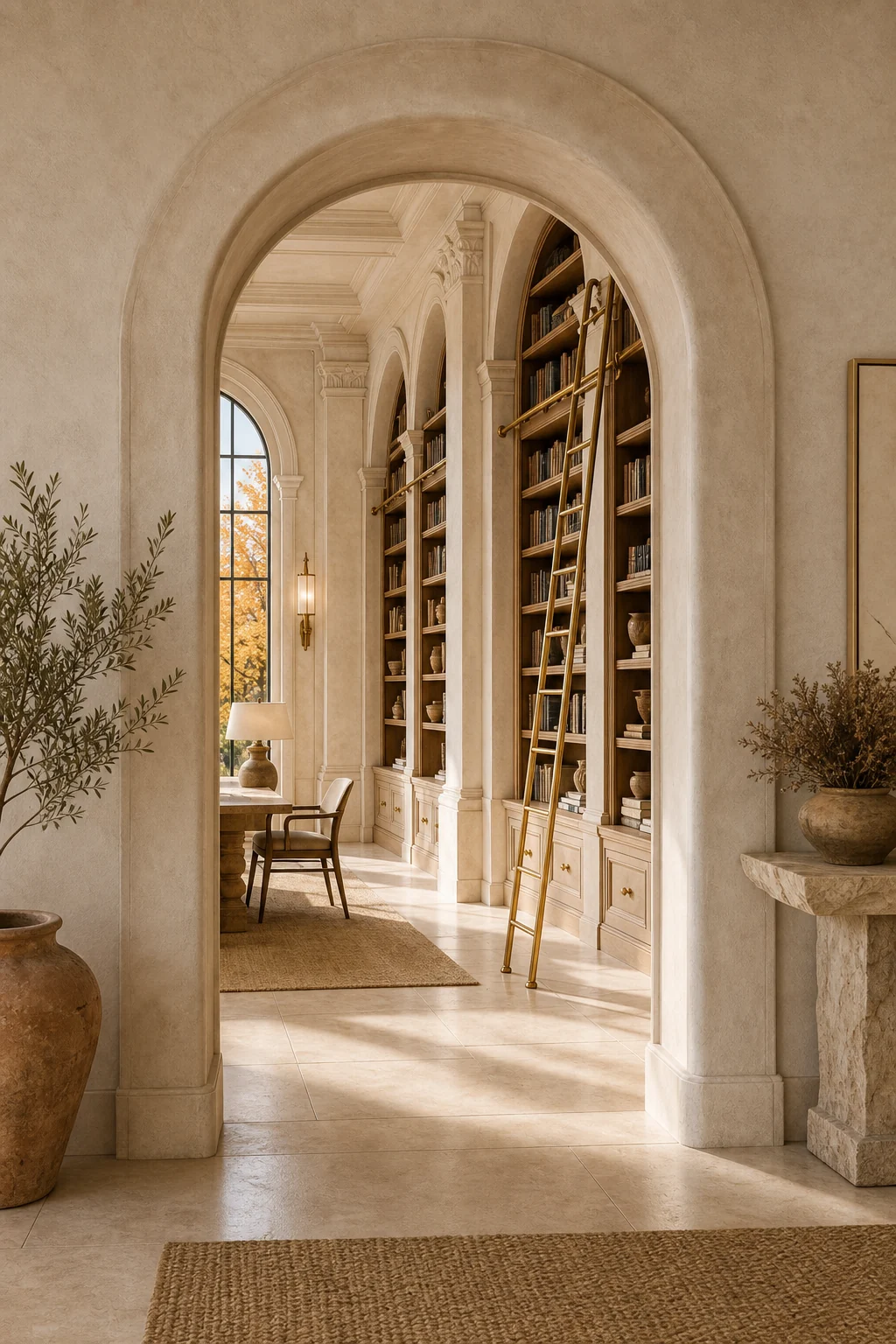
If full-room plastering exceeds the budget, focus on strategic architectural interventions instead. A single well-executed archway or a meticulously styled bookcase can establish the entire narrative without requiring a total, disruptive structural overhaul of your home.
- Apply bone-colored limewash to standard drywall instead of investing in traditional hand-troweled plaster walls.
- Install unlacquered brass hardware on existing built-in cabinetry to elevate basic shelving instantly.
- Introduce a single monumental bleached oak table to anchor the room’s classical layout efficiently.
- Frame standard doorways with simple arched headers to mimic grand Beaux-Arts architectural curves affordably.
Balancing the Extremes
A successful integration relies on strict discipline, ensuring neither style dominates the space. If the classical details become too shiny, or the desert elements too rustic, the delicate tension collapses entirely, leaving the room feeling disjointed and unresolved.
The ultimate goal is a unified environment where opulence and rawness coexist seamlessly. Avoiding common pitfalls ensures the final room feels like a deliberate architectural statement rather than a confused, split-personality compromise between two completely unrelated eras.
- Avoid high-gloss varnishes that instantly push the room into an unwanted, theatrical historical costume.
- Do not split the room into distinct stylistic halves; integrate the materials evenly everywhere.
- Never introduce synthetic fabrics that clash with the warm sand bouclé and earthy palette.
- Resist adding excessive ornamentation that overwhelms the stripped-down, horizontal rawness of the desert aesthetic.