
Functionalism Meets Goblincore: Reading Nook
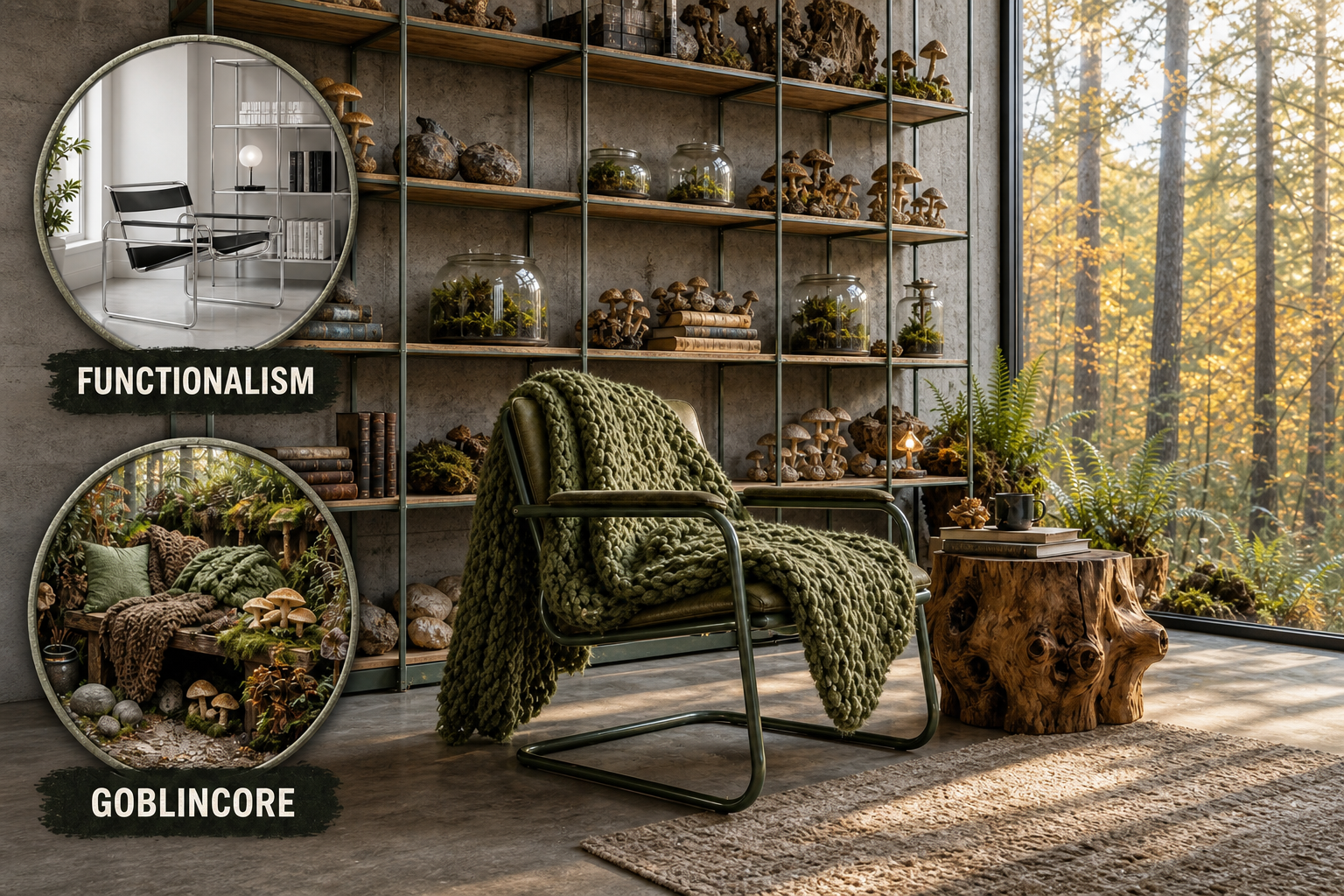
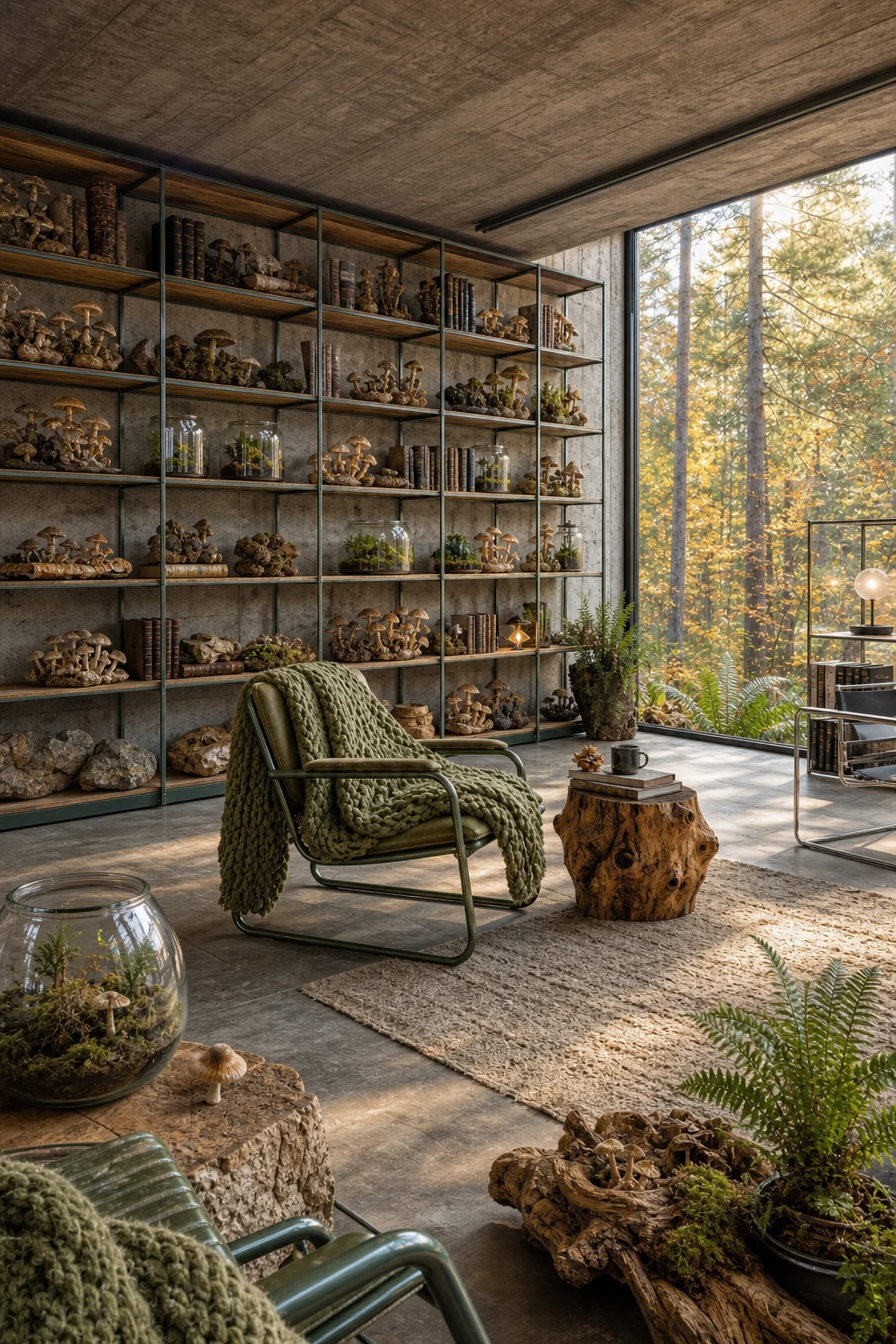
The sterile, machine-made rationality of functionalist geometry clashes with the chaotic, foraged hoarding of goblincore. Strict modular shelving acts as a rational containment grid for organic collections, while tubular steel furniture is softened by earthy textiles.
Functionalist Geometry as a Rational Grid
The defining feature of functionalism is its uncompromising rationality. Here, an exposed board-formed concrete wall establishes a strict architectural shell that refuses to be overwhelmed, providing a brutally honest blank canvas for a highly curated, deeply personal reading nook.
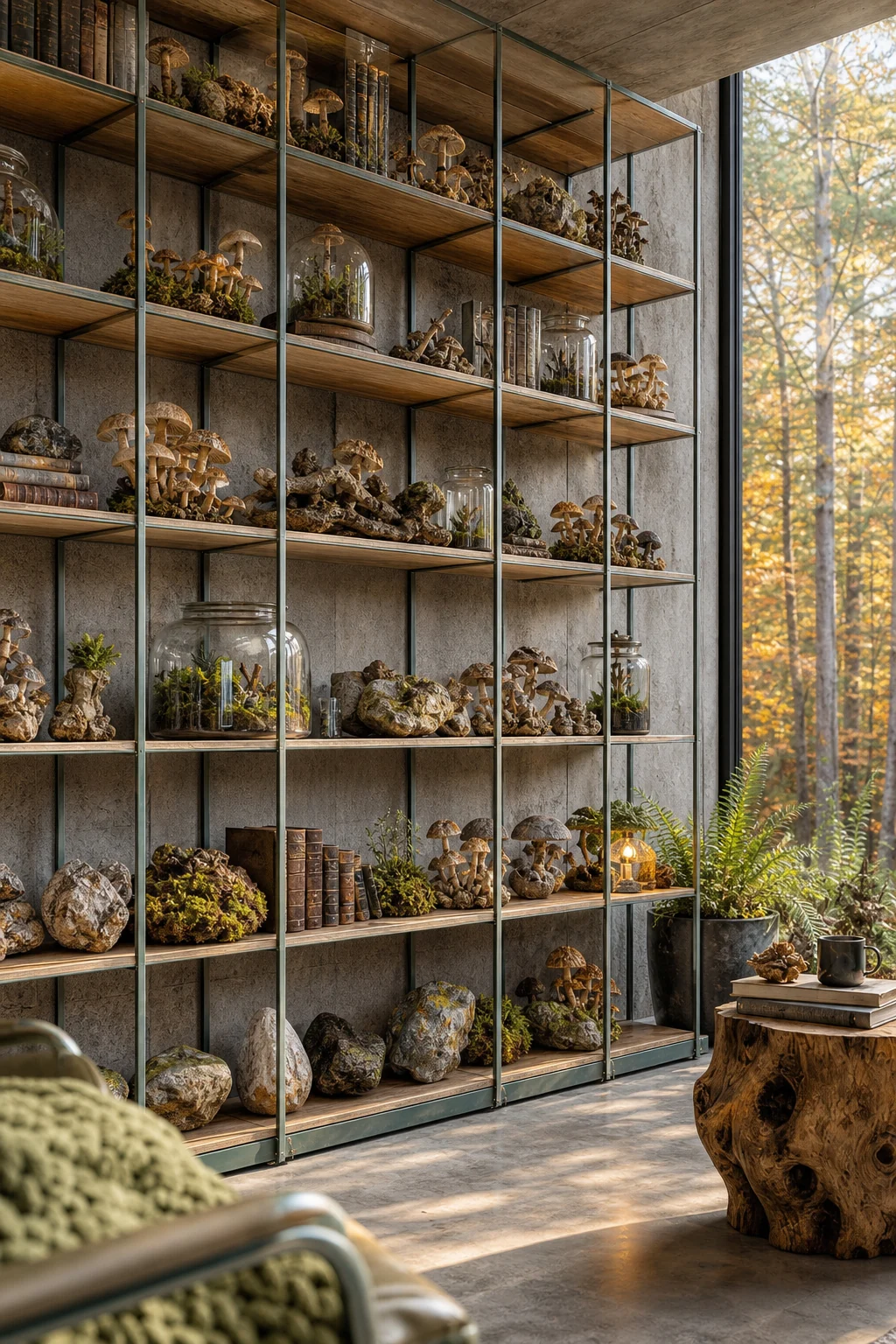
Floor-to-ceiling modular grid shelving creates a predictable, repeating pattern across the entire room. This rigid system forces wild, organic shapes to conform to a highly disciplined visual logic, ensuring the space retains its architectural integrity despite the heavy collections.
By strictly adhering to this containment strategy, the eye is allowed to rest. The grid acts as a visual anchor, ensuring that no matter how chaotic the natural elements become, the room always feels intentionally designed rather than accidentally overgrown.
Goblincore Foraging and Tactile Chaos
Against that rigid backdrop, goblincore introduces an unapologetic celebration of the damp forest floor. Chunky moss-green hand-knit blankets and raw burl-wood surfaces inject vital organic chaos into the otherwise sterile environment, creating a profound and immediate visual tension.
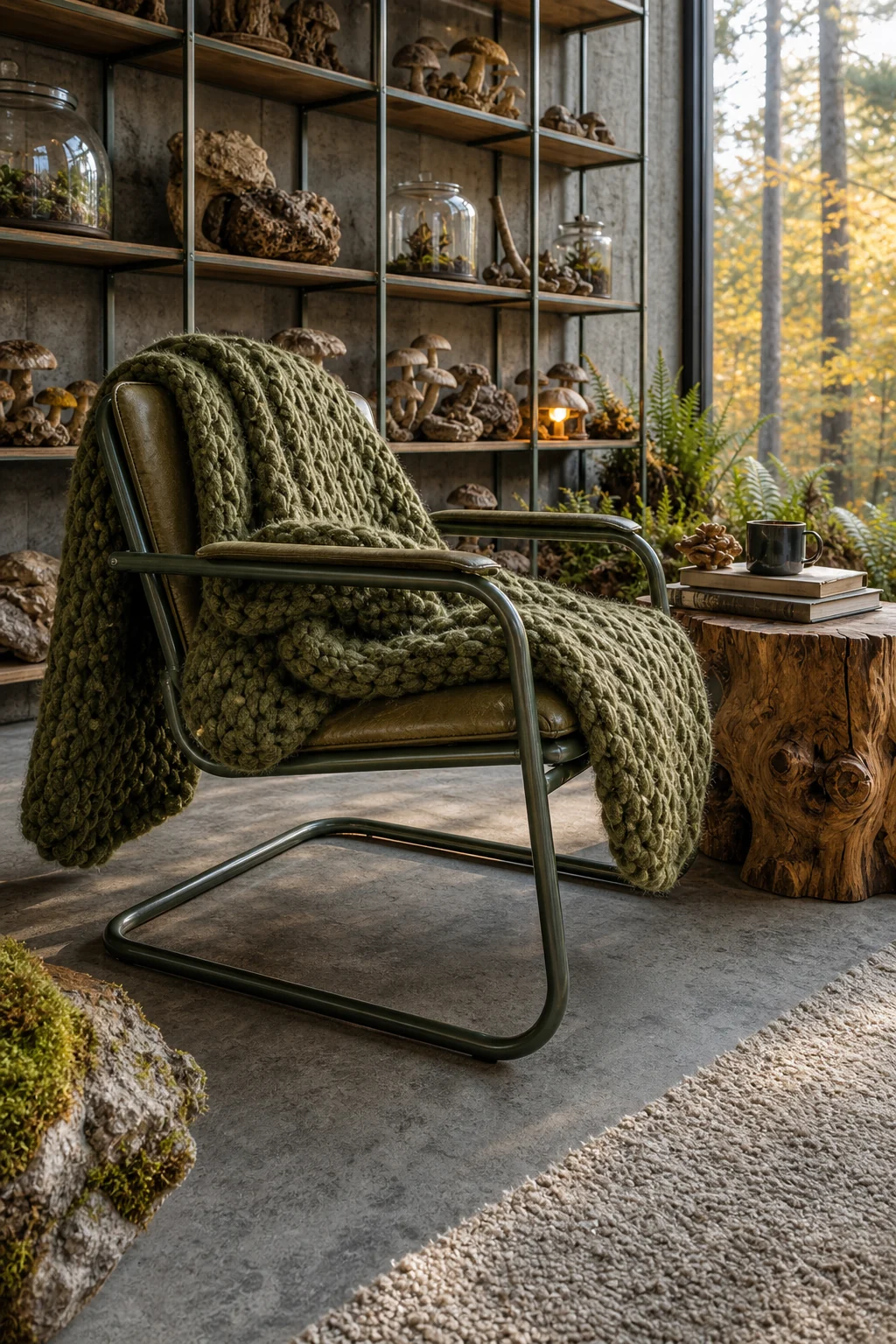
This tension relies entirely on extreme texture to succeed. The soft, nubby wool and rough tree bark must be pronounced enough to visually compete with the cold, smooth metal and concrete surroundings without becoming entirely overwhelming or messy.
- Drape oversized, chunky hand-knit blankets over rigid seating to immediately soften severe, machine-made geometric angles.
- Introduce raw, unpeeled burl-wood as functional side tables to ground the lightweight metallic furniture frames.
- Cluster dried fungi and river stones in loose, organic piles to mimic natural woodland growth.
- Incorporate living terrariums to bring vibrant, untamed greenery directly into the sterile, concrete reading area.
Bridging the Gap With Patinated Steel
The most critical bridge move between these opposing forces happens in the materials. The Bauhaus-inspired tubular steel chair abandons its traditional polished chrome for an oxidized bronze-green finish that perfectly mimics the look of damp forest moss.
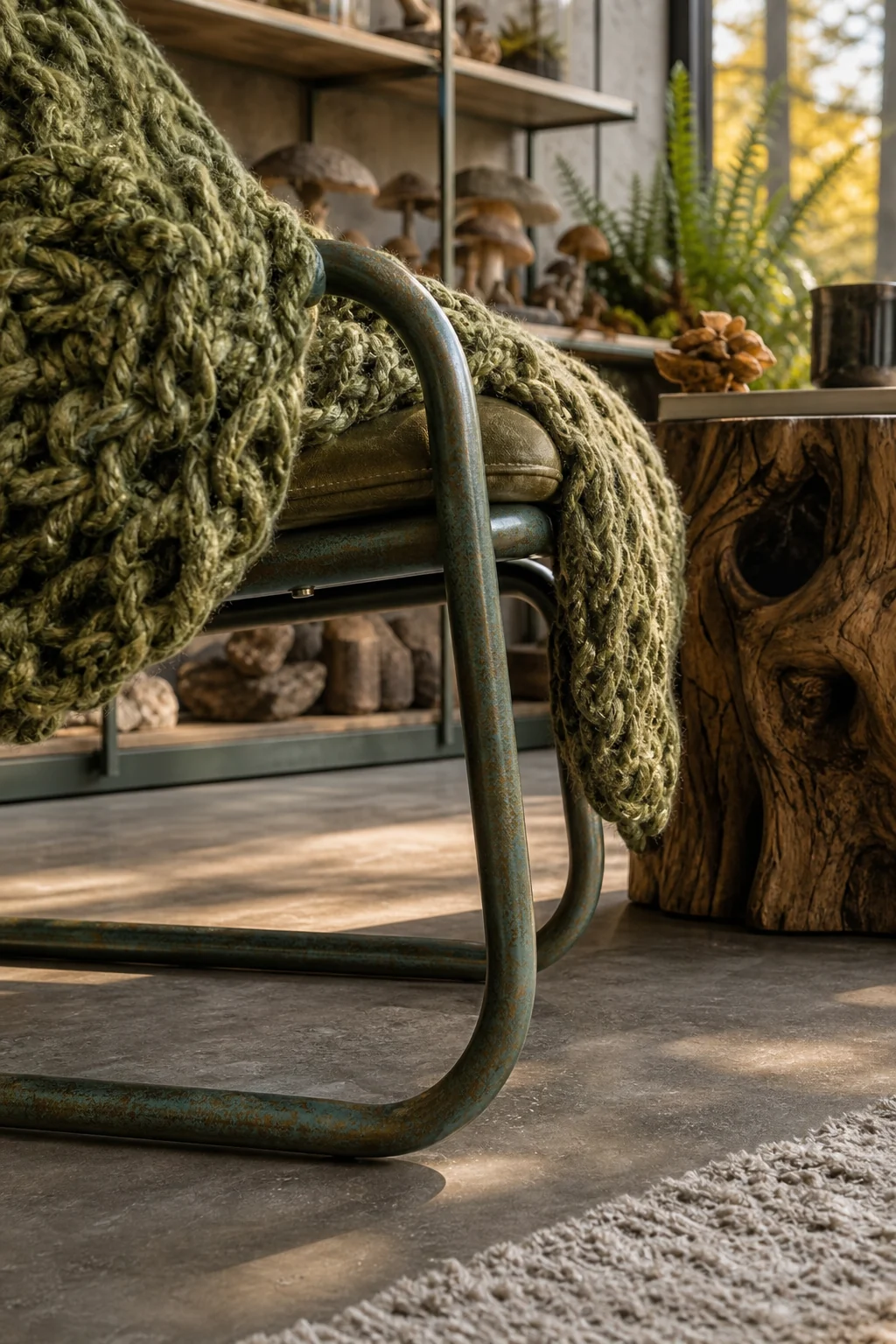
This patinated surface instantly connects the machine-made silhouette to the natural world outside. By altering the finish but keeping the strict geometry, the lounge chair suddenly belongs to both distinct aesthetics simultaneously, anchoring the entire room beautifully.
When the metallic elements share the exact color values of the organic materials, the visual friction softens. This shared woodland palette allows the industrial steel to recede slightly, letting the vibrant, textured goblincore elements take center stage without fighting the architecture.
Assembling the Reading Nook
Building this space requires carefully balancing the visual weight of both distinct aesthetics. The seating vignette centers on the cantilever chair, using the raw oak side table to firmly ground the metallic frame against the heavy concrete floor.
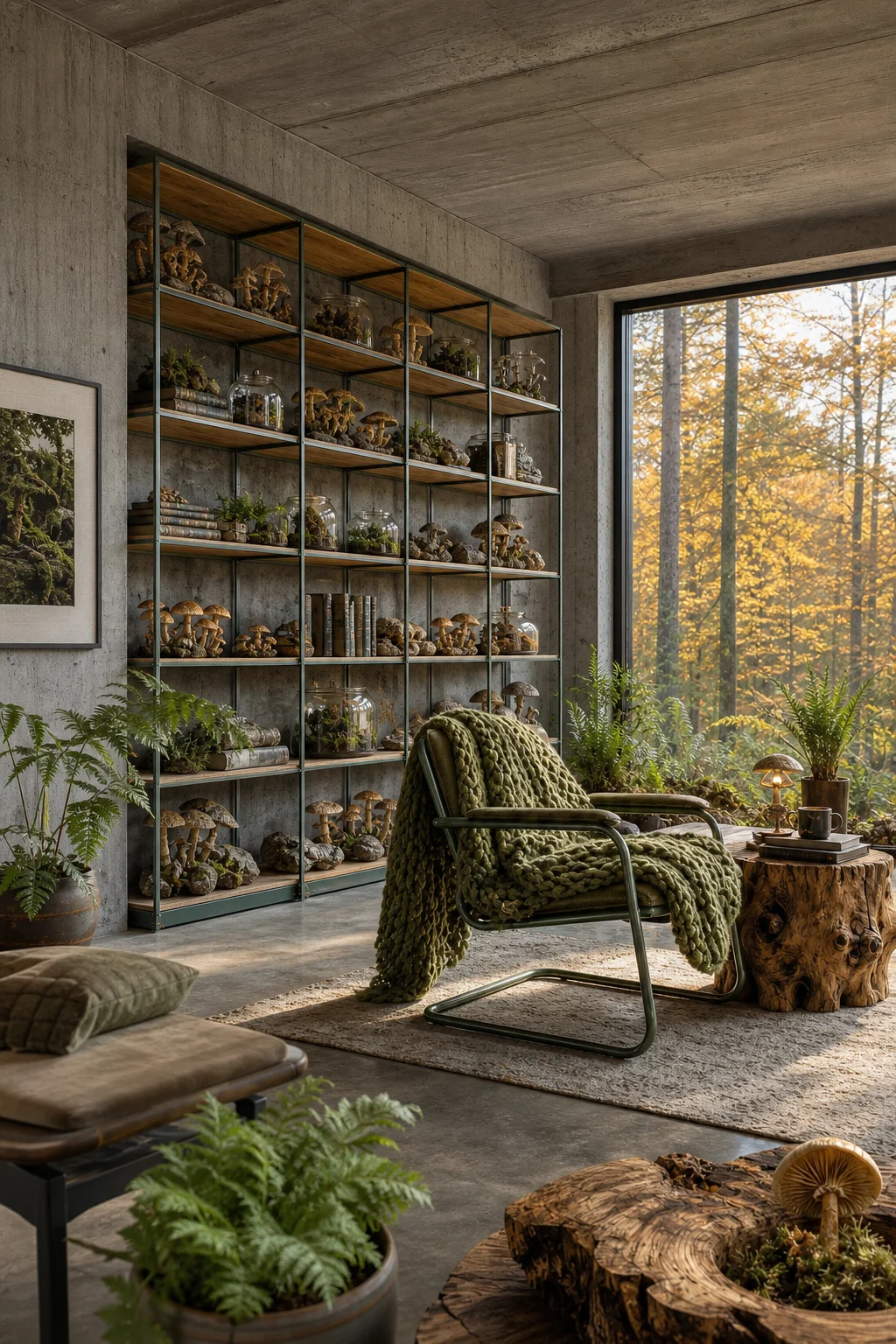
By mapping specific design roles to every layer of the room, you ensure the contradiction is deliberately resolved. This deliberate placement prevents the two styles from feeling like they were merely placed side by side without any thought.
| Layer | functionalism Role | goblincore Role | Bridge Decision |
|---|---|---|---|
| Shell | Board-formed concrete and rigid grids | Earthy tones and natural light | A structured grid in forest hues |
| Large Furniture | Tubular steel cantilever chairs | Raw burl-wood stumps | Patinated metal mimicking natural moss |
| Textiles | Minimalist, unadorned upholstery profiles | Chunky, moss-like hand-knit wool | Tailored cushions wrapped in wild textures |
| Lighting | Geometric, rational glass fixtures | Warm, golden autumnal glows | Simple spherical lamps casting soft shadows |
| Accents | Identical vintage books in rows | Chaotic terrariums and dried fungi | Organic collections contained in strict cubbies |
Following this translation table guarantees that neither aesthetic dominates the other. The heavy concrete and structured grids provide the necessary discipline, while the mossy textures and raw wood inject the essential warmth required for a truly inviting reading environment.
Illuminating Concrete and Canopy
Architectural coherence relies heavily on the lighting strategy. A large window reveals golden autumn light filtering through dense pine trees, casting soft, bright, daylight-balanced fill across the raw concrete shell and highlighting the rich textures of the textiles.
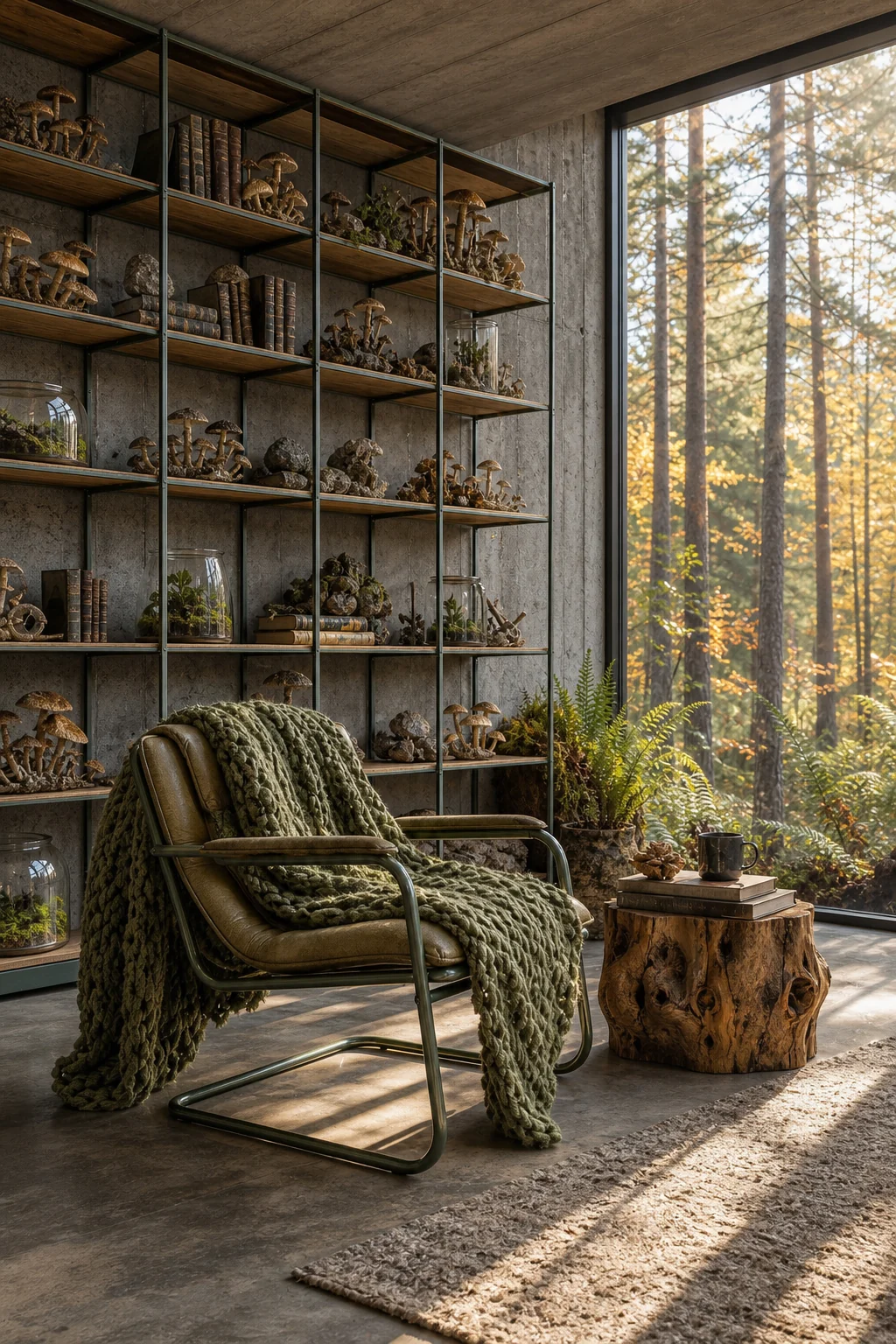
The open, detailed shadows prevent the room from feeling gloomy or muddy. This bright, even illumination ensures the functionalist geometry remains crisp and legible while beautifully highlighting the intricate goblincore textures scattered throughout the curated reading space.
- Maximize natural daylight to keep the heavy board-formed concrete walls feeling warm and inviting.
- Use golden, autumnal color temperatures for interior bulbs to mimic the natural forest canopy glow.
- Ensure shadows remain open and detailed to highlight the intricate moss and rough bark textures.
- Position lighting fixtures to cast structured, geometric beams that contrast with the wild organic foliage.
Curating the Shelf Displays
Styling the details means strictly organizing the foraged items within the rational grid. Each cubby acts as a distinct, rigid frame for terrariums, mossy rocks, and stacks of worn vintage books, turning chaotic hoarding into a museum display.
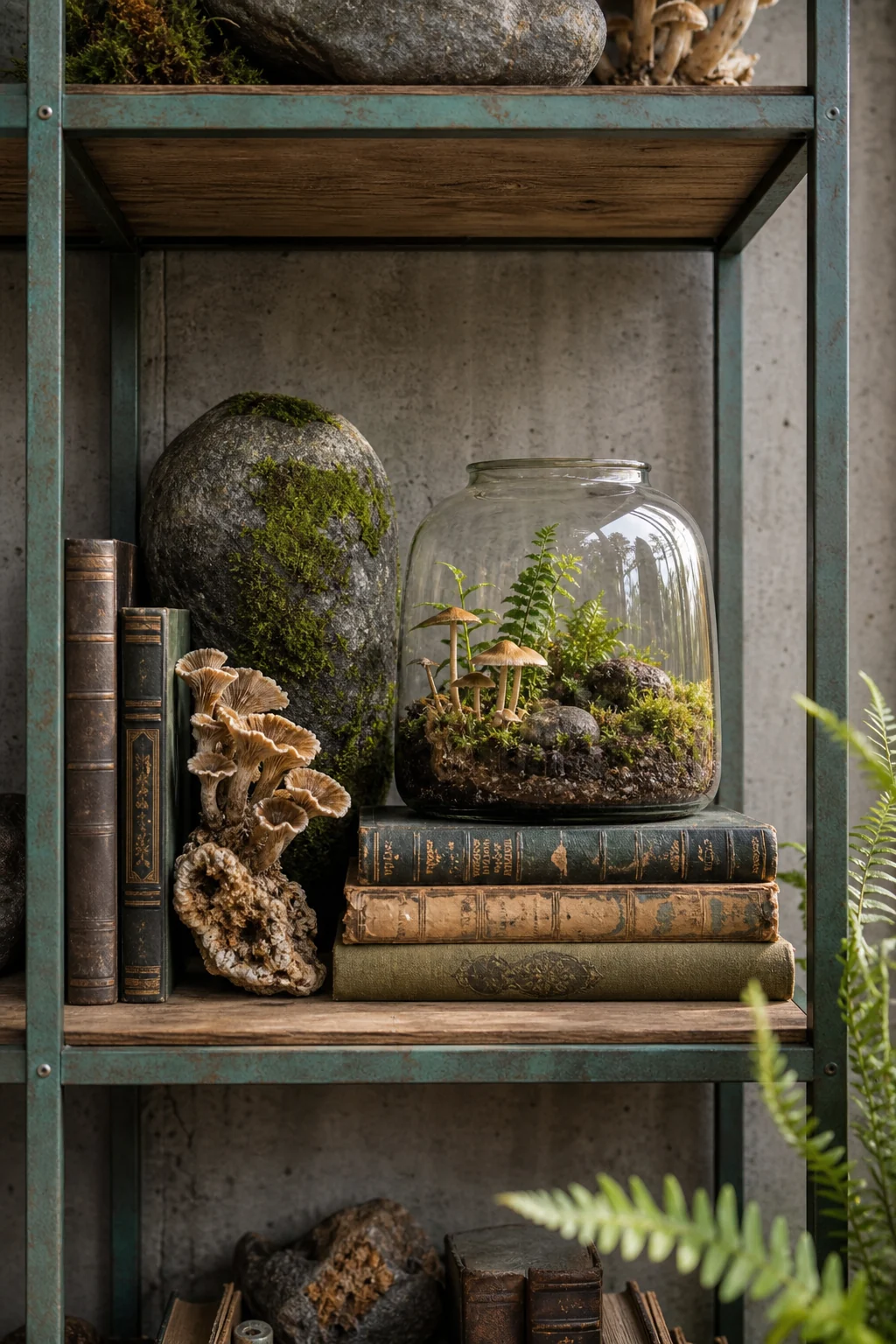
By keeping the collections tightly grouped, the chaotic nature of the objects is tamed. This approach allows you to display a vast hoard of natural treasures without overwhelming the room’s core architectural discipline or creating visual fatigue.
- Source modular, raw oak and steel wall-shelving systems to build your primary containment grid.
- Find tubular steel cantilever lounge chairs finished in oxidized green to bridge the two aesthetics.
- Invest in chunky, oversized moss-green knit throws to soften the rigid lines of the furniture.
- Select raw burl-wood or tree-stump side tables to introduce immediate tactile contrast and organic warmth.
Extending the Logic Beyond the Nook
This tension translates beautifully to transitional spaces throughout the home. A hallway or entryway can utilize a sleek metal console table topped with a single, overgrown fern and a carefully curated collection of smooth river stones.
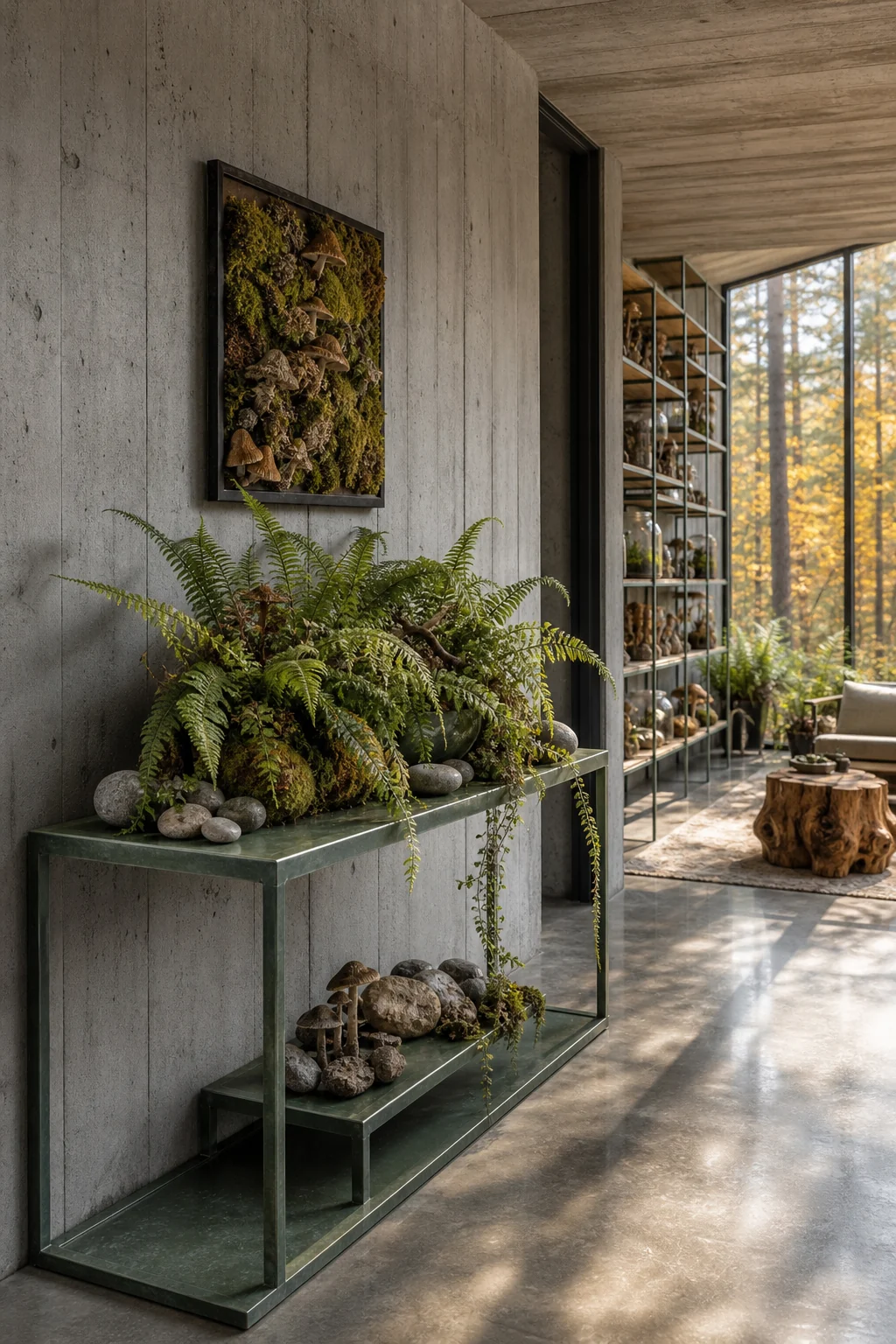
The contrast between the strict, minimal shelf and a trailing pothos plant achieves the exact same effect on a smaller scale. This proves the concept works seamlessly beyond a dedicated reading area, unifying your entire interior design scheme.
Even a single windowsill can embody this resolved contradiction. By placing a highly structured, geometric steel planter next to a chaotic, sprawling pile of dried fungi, you establish the exact same dialogue between rational human design and wild nature.
Preventing the Split Personality
The most common failure mode is creating a room that feels like two separate movie sets colliding. If the metal is too shiny or the moss too sparse, the delicate illusion breaks and the room feels disjointed.
Success requires absolute commitment to the shared earthy palette and the strict containment strategy. When the rigid geometry and organic chaos are perfectly balanced, the contradiction is finally resolved, leaving a space that feels both disciplined and wild.
- Costume: Using fake plastic vines instead of real dried fungi destroys the necessary tactile authenticity.
- Split personality: Keeping polished chrome next to rustic wood prevents the materials from bridging properly.
- Dominance: Letting the organic clutter spill out of the grid ruins the functionalist architectural discipline.
- Generic result: Using standard beige instead of rich lichen greens dilutes the specific woodland atmosphere.