
Oaxacan Meets Kidcore: Living Room
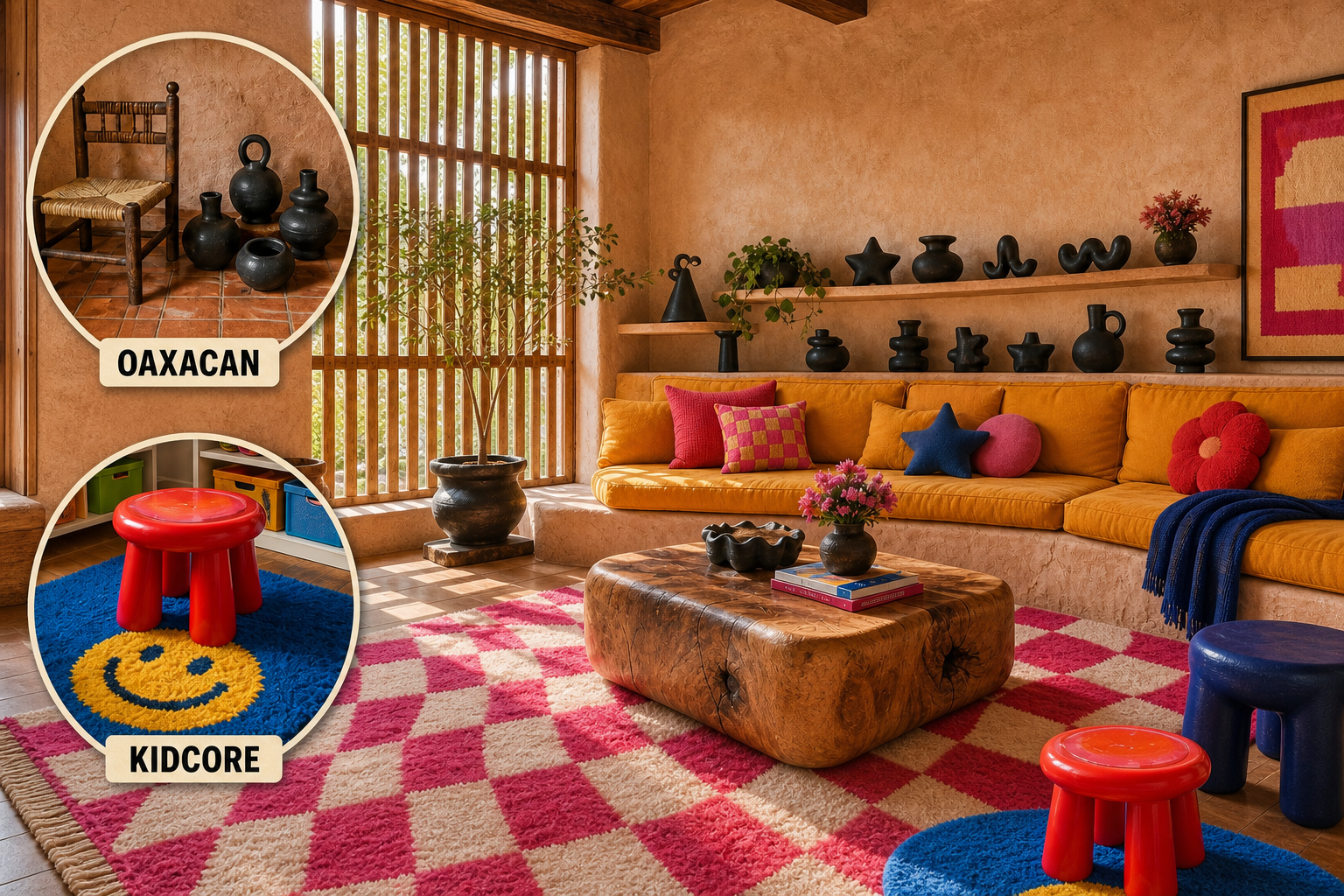
The ancient, earthy gravity of traditional Mexican craft often clashes with the synthetic, hyper-saturated playfulness of 90s childhood nostalgia. We resolved this contradiction by translating chunky geometries and vibrant motifs into hand-woven wools, carved wood, and intensely saturated natural dyes.
Grounding the Room with Oaxacan Weight
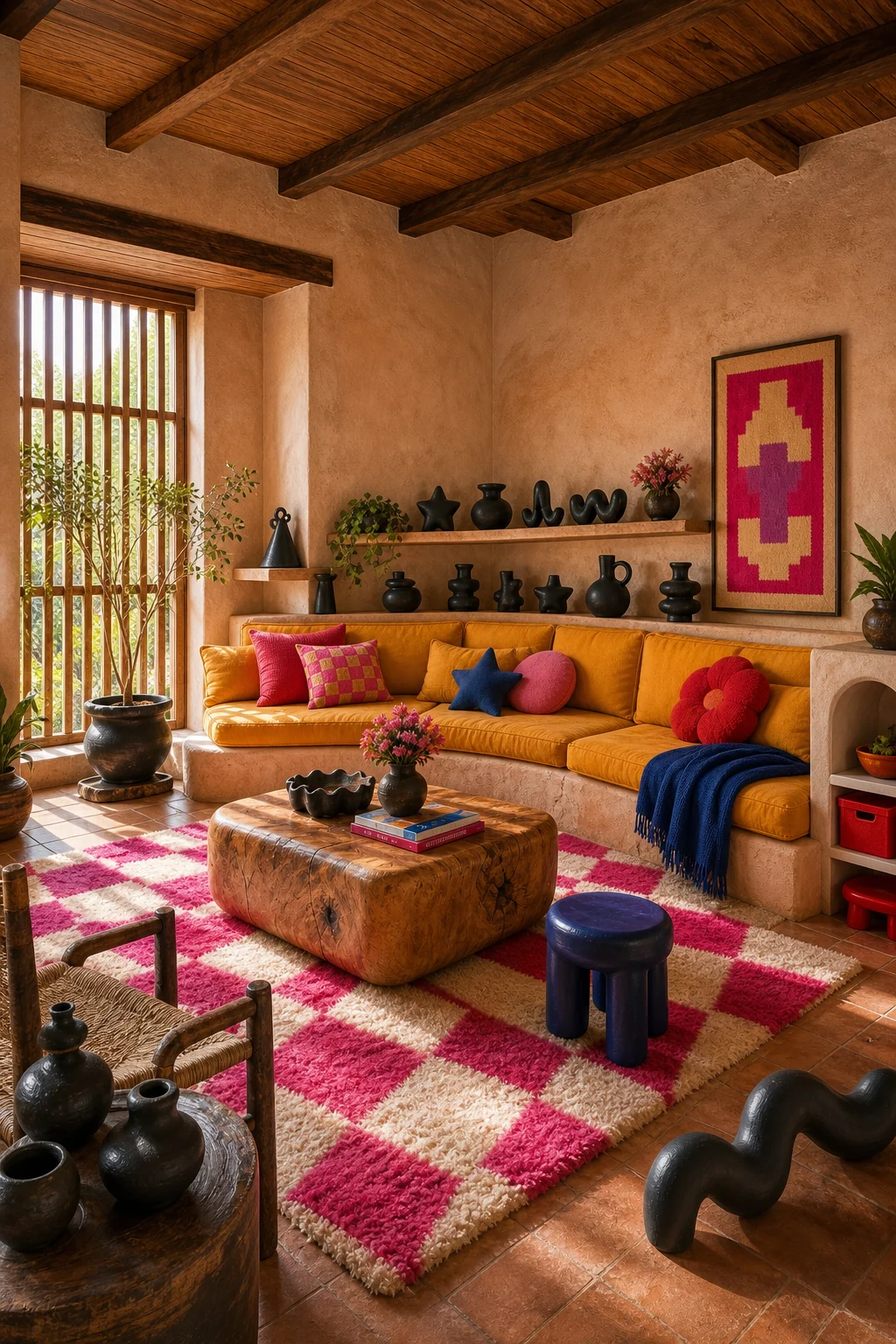
Oaxacan architecture provides a heavy, grounding shell that prevents playful decor from floating away into pure novelty. Thick, warm-toned plaster walls and built-in adobe banquettes establish immediate earthy gravity, anchoring the room firmly in centuries of Indigenous craftsmanship and enduring architectural tradition.
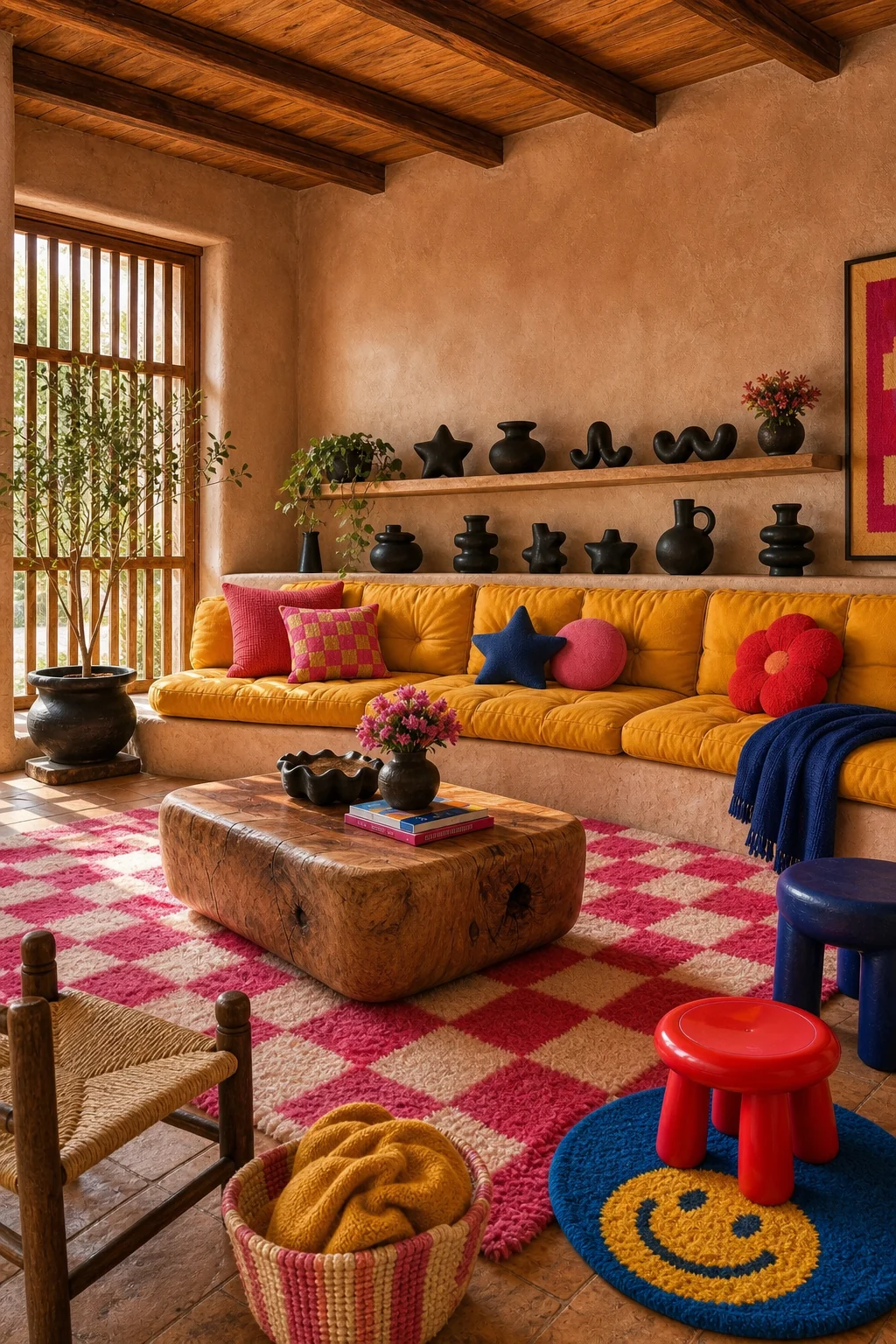
This heavy foundation allows you to introduce vibrant colors without the room feeling chaotic. The tactile imperfection of raw plaster absorbs light beautifully, creating a muted, organic backdrop that tames the visual volume of hyper-saturated, oversized seating choices perfectly throughout the day.
Maintaining this matte finish across all structural elements ensures the architecture remains a quiet, powerful anchor. When the walls and floors recede into earthy warmth, the bolder, nostalgic interventions can take center stage without ever fighting for visual dominance in the room.
Injecting Kidcore Geometry
Kidcore relies on oversized, naive shapes to evoke a distinct sense of childhood nostalgia. Wavy checkerboards, exaggerated squiggles, and puffy furniture silhouettes usually read as synthetic, but they take on entirely new life when subjected to rigorous traditional material constraints in this space.
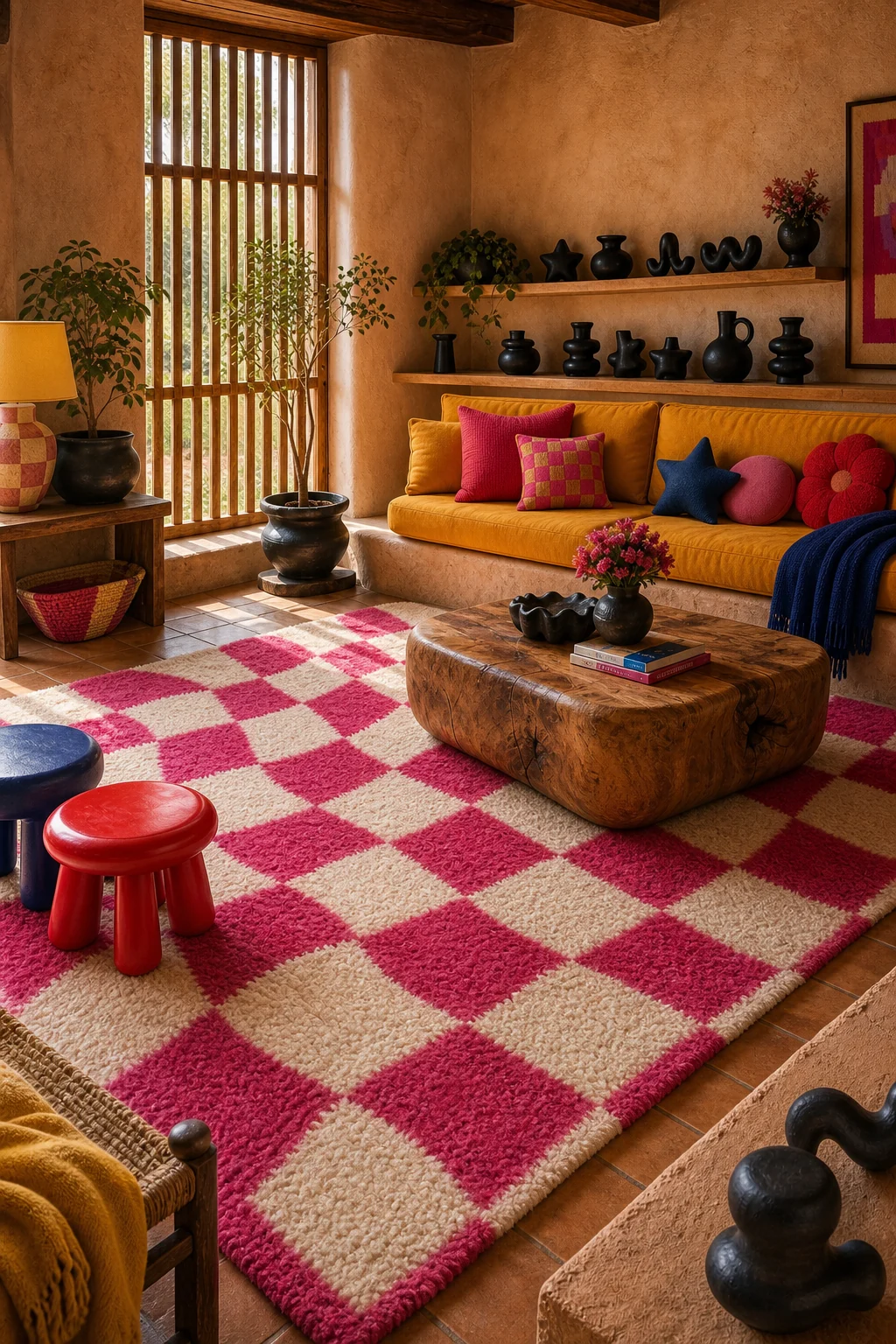
By translating these playful patterns into traditional Zapotec weaving, the aesthetic immediately matures. The familiar checkerboard becomes a sophisticated focal point when rendered in heavy, hand-loomed wool, proving that nostalgic geometry does not require cheap, mass-produced manufacturing to be visually effective.
- Blow up wavy checkerboards to oversized proportions so they feel architectural rather than busy.
- Embrace chunky, rounded puffy silhouettes for major seating to mimic oversized wooden toy blocks.
- Incorporate naive squiggle motifs into flat textiles to soften the heavy plaster architectural surroundings.
- Avoid sharp, modernist angles that break the playful, deeply nostalgic illusion of the space.
Bridging the Gap with Natural Dyes
The bridge between these opposing aesthetics lies entirely in careful, deliberate material translation. Neon Kidcore colors must be achieved through intensely saturated natural Oaxacan pigments rather than synthetic dyes, ensuring the vivid palette remains firmly grounded in the natural, physical world.
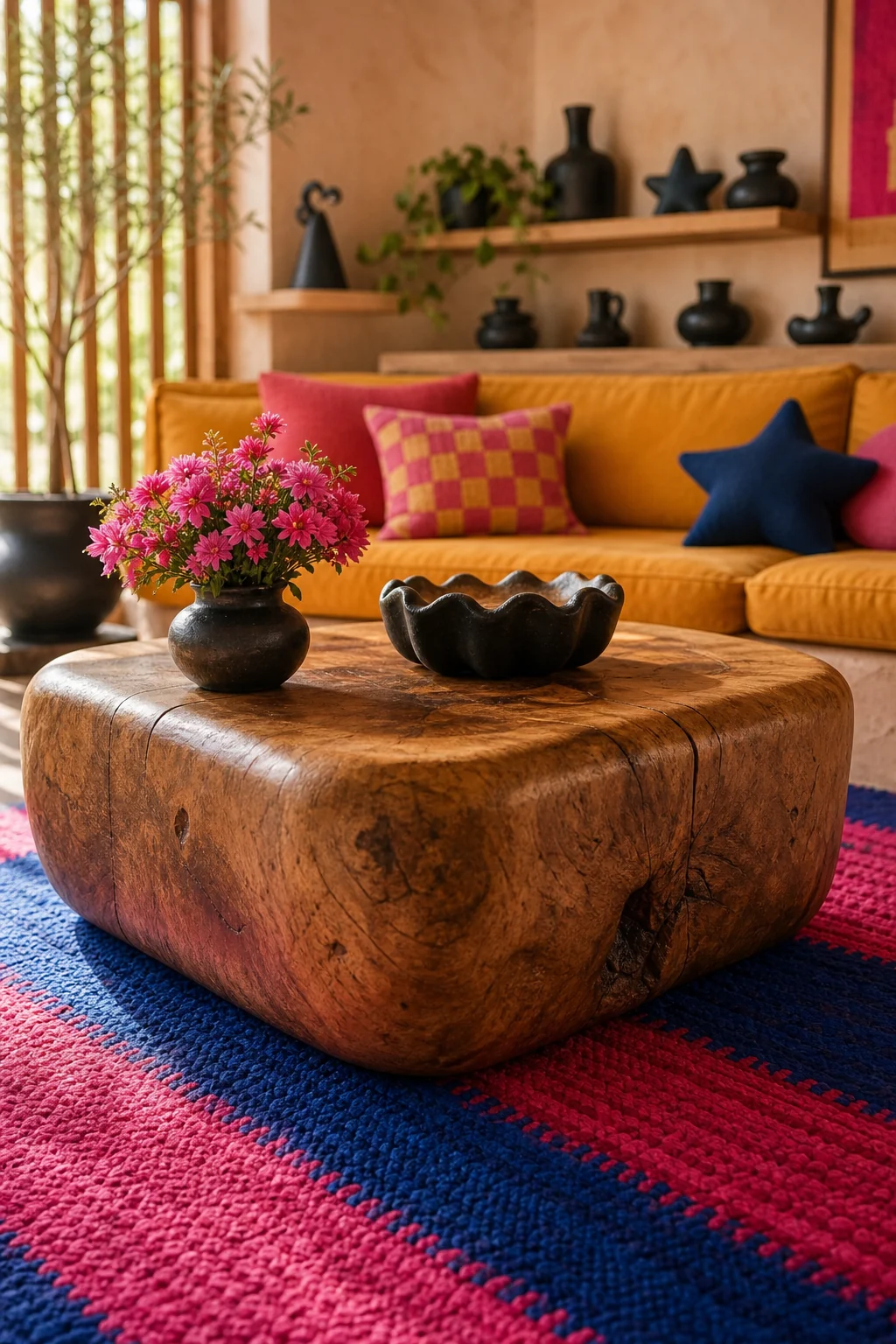
Sourcing authentic cochineal hot pink and indigo blue grounds the vivid palette in nature. The subtle, earthy imperfections of these traditional dyes prevent the hues from looking mass-produced, adding crucial depth and rich history to otherwise flat, playful nostalgic motifs.
These natural variations in the dye bath create a rich, mottled texture that synthetic equivalents simply cannot replicate. This organic inconsistency is exactly what elevates the playful colors, turning a potentially childish palette into a deeply sophisticated, highly tactile design statement.
Assembling the Living Room
Bringing the seating area together requires balancing visual weight across both distinct, powerful styles. A coffee table carved from solid raw copal wood perfectly mimics the rounded, puffy shape of a toy block while retaining its undeniable, deeply rooted artisanal heft.
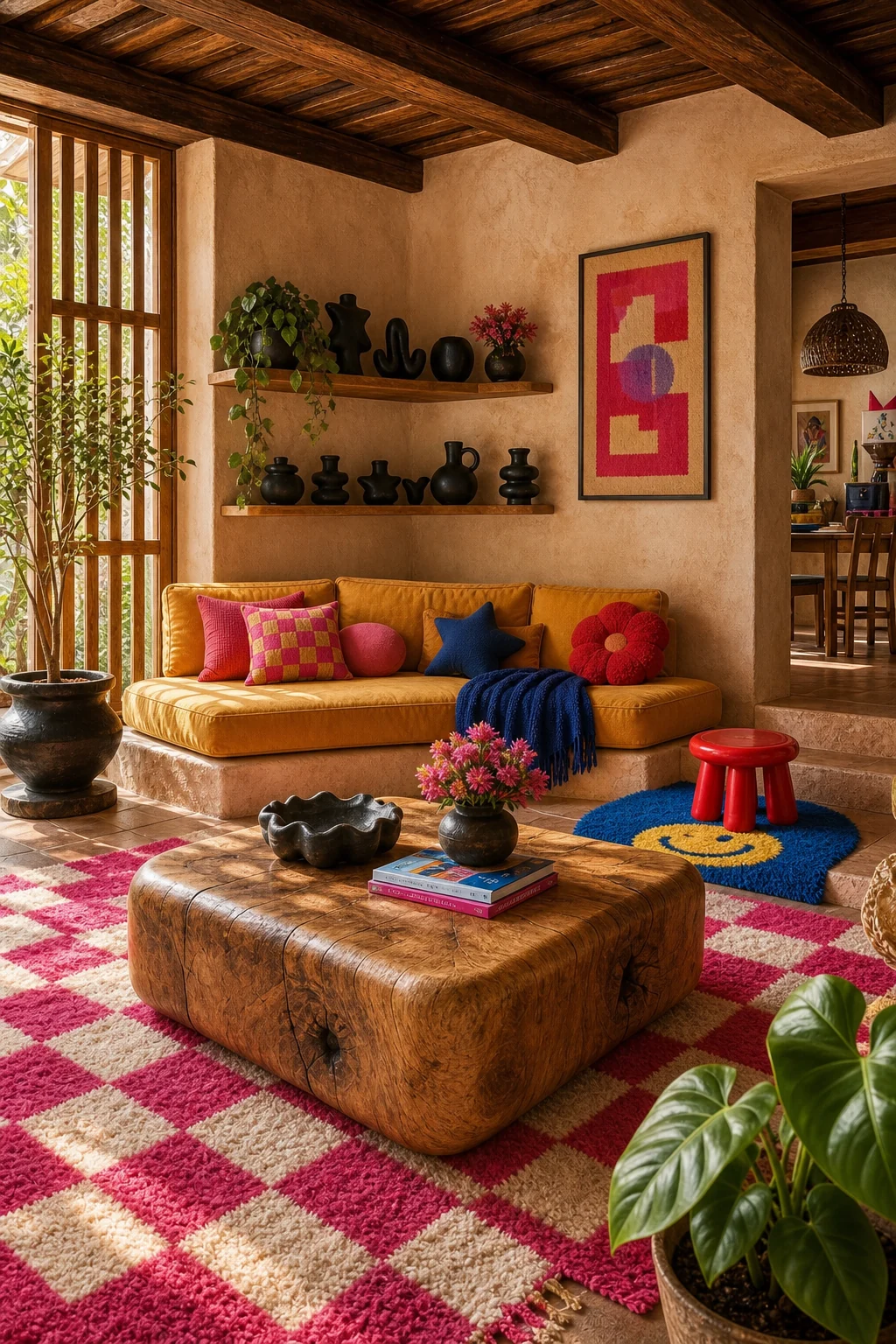
Surrounding this heavy wooden centerpiece with plush, oversized marigold yellow cushions creates an inviting, tactile landscape. The furniture layout prioritizes chunky, rounded forms over sharp angles, ensuring every piece feels both structurally significant and undeniably playful in its ultimate physical execution.
| Design Layer | Oaxacan Role | Kidcore Role | Bridge Decision |
|---|---|---|---|
| Shell | Thick raw plaster walls | Oversized wavy motifs | Built-in adobe banquettes with rounded edges |
| Furniture | Solid carved copal wood | Chunky toy-like geometries | Heavy wooden tables mimicking play blocks |
| Textiles | Traditional Zapotec wool | Hyper-saturated primary colors | Cochineal and indigo checkerboard rugs |
| Lighting | Slatted wooden window shadows | Bright, nostalgic illumination | High-altitude golden daylight balancing extremes |
| Accents | Matte barro negro pottery | Squiggles and star shapes | Black clay sculpted into geometric forms |
This translation framework guarantees that neither aesthetic overwhelms the other. By assigning specific structural roles to the heavy artisanal materials, the playful geometric forms can express themselves fully without ever threatening the room’s underlying sense of grounded, earthy maturity and balance.
Sculpting with Light and Architecture
Crisp, high-altitude autumn daylight is crucial for highlighting the tactile differences in this complex mix. Generous sunlight streaming through wooden slatted windows reveals the raw plaster’s texture, anchoring the bright textiles in a distinctly earthy, beautifully sun-baked architectural reality.
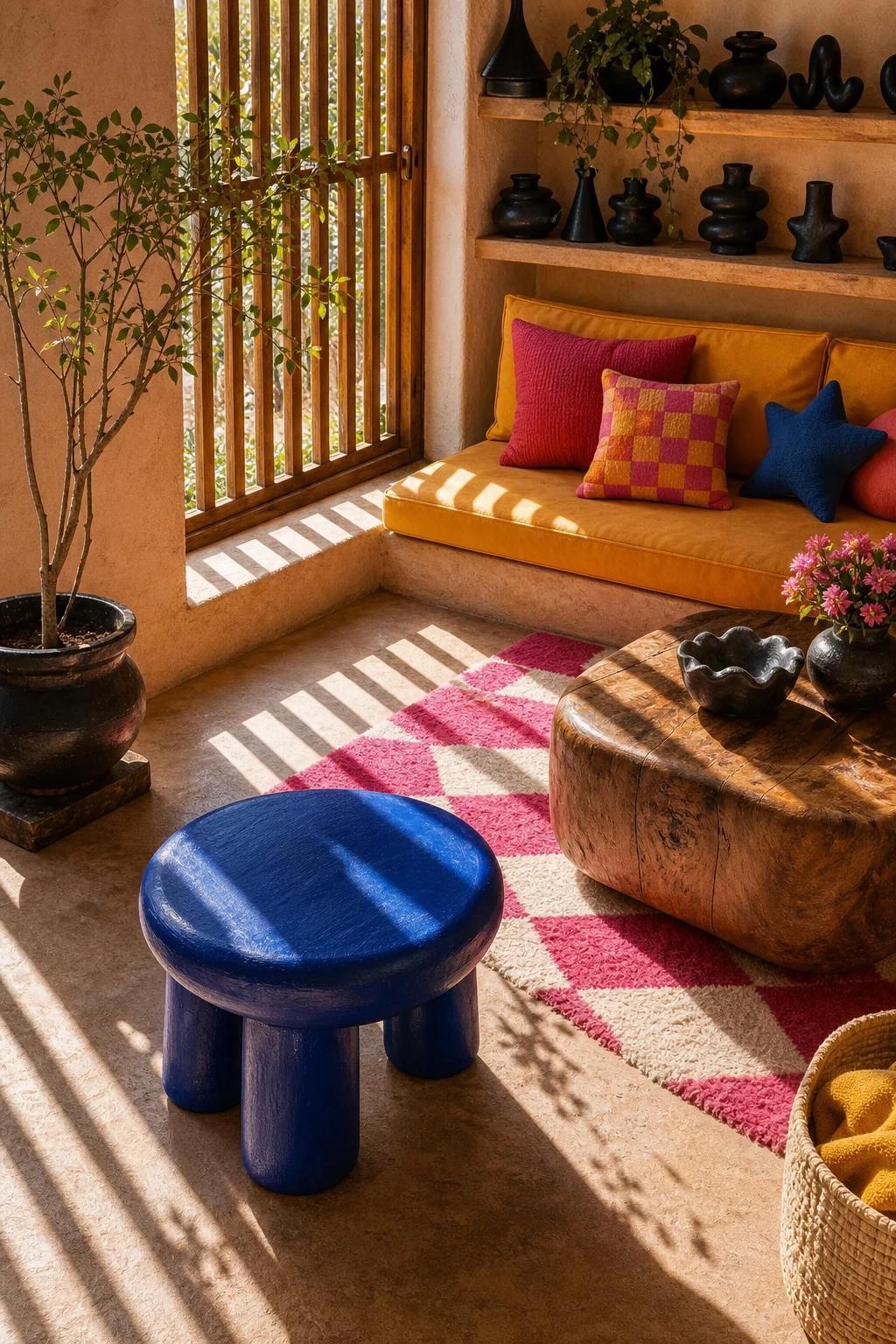
Controlling this light ensures the vibrant colors pop without overwhelming the earthy textures. Proper illumination sculpts the chunky furniture silhouettes, casting deep, grounding shadows that emphasize the weight and permanence of the carved wood and thick adobe elements throughout the room.
- Maximize natural daylight to highlight the raw plaster textures across the heavy walls.
- Filter sunlight through wooden slats to create dramatic, grounding shadows over the seating area.
- Use warm, diffused bulbs to soften the vibrant primary colors during the evening hours.
- Avoid harsh overhead lighting that flattens out the chunky, rounded furniture silhouettes completely.
Styling Playful Artisanal Details
Styling the final details is where the underlying contradiction becomes most overtly playful. Traditional matte barro negro pottery is reimagined into whimsical squiggles, stars, and chunky geometric forms, completely subverting the expected solemnity of this historic, intensely dark black clay.
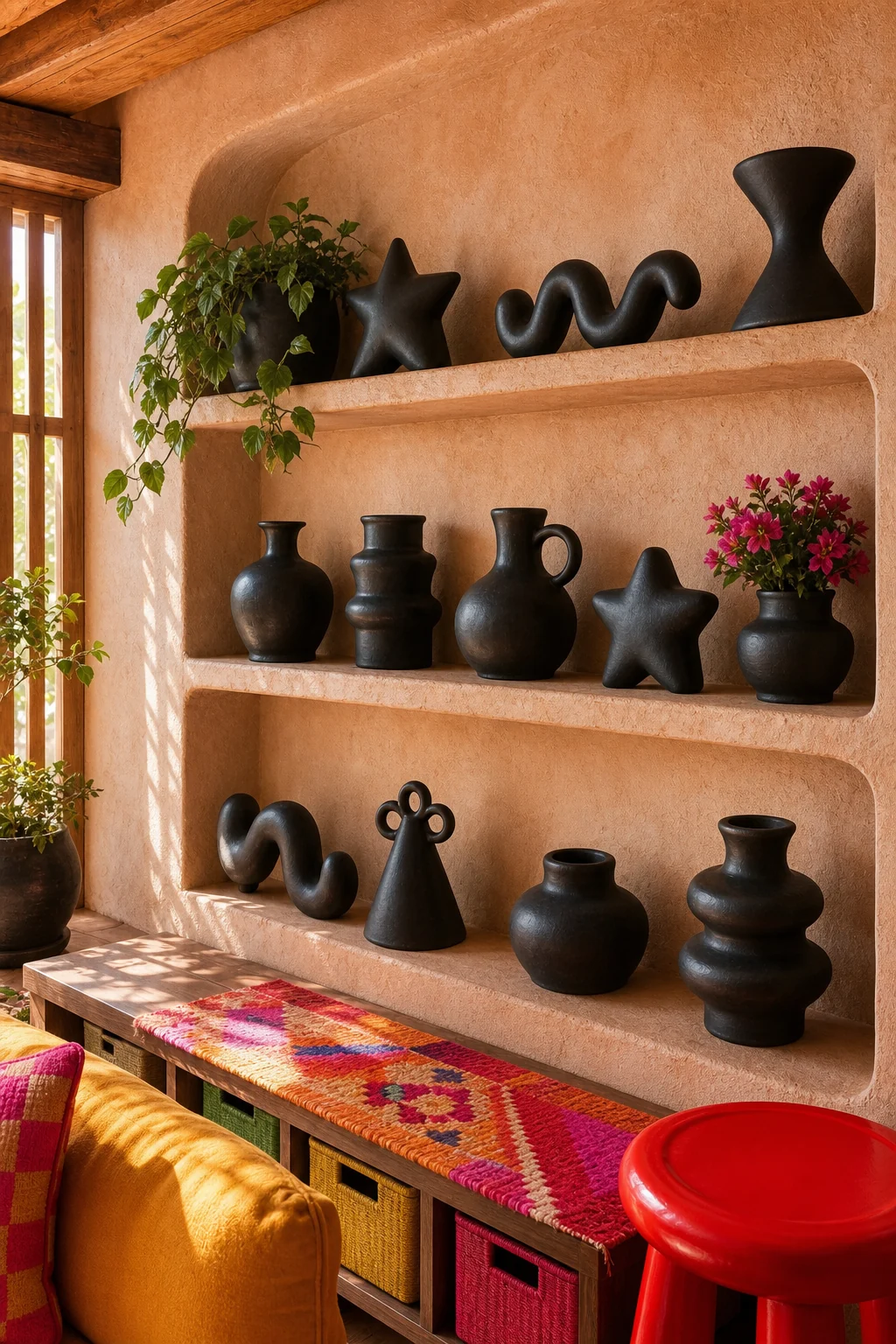
These small, sculptural moments prove that artisanal craft can possess a brilliant sense of humor. Seek out specific handmade pieces to complete the room’s narrative, ensuring even the smallest accessories reflect this rigorous commitment to natural, highly authentic local materials.
- Source raw copal wood accent tables featuring exaggerated, puffy edges and rounded wooden feet.
- Commission cochineal-dyed wool checkerboard rugs featuring oversized, intentionally naive geometric patterns and bright colors.
- Display matte black clay pottery sculpted into playful geometric forms and thick, wavy squiggles.
- Layer marigold yellow heavy linen cushions generously across the built-in, raw adobe architectural banquette.
Adapting the Look Beyond the Lounge
This aesthetic logic easily scales down for smaller transitional spaces like hallways or entryways. A simple rustic wooden chair paired with a single vibrant woven runner instantly sets the tone without requiring the massive architectural commitment of a built-in adobe banquette.
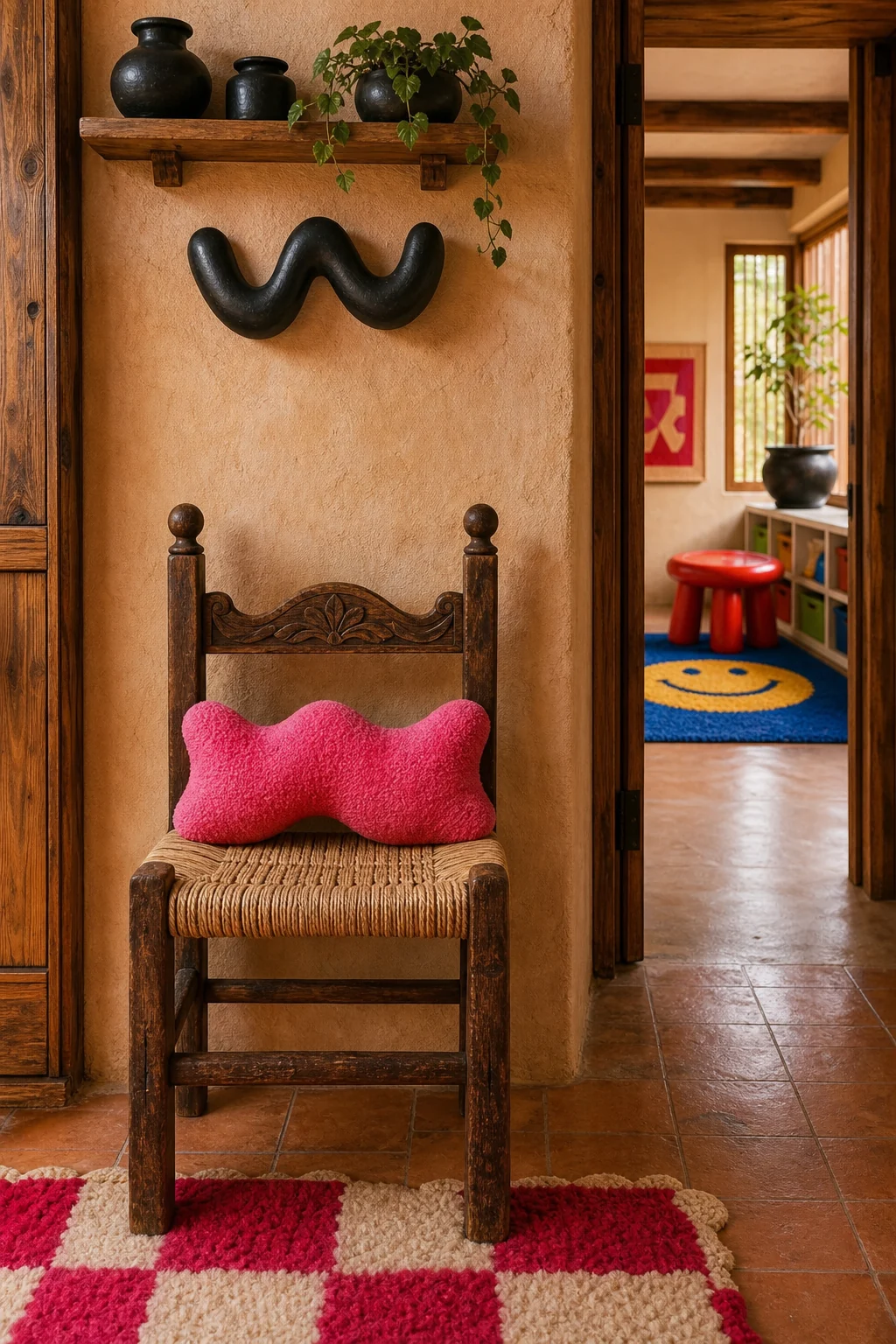
Even in a tight corner, a single hyper-saturated lumbar pillow resting against a textured plaster wall delivers the complete stylistic message. The secret to scaling this look successfully lies in maintaining strict material discipline regardless of the specific room’s overall size.
Applying this strict material filter prevents smaller spaces from feeling cluttered or overly kitschy. When every single item is handmade from earth-derived materials, you can safely push the boundaries of color and shape without ever losing that essential, deeply grounding gravity.
Avoiding the Theme Park Trap
The quickest way to ruin this delicate balance is by slipping into literal interpretations. Avoid actual plastic toys, mass-produced neon signs, or overly distressed rustic clichés, which immediately shatter the sophisticated tension between these two highly distinct, powerful visual languages.
A truly successful room relies entirely on authentic artisanal materials keeping the vibrant colors from feeling cheap. Steer clear of these common design failures to protect the aesthetic integrity and ensure the final space feels both joyful and profoundly grounded.
- The Costume: Using actual plastic children’s toys as decor ruins the mature material translation.
- Split Personality: Keeping earthy elements and colorful items strictly separated destroys the necessary integration.
- Dominance: Letting neon colors completely overpower the heavy plaster shell creates visual exhaustion quickly.
- Generic Result: Buying mass-produced geometric decor instead of authentic artisanal pieces breaks the illusion.