
Mannerism Meets Industrial Loft: Living Room
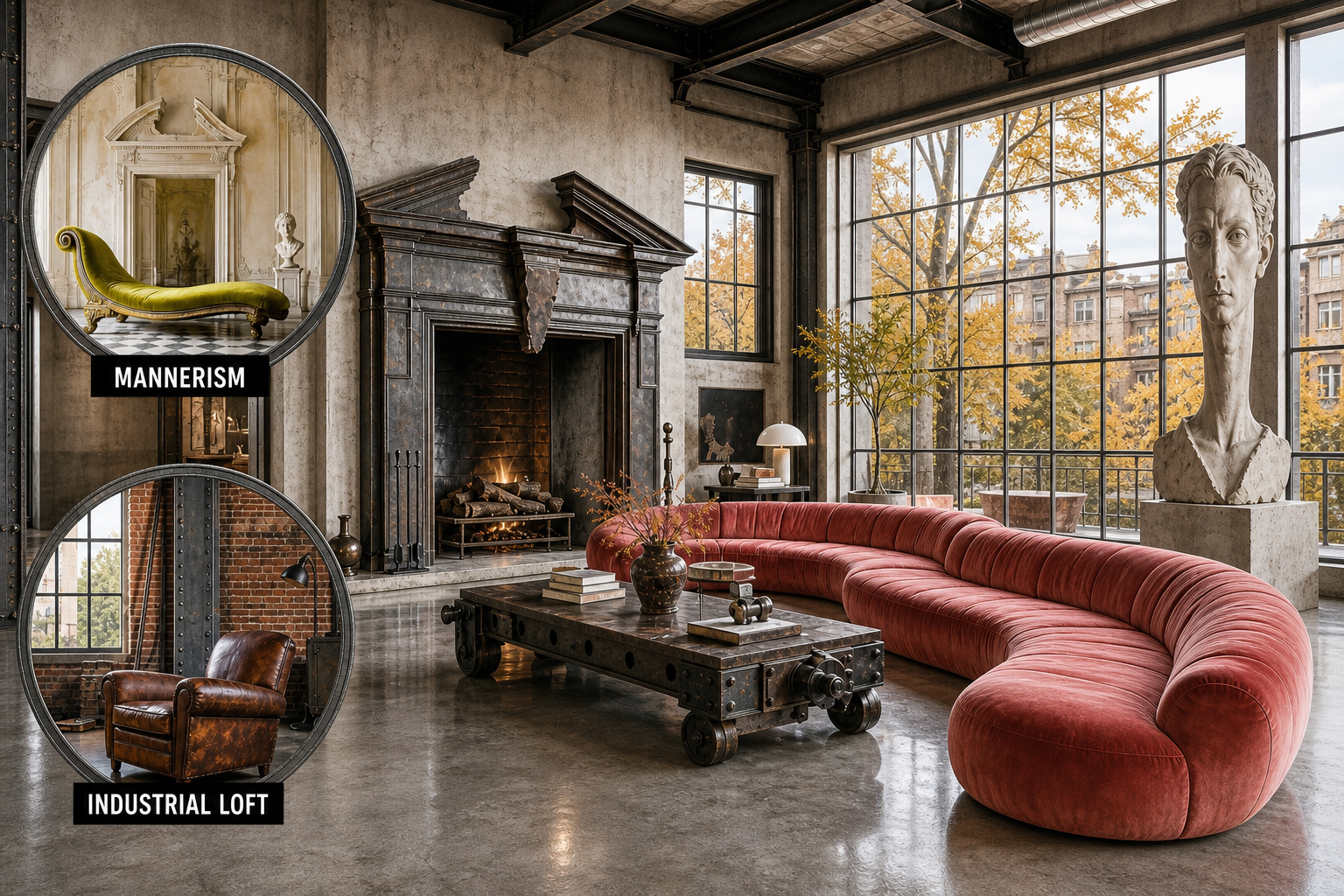
The hyper-refined distortion of classical rules clashes with the raw functionalism of a utilitarian factory space. Learn how to use heavy industrial materials to ground the exaggerated, serpentine elegance of classical proportions within a cavernous Florentine warehouse.
Exaggerating Classical Forms
mannerism thrives on breaking classical rules through elongated proportions and playful architectural interventions. To prevent these artificial shapes from feeling overly delicate, render them in unapologetically heavy materials that effortlessly match the dramatic, cavernous scale of the surrounding industrial architecture.
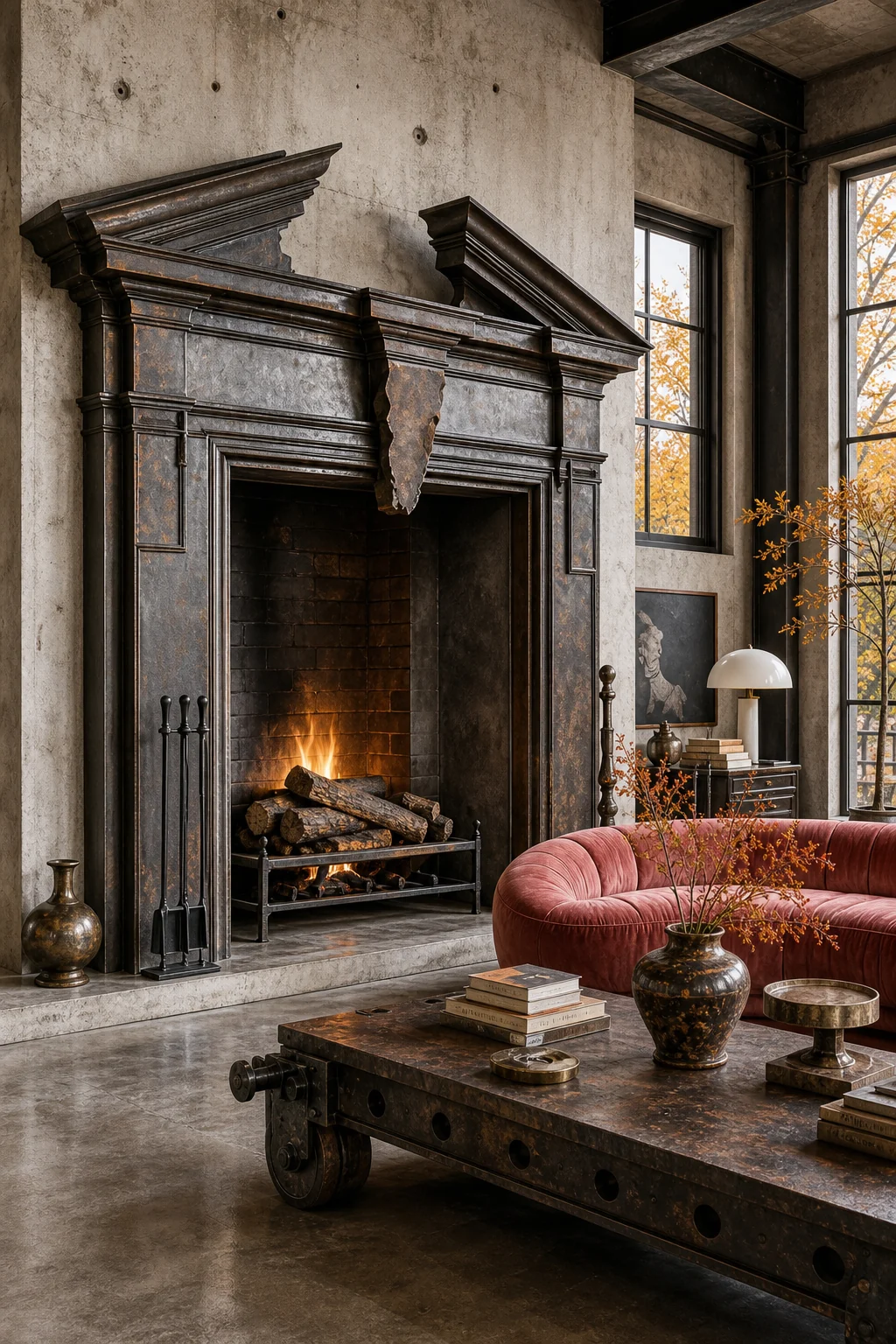
An oversized fireplace with a deliberately dropped keystone instantly commands the room when fabricated from heavy, welded metal. This material choice grounds the playfully distorted broken pediment, ensuring the classical reference feels substantial rather than fragile or purely decorative in nature.
By translating delicate historical silhouettes into raw metal, you establish a strong foundational tension. The architectural artifice remains entirely intact, but the brutal execution feels honest, grounded, and perfectly suited for a highly functional, utilitarian environment that demands absolute durability.
Embracing the Utilitarian Shell
The cavernous volume of a utilitarian factory space easily swallows standard residential furniture. Exposed steel I-beams and expansive factory windows demand robust furnishings that can confidently hold their own against the massive architectural scale and heavy structural elements overhead.
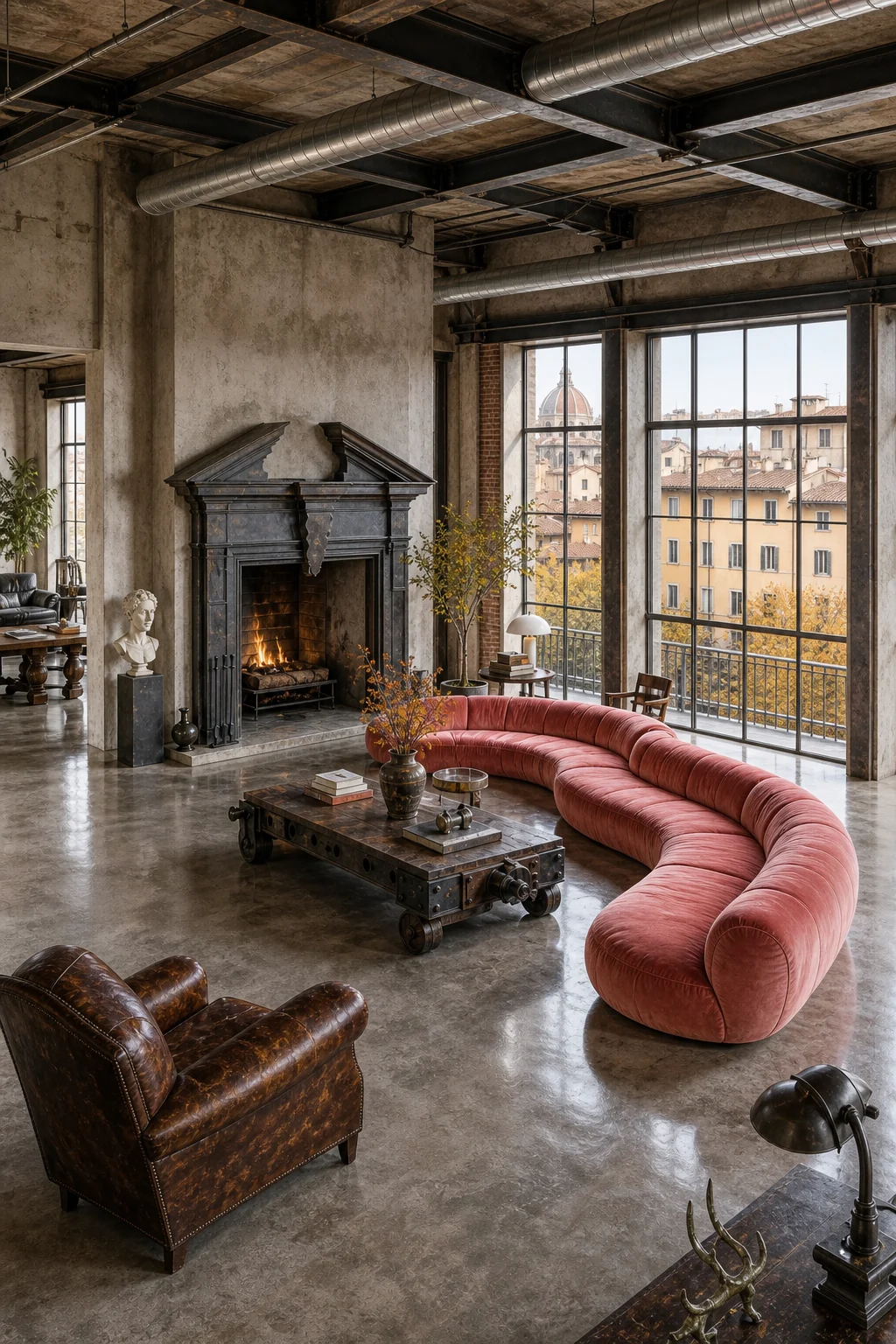
Elongated, serpentine seating stretches across the polished raw concrete floor, perfectly matching the massive proportions of the architecture above. The raw shell provides an unpolished, highly textured backdrop that intentionally highlights the vibrant, acidic textile accents placed deliberately below.
- Leave heavy overhead ductwork completely exposed to emphasize the immense vertical volume of the space.
- Preserve polished raw concrete flooring with its highly visible, deeply tactile aggregate intact.
- Frame the expansive steel factory windows without using delicate, fussy drapery or soft treatments.
- Allow the structural steel I-beams to naturally dictate your primary seating zones and traffic flow.
Bridging Artifice and Function
Connecting these opposing aesthetics requires a shared material language. The raw, heavy industrial steel typically used for structural columns is repurposed here to fabricate classical architectural features, anchoring the hyper-refined artifice firmly to the rugged factory floor with undeniable permanence.
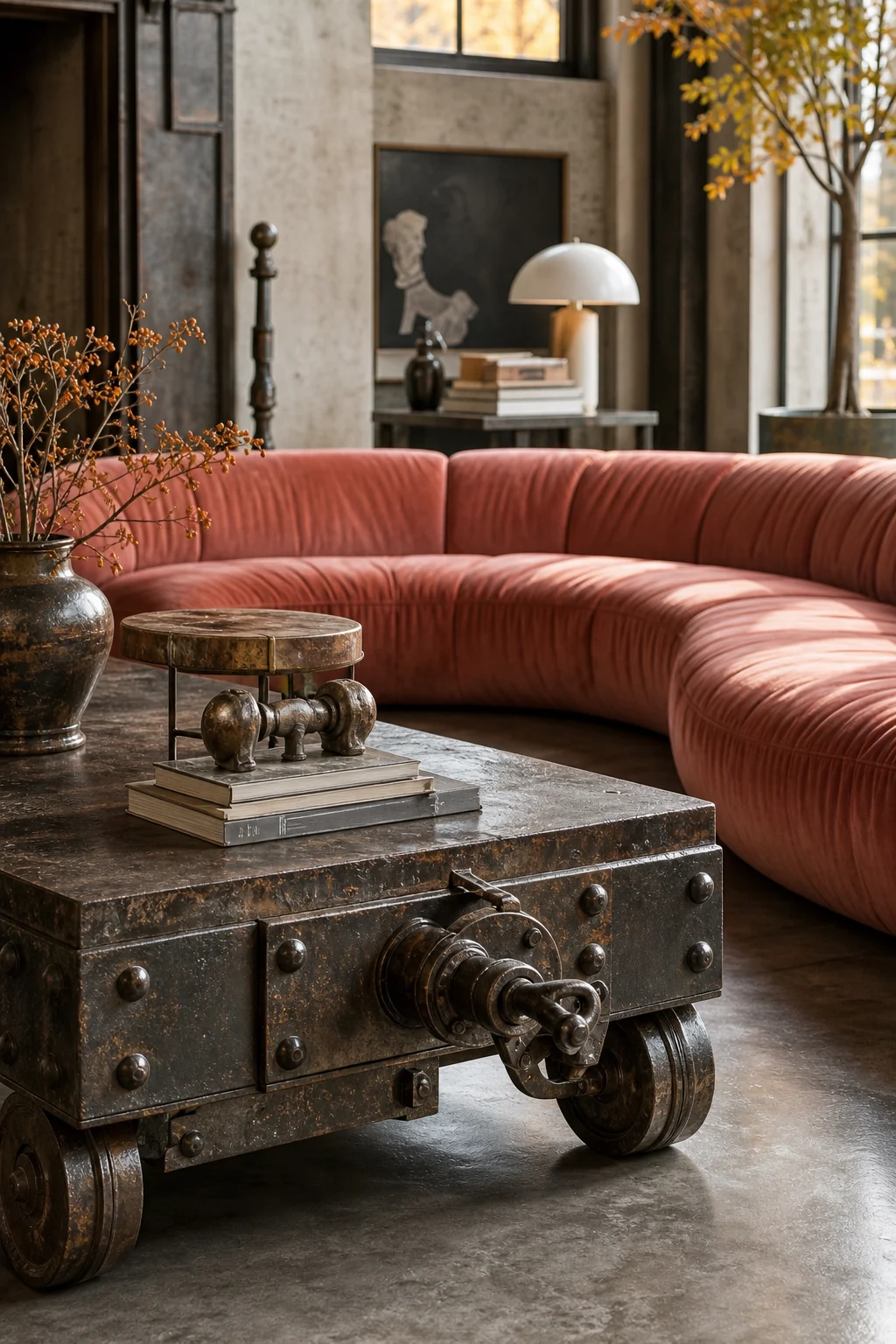
A heavy, utilitarian cast-iron coffee table anchors the acidic Pontormo salmon-pink velvet. This deliberate friction between raw oxidized metal and hyper-refined fabric successfully resolves the inherent contradiction between the two distinct, historically opposed design languages without compromising either identity.
This shared reliance on massive scale ensures neither style dominates the other. The factory shell provides the necessary volume, while the distorted classical forms give the vast, open interior a distinct, highly intentional visual focal point that immediately captures attention.
Building the Vignette
A successful seating vignette perfectly balances utilitarian weight with acidic elegance. The heavy cast-iron coffee table firmly grounds the room, allowing the vibrant, serpentine upholstery to snake through the center without feeling disconnected from the raw architectural shell surrounding it.
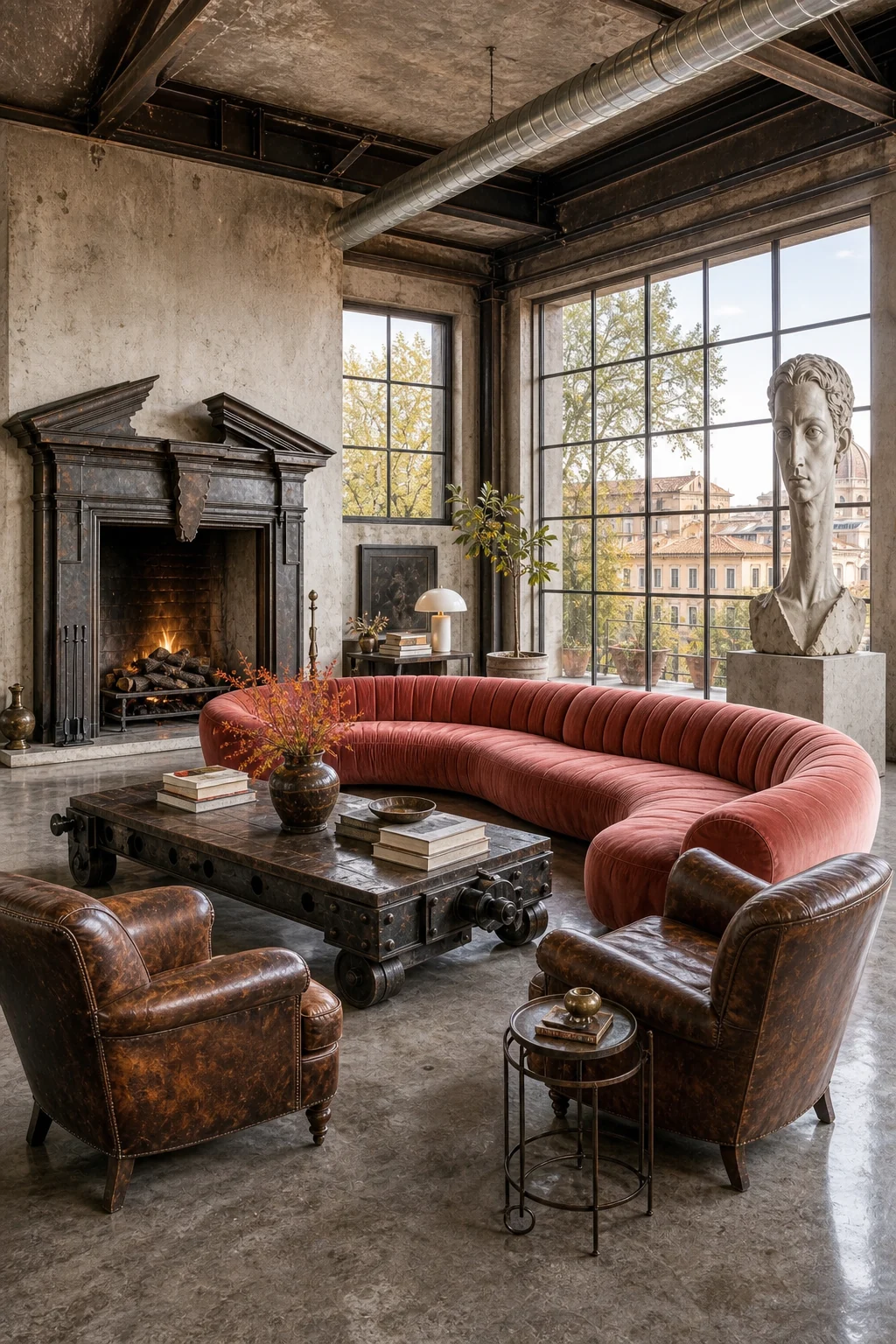
Wrapping the elongated sofa around a cast-iron center creates an intimate, highly functional zone within the vast warehouse. Translating each distinct layer of the room ensures the hybrid aesthetic remains strictly cohesive, deliberately planned, and highly practical for daily living.
| Layer | mannerism Role | industrial loft Role | Bridge Decision |
|---|---|---|---|
| Shell | Playful architectural interventions, oversized moldings, and playfully broken pediments | Exposed steel I-beams, visible ductwork, and expansive factory windows | Fabricating classical, distorted architectural shapes entirely out of raw, heavy industrial steel |
| Large Furniture | Elongated, serpentine seating featuring dramatically exaggerated, artificial proportions | Heavy, utilitarian cast-iron frames and raw metal workbench tables | Scaling all furniture up significantly to comfortably fill the cavernous architectural volume |
| Textiles | Acidic, vibrant velvet upholstery in Pontormo salmon pink and chartreuse | Honest, durable utilitarian materials completely lacking applied ornamentation | Using rich, highly tactile fabrics to visually soften the harshness of the concrete surroundings |
| Lighting | Dramatic, artificial highlights emphasizing distorted forms | Generous, unfiltered daylight pouring through steel frames | Bright, aspirational exposure that lifts midtones and reveals deep material textures |
| Accents | Stretched, elongated classical plaster busts | Rough, utilitarian concrete blocks and exposed hardware | Displaying highly refined, artificial art objects on raw, unpolished industrial plinths |
Review these specific material translations carefully before sourcing vintage pieces. Every object must justify its presence by contributing either raw utilitarian weight or exaggerated, serpentine elegance to the central living space, maintaining the delicate aesthetic balance required for this hybrid.
Illuminating the Hybrid
Generous Tuscan daylight is the crucial unifying element for this hybrid space. The bright, aspirational exposure lifts the midtones of the raw concrete, revealing its deeply tactile aggregate while simultaneously illuminating the rich sheen of the upholstery with brilliant clarity.
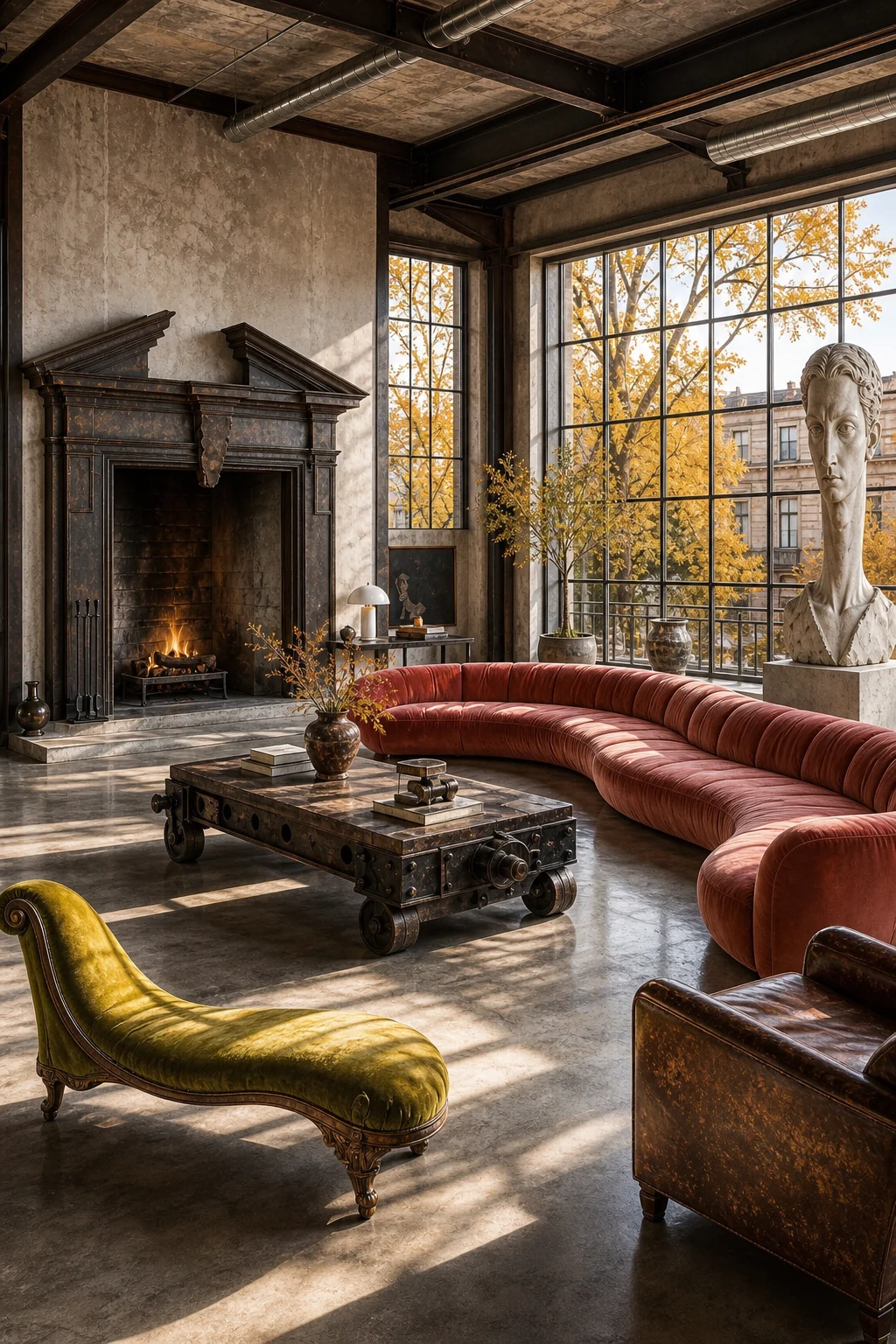
Warm autumn sunlight softens the raw concrete, harmonizing beautifully with the acidic velvet upholstery. Unfiltered daylight highlights the rich, vibrant sheen of the fabric against the matte, dusty texture of the utilitarian floor, enhancing the visual contrast and tactile depth.
This remarkably even illumination prevents the cavernous space from feeling like a gloomy dungeon. The resulting atmosphere feels vibrant and exceptionally livable, successfully highlighting the deliberate friction between the rugged architectural shell and the hyper-refined furnishings without creating harsh shadows.
Curating the Details
Small styling moments constantly reinforce the underlying tension between artifice and function. Accessories should never feel precious or overly curated; they must interact directly and honestly with the heavy, unyielding factory environment to maintain the strict aesthetic balance of the room.
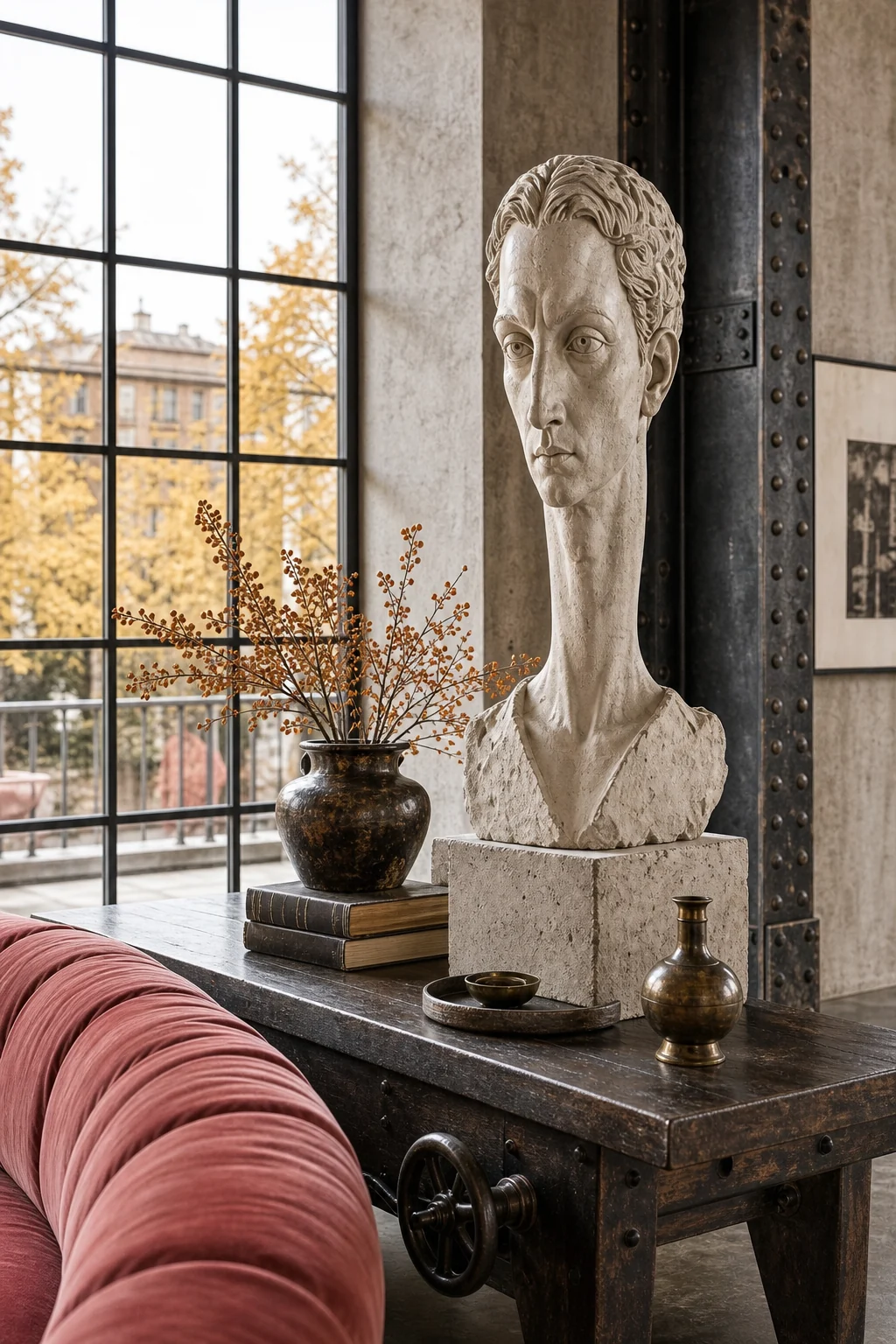
A stretched, distorted classical plaster bust loses its museum-like preciousness when placed directly on a rough concrete plinth. This unexpected juxtaposition strips the artifice of its formality, grounding the delicate classical reference firmly in utilitarian reality and everyday domestic life.
- Source serpentine velvet sofas in vibrant, acidic chartreuse or salmon pink to anchor the room.
- Anchor the central arrangement with heavy, utilitarian cast-iron coffee tables that provide necessary visual weight.
- Display classical plaster busts on rough, unpolished concrete plinths to strip away their formality.
- Install raw steel architectural mirrors to reflect the expansive windows and double the natural light.
Adapting the Threshold
Translating this aesthetic logic to transitional spaces requires absolute restraint. Instead of attempting full seating arrangements in narrow corridors, focus purely on bold, structural architectural interventions that successfully guide the eye without overwhelming the limited functional floor space of the hallway.
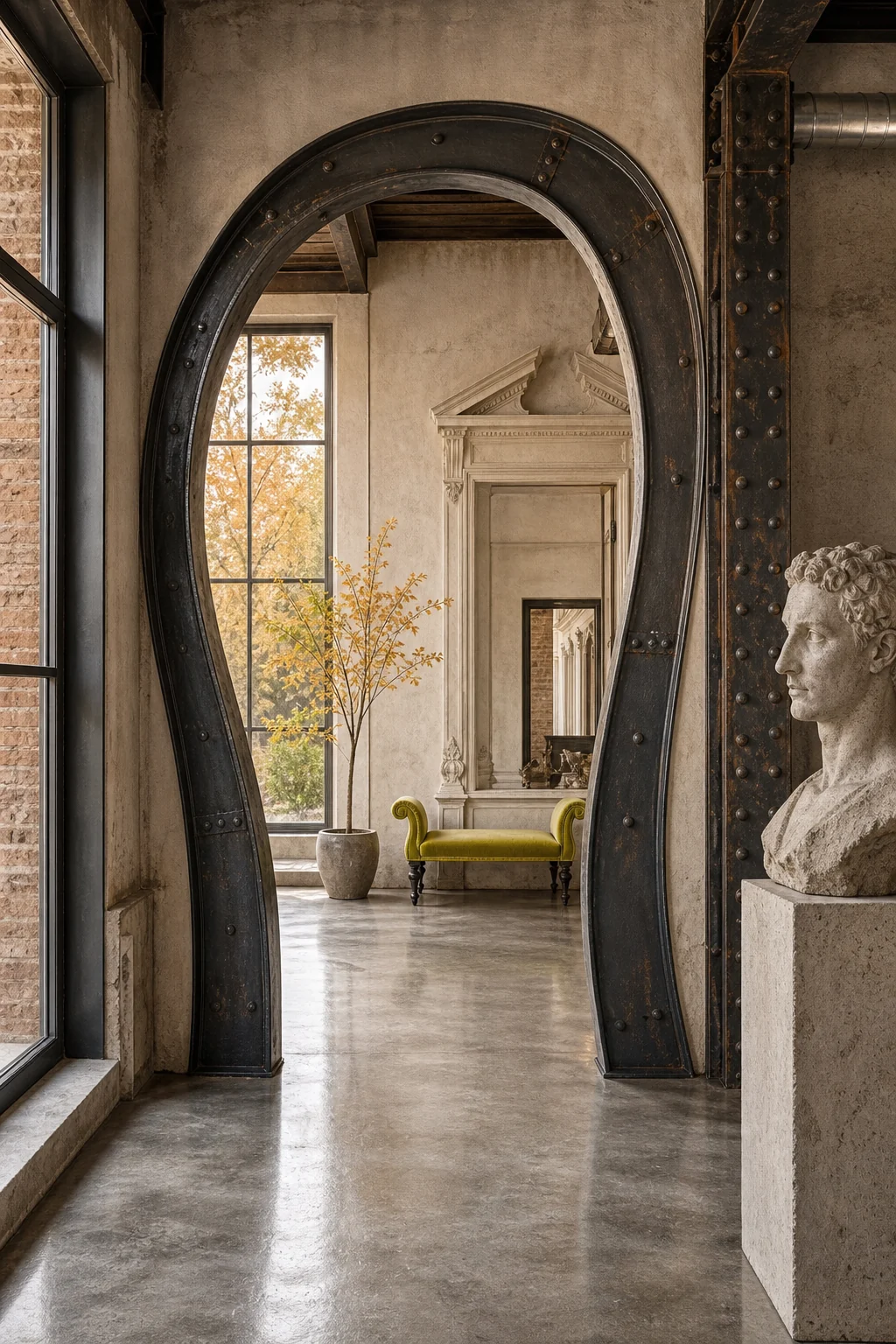
A playfully distorted archway fabricated from raw steel carries the aesthetic into hallways without cluttering the passage. This crucial intervention maintains the exaggerated proportions while fully respecting the functional, utilitarian flow of the industrial home, ensuring seamless visual continuity throughout.
- Keep transitional areas intentionally sparse to let the raw structural elements speak for themselves.
- Place a single, acidic chartreuse silk bench at the corridor end as a visual anchor.
- Use heavy steel framing to intentionally draw attention toward the vibrant textile, rewarding exploration.
Avoiding the Costume
A successful hybrid avoids looking like a ruined historical palazzo or a completely sterile warehouse. The tension relies entirely on strict material honesty, a refusal to compromise on scale, and a deep respect for utilitarian architecture that grounds the artifice.
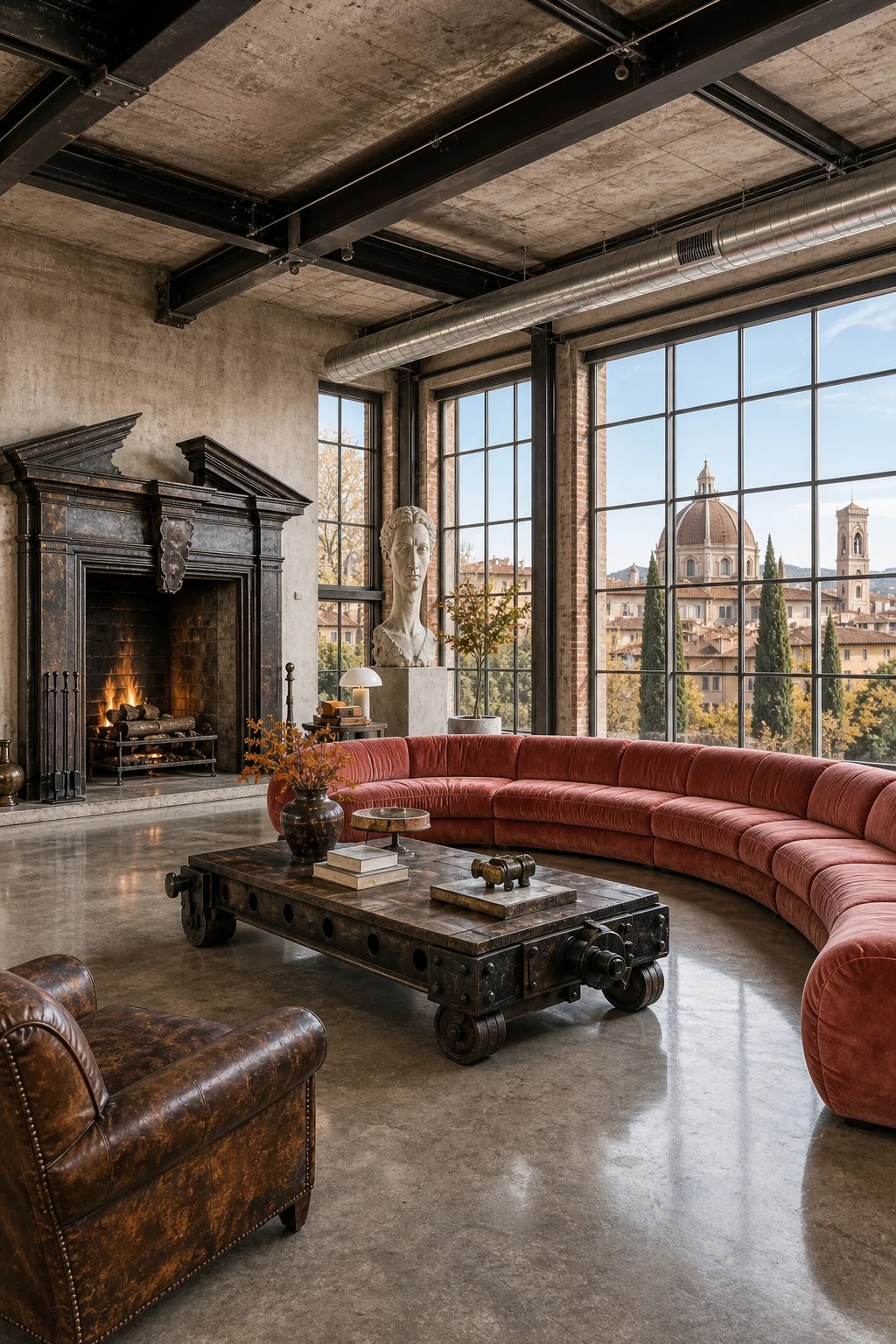
When classical forms are built directly from factory materials, the contradiction safely resolves into a cohesive, highly livable space. The raw industrial shell perfectly balances the oversized steel fireplace, while the elongated, serpentine velvet sofa provides a necessary touch of acidic elegance.
- Assess the room for adequate utilitarian weight and raw materials before adding any delicate accents.
- Ensure classical forms are exaggerated enough to comfortably fill the cavernous industrial volume.
- Verify that textiles provide a sharp, acidic contrast to the dusty, matte concrete surfaces.