
Retro Futuristic Meets Cabincore: Reading Nook
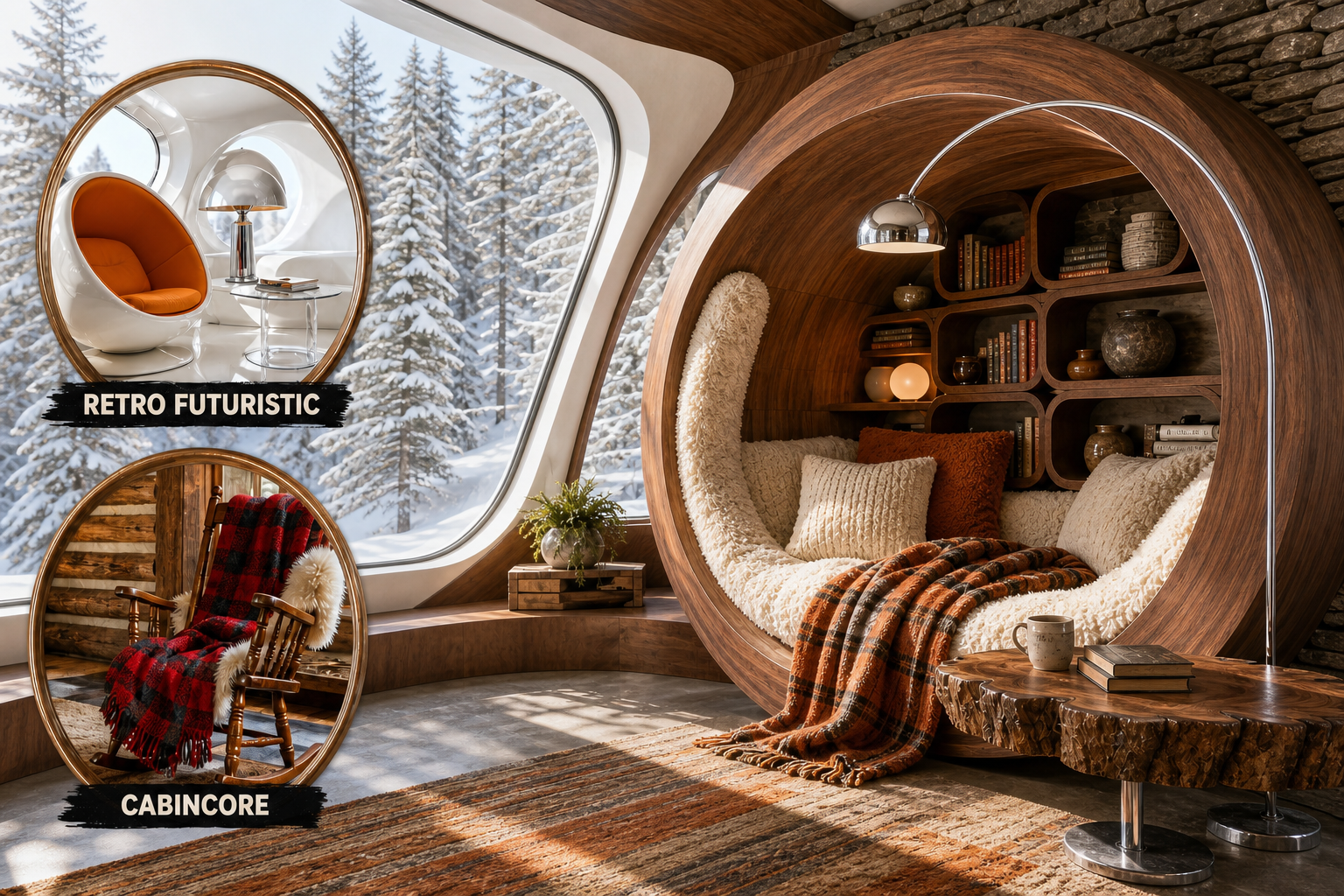
The synthetic optimism of 1960s space-age design clashes dramatically with the rough nostalgia of a woodland retreat. We resolve this tension by letting retro futuristic dictate the sweeping architectural forms while cabincore grounds the space through rich, tactile materials.
Style A language
Retro futuristic design thrives on sweeping curves, seamless geometry, and aerodynamic optimism, but its traditional glossy plastics feel entirely alien in a woodland setting. Bringing this aesthetic into the mountains requires a fundamental shift in how we perceive modern architectural shapes in residential interiors.
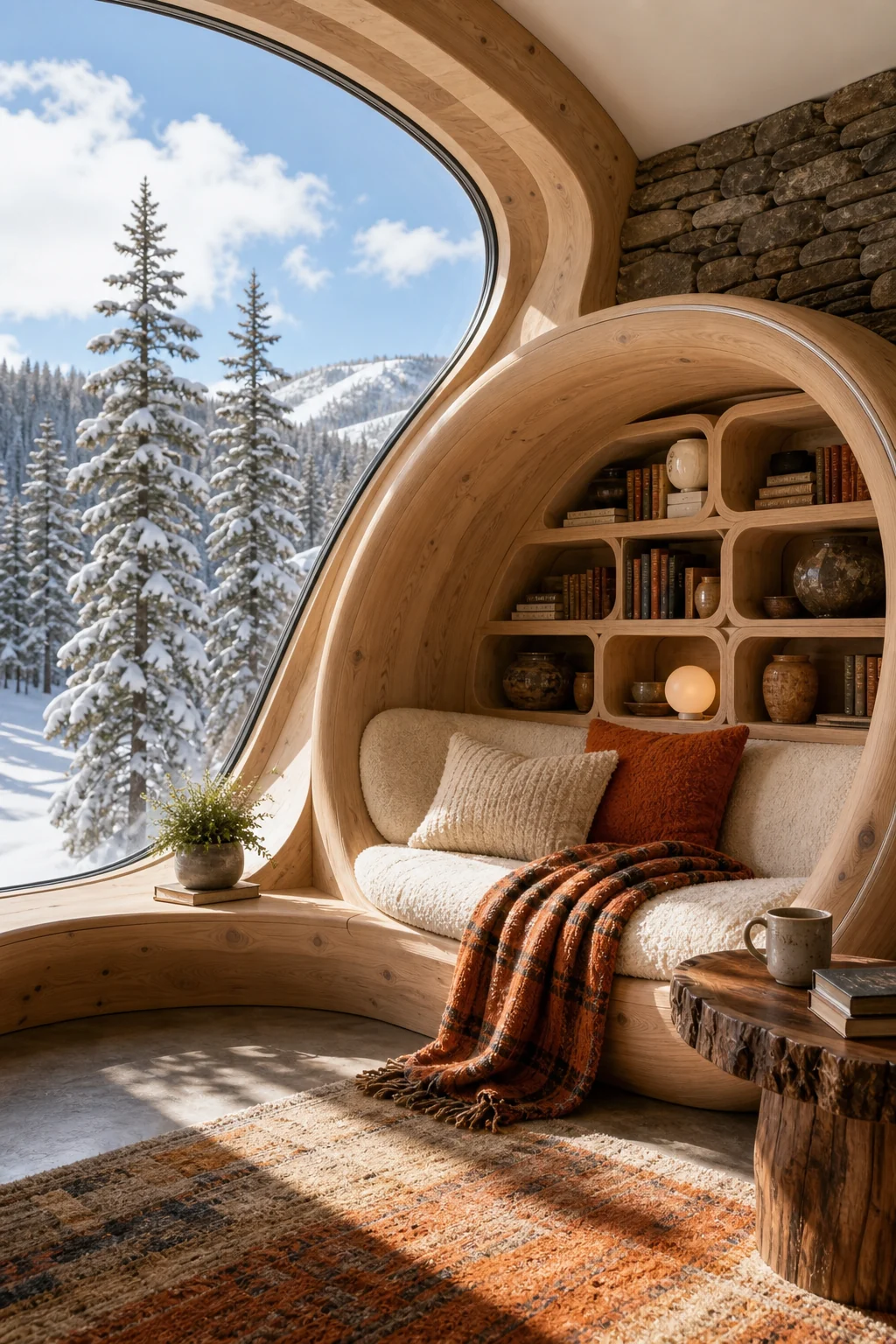
To preserve the space-age drama without the synthetic chill, we translate those iconic molded silhouettes into natural materials. The architecture retains its futuristic pod-like geometry while welcoming organic warmth, proving that forward-looking design does not require cold, highly manufactured surfaces to achieve visual impact.
This approach allows the room to soar visually without losing its vital connection to the earth. By stripping away the expected fiberglass, the underlying geometry becomes a highly versatile canvas for heavier woodland textures to take root and flourish effortlessly.
Style B language
Cabincore relies on heavy, tactile materials like raw timber and stacked stone to create an immediate sense of rustic safety. These elements provide a profound visual gravity, anchoring the room firmly against the harsh, snowy landscape visible just outside the sweeping glass windows.
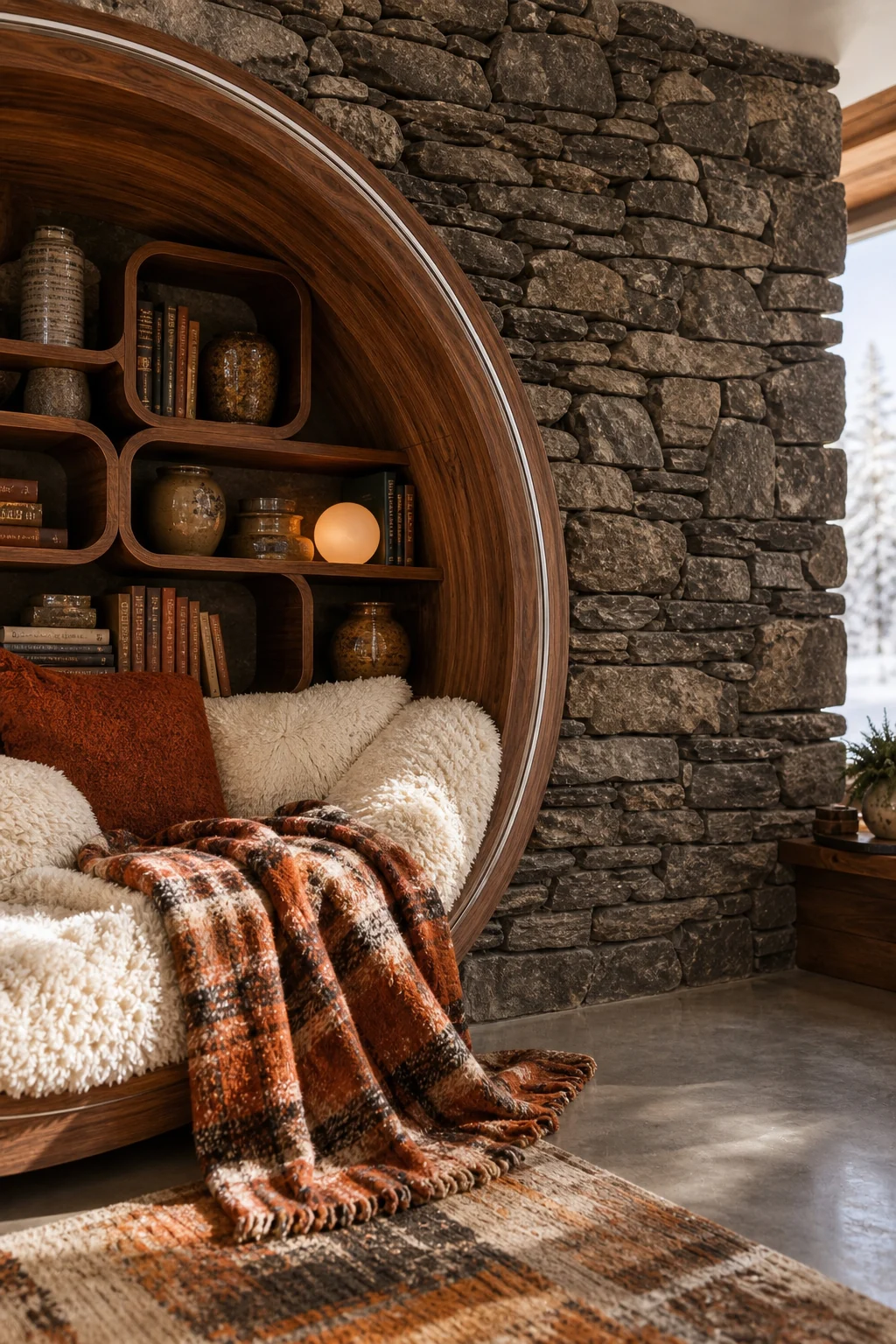
When paired with aerodynamic shapes, these rough-hewn textures prevent the room from feeling like a sterile spaceship. Thick wool and natural shearling provide the necessary visual weight to ground the soaring architecture, ensuring the reading nook feels deeply protective and inviting during harsh winters.
- Choose thick, raw shearling over synthetic faux fur to ensure absolute material authenticity against the heavy stone.
- Use heavy wool plaid to introduce traditional woodland cabin patterns into the sweeping geometry.
- Incorporate rough-hewn stacked stone to create necessary architectural friction against the smooth wood.
- Select matte-finished natural pine to soften the bold geometric lines of the built-in seating.
The bridge
Bridging these opposing worlds requires a shared visual language, which is found perfectly in the earthy, warm palettes of the 1970s. This distinct chromatic overlap seamlessly connects the synthetic pop-art era with the organic, back-to-nature movement of the same defining decade, offering a perfect bridge.
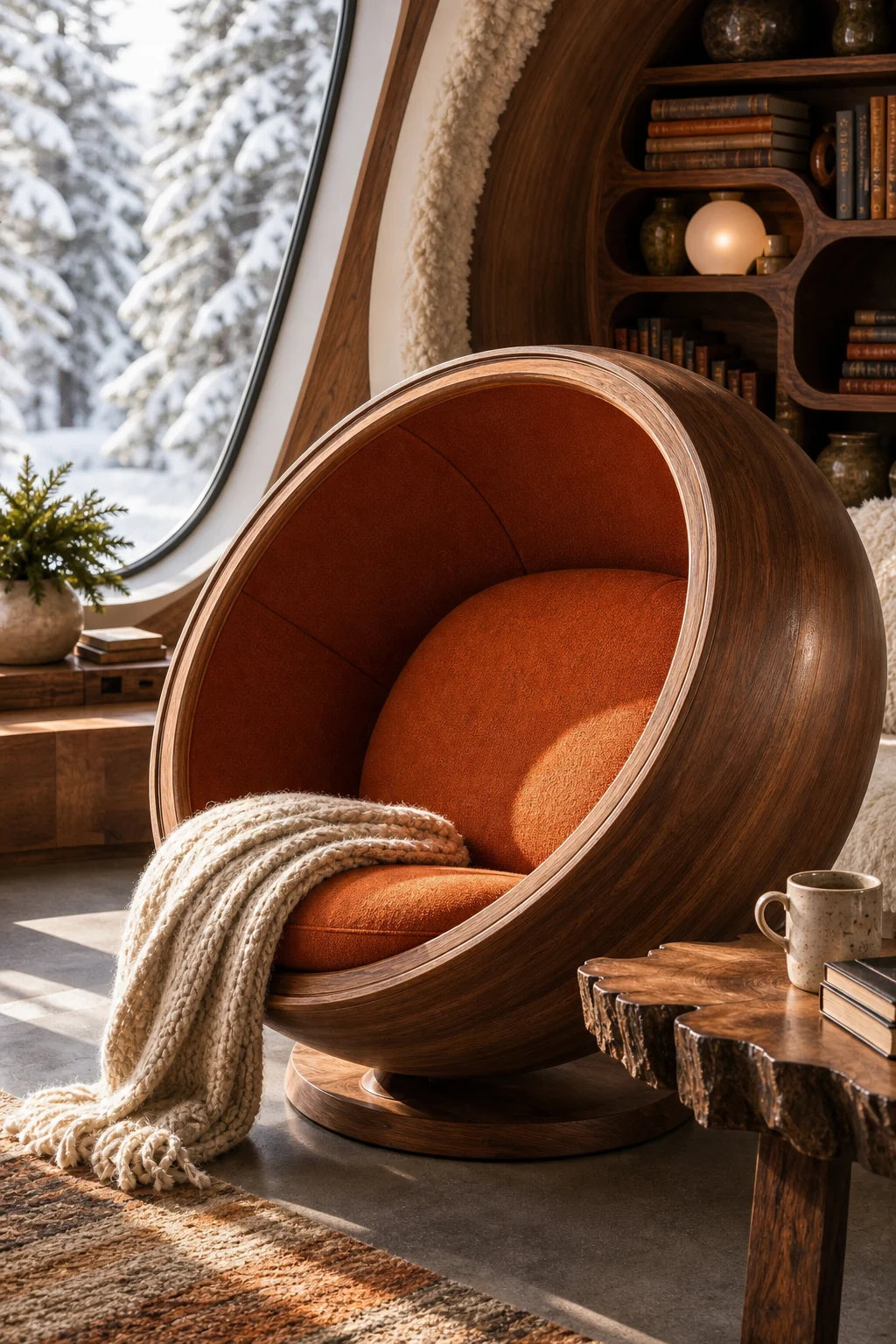
Burnt orange, mustard, and warm brown suit both the space-age aesthetic and the rustic woodland vibe beautifully. Translating classic molded chair shapes into steam-curved natural timber physically unites the two styles, creating a cohesive, tactile dialogue between futuristic form and natural finish.
This shared chromatic DNA eliminates the friction between eras instantly. The resulting environment feels deliberate and harmonious, wrapping molded pod shapes in a universally comforting, nostalgic glow that honors both the optimistic future and the rustic past simultaneously.
Build the room
Constructing the primary seating area means committing fully to the contradiction, anchoring the room with a massive, undeniable focal point. This central feature must boldly declare the space-age silhouette while remaining absolutely uncompromising in its dedication to heavy, rustic materials and textures.
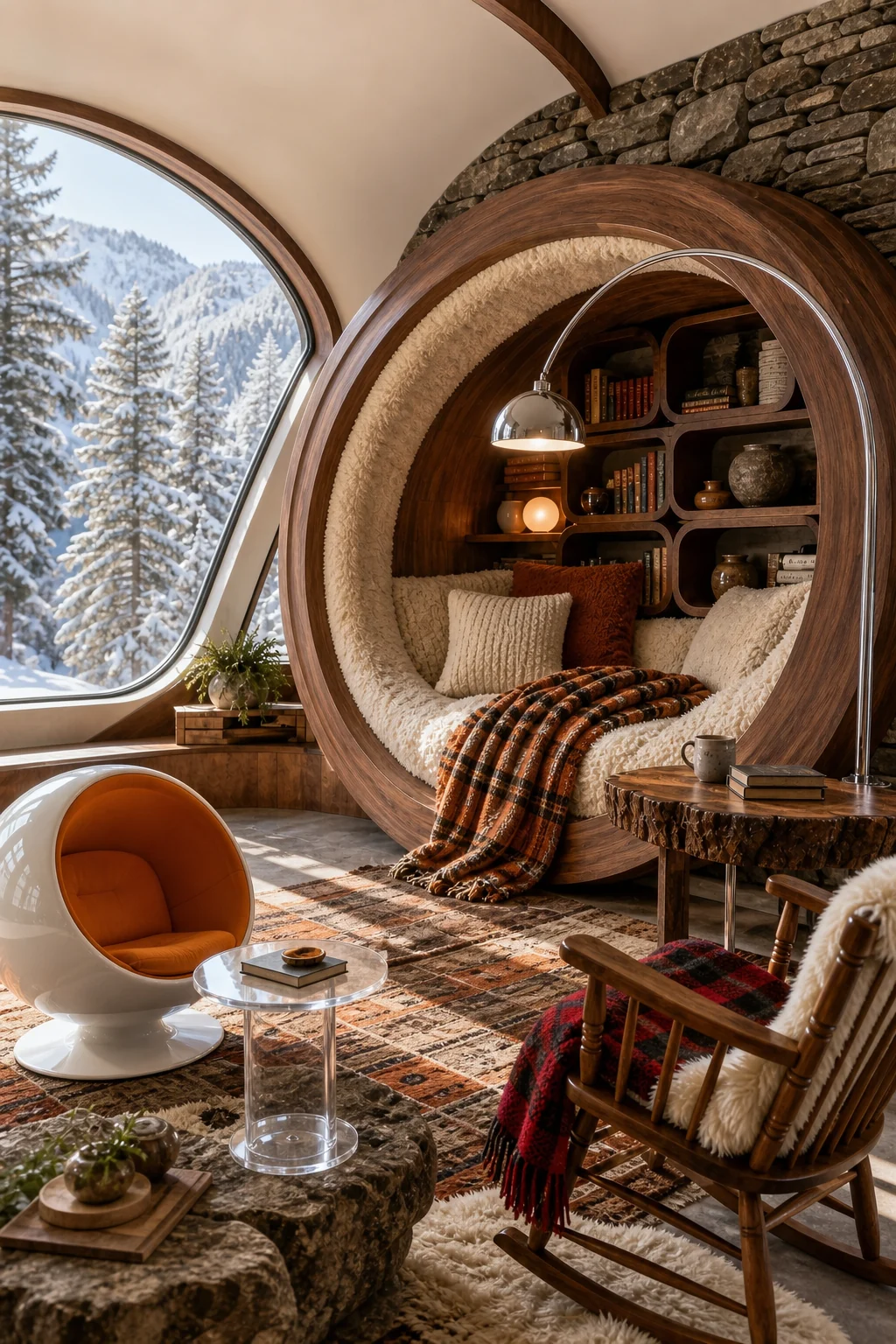
The circular reading pod delivers pure space-age drama, yet its matte walnut construction and plush rustic lining make it feel entirely native to the mountains. It becomes a protective cocoon that perfectly balances aerodynamic ambition with deep, restorative woodland comfort.
| Layer | retro futuristic | cabincore | Bridge Decision |
|---|---|---|---|
| Shell | Sweeping aerodynamic curves | Rough-hewn stacked stone | Matte natural timber paneling |
| Furniture | Molded pod shapes | Live-edge rustic accents | Bent walnut construction |
| Textiles | Tailored vinyl cushions | Raw natural sheepskin | Burnt orange wool |
| Lighting | Sleek chrome arc lamps | Heavy wrought iron | Warm glowing glass globes |
| Accents | Modular geometric shelving | Rough stone pottery | Vintage hardcover books |
This exact material translation ensures neither style dominates the environment. The reading nook becomes a perfect hybrid space, offering both sleek aerodynamic elegance and the profound, tactile comfort expected from a secluded winter cabin retreat, resolving the initial design tension beautifully.
Light and architecture
Lighting must highlight the sweeping architectural curves while casting a warm, inviting glow that enhances the deep grain of the wood. The illumination strategy is crucial for maintaining the modern edge against the overwhelming visual weight of the rustic textures.
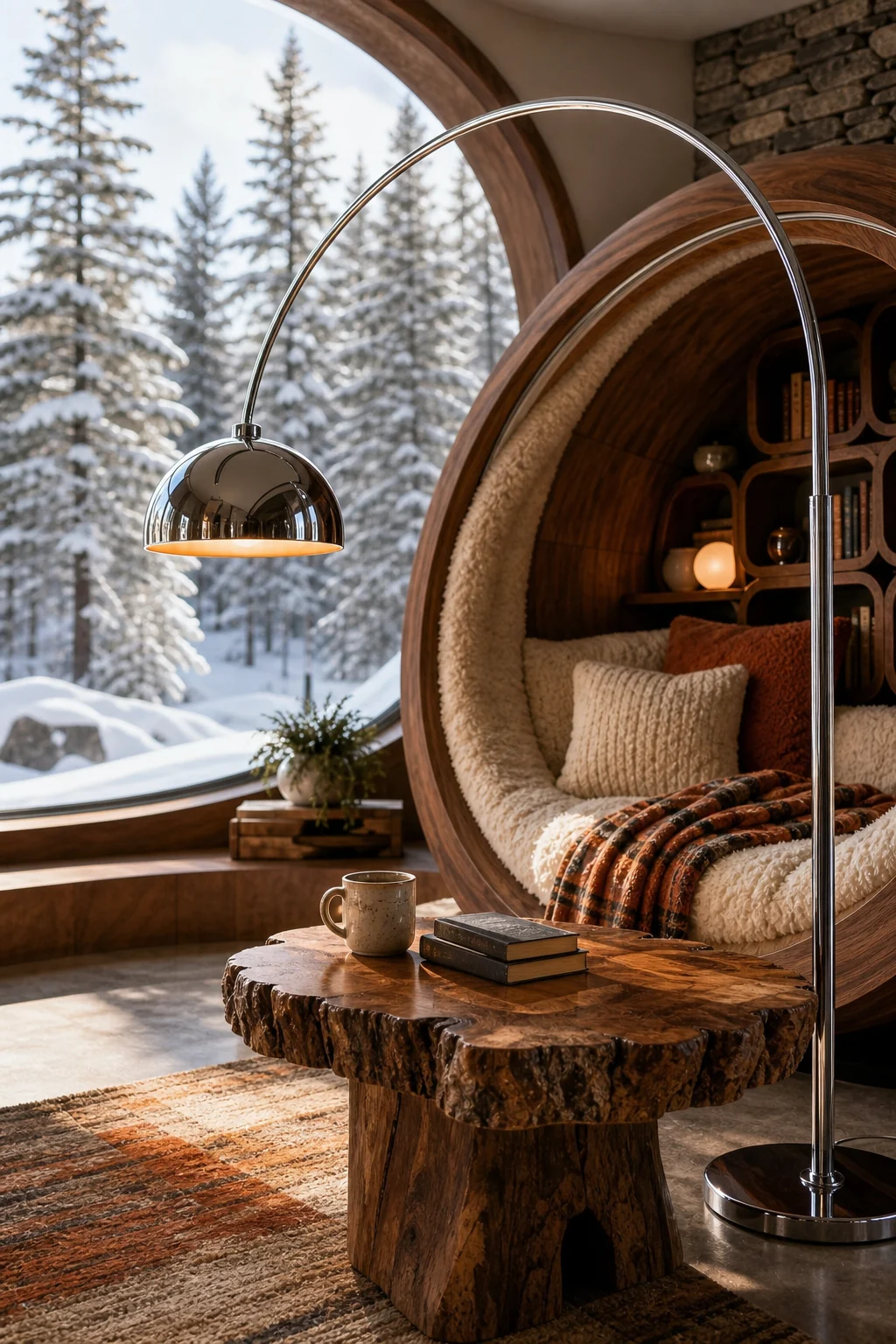
A sleek, chrome-stemmed arc lamp introduces a necessary flash of space-age metal, slicing cleanly through the organic textures. This sharp contrast prevents the heavy rustic elements from swallowing the room’s modern edge, acting as a brilliant visual palate cleanser against the wood.
- Position arc lamps to highlight the curvature of the seating without overpowering the room.
- Use warm-toned bulbs to enhance the rich, natural grain of the bent walnut surfaces.
- Allow chrome finishes to reflect the surrounding rough stone textures for brilliant visual contrast.
- Ensure bright daylight floods the room to keep the deep woodland shadows feeling open.
Style the details
Smaller styling moments are where the tension between synthetic optimism and organic nostalgia is most easily balanced. These finishing touches require precise curation to ensure the space feels intentionally designed rather than accidentally cluttered with conflicting historical artifacts or disjointed design eras.
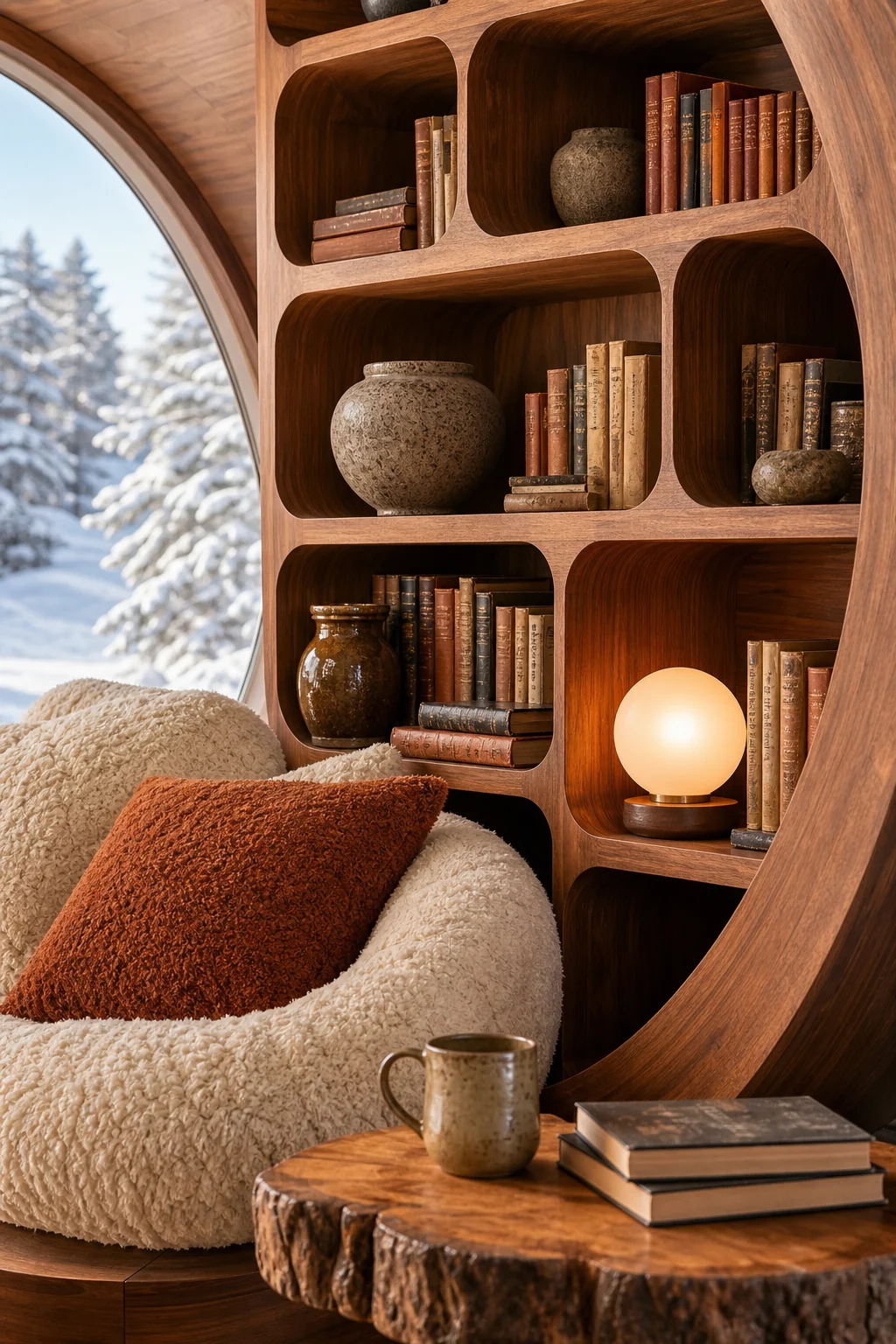
Modular, rounded-corner shelving units provide a distinctly space-age framework. Filling those geometric cubbies with rough-hewn stone pottery and vintage books softens their rigid symmetry, creating a curated, gallery-like appreciation for simple, primitive woodland objects within a highly engineered display.
- Source steam-bent walnut lounge chairs to serve as the primary space-age seating foundation.
- Layer thick natural shearling throws heavily over every curved surface for immediate tactile warmth.
- Position sleek chrome-stemmed mushroom lamps directly near the matte, rough-hewn timber wall panels.
- Drape burnt orange wool plaid blankets casually for a strong, era-appropriate graphic impact.
- Display rough-hewn stone decorative vessels exclusively on the modular, rounded-corner geometric shelving units.
Adapt it
Translating this aesthetic beyond the main reading pod requires carrying the curved geometry into transitional spaces like entryways or corridors. Consistency in the architectural shapes ensures the home feels cohesive rather than disjointed as you move between different functional zones of the mountain cabin.
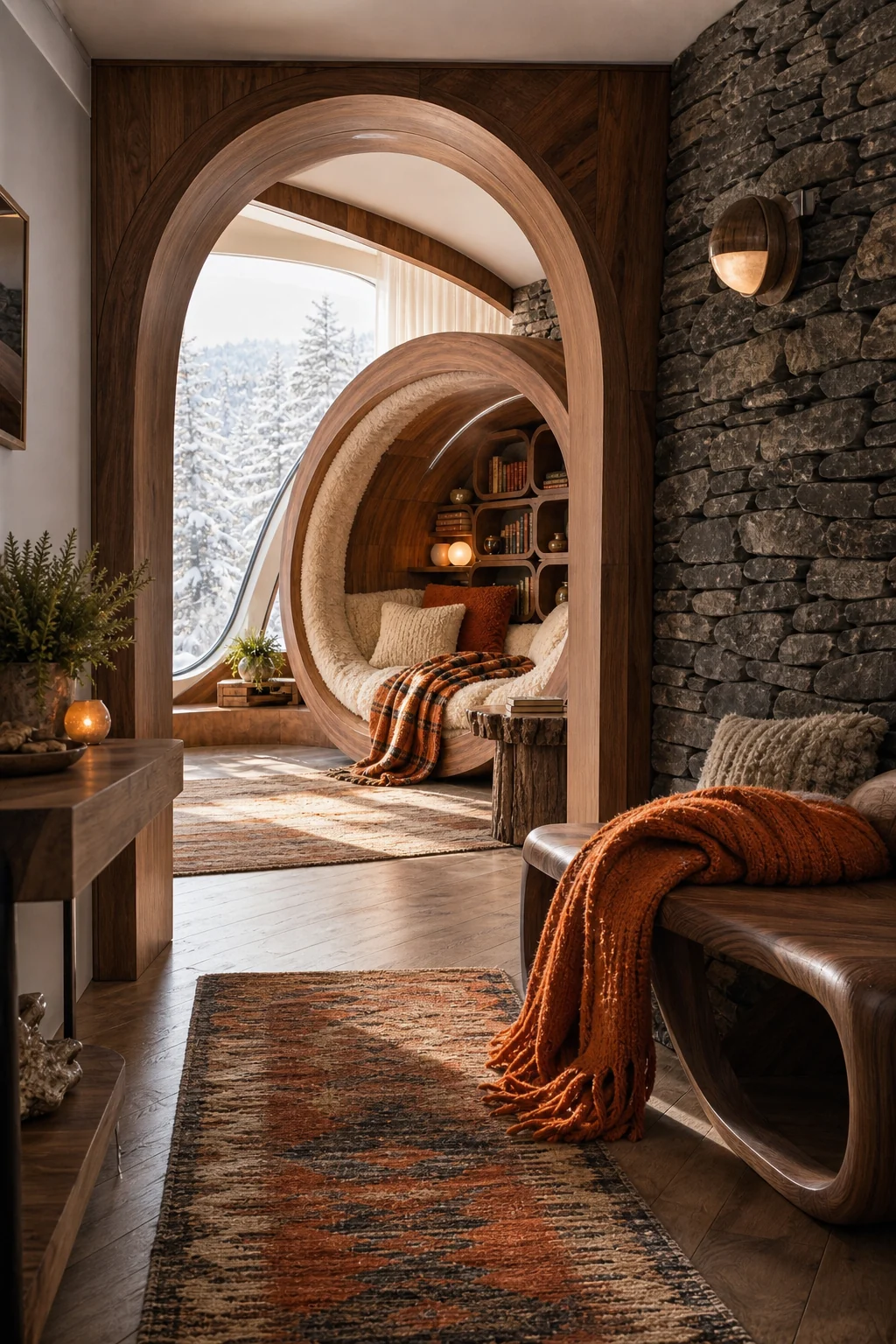
A simple arched doorway clad in raw timber or a curved bench resting against a stacked stone wall can extend the narrative beautifully. The primary goal is maintaining the strict silhouette-to-material ratio throughout the home’s entire footprint for maximum impact.
This measured approach allows the aesthetic to scale down gracefully. By focusing on architectural curves rendered in rustic materials, even modest hallways or compact corners can participate in the broader design dialogue without overwhelming the available square footage.
Avoid the costume
The greatest risk in blending these styles is creating a split personality, where half the room feels like a spaceship and the other half a lumberjack camp. True integration requires absolute discipline in how materials and shapes are deliberately combined to form a unified vision.
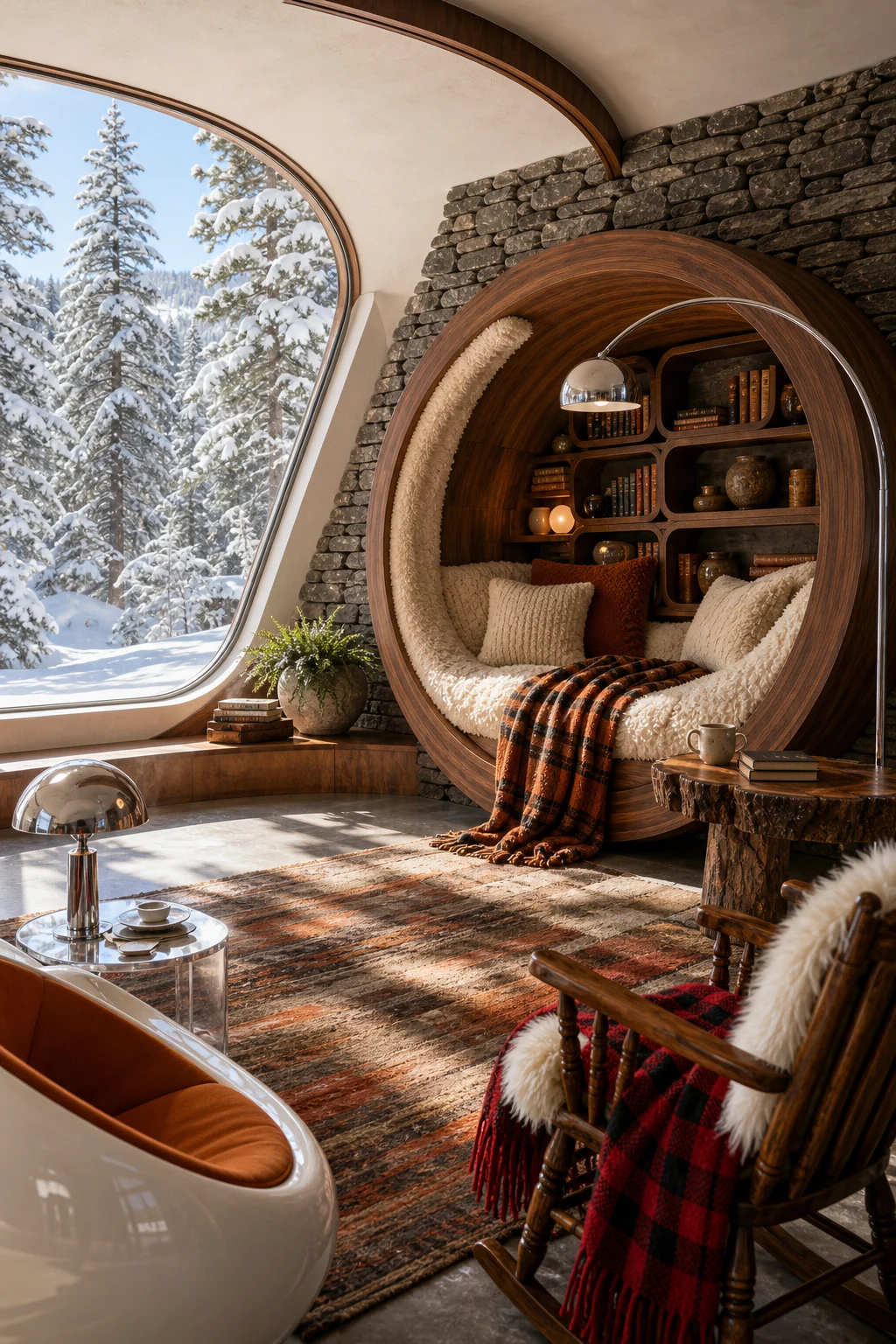
Avoid glossy white plastics entirely; they will always look like a costume against rustic stone. By forcing futuristic shapes to wear organic materials, you create a cohesive, aspirational retreat that honors both distinct eras without ever slipping into obvious cliché.
- Using glossy white fiberglass alongside raw logs creates a jarring, unresolvable visual disconnect.
- Overloading the room on plaid patterns can easily drown out the sleek space-age architecture.
- Relying on sharp, traditional right angles defeats the aerodynamic space-age aesthetic entirely.
- Ignoring the shared 1970s earthy palette leaves the two distinct styles feeling completely disconnected.