
Korean Minimal Meets Victorian: Reading Nook
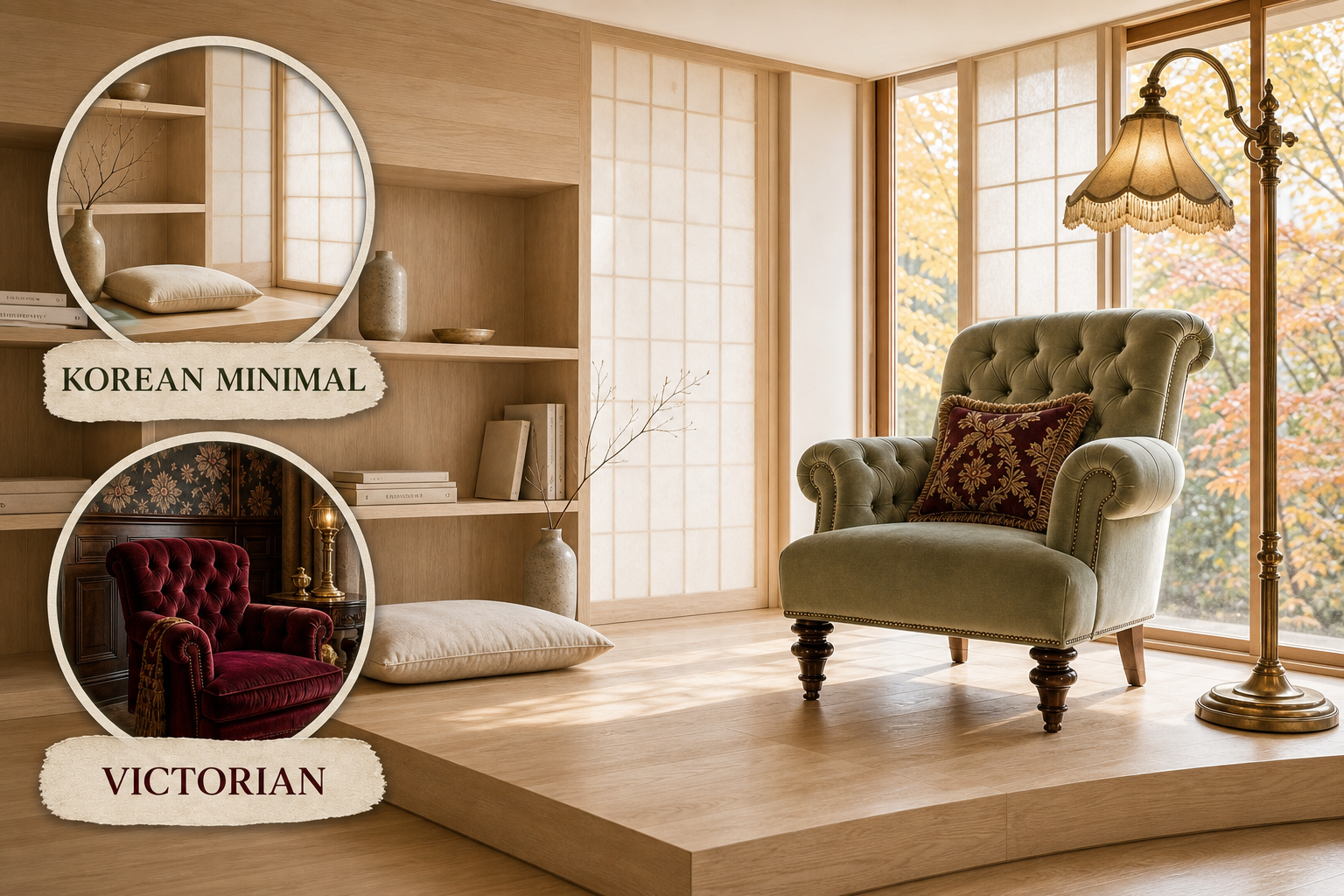
Contemporary Korean Minimal restraint heavily clashes with Victorian horror vacui. You can resolve this tension by using minimalist architecture as a blank canvas, allowing heavy antique furniture to feel deliberately modern rather than overwhelmingly cluttered or historically oppressive.
The Serene Void of Korean Minimal Design
Contemporary Korean Minimal design demands absolute restraint through pale white oak and vast negative space. This approach creates a serene, unadorned architectural shell that strictly dictates room boundaries, providing an essential, calming visual baseline for the entire home.
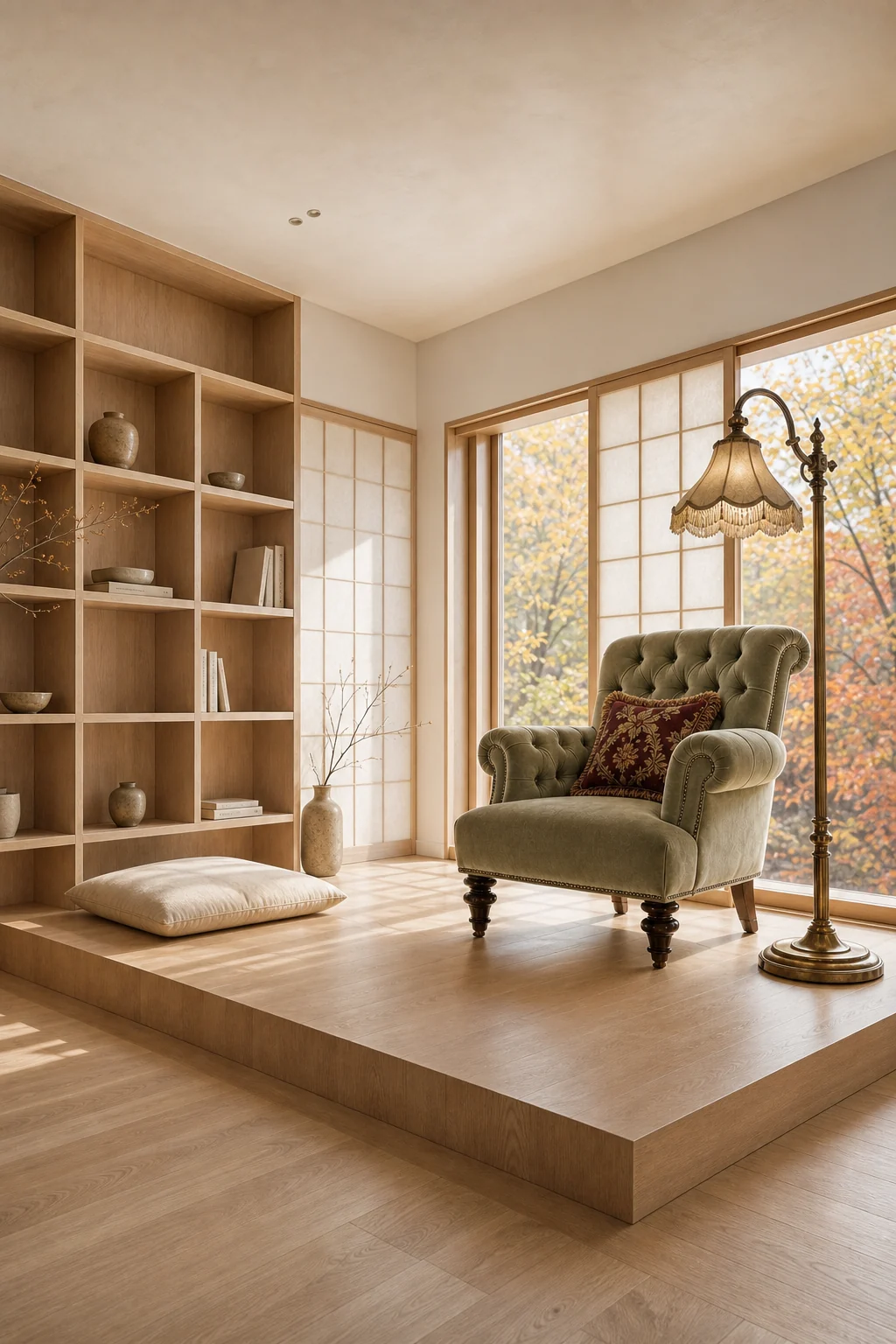
Notice how the pale white oak grid establishes a quiet, unwavering foundation. The low-profile raised floor platform completely removes visual clutter, ensuring the surrounding architecture remains pure and free of unnecessary historical distractions that might otherwise confuse the eye.
By maintaining this rigorous architectural discipline, the room completely avoids feeling heavy or dated. The empty spaces between shelves become deliberate design choices rather than neglected corners, setting the absolute perfect stage for highly ornate, tactile antique furniture additions.
The Tactile Weight of Victorian Ornamentation
Victorian design thrives on tactile richness, introducing deep-tufted velvet and heavy proportions that demand immediate attention. Without a quiet background, these intense historical textures quickly turn a room into a chaotic, cluttered museum exhibit that feels physically exhausting to navigate.
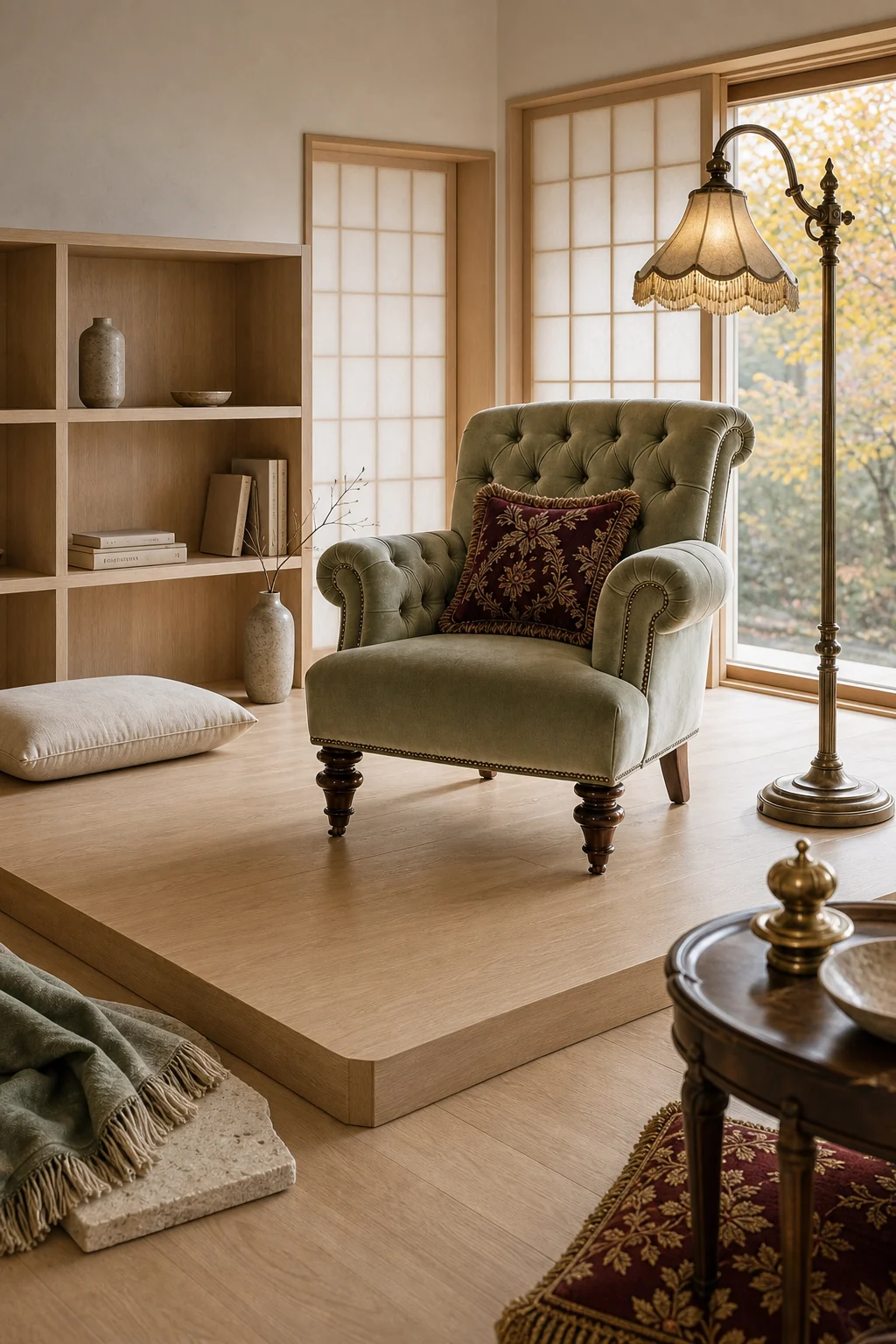
The luxurious deep-tufted velvet and heavy turned walnut legs command the space effortlessly. Placing these ornate elements inside an airy void allows their intricate craftsmanship to breathe beautifully without overpowering the senses or artificially shrinking the perceived room size.
- Prioritize deep-tufted velvet upholstery to introduce necessary tactile depth and historical comfort to the minimalist seating area.
- Select heavy turned walnut legs to provide strong historical grounding and visual weight against the pale floors.
- Incorporate ornate antique brass hardware for warm, reflective metallic accents that catch the diffused natural daylight beautifully.
- Choose fringed tapestry pillows to emphasize dense, traditional textile traditions without permanently altering the surrounding room architecture.
Bridging Eras With Muted Color and Form
Connecting these radically contrasting eras requires careful, deliberate material choices. A muted sage velvet instantly modernizes traditional tufted seating while harmonizing perfectly with the nature-inspired, pale oak palette of the surrounding minimalist architectural shell, creating a seamless visual bridge.
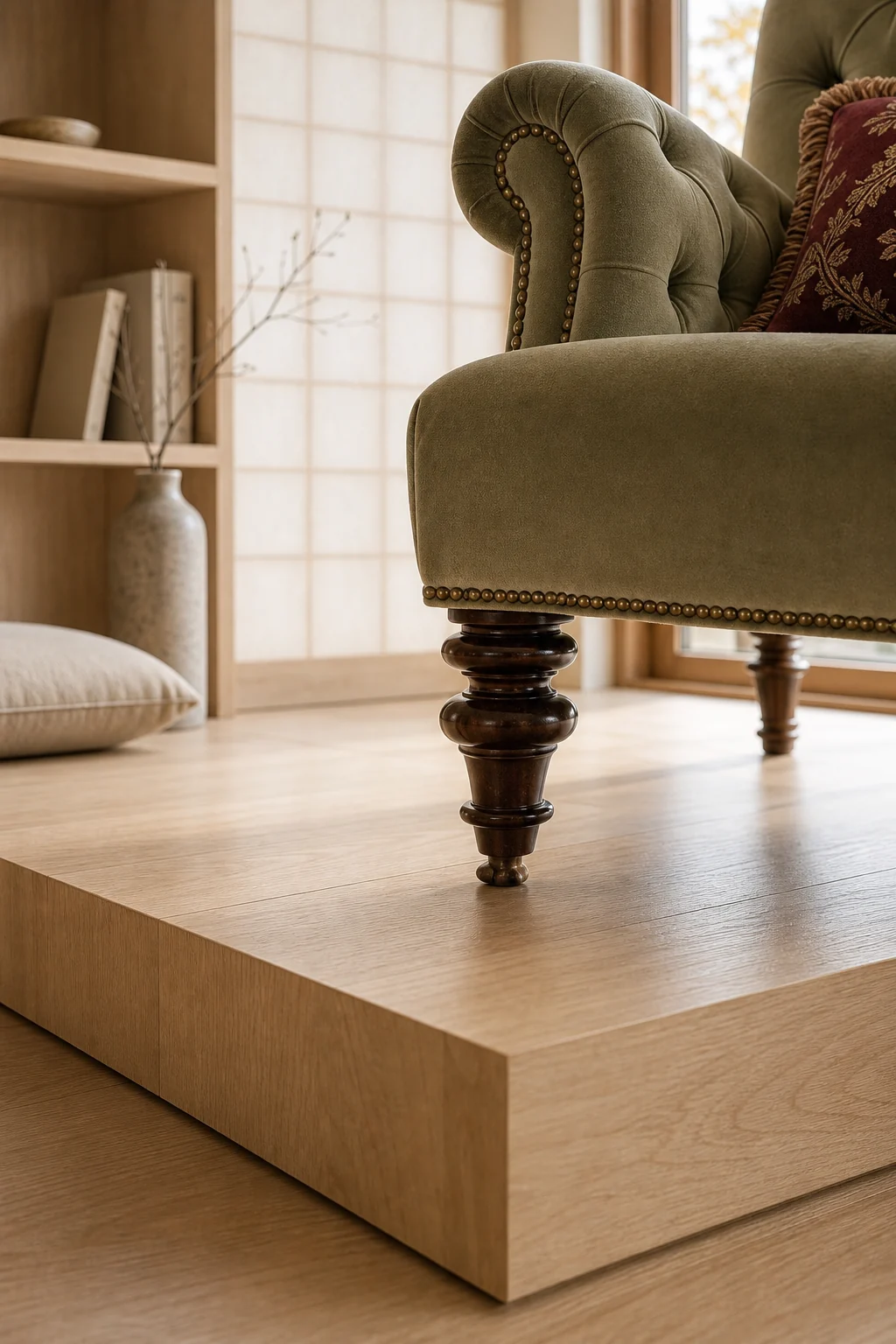
Placing heavily carved walnut directly onto a completely flush oak platform creates a stark, sculptural contrast. This deliberate collision highlights the best traits of both eras, turning structural friction into a sophisticated design statement that feels incredibly intentional.
This stark transition between ornate carving and smooth geometry prevents the distinct styles from muddling together. By keeping the material boundaries sharp, the room acknowledges its historical roots while remaining firmly planted in a highly contemporary, restrained design logic.
Assembling the Hybrid Seating Vignette
Combining these distinct styles into a functional reading nook requires strict aesthetic discipline. Every piece of heavy antique furniture must be carefully balanced by an equal measure of empty, light-filled space to prevent visual fatigue and maintain overall harmony.
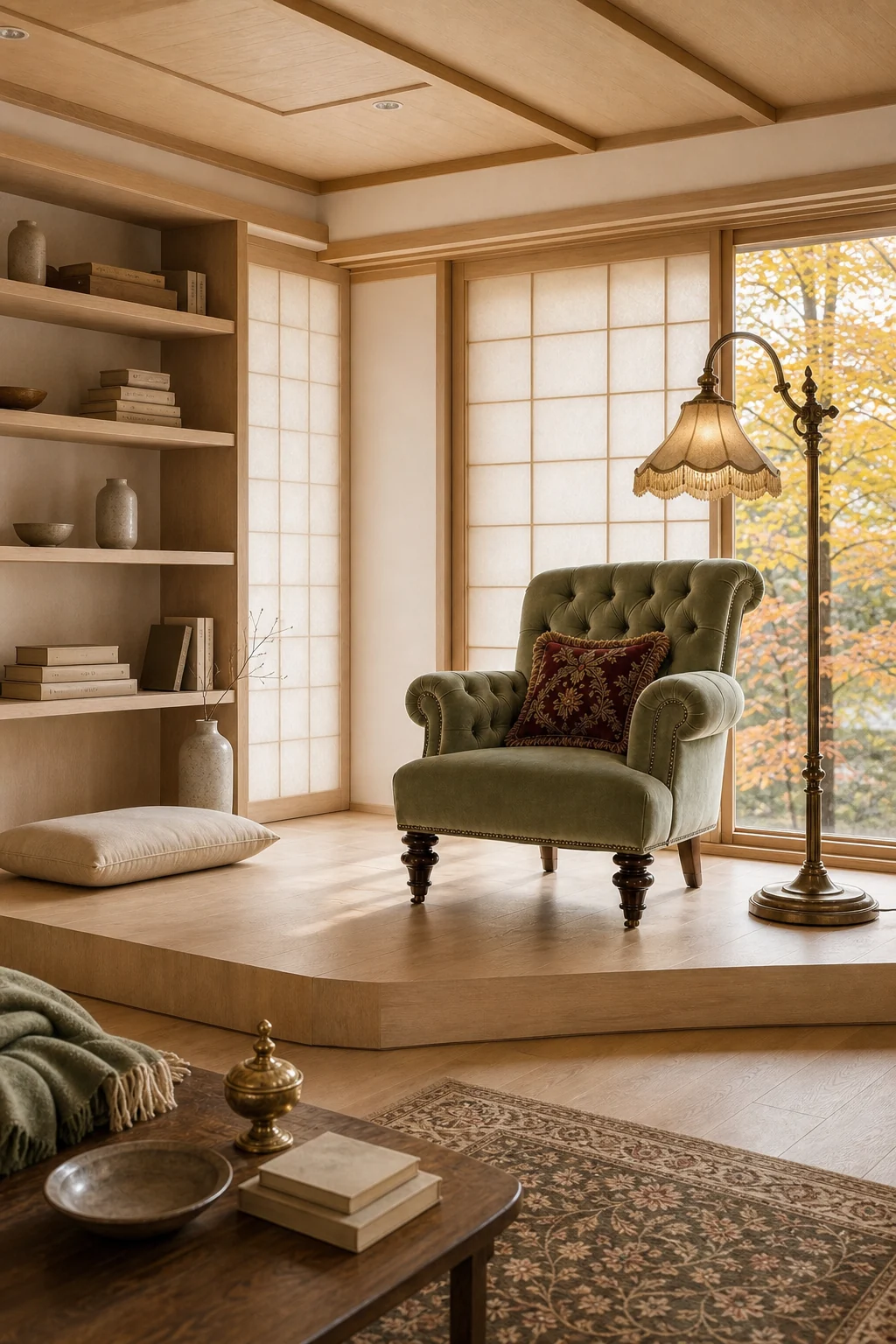
The completed seating vignette proves the underlying concept perfectly. The crisp oak completely surrounds the heavy sage armchair, successfully turning a potentially overwhelming antique into an intentional, highly curated focal point that invites relaxation rather than formal stiffness.
| Design Layer | Korean Minimal Role | Victorian Role | Bridge Decision |
|---|---|---|---|
| Shell | Pale white oak built-ins and flush platforms | None; walls remain completely unadorned | Vast negative space frames the heavy furniture |
| Large Furniture | Low-profile, linear wooden seating bases | Deep-tufted armchairs with turned walnut legs | Muted sage upholstery harmonizes with pale wood |
| Textiles | Translucent hanji paper window screens | Heavy fringed tapestry throw pillows | Warm cream tones unify paper and heavy fabrics |
| Lighting | Diffused, even natural daylight | Ornate antique brass floor lamps | Softened light washes over the heavy metal patina |
| Accents | Simple, unglazed ceramic vases | Scalloped lamp shades and bullion fringe | Ornate details isolated as sculptural focal points |
Using this specific translation framework ensures neither aesthetic dominates the other. The architecture provides the necessary breathing room and structure, while the furniture supplies the warmth, comfort, and character that pure minimalism often lacks in residential interior applications.
Softening History Through Filtered Light
Harsh lighting exacerbates the visual weight of heavy historical furniture, making it feel imposing and severe. Traditional Korean architecture solves this by filtering natural light through fibrous paper, creating a gentle, flattering wash that enhances dense, intricate textures.
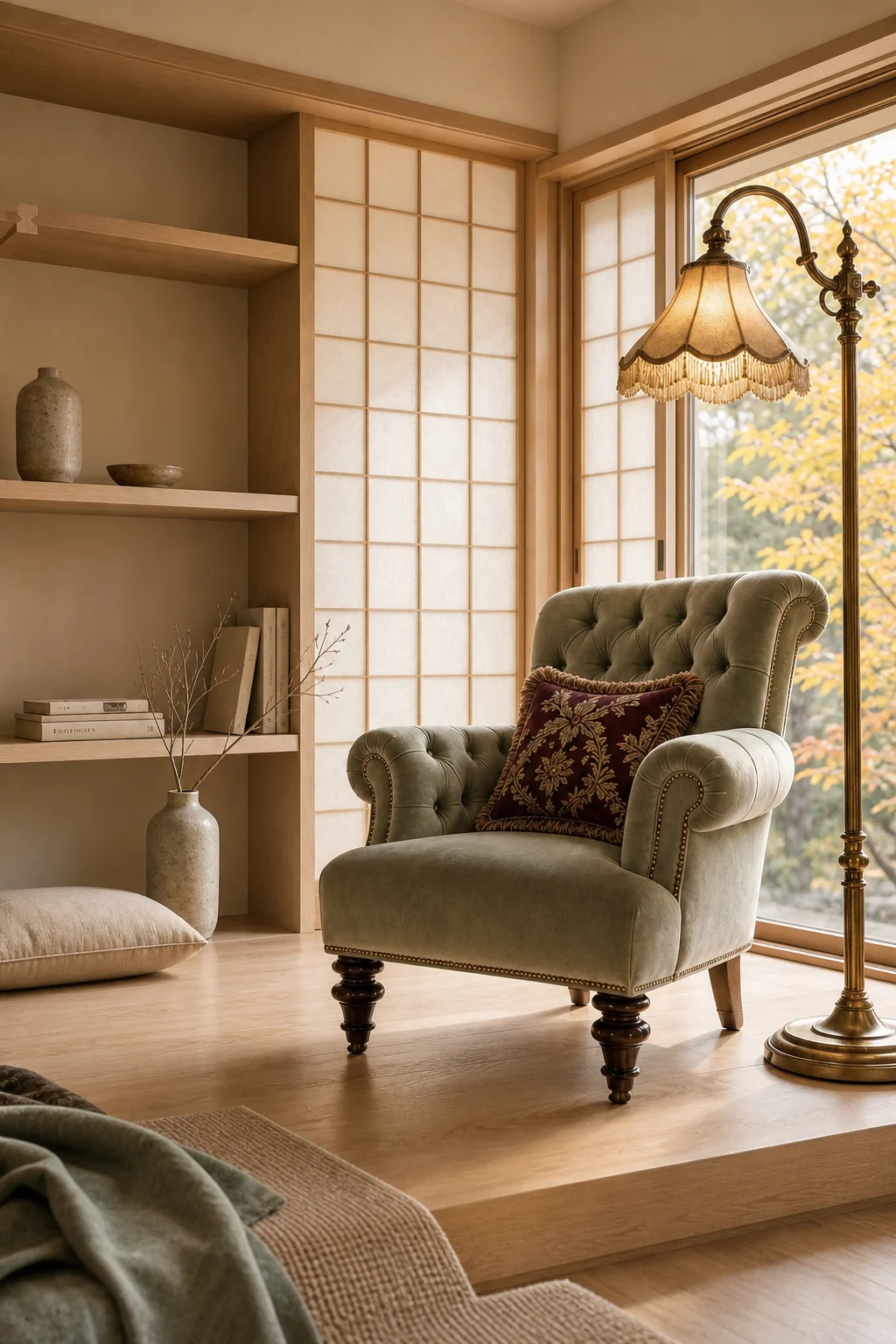
Diffused daylight passing through translucent hanji screens gracefully washes over the Victorian brass. This crucial lighting technique softens the intense historical weight, transforming hard, aged metal into a warm, contemporary glow that feels welcoming rather than strictly formal.
- Install translucent paper screens to gently diffuse harsh, direct natural sunlight into a soft, highly flattering ambient wash.
- Keep all window treatments entirely flush to maintain strict architectural purity and preserve the vital negative space.
- Position reflective antique brass directly near natural light sources to maximize warmth and highlight the intricate historical patina.
- Allow open shadows to highlight intricate carvings without creating gloomy corners that might disrupt the serene modern atmosphere.
Curating Objects Within the Grid
Built-in shelving must remain largely empty to preserve the vital minimalist void. You must strictly resist the traditional Victorian urge to fill every available surface with decorative objects, ensuring the architecture retains its calming, unadorned purity and spaciousness.
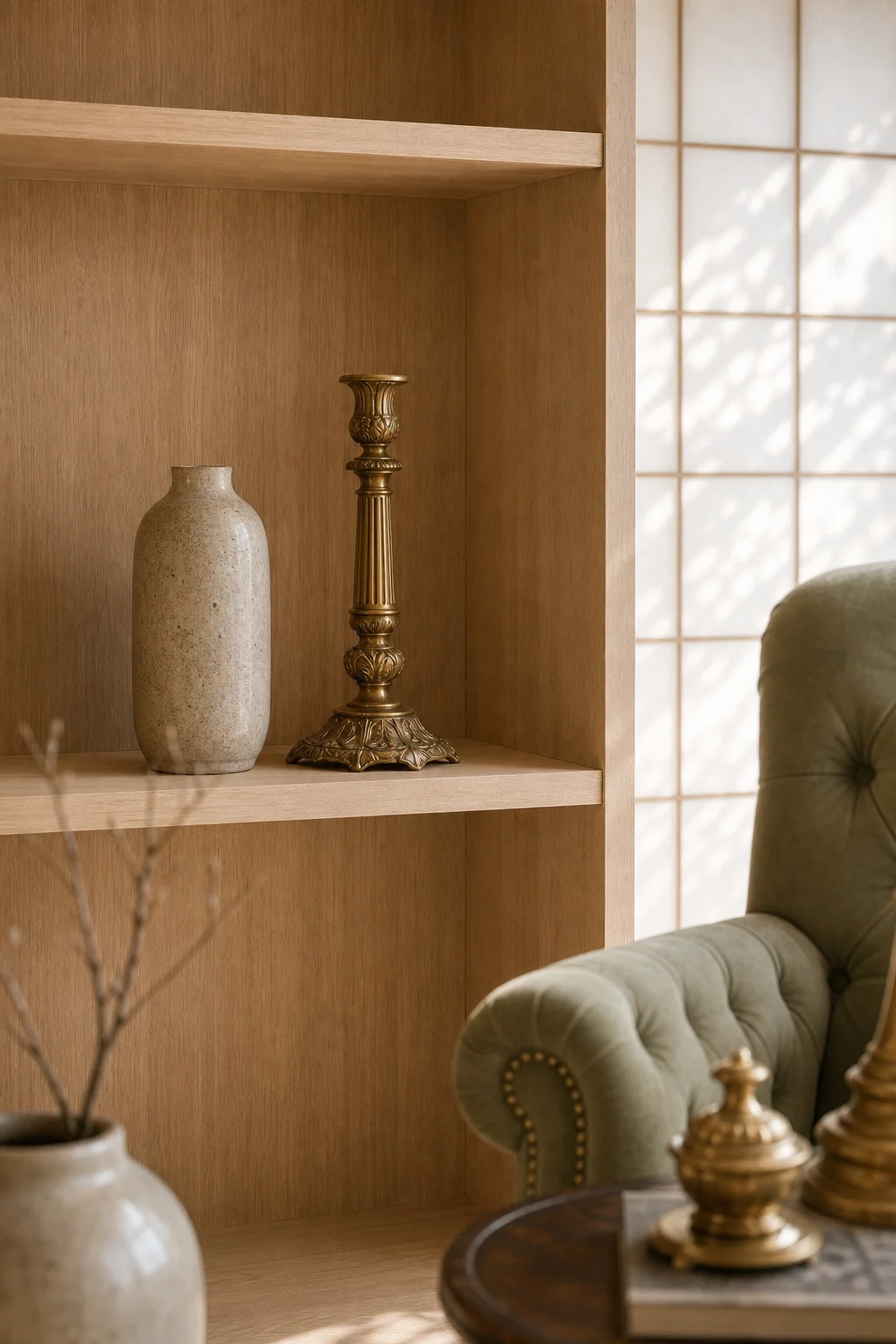
A single ornate brass candlestick acts as a powerful sculptural anchor. The vast negative space surrounding it is just as important as the object itself, allowing the rich historical patina to truly shine without any distracting visual competition.
- Source tufted sage velvet armchairs to provide modernized, highly comfortable seating that bridges the two distinct historical eras.
- Hunt for antique unlacquered brass floor lamps to add warm, authentic patina to the otherwise pristine architectural shell.
- Collect fringed tapestry throw pillows for essential tactile historical weight that can be easily swapped during seasonal transitions.
- Install pale white oak shelving units to enforce strict architectural restraint and provide a calming visual baseline.
- Utilize translucent hanji paper room dividers for elegant, soft light diffusion that flatters heavy antique furniture beautifully.
Translating the Look Beyond the Nook
This hybrid logic easily expands beyond a single reading nook into larger living spaces. You can apply the exact same pale oak restraint to transitional hallways holding single, dramatic statement antiques, creating moments of pause throughout your entire home.
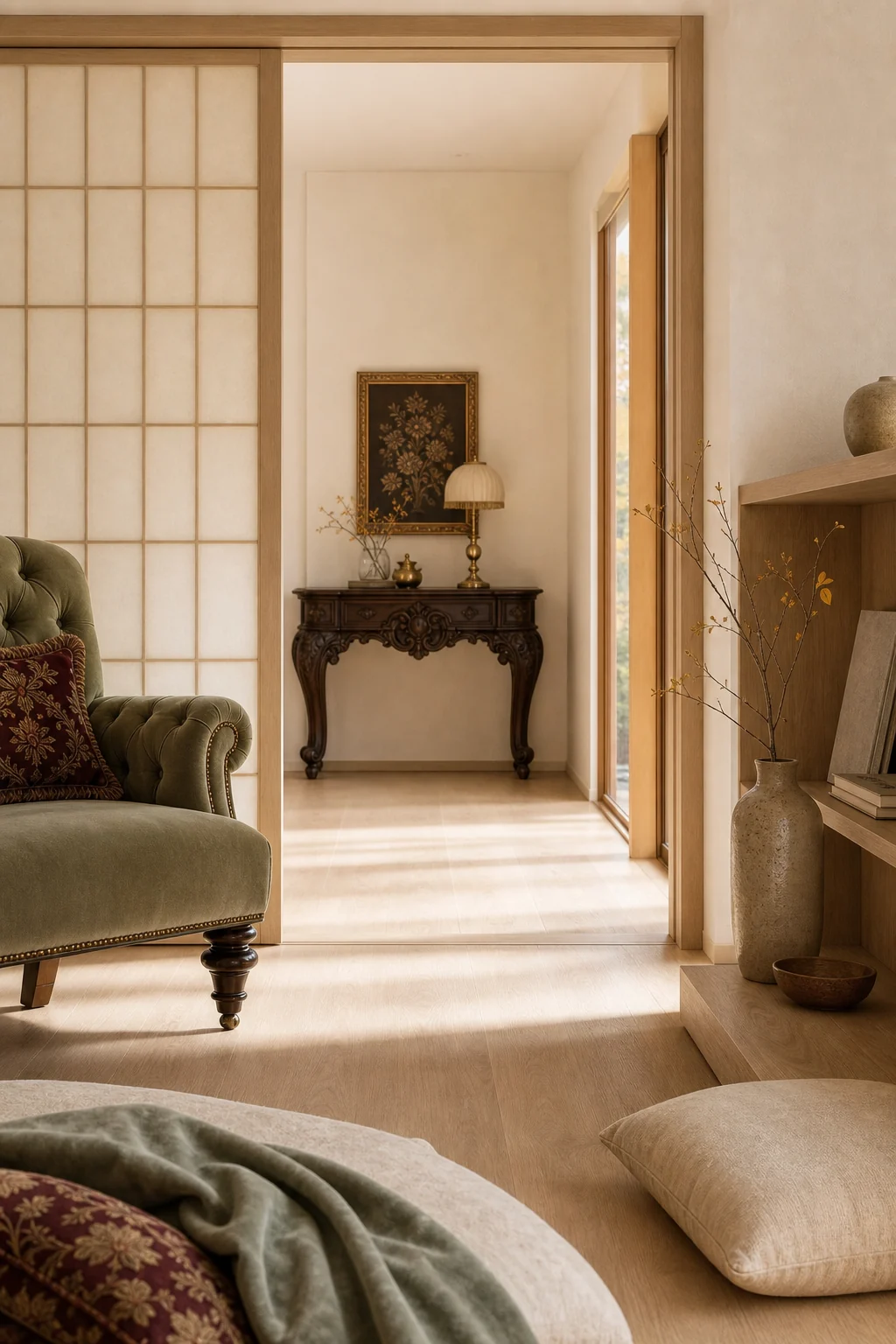
A carved dark wood console table commands the hallway effortlessly. Because the surrounding architecture remains purely minimalist, the heavy piece feels entirely deliberate rather than looking like an accidental leftover from a previous, more cluttered historical design era.
Maintaining this strict visual hierarchy is the absolute secret to scaling the style. Whether designing a small corner or a vast living room, the pale grid must always frame and contain the ornate historical elements to prevent visual chaos.
Preventing a Theatrical Clash
The most common failure mode is allowing heavy Victorian elements to spread to the walls or floors. This fatal mistake destroys the minimalist void that makes the entire hybrid room work, instantly reverting the space to a cluttered state.
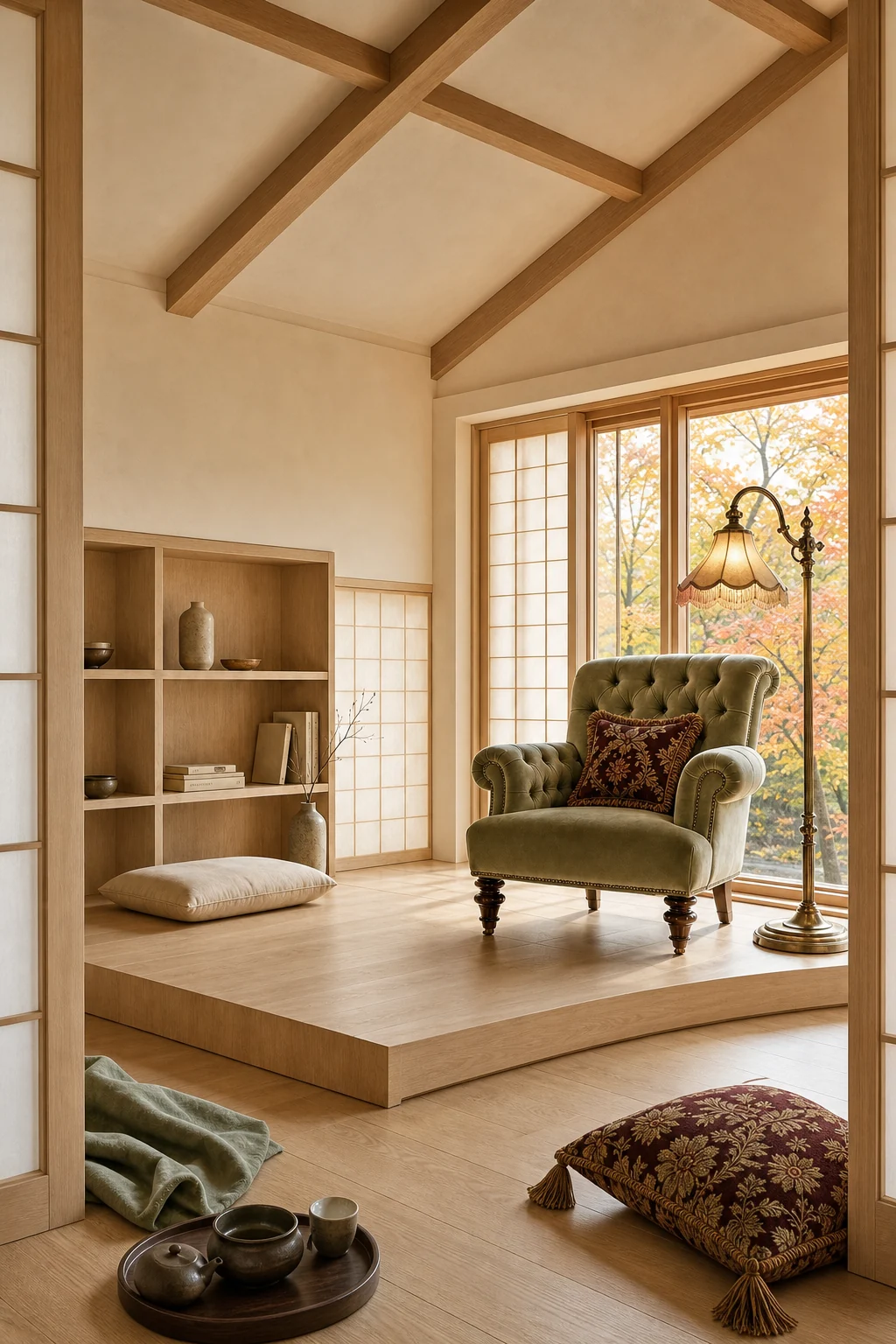
True Korean Minimal restraint prevents the rich velvet and brass from feeling oppressive. By keeping the structural boundaries entirely clear, the inherent contradiction is beautifully and permanently resolved into a cohesive, highly functional space that honors both distinct eras.
- Never add dark wainscoting or traditional molding to the pale oak walls, as this destroys the minimalist void.
- Avoid matching the wood tones of your furniture to the room architecture to maintain necessary sculptural contrast.
- Restrict heavy floral patterns to small, easily swapped textile accent pieces rather than applying them to permanent surfaces.
- Refuse the temptation to cluster multiple heavy antiques in one single corner, which creates visual imbalance and clutter.