
Italianate Meets a-Frame Cabin: Reading Nook
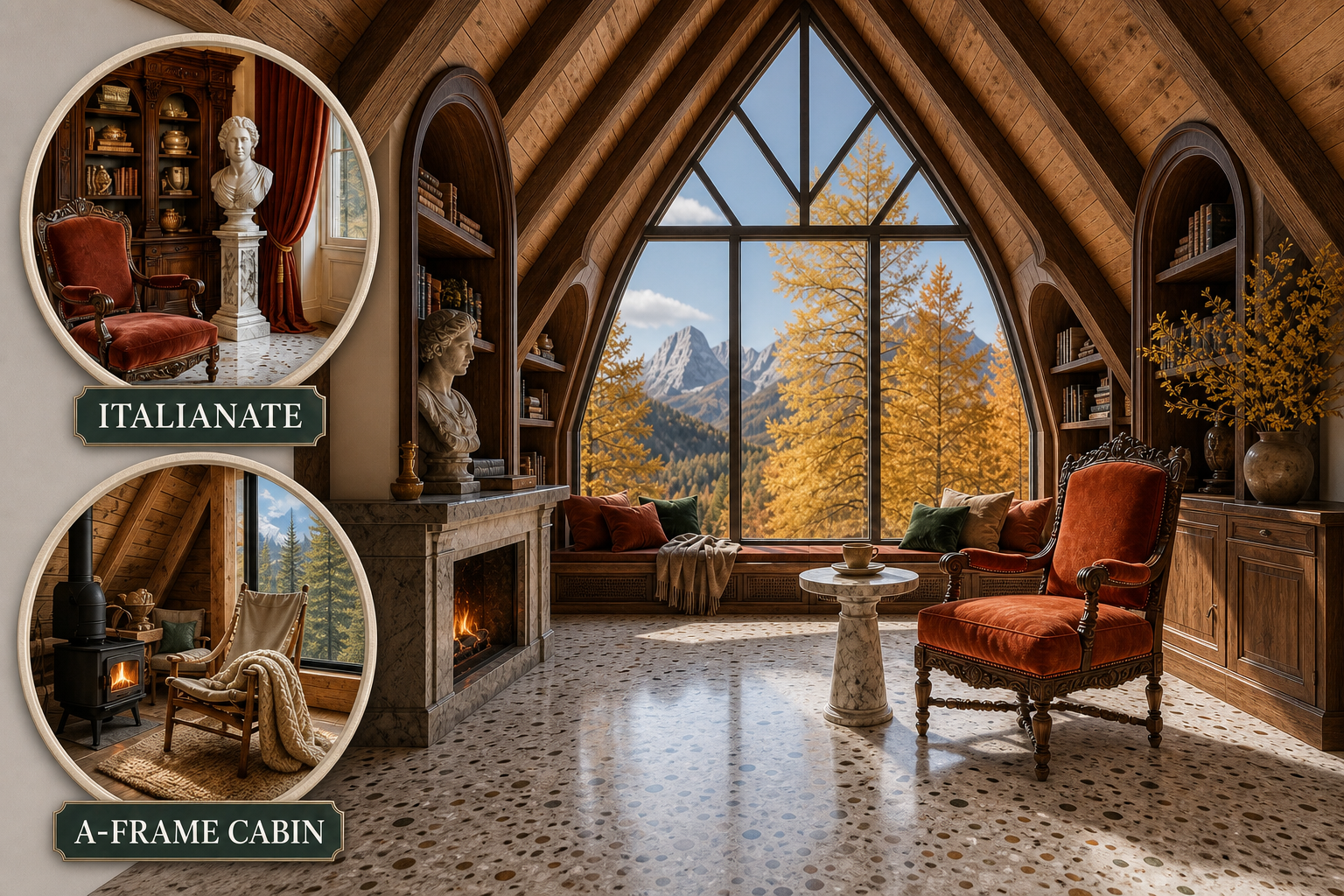
The utilitarian timber geometry of an alpine a-frame cabin contradicts the ornate masonry of classical italianate design. We resolve this by letting the steep shell dictate the space while nesting classical arches and terrazzo directly inside.
Grounding the Room with Italianate Masonry
To introduce classical formality into a rustic envelope, the foundation must carry immense visual weight. We begin by anchoring the floorplan with polished grey-white terrazzo, establishing an immediate sense of grounded permanence beneath the soaring, utilitarian alpine timber ceiling of the cabin.
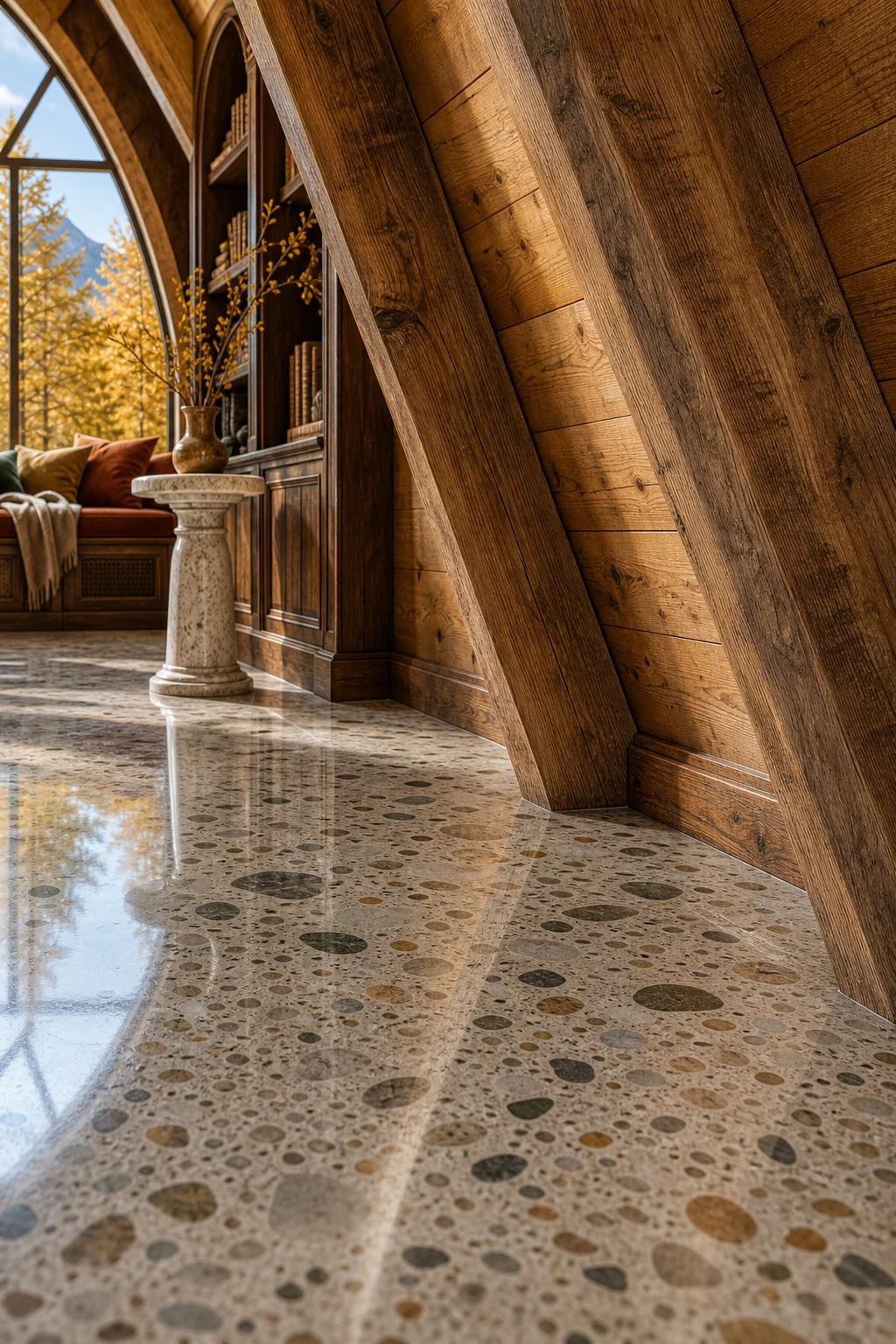
This dense, classical flooring creates a deliberate dialogue between ornate Italianate finishes and raw alpine construction. By reflecting the rough-hewn ceiling above, the polished stone actively prevents the rustic timber from completely dominating the visual field of the refined reading nook.
Implementing this heavy foundation requires precise material transitions at the edges. Where the terrazzo meets the raw pine walls, a crisp, unadorned joint emphasizes the deliberate, resolved collision of these two incredibly distinct architectural languages, successfully avoiding any messy visual overlap.
Embracing the A-Frame Cabin Geometry
While the floor belongs entirely to classical Italy, the architectural envelope remains strictly alpine. The structural shell must retain its unmistakable steep triangular walls to preserve the authentic spatial experience, ensuring the room always feels like a genuine, immersive mountain retreat.
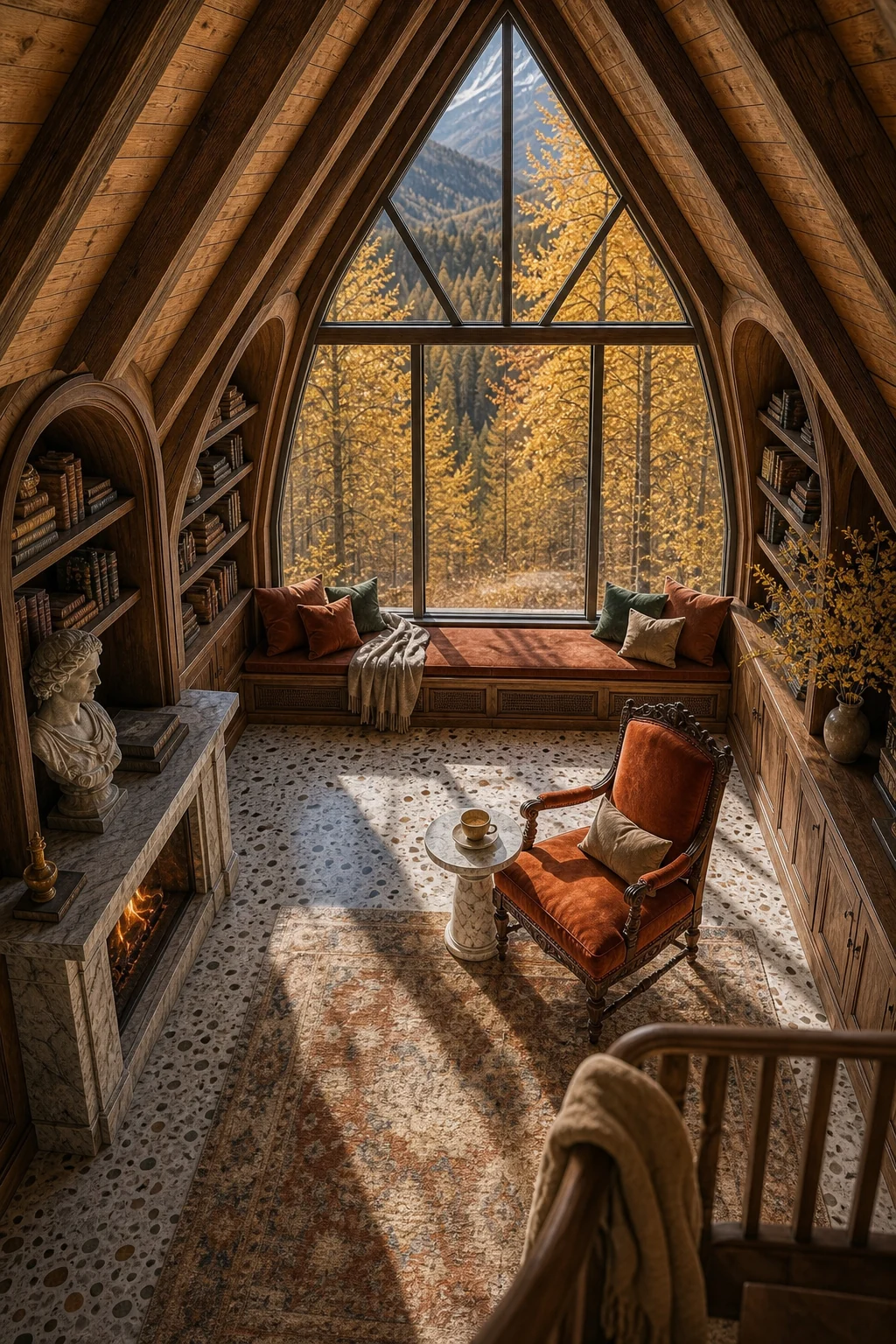
Nesting soft Roman arches directly into this harsh triangular pitch creates a striking geometric tension. These ornate built-ins soften the room, introducing classical symmetry without erasing the cabin’s essential utilitarian character or compromising its soaring, dramatic verticality in any way.
- Leave heavy timber structural beams completely exposed to highlight the raw, utilitarian construction methods of the original alpine architecture.
- Maintain the steep, unyielding pitch of the primary interior walls to clearly define the overarching geometric architectural shell.
- Preserve the compact, cozy spatial footprint typical of traditional alpine cabin construction to maintain an intimate reading environment.
Bridging the Gap with Autumn Palettes
Connecting polished classical stone with rough-sawn pine requires a highly disciplined, unifying color theory. An autumn palette of golden larch and deep alpine green flatters both aesthetics, pulling the vibrant outdoor landscape directly into the refined, cozy interior of the reading nook.
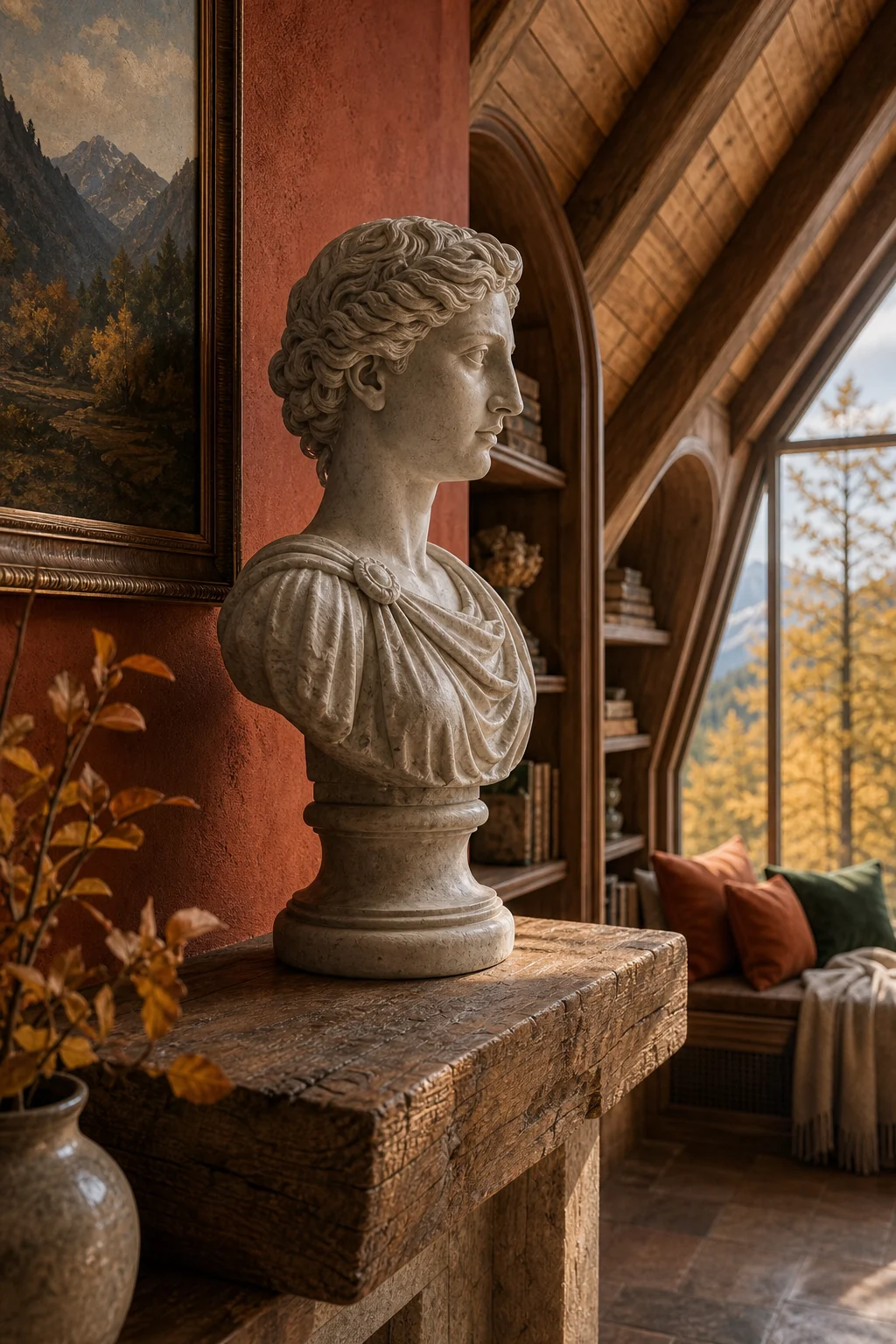
Using local Dolomite stone for both the structural hearth and refined classical busts elegantly bridges the stylistic divide. This shared material language ensures the ornate Italianate details feel native and deeply grounded within the rugged, natural mountain environment outside the windows.
This shared warmth prevents the polished stone from feeling cold or clinical. By echoing the golden hues of the surrounding larch trees, the interior palette seamlessly binds the classical masonry to the rustic timber shell, creating a beautifully unified autumn atmosphere.
Assembling the Reading Nook
A successful seating vignette requires scaling formal furniture to fit cozy, compact cabin proportions. We anchor the dedicated reading area with a carved walnut Renaissance armchair, introducing undeniable historical weight and sophisticated craftsmanship to the rustic, angular corner of the room.
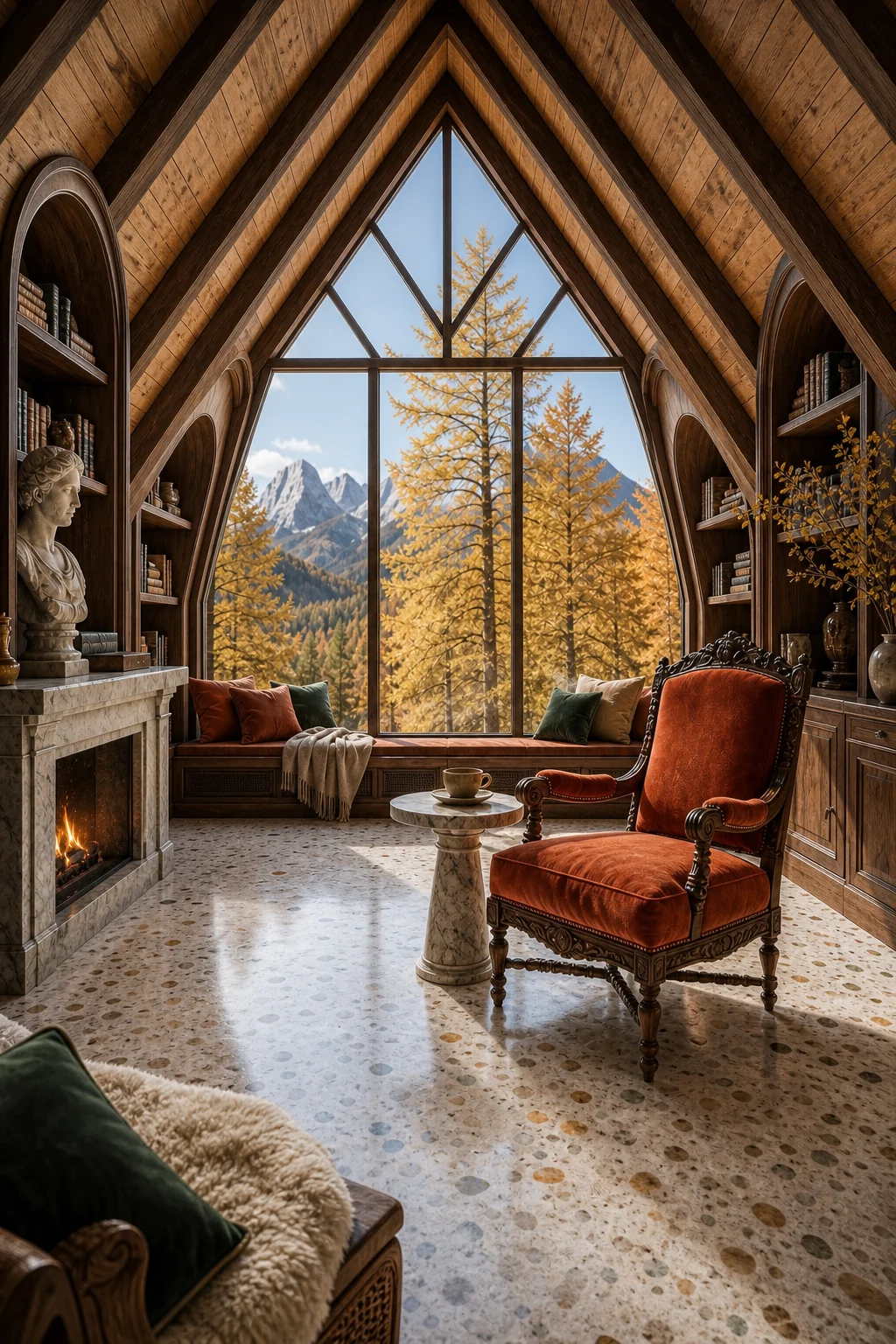
Upholstering this seating in rich terracotta velvet softens the angular, unyielding architecture. The plush, formal fabric contrasts beautifully against the raw pine walls, elevating the simple nook into a highly refined, comfortable autumn retreat designed specifically for quiet reading and relaxation.
| Design Layer | Italianate Role | A-Frame Cabin Role | Bridge Decision |
|---|---|---|---|
| Shell | Polished terrazzo floors and Roman arches | Steeply pitched walls and exposed timber | Nesting classical curves into harsh angular pitches |
| Furniture | Carved walnut Renaissance-style armchairs | Built-in window benches and compact footprints | Scaling formal seating to fit cozy cabin proportions |
| Textiles | Rich, formal terracotta velvet upholstery | Chunky knit wool blankets and canvas | A unified autumn palette of deep greens and rusts |
| Lighting | Symmetrical, elegant ambient fixtures | Expansive floor-to-ceiling gable windows | Bright, even daylight that flatters both dark wood and natural pine |
| Accents | Classical marble busts and pedestal tables | Rustic cast-iron wood stoves and natural logs | Local Dolomite stone used for both refined and raw elements |
Mapping these distinct layers ensures neither style overwhelms the other. The heavy Italianate furniture grounds the lower half of the room, while the soaring timber ceiling draws the eye upward into the dramatic, exposed alpine geometry hovering above the reading space.
Illuminating the Architectural Blend
Deep-toned Italianate furniture can easily feel heavy or oppressive if poorly lit within a wood-paneled room. We maximize natural illumination through the expansive, floor-to-ceiling triangular glass gable end, flooding the intimate reading nook with generous, flattering daylight throughout the afternoon.
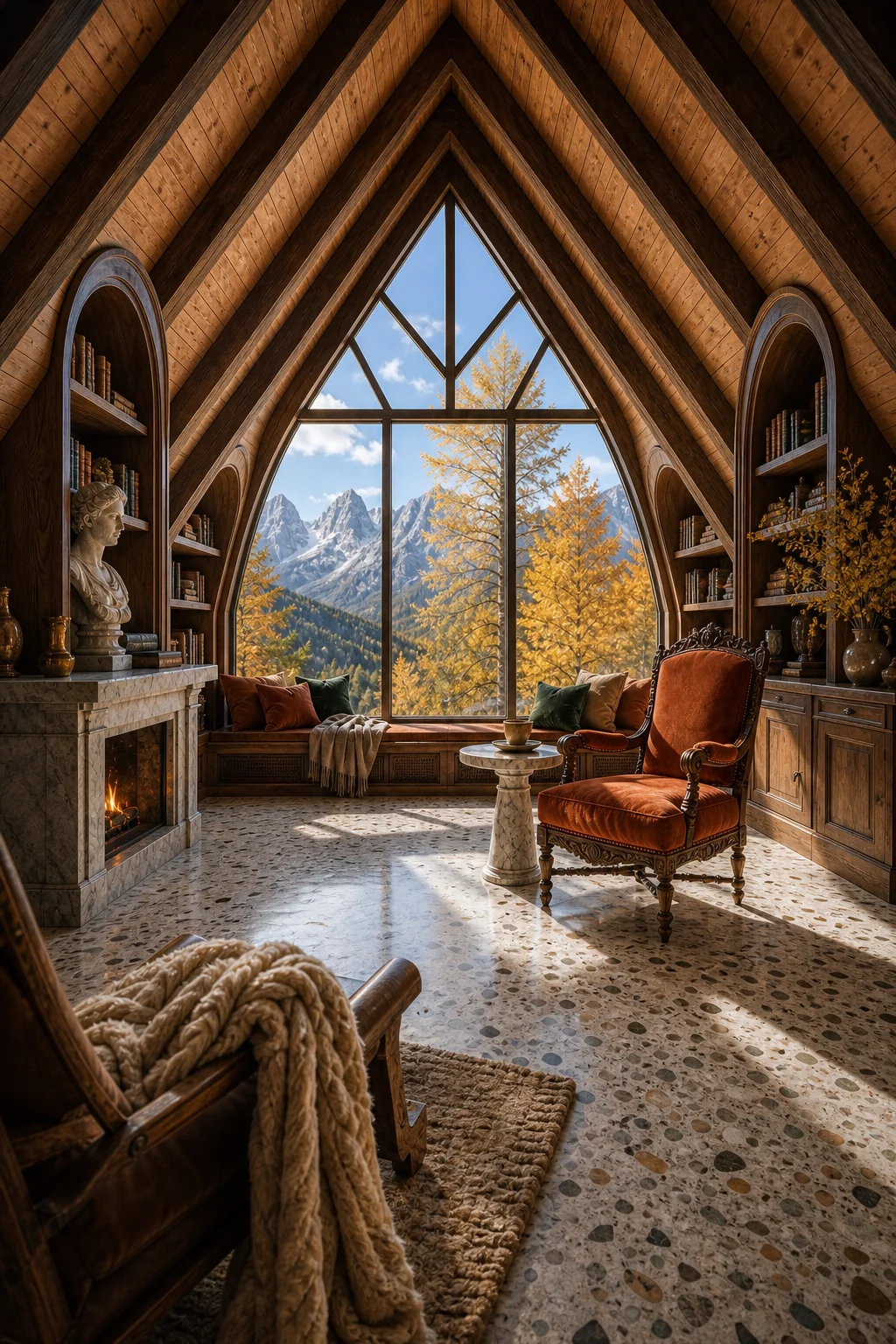
Generous natural light ensures open shadows, perfectly highlighting the dark walnut details against the lighter natural pine. This bright, even exposure prevents the historical furniture from turning the compact cabin into a gloomy, shadowed cave during the shorter, darker autumn months.
As evening approaches, artificial illumination must replicate this even, flattering wash of light. Relying on carefully placed, symmetrical fixtures maintains the formal Italianate atmosphere while keeping the steep cabin walls feeling expansive, welcoming, and perfectly balanced long after the sun sets.
- Position dark walnut seating directly in the path of natural daylight to highlight intricate wood carvings.
- Use symmetrical ambient wall sconces to illuminate deep corners evenly without creating harsh, dramatic shadows.
- Ensure window treatments never obscure the primary triangular gable glass to maximize the incoming natural light.
Curating the Finer Details
The built-in shelving provides a perfect canvas for introducing concentrated classical elegance. We style these nested arches with intricate moldings, antique volumes, and polished marble busts to reinforce the formal Italianate narrative directly within the rustic architectural shell of the cabin.
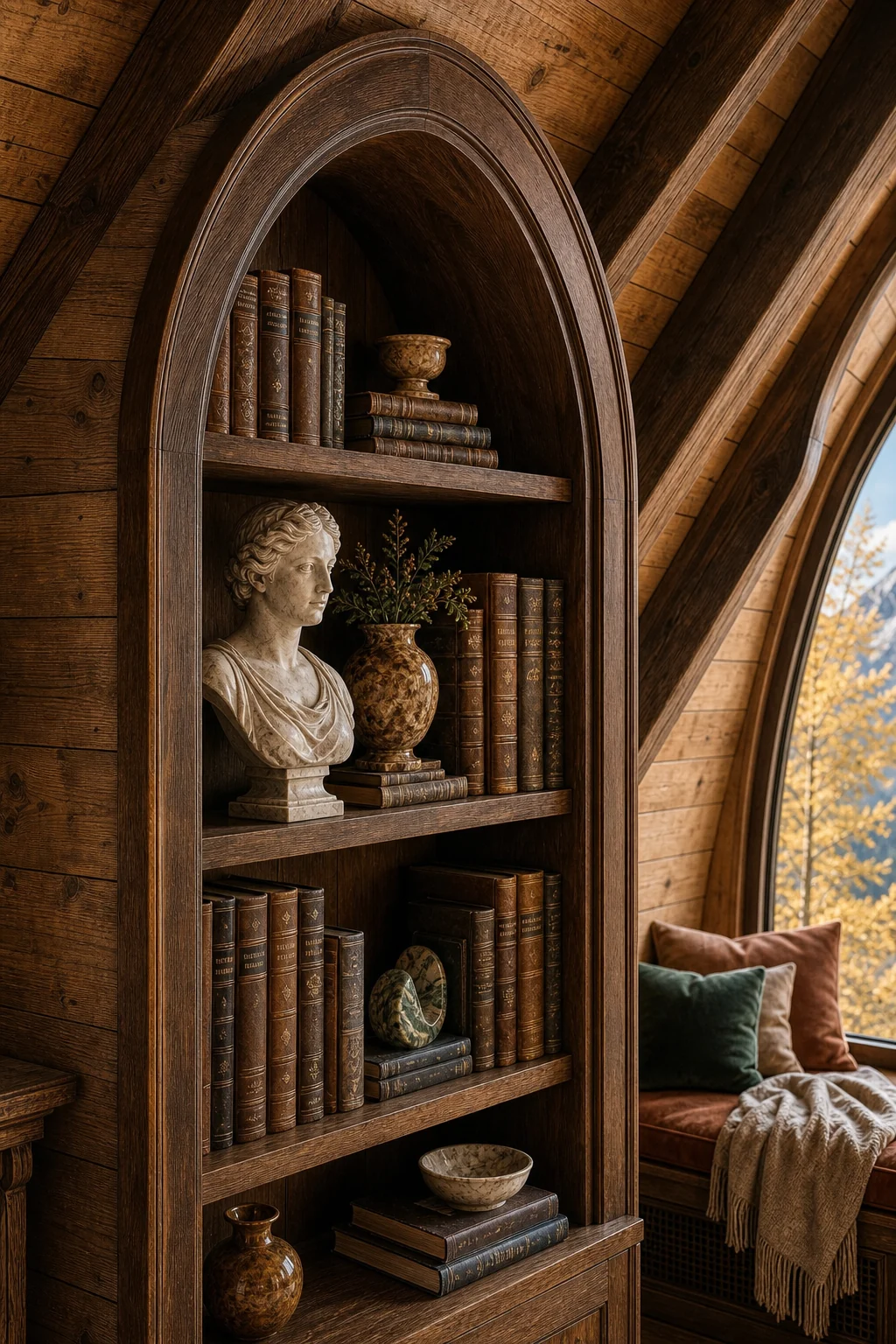
Introducing a small marble pedestal table adds functional, elevated elegance beside the primary reading chair. These highly tactile, refined accents provide necessary visual relief from the surrounding expanse of rough-hewn structural timber, completing the sophisticated aesthetic of the quiet reading nook.
- Source carved walnut accent chairs featuring traditional Renaissance architectural motifs to anchor the primary seating area.
- Select terracotta velvet upholstery fabric to add necessary warmth and historical weight to the rustic room.
- Incorporate marble pedestal side tables for functional, elegant drink surfaces beside the heavy velvet armchairs.
- Display classical stone busts to anchor the arched built-in shelving perfectly against the raw pine walls.
Extending the Aesthetic Beyond the Nook
This deliberate tension between classical masonry and rustic timber can expand throughout the entire cabin. Carry the arch-in-triangle motif into surrounding doorways, hallways, and transitional passages to create a cohesive architectural experience across every single room in the mountain retreat.
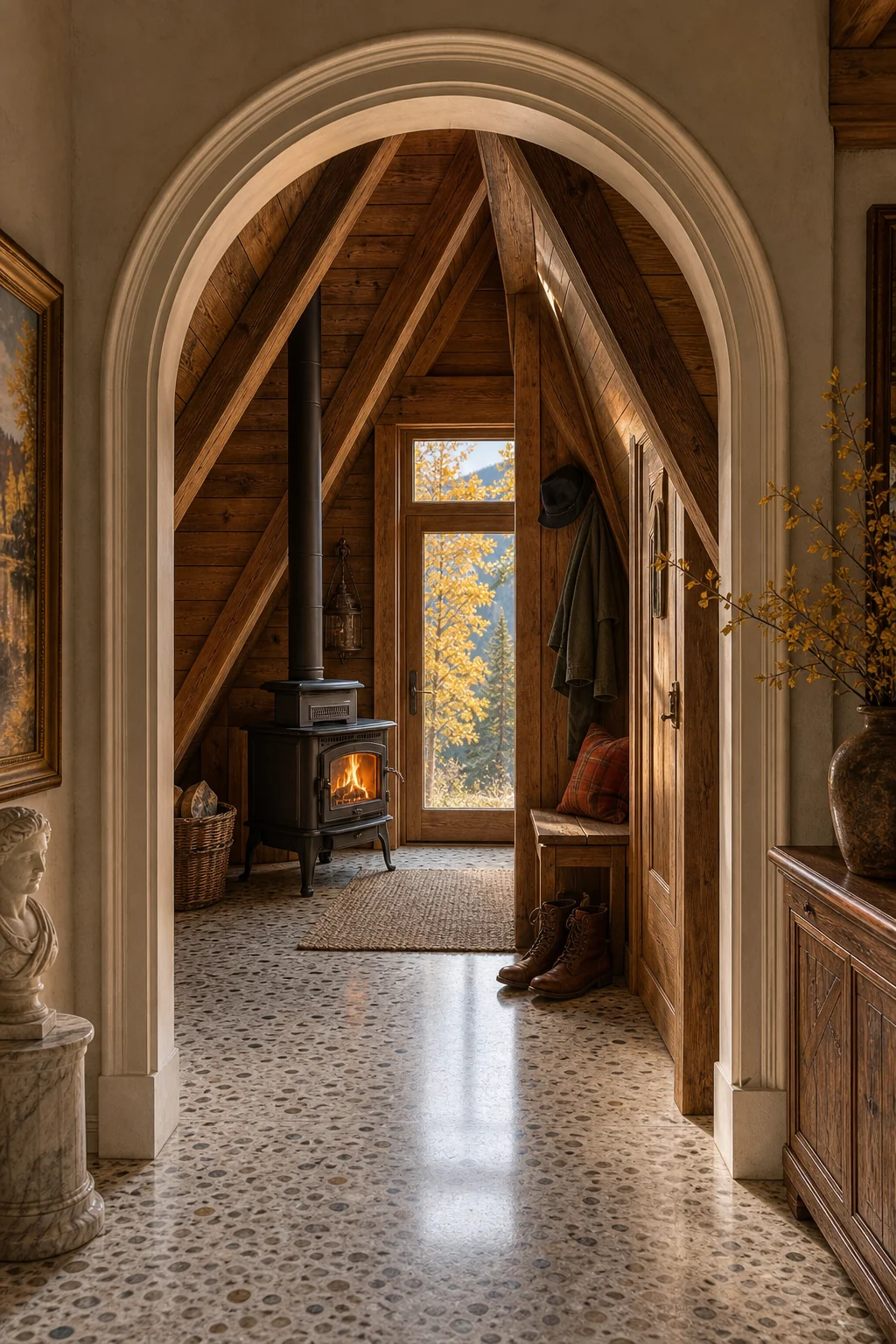
Continuing the polished terrazzo flooring into adjacent functional spaces like mudrooms maintains a seamless, elegant foundation. This unified base allows the architectural contrast to flow naturally from room to room without feeling disconnected, forced, or overly thematic in its execution.
- Apply deep alpine green paint to interior window trims to beautifully frame the vibrant outdoor autumn views.
- Drape chunky knit wool blankets over formal velvet seating to introduce casual, rustic texture to the design.
- Install classical brass hardware on raw pine cabinetry to instantly elevate utilitarian storage spaces throughout the cabin.
Avoiding the Thematic Costume
When blending distinct historical eras, you must avoid creating a jarring split personality. Ensure that the materials interlock seamlessly rather than dividing the room into competing, isolated stylistic zones that constantly fight for the viewer’s absolute attention and visual focus.
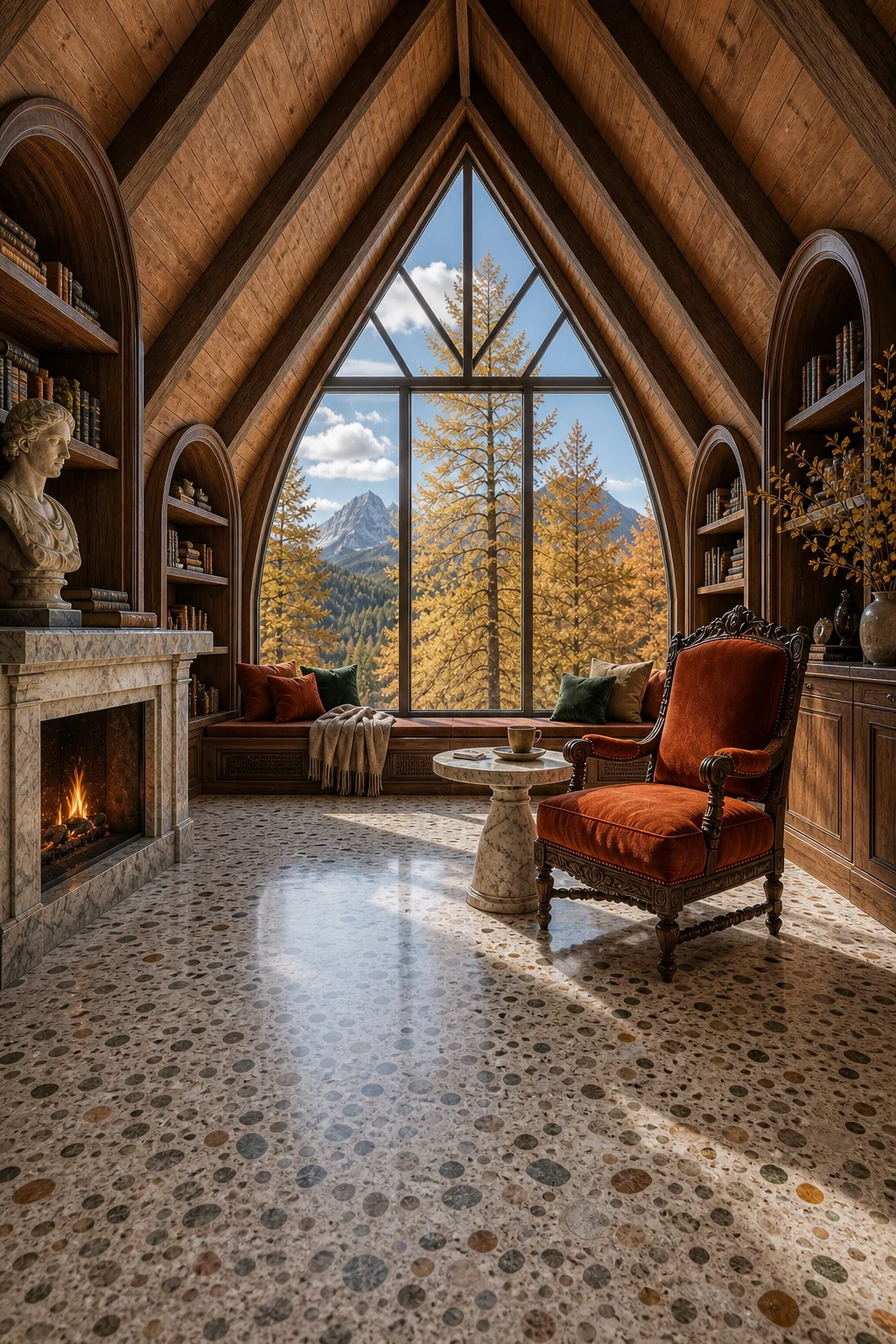
The rustic timber must never completely overpower the refined masonry elements. By carefully balancing the visual weight of classical stone against the raw wood, the reading nook achieves a permanent, resolved harmony, proving that formal elegance and alpine utility coexist beautifully.