
Chinese Traditional Meets Contemporary: Living Room
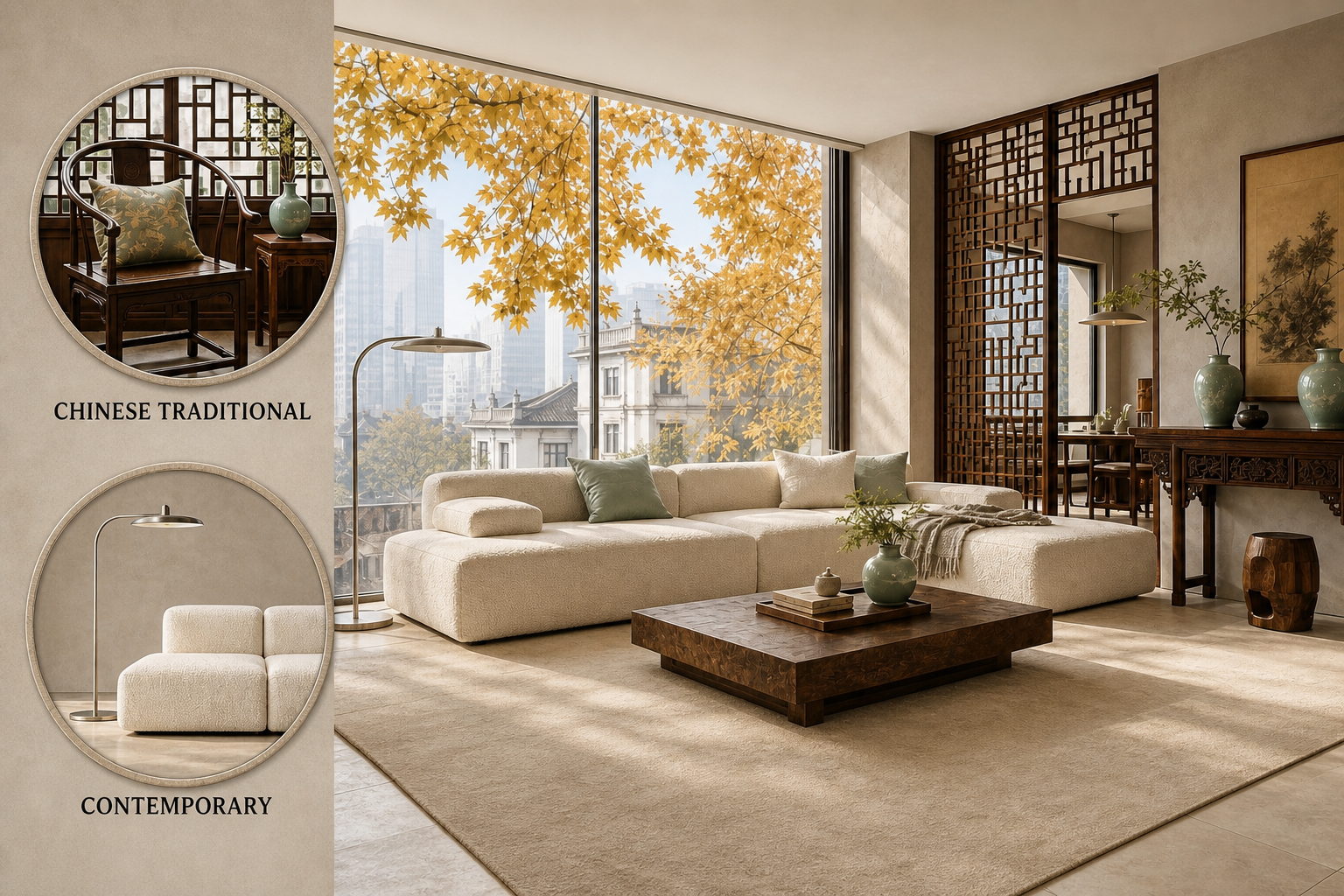
The rigid formality of chinese traditional joinery clashes with the relaxed lightness of contemporary lounge living. By establishing a minimalist architectural foundation, antique woods become sculptural focal points united by a shared tonal palette and strict geometric restraint.
Grounding with Heritage
Integrating inherited antique furniture requires carefully managing its inherent visual weight. A dark elmwood Ming-style altar table carries a profound historical gravity that demands ample breathing room to prevent the living space from feeling like a stiff museum exhibit.
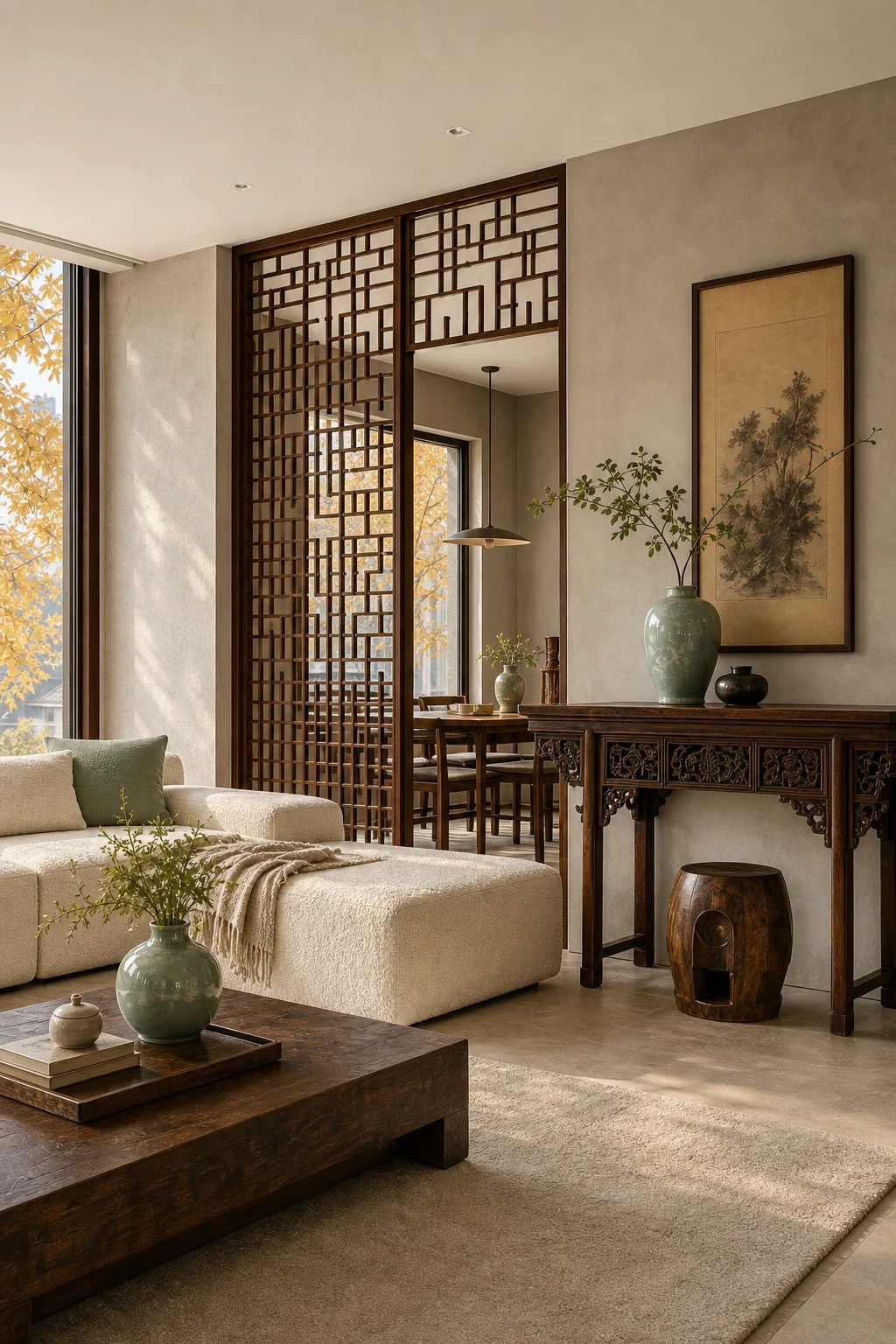
Placing these intricate heritage pieces against smooth, unornamented walls allows their masterful craftsmanship to shine brilliantly. This deliberate use of negative space ensures the dark antique woods anchor the room gracefully without overwhelming the surrounding contemporary architectural environment.
The Contemporary Foundation
To offset the upright rigidity of antique woods, the primary seating must prioritize relaxed, unpretentious comfort. A contemporary foundation establishes an undeniably modern lounge atmosphere that invites everyday use, encouraging relaxation rather than demanding formal, upright posturing from guests.
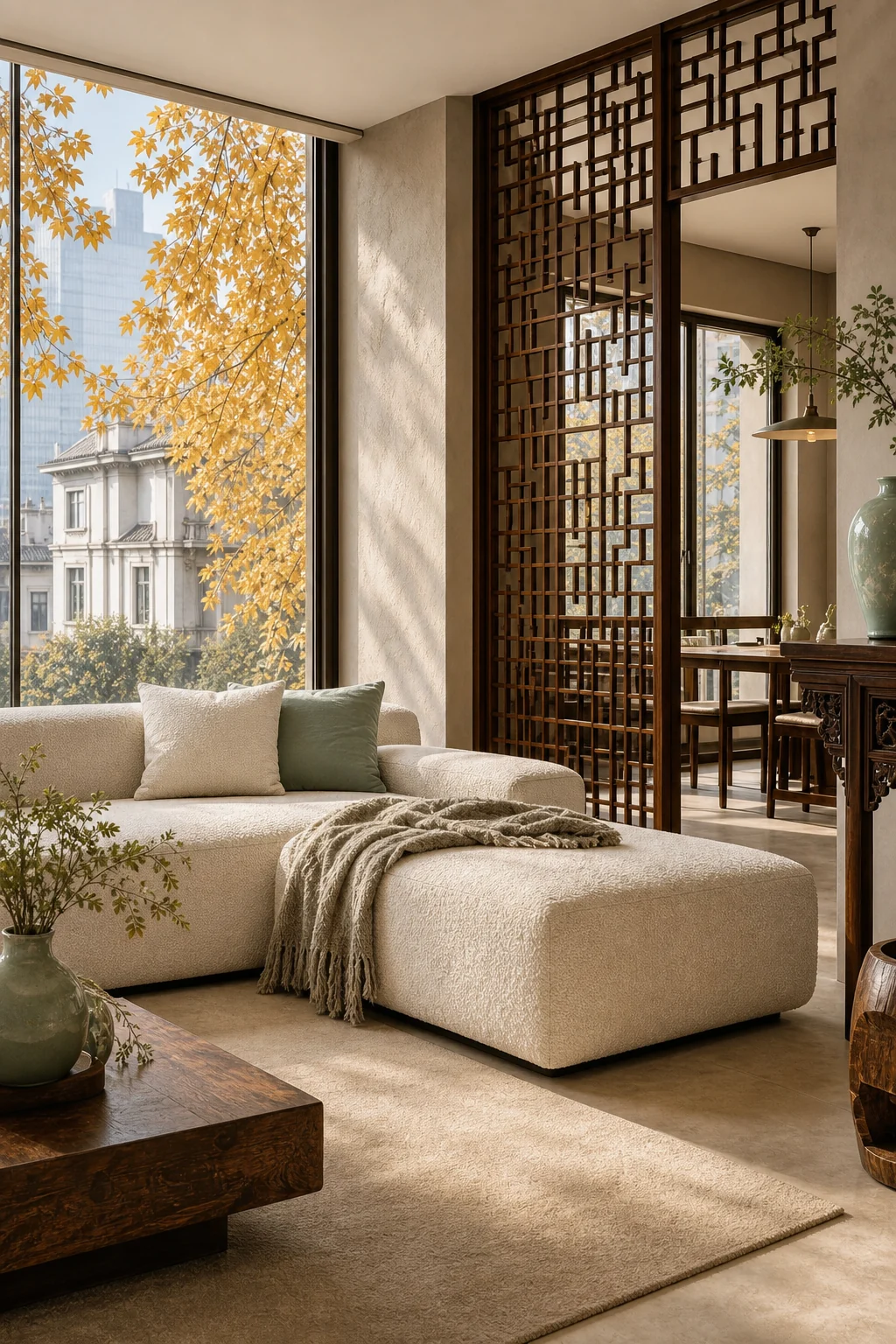
A low-slung cream bouclé modular sofa instantly grounds the room with inviting tactile softness. This unornamented lightness contrasts beautifully against the intricate wooden lattice screens, shifting the overall spatial balance from historically formal to exceptionally inviting and distinctly modern.
- Choose low-slung modular seating to maximize vertical visual space above the furniture line and enhance the relaxed vibe.
- Select matte, textured upholstery fabrics like bouclé to visually soften the entire room and contrast with hard woods.
- Keep floors bare or use low-pile rugs to maintain a seamless architectural flow throughout the living space.
- Ensure modern sofas feature wide, deep cushions to emphasize a relaxed lounging posture over rigid formality.
- Avoid overly structured contemporary chairs that might accidentally mimic the upright rigidity of the antique wooden pieces.
Bridging the Centuries
The secret to resolving this profound aesthetic tension lies in shared geometry and tone. Without these deliberate material bridges, the two distinct styles will look like accidental roommates rather than a cohesive, intentionally designed interior space that honors both eras.
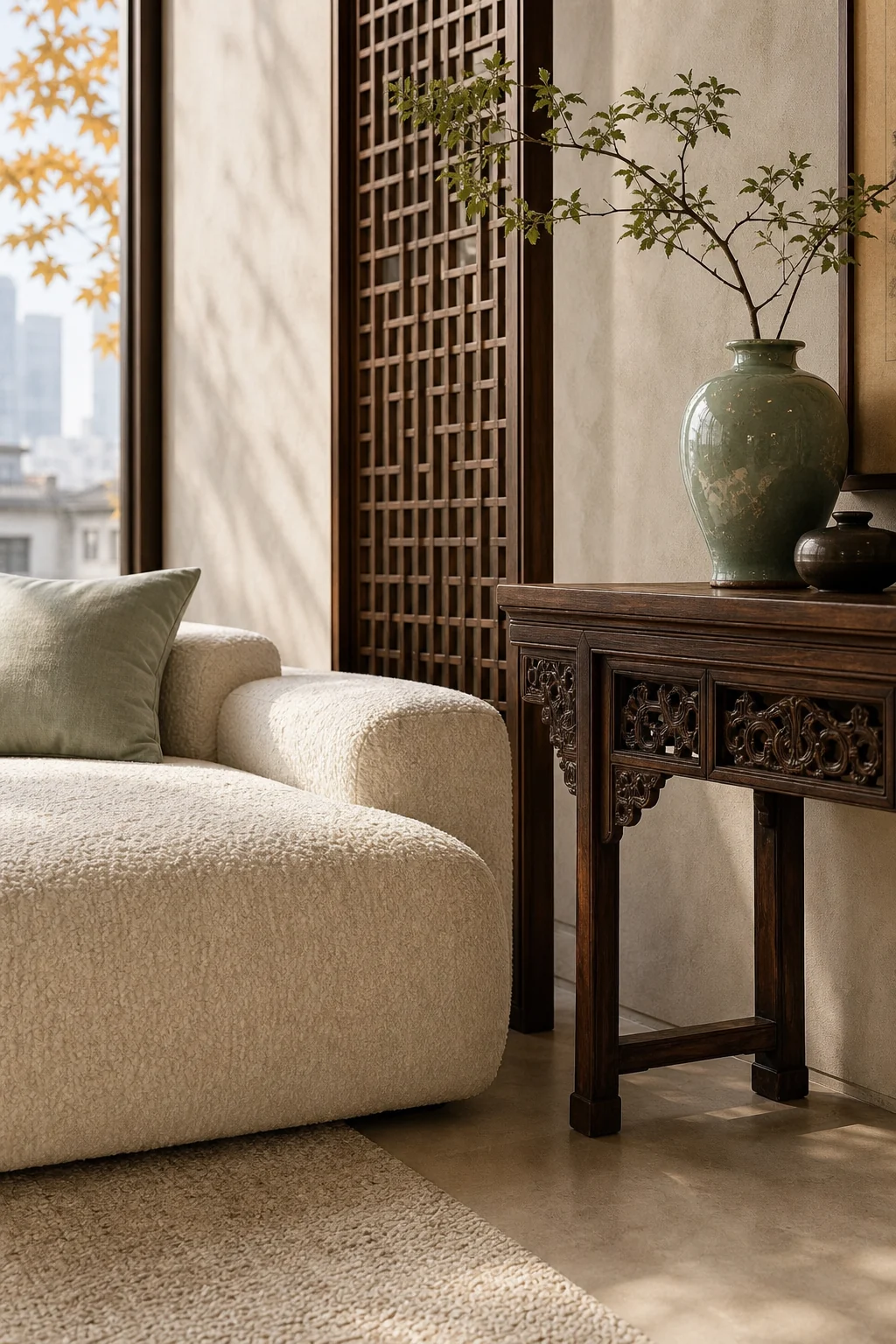
The rectilinear geometry of ancient wooden lattice screens perfectly mirrors the clean boxy silhouettes of modern modular seating. Furthermore, a shared tonal palette of warm greige and cream connects the varying textures seamlessly, preventing any jarring visual fragmentation.
Assembling the Living Space
Building the room requires assigning clear, non-competing roles to each distinct design layer. When modern architecture handles the spatial flow and comfort, traditional furniture steps in as the primary sculptural focus without fighting for unnecessary visual attention.
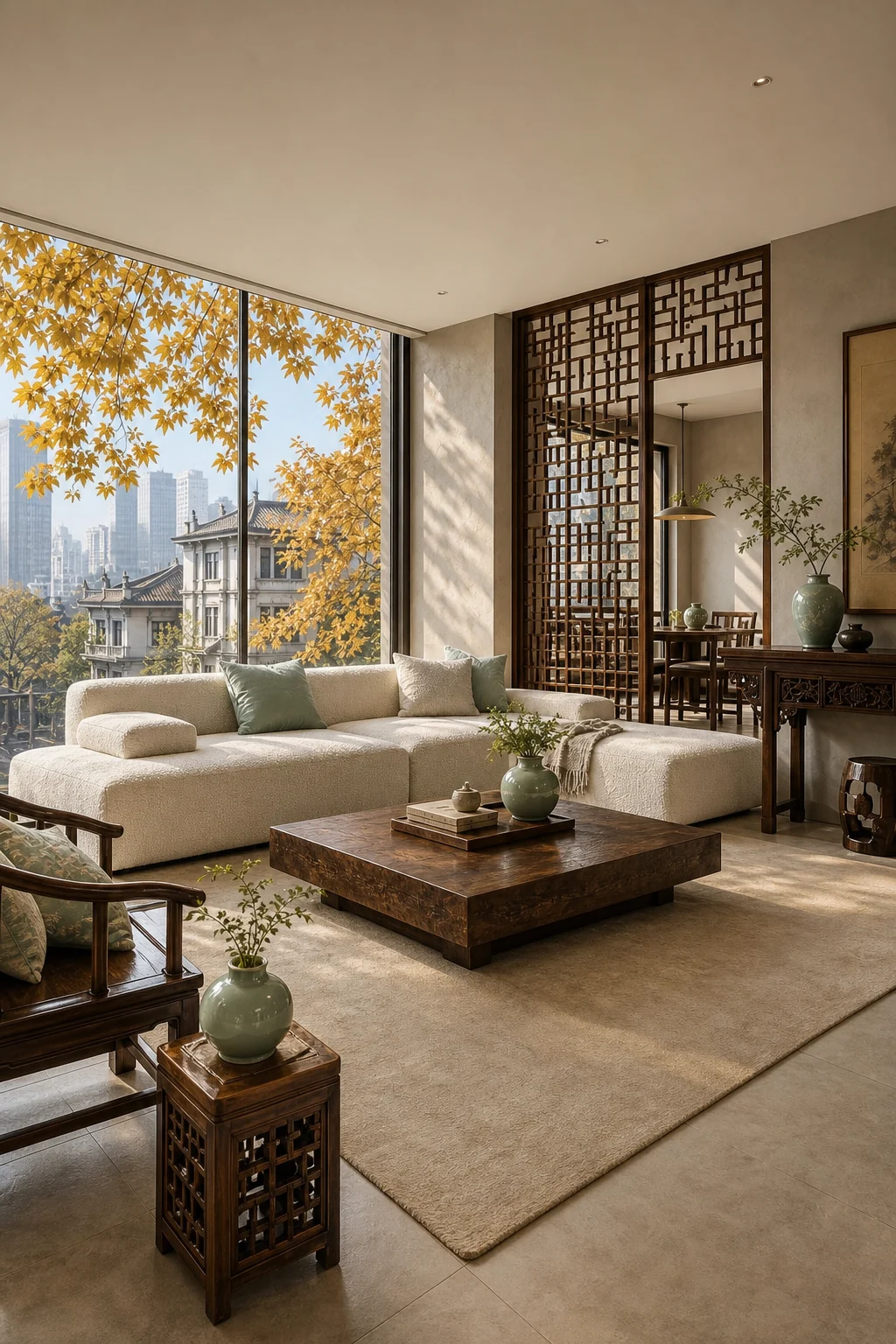
This strict separation of duties prevents the contrasting elements from visually clashing. The contemporary shell provides a quiet, luminous backdrop, while the chinese traditional pieces deliver necessary historical gravity, intricate detail, and rich, enduring cultural character.
| Design Layer | chinese traditional Role | contemporary Role | Bridge Decision |
|---|---|---|---|
| Architectural Shell | Intricately carved geometric wooden lattice screens acting as dividers. | Smooth warm greige micro-cement walls and expansive frameless windows. | Matte, tactile finishes that echo the unvarnished natural patina of antique wood. |
| Large Furniture | Dark antique elmwood Ming-style altar tables and horseshoe-back chairs. | Low-slung, unornamented modular lounge seating emphasizing plush daily comfort. | Shared rectilinear geometry connecting ancient joinery directly to modern architectural lines. |
| Soft Textiles | Structured silk brocade or finely embroidered classic accent cushions. | Cream bouclé and soft, minimalist upholstery covering the modern sofa. | A shared tonal palette of warm greige and cream bridging both eras. |
| Room Lighting | Warm, ambient lantern-style glow designed for intimate seating corners. | Minimalist brushed steel or brass sculptural floor lamps providing task light. | Unobtrusive fixtures that highlight architectural and sculptural forms without adding clutter. |
| Small Accents | Muted celadon porcelain ceramics and classical heritage display vases. | Clean, unornamented surfaces emphasizing expansive negative space across the room. | Sparse, intentional placement allowing individual heritage pieces to breathe and stand out. |
Framing the Space
Expansive frameless windows and warm greige micro-cement walls create a continuous, serene architectural shell. This minimalist envelope prevents the rich, dark woods from feeling gloomy or visually oppressive, especially during the darker, shadow-heavy autumn months in the city.
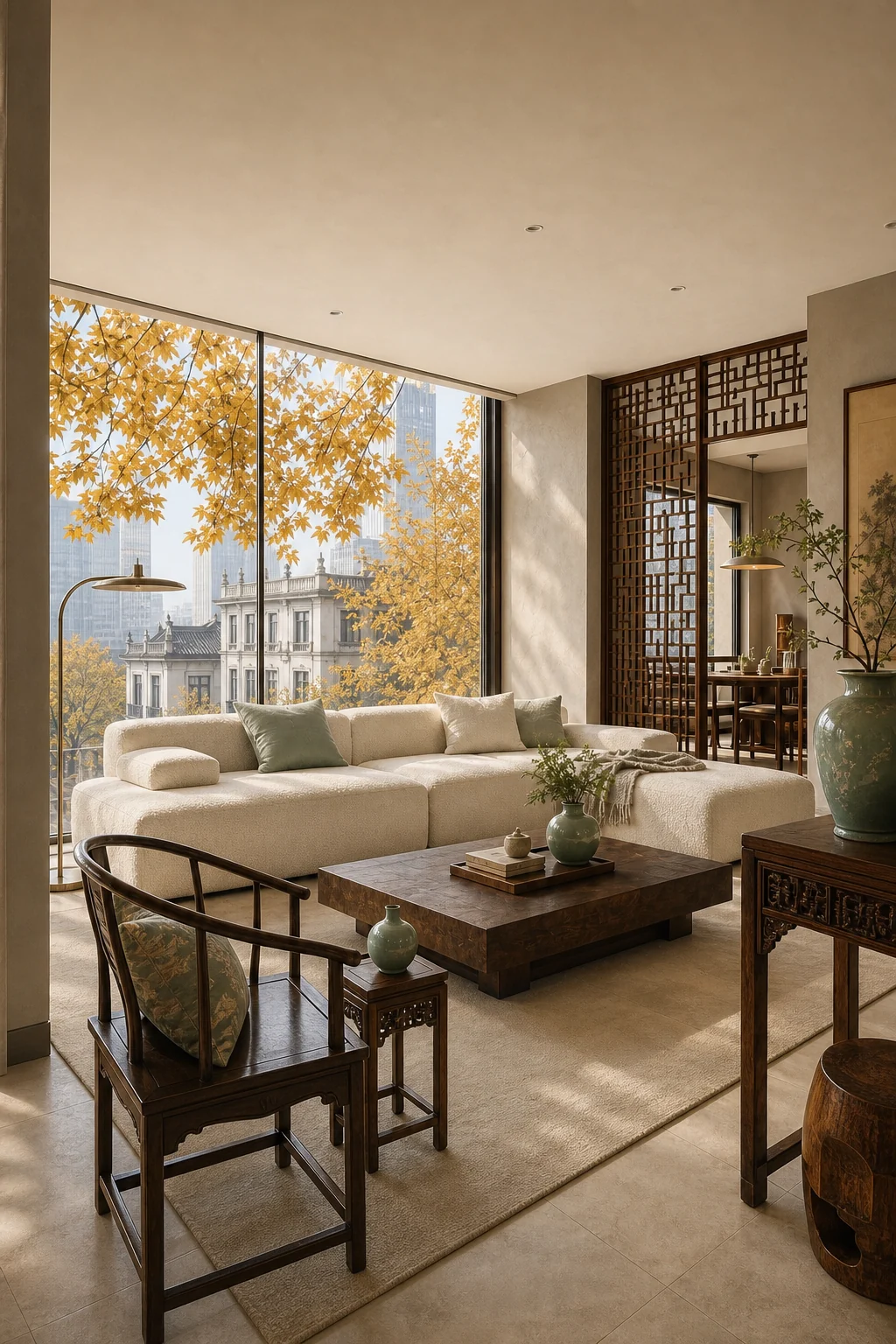
Generous daylight filters through golden plane tree leaves, illuminating the intricate traditional joinery. Sleek, sculptural lighting contrasts with carved wooden antiques, highlighting their distinct silhouettes rather than competing with their ornate, historically significant surface details.
- Maximize natural daylight with frameless windows or minimal, sheer window treatments to keep the space feeling bright.
- Use seamless micro-cement walls to create a continuous, warm architectural shell that unifies the entire living area.
- Install sleek, sculptural lighting to contrast sharply with carved wooden antiques, emphasizing their distinct historical silhouettes.
- Position floor lamps strategically to wash soft, indirect light over dark wooden furniture without creating harsh glare.
- Eliminate heavy drapery that might add unnecessary visual weight to a room already anchored by dark wood.
Curating the Accents
Decorative accessories should bridge the gap between heavy antique wood and soft modern textiles. Restrained tabletop styling honors the rich cultural heritage while feeling entirely fresh, intentional, and highly appropriate for relaxed modern daily life.
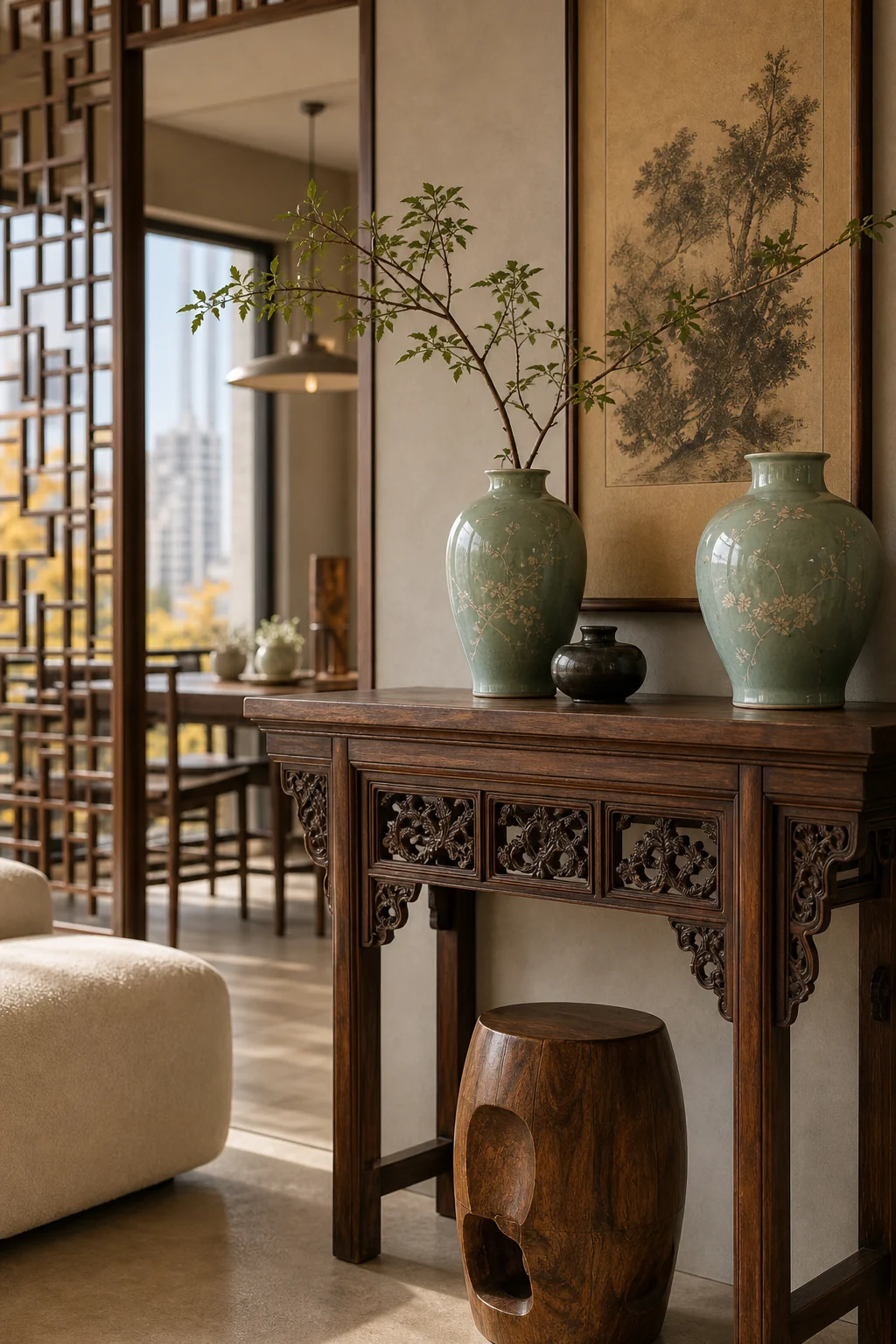
Muted celadon porcelain ceramics introduce a subtle touch of color and smooth texture. These delicate, historically significant forms soften the robust presence of dark elmwood without breaking the room’s overarching geometric restraint or minimalist design philosophy.
Expanding the Logic
This carefully balanced aesthetic easily translates beyond the main seating area into adjoining spaces. The same guiding principles of material contrast and negative space can beautifully define thresholds, dining zones, and open-plan transition areas throughout the home.
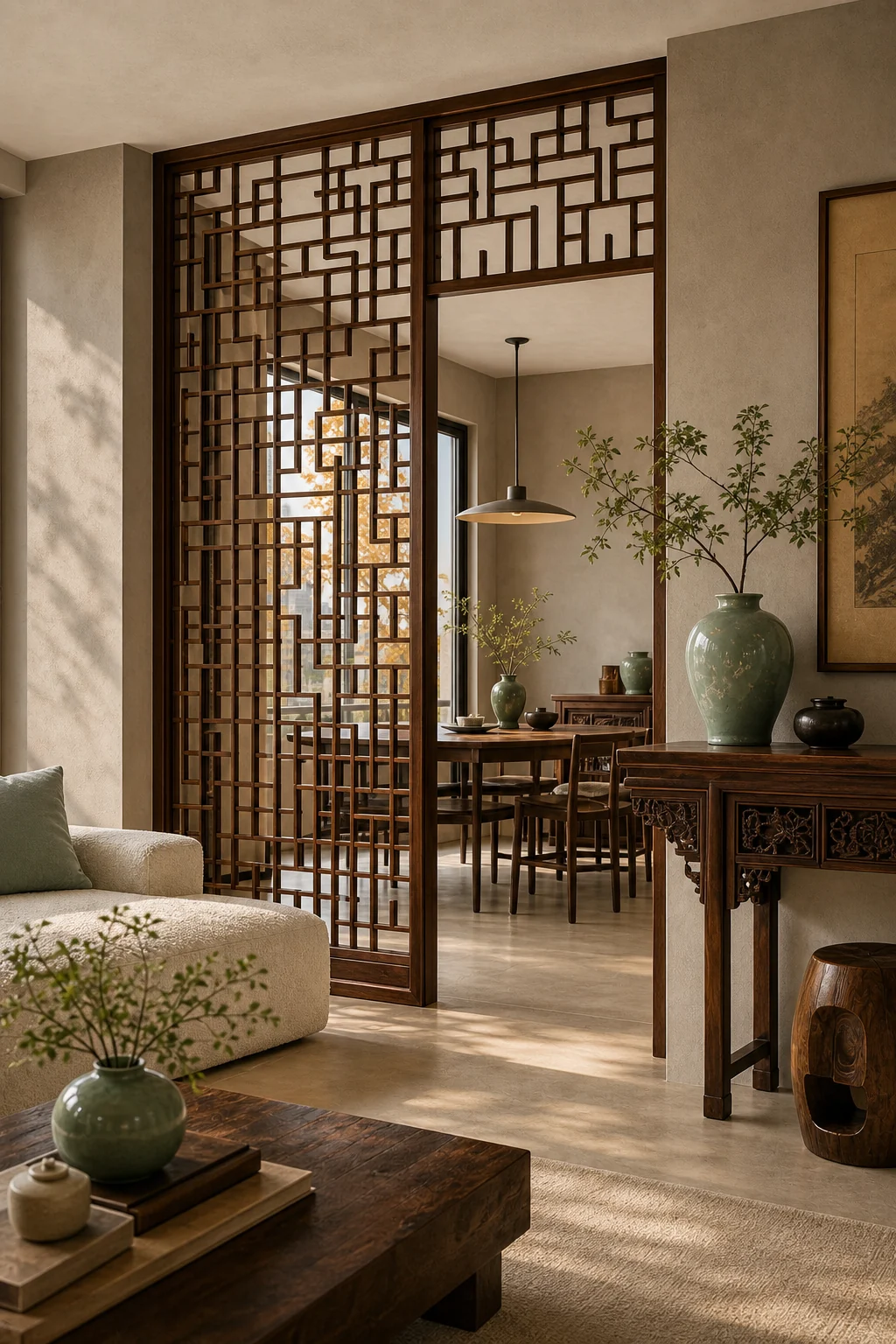
Intricately carved geometric wooden lattice screens serve as brilliant functional room dividers. They clearly define open-plan zones while allowing natural light to pass through, maintaining the airy, unconstrained contemporary feel throughout the entire living space.
- Use open lattice screens to define functional zones without blocking essential natural light from reaching interior hallways.
- Carry the warm greige palette seamlessly into adjoining hallways or dining areas to maintain strict visual cohesion.
- Repeat muted celadon accents in secondary spaces to ensure visual continuity flows from the main living room.
- Incorporate minimalist contemporary lighting fixtures above traditional wooden dining tables to repeat the primary juxtaposition strategy.
- Maintain bare floors across thresholds to connect distinct living zones effortlessly and enhance the modern architectural flow.
Achieving Authentic Balance
The most common failure when mixing these eras is creating a space that feels like a stiff, untouchable exhibit. True success happens when the relaxed, plush reality of modern living fully embraces the profound gravitas of history.
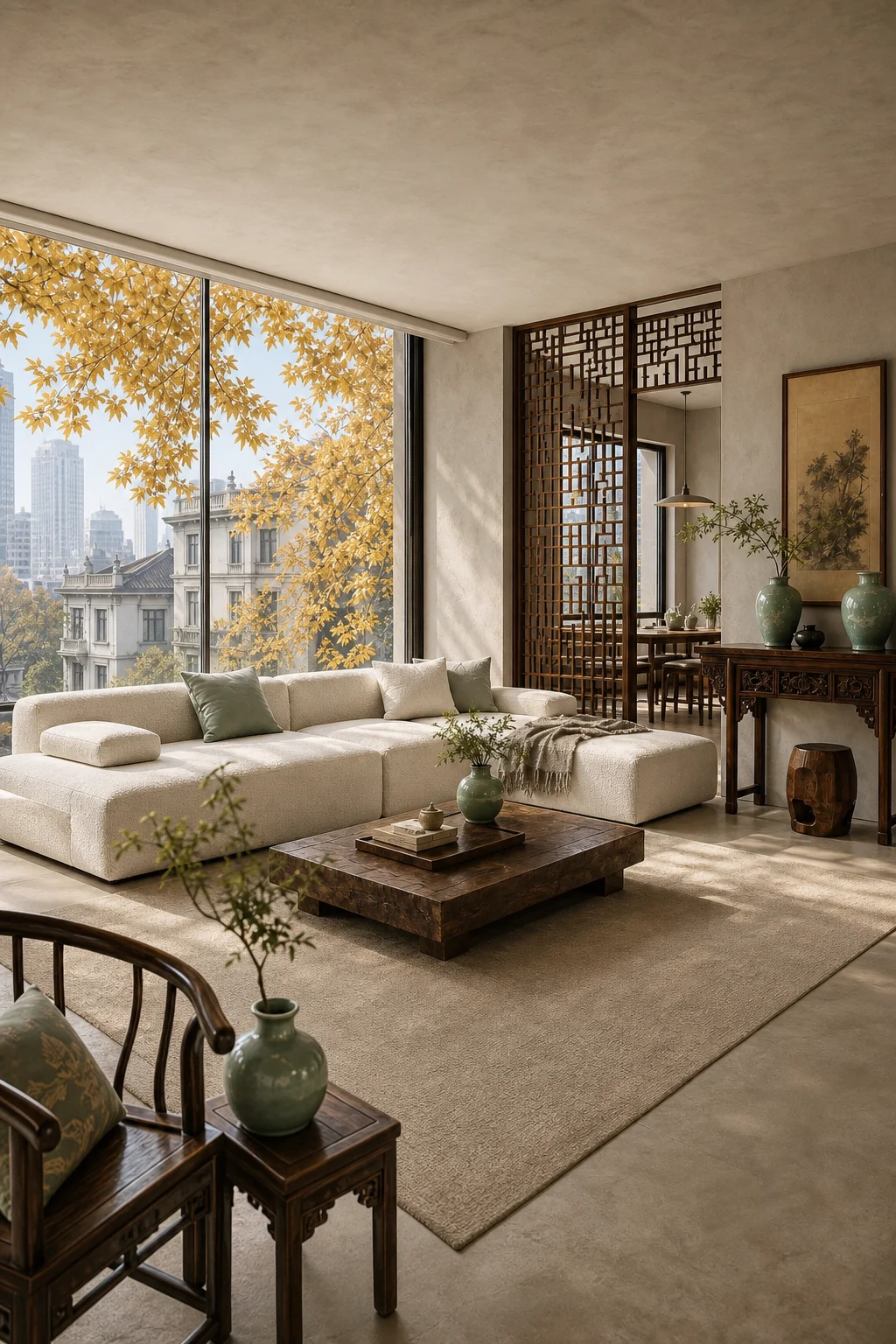
By anchoring the room with contemporary comfort, the chinese traditional elements are freed from their formal constraints. The resulting living room feels both historically grounded and effortlessly modern, achieving a perfect, livable resolution to the initial design contradiction.
- Avoid clustering all antique furniture in one isolated corner of the room, which creates an unbalanced museum effect.
- Never use glossy varnishes on modern pieces competing with the beautifully unvarnished, natural patina of genuine antiques.
- Ensure contemporary seating remains the primary functional focus of the layout to guarantee everyday usability and comfort.
- Distribute dark wooden elements evenly throughout the space to balance visual weight across the entire living room.
- Prioritize tactile comfort over formal symmetry when arranging the modern lounge seating around the traditional wooden tables.