
Desert Minimalism Meets Rajasthani Palace: Bedroom
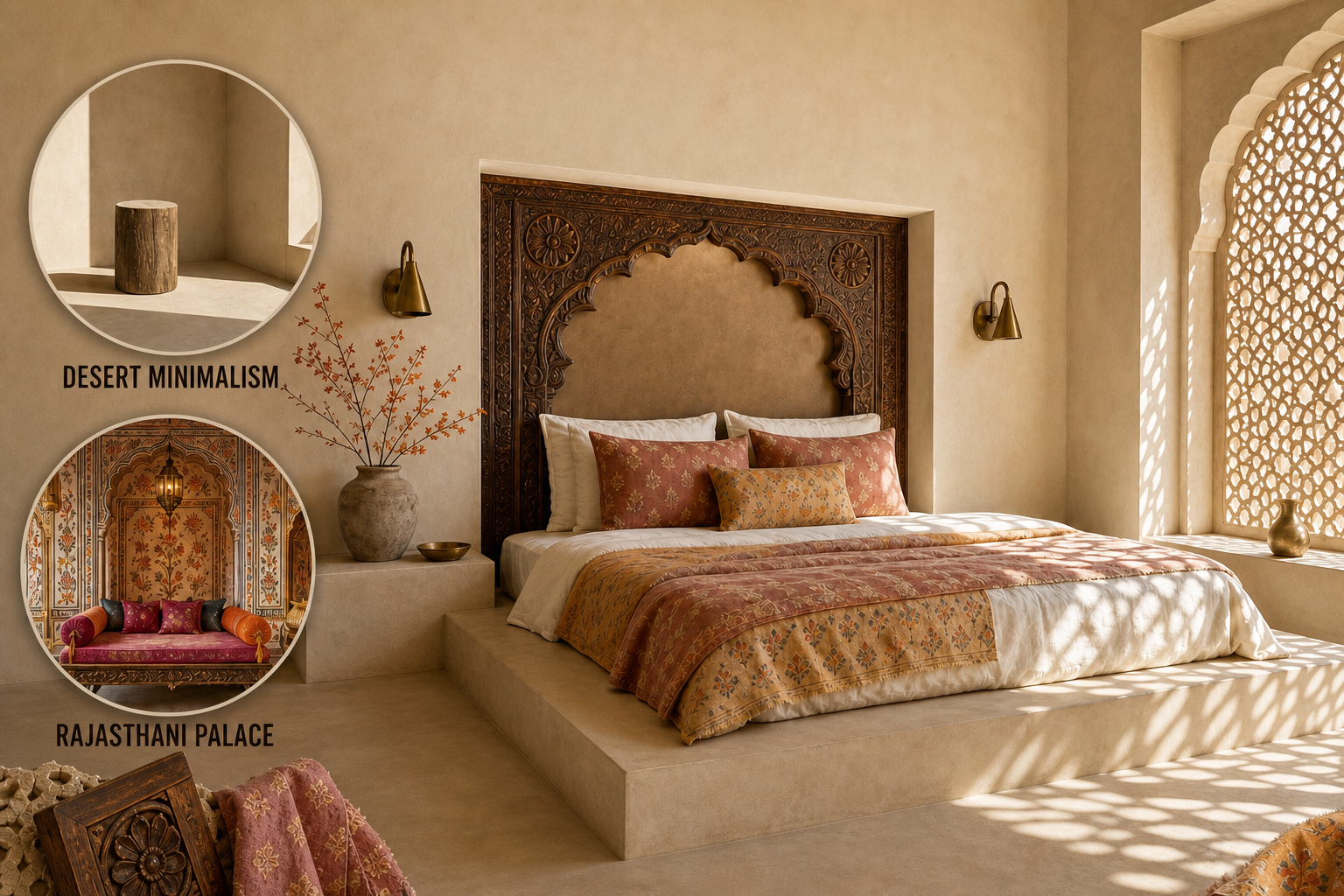
The severe, unadorned void of Desert Minimalism clashes heavily with the hyper-detailed, opulent maximalism of a Rajasthani Palace. We resolve this contradiction by grounding intricate heritage carvings and tactile textiles within a monolithic, sun-bleached architectural shell, creating a serene, highly.
The Architectural Void
Desert Minimalism demands an austere, monolithic shell to quiet the restless mind and firmly ground the space. We honor this strict requirement by keeping the primary walls entirely bare, allowing expansive negative space to perfectly frame our ornate, carefully selected heritage focal points.
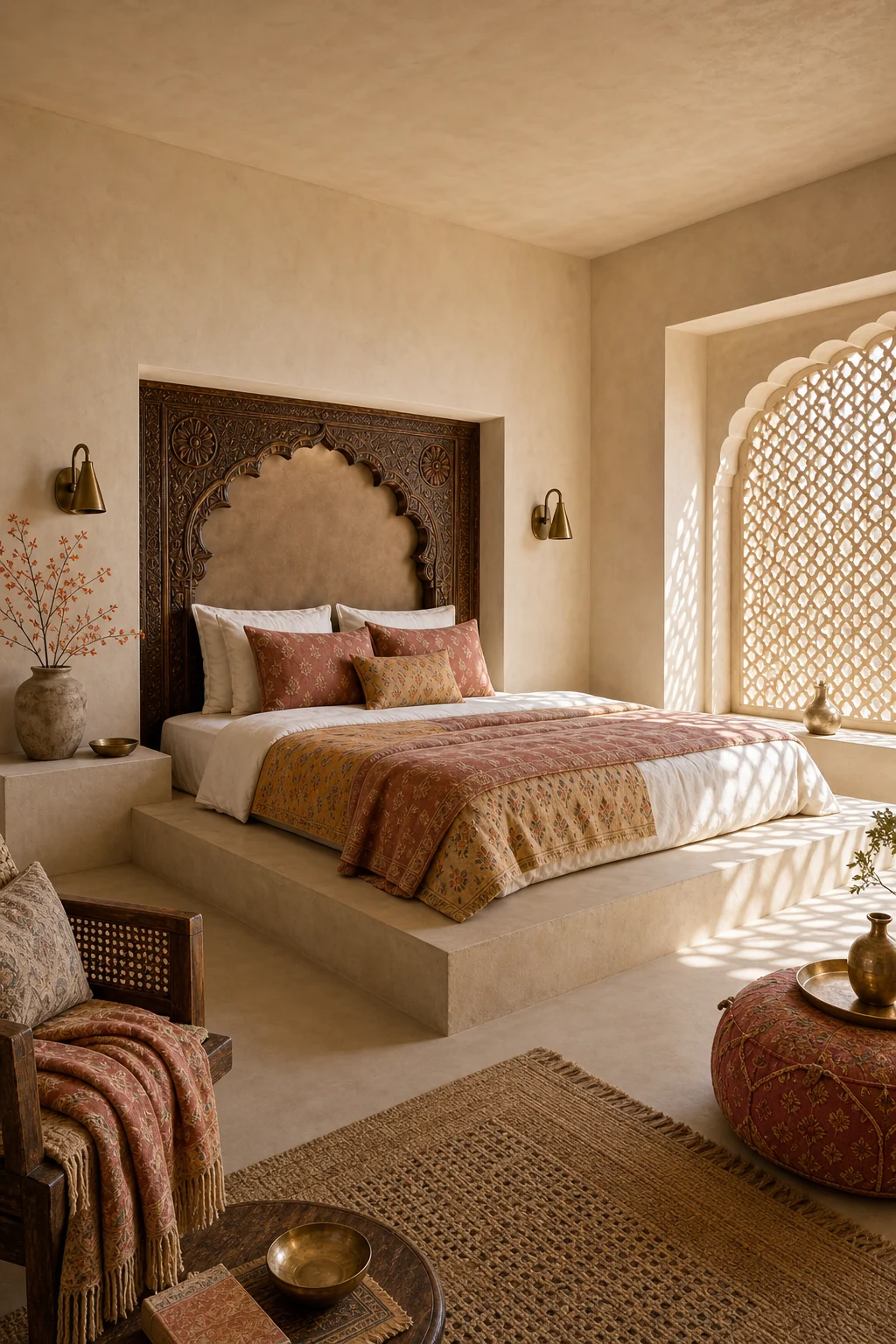
Establishing this stark, uncompromising foundation is absolutely critical before introducing any heavy ornamentation. A continuous application of sand-colored lime plaster acts as an uninterrupted horizon line that absorbs harsh natural light, softens room acoustics, and instantly calms the eye.
By committing to this rigorous architectural restraint, the bedroom completely avoids feeling like a cluttered museum. The sheer volume of empty space ensures that the heritage pieces breathe, transforming them from mere decorative objects into powerful, solitary statements of historical craftsmanship.
Heritage Opulence
Rajasthani Palace design brings unparalleled craftsmanship and tactile richness into the austere bedroom environment. By isolating a single magnificent antique teakwood archway, we celebrate its hyper-detailed carving without overwhelming the serene, carefully curated atmosphere necessary for modern restorative sleep.
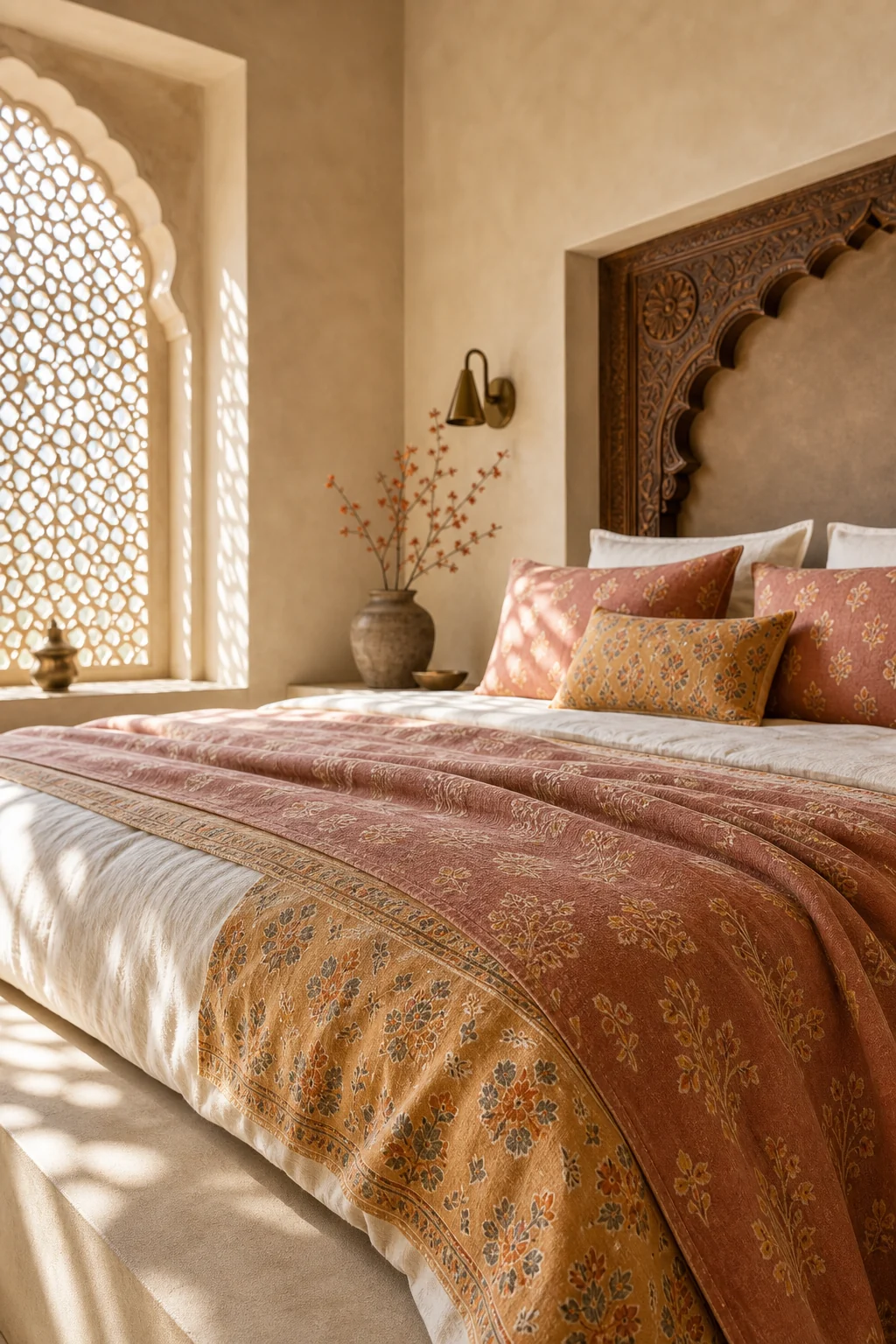
The bedding introduces essential heritage luxury through faded block-printed silks that actively invite touch. Layering these intricate textiles over crisp white linen prevents the opulent patterns from dominating the quiet room, maintaining a delicate, highly intentional visual equilibrium throughout the space.
- Choose faded saffron and dusty rose over highly saturated, vibrant traditional jewel tones to maintain bedroom serenity.
- Layer intricate block-printed silk bedding strictly over crisp, unadorned white linen bases to create visual breathing room.
- Avoid heavy brocades and velvets that weigh down the delicate, airy minimalist aesthetic of the overall space.
- Select textiles with matte finishes to perfectly complement the raw, earthy lime plaster walls surrounding the bed.
The Sun-Bleached Bridge
A shared color story connects the stark minimalist architecture directly to the ornate historical antiques. We deliberately muted traditional saturated palace colors into an autumn-appropriate palette of faded saffron, dusty rose, and matte terracotta to perfectly match the surrounding desert sand.
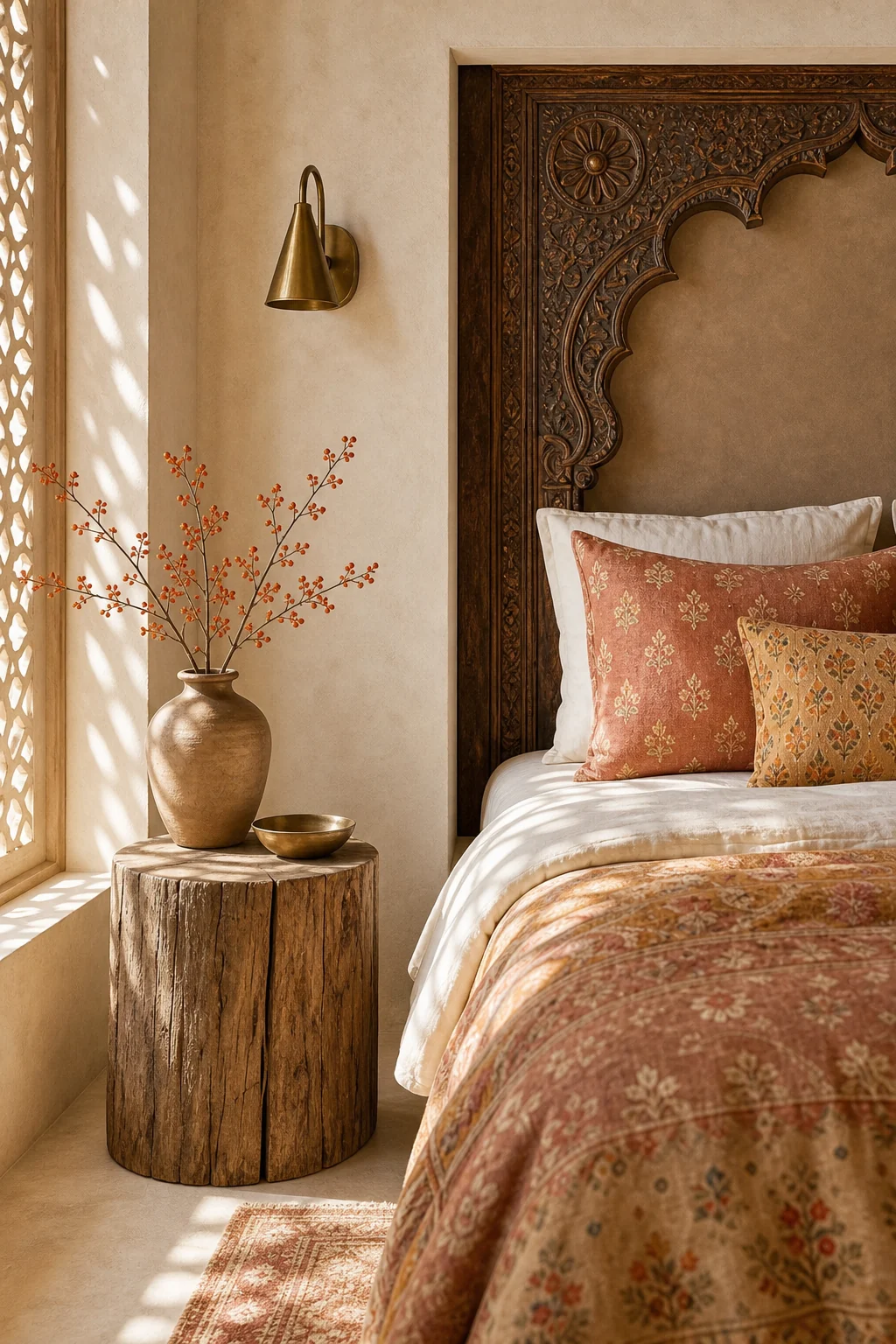
This shared desaturation forces the two opposing aesthetics into a cohesive, earthy dialogue. By ensuring every vibrant hue appears faded by a century of desert sun exposure, the opposing styles finally speak the exact same visual language without any harsh clashes.
Eliminating high-gloss finishes and synthetic dyes is absolutely crucial for this aesthetic bridge to succeed. The raw, organic nature of the materials must remain highly visible, allowing the natural grain of the wood and the weave of the silk to provide subtle texture.
Building the Room
Creating a functional seating area requires meticulously balancing visual weight across the entire space. A low, built-in masonry bench provides a severe minimalist foundation that easily supports vibrant, tactile heritage cushions without ever feeling cluttered, chaotic, or overly complex.
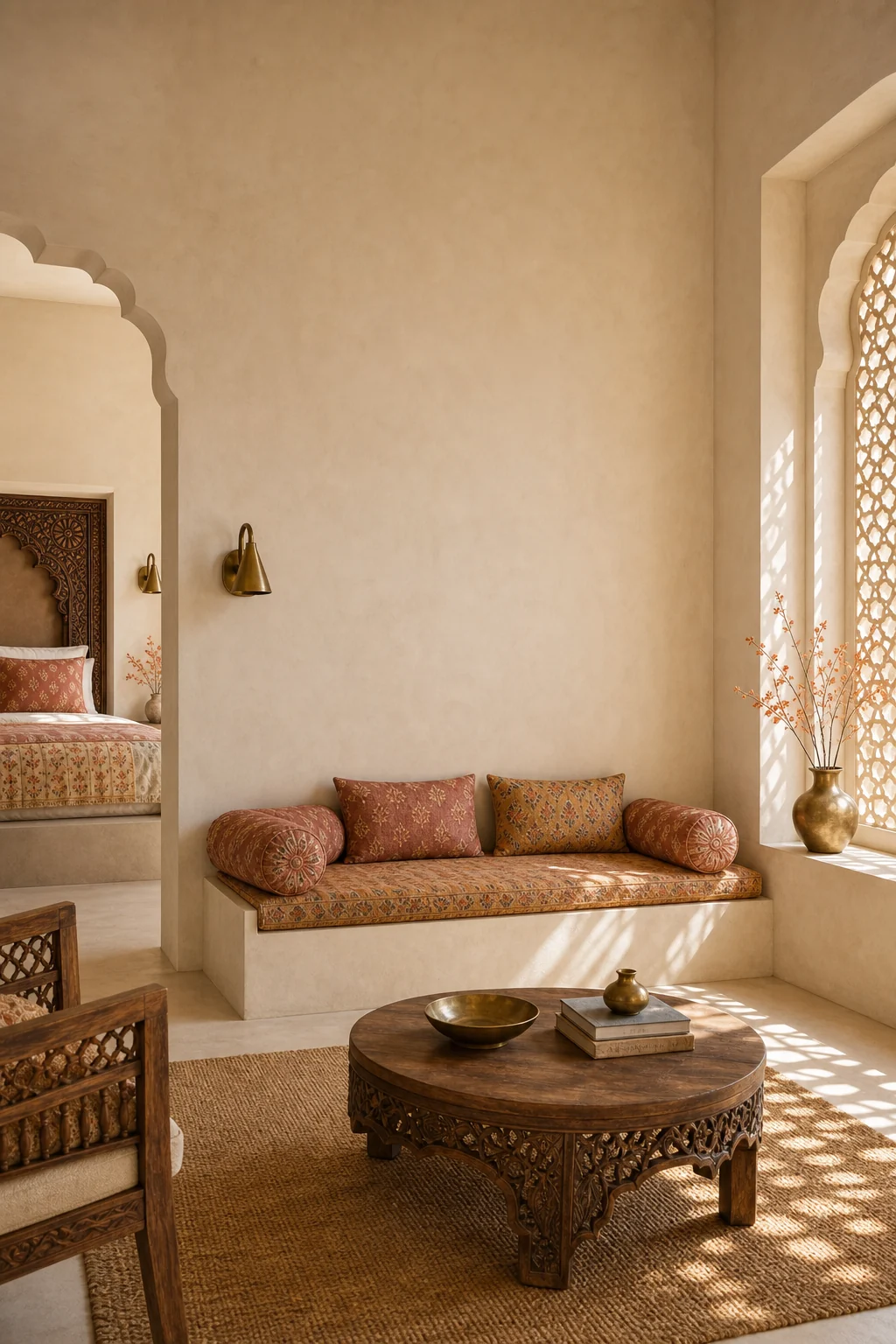
To successfully merge these contradictory styles, you must assign specific design layers to each aesthetic. The comprehensive table below outlines exactly how to translate monolithic architectural elements and ornate antiques into a beautifully resolved, highly functional modern bedroom space.
| Design Layer | Desert Minimalism Role | Rajasthani Palace Role | Bridge Decision |
|---|---|---|---|
| Architectural Shell | Monolithic sand-colored lime plaster walls providing expansive negative space. | Intricately carved sandstone jali screens featuring detailed geometric patterns. | Recess ornate screens flush into the minimalist walls to strictly control their scale. |
| Large Furniture | Low built-in masonry platform bed anchoring the room horizontally. | Antique carved teakwood archway displaying hyper-detailed historical craftsmanship. | Use the ornate wooden archway as a headboard within a recessed plaster niche. |
| Soft Textiles | Crisp, unadorned white linen base offering visual rest and simplicity. | Block-printed silk bedding and bolsters providing tactile luxury. | Mute saturated palace colors into faded autumn desert tones to match the walls. |
| Room Lighting | Simple matte brass wall sconces highlighting the bare plaster textures. | Glowing traditional brass lanterns adding warmth and historical ambiance. | Select unornamented lantern silhouettes rendered in aged, deeply patinated brass finishes. |
| Small Accents | Expansive negative space allowing the eye to rest completely. | Tactile terracotta and carved wood bringing earthy richness to surfaces. | Limit accents to one or two large, highly impactful heritage pieces per room. |
By rigidly adhering to these defined roles, the room entirely avoids the chaotic feeling of an unresolved assortment. The architecture remains strictly minimalist, while the tactile touchpoints deliver the opulent heritage experience exactly where the human body interacts with the room.
Light as Architecture
Lighting serves as the most dynamic architectural bridge between the austere and the ornate. Warm autumn sunlight filtering through a traditional sandstone jali screen casts sharp, geometric minimalist shadows across the completely bare, sand-colored plaster floor, creating movement.
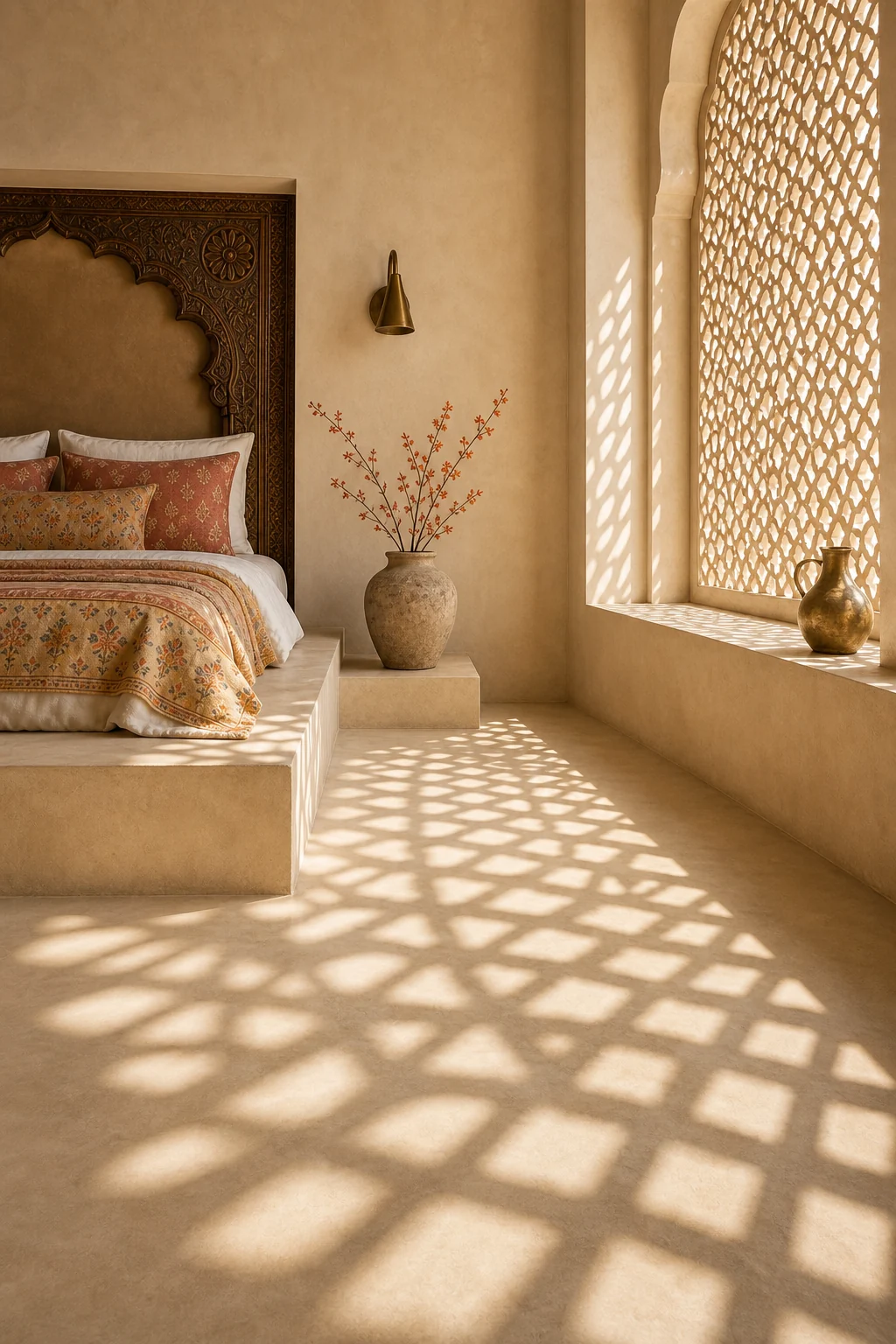
These shifting patterns provide immense visual interest without requiring any permanent physical objects. The shadows themselves become temporary ornamentation that vanishes entirely at dusk, preserving the room’s serene, uncluttered evening atmosphere for deep, restorative sleep and quiet reflection.
- Install traditional jali screens to project sharp, shifting geometric shadows directly onto bare, unadorned minimalist floors.
- Mount simple matte brass sconces to flank the bed and provide a warm, highly controlled ambient glow.
- Rely on harsh natural daylight to dramatically highlight the deep recesses of your intricate wood carvings.
- Ensure evening lighting remains low and atmospheric to emphasize the monolithic room shape over the detailed decor.
Styling the Details
Absolute restraint is crucial when styling surfaces in this delicate hybrid space. Instead of clustering small objects, place a single, significant heritage artifact inside a severe, unadorned architectural niche to command complete attention and profound respect from the viewer.
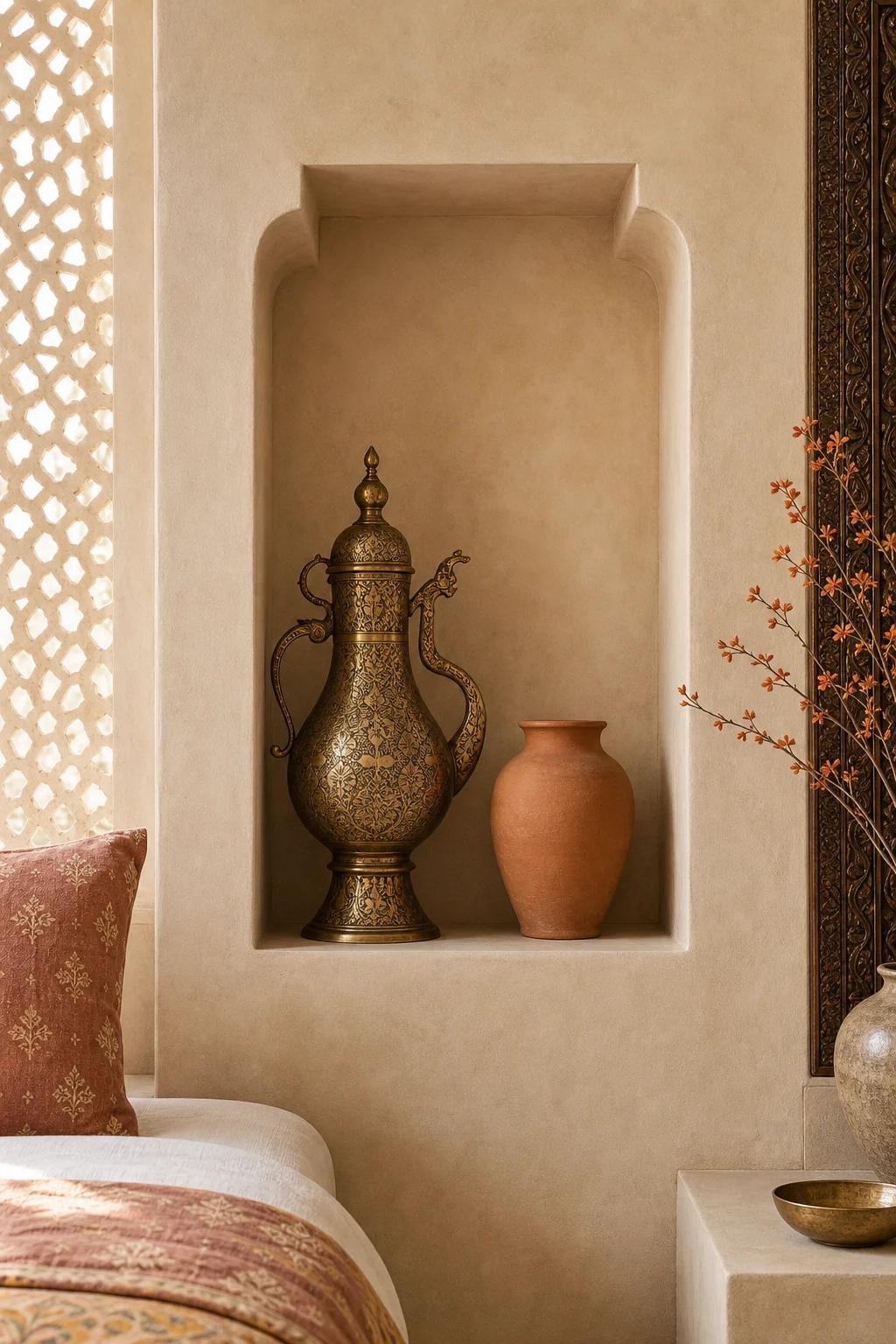
Sourcing authentic materials is essential to avoid a cheap, mass-produced feel. Focus entirely on finding architectural salvage pieces and organic, handmade textures that ground the minimalist room in genuine, undeniable regional history and masterful artisanal craftsmanship.
- Source authentic antique carved teakwood architectural salvage for your primary, high-impact bedroom focal points.
- Invest in faded block-printed silk bedding and tactile bolsters for essential, inviting physical softness.
- Select matte terracotta vessels and unlacquered brass sconces that will naturally and beautifully patinate over time.
- Apply sand-colored lime plaster or Roman clay finishes to create a perfectly seamless, monolithic architectural shell.
Adapting the Threshold
This aesthetic tension translates beautifully to transitional spaces throughout the entire home. An intricately carved palace doorway leading directly into a stark, empty plaster hallway creates an immediate, breathtaking threshold experience for anyone entering the private sanctuary.
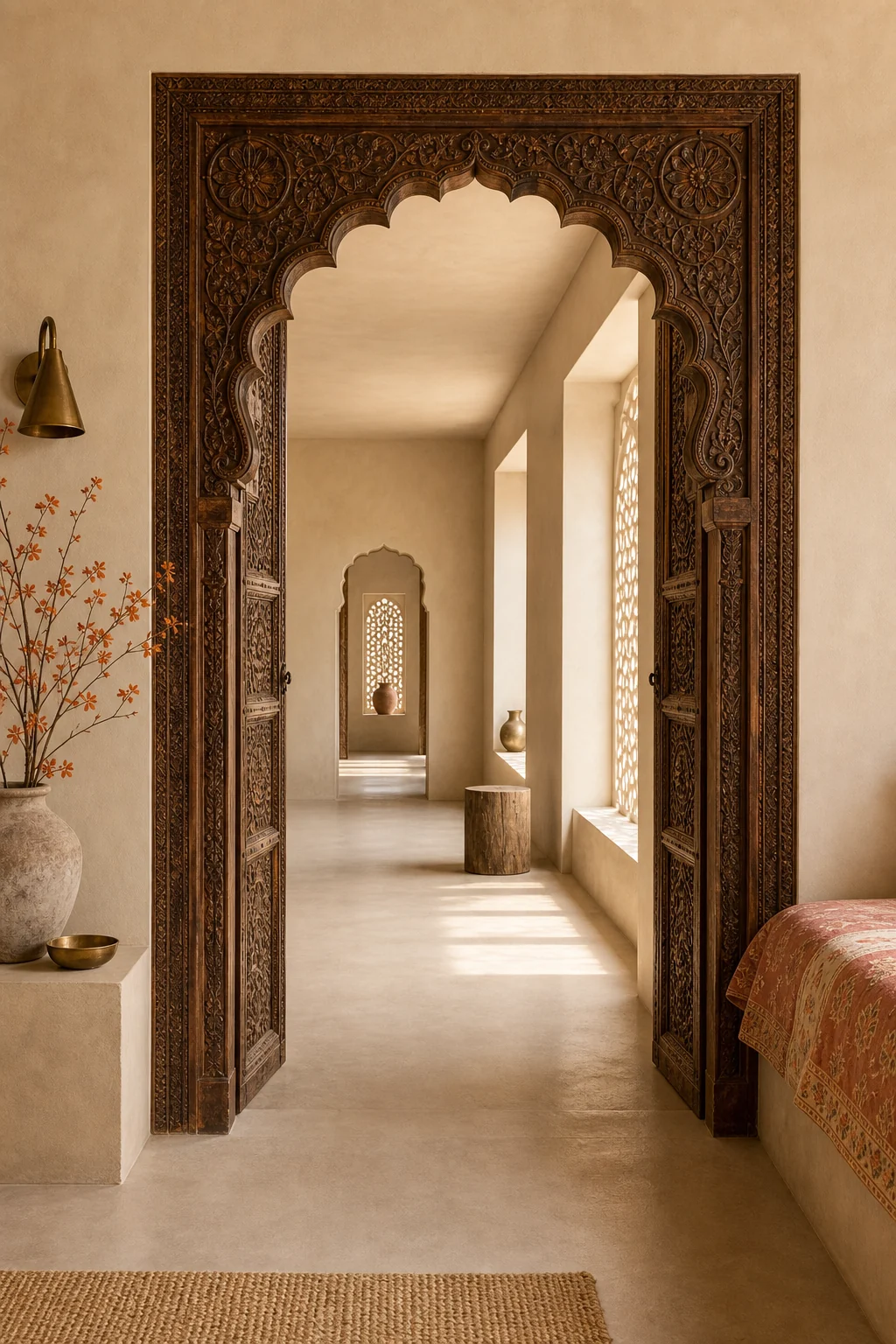
You can apply this principle to any room by strictly controlling the furniture outlines. The overall silhouette must remain low, horizontal, and firmly grounded to maintain the necessary minimalist serenity and prevent visual clutter from accumulating over time.
If the silhouette fails this crucial test, remove the smallest decorative items first. Consolidate your heritage elements into one massive, undeniable statement piece rather than scattering multiple small, highly distracting accents across the various surfaces of the room.
Avoiding the Costume
The greatest risk in this design is creating a theatrical set rather than a livable home. Success relies on strict editing, ensuring the minimalist void always surrounds, contains, and intentionally isolates the opulent heritage elements from one another.
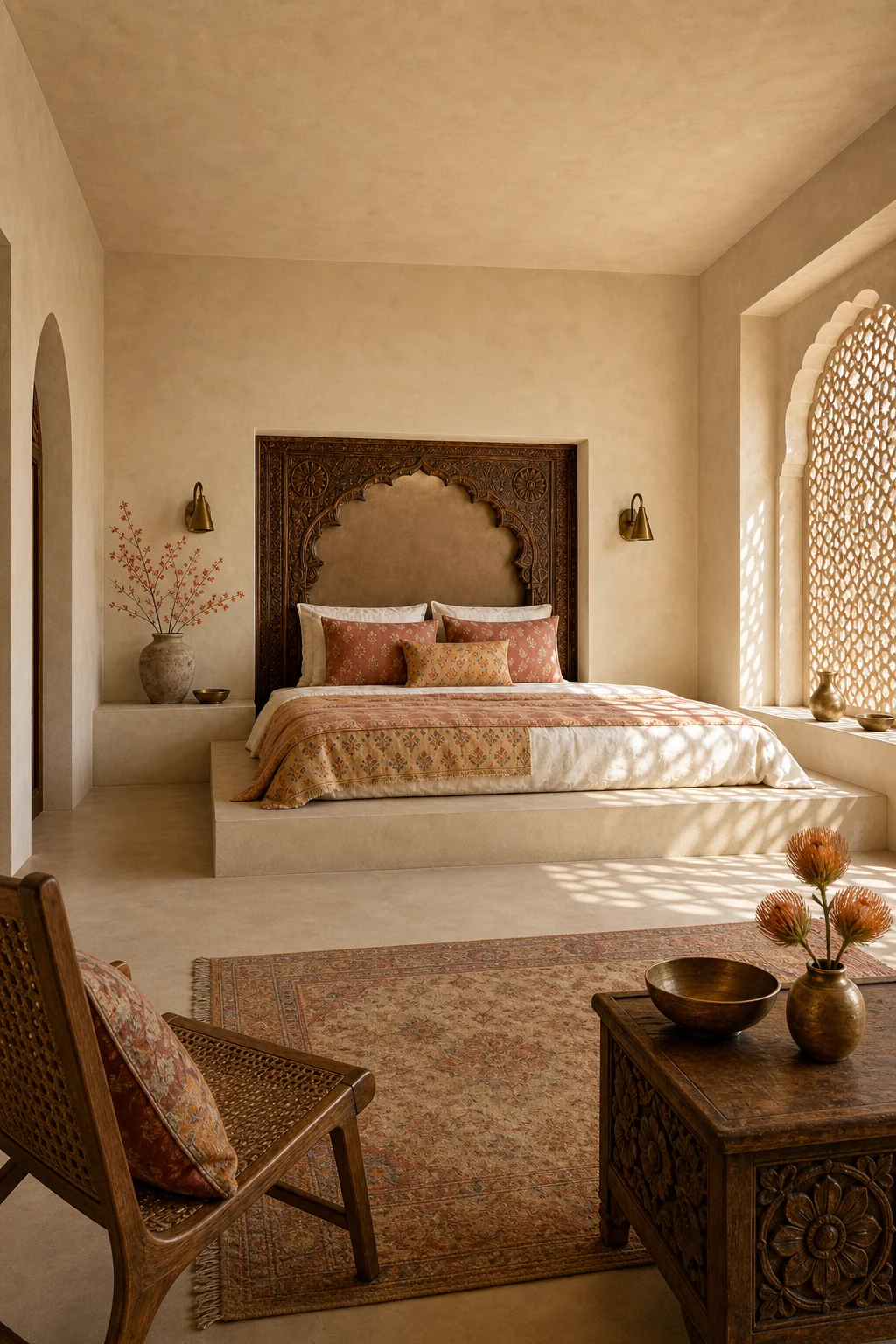
When the architectural shell remains uncompromisingly austere, the ornate antiques feel deliberately curated rather than accidentally cluttered. This intentional contrast is exactly what makes the final bedroom feel both deeply historic and highly contemporary at the same time.
- The Costume: Using too many vibrant colors creates an inauthentic, chaotic theme park atmosphere instead of a home.
- Split Personality: Keeping opposing styles completely segregated on opposite sides of the bedroom destroys the necessary dialogue.
- Dominance: Letting ornate carvings swallow the necessary calming negative space on the primary bedroom walls.
- Generic Result: Using mass-produced decor instead of authentic, beautifully weathered antiques with genuine, traceable regional history.