
Den Design Rules: The Ultimate Sizing Guide for Lazy Sundays
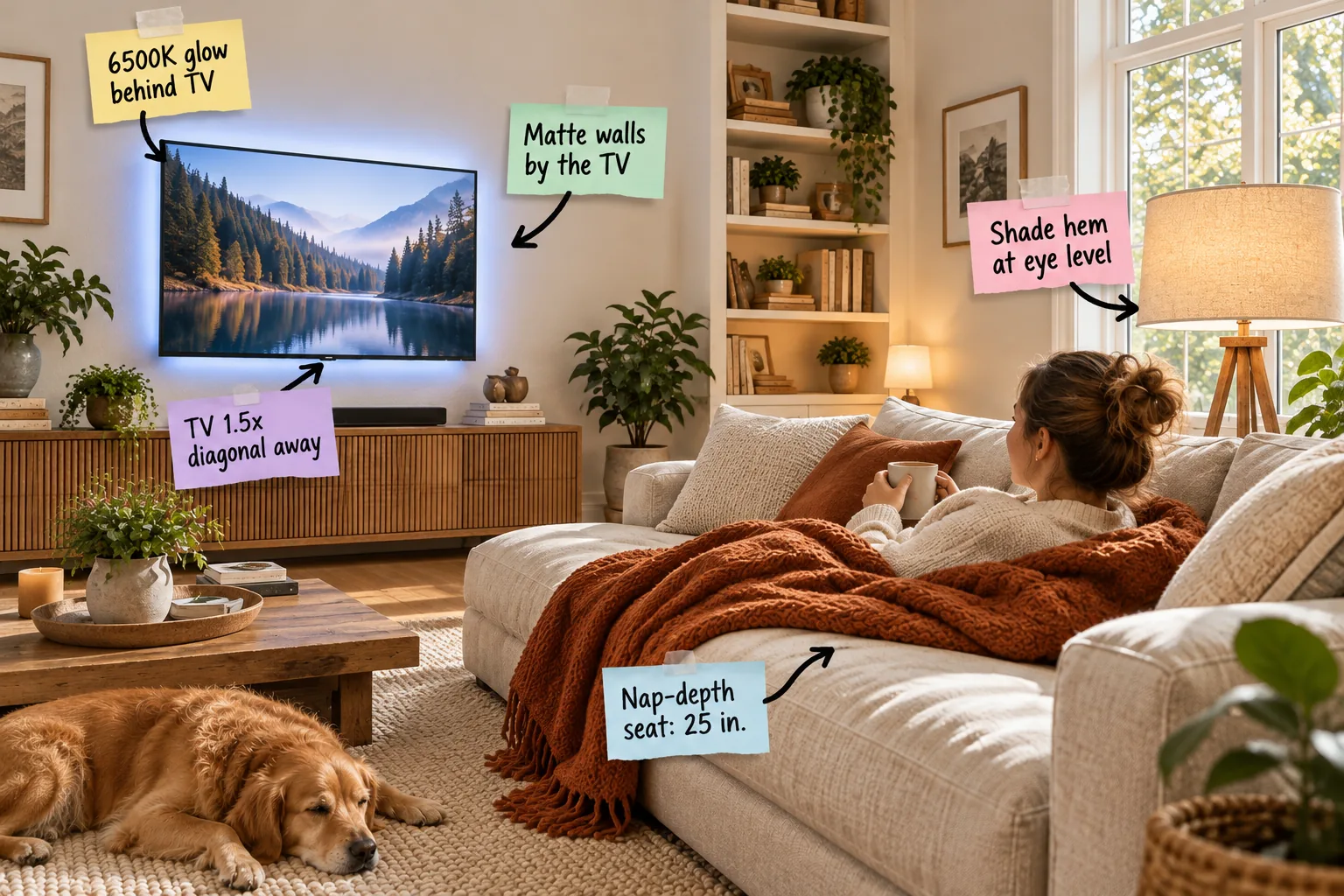
You will be able to arrange your den furniture perfectly, mount your TV at the ideal viewing distance, and set up professional bias lighting using our printable Den Sizing Sheet. Print this complete guide to get your sofa depth and lamp heights exactly right.
Finding the Perfect Nap-Depth Sofa
Standard sofas are around 21 to 22 inches deep, which forces you to sit rigidly upright. For a den built for lounging, look for an inside seat depth of at least 25 inches to provide enough room to curl up comfortably.
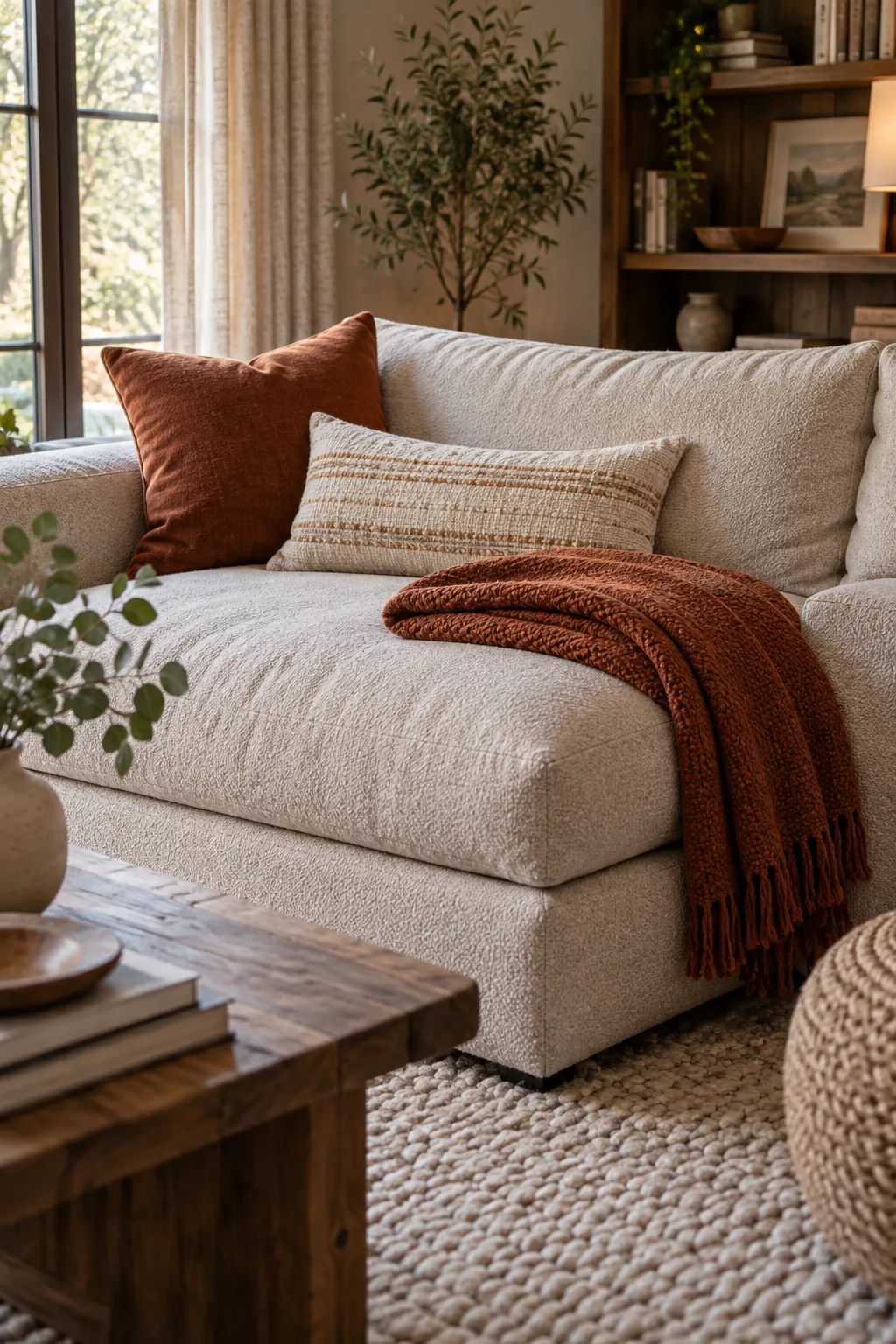
While a deep seat is essential for lounging, getting the proportions wrong can make the sofa uncomfortable for everyday sitting and ruin the room’s balance.
Testing Cushion Density for Long Sundays
A deep seat only works if the foam core supports your weight over several hours. Choose a high-resiliency foam wrapped in down to maintain a crisp shape while offering a soft, yielding surface that won’t compress flat.
Selecting a Lumbar Pillow for Support
Eastern design principles emphasize structural balance, which applies directly to how we sit. Place a dense, textured lumbar pillow at the base of the sofa back to maintain your spine’s natural curve during extended lounging.
Layering Textures for Sunday Comfort
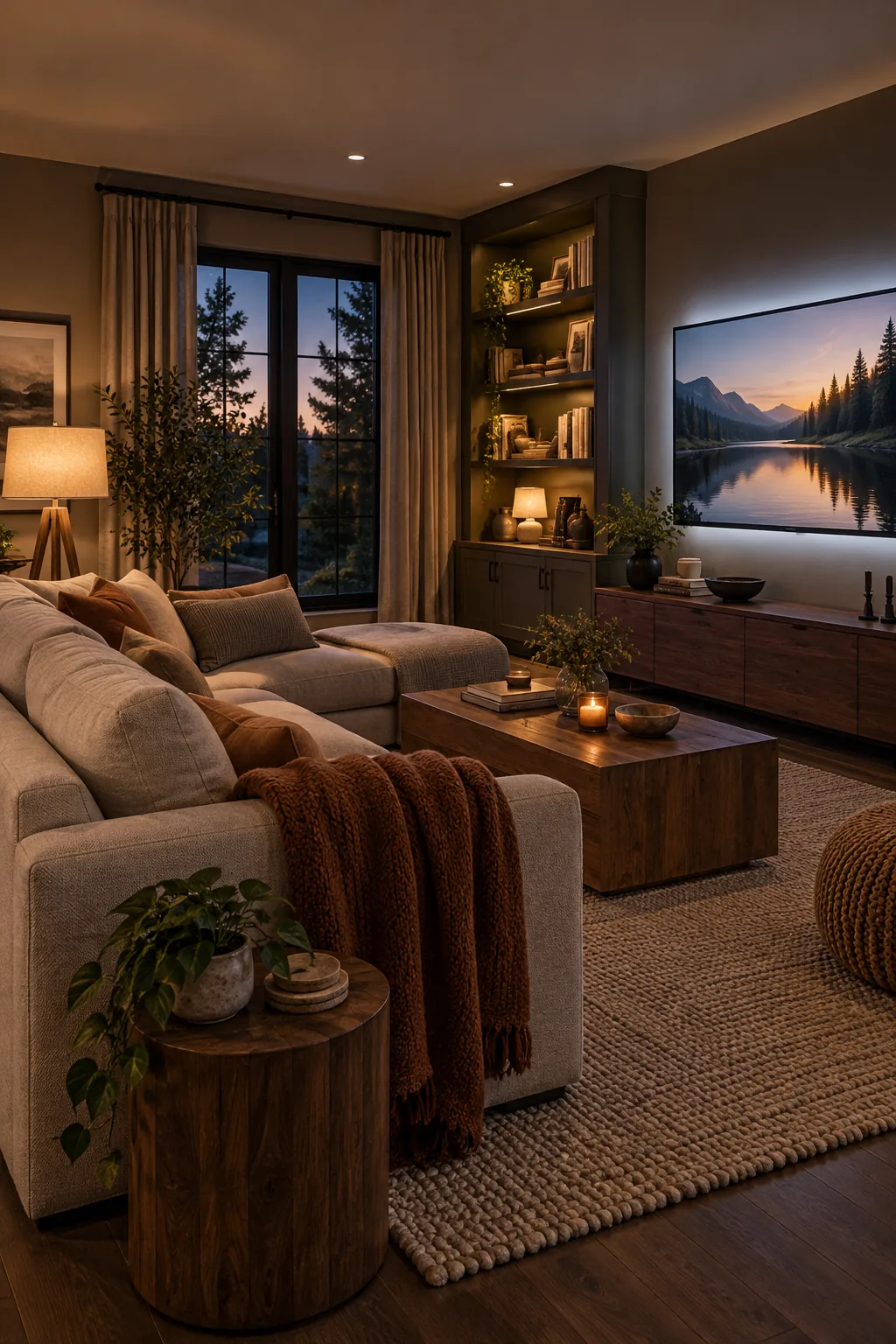
Tactile materials transform a basic media room into a cozy den by adding physical warmth and acoustic dampening. Layering tactile materials like wool and linen naturally absorbs sound and prevents the room from feeling sterile.
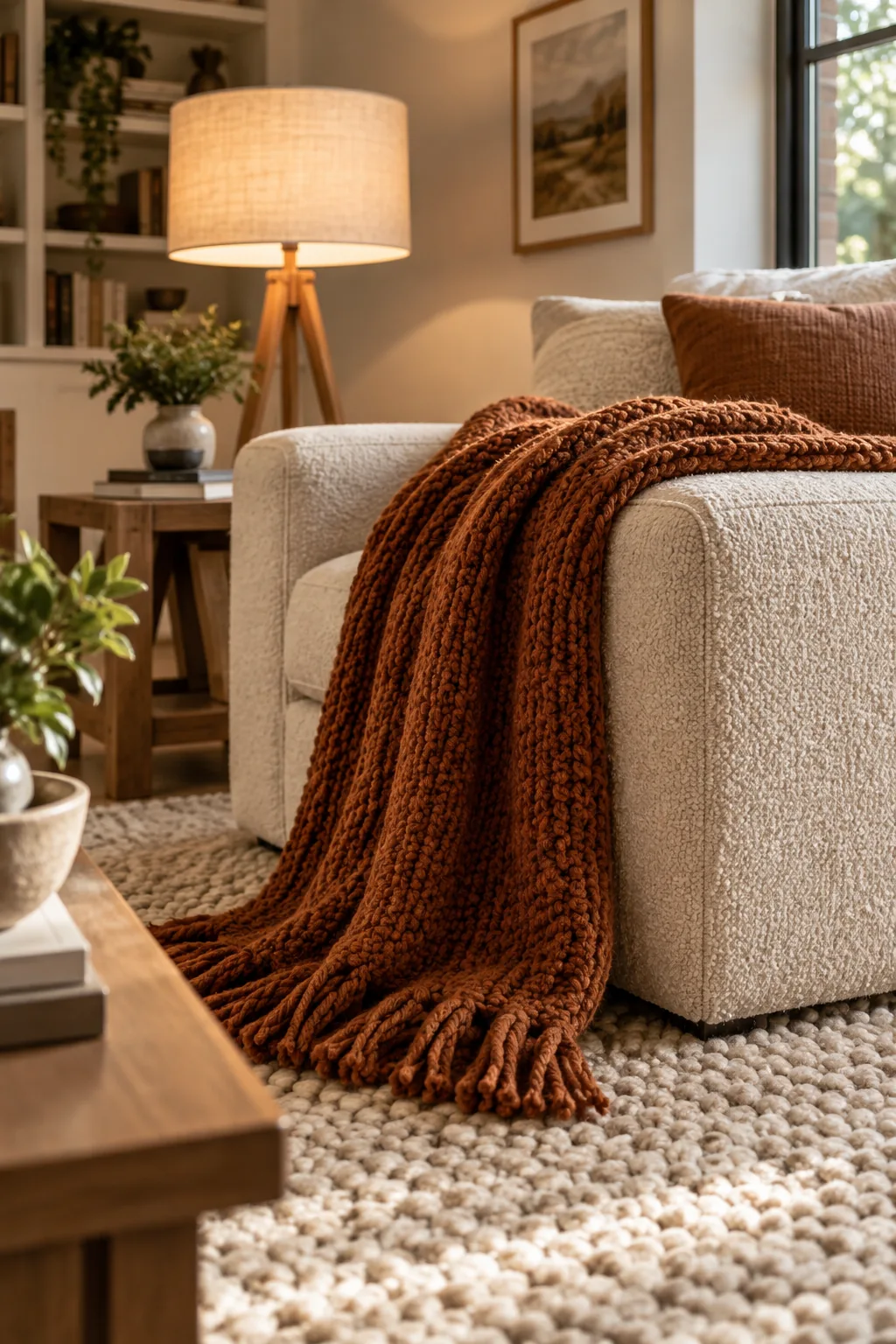
Use tactile comparison rather than specific thread counts to choose these layers, ensuring each fabric feels distinctly different against your skin.
Draping Throws for Quick Access
Keep a heavy rust-colored knit throw folded over the armrest rather than tucked away in a basket. This deliberate placement adds a necessary pop of warm color and ensures immediate comfort is always within reach.
Choosing the Right Rug Pile
A chunky wool rug anchors the lounging zone while providing essential sound absorption for your media setup. Select a pile height of at least three-quarters of an inch to maximize acoustic benefits and underfoot softness.
Setting the Lamp Shade at Eye Level
Ambient lighting is critical for reading and relaxing without glare. Position your lamp so the bottom hem sits exactly at eye level, which I learned the hard way after a glaring bulb ruined evening reading in my own Denver living room.
Selecting the Right Bulb Temperature
Warm ambient lighting signals the brain to wind down at the end of the week. Equip your side table lamps with 2700K LED bulbs to cast a soft, sunset-like glow that contrasts beautifully with the cooler screen light.
Matching Side Table Height to the Armrest
A side table should sit within two inches of the sofa’s armrest height to prevent awkward reaching when setting down a mug. This exact height alignment ensures the lamp base starts at the correct elevation.
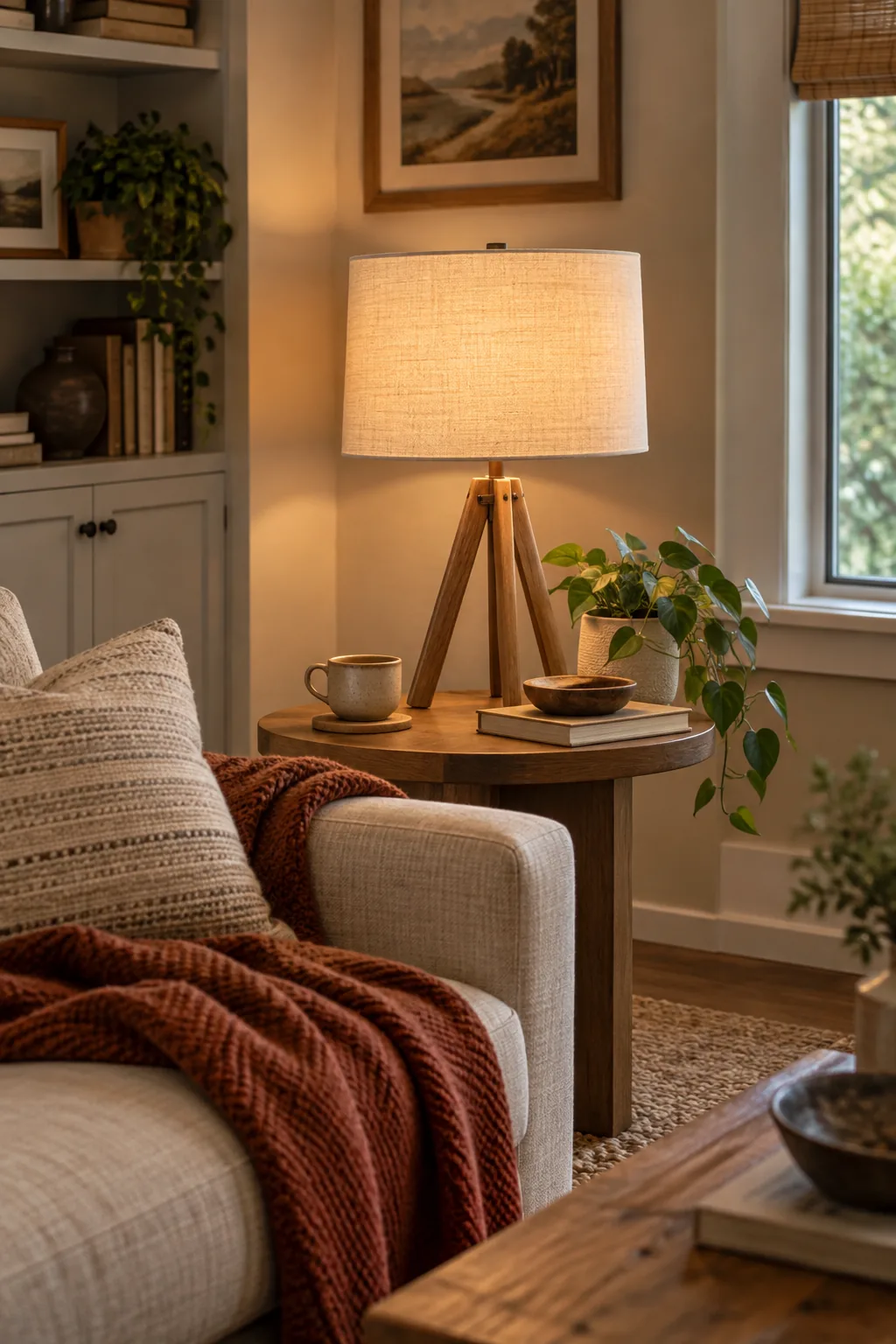
By establishing this precise geometric relationship, the linen shade naturally directs light downward onto your lap rather than outward into your eyes.
Sizing the Side Table Surface
The ideal side table offers enough surface area for a lamp, a drink, and a book without feeling cluttered. Look for a diameter of at least 18 inches to balance the visual weight of a deep, oversized sofa.
Positioning the Coffee Table for Easy Reach
Maintain a clear pathway while keeping the coffee table accessible from a reclined position. Leave exactly 16 to 18 inches of clearance between the front edge of the sofa cushion and the edge of the table.
Managing Window Treatments for Daytime Viewing
Lazy Sundays often start in the afternoon, requiring flexible light control to prevent screen glare. Install blackout roller shades paired with linen drapery to block direct sunlight while maintaining a soft, textured vertical line in the room.
Calculating TV Distance for Eye Comfort
Prevent eye strain by placing the seating about 1.5 times the diagonal screen size away from the TV. I used to sit way too close to my media wall until I finally measured out this exact ratio for my own home.
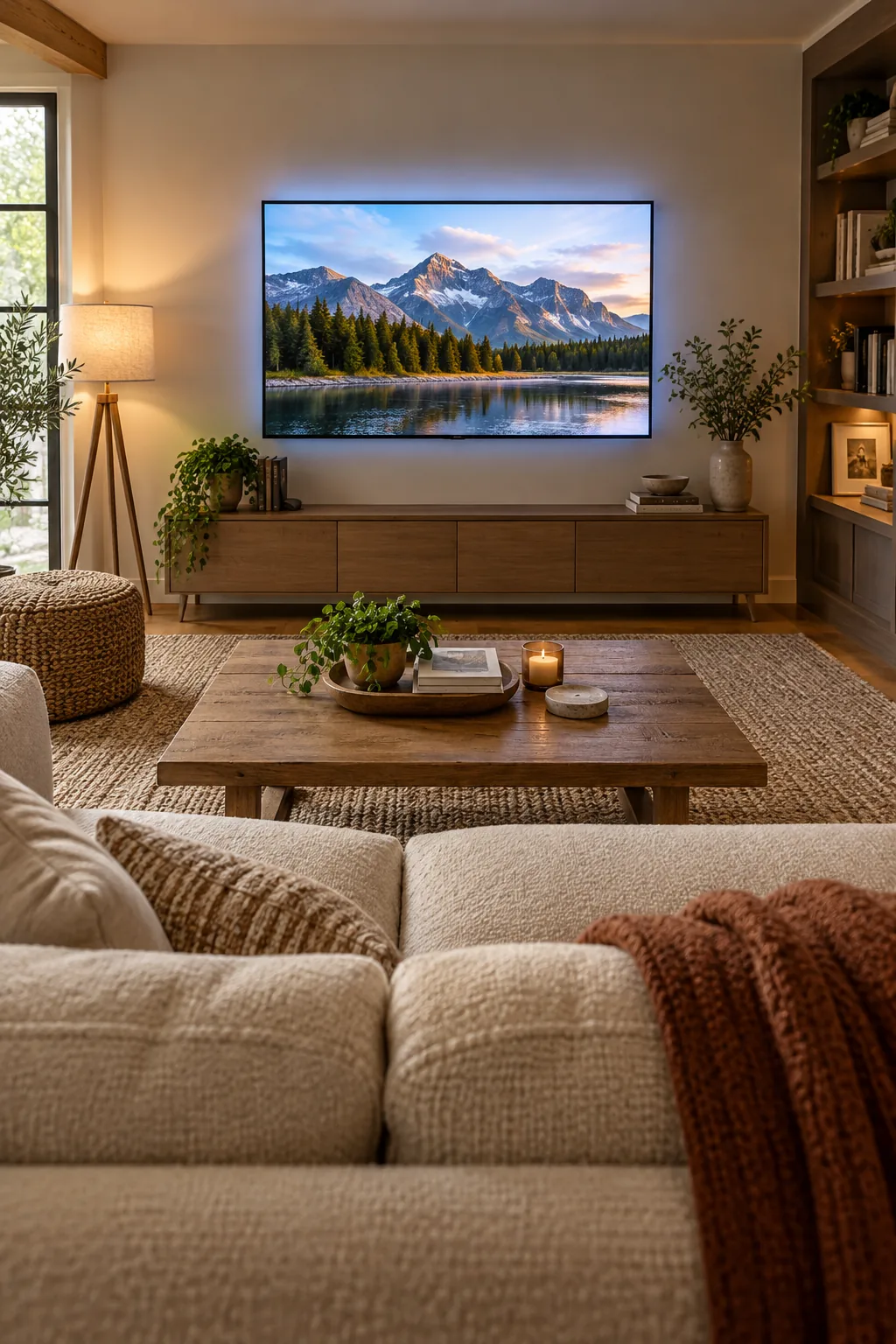
For a standard 65-inch screen, this formula dictates placing the main lounging sofa roughly 97 inches, or about eight feet, away from the wall.
| TV Screen Size | Multiplier | Distance (Inches) | Distance (Feet) |
|---|---|---|---|
| 55 inches | x 1.5 | 82.5 inches | 6.8 feet |
| 65 inches | x 1.5 | 97.5 inches | 8.1 feet |
| 75 inches | x 1.5 | 112.5 inches | 9.3 feet |
| 85 inches | x 1.5 | 127.5 inches | 10.6 feet |
Mounting the Screen at the Correct Height
A perfectly distanced TV is useless if you have to crane your neck upward. Mount the screen so the center of the display sits approximately 42 inches from the floor, aligning with your seated eye level.
Spacing the Soundbar from the Screen
Audio equipment needs breathing room to project sound clearly without visual crowding. Leave a minimum gap of three inches between the bottom edge of the television and the top of your mounted soundbar.
Choosing Matte Paint for the Media Wall
Glossy or satin paint finishes reflect screen light and room lamps, creating distracting hot spots. Always use a flat or matte paint finish on the media wall to absorb stray light and keep focus entirely on the screen.
Selecting the Perfect Dark Wall Color
A dark media wall visually recedes, making the television blend into the architecture when turned off. Choose deep charcoal or muddy slate hues rather than pure black to maintain warmth and depth in the den.
Adding a 6500K Glow Behind the Screen
Bias lighting reduces eye fatigue, but it only works if you use a flat or matte paint finish on the wall to absorb stray light and eliminate distracting reflections around the screen.
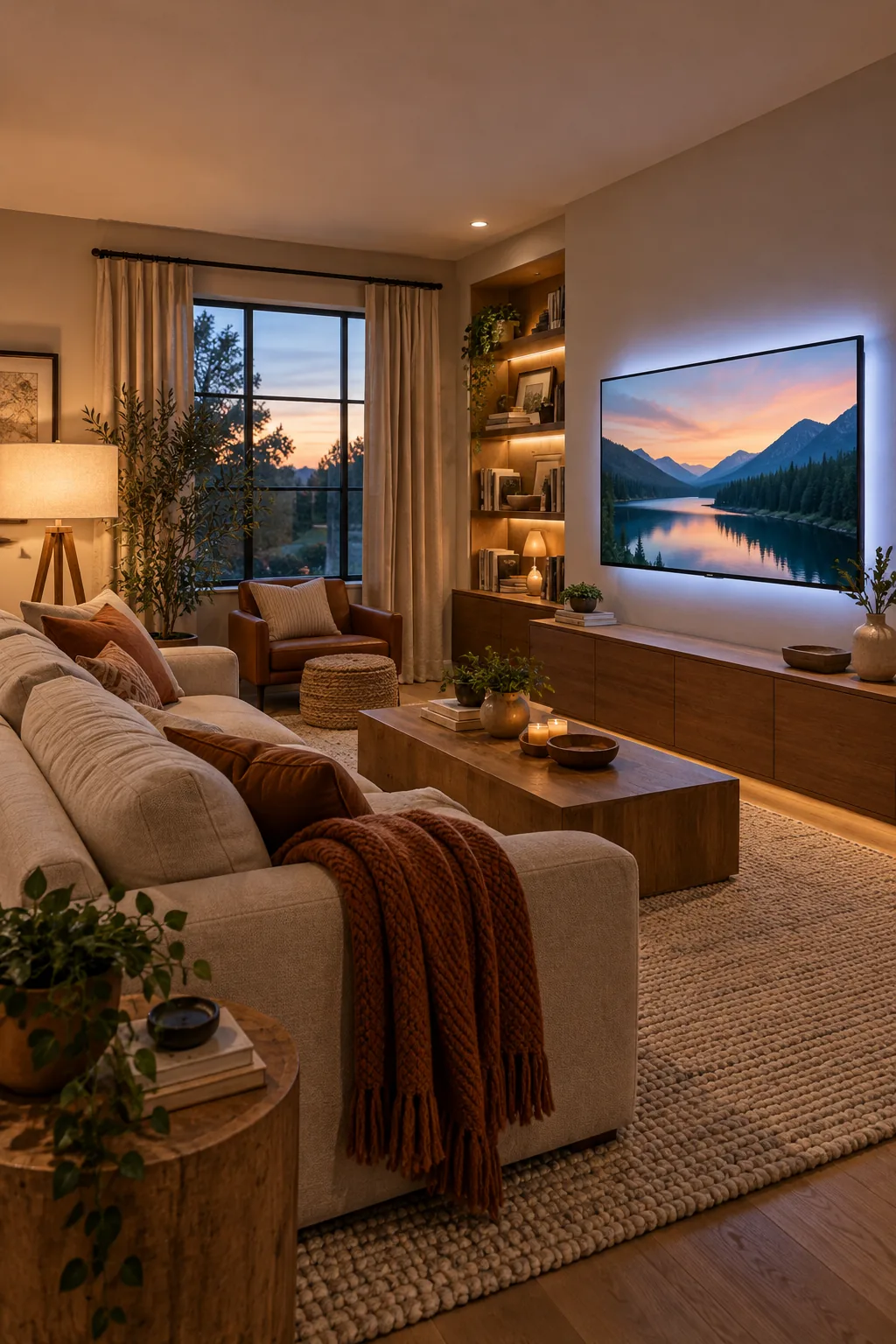
Installing a 6500K LED strip takes only a few minutes, and adding one to my own den completely eliminated the headaches I used to get during dark scenes.
Routing Cables for a Clean Finish
A messy tangle of cords shatters the calming symmetry of a well-designed media wall. Run all HDMI and power cables through an in-wall routing kit to keep the space beneath the screen entirely uncluttered.
More Cozy Den Styles to Inspire Your Space
Once you have your measurements dialed in, choose a distinct aesthetic to bring your lazy Sunday den to life.
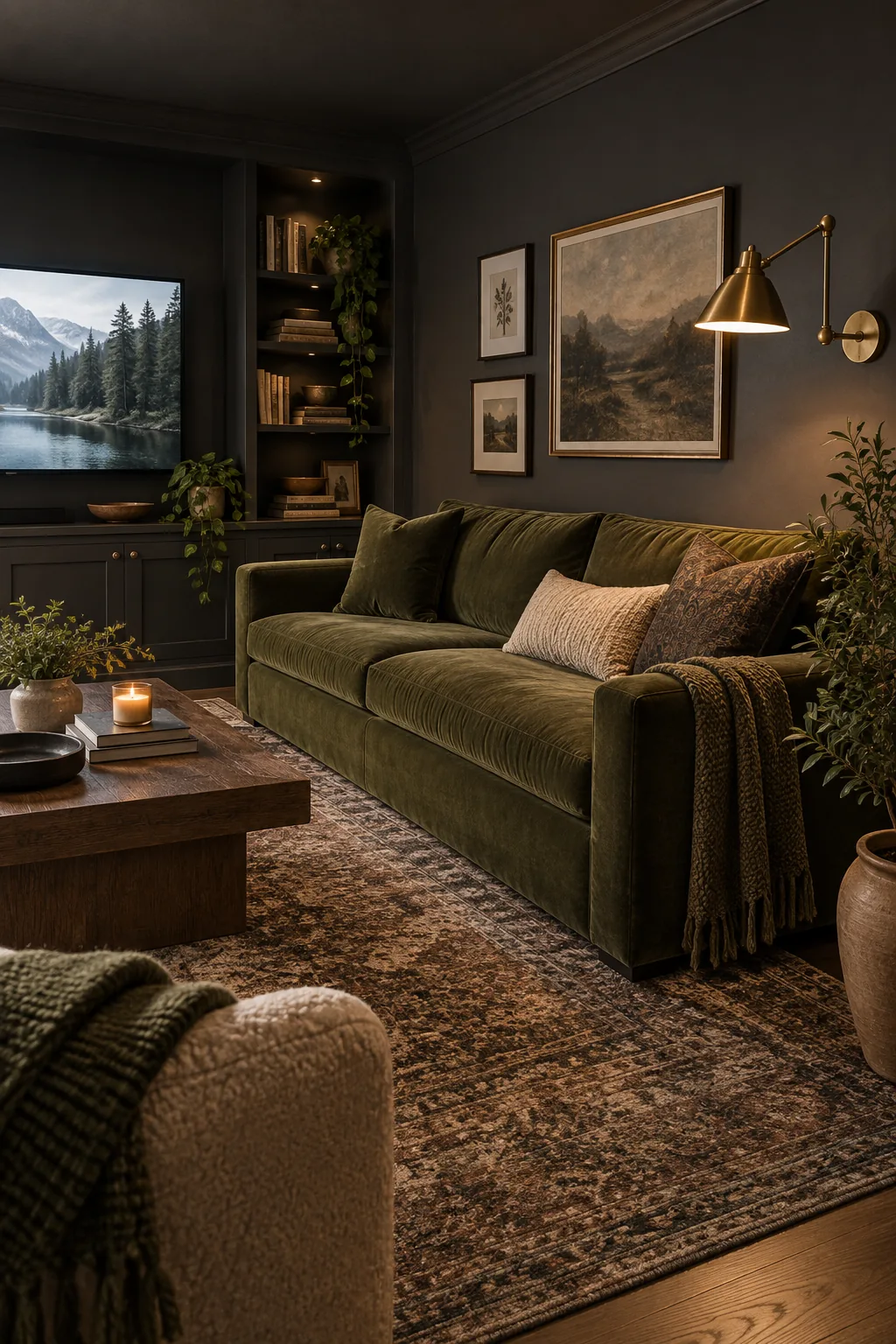
Moody Charcoal Den: Dark charcoal walls and a velvet olive sofa create an enveloping, cinematic mood perfect for evening movie marathons.
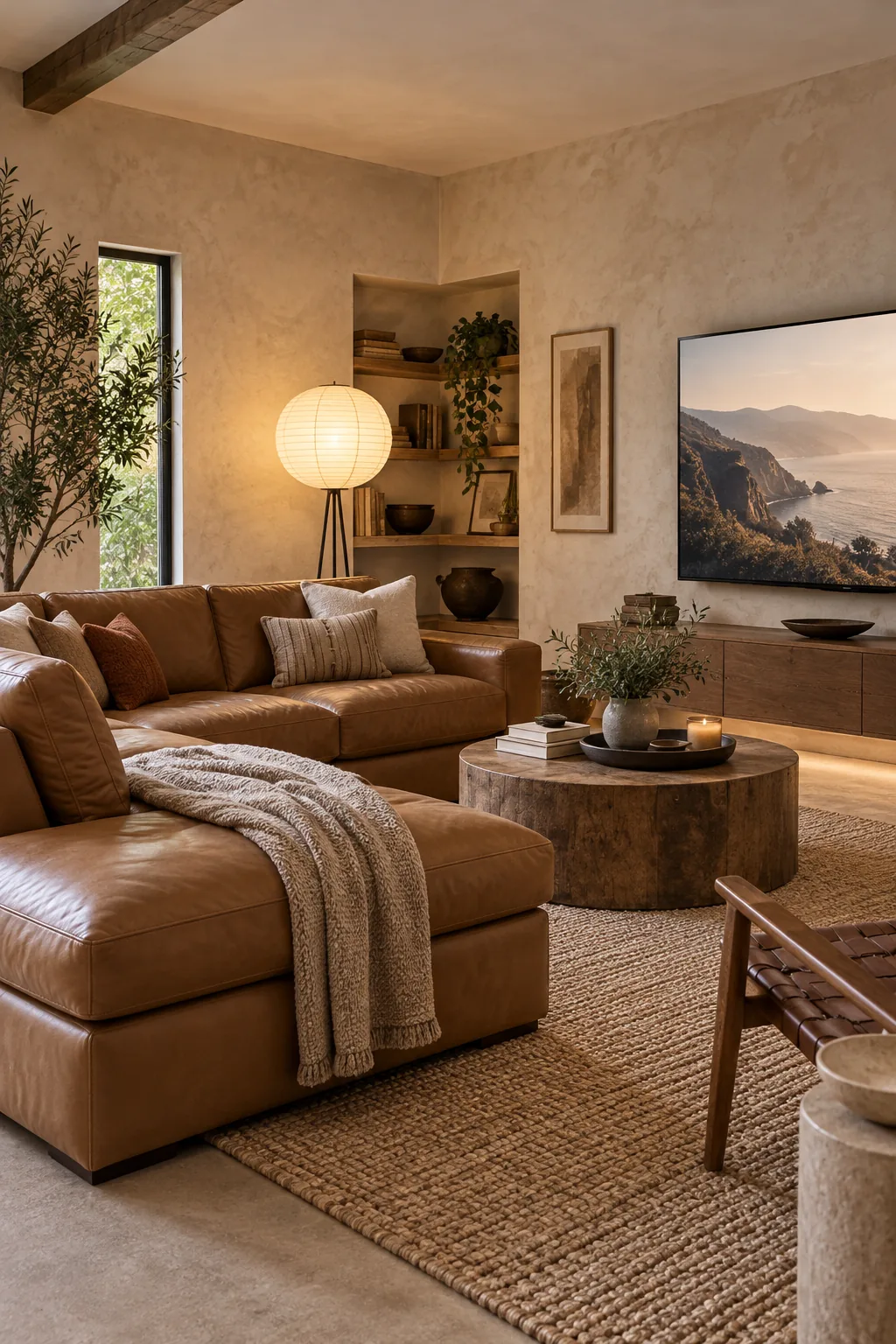
Warm Minimalist Media Room: Textured plaster walls and a low-profile camel leather sectional keep the space bright and grounded for daytime lounging.
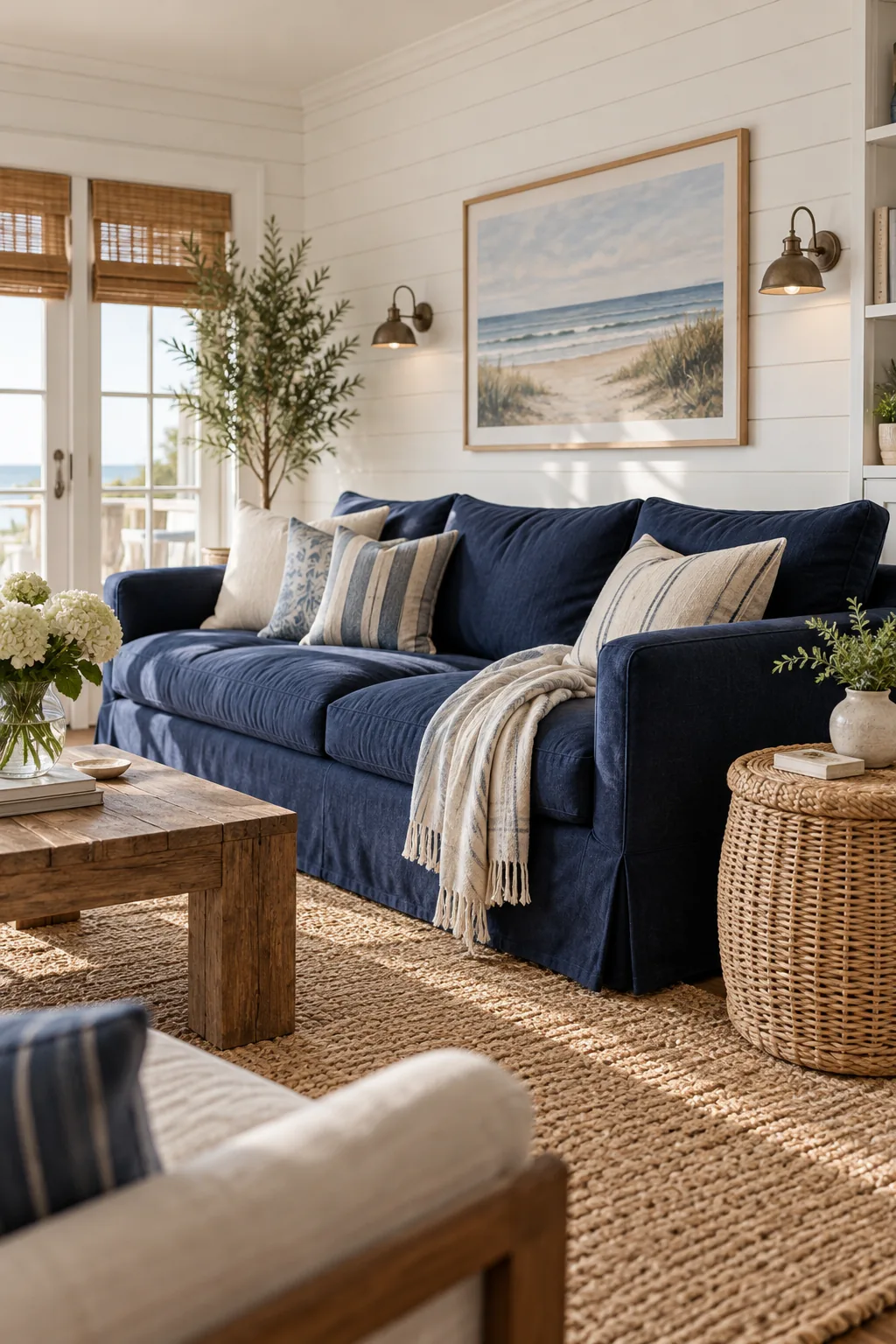
Coastal Sunday Room: Crisp white shiplap and a deep slipcovered navy sofa offer a relaxed, beach-inspired aesthetic that feels effortlessly comfortable.
Your Printable Den Sizing Sheet
Bring all these precise measurements together to create a perfectly ergonomic and cozy lounge space using our printable one-page guide.
Download the complete Den Sizing Sheet to access the TV-size-to-viewing-distance chart, the seat-depth guide, ideal lamp heights, and the step-by-step bias-light setup sequence.