Green Living Room Ideas: The Low-Light LRV & Lighting Guide
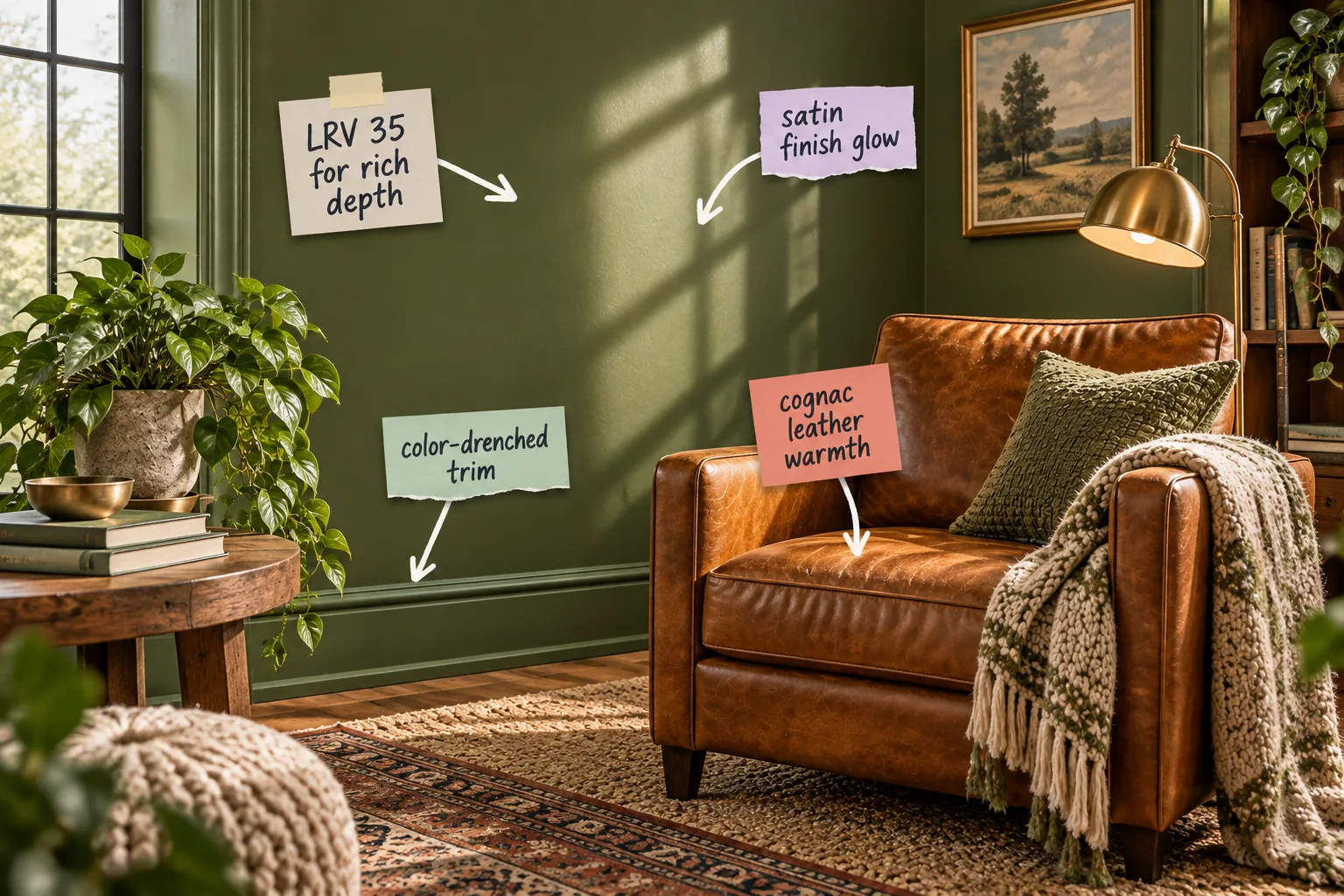
If you are struggling to make a dim space feel intentional, this guide delivers the exact Green Paint LRV & Lighting Cheat Sheet you need. You will be able to select the perfect green paint for a low-light room and balance it with the right finishes, lighting, and textiles.
Understanding LRV 35 in Low Light
Light Reflectance Value measures how much light a color bounces back into your space. In a room with minimal natural light, choosing an olive green with an LRV around 35 provides rich depth without turning the room into a black hole.
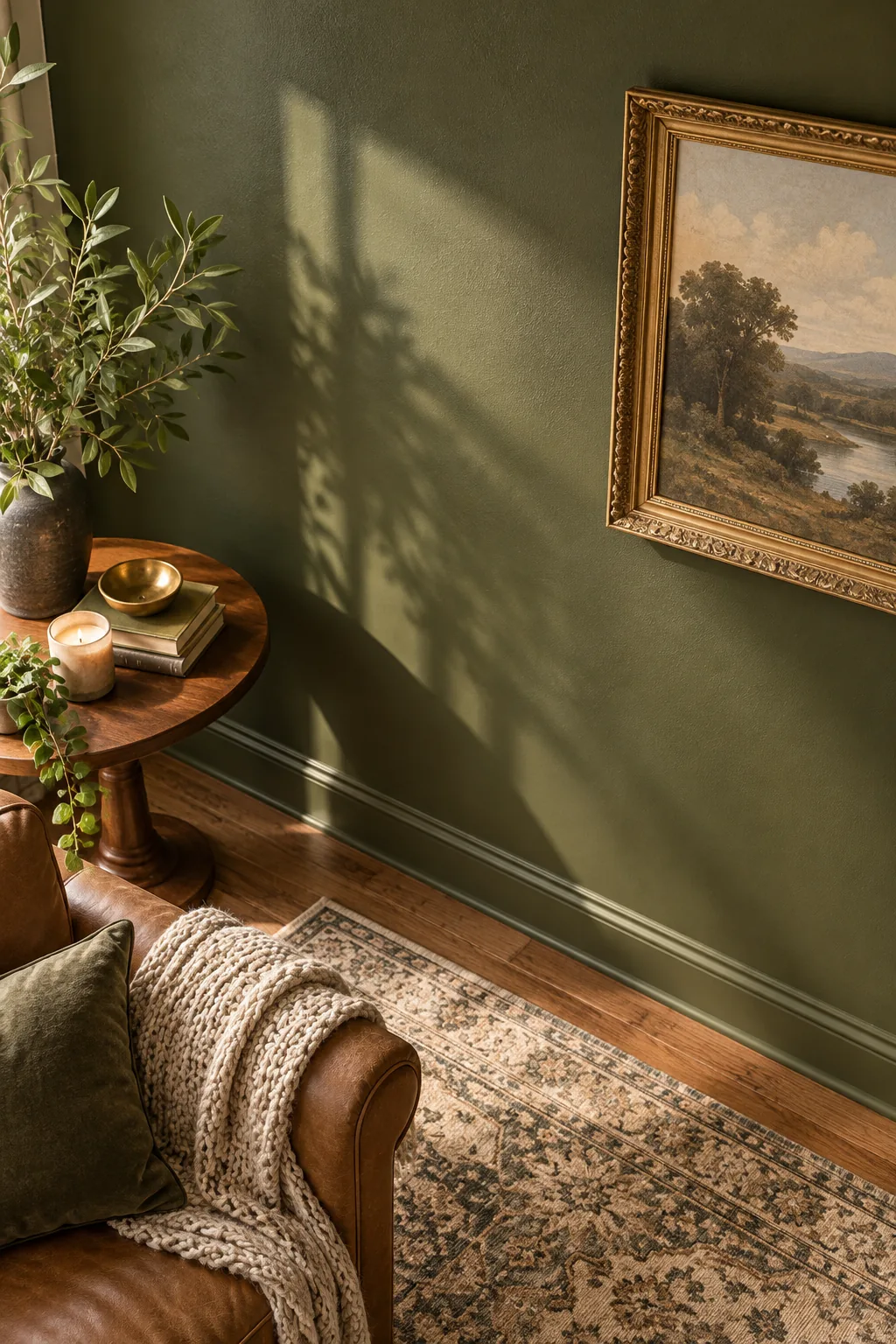
Before committing to your new dark green walls, avoid these common pitfalls that can make a low-light room feel smaller and colder than you originally intended.
Testing Swatches on North-Facing Walls
Always paint large sample squares on the darkest wall of your living room to observe how the color shifts. Check the swatches at dusk and under artificial light to ensure the green retains its warm olive character instead of fading into charcoal.
Choosing a Satin Finish for Glow
Matte paints absorb light, which can make dark colors look muddy in dim spaces. I learned this in my own Denver living room, where switching to a satin finish finally gave the walls that subtle, elegant glow I desperately wanted.
| Paint Finish | Light Reflection | Best Low-Light Use |
|---|---|---|
| Flat/Matte | Minimal | Ceilings only |
| Eggshell | Low | Bedrooms |
| Satin | Medium | Living room walls |
| Semi-Gloss | High | Trim and doors |
Prepping Walls for High-Sheen Dark Paint
Because satin finishes reflect ambient light, they also highlight every bump and imperfection on your drywall. Take the time to patch holes, sand the surface completely smooth, and apply a tinted dark primer to guarantee a flawless, saturated final coat.
Color-Drenching the Baseboards and Trim
Painting your baseboards, window casings, and crown molding the exact same green as the walls is a technique known as color-drenching. Carrying a satin finish across these architectural details reflects ambient light evenly, preventing the dark trim from looking muddy.
Extending the Green to the Ceiling
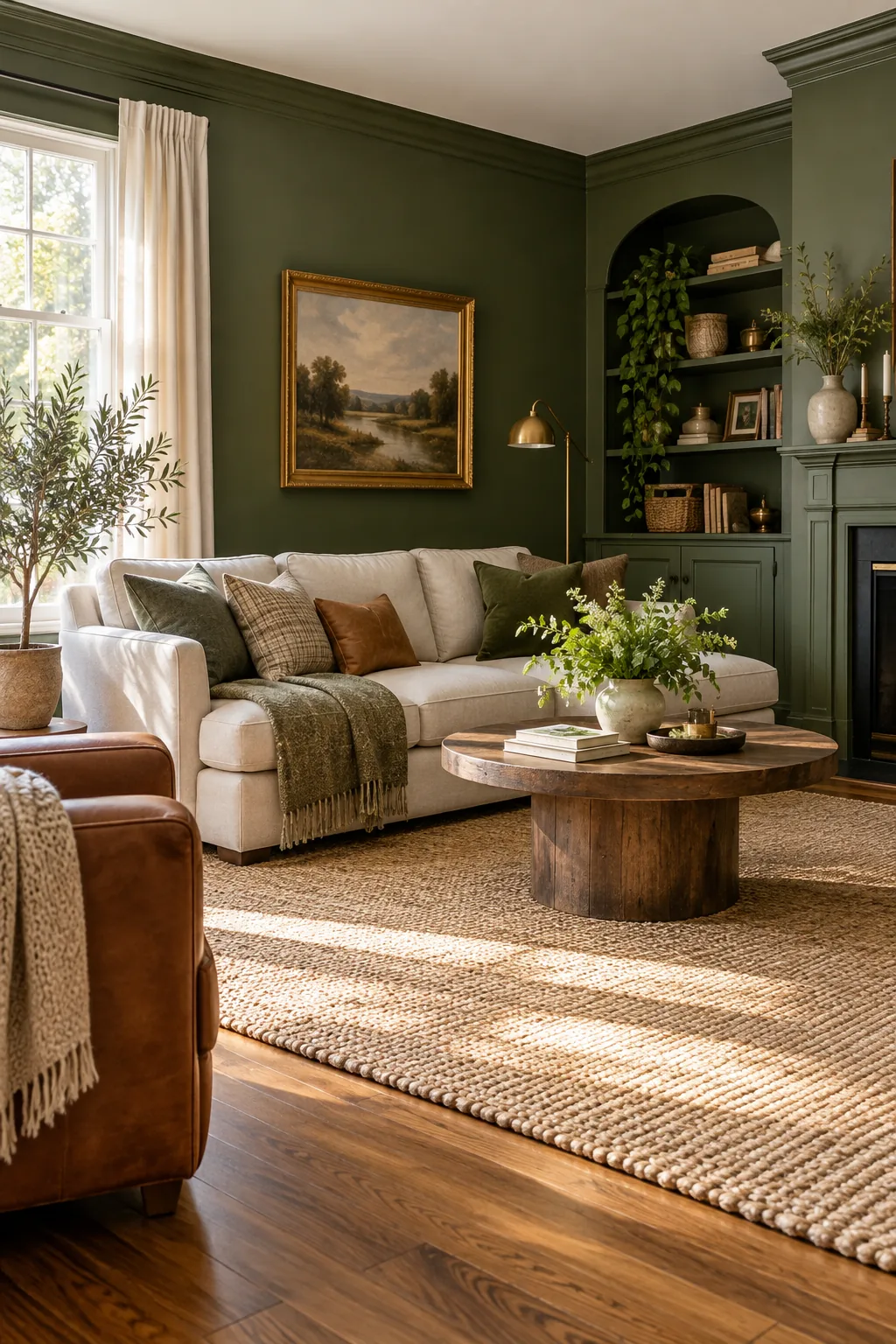
If your room features crown molding, continuing the wall color onto the ceiling creates a cozy, jewel-box effect. Use a flat finish for the ceiling to hide drywall seams while maintaining the unbroken, cocoon-like atmosphere of the dark green palette.
The Low-Light Green Paint & Lighting Cheat Sheet
Balancing dark walls requires specific lighting adjustments to enhance those beautiful olive tones. Use this quick checklist to ensure your lighting scheme properly supports your new dark green walls before you arrange the furniture.
Placing Floor Lamps for Ambient Glow
Tucking a floor lamp into the darkest corner of the room pushes light up the walls and across the ceiling. This upward illumination visually lifts the room, counteracting the heavy, grounding effect of the deep green paint.
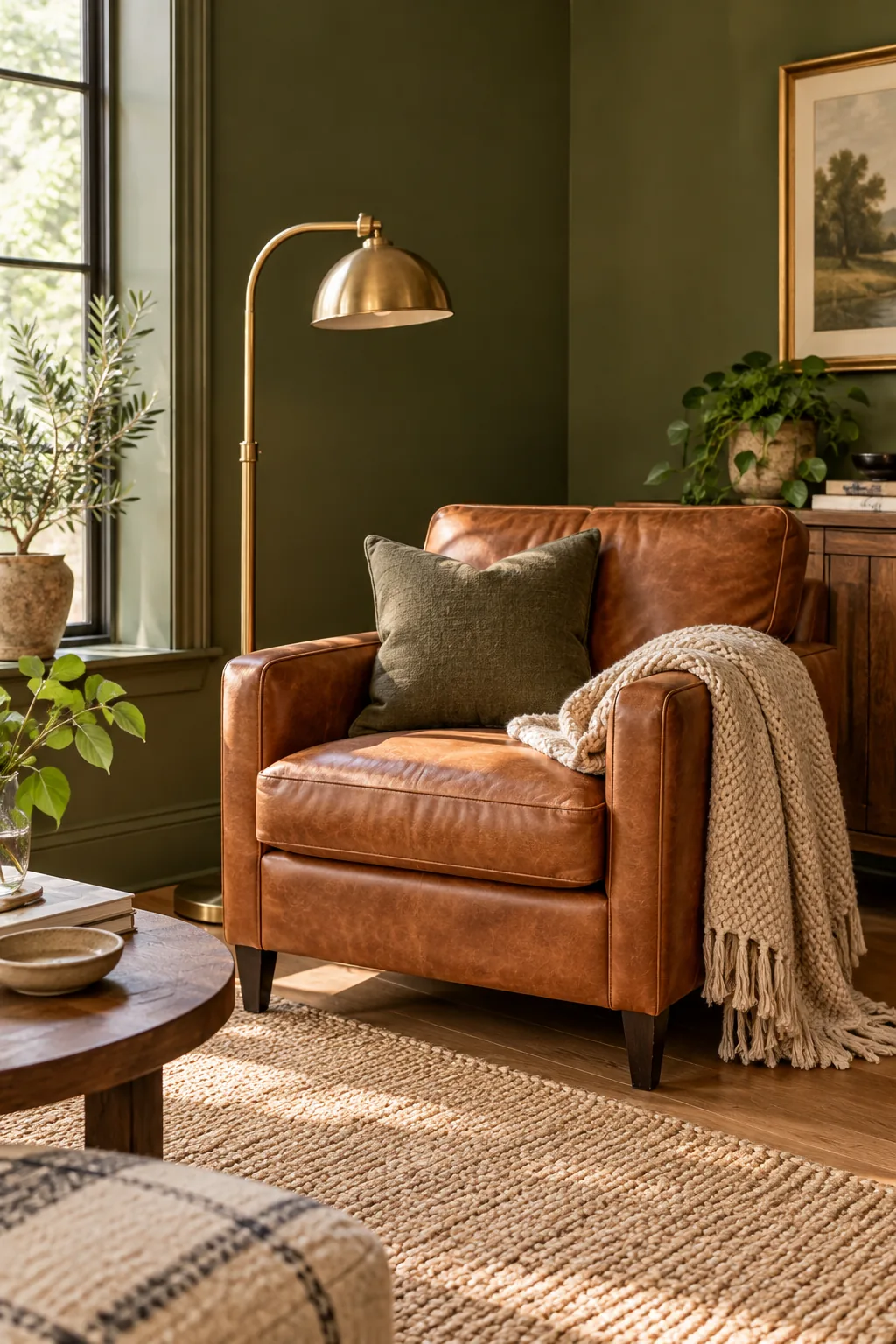
Anchoring the Room with Cognac Leather
Cool-toned shadows inevitably pool in low-light rooms, so you need tactile elements to counteract the chill. I always place a cognac leather armchair in my dark-painted projects because color-drenching the trim eliminates contrasting lines behind it, allowing the furniture to stand out.
Balancing Cool Shadows with Warm Wood Tones
Incorporate walnut or teak side tables to bridge the gap between the green walls and the leather upholstery. The natural grain of the wood adds essential organic warmth, preventing the highly saturated room from feeling too stark or artificial.
Positioning Warm Brass Lighting
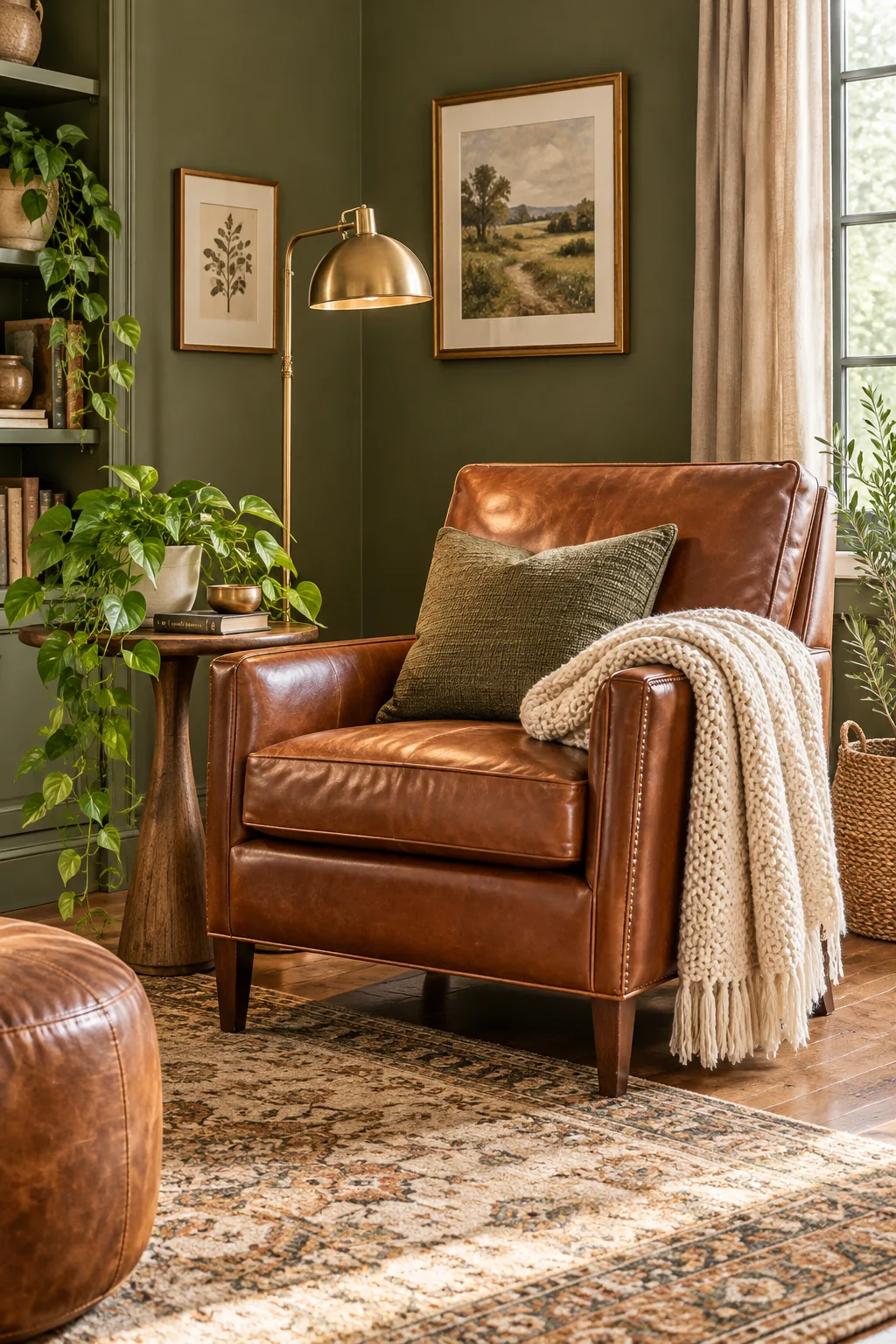
Metallic finishes act as secondary light sources in dark rooms by catching and amplifying whatever ambient light is available. Adding a brass floor lamp next to my reading chair highlights the orange undertones of the cognac leather, providing essential visual warmth.
Reflecting Light with Strategic Mirrors
Positioning a large mirror directly opposite your only window is a classic designer trick for low-light spaces. The reflective surface acts like a second window, bouncing precious daylight back onto the satin green walls and instantly doubling the room’s brightness.
Layering Chunky Knit Textures
Smooth leather and satin walls need tactile contrast to feel truly inviting. Drape a chunky knit throw blanket over the armchair and anchor the space with a heavily textured wool rug to absorb sound and enhance the cozy atmosphere.
Choosing Low-Profile Window Treatments
Heavy drapes block valuable sunlight at the edges of the window frame. Opt for inside-mount Roman shades in a natural linen fabric, which maximize the exposed glass area and allow every possible ray of natural light to enter the room.
4 More Ways to Style a Green Living Room
Explore these distinct variations to find the perfect green palette for your home's unique lighting and architecture.
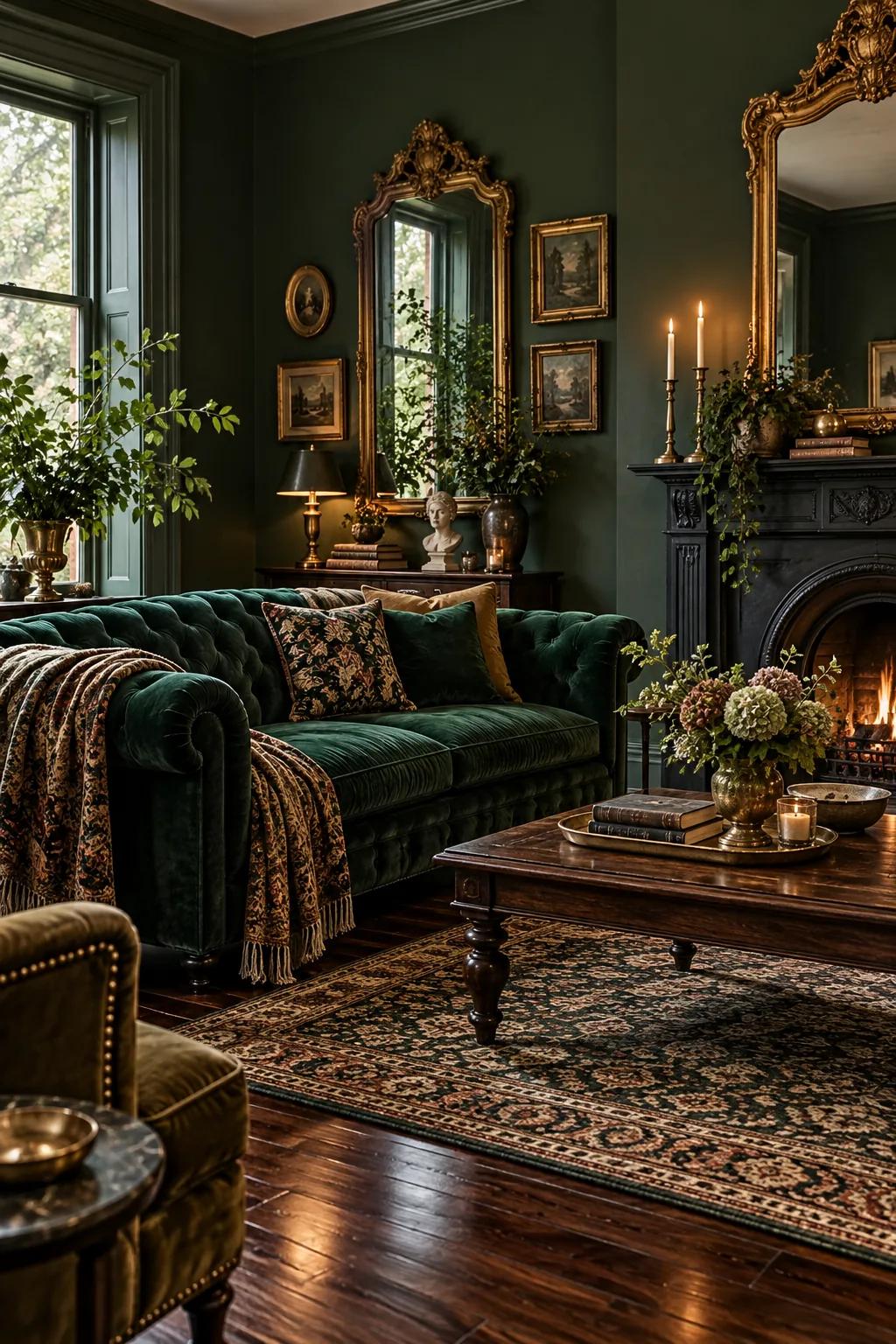
Moody Victorian Emerald: Deep emerald walls paired with velvet upholstery create a dramatic, historical atmosphere perfect for evening entertaining.
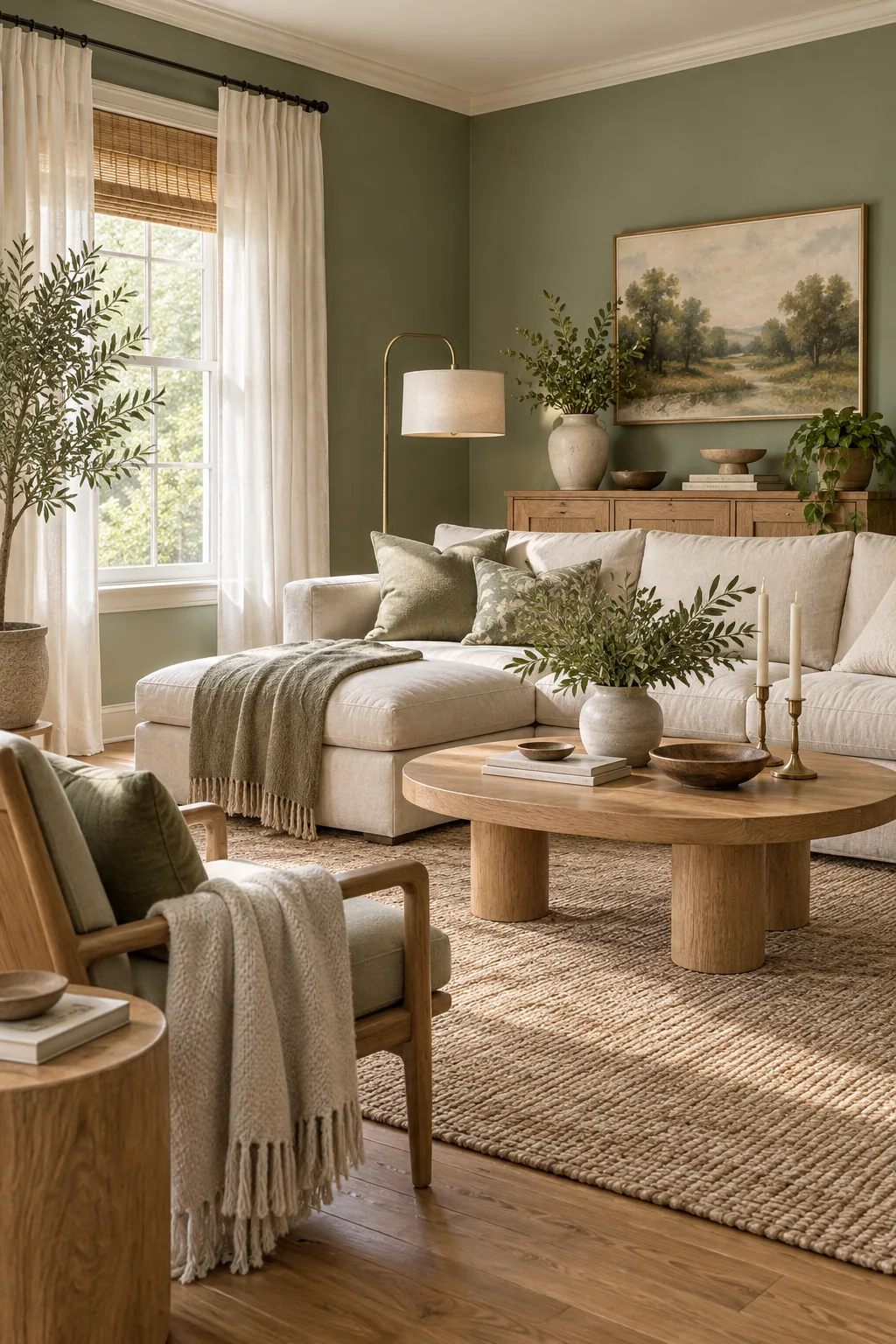
Modern Organic Sage: Soft sage greens mixed with blonde oak and crisp linen keep the space feeling light, airy, and grounded.
Mid-Century Moss: A vibrant moss green backdrop allows warm walnut tones and playful geometric patterns to truly pop.
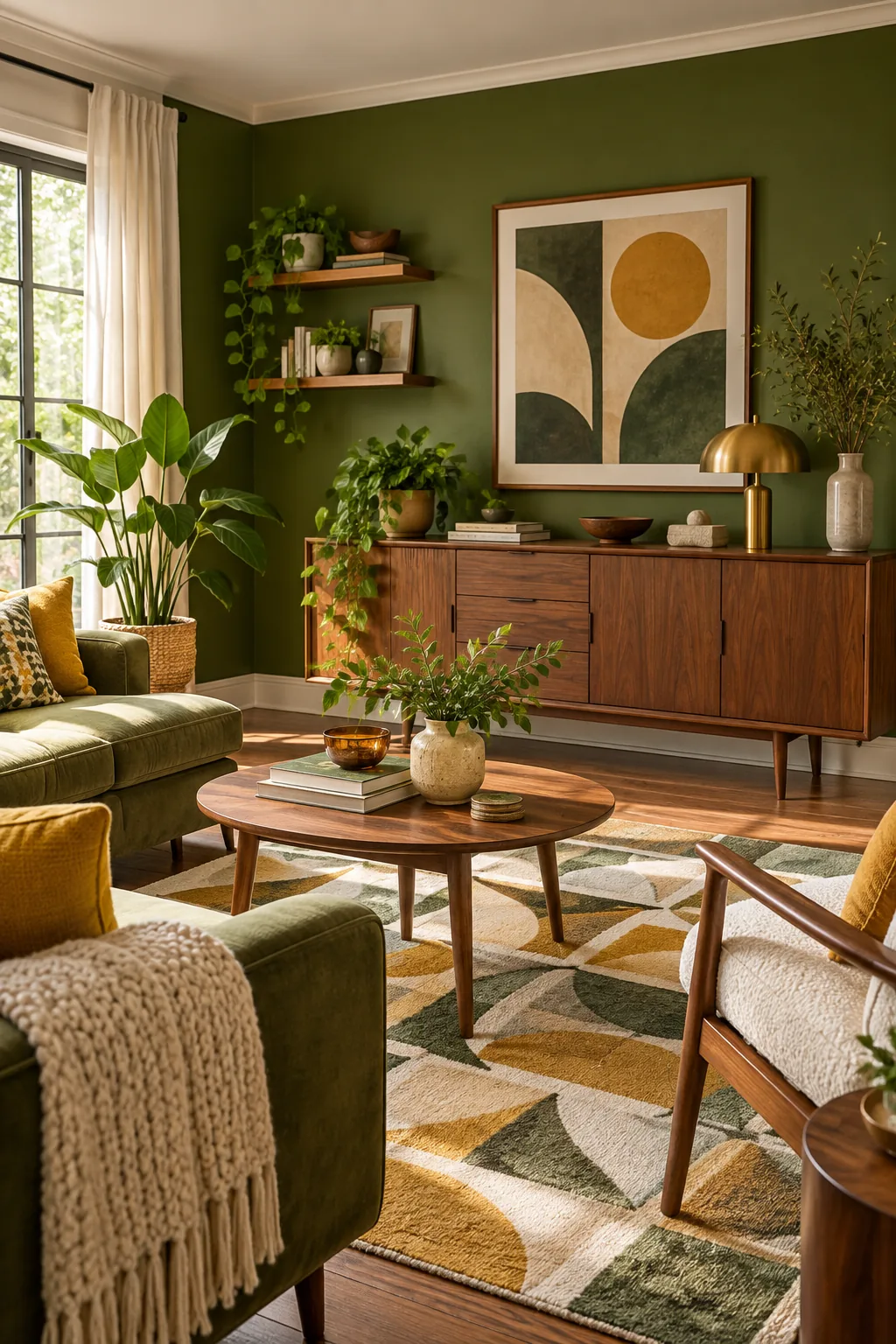
Rustic Cabin Hunter: Muted hunter green perfectly complements rugged textures like exposed stone and distressed leather for a cozy cabin feel.
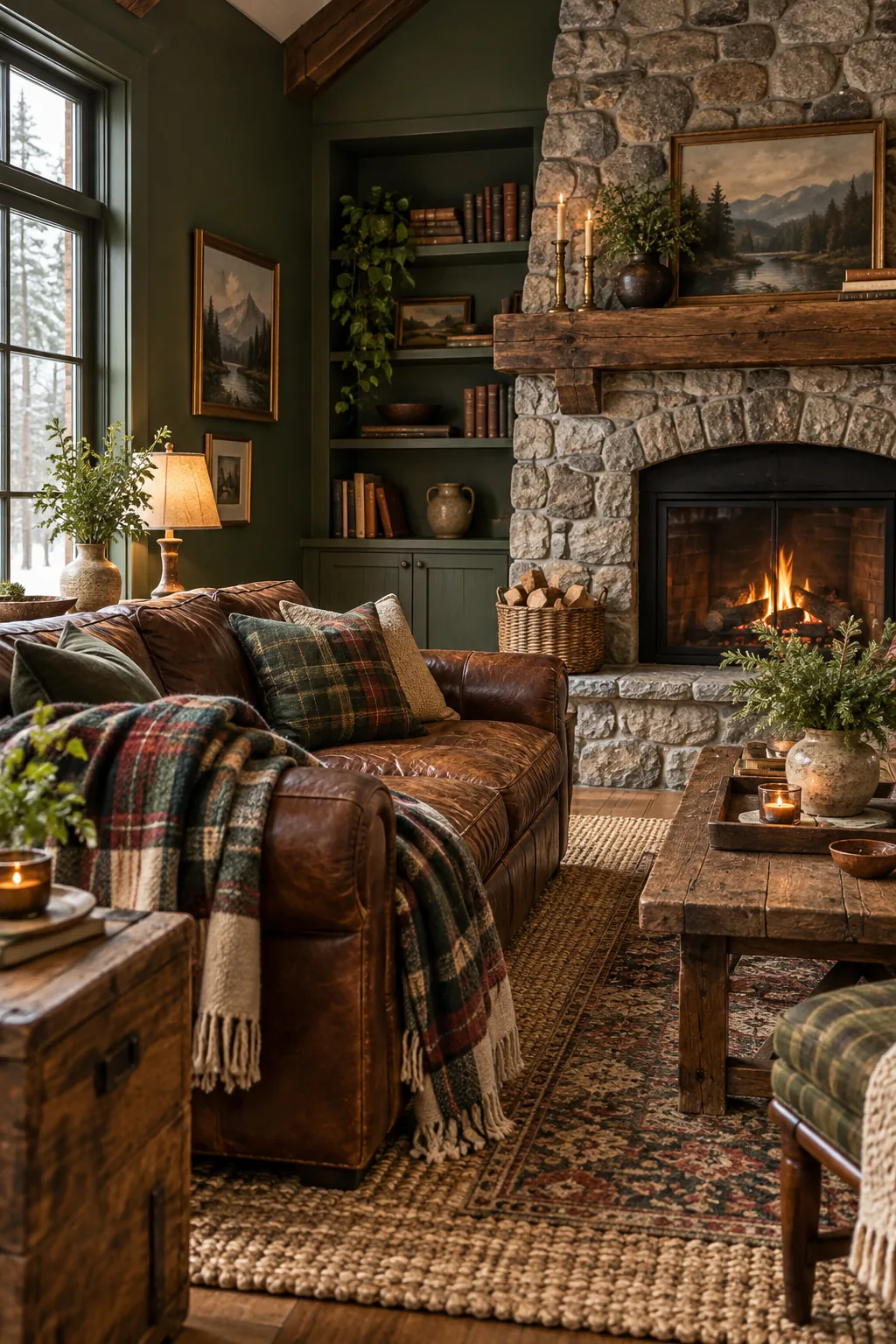
Bringing the Corner to Life with Plants
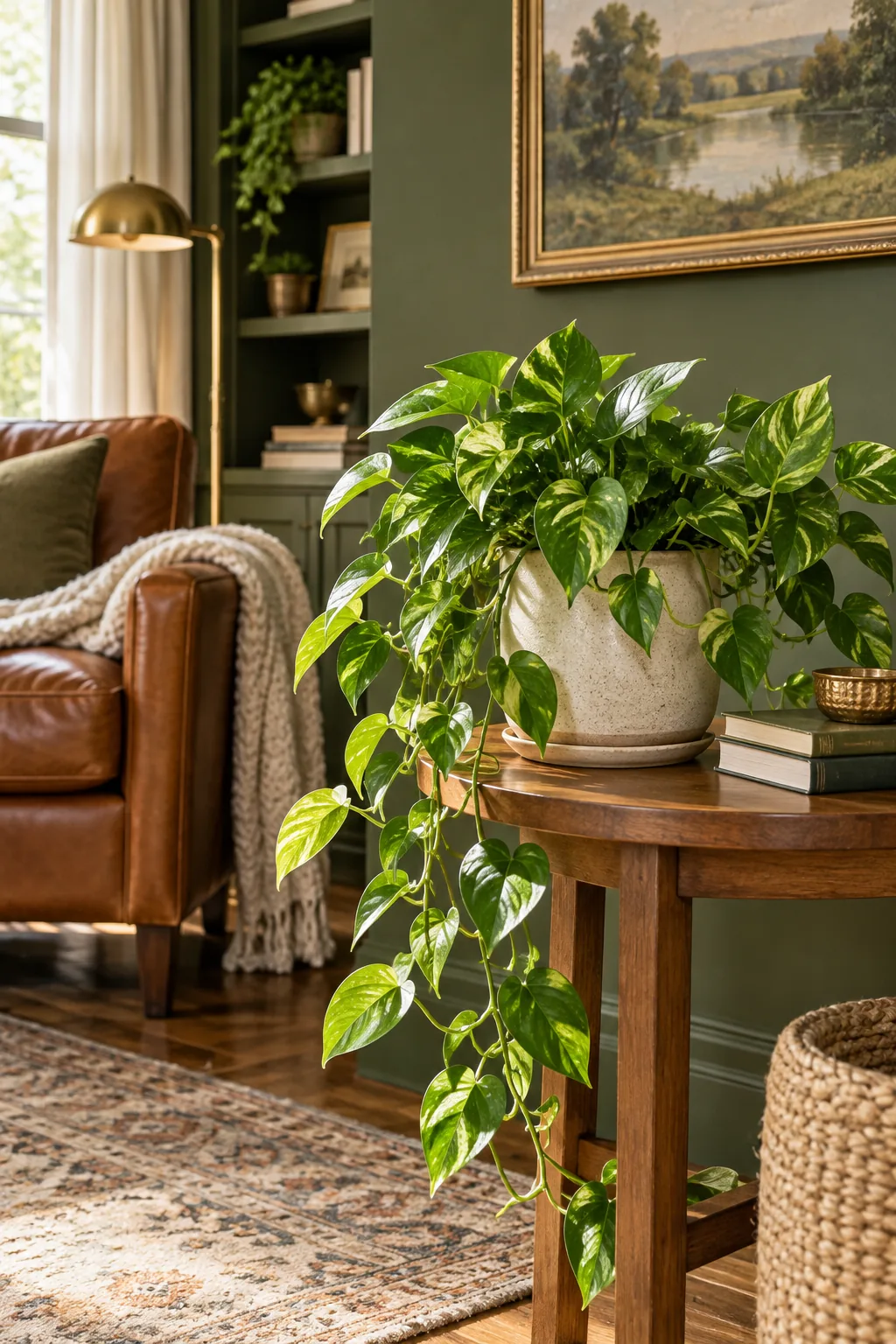
A room dominated by solid colors benefits immensely from organic, irregular shapes. A low-light tolerant plant, such as a trailing pothos, bridges the gap between structured furniture and natural green walls, adding lively movement to a static corner.