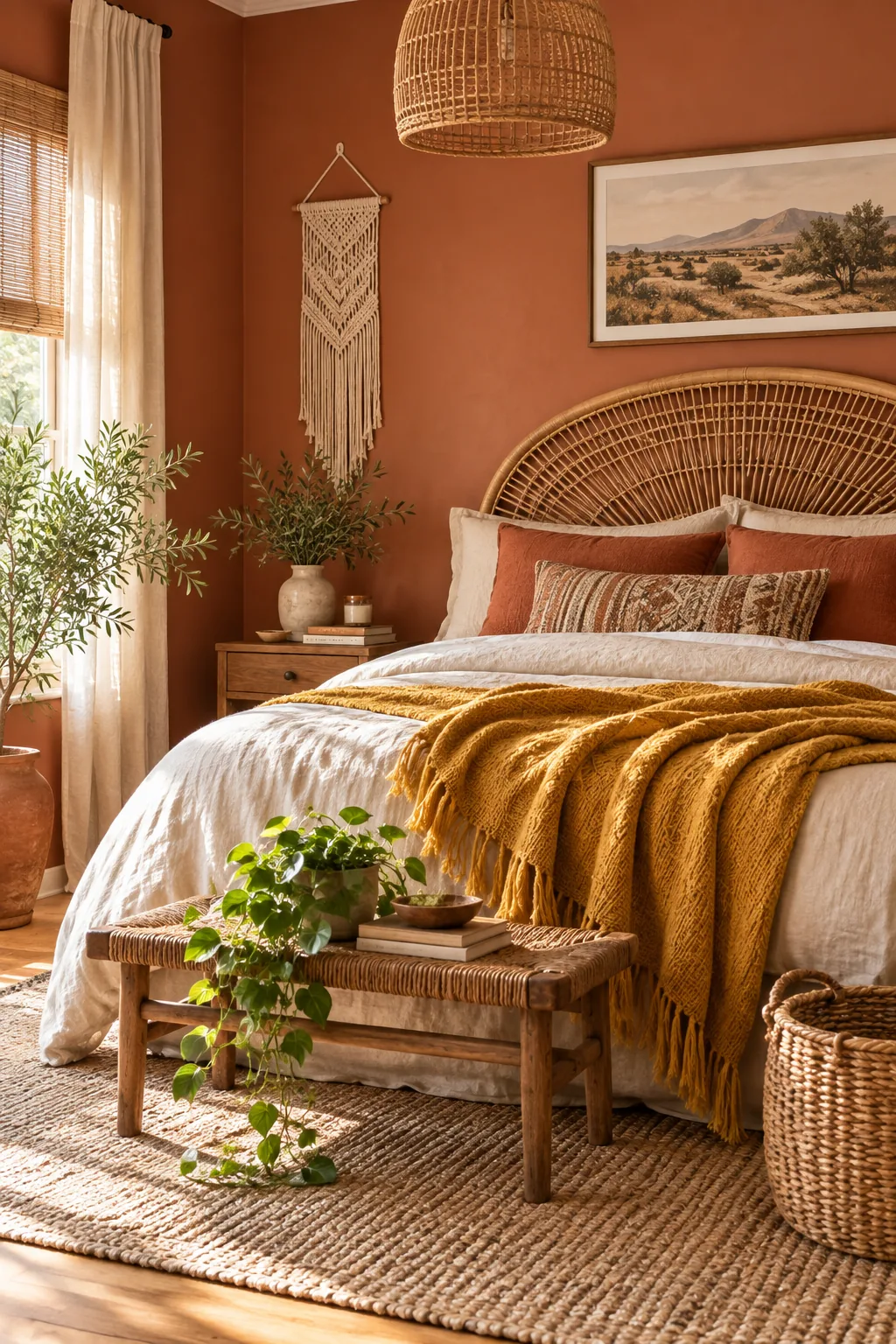
Aesthetic Bedroom Styling Rules (with Measurement Sheet)
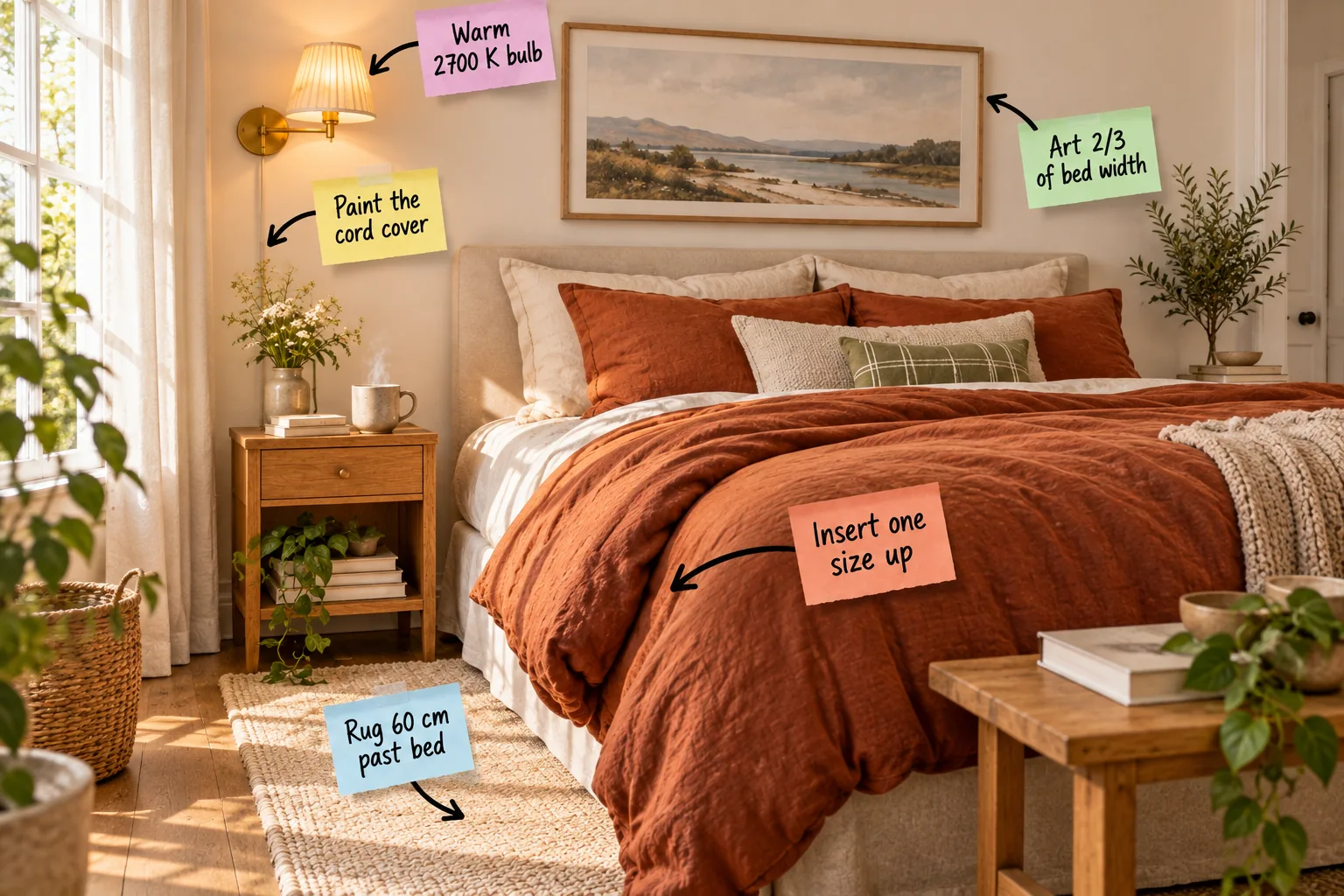
Grab our printable one-page measurement sheet to perfectly calculate your rug sizing, art proportions, and duvet inserts. You will be able to confidently place your grounding elements, hang your art at the right scale, and style a perfectly plump bed using exact numbers.
Grounding the Room with the Right Rug
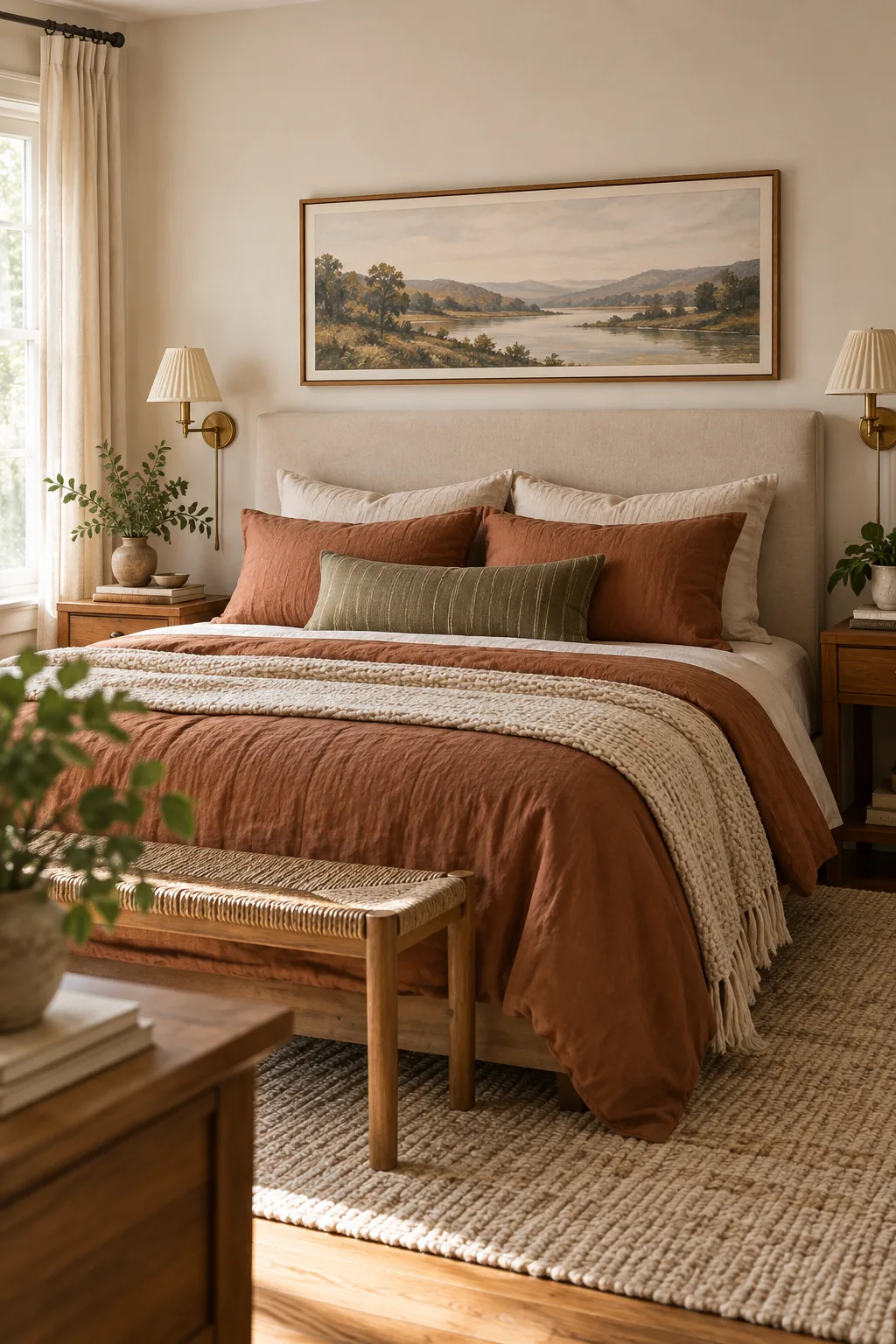
Start by laying down a cream jute-wool rug to anchor the space, ensuring it pulls out at least 60 cm past the sides and foot of the bed frame. This generous border gives your feet a soft landing spot every single morning.
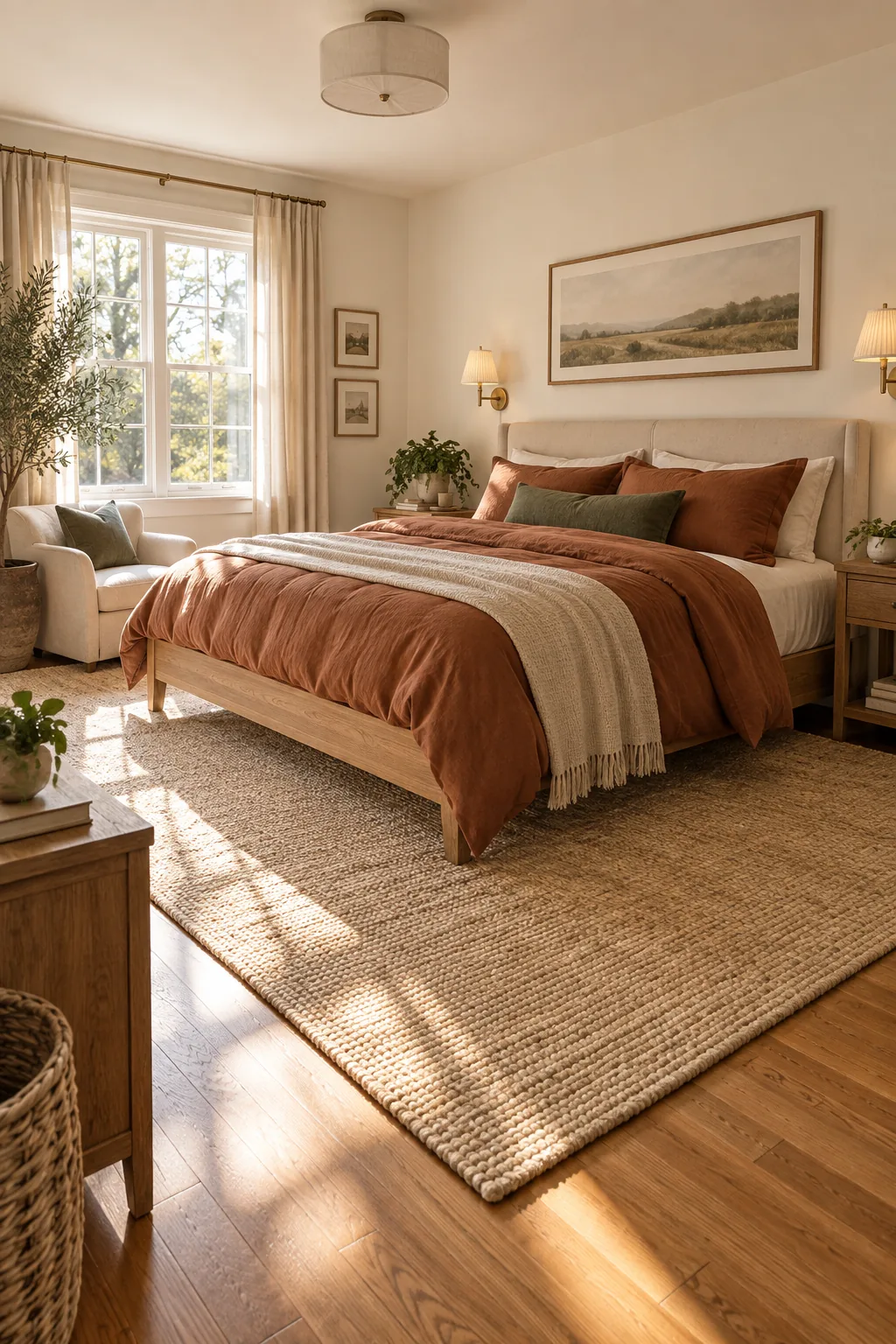
Before rolling out your new jute rug, double-check your floor plan to avoid these frequent spatial errors.
Determining Your Ideal Rug Size
To achieve that generous 60 cm overhang, a queen bed typically requires an 8×10 rug. A king bed demands a 9×12 rug to maintain the correct visual proportions and prevent the furniture from feeling crowded.
Selecting the Best Rug Material
When choosing a bedroom rug, prioritize materials that feel soft under bare feet. A blend of natural jute and soft wool offers the durability of natural fibers while maintaining a plush, comforting texture that synthetic materials simply cannot match.
Calculating Your Room Clearances
In interior design, empty space is just as important as the furniture itself. I always recommend leaving a minimum of 90 cm of clear walkway around the sides and foot of the bed to maintain an effortless, uncrowded traffic flow.
Placing a Bench at the Foot of the Bed
If you have the floor space, adding a woven leather or oak bench at the foot of the bed provides a practical spot to put on shoes. It also creates a visual step-down from the high mattress to the flat rug.
Blending Textures for Visual Warmth
A bedroom can quickly feel sterile if you rely entirely on flat surfaces. Introducing a heavily textured jute-wool blend against smooth hardwood floors creates a necessary tactile contrast that visually grounds the room and absorbs unwanted echoes.
Selecting the Bed Frame Style
Your bed frame dictates the visual weight of the entire room. Choosing a low-profile oak frame establishes a grounded, earthy foundation that pairs beautifully with natural linens, reflecting a highly balanced approach to modern bedroom design.
Setting Up the Nightstand Zone
Position an oak nightstand next to the bed to hold your morning coffee, using the mattress-top method. Choose a surface that sits level with or slightly below your mattress for the most comfortable ergonomic reach.
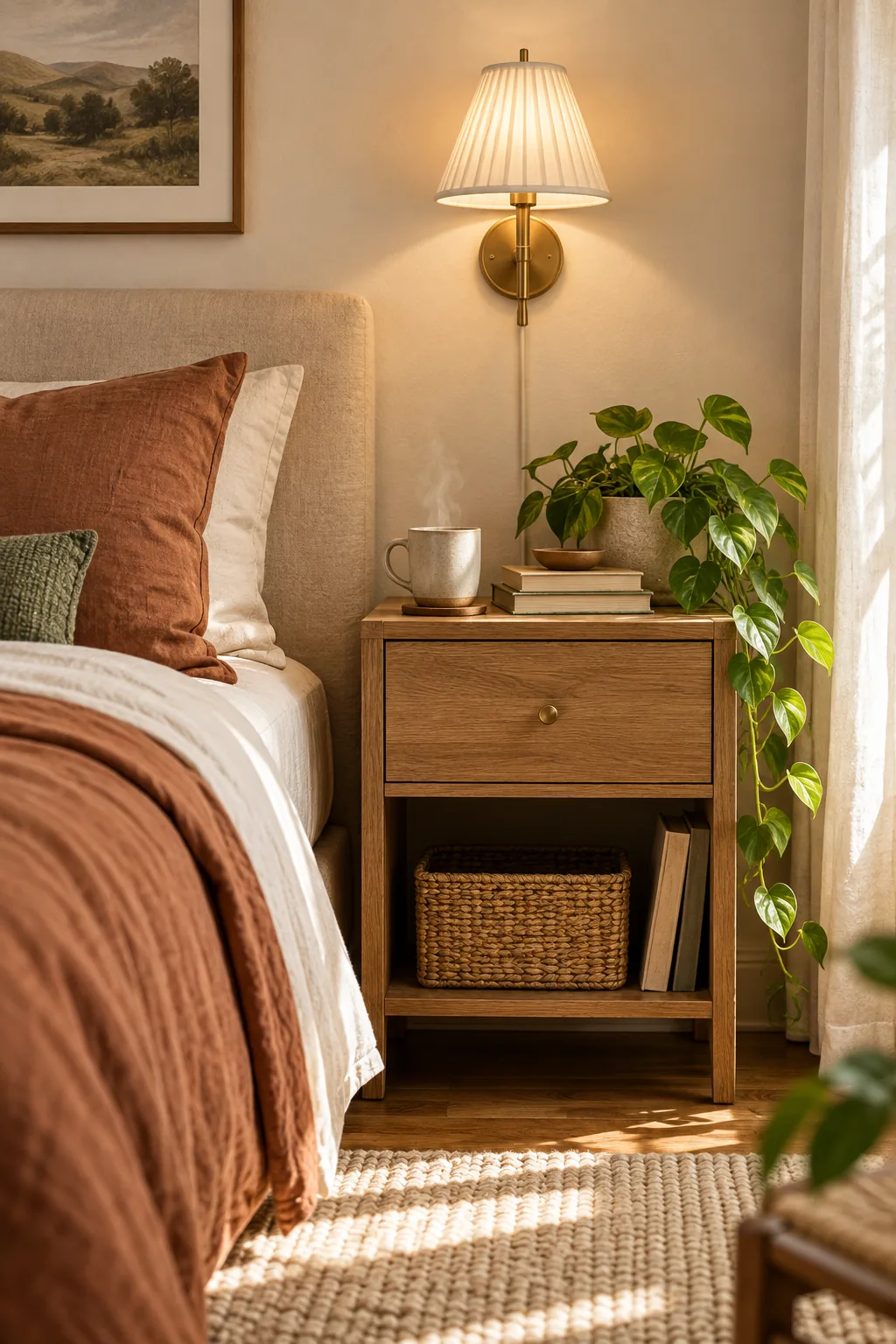
Keeping the nightstand surface clear of unnecessary clutter ensures you always have immediate access to your current book, a glass of water, and your reading glasses before going to sleep.
Balancing Scale Beside the Bed
Your nightstand width must visually balance the size of your mattress. A standard queen bed pairs beautifully with a 50 to 60 cm wide nightstand, while a larger king bed requires a wider 70 to 80 cm table to anchor the extra width.
Incorporating Organic Elements
Introduce a trailing green plant on your nightstand to breathe life into the room. The organic shapes of the leaves provide a necessary visual break from the rigid, straight lines of the framed artwork and the structured bed frame.
Managing Cords Behind the Nightstand
Beyond the visible sconce wires, your nightstand area likely hides phone chargers and lamp cords. Use adhesive cable clips routed along the back edge of the nightstand to keep these essential wires accessible but completely out of sight.
Choosing the Perfect Bedroom Lighting
Install a plug-in wall sconce above the nightstand to free up surface space. Skip standard daylight bulbs in favor of a warm 2700 K bulb inside the pleated linen shade to create a cozy, inviting atmosphere before the sun fully rises.
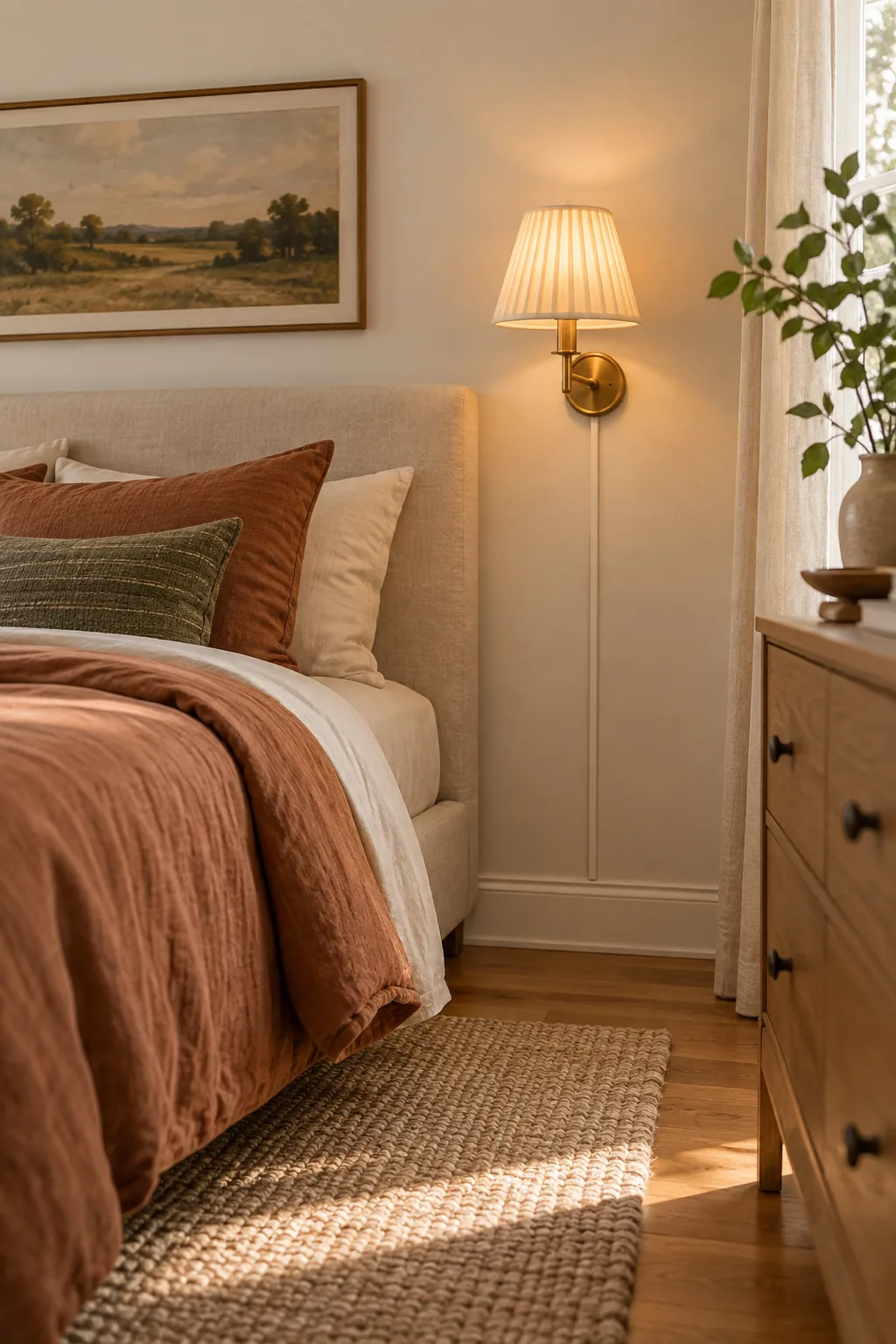
Lower color temperatures naturally signal to your brain that it is time to wind down, making these soft bulbs an essential component of healthy sleep hygiene and evening relaxation.
Establishing the Right Sconce Height
To avoid glaring light in your eyes while reading in bed, mount your wall sconces so the bottom of the pleated shade hovers exactly 40 to 45 cm above the mattress top. This measurement ensures the light casts downward perfectly.
Hiding Sconce Cords in Plain Sight
Plug-in sconces are renter-friendly, but in my own Denver bedroom, a dangling black wire completely ruined the tranquil aesthetic until I learned to camouflage it. Run the wire through a slim paintable plastic cord cover, painted the exact same warm white as your walls.
Follow this reliable sequence to ensure the wall paint permanently adheres to the smooth plastic channel without chipping or peeling over time.
- Lightly scuff the plastic cover with fine-grit sandpaper.
- Wipe away the plastic dust with a damp microfiber cloth.
- Apply one coat of high-adhesion bonding primer.
- Brush on your matching wall paint and let it dry.
- Snap the painted cover over the sconce cord.
Selecting a Calming Wall Color
A warm white paint with subtle yellow undertones perfectly complements the 2700 K lighting and the natural oak furniture. This creates a cohesive backdrop that makes the room feel intentionally styled rather than starkly modern.
Sizing Artwork Above the Headboard
I see clients constantly hang tiny frames over massive beds, so I always enforce the 2/3 bed width rule. This ensures a single wide framed landscape print serves as a balanced focal point without looking overwhelmed.
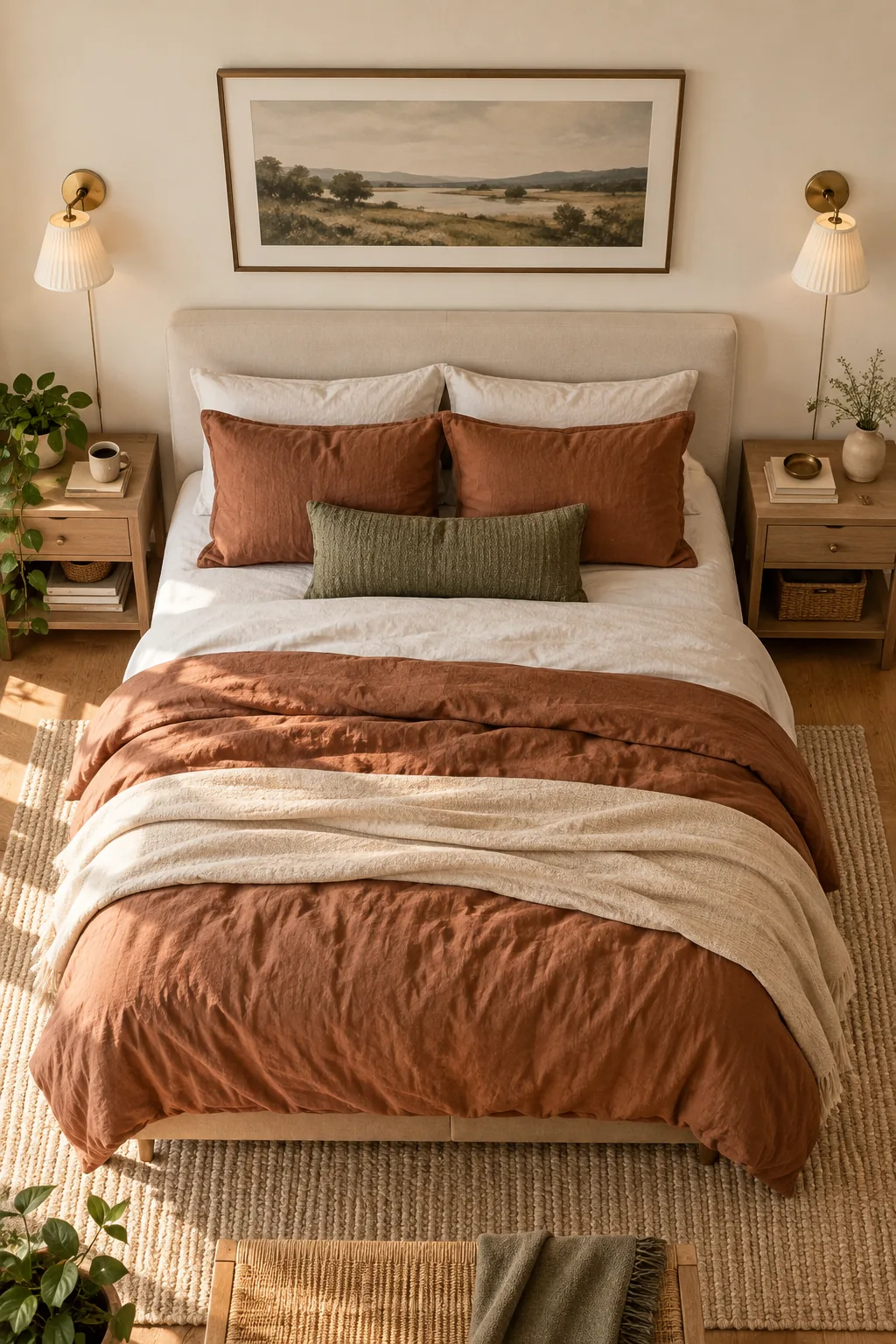
Leaving ample breathing room between the outer edge of the frame and the bedside tables prevents the wall from feeling cluttered and keeps the visual focus squarely on the art itself.
Hanging the Art at the Correct Height
Position the bottom edge of your chosen artwork roughly 15 to 20 cm above the headboard. This tight spacing visually connects the frame to the bed, forming a single cohesive design unit rather than two floating elements.
Framing Choices for Bedroom Art
Opt for a slim oak or matte brass frame to echo the materials used in your nightstands and lighting fixtures. Consistency in your metallic and wood finishes unifies the room and reinforces a calm, deliberate aesthetic.
Selecting Calming Art Subjects
The artwork above your bed sets the psychological tone for the room. Opt for abstract landscapes, muted botanical prints, or minimalist line art rather than high-energy urban photography to encourage a restful, meditative state of mind.
Your Bedroom Styling Measurement Sheet
Here is the complete printable breakdown for your bedroom styling. It gathers every essential dimension into one quick reference guide so you can measure with confidence and avoid costly spatial mistakes.
| Styling Element | Rule or Measurement |
|---|---|
| Rug Overhang | Extend 60 cm past sides and foot of bed |
| Nightstand Height | Level with or slightly below mattress top |
| Sconce Height | 40 to 45 cm above the mattress top |
| Art Width | Roughly 2/3 of the bed’s total width |
| Duvet Insert | One standard size larger than cover |
Selecting the Right Bed Linens
Investing in high-quality rust linen sheets establishes a breathable, temperature-regulating foundation for your sleep setup. The natural texture of washed linen introduces a relaxed, organic feel that perfectly balances the structured oak bed frame.
Layering the Pillows for a Lived-In Look
Arrange your pillows to look inviting rather than stiff by stacking your functional sleeping pillows against the headboard first. Next, layer the rust linen shams directly in front to build depth.
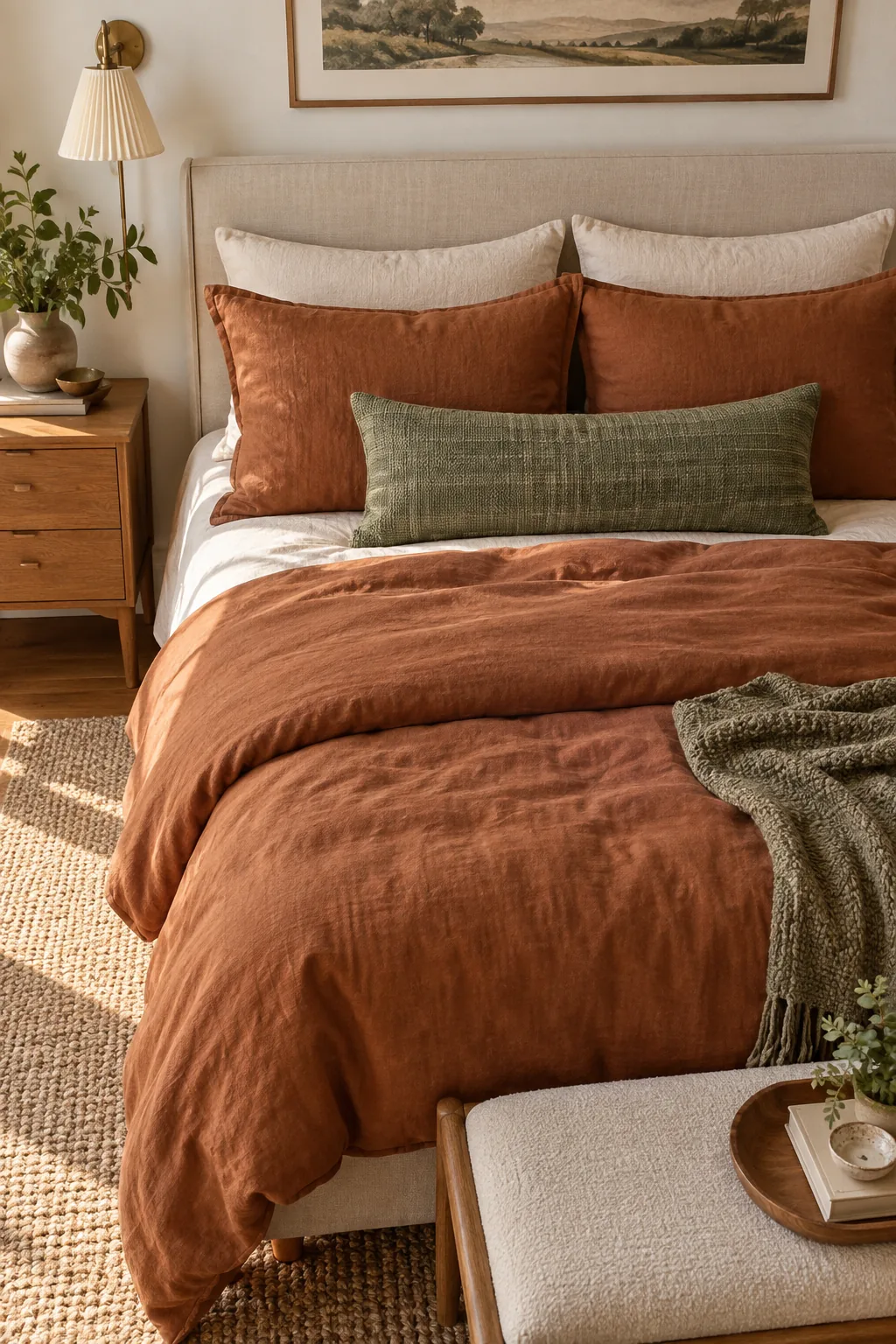
Finish the arrangement with a textured lumbar pillow to tie the earthy color palette together without requiring a dozen separate decorative cushions that end up on the floor.
Introducing Accent Colors Thoughtfully
A muted olive green or deep terracotta lumbar pillow provides just enough contrast against the neutral linens. Limiting your accent colors to a single cohesive palette prevents visual chaos and maintains a serene environment.
Choosing a Supportive Mattress
Before finalizing your bedding layers, ensure your mattress provides adequate support for your sleeping position. A medium-firm hybrid mattress offers the ideal combination of pressure relief and structural integrity, keeping your spine aligned throughout the night.
Choosing the Right Duvet Weight
To maintain that billowing effect year-round without overheating, select a lightweight or all-season down alternative insert. This provides the necessary volume to fill out the linen cover while allowing sufficient airflow during warmer summer months.
Completing the Room with Window Treatments
Frame your beautifully styled bed with floor-to-ceiling linen curtains. Hanging the curtain rod close to the ceiling and extending it past the window frame makes the room feel taller and bathes your aesthetic bedroom in soft, diffused morning light.
Maximizing Natural Light
If your bedroom features large windows, position your bed to take full advantage of the morning sun. Allowing natural light to wash over the textured linens and warm oak furniture instantly makes the space feel larger and more inviting.
Styling the Dresser Surface
Treat your dresser as a secondary focal point by anchoring it with a round mirror to break up the room’s straight lines. Keep the surface minimal, displaying only a beautifully designed jewelry box and a single ceramic vase.
Achieving the Billowing Duvet Effect
The secret to a plump, luxurious bed that looks amazing before coffee is the filling. Always buy your duvet insert one size up from your duvet cover to force the fabric to puff heavily over the sides.
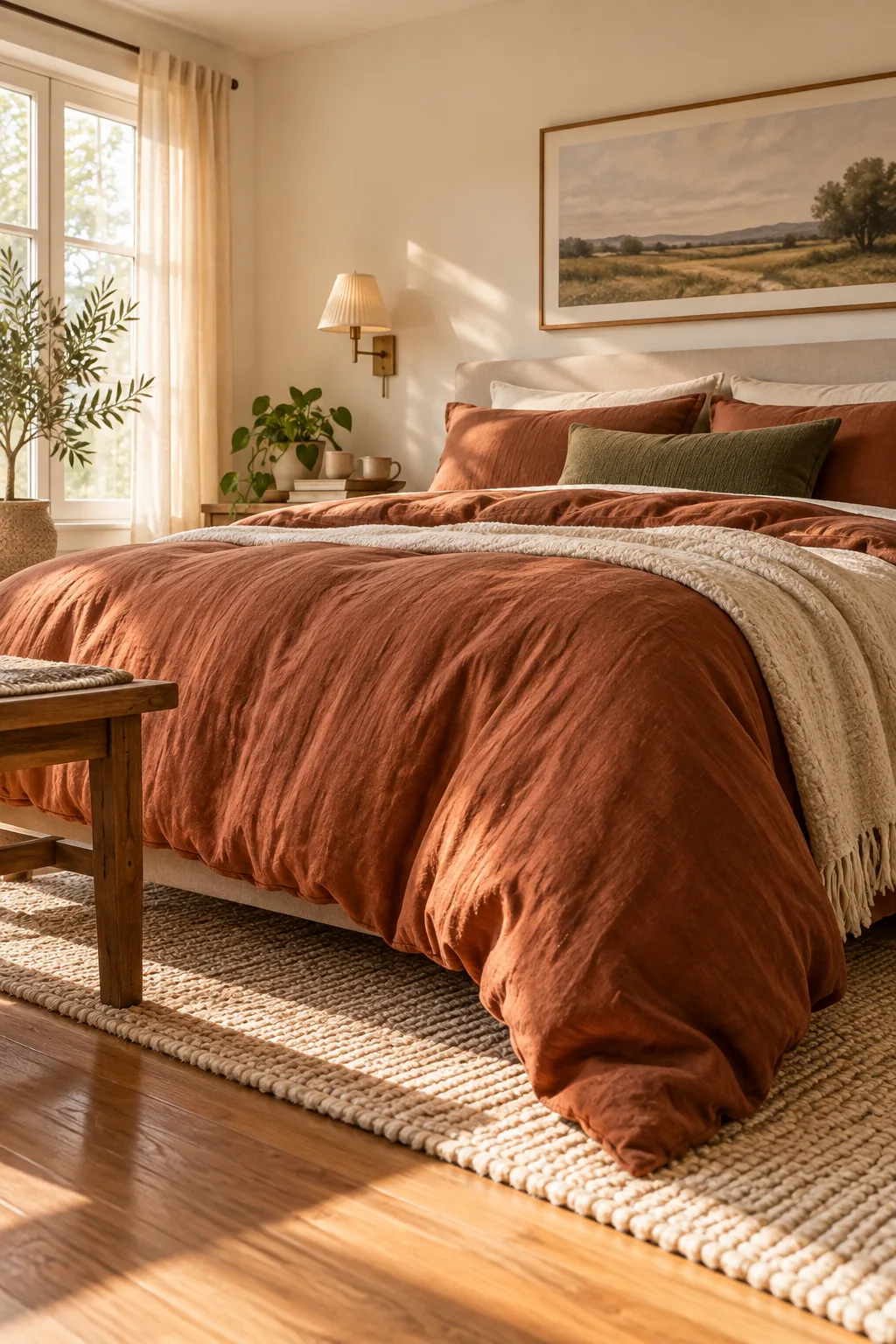
An oversized insert provides that luxurious hotel feel, but it requires a little extra security to stay perfectly in place throughout the night.
4 Aesthetic Bedroom Looks to Inspire Your Space
Choose your favorite aesthetic and apply these exact styling rules to bring it to life.
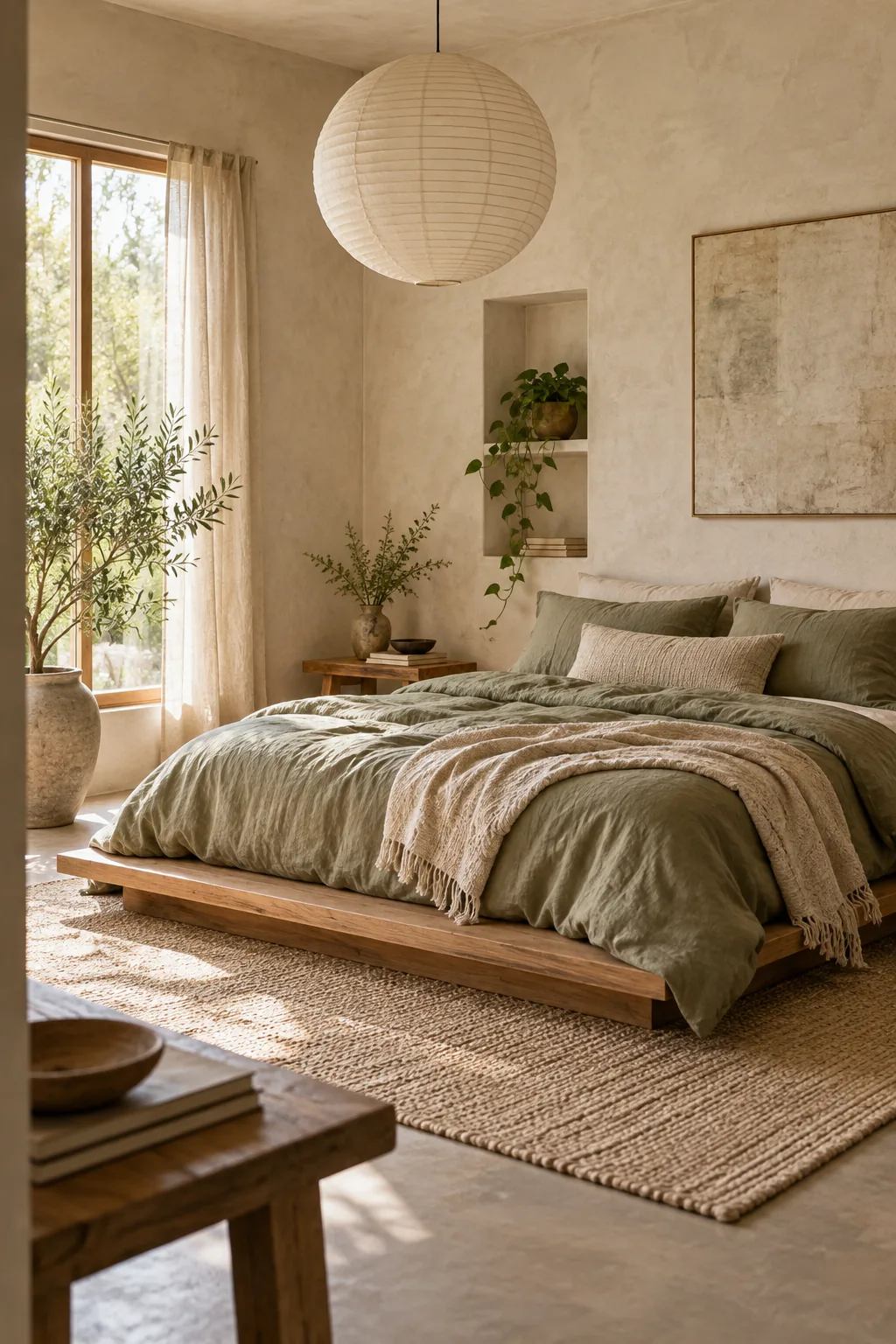
Minimalist Wabi-Sabi in Sage: Embrace imperfection with textured plaster walls and a low-profile platform bed that keeps the room feeling airy.
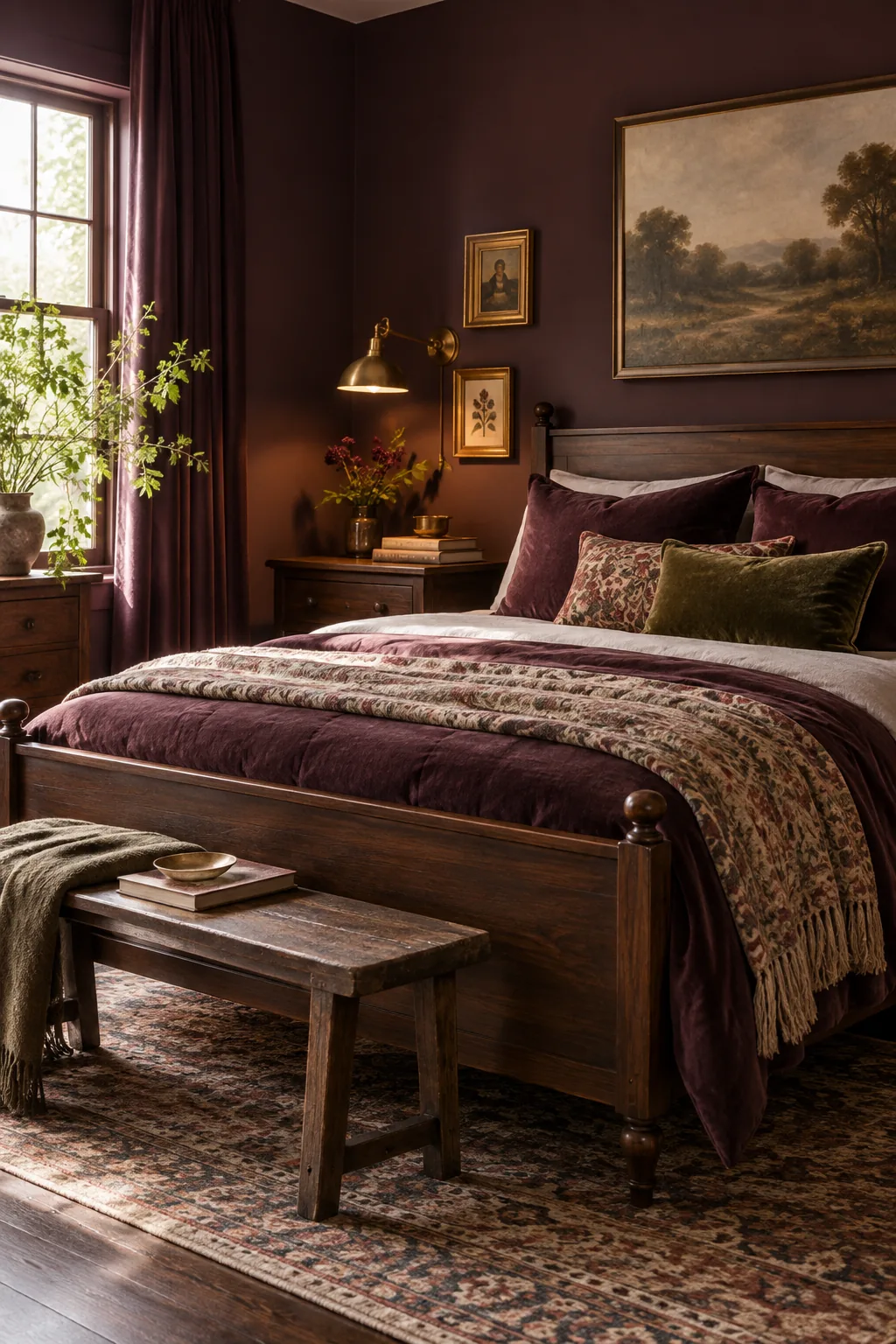
Moody Vintage in Deep Plum: Create a dramatic, cocoon-like atmosphere by pairing rich plum paint with dark walnut wood and velvet textures.
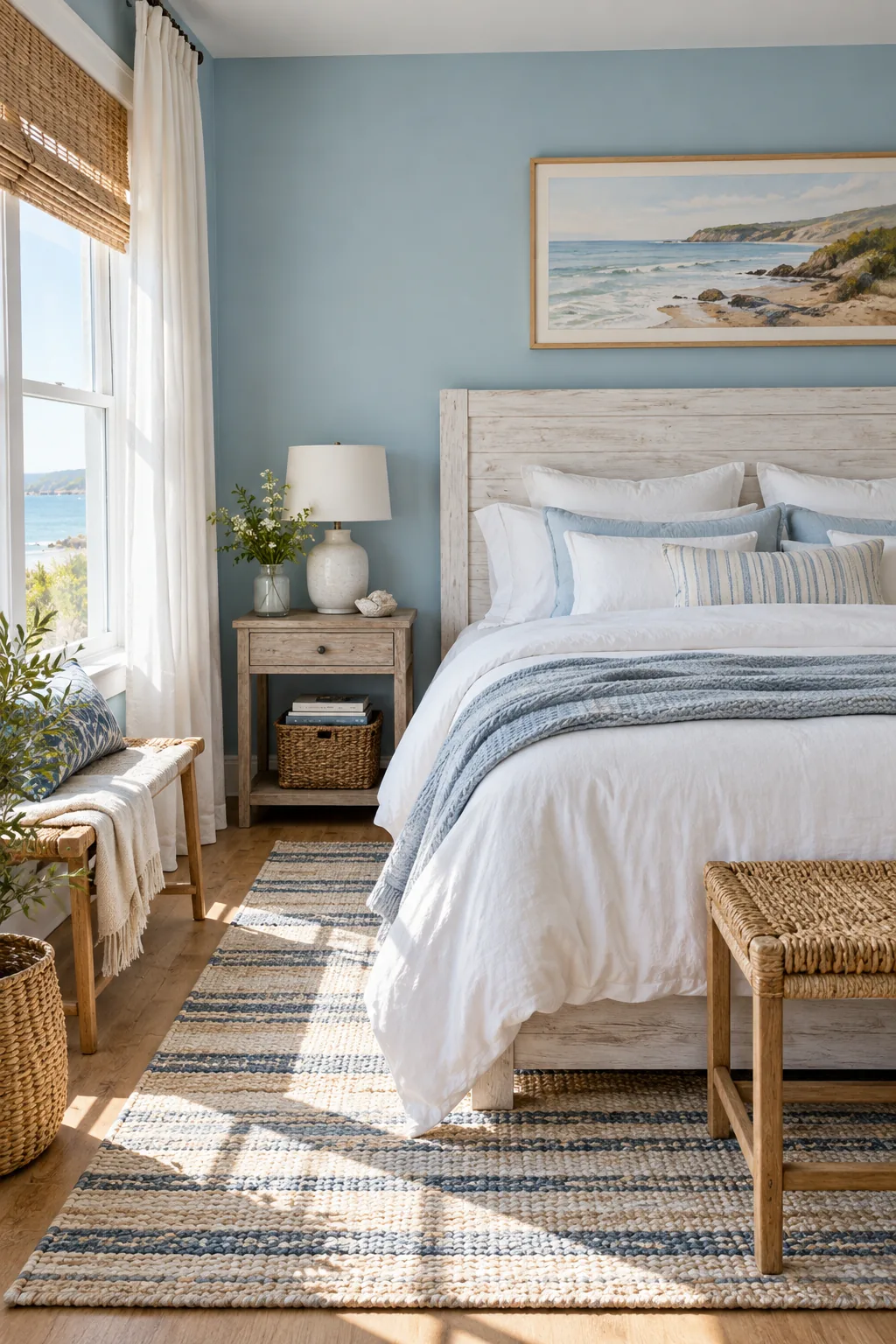
Coastal Breezy in Light Blue: Bring the beach indoors using crisp white cotton sheets, light blue tones, and heavily textured whitewashed wood.
Earthy Boho in Warm Terracotta: Layer natural rattan furniture against warm terracotta walls for a grounded, bohemian space full of life.