
First Birthday Gift Guide: Tracking Push Walker Longevity
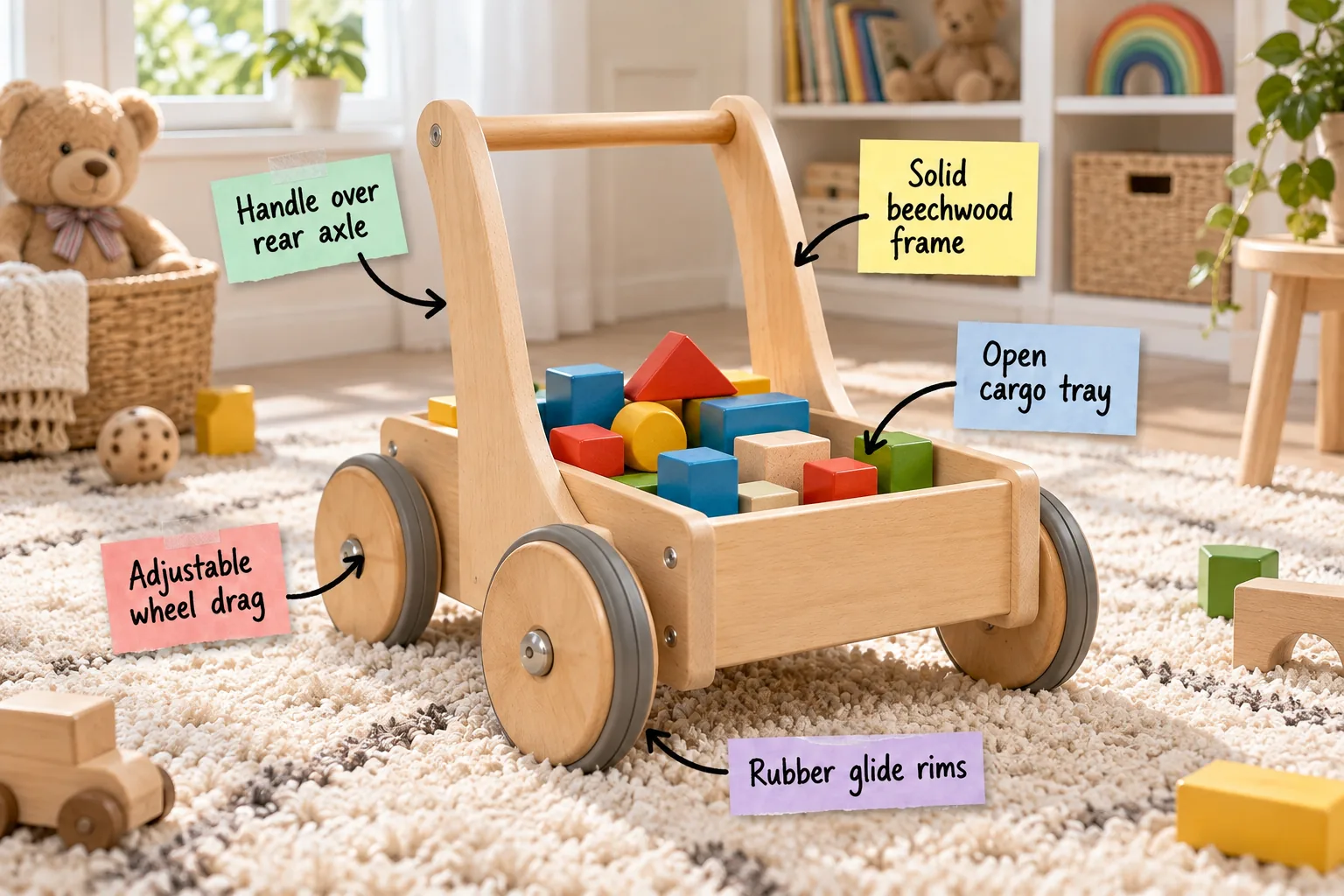
Need a first birthday gift that won’t end up donated by Thanksgiving? You will be able to evaluate push walkers for safety and use our milestone gift longevity chart to track how this classic wooden toy adapts through toddlerhood.
Setting the Adjustable Wheel Drag
The inner wooden hub of the back wheel tightens to create essential resistance, which I always dialed to a high drag for my own daughter’s early pull-to-stand phases. You simply adjust this friction roughly every two to three months as their walking confidence grows.
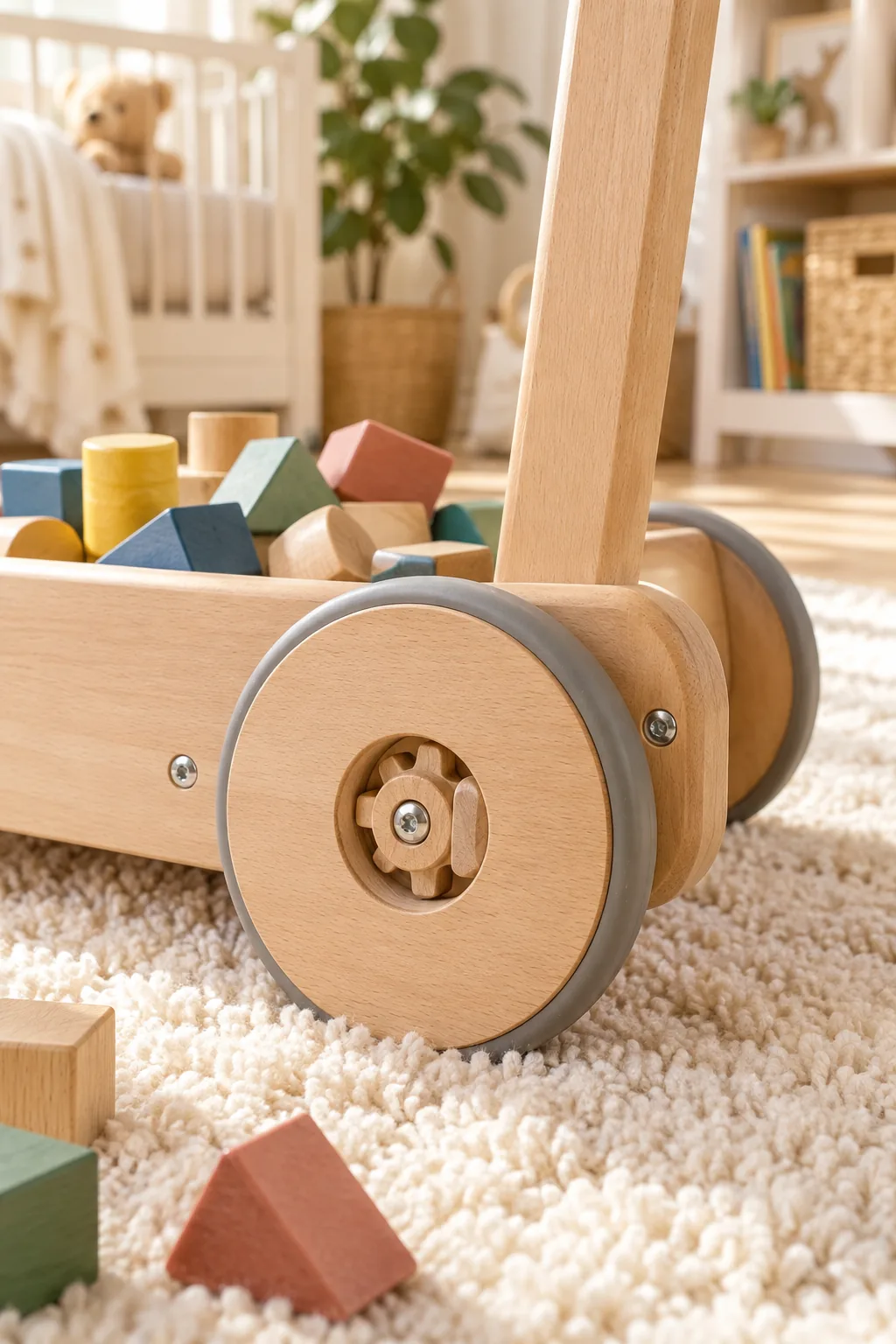
Getting the resistance right is crucial for those first wobbly steps, but many parents miss the mark on this hidden feature.
Recognizing When to Loosen the Drag
Knowing exactly when to ease up on that wheel friction keeps your toddler challenged but safe. I treat this adjustment like tuning an instrument, looking for specific behavioral cues before making any mechanical changes.
- Watch their pace to see if they are actively pushing against the resistance rather than leaning heavily on it.
- Test the walker yourself to ensure it still requires a gentle, deliberate push to move forward.
- Loosen the hub by a quarter-turn on both sides once they walk independently without the toy.
The Mechanics of the Axle Shaft
A solid steel axle running through the wooden chassis ensures the back wheels spin in perfect unison. This hidden hardware prevents the frustrating wobble that often plagues cheaper plastic alternatives during tight turns.
Why Fixed Front Wheels Matter
Unlike a stroller, a beginner push toy should never feature swiveling front casters. Fixed front wheels force the child to walk in a straight, predictable line, which builds essential core strength before they attempt complex steering.
Protecting Floors with Rubber Glide Rims
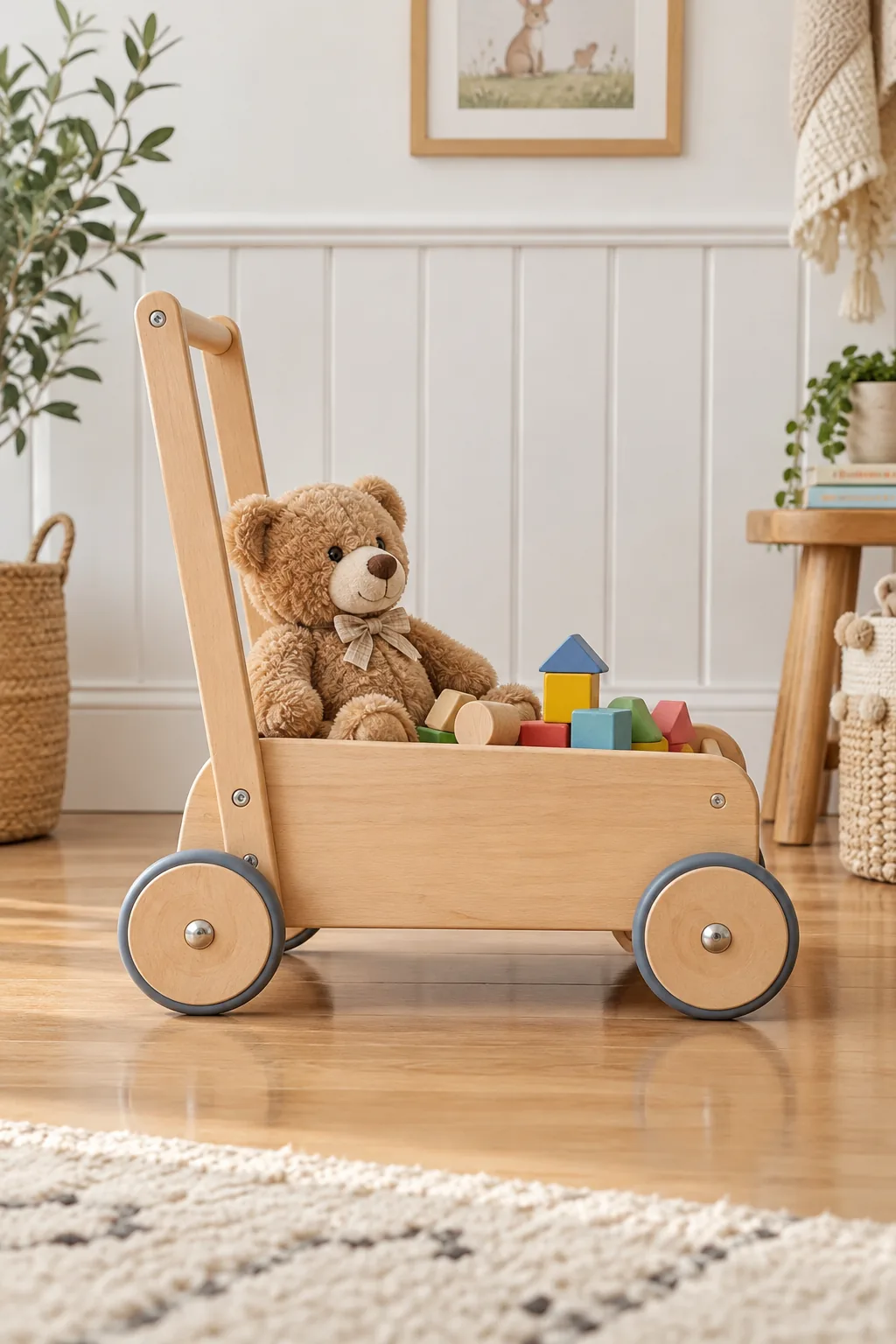
The grey rubber strip wrapping the wooden wheel provides essential traction on slick surfaces like hardwood or tile. This material prevents the walker from slipping out from under the child while protecting your floor’s finish from deep scratches.
Maintaining Rubber Traction Over Time
Dust and pet hair will eventually coat these rubber tracks, significantly reducing their grip on slick surfaces. Simply wiping the rims down with a damp microfiber cloth every few weeks restores that crucial floor traction.
Sound Dampening in the Playroom
Hardwood toys crashing on hardwood floors can quickly elevate the noise level in your home. The combination of dense beechwood and rubberized wheels naturally absorbs acoustic vibration, keeping playtime surprisingly quiet.
Understanding the Wheel Base Width
A well-designed walker features a wheelbase that extends slightly beyond the main chassis. This wider footprint acts like an outrigger, dramatically reducing the chance of lateral tipping when a toddler inevitably leans too far over one side.
Durability of a Solid Beechwood Frame
The smooth, curved wooden uprights leading to the handle define the toy’s structural integrity. Solid beechwood resists splintering and withstands the inevitable collisions with baseboards and furniture far better than plastic or softer woods.
The Psychological Benefit of Wood
Natural materials provide a soothing tactile experience that brightly colored plastics simply cannot replicate. Wood grain offers subtle visual variations that stimulate a toddler’s developing senses without overwhelming their nervous system.
Integrating the Walker into Nursery Decor
As an interior designer, I appreciate toys that do not disrupt a carefully planned aesthetic. A classic wooden walker acts as a charming sculptural element, complementing both minimalist and traditional nursery designs effortlessly.
Choosing a Timeless Color Palette
Selecting a walker with natural wood tones and muted accents ensures it ages gracefully within your home. This neutral approach allows the toy to seamlessly transition from the nursery to the main living room without clashing.
The Role of Non-Toxic Finishes
Because everything at this age eventually becomes a chew toy, the surface treatment matters immensely. Look for water-based, non-toxic clear coats that seal the wood grain without introducing harmful volatile organic compounds into your home’s air.
Stability from the Handle Over Rear Axle
The vertical alignment between the push handle and the back wheel prevents the walker from tipping backward. When my youngest would pull up with his full twenty-pound body weight, this precise geometry kept the front wheels firmly planted.
Before buying any push toy, evaluate its physical geometry to ensure it won’t flip during a clumsy pull-up.
Ergonomic Grip for Tiny Hands
The handle itself should ideally measure about one inch in diameter to accommodate a one-year-old’s developing grip. This specific thickness allows their fingers to wrap entirely around the wood, providing maximum leverage during early walking attempts.
Building Confidence Through Repetition
Toddlers thrive on mastering a single, repetitive motion until it becomes entirely second nature. The predictable resistance of a well-adjusted walker gives them the secure environment they need to practice their stride hundreds of times daily.
Weighting the Base for Beginners
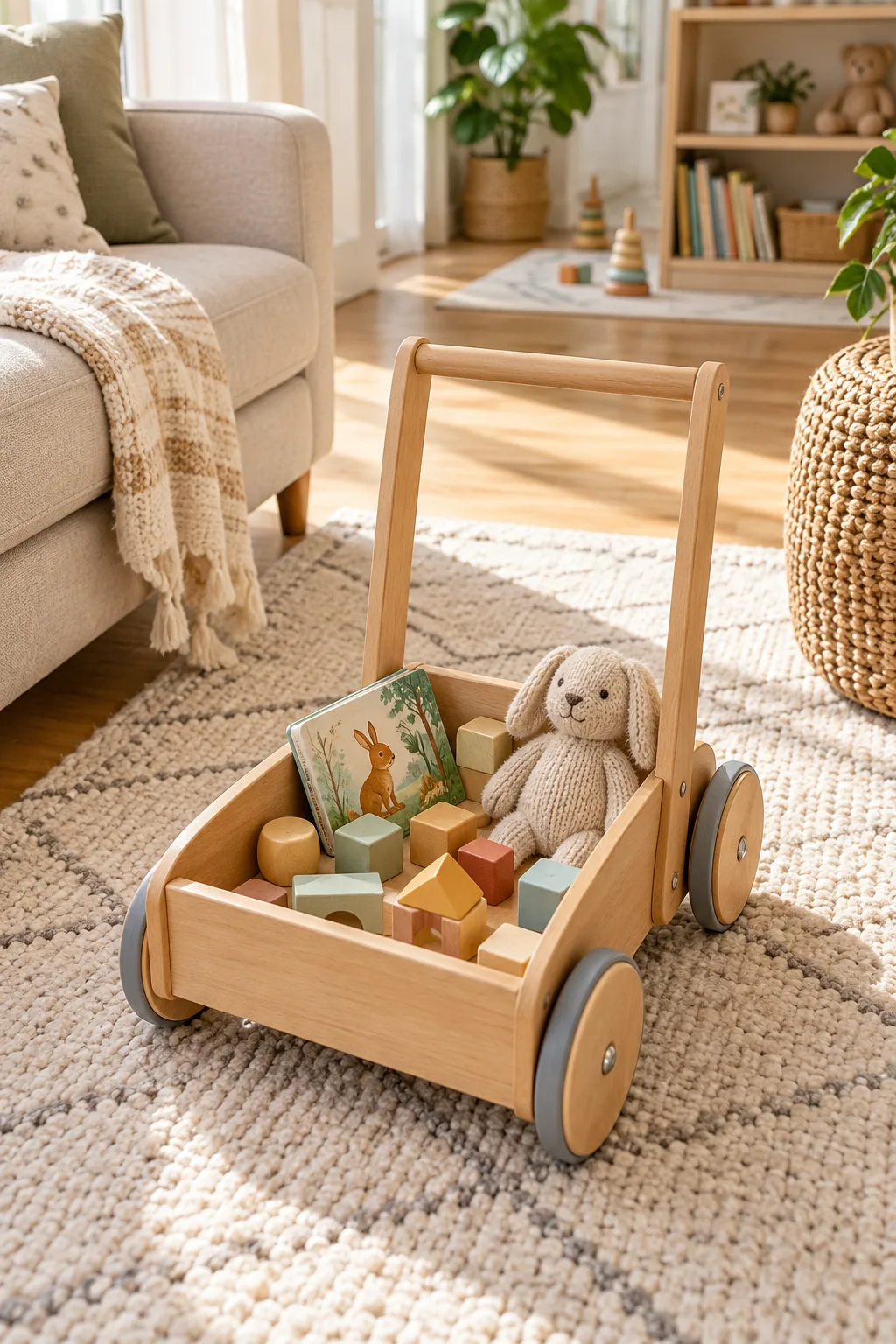
When designing playrooms, I always have parents add 5 to 8 pounds of heavy books or sealed sandbags to the bottom of the tray when a child is first learning to stand. This added weight artificially lowers the center of gravity for maximum stability.
Encouraging Independent Pull-Ups
Positioning the heavily weighted walker against a sturdy sofa gives your child a stationary target. Once they master pulling up against the couch, they can easily pivot to grasp the walker’s handle with newfound confidence.
Removing the Training Weight
As your toddler transitions from hesitant steps to a confident stride, that extra ballast becomes unnecessary. Removing the heavy books allows the walker to move more fluidly, encouraging them to pick up their pace and refine their balance.
Extending Play with the Open Cargo Tray
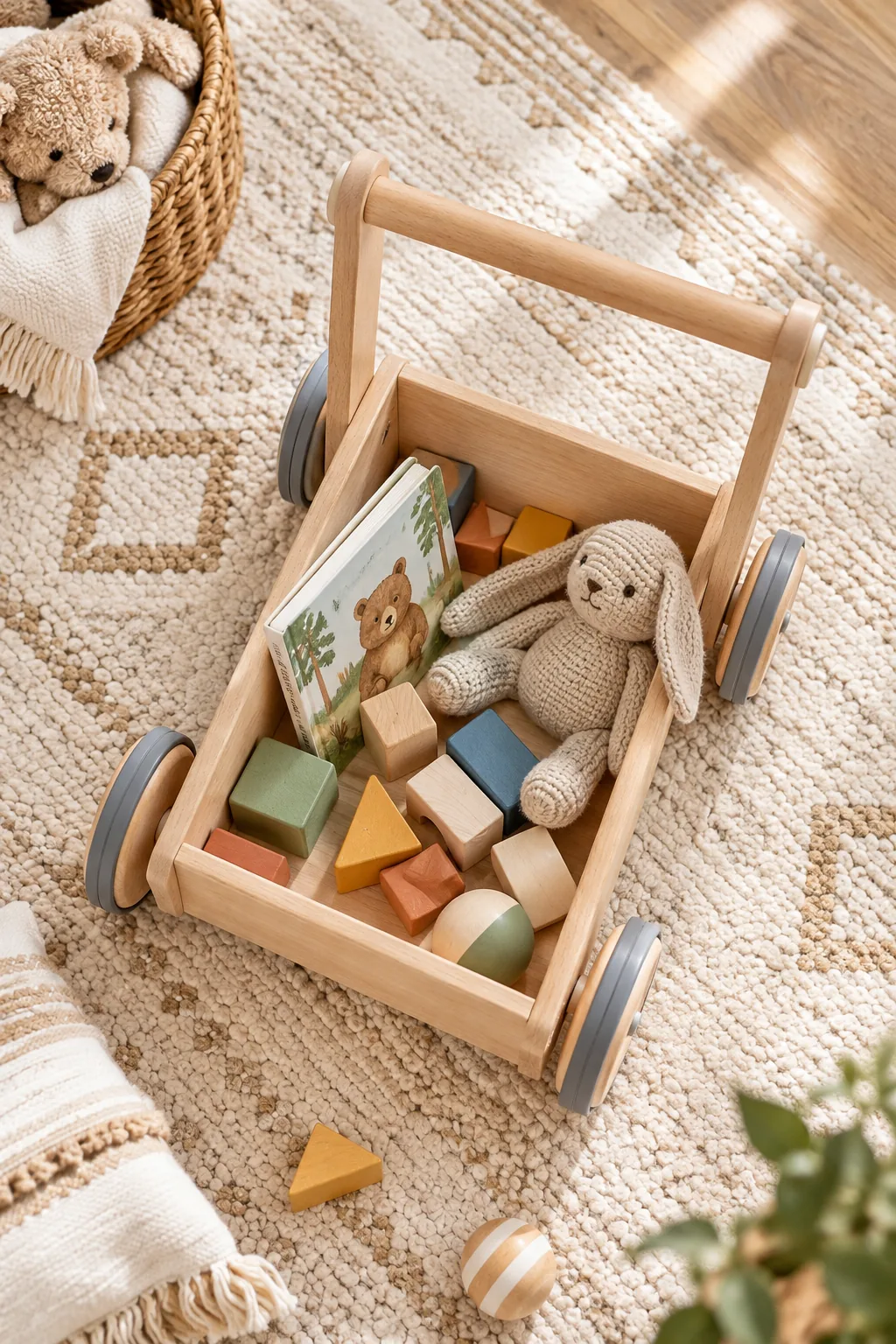
The deep wooden basin holding the wooden blocks transitions the toy from a walking aid to a transport vehicle. Once they enter the pretend-play stage around 18 months, this tray becomes a wagon for stuffed animals and treasures.
Organizing the Cargo Tray for Success
Leaving the basin partially empty invites your toddler to curate their own collections during playtime. I suggest keeping just a few foundational building blocks inside, leaving plenty of negative space for them to haul their favorite daily discoveries.
Avoiding Cluttered Play Spaces
A push walker naturally doubles as mobile storage, helping you maintain a tidy environment. Encouraging your child to park their walker in a designated corner establishes early habits for organized, intentional play.
Teaching Respect for Toys
Solid wood requires a different level of care than disposable plastic items. Showing your toddler how to gently park the walker rather than crashing it instills an early appreciation for well-crafted belongings.
Encouraging Sibling Collaboration
Once the primary user masters walking, the open tray often invites older siblings into the game. I frequently see older children carefully pushing their younger brother or sister’s stuffed animals, creating shared imaginative scenarios.
Safe Indoor Play Boundaries
Establishing a clear, flat pathway for the walker prevents frustrating roadblocks and dangerous collisions. Keep the toy strictly on the ground floor, away from staircases, and remove lightweight floor lamps from the designated walking zone.
Navigating Room Transitions
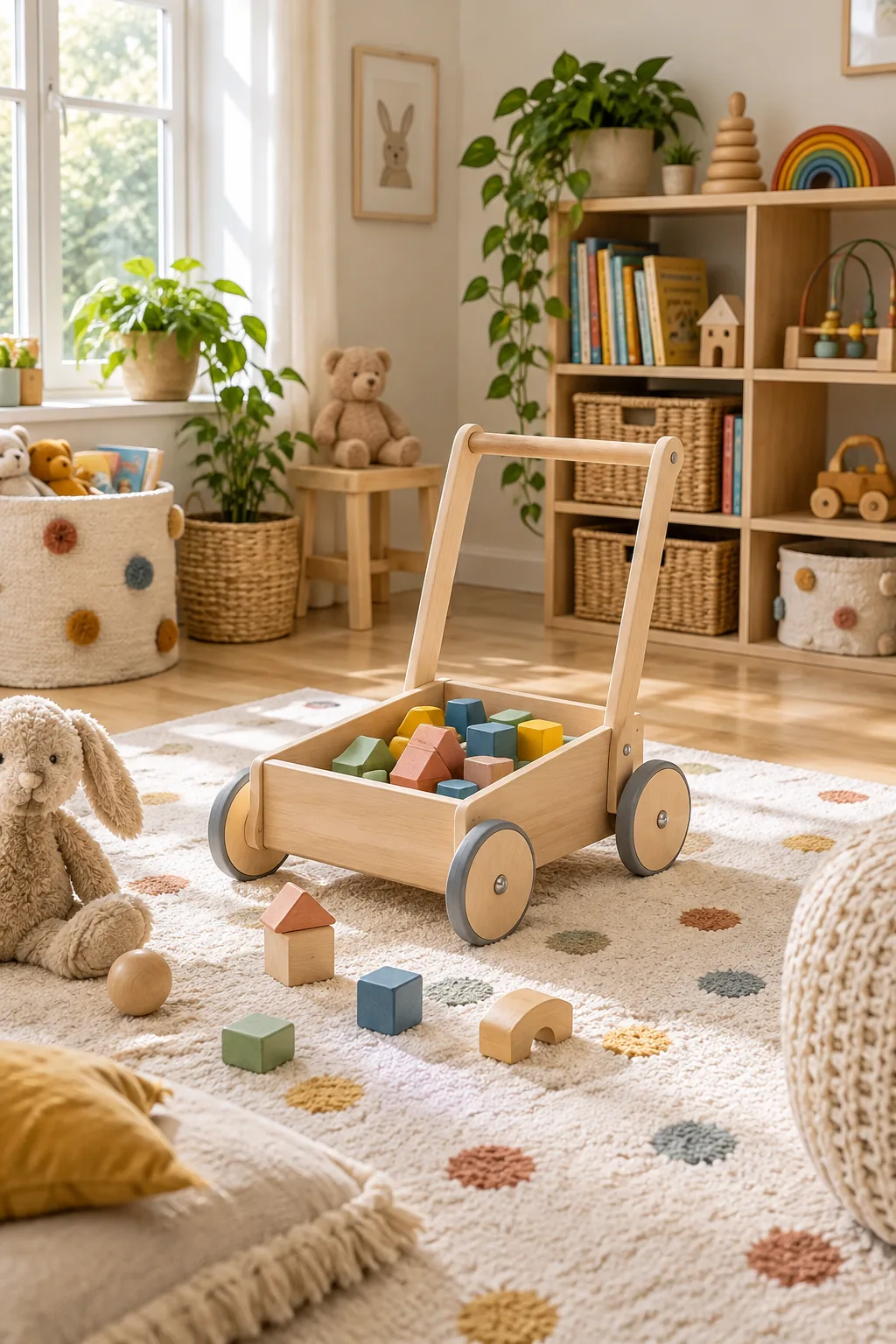
Moving from a plush nursery rug to a slick hardwood hallway requires a toddler to quickly adjust their momentum. Keeping these transition zones free of clutter helps them learn how to modulate their pushing force safely across different surfaces.
Cleaning Wooden Surfaces Safely
Harsh chemical sprays will eventually strip the protective clear coat right off the beechwood frame. A simple solution of warm water and a drop of mild dish soap keeps the chassis sanitary without degrading the finish.
Storing the Walker When Not in Use
Treating the walker as a decorative floor basket when playtime ends keeps it accessible but out of the main walkway. Tucking it beside a reading chair transforms a functional toy into a charming room accessory.
Repurposing the Toy Later
Long after the walking phase passes, this sturdy frame continues to serve a practical purpose. Many families permanently transition the wooden basin into a stylish magazine rack or a mobile book caddy for the playroom.
Styling the Push Walker
Discover how this classic wooden toy fits beautifully into any playroom aesthetic.
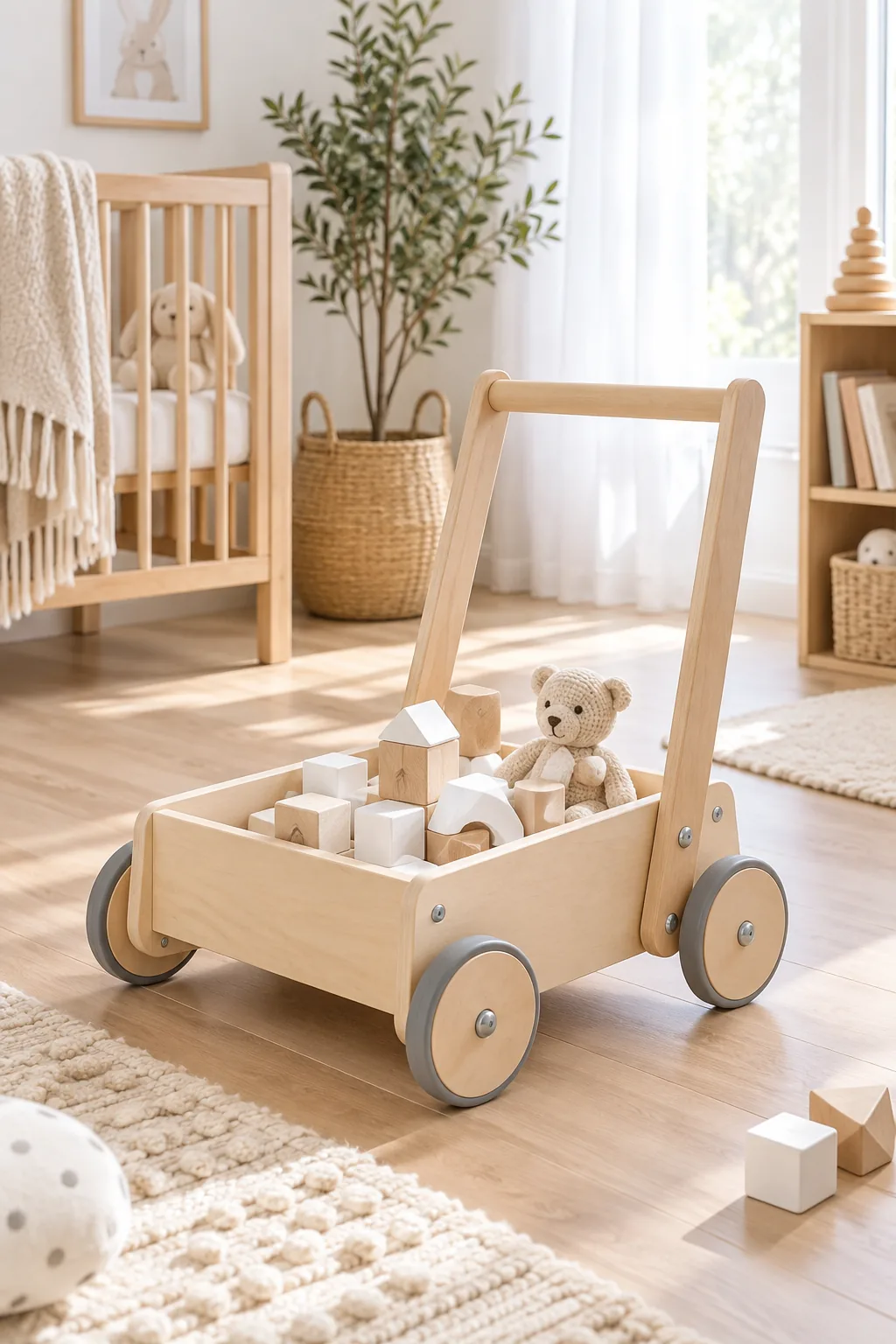
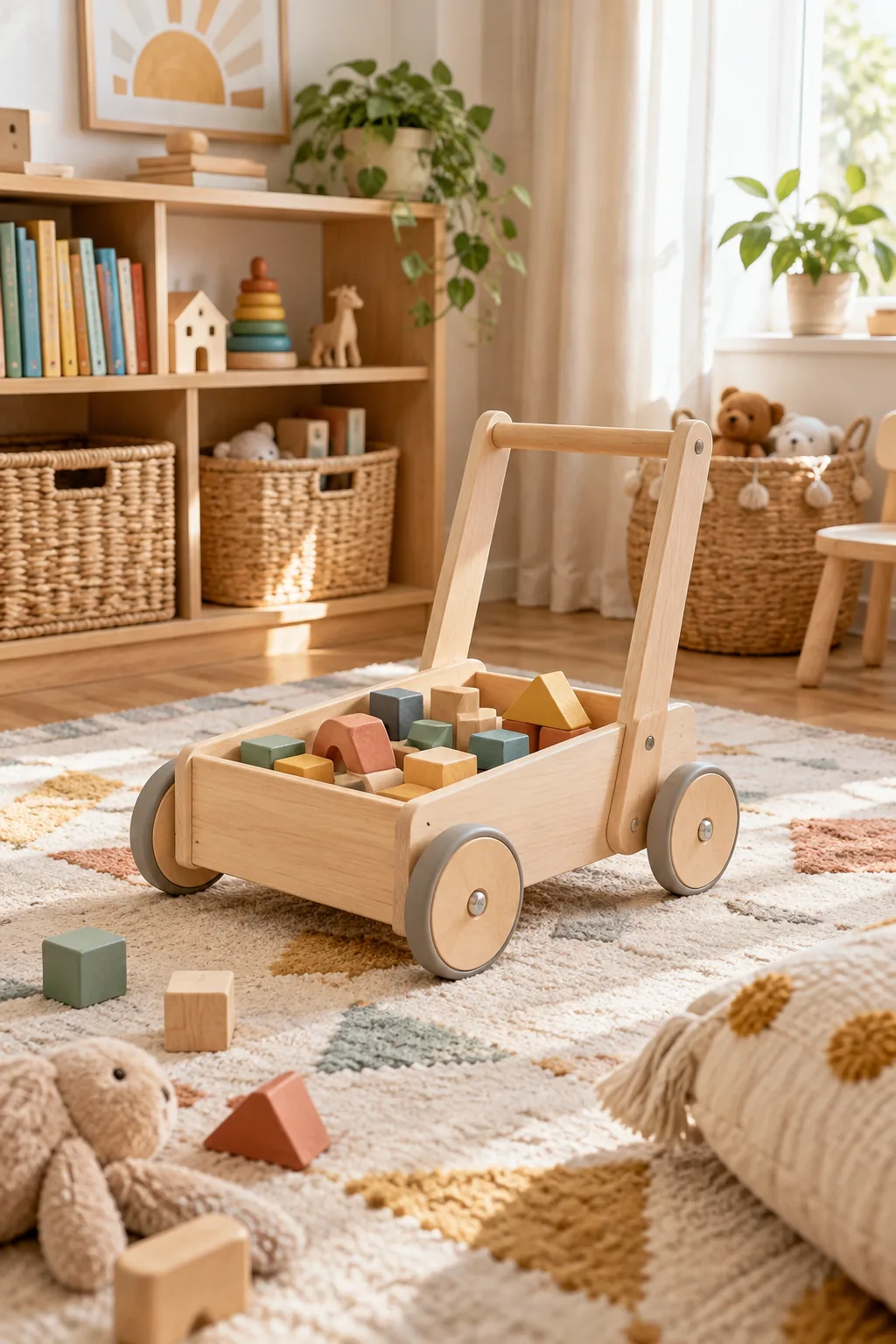
Scandi Neutral Nursery: Embrace minimalism with pale birch wood and white accents that blend seamlessly into a calm, neutral nursery.
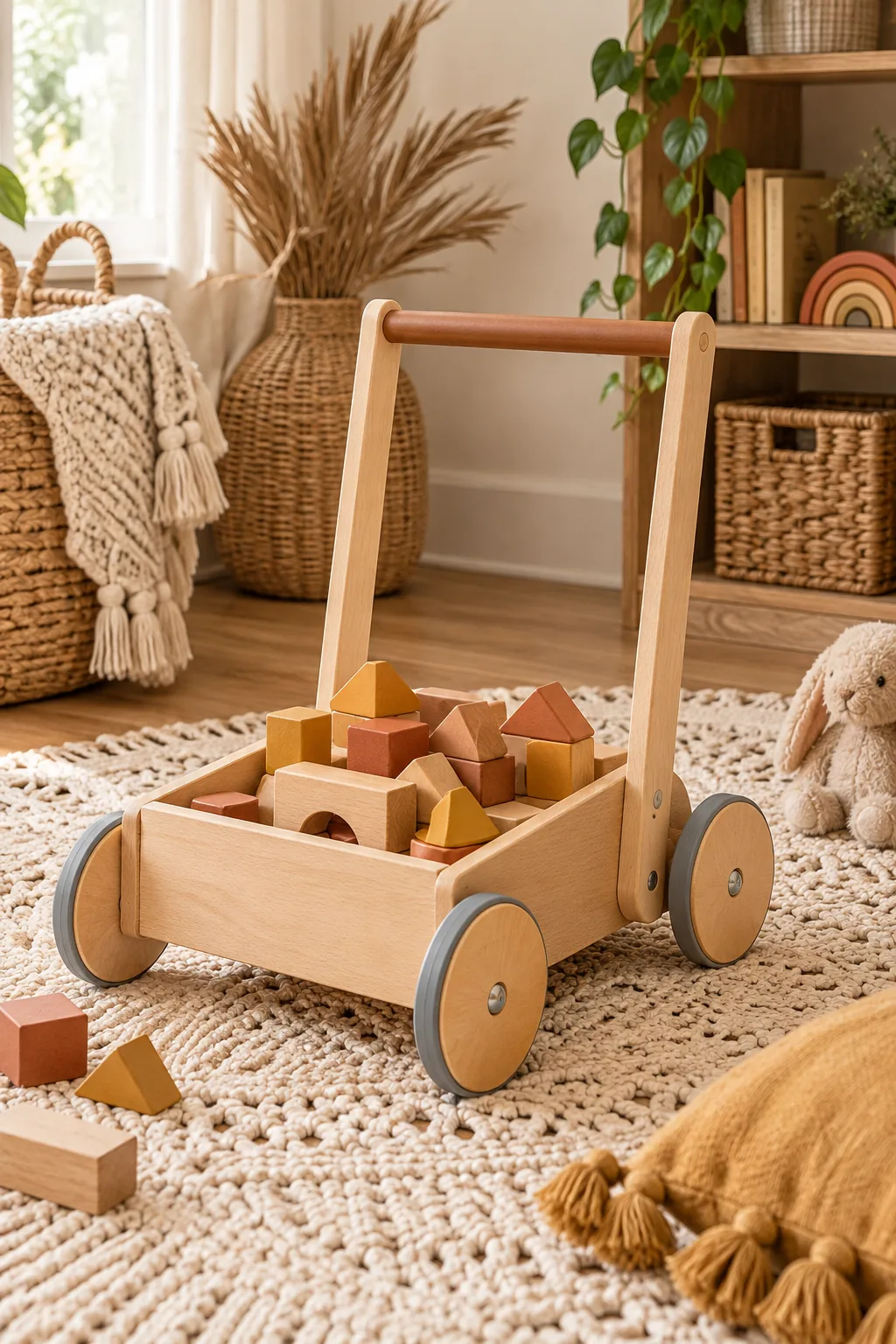
Boho Earth Tones: Pair warm beechwood with terracotta rugs and macrame details for a relaxed, textured playroom aesthetic.
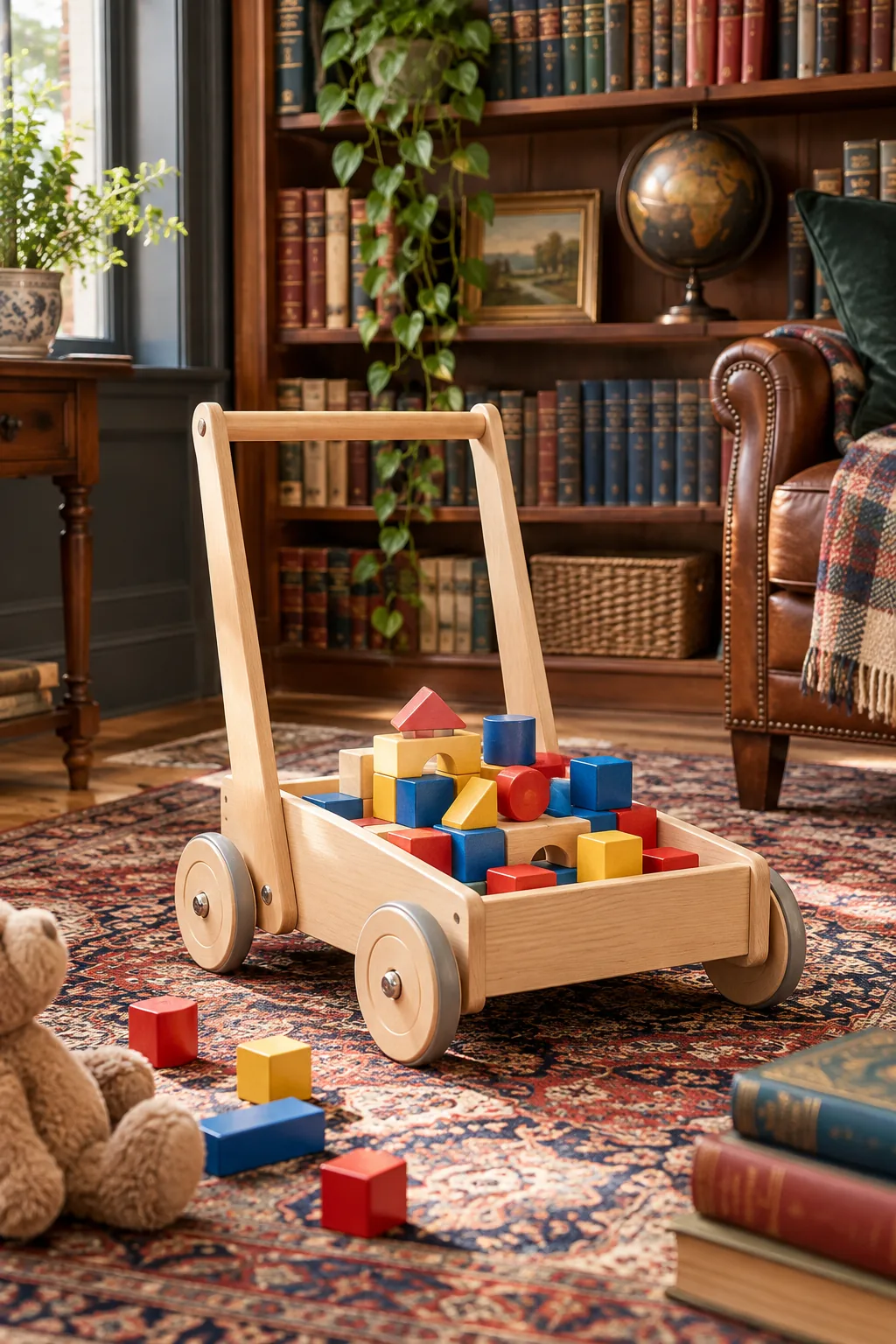
Classic Primary Colors: Opt for vibrant red and blue blocks to create a nostalgic, high-contrast look that pops against vintage rugs.
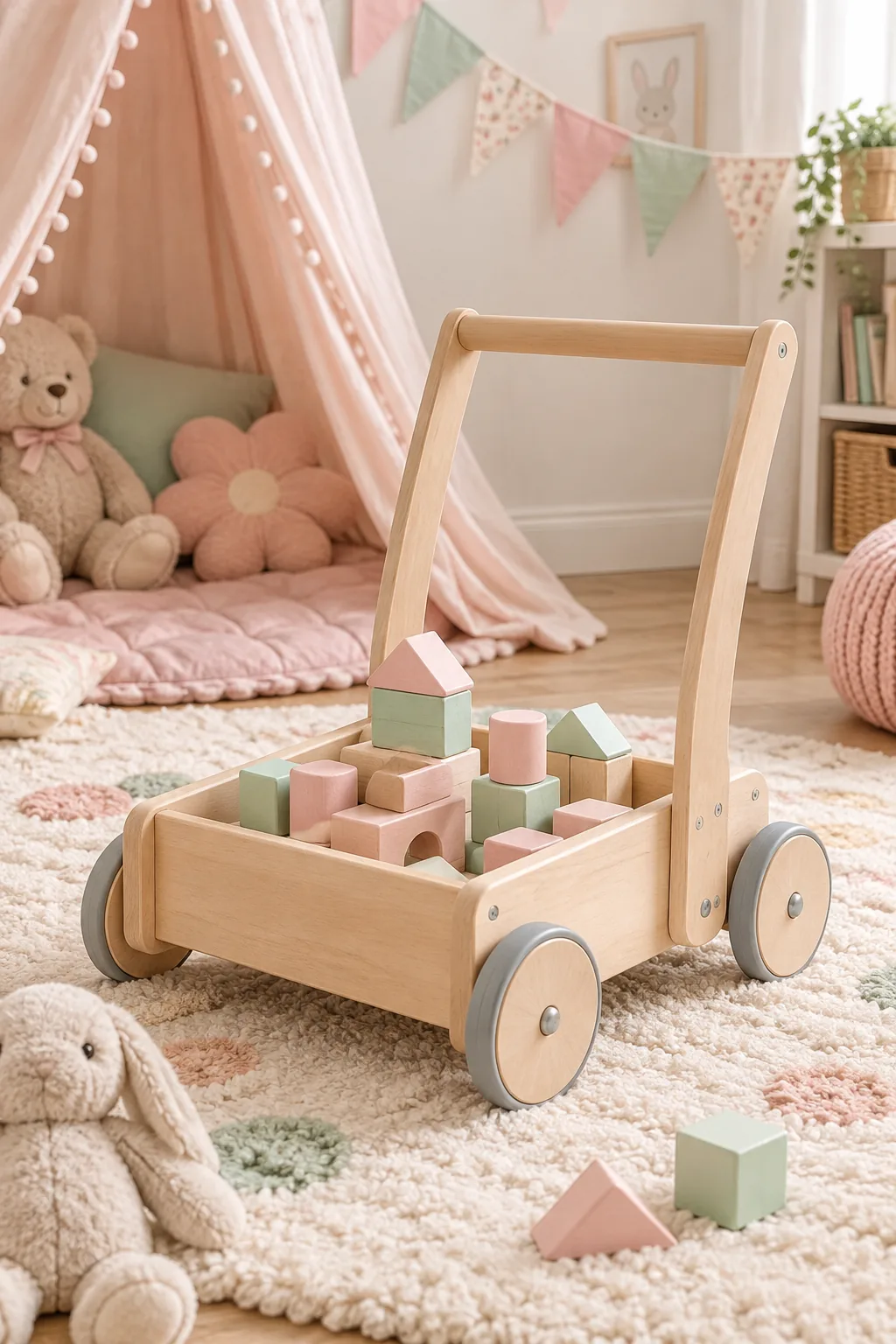
Pastel Playroom: Soften the space with mint green and blush pink accessories for a gentle, whimsical environment perfect for quiet play.
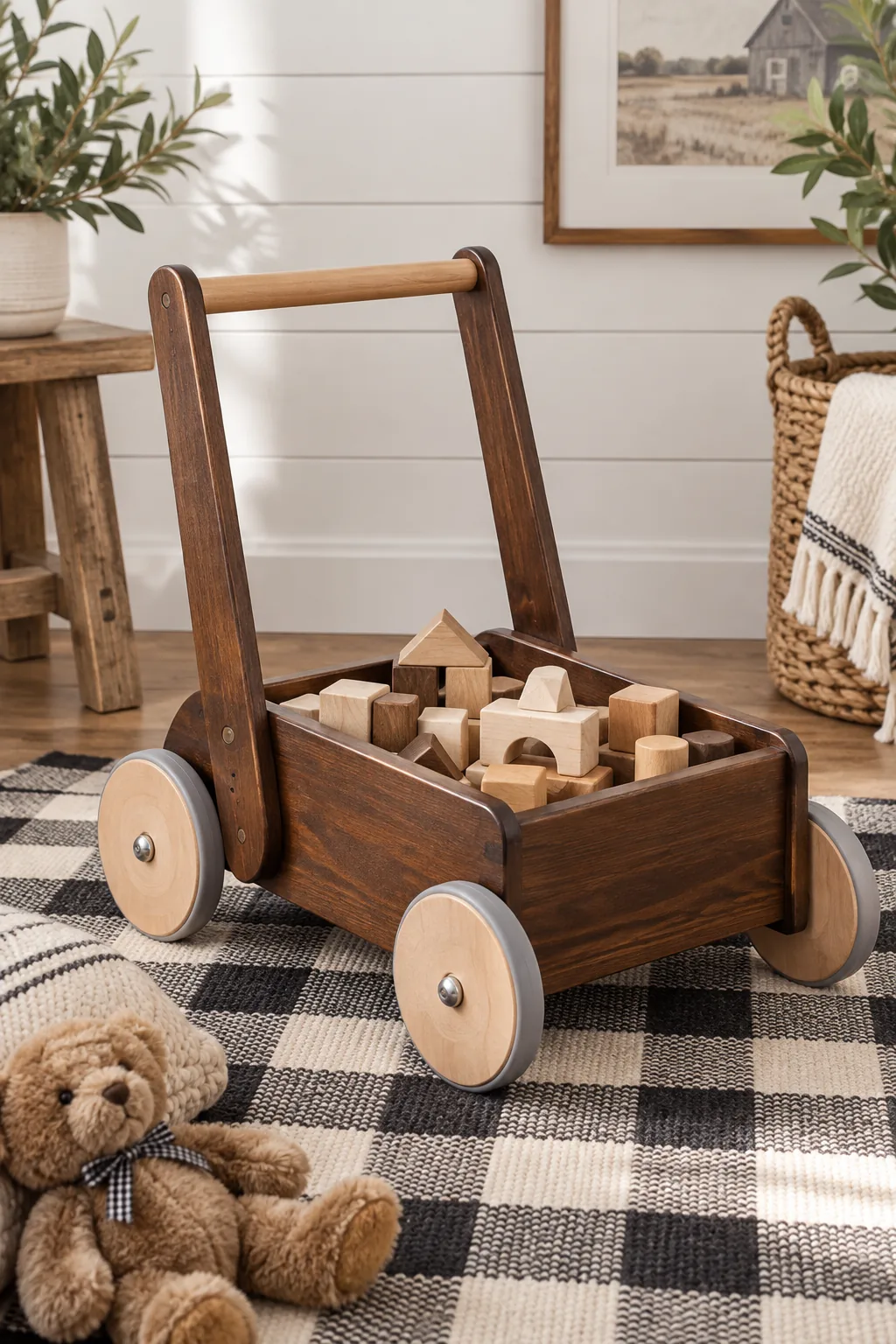
Modern Farmhouse: Incorporate darker wood elements and a classic plaid rug to give the wooden walker a cozy, rustic farmhouse feel.
Your Toy Longevity Chart
Tracking how this gift evolves reveals its true value over time. I designed this milestone gift longevity chart based on watching countless toddlers in my client projects adapt their play from first steps to preschool imagination.
| Age Range | Primary Walker Use | Motor Skill Focus | Play Style |
|---|---|---|---|
| 9-12 months | Stationary pull-up support | Core stability | Exploratory |
| 12-18 months | Assisted walking aid | Balance and gait | Functional |
| 18-24 months | Transporting household items | Directional control | Task-oriented |
| 2-4 years | Stroller or delivery wagon | Spatial awareness | Imaginative |
Use this progression to anticipate when your child will naturally shift from needing physical support to engaging in creative storytelling.