Toddler and Baby Sharing a Room: The Two-Bedtime Setup Plan
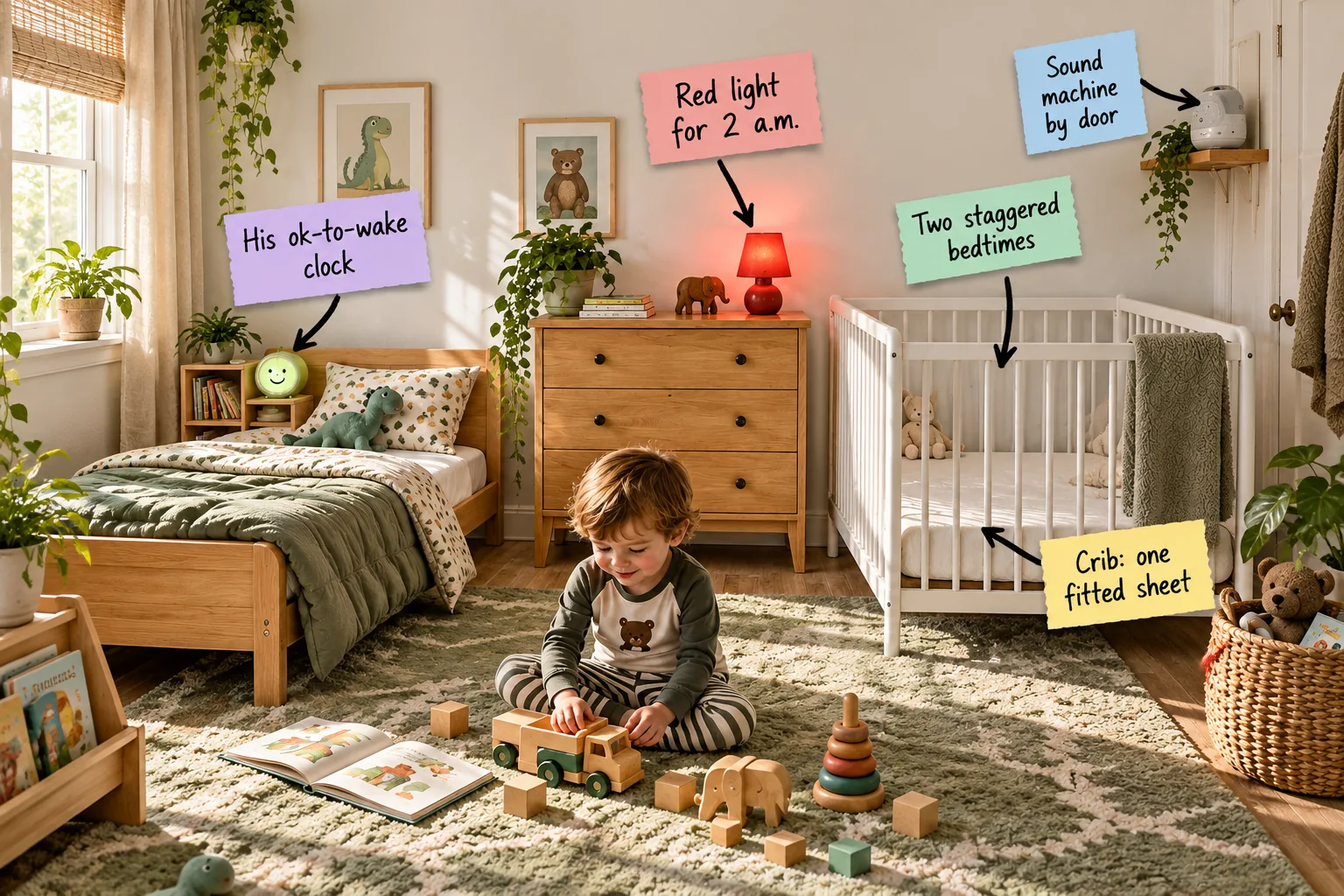
Planning a shared bedroom for your toddler and baby is much easier when you use our printable two-page Shared-Room Night Plan. You will be able to arrange a safe, sleep-optimized environment and implement a staggered bedtime routine using this actionable schedule and setup checklist.
Creating a Physical Room Divide
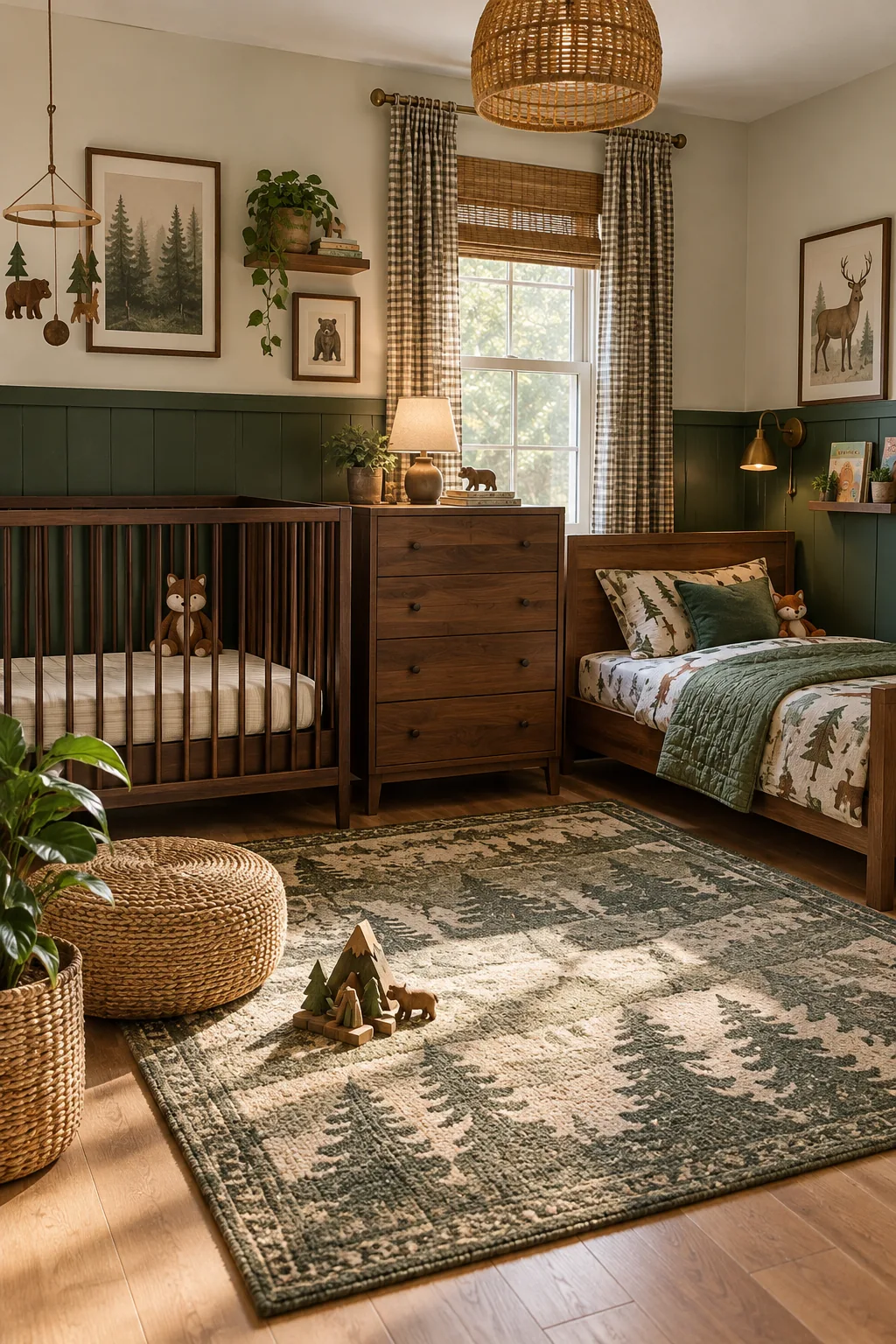
When designing a shared space, I always start by creating a distinct physical separation between the two sleep areas. Placing a sturdy, solid wood dresser directly between the beds establishes clear visual zones, giving each child a comforting sense of ownership over their side.

Anchor this dividing dresser securely to wall studs to meet essential modern safety standards. You must space the furniture piece at least 2 feet away from both the toddler bed and the crib to completely eliminate any dangerous climbing hazards for either child.
Anchoring Furniture for Shared Safety
Properly securing heavy furniture is the absolute most critical step before either child spends a night in the room. A shared space means double the curiosity, so anchoring prevents catastrophic tip-overs if your toddler decides to explore while you are tending to the baby.
- Locate the wooden wall studs using a magnetic stud finder and mark the exact center points.
- Install heavy-duty steel brackets directly into the studs, completely avoiding unreliable drywall anchors.
- Attach the corresponding safety brackets to the solid wood frame of the dresser back.
Always test the hardware connection by applying firm forward pressure to the top front edge of the dresser. If the unit shifts, wobbles, or tilts even slightly, you must reinforce the steel brackets before moving on to organize the individual sleep zones.
Setting Up the Toddler Sleep Zone
Transitioning the older child to a low floor bed fosters necessary independence while keeping them safe if they roll. When I transitioned my own son’s room, keeping the immediate area completely free of large toys ensured his bed remained associated only with rest.
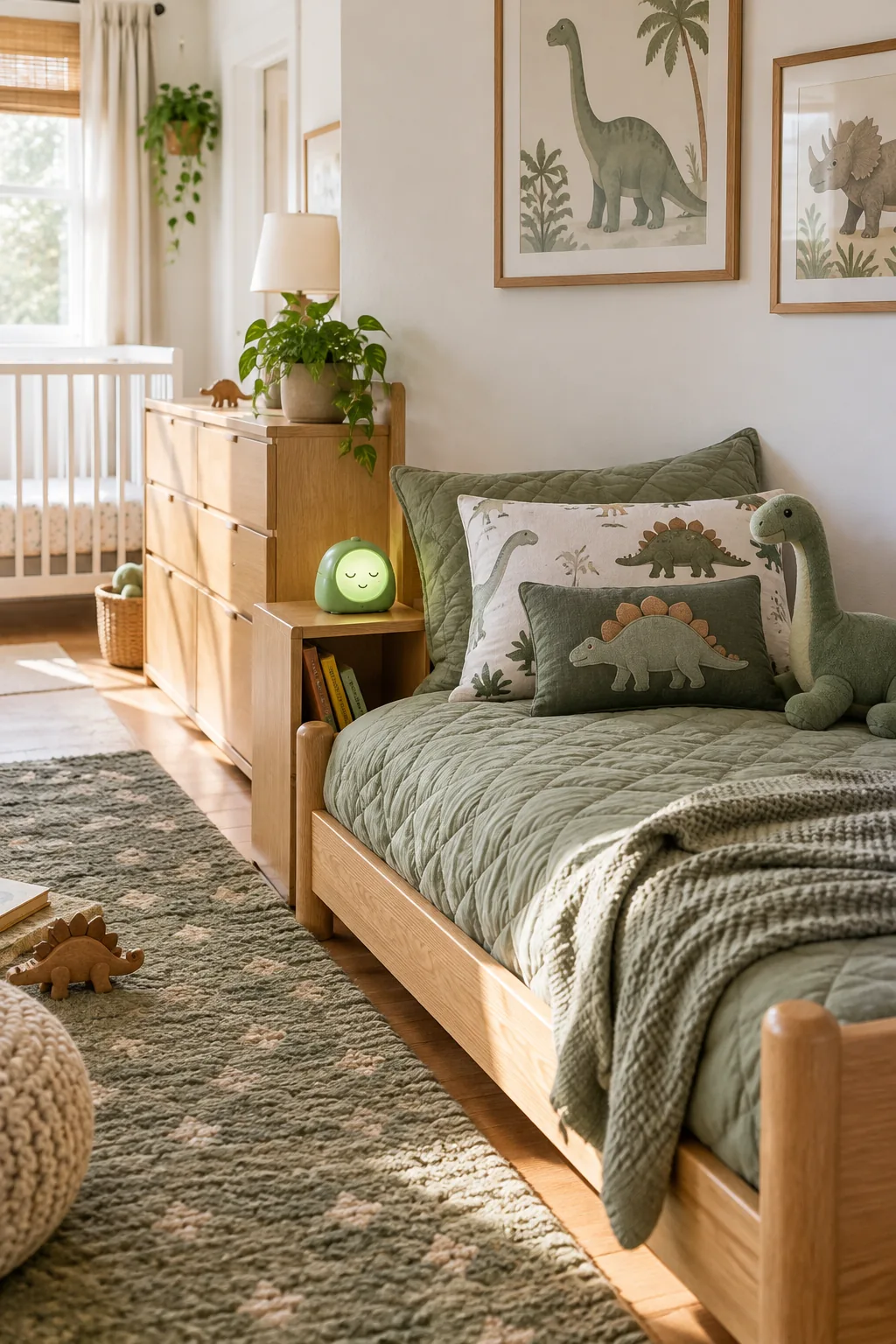
Position the toddler bed in the corner furthest from the shared door to minimize unwanted hallway disruptions. Use low-profile bedding rather than heavy quilts, which makes it incredibly easy for them to climb back under the covers independently after a quick bathroom trip.
Designating a Quiet Morning Play Area
Creating a small, dedicated space for quiet morning activities helps keep the toddler peacefully occupied while the baby finishes sleeping. Place a soft rug and a small basket of silent wooden toys near their bed to encourage independent play without waking their sibling.
Programming His Ok-to-Wake Clock
An ok-to-wake clock visually communicates exactly when it is safe to make noise in the shared space. In my own home, setting the morning light 15 minutes earlier than my son’s desired wake time initially built incredible confidence in the new routine.
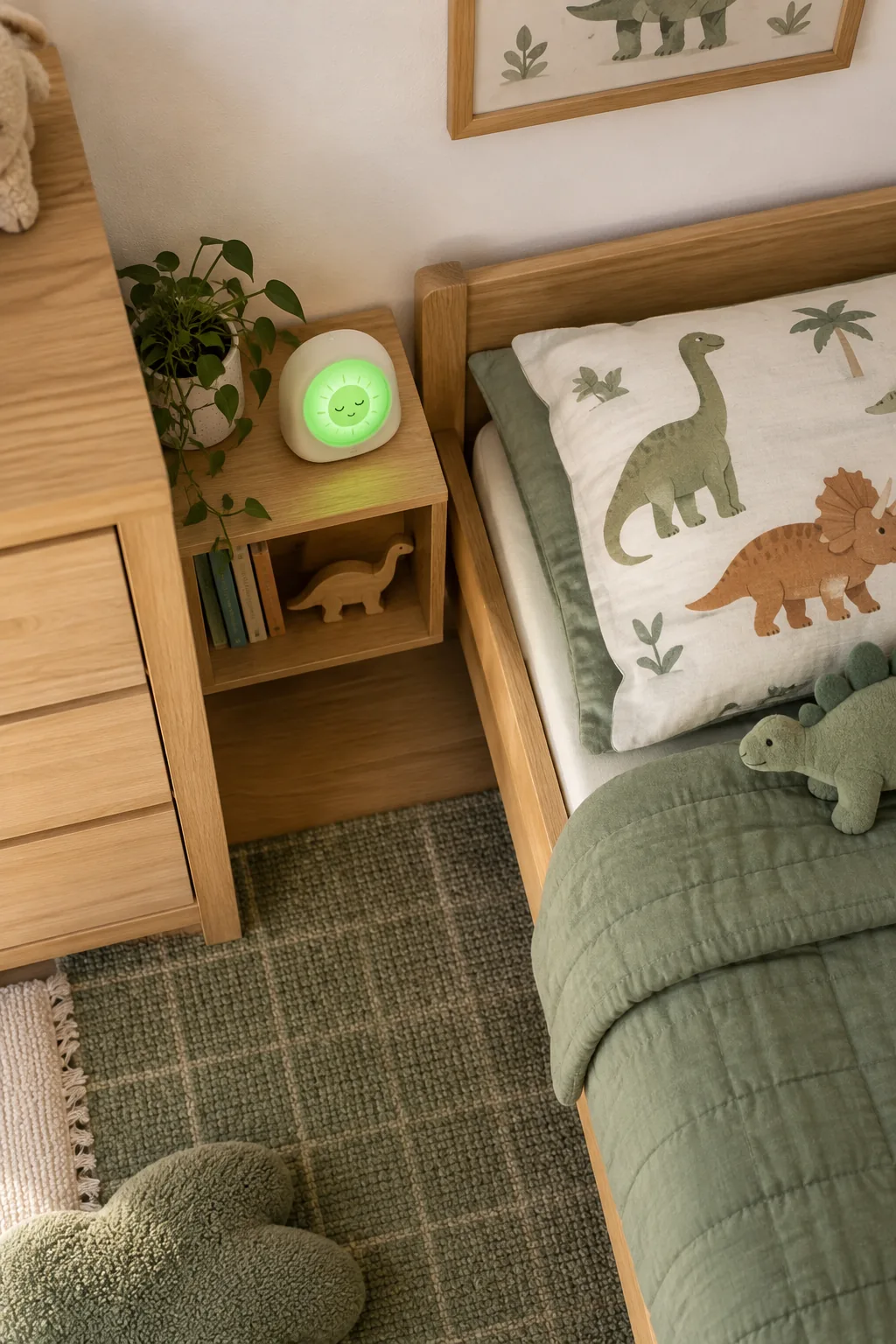
Place the clock on a low shelf directly beside the toddler’s pillow so it is the very first thing they see. Explain the new rule simply and clearly: they must stay quietly in their personal zone until the clock face glows green.
Introducing the Color Cues Early
Start using the wake clock at least two full weeks before the baby actually moves into the shared bedroom. This generous grace period allows your toddler to practice the new morning boundaries without the immediate pressure of accidentally waking a sleeping infant.
The Safe Baby Sleep Zone
The baby’s side of the room must adhere strictly to the bare-crib safety standard to prevent sleep-related hazards. Position the crib in a draft-free area well away from windows, dangling blind cords, and the shared divider dresser.
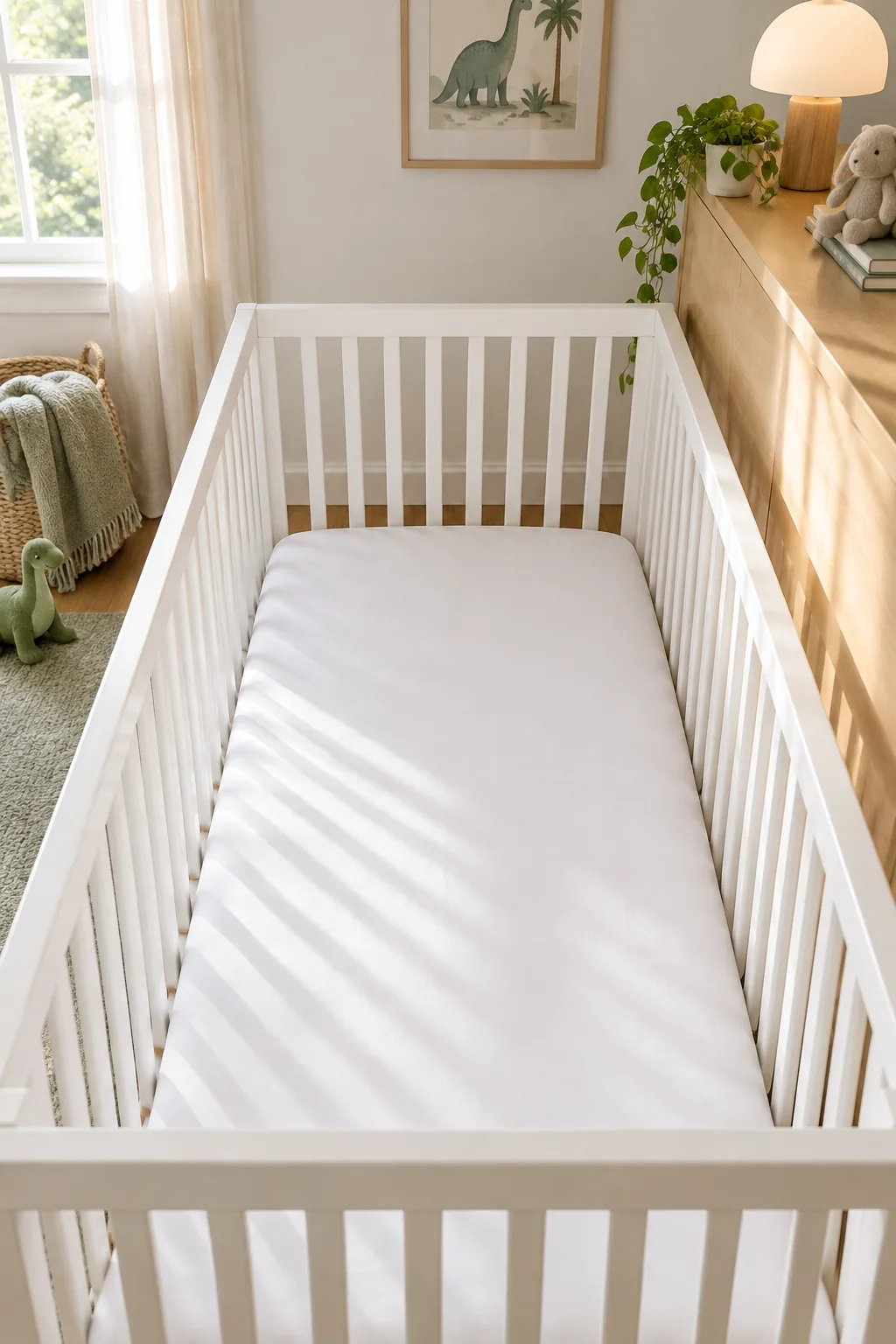
Before the baby spends their first night in the newly shared space, verify that their sleep environment meets all current safety guidelines.
Selecting a Firm Crib Mattress
Infant safety requires a specialized mattress that actively resists indentation, keeping the baby’s airway entirely clear if they roll over. Test the surface by pressing firmly in the center; it should snap back immediately without leaving any visible depression behind.
| Feature | Infant Standard | Toddler Standard |
|---|---|---|
| Firmness | Extra firm, no sinkage | Medium firm |
| Edge Support | Reinforced rigid borders | Standard borders |
| Fit | Zero finger gap at edges | Snug fit |
Always prioritize a dual-sided mattress if you plan to convert the crib into a toddler bed later. You must keep the ultra-firm infant side facing up for the first twelve months of their life.
Using a Red Light for Night Wakings
A dim lamp equipped with a warm red bulb is essential for managing middle-of-the-night needs. This strategic setup allows you to see clearly during 2 a.m. feedings without accidentally waking the older toddler across the room.
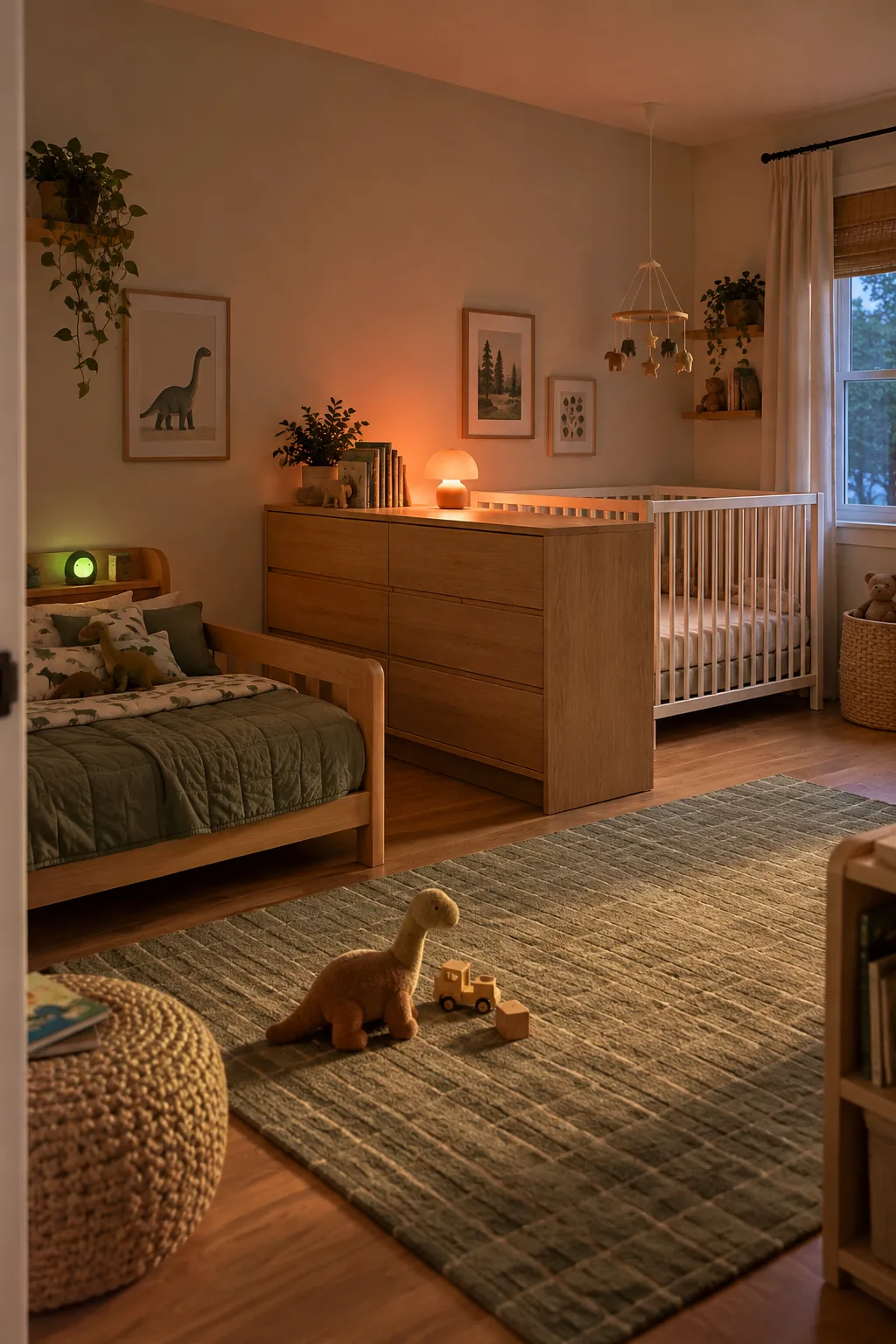
Red wavelengths do not disrupt natural melatonin production, ensuring the baby’s circadian rhythm stays perfectly intact. Place this specialized lamp on the dresser top nearest the crib for immediate, easy access when you walk in the door.
Positioning the Dresser Lamp Safely
Route the lamp cord straight down the back of the dresser and secure it directly to the wall with adhesive cable clips. This prevents the cord from dangling anywhere near the crib, eliminating a severe strangulation risk as the baby learns to pull up.
Placing the Sound Machine by the Door
Positioning the white noise machine on a high wall shelf right beside the bedroom door frame blocks household noise at the source. This strategic placement creates an effective sound barrier that protects both sleep cycles from loud hallway conversations or closing doors.
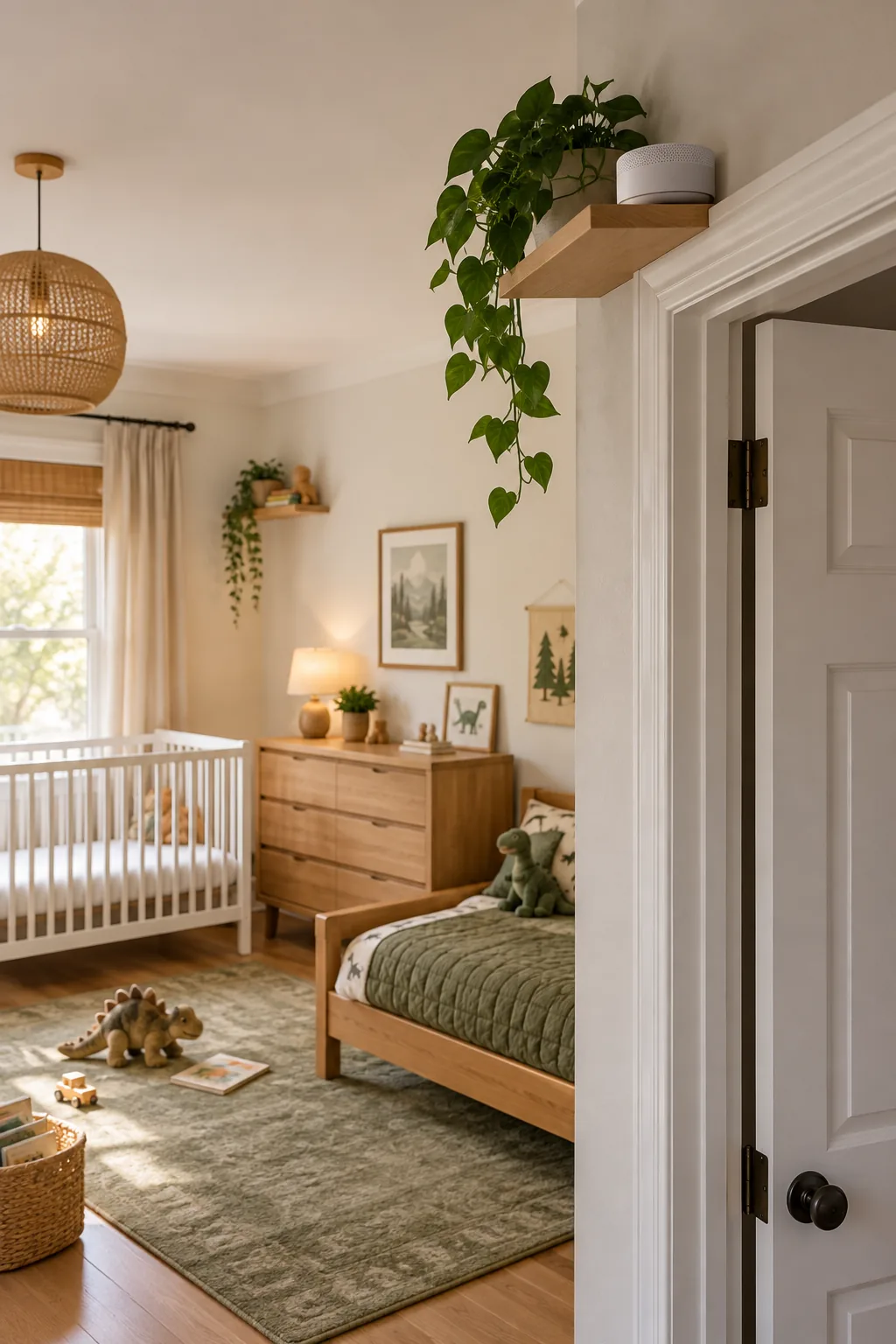
White noise is incredibly effective for shared rooms, but improper placement can actually disrupt sleep or pose a physical risk.
Calibrating the White Noise Volume
You can easily measure the actual sound output using a free decibel meter application on your smartphone. Hold your phone directly inside the crib to confirm the ambient volume remains well within safe pediatric limits before leaving the room.
Managing Two Staggered Bedtimes
Implementing two staggered bedtimes is the absolute secret to a peaceful shared room. When I tested this with my own boys, bringing the toddler in 30 to 45 minutes later allowed the baby to enter deep sleep first.

Put the baby down in the empty, bare-sheeted crib while the toddler completes their wind-down routine in another room. Once the baby is completely settled, the toddler can sneak in quietly and climb straight into their low bed.
Establishing the Evening Wind-Down Routine
Keep the toddler’s pre-bedtime activities focused on calming tasks like reading books or doing simple puzzles in the living room. This prevents them from feeling left out while you handle the baby’s bedtime, turning the delay into a special one-on-one bonding time.
Your Printable Room-Share Night Plan
To bring all these strategies together, download and print our two-page Shared-Room Night Plan. Page one features a customizable fill-in staggered bedtime schedule, while page two provides the complete room setup and safety checklist.
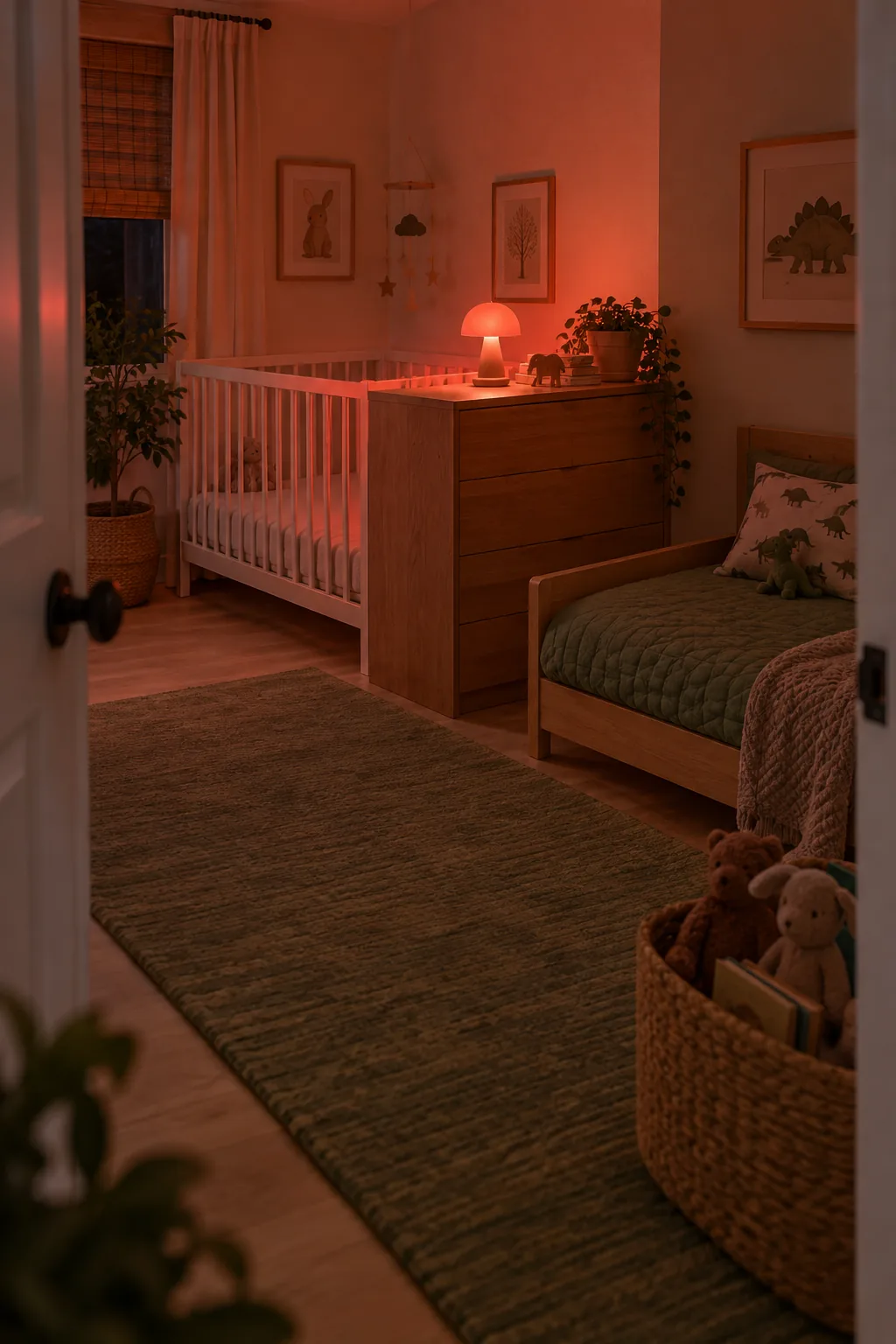
As your baby drops daytime naps, use the provided schedule notes to adjust the bedtime gap accordingly. This adaptable approach ensures both children continue sleeping through the night seamlessly as their developmental needs evolve.
More Shared Room Styling Ideas
Explore these different ways to style a cohesive shared bedroom for two.
Neutral Boho with Rattan: Warm beige textiles and natural rattan furniture create a calming, earthy environment. Add woven wall hangings to soften the space.

Moody Woodland in Walnut: Dark green wainscoting grounds the room while rich walnut furniture adds warmth. Incorporate subtle forest-themed bedding for a playful touch.
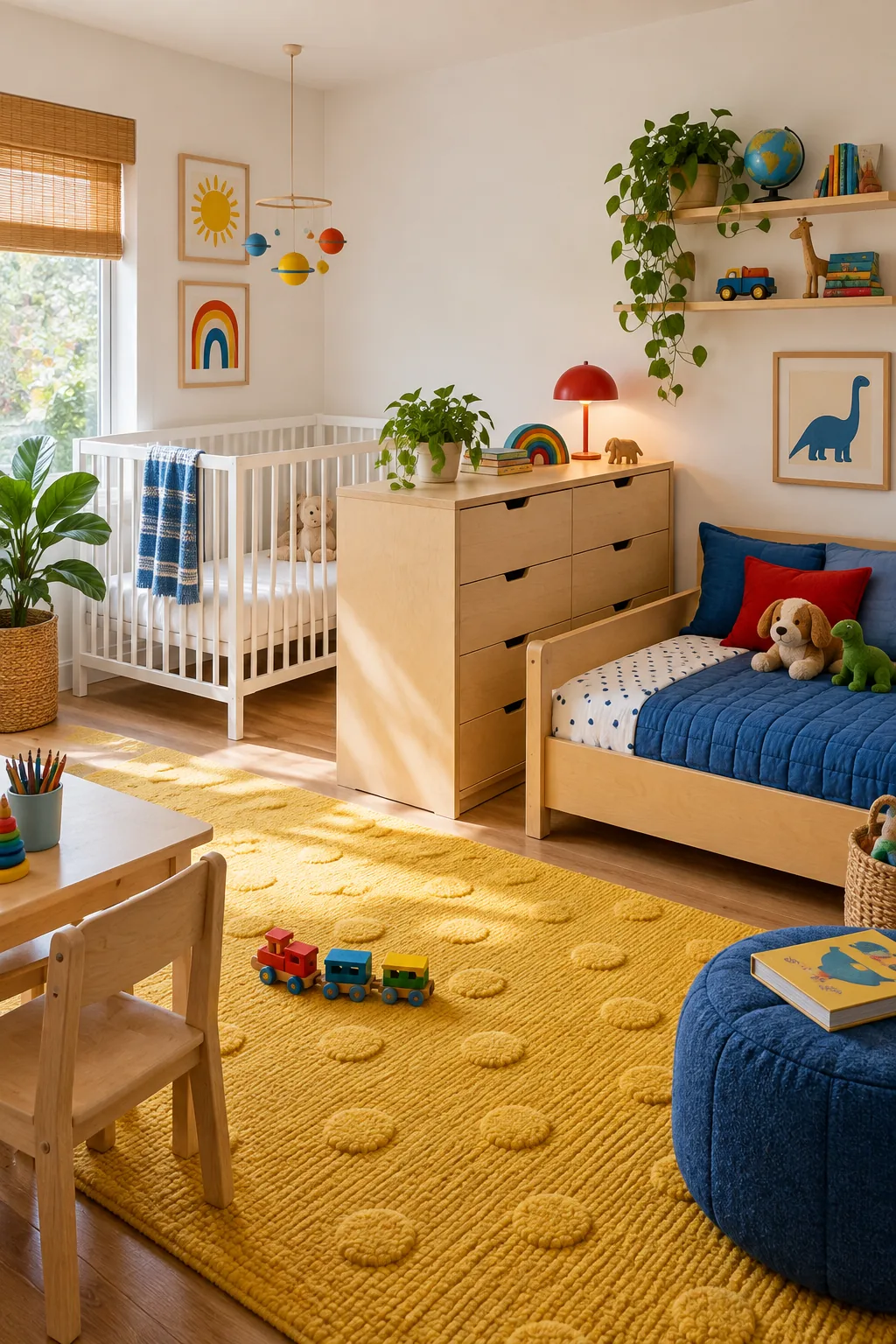
Primary Colors and Plywood: Pale plywood furniture keeps the room feeling light and modern. Introduce energy with a bright yellow rug and bold blue accents.