
13+ Brilliant Small Retaining Wall Ideas for Your Yard
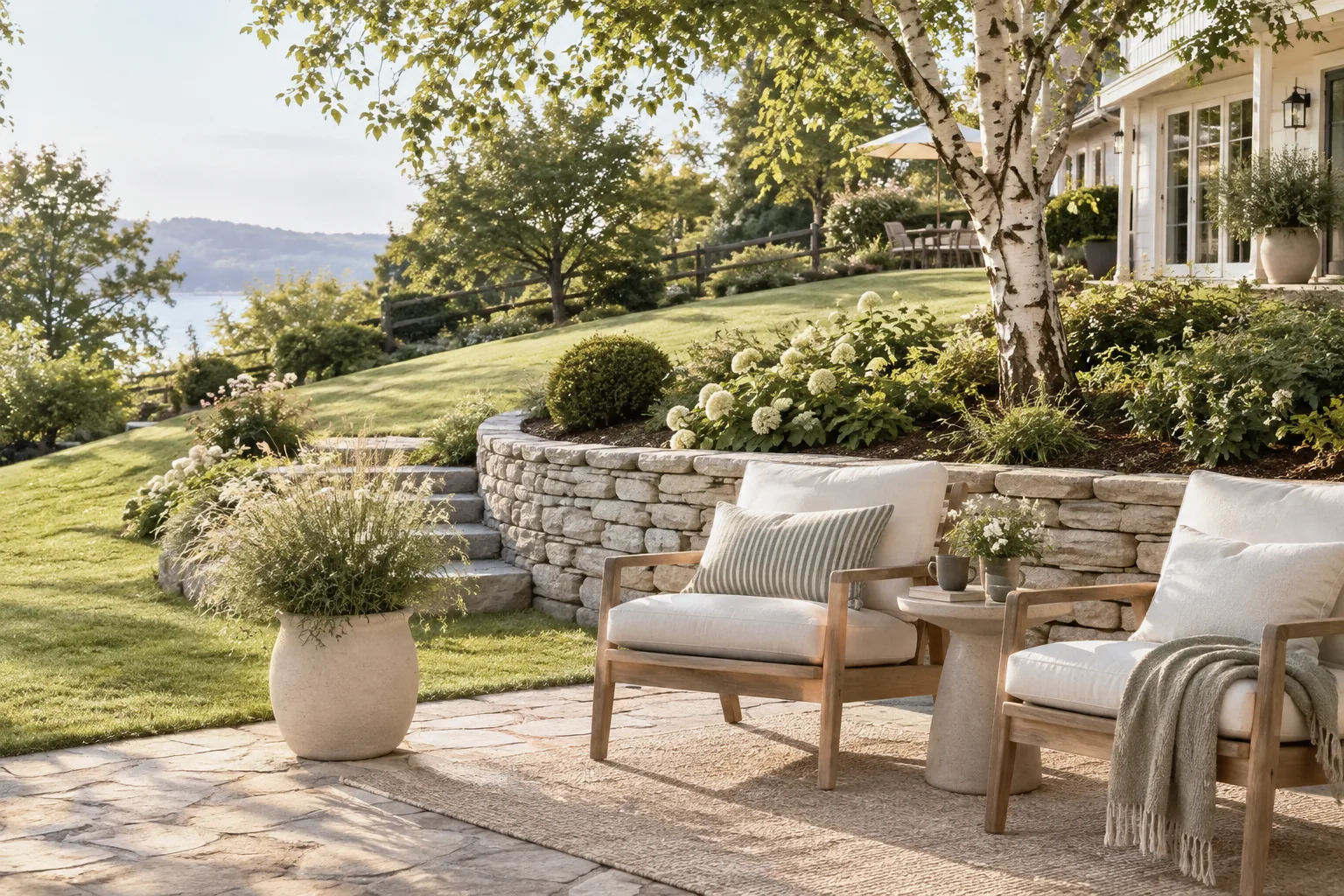
Sloping yards can be a headache, but a small retaining wall easily turns that awkward incline into flat, usable garden space. I pulled together my favorite simple builds that you can tackle in a weekend without heavy machinery.
1. Weathering Steel Borders
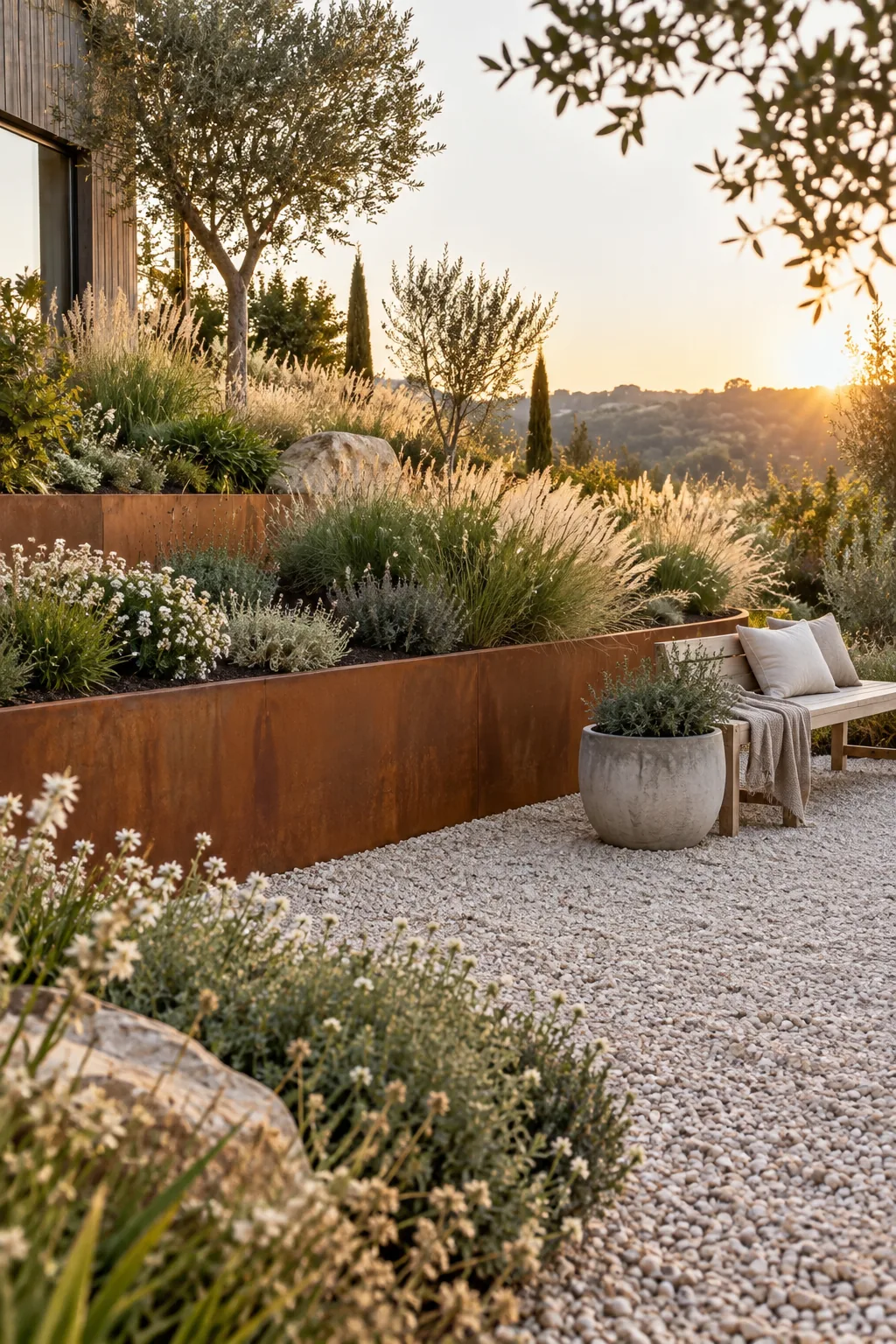
Rusty metal edges give garden beds an instant modern update while holding back loose soil. You just hammer these heavy-duty weathering steel borders straight into the dirt to terrace a mild slope.
Why it works: It creates a sleek, industrial edge that weathers beautifully over time without rotting.
2. Stacked Fieldstone
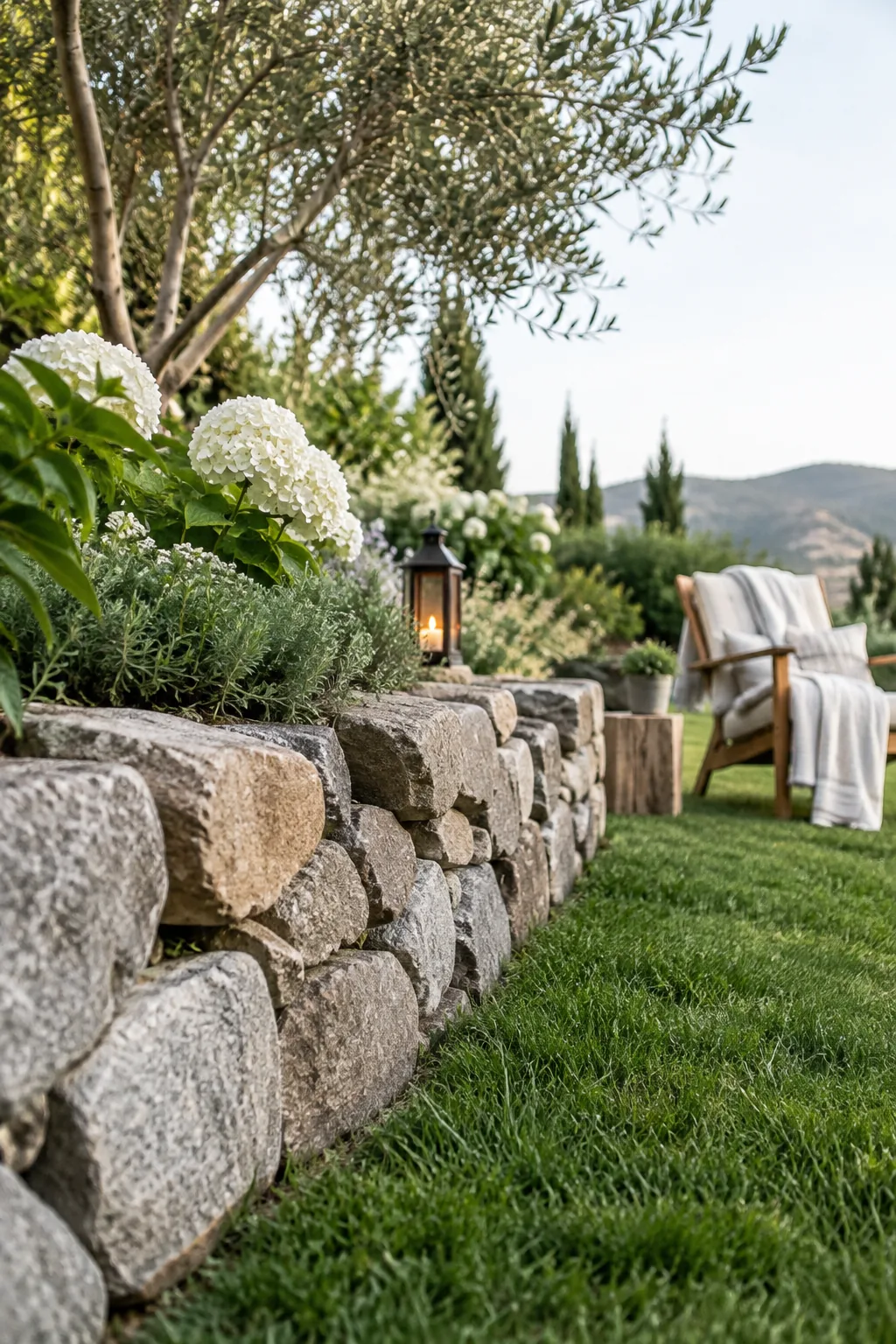
A dry-stacked stone wall under two feet tall requires zero mortar.
You just rely on gravity and the natural friction of rough stones to hold the earth back. It looks incredibly natural next to a lush lawn.
Keep your base course slightly buried to anchor the whole structure.
- Flat fieldstones
- Gravel for drainage
- Landscape fabric
3. Timber Sleeper Wall
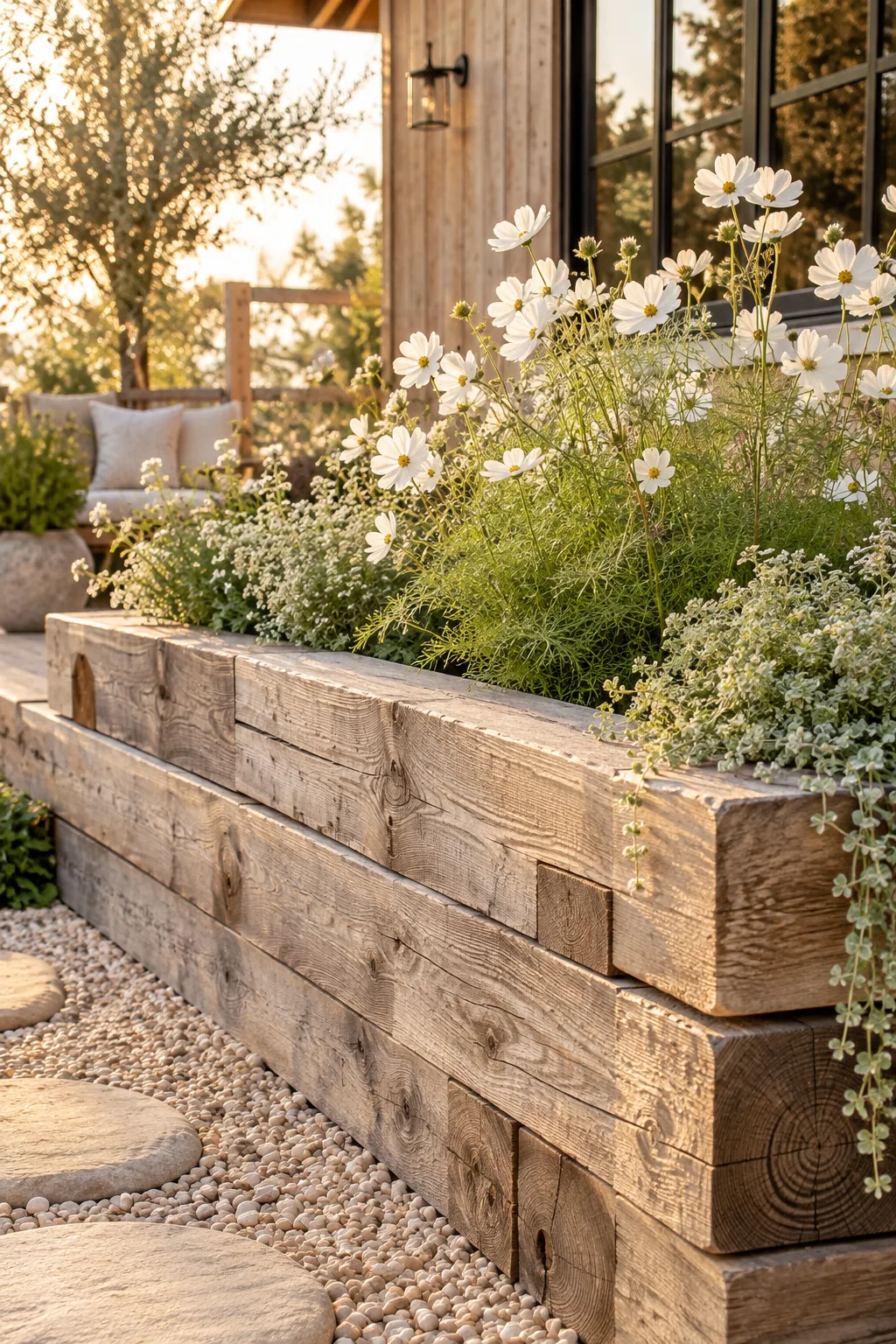
Thick wooden sleepers laid horizontally create a rugged, cabin-inspired border for raised flower beds. Staggering the joints between the heavy wooden beams prevents the soil pressure from bowing the wall outward.
4. Interlocking Concrete Blocks
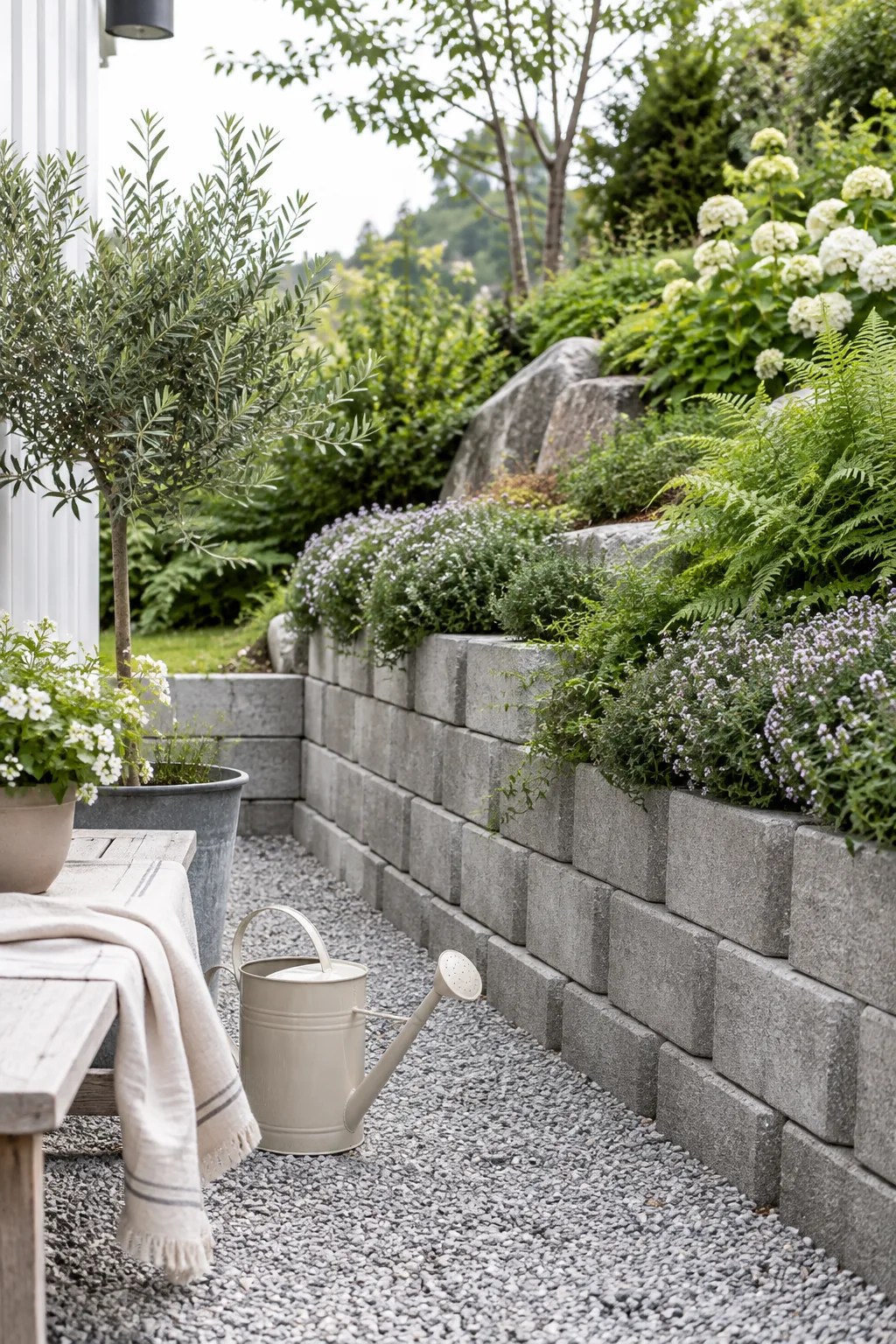
The hidden rear lip on interlocking blocks makes alignment completely foolproof.
Each row steps back slightly into the slope, naturally resisting the weight of the wet soil behind it. You do not even need concrete footings, just a highly compacted gravel base.
- Textured face blocks
- Capstones
- Construction adhesive
5. Wattle Fencing
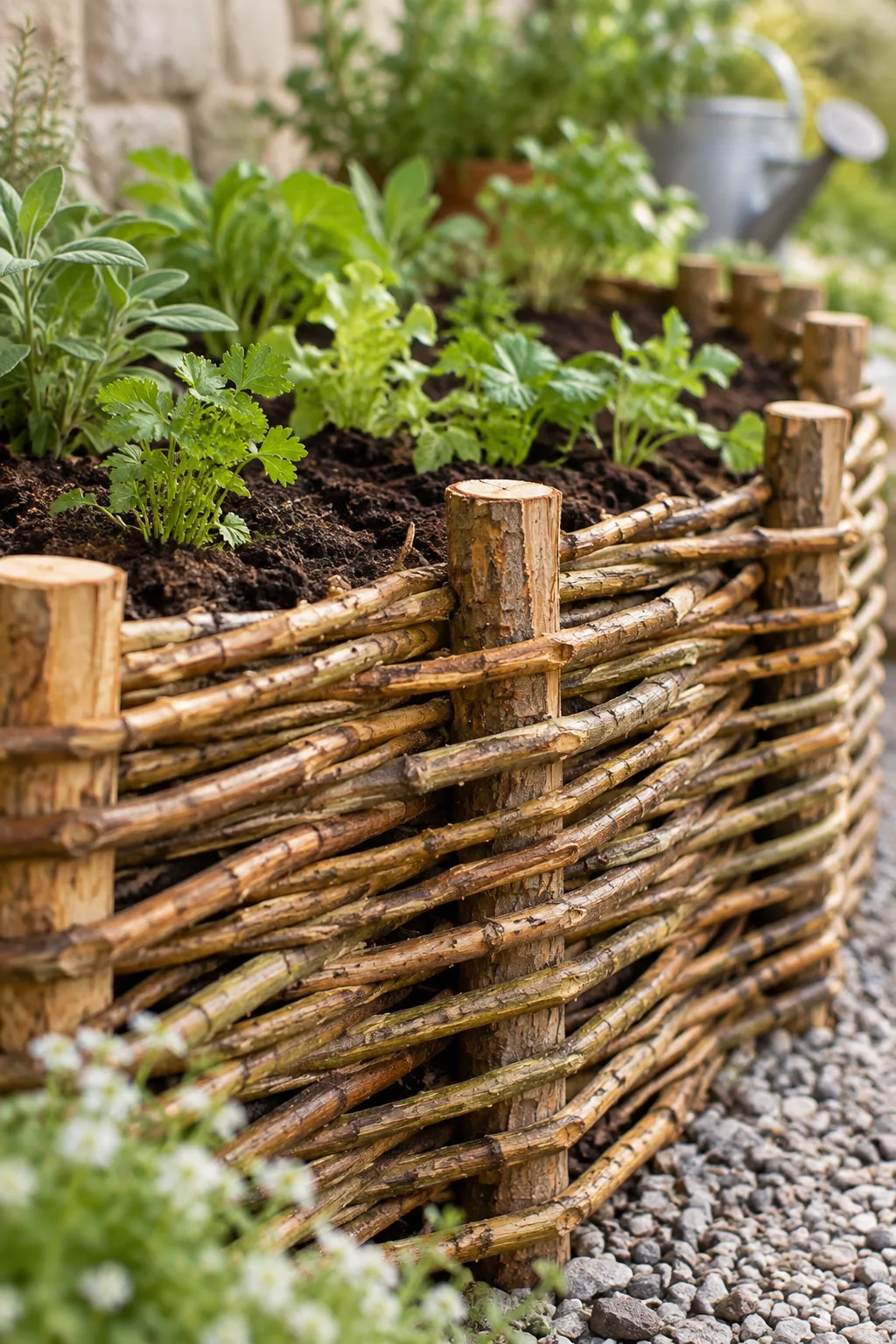
I always love the charming, old-world feel of woven willow branches holding back a low garden tier. You just weave flexible saplings between sturdy upright stakes for a fast, biodegradable retaining barrier.
6. Gabion Baskets
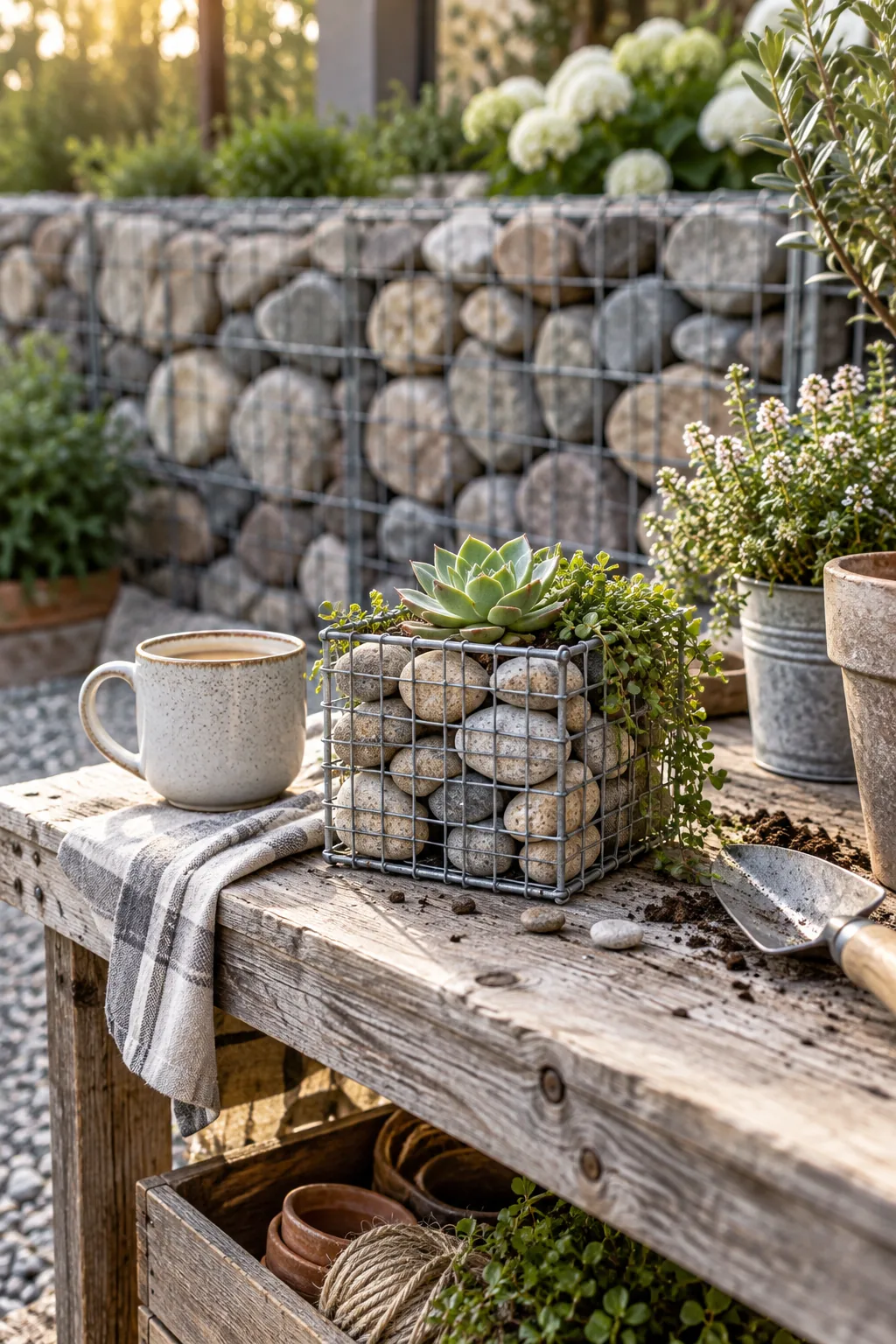
Wire cages filled with chunky river rock create a heavy, completely permeable barrier.
The water simply flows right through the stones instead of building up pressure behind the gabion baskets. It is an easy weekend project if you buy the cages pre-made.
Just make sure your rocks are larger than the wire grid openings.
Why it works: Excellent drainage prevents the wall from failing during heavy rainstorms.
7. Classic Brick and Mortar
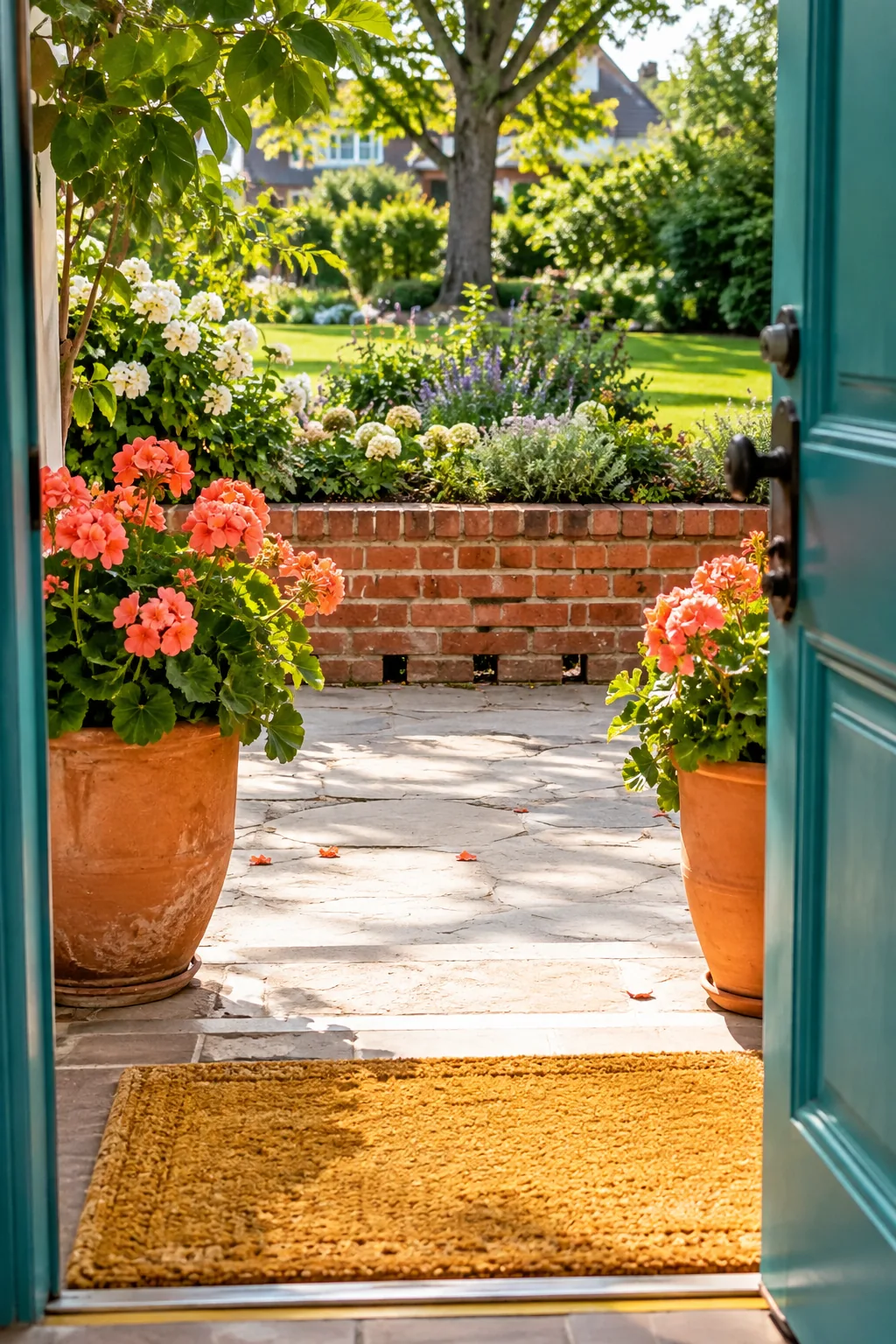
A standard brick wall needs a poured concrete footing to prevent winter frost heaves. You can match the bricks to your home exterior for a seamless, built-in look across your front yard. Leaving small gaps in the bottom row provides essential weep holes for trapped groundwater. This classic style works perfectly for defining crisp, formal garden boundaries.
8. Upcycled Concrete Rubble
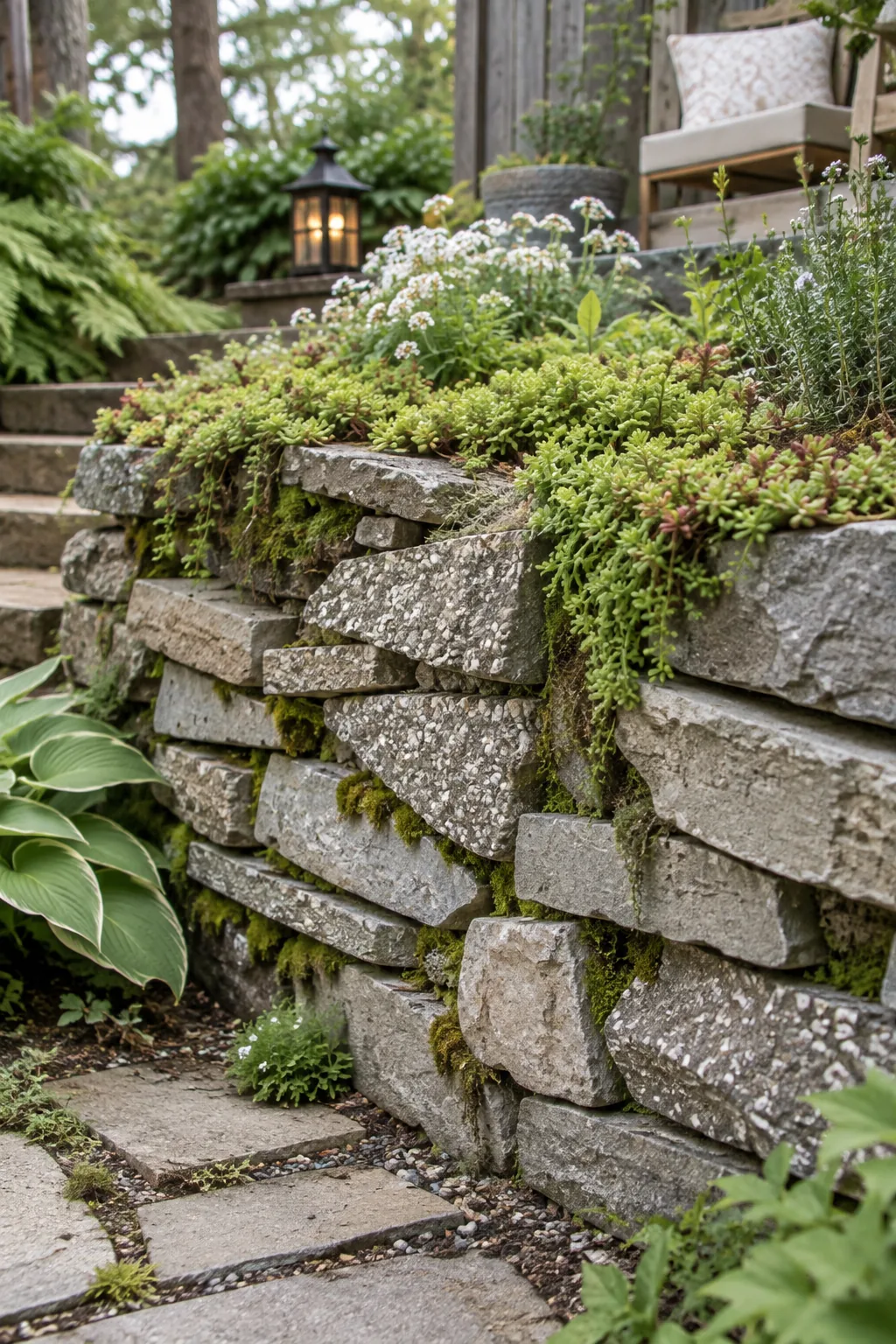
Save broken concrete slabs from old patios to build a highly textured, eco-friendly retaining wall. Stacking the irregular chunks like natural flagstone gives you a rugged look for almost zero cost.
9. Vertical Wood Posts
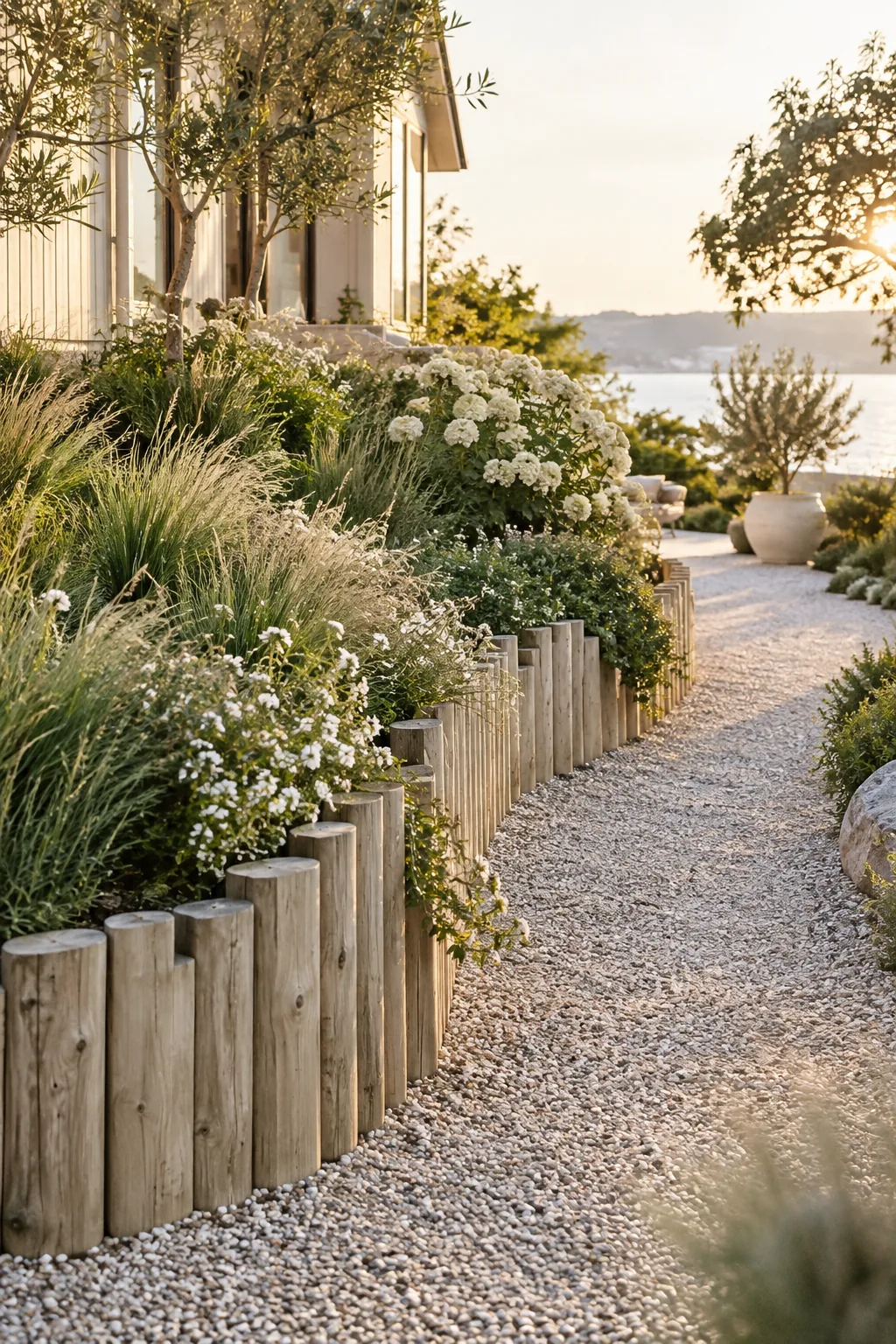
Burying treated posts vertically allows you to easily follow the curved edges of a winding garden path. Setting them at slightly varying heights creates a playful, organic border that holds back shallow slopes.
- Pressure-treated posts
- Fast-setting post hole concrete
- Gravel
10. Sloped Boulder Wall
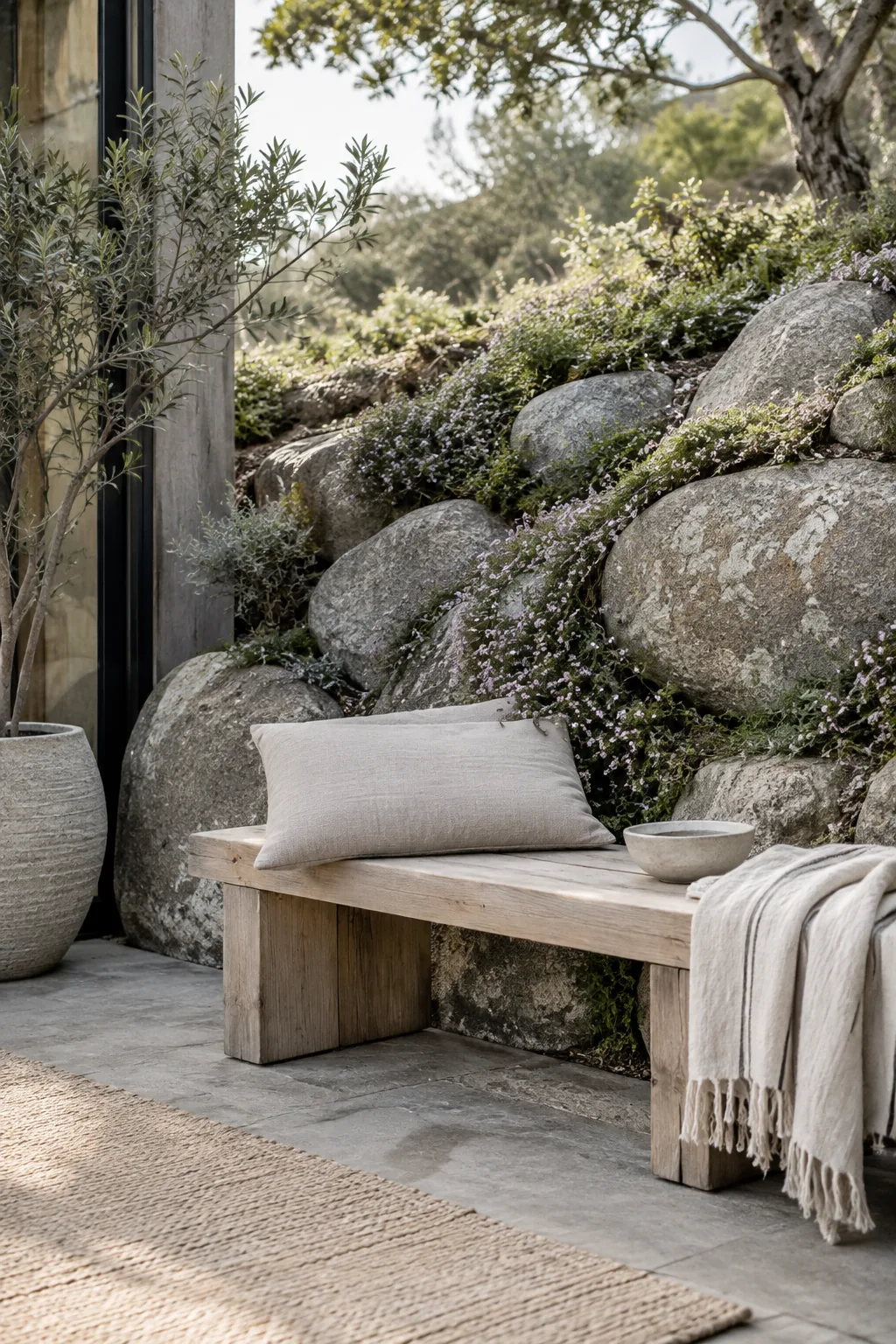
Letting massive landscape boulders lean directly into the hillside provides immense structural stability.
You just nestle the heavy rocks into the dirt and plant creeping groundcovers in the gaps between them. The plants eventually soften the hard stone edges.
This method looks like a natural rock outcropping rather than a man-made fence.
11. Poured Concrete
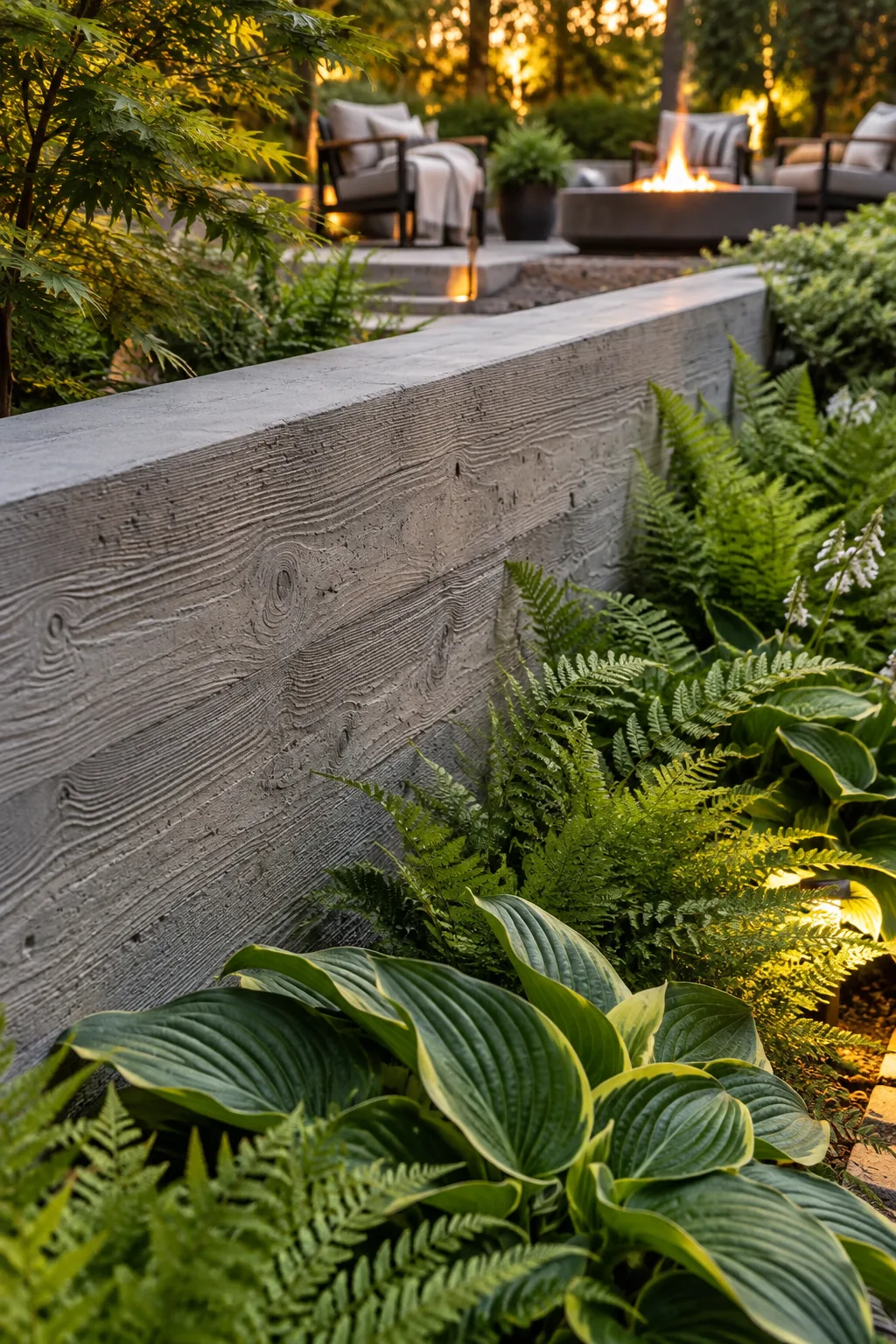
A solid concrete wall requires wooden formwork and steel rebar reinforcement. Leaving the concrete raw creates a stark, minimalist backdrop that makes green foliage pop. You can also press textured liners into the wet forms to mimic the look of natural wood grain. A smooth, flat top doubles as extra seating around a backyard fire pit.
- Plywood forms
- Rebar grid
- Form release agent
12. Cinder Block Planters
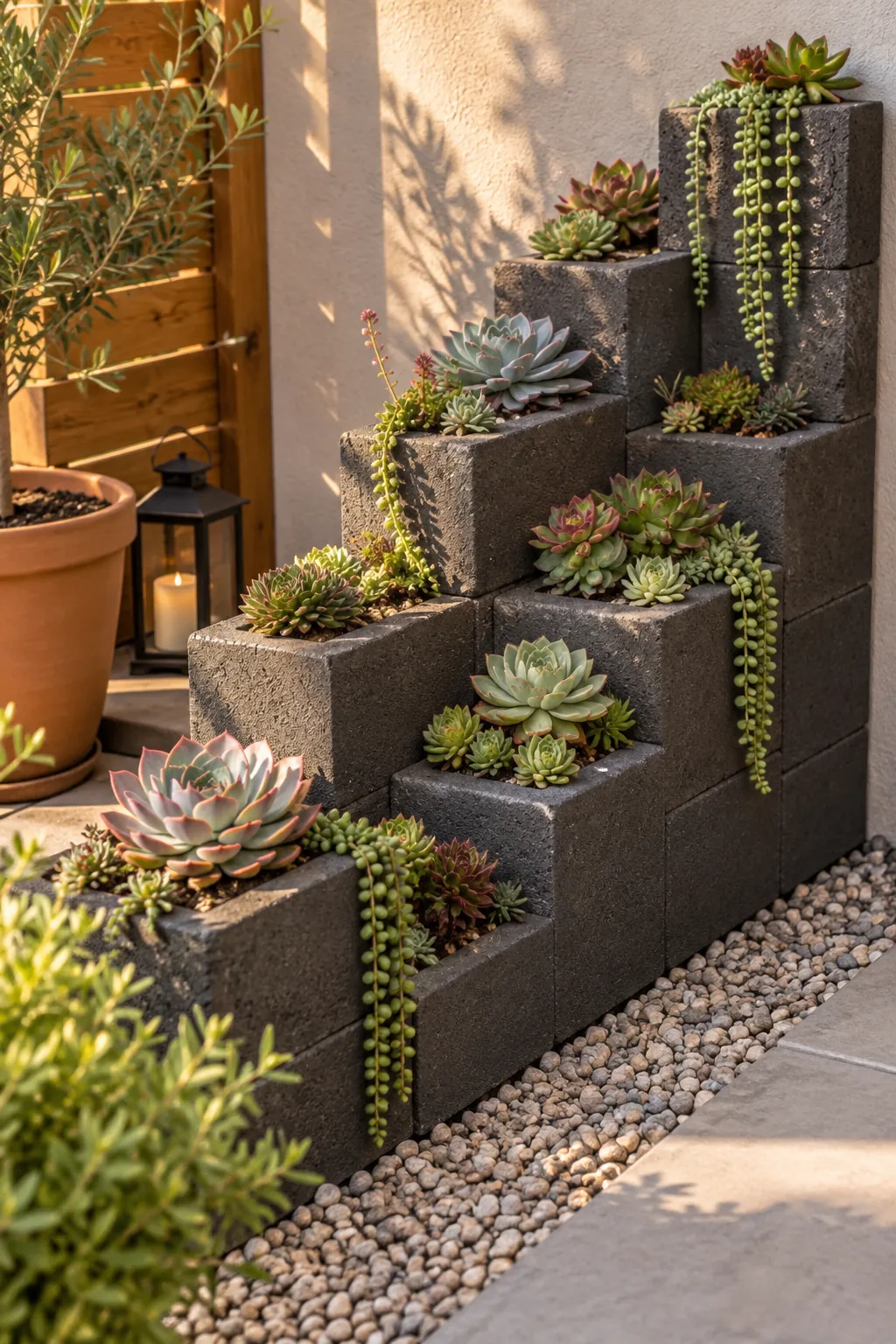
The hollow cores of standard cinder blocks give you built-in planting pockets for succulents. Stacking them in a staggered pattern creates a stepped retaining wall that doubles as a vertical garden. You can paint the blocks charcoal gray to hide dirt and modernize the cheap material.
Just fill the bottom blocks with gravel instead of soil to keep the base solid.
13. Corrugated Metal Panels
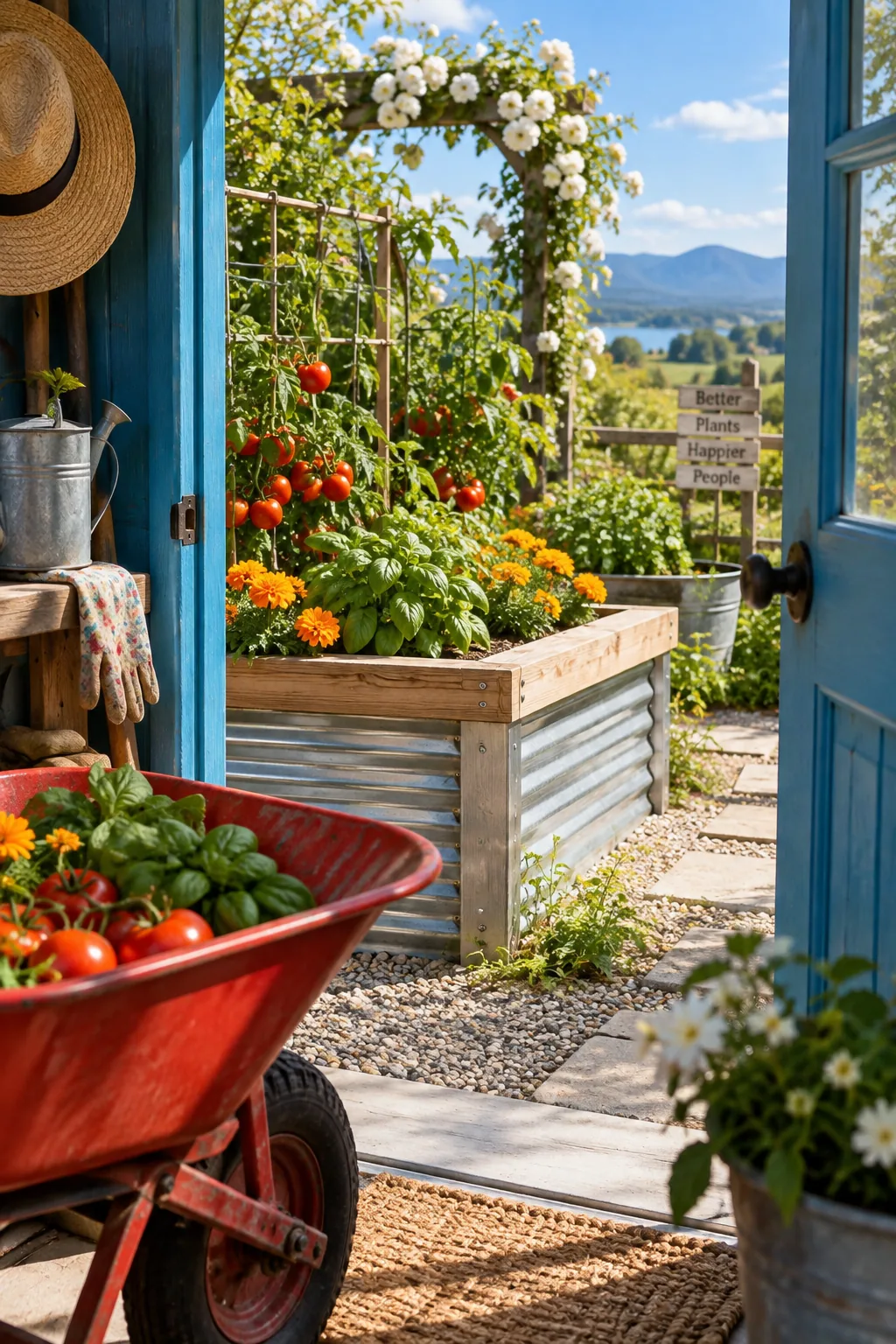
Shiny galvanized metal panels bring a cool, rustic-industrial vibe to a raised vegetable garden. You screw the rigid metal sheets directly to a sturdy wooden frame anchored in the ground. Capping the sharp top edge with a thick wooden rail finishes the design cleanly.
Make sure to use exterior-grade screws so rust does not bleed down the panels.
Why it works: The deep corrugations give thin metal sheets the structural rigidity needed to hold heavy, wet soil.
14. Natural Log Terracing
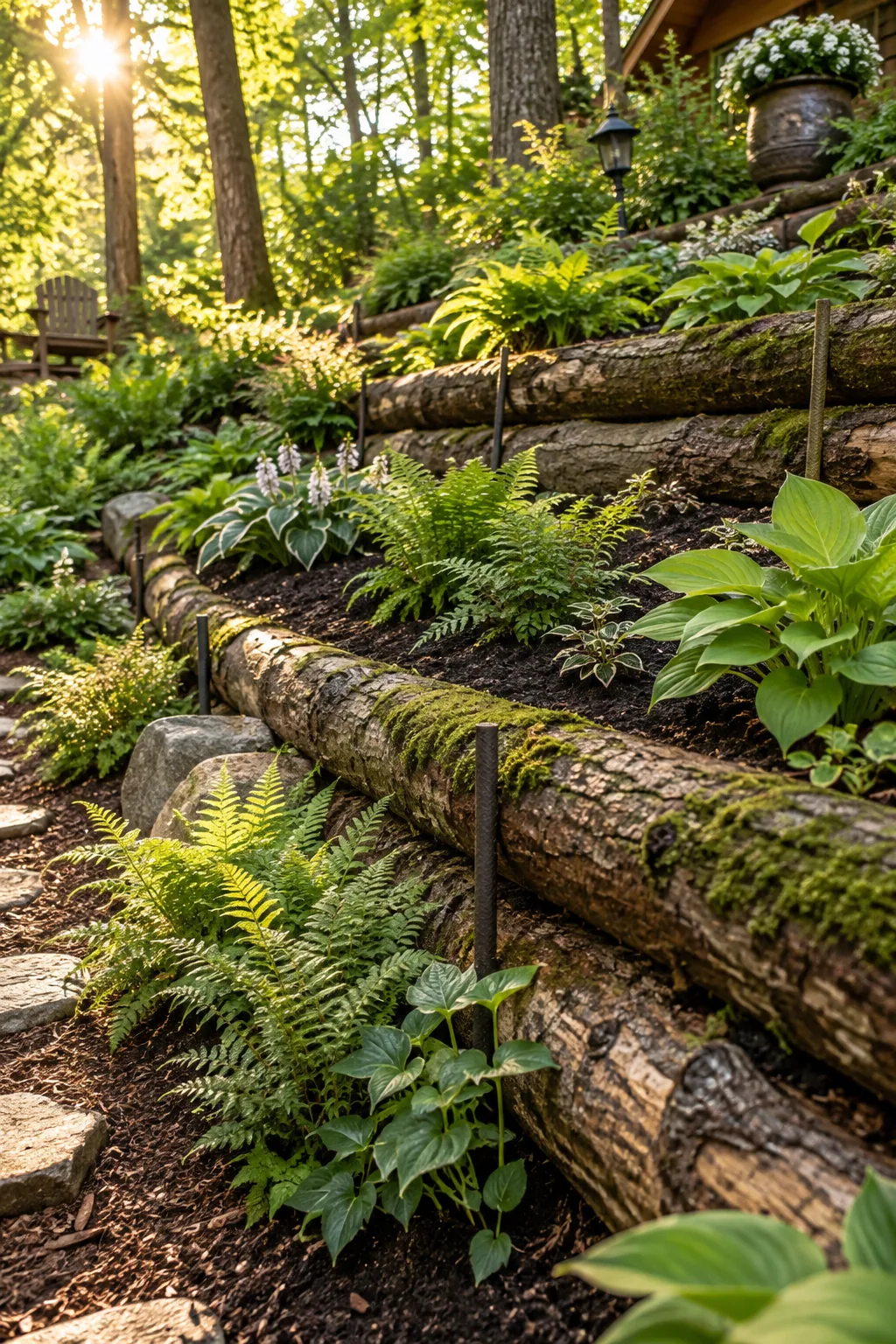
Use fallen tree trunks from your own property to terrace a steep woodland garden for free. Pin the logs in place by driving thick rebar stakes deep into the ground on the downhill side. Backfill behind the wood with rich compost to create level planting beds.
Peel the bark off first if you want the logs to last a few years longer.
- Thick hardwood logs
- 24-inch rebar stakes
- Sledgehammer