
The 18-Inch Driveway Garden: Printable Strip Planting Plan
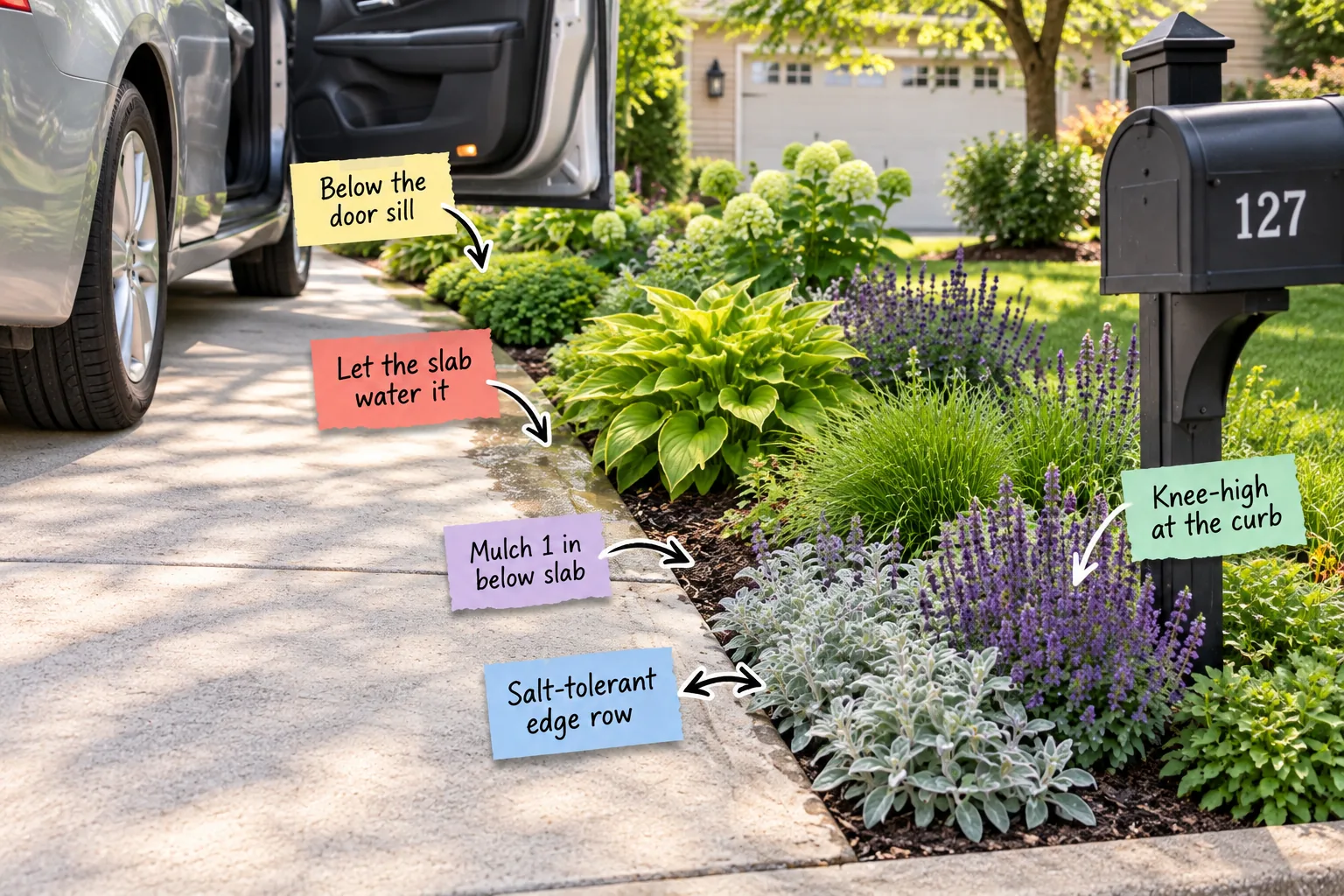
Transforming that narrow concrete edge is entirely possible when you download our free printable 18-Inch Driveway Strip Planting Plan. You will map out your driveway zones perfectly, set the correct soil grade, and confidently plant the exact heights needed for car doors and curbs.
The 18-Inch Driveway Strip Plan
Our free printable plan divides the narrow 18-inch strip into three distinct functional zones to take the guesswork out of your foundational layout. I spent weeks rearranging nursery pots on my own Austin driveway before realizing a mapped-out plan prevents expensive overcrowding.
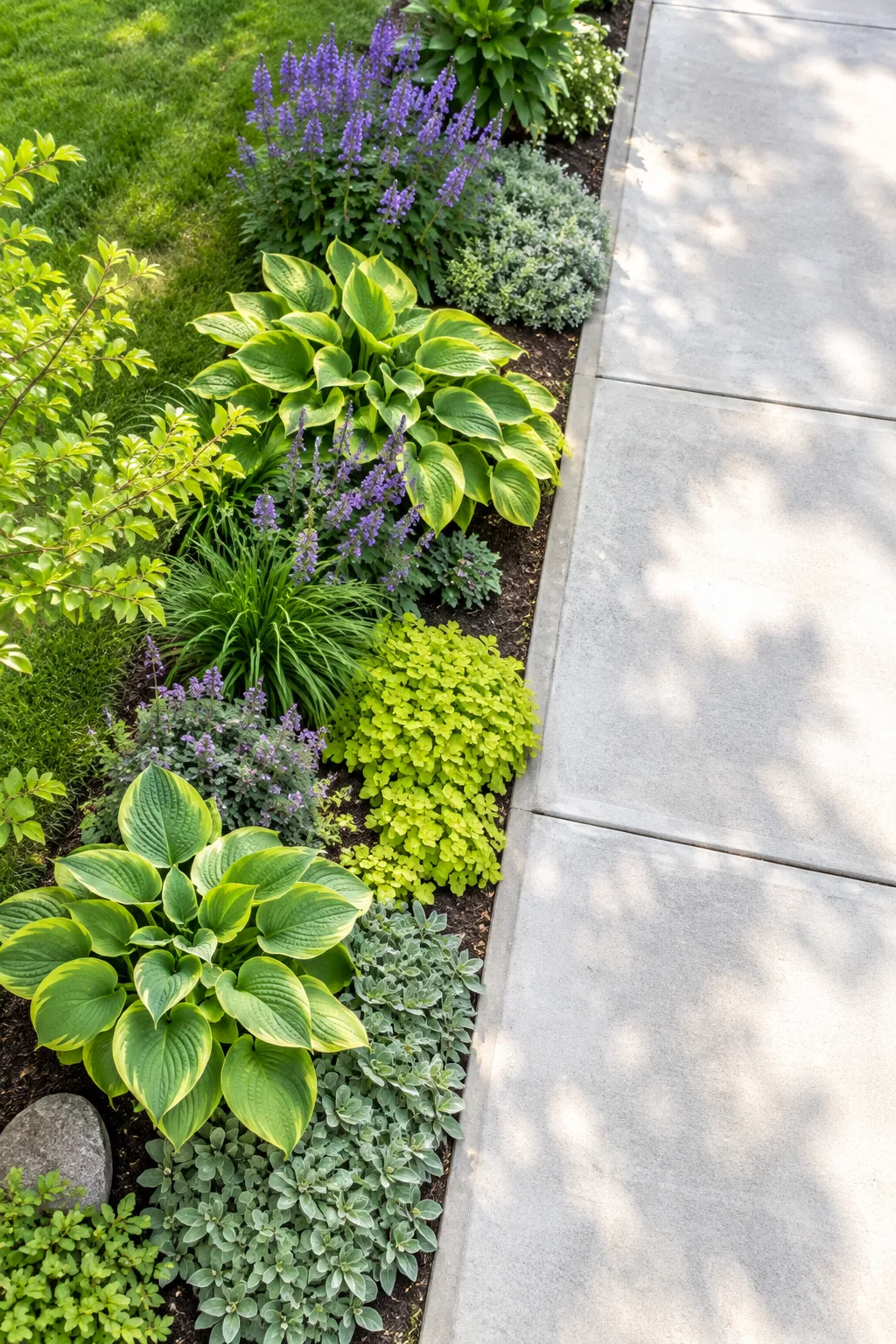
The one-page guide provides specific plant lists categorized by height and maps out the exact staggered spacing grid required for a lush look. Following this structured approach guarantees your new garden strip fills in beautifully without choking out the delicate root systems.
- The door-swing zone: Kept under eight inches tall to ensure passenger doors swing completely clear.
- The middle moisture zone: Placed at the lowest grade point to absorb heavy driveway storm runoff.
- The curb anchor zone: Planted with knee-high varieties to provide welcoming street appeal near the mailbox.
- The salt-tolerant edge: Lined with rugged silver foliage to withstand winter road treatments and radiant heat.
Mapping the Sun Exposure
Before buying a single plant, you must track how many hours of direct sunlight hit the concrete edge throughout the afternoon. The pavement acts as a massive thermal battery, radiating intense heat that turns a standard full-sun requirement into a severe drought-tolerance test.
Setting the Grade for Runoff
The most critical spatial measurement for this project is keeping the final mulch layer exactly 1 inch below the concrete slab. I learned this the hard way when a heavy spring storm washed my flush-planted soil directly down the driveway into the street.
Creating this intentional slight depression prevents heavy rain from displacing your mulch while directing free moisture right into the root zone. You essentially turn the entire driveway surface into a passive irrigation system that funnels rainwater exactly where your new plants need it most.
| Trench Component | Depth Below Slab | Primary Material | Function |
|---|---|---|---|
| Mulch Surface | 1 inch | Shredded hardwood | Prevents runoff washouts |
| Soil Line | 3 inches | Compost blend | Anchors the root crowns |
| Root Base | 9 inches | Native topsoil | Encourages deep growth |
| Drainage Base | 12 inches | Loosened subsoil | Prevents winter rot |
Selecting the Right Soil Mix
Because the strip is confined by concrete, you must dig out the compacted builder debris and replace it with a well-draining compost blend. Mixing in expanded shale or coarse sand prevents the narrow trench from becoming a stagnant bathtub during heavy spring downpours.
The Staggered Spacing Grid
Getting the geometry right during planting prevents the strip from looking sparse in spring and overgrown by August. You must utilize a staggered planting technique where plants are offset in a zigzag pattern based strictly on their expected mature width.
Measuring Mature Plant Width
Always measure the required spacing from the center of the root ball rather than the edge of the nursery pot. Leaving eight to twelve inches of empty space between new plantings looks awkward initially but guarantees a seamlessly woven canopy by the second summer.
The Door-Swing Zone
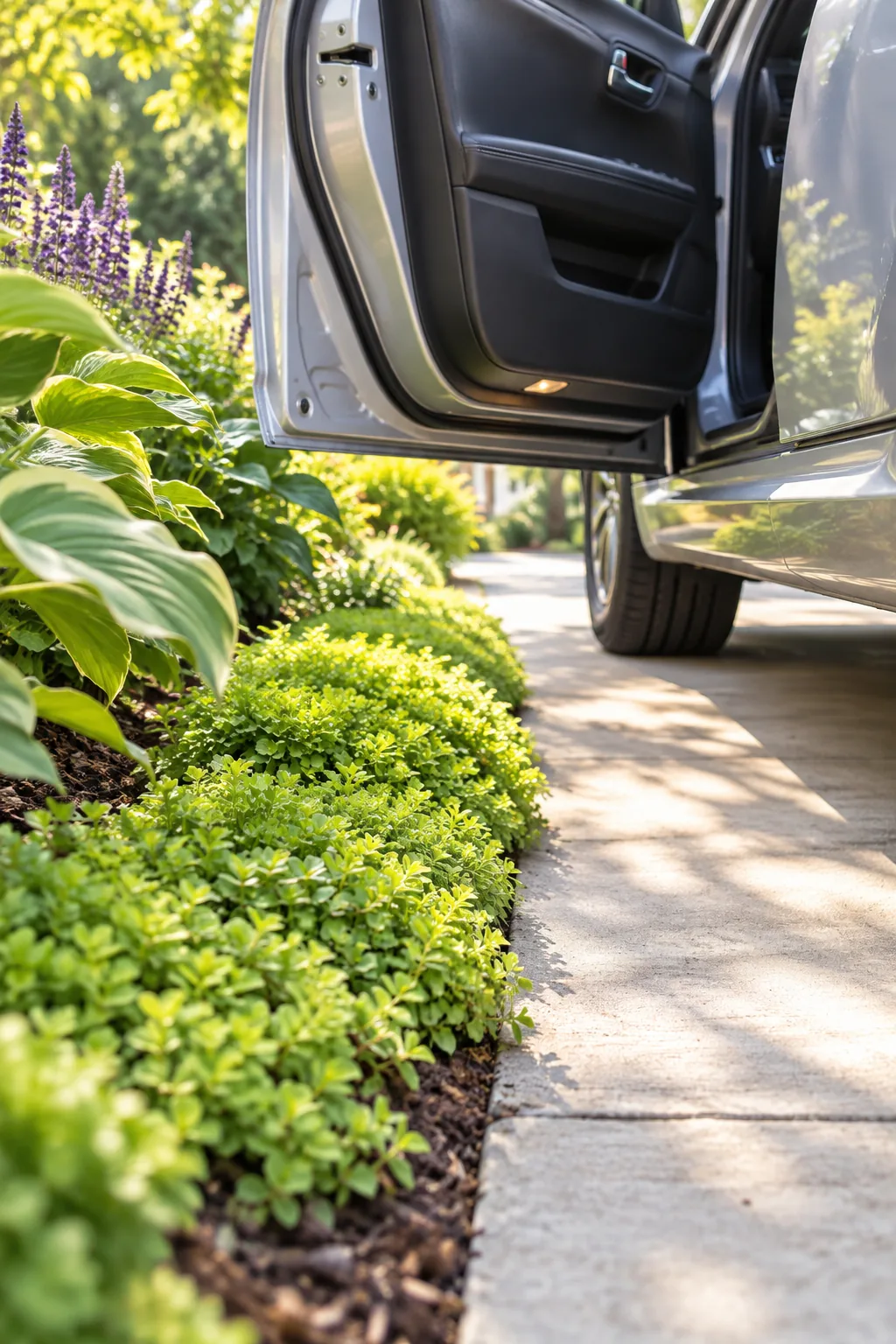
The area directly beside where vehicles park requires low, cushion-forming groundcovers that sit safely below the door sill. You must choose resilient varieties that top out at eight inches or less so passenger doors can swing open freely without crushing the delicate foliage.
Replacing traditional turf grass with creeping thyme or dwarf stonecrop creates a beautiful, fragrant carpet that handles occasional foot traffic. These rugged miniature plants keep the exit path perfectly clear for your guests while completely eliminating the need for a noisy string trimmer.
Integrating Hardscape Elements
If your family regularly steps out of a large SUV, consider swapping a few plants in the door-swing zone for flat flagstone steppers. Sinking these stones completely level with the soil grade prevents tripping hazards while providing a stable landing pad for heavy groceries.
The Middle Moisture Zone
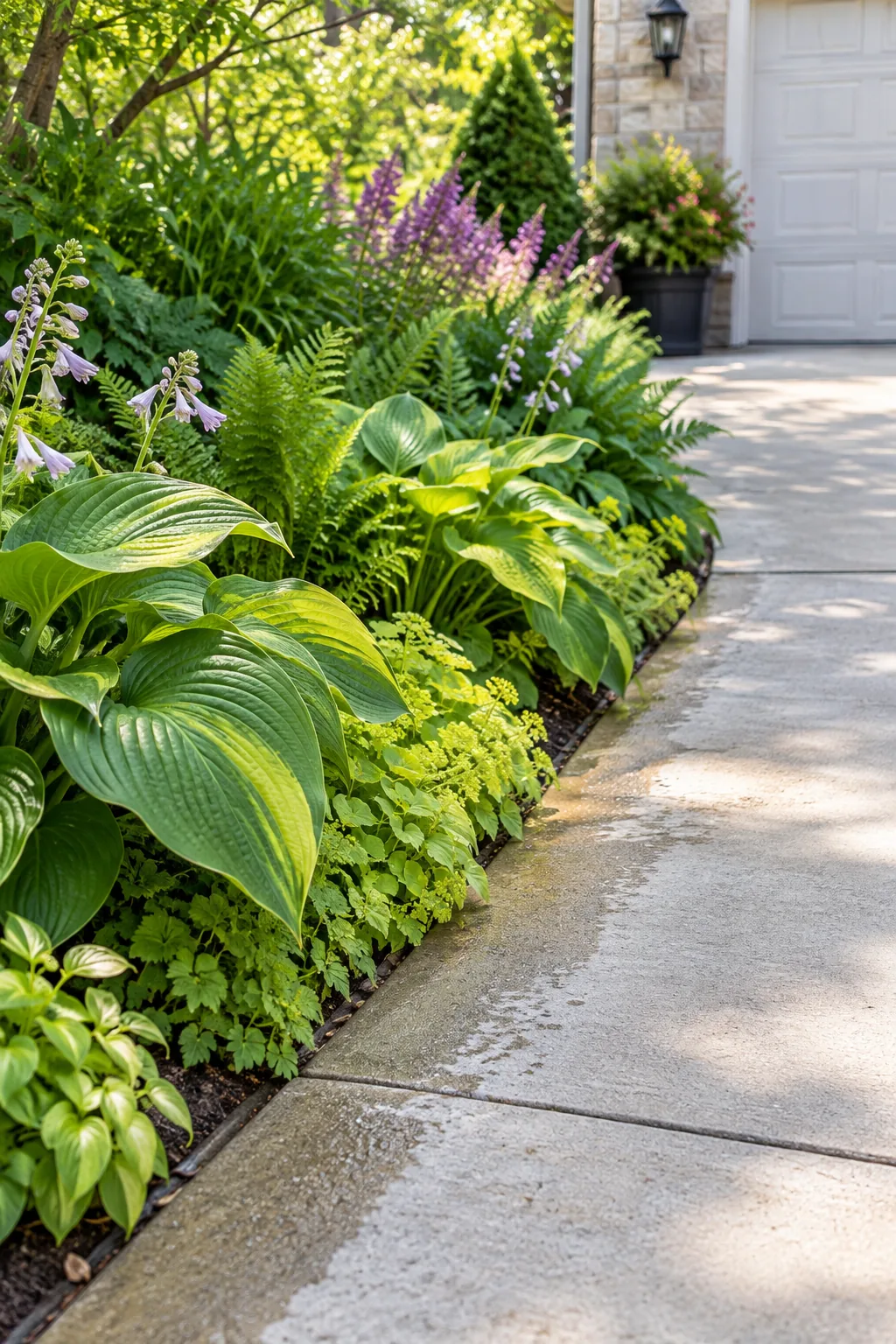
The lowest point of the driveway strip naturally collects runoff, so you should absolutely let the slab water it. Planting lush, moisture-loving varieties here takes full advantage of the passive irrigation provided by the massive concrete catchment area during summer thunderstorms.
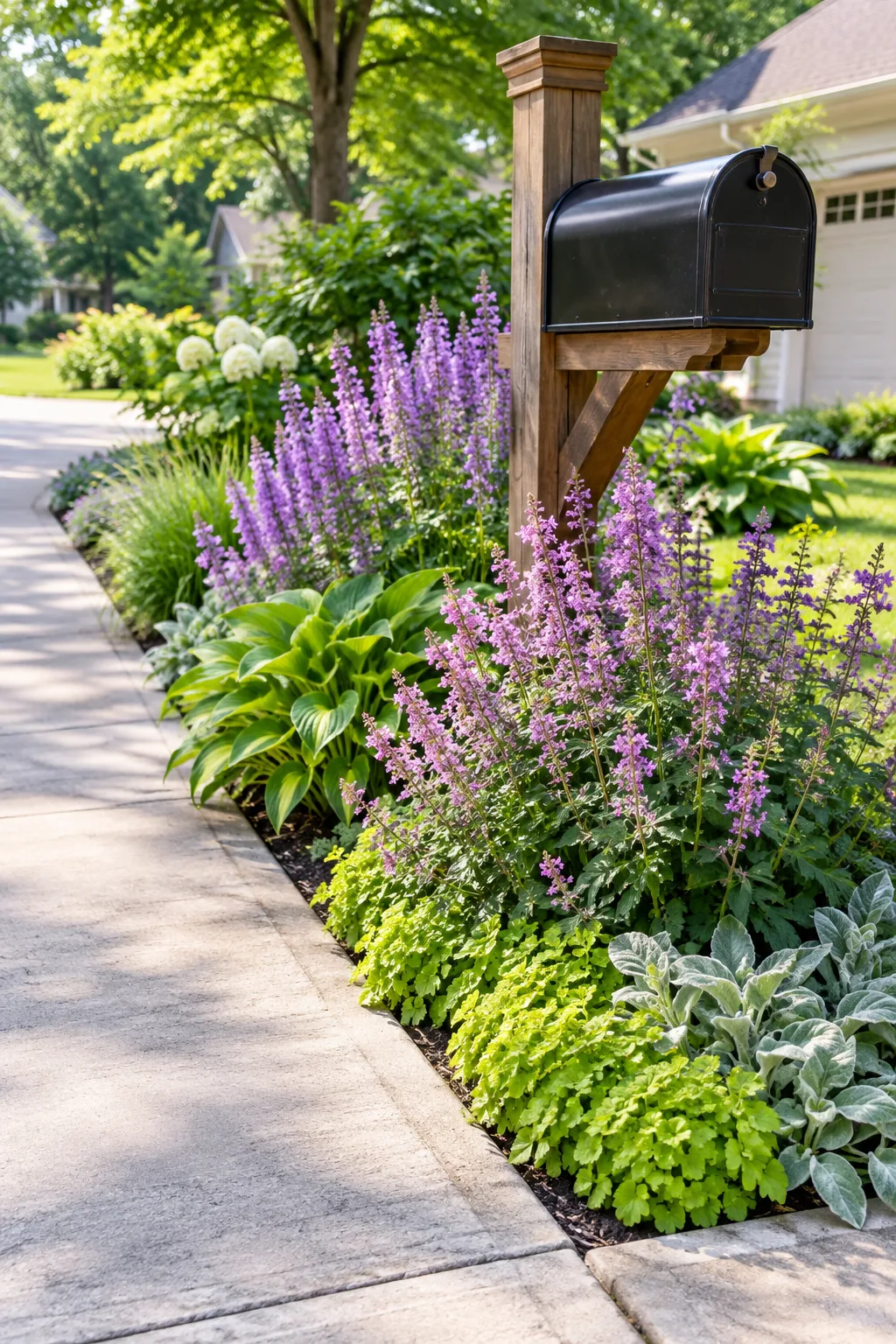
Deep-rooted perennials thrive in this middle depression, transforming rapid storm runoff into vibrant summer greenery instead of a muddy puddle on your pavement. Grouping plants with similar high-water needs in this specific dip ensures they survive the hottest months without constant hose watering.
Evaluating Drainage Capacity
Before installing expensive moisture-loving plants, run a garden hose at the top of your driveway for five minutes to watch where the water pools. If the middle zone holds standing water for more than an hour, you must aerate the subsoil to improve drainage.
The Curb and Mailbox Zone
The street end of the strip is where taller plants can finally thrive, keeping them roughly knee-high at the curb. I love grouping bright purple coneflowers right around my mailbox post because they give my house instant curb appeal without blocking the sidewalk.
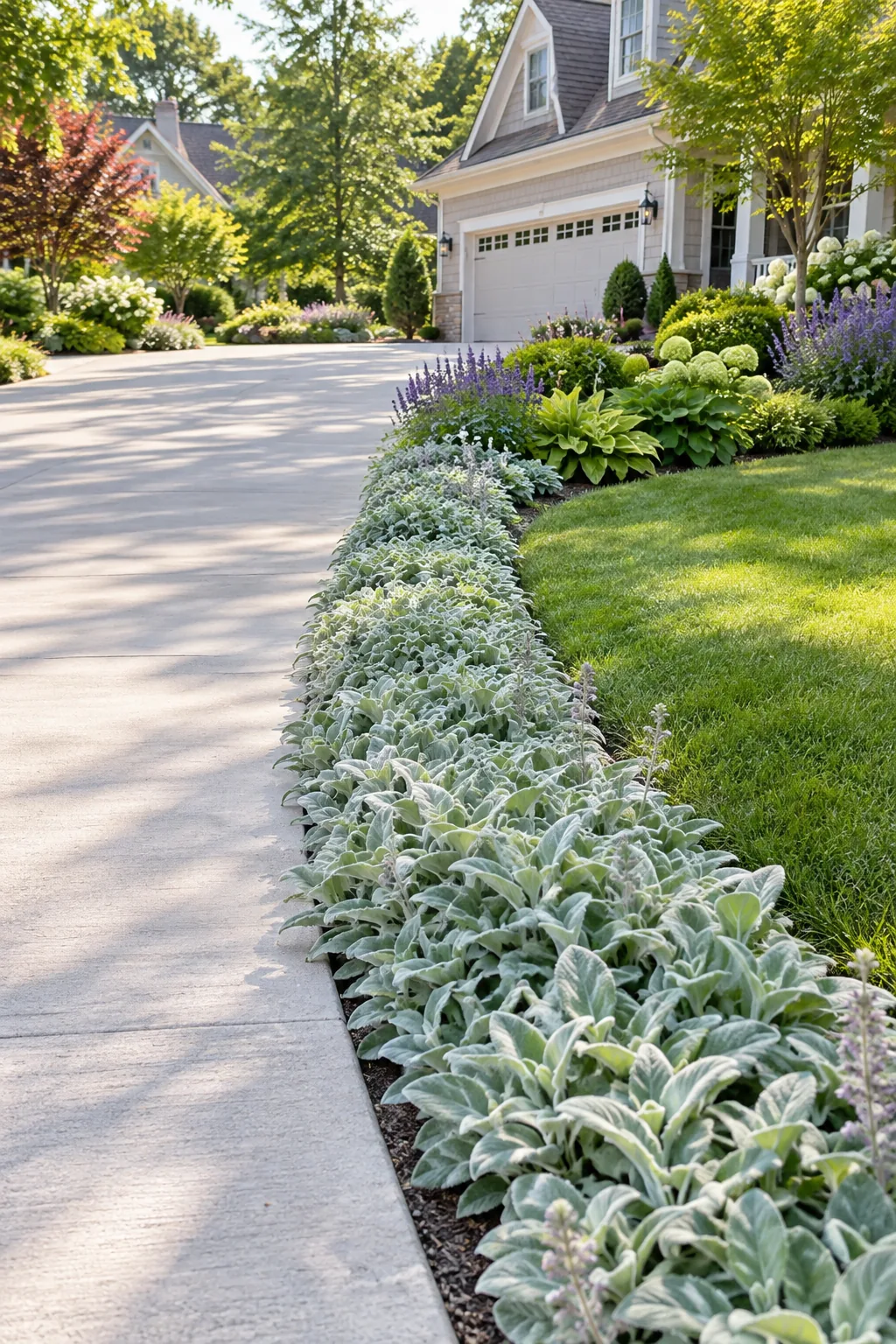
Aim for sturdy, upright varieties around 18 to 24 inches tall to anchor the mailbox post and provide a welcoming visual transition. These taller anchors draw the eye away from the flat pavement and frame the entrance to your property with gorgeous seasonal color.
Maintaining Driver Visibility
While tall plants add drama, you must never install varieties that exceed thirty inches near the street intersection. Keeping the curb zone foliage below the window line of a standard sedan ensures you can safely spot oncoming traffic and neighborhood children while backing out.
Choosing the Front Edge
The harsh conditions right against the concrete demand a continuous salt-tolerant edge row to survive both summer heat and winter road treatments. Planting silvery groundcovers helps reflect the intense radiant heat baking off the pavement during the brutal afternoons of late July.
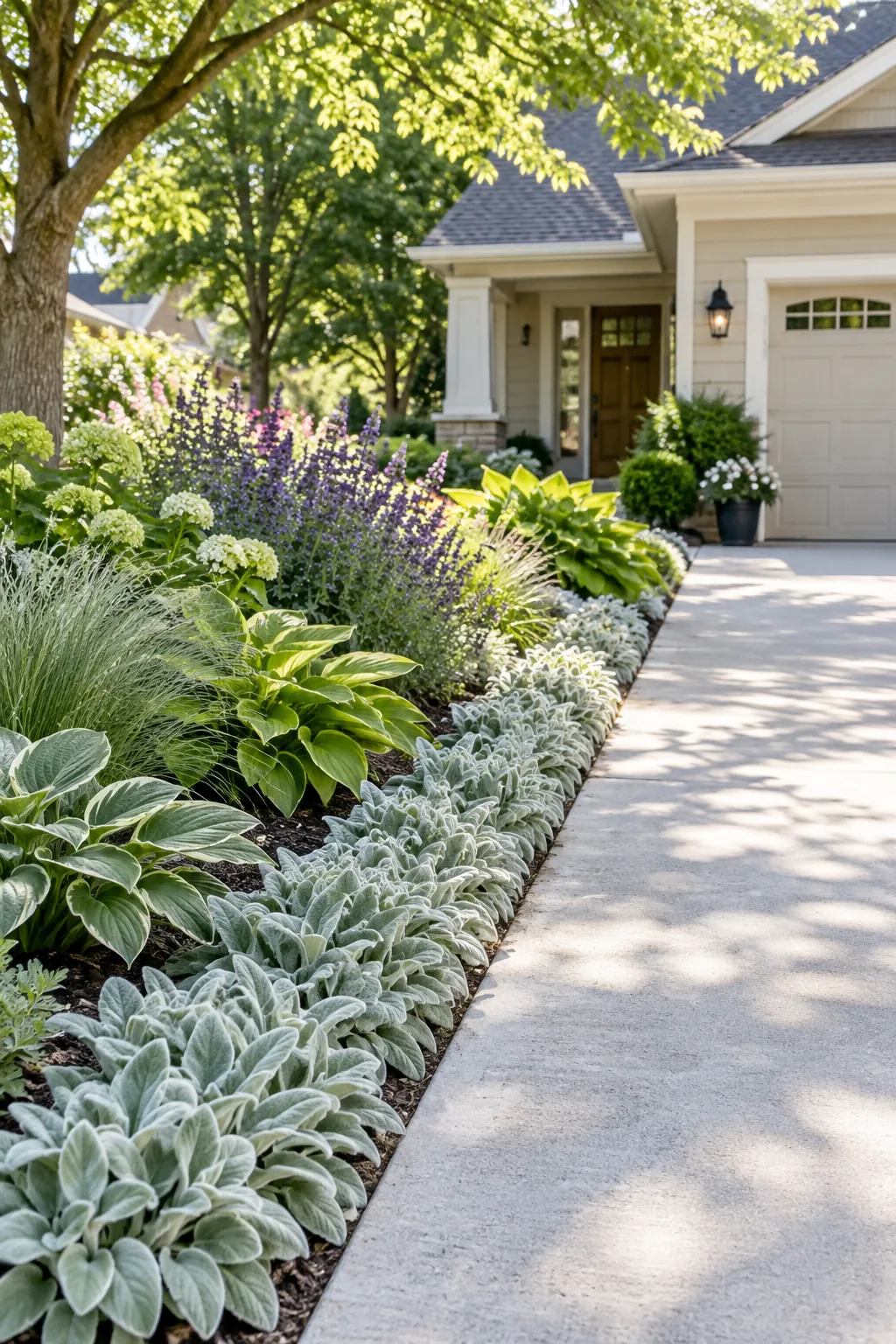
These tough border plants form a protective barrier that successfully shields the more delicate interior flowers from chemical runoff and splashing debris. Varieties with fuzzy or waxy leaves naturally repel the corrosive salt spray kicked up by passing snowplows and municipal street sweepers.
Protecting Plants from Winter Salt
If you live in a climate with heavy snowfall, shovel the clean snow from your walkway onto the garden strip to insulate the dormant roots. Always push the dirty, salt-laden slush from the street into the gutter rather than piling it onto your delicate edge row.
Selecting the Best Mulch Type
Skip the lightweight pine bark nuggets, which will simply float away during the very first heavy rainstorm. Applying a heavy, double-shredded hardwood mulch locks together to form a stable mat that suppresses weeds, retains vital soil moisture, and stays exactly where you put it.
Selecting the Right Edging Material
While the concrete driveway forms one solid border, installing a steel edge along the grass side keeps invasive turf runners from creeping into your new garden. This crisp metal barrier saves you hours of frustrating weeding and maintains a perfectly clean visual line.
Managing Summer Weed Pressure
Because the narrow trench traps moisture and heat, opportunistic weed seeds germinate rapidly during the early summer months. Pulling these invaders by hand while the soil remains damp ensures you extract the entire taproot without disturbing your delicate new groundcovers.
Spring Maintenance and Pruning
Before the new growth emerges in early spring, use sharp shears to cut back any dead foliage from the previous year. Removing this old material prevents fungal diseases from taking hold while giving the fresh green shoots plenty of room to expand.
5 Driveway Garden Styles to Copy
Choose a planting palette that matches your home's exterior and local climate.
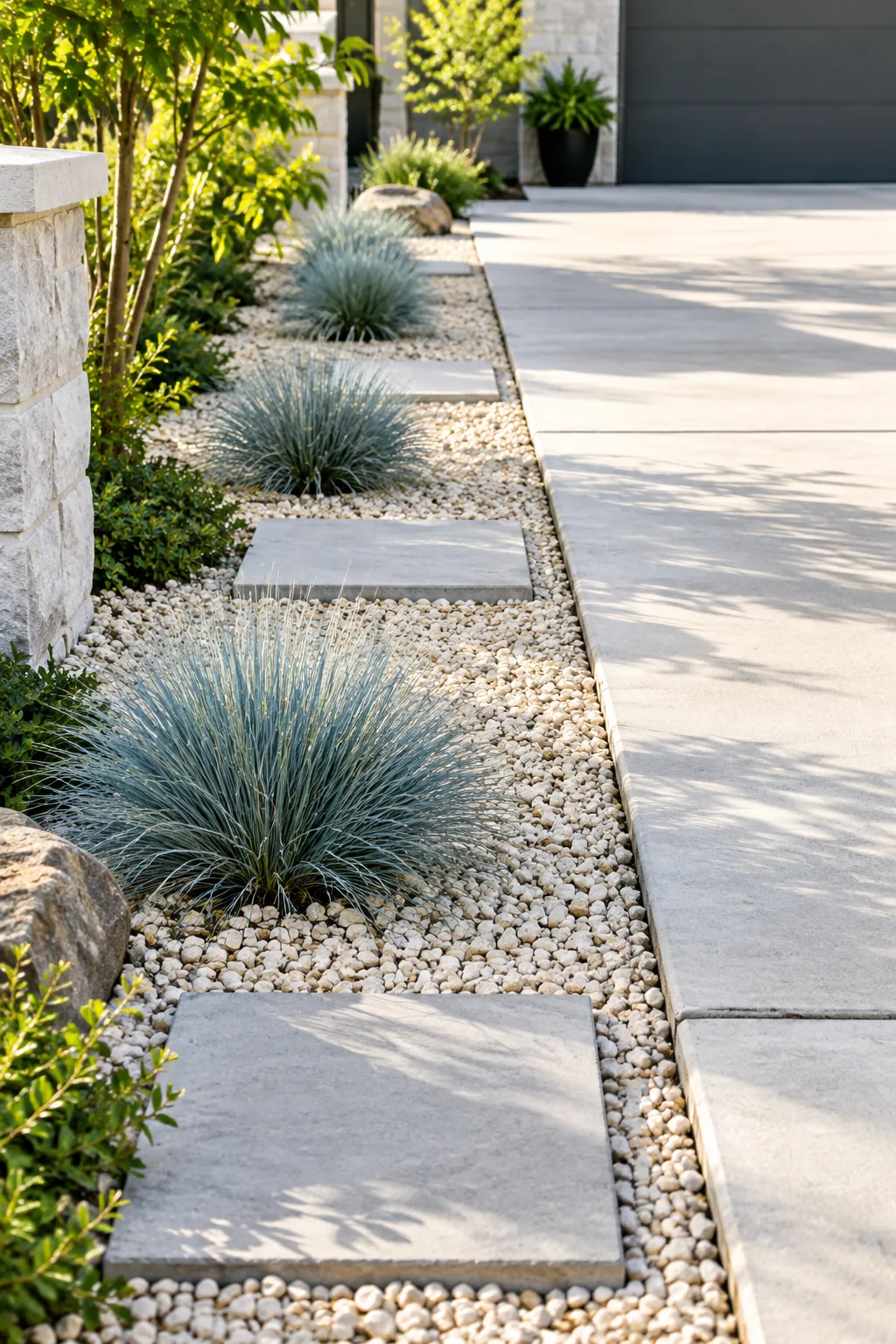
Modern Minimalist Grasses: Swap traditional mulch for pale gravel and plant architectural blue fescue for a sleek, drought-proof modern edge.
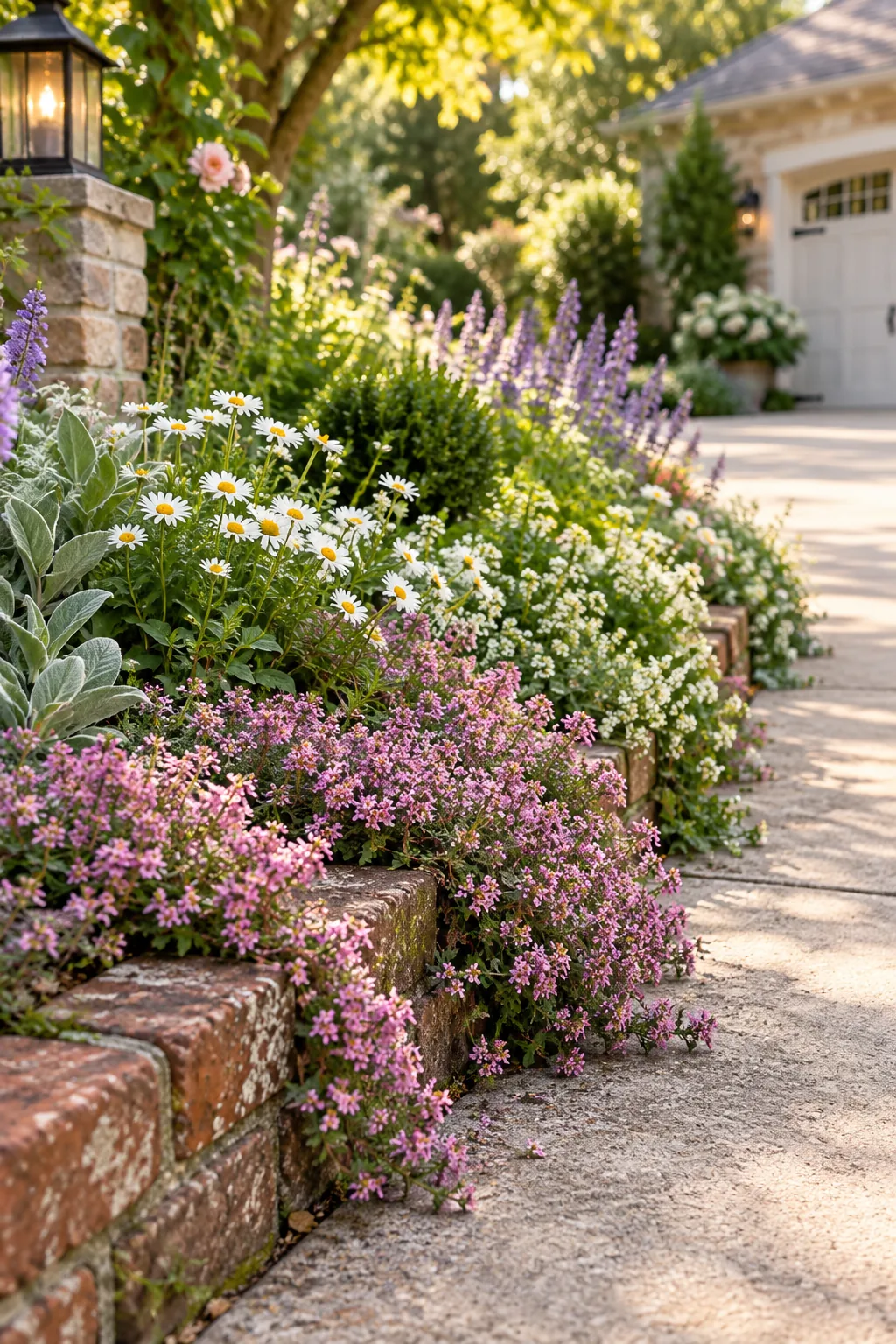
Colorful Cottage Core: Let creeping pink thyme and classic white daisies spill organically over the concrete for a relaxed, romantic cottage feel.
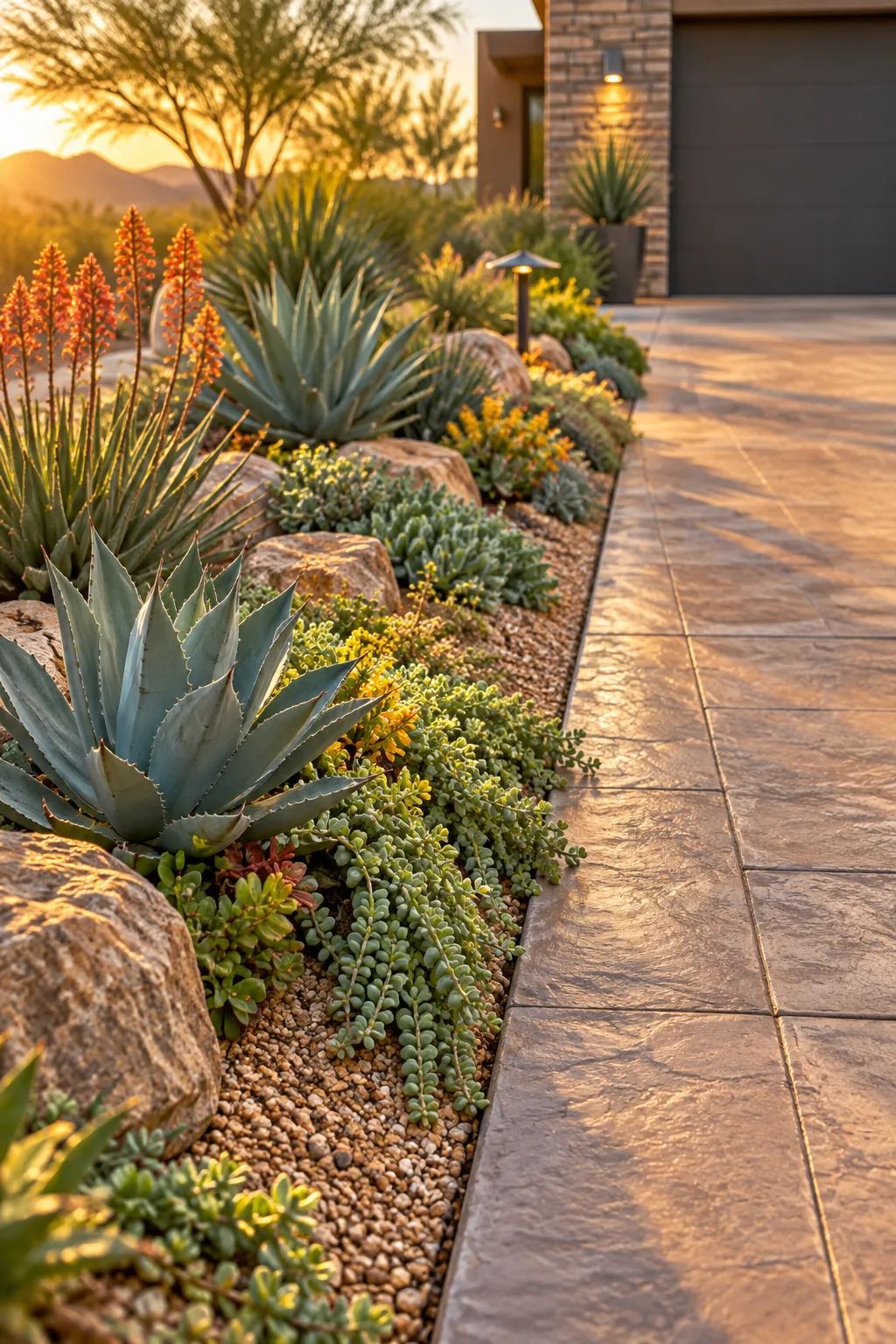
Warm Desert Oasis: Rely on structural agaves and trailing succulents set in warm decomposed granite to handle intense reflected heat.
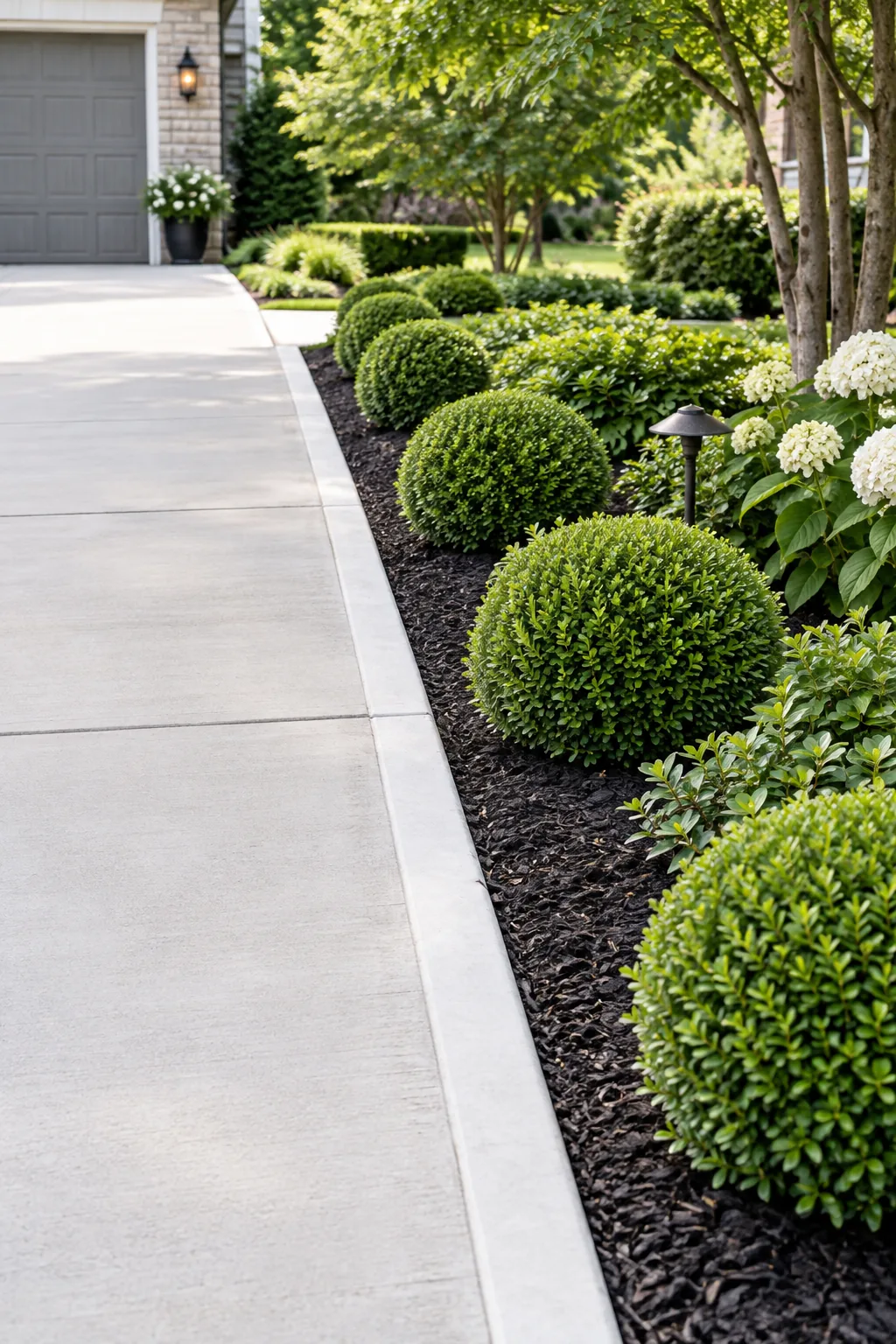
Crisp Formal Evergreen: Alternate perfectly clipped miniature boxwood spheres against dark mulch for a structured, year-round formal entrance.
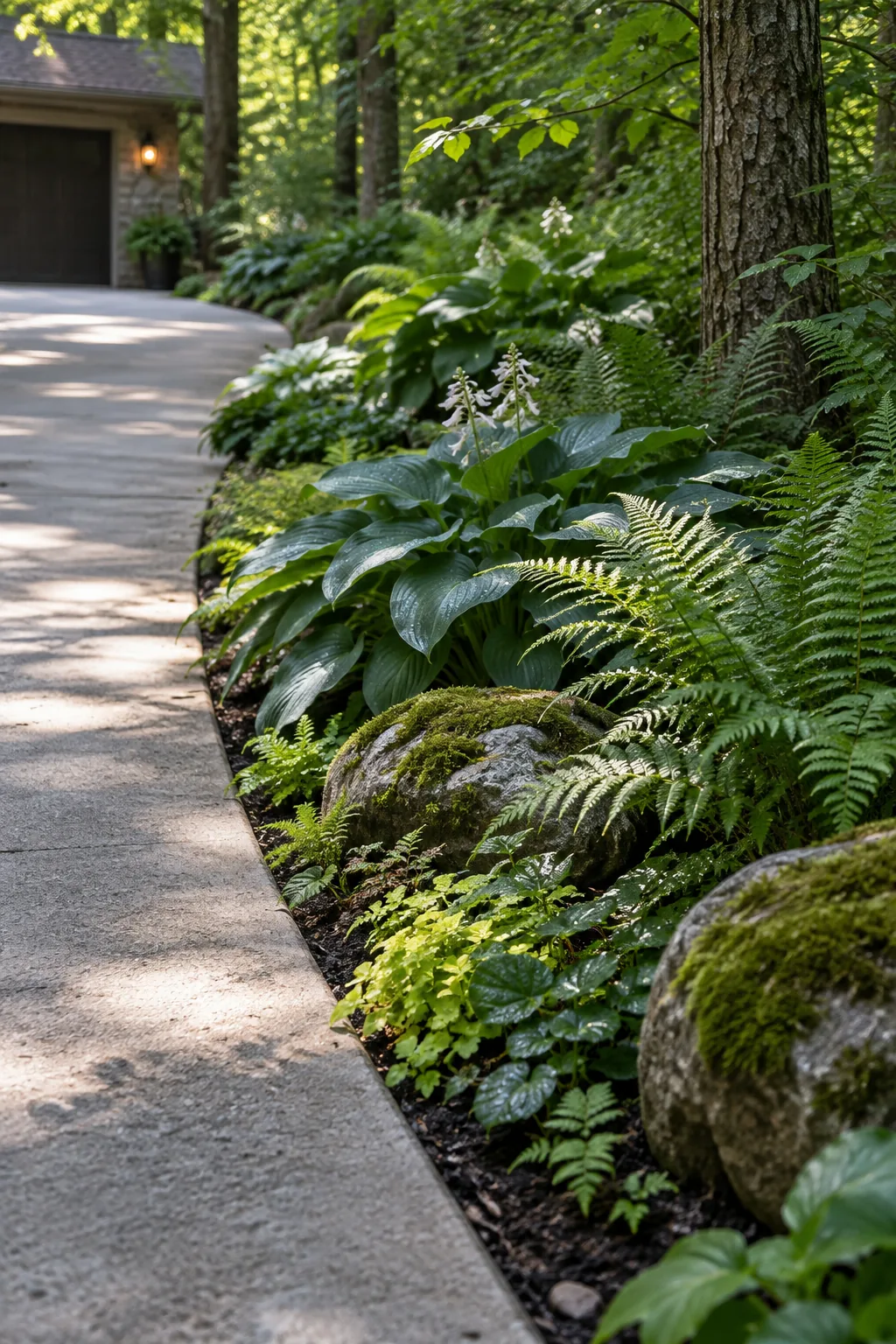
Shaded Native Woodland: Embrace a heavily shaded driveway by layering native ferns and broad hostas around small mossy accent rocks.
First-Year Establishment
During the first growing season, your narrow strip requires deep, infrequent watering to encourage roots to grow downward rather than skimming the hot surface. Building a genuinely resilient root system early on is the ultimate secret to a low-maintenance driveway border.
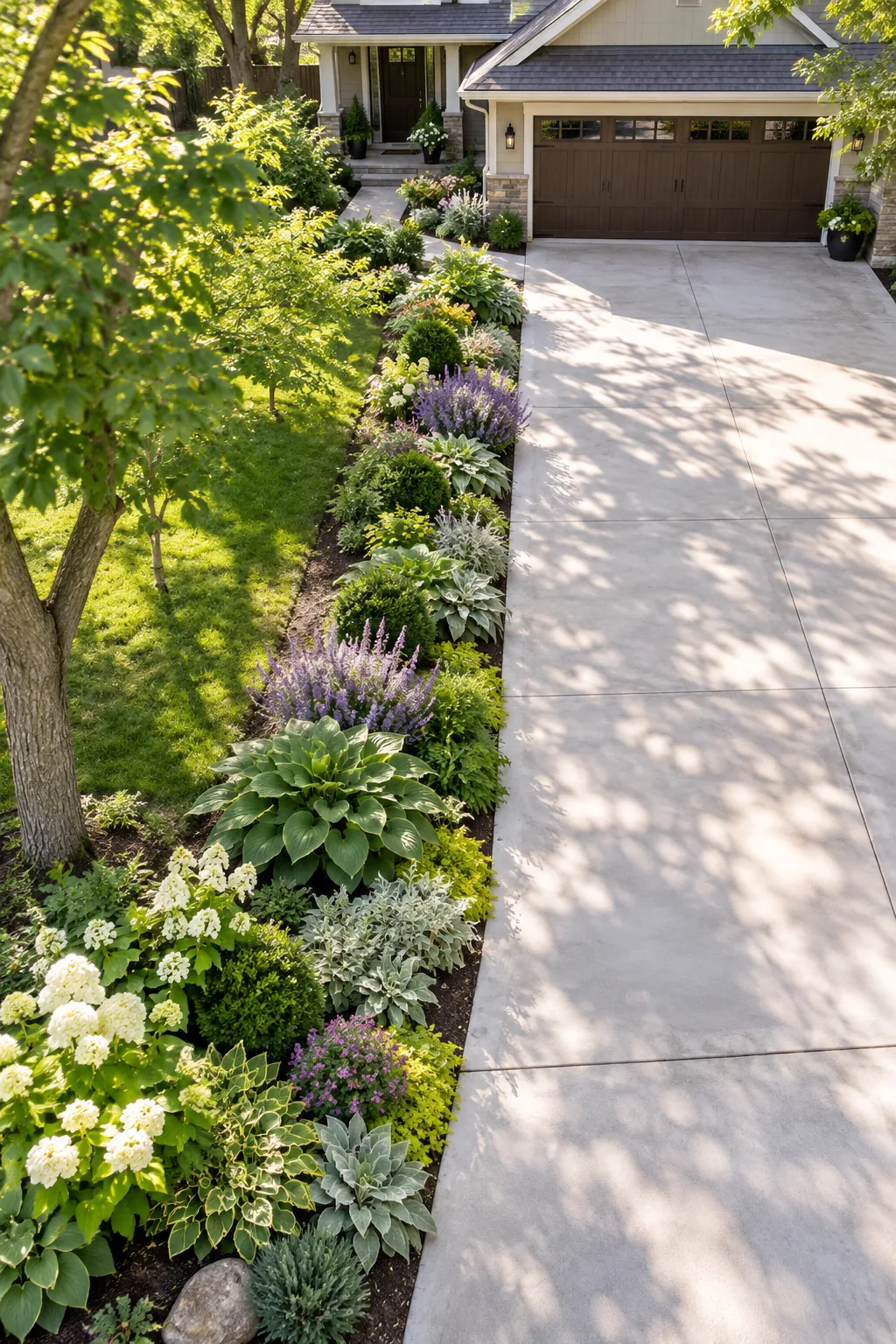
Even the most drought-tolerant driveway plants require careful monitoring while their young roots navigate the compacted soil next to the concrete. Following a strict maintenance schedule during these crucial first few months guarantees your garden strip will survive its first harsh winter.