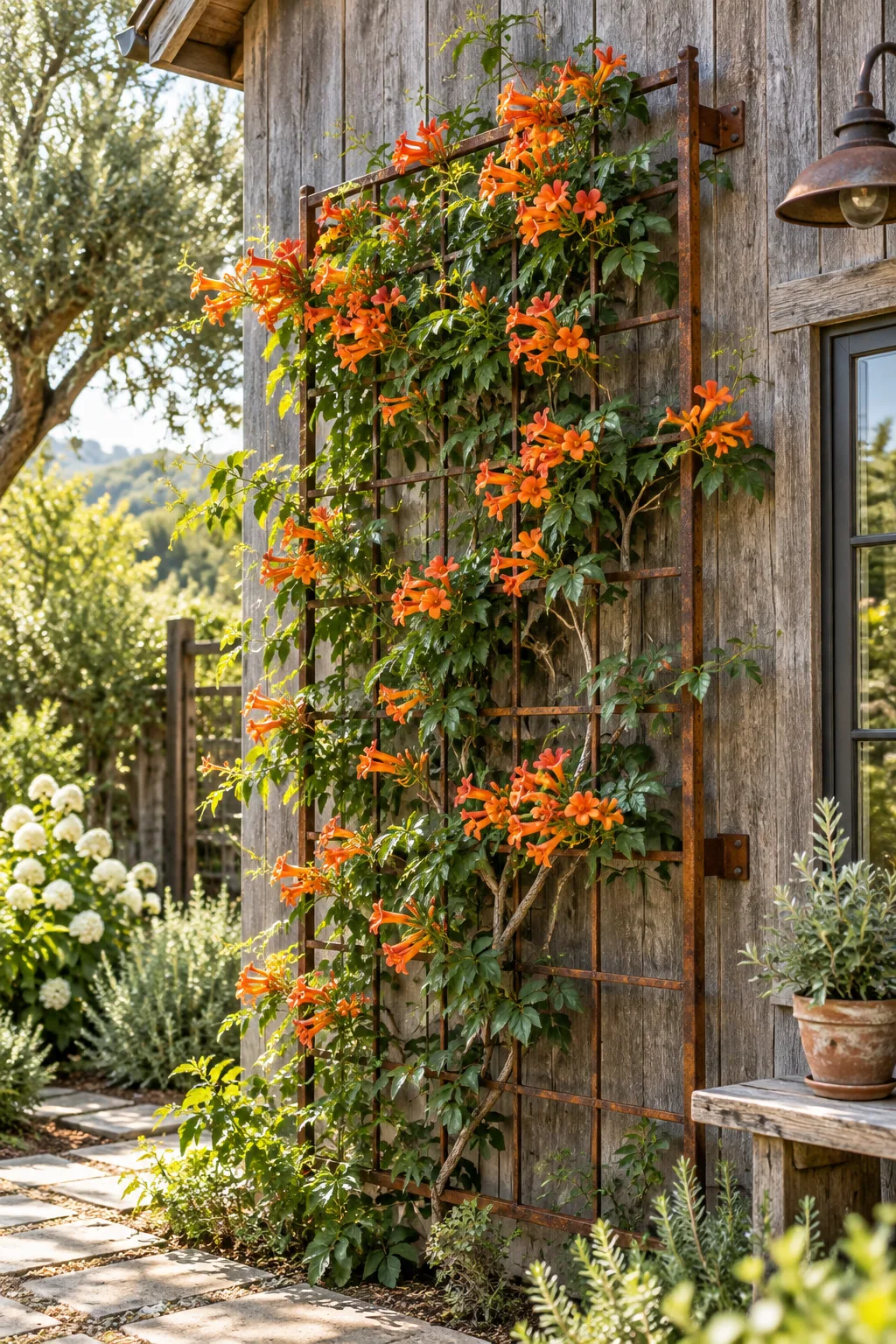
Build a Lush Wall Trellis & Get Our Climber Pairing Chart
You will be able to securely mount a metal trellis to masonry and select the perfect climbing plant for your specific structure using our free downloadable climber pairing chart. Building a heavy-duty grid takes effort, but the resulting lush floral display is completely worth it.
Choosing a Heavy-Duty Framework
When my first Peggy Martin rose ripped a wooden lattice right off my Austin garage, I learned quickly that heavy blooms require a truly rigid metal grid. A mature climbing rose can easily exceed 50 pounds, making flimsy wood or wire completely inadequate.
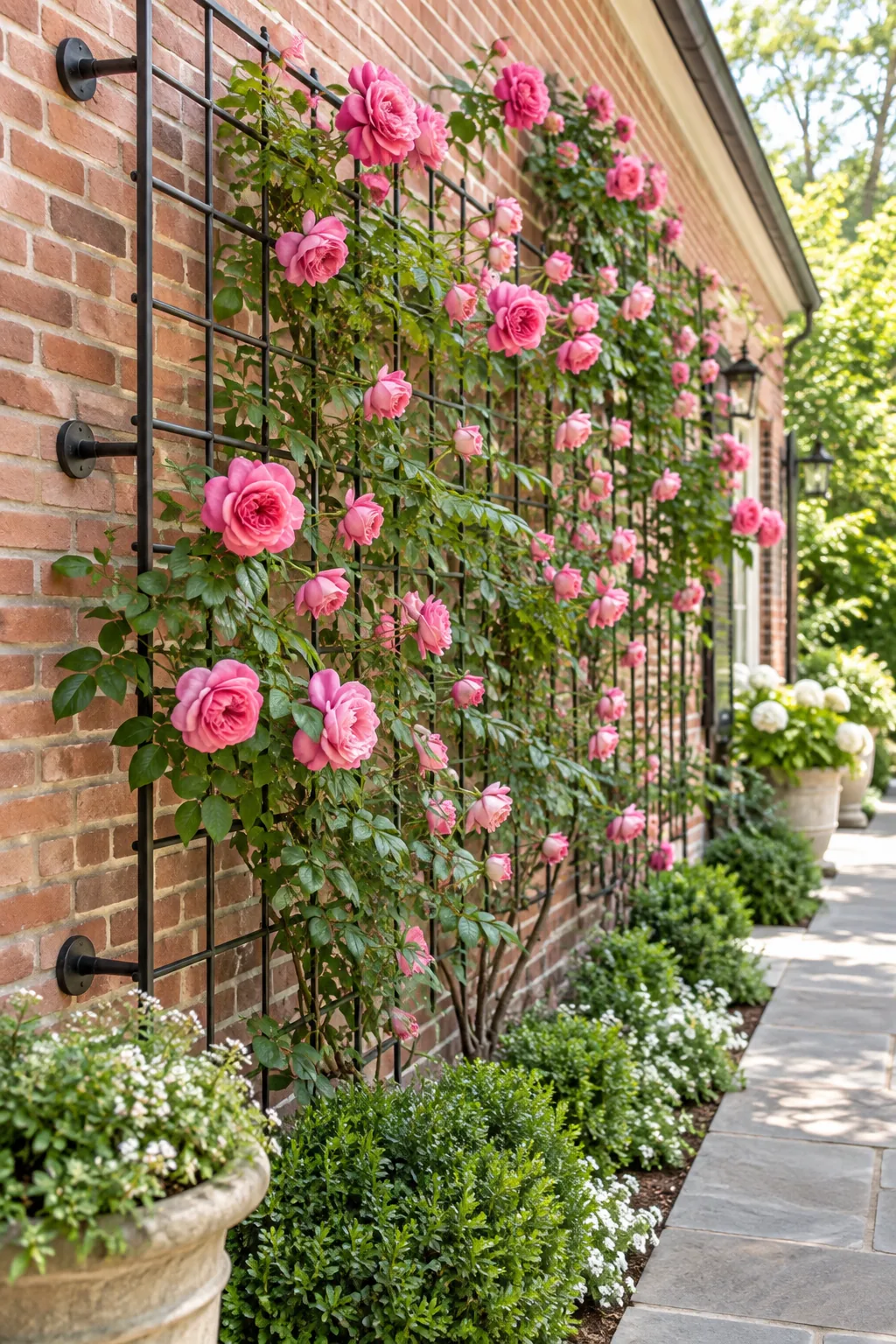
Solid welded steel provides the necessary backbone to support dense foliage and heavy summer downpours without buckling. Upgrading to a heavy-duty framework ensures your beautiful perennial investment remains standing tall year after year.
Comparing Support Materials
While cedar looks gorgeous initially, it eventually rots under the trapped moisture of a dense vine canopy. Powder-coated steel or wrought iron will easily outlast the lifespan of your most aggressive climbing plants.
Evaluating Wall Load Capacity
Before drilling, always check that your chosen brick facade is structurally sound and free of crumbling mortar. A massive wall of blooming vines acts like a sail during high winds, placing immense pulling force on the masonry.
Mapping the Grid Layout
Center your metal structure on the wall and use a spirit level to ensure the horizontal bars are perfectly straight. Taking the time to properly align the framework now prevents a permanently crooked garden display later.
Marking Your Drill Points
Have a friend hold the heavy steel frame in place while you mark the mounting holes with a permanent marker. Always position your marks directly over the solid brick face rather than the weaker mortar joints.
Selecting Masonry Drill Bits
Using the correct bit size is critical for a secure hold that won’t pull out under tension. I always match my drill bit exactly to the manufacturer’s specifications for the sleeve anchors.
| Anchor Diameter | Masonry Bit Size | Minimum Hole Depth |
|---|---|---|
| 1/4-inch | 1/4-inch | 1.5 inches |
| 5/16-inch | 5/16-inch | 2.0 inches |
| 3/8-inch | 3/8-inch | 2.5 inches |
A quality hammer drill paired with a fresh carbide-tipped bit will make quick work of the tough fired clay. Let the tool do the heavy lifting rather than forcing it, which can easily crack the brick.
Anchoring to Brick Surfaces
I now use a hammer drill for every brick project after struggling for hours on my patio wall with a standard driver. You must use a 5/16-inch masonry bit to install heavy-duty masonry anchor bolts directly into the brick face.
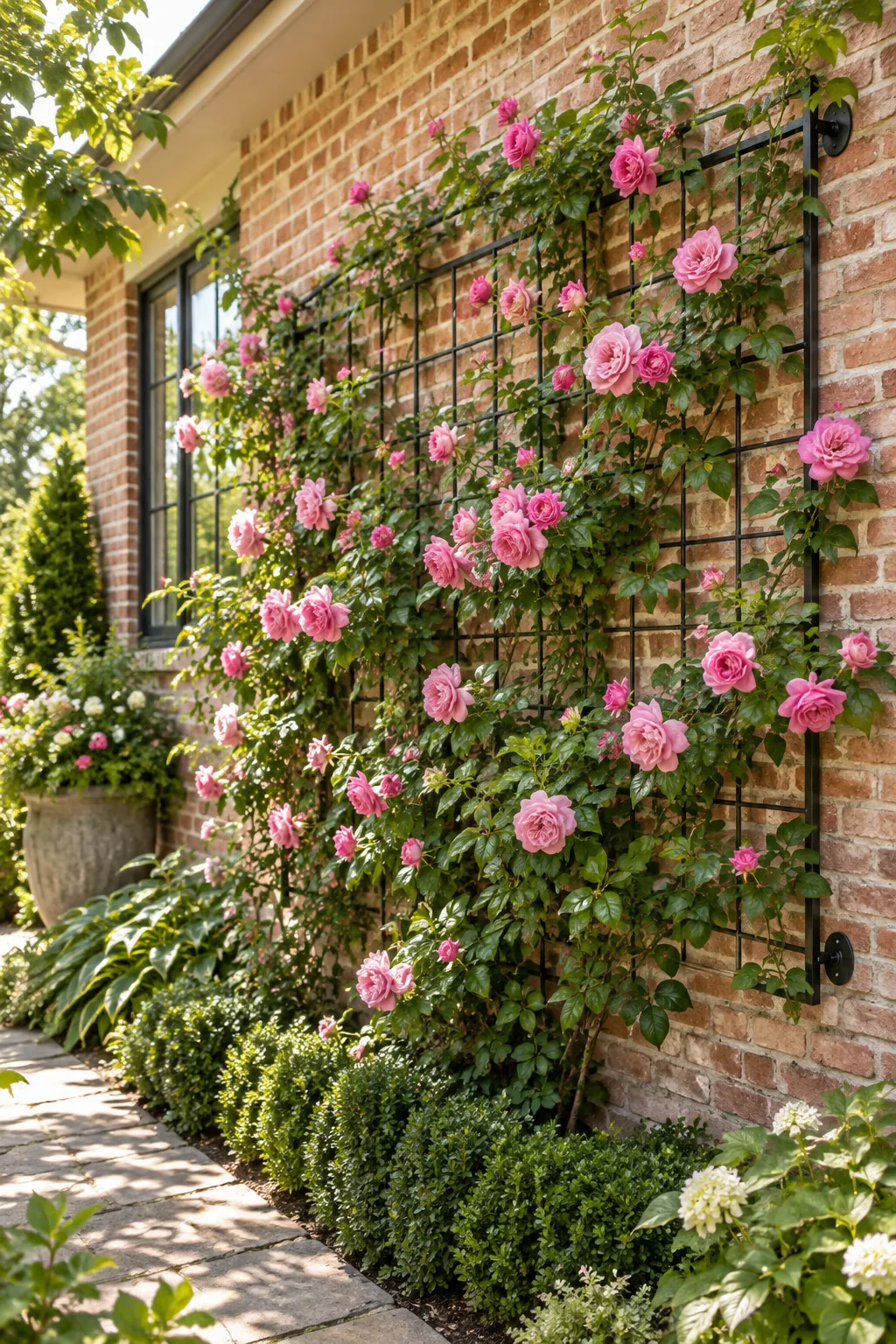
These expansion anchors bite fiercely into the solid clay as you tighten the nut, creating an incredibly strong mounting point. This heavy-duty hardware safely holds the combined weight of the steel and the mature plant.
Testing the Anchor Hold
Once tightened, give each bolt a firm tug with your hands to verify it has fully engaged the masonry. If an anchor spins freely or feels loose, you must drill a new hole in an adjacent solid brick.
Creating Essential Breathing Room
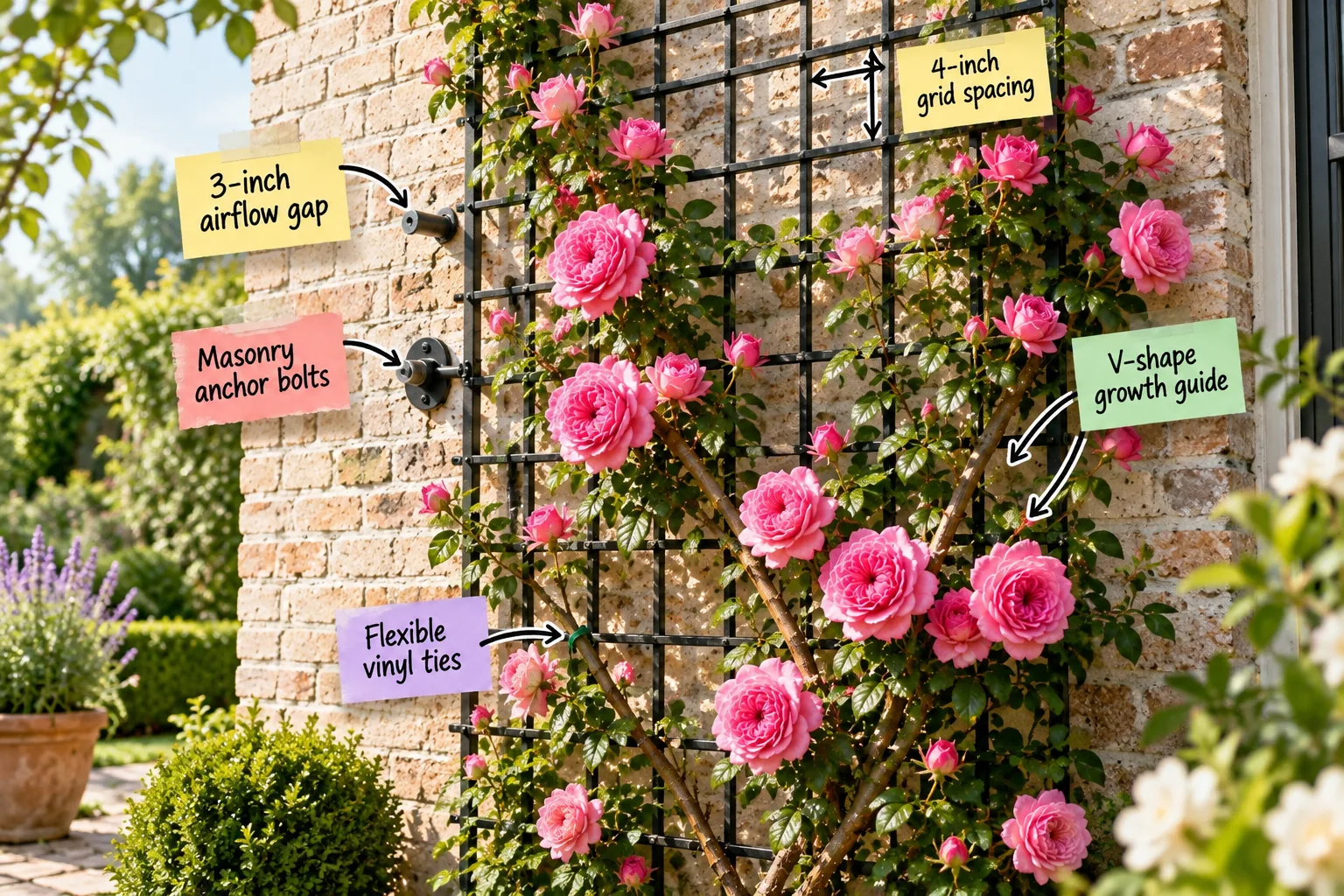
Keeping your plant away from the wall prevents mold and protects the masonry, making a rigid 3-inch airflow gap absolutely essential. Maintaining that exact distance requires hardware that won’t compress under the extreme weight of mature vines.
Selecting Weatherproof Hardware
Always opt for stainless steel or galvanized nuts and washers when assembling your outdoor support system. Standard zinc-plated hardware will quickly rust in the humid microclimate trapped behind dense foliage, eventually causing structural failure.
Sizing the Support Grid
The internal dimensions of your trellis directly impact the long-term health of your climbing vines. I highly recommend a 4-inch grid spacing to provide enough room to weave canes without trapping them as they thicken.
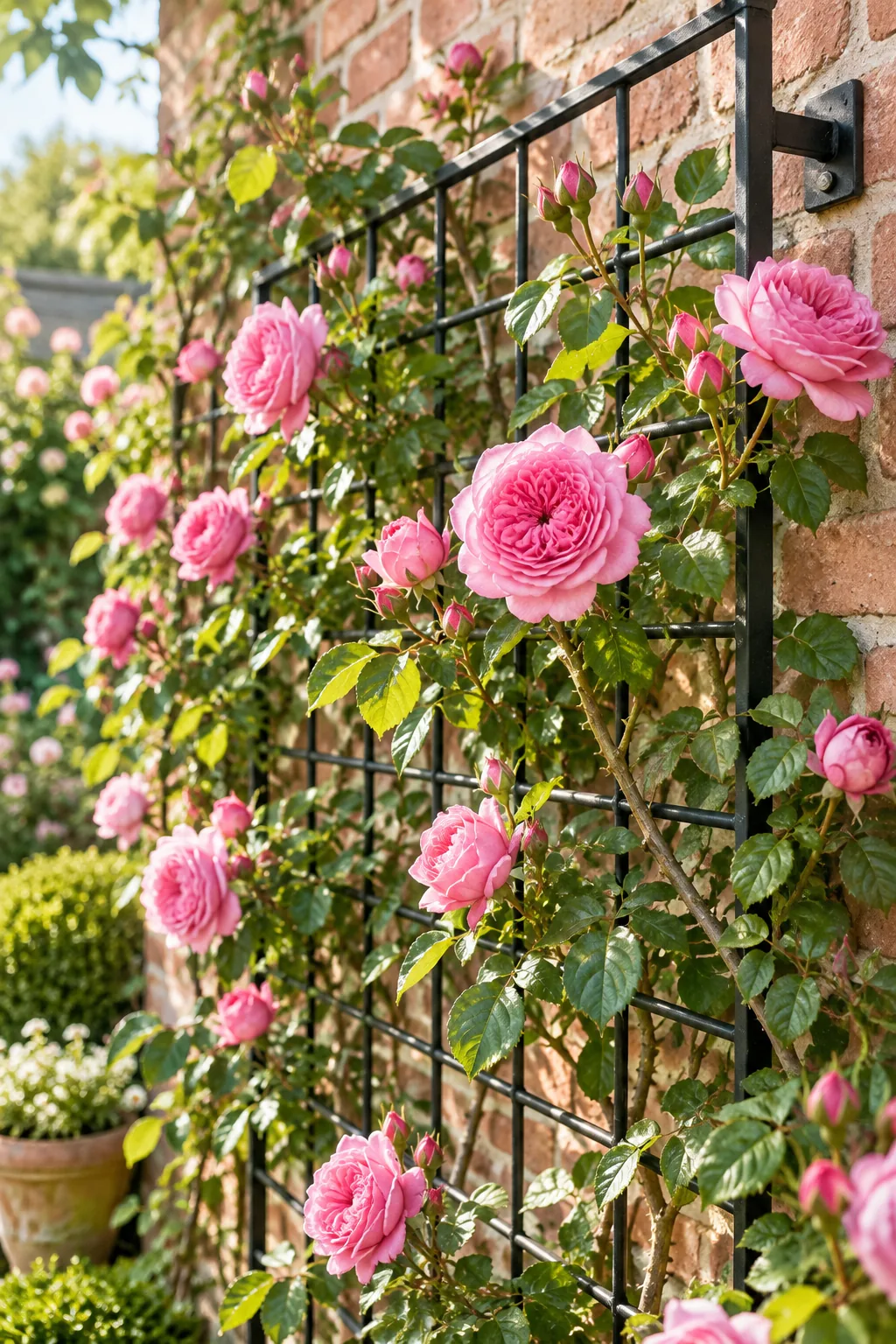
Tighter grids might look delicate, but they quickly choke thick woody stems and make seasonal pruning a total nightmare. Generous squares allow you to reach through the structure easily to tie off wayward branches.
Preventing Grid Rust
Inspect your steel framework annually for any deep scratches that expose the bare metal beneath the protective powder coating. Touching up these small blemishes with exterior rust-inhibiting paint prevents corrosion from compromising your heavy-duty support.
Understanding Cane Flexibility
Young green shoots are incredibly pliable and easy to bend along your metal framework during the spring growth spurt. However, once those canes mature and turn woody by late summer, they become rigid and prone to snapping.
Selecting the Right Ties
You need the absolute best materials for attaching living, expanding wood to cold, unyielding steel. I always recommend using soft, flexible vinyl ties to hold canes securely without cutting into the delicate bark.
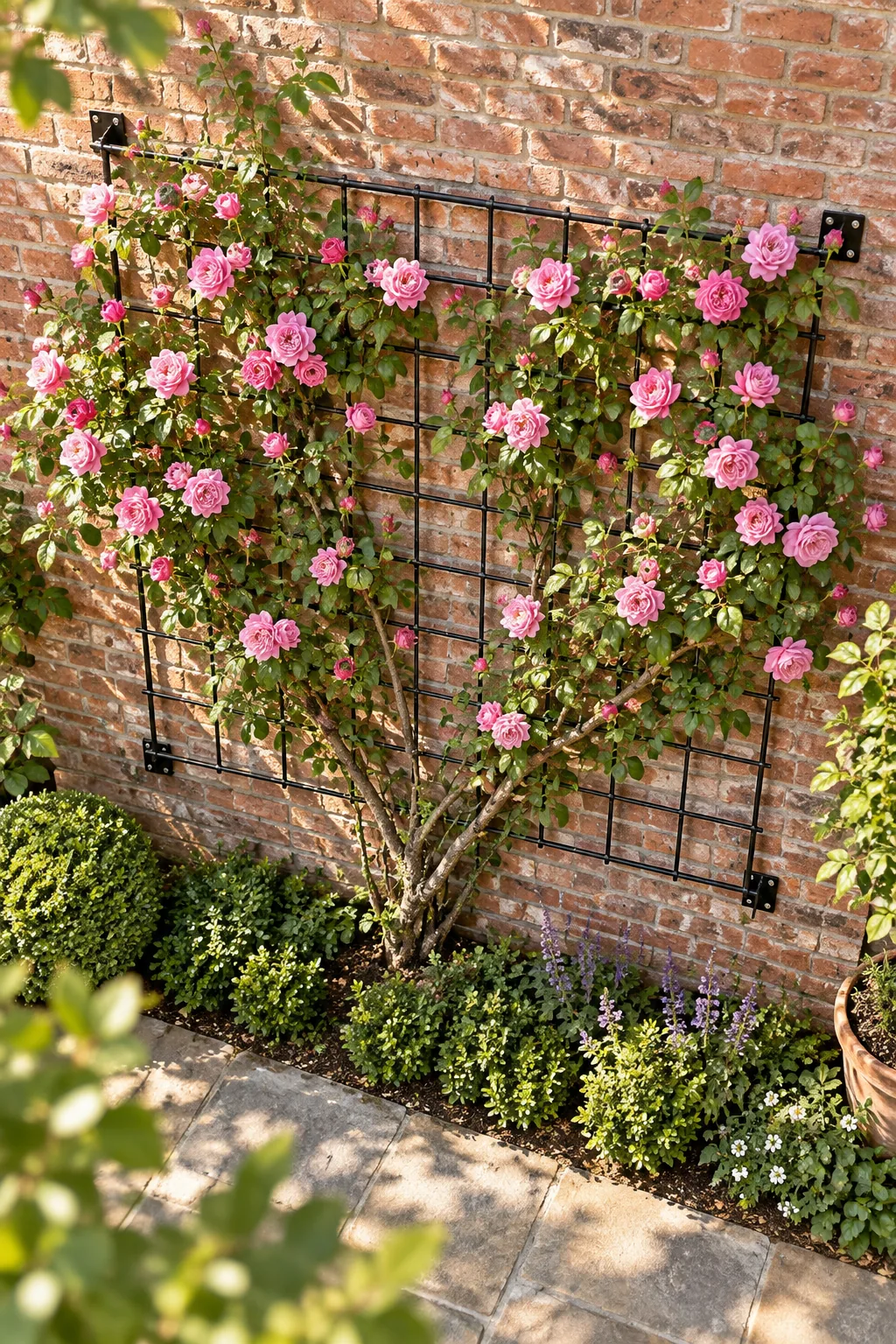
Even with the perfect grid and healthy plants, improper tying techniques can quickly girdle and kill your most productive branches.
Timing Your Plant Training
The best time to manipulate and tie your climbing vines is during the warm afternoon hours when the sap is flowing freely. Morning stems are often turgid and brittle, making them much more likely to snap under pressure.
Securing the Main Canes
Establishing a strong foundation requires systematically attaching the primary structural canes to your heavy-duty grid. Following a consistent tying method ensures the plant remains secure during intense summer thunderstorms.
- Select the thickest, healthiest main canes originating from the base.
- Wrap the vinyl tie around the steel grid bar first.
- Cross the ends to form a figure-eight cushion.
- Secure the tie loosely around the living cane.
This figure-eight technique prevents the rough steel from rubbing directly against the tender bark. It creates a soft shock absorber that protects the plant as it sways back and forth in the wind.
Leaving Room for Growth
When attaching stems, always tie them loosely to allow for natural wind movement and seasonal expansion. You should leave a 1/2-inch buffer inside the tie loop to accommodate future thickening without choking the plant.
Managing Vigorous Spring Growth
Check your ties every few weeks during the peak spring growing season to ensure they haven’t become dangerously tight. Rapidly expanding canes can easily swallow a neglected vinyl tie, causing permanent vascular damage.
Shaping for Maximum Blooms
To train the plant for abundant flowers rather than just towering height, you must manipulate its natural vertical tendency. Utilizing a V-shape growth guide by angling the main canes outward at 45 degrees is the secret.
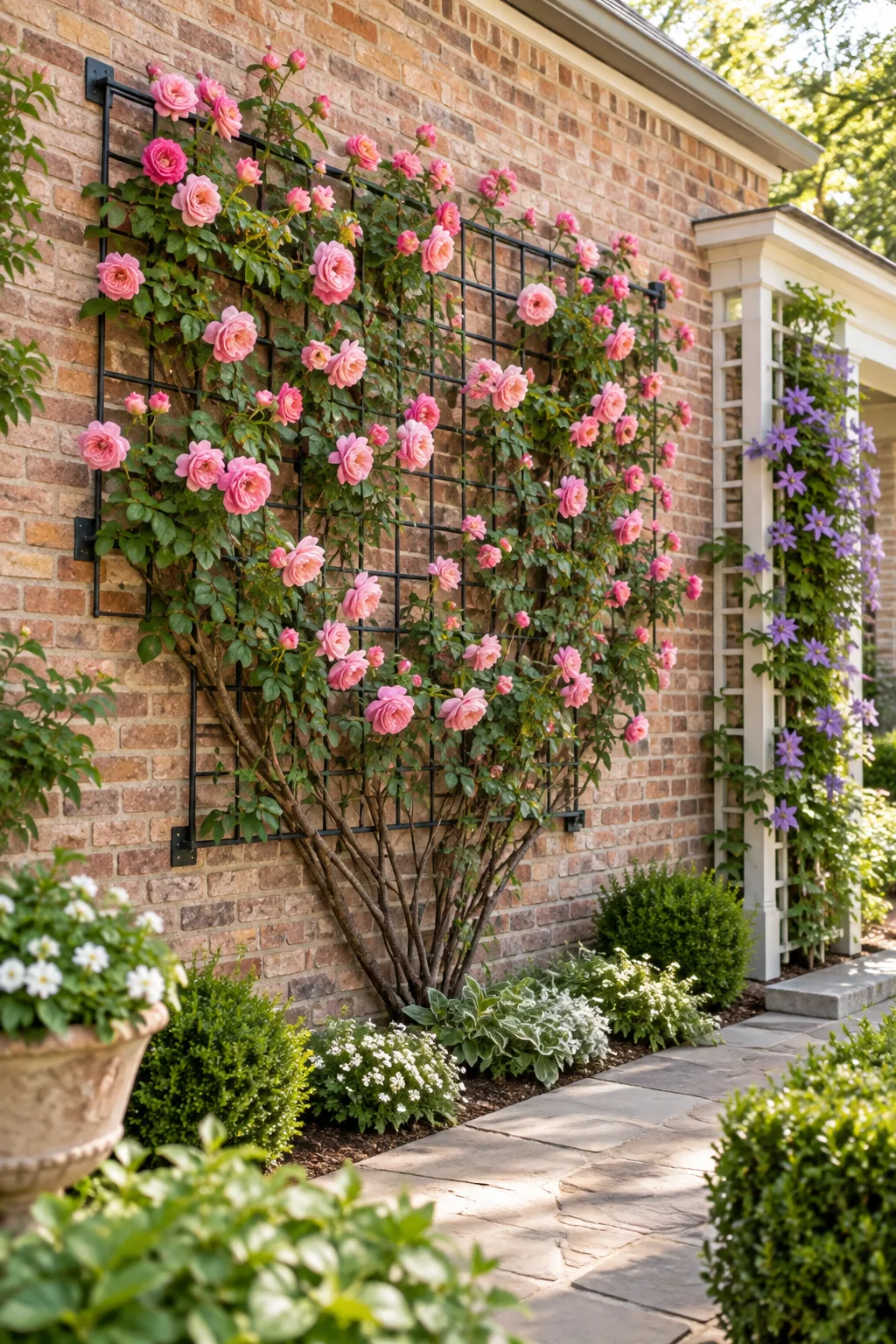
Bending the canes horizontally slows the upward flow of sap, which forces the plant to push out gorgeous blooming lateral shoots. This simple shaping technique transforms a bare, leggy vine into a solid wall of color.
Encouraging Lateral Shoots
Once your main structural canes are secured in their wide V-shape, allow the new lateral shoots to grow straight up. These shorter vertical stems are the ones that will actually produce the heavy clusters of summer blooms.
Pruning for Trellis Health
During your late winter pruning session, carefully remove any dead or crossing branches that rub against the main structural canes. Keeping the interior of the plant open improves air circulation and drastically reduces fungal diseases.
Assessing Sun Exposure
Before finalizing your plant selection, monitor how much direct sunlight your newly mounted grid receives throughout the day. Most heavy-blooming climbing roses require at least six hours of full sun to produce a spectacular display.
Preparing the Planting Bed
Dig a generous planting hole at least 18 inches away from the wall to ensure the roots receive adequate natural rainfall. Amending this backfill soil with rich compost gives your heavy-feeding climber the best possible start.
Matching Plants to Supports
I once planted a delicate clematis on a massive steel grid, and it completely disappeared against the bulky metal! It is crucial to pair specific climbing plants with their required support structures for the best visual impact.
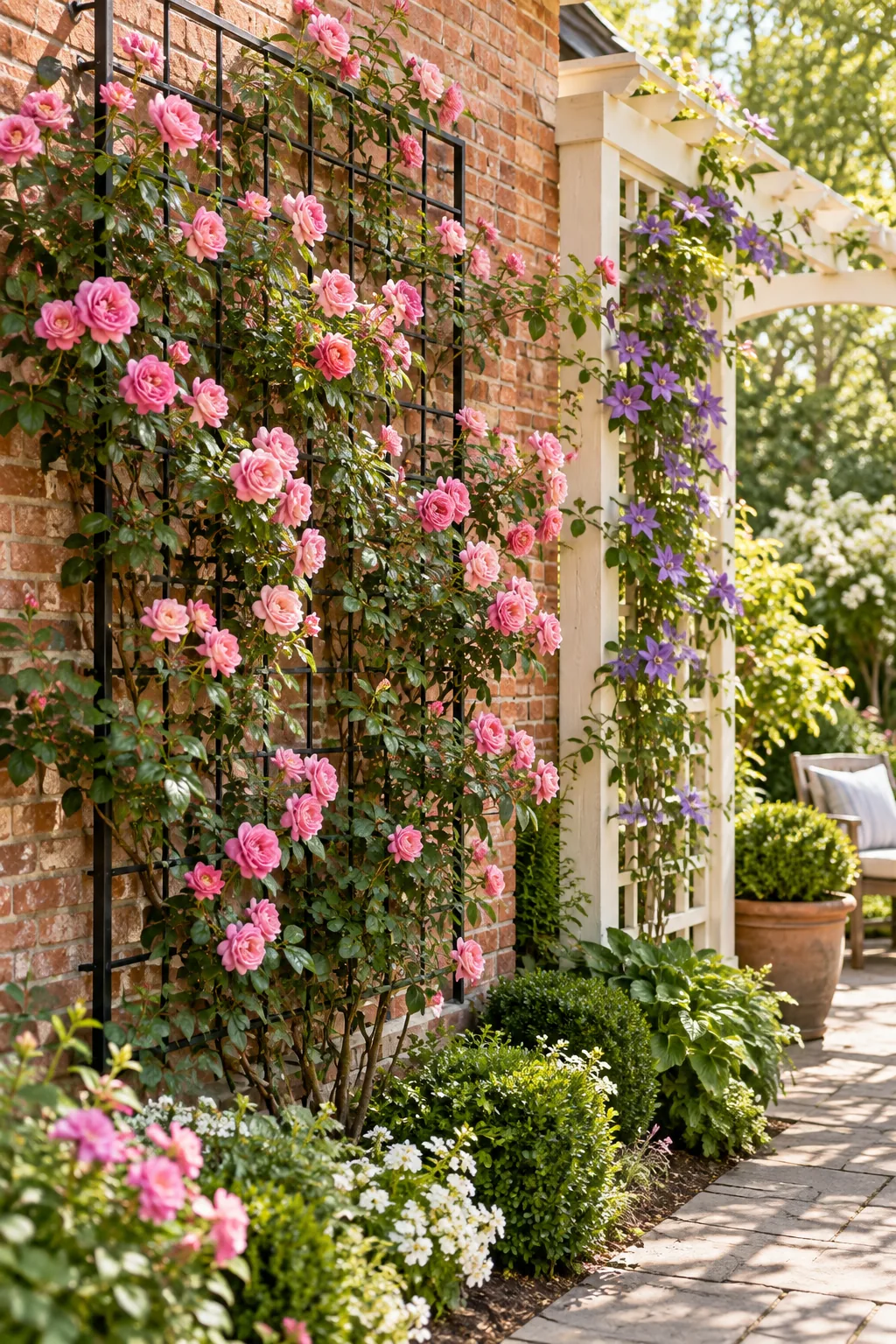
Download our climber pairing chart to see exactly which delicate vines need light wire grids versus which heavy roses demand structural steel. Matching the mature plant weight to the right framework guarantees a beautiful, long-lasting garden feature.
3 More Ways to Style a Wall Trellis
Explore these different trellis styles to find the perfect match for your home's exterior.
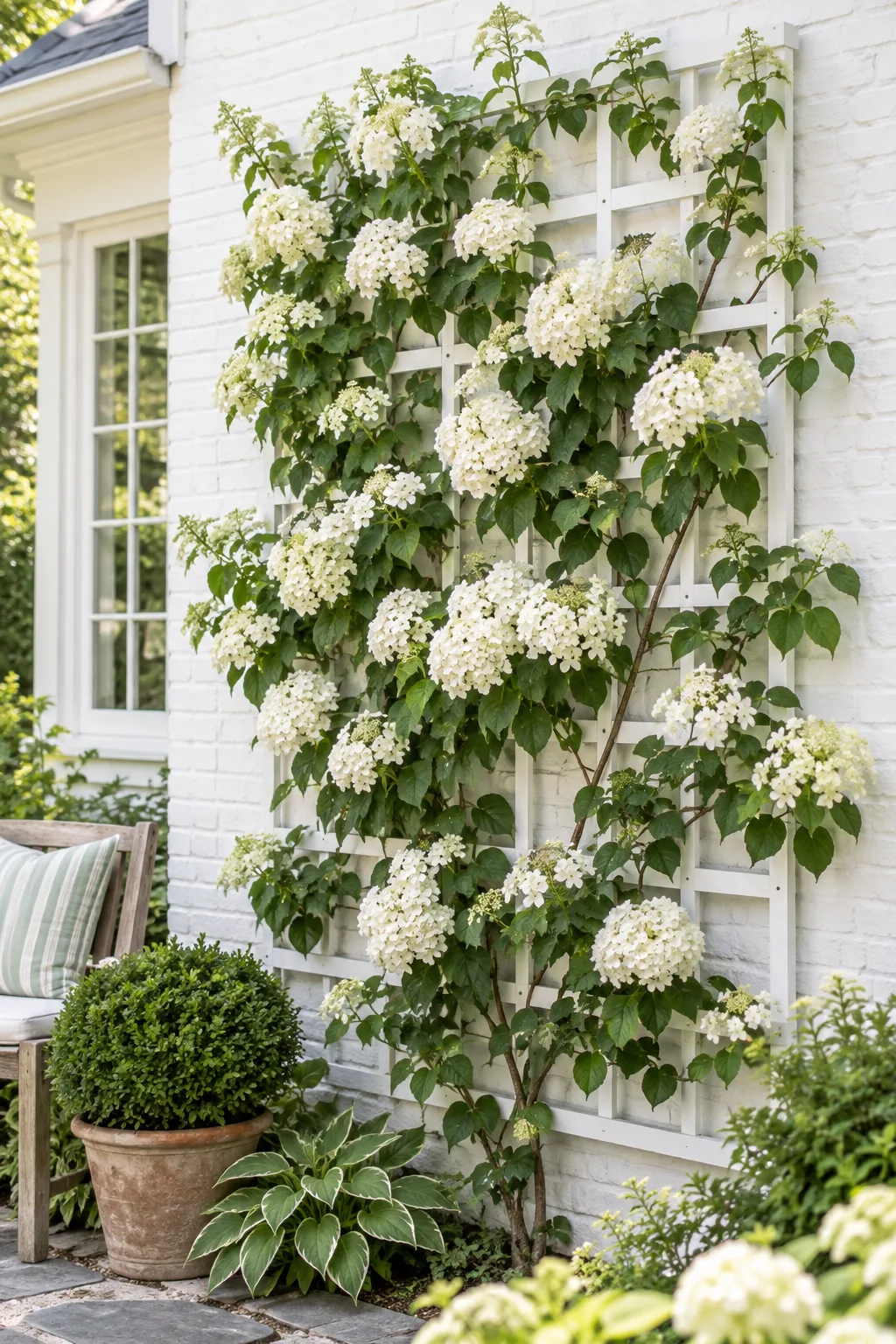
Monochrome Cottage Wood: A painted wooden grid blends seamlessly into white brick, letting the texture of climbing hydrangeas take center stage.
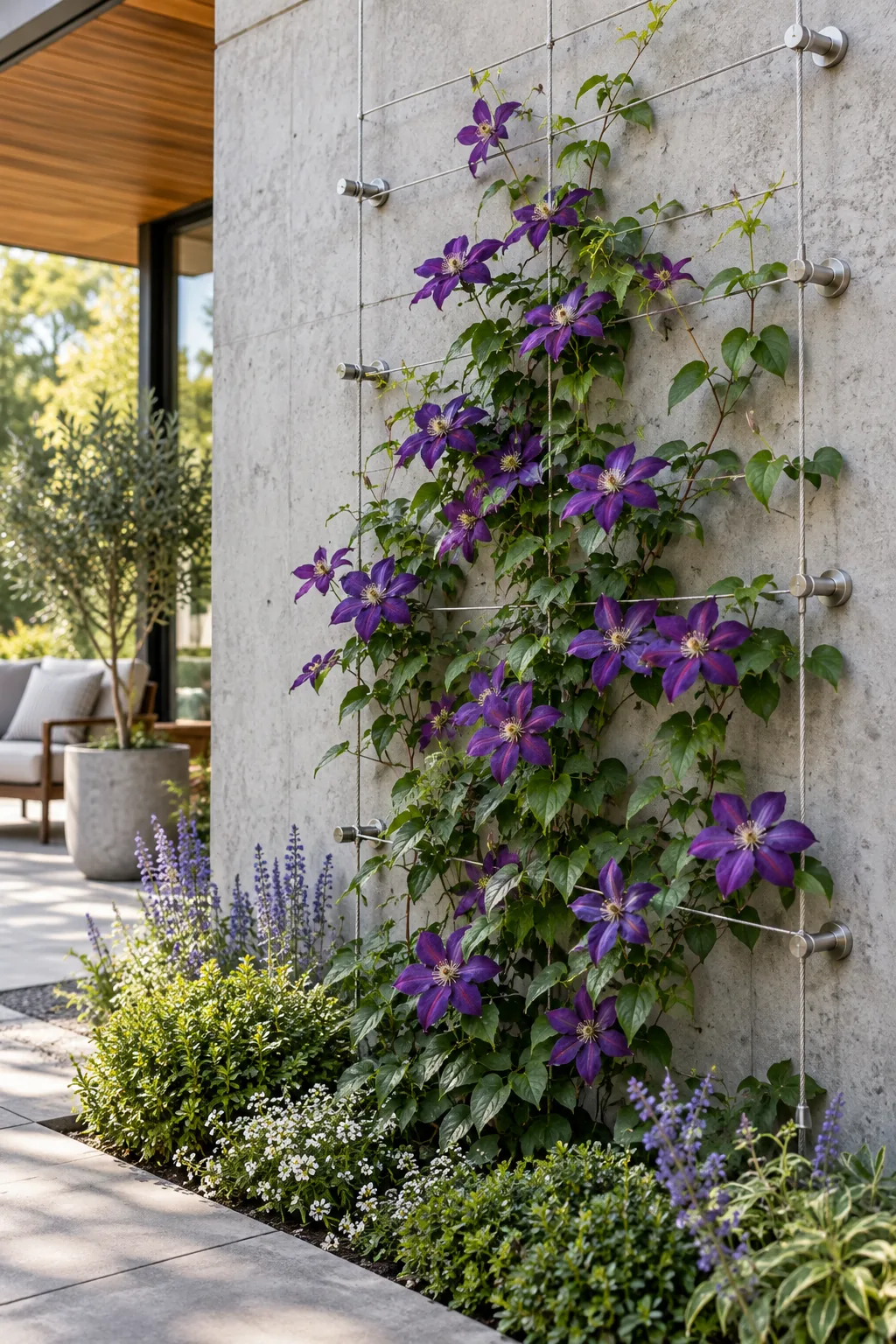
Modern Industrial Cable: Sleek stainless steel cables provide nearly invisible support against raw concrete, perfect for lightweight, colorful vines.
Rustic Farmhouse Steel: Weathered corten steel develops a protective rust patina that pairs beautifully with natural wood siding and warm-toned blooms.