
17+ Beautiful Garden Border Design Ideas
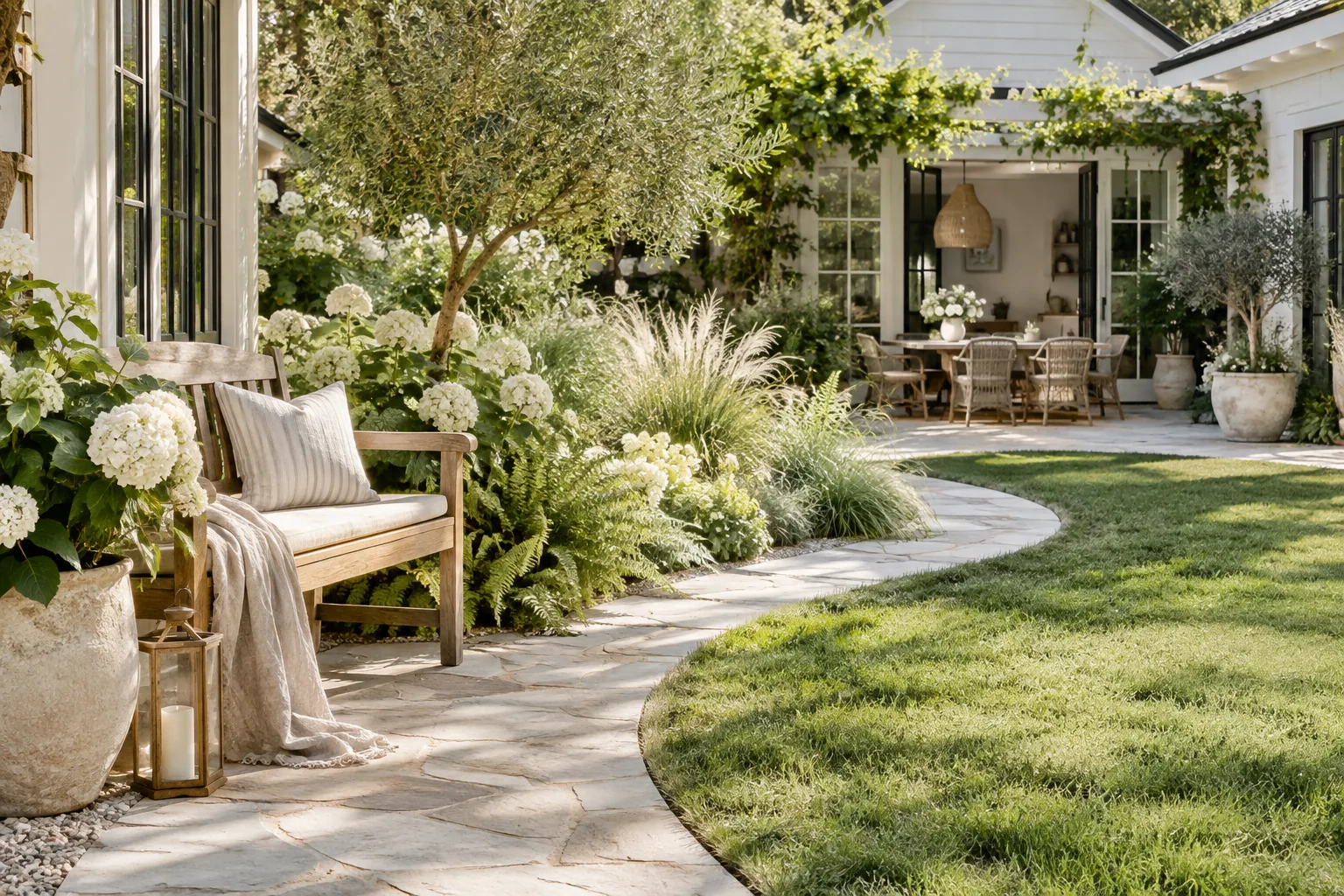
A crisp edge instantly makes any messy garden bed look completely intentional. Here are my favorite ways to draw that line and give your yard some serious structure.
1. Classic Red Brick Edging
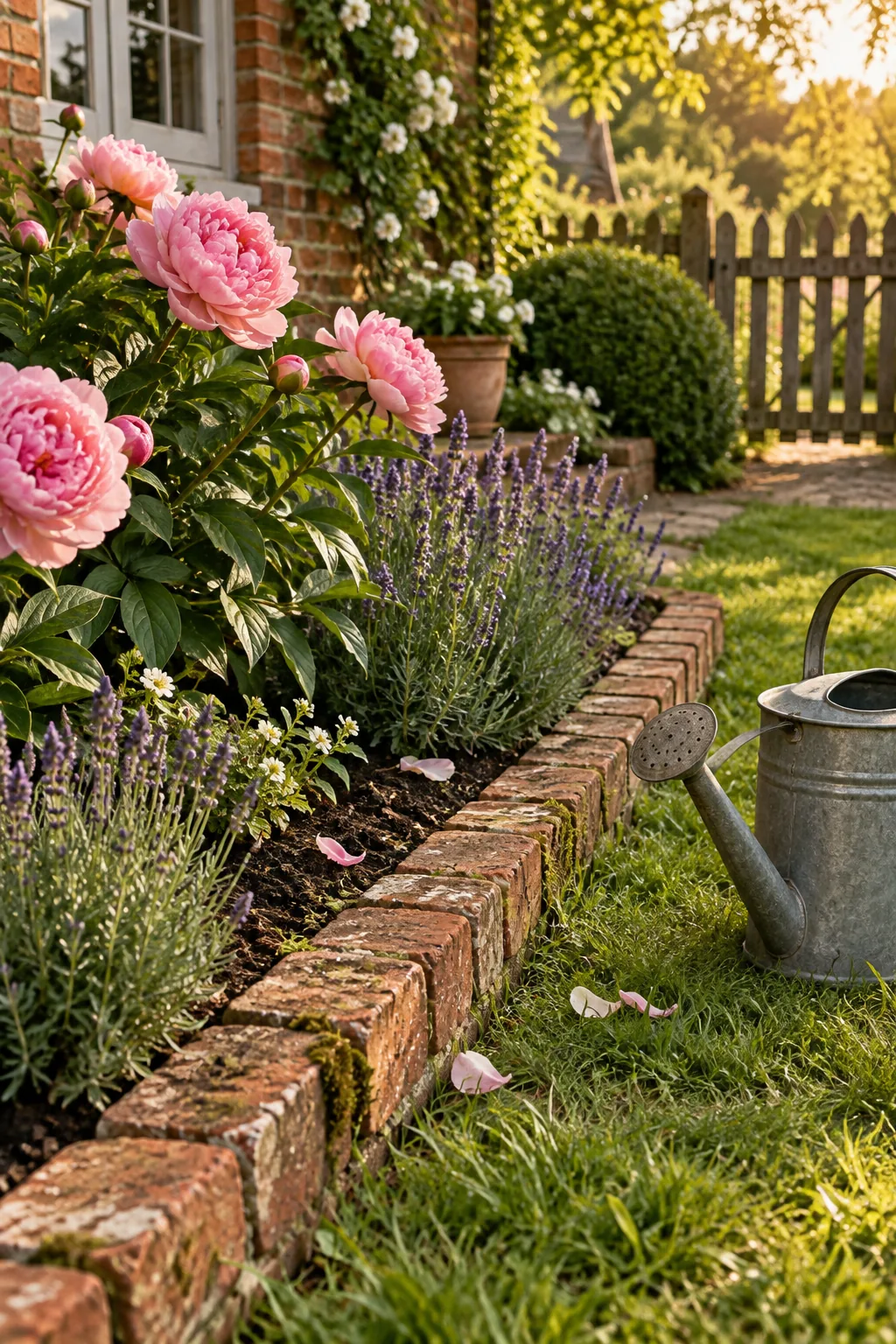
Laying bricks end-to-end forms a solid barrier that keeps mulch exactly where it belongs. It is a timeless garden border that withstands heavy rain without shifting. You can customize the layout depending on how much height you need by trying one of these simple configurations:
- Set them horizontally for a flat mowing strip
- Angle them at 45 degrees for a sawtooth look
- Stack them two high for a raised bed effect
2. Poured Concrete Curbing
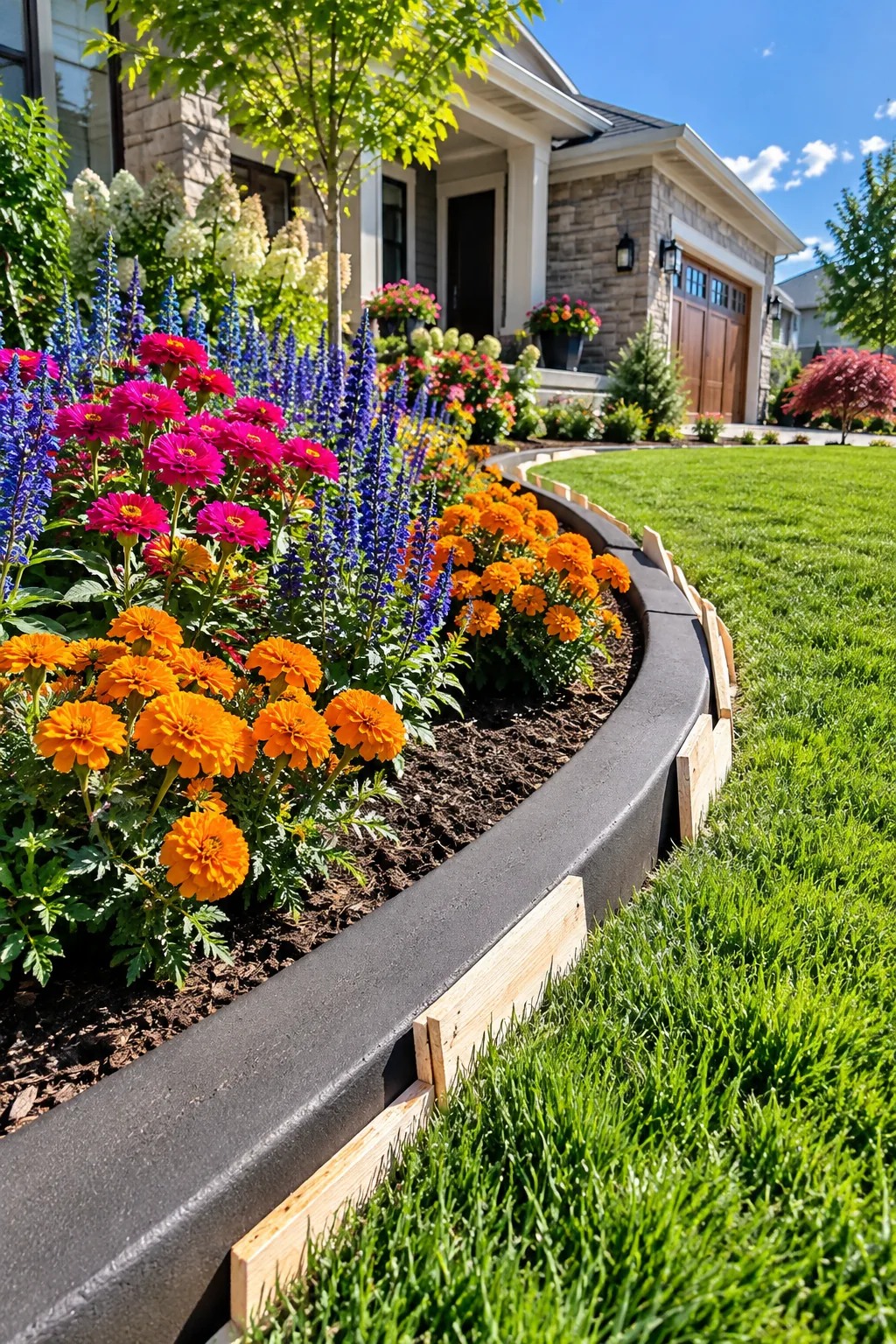
A continuous line of poured concrete blocks aggressive grass roots better than anything else. It acts as an impenetrable wall between your lawn and your flower beds.
You can tint the mix with powdered pigments before pouring to match your house exterior. A dark charcoal gray looks incredibly sharp against bright green turf.
This landscape edging requires a bit of prep work with wooden forms. The permanent result is totally worth the weekend of heavy lifting.
3. Woven Willow Panels
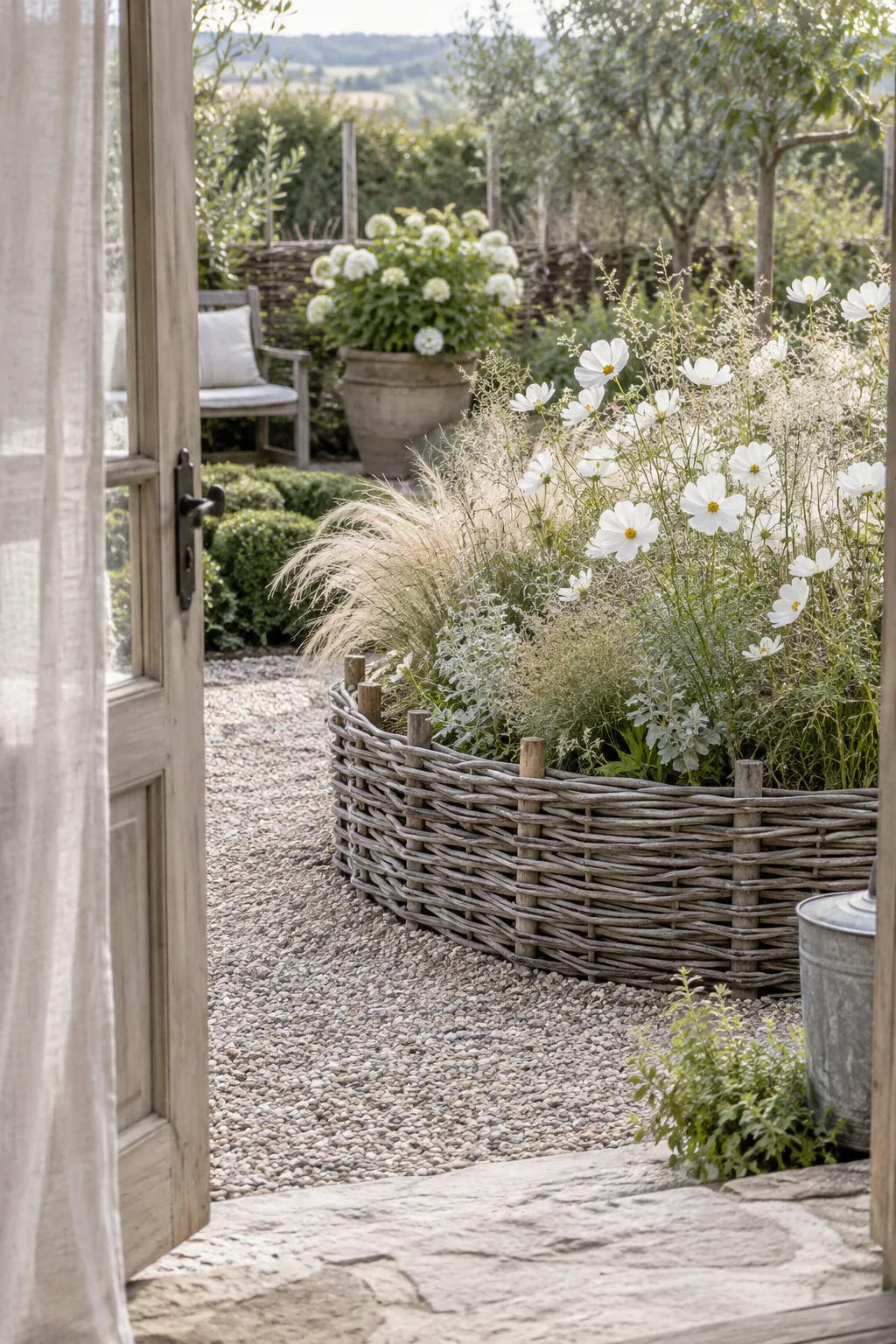
Standard willow branches bend easily up to 90 degrees when they are freshly cut or soaked in water. This flexibility lets you weave a tight, continuous fence around curved garden beds.
The natural wood texture blends right into a cottage garden aesthetic. Over time, the branches weather to a beautiful silvery gray.
Push sturdy wooden stakes into the ground every foot to anchor the weave. This natural border design usually lasts about three to five years before returning to the soil.
4. Stacked Flagstone Strips
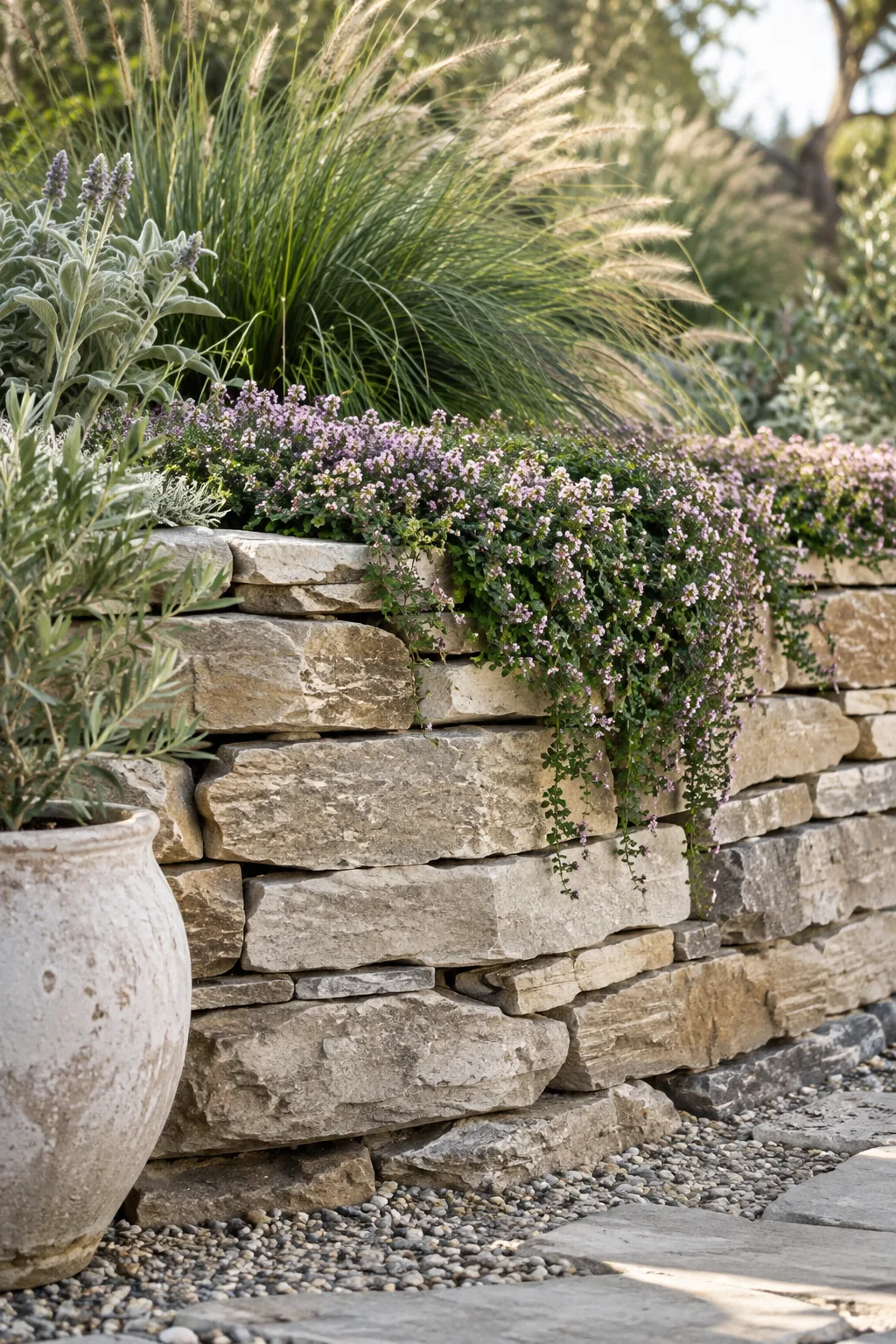
Rough-cut stone pieces stack neatly without any mortar to create a rustic, low-profile wall. You just dig a shallow trench, level the base with some sand, and start layering the heaviest pieces on the bottom. The uneven edges interlock just enough to hold the structure together. This stone border adds a ton of earthy texture to your landscaping.
Why it works: The heavy weight of the natural stone prevents frost heave from ruining your edge during the winter.
5. Steel Landscape Edging
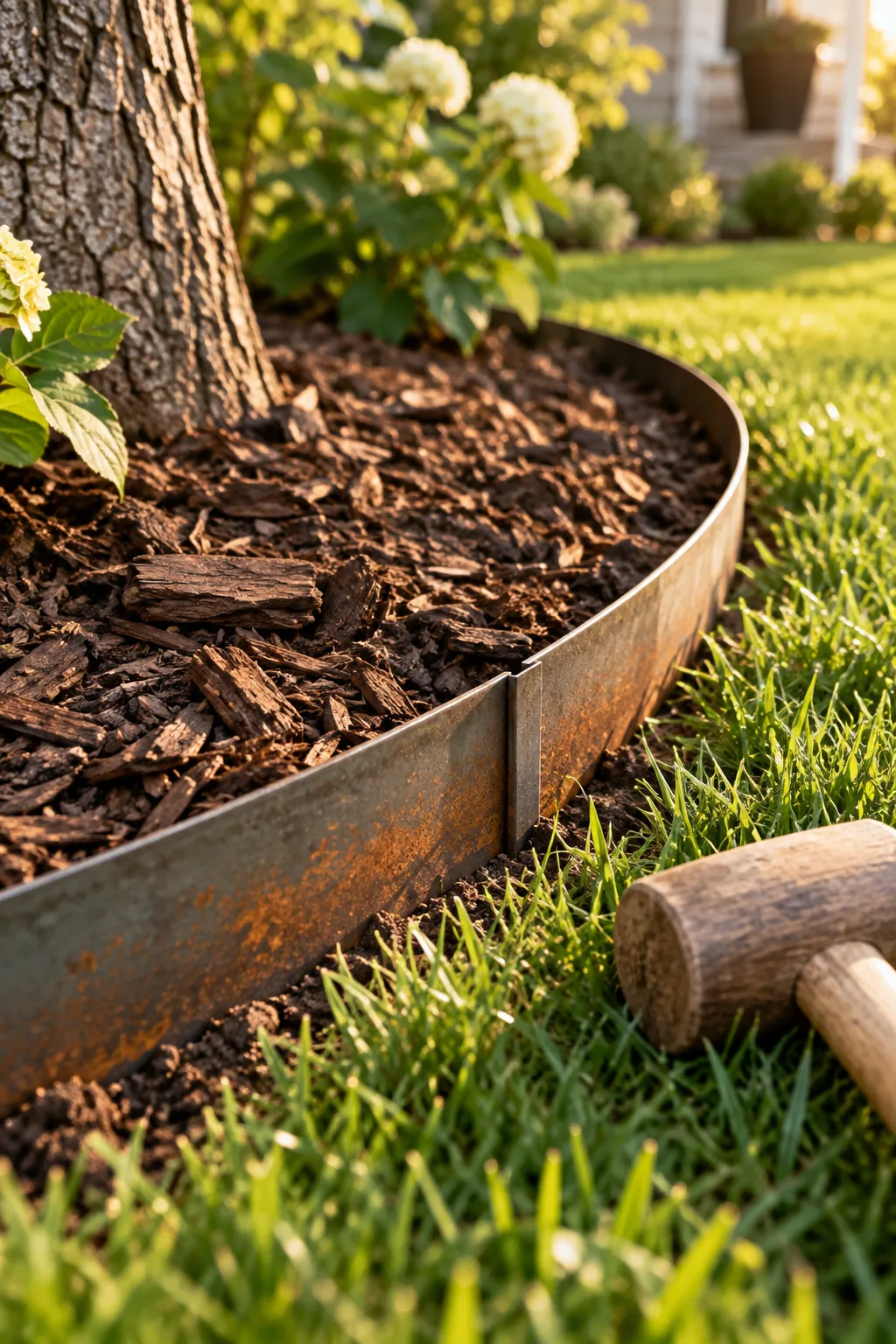
Hammer flexible steel strips right into the ground to get razor-sharp curves around your trees. This ultra-thin material bends smoothly without kinking, letting you follow the exact drip line of your canopy. The metal eventually develops a gorgeous rust patina that looks completely natural next to dark dirt. This metal edging is practically invisible but stops grass dead in its tracks. You will want to keep a few things in mind when installing:
- Overlap the connecting joints by at least two inches
- Pound the stakes in below the soil line to hide them
- Wear heavy leather gloves to protect your hands from sharp edges
6. Oversized River Rocks
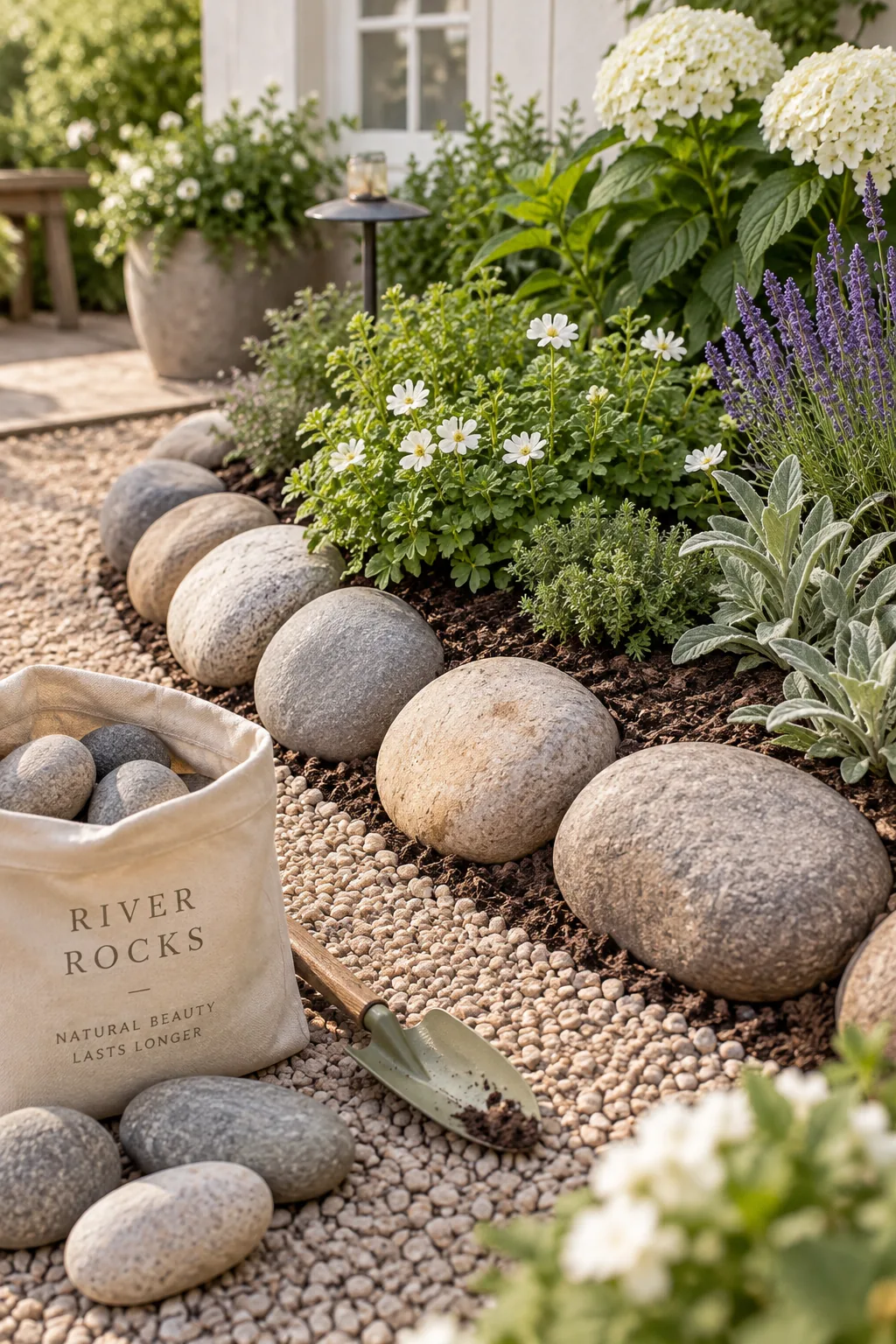
I always grab a few extra bags of smooth river stones whenever I visit the local landscaping yard. They are incredibly versatile for lining the edge of a messy perennial bed. You just nestle them into a shallow trench so they look like they naturally belong there.
Just make sure to bury the bottom third of the stones so they do not roll away into the lawn.
Why it works: The varied sizes of the rocks fill in odd gaps perfectly, making it ideal for uneven ground.
7. Liriope Plant Borders
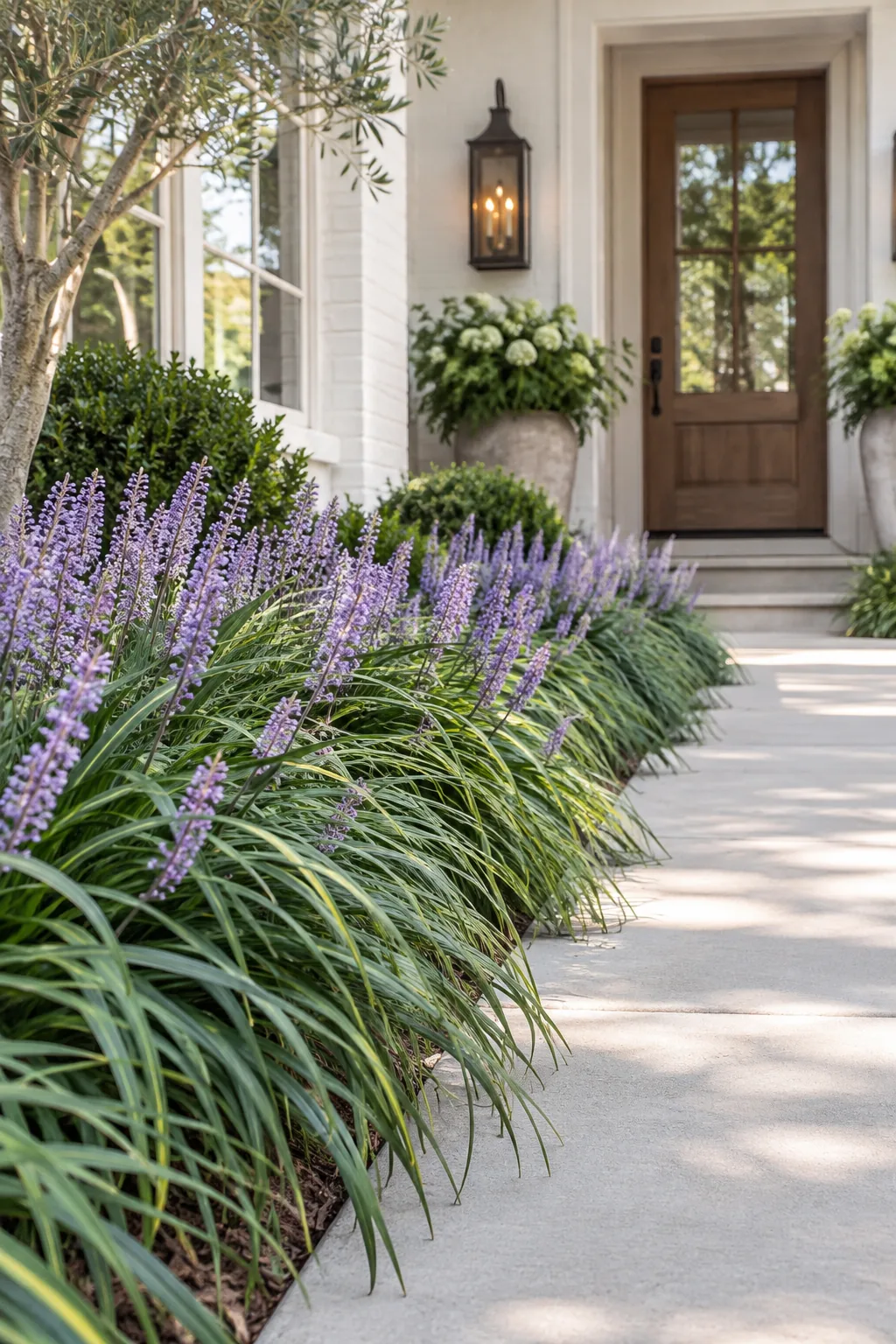
Planting a dense row of ornamental grass creates a living barrier that chokes out weeds naturally. Liriope, also known as monkey grass, grows in thick clumps that define the edge of your walkway beautifully. You can divide the mature plants every couple of years to extend your living border for free. It stays green almost all year round in most climates. The drooping leaves soften hard concrete edges and hide the bare dirt underneath.
8. Upcycled Glass Bottles
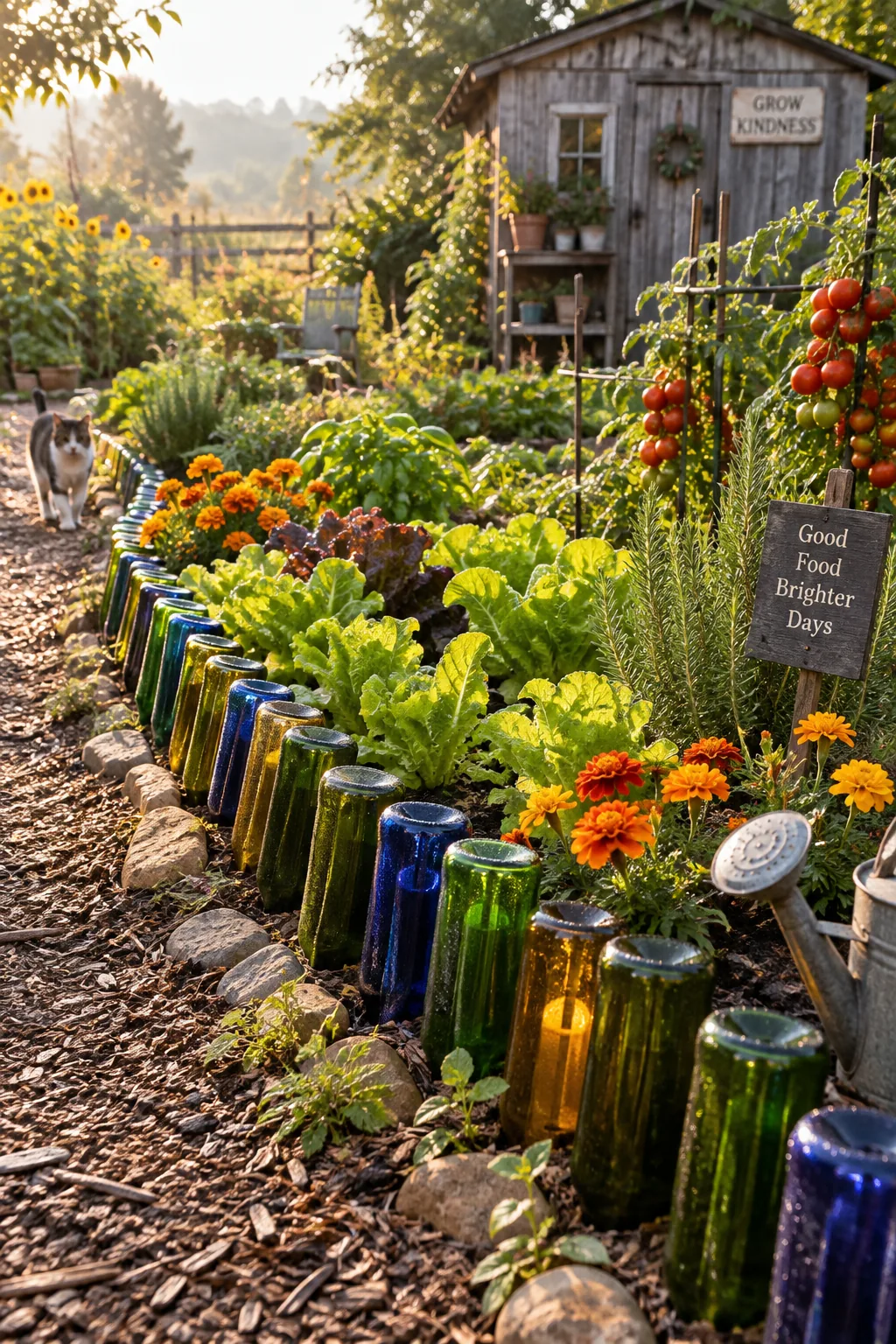
Burying empty wine bottles neck-down in the soil creates a surprisingly durable and colorful garden edge.
You can mix different shades of glass to catch the morning sunlight. This upcycled border adds a quirky, artistic touch to a casual vegetable garden. Just follow a few basic steps for the best results:
- Soak off all the paper labels in warm soapy water
- Dig a trench deep enough to bury half the bottle
- Pack the dirt tightly around the glass to prevent shifting
9. Chunky Cedar Timbers
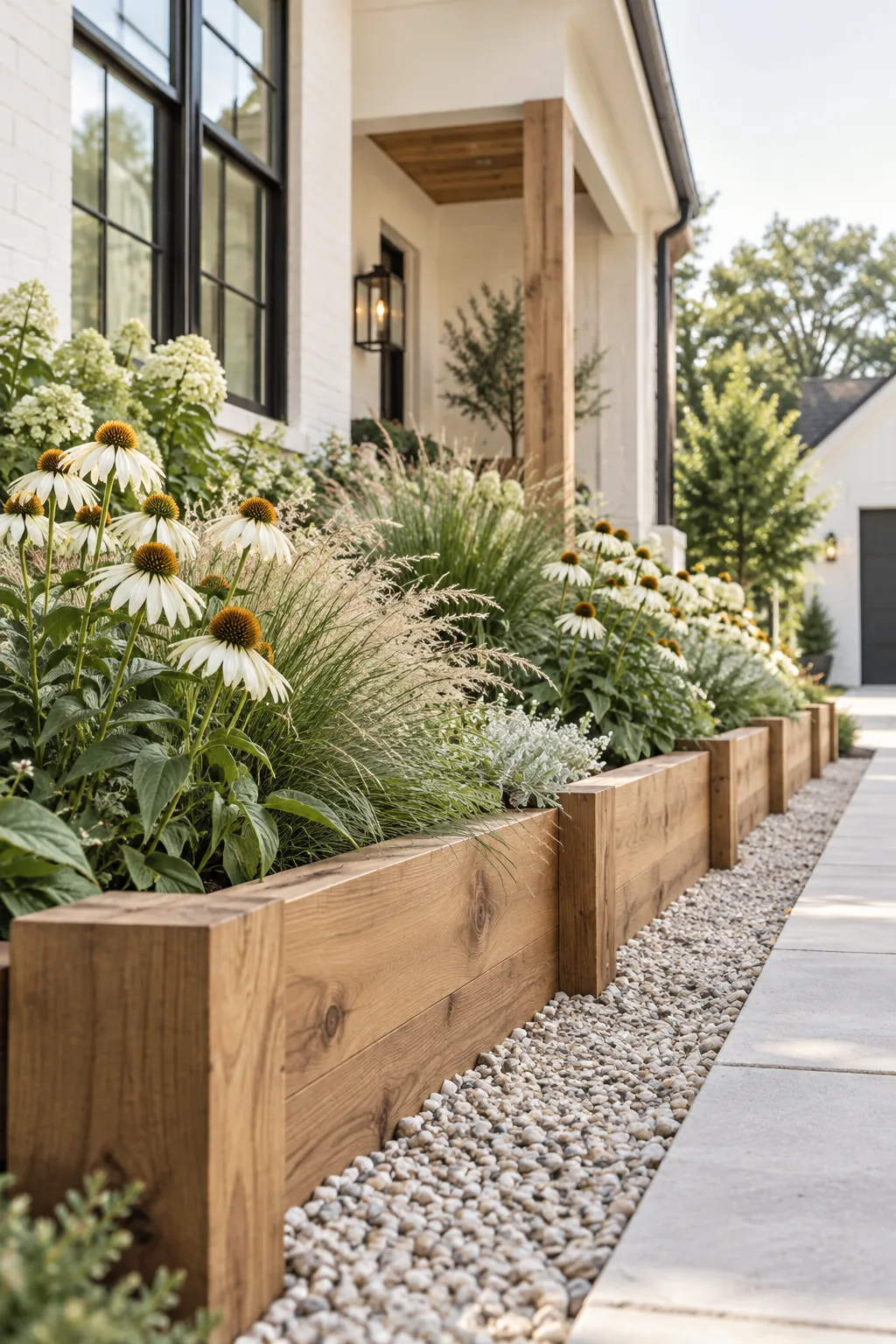
We used leftover 4×4 posts from our deck build to edge the front flower beds last spring. The thick wood provides a clean, geometric line that looks very modern against the soft foliage. You just drill holes through the ends and pound rebar straight into the dirt to keep them locked in place. This wood border design holds back a massive amount of soil without bowing.
10. Crushed Gravel Trenches
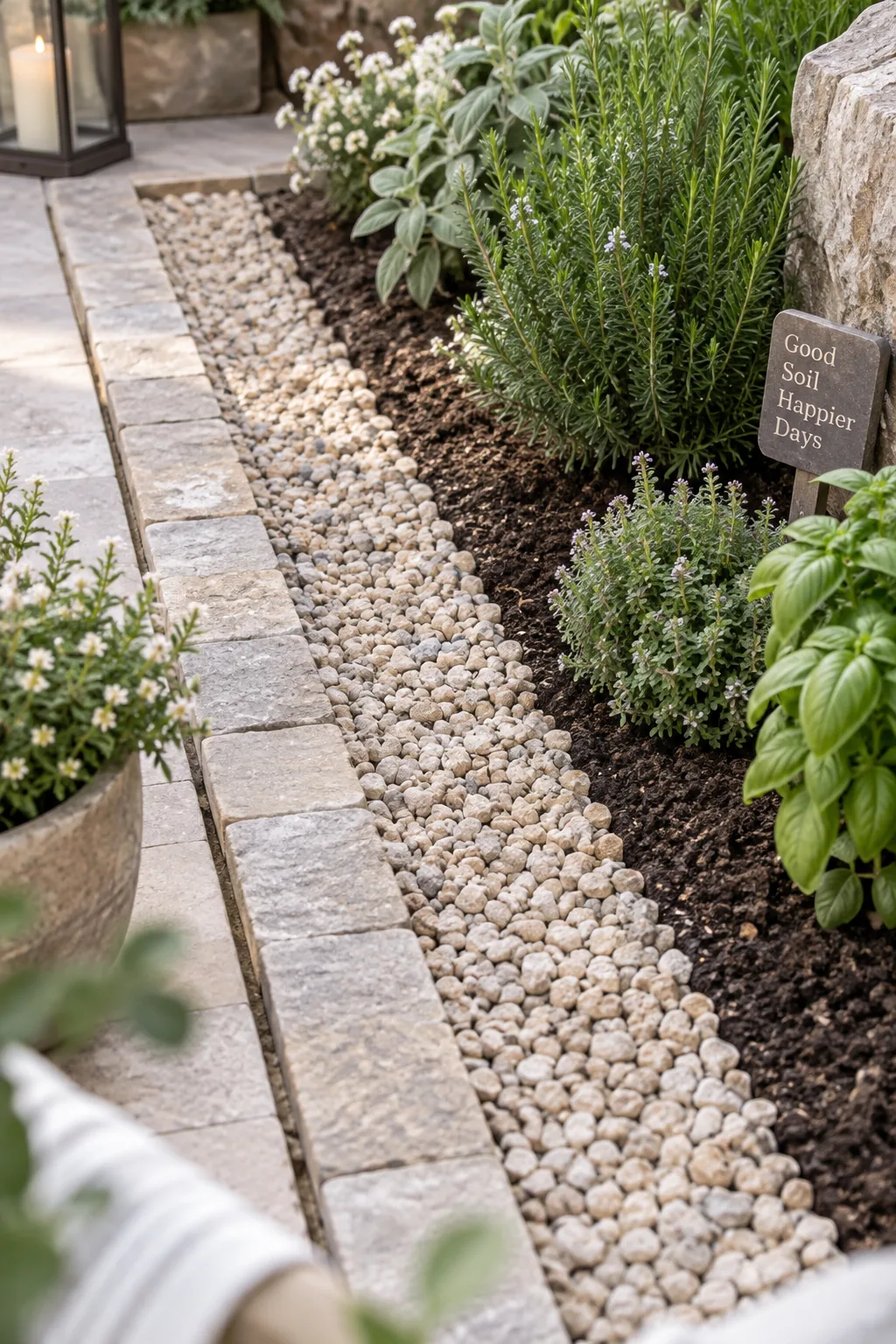
A trench filled with three inches of crushed gravel drains water away from your plant roots instantly. This gravel border stops muddy runoff from staining your patio while providing a crisp, minimalist visual break.
11. Scalloped Concrete Edgers
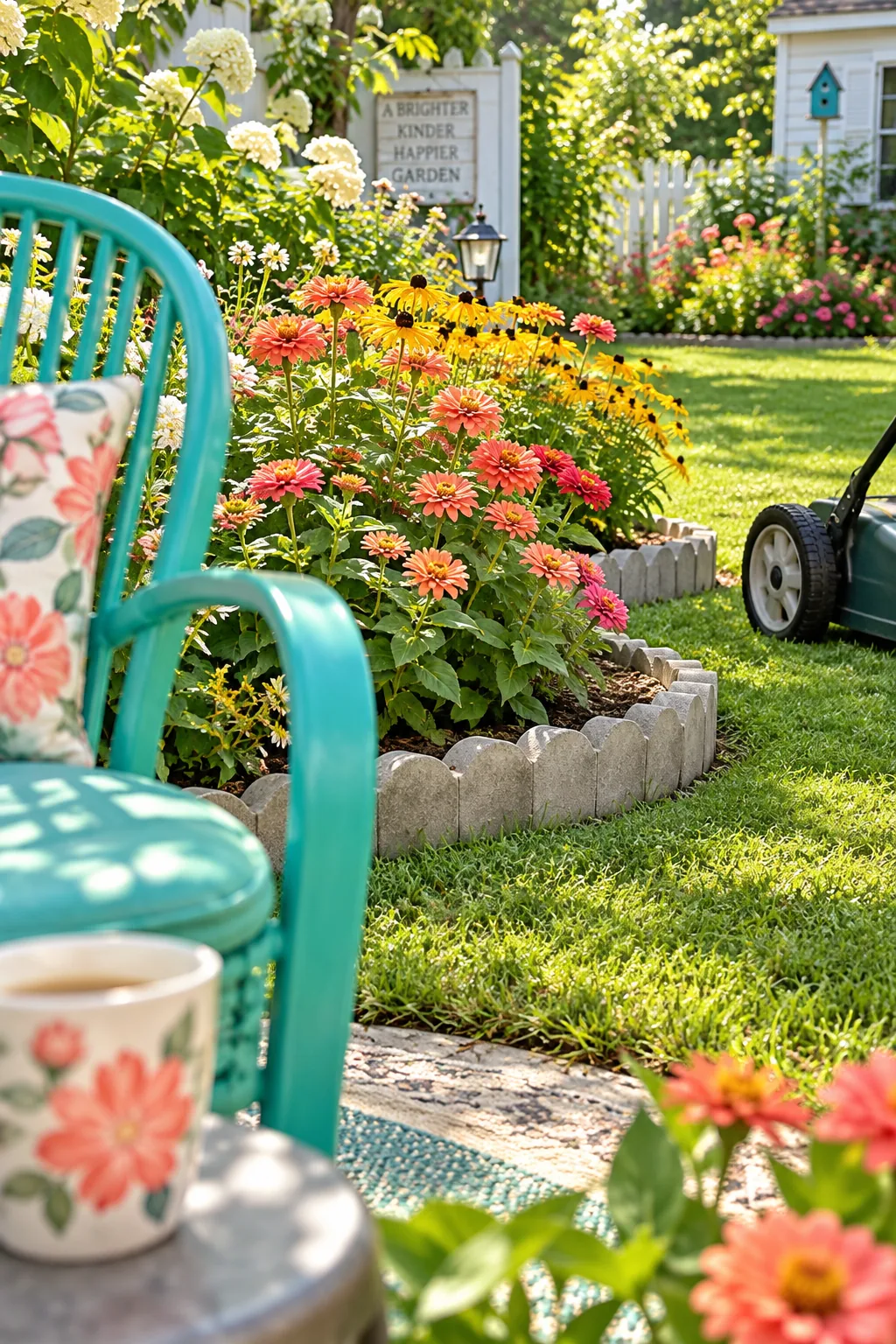
Sink traditional scalloped edgers a few inches below the grass line so your mower wheels can roll right over them. This simple trick saves you from having to use a string trimmer every single week. The curved tops add a classic, slightly vintage feel to your flower bed design.
They are super cheap at any hardware store and take almost no skill to install.
12. Weathering Steel Strips
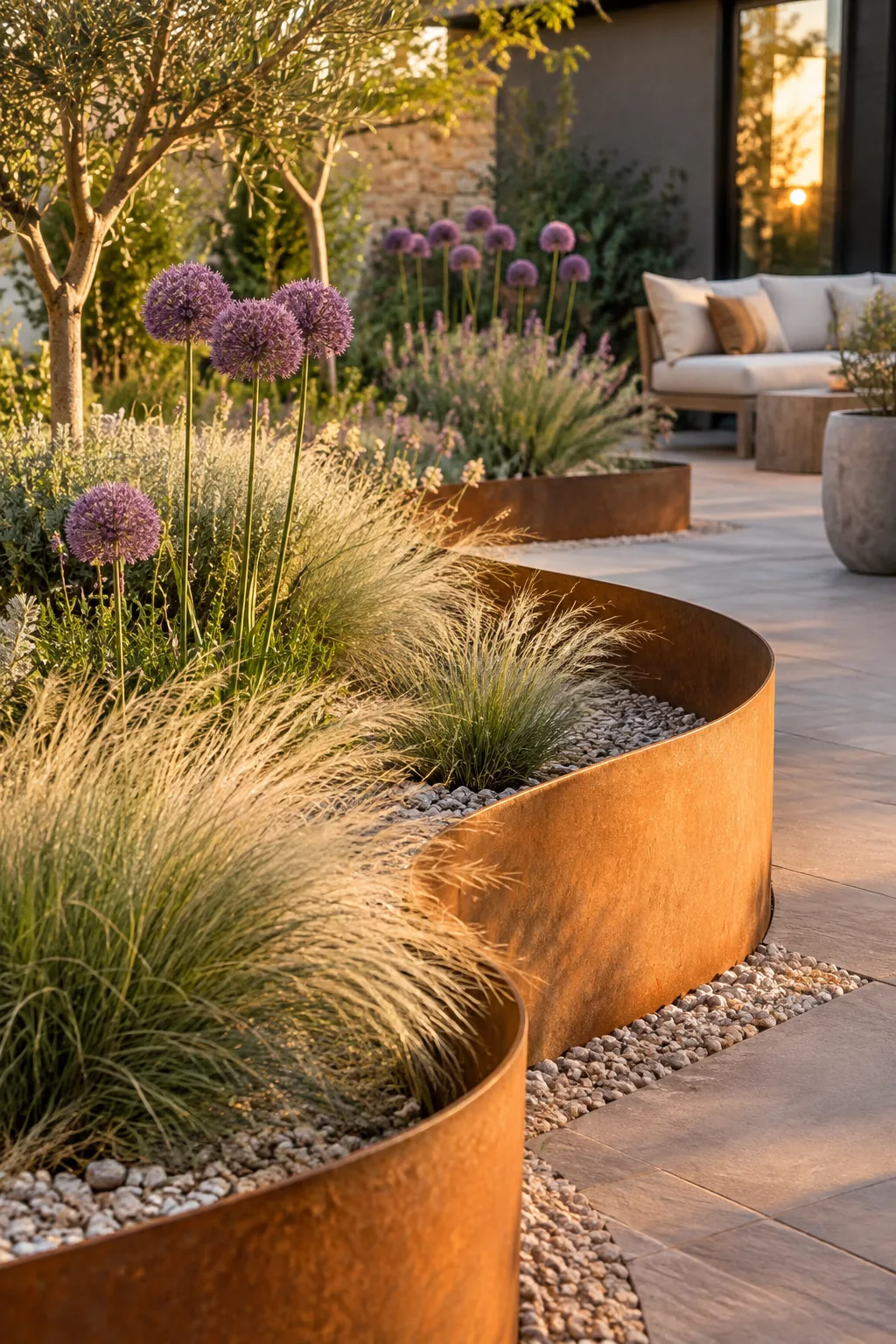
A deep, rusty orange ribbon winding through the garden gives the space an incredibly sleek, industrial vibe. The weathering steel forms a protective layer of rust that actually prevents the metal from degrading over time.
13. Gabion Wire Baskets
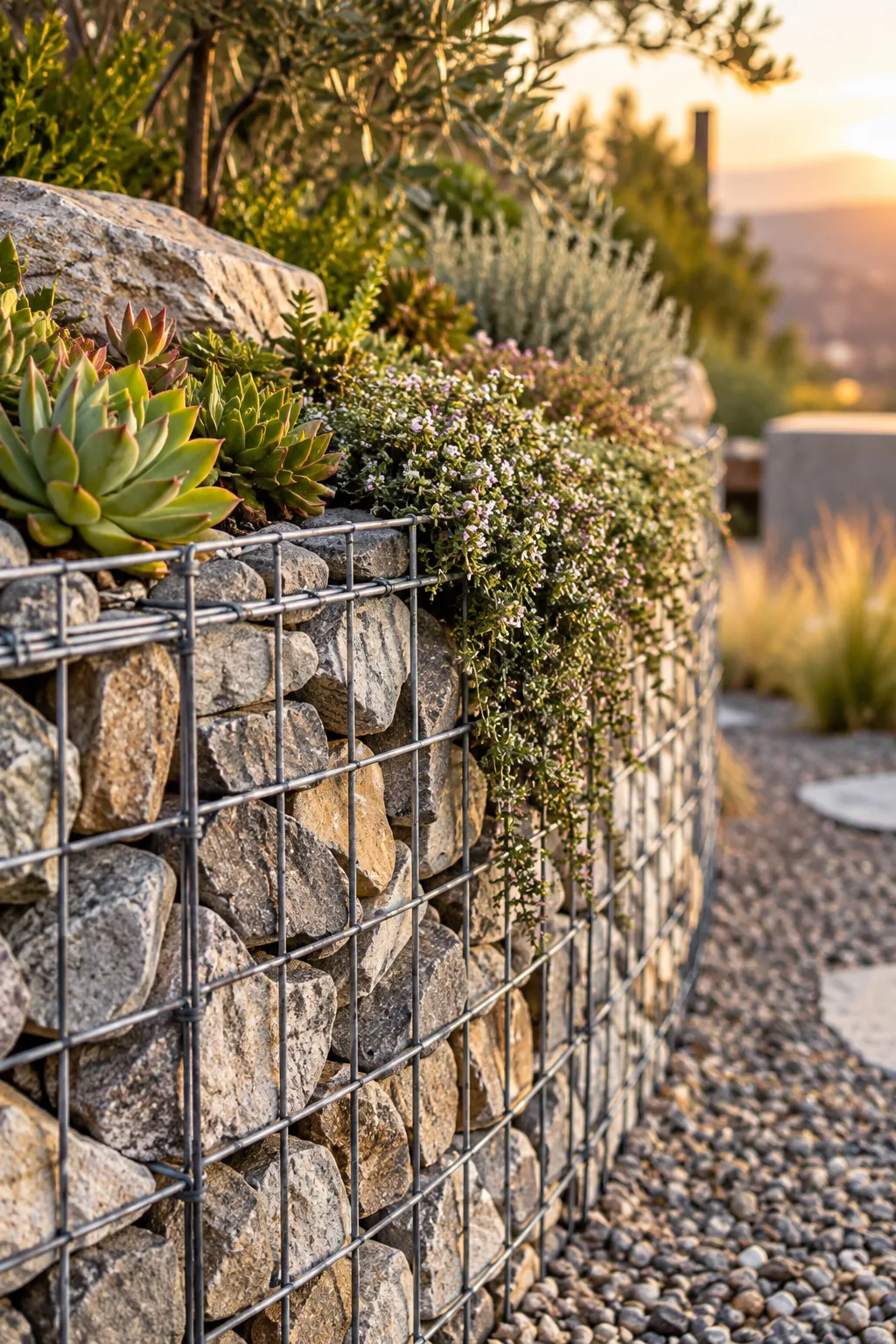
Wire cages packed tightly with chunky rocks form a heavy, architectural wall that doubles as a retaining edge. You can use this gabion border to build raised beds on a sloped yard without pouring any concrete footings.
14. Horizontal Bamboo Poles
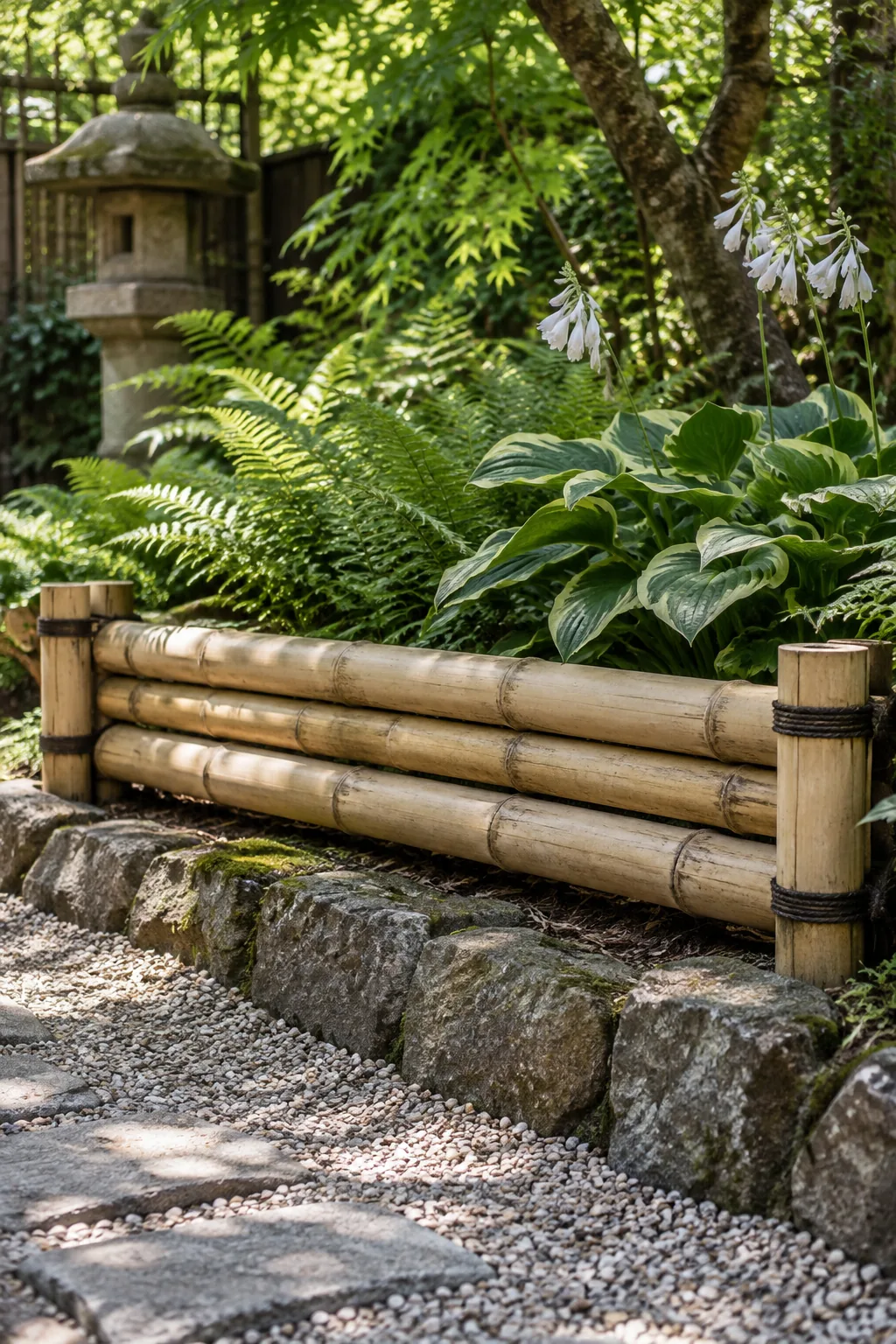
A standard bamboo pole can last up to ten years outdoors if you keep it elevated slightly above the wet soil.
Stacking two or three thick poles horizontally creates a beautiful Zen-inspired edge for a shade garden. This bamboo border brings a highly textured, organic feel to your landscaping. Keep these tips in mind when building your barrier:
- Secure the poles to vertical wooden stakes with galvanized wire
- Cap the hollow ends so water does not pool inside
- Coat the wood with a clear UV sealant to preserve the golden color
15. Sunken Terracotta Tiles
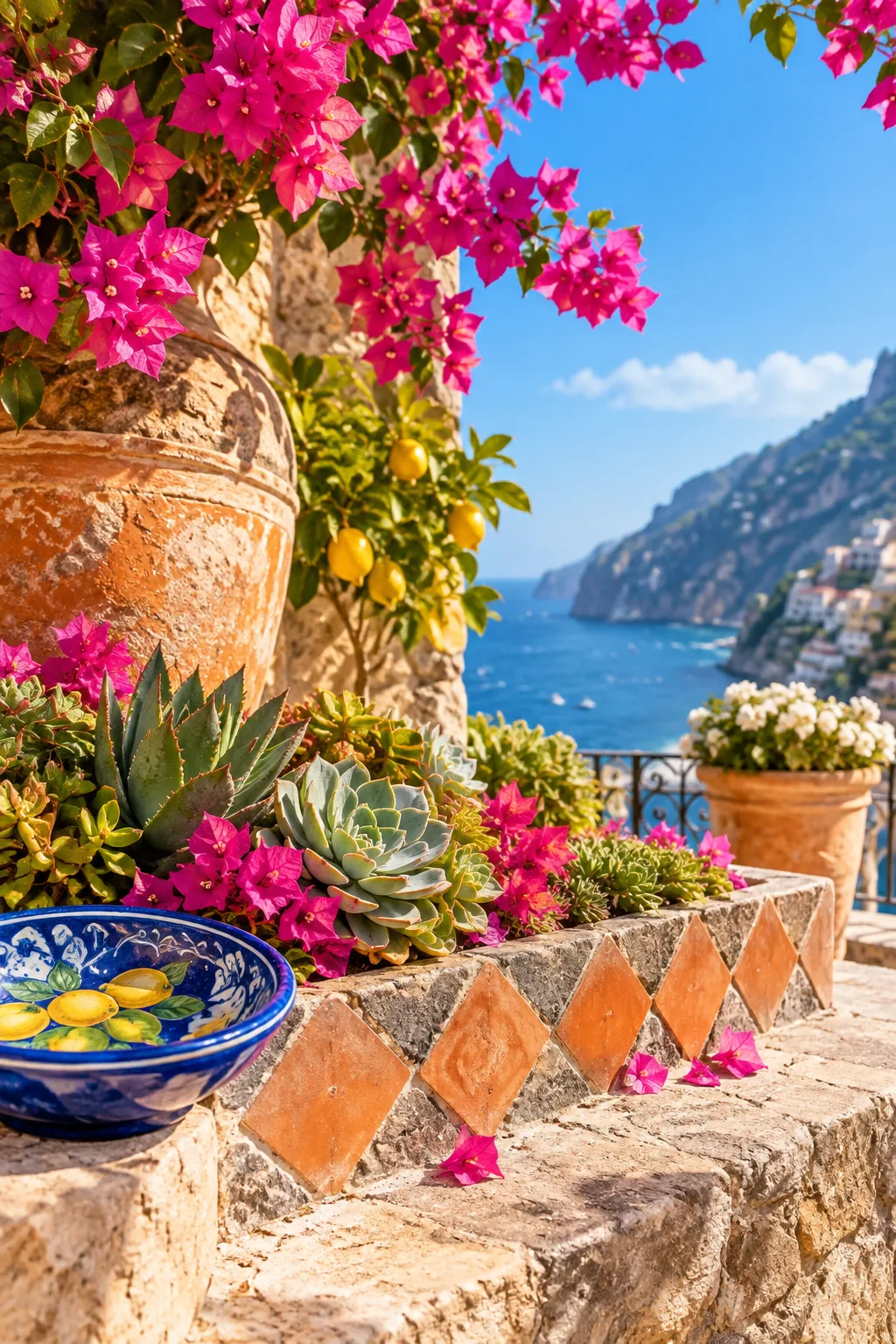
Diamond-shaped clay tiles peeking out of the dirt bring a warm, Mediterranean aesthetic to a dry landscape. Burying these terracotta borders halfway down ensures they stay upright even when the soil gets totally saturated.
16. Cut Log Rounds
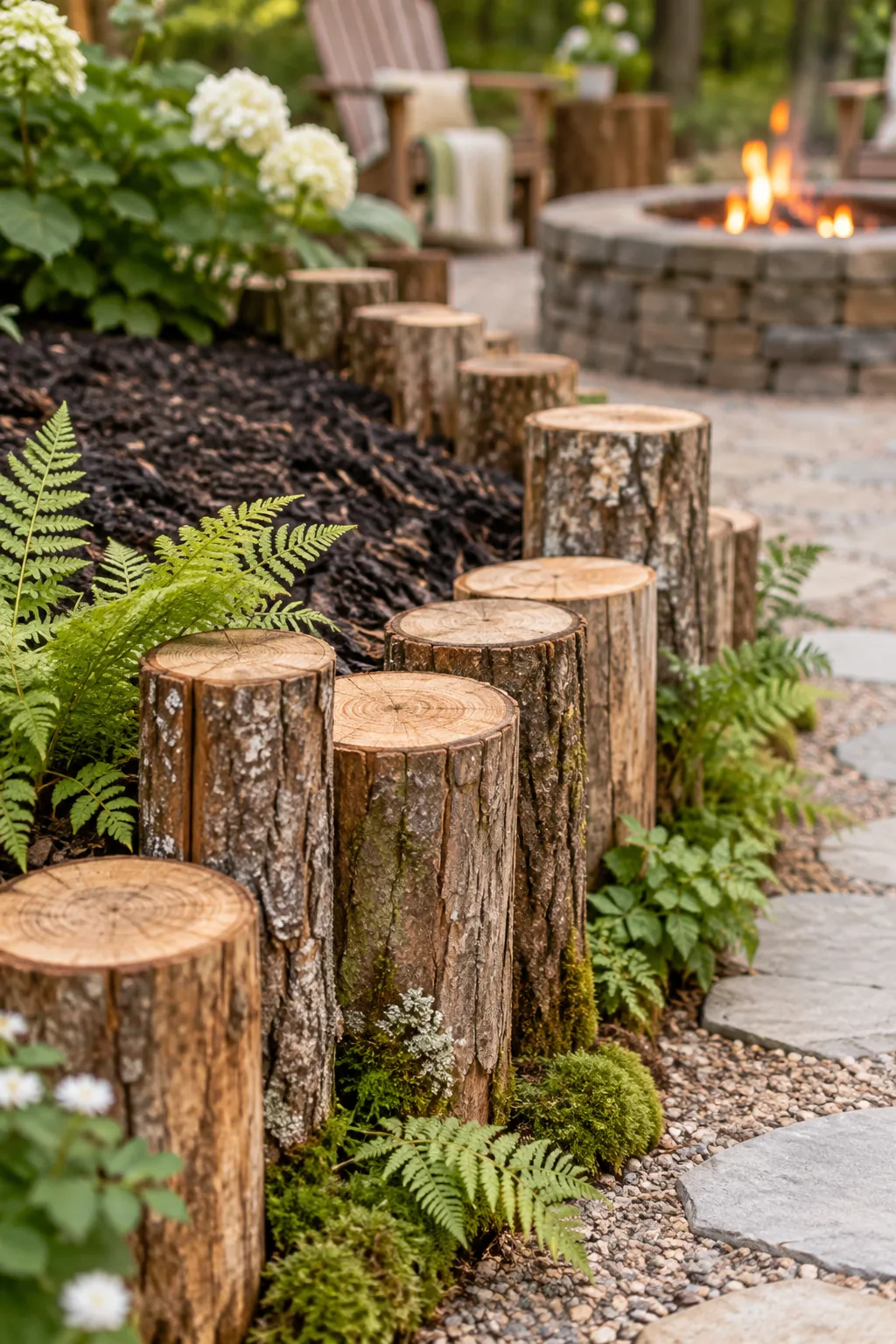
Standing short sections of logs upright creates a staggered, highly textured barrier that holds back heavy mulch.
You can use fallen branches from your own yard to build this edge completely for free. This rustic border design looks perfect surrounding a casual woodland garden or a fire pit area. Just follow a few steps to make it last longer:
- Strip the bark off to slow down the rotting process
- Dig a trench and bury the bottom half of each log
- Tamp the dirt firmly on both sides so they do not wobble
17. Interlocking Paver Blocks
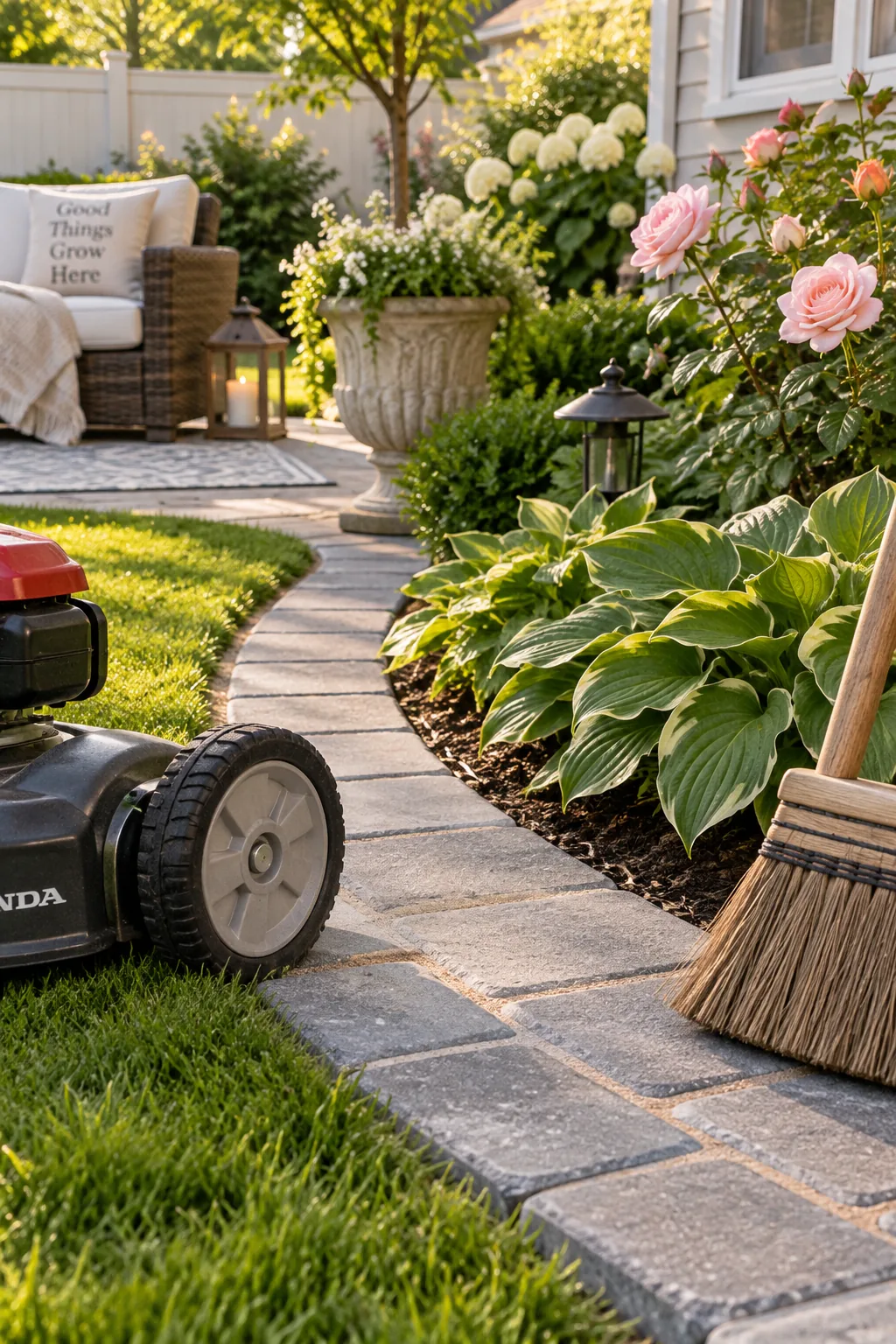
Heavy concrete pavers lock together seamlessly to form a wide, flat lip around your garden beds. The flat surface provides a perfect track for your lawnmower wheels, eliminating the need for tedious weed whacking. You can sweep sand into the joints to lock the stones together and stop weeds from sprouting. This paver edging gives the yard a highly manicured, professional finish.
18. Low Boxwood Hedges
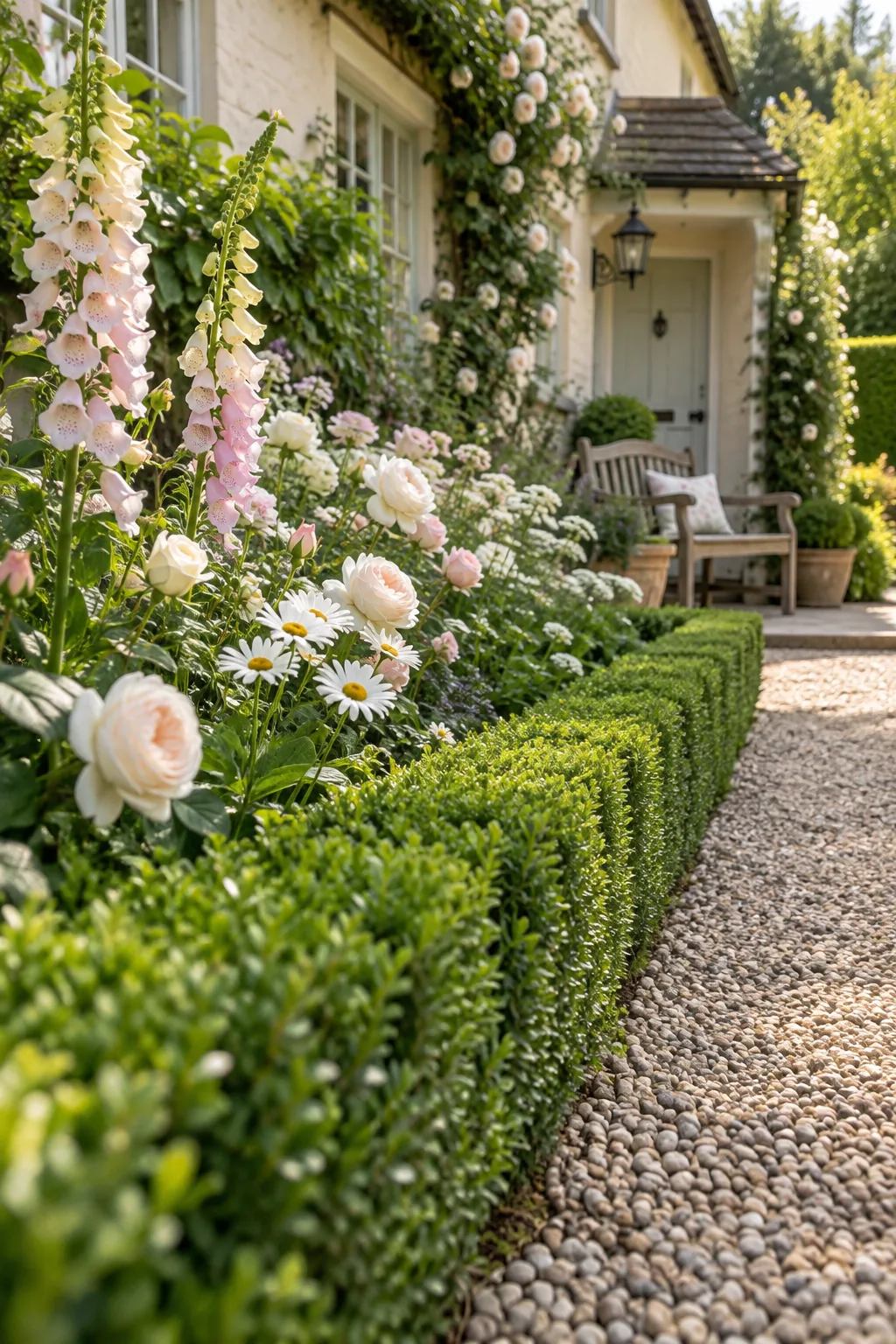
Dwarf boxwood shrubs only grow about one inch per year, making them incredibly easy to maintain as a tiny hedge.
Planting them tightly together creates a formal, structured frame around wild and messy blooming flowers. The deep green leaves provide a solid living border even in the dead of winter.
You just need to run hedge clippers over the top once a season to keep the line perfectly straight. It is the ultimate classic look for a front yard.