
Marrakesh Riad Meets Primitive: Bathroom
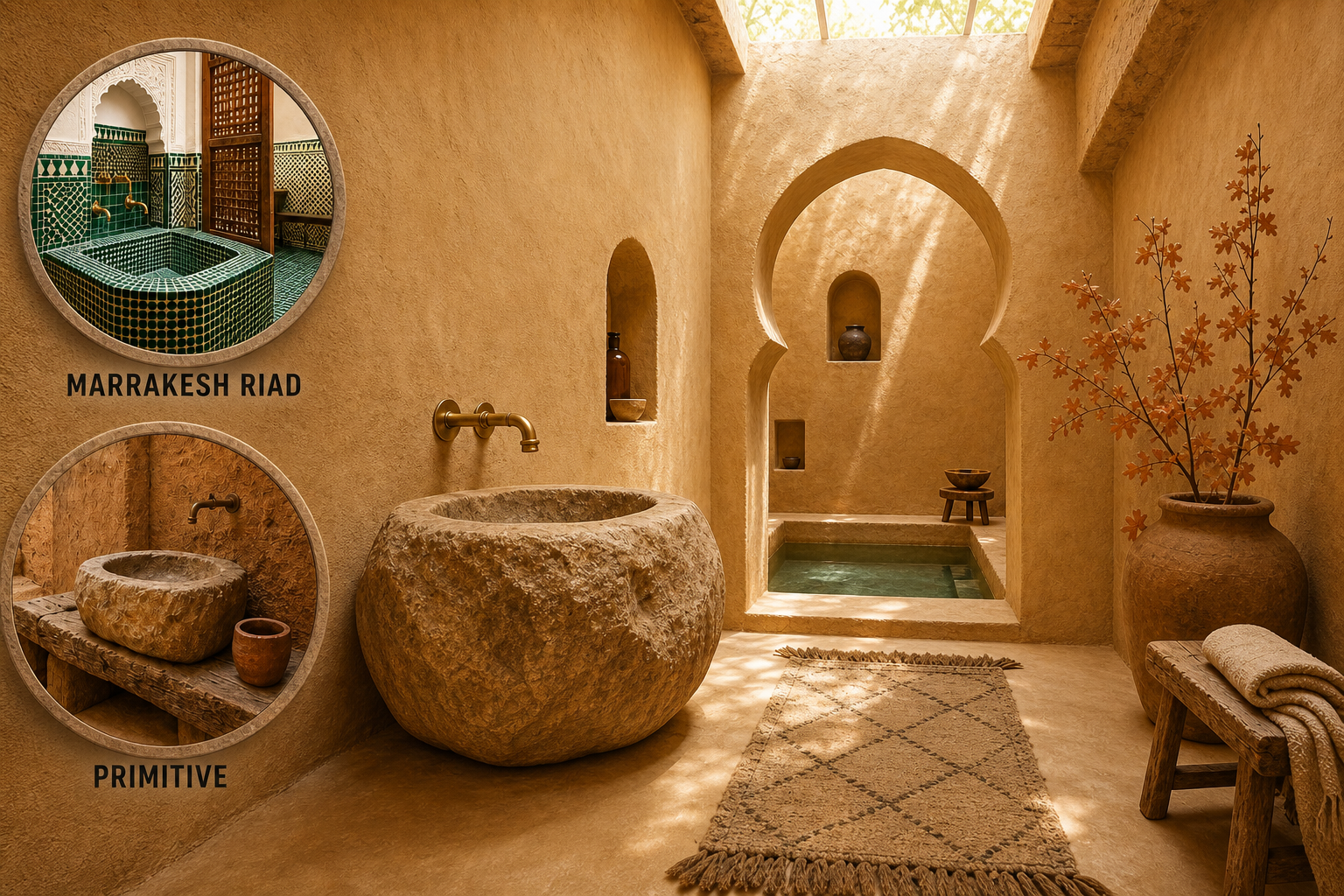
The mathematical precision of traditional courtyard architecture can seamlessly coexist with heavy elemental massing if intricate tilework is sacrificed for raw earth. This resolves a profound visual contradiction, creating a bathroom that feels both highly refined and deeply grounded.
Defining the Marrakesh Riad Architecture
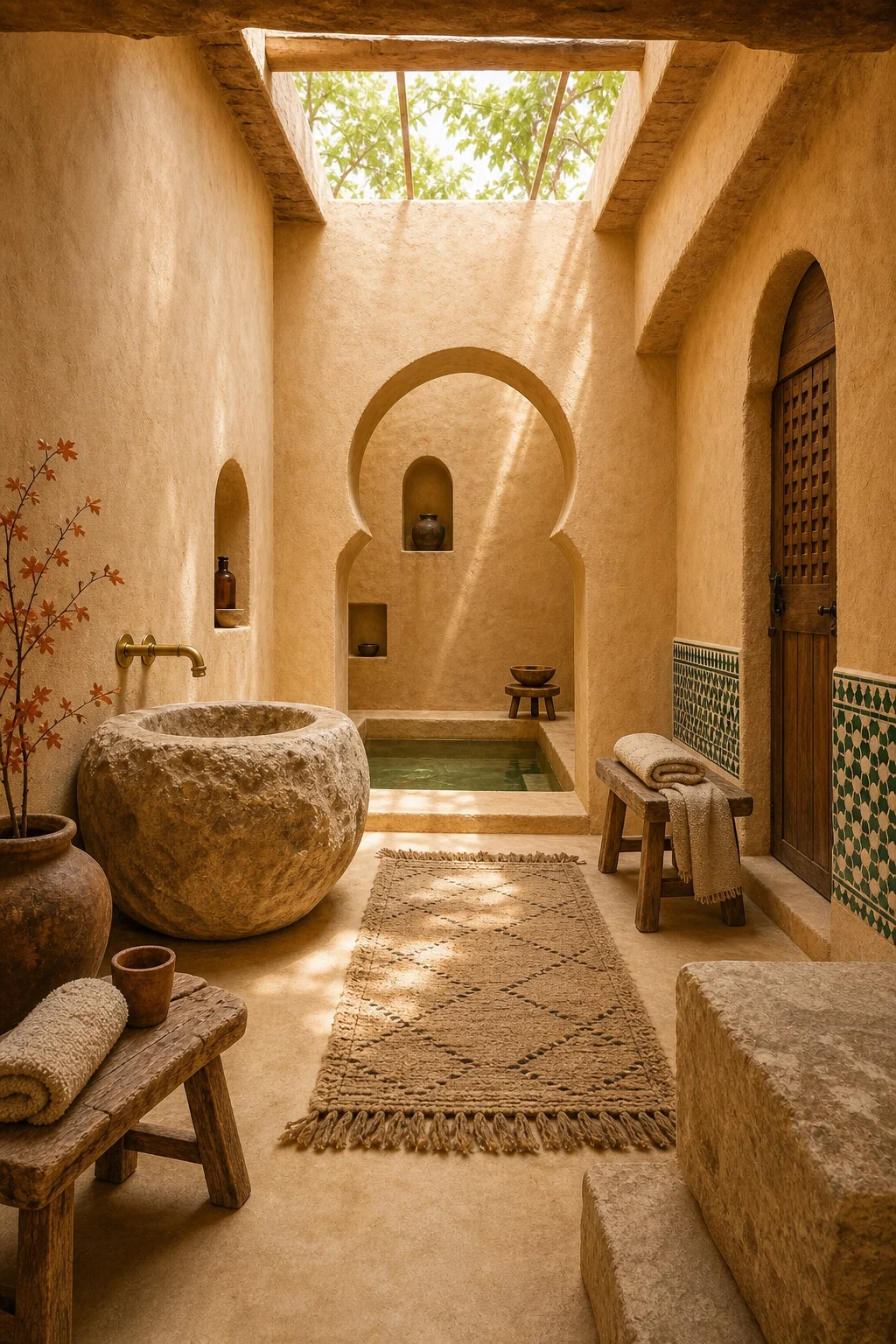
The Marrakesh Riad aesthetic provides the essential structural skeleton for the entire space. We rely heavily on its iconic horseshoe archways, traditional built-in wall niches, and sunken bathing pools to establish a sophisticated, predictable spatial rhythm throughout the private sanctuary, ensuring undeniable architectural elegance.
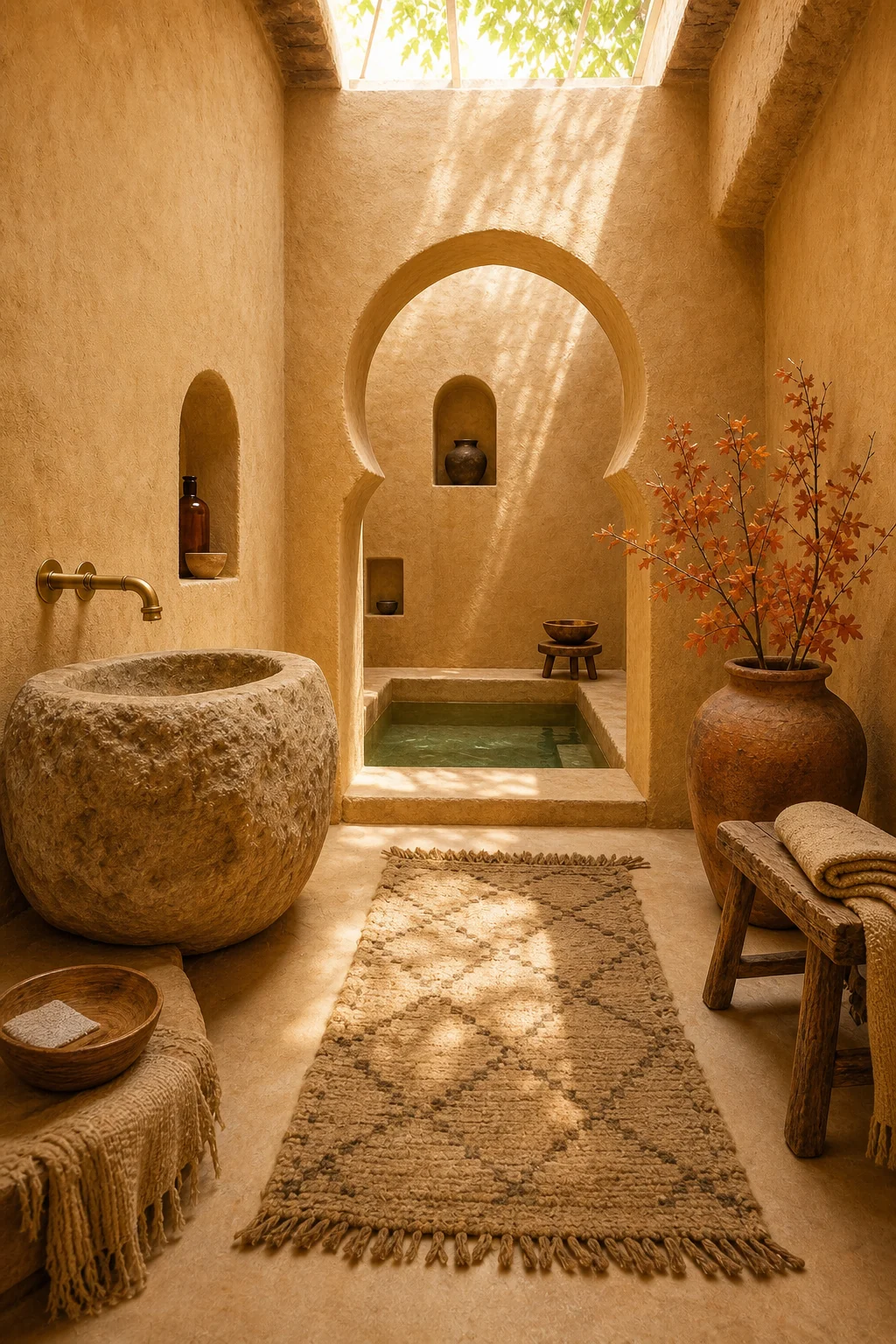
To maintain the necessary architectural tension, these classical Moroccan forms must remain mathematically precise. We keep the elegant geometry but deliberately strip away the expected colorful glazes and intricate zellige tilework to prepare the physical space for significantly heavier, unrefined elemental textures.
Anchoring with Primitive Massing
The Primitive aesthetic deliberately strips away delicate ornamentation in favor of sheer, unhewn mass. A megalithic stone basin and crude timber elements ground the airy courtyard architecture with undeniable gravity, immediately shifting the visual focus toward unapologetically raw, heavy physical form.
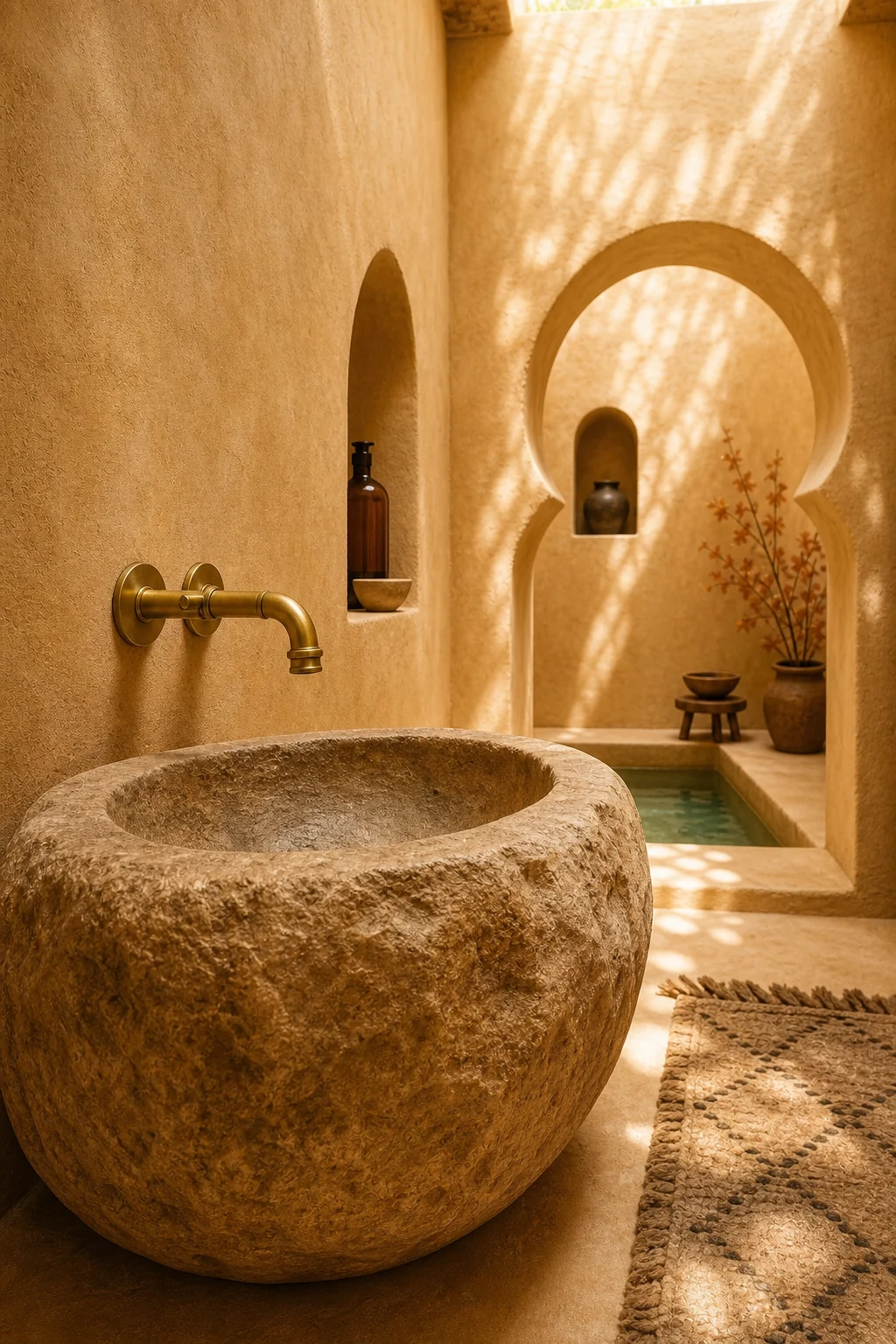
These heavy, monolithic objects proudly display their natural imperfections and rugged edges. They actively resist any modern refinement, ensuring the space feels deeply anchored to the earth rather than floating in a pristine, untouched, or overly curated state of artificial perfection.
To build this grounded foundation, source materials that feel freshly pulled from the rugged mountain landscape. Focus your attention on acquiring these specific elemental components to establish the room’s heavy anchor points and effectively reinforce the underlying primitive design narrative.
- Source an unhewn megalithic stone sink basin to serve as the primary heavy vanity anchor.
- Procure crude, hand-carved wooden stools for immediate tactile contrast near the bathing zone.
- Gather raw, unglazed earthen vessels to style the traditional built-in architectural niches without adding shine.
Bridging the Gap with Tadelakt
Continuous ochre tadelakt plaster serves as the ultimate textural diplomat between these two aesthetic extremes. It offers the seamless, highly durable waterproof functionality required by traditional riad architecture while simultaneously delivering the organic, earthy finish that is absolutely essential to the room.
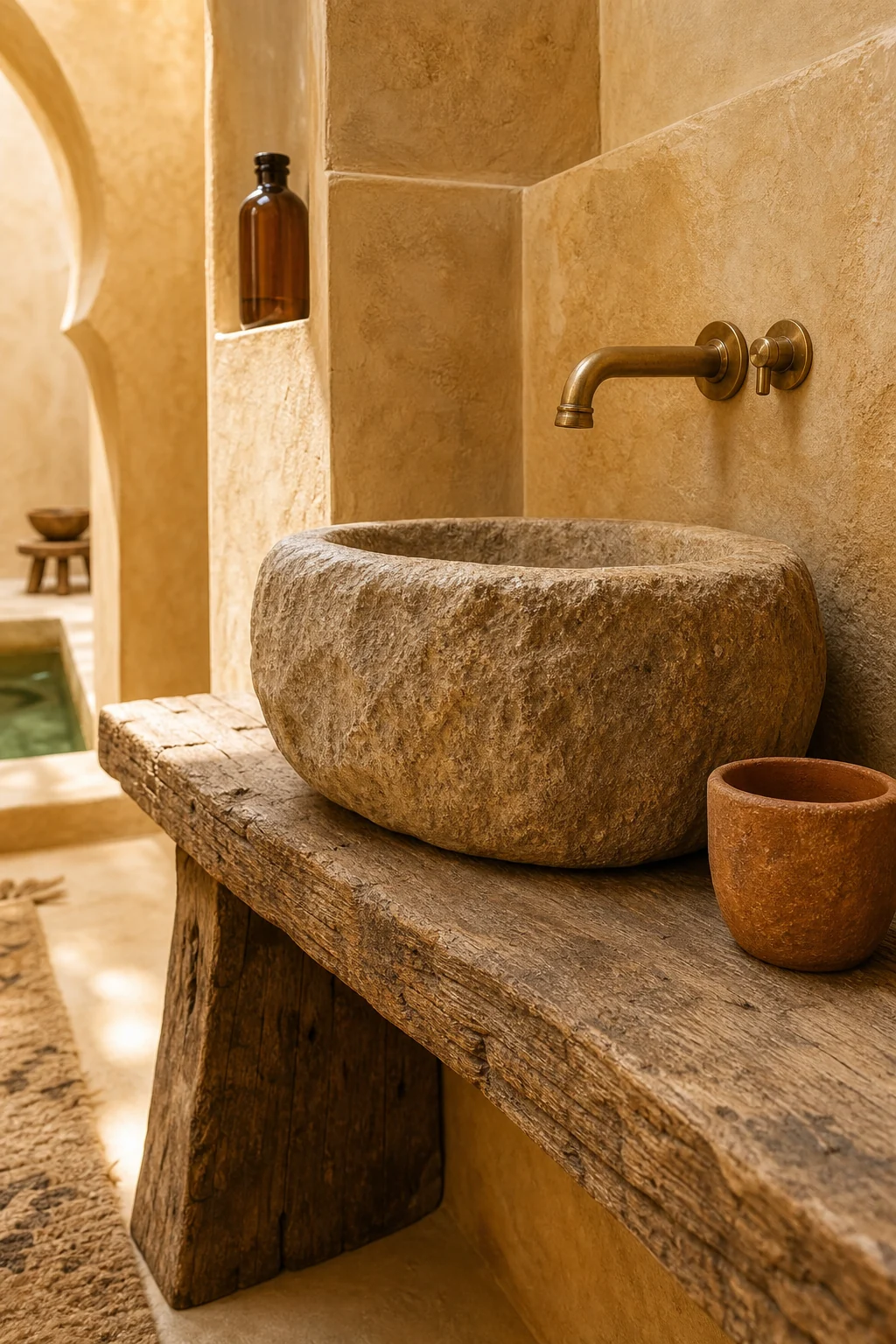
This continuous, hand-troweled surface connects the opposing styles without any jarring visual transitions. A shared earthy palette of Atlas Mountain terracotta, warm ochre, and dusty limestone seamlessly unifies the walls, floors, and ceilings into a single, enveloping, highly cohesive architectural shell.
- Apply warm ochre plaster across all vertical surfaces to unify the distinct walls and floors completely.
- Select dusty terracotta tones to establish a deeply grounded, earthy foundation throughout the entire bathing sanctuary.
- Incorporate raw limestone grey accents to deliberately cool the warm palette and prevent visual exhaustion entirely.
Constructing the Bathing Vignette
Bringing these distinct worlds together requires deliberate restraint within a functional seating and bathing zone. A sunken architectural pool provides the refined bathing experience, establishing a profound sense of classical luxury without ever relying on intricate, distracting tilework or shiny modern fixtures.
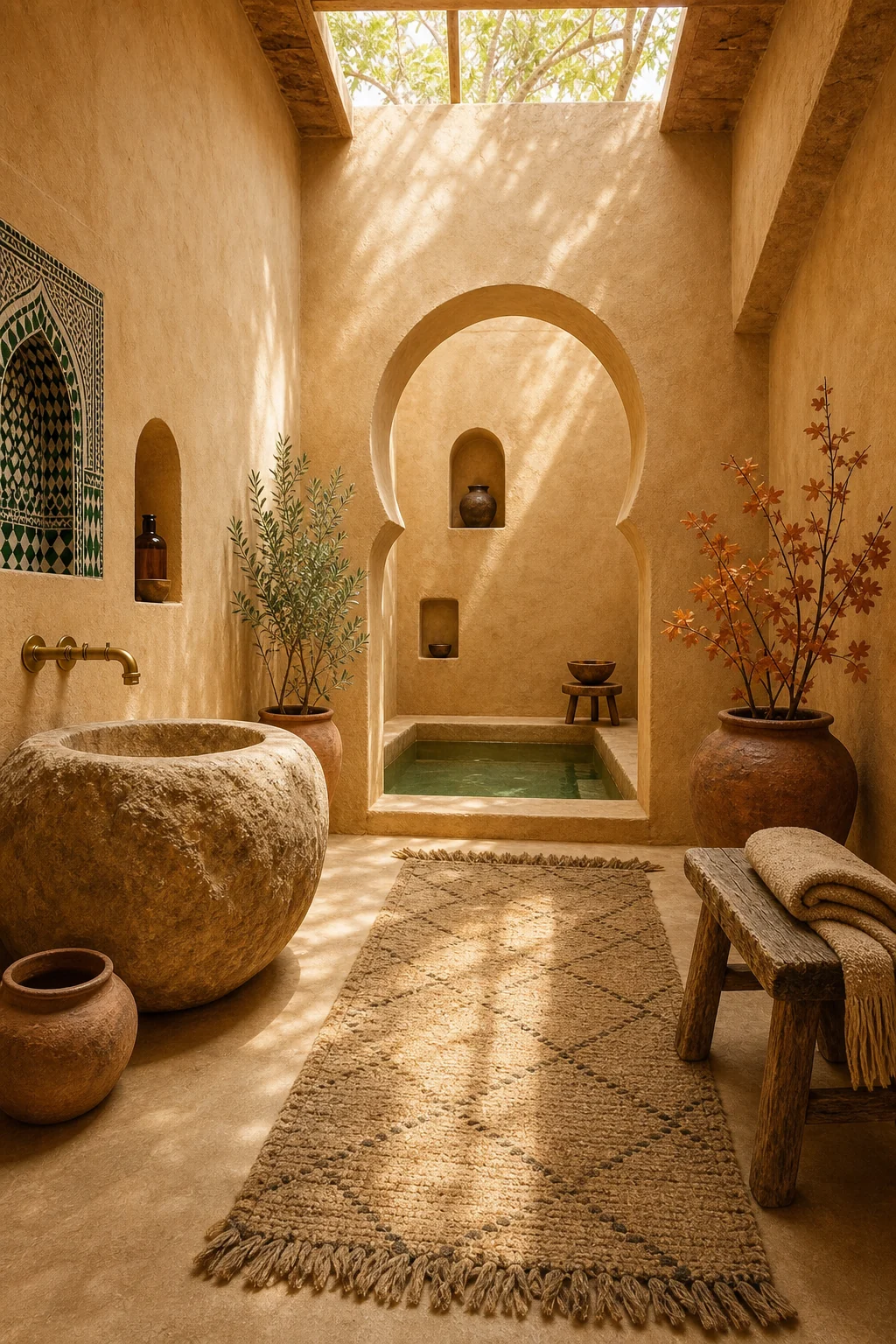
Beside the sleek pool, a crude, hand-carved bench introduces necessary friction against the smooth plaster. This stark juxtaposition of a mathematically perfect water basin and a rough-hewn timber seat encapsulates the core tension between the two driving design philosophies perfectly.
| Design Layer | Marrakesh Riad Role | Primitive Role | Bridge Decision |
|---|---|---|---|
| Shell | Horseshoe arches and built-in alcoves | Unhewn monolithic massing | Continuous ochre tadelakt plaster |
| Furniture | Built-in masonry seating | Crude, hand-carved timber stools | Bleached walnut wood tones |
| Lighting | High courtyard skylights | Deep, shadowed elemental recesses | Soft, dappled daylight balancing both |
| Accents | Polished brass tapware | Raw, unglazed earthen vessels | Matte charcoal iron fixtures |
This precise layering of materials guarantees that the bathing area functions flawlessly while maintaining its rugged aesthetic. Every architectural decision and furniture placement works in tandem to ensure the room feels deliberately curated rather than accidentally unfinished or haphazardly constructed by amateurs.
Illuminating the Courtyard Layout
Traditional riads face inward, relying entirely on central courtyards for their illumination. We adapt this historical concept by utilizing a prominent high courtyard skylight to pull bright, aspirational daylight deep into the enclosed, private bathing sanctuary far below the roofline.
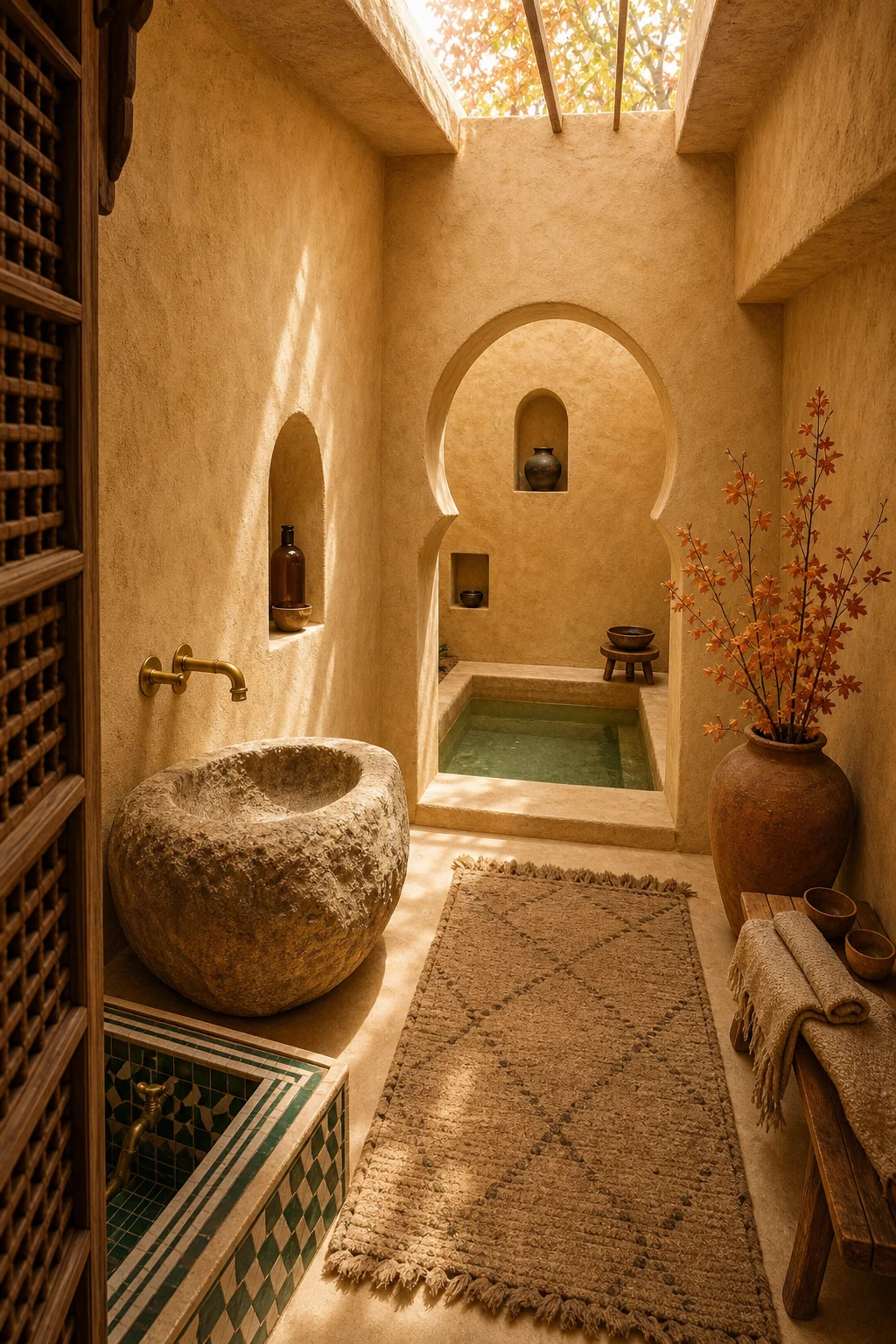
This overhead illumination casts soft, dappled autumn light that intentionally highlights the rugged Primitive textures. This strategic lighting approach ensures that every dark surface retains clear, legible detail, perfectly balancing the airy architectural volume with the deep, heavily shadowed elemental recesses below.
Mastering this delicate balance of light and shadow is absolutely crucial for highlighting the tactile differences between smooth plaster and rough stone. Proper illumination ensures the visual contradiction remains perfectly legible, elevating the raw materials into a highly refined, sophisticated context.
Curating Elemental Accents
Styling must remain incredibly sparse to honor the heavy, dominant architecture. Instead of filling the space with unnecessary decorative clutter, utilize the traditional built-in wall niches to display a few carefully chosen, raw, natural objects that reinforce the overarching design narrative perfectly.
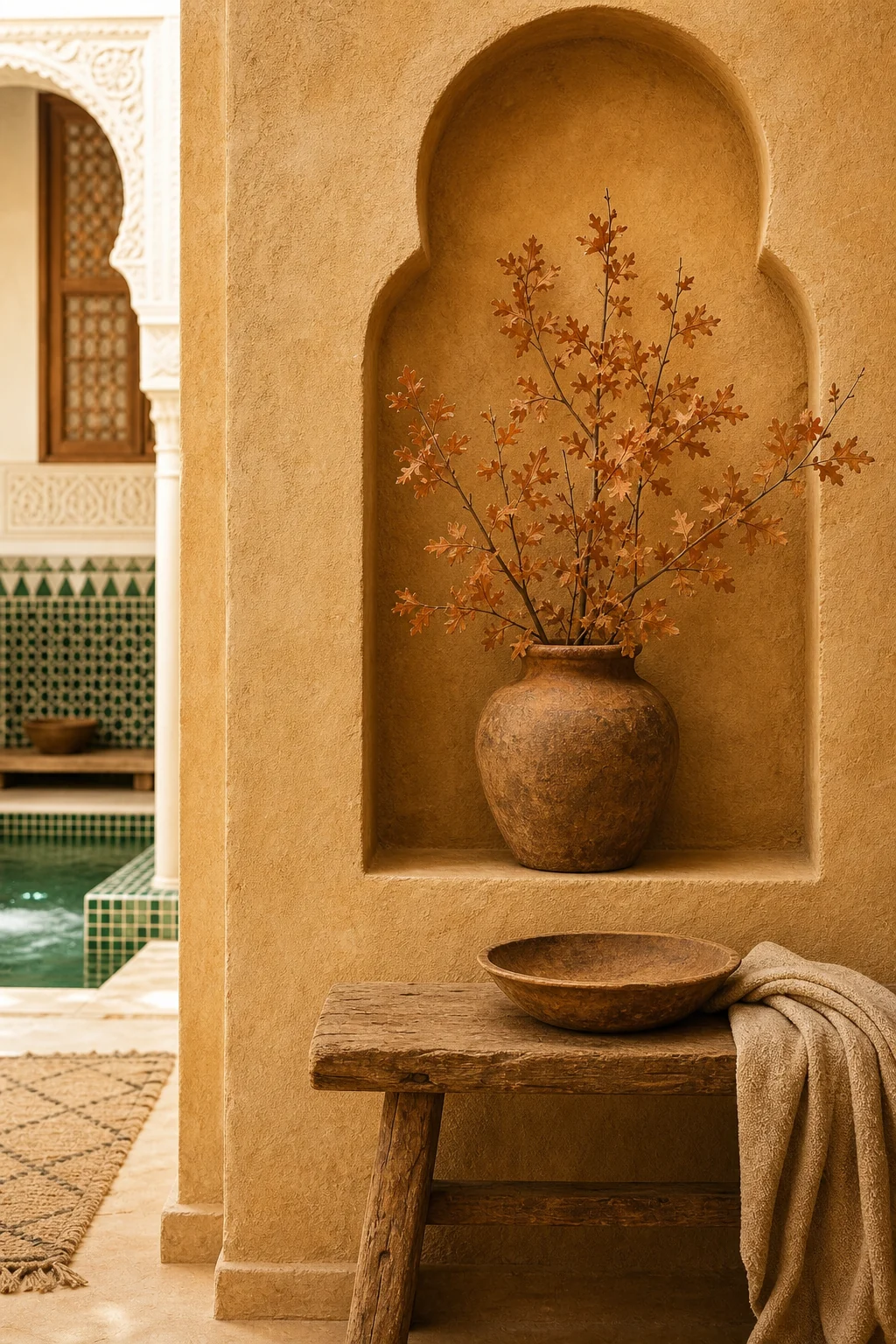
Fill these classical Moroccan alcoves with unglazed clay vessels and dry autumn oak branches. By deliberately placing deeply tactile, unrefined elemental materials inside perfectly proportioned architectural frames, you continuously reiterate the core tension between elegant geometry and raw earthiness throughout the entire room.
- Source unglazed, hand-pinched clay cups for the vanity to maintain a completely matte, earthy finish everywhere.
- Forage dry autumn oak branches to introduce organic, sculptural height within the deeply recessed architectural alcoves.
- Choose matte charcoal iron hardware over shiny modern chrome to preserve the rugged, unrefined primitive atmosphere.
Translating the Look Beyond the Wet Zone
This distinct aesthetic easily adapts to dry spaces like a dedicated dressing area or an adjoining powder room. The absolute key is to maintain the continuous plaster walls, allowing the unified architectural shell to flow seamlessly from the wet bathing zone outward.
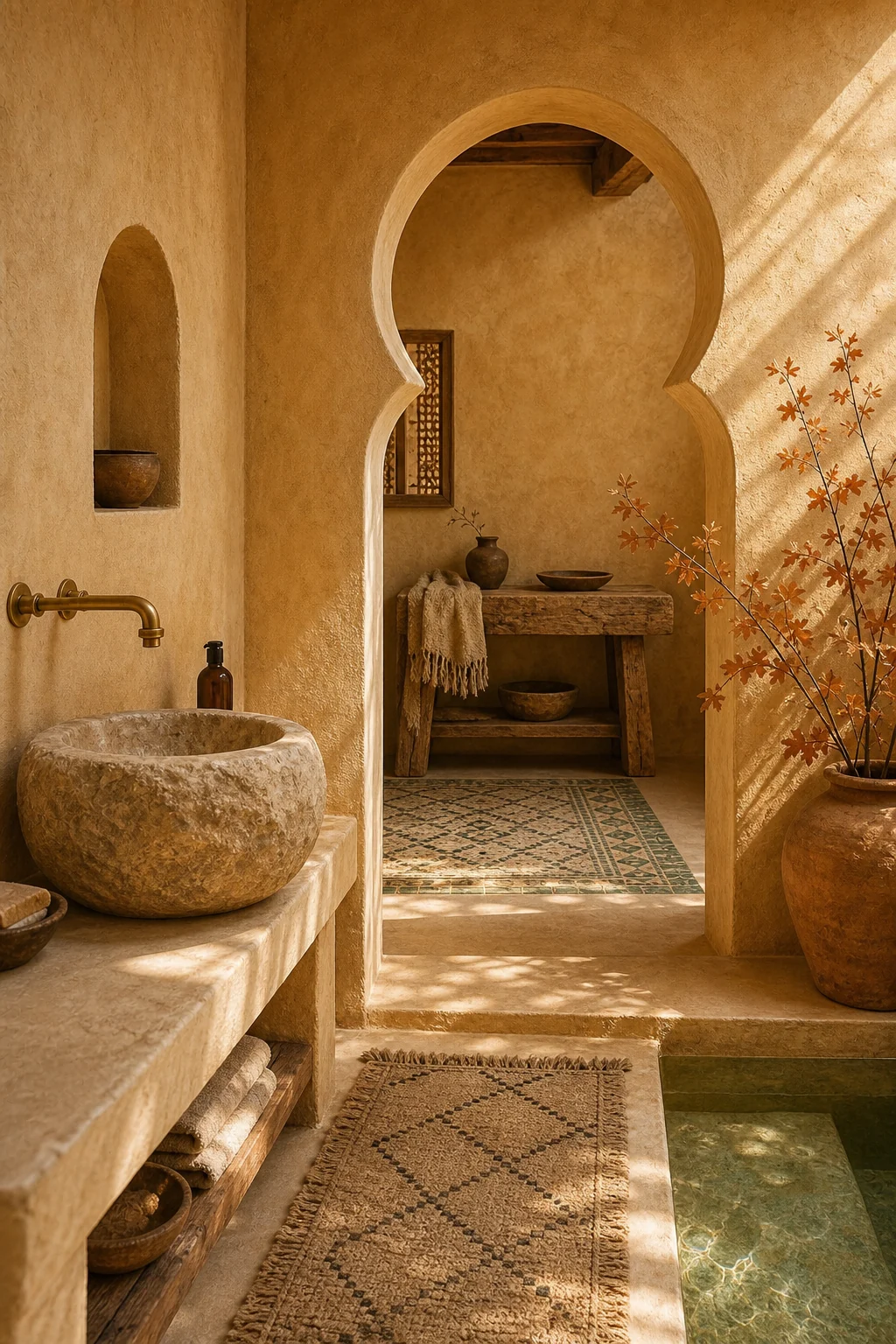
In these expanded dry zones, introduce heavy, unrefined timber consoles instead of utilizing standard built-in cabinetry. This critical decision ensures the furniture carries the exact same primitive weight as the stone basins, maintaining the elemental gravity far beyond the primary water source.
- Verify that your floor joists can easily support the extreme weight of a megalithic stone basin.
- Extend the waterproof tadelakt plaster slightly past the wet zone to create a seamless visual transition.
- Install heavy timber floating shelves instead of closed cabinetry to maintain the open, airy courtyard feel.
Preventing the Theme Park Effect
The greatest risk in this design is creating a space that feels like a historical replica or a primitive cave. Your success relies entirely on meticulously balancing architectural elegance with unapologetically raw, heavy materials, purposefully avoiding any confusing decorative compromises along the way.
To guarantee a successful resolution of this visual contradiction, you must rigorously audit your material choices. You must actively avoid common failure modes that will instantly destroy the delicate, highly intentional balance between classical Moroccan courtyard architecture and heavy, raw elemental massing.
Allowing too much refined brass hardware actively overpowers the crude stone elements and breaks the tension. Similarly, installing standard white porcelain sinks instantly erases the intended visual contradiction, normalizing the entire room into a generic, uninspired, and entirely predictable bathroom environment.