
This Vanity Case Became a Walk in Closet
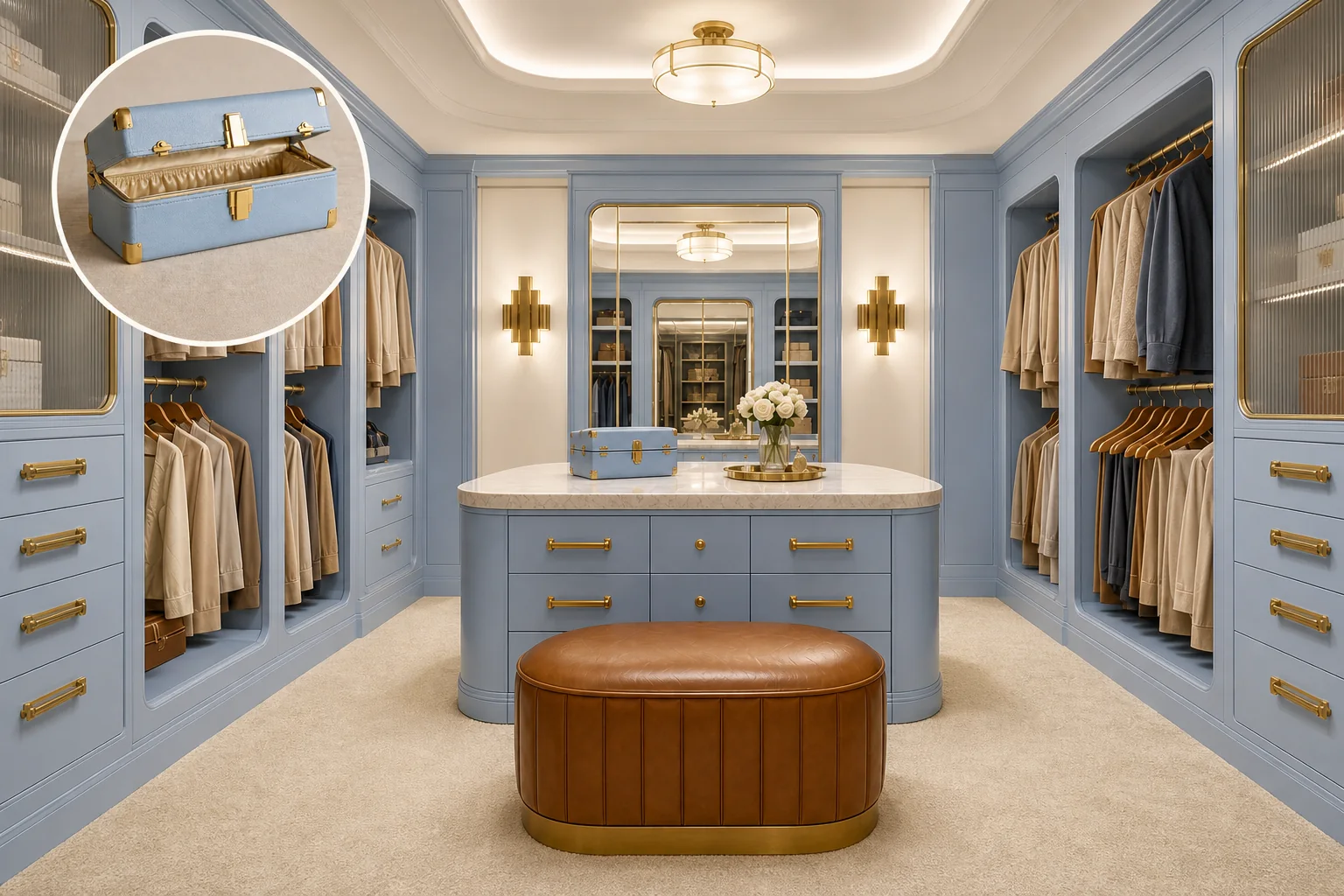
A vintage Art Deco vanity case offers a masterclass in elegant organization. By scaling up its compartmentalized logic and finishes, a standard dressing room transforms into a tailored walk-in closet where strict symmetry is beautifully wrapped in soft, tactile materials.
Scaling Up the Travel Case Architecture
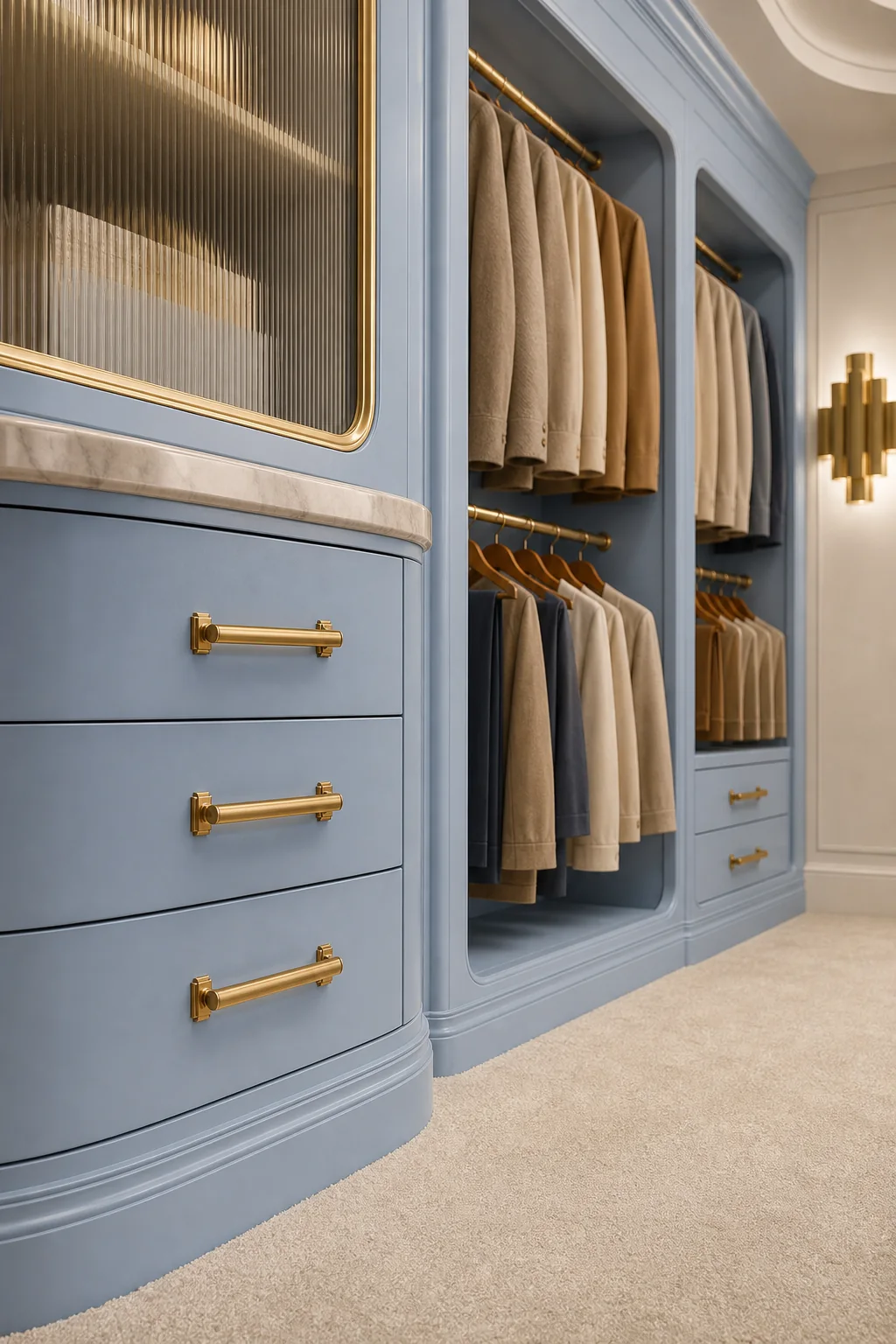
The rigid, fold-out logic of the vanity case expands into floor-to-ceiling millwork, ensuring every garment has a dedicated, symmetrical zone. To avoid feeling like a rigid commercial showroom, these strict geometric layouts must be softened by pastel tones and plush upholstery. Designing symmetrical storage bays mirrors the balanced proportions of an open travel case, while rounded streamline corners on island counters soften the room’s geometry. Executing this transformation requires precise spatial planning to capture the source’s meticulous organization. Following a structured sequence ensures the architecture reflects the precise elegance of a glamorous 1930s travel companion.
- Map out symmetrical storage zones to ensure left and right cabinetry walls mirror each other perfectly, establishing the room’s foundational balance.
- Build a central anchoring island that grounds the room like the main compartment of the case, providing a focal point for daily routines.
- Apply streamline rounded corners to soften harsh right angles on all exposed millwork edges, mimicking the aerodynamic silhouette of 1930s luggage.
- Install compartmentalized drawer inserts so small accessories and jewelry have dedicated, rigid dividers lined with protective fabrics.
Drenching the Room in Powder Blue
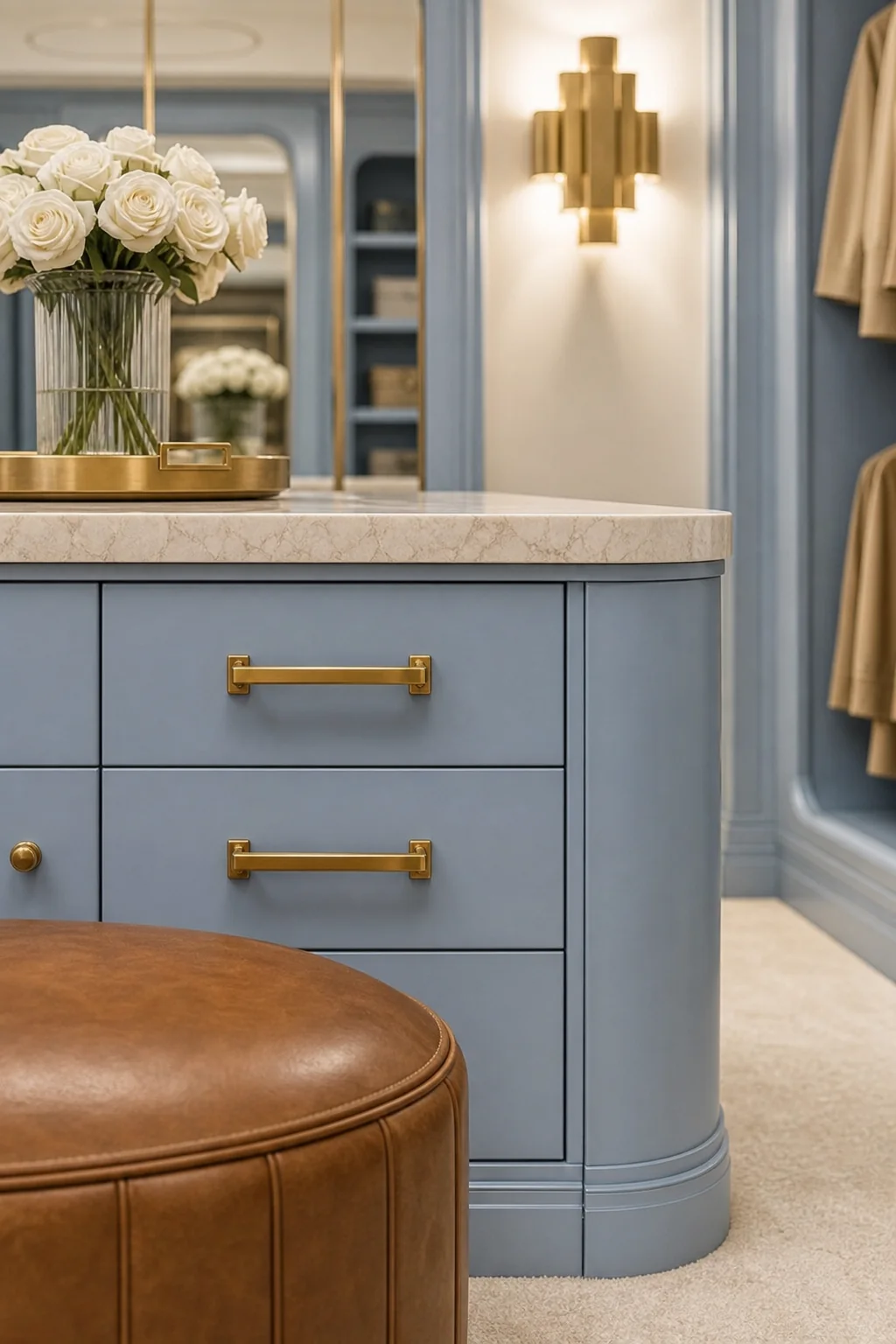
Translating the case’s exterior means committing to a dominant satin powder blue foundation, grounded by the warmth of polished metallic accents. Using a satin finish for the blue cabinetry emulates the soft sheen of fine-grain leather, while unlacquered brass hardware allows a natural patina over time. This careful balance prevents the pastel hue from feeling overly sweet, anchoring it instead in historic glamour. The visual-DNA mapping table below illustrates exactly how these core elements transition from a portable, compartmentalized object into a permanent, highly functional architectural space.
| Source trait | Visible evidence | Room move |
|---|---|---|
| Compartmentalized Symmetry | The structured, fold-out trays and rigid symmetrical shell of the case. | Floor-to-ceiling custom millwork featuring symmetrical storage bays with softly rounded streamline corners. |
| Powder Blue & Brass | The pastel blue leather exterior contrasted with bright brass corner guards and clasps. | Satin-finish powder blue cabinetry accented with heavy, geometric brass drawer pulls and hanging rods. |
| Tactile Leather & Satin | The fine-grain leather exterior and soft satin-lined interior. | A central seating ottoman upholstered in supple leather, with velvet-lined accessory drawers in the island. |
| Art Deco Stepping | The tiered, stepped profile of the brass latch and hinges. | Stepped brass wall sconces flanking the mirrors and tiered profiles on the crown molding. |
Polished Brass Hardware
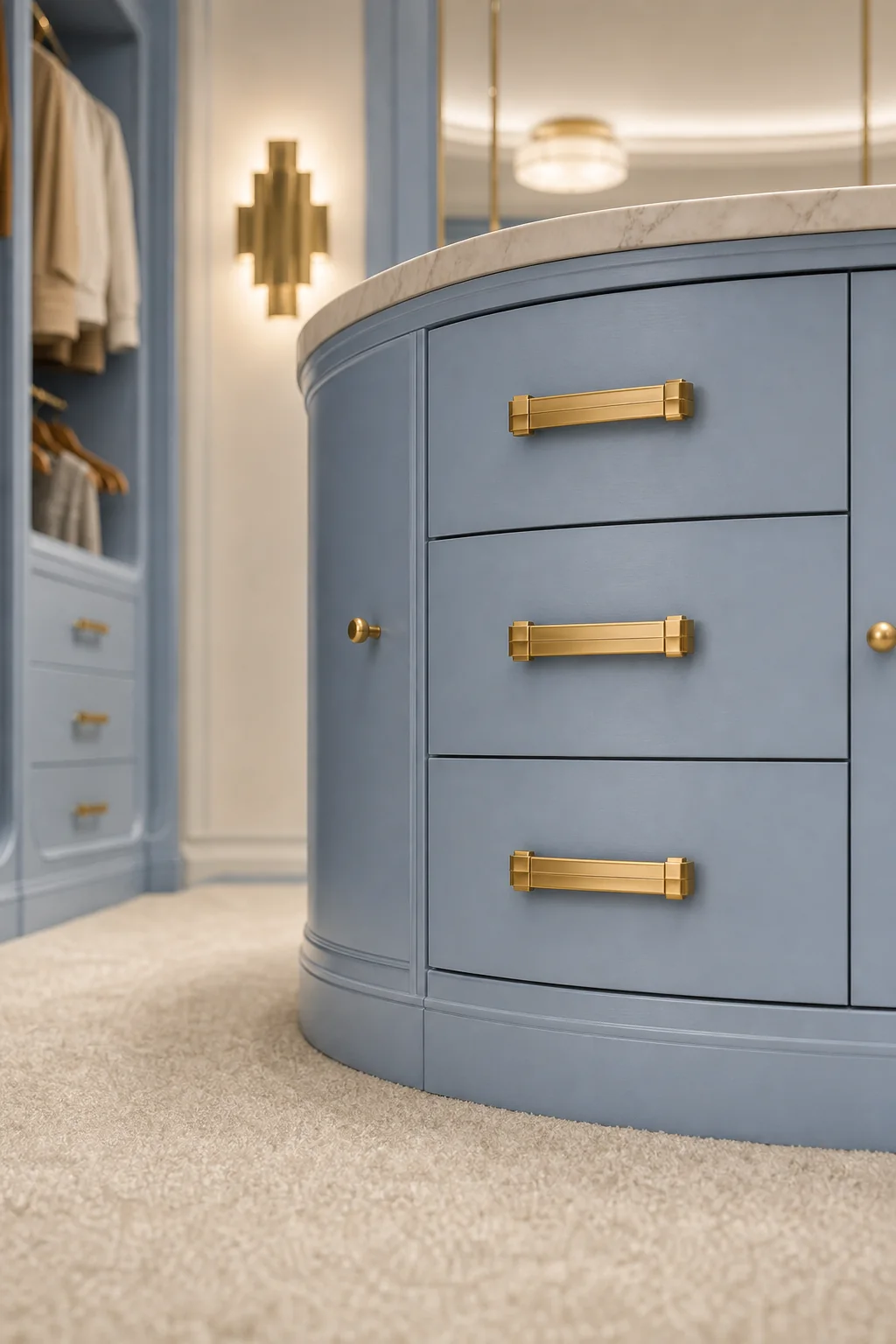
Heavy brass pulls echo the case’s polished geometric clasps, bringing a jewelry-like precision to the millwork. Selecting unlacquered polished brass with stepped Art Deco detailing captures the bright, metallic contrast of the original corner guards. These heavy, geometric profiles provide a rhythmic punctuation across the pastel blue cabinetry, ensuring the hardware feels like an integrated architectural feature rather than an afterthought. The tactile weight of the metal against the smooth painted wood perfectly mimics the experience of unlatching a finely crafted vintage vanity case.
Layering Leather and Satin Finishes
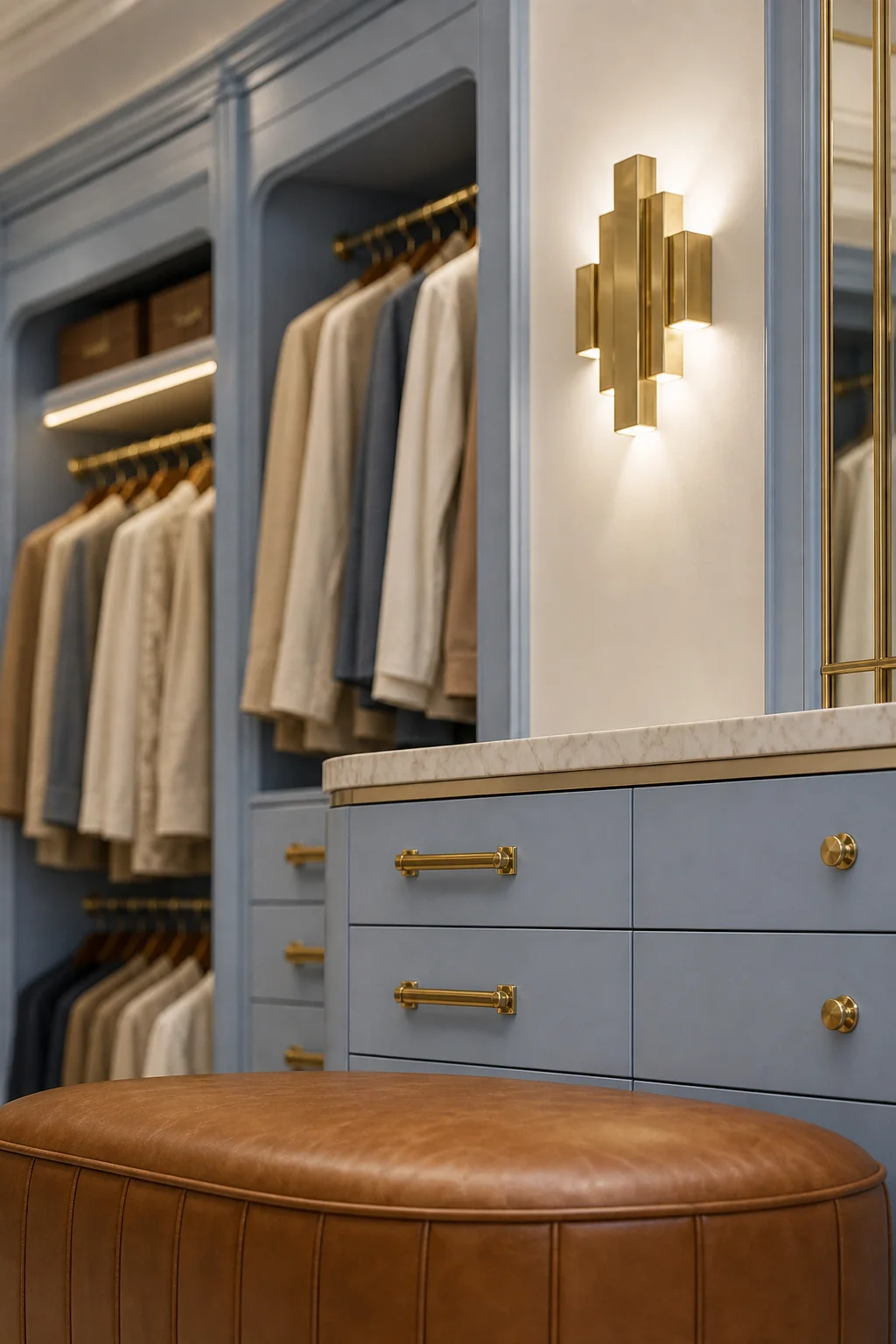
To prevent the extensive millwork from feeling cold, tactile materials from the case’s construction are introduced at key touchpoints. Upholstering the central seating ottoman in supple saddle brown leather translates the case’s fine-grain exterior, while lining accessory drawers with cream satin protects delicate jewelry. These soft interventions provide necessary warmth and acoustic dampening within the bright, windowless dressing room. The following material checklist provides the exact finishes and placements needed to replicate this luxurious, protective interior without resorting to literal interpretations like luggage handles.
Satin-Lined Accessory Drawers
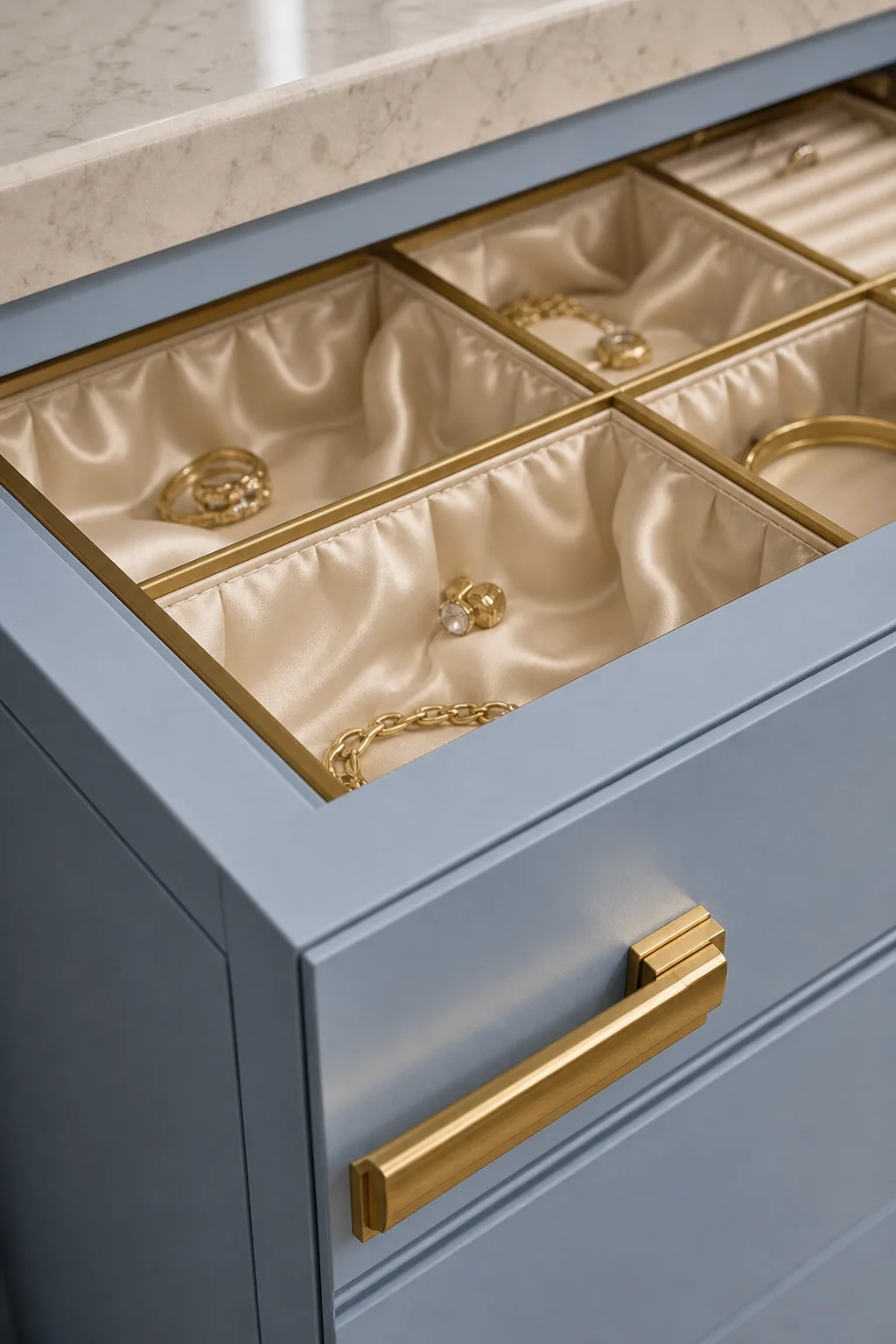
Cream satin drawer linings replicate the case’s soft interior, offering a pristine backdrop for organizing valuables. Ensuring the fabric is tightly stretched over rigid compartmentalized dividers maintains the meticulous organization inherent to the original travel companion. This hidden layer of luxury transforms daily routines, turning the simple act of selecting an accessory into an experience reminiscent of opening a treasured vintage case. The contrast between the crisp, structured dividers and the smooth, reflective fabric elevates the functionality of the central island into a true showcase.
Introducing Art Deco Rhythm
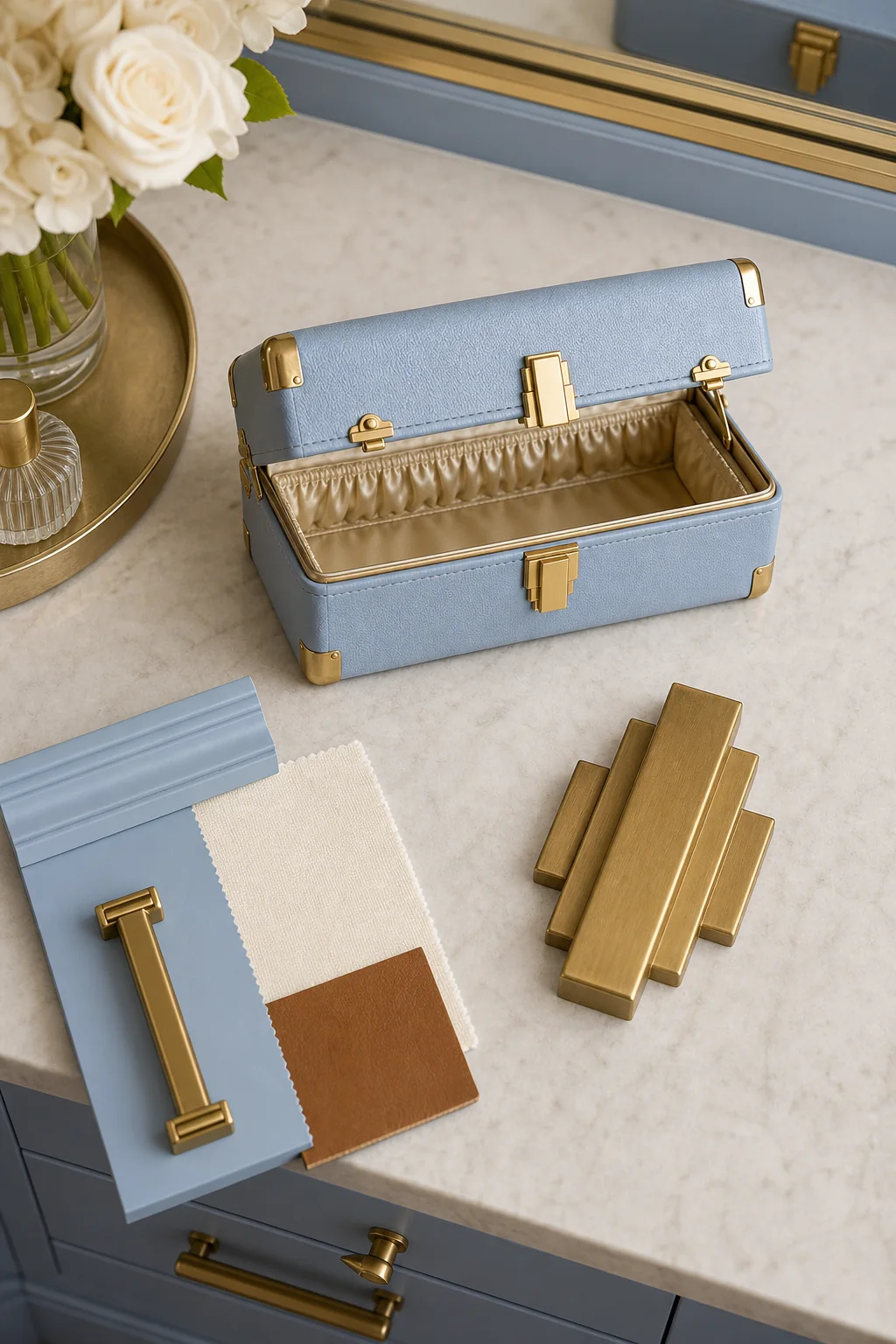
The subtle geometric details of the case’s hardware dictate the architectural rhythm of the room’s lighting and molding. Stepped brass wall sconces flanking the mirrors and tiered profiles on the crown molding reinforce the Art Deco stepping motif. You can scale this look: a subtle approach uses blue velvet drawer linings, a balanced room commits to blue cabinetry and a saddle brown ottoman, while a bold execution drenches the entire space—including the ceiling—in powder blue with oversized brass fixtures. Proper illumination is crucial to highlight these stepped details.
Position stepped brass sconces at eye level flanking your mirrors. This provides flattering illumination while reinforcing the symmetrical Art Deco geometry derived from the vanity case.