
This Horn Gramophone Became a Listening Room
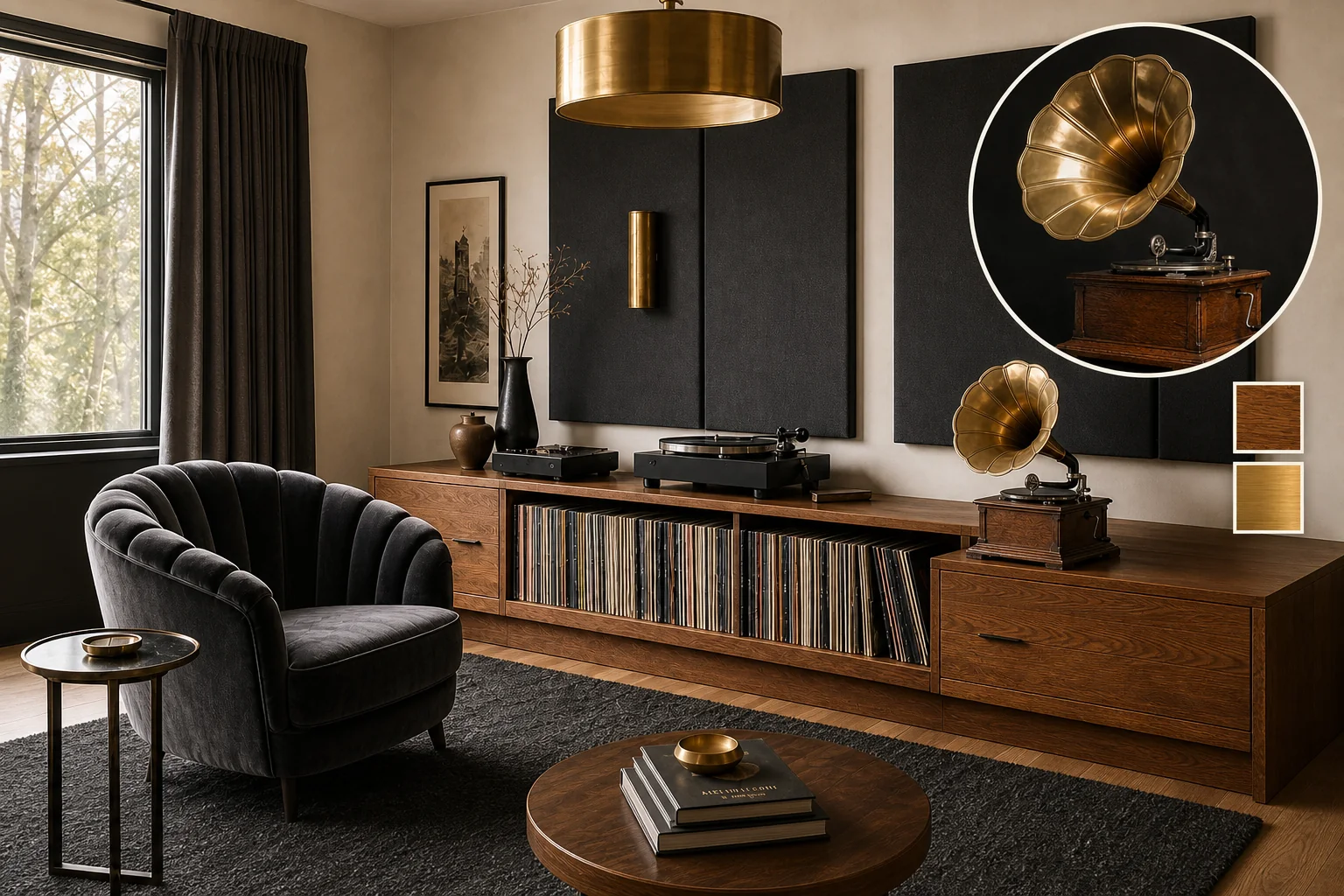
Acoustic design from the Edwardian era holds surprising lessons for modern vinyl spaces, blending heavy mechanical grounding with sweeping, sound-amplifying curves. See how an antique horn gramophone inspires an intimate, acoustically balanced sanctuary by keeping the foundation strictly rectilinear and matte so a single fluted curve can shine.
Anchoring the room with quarter-sawn oak
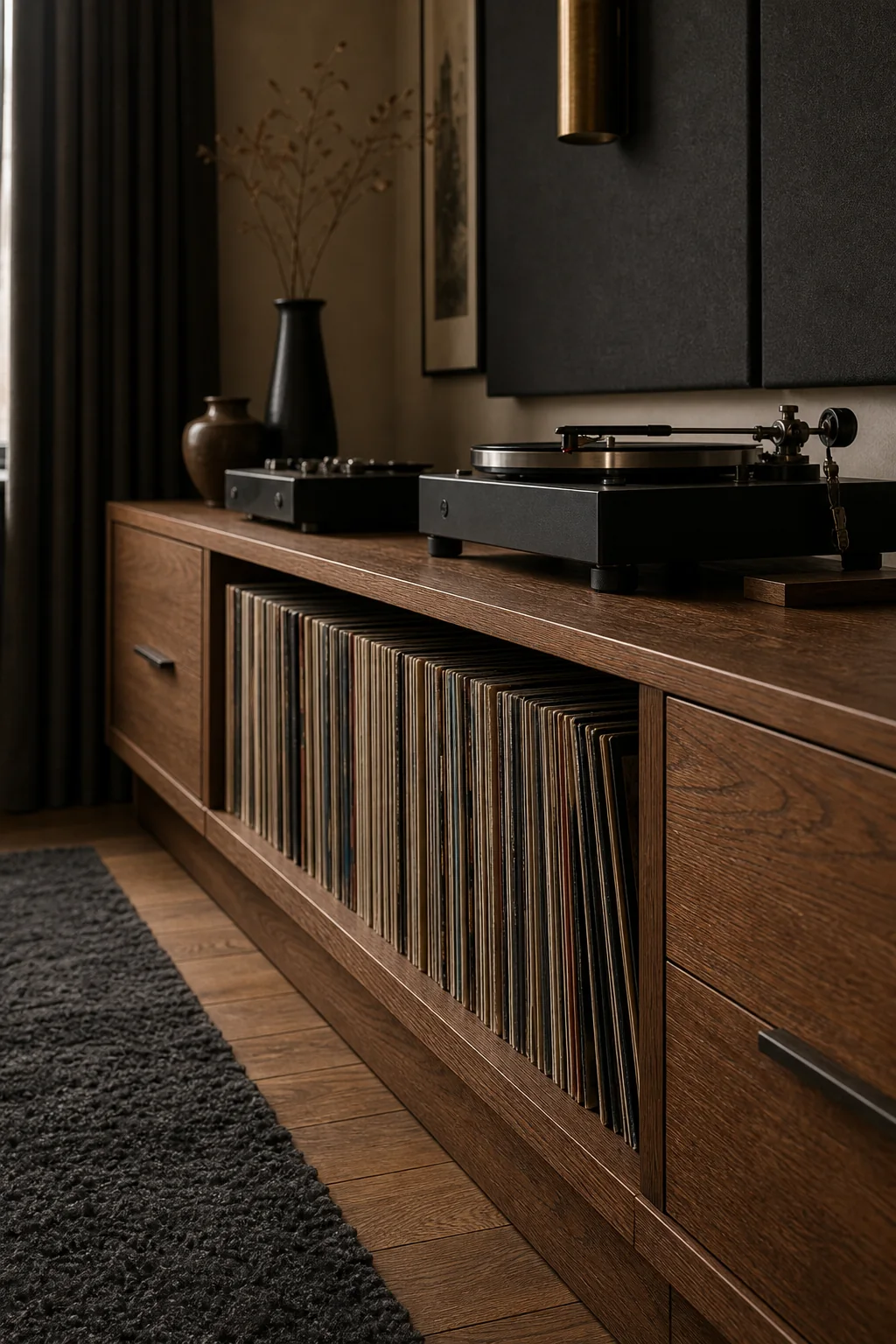
Just as the antique gramophone’s motor requires a dense, vibration-free housing, a modern listening room needs a solid, grounded datum to store extensive vinyl collections and support delicate turntables. Design the lower console with heavy, solid wood to minimize any unwanted turntable vibration, keeping the architectural lines strictly rectilinear to contrast with later curved additions. To achieve this heavy mechanical grounding and ensure your audio equipment performs flawlessly without skipping or resonance during extended listening sessions, meticulously execute these foundational construction steps.
- Build a continuous rectilinear base cabinet along the primary wall so the lower half of the room feels visually heavy and deeply grounded.
- Install reinforced, heavy-duty shelving sized specifically for vinyl records to ensure they fit upright without sagging or stressing the joinery over time.
- Apply a matte oil finish to the quarter-sawn oak surfaces so the beautiful tiger-stripe wood grain is visible but does not reflect harsh light.
- Level the top surface perfectly for turntable placement, ensuring a precision bubble level reads dead center across the entire console top.
Balancing matte charcoal and burnished brass
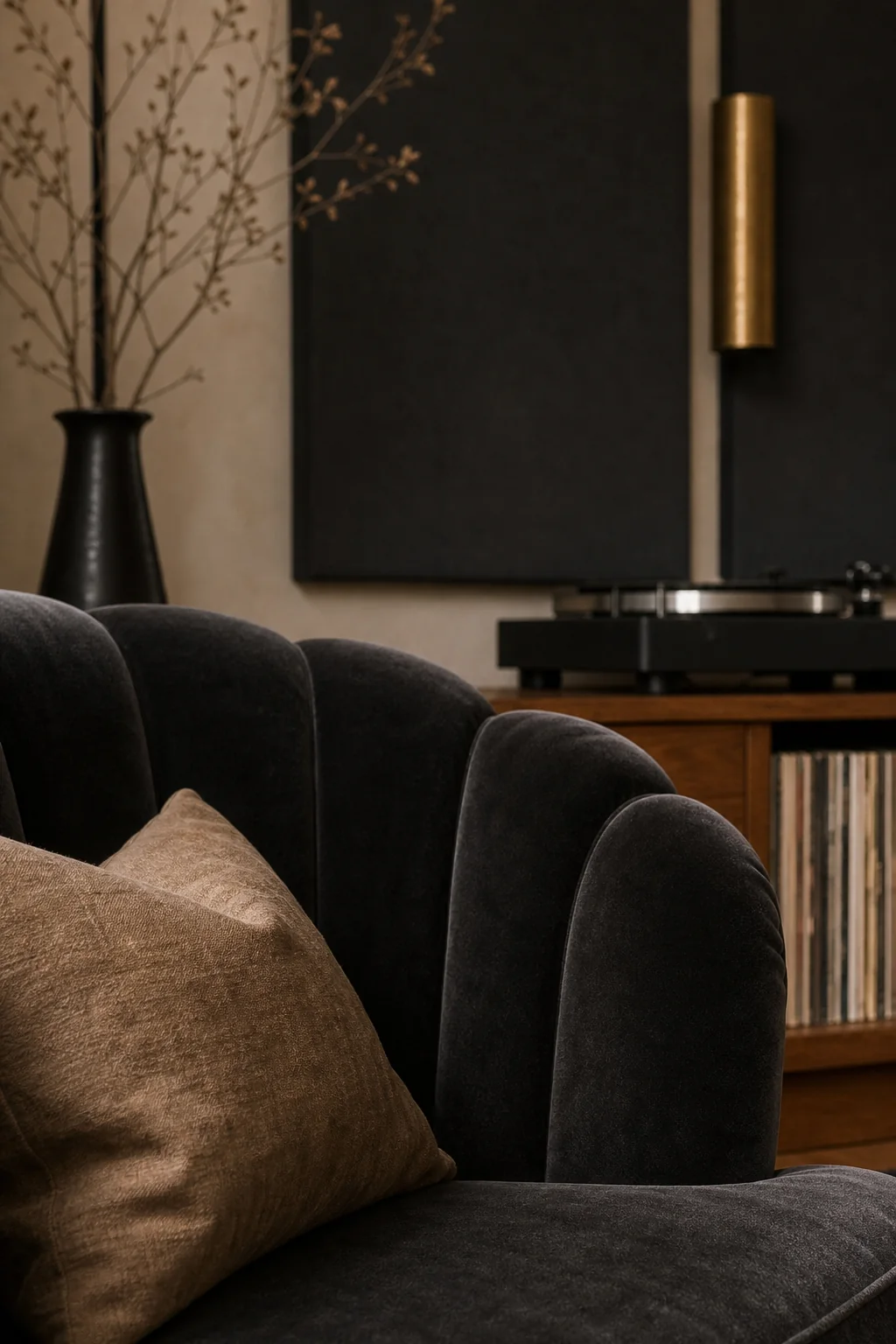
The striking contrast between the dark enameled mechanical brackets and the gleaming acoustic horn translates into a moody, light-absorbing envelope punctuated by warm metallic accents. Use matte charcoal on the upper walls to recede visually and focus attention entirely on the music, introducing brass sparingly as a focal highlight rather than a dominant finish. This interplay between dense, sound-absorbing mass and reflective accents forms a clear visual-DNA mapping between the historical object and the modern room, translating antique traits into highly functional architectural moves.
| Source trait | Visible evidence | Room move |
|---|---|---|
| Solid Oak Casing | The heavy, boxy quarter-sawn oak base housing the mechanical motor. | A continuous, rectilinear oak built-in console anchoring the lower half of the room for extensive vinyl storage. |
| Brass & Black Contrast | The gleaming brass horn contrasting with the black enameled bracket and turntable felt. | Matte charcoal acoustic wall panels and hardware offset by a large, brushed brass ceiling pendant. |
| Matte Dampening | The soft, light-absorbing felt platter mat designed to protect shellac records. | A thick, charcoal wool rug and heavy felted drapery that provide essential acoustic dampening and tactile softness. |
| Morning Glory Fluting | The sweeping, scalloped, radially fluted shape of the brass acoustic horn. | A curved, fluted velvet lounge chair with scalloped channeling, introducing organic, expansive geometry to the boxy room. |
Casting warmth from above
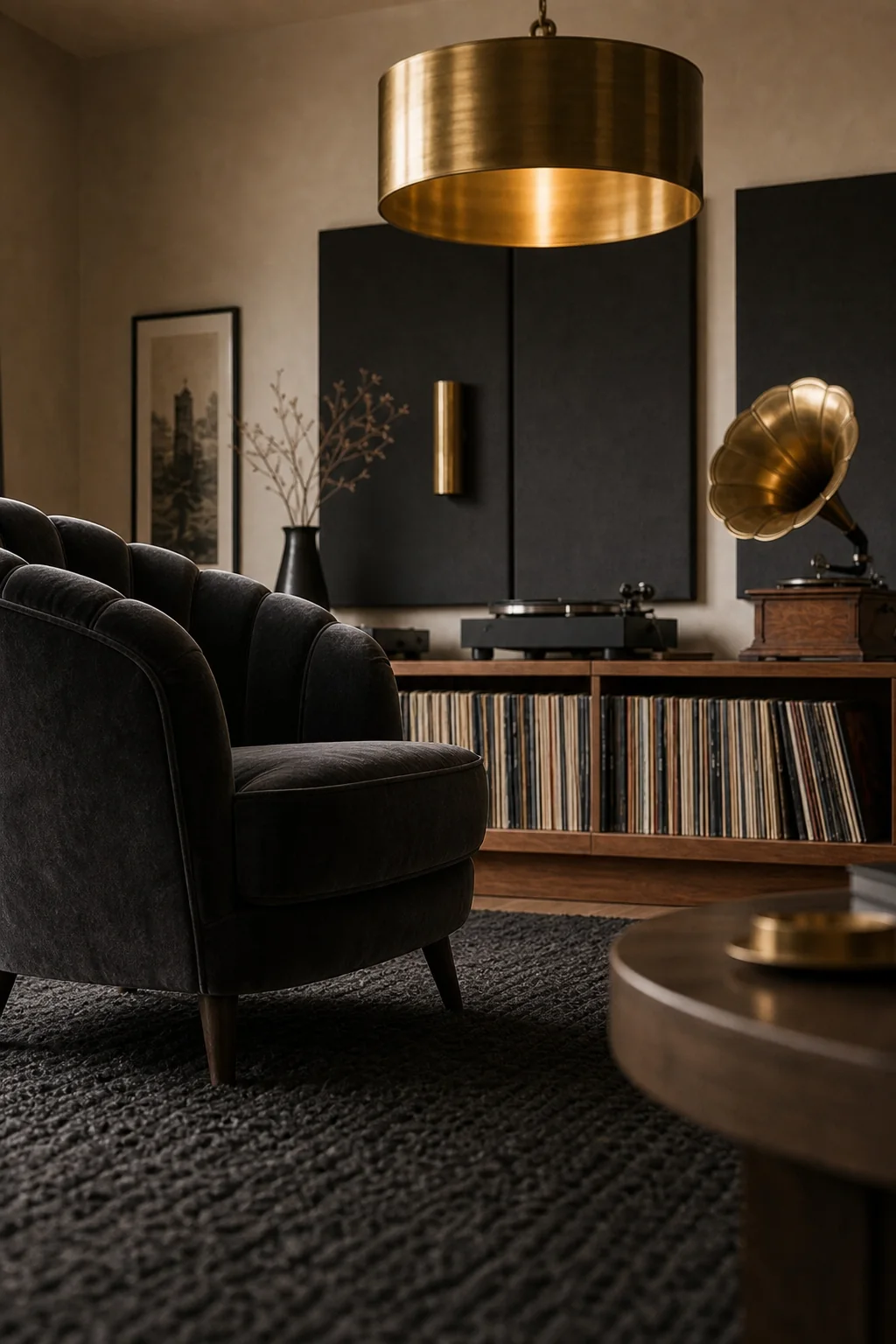
A brushed brass pendant echoes the gleaming morning glory horn, glowing warmly against a dark charcoal acoustic ceiling panel. You can easily scale this aesthetic depending on your space and dedication to the theme: a subtle approach introduces a small brass table lamp and a simple oak record crate against neutral walls, a balanced execution features continuous oak cabinetry with charcoal acoustic panels and one fluted chair, while a bold design wraps the entire room in dark charcoal felt with a massive, radially fluted brass ceiling installation. By controlling the intensity, the room remains sophisticated rather than resembling a literal Victorian parlor.
Layering felt and wool for acoustic control
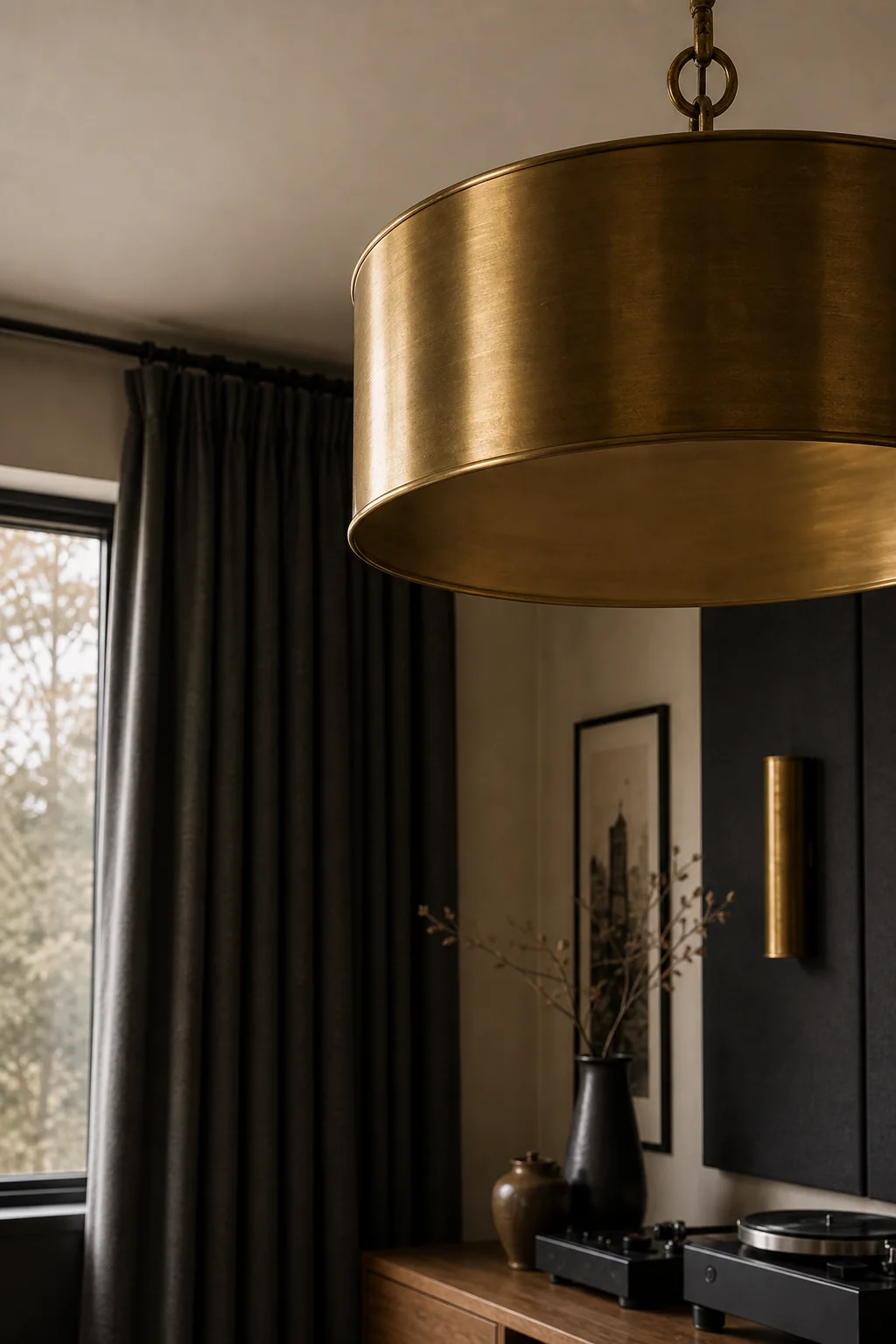
The same dense felt that originally protected fragile shellac records scales up to wrap the room, taming sound reflections and creating a cocoon-like atmosphere for extended listening sessions. Cover hard floor surfaces with thick wool rugs to absorb stray sound waves, and hang heavy felted drapery over windows to prevent glass from bouncing high frequencies back into the space. Gather these light-absorbing matte textiles to complete the material edit and establish an acoustically sound environment that perfectly honors the gramophone’s original protective platter mat.
Softening the room’s edges
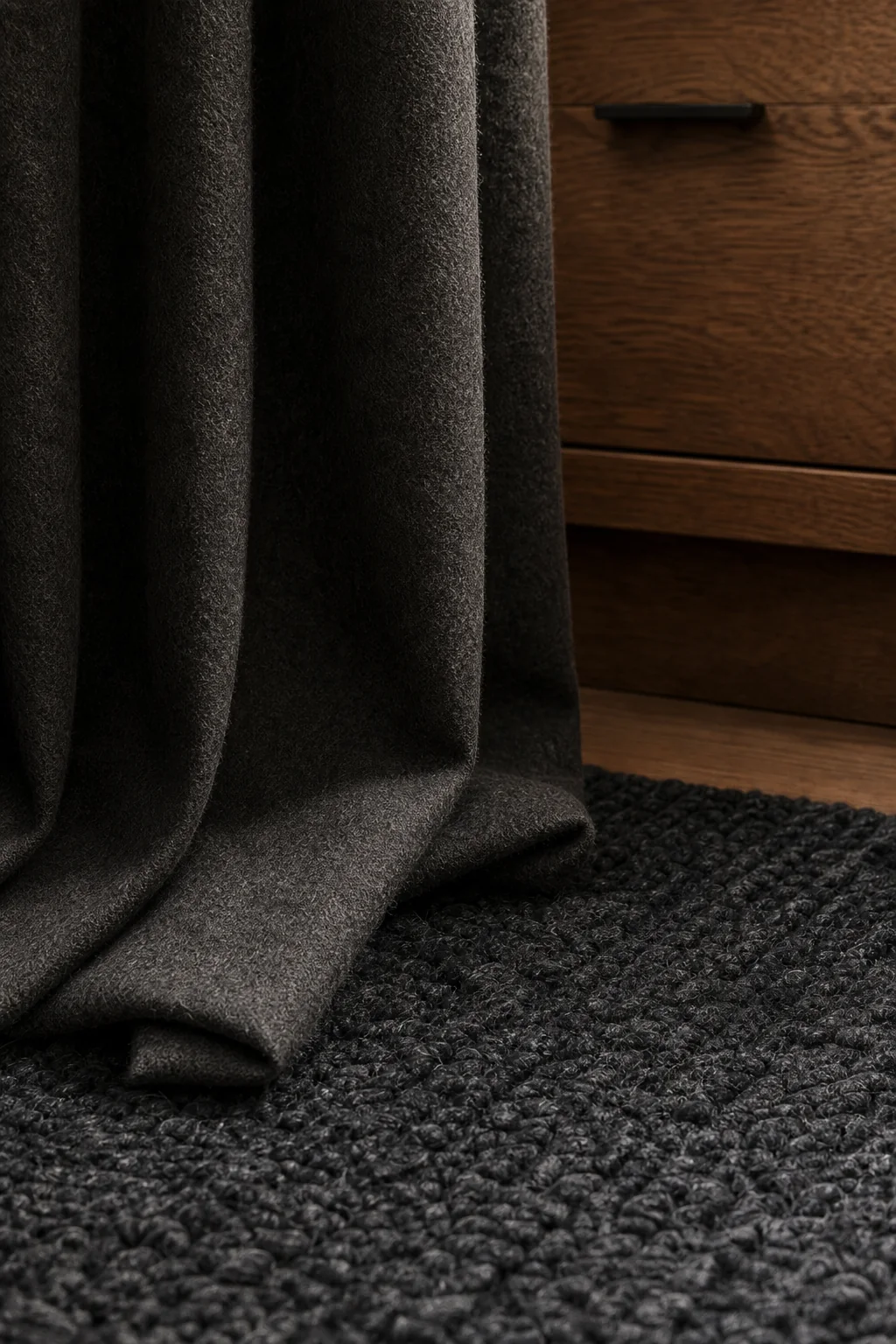
Heavy felt drapery mimics the turntable’s protective platter mat, pooling slightly on a thick wool rug with a sliver of the oak console visible in the background. This tactile softness is absolutely essential for an acoustically balanced sanctuary, ensuring that the room’s hard architectural edges are softened and outside street noise is completely blocked. By layering these matte materials, the analog warmth of the music remains the undisputed focal point of the entire listening experience, free from harsh echoes or distracting visual clutter.
Introducing sweeping, scalloped curves
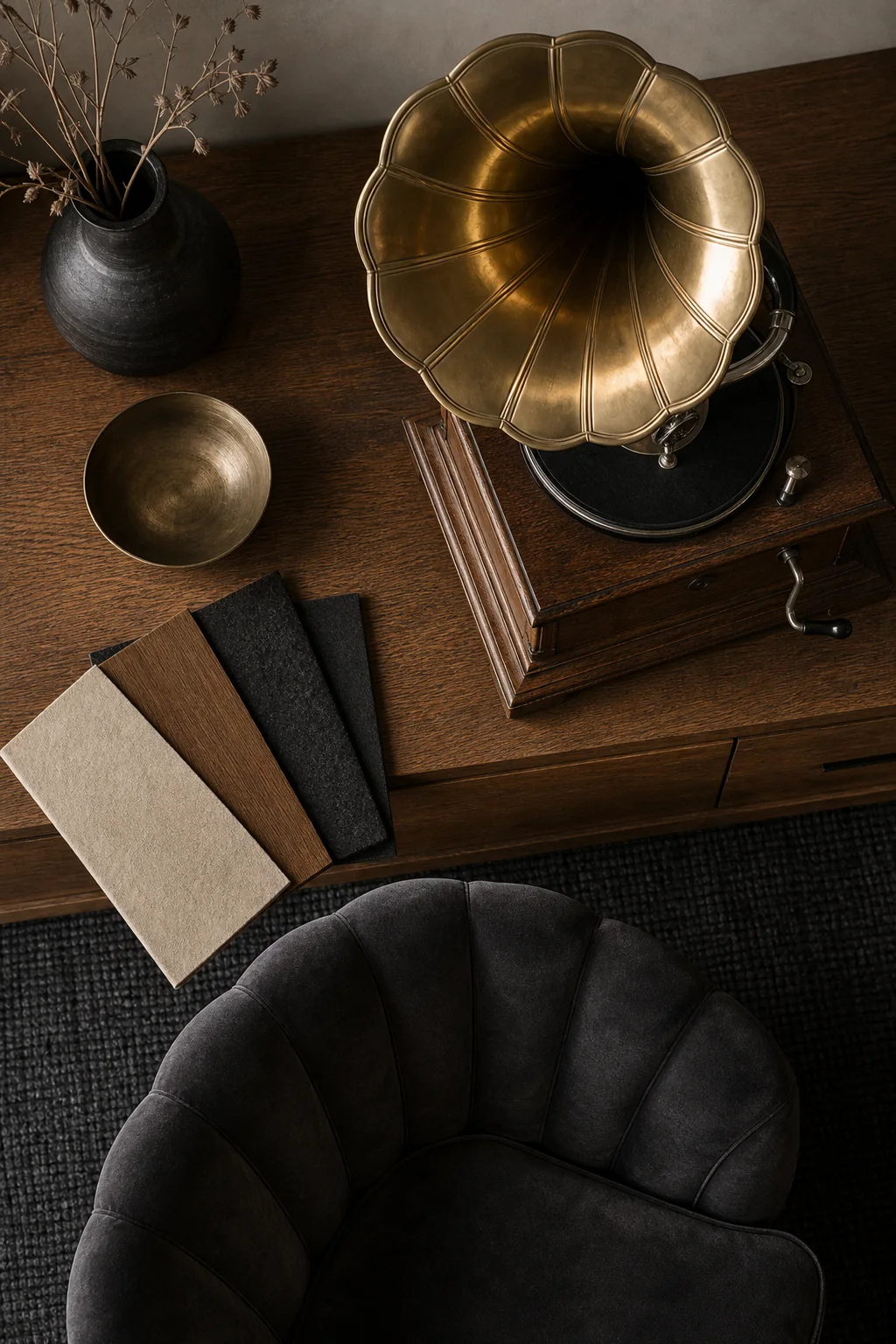
Against the heavy, rectilinear oak foundation, a single piece of dramatically fluted seating acts as the room’s acoustic horn, radiating comfort and visual energy outward into the space. Select a velvet lounge chair with deep scalloped channeling to replicate the morning glory horn’s radial fluting, keeping the rest of the furniture strictly linear so this sweeping conical expansion remains the undisputed visual anchor of the room. This singular organic shape completely transforms the boxy architecture into a dynamic, highly resonant listening environment.
Position your fluted lounge chair at the exact apex of your speaker’s acoustic sweet spot to merge visual design with optimal listening, creating a perfect convergence of form and function.