
This Labradorite Stone Became a Living Room
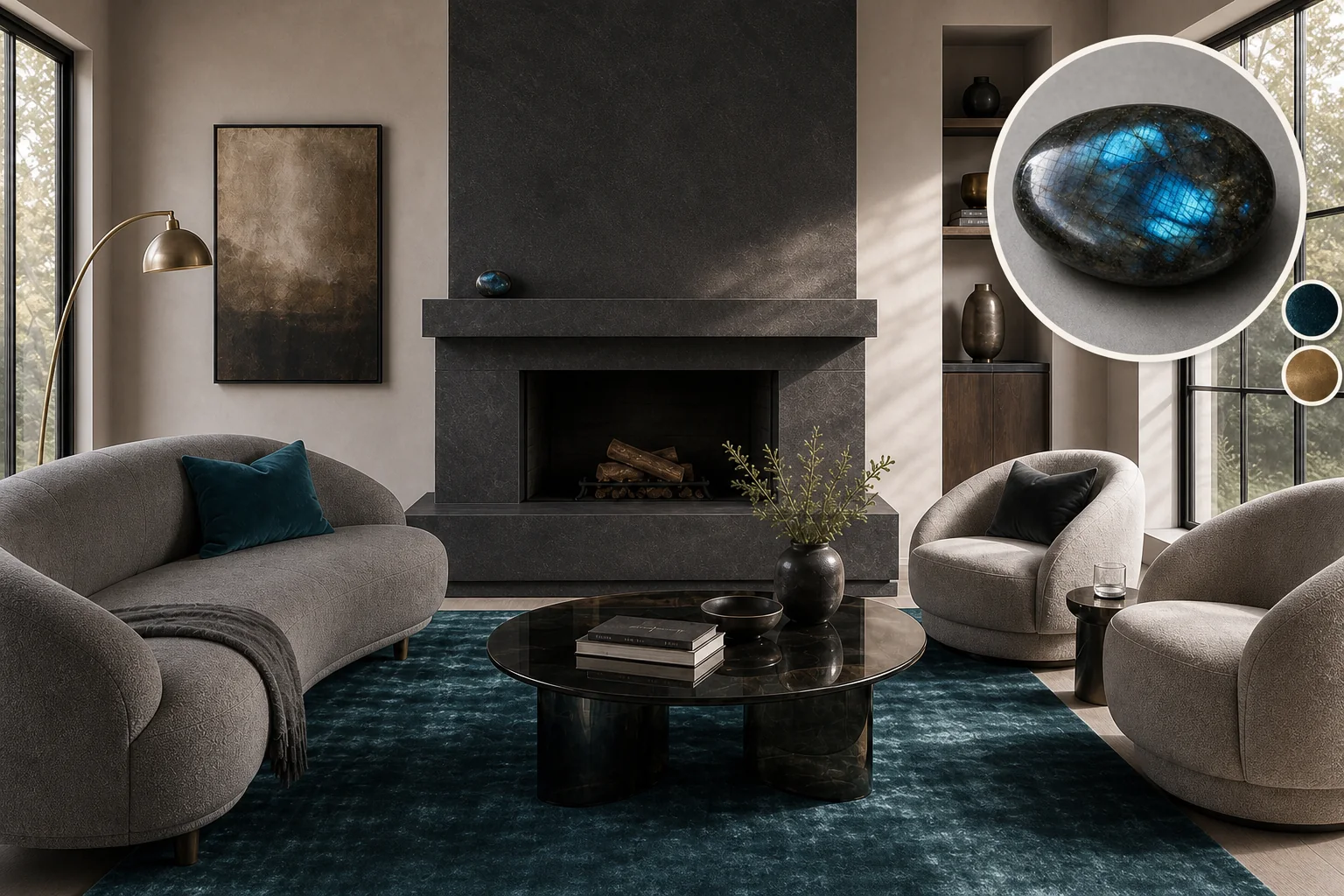
A polished labradorite palm stone offers a masterclass in restrained drama, hiding brilliant flashes of color within a dark matrix. We translated this geological surprise into a modern living room that balances expansive quiet neutrals with sudden, concentrated moments of intense color and reflection.
Grounding the Space in Charcoal Basalt
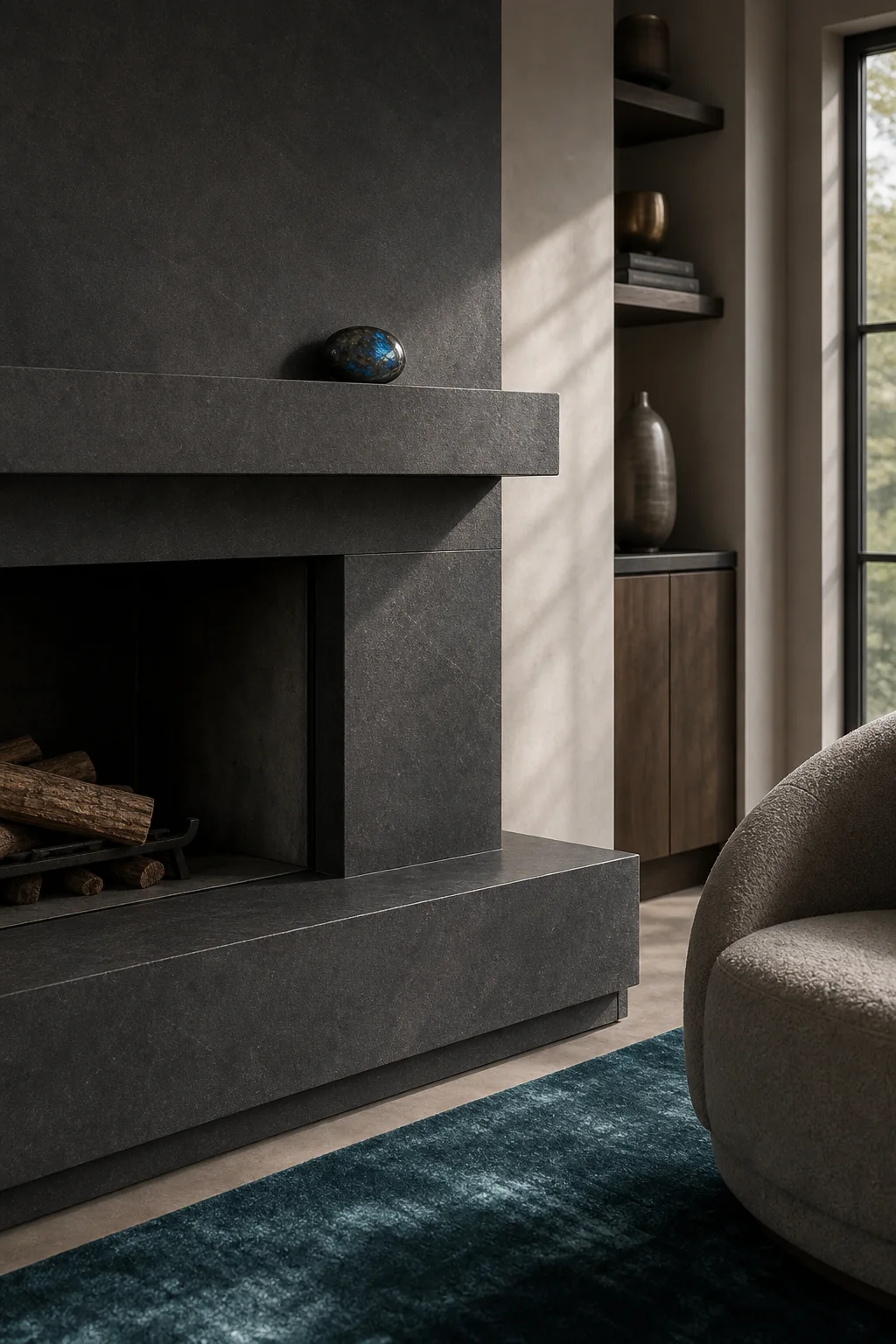
Establishing a heavy, deep grey base anchors the room’s architecture and provides the necessary contrast for future highlights. Painting the walls in a matte ash-grey creates a soft, neutral envelope, allowing the prominent charcoal basalt fireplace surround to serve as the visual anchor. This architectural move perfectly mimics the heavy base mineral that holds the stone’s iridescent layers, ensuring the dark grounding matrix dominates the surface area so the iridescent accents feel like rare discoveries rather than overwhelming noise.
Ensure the fireplace surround is generously proportioned. A small hearth won’t provide enough visual gravity to ground the room and mimic the stone’s heavy matrix.
Balancing the Hearth’s Visual Weight
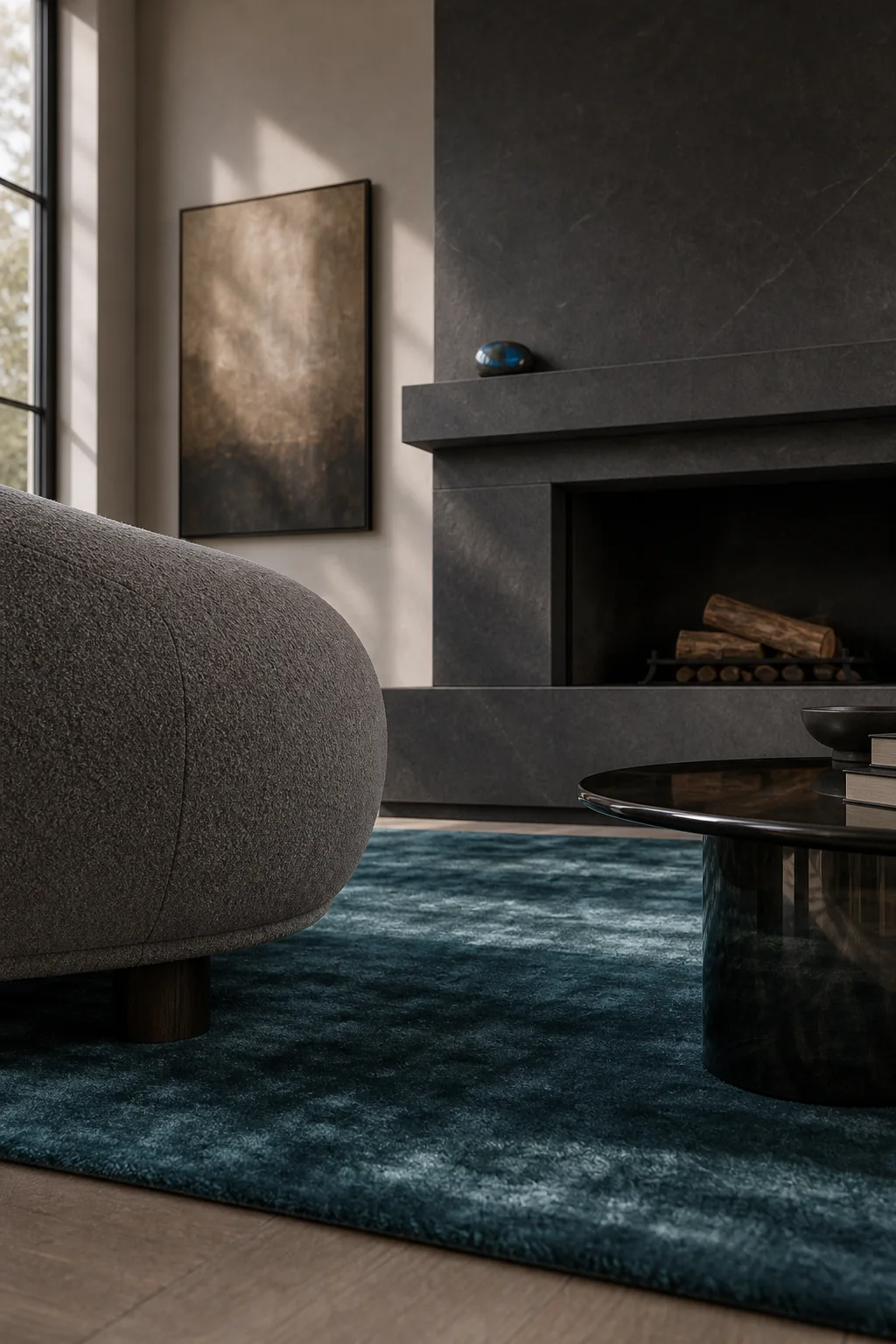
To ensure this deep, moody foundation translates successfully into a livable space, you must follow a deliberate sequence of architectural and decorative actions. Executing these foundational steps guarantees the room feels like a seamless, soft envelope that recedes visually rather than a heavy, overwhelming cavern. By methodically layering the matte ash-grey finish before introducing any reflective elements, you establish the expansive quiet necessary to support the sudden, concentrated moments of intense color and reflection that define this sophisticated lounge space.
- Paint the walls and ceiling in a matte ash-grey finish so the room feels like a seamless, soft envelope that recedes visually.
- Install a honed charcoal basalt fireplace surround to establish a dark, grounding matrix at the room’s architectural center.
- Lay down a deep teal silk-blend area rug to introduce directional color to the floor, ready to catch window light.
- Position a high-gloss dark-tinted glass coffee table so a reflective, glassy surface sits in stark contrast to the matte walls.
- Arrange curved matte linen seating around the hearth to ensure pebble-like forms soften the room’s rigid linear architecture.
Capturing the Peacock Blue Schiller
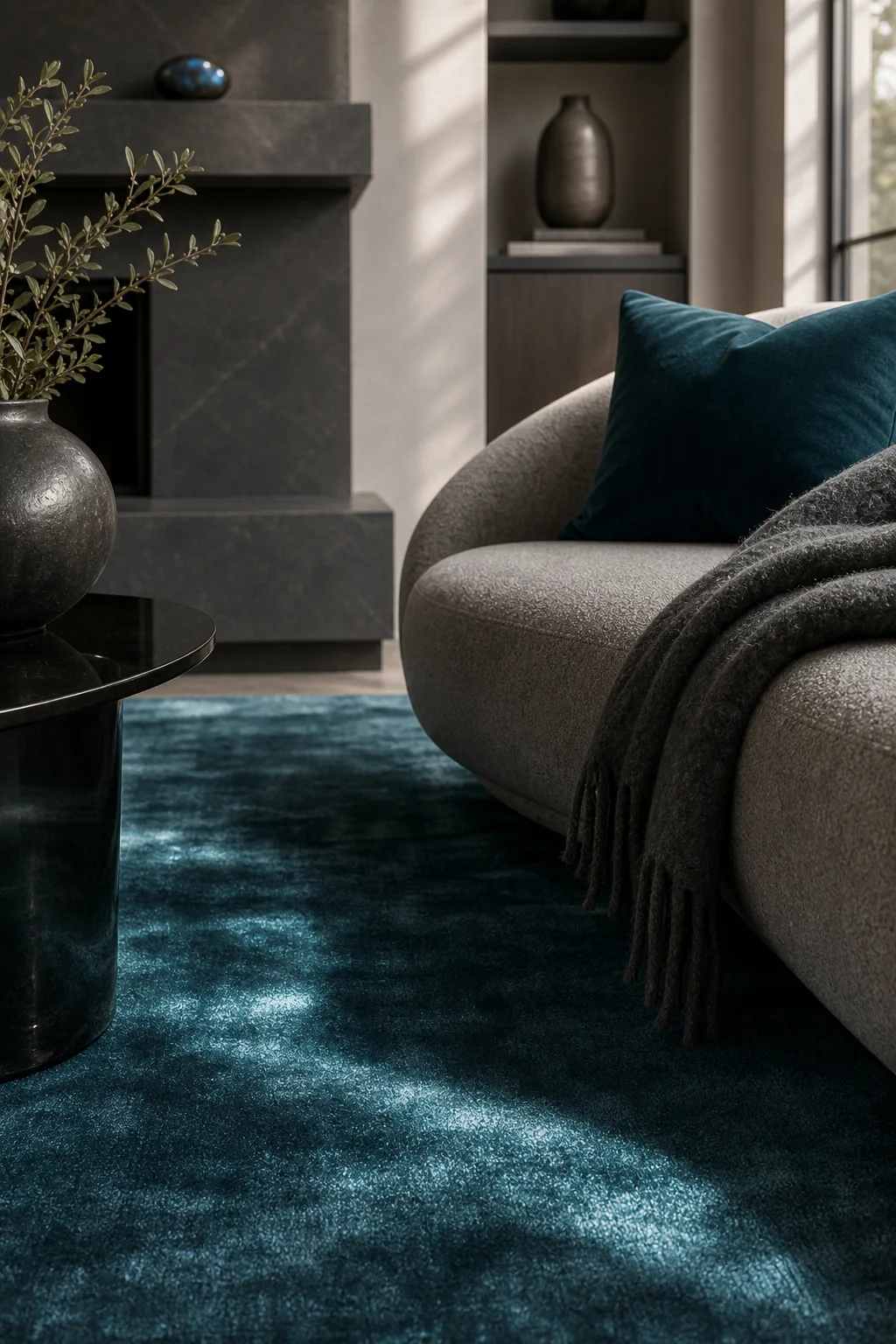
Translating the stone’s directional iridescence into textiles ensures the intense color feels like a rare discovery rather than a constant shout. By selecting a silk-blend rug in deep teal and positioning it where natural light from large side windows will activate its reflective threads, you mimic the peacock blue schiller effect that only reveals its intense color at specific angles. This visual-DNA mapping requires precise placement, as the shifting sheen must interact dynamically with the viewer’s angle and the shifting daylight to truly capture the moody iridescence of the gemstone.
| Source trait | Visible evidence | Room move |
|---|---|---|
| Dark grounding matrix | The heavy, deep grey base mineral that holds the iridescent layers | A massive, honed charcoal basalt fireplace hearth and surround that anchors the softer ash-grey room |
| Directional iridescence | The peacock blue schiller effect that only reveals its intense color at specific angles | A deep teal silk-blend rug that shifts in color intensity and brightness depending on the viewer’s angle and daylight |
| Polished glassy surface | The smooth, highly polished exterior of the tumbled palm stone over internal crystalline layers | A high-gloss, dark-tinted glass coffee table that reflects the room’s light, set against matte linen upholstery |
| Ergonomic ovoid silhouette | The smooth, rounded, pebble-like shape of the palm stone with no sharp corners | A curved, pebble-like bouclé sofa with continuous, soft edges that contrasts with the linear architecture |
Balancing High Gloss with Matte Linen
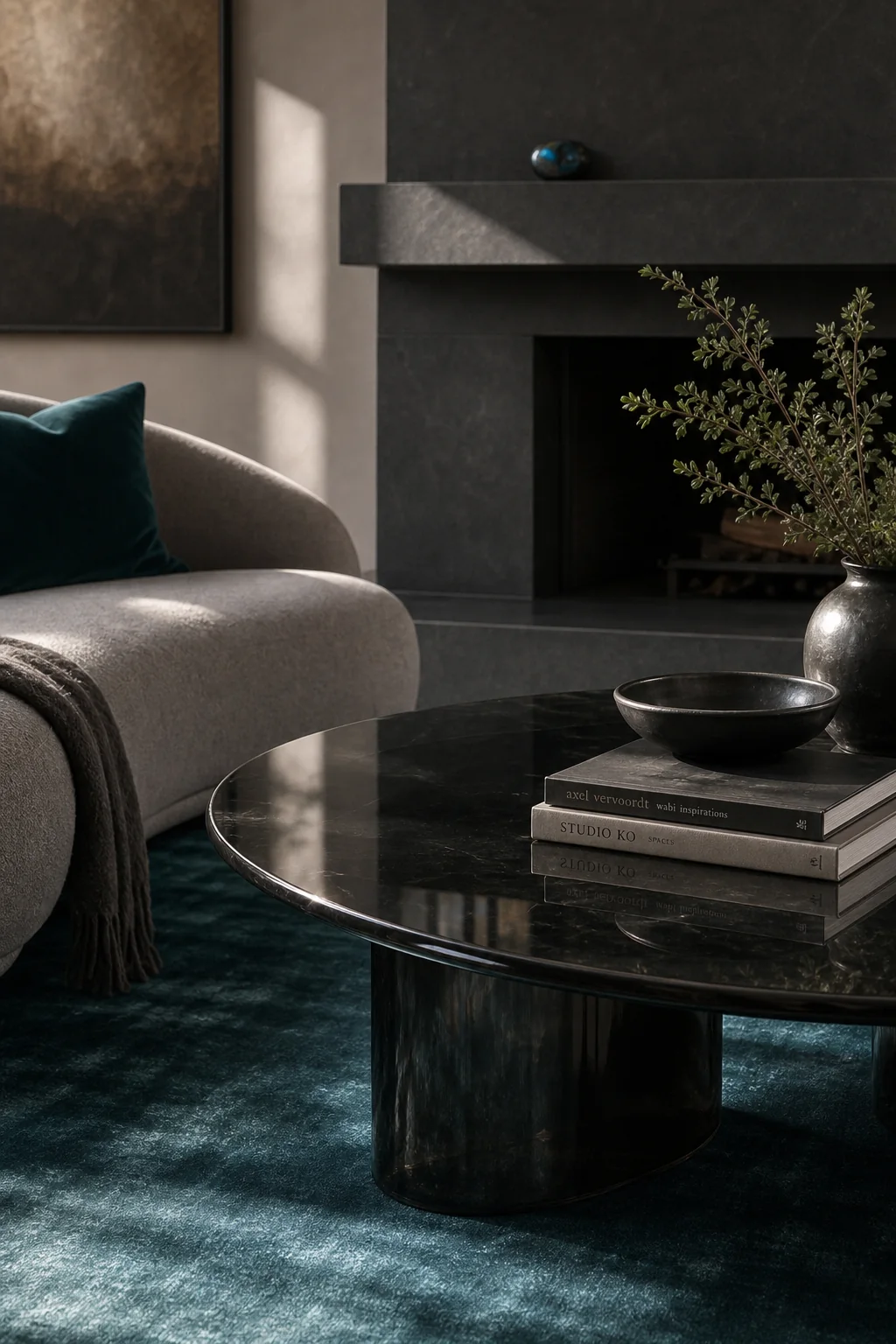
Pairing highly reflective, dark-tinted glass with flat, matte fabrics recreates the stone’s polished exterior against its dense core. Introducing a high-gloss coffee table reflects the room’s natural light, but contrasting it with matte linen upholstery prevents the room from feeling cold and maintains the delicate balance between expansive quiet and concentrated reflection. This interplay of materials ensures the glossy surfaces feel intentional, capturing the smooth, highly polished exterior of the tumbled palm stone over internal crystalline layers without resorting to literal gemstone-patterned wallpapers or faux-stone resin furniture.
Limit high-gloss finishes to horizontal surfaces like the coffee table. This ensures the reflections feel intentional and don’t overwhelm the eye with constant glare.
Contrasting Matte and Gloss
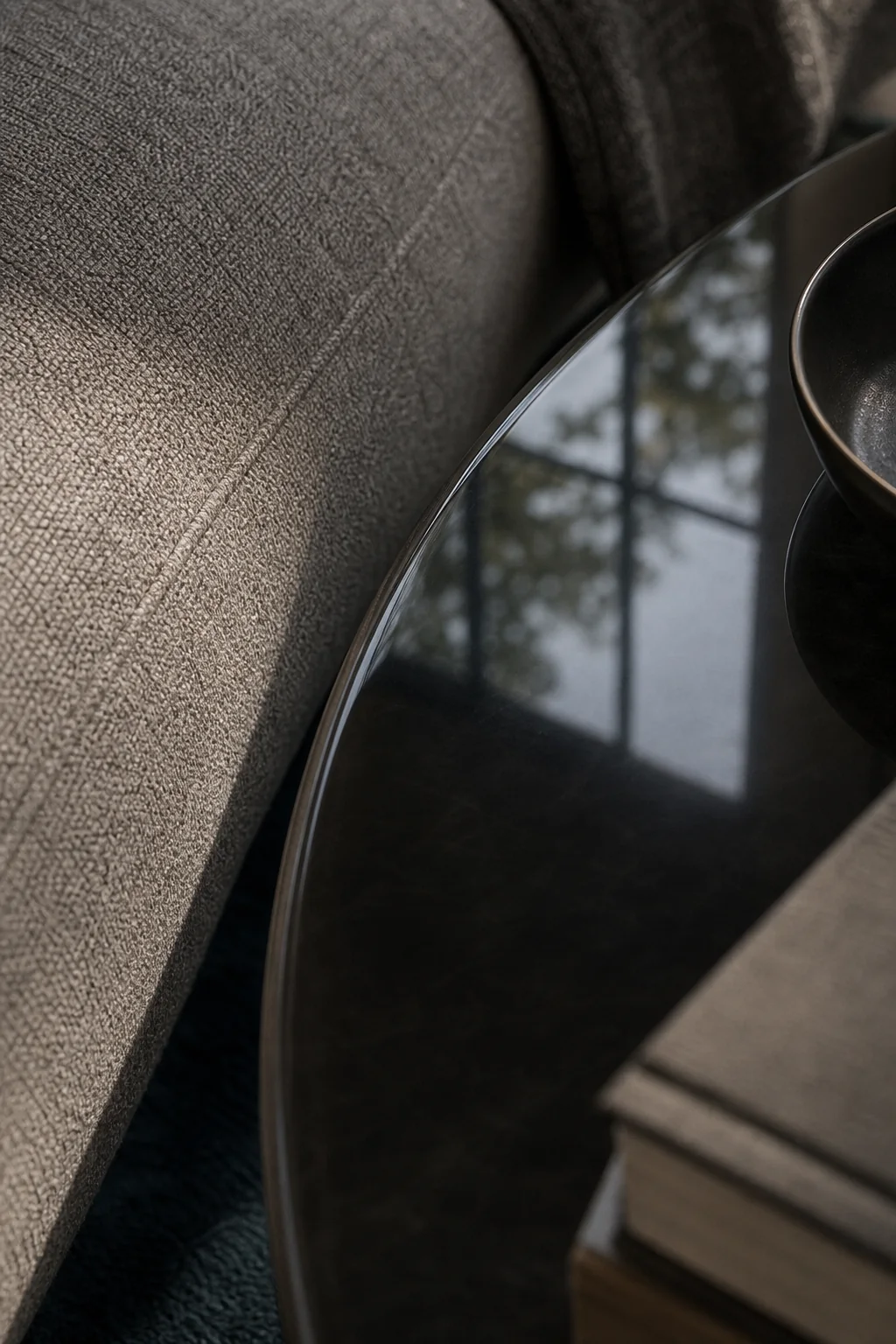
Sourcing the exact finishes is critical to achieving this geological tension, requiring specific textures that interact dynamically with the room’s natural light. The following material selections provide the necessary contrast, ensuring the matte and honed surfaces are perfectly punctuated by highly reflective, directional sheen. By prioritizing these specific tactile qualities, you can successfully translate the moody iridescence of a labradorite gemstone into a balanced, sophisticated living space that feels deeply comfortable and architecturally grounded.
Softening Architecture with Ovoid Silhouettes
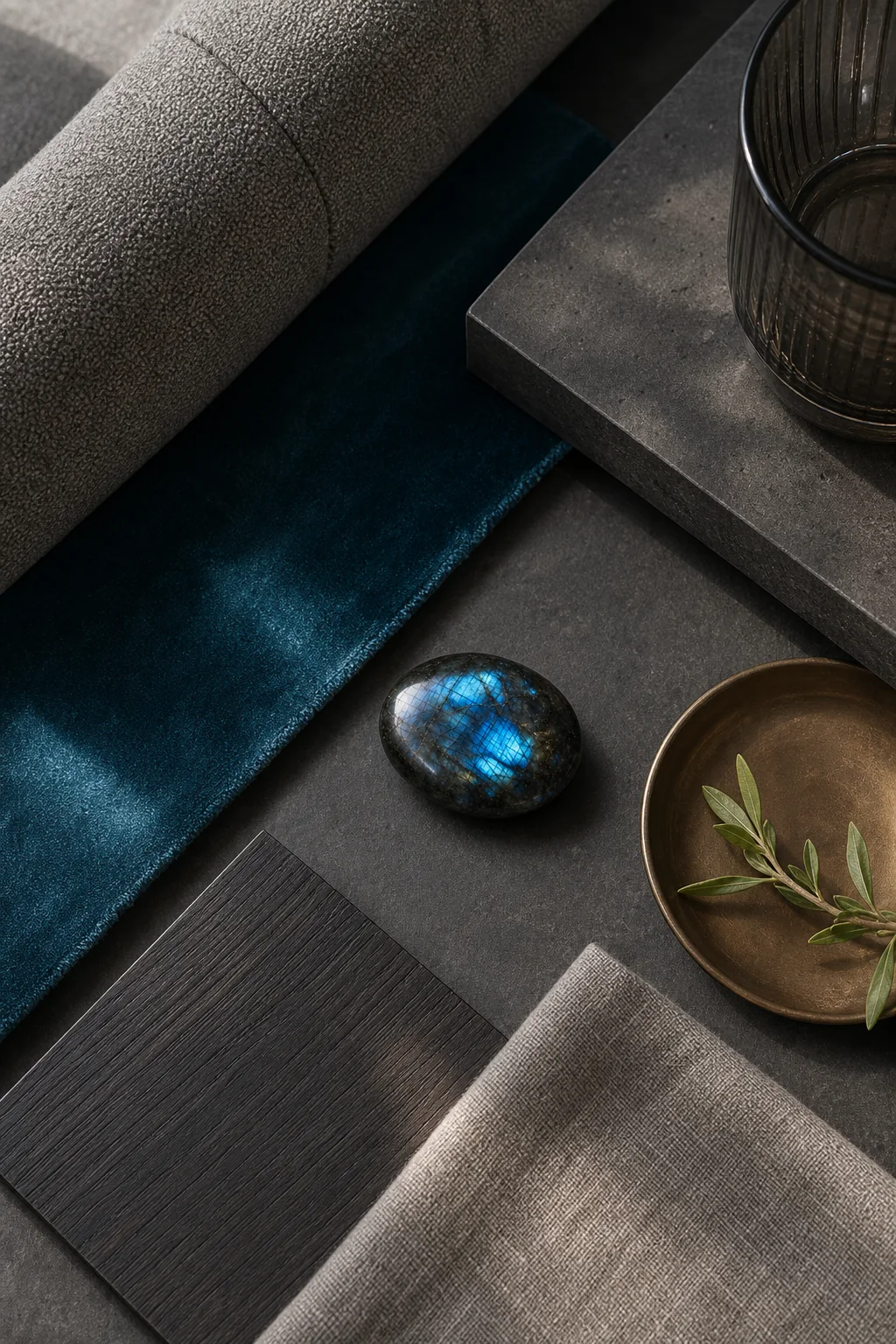
Introducing continuous, soft edges through furniture contrasts with the linear architecture, echoing the ergonomic shape of a tumbled mineral. You can scale this concept’s intensity to suit your space. A subtle approach limits the dark charcoal to the hearth and keeps the rest of the room in pale ash-grey, using only a small teal throw pillow for the iridescent flash. A balanced execution anchors the room with the basalt hearth and a deep teal rug, balancing the moody tones with expansive matte walls and a curved linen sofa. A bold design extends the charcoal basalt to cover the entire chimney breast, amplifying the glossy atmosphere.