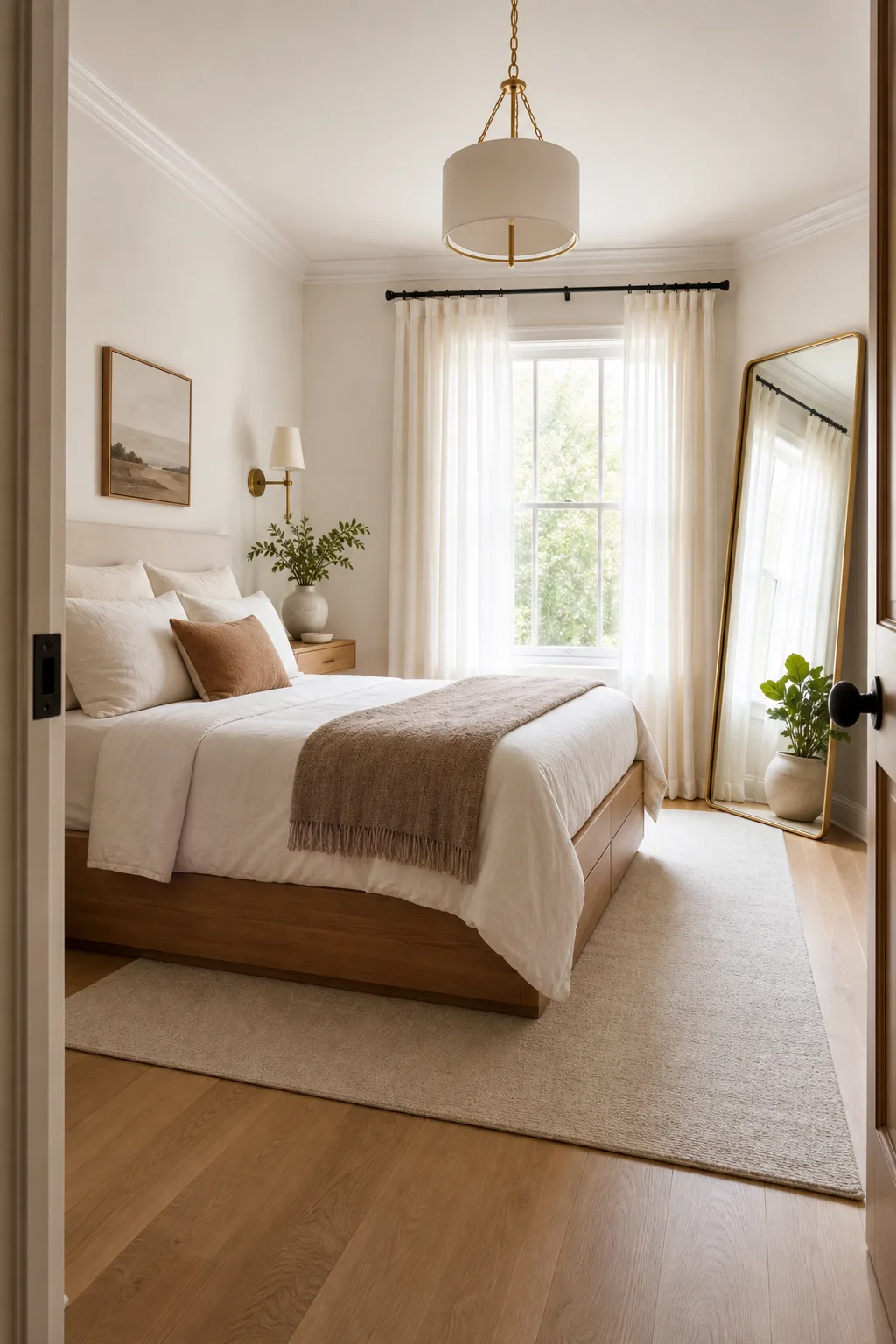
The 5-Step Visual Expansion Guide for Small Bedrooms
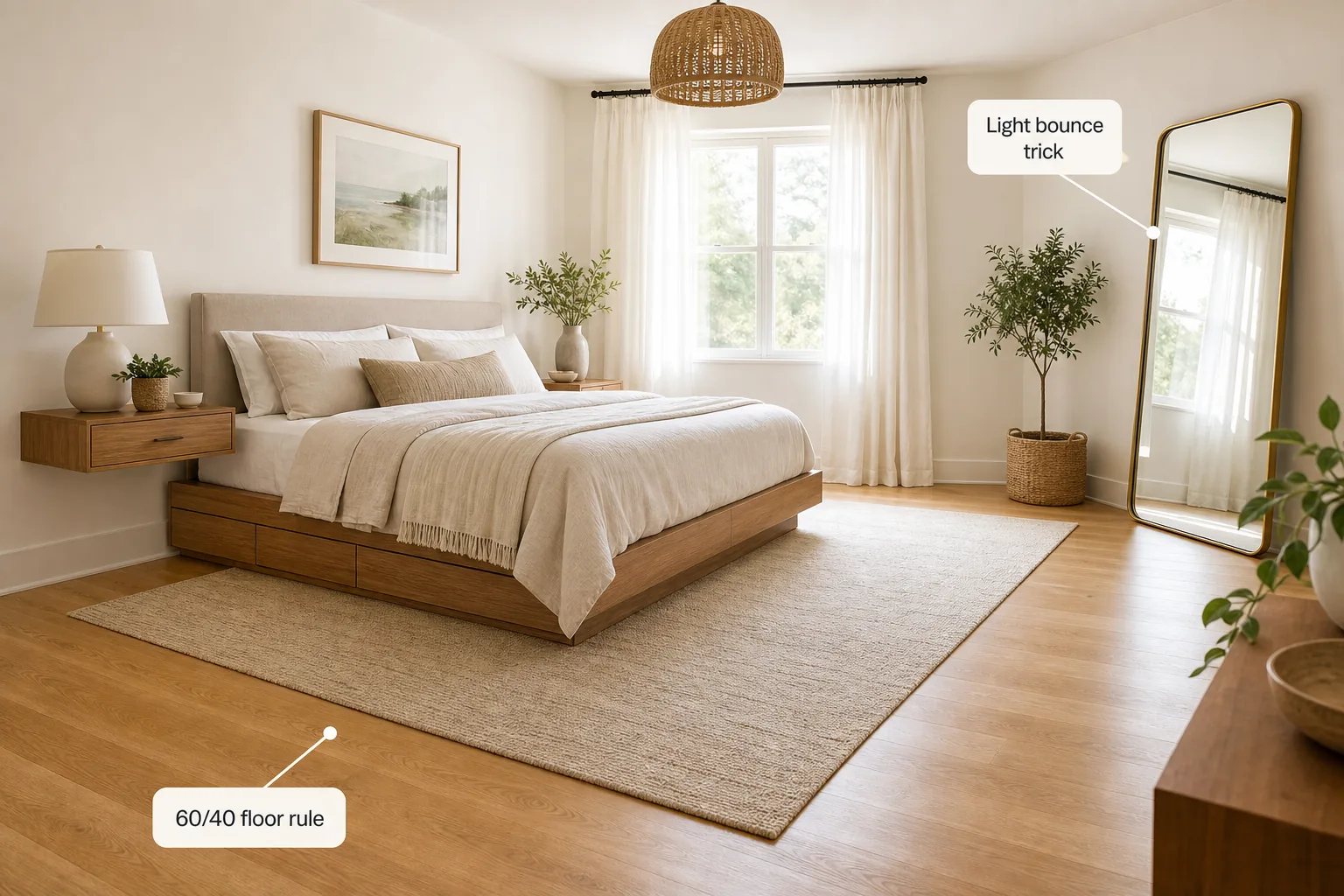
You will be able to arrange your small bedroom to maximize perceived space and hidden storage using our 5-Step Visual Expansion Guide. Transform your cramped space into an airy retreat with these exact layout rules, measurements, and optical tricks.
The 60/40 Floor Rule Explained
The 60/40 floor rule dictates covering exactly 60 percent of your total floor space with a rug, leaving the remaining 40 percent completely bare. This specific ratio ensures your room feels like an airy retreat rather than a padded, wall-to-wall box.
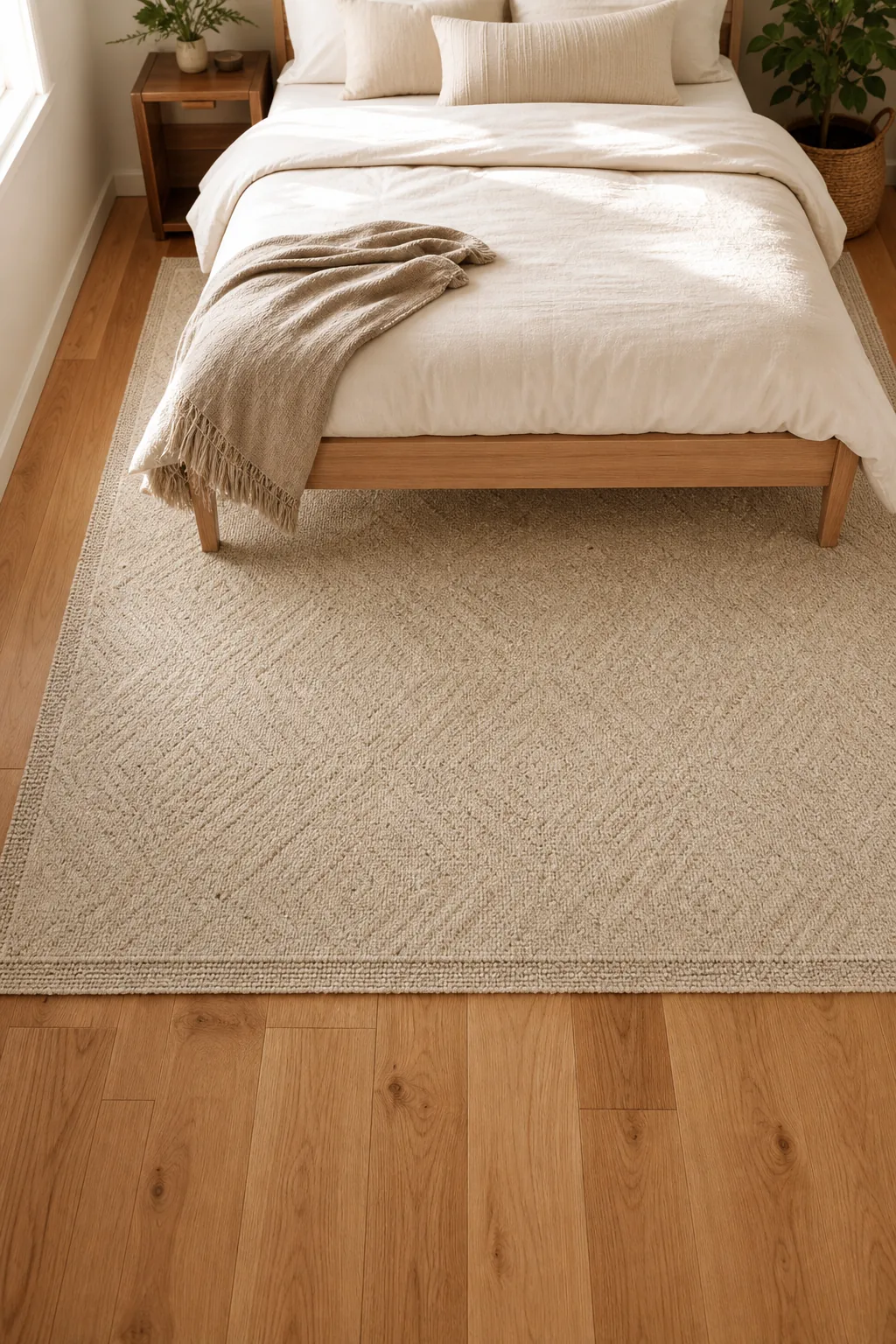
Exposing the hard flooring around the entire perimeter creates a crisp visual border that tricks the eye into perceiving a much wider footprint. This uninterrupted border allows the room’s architecture to breathe, establishing a clear boundary between furniture zones and open walkways.
Calculating Your Exposed Perimeter
To achieve the proper 60/40 ratio without complicated math, focus on the physical distance between your rug edges and the baseboards. Maintaining a consistent bare space around the room naturally scales the rug to your specific square footage without overwhelming the floor.
| Room Size | Rug Size | Bare Border |
|---|---|---|
| 10×10 feet | 6×9 feet | 18 inches |
| 10×12 feet | 8×10 feet | 12 to 18 inches |
| 12×12 feet | 8×10 feet | 24 inches |
Always measure your room with the bedroom door fully open to ensure the rug edge does not catch on the door sweep. A rug that impedes the door swing immediately makes the entry feel cramped and poorly planned.
Sizing Your Rug for Open Space
Beyond the perimeter border, you must position the rug correctly beneath the bed to maintain open, unobstructed walkways. Slide the rug under the lower two-thirds of the bed, leaving the floor near the nightstands completely bare for visual relief.
This staggered placement anchors your sleeping zone while preserving a crisp, clean walking path along the most heavily trafficked areas of the room. It provides softness underfoot where you step down without swallowing the entire floor plan.
Aligning the Rug With Your Furniture
Ensure the rug extends at least 18 inches beyond the sides and foot of the bed to provide a soft, balanced landing pad. Leaving the floor bare immediately next to the headboard prevents visual clutter in your peripheral vision while resting.
Maximizing the Hidden Storage Zone
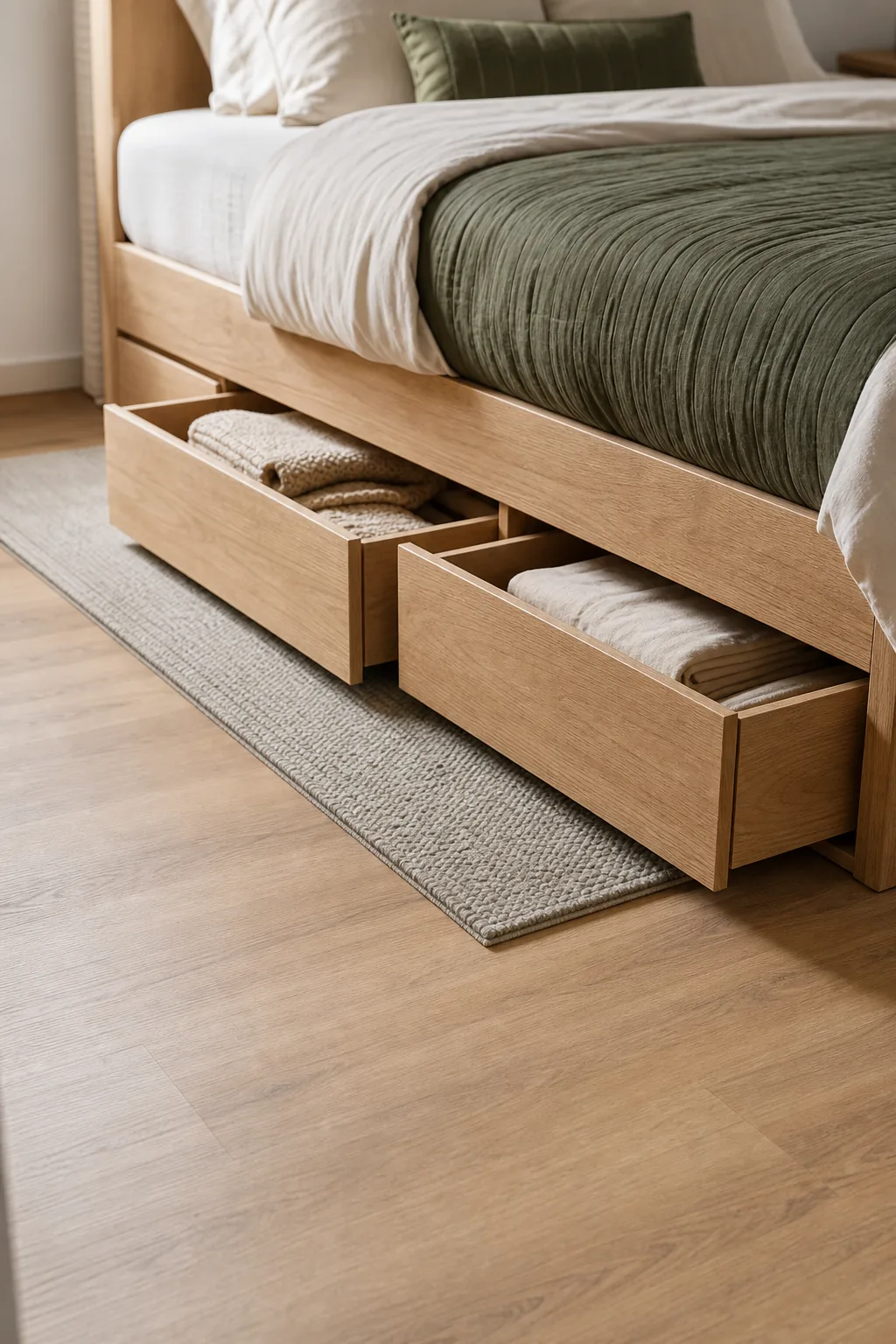
A small bedroom layout cannot afford the bulky footprint of a freestanding dresser, making the hidden storage zone beneath your mattress essential. Utilize the bed base itself to house bulky seasonal clothing, extra linens, and shoes out of sight.
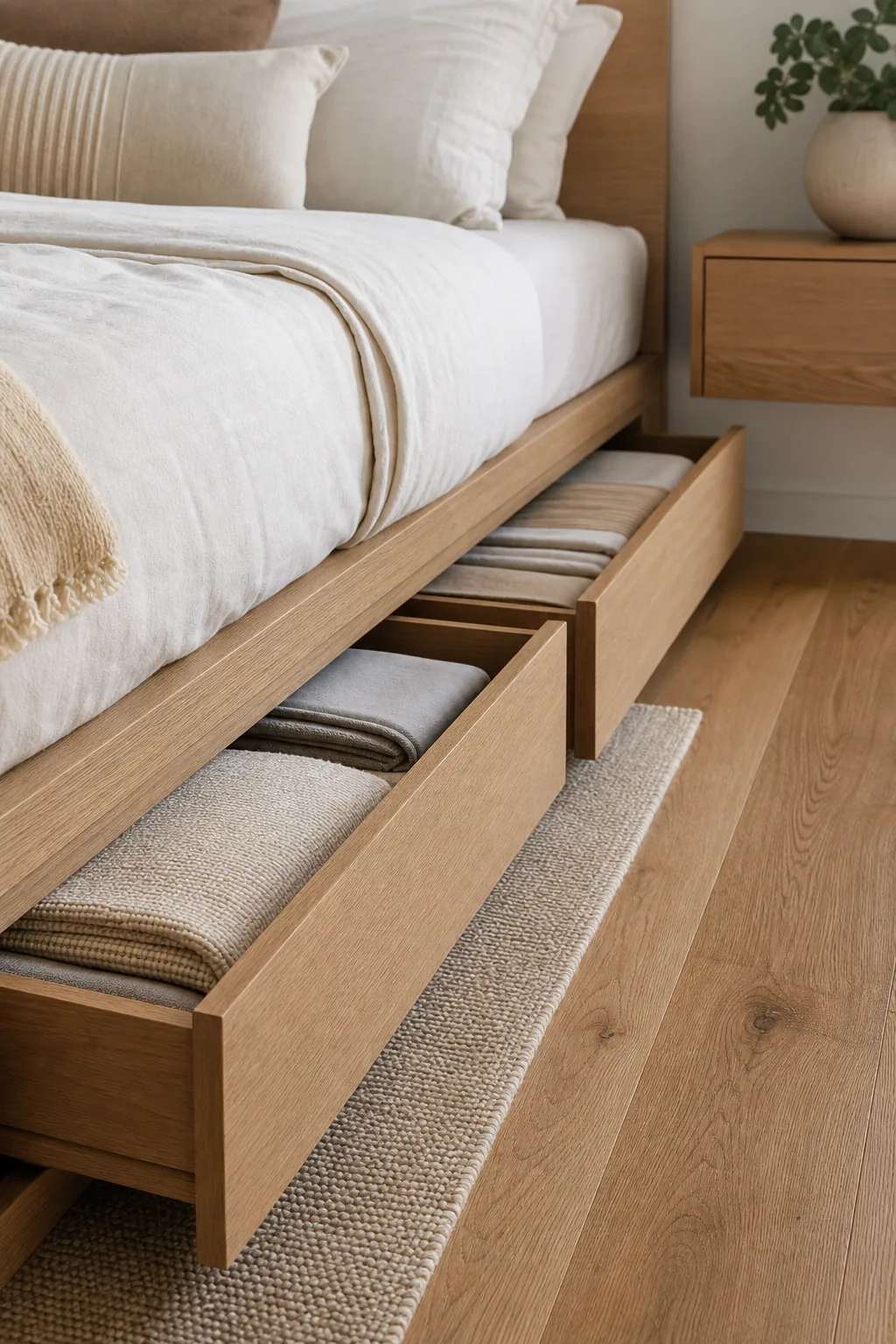
Look for platform beds featuring standard 18 to 24-inch deep flush drawers that blend seamlessly into the frame. These integrated compartments eliminate the need for secondary storage pieces, freeing up valuable square footage for wider walking paths.
Selecting Flush Drawer Profiles
Hardware choice dramatically impacts whether your storage bed feels sleek or cumbersome in a tight layout. Recessed finger pulls or push-to-open mechanisms prevent bruised shins and keep the bed’s profile entirely flush with the mattress edge.
Why Float This? The Wall-Mounted Nightstand
You might ask, why float this? A wall-mounted nightstand reveals the unbroken baseboards beneath it, immediately tricking the eye into perceiving a wider floor plan. Exposing the floor all the way to the wall creates a powerful illusion of depth.
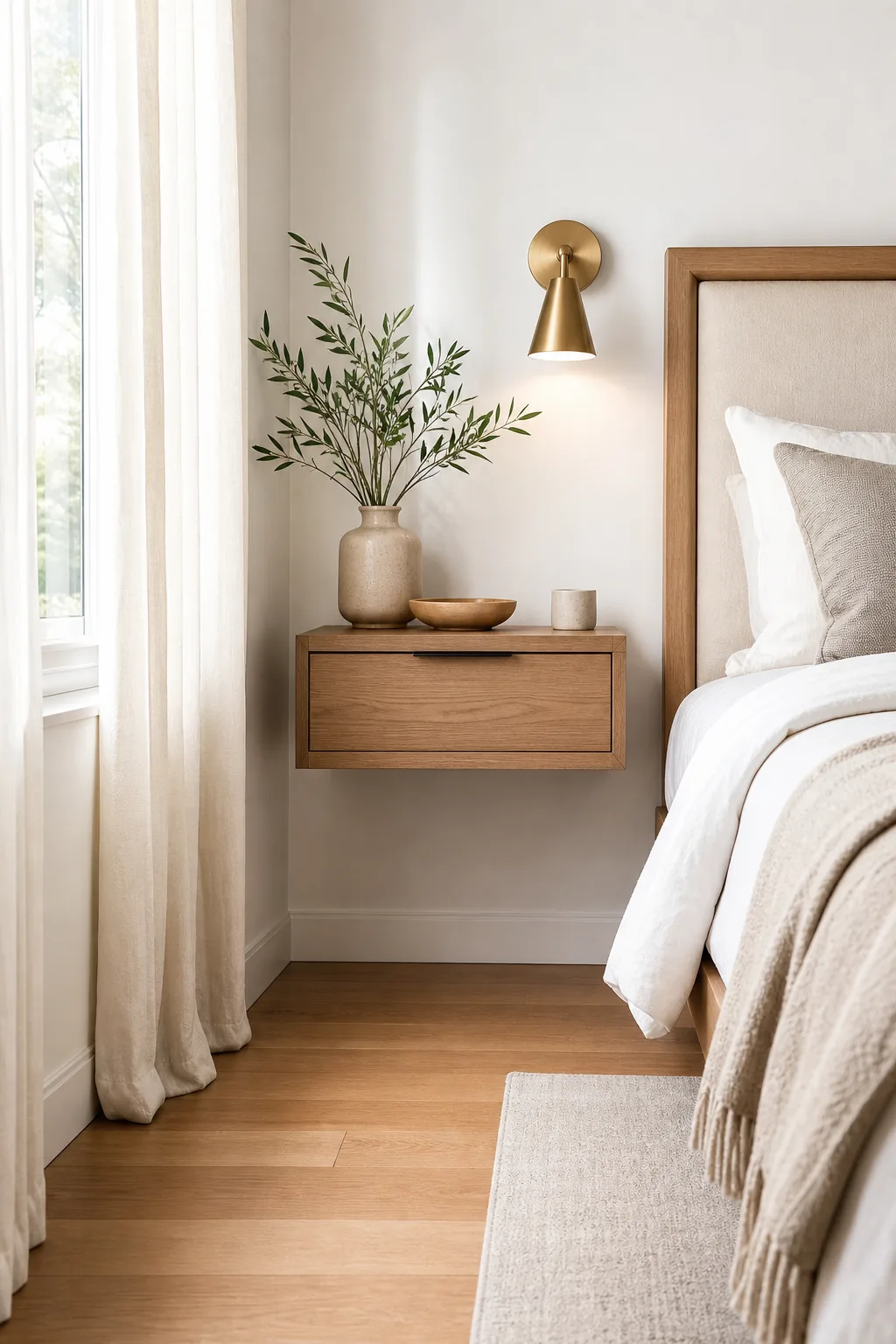
Because these compact tables lack legs for support, securing them properly into a wall stud is crucial to prevent sagging over time under the weight of books and lamps.
Managing Cords Behind Floating Furniture
Floating nightstands require smart cable management to maintain the illusion of open, uncluttered space. Route your charging cables through a discreet wall cord concealer painted to match your wall color, keeping the exposed baseboards visually clean and distraction-free.
Executing the Light Bounce Trick
The light bounce trick involves placing a large mirror on the wall perpendicular or directly opposite to your only window. This strategic placement catches natural sunlight and reflects it deep into the darkest corners of the room.
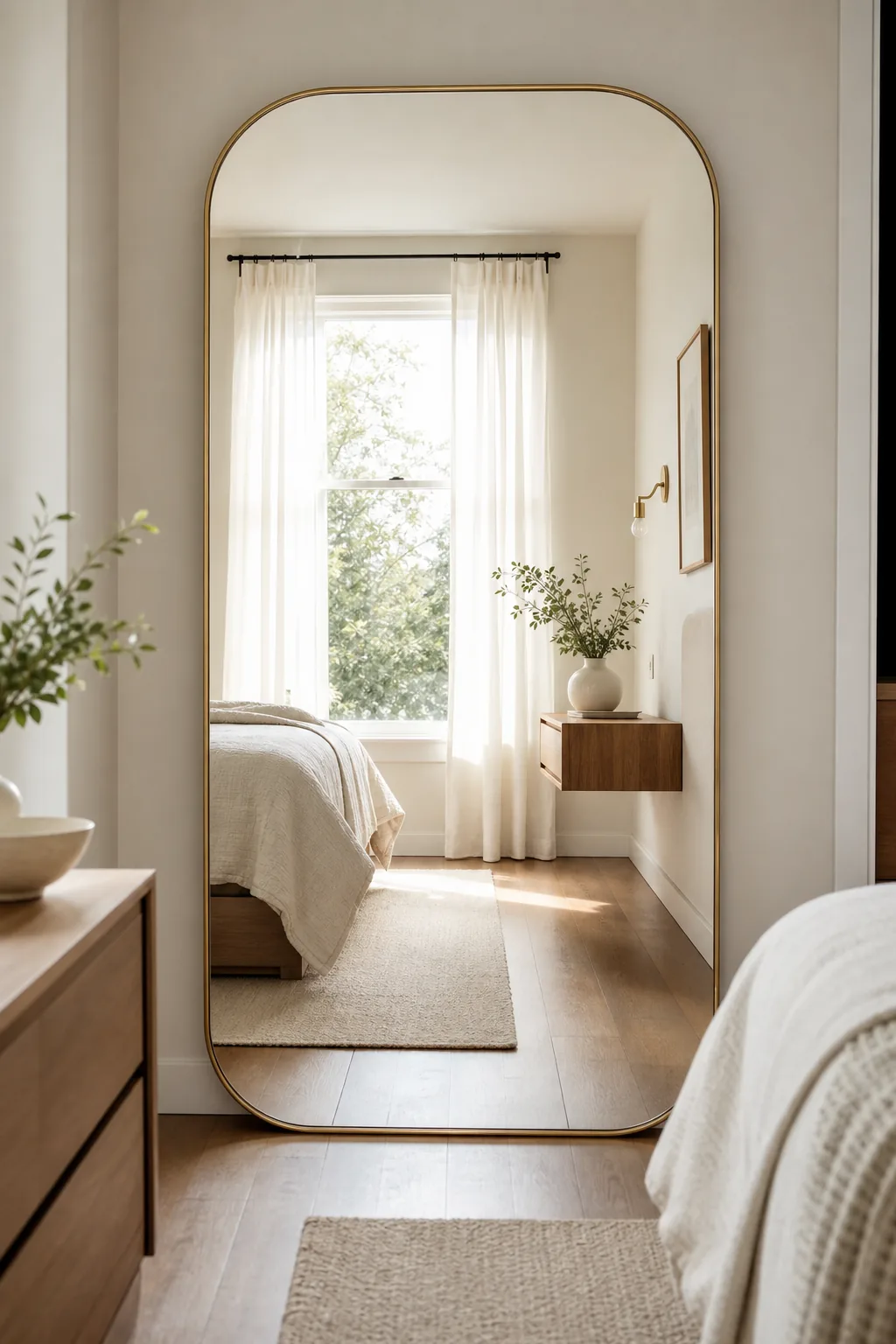
Bouncing the morning light effectively creates the architectural illusion of a secondary window, instantly doubling the perceived brightness of the space. This simple optical adjustment makes the walls feel farther apart and significantly less confining.
Angles for Morning Light Reflection
To maximize the light bounce trick, observe exactly where the morning sun hits your bedroom walls. Angling the mirror slightly toward this specific hotspot captures the brightest light of the day and disperses it evenly across the room’s darker corners.
Choosing the Right Mirror Scale
Small, purely decorative mirrors will not reflect enough ambient light to expand the room’s visual boundaries. You must select a substantial piece that mimics the physical proportions of an actual window to achieve the desired optical illusion.
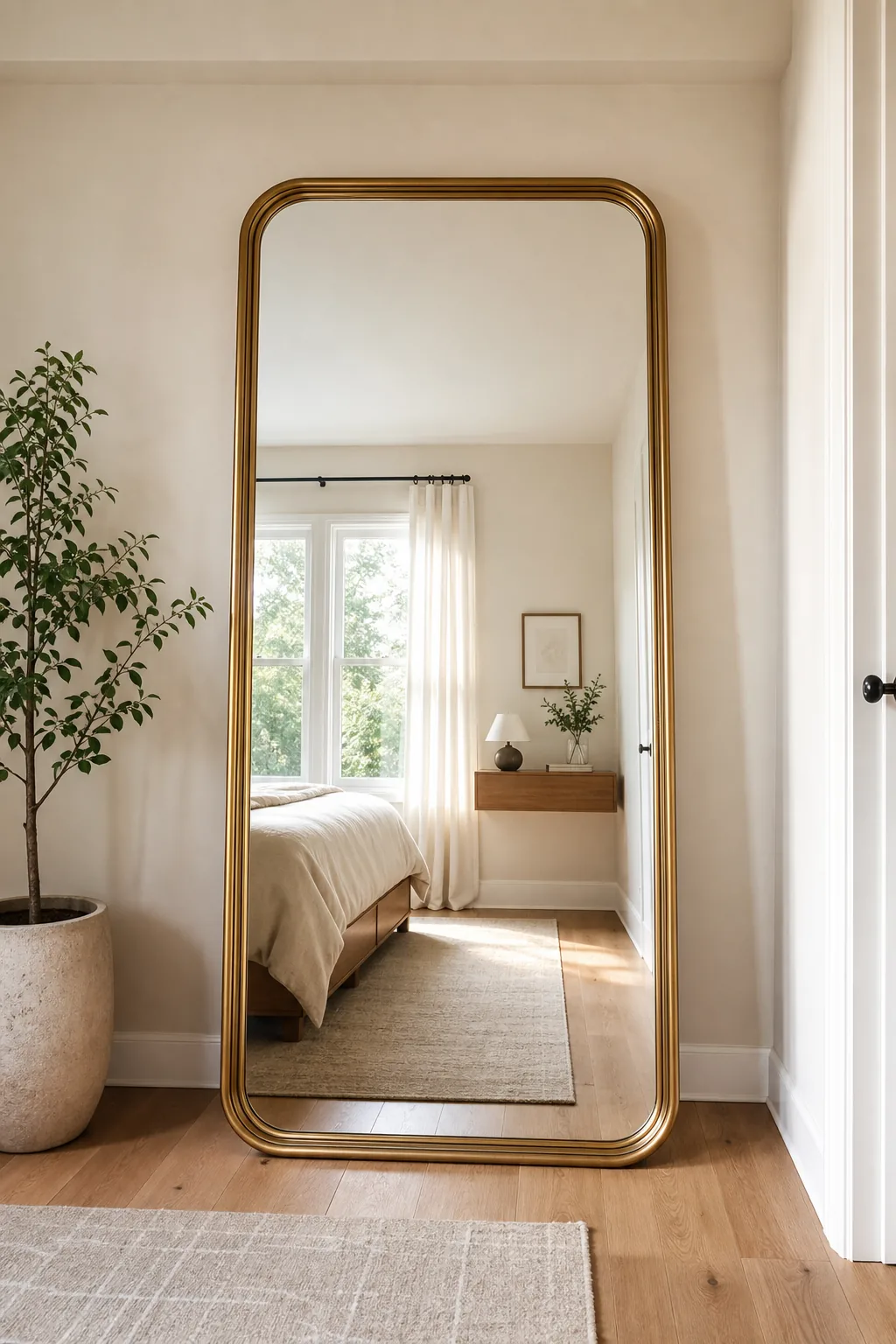
Choose a mirror measuring at least 24 by 36 inches, and opt for a slim frame that maximizes the reflective glass surface. Leaning a large floor mirror against the wall also adds a relaxed, architectural elegance to the space.
Installing the High Curtain Rod
The high curtain rod technique requires mounting your hardware directly below the ceiling line or crown molding, rather than just above the window frame. Drawing the eye upward makes standard 8-foot ceilings feel significantly taller and more grand.
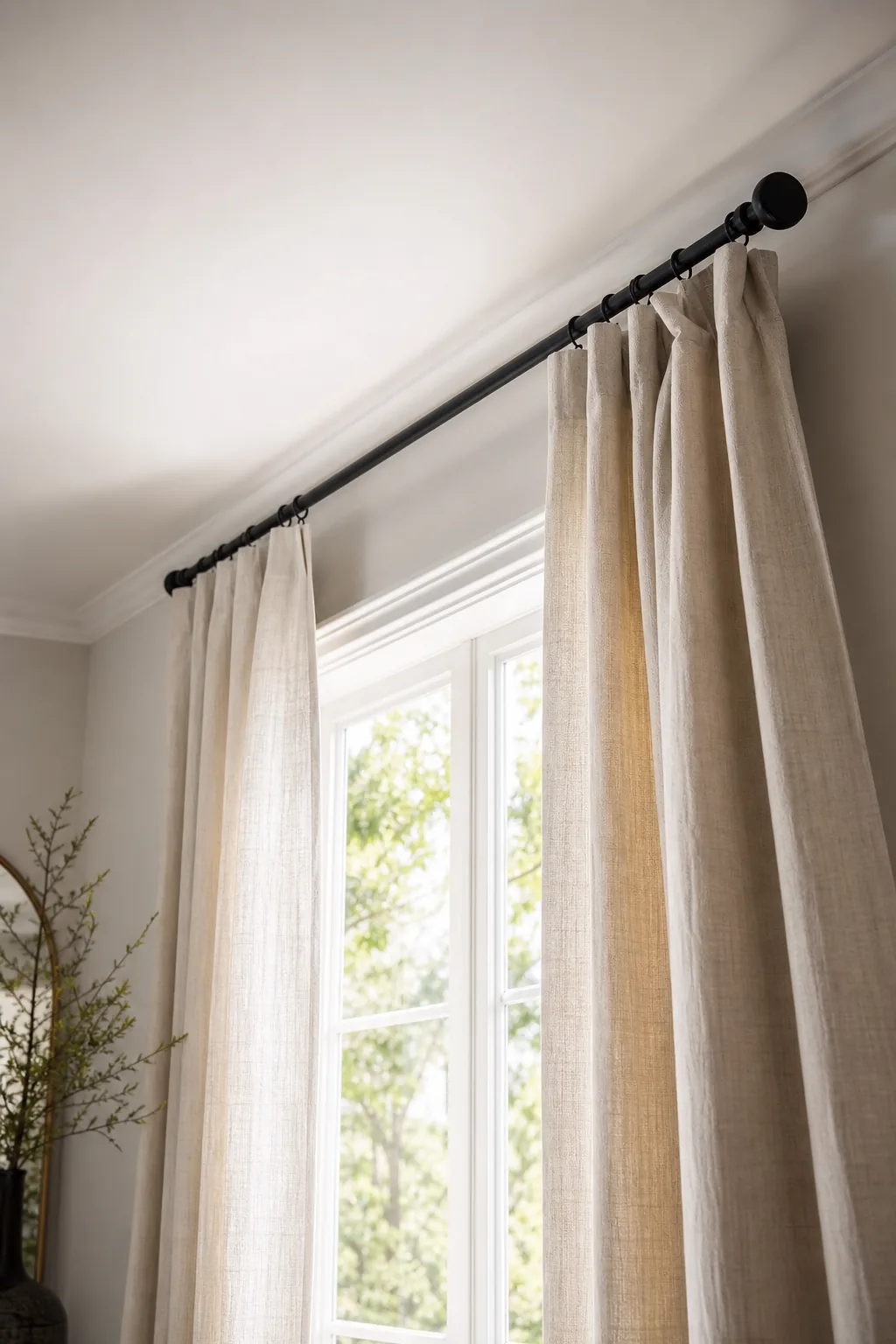
Even with the right hardware height, a few common installation errors can easily undo the room-expanding effect and make the ceiling feel oppressive.
Selecting the Proper Drape Length
To maximize the vertical lift created by your high hardware, the fabric panels must barely kiss the floor. Curtains that puddle excessively look heavy and cluttered, while those hovering an inch above the floor truncate the wall and look unfinished.
Your 5-Step Visual Expansion Guide
Combining these optical tricks creates a genuinely breathable daily retreat without requiring a costly renovation or structural changes. Follow this exact sequence to arrange your small bedroom and intentionally maximize every inch of perceived space.
- Apply the 60/40 floor rule to your rug placement.
- Utilize flush hidden bed storage instead of a bulky dresser.
- Float the nightstands to reveal your unbroken baseboards.
- Position a large bounce mirror opposite the window.
- Mount high curtain rods directly below the ceiling line.
Executing these five steps transforms a cramped, purely functional sleeping area into a bright, architecturally balanced sanctuary that feels twice its actual size.