
Neo Traditional Meets Minimalism: Entryway
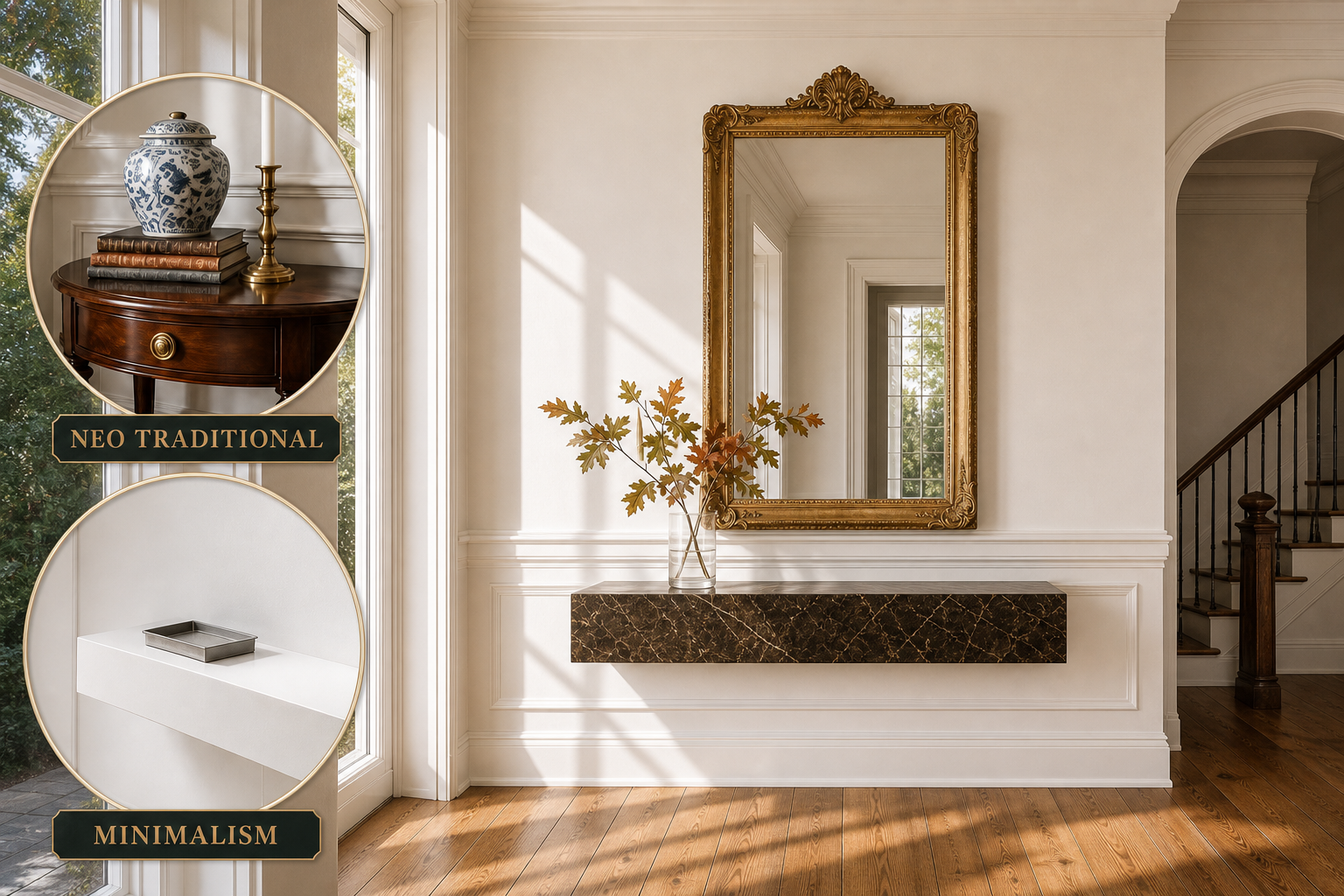
The ornate, historical weight and layered comfort of Neo Traditionalism inherently clashes with the stark, void-seeking purity of Minimalism. We resolve this contradiction by letting historic architecture dictate the shell while strict minimalist principles govern the negative space.
Style A language
A successful entryway must immediately establish the home’s character and set the definitive tone for the interior. Here, the historic architectural shell provides a rich, undeniable foundation that anchors the entire narrative without ever requiring excessive furniture or traditional clutter.
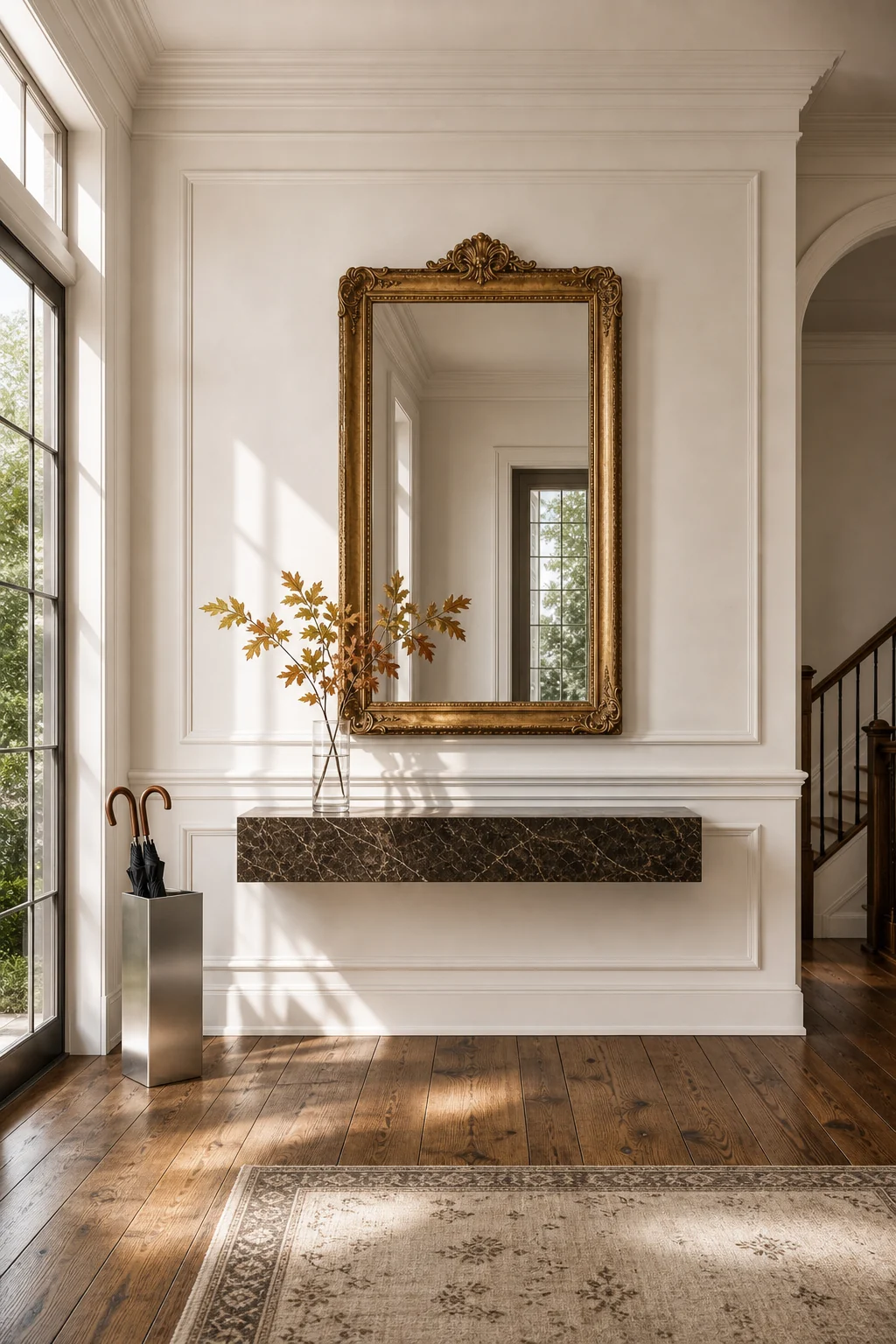
Deep crown molding and raised panel wainscoting deliver instant historic gravity to the space. This ornate framework deliberately contrasts with the stark, modern interventions placed within it, giving the room its soul while deeply honoring its authentic regional heritage.
By establishing such a dominant traditional envelope, the architecture alone carries the heavy burden of history. This brilliant strategy frees the rest of the room to explore radical simplicity, proving that historic homes do not require suffocating layers of antique decoration.
Style B language
Against this heavily detailed historic backdrop, the selected furniture introduces a radical, void-seeking purity to the entryway. This deliberate emptiness prevents the traditional architecture from feeling like a suffocating museum, allowing the eye to rest and the historic shell to breathe.
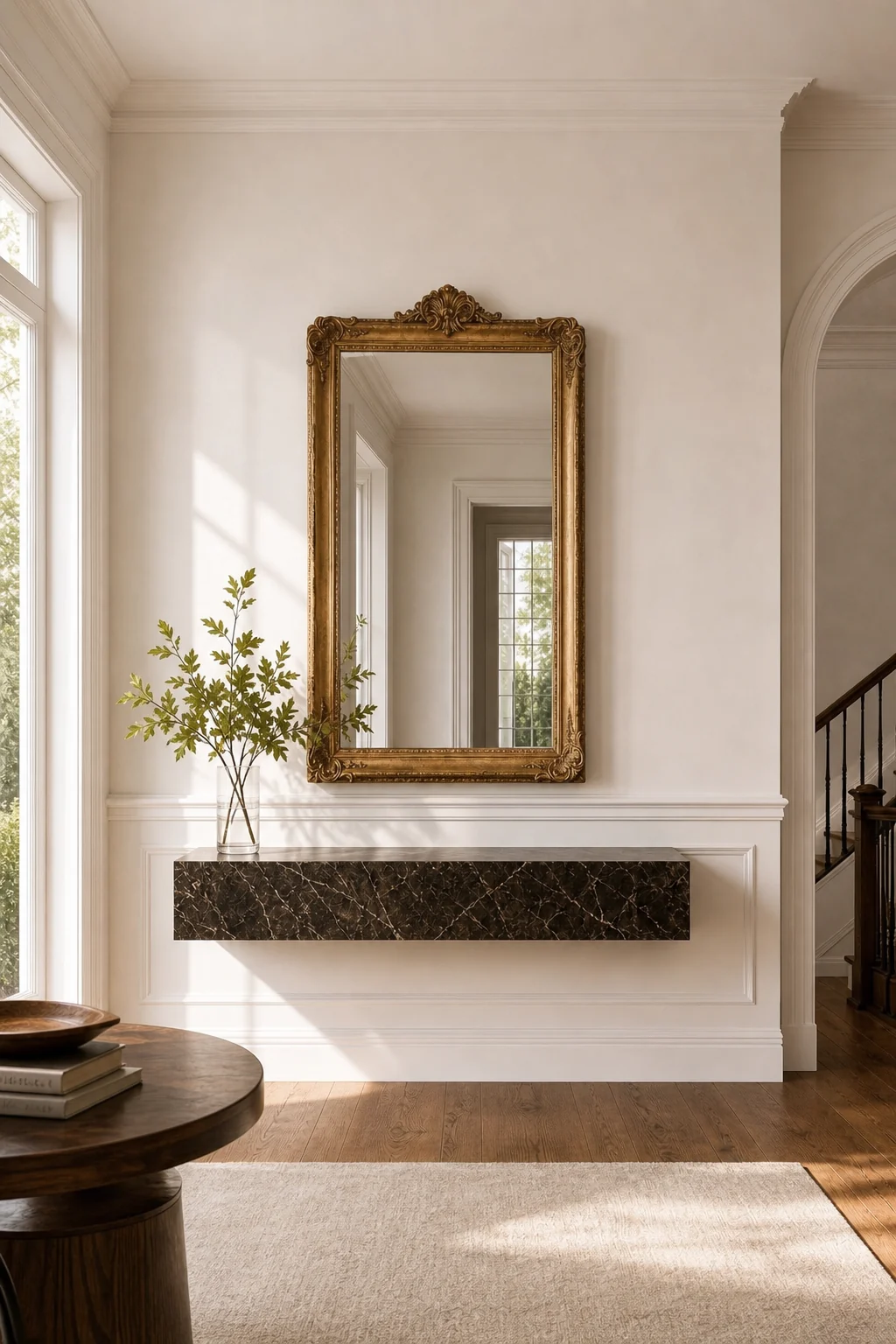
A floating monolithic stone console provides essential daily function without adding unnecessary visual weight to the floor. Expansive negative wall space surrounds the furniture on all sides, forcing the eye to appreciate the profound emptiness and the architectural details simultaneously.
The absolute absence of surface clutter transforms the entryway from a mere drop zone into a highly curated gallery space. This stark approach elevates the few chosen objects, turning functional geometry into a powerful, quiet statement against the highly ornate walls.
The bridge
Connecting these opposing forces requires a highly deliberate manipulation of surface finishes and textures. The ultimate solution lies in treating historical architectural details with absolute modern restraint, forcing the two distinct visual languages to communicate harmoniously within one cohesive space.
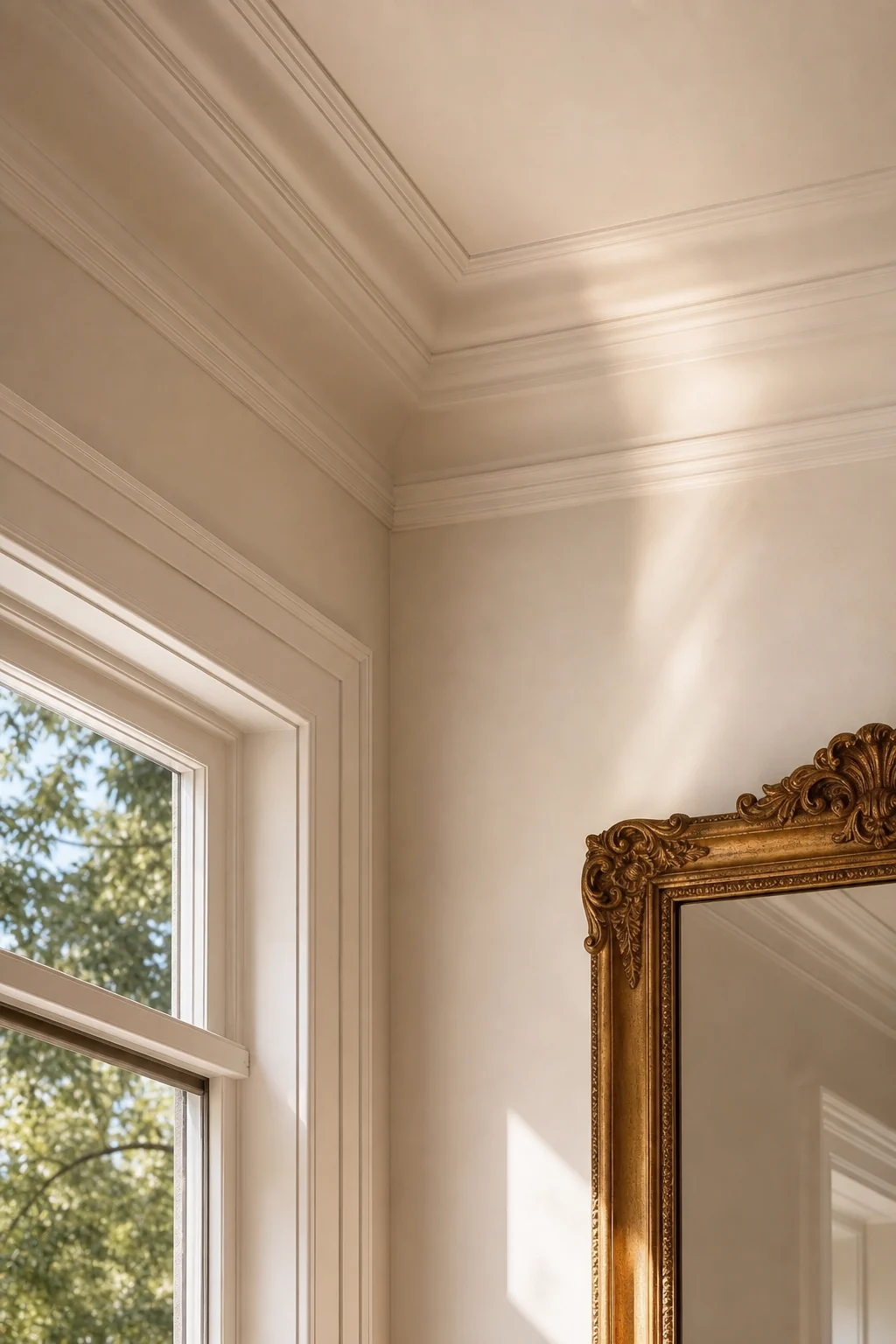
Color-drenching ornate millwork in a single matte tone flattens historical ornamentation into a subtle, minimalist texture. This crucial technique unifies the room, softening the aggressive traditional details without erasing their valuable architectural heritage or diminishing their structural importance in the home.
Using heavily patinated, historic materials on strictly geometric, modern furniture forms creates a vital secondary bridge. The dark Emperador marble console offers traditional luxury through its material, yet its floating, block-like silhouette remains fiercely loyal to strict minimalist design principles.
Build the room
Translating this delicate tension requires assigning strict, unwavering roles to every single design layer in the room. The architecture proudly holds the history, while the modern furnishings fiercely enforce the void, ensuring neither aesthetic dominates the other in the final composition.
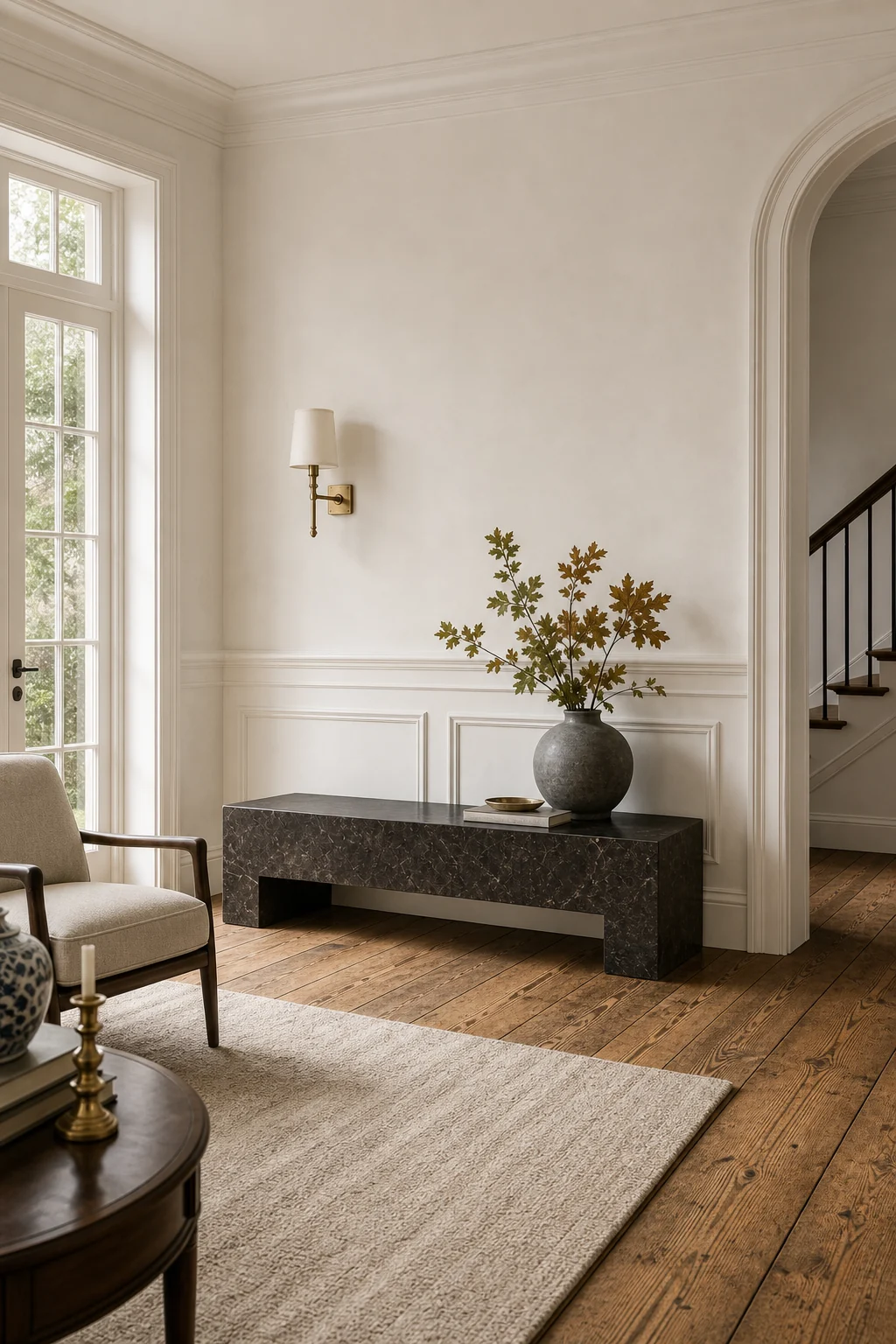
By isolating a single traditional antique within a vast expanse of empty space, you treat history as a minimalist focal point. This careful curation allows the room to feel layered and comfortable without succumbing to typical entryway chaos or visual overload.
| Design Layer | Neo Traditional Role | Minimalism Role | Bridge Decision |
|---|---|---|---|
| Shell | Ornate millwork and historic wide-plank flooring | Expansive, unadorned negative wall space | Color-drenching trim and walls in one matte plaster tone |
| Furniture | Antique focal points like an ornate gilded mirror | Monolithic, floating geometric forms | Using heavily patinated materials on strict modern shapes |
| Textiles | Rich, tactile natural fibers and classic weaves | Complete absence of pattern, fringe, or excess draping | Solid, textural fabrics in muted, earthy tones |
| Lighting | Classic brass silhouettes and historic placement | Concealed or flush-mount architectural fixtures | Unlacquered brass finishes on simplified, geometric shapes |
| Accents | Historic, heavily patinated decorative objects | Strict limitation of quantity and visual noise | A single, oversized antique isolated in empty space |
This comprehensive translation framework guarantees that every new addition serves the broader narrative. When the traditional shell is properly subdued and the minimalist furniture is enriched with patina, the resulting entryway feels incredibly intentional, perfectly balanced, and timelessly sophisticated for any guest.
Light and architecture
Illumination plays a crucial, defining role in highlighting the tension between the ornate historic walls and the stark modern furniture. In this hybrid space, controlled shadows become a primary design element, adding immense depth without requiring any additional physical decorative objects.
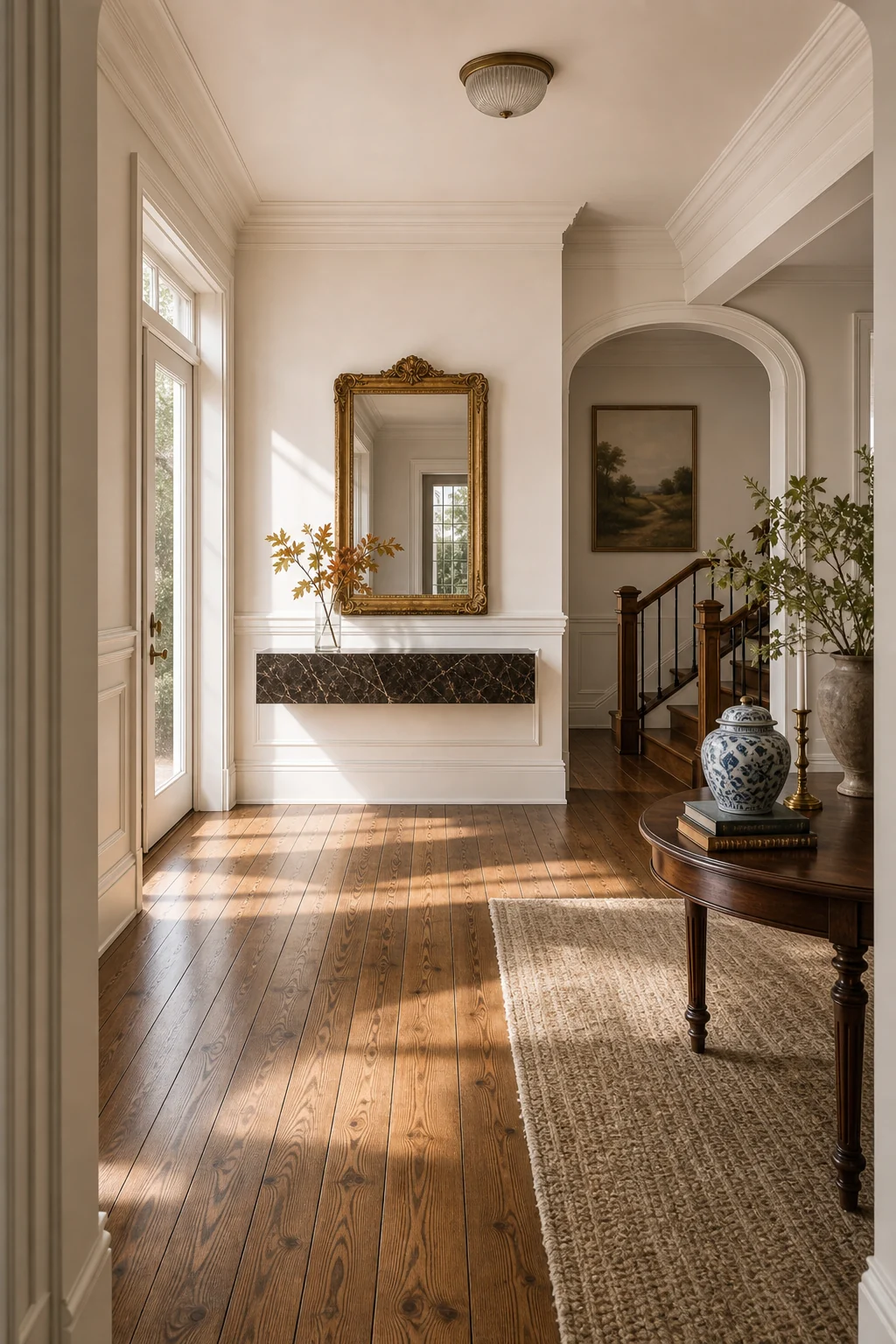
Raking golden autumn sunlight streams through the unseen doorway, casting crisp, elongated shadows across the heart pine floor. This natural light highlights the subtle texture of the color-drenched molding while emphasizing the stark, uncompromising geometry of the floating dark marble console.
- Allow raking sunlight to highlight the subtle texture of the matte plaster millwork.
- Keep window treatments entirely absent to maximize natural daylight and maintain the void.
- Use concealed flush-mount fixtures to avoid competing with the historic architectural details.
- Ensure ambient lighting remains architectural rather than decorative to enforce minimalist influence.
Style the details
Surface styling is where this delicate architectural balance most often fails for homeowners. Every single object placed in this room must fiercely justify its existence against the vast negative space, demanding a ruthless editing process and an uncompromising eye for restraint.
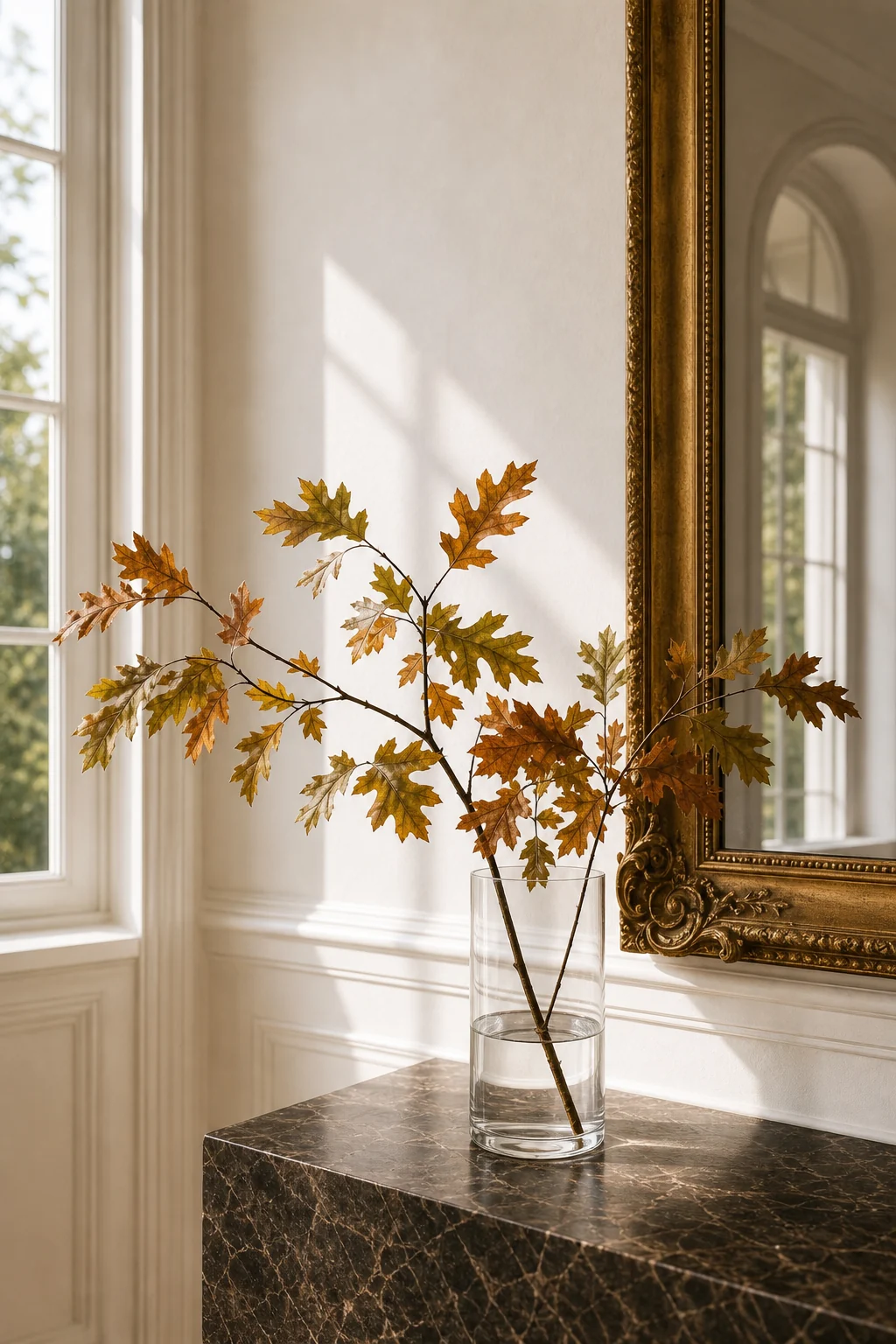
The moment you add a conventional catch-all bowl, a stack of mail, or layered decorative artwork, the carefully constructed tension collapses into everyday mess. True sophistication in this hybrid entryway relies entirely on what you intentionally choose to omit from view.
- Seek monolithic, geometric console tables crafted in heavily patinated dark stone.
- Source oversized, authentically aged gilded mirrors featuring ornate, traditional crests.
- Choose simple, clear glass cylinders to display isolated seasonal botanical branches.
- Select matte warm-white plaster paint to properly flatten the historical millwork.
Adapt it
This compelling architectural tension should never stop abruptly at the front door. The underlying logic of merging historic shells with modern voids easily extends into connecting passages, grand staircases, and transitional spaces throughout the rest of the beautifully curated historic home.
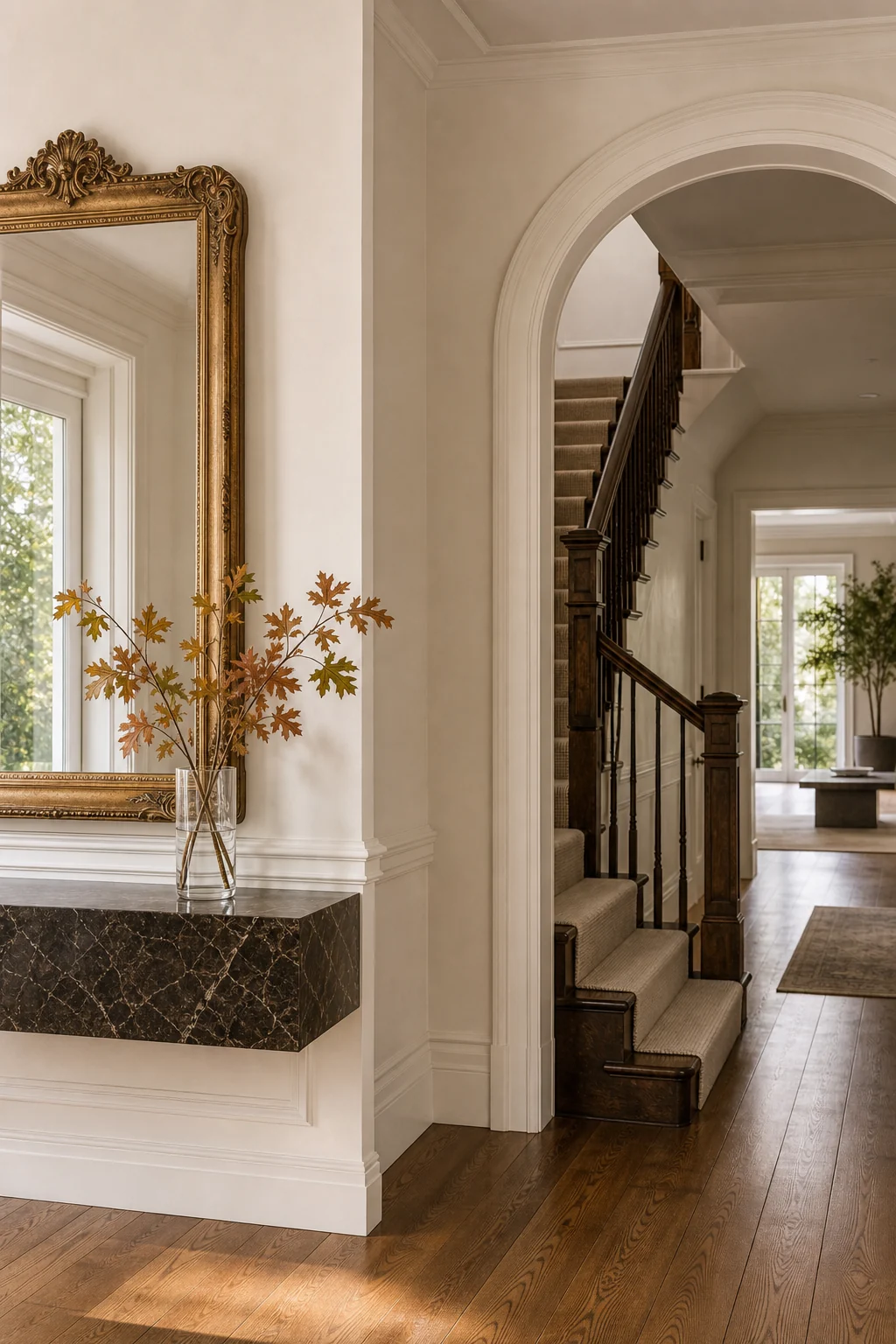
Maintain the color-drenched walls while introducing stark, geometric runners or minimalist handrail details to carry the narrative forward. This ensures the entryway feels like a deliberate introduction to the house rather than an isolated, disconnected thematic experiment lacking broader context.
- Extend the warm plaster white paint finish seamlessly into the adjacent connecting hallways.
- Replace traditional patterned stair runners with stark, unpatterned textiles in earthy tones.
- Remove excess hallway console tables to preserve the expansive, void-seeking negative space.
- Update secondary light fixtures with simplified, geometric shapes in aged unlacquered brass.
Avoid the costume
Achieving this precise balance requires ruthless editing and an absolute refusal to compromise on either style’s core tenets. Half-measures, timid furniture choices, or a reluctance to embrace empty space will immediately ruin the intended dramatic effect of the entire entryway design.
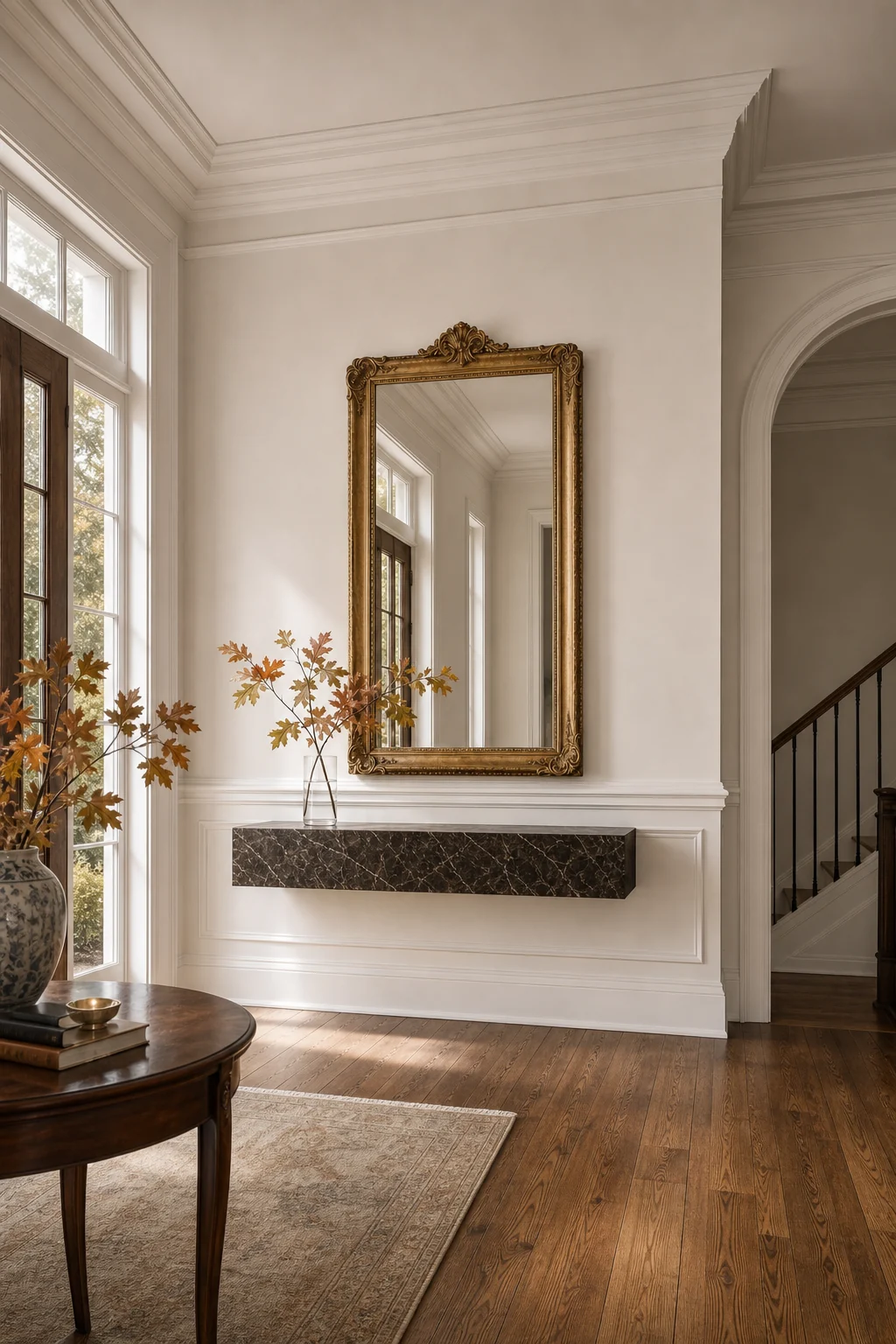
When executed correctly, the resulting entryway feels both historically rooted and breathlessly modern. The inherent contradiction becomes the room’s greatest asset, offering a masterclass in how to honor a historic home’s architecture without suffocating in traditional clutter or outdated decorative layers.
- Costume: Over-styling the console table with too many layered historic artifacts.
- Split personality: Using traditional antique furniture alongside stark modern interior architecture.
- Dominance: Allowing ornate textile patterns to overwhelm the essential negative wall space.
- Generic result: Choosing mass-produced modern pieces that lack true material patina.