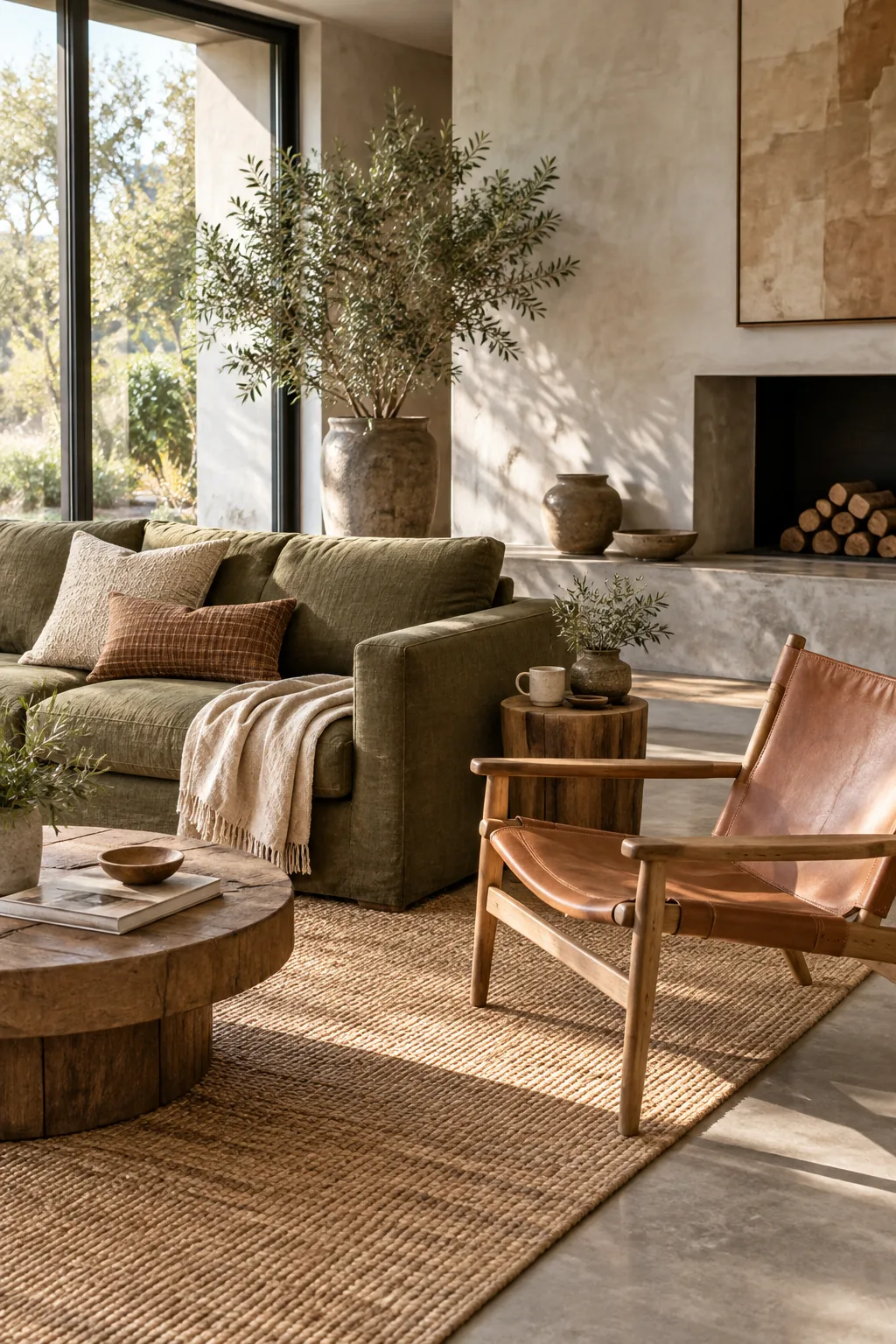
Sofa and Accent Chair Pairing: Designer Scale Cheat Sheet
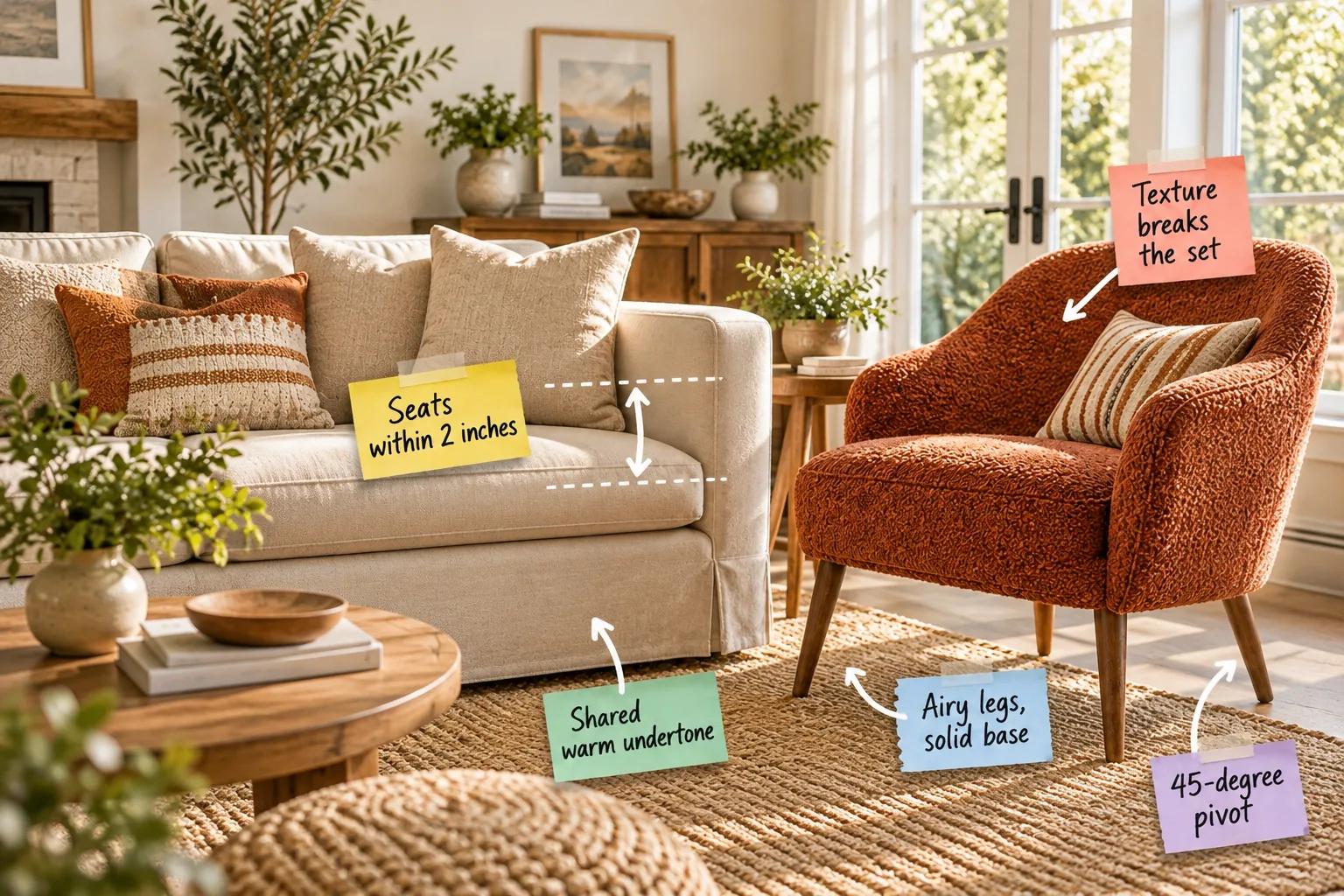
Master the exact measurements and visual rules to confidently mix mismatched pieces using this living room seating scale and pairing cheat sheet, ensuring you can effortlessly pair living room seating using exact scale measurements and visual contrast rules without ever buying a matching set.
Match Seat Heights Within Two Inches
Horizontal alignment between seating is the most critical rule for a comfortable living room, ensuring your guests never feel awkwardly positioned during a conversation. Keep the accent chair’s seat cushion within 2 inches of the sofa’s seat height so everyone naturally sits at the exact same eye level.
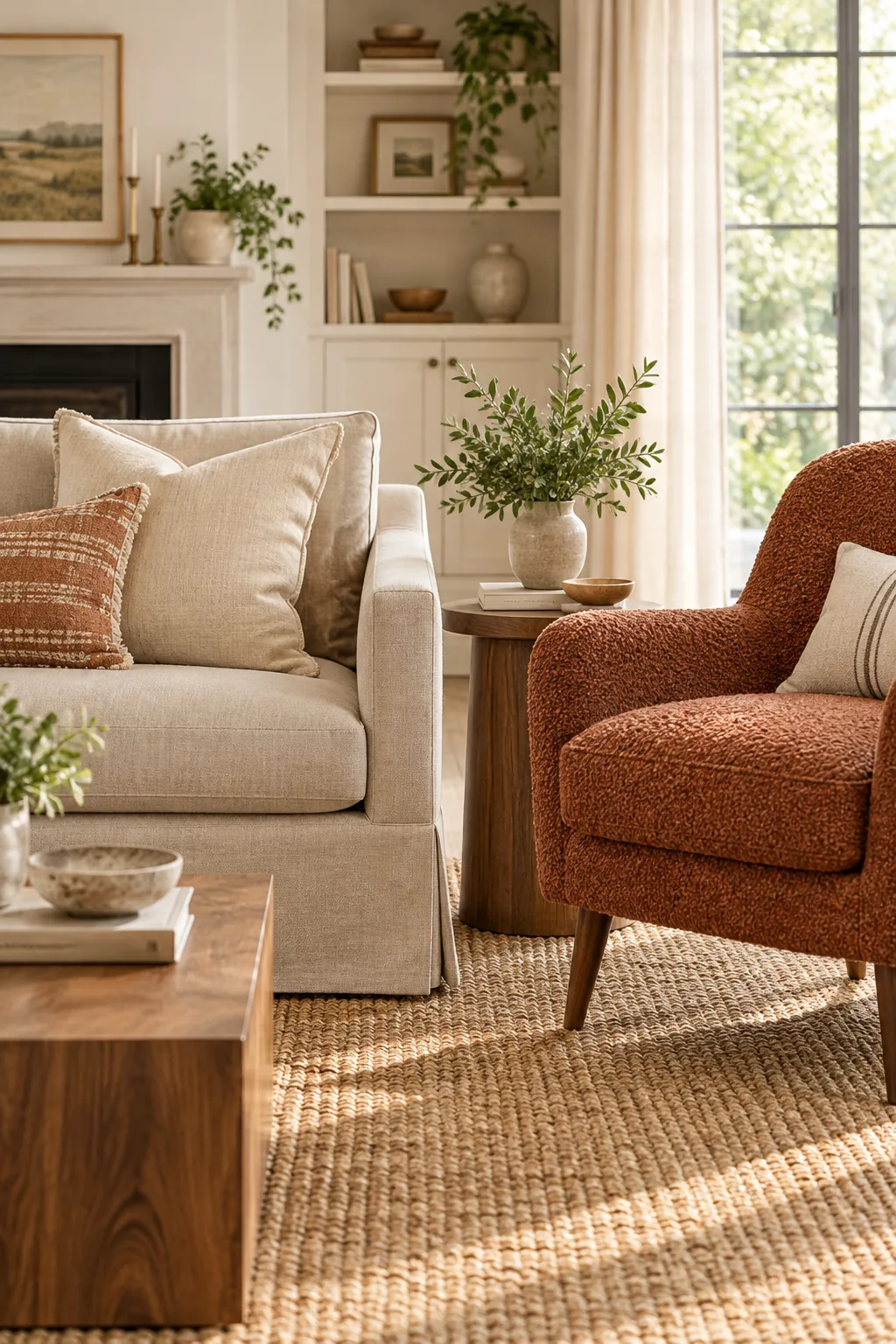
While seat height dictates comfortable eye contact, ignoring how far back a person sits can still make a pairing feel physically disproportionate and entirely unwelcoming.
Evaluate the Cushion Density
Matching the physical height on paper only works if both cushions compress at a similar rate when someone actually sits down, maintaining that perfect alignment. A firm, tight-back sofa paired with a sinking down-filled chair will instantly ruin your carefully planned two-inch vertical alignment.
Maintaining a consistent seating firmness ensures your living room feels like a unified, intentional conversational zone rather than a random collection of leftover furniture pieces.
Contrast Airy Legs With a Solid Base
Balance the visual weight of your room by mixing heavy and light foundations, a principle I borrow from Eastern design philosophies that emphasize grounding energy. If your sofa features a solid, floor-skirting base, you must introduce negative space to prevent the room from feeling completely blocked.
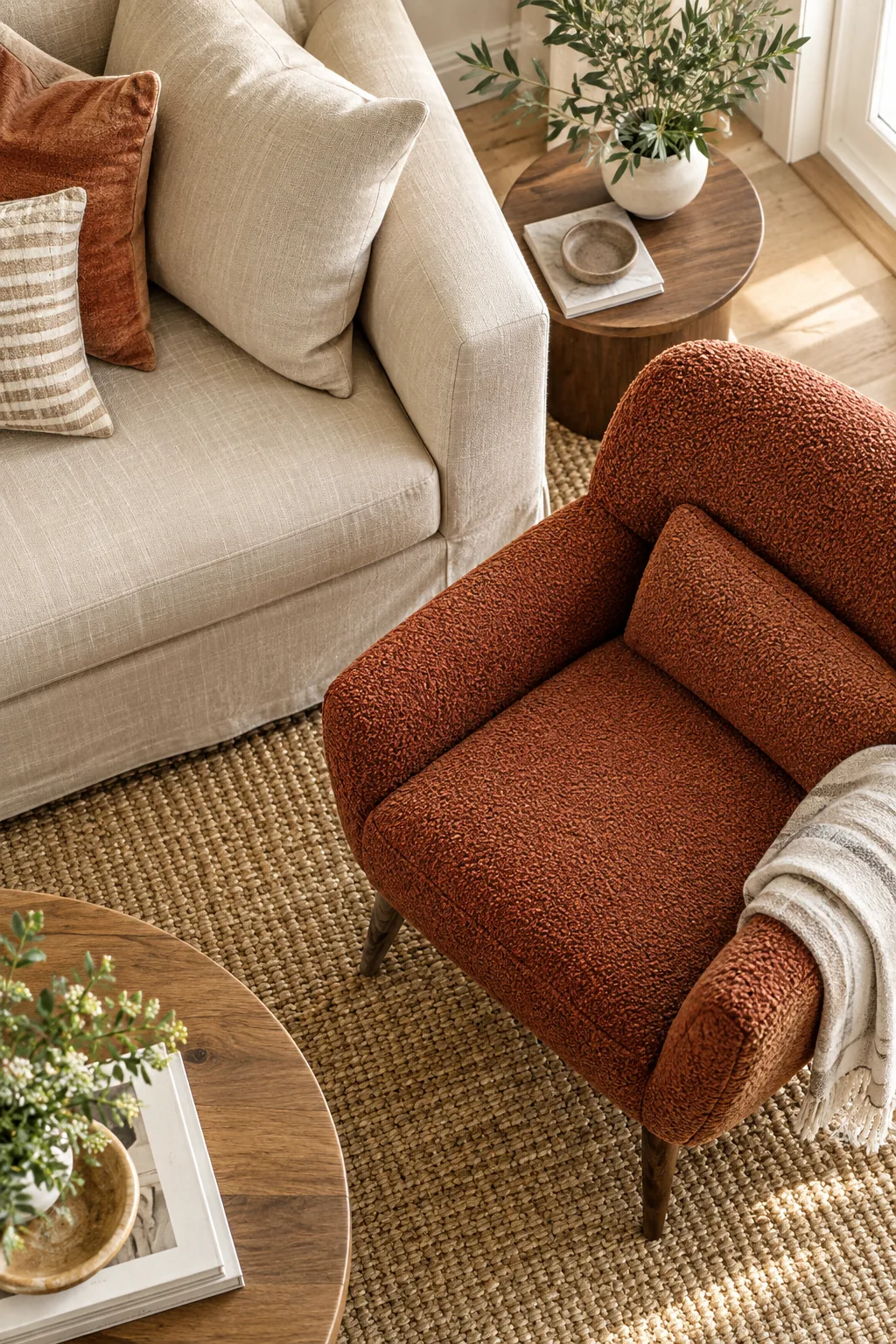
Pair that heavy, upholstered foundation with a leggy accent chair to keep the arrangement feeling open, spacious, and intentionally layered for a modern aesthetic.
Balance the Overall Silhouette
A successful furniture pairing relies on contrasting shapes just as much as it relies on contrasting bases, ensuring the room feels dynamic and curated. If your primary sofa features rigid, square arms and a linear back, your secondary seating should introduce softer, organic curves.
| Sofa Silhouette | Ideal Chair Contrast | Visual Effect |
|---|---|---|
| Square, track arms | Rounded barrel chair | Softens harsh room angles |
| Curved, rolled arms | Sleek, armless slipper chair | Adds modern tailored lines |
| Low, horizontal back | Tall, winged backrest | Draws the eye upward |
| Plush, overstuffed frame | Minimalist wood frame | Prevents visual heaviness |
Mixing these distinct structural profiles creates a dynamic tension that makes the living room look like a collected space rather than a generic showroom display.
Break Up the Set With Bold Texture
Material contrast is what makes mismatched furniture look intentional rather than accidental, which I learned quickly when styling my own Denver loft with overly similar linens. Pair a smooth cotton or linen sofa with a highly textured accent chair in nubby bouclé, rich velvet, or distressed leather.
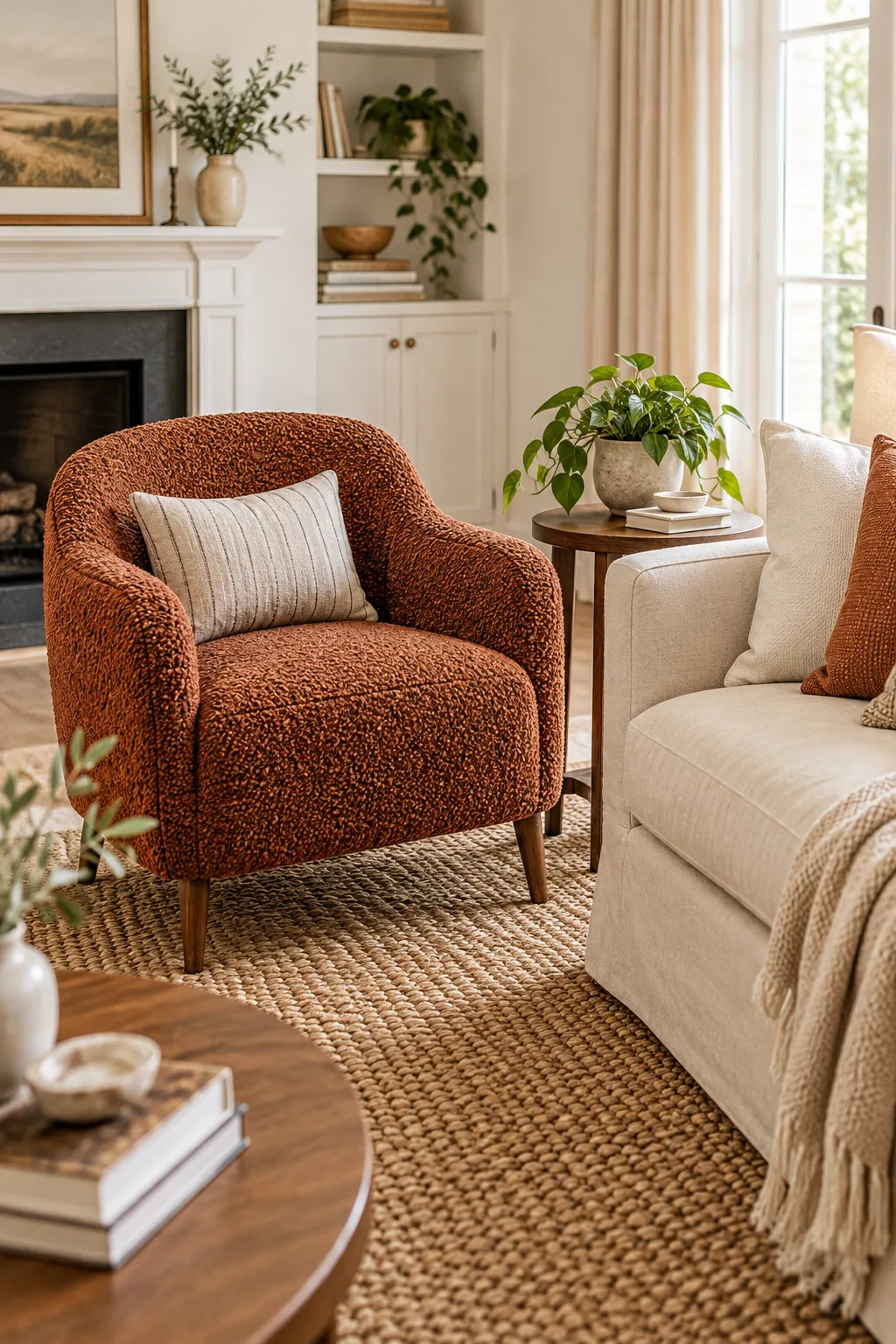
Introducing a tactile difference forces the eye to recognize the two pieces as independent design choices that beautifully complement rather than copy one another.
Anchor the Pairing With Shared Undertones
You can mix completely different colors as long as they share a cohesive temperature, a trick I use constantly to blend cool mountain light with warm interiors. Link distinct pieces by ensuring both fabrics feature a shared warm undertone, like earthy beige and rich terracotta.
This shared color temperature creates an invisible thread that ties the room together, allowing you to mix bold hues without creating unnecessary visual chaos.
Angle the Chair for Conversation
Layout dictates how a room is actually used, so instead of placing the chair flat against the wall alongside the sofa, break the rigid grid. Use a 45-degree inward pivot to angle the accent chair directly toward the center of the primary seating area.
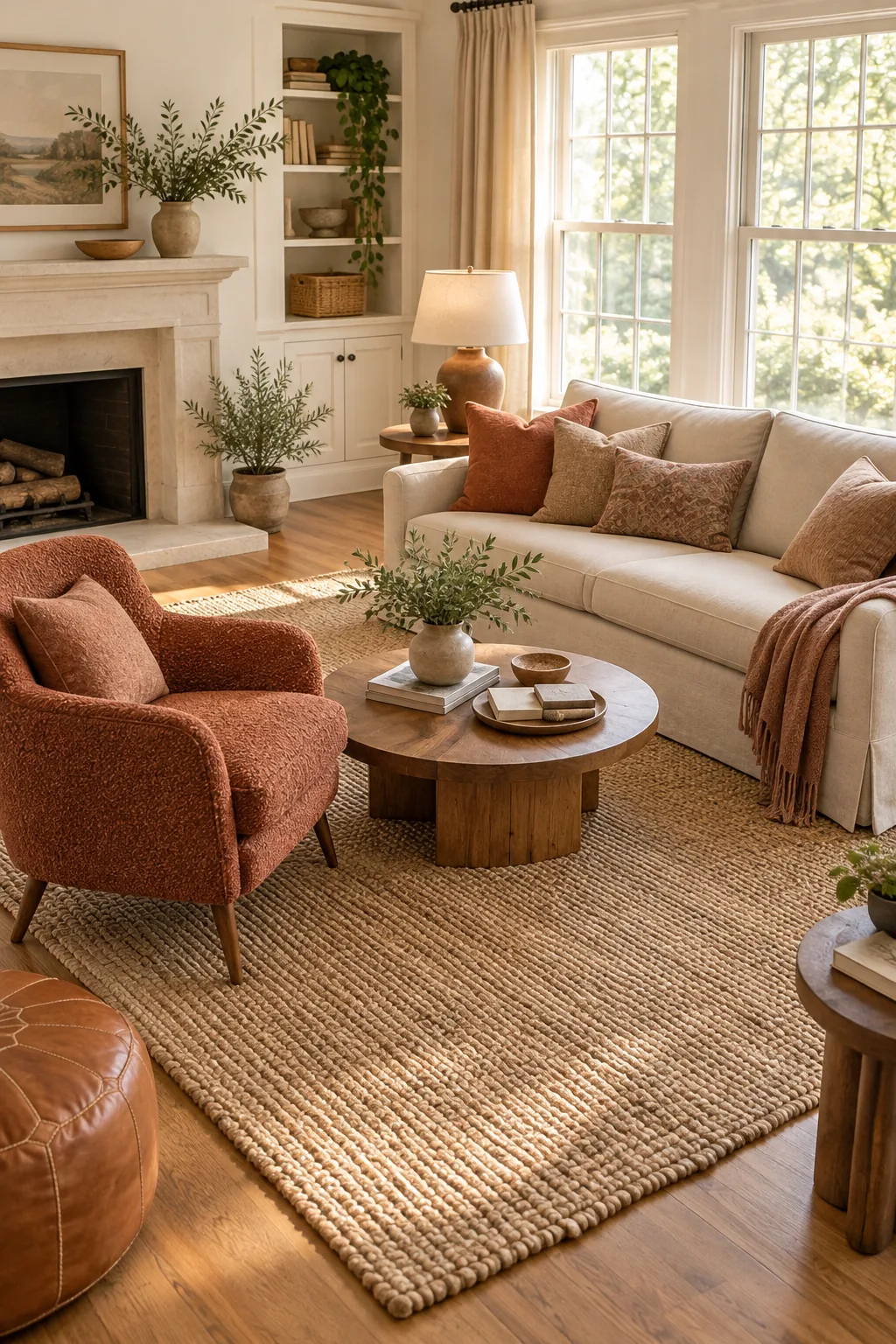
This subtle angled placement creates an intimate, conversational seating arrangement that naturally draws people together and softens the harsh corners of the living room.
Maintain Proper Walking Clearances
Angling your furniture is visually appealing, but it can quickly choke the room’s traffic flow if you ignore the negative space behind the pieces. Always leave a minimum of 36 inches of clear walkway behind any pivoted chair that floats in the middle of the room.
Protecting these essential walkways ensures your beautifully scaled seating arrangement remains highly functional for daily family life without feeling cramped or difficult to navigate.
Align the Armrests for Shared Tables
Beyond the seat cushion, armrest height determines how easily pieces can share a central side table for resting drinks, books, and table lamps. Keep the armrests of your sofa and accent chair within 3 inches of each other to maintain a perfectly level functional plane.
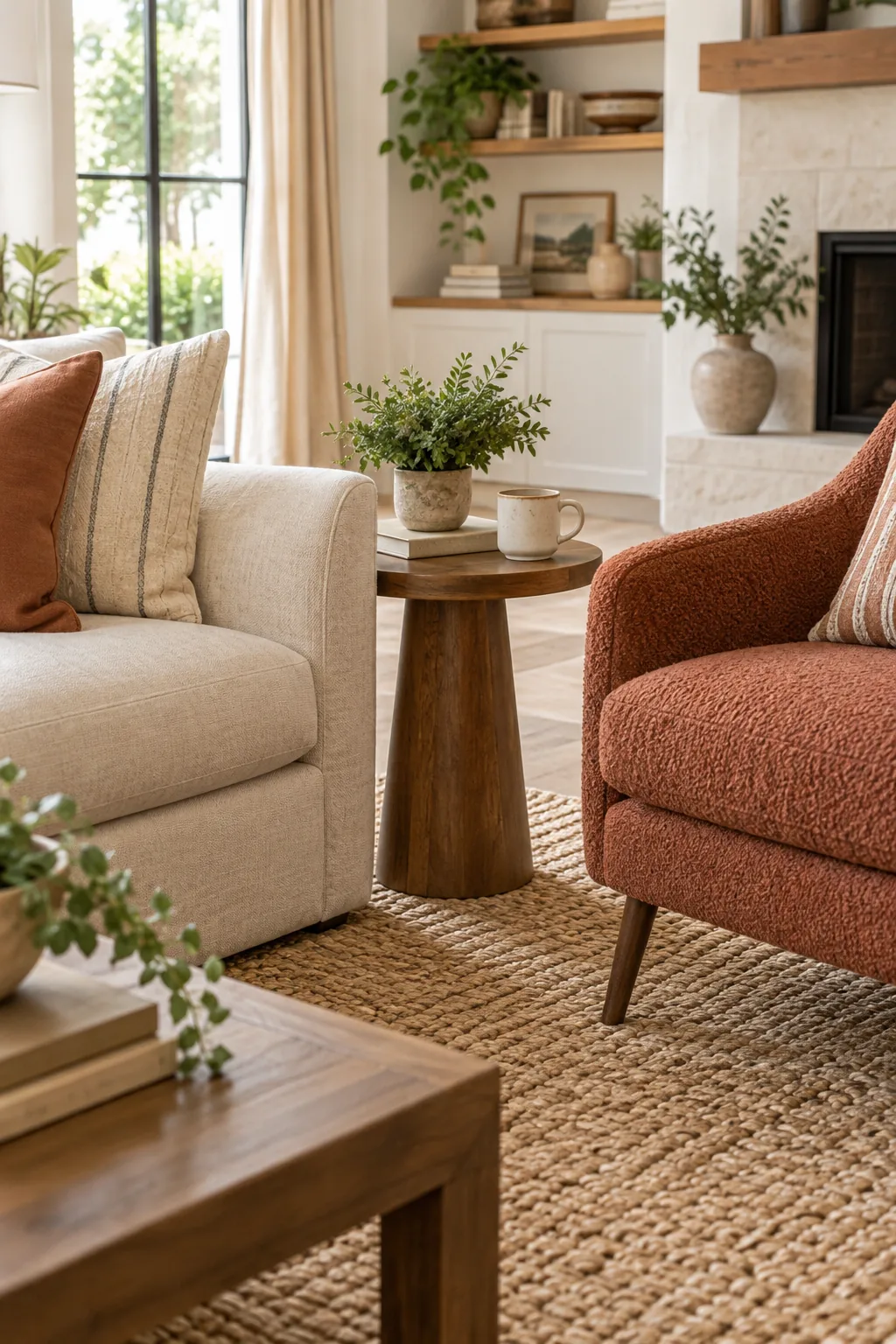
- Measure the armrest height of your primary sofa from the floor to the top edge.
- Select an accent chair with armrests that sit no more than 3 inches higher or lower.
- Choose a side table that sits exactly one inch below the lowest armrest in the pairing.
When the armrests sit at a similar height, a single table serves both comfortably without forcing anyone to reach awkwardly up or strain downward.
The Seating Scale and Pairing Cheat Sheet
Use this concrete scale guide when shopping for your next piece to master your living room seating scale and pairing cheat sheet with absolute confidence. Keep seat heights within a 2-inch variance, armrests within a 3-inch variance, and maintain 18 inches of clearance between the chair and the coffee table.
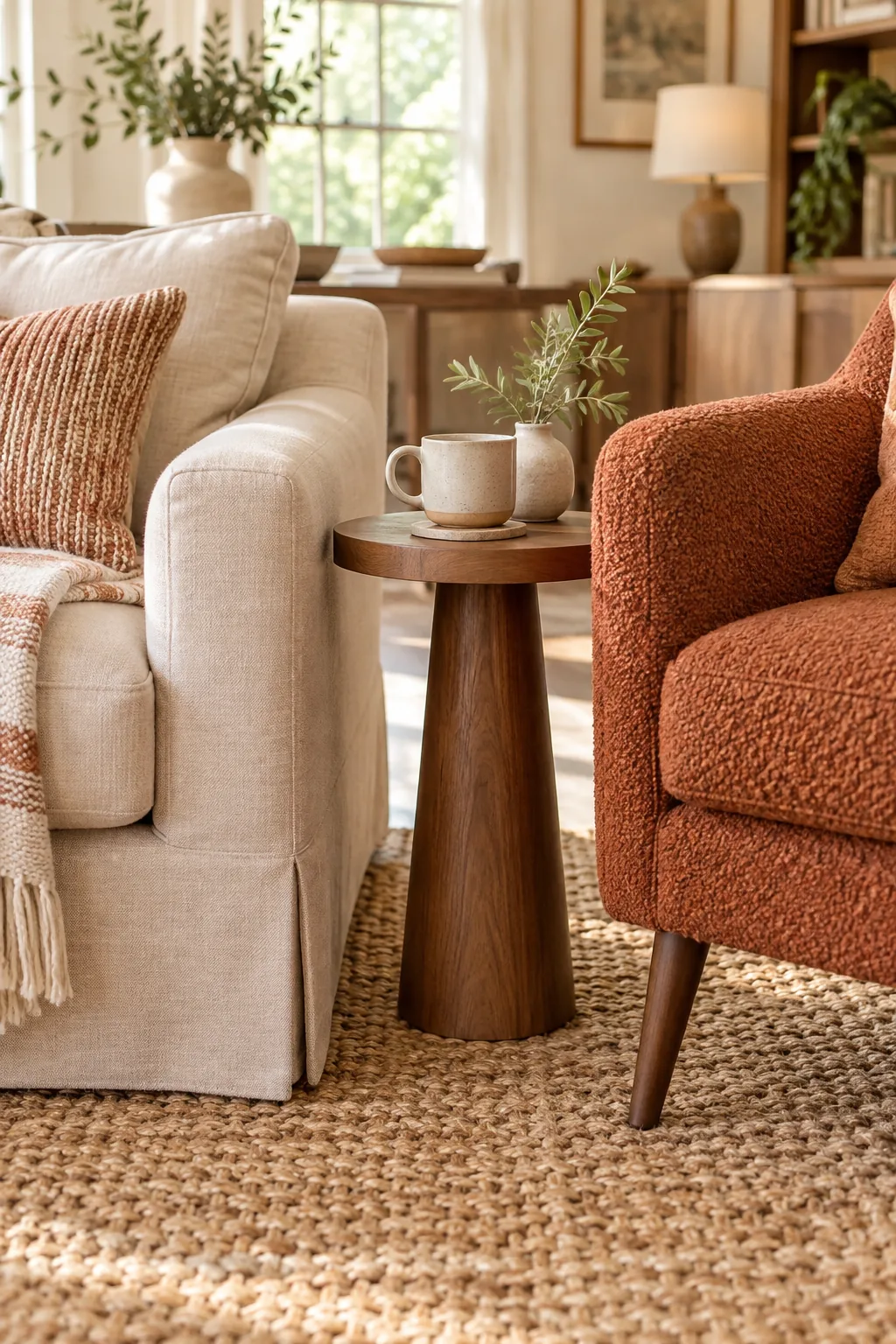
Before you finalize a furniture purchase, run your chosen sofa and chair through this quick dimensional check to guarantee they will scale beautifully in your home.
Balance the Lighting Scale
A perfectly scaled seating arrangement can still feel disconnected if the surrounding lighting fails to support the physical proportions of the furniture pairing. Ensure that any floor lamps placed behind the accent chair stand at least 12 inches taller than the chair back to cast a useful downward glow.
- Select a low-profile reading lamp for chairs with a short, minimalist backrest.
- Use an overarching floor lamp to bridge the gap between a low sofa and a tall chair.
- Match the metallic finish of the lamp to the visible exposed legs of your accent chair.
Matching the lighting scale to your seating proportions guarantees that both the sofa and the accent chair remain equally functional and inviting long after the sun sets.
Ground the Arrangement With a Rug
A cohesive pairing needs a physical anchor to lock the layout together, preventing the distinct pieces from visually floating away from one another in open spaces. Ensure the front legs of both the sofa and the pivoted accent chair rest securely on a shared area rug.
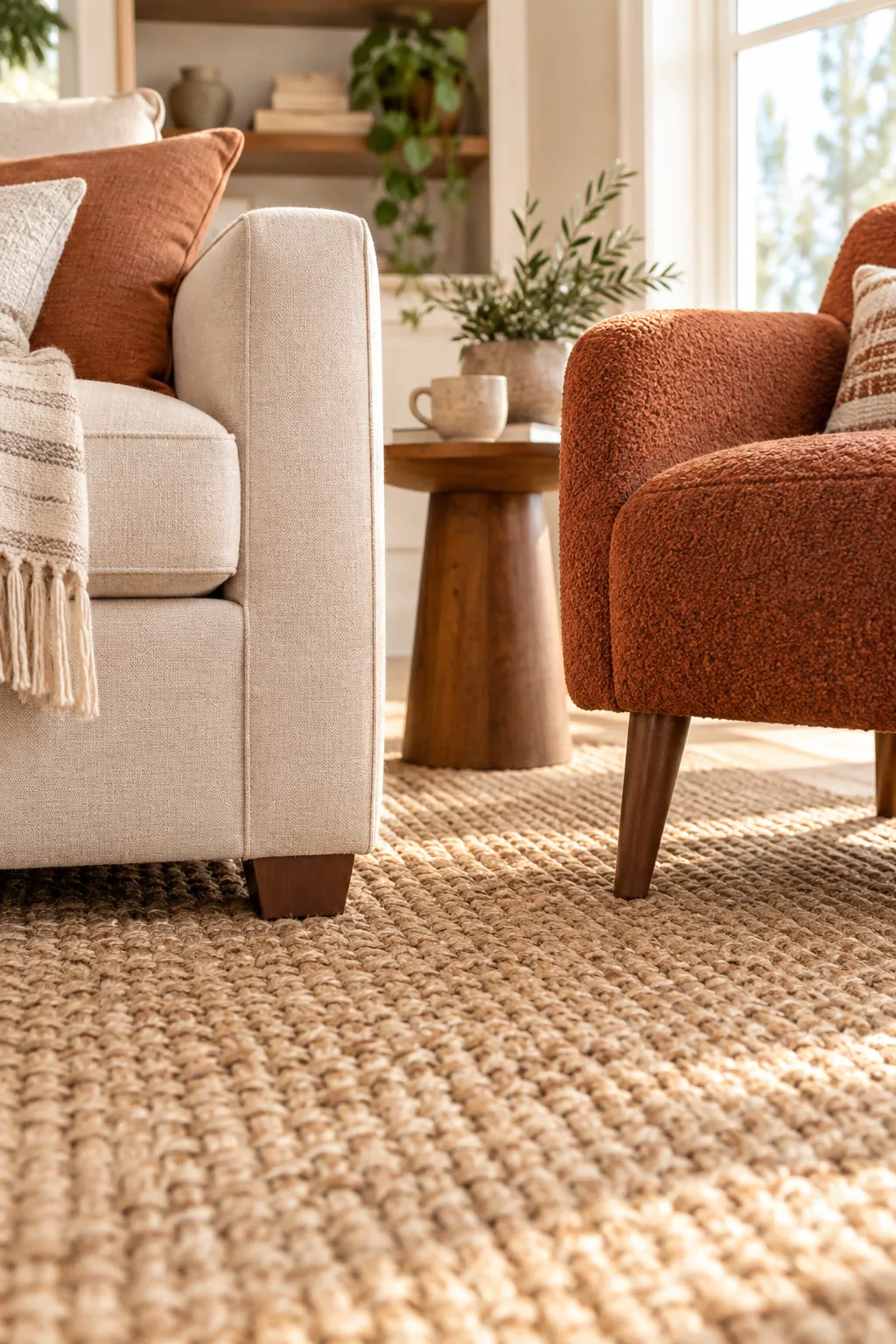
This shared foundation effortlessly defines the conversational zone, finalizing your designer pairing with a grounded, intentional finish that feels both structured and incredibly welcoming.
Three Ways to Style a Sofa and Chair
Explore how different design styles use these exact pairing rules to create a beautiful living room.
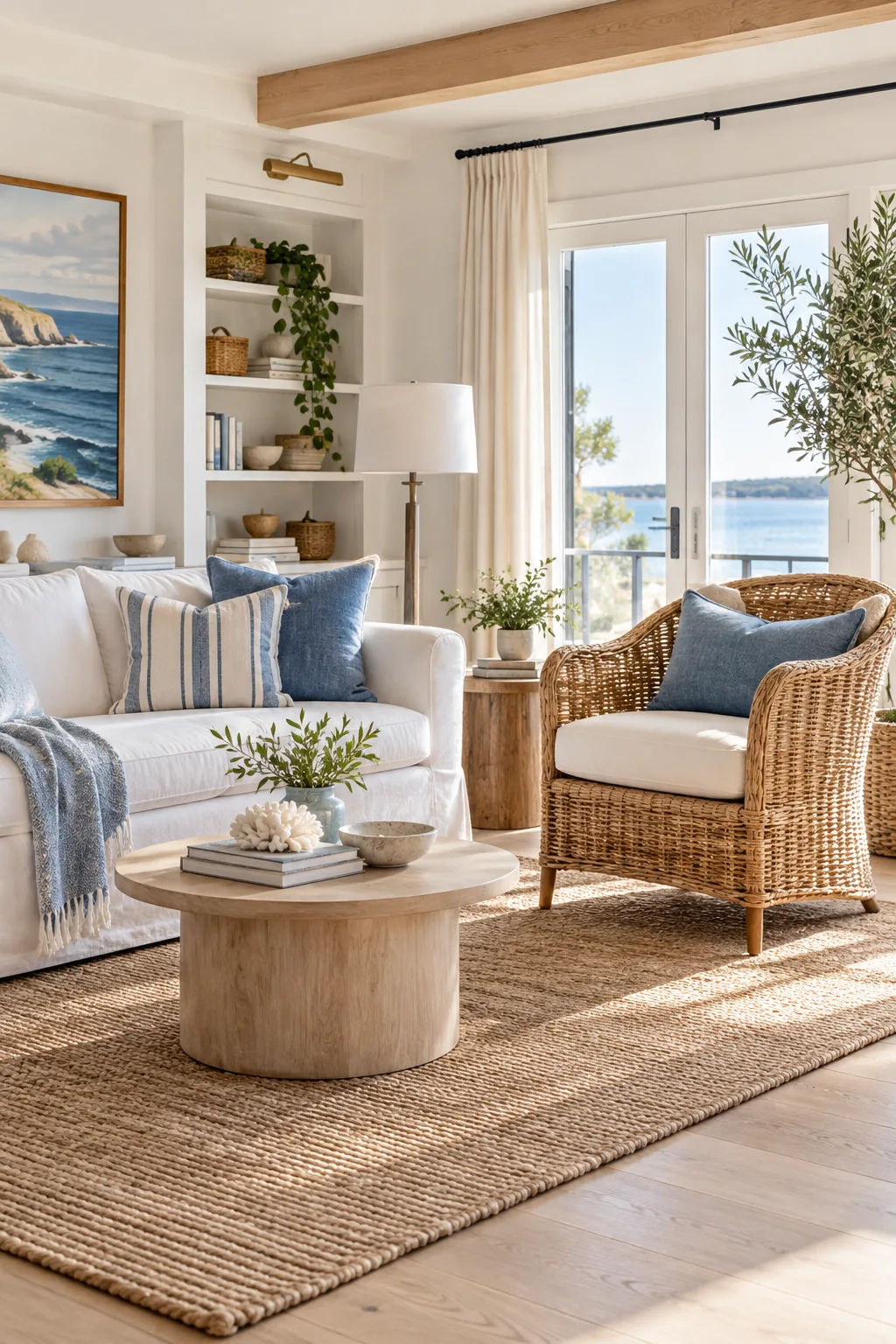
Breezy Modern Coastal: Pair a relaxed slipcover with rigid rattan to master coastal contrast.
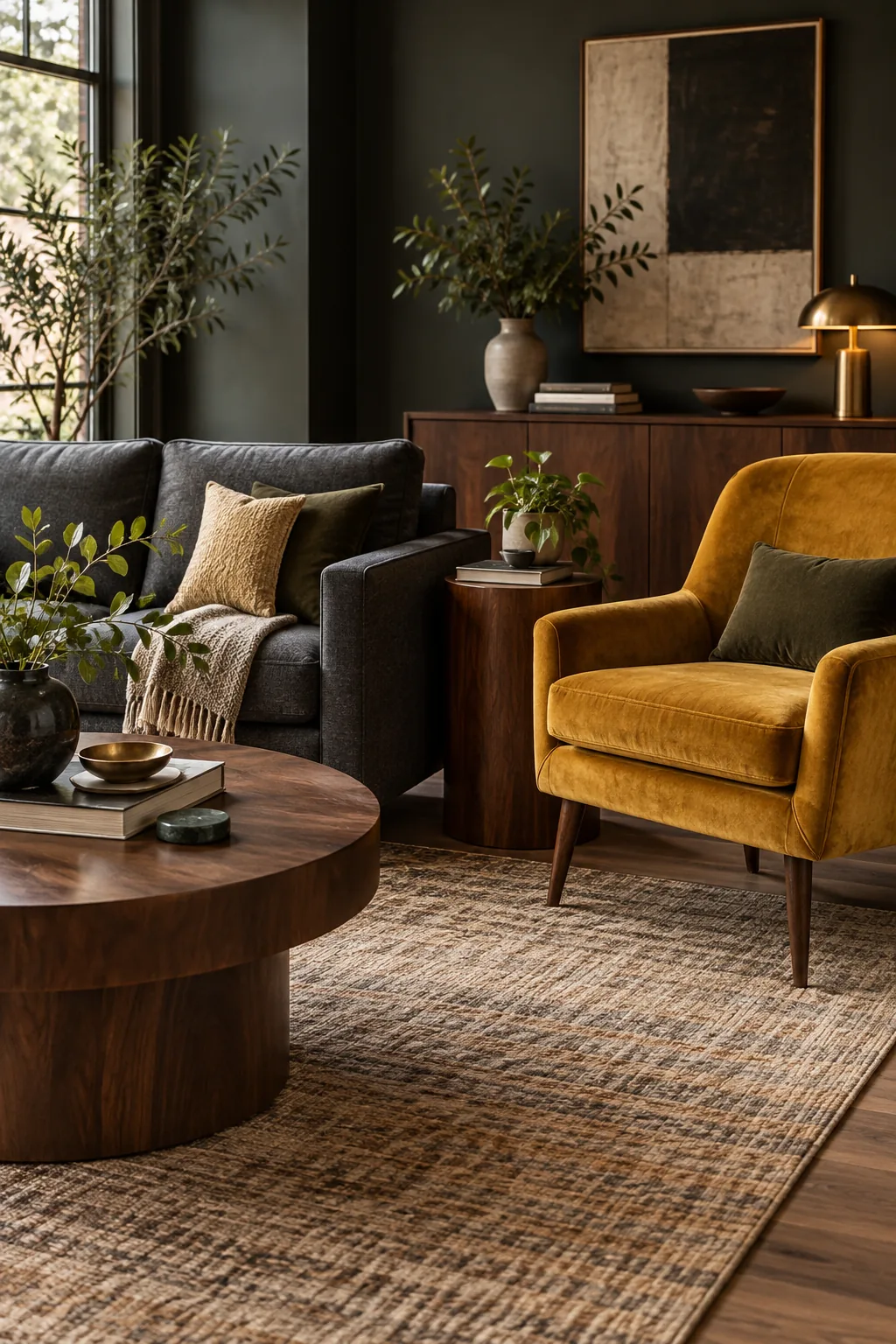
Moody Mid-Century Modern: Use a vibrant velvet chair to pop against a dark, tailored sofa.
Warm Earthy Minimalist: Combine soft linen with taut leather for an earthy, architectural feel.