
17+ Cozy Sage Green Living Room Ideas
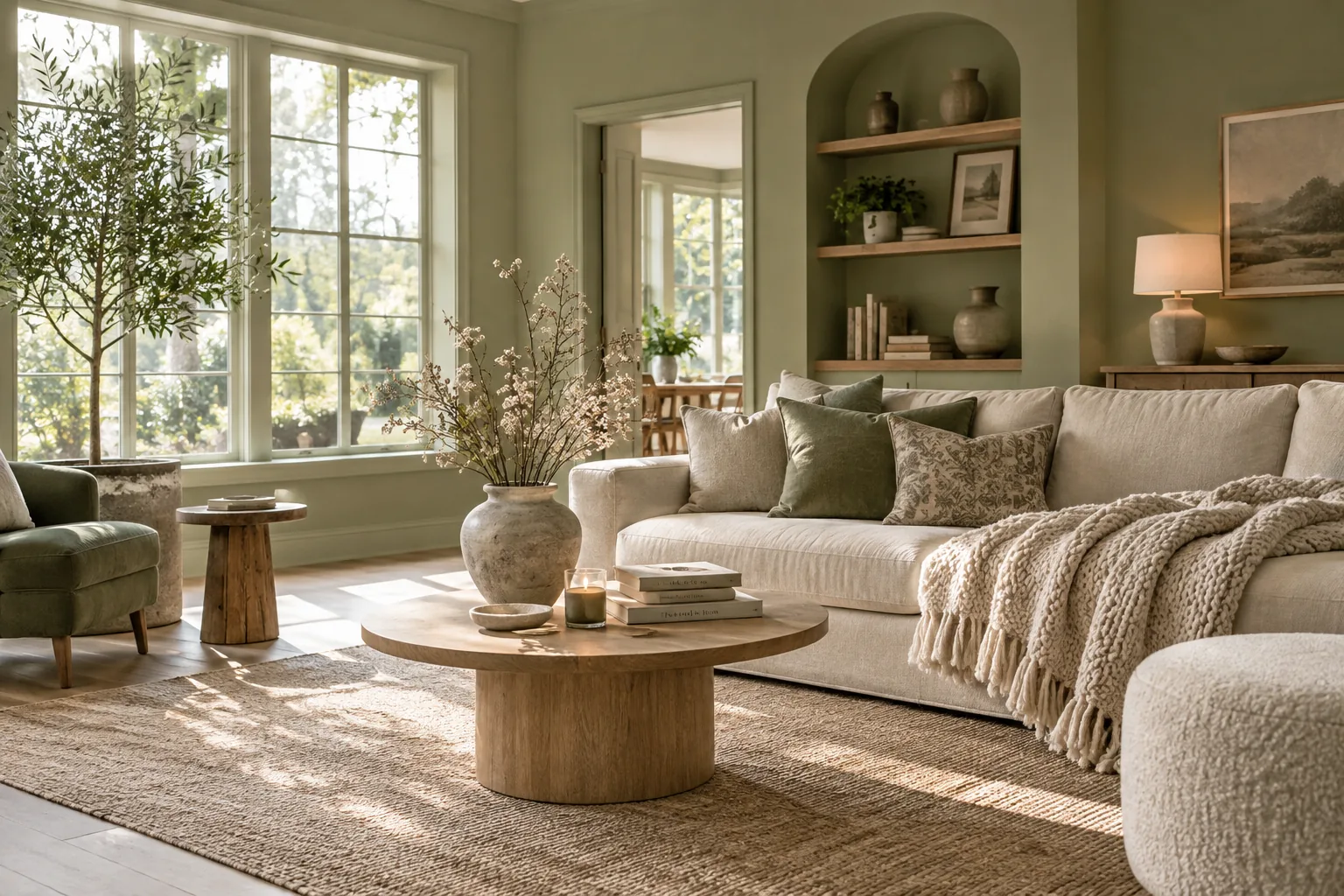
Sage green is the ultimate neutral that brings life into your home without overpowering the space. Let's look at exactly how to layer this calming color with your furniture, textiles, and lighting.
1. Color Drench the Room
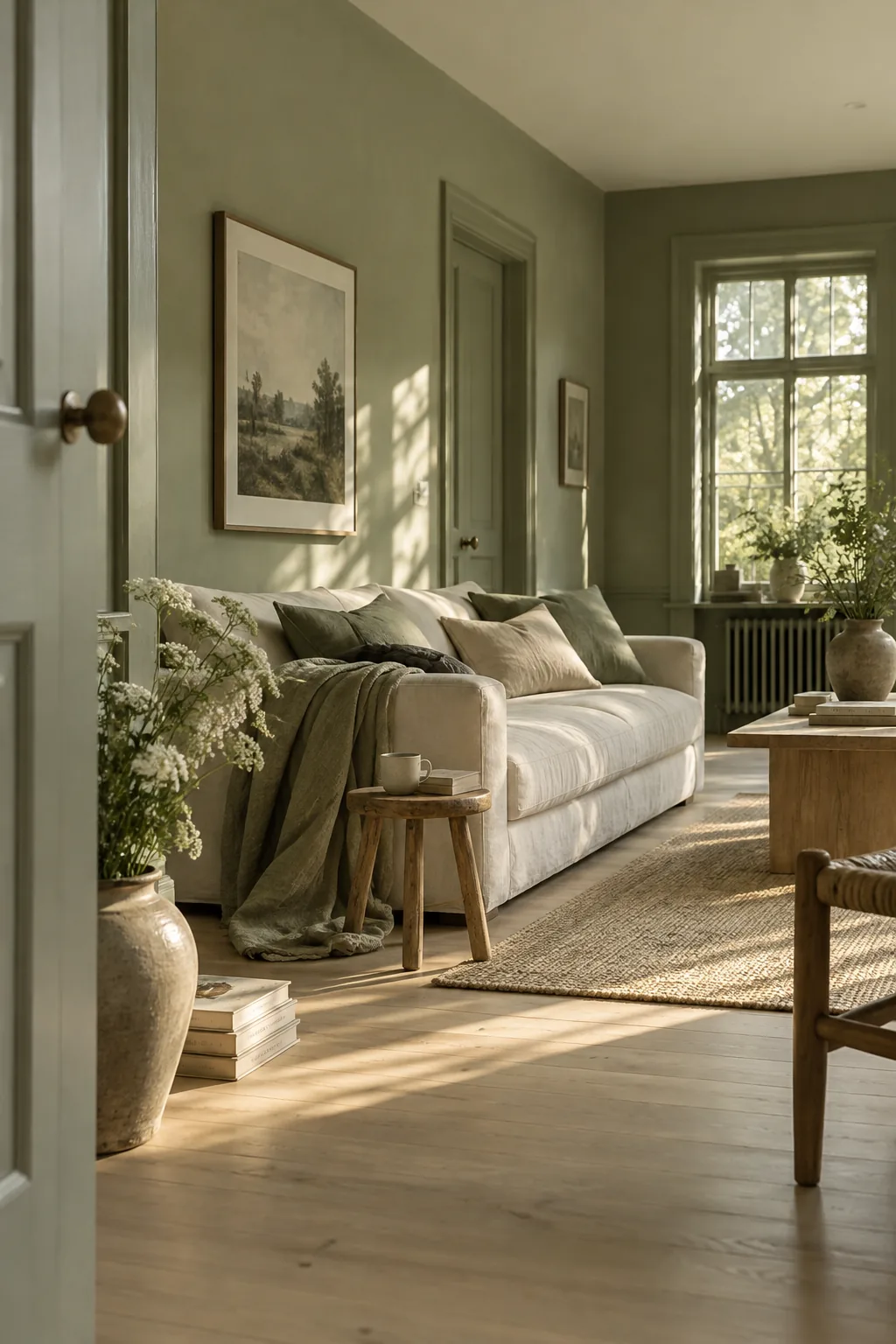
Creating a seamless, earthy vibe happens instantly when you paint both your walls and the baseboards the same sage green shade. This color drenching trick makes low ceilings feel much taller while wrapping the whole room in a cozy, unified layer.
2. Pair with Warm Leather
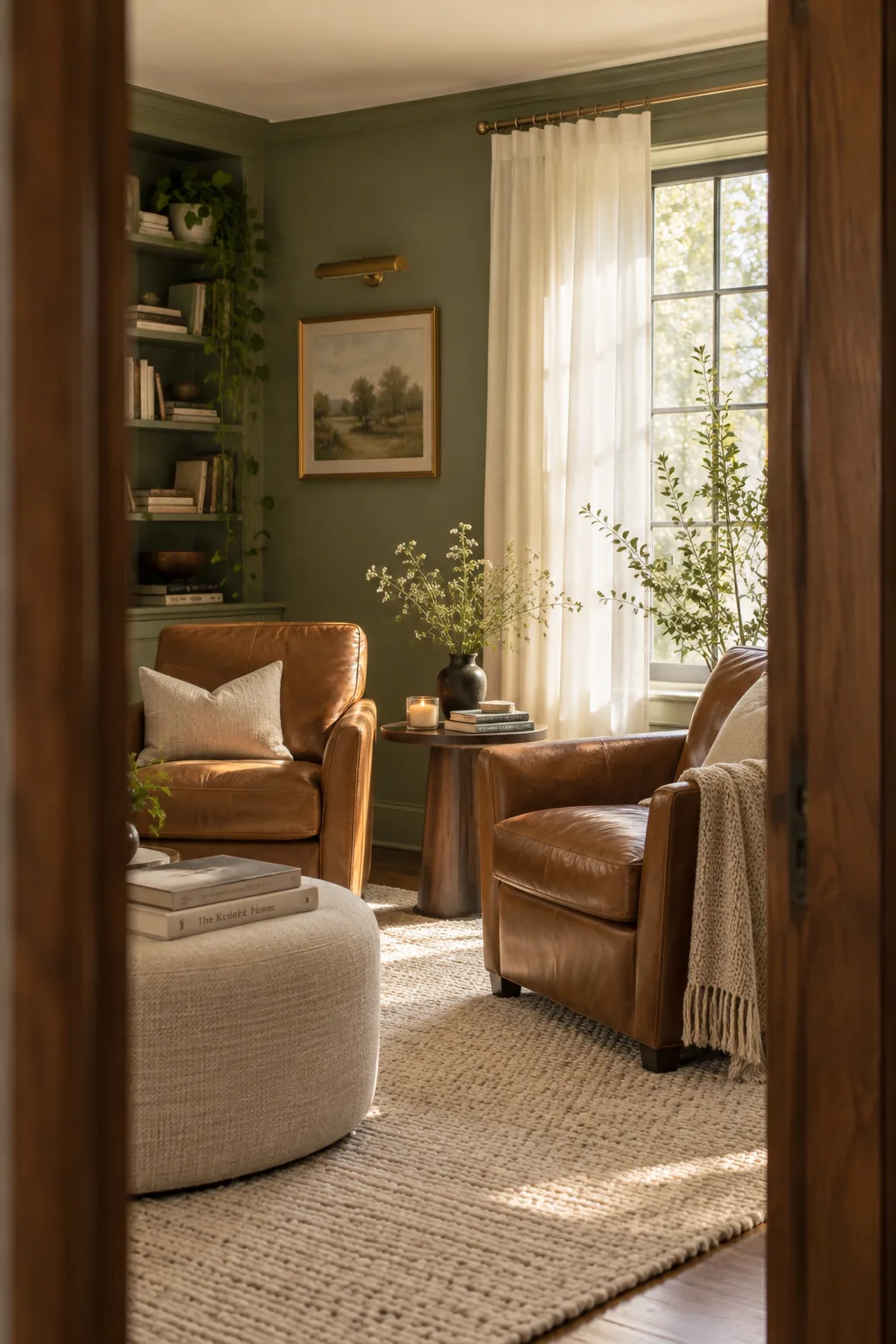
I always tell my clients to treat sage as a backdrop for rich, warm textures. Pairing leather armchairs with this soft green instantly elevates the room from basic to thoughtfully designed. The contrast between the cool green and the warm caramel leather grounds the entire space.
Just remember to keep your window treatments light and airy.
Why it works: It balances masculine and feminine elements perfectly.
3. Anchor with Jute
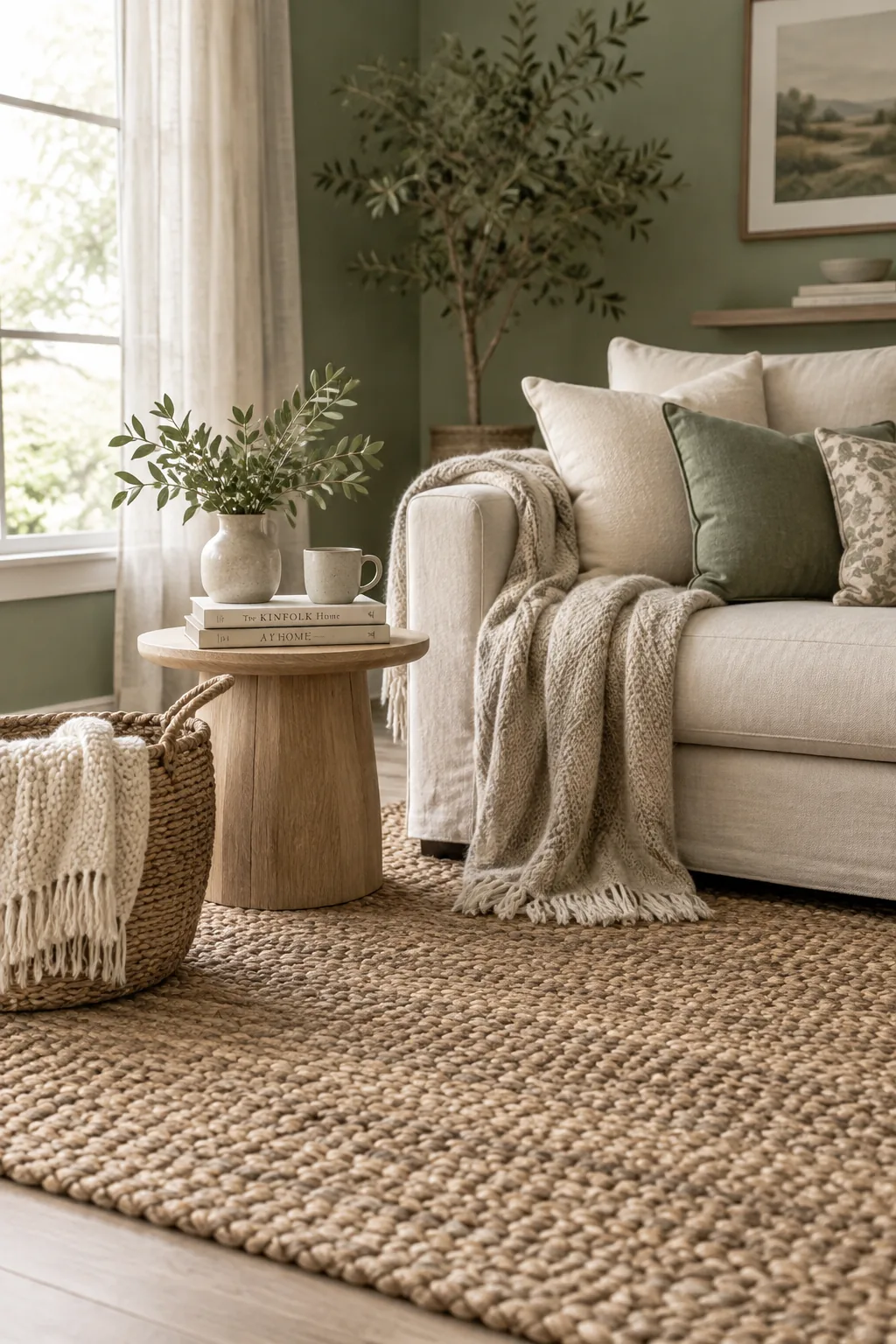
Anchor your seating area with a large jute rug to bring out the natural undertones of your green walls. The chunky woven texture adds crucial visual weight to the floor while keeping the overall palette relaxed.
Why it works: The organic fibers echo the nature-inspired wall color for a cohesive look.
4. Add Brushed Brass
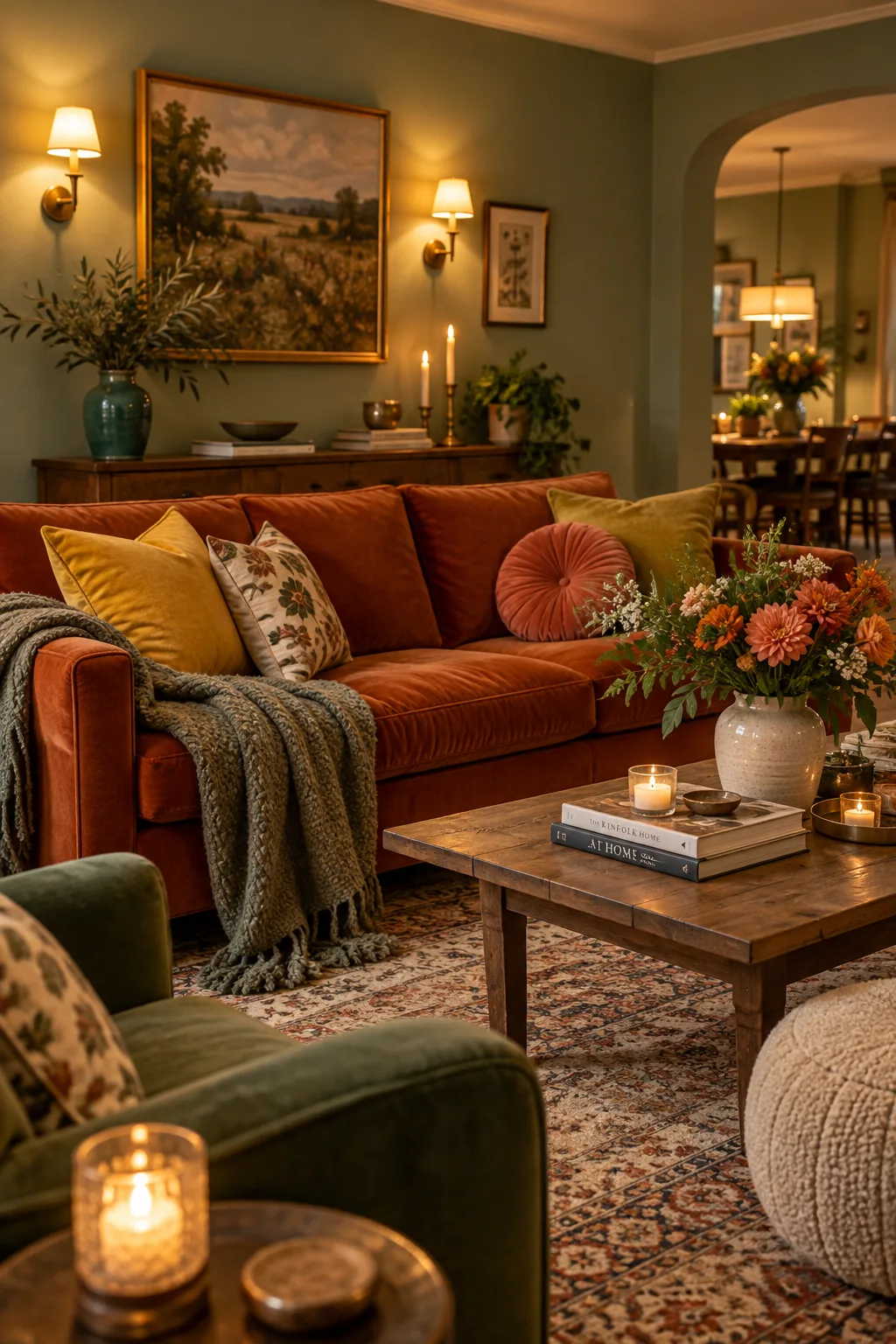
My own living room relies heavily on brass accents.
Adding brushed brass wall sconces against a sage backdrop creates a quiet, elegant focal point. The warm metal pops beautifully against the muted green without looking overly flashy. You get this gorgeous, subtle glow in the evenings that completely transforms the mood.
5. Layer Your Lighting
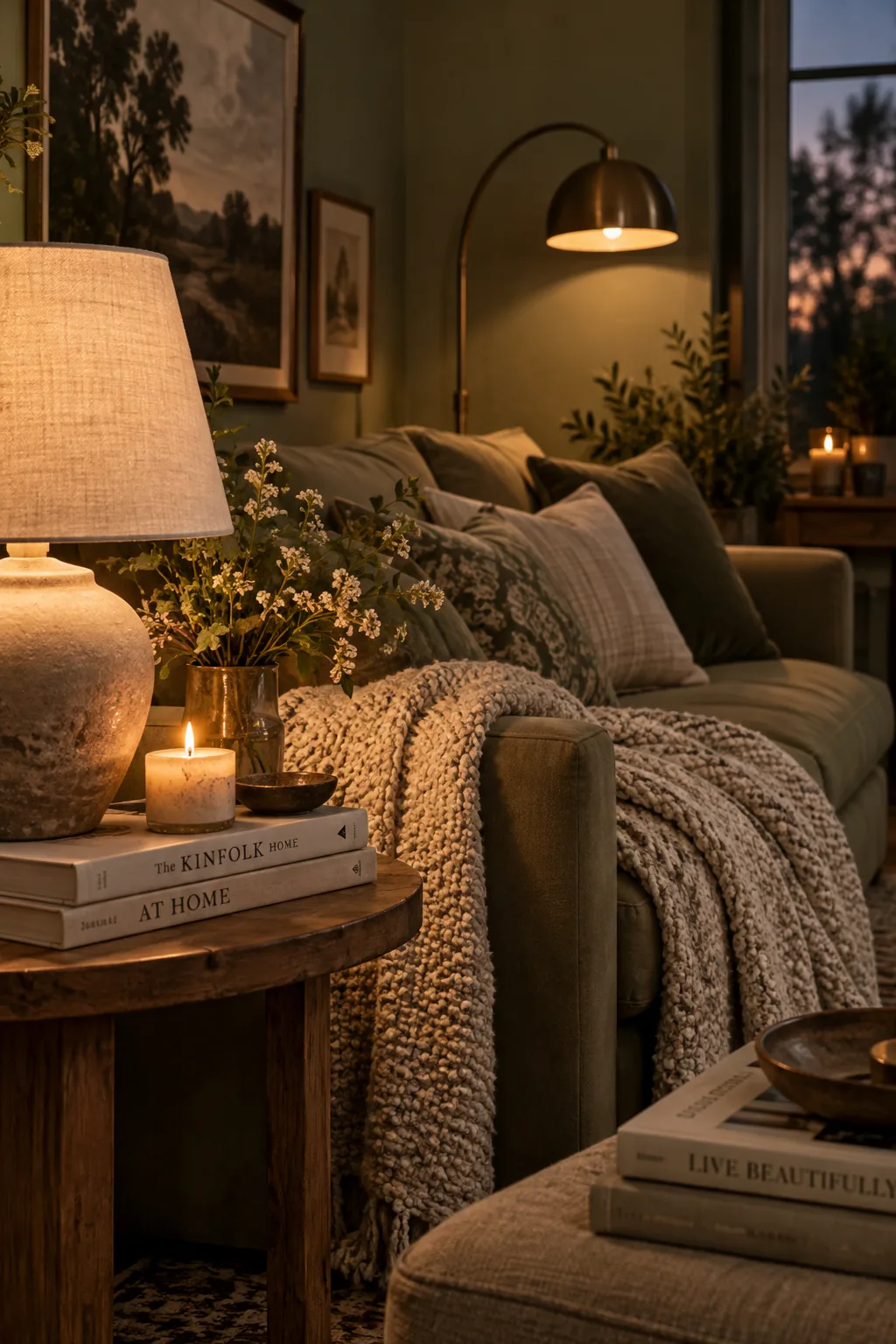
A standard 8×10 room needs at least three light sources to feel properly lit. When working with sage green walls, layering your lighting helps prevent the color from looking muddy in the corners. You want to mix functional pieces with ambient glow.
Put everything on dimmers to control the exact vibe.
- A tall floor lamp near the sofa
- Two matching table lamps on a console
- A warm overhead pendant
6. Hang Light Wood Frames
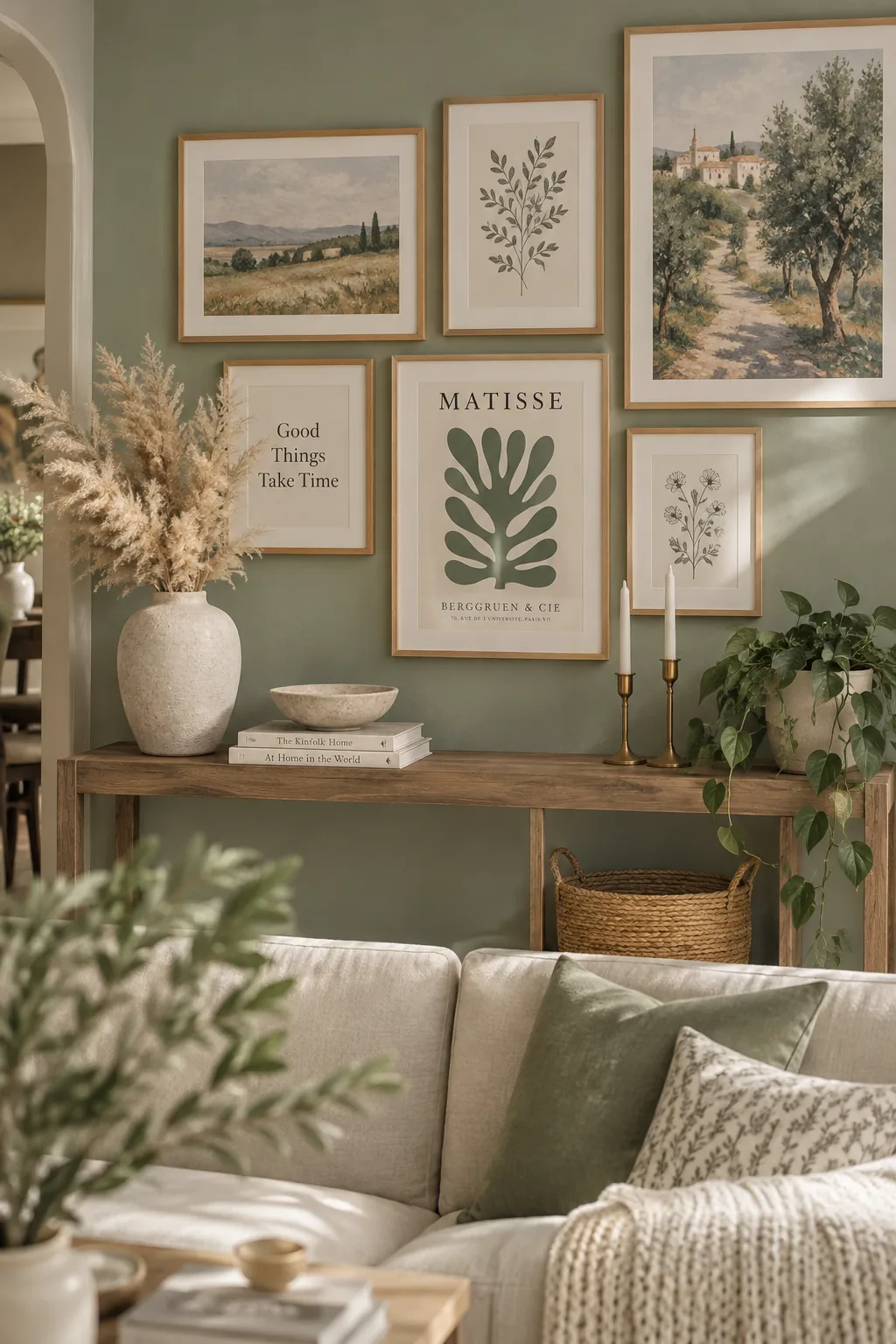
Most living rooms have a large blank wall behind the main sofa. Hanging a gallery wall with light oak frames breaks up the solid block of color perfectly.
Mixing different types of art keeps the arrangement feeling collected rather than purchased all at once.
The pale wood ties right into the earthy green aesthetic.
- Charcoal figure sketches
- Pressed botanical prints
- Abstract watercolor pieces
7. Use Tone-on-Tone Textiles
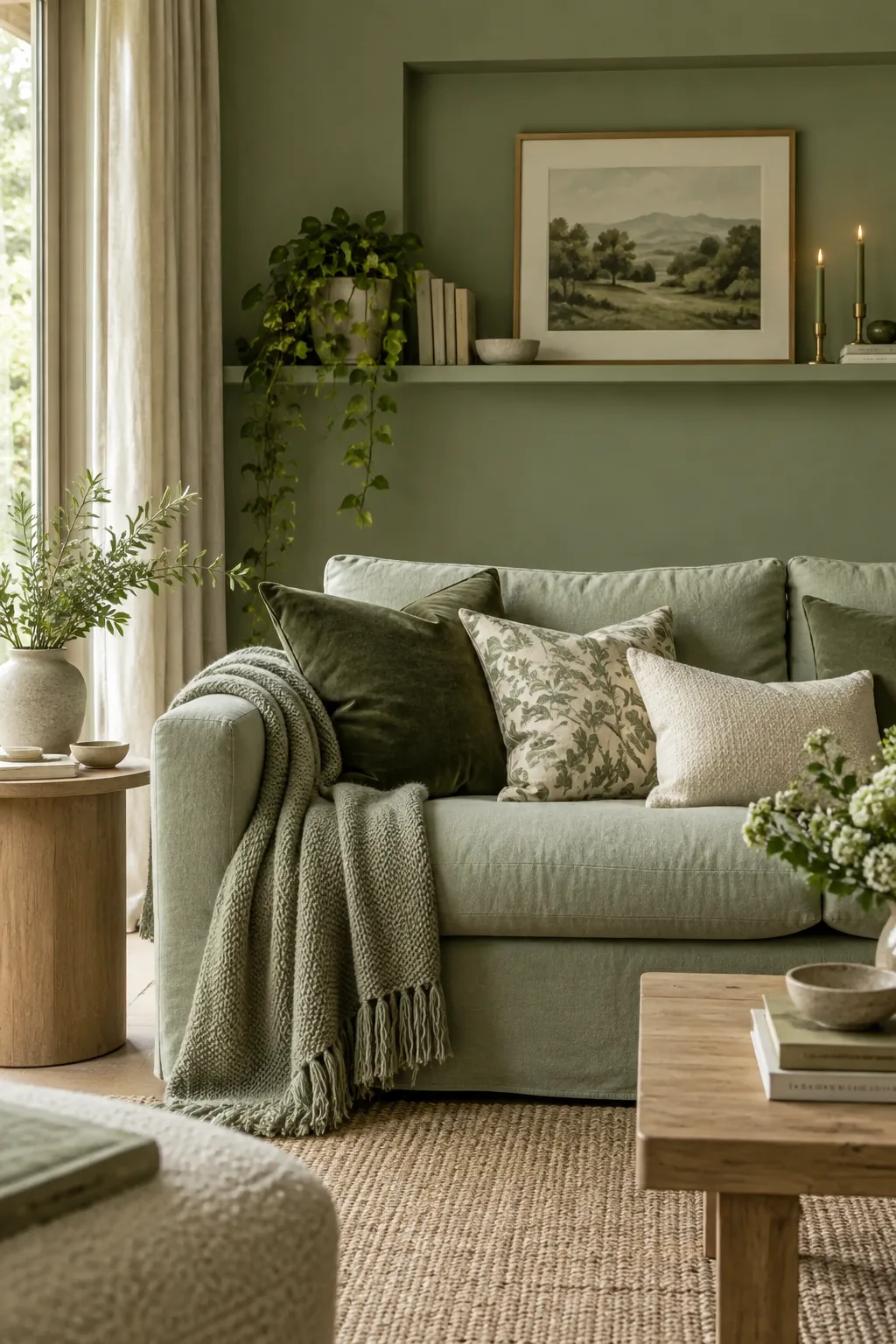
Layering tone-on-tone textiles is the secret to making a monochromatic room feel incredibly rich. Toss a dark olive velvet pillow onto a lighter sage sofa to build depth.
The varying shades of green trick the eye into seeing more architectural interest.
It keeps the room from feeling flat or strictly one-dimensional.
Why it works: Sticking to one color family creates a soothing environment that doesn't overwhelm the senses.
8. Paint the Ceiling Crisp White
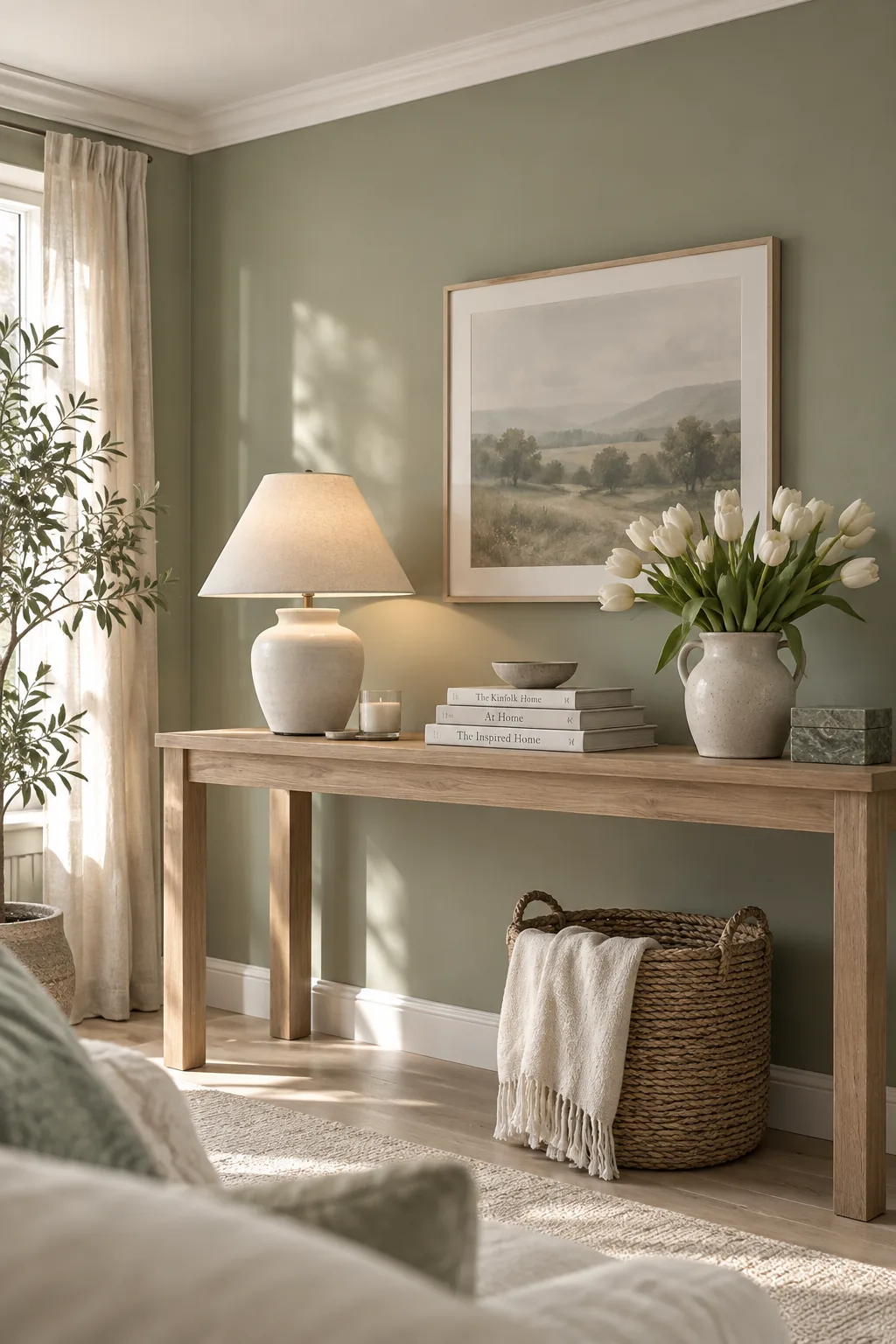
White ceilings reflect up to 80 percent of the light in a room.
Painting your ceiling a crisp, matte white ensures your sage walls look fresh instead of cave-like. The sharp contrast at the crown molding highlights the green and draws the eye upward. This simple trick maximizes whatever natural light filters through your windows.
Why it works: The stark white bounces daylight directly into the center of your seating area.
9. Hang Sheer Linen Curtains
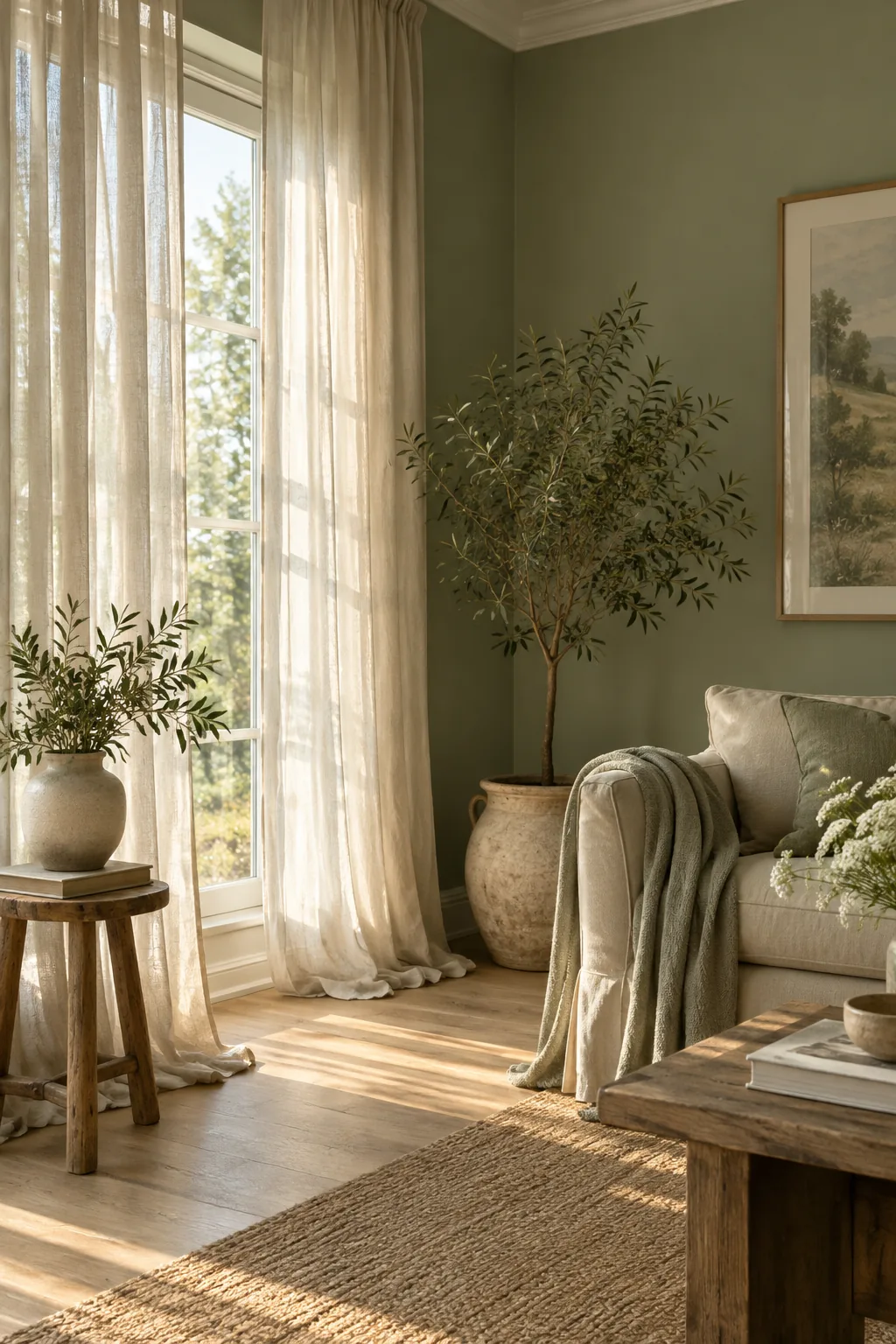
Swap out your heavy drapes for sheer linen curtains to keep the room feeling breezy. The soft, textured fabric filters the harsh afternoon sun into a gentle, diffused glow that makes the green walls look spectacular. Hang the curtain rod at least six inches above the window frame to fake taller ceilings. Letting the fabric pool just slightly on the floor adds a relaxed, lived-in elegance. This easy swap completely changes the heaviness of the room.
10. Bring in Cream Bouclé
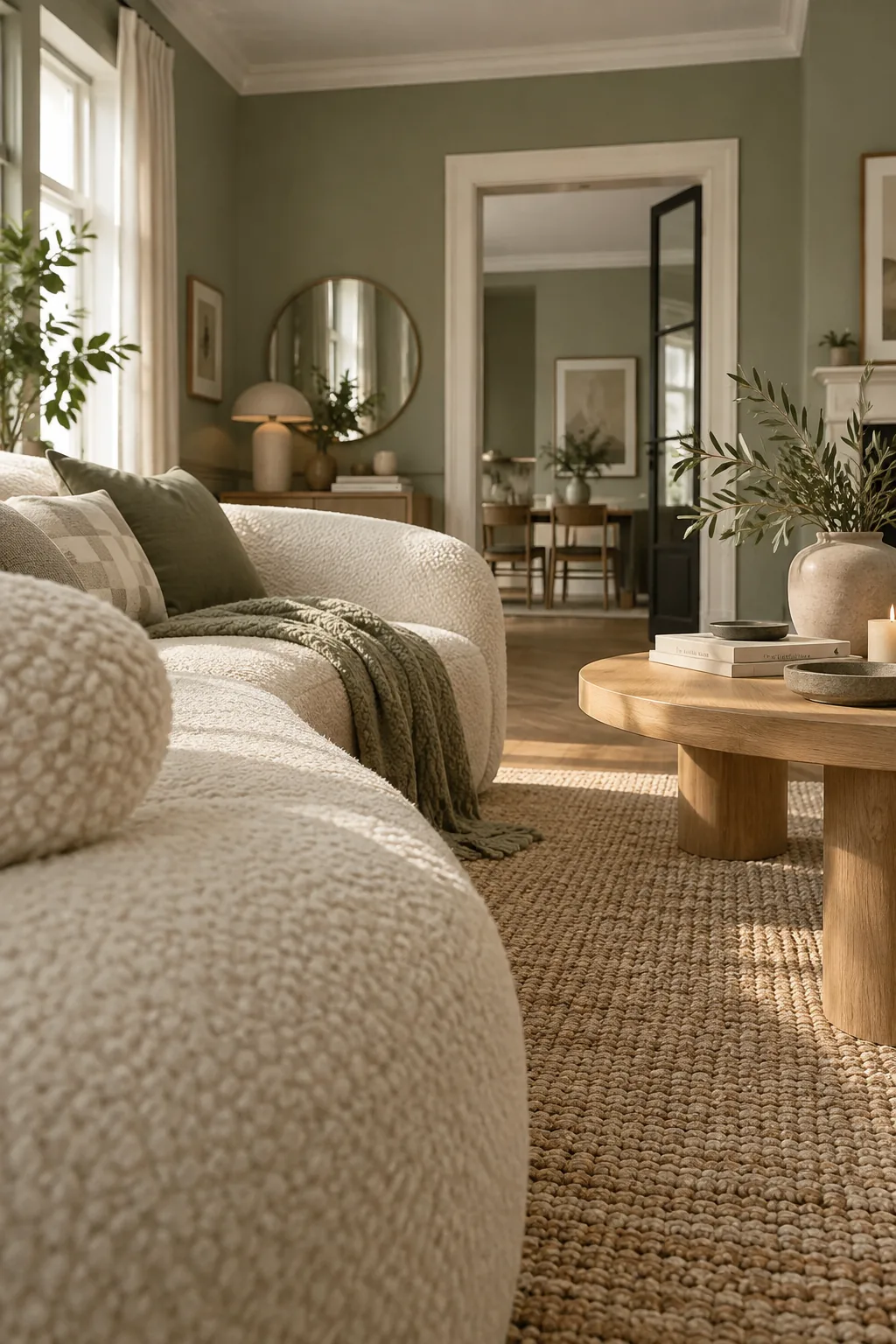
A standard sofa takes up roughly 30 percent of your living room's visual footprint. Choosing a cream bouclé sofa against your sage walls instantly brightens that large footprint and introduces a highly tactile, cozy element.
11. Add a Black Anchor
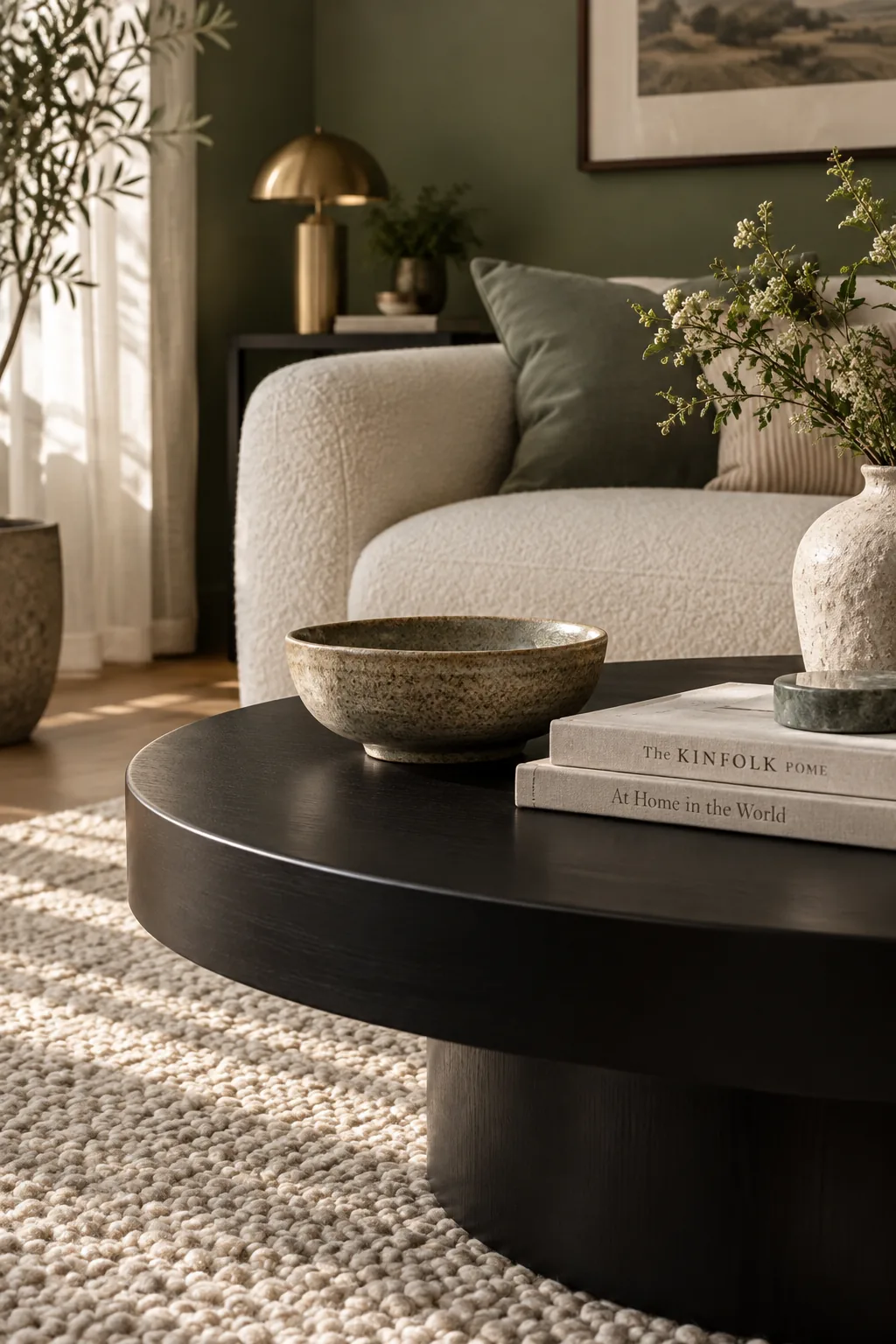
Grounding a soft color palette requires a few hits of stark contrast. Adding a matte black coffee table cuts through the gentle greens and creams to give the room a modern edge. The dark anchor piece stops the pastel tones from feeling too sweet or juvenile.
You only need one or two dark items to make this impact.
12. Fill Corners with Greenery
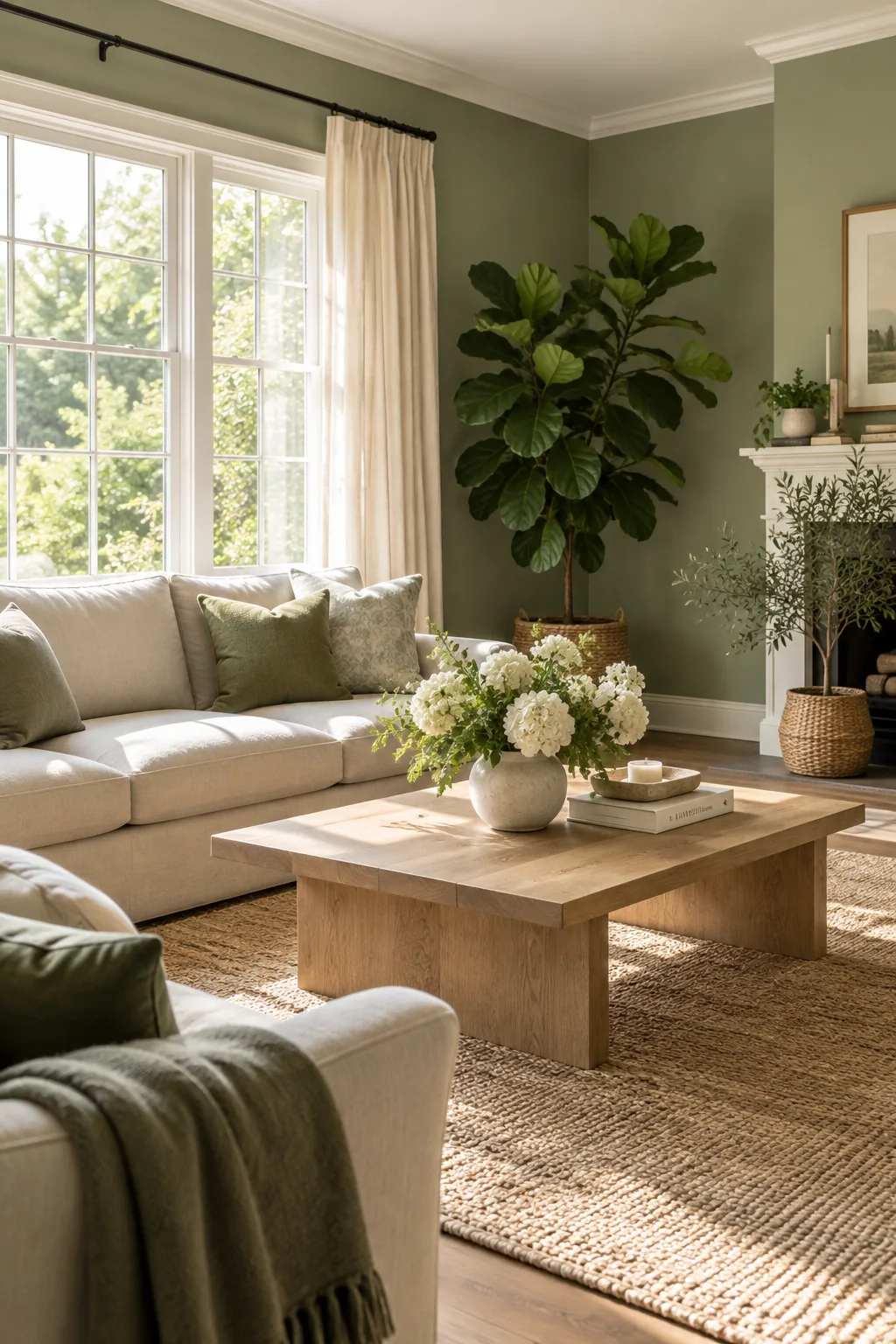
Empty corners often end up looking like dead space in a living room. You can easily fix this by bringing in tall, structural plants that thrive in indoor environments. The deep green foliage naturally complements the lighter sage walls while adding literal life to the design.
- A large Bird of Paradise
- A trailing Pothos on a high shelf
- A classic Ficus Audrey
13. Paint the Built-Ins
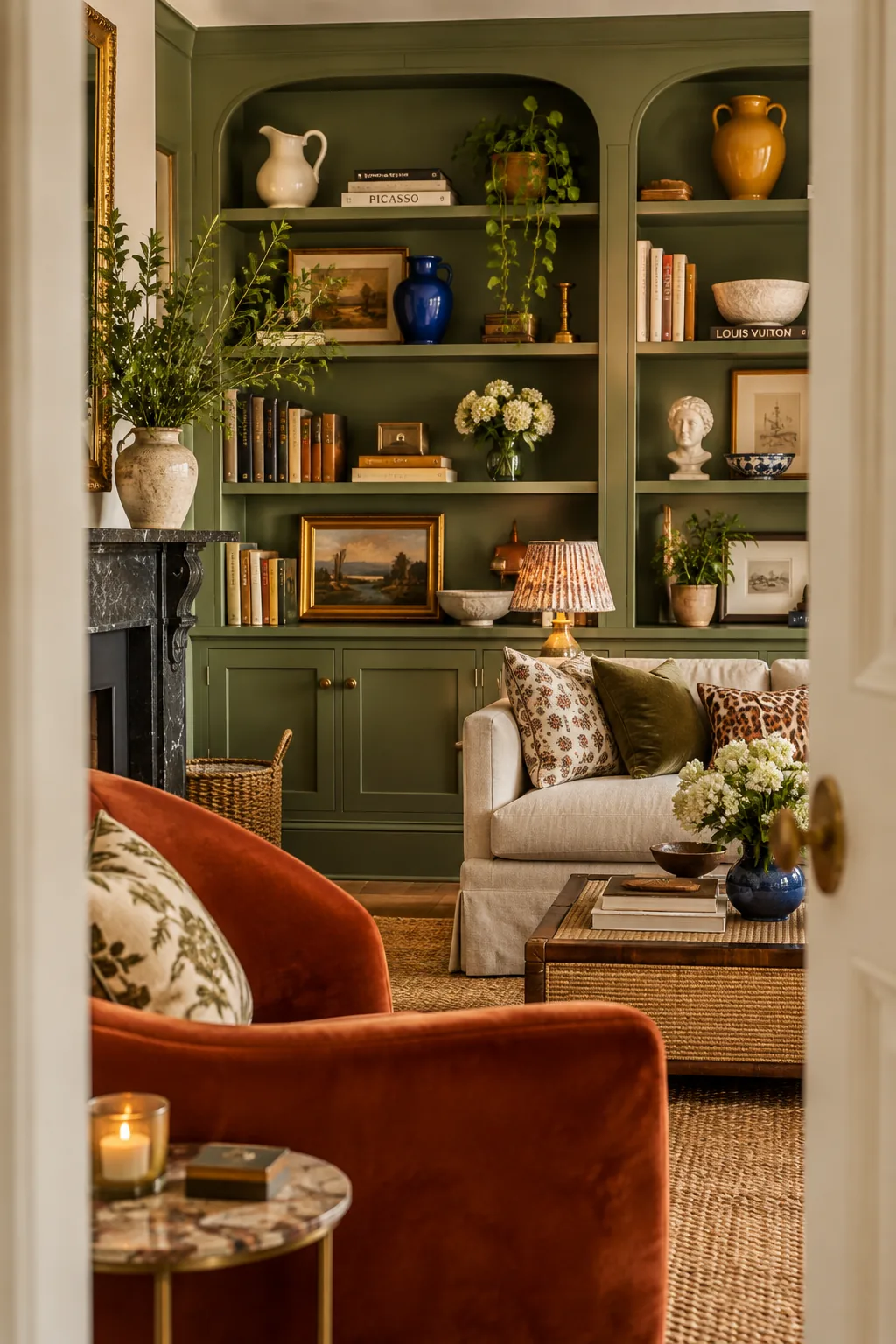
I recently designed a space where we painted only the built-in bookshelves. A sage green bookcase acts as a massive piece of art when styled with neutral ceramics and vintage books. The color highlights the architecture of the shelves and makes the displayed items pop. It is a fantastic alternative if you are too nervous to paint every single wall in the room. You still get that gorgeous wash of color without the full commitment.
14. Introduce Walnut Tones
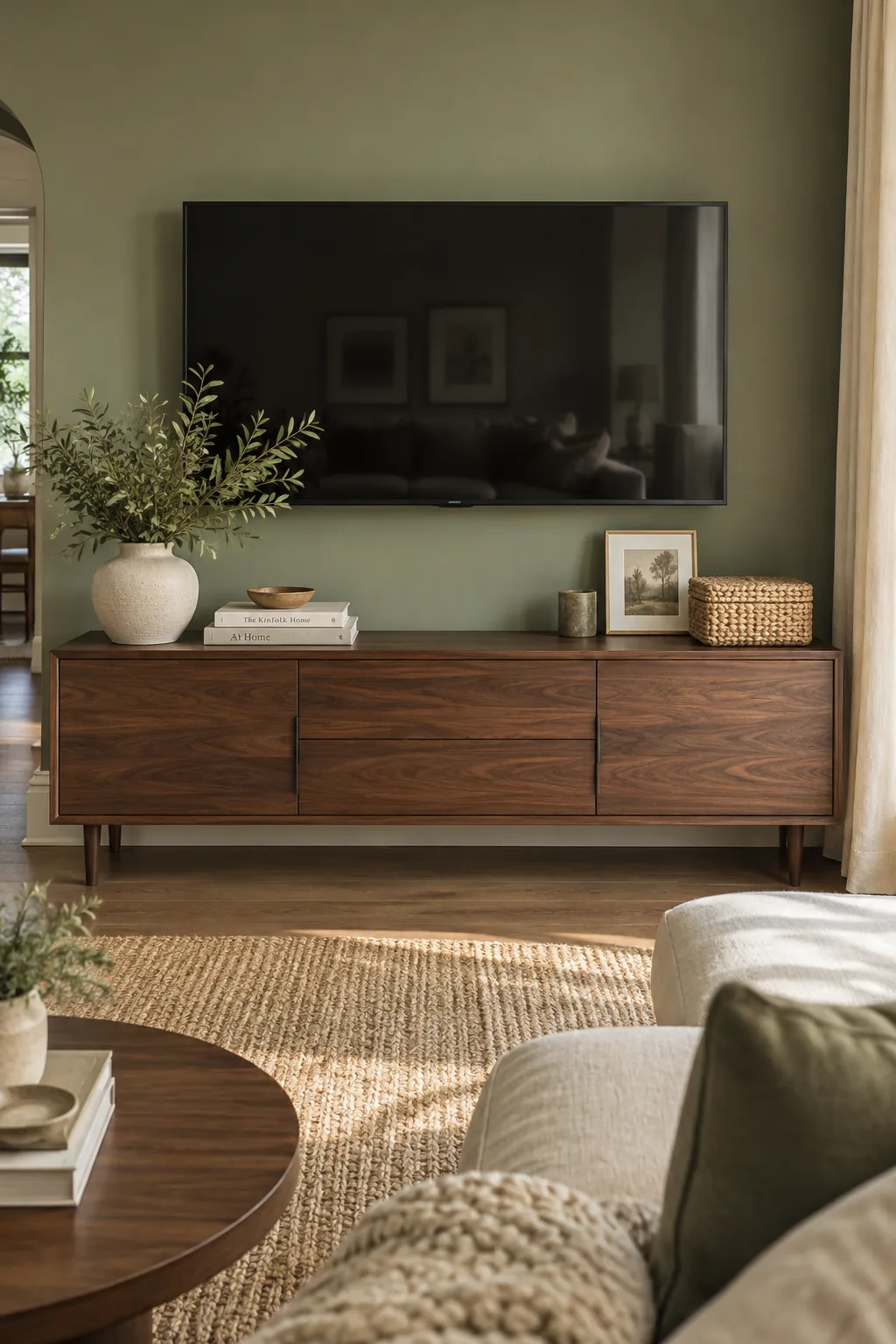
Introducing natural wood tones is the best way to warm up cool-toned walls. A walnut media console brings in rich, chocolatey brown streaks that look incredible next to muted green. The smooth wood grain adds an organic pattern that softens the rigid lines of your television.
Why it works: The earthy pairing mimics the natural colors found in a forest landscape.
15. Lean a Floor Mirror
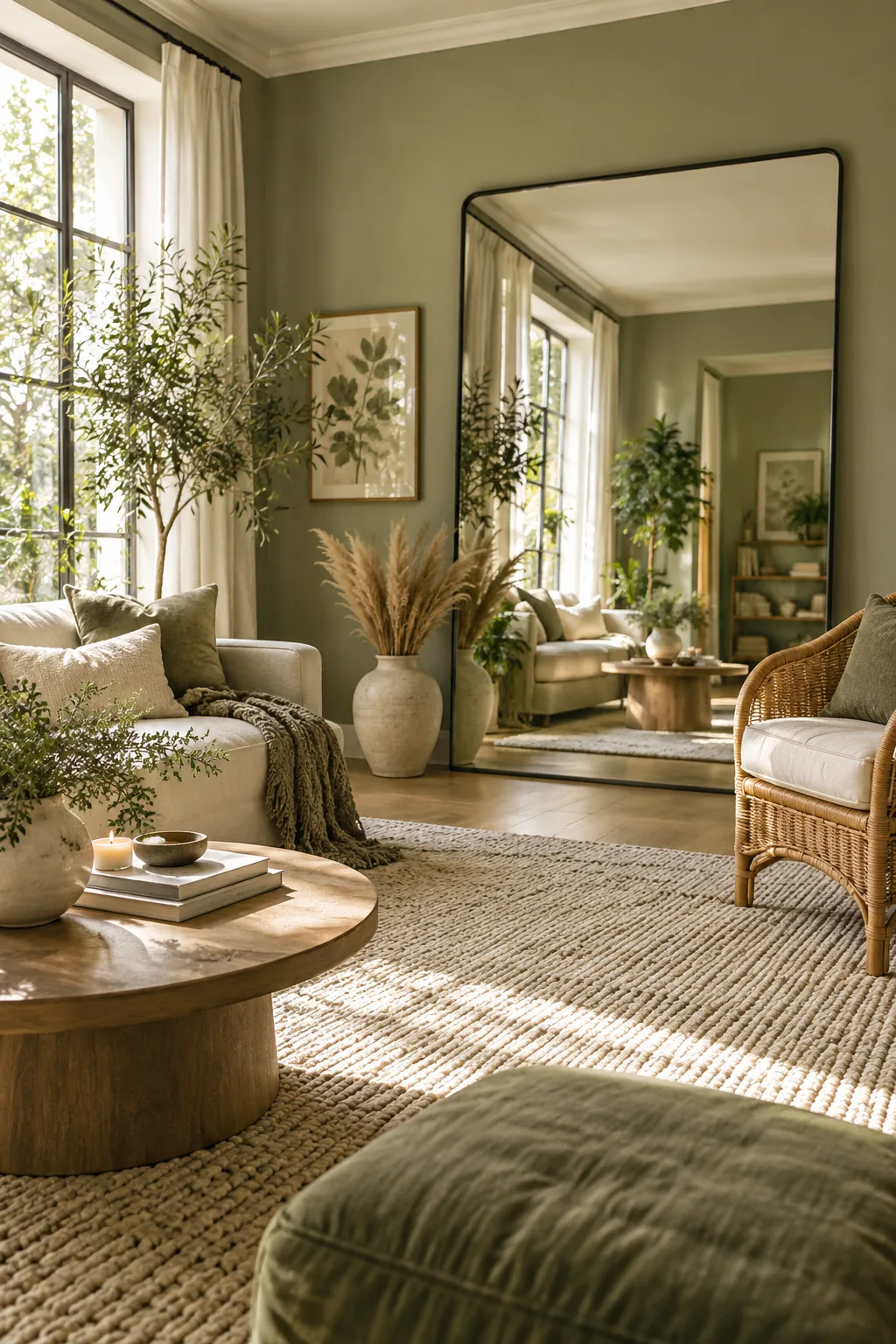
I love using mirrors to double the impact of a great paint job. Leaning a large floor mirror opposite your main window bounces light across your sage walls and makes the room feel twice as big. The reflection captures the green tones and spreads them into the darker corners of the space.
Make sure the frame is a thin, minimal metal so it doesn't distract.
16. Define the Space
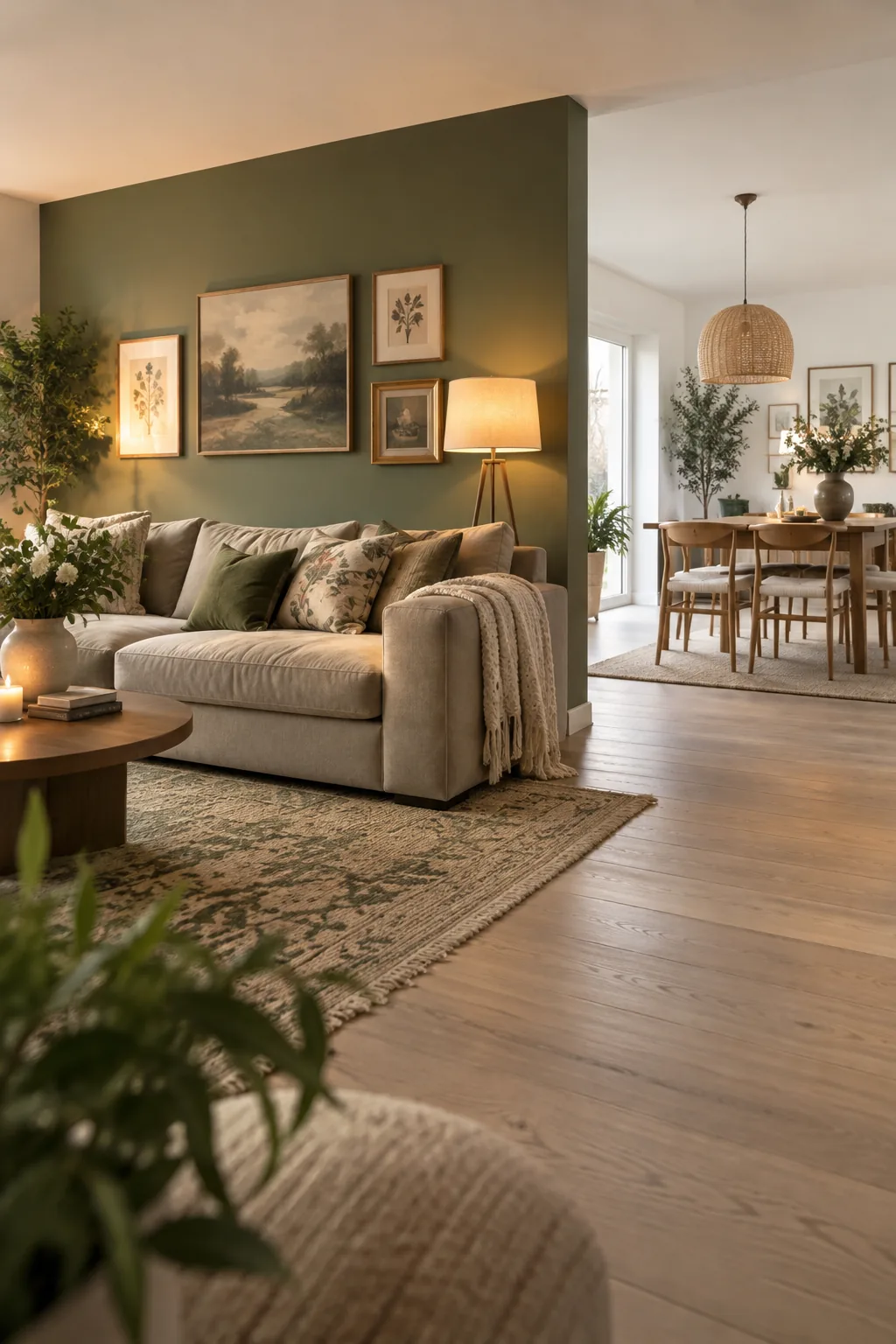
Open-concept homes often struggle with defining different functional zones. You can use a sage green accent wall to carve out a distinct living area within a larger floor plan. This visual boundary tells the eye exactly where the lounge space begins and ends. It is a highly effective way to create intimacy in a massive room.
17. Mix Subtle Patterns
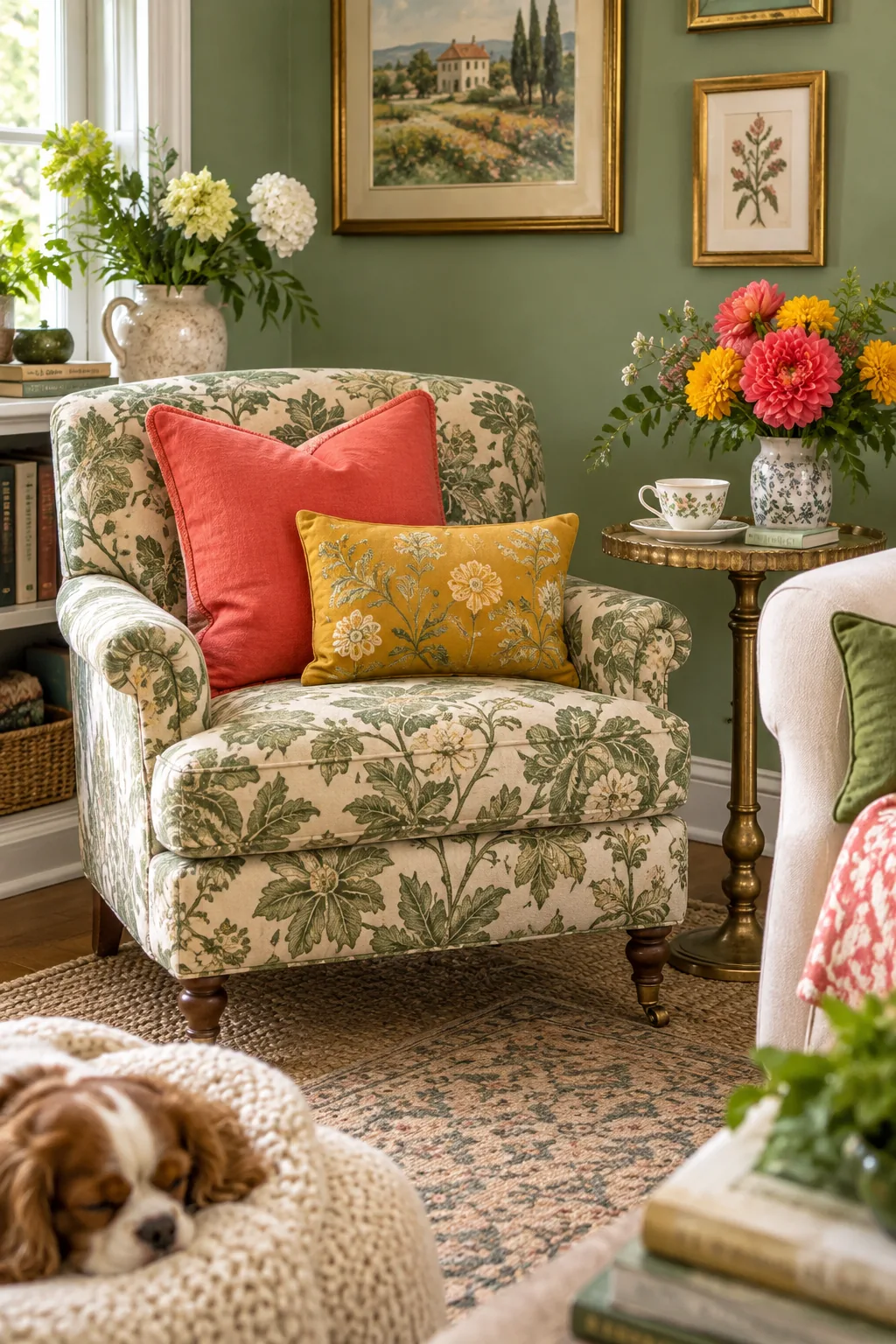
Achieving a cozy, cottage-inspired aesthetic is easy when you introduce subtle patterns. A floral accent chair featuring hints of sage and cream bridges the gap between your solid walls and neutral sofa.
The pattern breaks up the solid blocks of color and adds a touch of whimsy.
Keep the scale of the pattern small so it reads as a texture from far away.
- Small-scale block prints
- Classic ticking stripes
- Faded vintage florals
18. Ground with a Vintage Rug
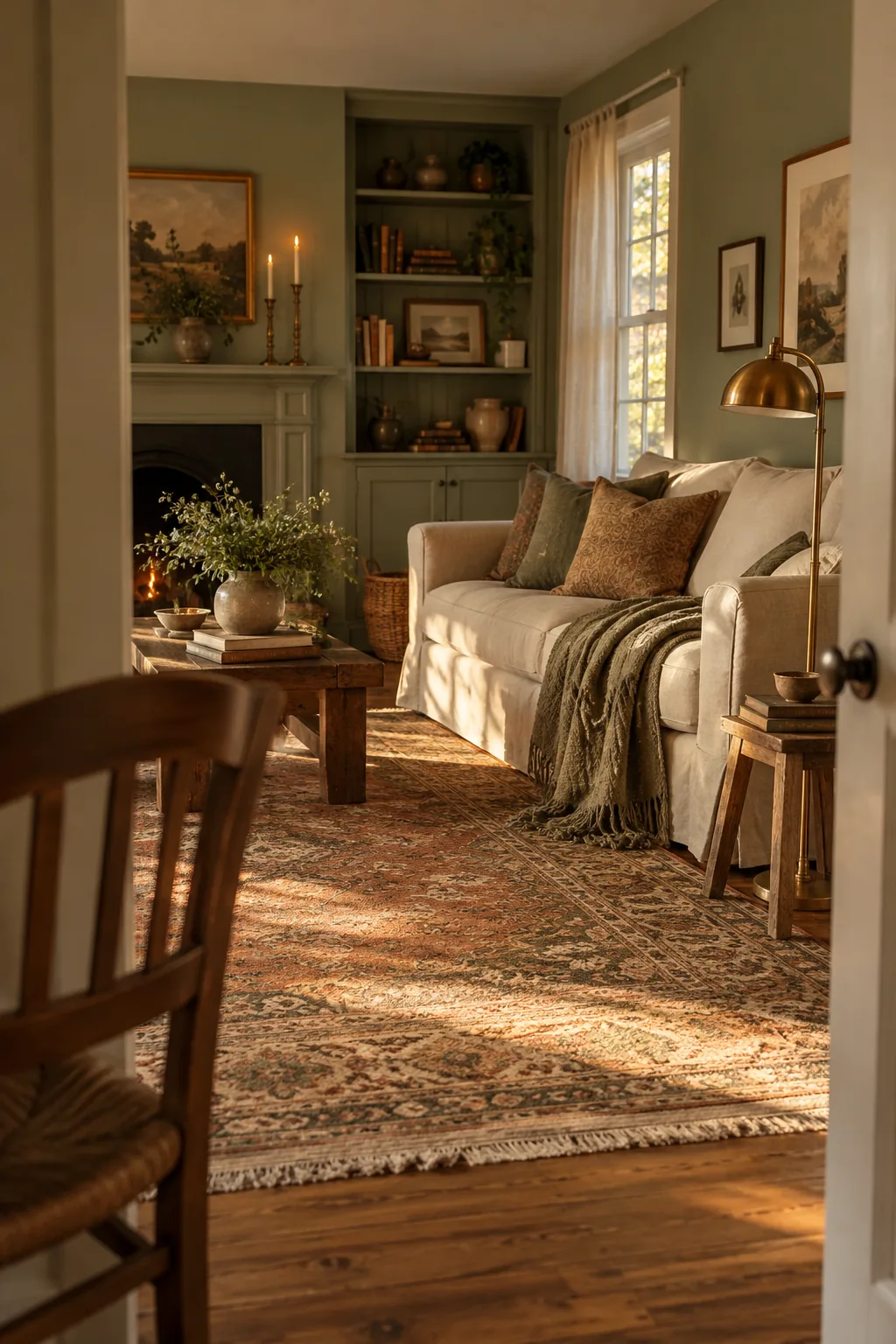
Hardwood floors can sometimes read too red or orange against green walls. Throwing down a vintage Turkish rug with muted terracotta and olive tones seamlessly ties the floor to the walls.
Why it works: The faded, multi-colored threads act as a bridge between conflicting undertones.