
14+ Brilliant Small Trees for Front Yard Landscaping
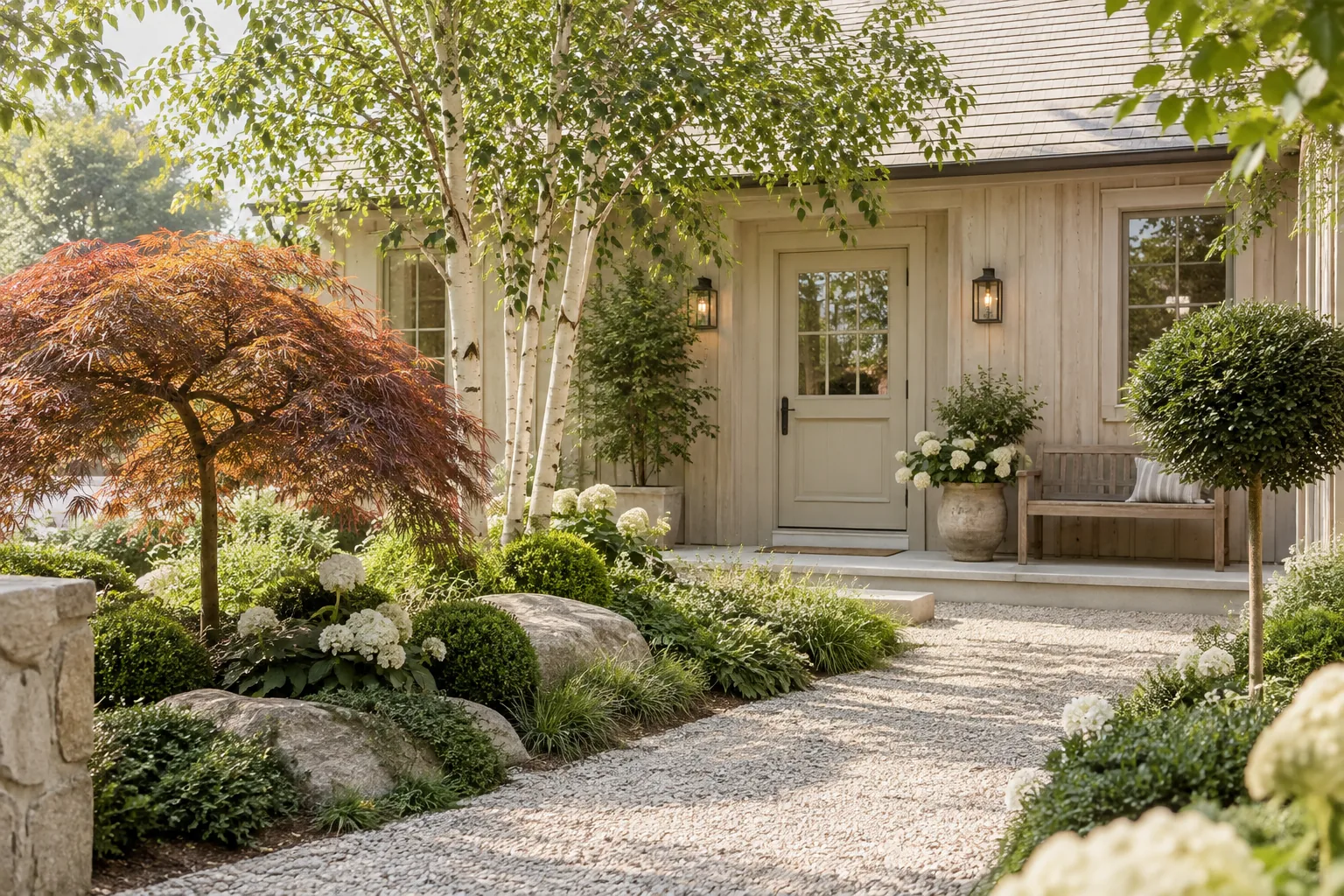
Finding the right tree for a compact front yard changes the entire look of your house. I pulled together my absolute favorite small-scale options that deliver major curb appeal without taking over your lawn.
1. Japanese Maple Focus
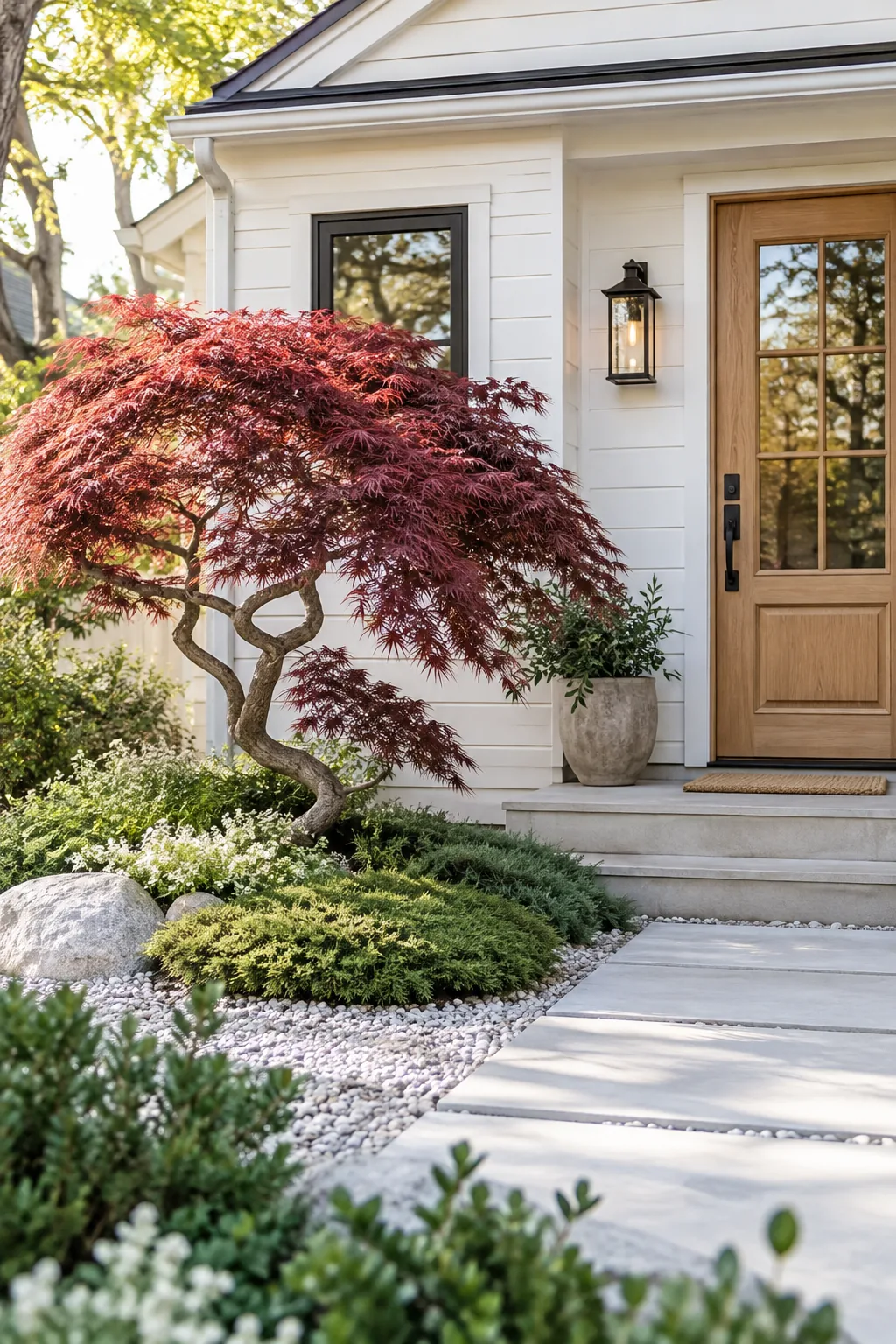
Deep red foliage stands out instantly against standard green lawns and white house siding. A weeping Japanese maple stays low to the ground and never blocks your windows.
You can underplant it with low-growing ground covers to highlight the sculptural trunk. It creates a stunning focal point near the front door.
Keep these companion plants nearby:
- Creeping thyme for a soft carpet
- Blue fescue grass for color contrast
- Hostas for shady spots
2. Potted Citrus Trees
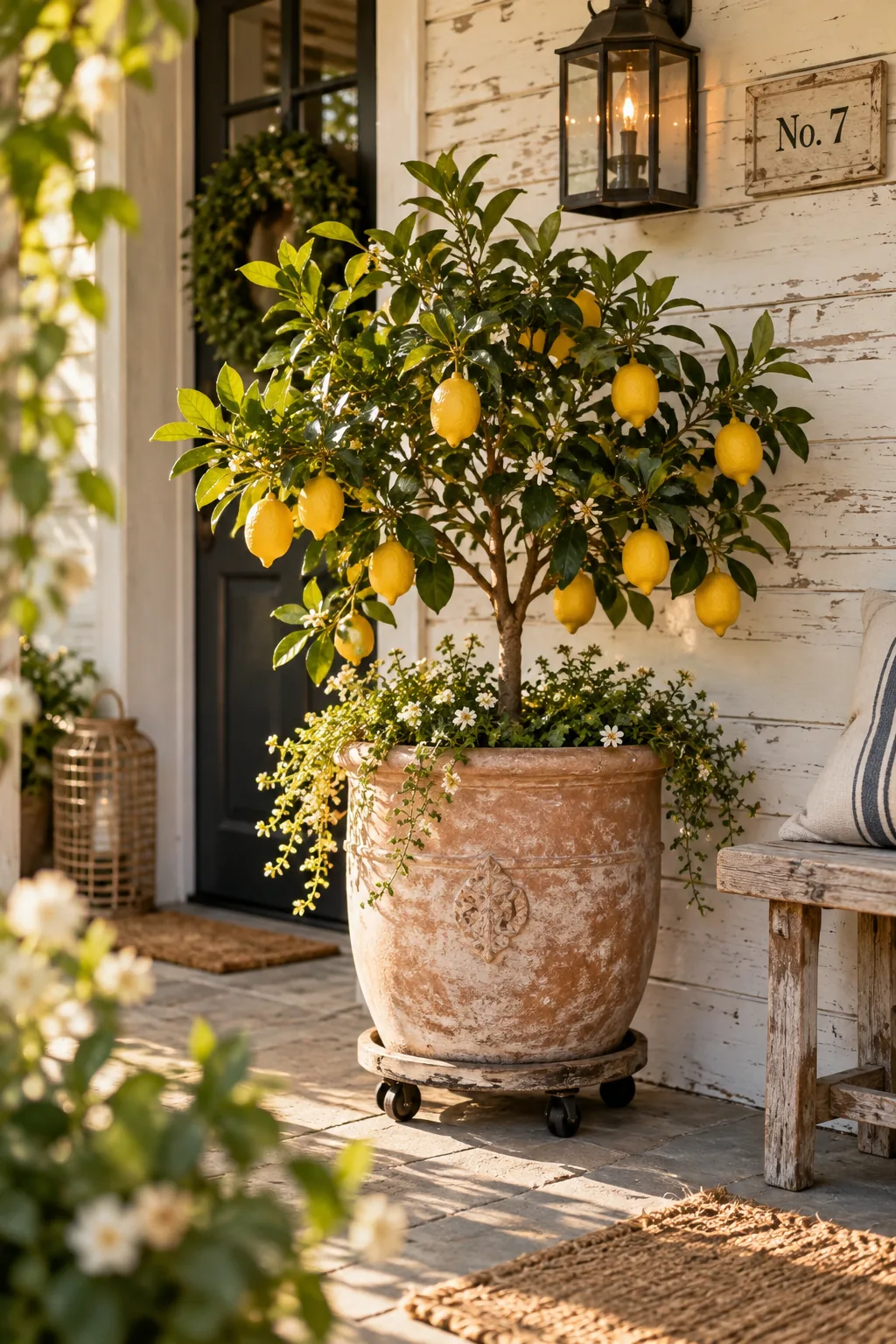
I always keep a few dwarf fruit trees on my front porch because they smell incredible in the spring. Planting a Meyer lemon tree in a heavy terracotta pot lets you control its size perfectly. You get bright pops of yellow right at your entryway, and you can easily wheel it inside before the first frost hits. Try these container varieties:
- Dwarf Meyer lemon
- Calamondin orange
- Key lime
3. Dogwood Corner Planting
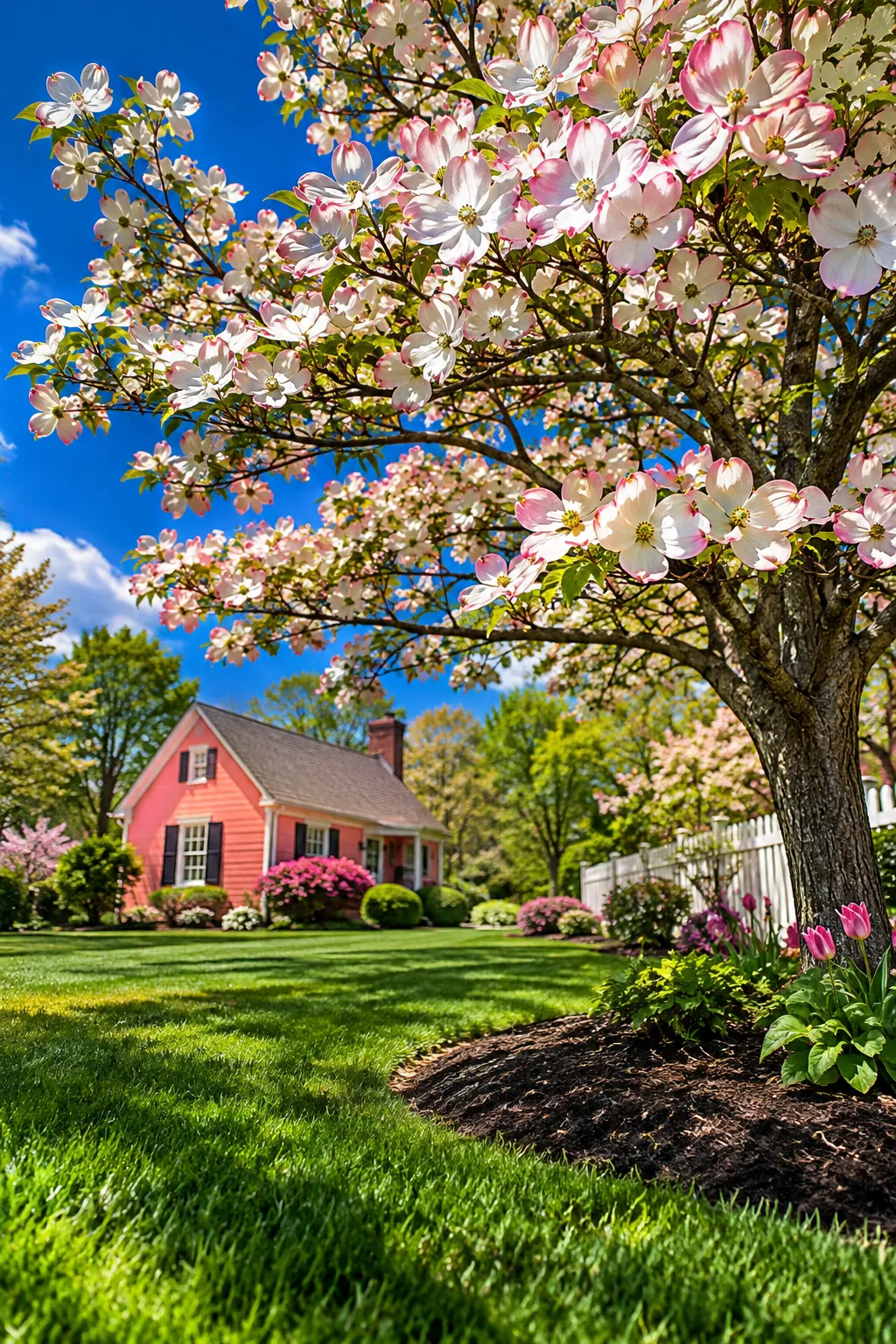
Plant a flowering dogwood at the far corner of your yard to anchor your property line. The horizontal branches stretch out beautifully, giving your landscaping a wider, more established feel. It blooms reliably every spring before the leaves even push through.
Just make sure you give it a thick layer of mulch to keep the shallow roots cool.
4. Dwarf Alberta Spruce
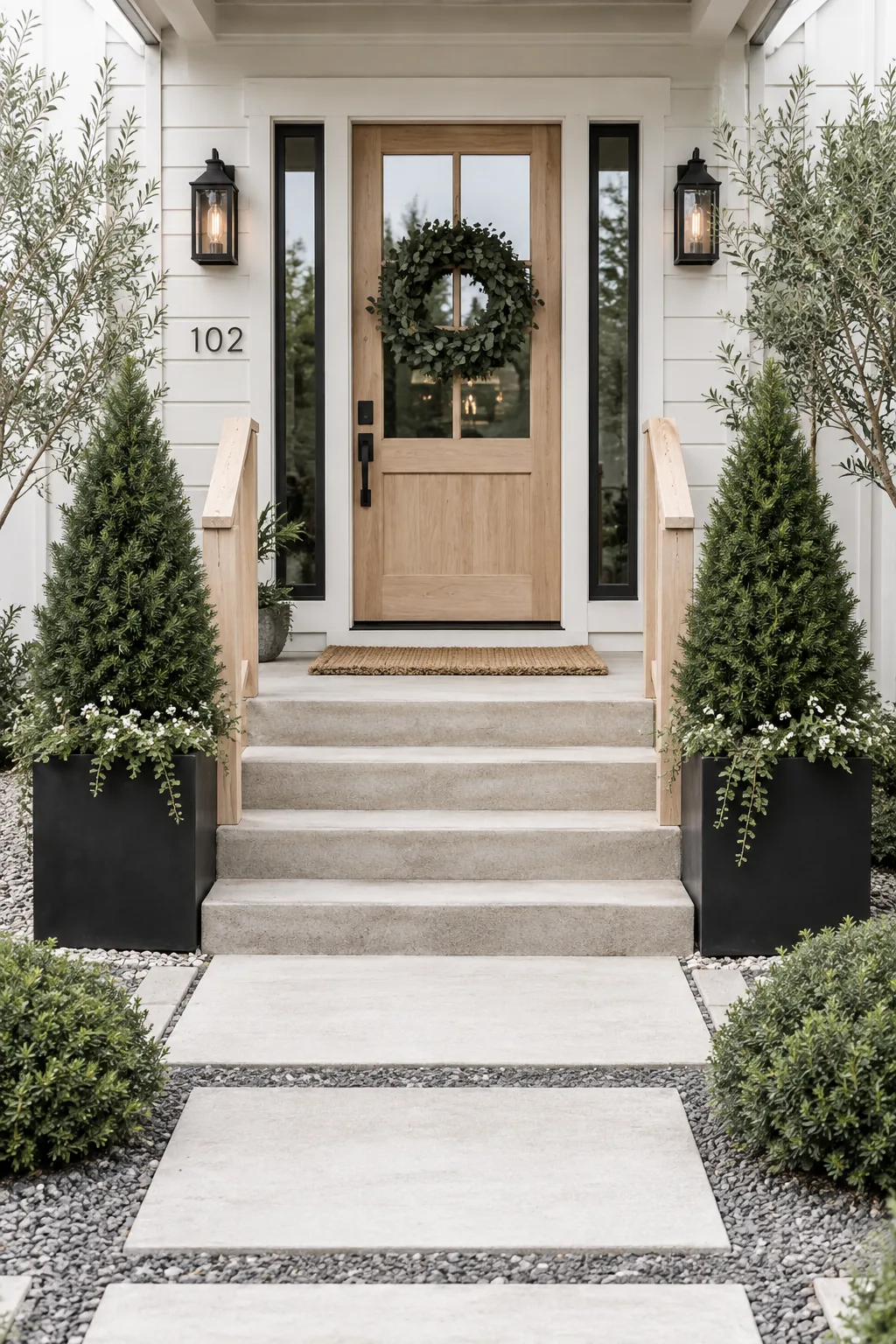
The tight, conical shape of a dwarf Alberta spruce requires zero pruning to maintain its perfect silhouette. You can plant identical pairs on either side of your front steps for a formal, balanced look.
Why it works: The reason it works: The dense evergreen needles provide solid, structural color all winter long when everything else looks bare.
5. Multi-Trunk River Birch
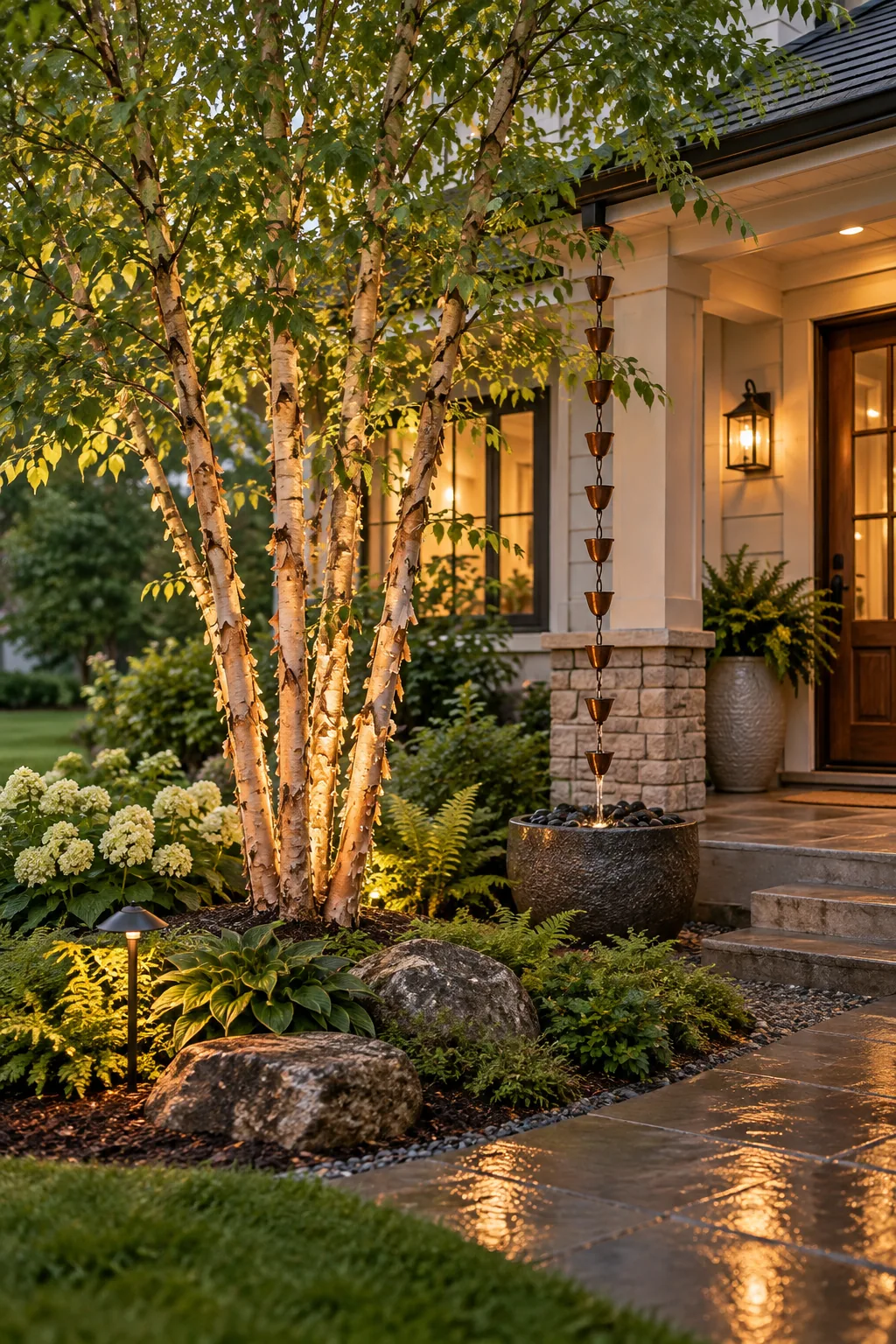
A standard river birch grows up to 60 feet tall, but a compact dwarf river birch maxes out at just 10 feet. It gives you that gorgeous peeling bark on a much smaller scale.
The multi-trunk structure looks incredible when you light it from below at night. It drops its leaves in winter to show off the salmon-colored peeling bark.
This is the absolute best tree for those soggy spots near your downspouts. It drinks up standing water fast.
6. Crape Myrtle Clusters
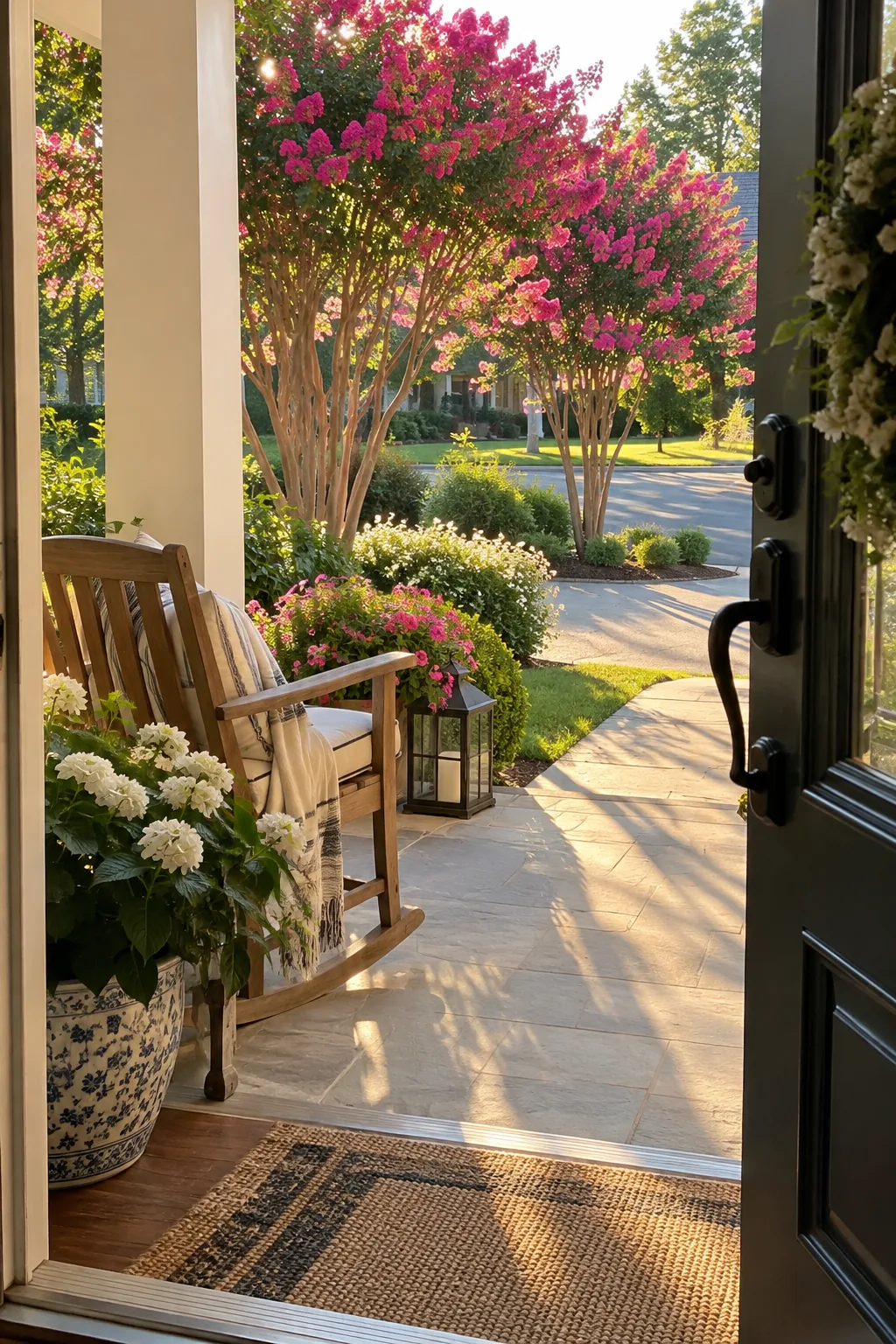
Late summer front yards often look tired and burnt out, right when crape myrtles decide to explode into bloom. These tough little trees thrive in the baking sun next to asphalt driveways where nothing else survives. You can train them into a single trunk or let them bush out naturally depending on your space. The smooth, cinnamon-colored bark looks like a sculpture during the winter months. They drop their flowers cleanly, so you never have to deal with a messy sidewalk.
7. Weeping Cherry Focal Point
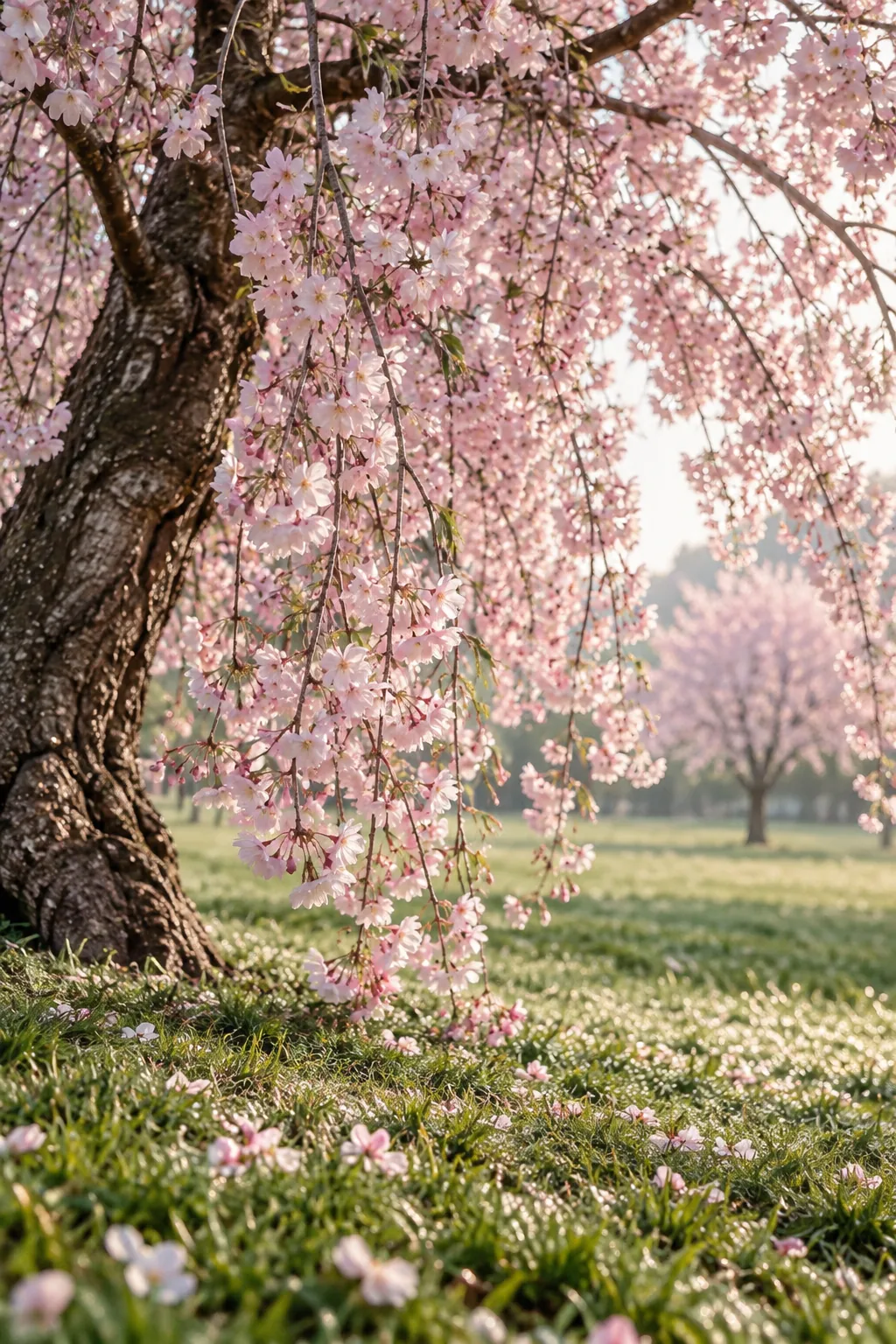
A weeping cherry tree creates an instant fairytale aesthetic right in the middle of your lawn.
The cascading branches sweep all the way to the grass, hiding the trunk completely. It looks best planted entirely on its own rather than crowded into a mixed garden bed. You get a massive show of pale pink blossoms for two weeks every spring.
Why it works: The reason it works: The umbrella-like canopy draws the eye down and makes a small front yard feel intentionally designed.
8. Serviceberry Along the Walkway
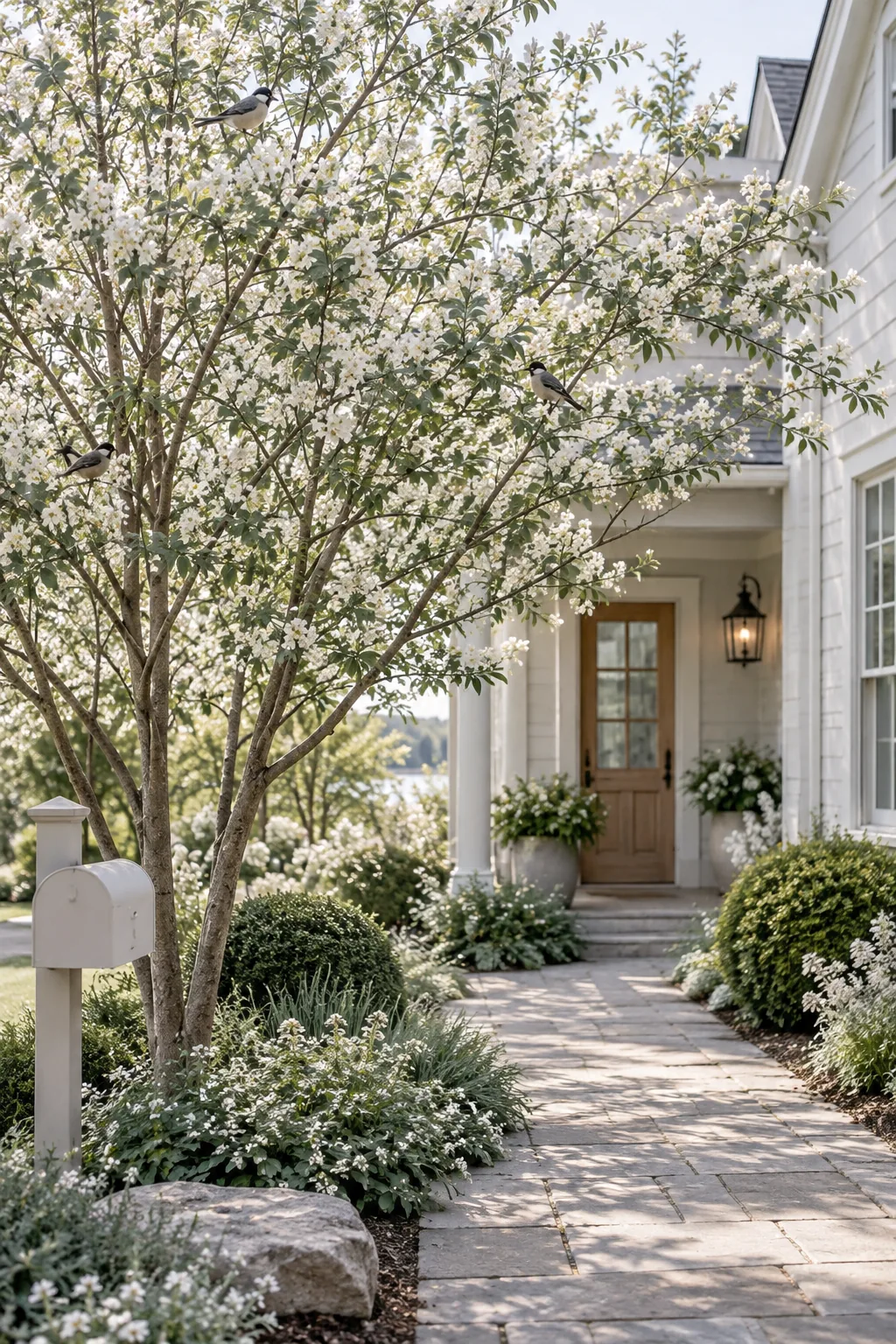
I planted a serviceberry tree near my sidewalk three years ago, and it is easily the hardest working plant in my yard. It kicks off spring with delicate white flowers before pushing out neat, bluish-green leaves. By June, it produces edible berries that the local birds absolutely go crazy for. In the fall, the entire canopy turns a brilliant, fiery orange that rivals any maple. It stays narrow enough that it never crowds the walkway or hits the mail carrier.
9. Redbud Near the Window
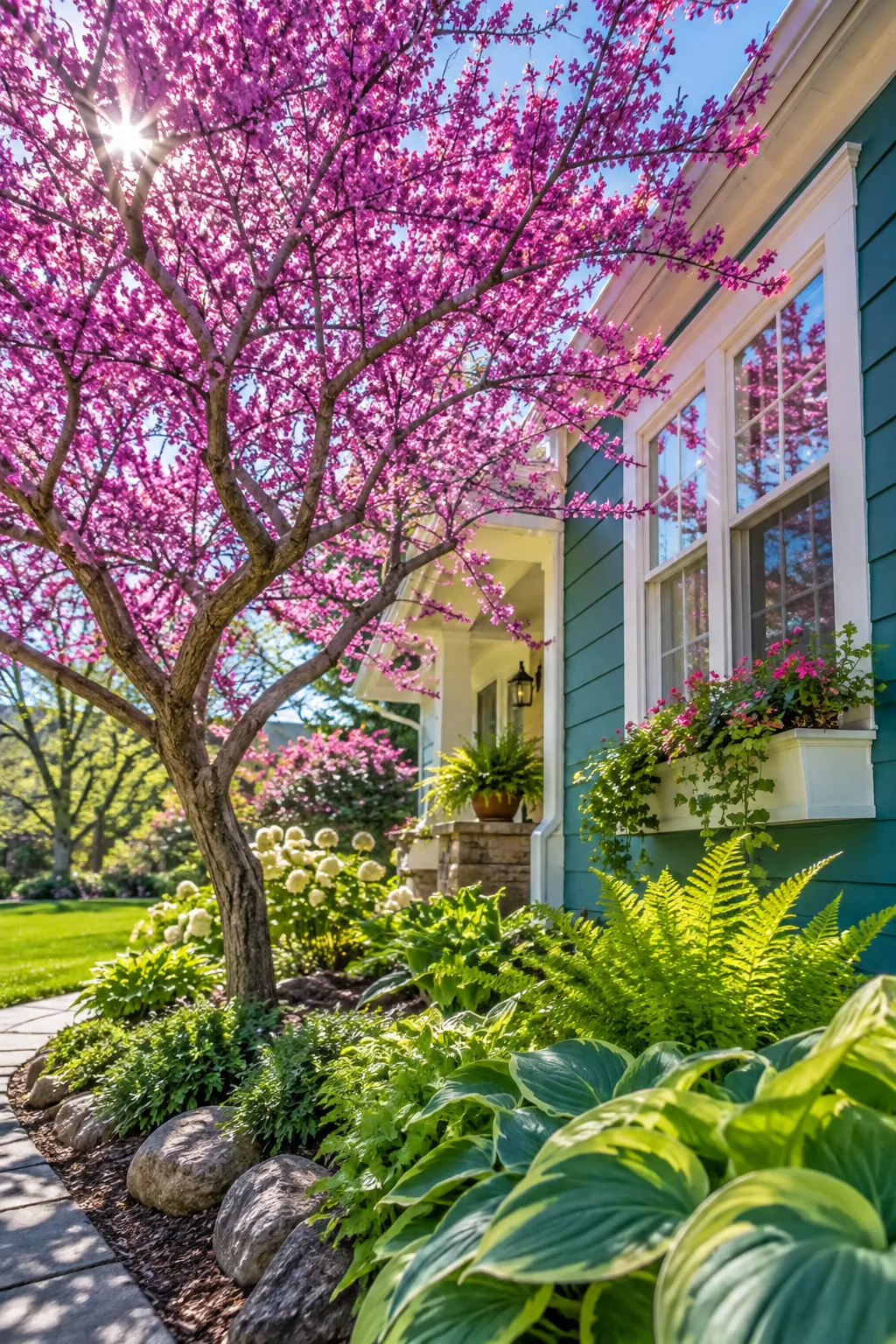
A classic Eastern redbud gives your home a welcoming, cottage-style charm.
The tiny magenta flowers bloom directly on the bare branches before the heart-shaped leaves appear. Planting it about eight feet from your front window gives you privacy without blocking the natural light. It naturally grows into a beautiful vase shape that leaves plenty of room for shade-loving plants underneath.
10. Topiary Boxwood Trees
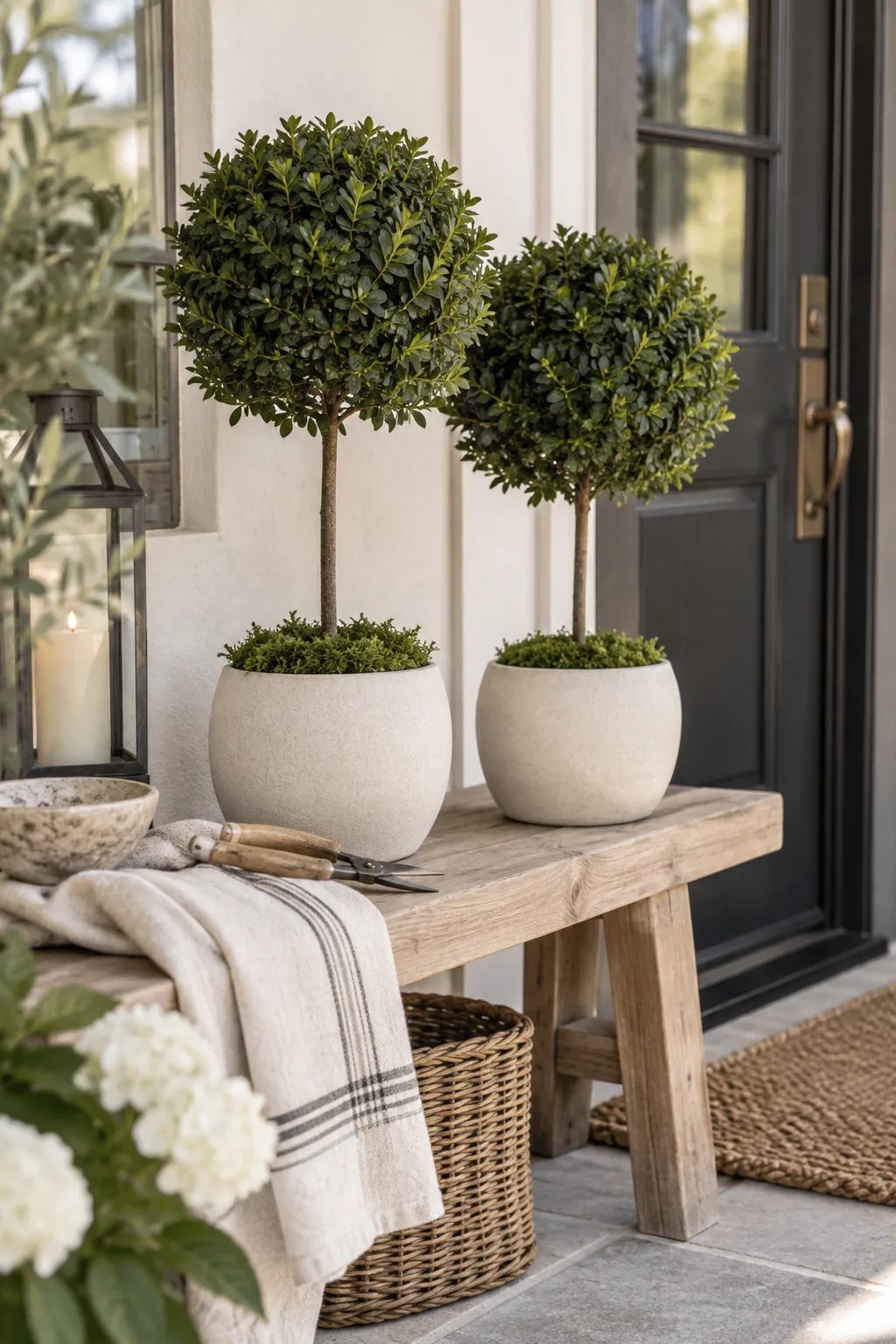
Shaping a large boxwood shrub into a small, manicured tree form brings instant architectural structure to a messy garden bed. You can keep them trimmed to exactly the height you need so they never outgrow their spot.
Why it works: The reason it works: The strict geometric shape provides a crisp contrast against loose, rambling cottage garden flowers.
11. Fringe Tree Elegance
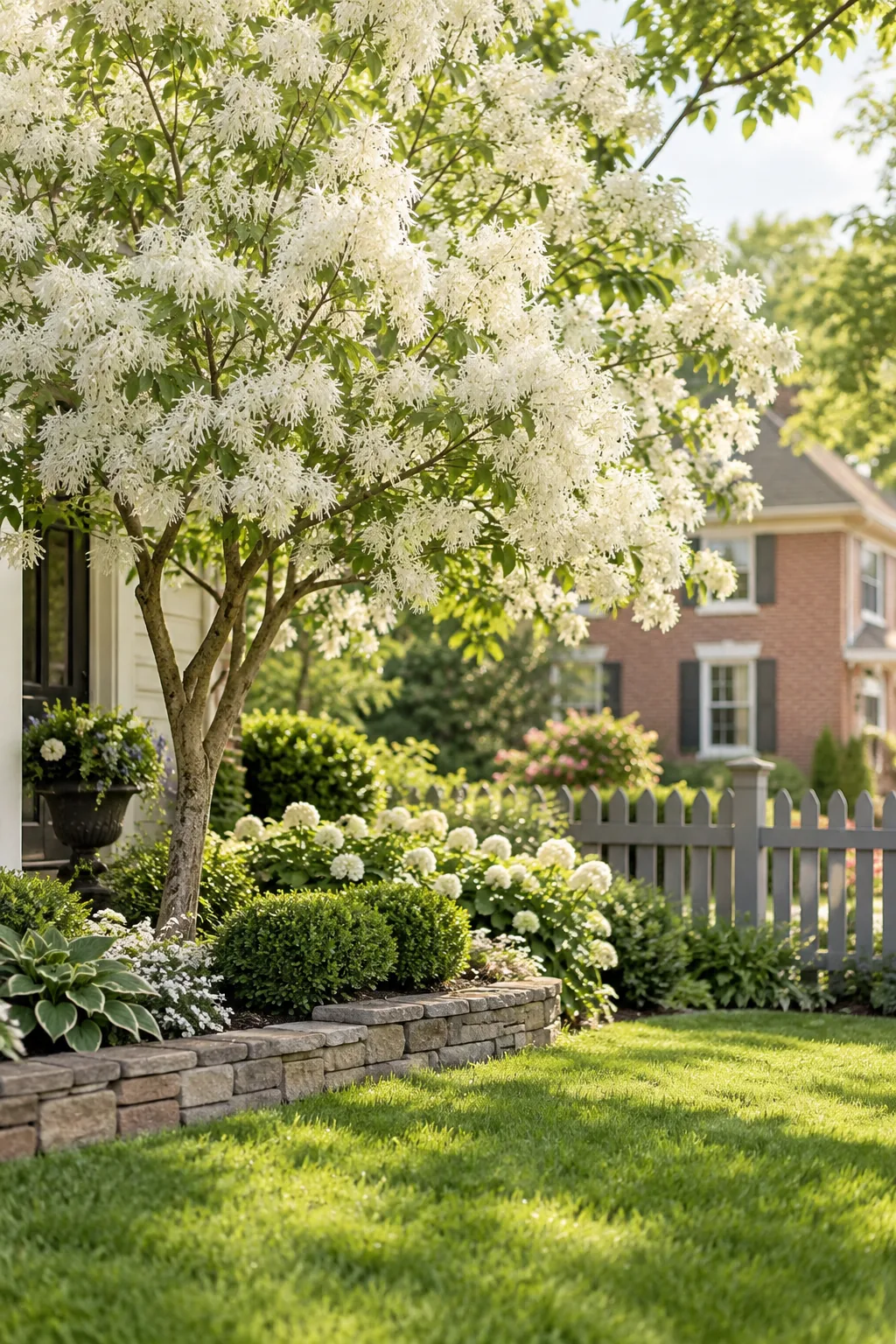
I rarely see fringe trees in residential neighborhoods, which is exactly why I recommend them so often. In late spring, they cover themselves in fluffy, cloud-like white blooms that smell faintly of lilac. They top out around 15 feet and handle urban pollution like a champ.
Be patient with them in the spring, as they are usually the last trees to wake up and push out leaves.
12. Upright Juniper Screens
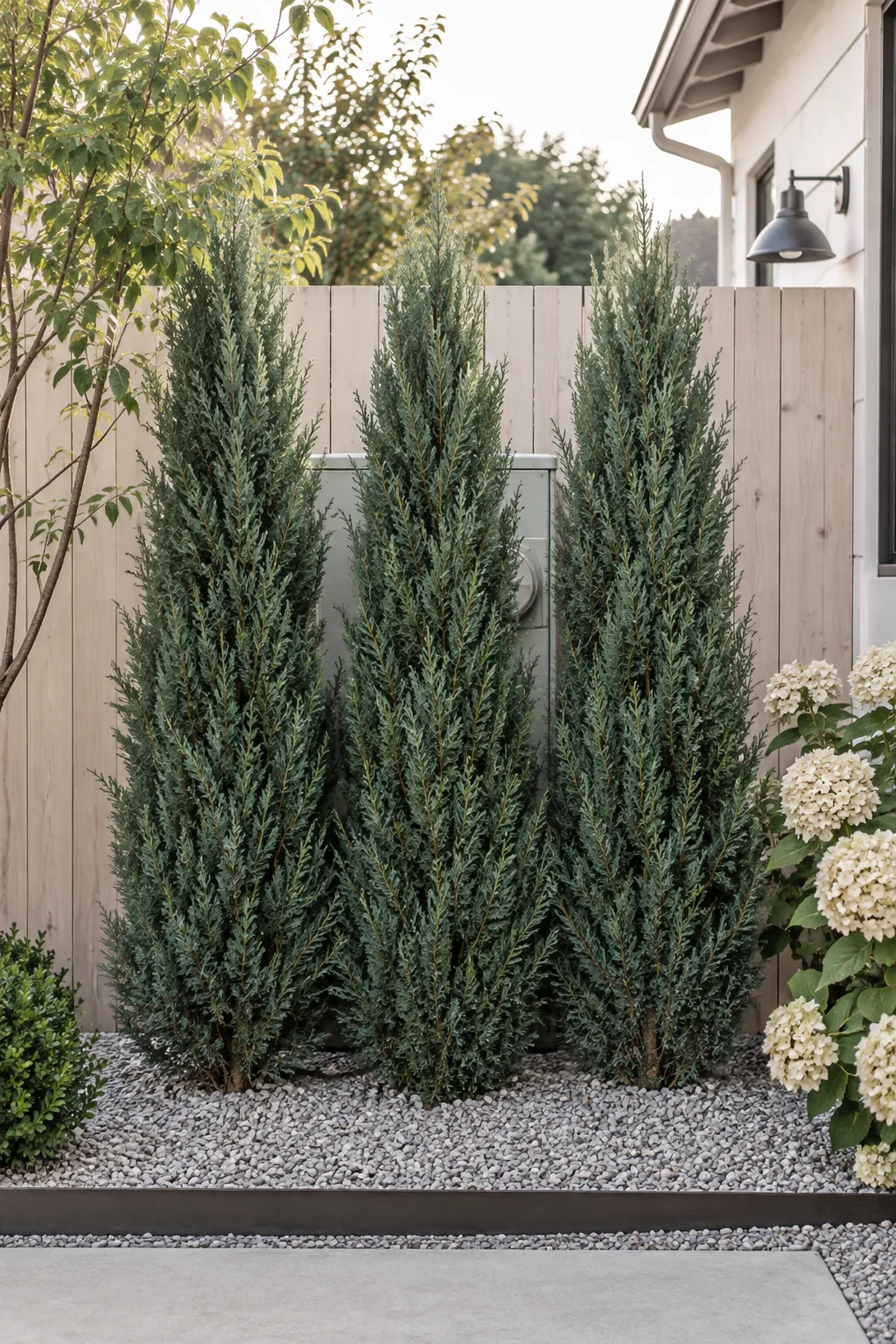
A Spartan juniper grows up to 15 feet tall but stays only three feet wide.
This narrow footprint makes it the ultimate problem-solver for hiding ugly utility boxes or creating a privacy screen between close neighbors. You can plant three in a tight row to build a living wall. They thrive in poor soil and require virtually zero supplemental watering once established.
13. Saucer Magnolia Show
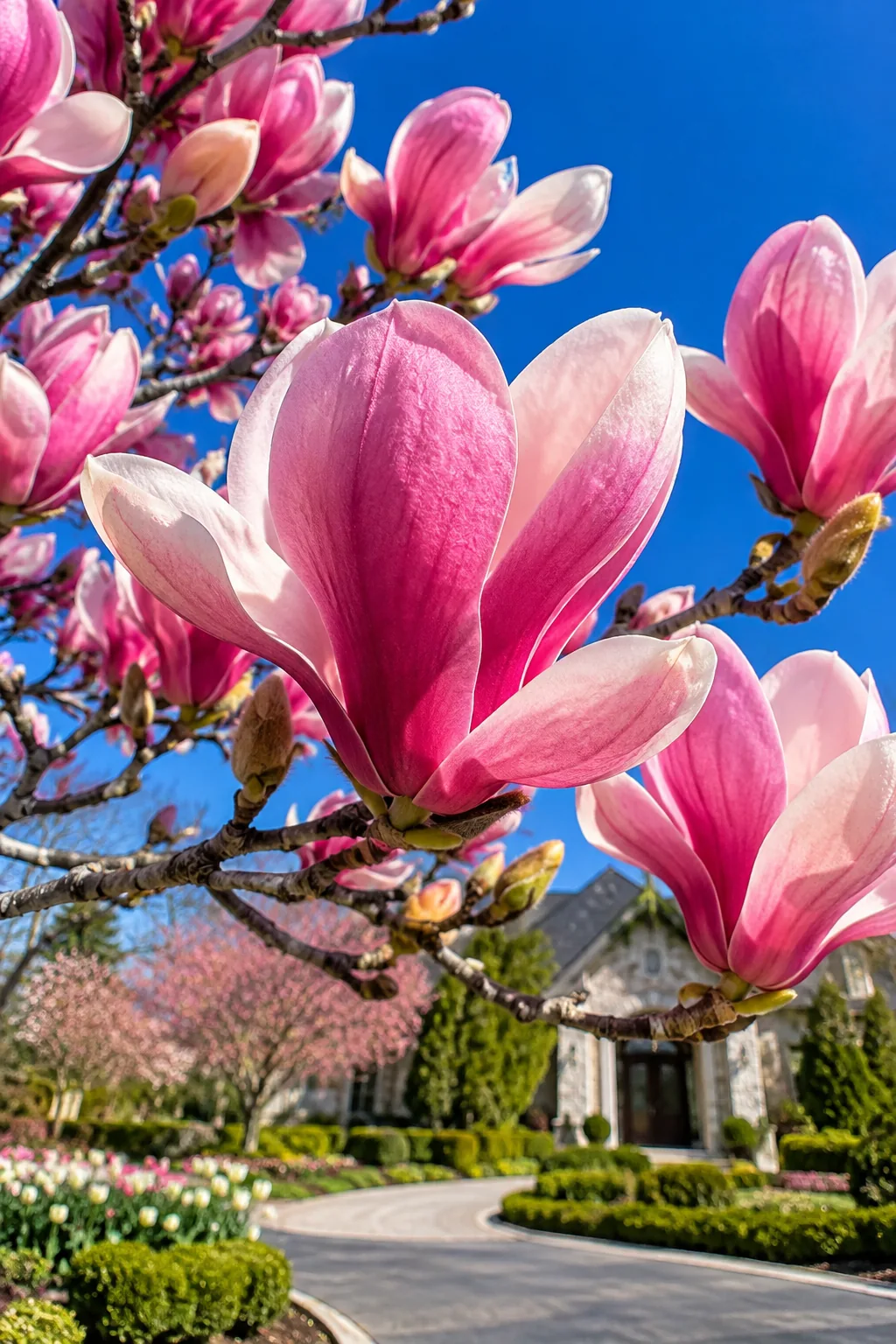
Massive pink and white blooms on bare branches make the saucer magnolia impossible to ignore from the street. The oversized flowers look almost tropical, but the tree itself is incredibly cold hardy. It acts as a stunning standalone specimen right in the center of a circular driveway.
Give it plenty of space on all sides so the rounded canopy can develop evenly.
14. Standard Hydrangea Trees
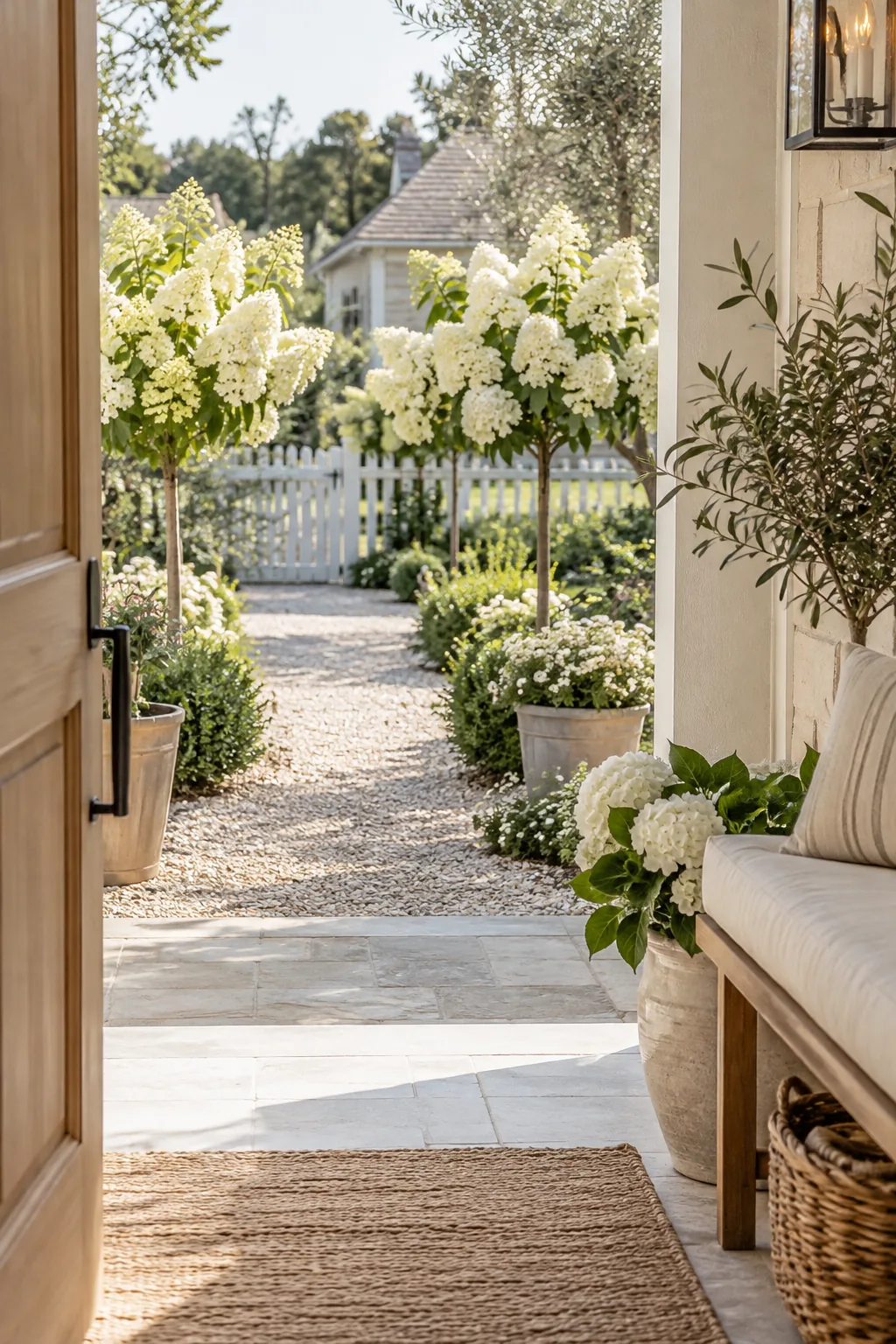
Grafting a familiar shrub onto a single straight trunk turns a panicle hydrangea into a spectacular miniature tree. The massive flower heads bloom late in the summer when most other trees have finished their show. You get all the classic cottage garden vibes but elevated to eye level. Look for these specific varieties sold in tree form:
- Green-flowered varieties for massive green-to-white blooms
- Bicolor varieties for two-toned color
- Early-flowering varieties for early blooming
15. Dwarf Olive Trees
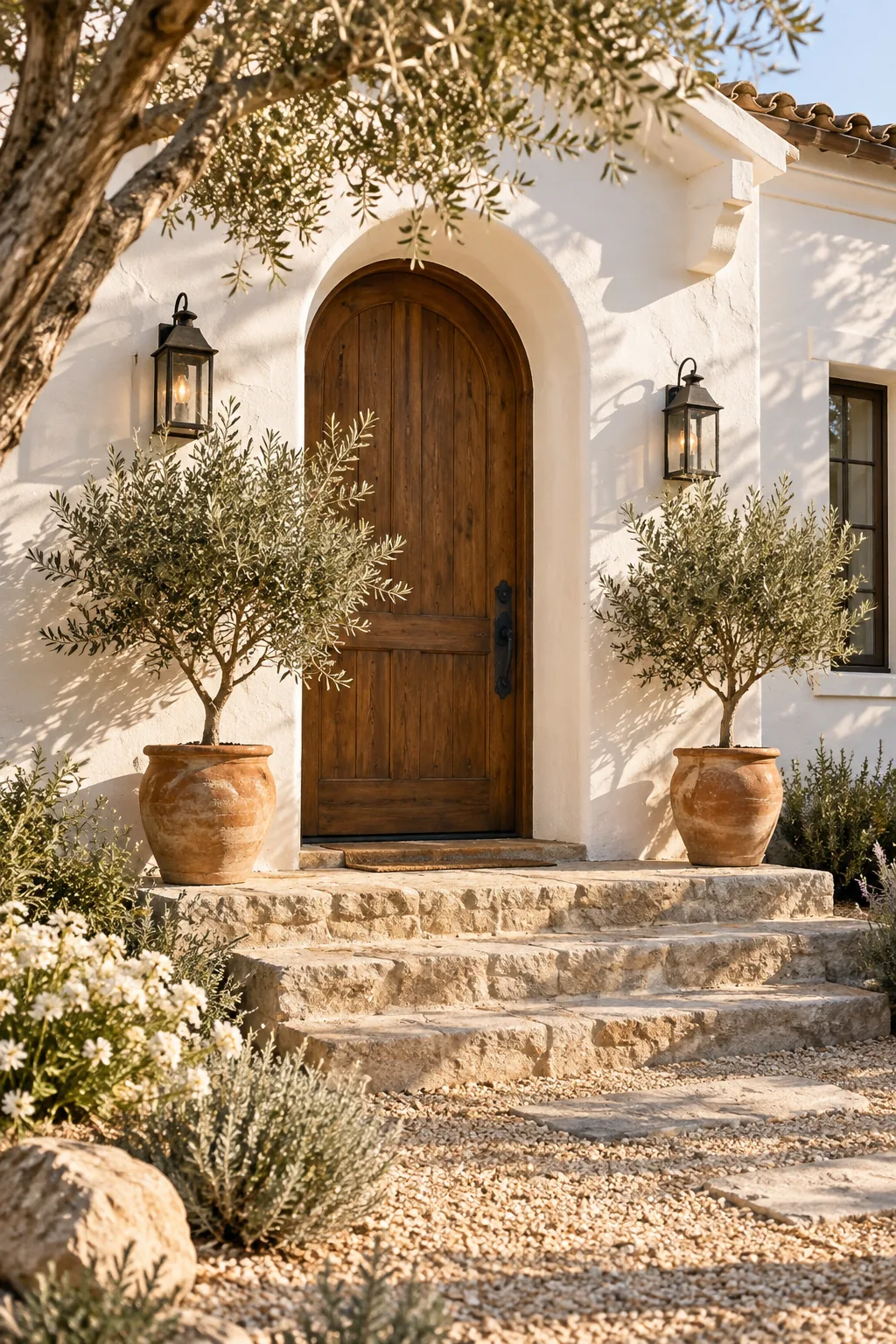
I fell in love with the silvery-green foliage of dwarf olive trees during a trip out West, and they are surprisingly easy to grow in warm climates. They bring a relaxed, Mediterranean vibe to your front entry and look especially beautiful planted against a stark white stucco wall.