
17+ Gorgeous Sloped Lakefront Landscaping Ideas
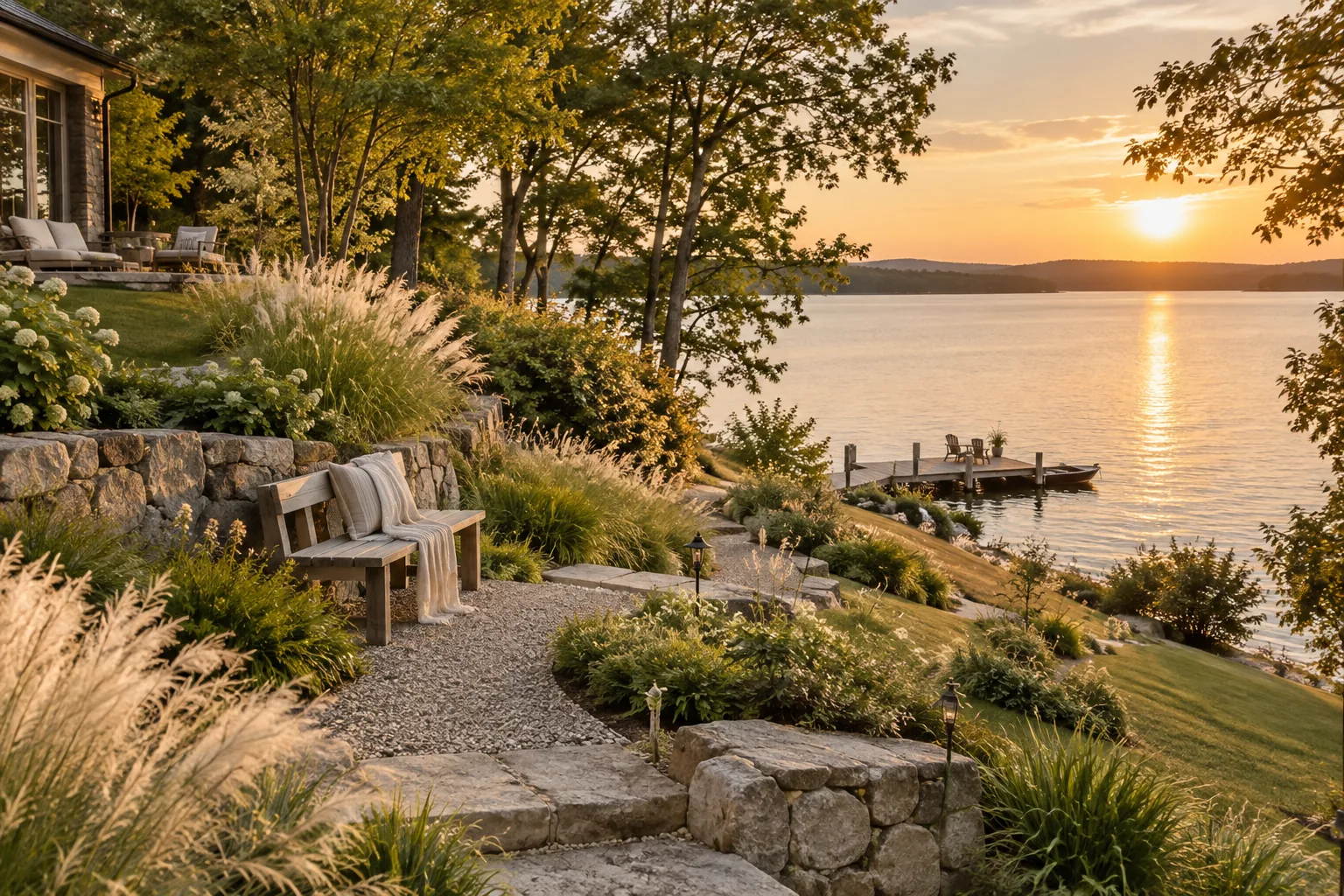
Taming a steep yard down to the water is all about mixing heavy-duty erosion control with beautiful, functional design. I've gathered my favorite ways to turn that tricky hillside into a gorgeous path straight to the dock.
1. Build Terraced Garden Beds
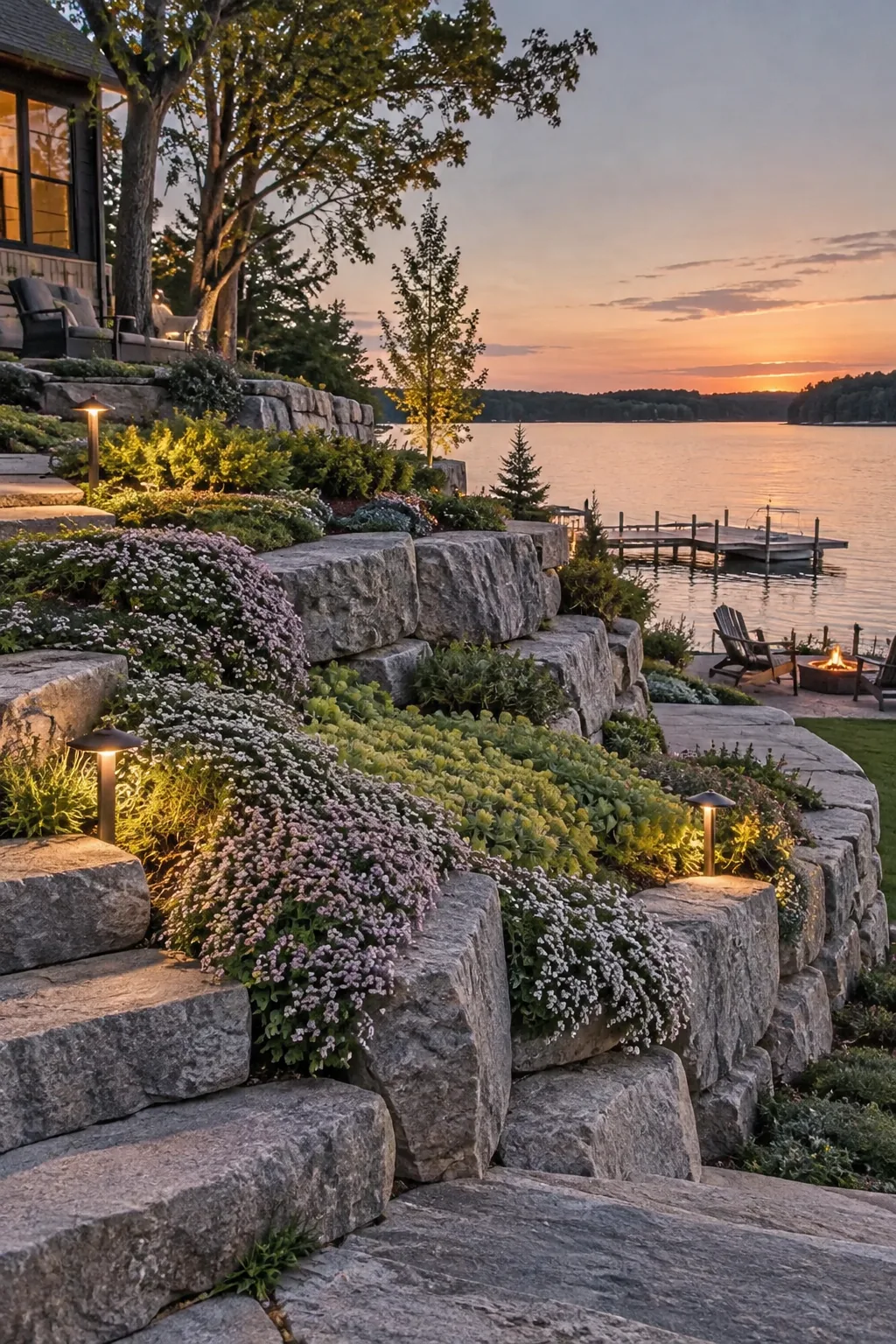
Tiered retaining walls give you flat, usable garden beds all the way down the hill. You can stack heavy boulder retaining walls to hold back the soil and stop mud from washing into the lake. Fill each level with creeping groundcovers that spill over the edges to soften all that heavy stone. It turns a dangerous drop-off into a structured, terraced garden that actually feels safe to walk through. Add some low-voltage path lights along the edges so you can still navigate the tiers after sunset.
2. Plant Deep-Rooted Shrubs
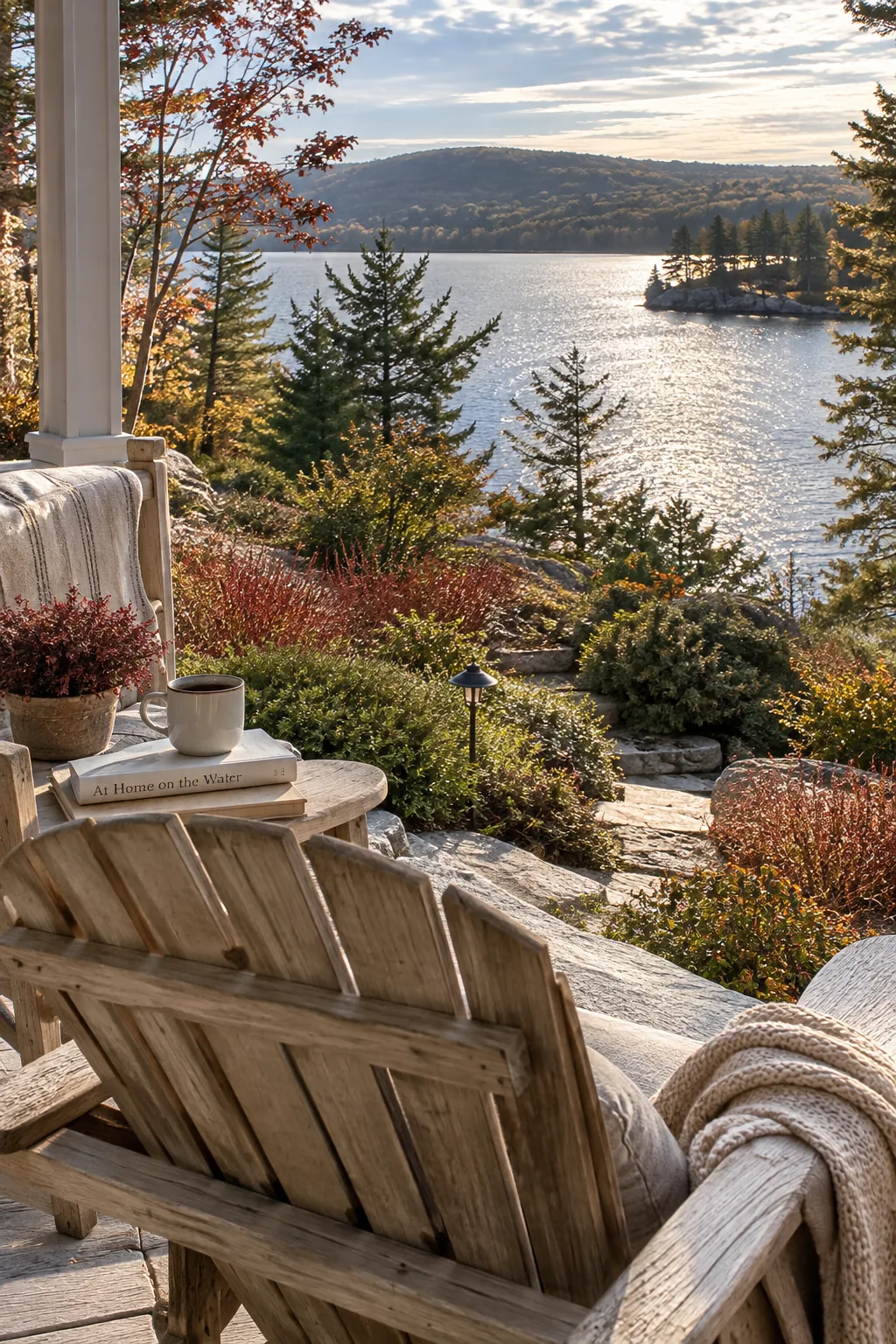
I always struggle with mowing steep hills, so replacing the grass with native shrubs is my go-to fix. Deep-rooted native lakefront plants hold the soil together far better than standard turf grass ever could. They also act as a natural buffer to filter out runoff before it hits the water.
Plus, you get to skip the terrifying task of pushing a lawnmower down a 30-degree incline.
3. Create a Winding Gravel Path
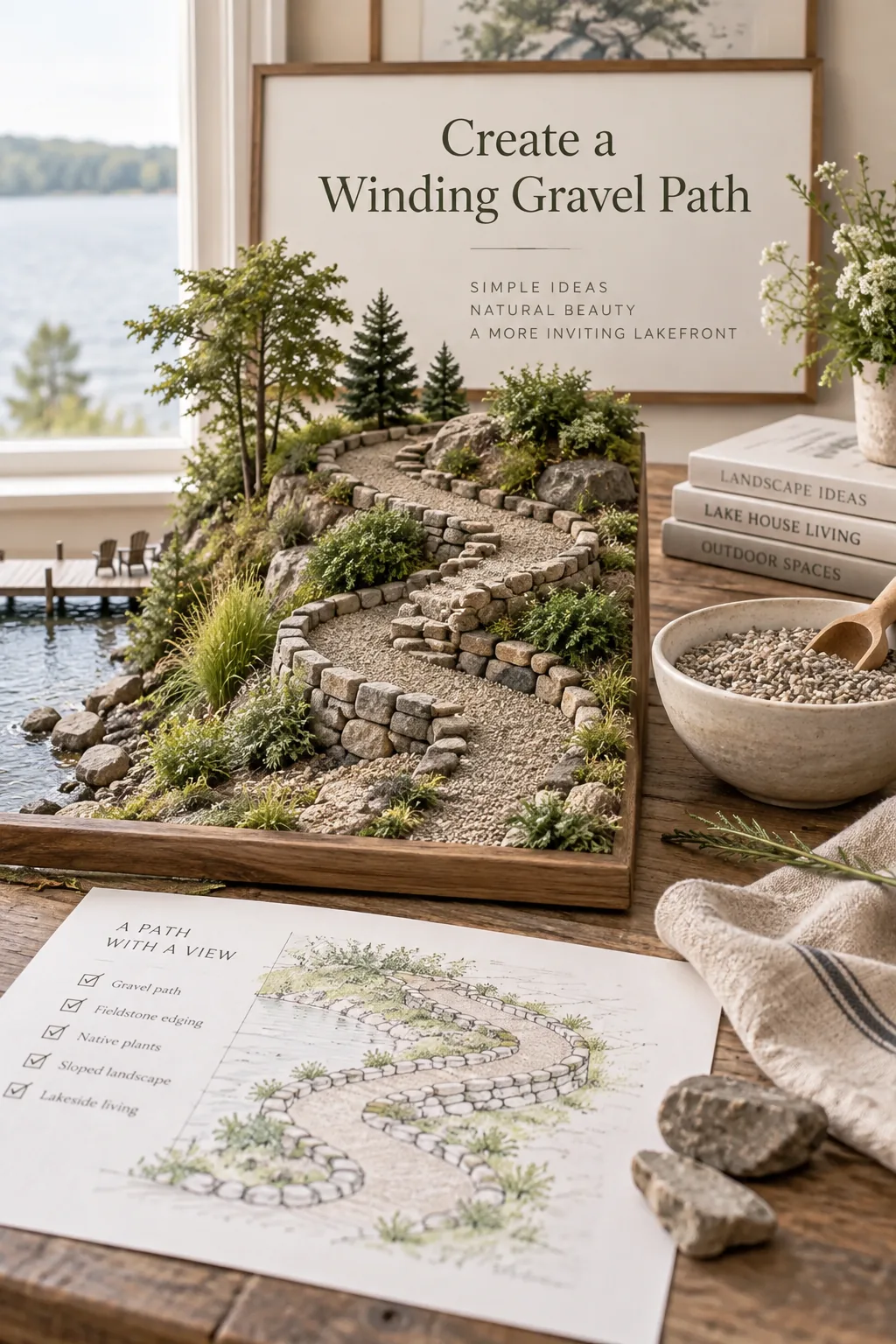
A winding gravel path creates a gentle, romantic stroll down to the shoreline instead of a harsh straight drop. Switchbacks naturally reduce the steepness of the walk and give you spots to pause and take in the view. You can line the edges with weathered fieldstone to keep the gravel from sliding away during heavy summer storms.
It feels much more like a hidden trail through the woods than a basic backyard walkway.
4. Add a Dry Creek Bed
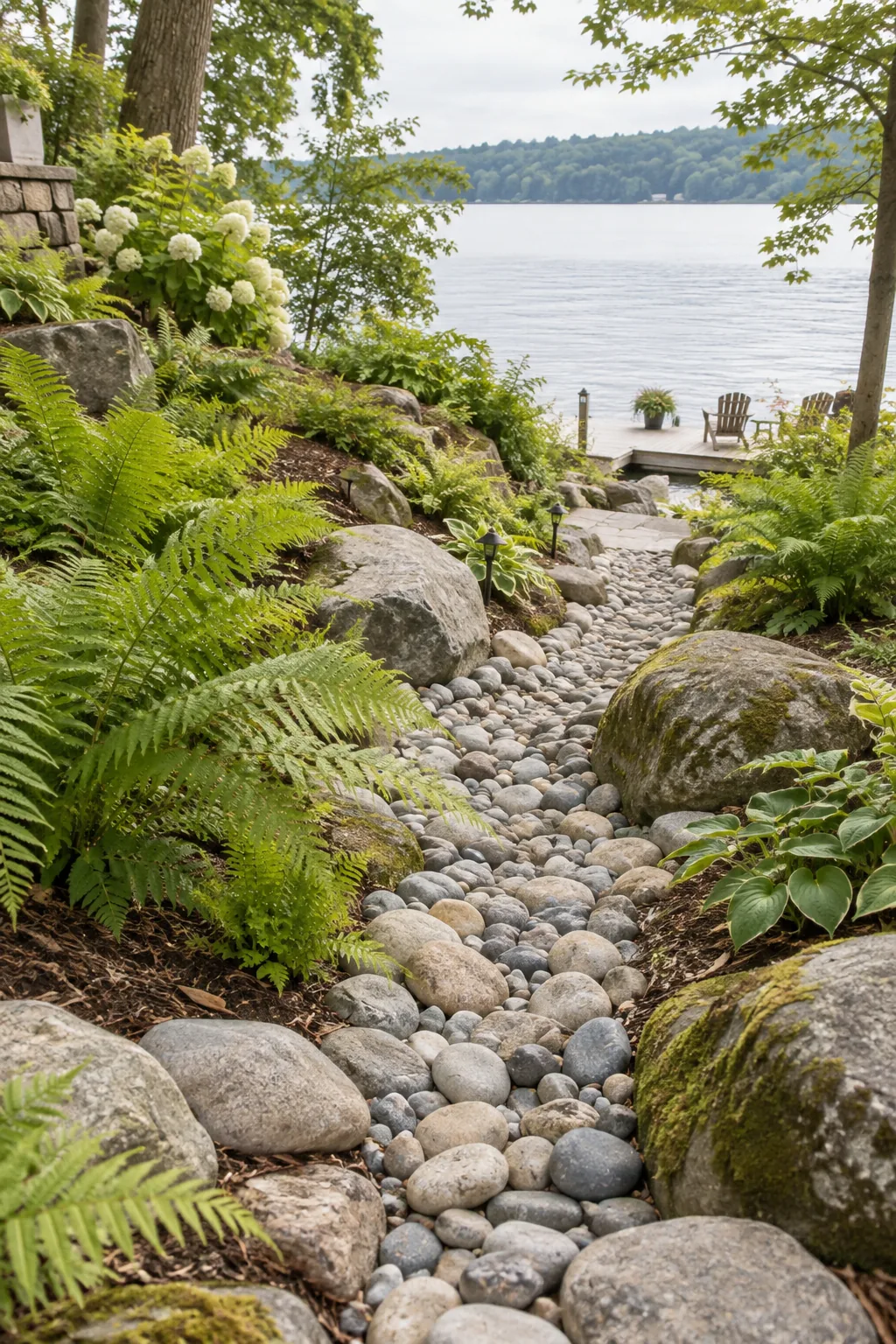
Water flows downhill fast, taking your topsoil right along with it.
Digging a dry creek bed lined with river rock gives that rainwater a dedicated place to go. It channels the runoff safely down the slope without tearing up your garden beds.
Plant some moisture-loving ferns along the edges to make it look like a natural stream.
5. Cut Natural Stone Steps
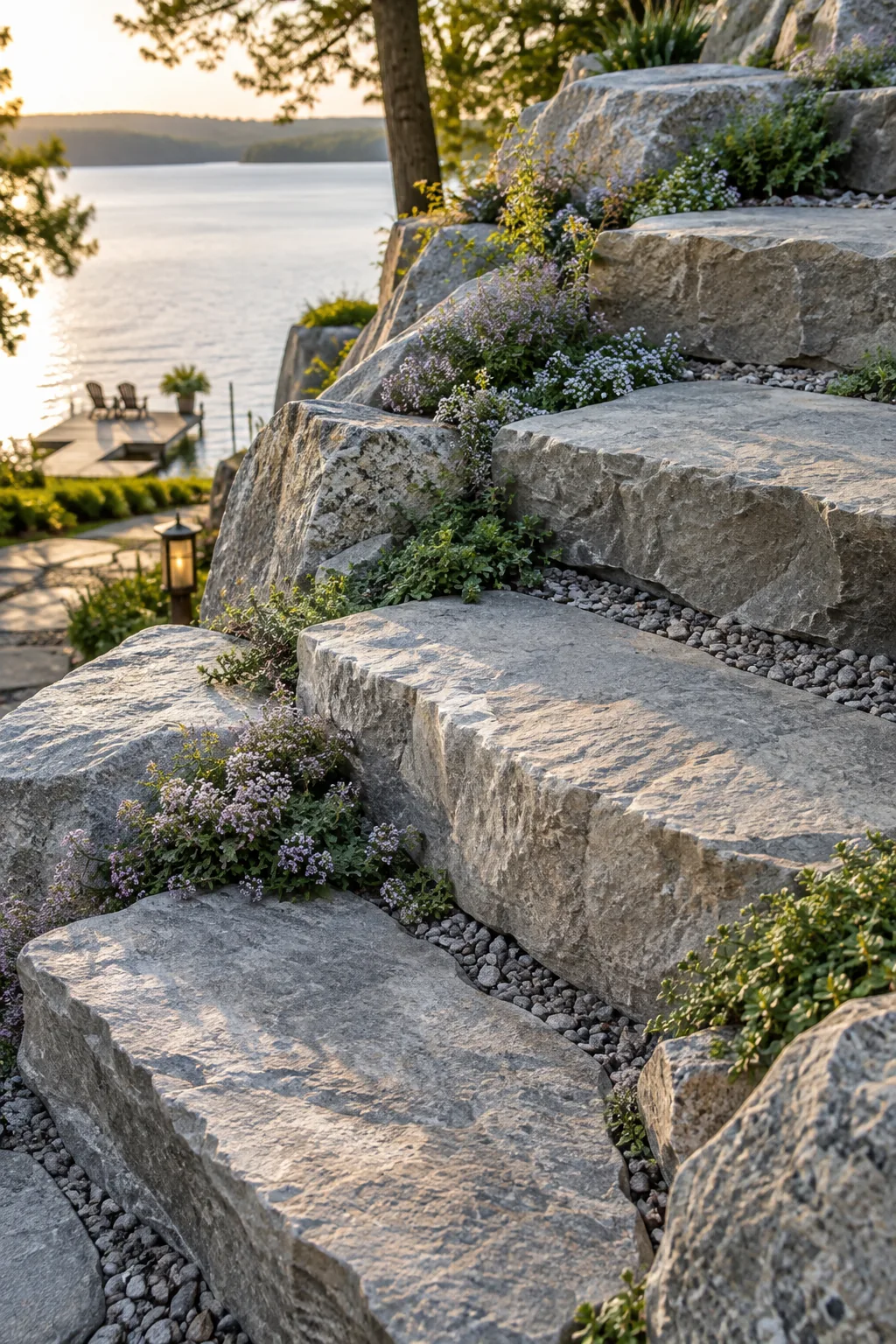
A slope that drops more than one foot for every three feet of distance usually requires engineered steps. Cutting natural stone stairs directly into the hillside gives you a permanent, slip-resistant way to reach the dock. You can use massive, flat flagstones for the treads and backfill them with crushed gravel for drainage. Planting creeping thyme in the crevices prevents weeds from taking over the staircase.
Why it works: Heavy stone treads won't rot or float away when the lake water rises.
6. Construct a Cantilevered Deck
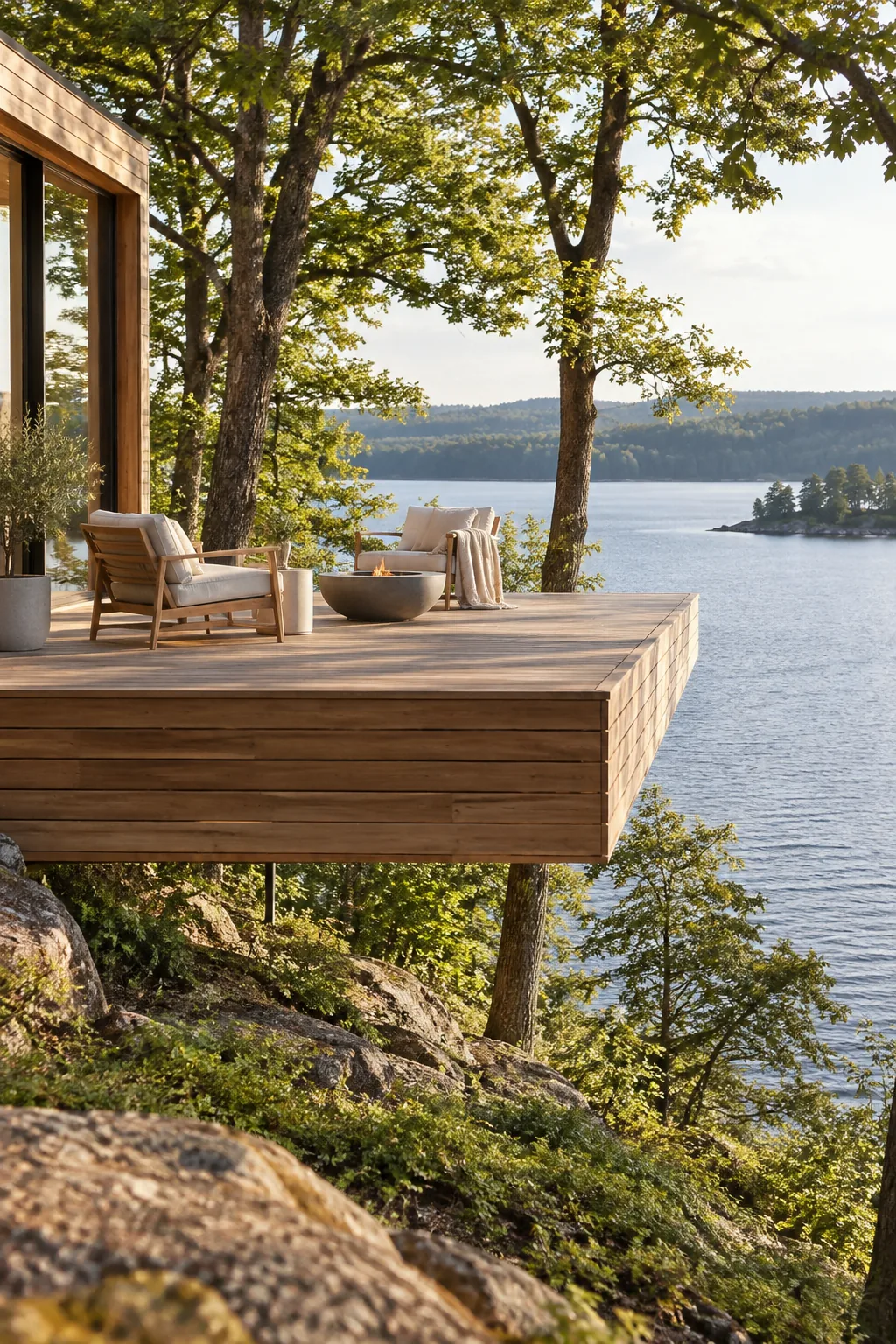
A cantilevered wooden deck built right into the hillside creates the illusion that your seating area is floating above the slope. It gives you a perfectly flat spot for a fire pit or lounge chairs without having to excavate tons of dirt. You can wrap the base in horizontal wood slats to hide the support posts and blend the structure into the surrounding trees. Leaving the natural slope untouched underneath protects the existing root systems of your mature shade trees. This setup turns an unusable steep pitch into the best viewing platform on the property.
7. Designate a Midway Landing
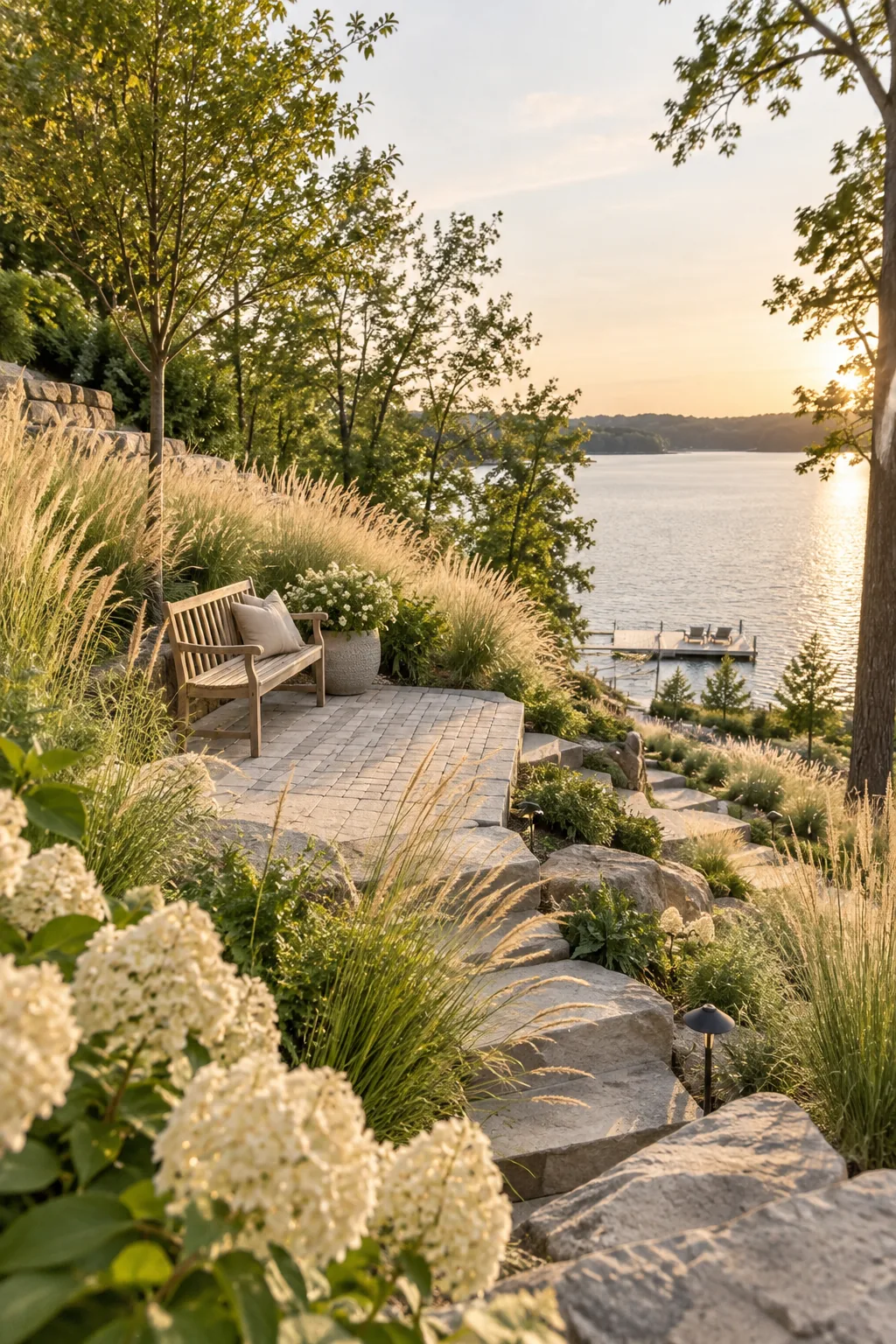
Break up a massive, intimidating hill by adding an intermediate landing zone halfway down.
A small paver patio with a single bench gives you a designated resting spot. It completely changes how you experience the walk back up to the house.
Surround the landing with tall ornamental grasses for a little extra privacy from the neighbors on the water.
Why it works: Breaking a long staircase into smaller sections makes the climb feel far less exhausting.
8. Install a Terraced Boardwalk
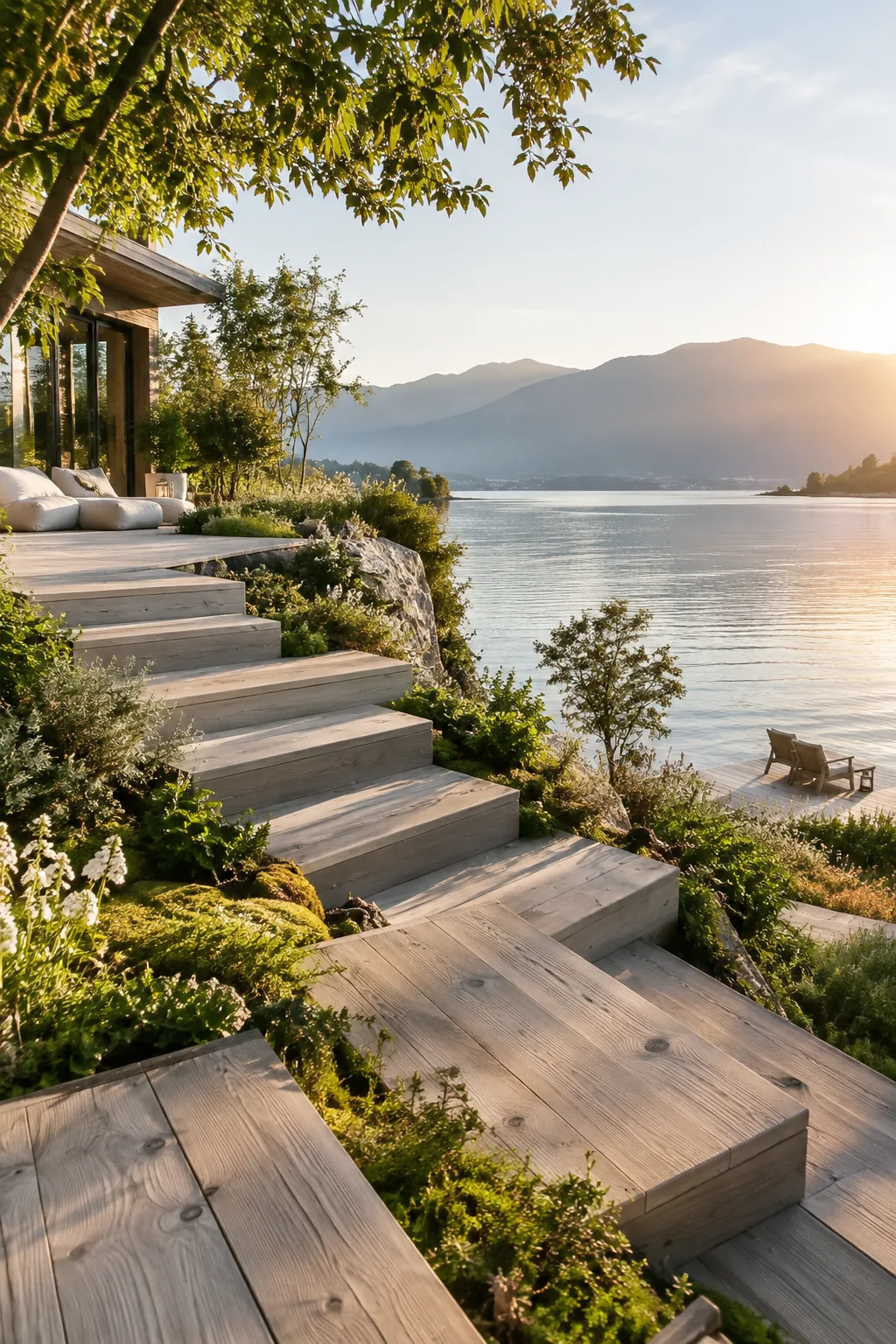
A terraced boardwalk gives your waterfront a clean, modern, architectural vibe that cuts right through wild landscaping. Building stepped wooden platforms instead of traditional stairs creates wider treads that feel much safer to navigate. You can let low-maintenance groundcovers grow right up to the wood to soften the sharp angles. It is a fantastic way to handle a moderate slope without hauling in thousands of pounds of stone.
9. Sow a Wildflower Meadow
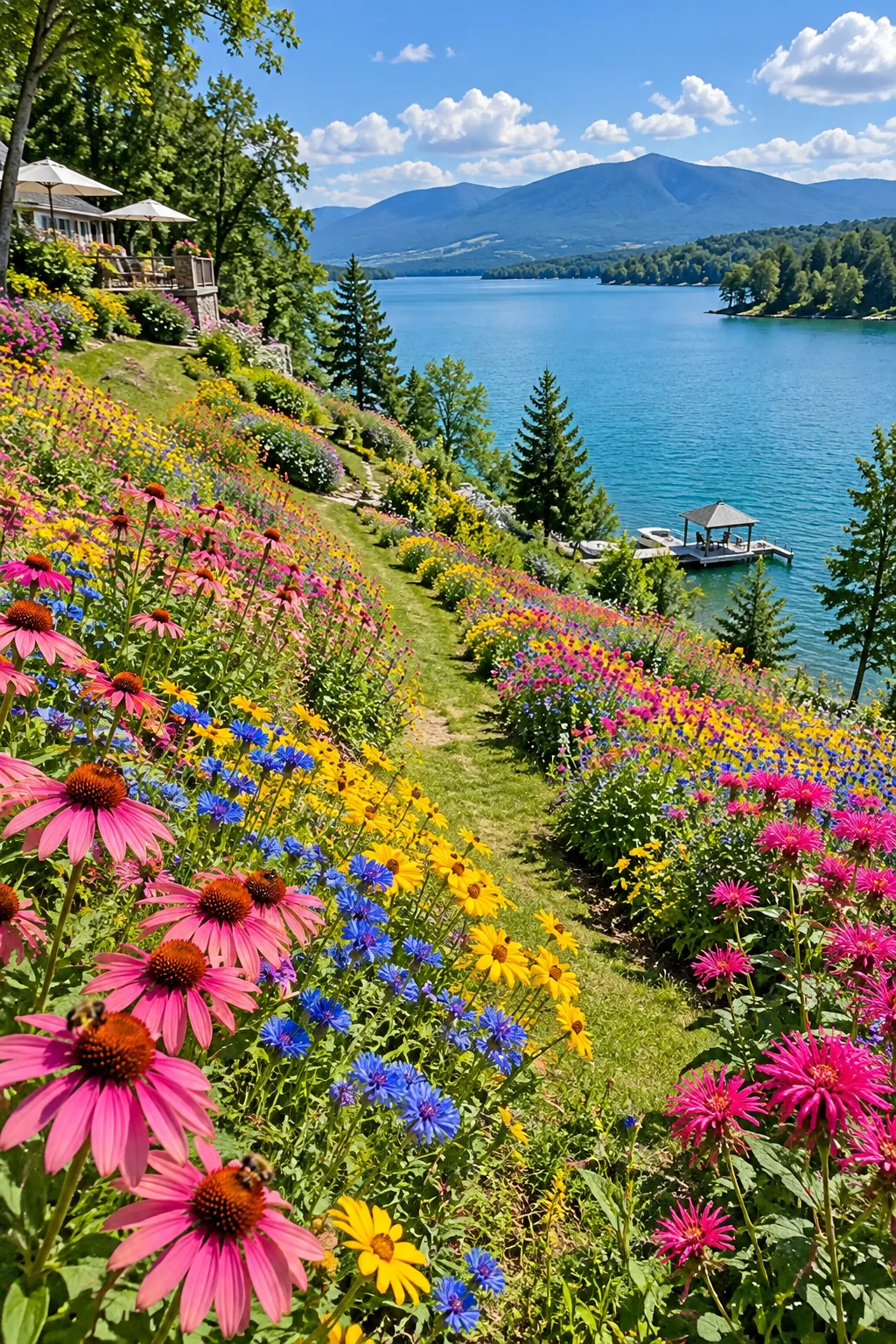
I absolutely love the look of wild, unmanicured hillsides that just burst with color in the summer. Sowing a wildflower meadow mix across the entire slope creates a massive pollinator habitat with zero weekly maintenance.
10. Anchor with Ornamental Grasses

Using deep-rooted ornamental grasses is the secret to holding a sandy lakefront slope together. Varieties like switchgrass and little bluestem send roots down several feet, anchoring the soil against heavy wind and rain. They sway beautifully in the breeze off the lake and require almost no watering once established. You can plant them in massive, sweeping drifts to create a striking visual impact from the water. In the winter, the dried stalks add incredible texture and color to an otherwise bare landscape.
11. Upgrade Your Mulch
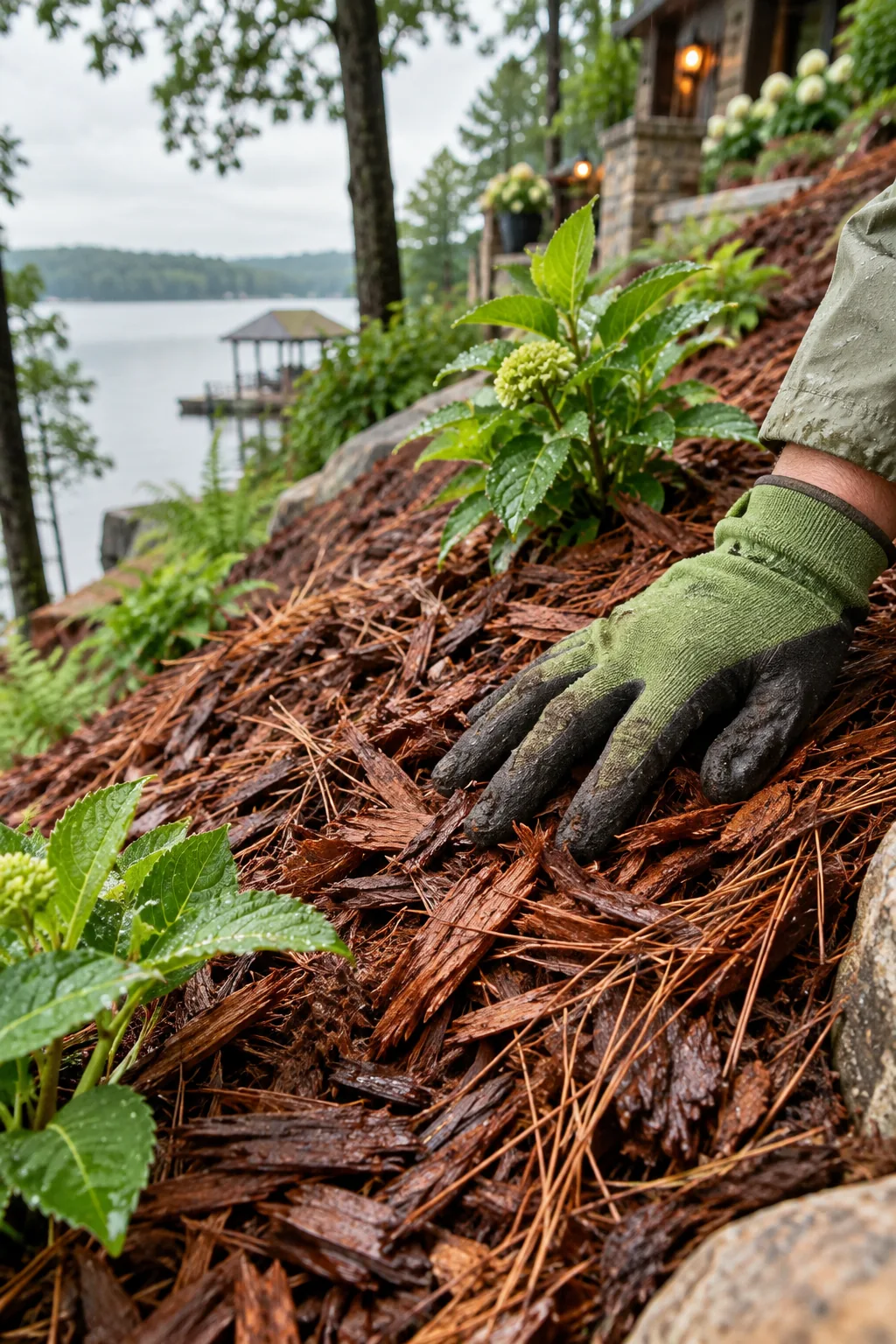
Heavy rain can completely wash out a mulch bed on a steep incline.
Switching to shredded cedar bark or pine needles helps because these materials mat down and interlock over time. They cling to the hillside far better than standard wood chips, keeping the soil moist and weed-free.
12. Hide a French Drain
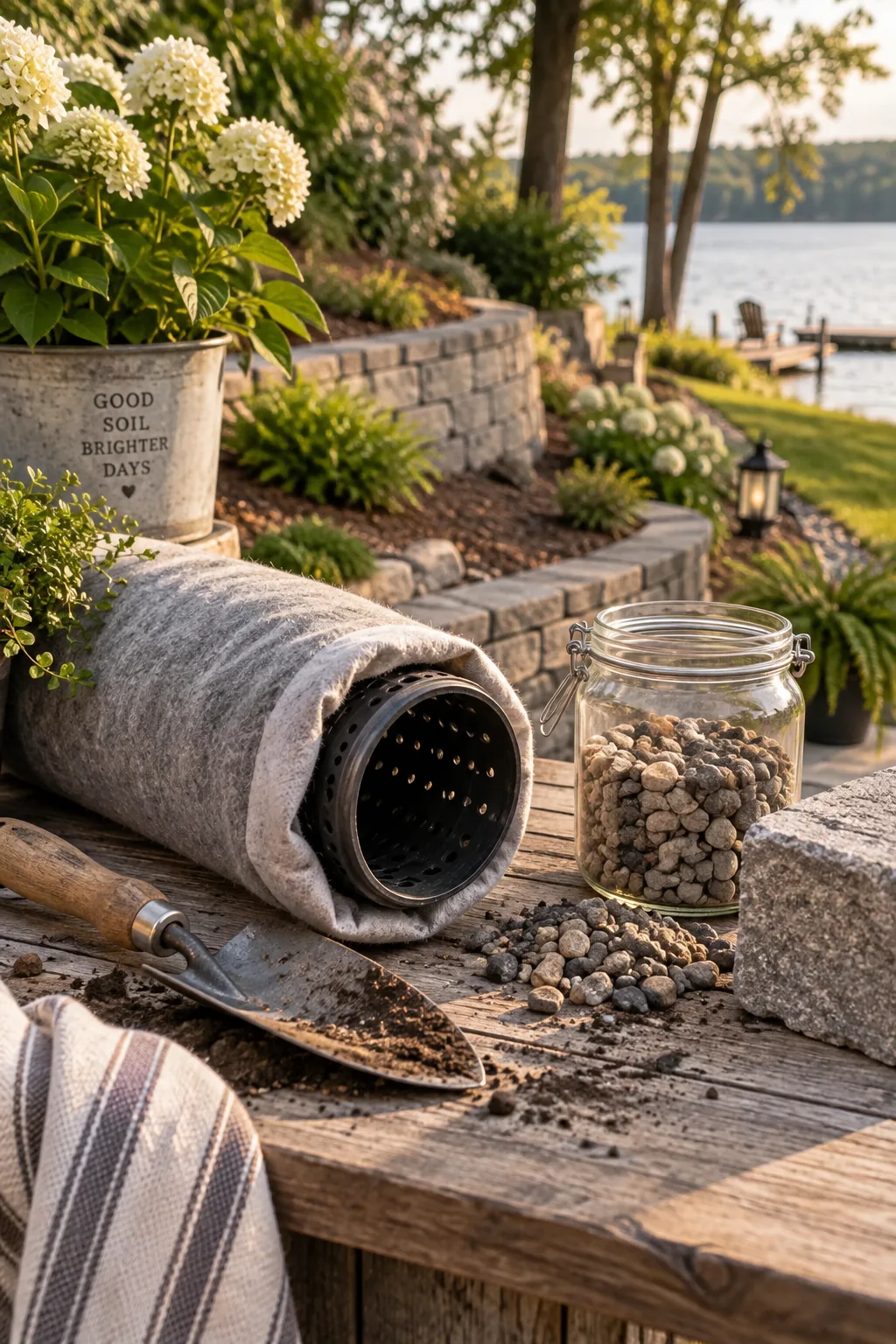
Install a french drain system behind any retaining walls on your slope to prevent hydrostatic pressure from building up. The hidden pipes will catch the groundwater and safely route it around your garden beds and stairs.
13. Build a Layered Rain Garden
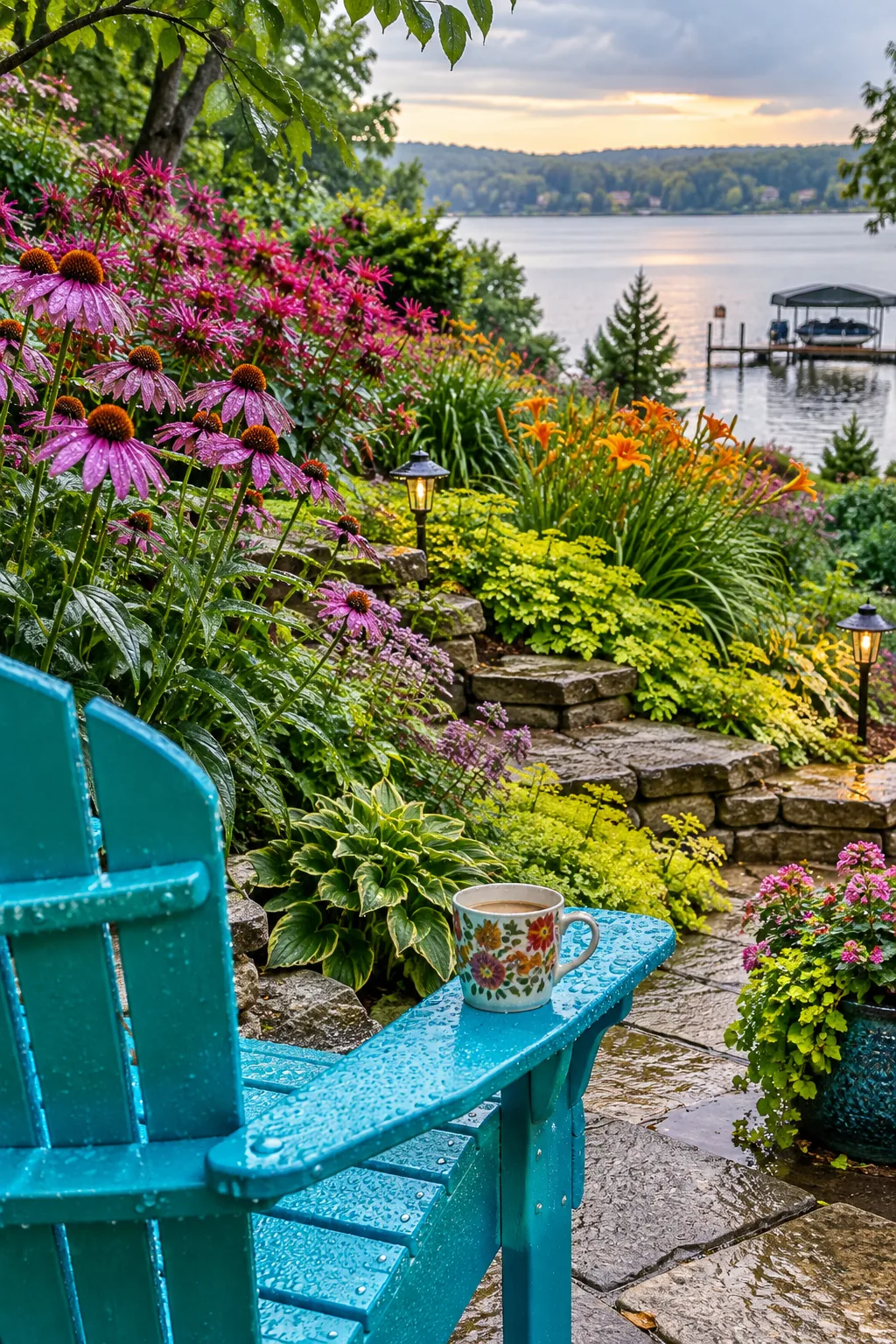
Layering different plant heights is the key to slowing down surface water runoff.
When rain hits a dense canopy of leaves, it breaks the impact before the water ever touches the bare dirt. You want to build a layered rain garden that absorbs the moisture naturally.
- Tall canopy trees for shade
- Mid-sized native shrubs
- Low creeping groundcovers
14. Secure the Shoreline Bank
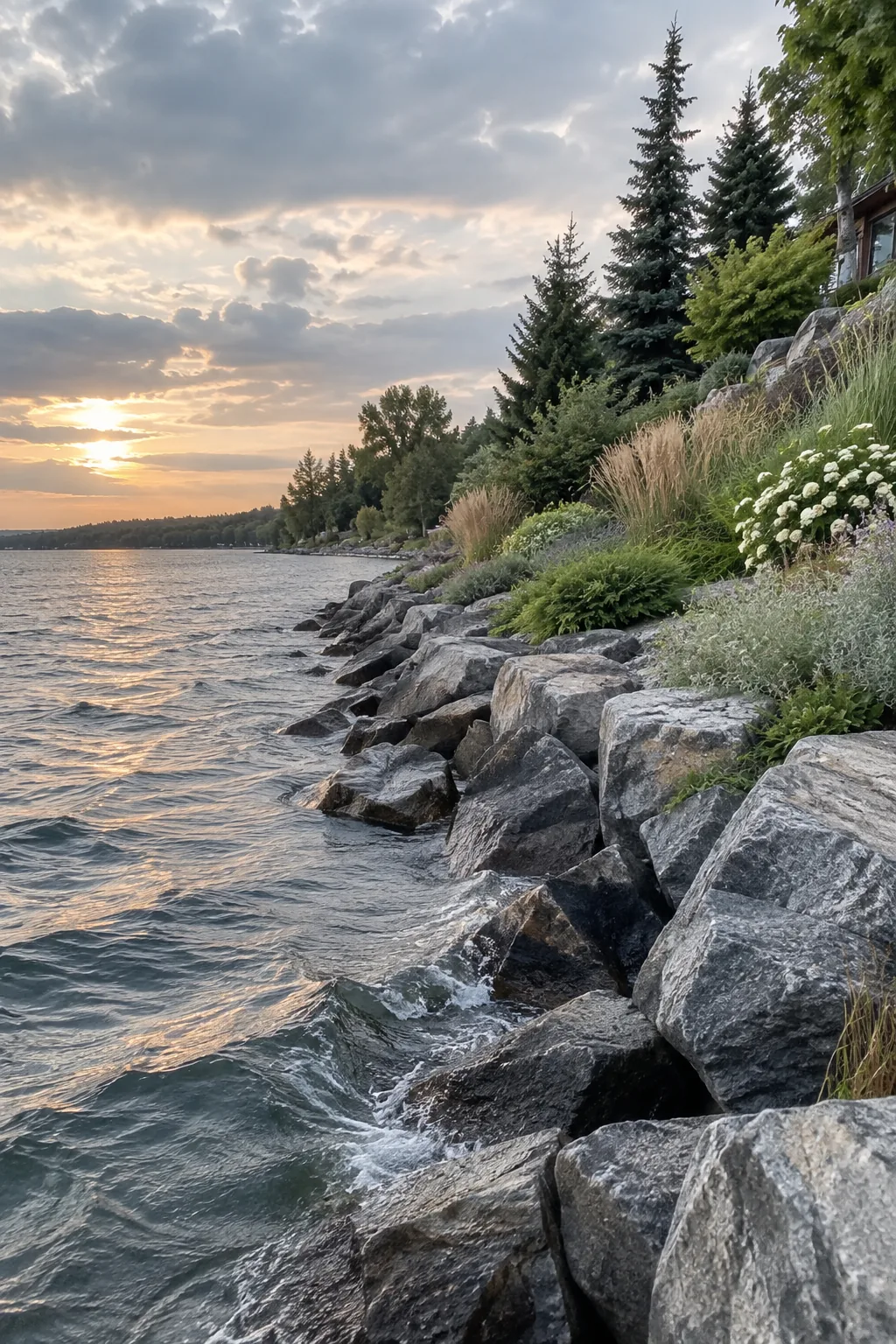
Slopes steeper than 45 degrees are incredibly prone to severe landslides during spring thaws. Securing the bank with heavy riprap stone right at the water's edge prevents the waves from undercutting your hill. The large, angular rocks lock together tightly to absorb the energy of boat wakes and choppy water.
It is a rugged, utilitarian look that does the heavy lifting for your shoreline.
15. Carve Out a Sunken Fire Pit
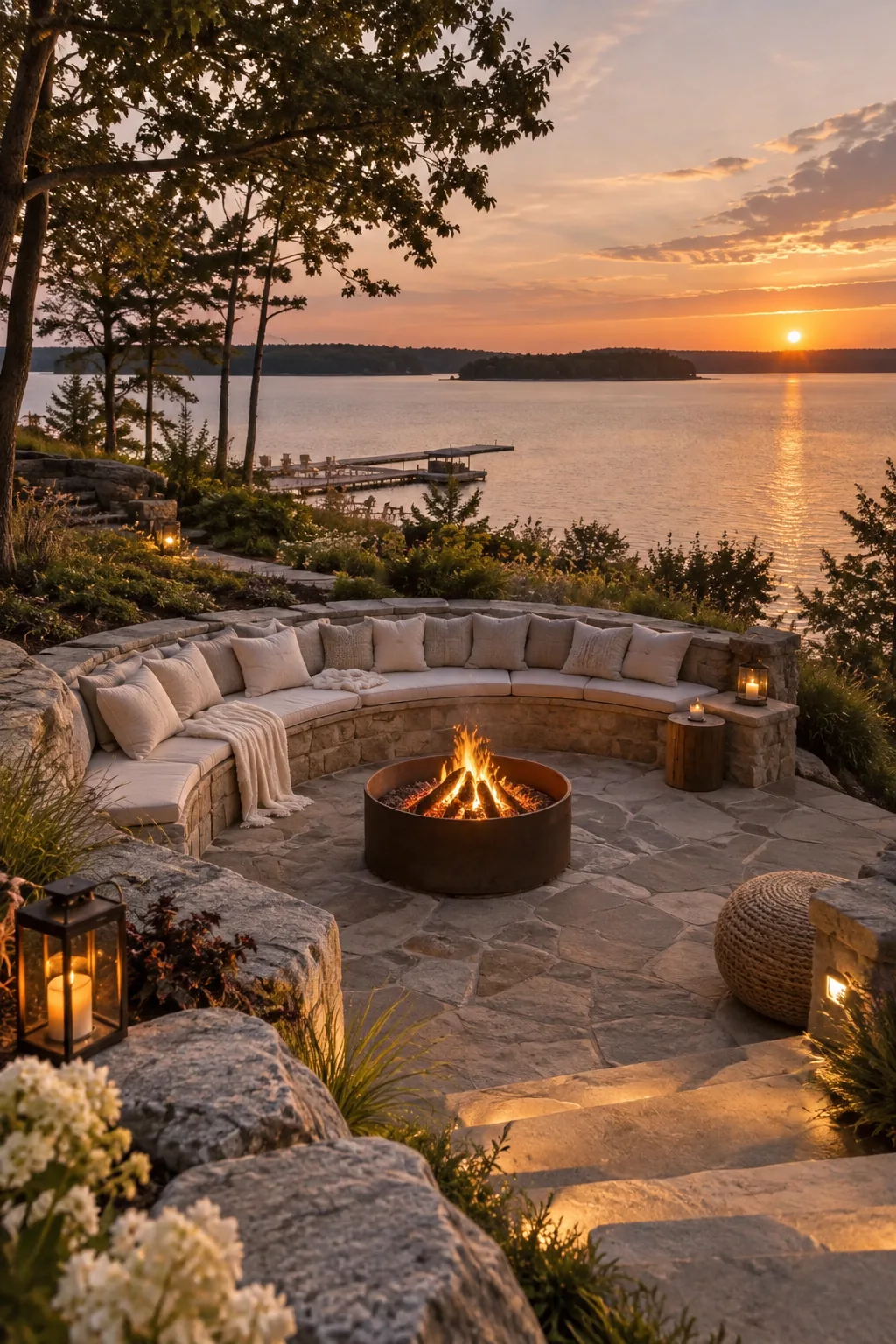
A sunken fire pit area cut into the hillside creates a cozy, wind-protected gathering space right by the water. You can carve out a half-circle and build a curved seating wall into the dirt bank to hold back the slope. Paving the floor with irregular flagstones makes the whole area feel like a natural extension of the rocky shore. It completely hides the fire pit from the main house while offering an unobstructed view of the lake. Add some soft outdoor cushions to the stone wall to make it comfortable for late-night s'mores.
16. Automate Hillside Watering
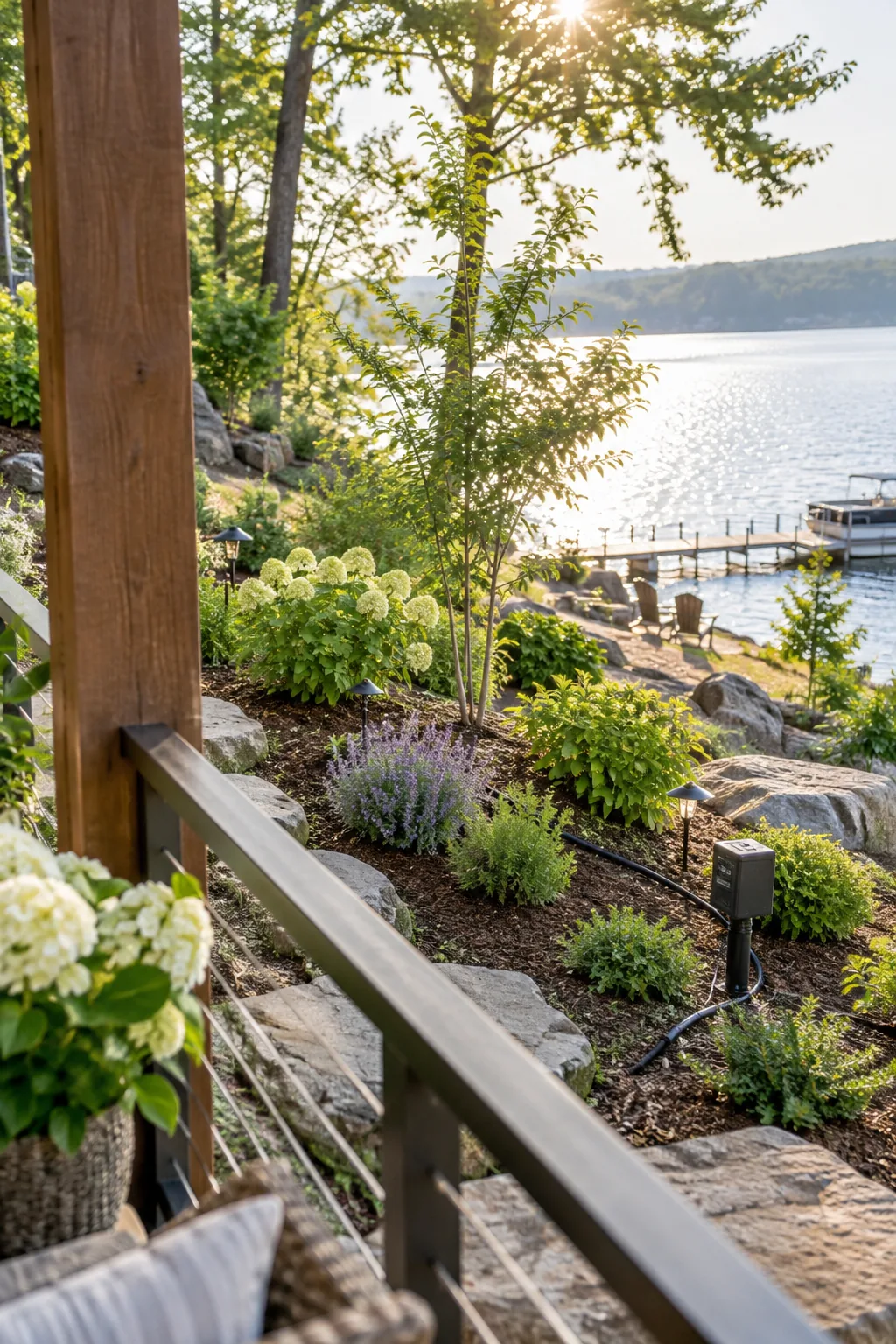
I learned the hard way that dragging a heavy hose down a hill is miserable.
Installing a drip irrigation system on a timer takes all the manual labor out of watering your slope. The slow drip allows the water to actually soak into the roots instead of immediately rolling down into the lake.
17. Leave a Natural Buffer Zone
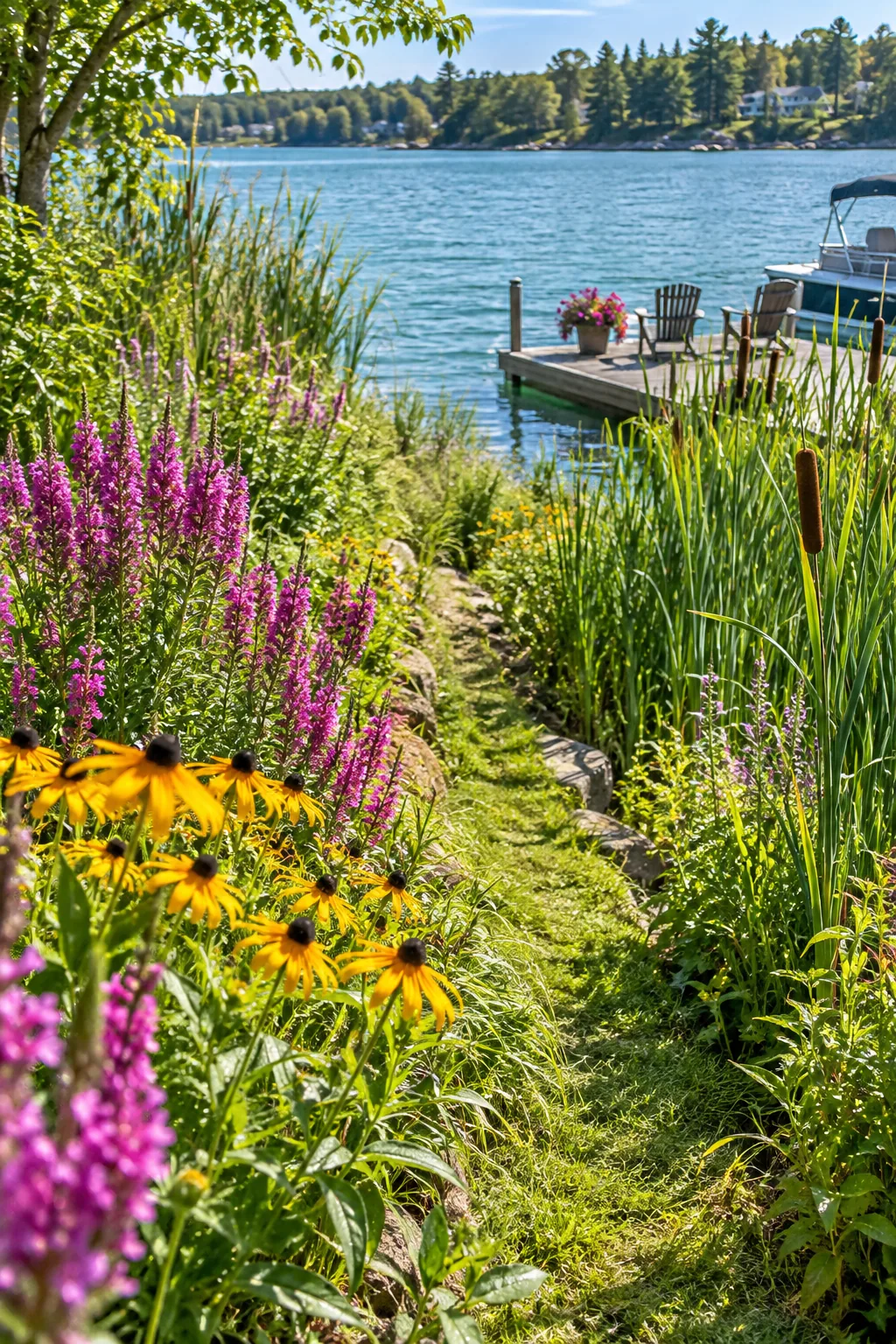
Most shoreline zoning laws require you to keep a specific percentage of your waterfront totally natural. Creating a buffer zone of untouched vegetation right at the water's edge keeps you compliant and protects the local ecosystem. You can simply clear a small, narrow path through the brush to access your dock while leaving the rest wild.
Why it works: A thick natural buffer filters out lawn fertilizers before they can cause algae blooms in the lake.
18. Plant Aggressive Spreaders
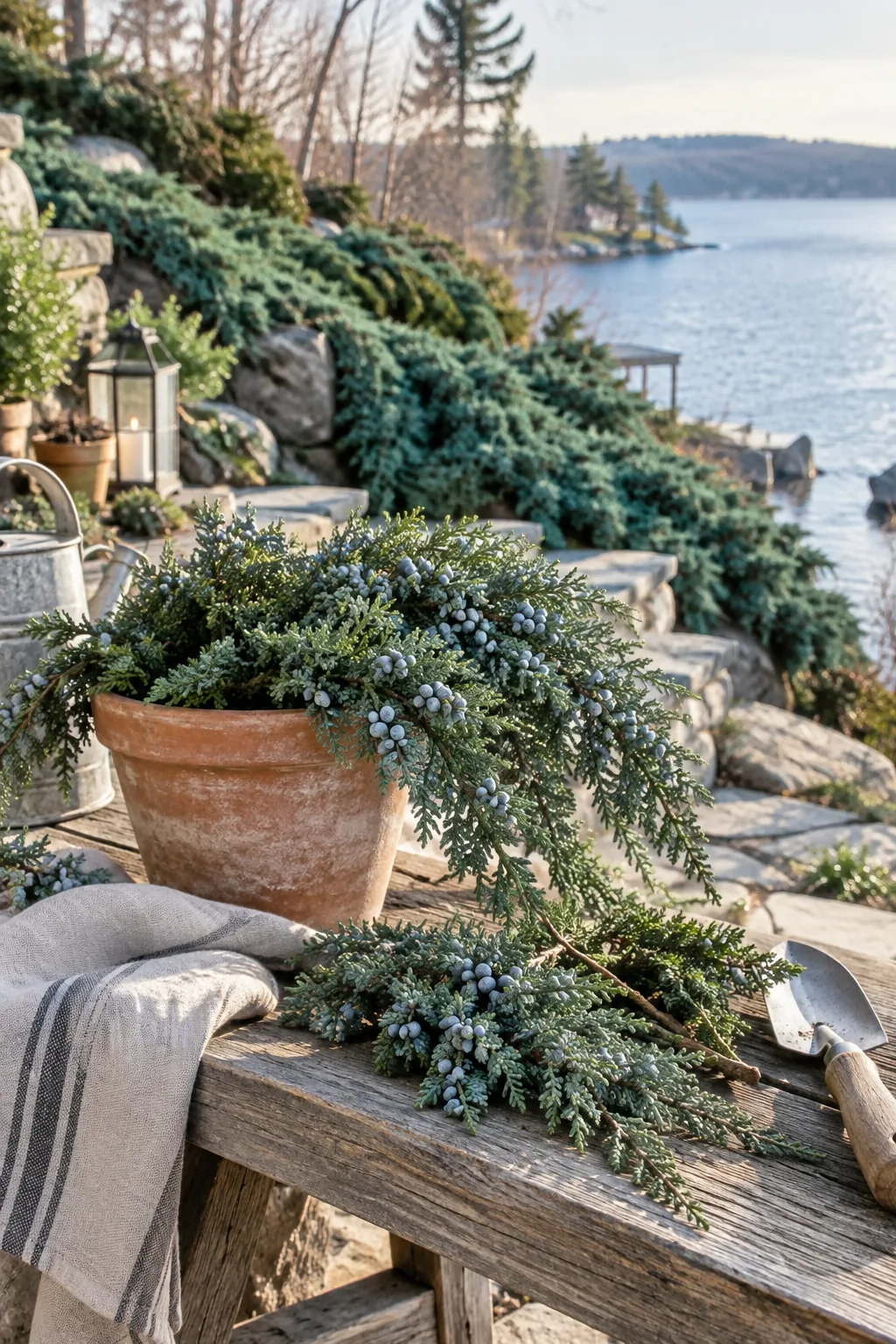
A continuous slide of lush greenery makes a steep drop look like a deliberate, beautiful garden feature. Planting aggressive spreaders like creeping juniper covers bare patches of dirt fast and chokes out invasive weeds. The evergreen branches cascade down the hill, giving you vibrant color even when the lake freezes over.
It is the ultimate plant-it-and-forget-it solution for massive, hard-to-reach hillsides.