
Cozy Office Setup Ideas: A Texture Checklist for All-Day Focus
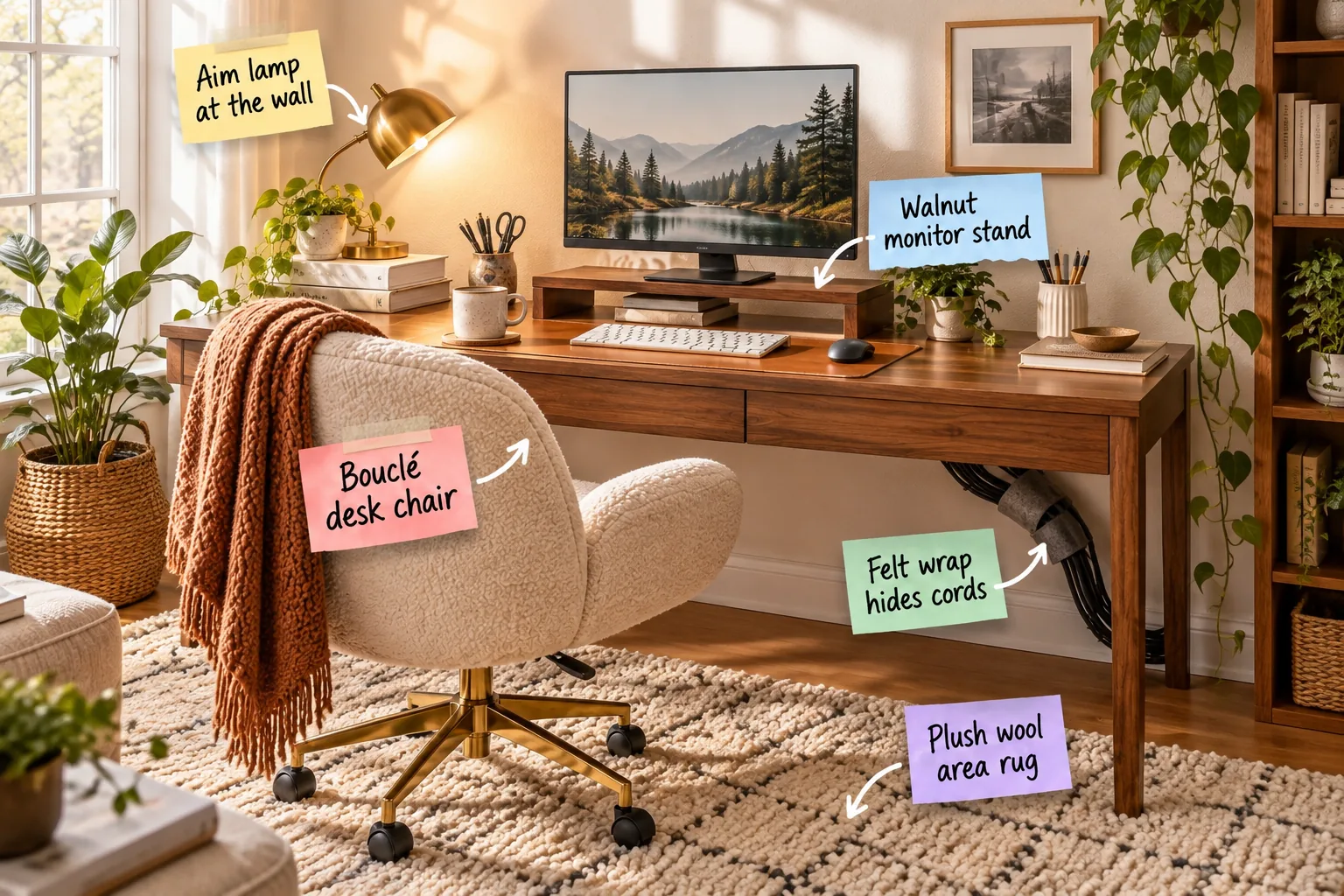
Transform your workspace into a warm, inviting haven with this step-by-step texture and lighting guide. You will be able to layer warm lighting, natural wood tones, and soft textiles to build a comfortable, focus-friendly workspace using our complete Cozy Office Lighting & Texture Checklist.
Anchor the Desk with a Plush Wool Rug
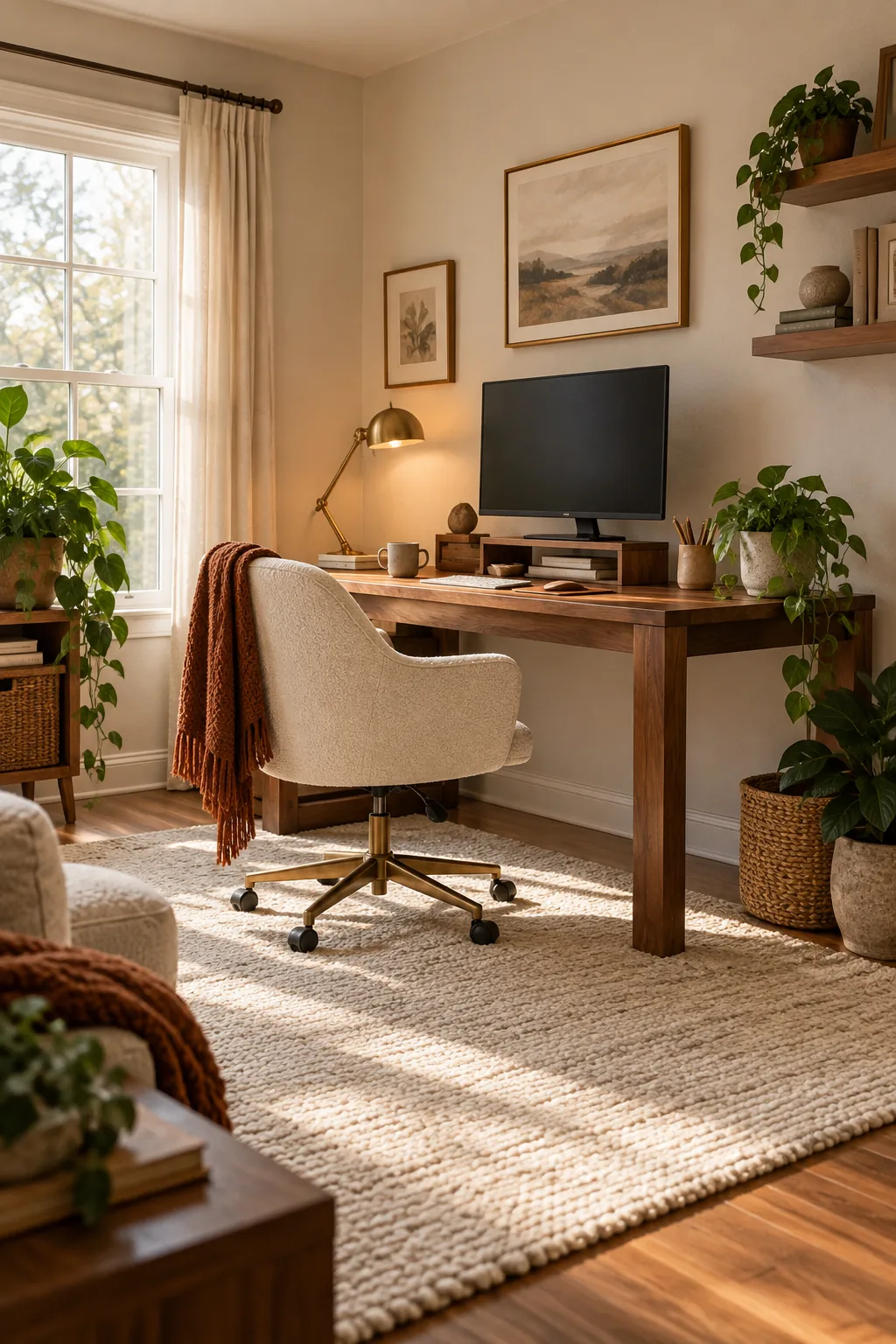
A thick plush wool area rug instantly grounds the workspace, absorbs harsh room echoes, and provides a soft foundation for your feet during long hours. Natural fibers regulate temperature beautifully, ensuring your office feels warm in winter and breathable throughout the summer.
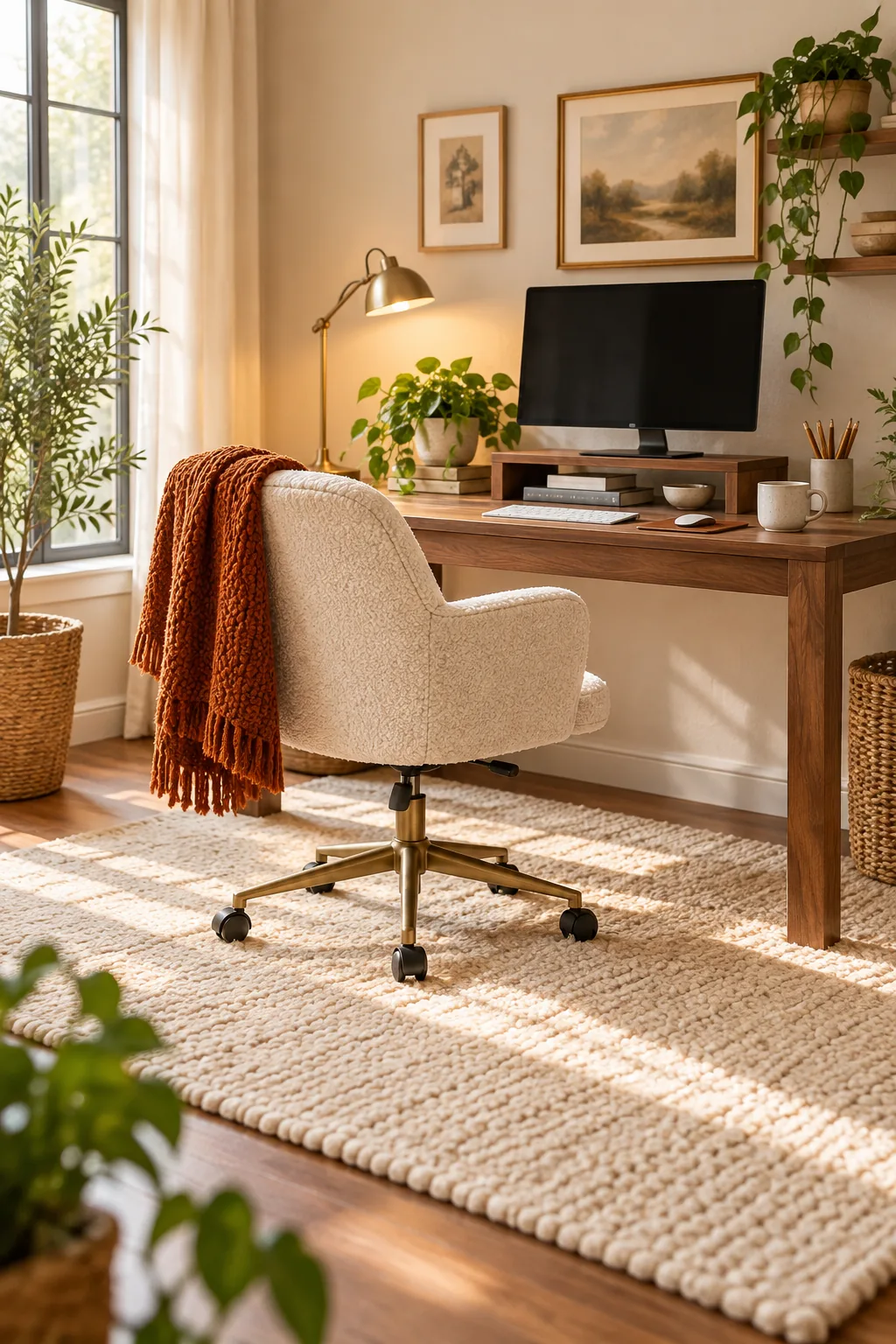
Extend the rug at least 24 inches behind the desk to allow your chair to roll comfortably without catching the bound edge. This generous sizing prevents frustrating snags and keeps the visual proportions of your floating furniture arrangement perfectly balanced.
Select the Right Rug Pad for Hardwood Floors
Placing a high-quality pad beneath your wool rug prevents dangerous slipping while protecting delicate hardwood finishes from abrasive friction. Choosing the correct thickness ensures your desk remains perfectly level and prevents heavy furniture legs from permanently denting the soft wood underneath.
- 1/4-inch felt pads: Ideal for heavy desks, providing firm support without unwanted compression.
- Rubber-backed felt: Adds essential grip for smaller rugs that tend to slide during chair movement.
- Memory foam profiles: Best avoided in offices, as they cause heavy chair casters to sink and stall.
Trim your rug pad approximately one inch shorter than the rug perimeter on all sides. This hidden setback allows the thick wool edges to taper gracefully toward the floor, eliminating a harsh step-off that could catch the wheels of your chair.
Choose a Bouclé Chair for Tactile Comfort
When I swapped my rigid leather seat for a bouclé desk chair in my Denver home office, I immediately noticed the difference during long drafting sessions. The textured fabric adds essential sensory warmth, transforming a sterile workstation into an inviting retreat.
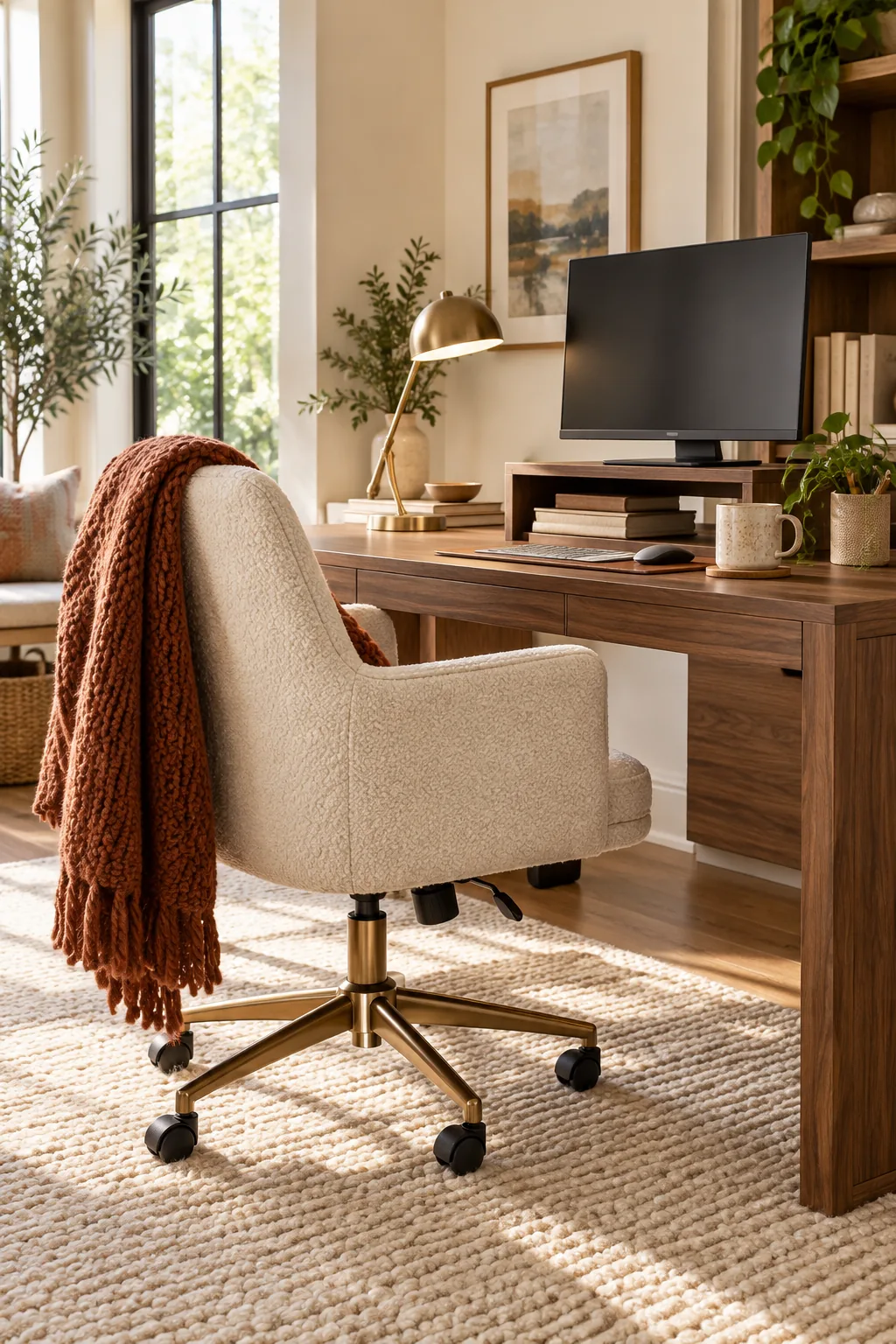
Breathable bouclé or sherpa materials prevent the cold, rigid feel of standard corporate seating while actively dissipating trapped body heat. This natural air circulation keeps you comfortable and focused, eliminating the distracting stickiness often associated with synthetic chairs during intense deadlines.
Match Caster Wheels to Your Flooring Type
Standard hard plastic casters can permanently scar delicate wood floors and crush the fibers of your beautiful new wool rug. Upgrading your chair wheels to match your specific floor material creates a silent, frictionless glide that protects your investment and enhances comfort.
| Flooring Type | Recommended Caster | Material Benefit |
|---|---|---|
| Plush Wool Rug | Hard Nylon or Steel | Rolls smoothly over thick fibers without bogging down. |
| Hardwood or Tile | Soft Polyurethane | Grips the slick surface and prevents deep scratches. |
| Low-Pile Carpet | Standard Dual-Wheel | Distributes weight evenly across tight synthetic loops. |
Check the stem diameter of your current chair base before ordering replacement wheels, as most premium seating brands utilize a universal 11mm grip ring stem. Popping in the correct casters takes only five minutes but extends the life of your textiles significantly.
Elevate Screens on a Walnut Monitor Stand
Introducing a walnut monitor stand brings organic warmth to the center of your visual field while breaking up the harsh plastic geometry of your tech equipment. The rich, natural wood grain provides a calming focal point that subtly anchors the desktop.
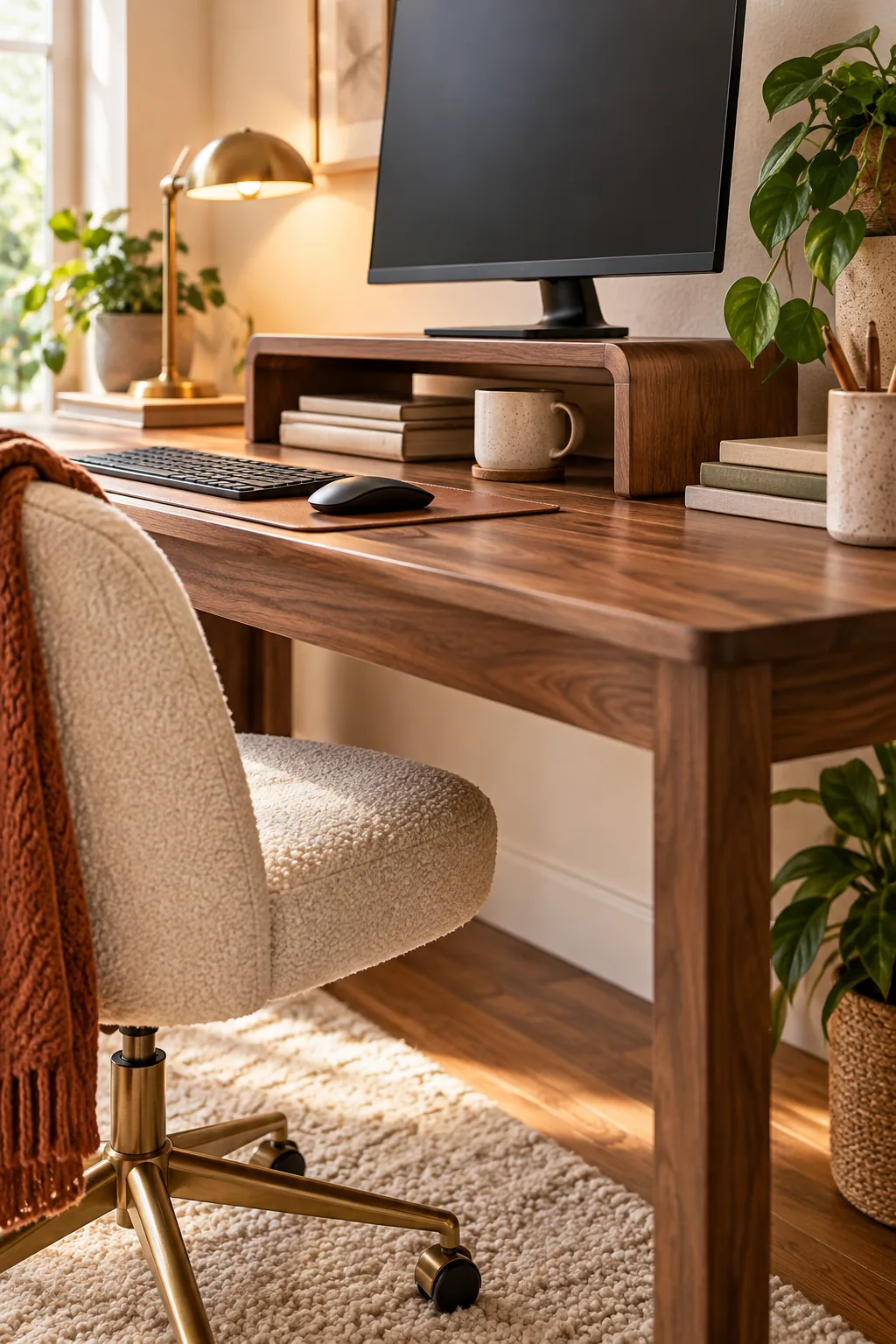
Aim for a riser height of 4 to 6 inches to bring the top third of the screen directly to your natural eye level. This precise ergonomic adjustment prevents chronic neck strain, encourages upright posture, and creates a functional storage cavity underneath.
Organize Essentials Under the Wood Riser
The negative space created beneath your new wooden monitor stand offers the perfect hiding spot for daily analog tools that otherwise clutter your pristine workspace. Structuring this shallow zone keeps your most crucial instruments accessible yet visually quiet during deep concentration.
- Stow the keyboard: Push your wireless keyboard underneath at the end of the day to reclaim desk space.
- Stack reference notebooks: Keep two small leather-bound journals flat on the left side for quick meeting notes.
- Corral loose pens: Place a shallow ceramic tray on the right side to catch stray writing utensils.
Maintaining strict discipline over this small storage footprint prevents the area from devolving into a chaotic junk drawer. By limiting the contents to only what you touch daily, you preserve the calm, intentional atmosphere required for sustained creative output.
Conceal Cables with a Soft Felt Wrap
Replacing harsh plastic zip ties with a flexible sleeve where a felt wrap hides cords instantly softens the technology footprint of your workstation. This simple tactile upgrade transforms a chaotic web of black wires into a streamlined element that blends into shadows.
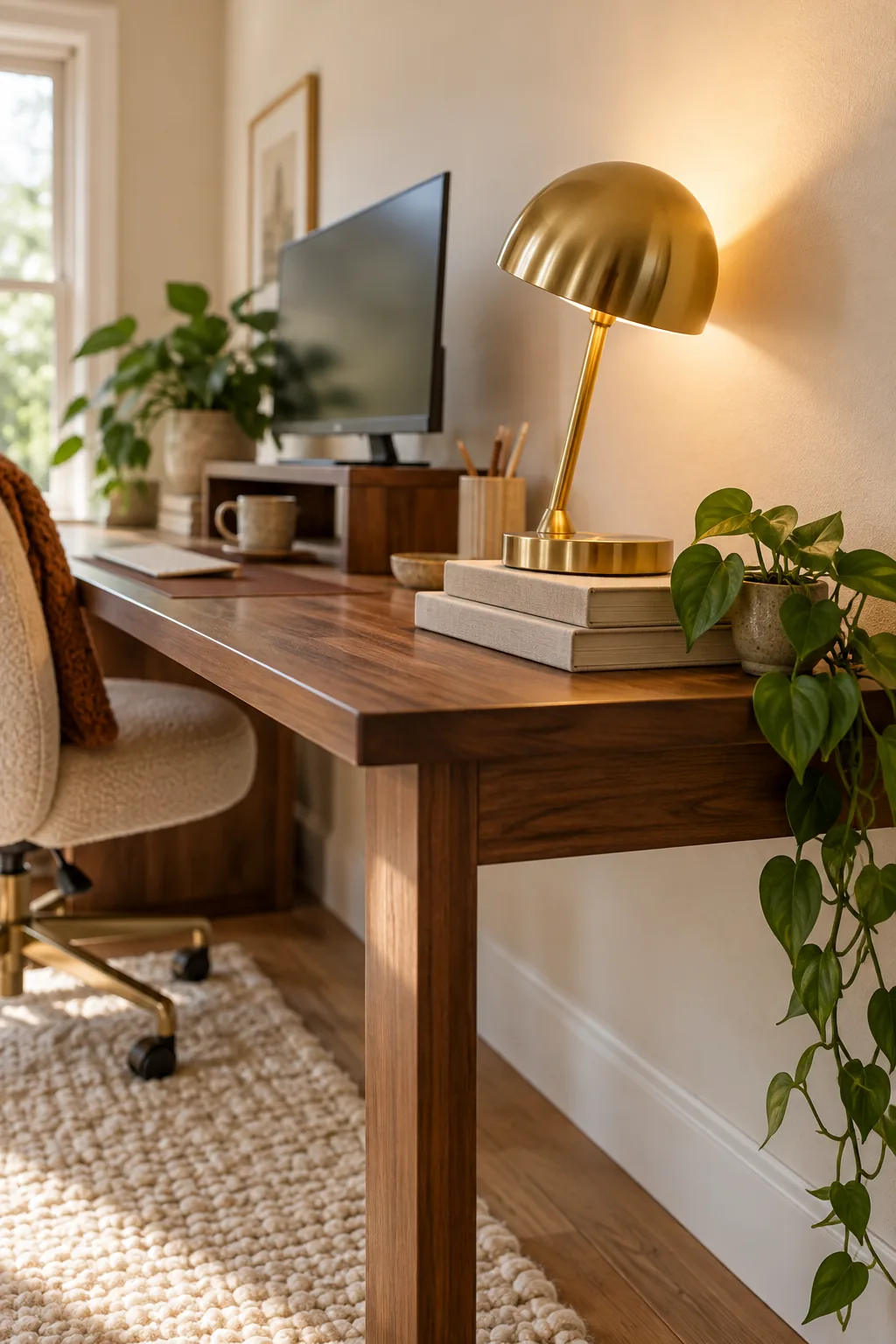
Bundle the heavy monitor, power, and peripheral cords tightly together beneath the back desk edge before securing the velcro closure. Routing this unified felt column straight down the back leg removes visual clutter, ensuring your eyes rest only on beautiful natural materials.
Route Power Strips Out of Sight
Leaving a bulky surge protector resting on your beautiful wool rug completely undermines the serene, curated aesthetic of your new workspace. Elevating the power source off the floor makes vacuuming effortless and keeps accidental foot tangles from yanking sensitive equipment off the desk.
Aim the Task Lamp at the Wall
Bouncing my brass lamp off the wall completely cured my afternoon headaches, proving that you must aim lamp at the wall for genuine visual comfort. This indirect technique eliminates harsh screen glare and casts a soft ambient glow across the desk.
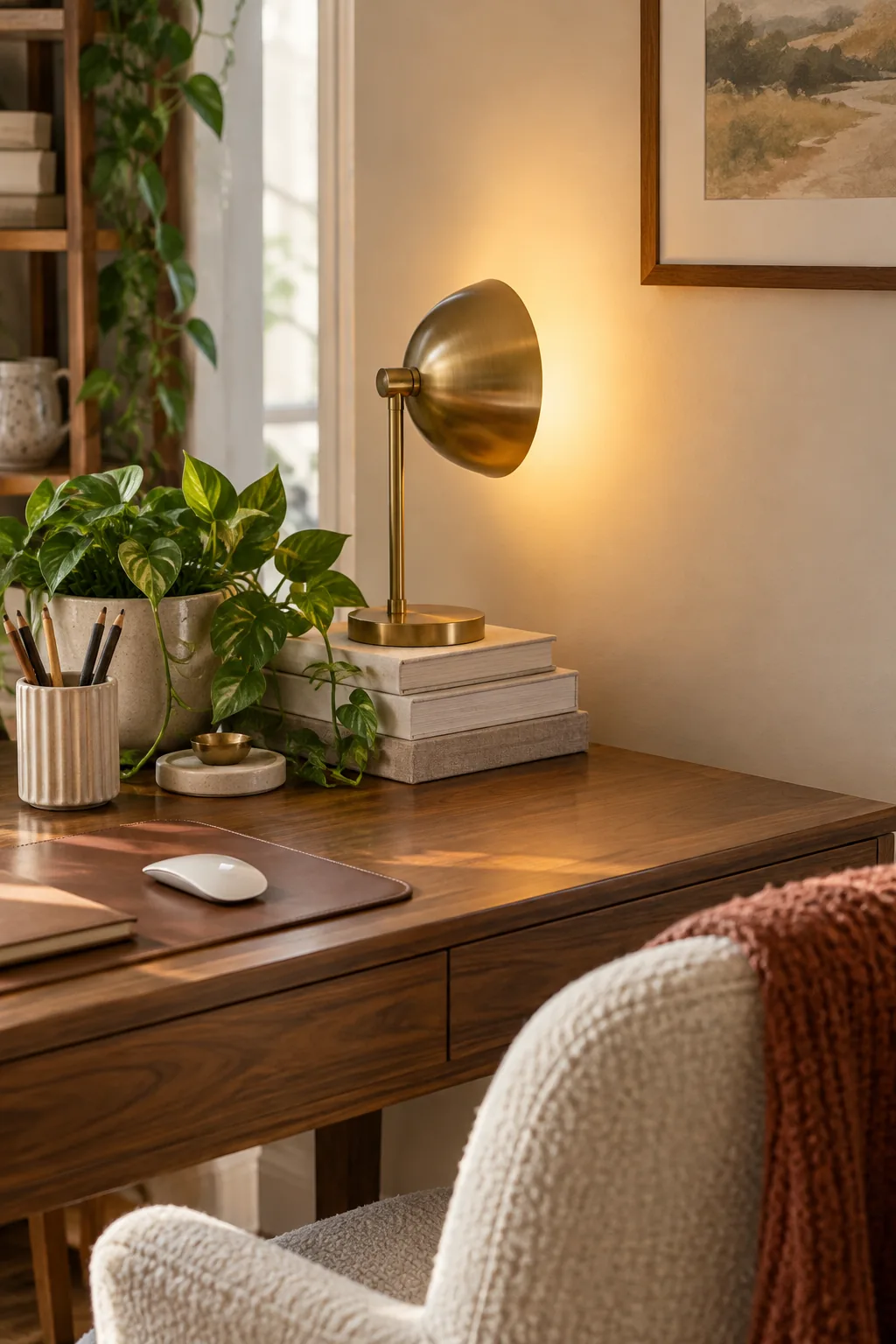
To get the most out of this indirect lighting technique, the bulb’s color temperature must match the room’s warm aesthetic perfectly. Mixing stark blue utility lighting with organic textures will instantly destroy the cozy atmosphere you have worked so hard to build.
Introduce Natural Greenery to the Desktop
I always keep a trailing pothos on my desk to soften the hard edges of my dual monitors and inject vibrant life into the workspace. Organic shapes provide a necessary visual break from rigid tech rectangles, helping your eyes relax between intense sessions.
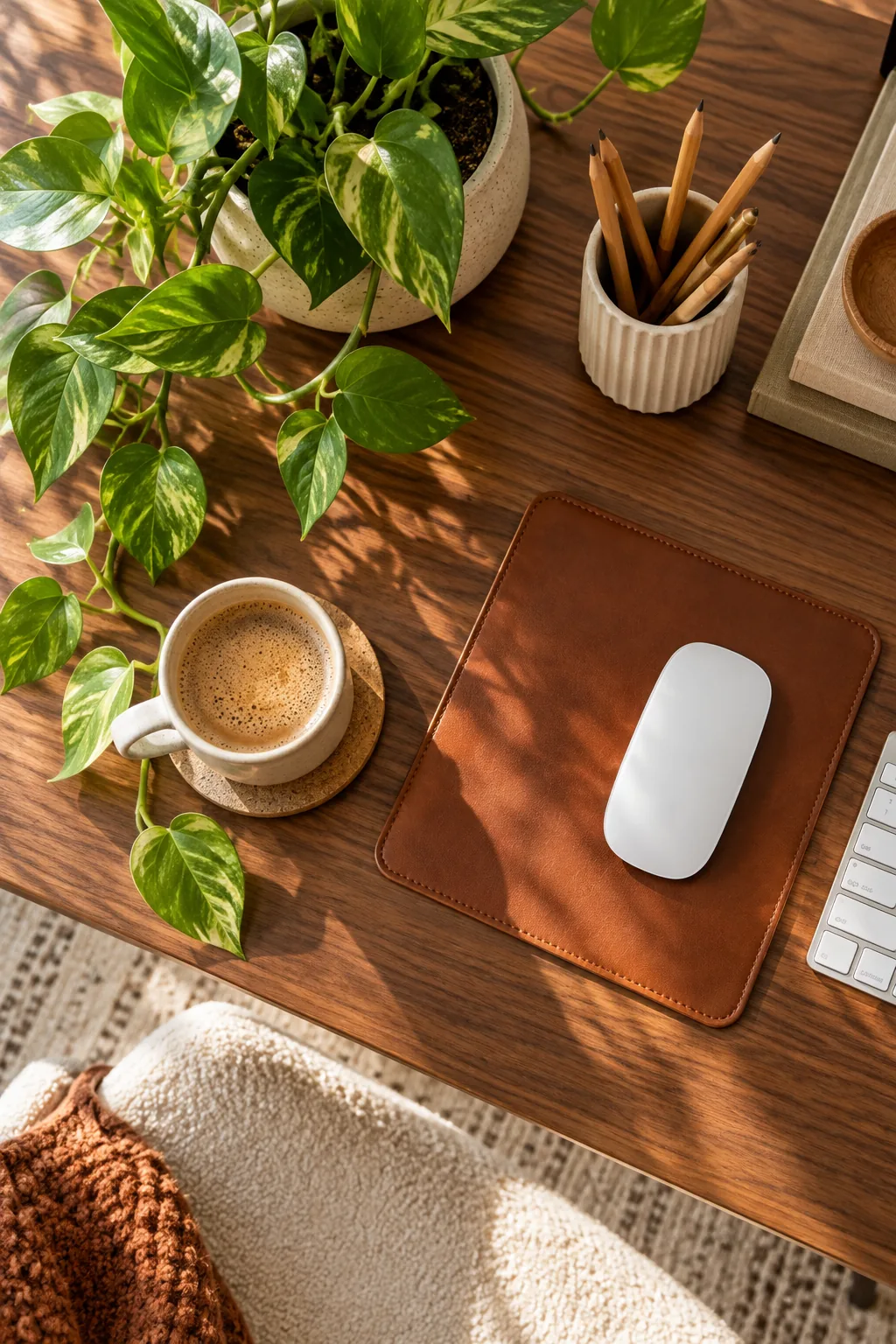
Place a small fern or trailing vine in a heavy ceramic planter near your warm light source to cast beautiful, shifting shadows across the walnut surface. The subtle movement of the leaves adds a calming, dynamic layer to an otherwise predictable environment.
Select Low-Maintenance Plants for Low Light
If your home office lacks expansive windows, selecting resilient plant varieties like a dark green ZZ plant ensures your desktop greenery thrives without demanding constant attention. These hearty species tolerate dry indoor air beautifully, forgiving the occasional missed watering during incredibly busy project weeks.
Curate Minimal Desktop Accessories
Beyond your essential greenery, strictly limit decorative items to one or two meaningful pieces, such as a heavy brass paperweight or a framed structural photograph. Curating your accessories with absolute ruthlessness prevents visual noise from slowly creeping into your peripheral vision and breaking your focus.
Control Natural Window Glare
If your newly styled wooden desk sits directly opposite a bright window, install sheer linen shades to filter the incoming daylight. Softening the harsh midday sun prevents extreme contrast ratios on your screen, ensuring your carefully balanced task lighting remains effective and your eyes stay relaxed.
Position the Monitor for All-Day Focus
In my studio, adjusting the screen depth was the missing link for sustained energy, connecting our cozy aesthetic directly to practical daily productivity. Setting the correct physical distance prevents the subtle, unconscious forward lean that slowly destroys your posture and strains your lower back.
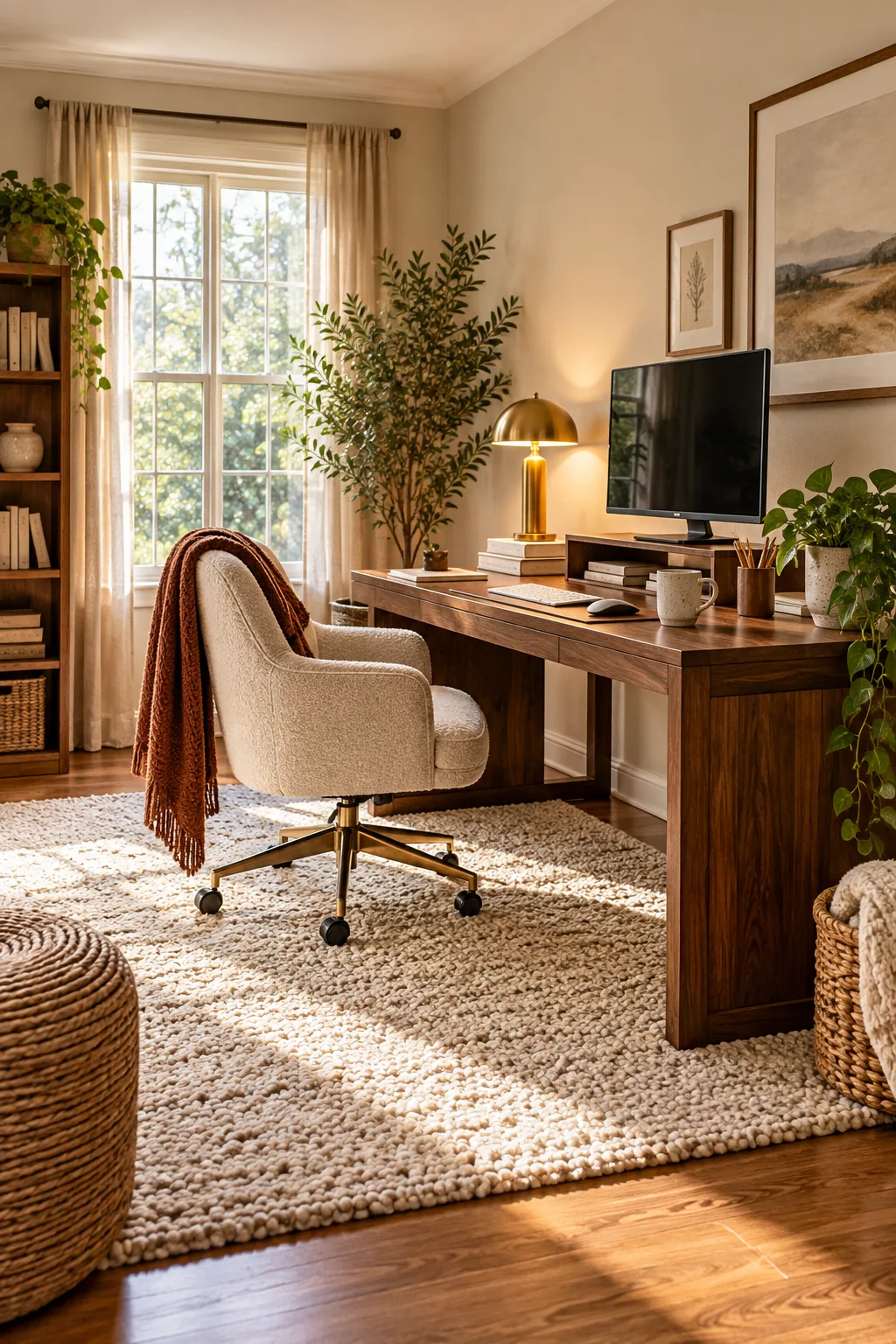
Keep the monitor roughly an arm’s length, or 20 to 30 inches, away from your face to prevent severe eye fatigue. This optimal spacing allows your eyes to easily scan the entire screen without requiring constant, fatiguing micro-adjustments of your neck and shoulders.
More Cozy Office Style Ideas
Explore these different aesthetic approaches to building a warm and inviting workspace.
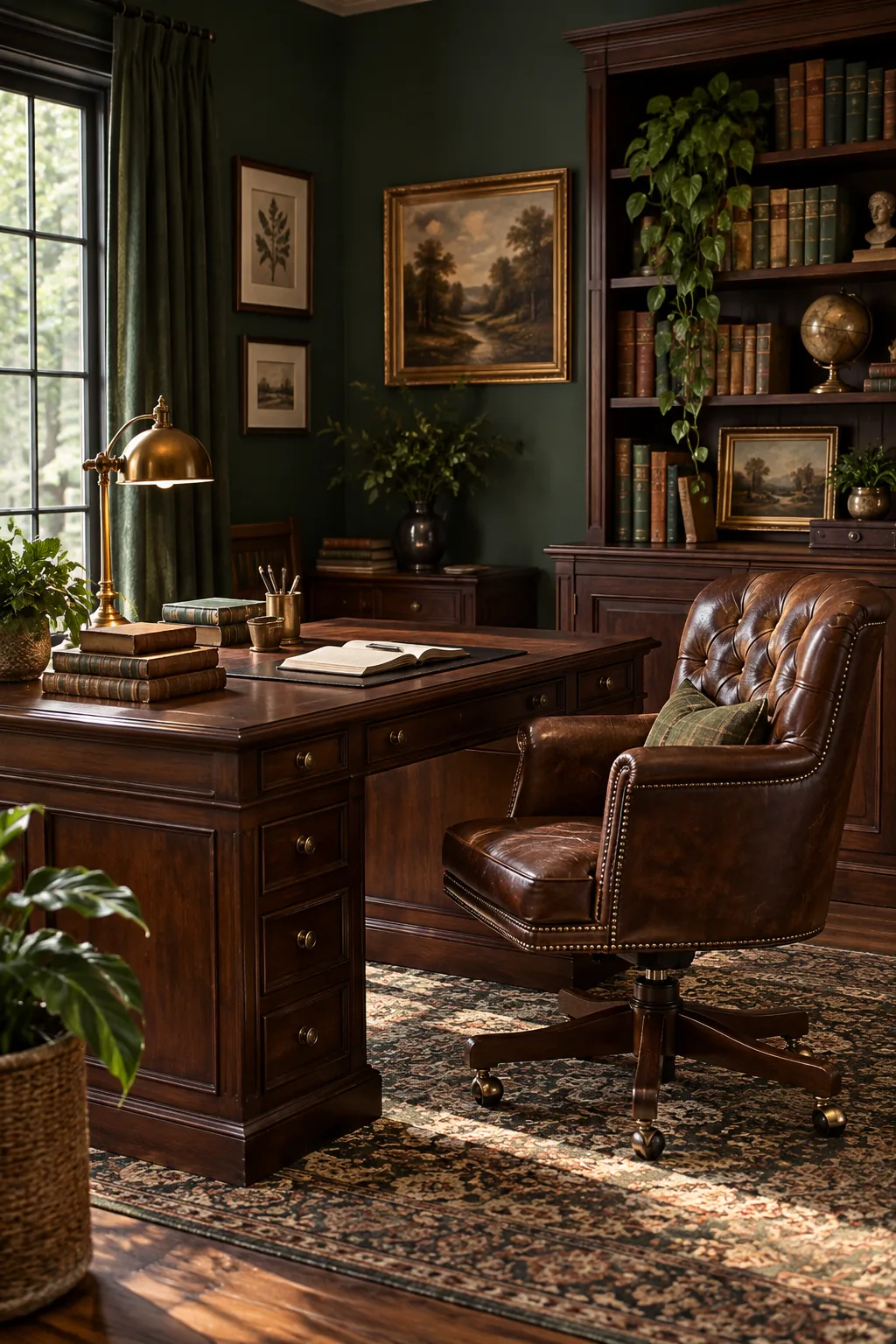
Moody Dark Academia Office: Deep green walls and rich mahogany wood create a sophisticated, library-inspired atmosphere perfect for focused reading.
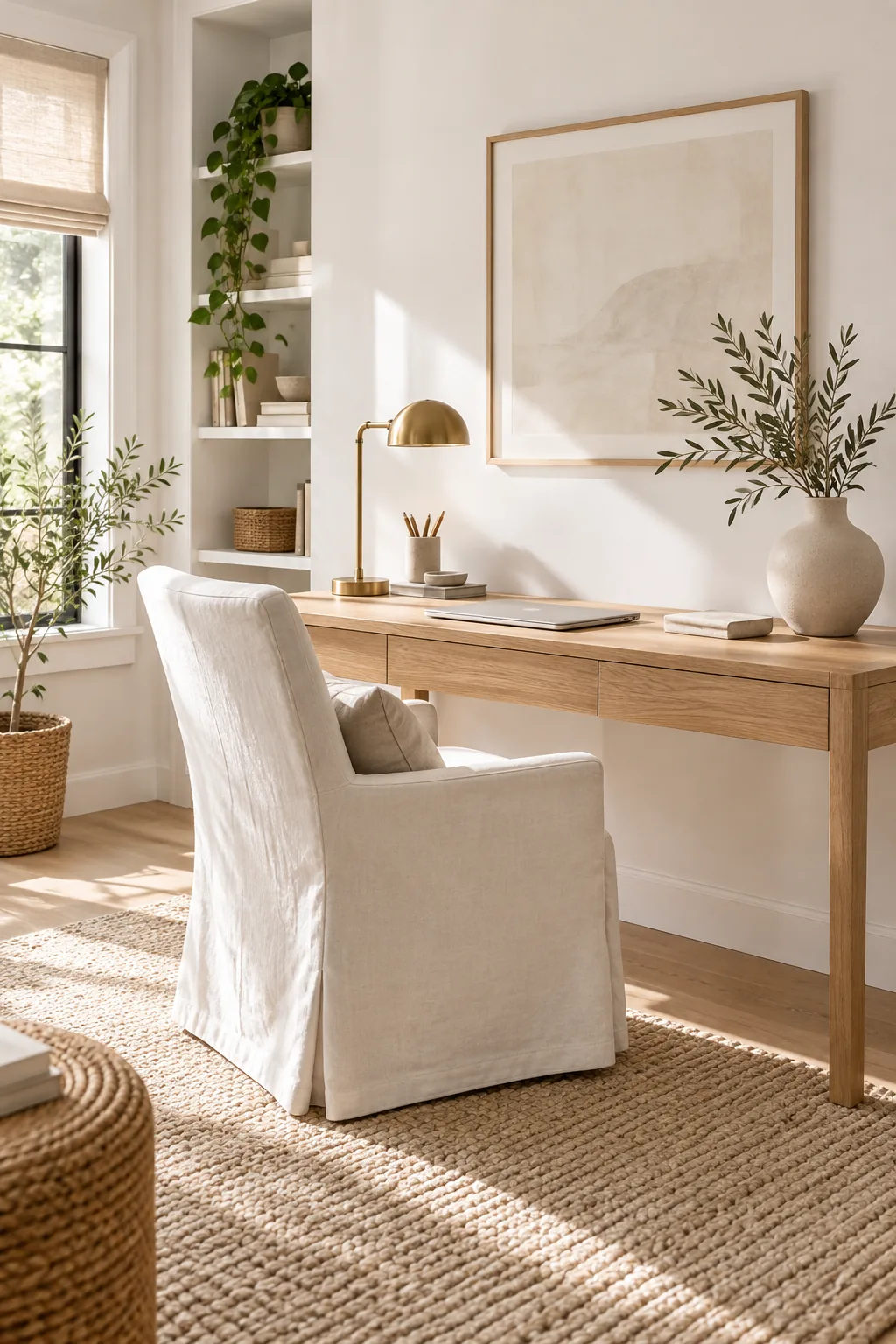
Minimalist Scandinavian Workspace: Light ash wood and crisp white linen keep the visual noise to an absolute minimum for a clear mind.
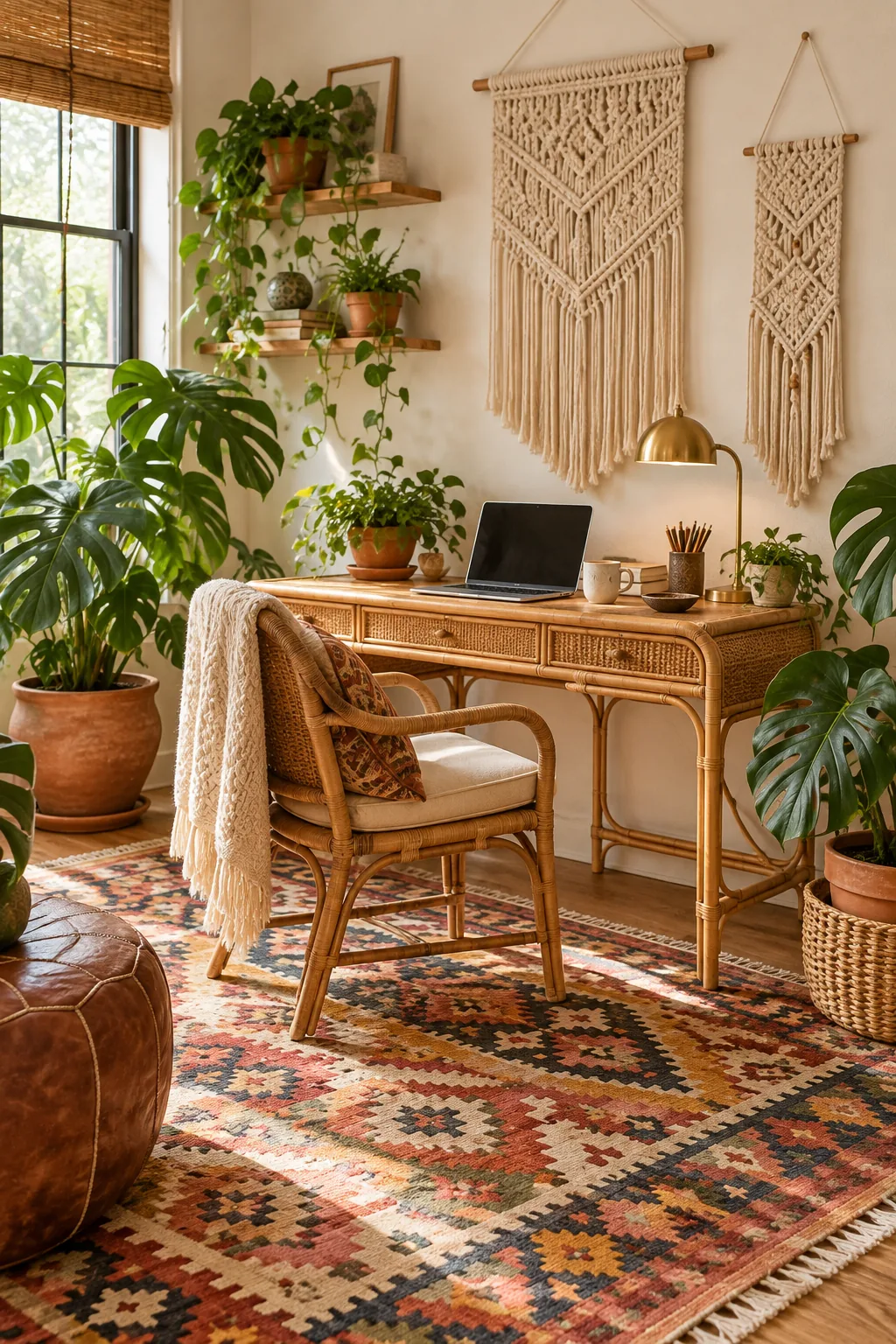
Boho Eclectic Plant Haven: Layering vibrant kilim rugs with abundant trailing plants brings an energetic, creative warmth to the daily grind.
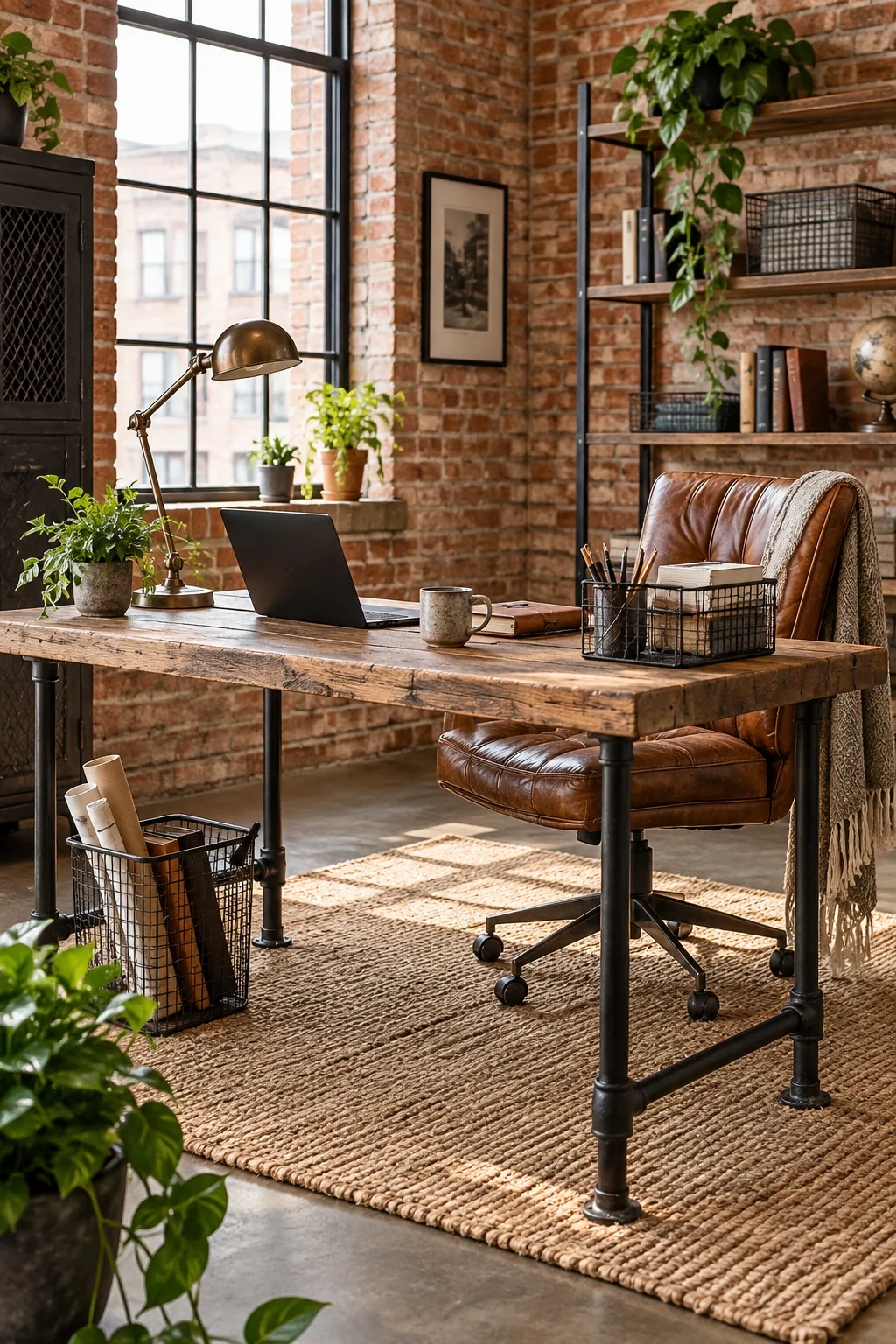
Modern Industrial Loft Desk: Raw exposed brick and matte black metal hardware provide a grounded, structured environment that feels incredibly durable.
The Cozy Office Texture Checklist
Recreating this warm, inviting workspace requires a deliberate balance of organic materials, sound-dampening fabrics, and carefully controlled ambient illumination. By treating your functional office equipment as tactile decor, you build an environment that genuinely supports deep concentration and long-term professional wellbeing.
Review this quick inventory of materials and lighting adjustments to guarantee your desk setup is fully optimized for comfort before you begin your next major project.