
9+ Brilliant Under Stair Closet Storage System Ideas
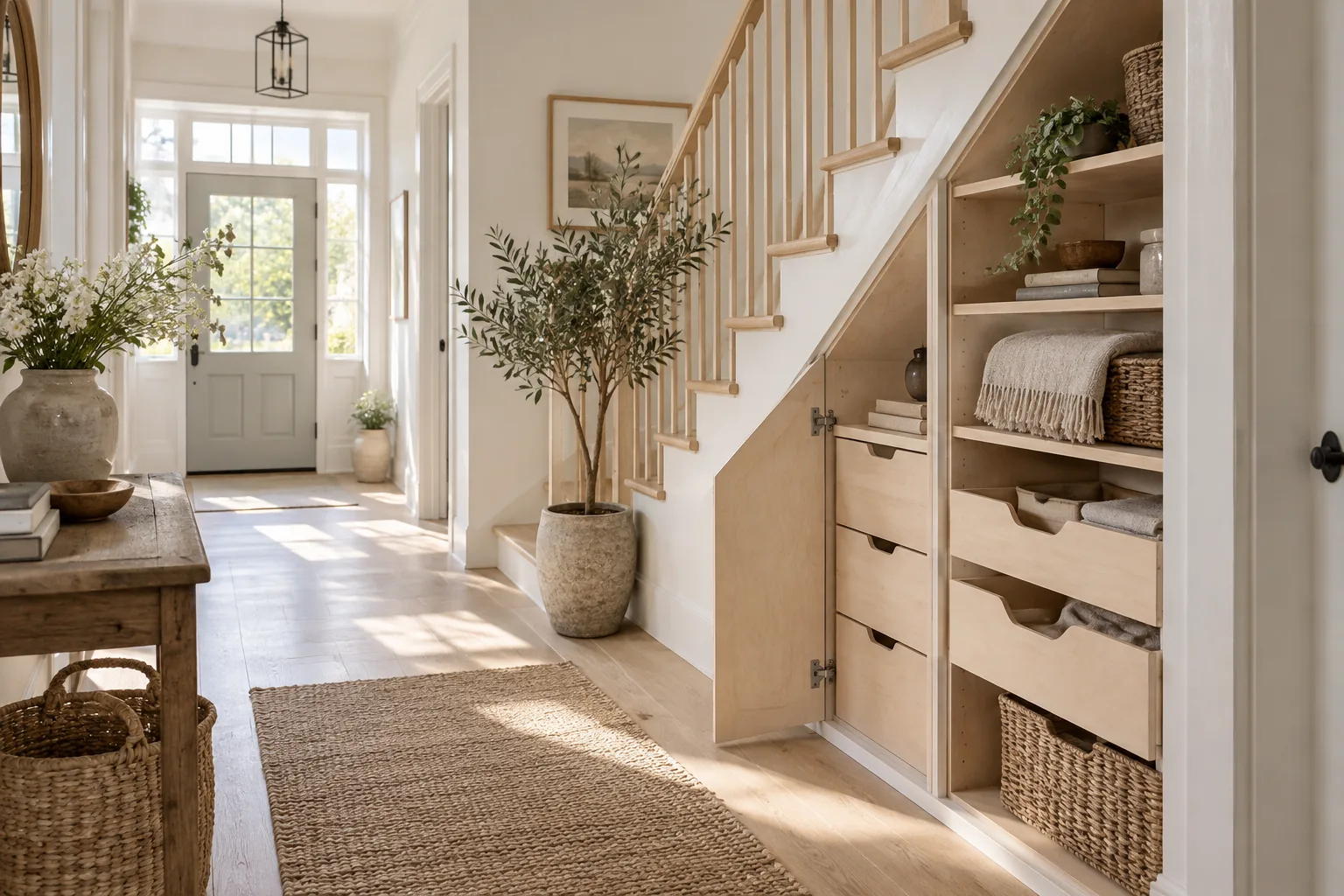
That awkward triangle under your stairs is basically a goldmine for hidden storage if you plan it right. I am going to show you exactly how to turn that wasted footprint into a highly functional drop zone or utility closet.
1. Install Deep Pull-Out Drawers
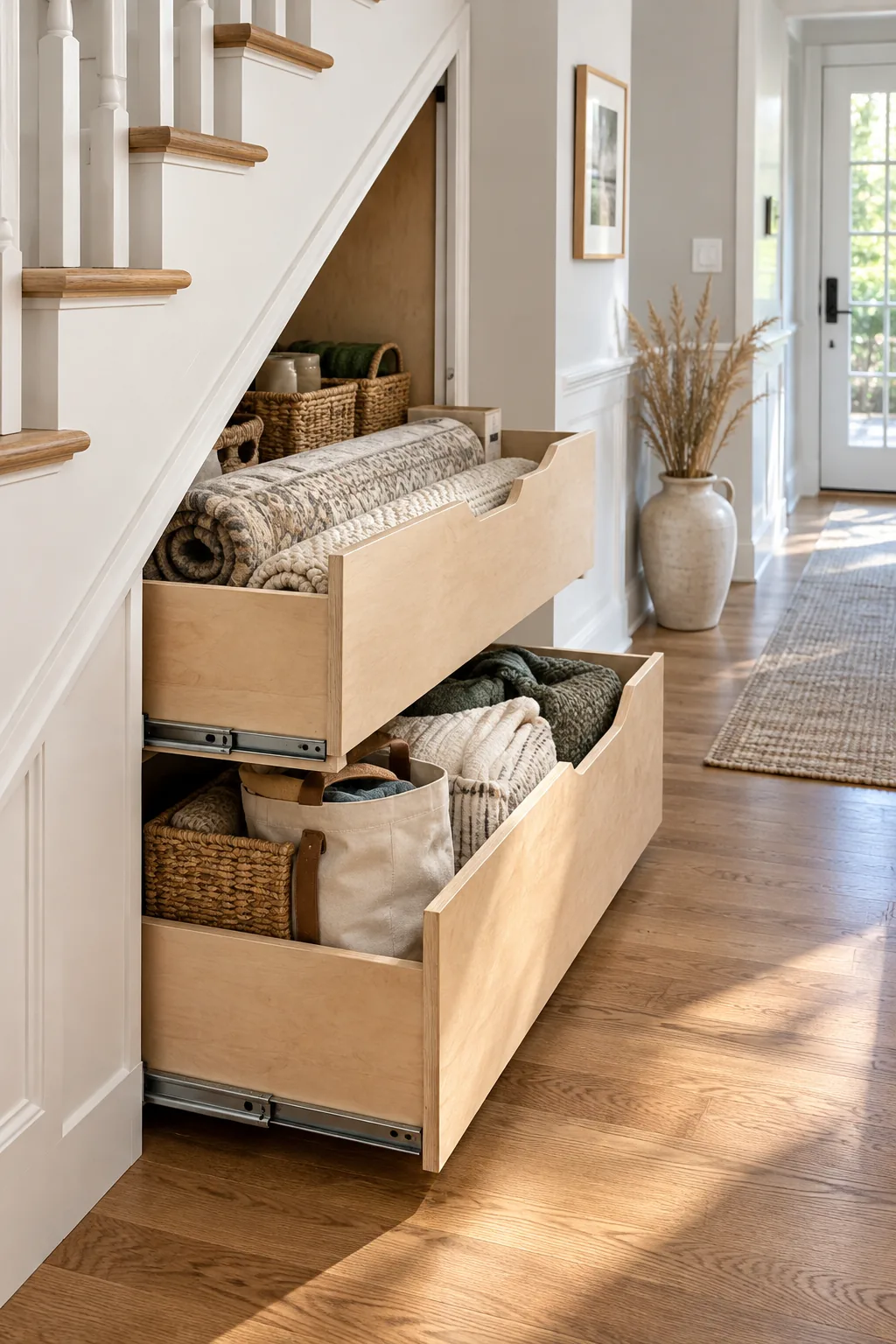
The deepest part of your under-stair cavity is notoriously hard to reach. Installing heavy-duty pull-out drawers completely changes how you use this space.
You just slide the drawer out to grab what you need. It keeps items from getting lost in the dark back corners.
This setup is perfect for storing bulky essentials.
- Winter coats on hooks
- Tall vacuum cleaners
- Oversized travel luggage
2. Create a Built-In Mudroom
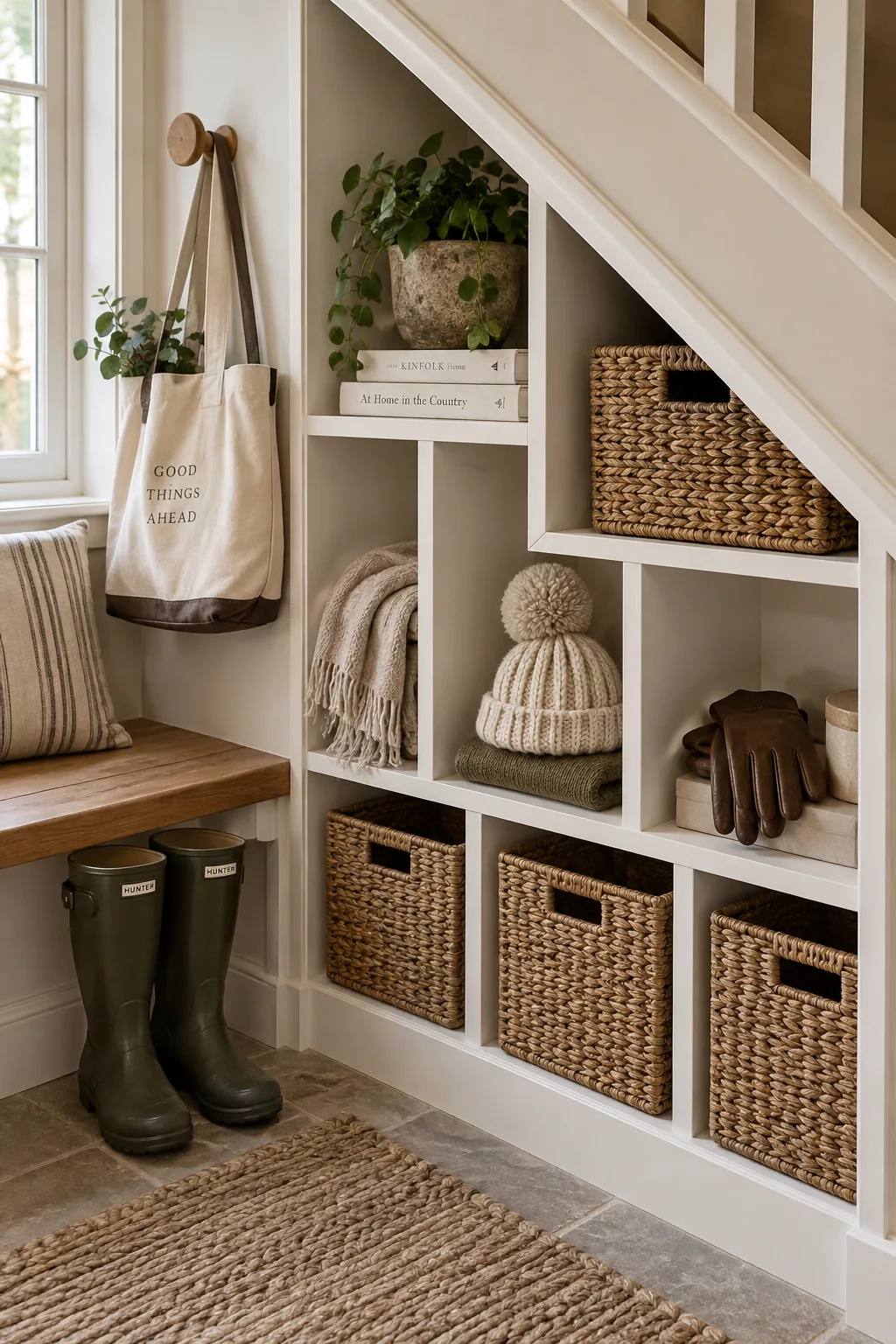
A grid of crisp white cubby shelves gives this awkward area a clean, built-in mudroom aesthetic. You can assign a specific row to each family member to keep the daily chaos contained. Add a few textured woven baskets on the lowest levels to hide shoes and random accessories.
Why it works: The uniform square compartments visually break up the harsh diagonal line of the ceiling.
3. Use Staggered Hanging Rods
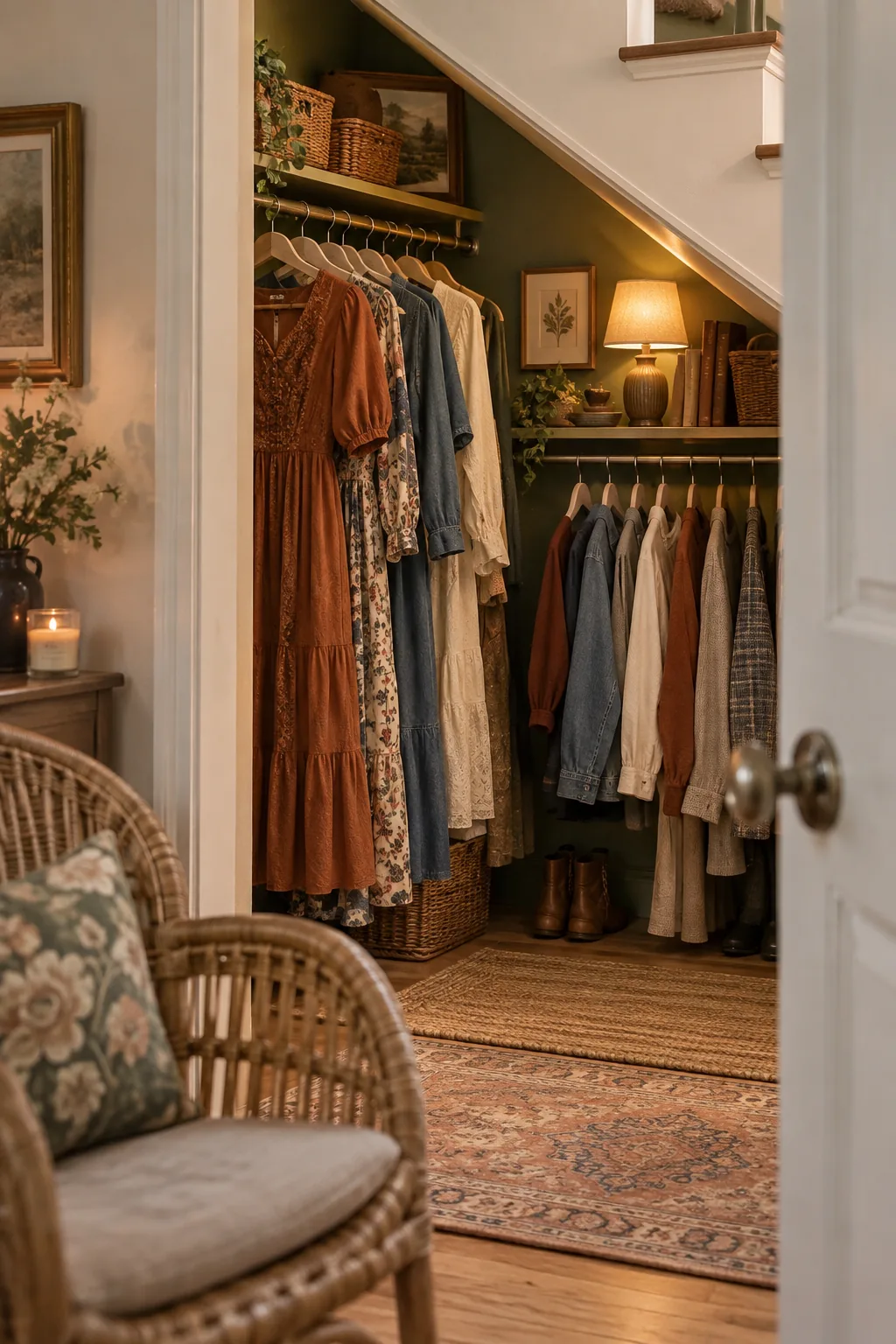
Standard closet rods waste a massive amount of vertical room when installed under a sloped ceiling. Swapping them for a tiered staggered hanging system lets you utilize the entire height gradient. You just mount shorter rods at varying heights down the slope.
- Long dresses at the peak
- Button-down shirts in the middle
- Folded pants at the lowest end
4. Design a Hidden Hobby Station
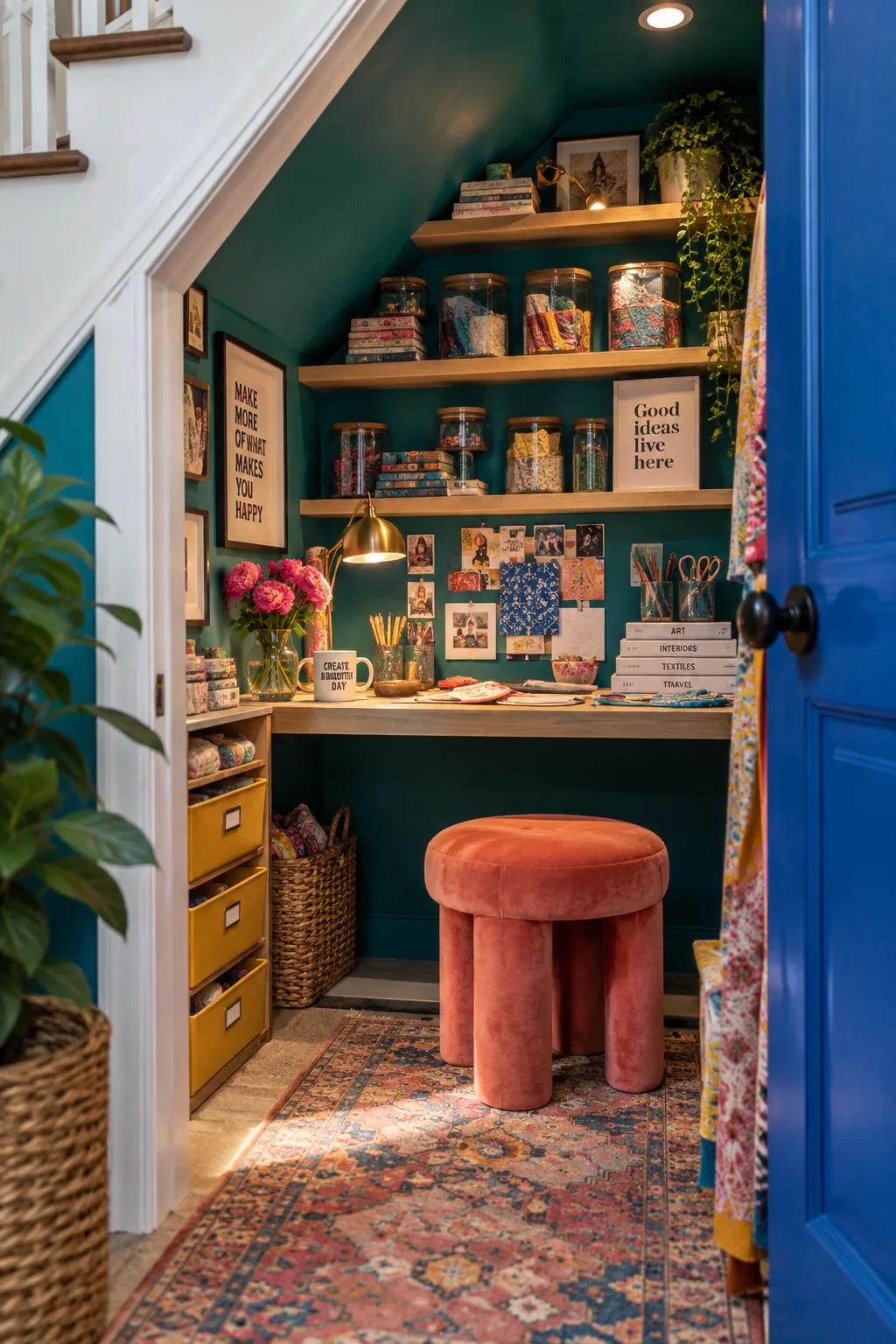
I always struggle to find a good spot for my massive collection of fabric swatches and tile samples. Turning this closet into a dedicated hobby station solved the problem instantly.
A simple floating desk fits perfectly into the wider end of the wedge. You can mount shallow shelves right above it for jars and bins.
Shutting the door hides the inevitable creative mess. It feels like a tiny secret room just for your projects.
5. Build a Seamless Hidden Pantry
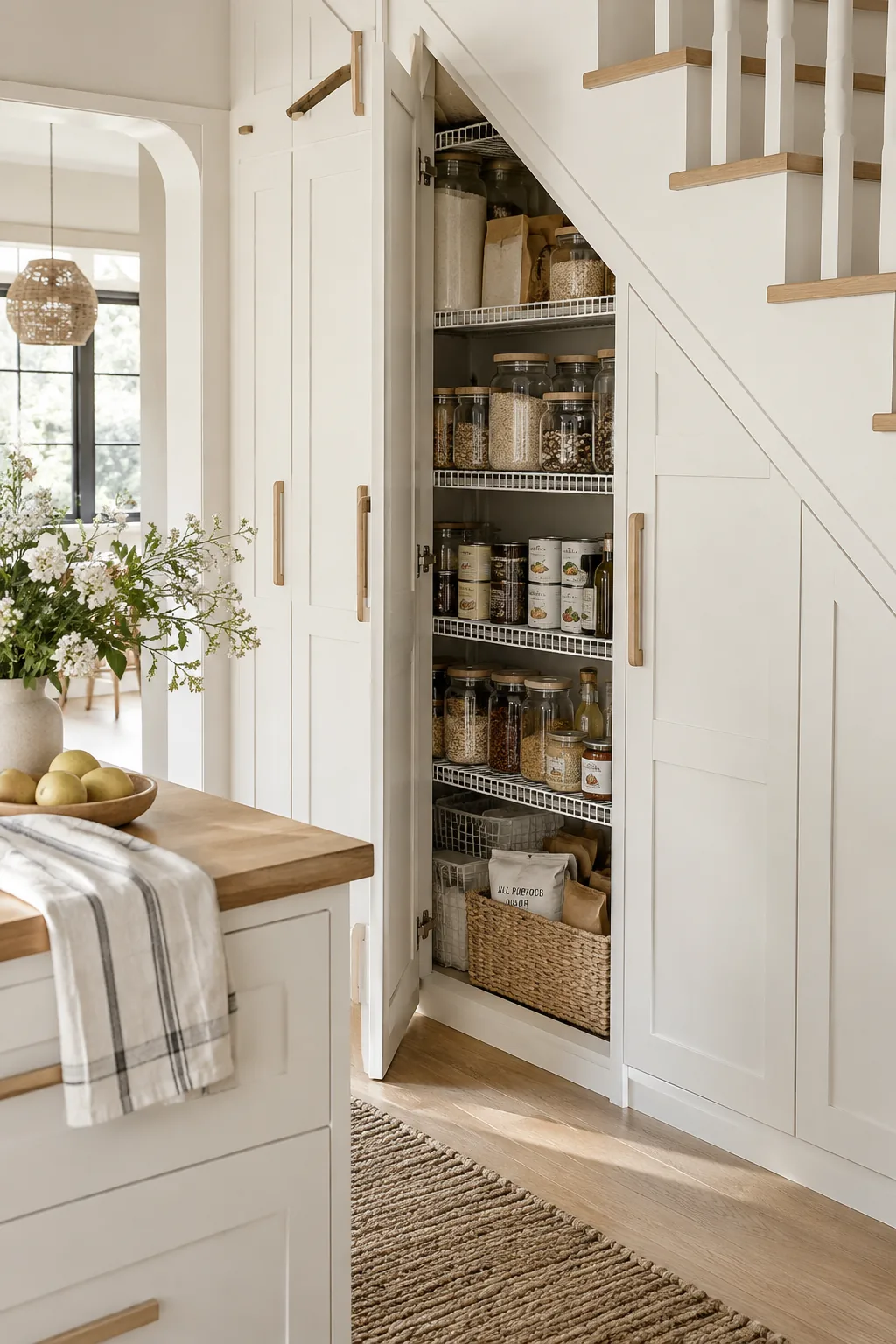
Using the exact same cabinet front style as your nearby kitchen makes this storage blend seamlessly into the architecture. It visually extends your living space instead of looking like an afterthought.
You can outfit the interior with wire racks to create a massive hidden pantry. It frees up so much valuable real estate in your main cooking area.
Stock it with your heavy overflow items.
- Canned goods and bulk dry foods
- Stand mixers and blenders
- Oversized serving platters
6. Swap to a Glass Pocket Door
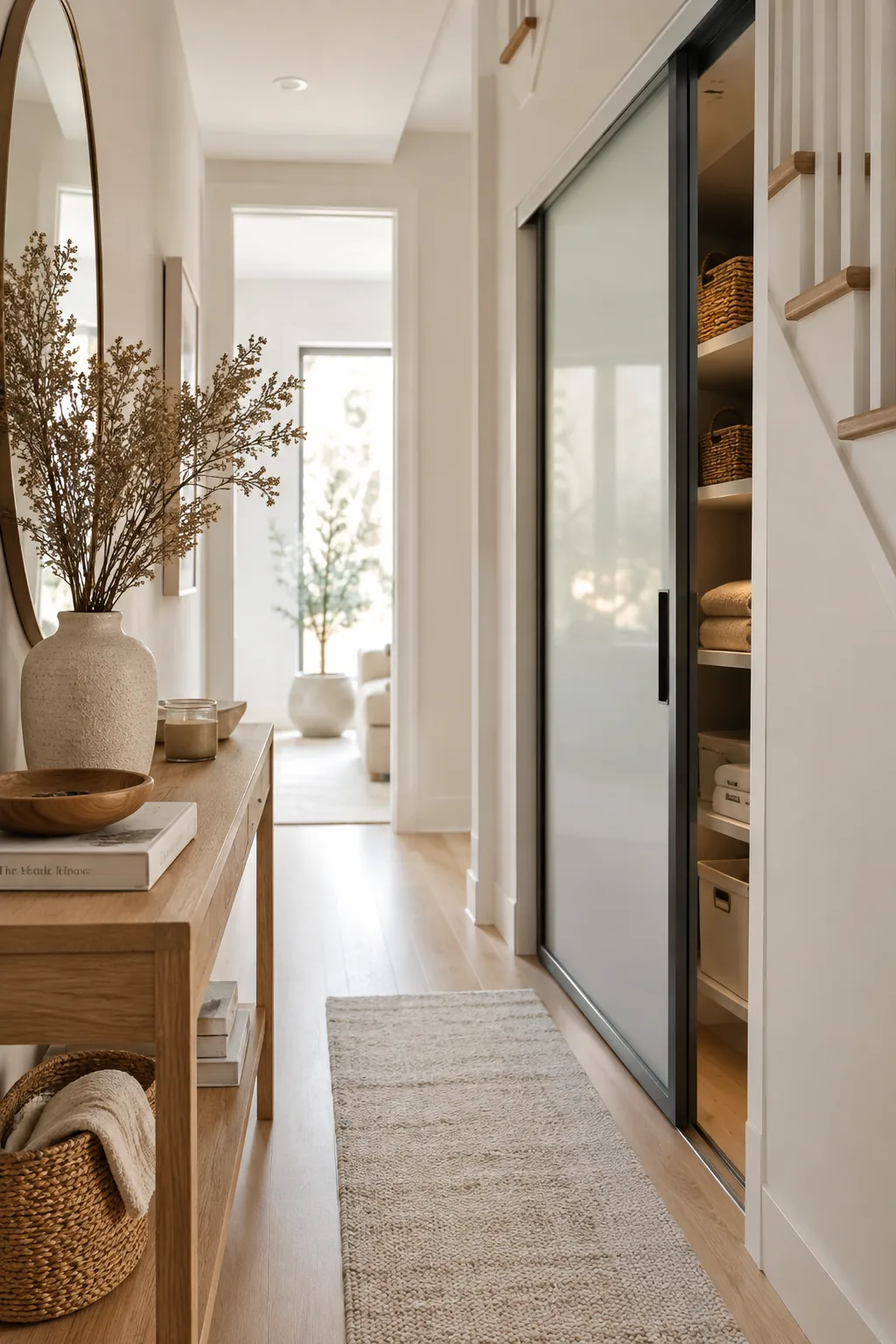
Solid doors make tight hallways feel incredibly cramped and closed off. Swapping a standard swinging door for a sleek glass pocket door lets natural light flow right into your storage nook. You can use frosted glass if you want to hide the clutter while still keeping that airy vibe. The sliding mechanism also saves about three feet of floor clearance.
7. Color-Match Your Bins
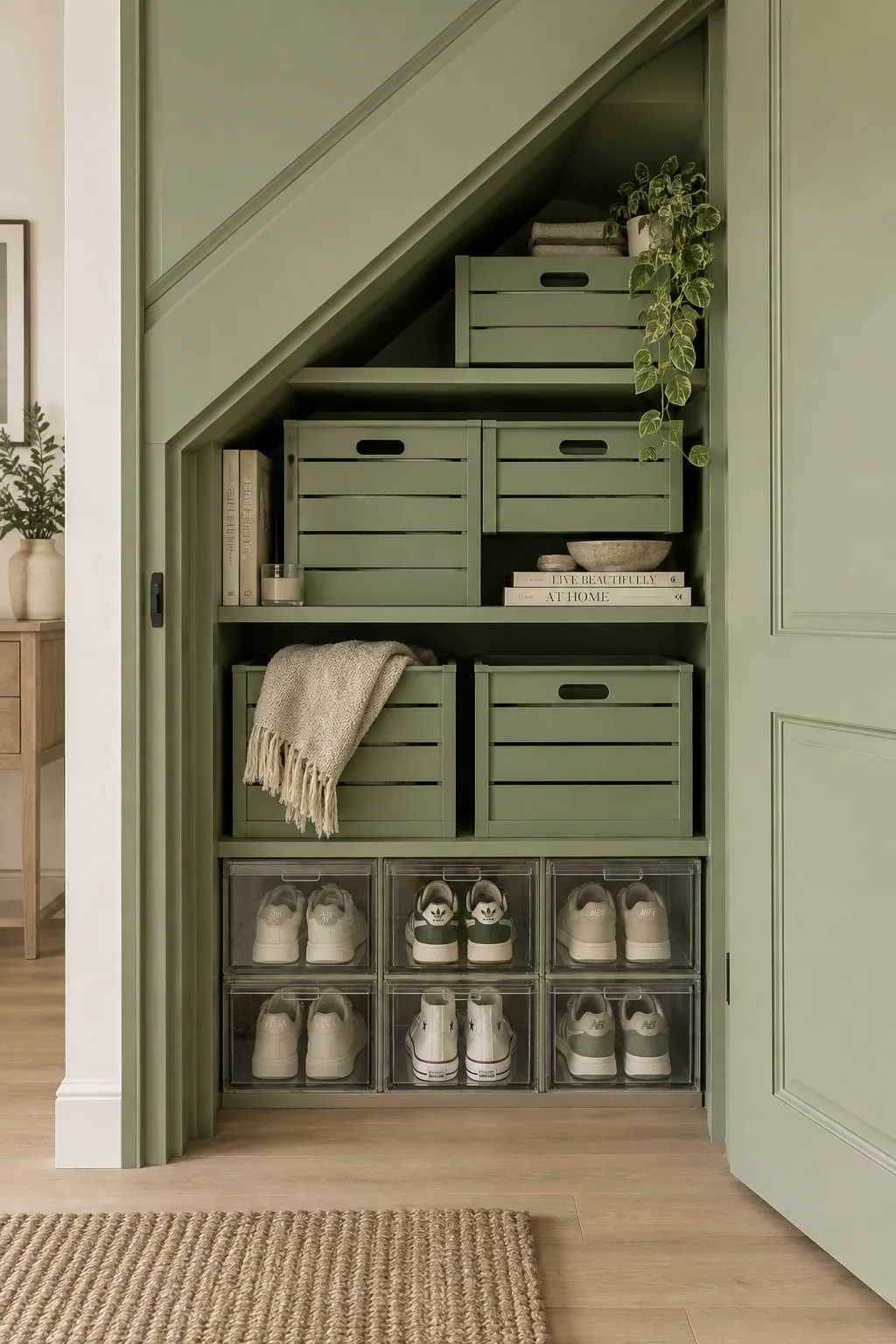
Matching your storage bins to the wall color tricks the eye into seeing a much larger space.
Monochromatic styling prevents the angled closet from feeling like a chaotic junk drawer. You can stack clear acrylic shoe boxes at the bottom and use painted wooden crates up top. This cohesive look makes the sharp ceiling slope feel intentional.
8. Roll Out Tall Bookcases
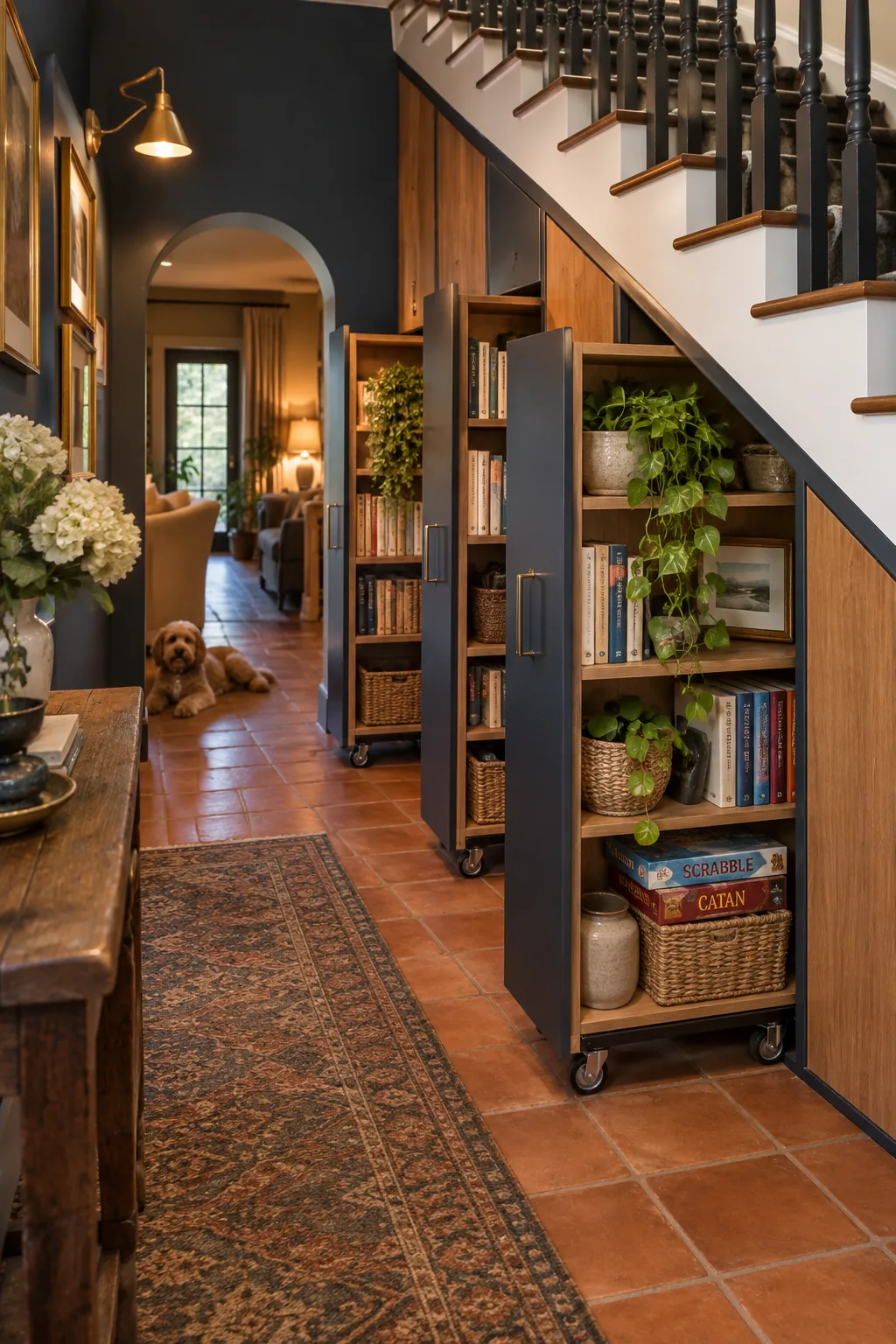
The average staircase leaves about thirty square feet of empty space underneath.
Building a rolling cart system lets you pull that entire footprint out into the hallway. You just attach heavy-duty casters to the base of tall, narrow bookcases. When they are pushed back in, the flat sides act as a flush wall.
9. Utilize the Back of the Door
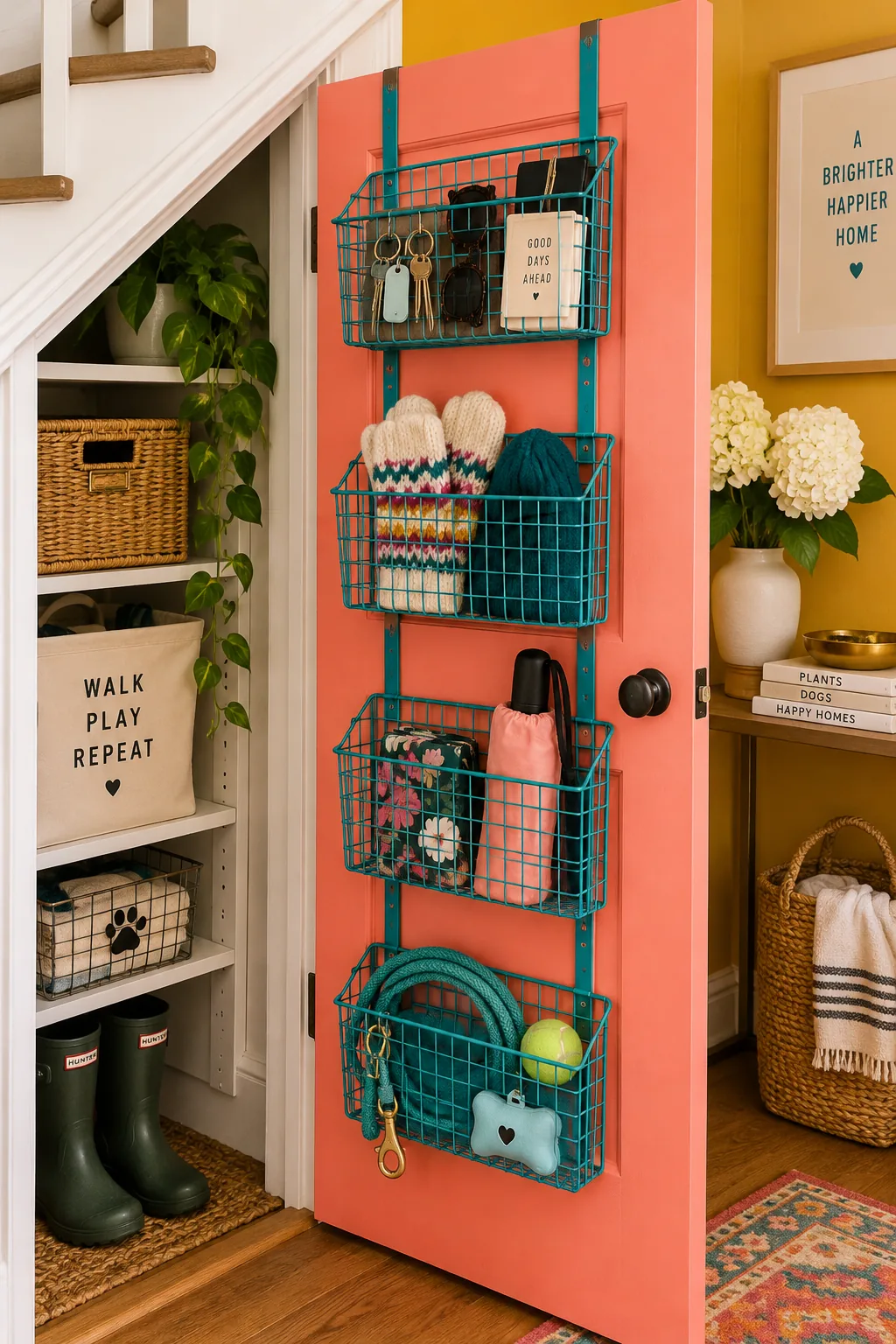
Most people forget about the back of the closet door when planning their layout. Adding a heavy-duty over-the-door rack instantly creates a highly accessible drop zone for small daily essentials. You can adjust the wire baskets to clear the interior shelves when the door swings shut. It is the perfect place to stash grab-and-go items so they never clutter your entryway console again.
- Dog leashes and waste bags
- Umbrellas and rain gear
- Reusable grocery totes
10. Add Motion-Sensor Lighting
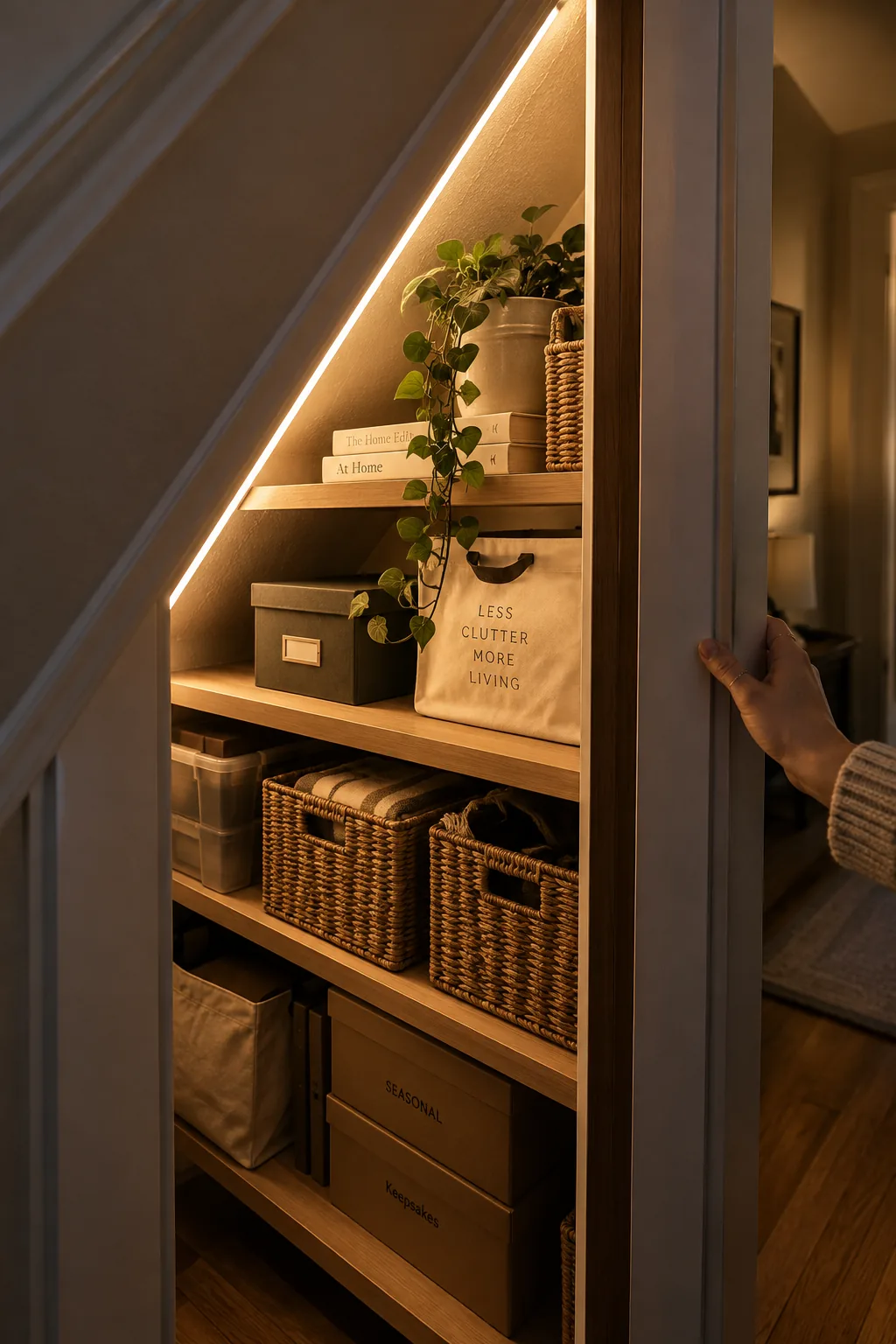
Install bright motion-sensor lighting along the inner door frame before you start building shelves. Hardwiring a fixture in this tight spot is expensive, but battery-operated LED strips stick right to the drywall. They light up the dark wedge the second you open the door.
I highly recommend grabbing the rechargeable ones so you never have to buy batteries.
Why it works: Good illumination forces you to keep the shelves organized because you can actually see the mess.