
Hallway Linen Closet Organization: Zone Map & Folding Guide
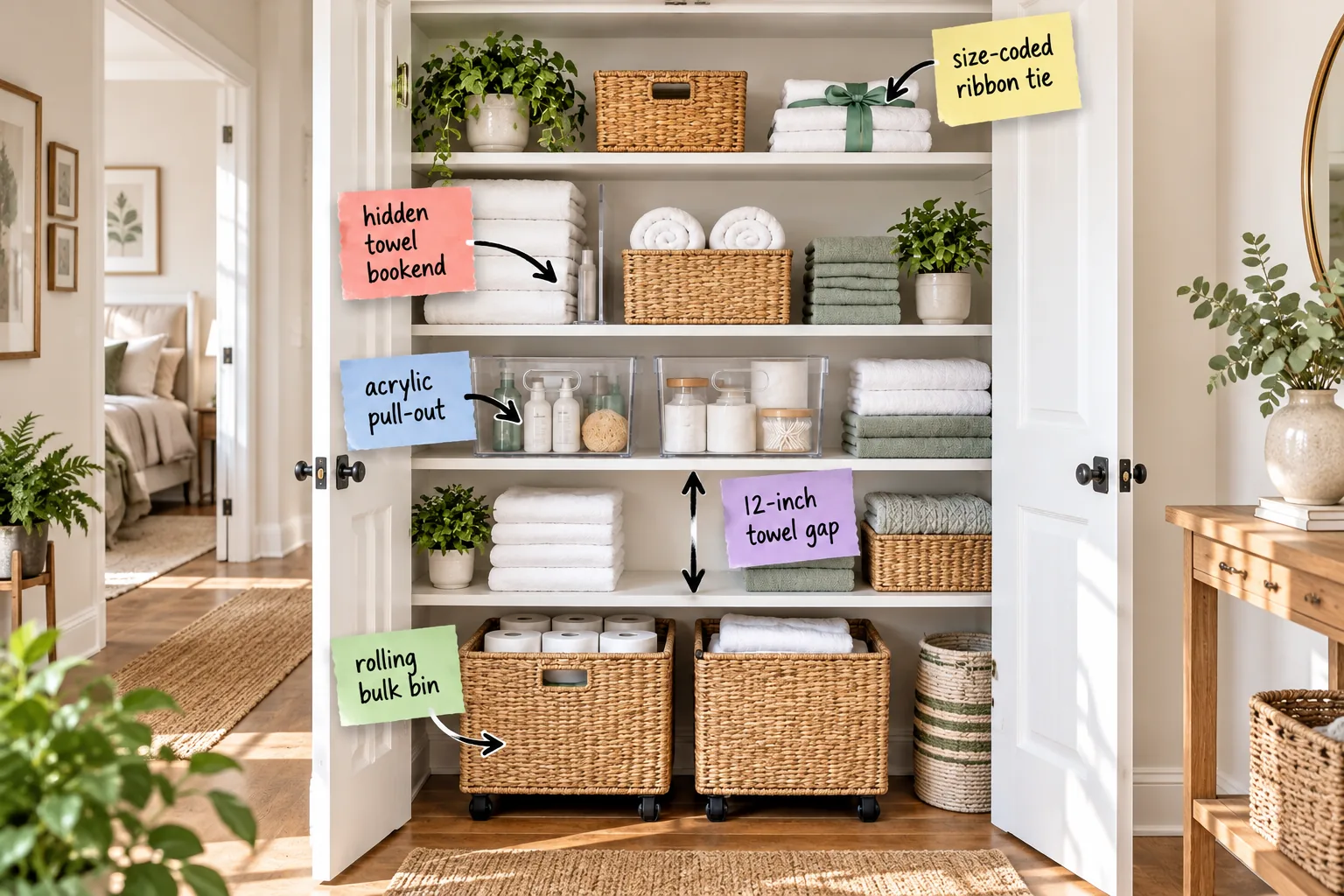
Stop digging through messy shelves and finally transform your hallway storage with our printable closet zone map and folding guide. You will be able to map out your specific zones, adjust shelf spacing, and perfectly fold your linens using these exact templates.
The Printable Closet Zone Map
In my own Denver home, assigning a strict category to each shelf finally stopped the chaotic mixing of bath and bed linens. Dividing the closet into dedicated functional zones ensures every item has a logical, permanent home.
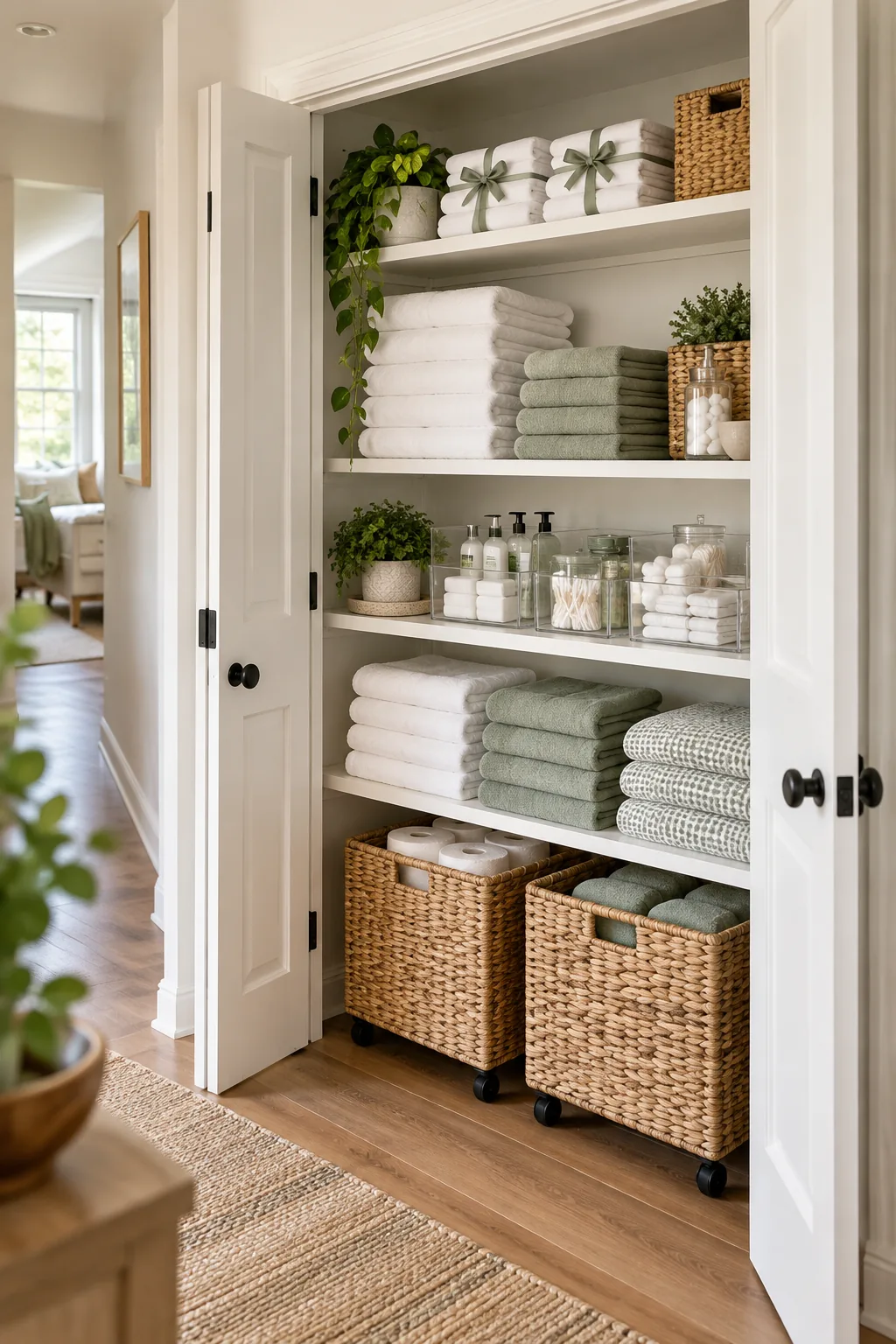
Download our printable zone map and folding guide to assign these sections before you start shifting items. This visual blueprint gives you a clear structural strategy from the top shelf down to the floor.
Assessing Your Current Inventory
Before implementing the new map, you must evaluate exactly what you own to avoid organizing unnecessary clutter. Empty the entire closet and rigorously sort your items to determine your true storage requirements.
- Discard any torn, permanently stained, or severely frayed towels.
- Donate mismatched sheet sets that no longer fit your current mattresses.
- Check expiration dates on all backstock toiletries and safely dispose of old products.
Once you clear out the excess, you will immediately see how much breathing room your closet actually has. Keeping only the essentials creates a calm, balanced environment that feels effortless to maintain.
Defining the Core Storage Categories
Group your remaining items into broad families like guest bedding, primary bath towels, and daily toiletries. Establishing these distinct inventory groups prevents small bottles from migrating into your fresh linen stacks over time.
Choosing the Right Container Materials
Selecting the appropriate bins is crucial for long-term durability and visual harmony. You want materials that protect delicate fabrics from snagging while allowing dense, heavy items to breathe naturally.
| Material | Best For | Key Benefit |
|---|---|---|
| Clear Acrylic | Toiletries and soaps | Instant visual inventory |
| Woven Rattan | Heavy bulk items | Excellent air circulation |
| Soft Canvas | Seasonal blankets | Prevents fabric snagging |
| Wire Mesh | Cleaning supplies | Durable and easy to wash |
Always measure your shelf depth precisely before purchasing any new structural containers. Leaving a one-inch clearance at the front ensures the closet doors will shut completely without crushing your expensive bins.
Securing Sheet Sets with Ribbon Ties
The highest shelves are ideal for out-of-season or guest bedding, but loose pillowcases easily slip away. Bundle freshly laundered sheet sets together using a size-coded ribbon tie to keep the entire set intact.
Assigning a specific ribbon color to each mattress size means you can grab the correct linens instantly. This simple visual cue completely eliminates the need to unfold a fitted sheet just to check its exact dimensions.
Mastering the Fitted Sheet Fold
Folding fitted sheets often feels like wrestling with a chaotic fabric cloud. Taming these elastic edges is essential for maintaining sharp, uniform stacks that align perfectly with your flat sheets.
- Tuck the top corners directly into the bottom corners to create a clean rectangle.
- Smooth the elastic edges inward so they lie completely flat against the fabric.
- Fold the remaining rectangle into neat thirds to hide all the messy seams.
Practicing this technique transforms a lumpy bundle into a streamlined, stackable square. Consistent folding introduces a sense of Zen and structural order to your upper storage zones.
Selecting Seasonal Bedding Locations
Reserve the highest, hardest-to-reach areas for heavy winter duvets and flannel sheets. Keeping these bulky seasonal items out of your primary sightline preserves the visual balance of your everyday storage zones.
Stabilizing Stacks with Hidden Bookends
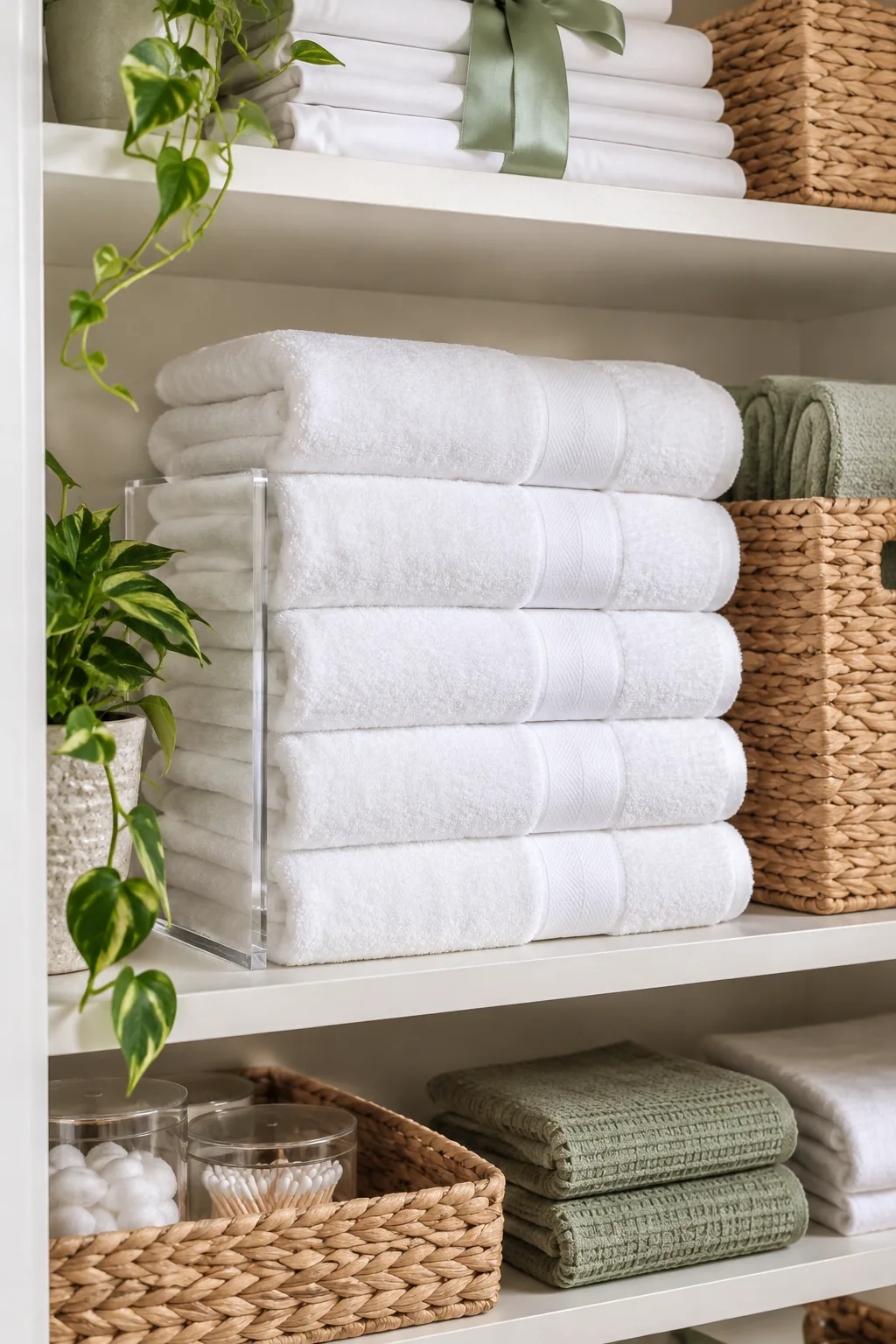
I used to watch perfectly folded guest towels slowly tilt and collapse within a few days of stacking them. Sliding a hidden towel bookend between the piles prevents fluffy bath sheets from toppling over.
This heavy-duty clear acrylic support acts as an invisible wall between your categories. It maintains crisp, vertical lines across the entire shelf while keeping neighboring stacks neatly separated.
Sizing Your Bath Towel Stacks
Limit your vertical towel stacks to no more than four or five items high. Piling them any higher creates an unstable tower that requires two hands to manage safely, disrupting your daily efficiency.
Rotating Towels for Even Wear
Always place freshly laundered towels at the bottom of your designated stack. This simple practice ensures you rotate through your entire collection, preventing the top items from suffering premature fraying and fading.
Containing Toiletries in Acrylic Pull-Outs
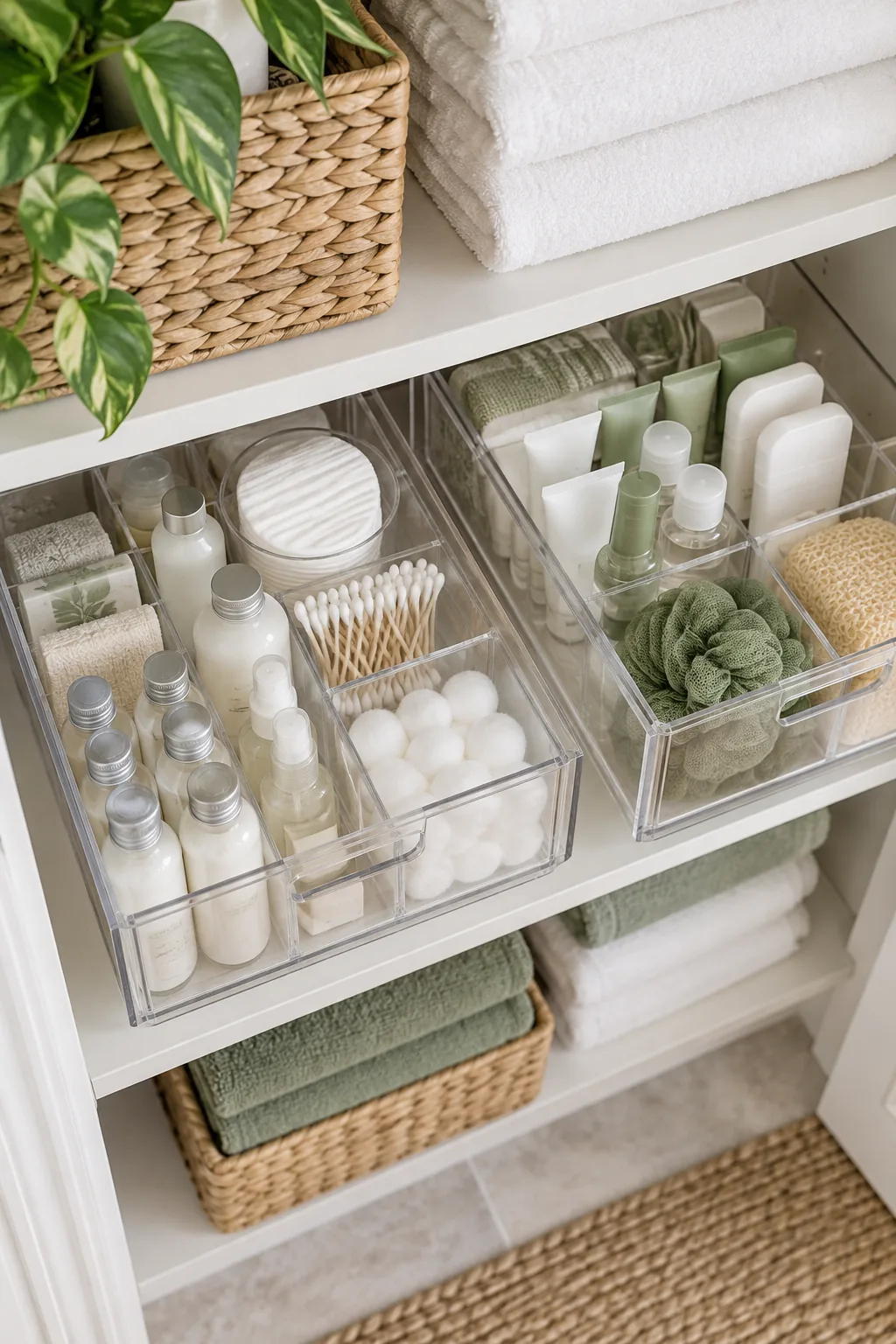
For tiny travel toiletries and cotton swabs, I always rely on deep, transparent bins to prevent items from getting lost in the dark corners. Grouping these small bottles into an acrylic pull-out creates an instant, custom drawer.
Organizing Travel-Sized Essentials
Keep your travel-sized shampoos and miniature lotions grouped together in a dedicated sub-compartment. Organizing these tiny items properly means you can pack your dopp kit in seconds without rummaging through full-sized products.
Storing First Aid and Medications
Dedicate a separate, clearly labeled acrylic bin specifically for your first aid supplies and daily medications. Storing these critical health items at eye level guarantees you can find a bandage immediately during an emergency.
Setting the 12-Inch Towel Gap
Before adjusting your shelf heights, consider the tall bottles inside your transparent containers. Grouping small toiletries in deep acrylic bins that act like drawers requires extra vertical clearance to function properly.
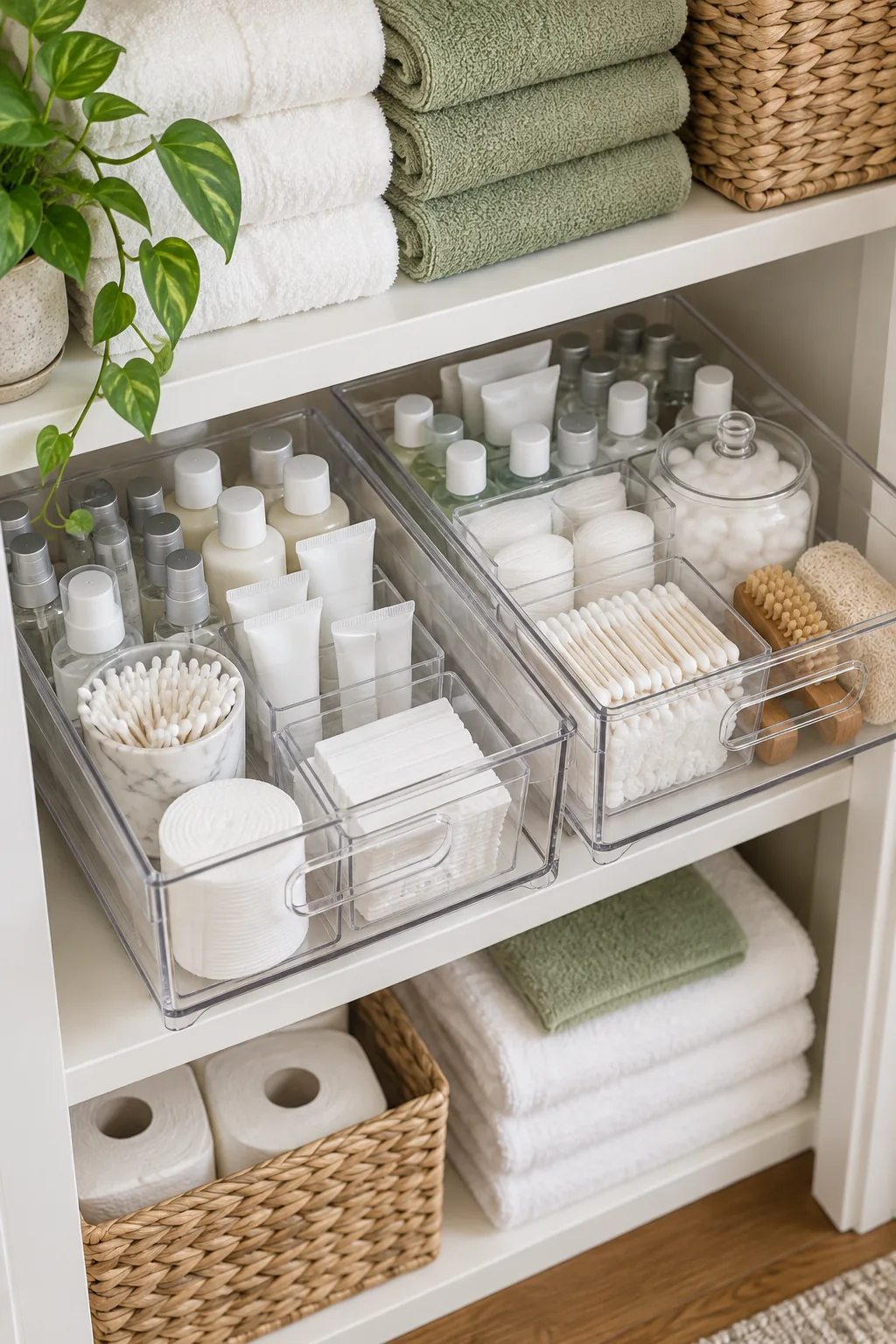
Adjust your shelving pins to establish exactly a 12-inch towel gap between your primary bath linen shelves. This specific clearance allows you to pull a towel out without dragging the shelf above it.
Adjusting Shelves for Optimal Flow
Do not assume your builder-grade shelf heights are permanent or ideal. Taking the time to shift the support pegs up or down creates a customized architecture that perfectly accommodates your specific storage bins.
Maximizing Vertical Space with Risers
If you have a particularly tall shelf that cannot be adjusted, introduce a sturdy metal shelf riser. This simple addition essentially doubles your usable footprint, allowing you to stack smaller items without crushing them.
Managing Floor Space with Rolling Bulk Bins
Leaving a generous 12-inch vertical gap between your lower shelves guarantees effortless access to your daily linens. This precise spacing prevents friction, ensuring you never accidentally pull down an entire stack of towels.
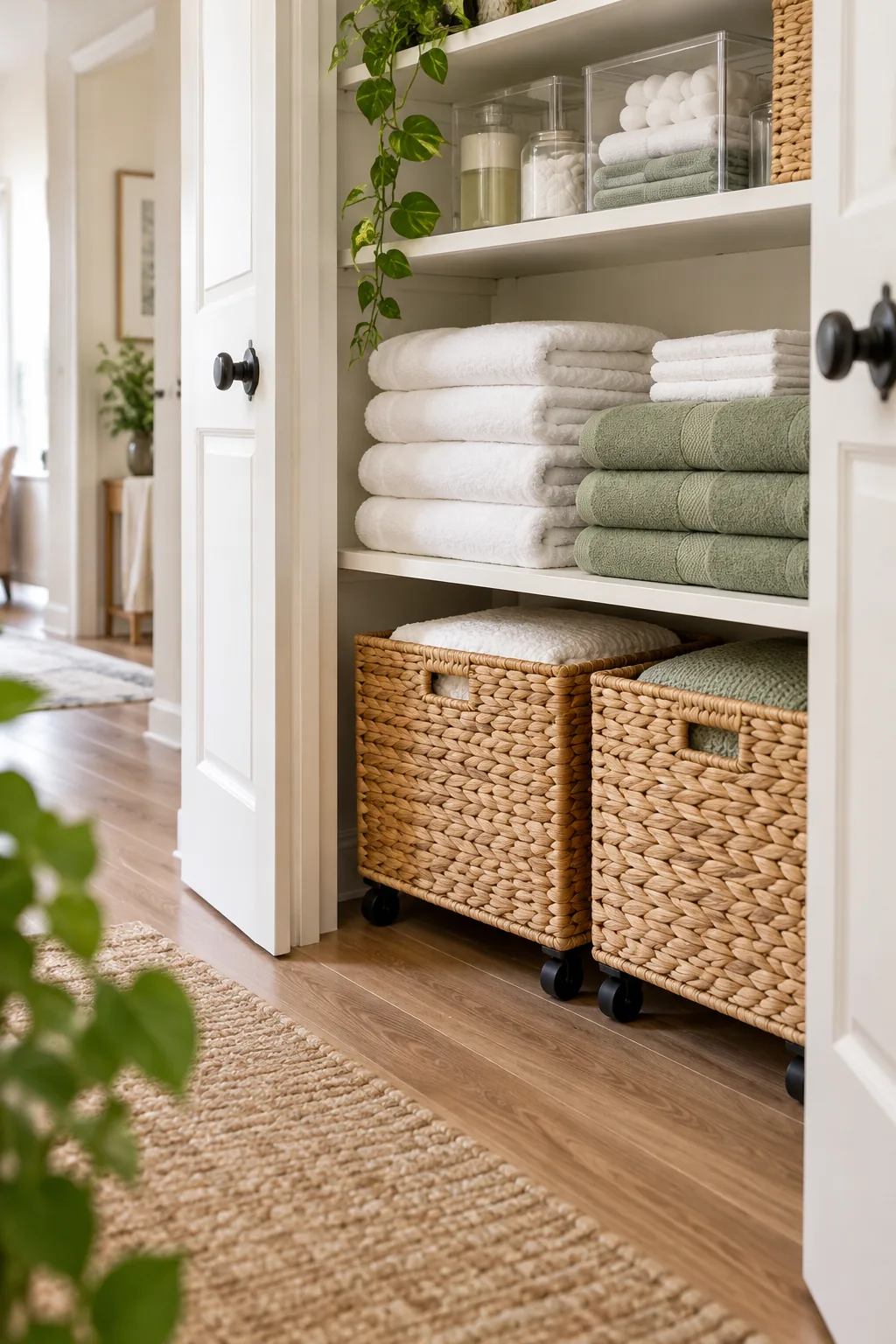
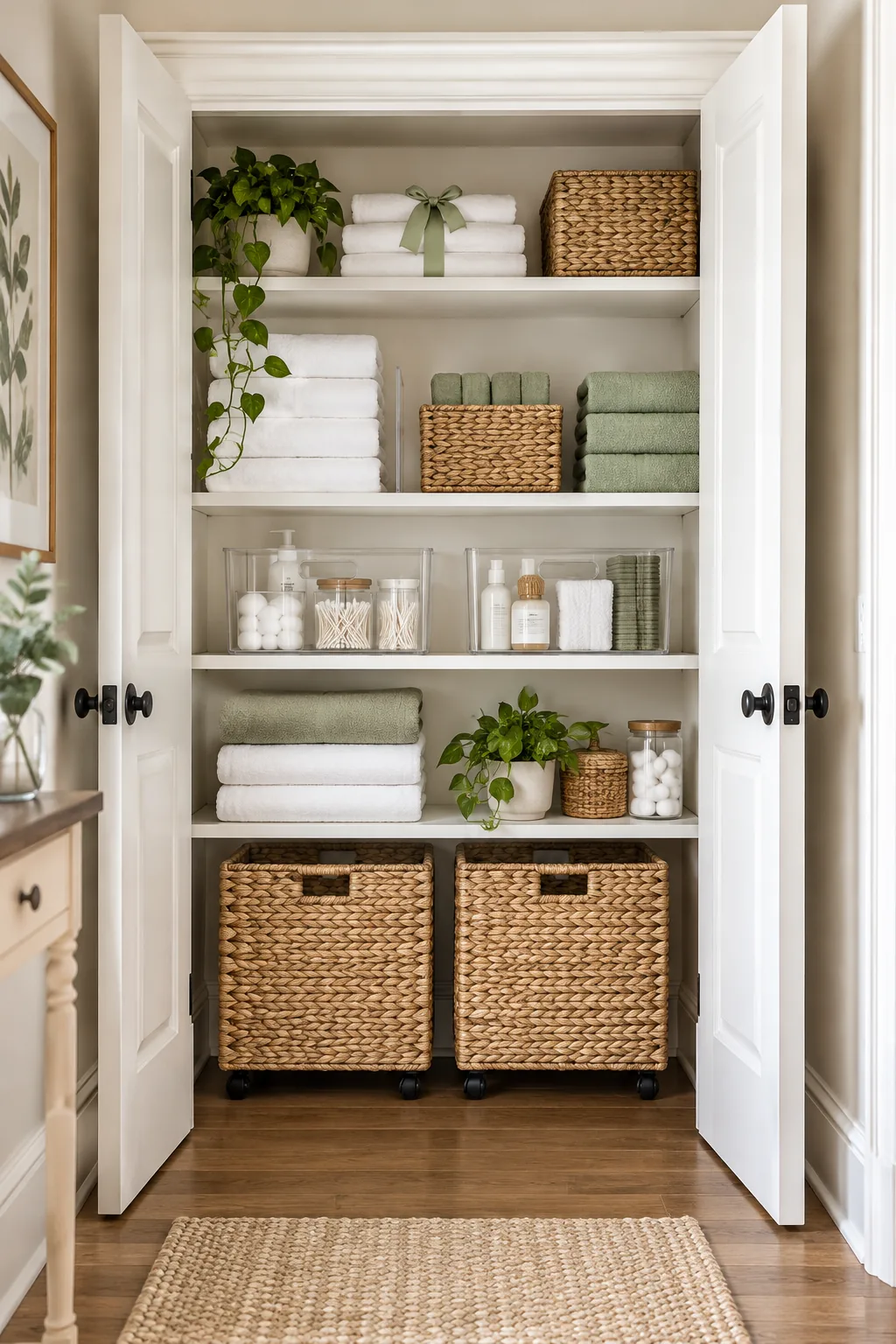
The awkward floor space beneath the bottom shelf is perfect for heavy bulk items like toilet paper. Drop these oversized necessities into a large rolling bulk bin to keep them accessible.
Selecting the Right Caster Wheels
Ensure your rolling bins feature soft rubber casters rather than hard plastic wheels. Rubber glides silently and prevents deep scratches on your hardwood or tile floors, preserving the integrity of your home.
Maintaining Proper Air Circulation
Avoid packing your floor bins so tightly that air cannot flow between the items. Leaving a few inches of negative space prevents trapped moisture and keeps your stored blankets smelling fresh and clean.
Linen Closet Styling Ideas
Find the perfect aesthetic for your home's storage spaces.
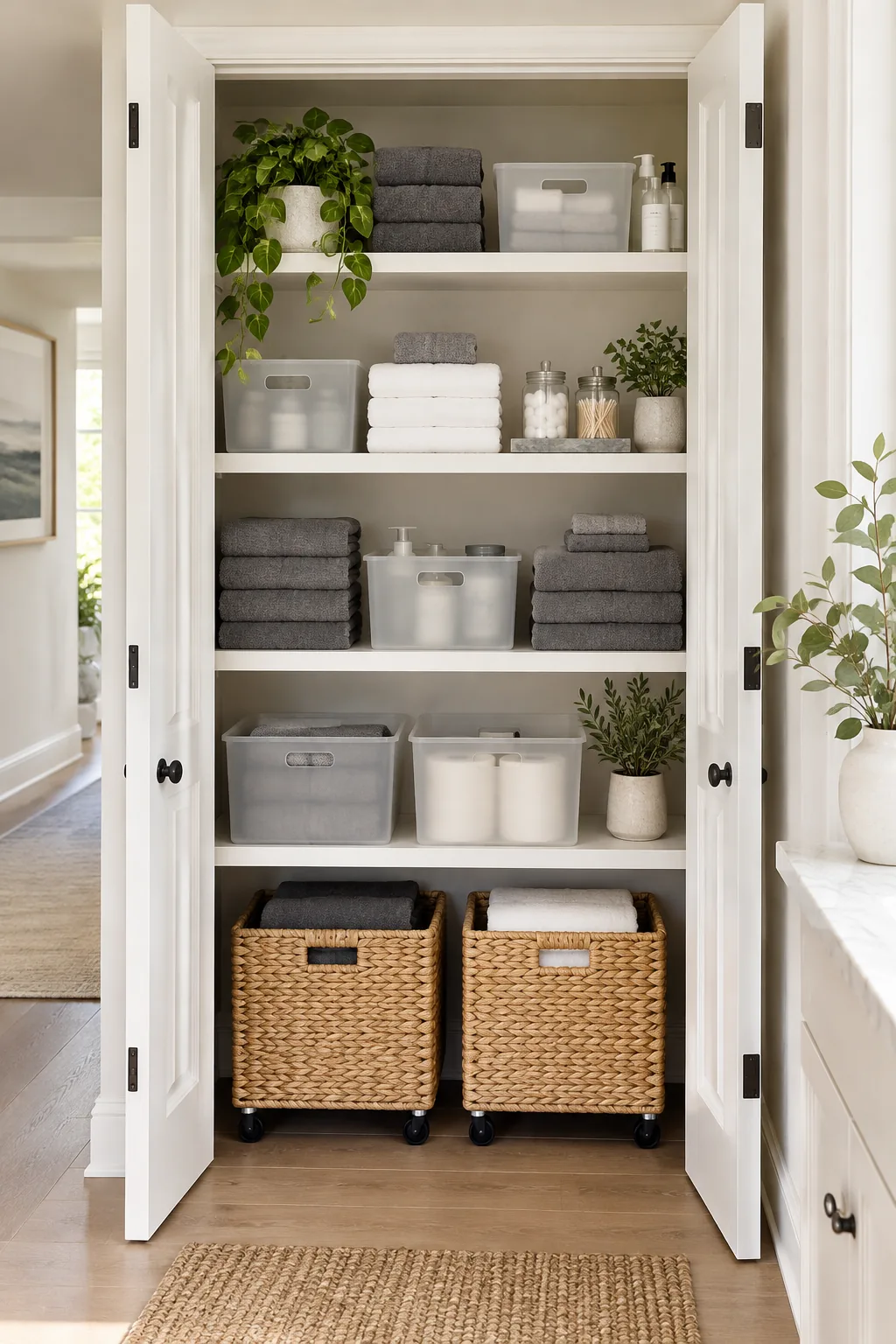
Minimalist Spa Retreat: Cool slate tones and frosted glass bins create a calming, streamlined aesthetic.
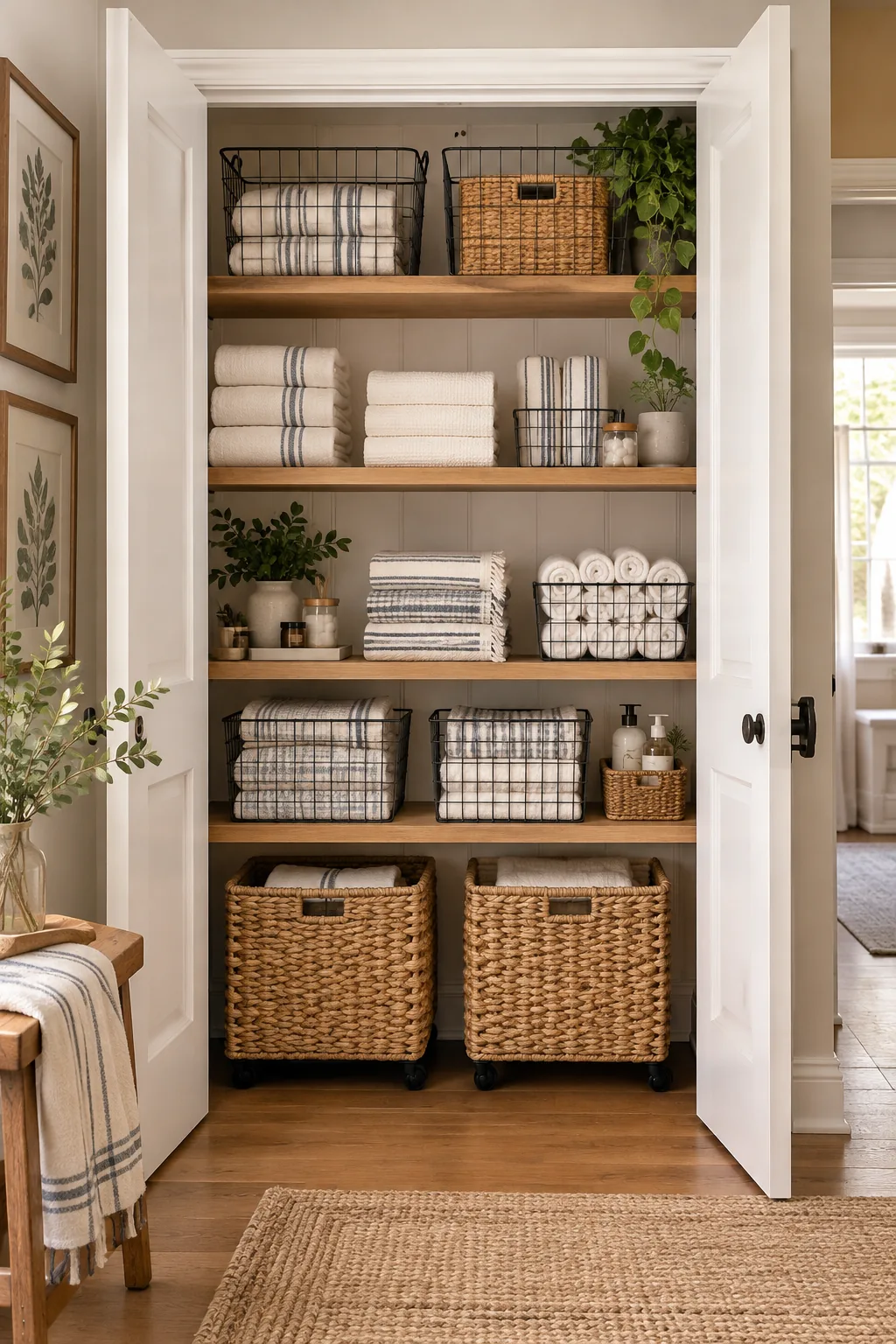
Modern Farmhouse Charm: Pair natural oak shelving with matte black wire baskets for a rustic touch.
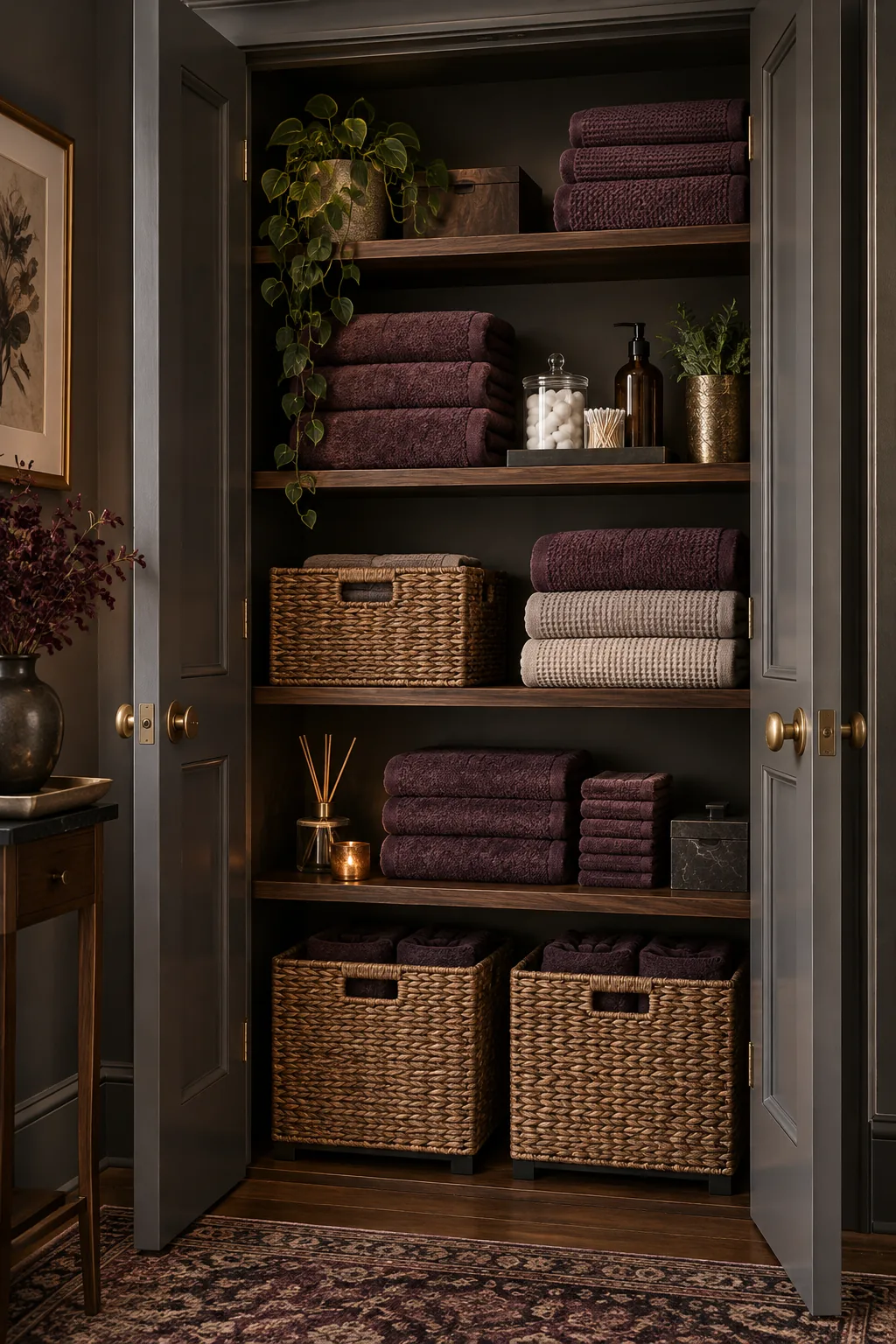
Dark and Moody Elegance: Rich plum linens pop beautifully against sophisticated charcoal walls and dark walnut wood.
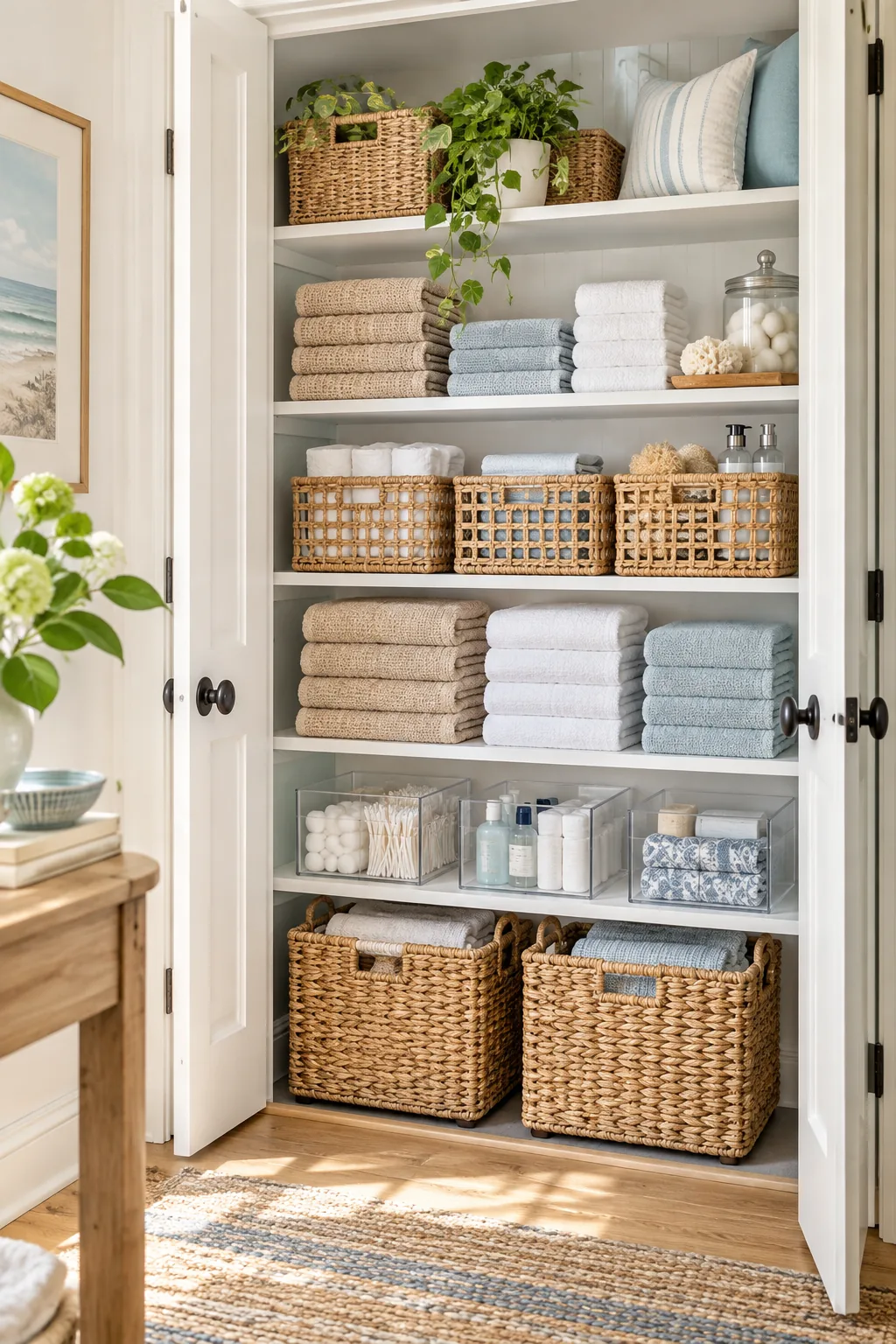
Coastal Bright and Breezy: Use open rattan baskets and light blue accents to bring a fresh beachside feel.
Weekly Restocking Routine
Mounting a sturdy woven basket on caster wheels means you never have to drag heavy loads across the floor. You can smoothly roll these bulky floor storage units out for effortless vacuuming and quick restocking.
A beautifully structured closet only stays that way if you build a simple maintenance habit into your regular cleaning schedule. Take five minutes before laundry day to quickly refresh your storage zones.