
Printable Bin Inventory & Shelf Map for a Small Storage Room
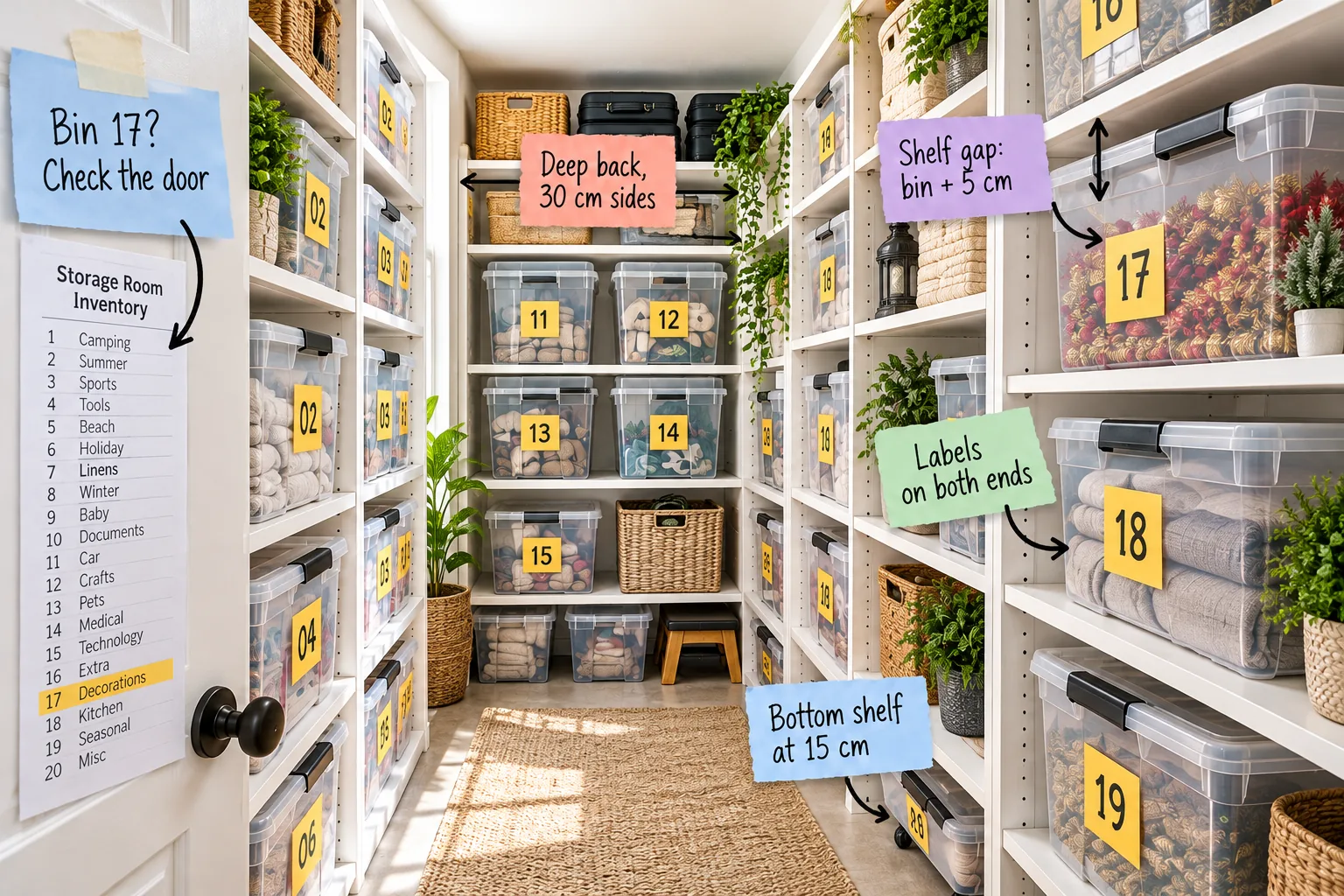
Transform your compact 1.6 by 2.2-meter space into a highly functional whole-year storage hub with our free printable numbered bin inventory and shelf map. You will be able to build a high-capacity U-shaped shelving layout, implement a reliable door-inventory system, and seamlessly track every single container without ever losing an item again.
Maximizing the U-Shaped Layout
Arranging a tight footprint requires you to strategically balance maximum shelf capacity against essential moving room so you maintain a clear central aisle at all times, ensuring you never feel trapped when retrieving items from the very back of the room.
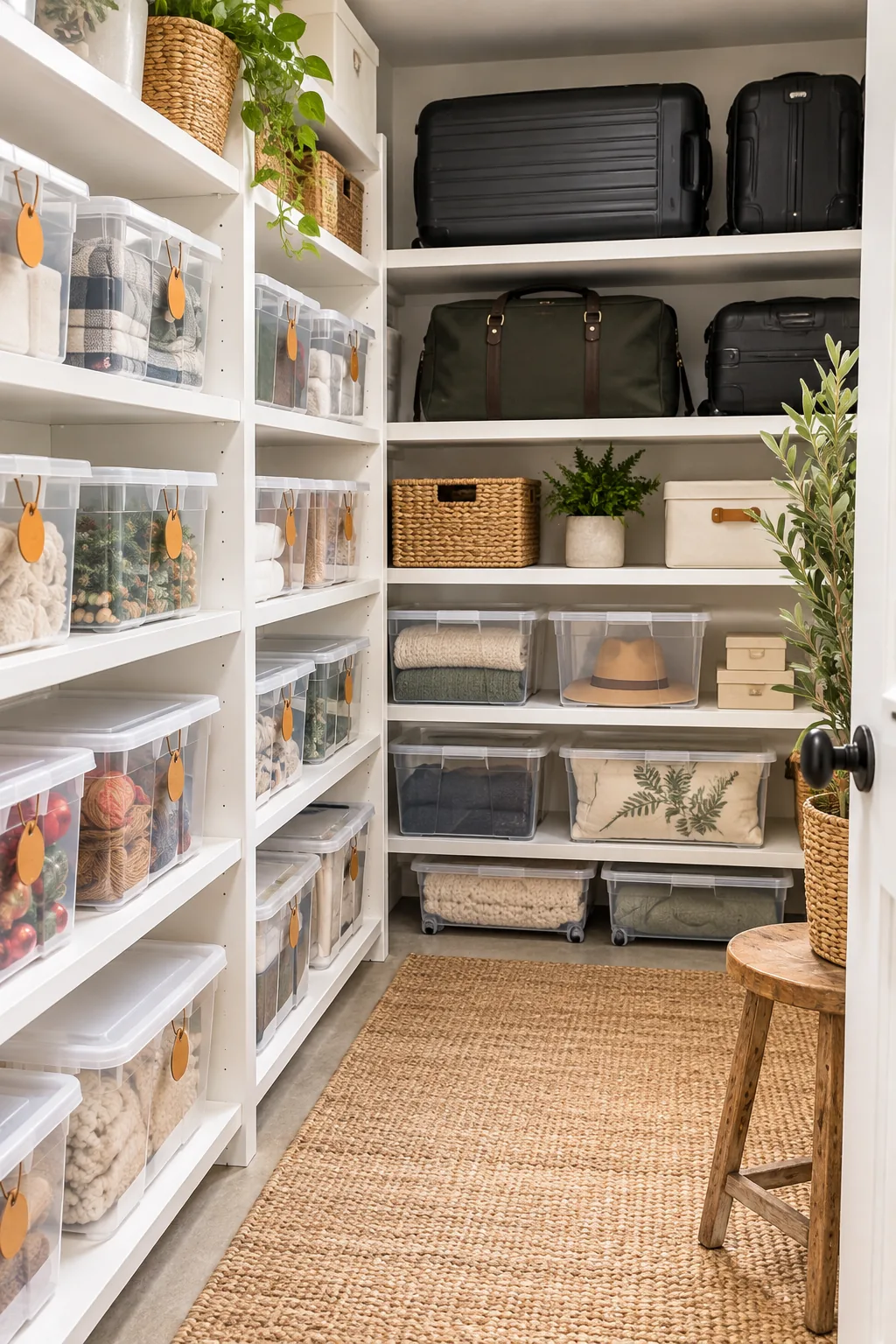
Installing shallow 30 cm shelves on the long side walls perfectly accommodates standard clear bins without suffocating your standing space or making the utility room feel uncomfortably claustrophobic.
Designing the Deep Back Wall
Once your side walls are optimized with shallow profiles, you can confidently reserve the entire back wall for a massive, deep 60 cm shelf designed specifically to hold your most awkward, oversized cargo.
- Store large rolling suitcases flat on their backs to maximize vertical stacking efficiency.
- Group artificial Christmas tree bags horizontally across the lowest reinforced shelving tier.
- Place oversized camping coolers near the back corners where side and back shelves meet.
Placing massive, irregular items at the very back of the room ensures they never block your daily access to the smaller, frequently used side bins that you need every single week.
Balancing the Central Aisle Width
A truly successful walk-in storage space must allow you to comfortably turn around while holding a heavy, awkwardly shaped box with both hands, without constantly bumping your elbows into the adjacent side shelves.
Setting the Floor Clearance
In my own Denver basement, I once made the critical mistake of running shelves all the way down to the ground, leaving absolutely no room for heavy, unliftable gear.
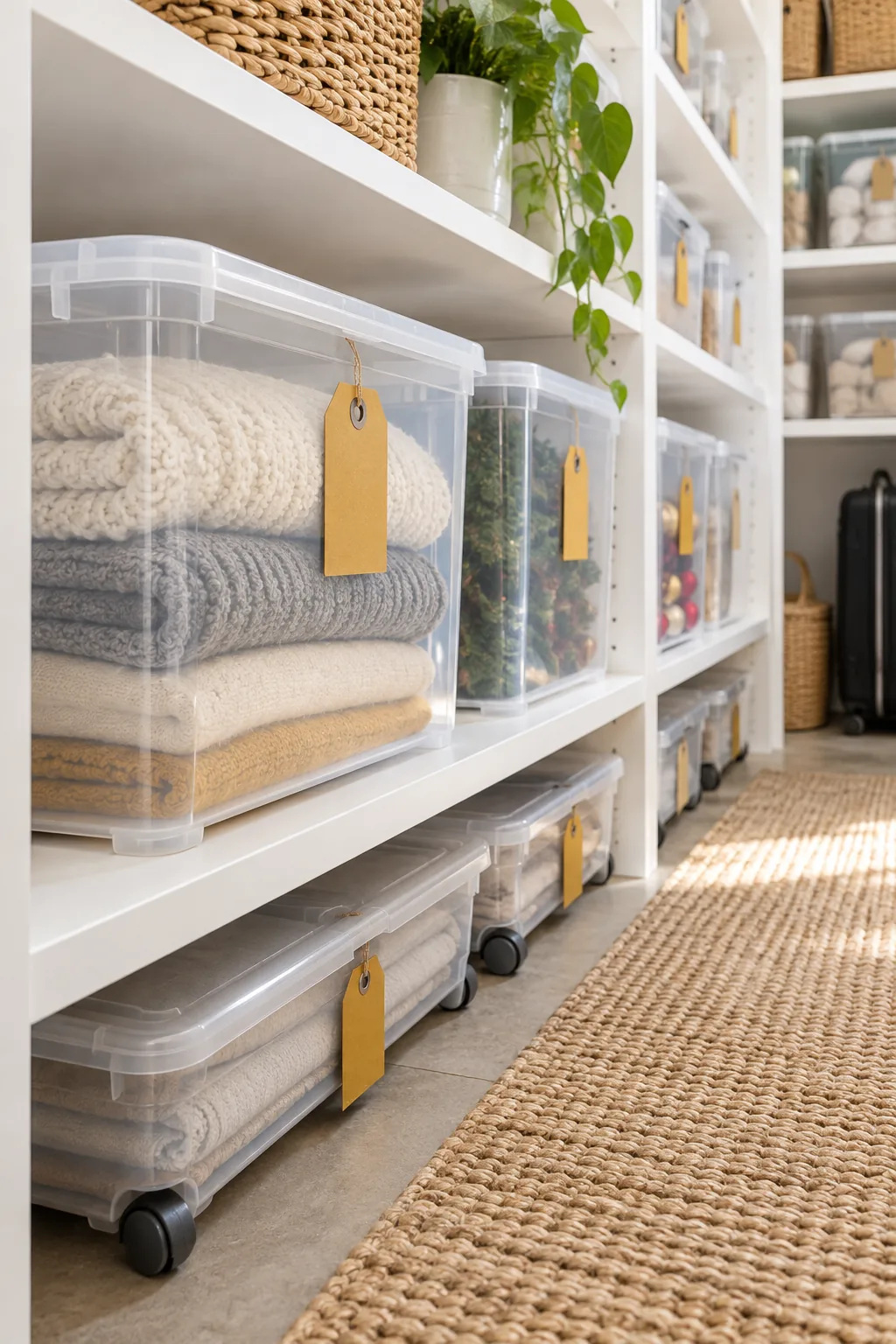
You must start your lowest fixed shelf exactly 15 cm off the floor to allow low, rolling flat bins to slide underneath effortlessly, creating a dedicated zone for your most cumbersome belongings.
Selecting Rolling Floor Bins
Leaving this specific 15 cm gap ensures you can utilize heavy-duty caster bins for items that are simply too dense or dangerous to lift safely above your waist.
| Storage Zone | Ideal Depth | Recommended Items |
|---|---|---|
| Floor Clearance | 60 cm | Rolling flat bins, heavy tools, paint cans |
| Side Shelves | 30 cm | Standard clear bins, seasonal shoes, small decor |
| Back Shelves | 60 cm | Suitcases, holiday trees, large camping gear |
Keeping the floor completely clear of fixed wooden obstacles ensures your heaviest seasonal items roll right out without risking a severe back injury during retrieval.
Protecting the Floor Surface
Rolling heavy bins directly on finished hardwood or painted concrete can cause long-term scuffing and permanent structural damage to your storage room flooring over years of repeated, heavy use.
Calculating Vertical Shelf Spacing
I always measure my clients’ exact storage containers first, because arbitrary vertical spacing inevitably creates wasted, useless air between every single shelving tier in the entire room.
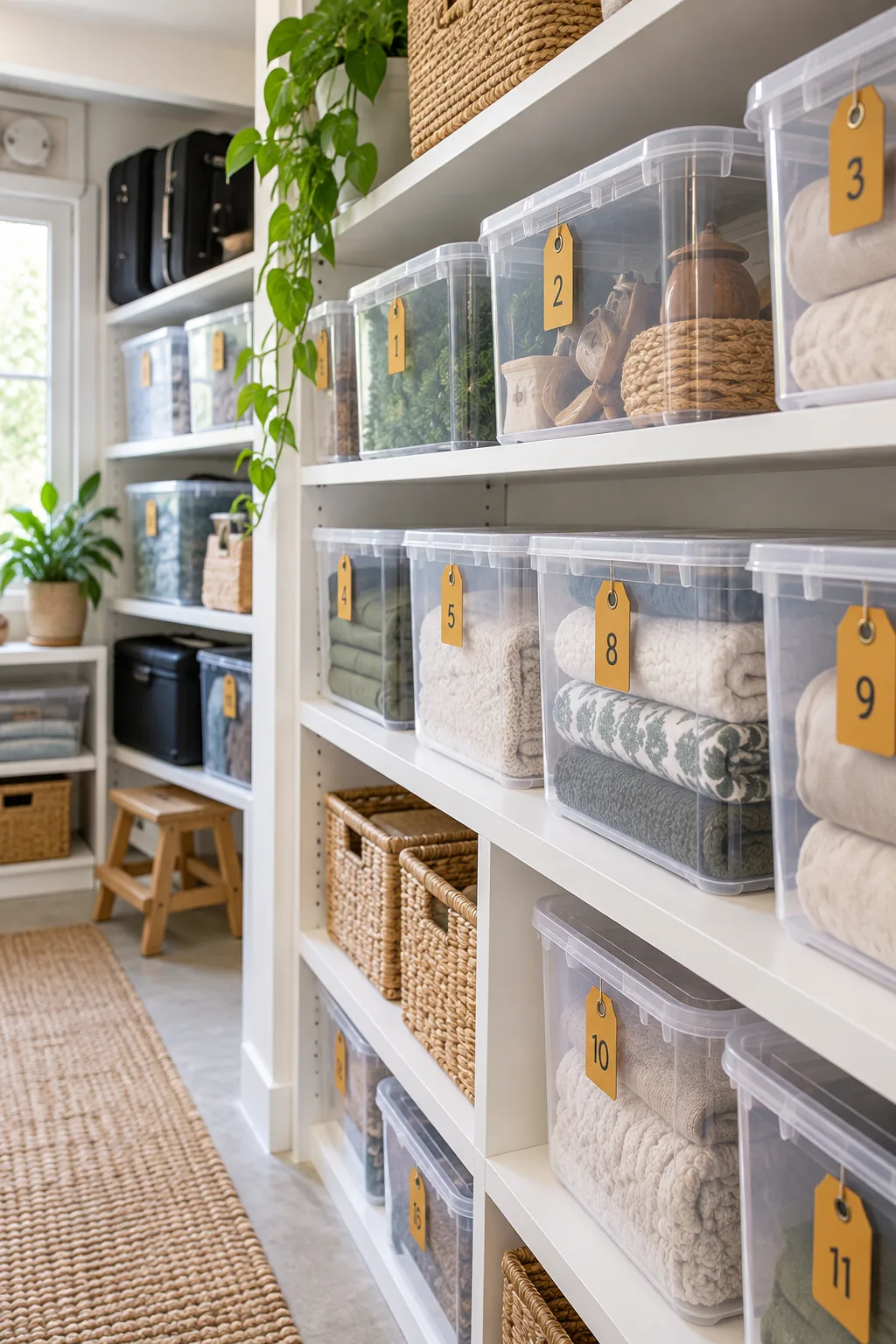
Measure the exact height of your chosen clear bins and add exactly 5 cm to determine the precise, mathematically sound shelf gap required for your custom layout.
Measuring for Lid Clearance
This specific hand-width gap provides just enough vertical room to comfortably unlatch and lift a lid without having to drag the entire heavy bin completely off the shelf.
Securing Extra Wall Capacity
Applying this strict mathematical clearance formula eliminates dead space, reliably allowing you to squeeze in an extra shelf per wall while treating your storage room with aesthetic care to encourage long-term organization.
Choosing the Right Shelving Material
Solid wooden or melamine shelves are vastly superior to wire racks because they prevent small plastic bin feet from catching, snagging, or tipping as you slide them in and out.
Tagging for Quick Retrieval
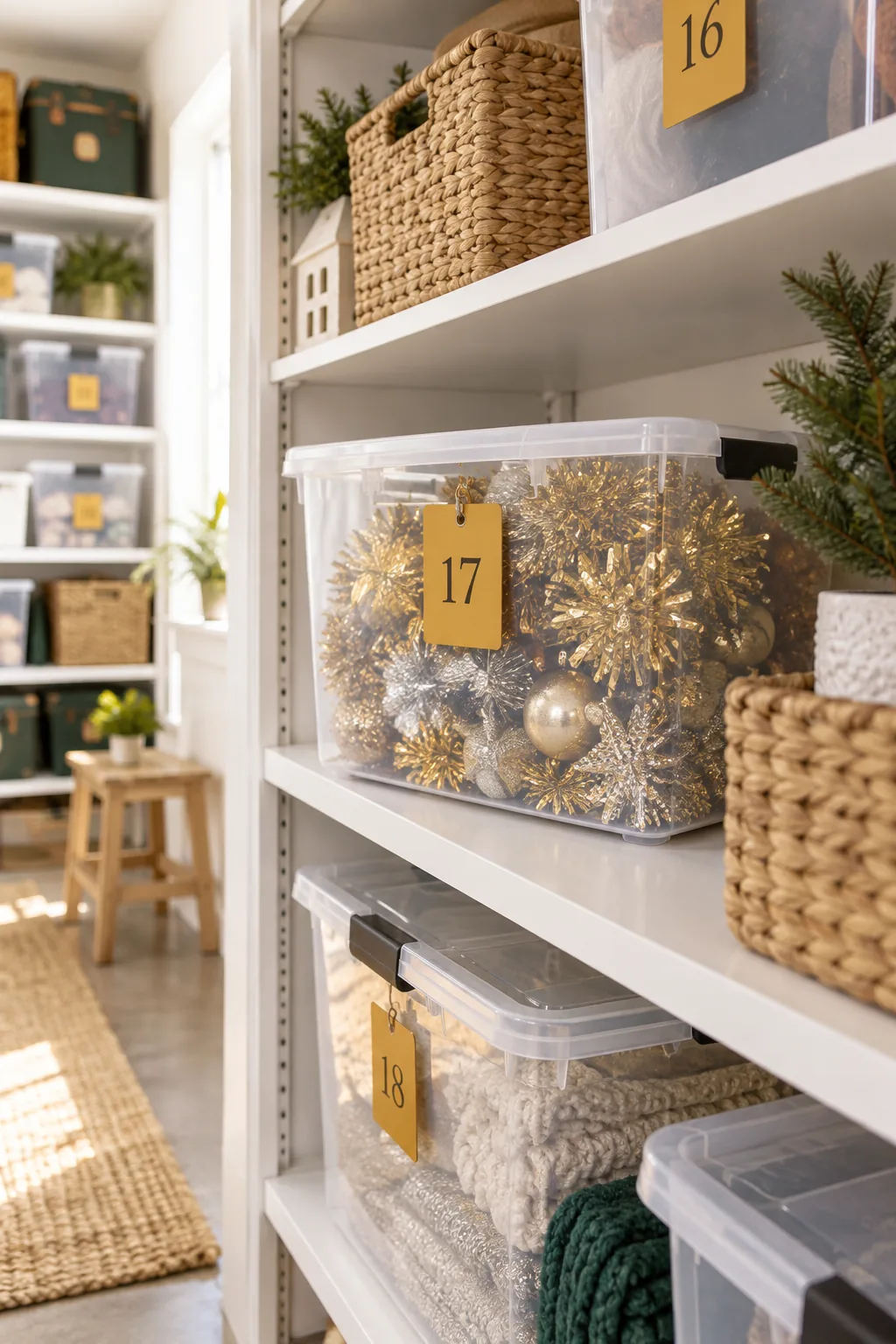
Maintaining the visual consistency of identical clear bins requires a unified, highly visible labeling approach, which is exactly why I rely on bright saffron number tags.
You must place identical labels on both ends so bins can be rotated sideways on shallower side shelves without ever hiding their crucial identifying number from your view.
Positioning Labels for Flexibility
This symmetrical, double-ended tagging strategy means you can seamlessly move a container from a deep back shelf to a shallow side shelf simply by turning it ninety degrees.
Sourcing Identical Clear Bins
Investing in a single brand and model of clear container ensures they stack perfectly and share the exact same footprint, completely eliminating frustrating spatial puzzles when reorganizing your utility space.
Incorporating Bright Lighting
A highly organized shelving layout is practically useless if you cannot read the saffron number tags in the dark corners of your utility space, so installing ultra-bright, motion-activated LED shop lights directly above the central aisle ensures every single label is perfectly illuminated.
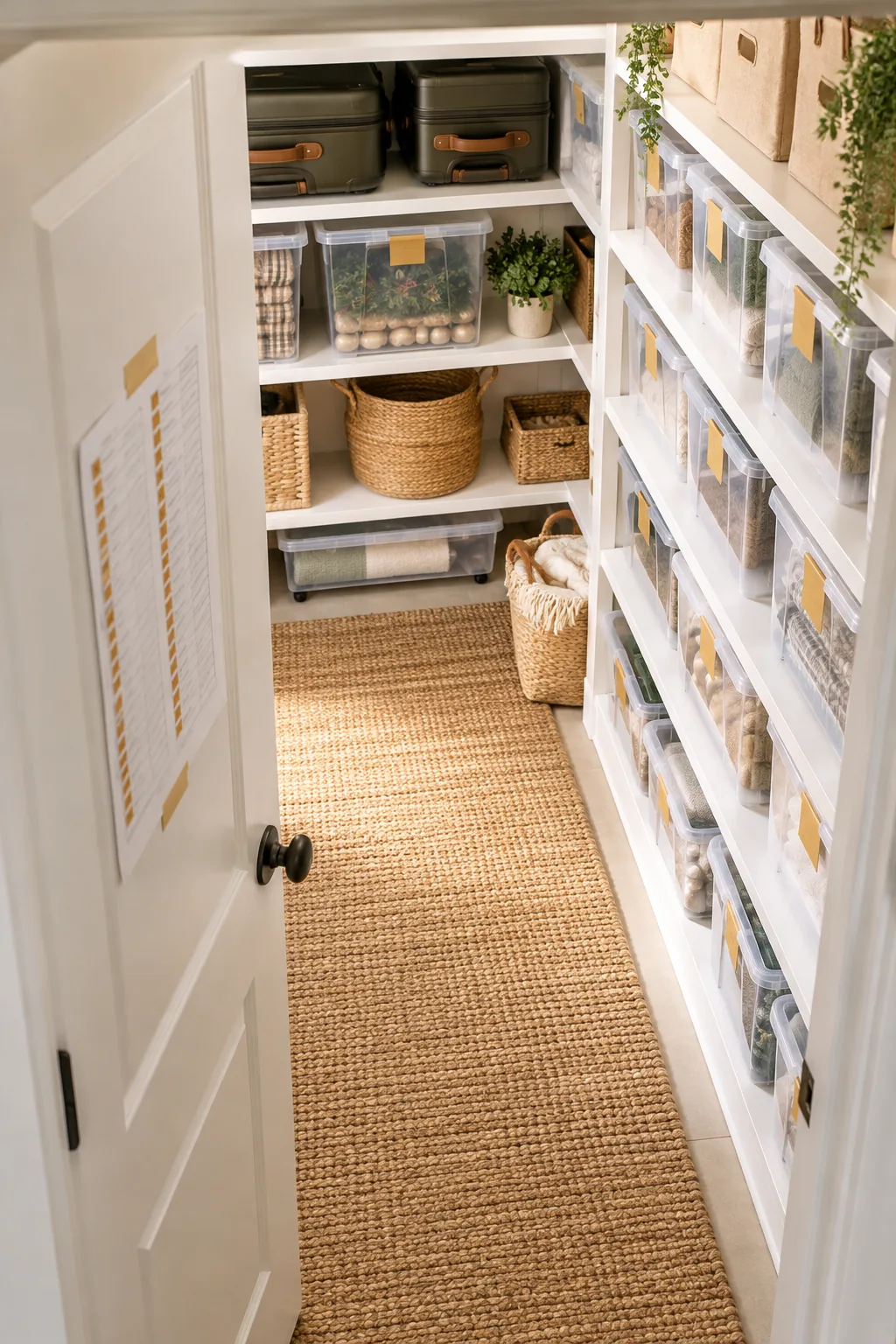
The Master Door Inventory
The true magic of this sophisticated setup is taping the printed bin inventory sheet and detailed shelf map directly inside the room’s main access door.
This printable tracks bins 01 through 24 with a dedicated contents column, meaning you simply consult the door map instead of opening random boxes in frustration.
Making the Map Reusable
To keep the system running smoothly year after year without reprinting the map every time a bin changes, make the sheet reusable.
Wiping away old entries takes seconds, ensuring your master record always perfectly matches the physical reality on your shelves without generating unnecessary paper waste or confusion.
Tracking Bins with the Printable Map
The included shelf map visually divides the room into distinct, easy-to-read zones, allowing you to instantly cross-reference a specific bin number with its exact physical location on the wall.
Securing Bins Against Dust
Even in a climate-controlled room, dust naturally settles on long-term storage items, making tightly latching lids an absolute necessity for preserving your delicate fabrics and heirloom holiday decorations.
Categorizing by Weight
Beyond rotating for the seasons, you must always place your heaviest books and metal tools on the lower tiers to anchor the shelving unit and prevent dangerous top-heaviness.
Maintaining Proper Ventilation
Packing a small utility room too tightly restricts essential airflow, which can quickly lead to trapped moisture and devastating mildew growth on your stored fabrics, so leaving a strict gap above every single bin ensures ambient air continues circulating freely.
Optimizing the Eye-Level Strike Zone
Reserving the shelves that sit naturally between your waist and shoulders for the current season’s items prevents dangerous overhead lifting and unnecessary bending that can lead to physical injury.
Storage Room Styles to Steal
The numbered bin system adapts beautifully to any home's aesthetic—choose the look that fits your space.
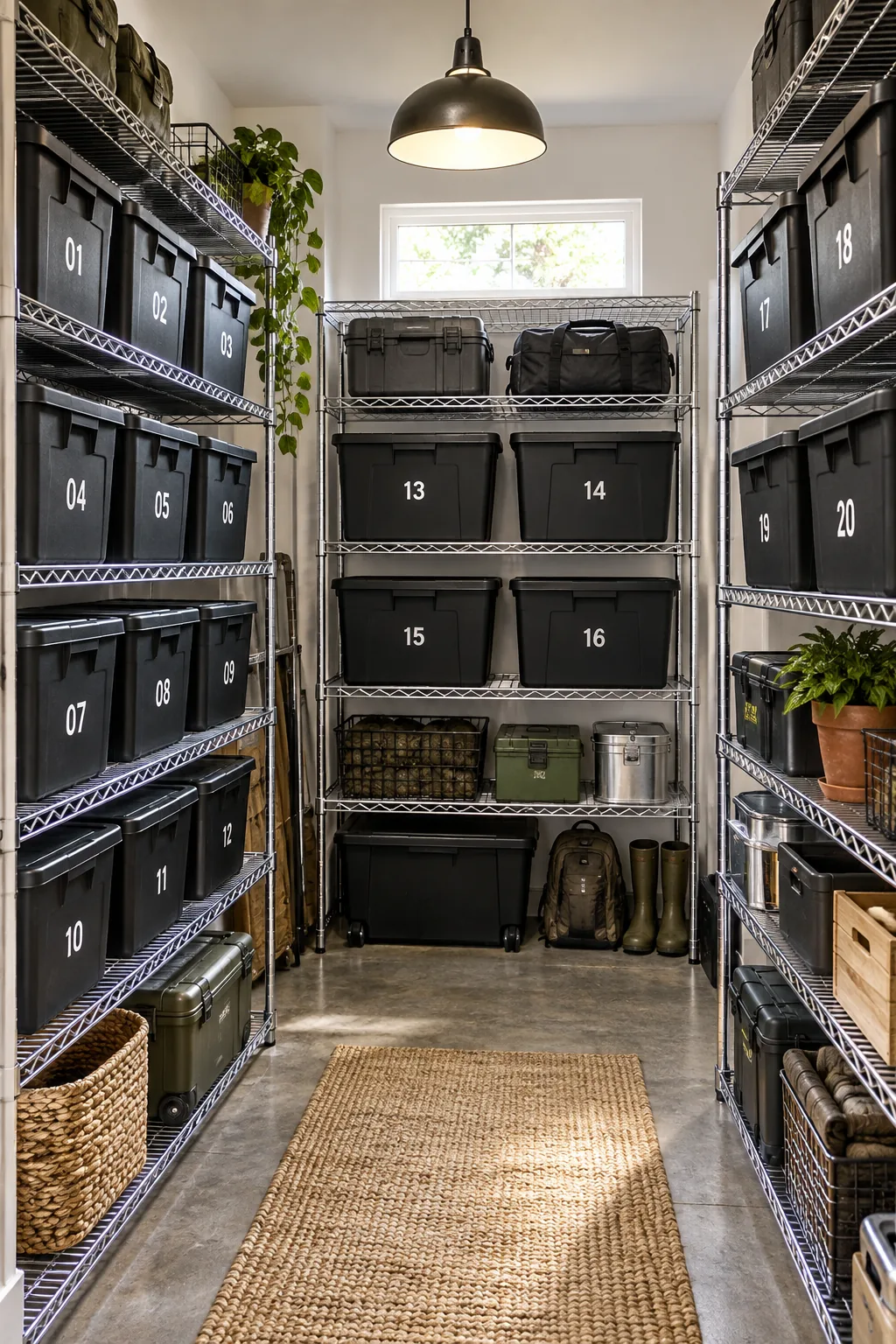
Utilitarian Industrial Garage: Wire shelving and opaque black bins create a rugged, high-contrast look perfect for utility spaces.
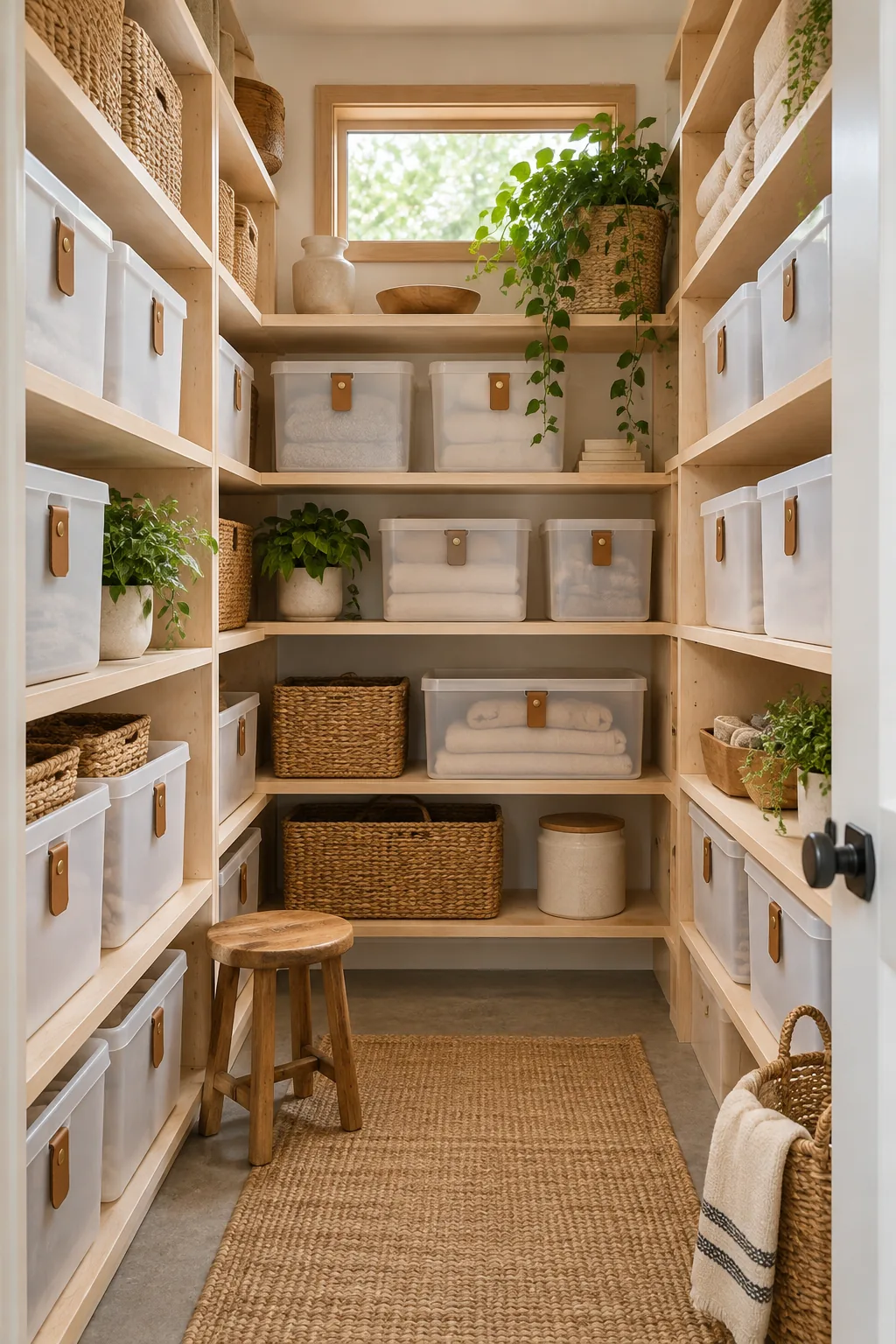
Warm Minimalist Plywood: Birch built-ins and leather tags soften the storage room, making it feel like an extension of the living space.
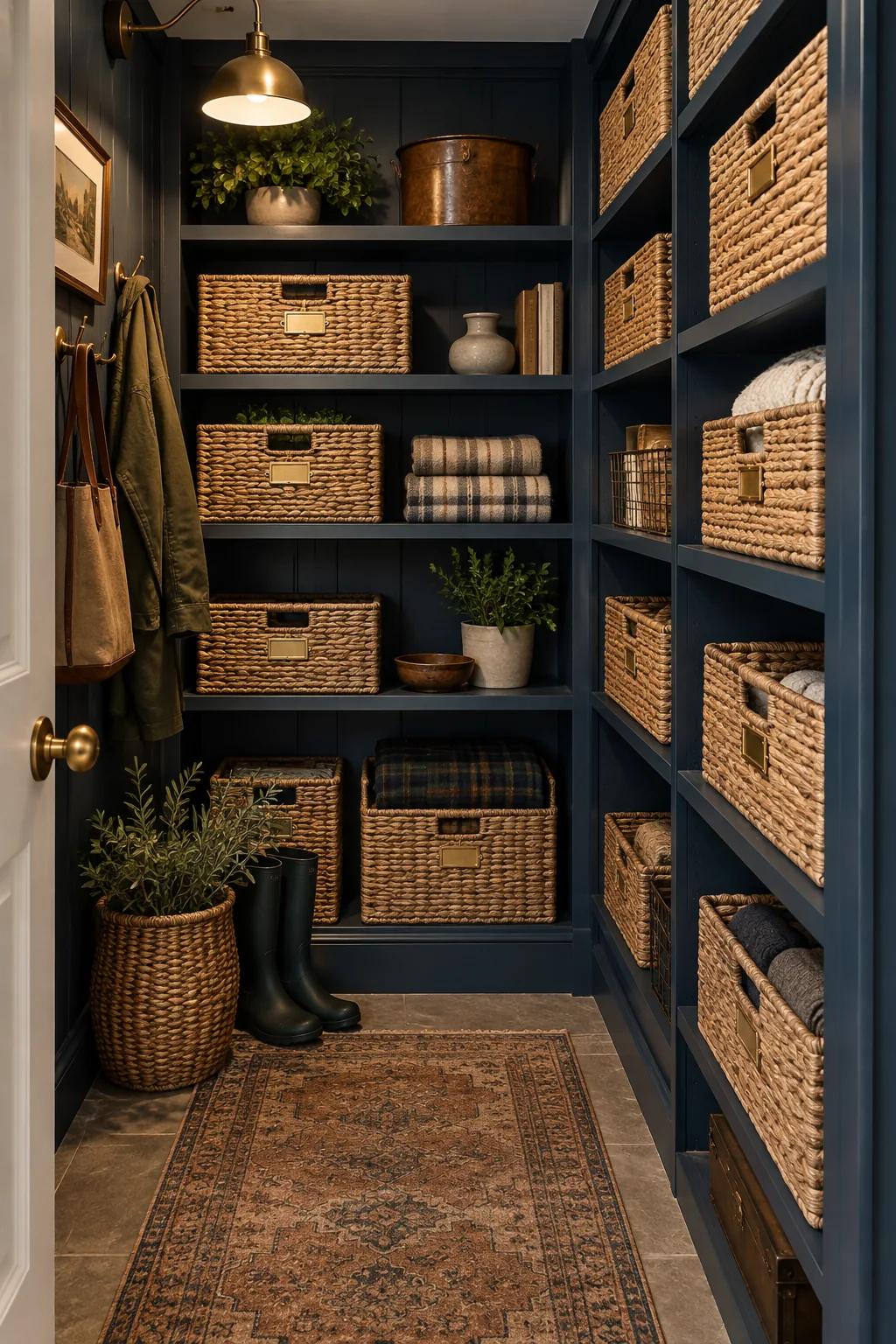
Moody Traditional Mudroom: Dark painted shelves and woven baskets with brass plates offer a sophisticated, traditional take on numbered storage.
Managing Seasonal Rotation
Utilize the inventory sheet’s built-in season-rotation column to actively swap your front and back storage bins at least twice a year as the weather outside shifts.
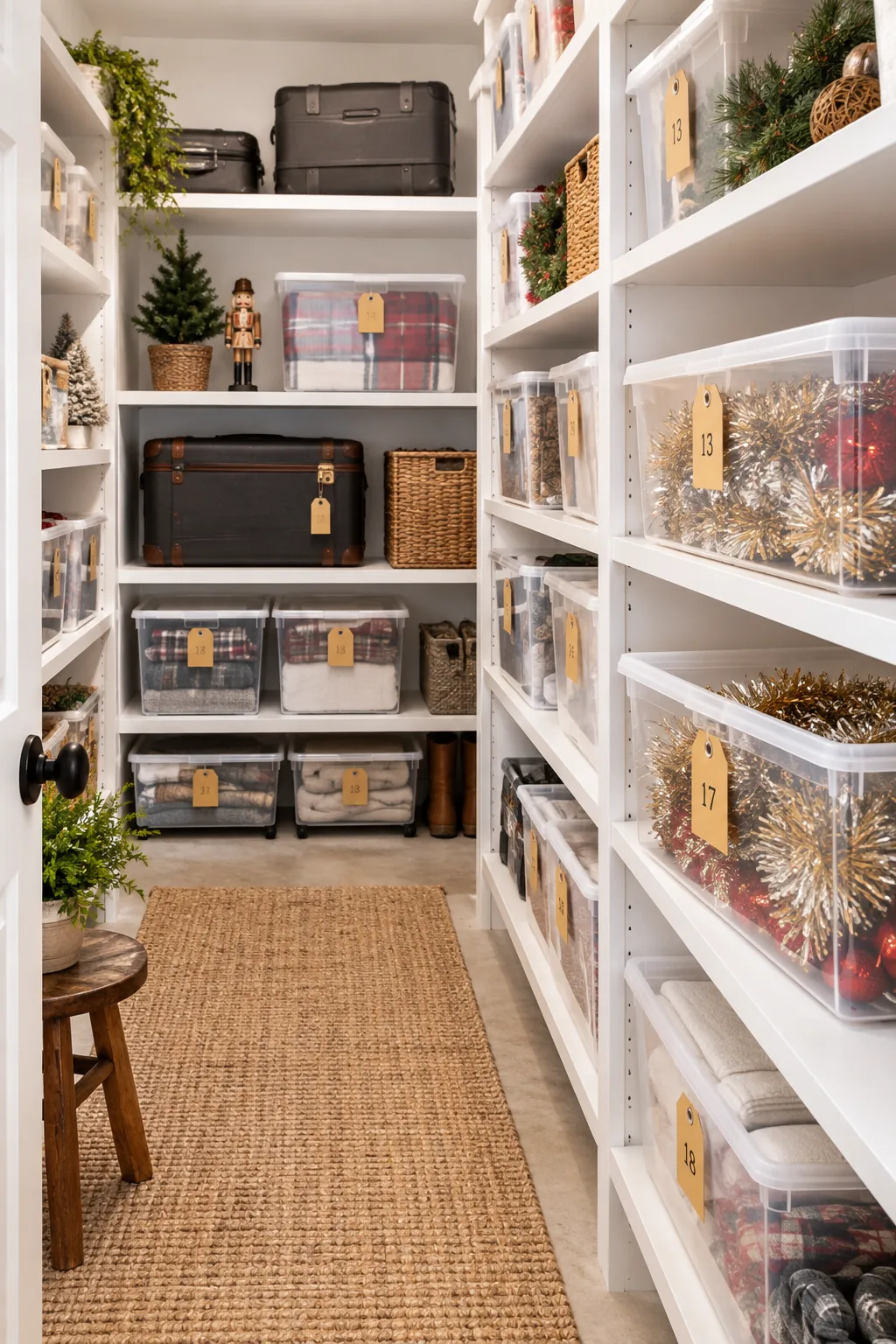
Rotating the bins twice a year keeps the system functional, ensuring you never have to use a step stool for current holiday decor.
Keeping your most relevant seasonal gear in the optimal strike zone drastically reduces the physical strain of decorating your home and retrieving heavy winter coats.