
Modern Front Yard Rock Garden (Plus Stone Tonnage Chart)
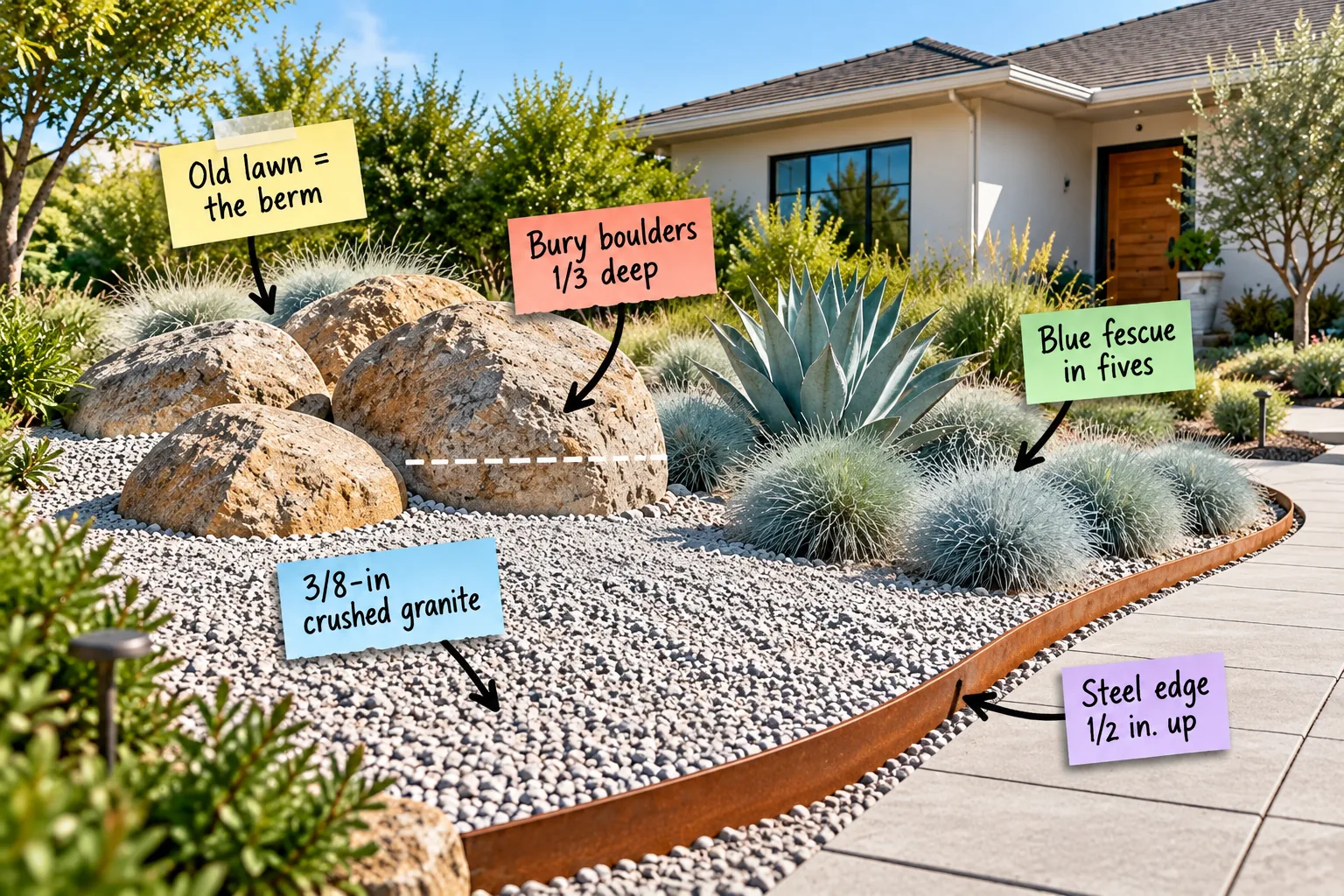
Transform your plain lawn into a gallery-worthy landscape by using our exact gravel and boulder quantity cheat sheet. You will be able to calculate your precise stone needs and install a low-maintenance modern rock garden step by step.
Building the Berm from Old Lawn
Cut the existing plain lawn into strips, flip them grass-side down, and stack them to create a low, gently rising mound. When I dug up my own Austin front yard, stacking that old sod saved me hundreds on fill dirt while building a natural-looking elevation change.
While stacking your old grass saves money on fill dirt, the organic matter will break down over time.
Shaping and Tamping the Soil Mound
Cover the flipped grass blocks with a thick layer of fresh topsoil, blending the edges smoothly into the surrounding flat grade. Follow a specific compaction sequence to ensure your heavy decorative rocks will not sink unexpectedly after the first heavy rain.
- Spread the topsoil evenly with a steel rake.
- Mist the soil lightly with a garden hose.
- Tamp the entire mound firmly until solid.
Managing Front Yard Drainage
Observe how water flows off your roof and driveway during a heavy rainstorm before you finalize the new garden layout. Directing this runoff away from your house foundation and toward the lowest point in the yard prevents the new gravel beds from washing into the street.
Choosing the Right Edging Material
Flexible steel edging offers the cleanest, most architectural boundary for a modern aesthetic compared to bulky plastic or poured concrete curbs. The thin metal profile bends gracefully around sweeping walkway curves while providing a rigid barrier against escaping stones.
Setting the Rust-Colored Steel Edging
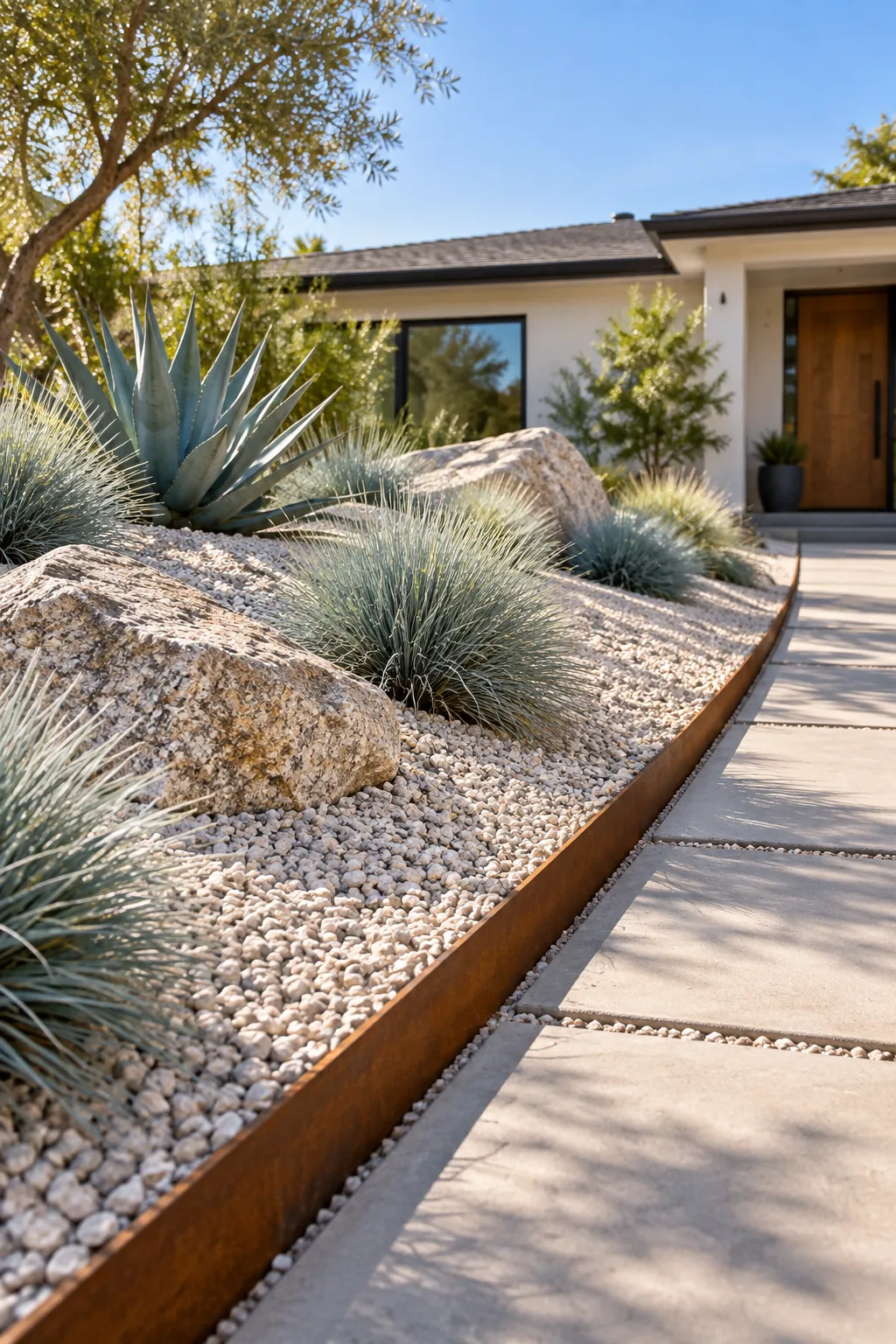
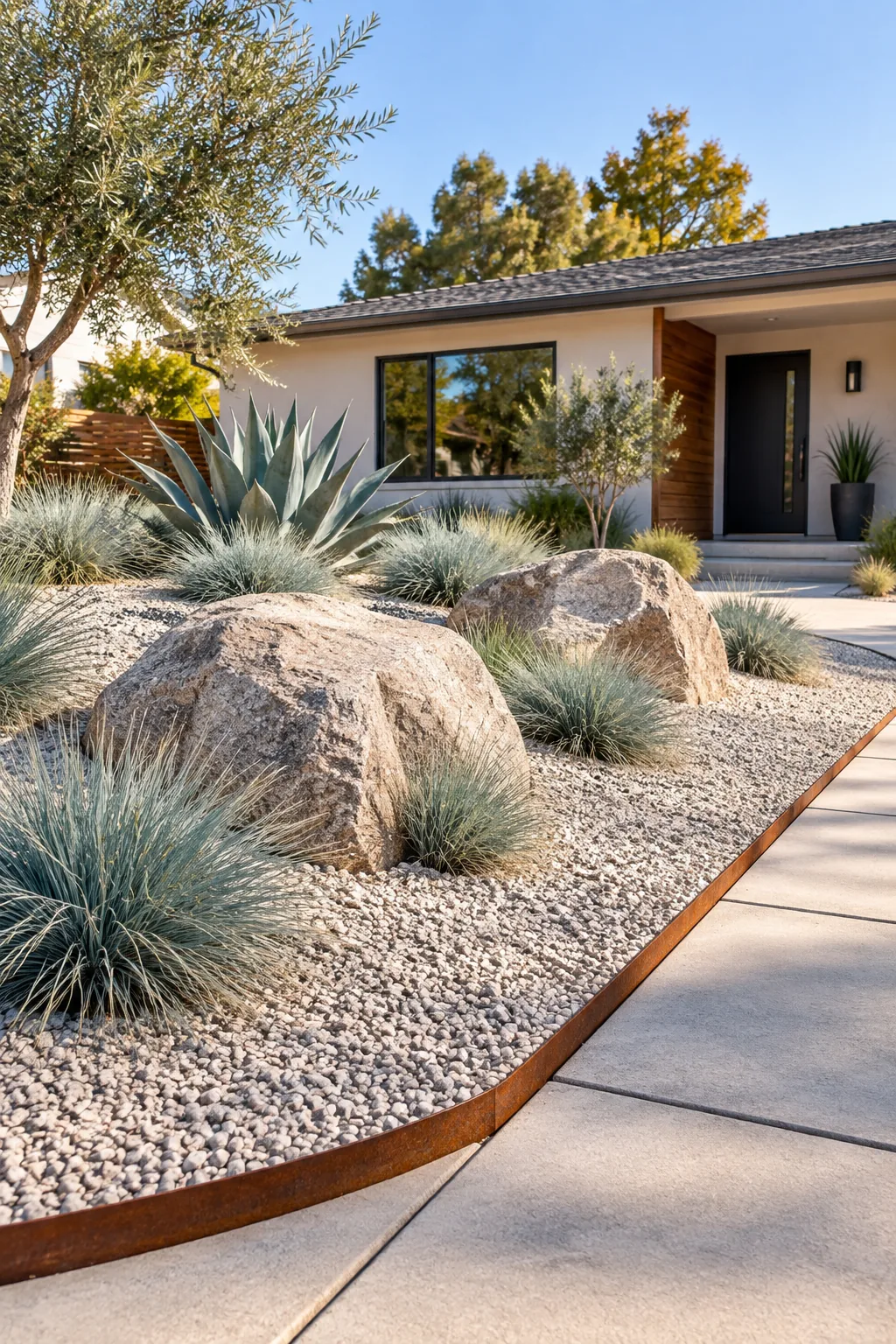
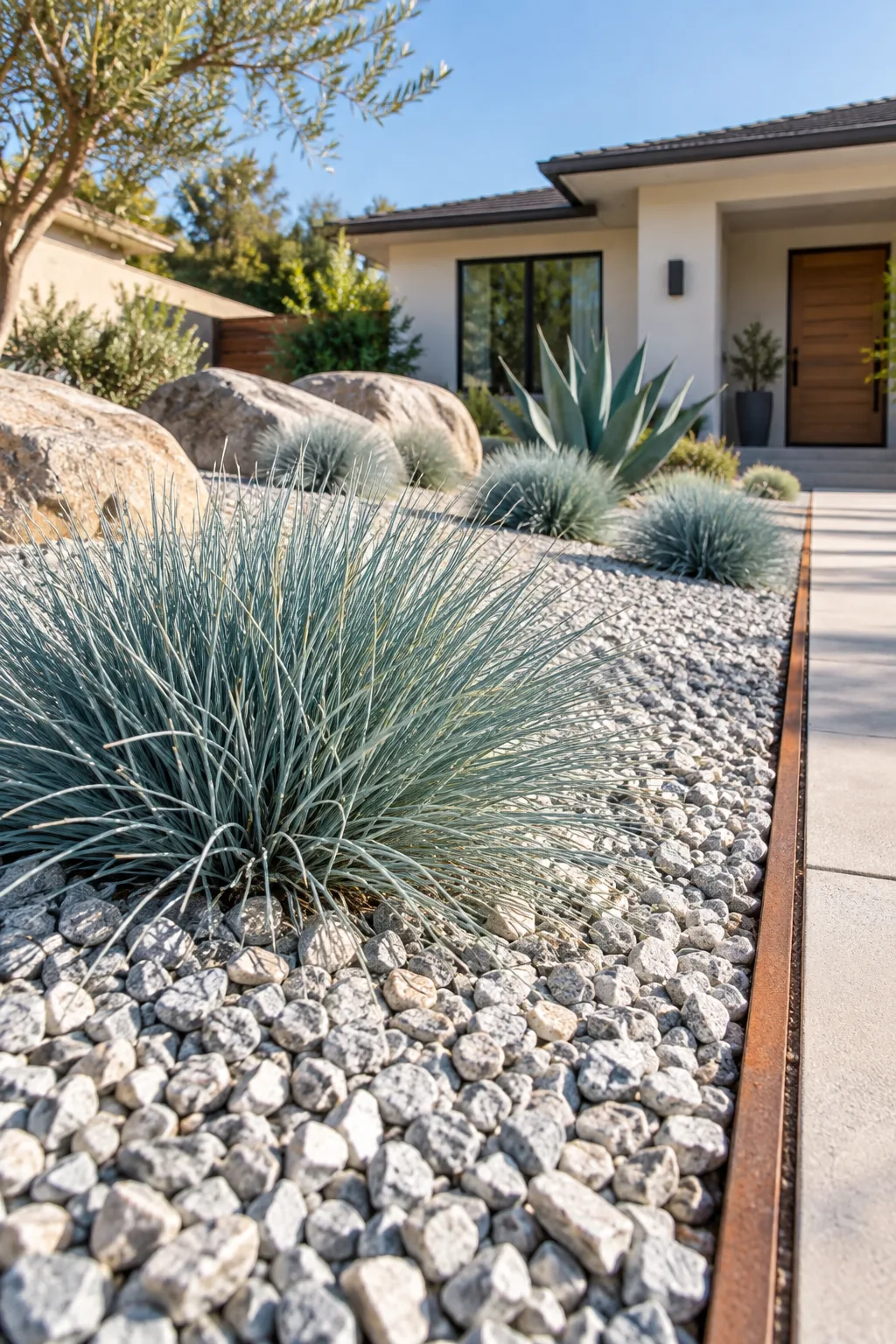
Install rust-colored steel edging along the paver walkway before bringing in any stone, setting the strip exactly one-half inch above the final grade. This specific height keeps the crushed granite perfectly contained while maintaining a crisp, low-profile line.
Securing the Metal Edging in the Trench
Drive the included steel stakes through the overlapping edging brackets at a slight inward angle to anchor the metal firmly against frost heave. Backfill the outside of the trench with heavy clay soil to lock the flexible strip permanently into its perfect curve.
Selecting the Best Weathered Boulders
Source native stones that already show natural lichen growth and weathered faces rather than freshly quarried, sharp-edged rocks. Choosing stones in varying sizes from your local landscape yard ensures your finished arrangement mimics a genuine geological formation.
Designing with Negative Space
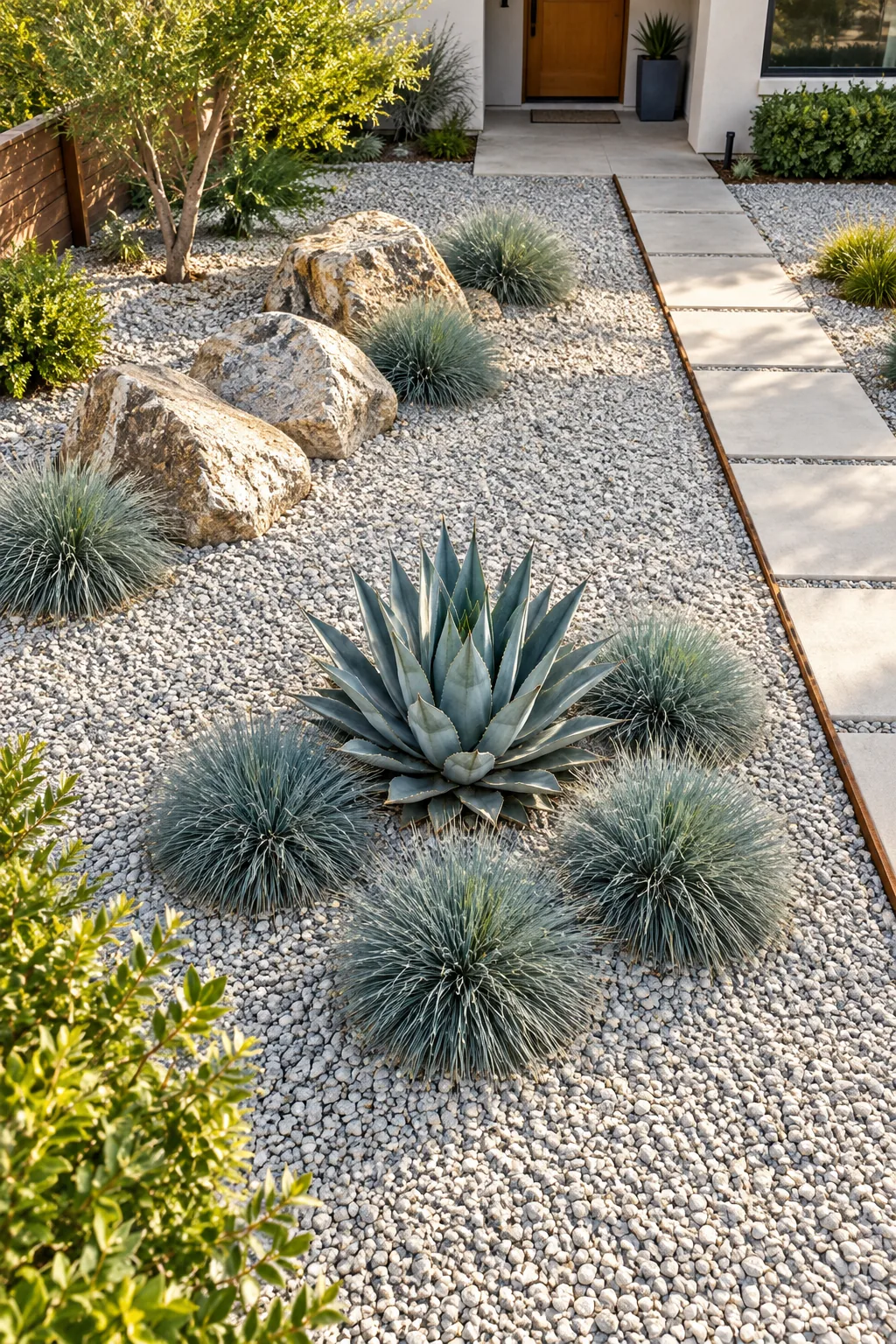
Leave plenty of open gravel space between your boulder groupings and plant clusters to give the eye a place to rest. Embracing this negative space is the secret to achieving that minimalist, modern gallery look instead of a cluttered, overgrown traditional flower bed.
Anchoring Boulders One-Third Deep
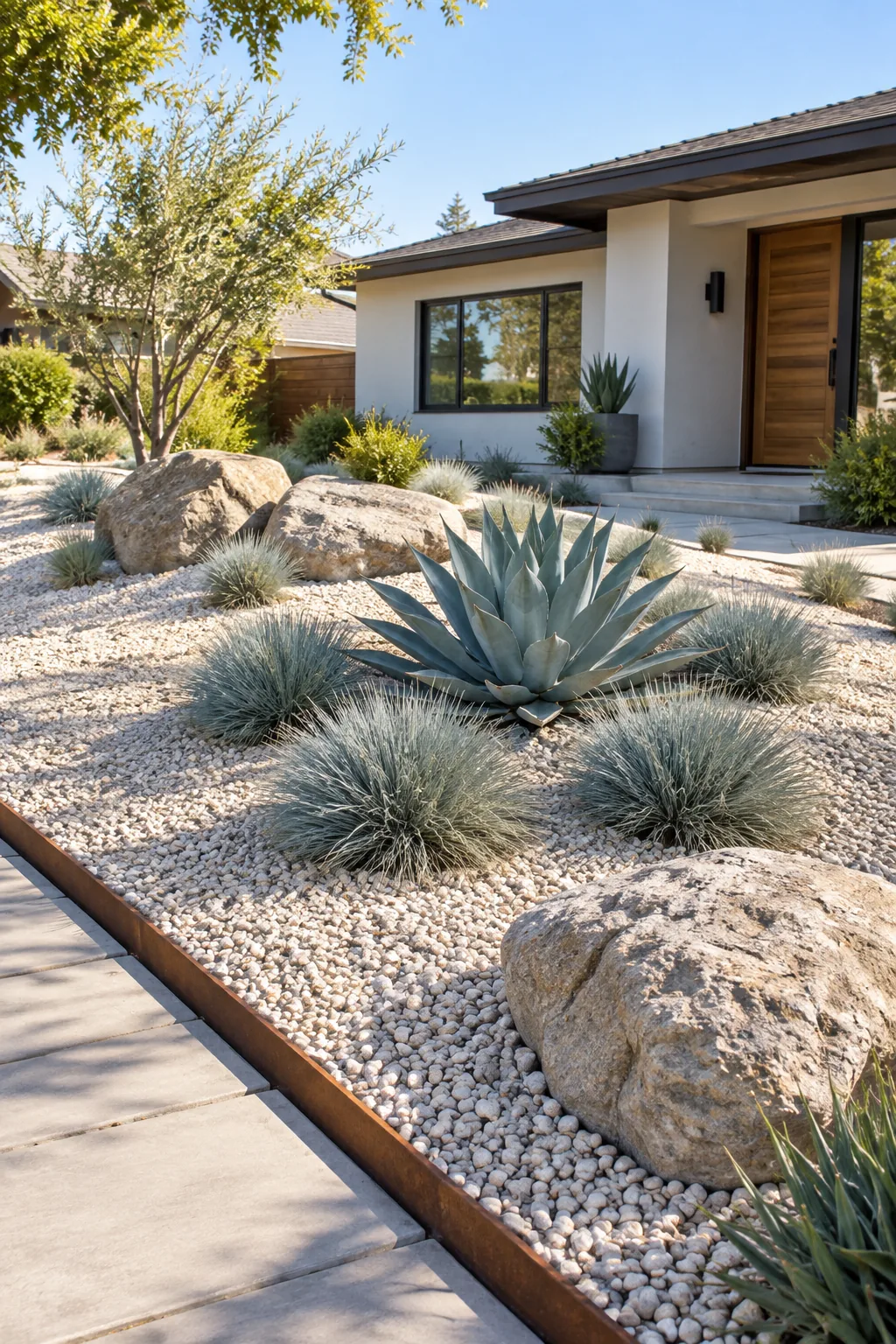
Position weathered granite boulders in groups of three on the newly built berm, digging a shallow depression so one-third of a boulder’s mass is buried below the soil line. This crucial depth makes the boulders look like natural outcroppings rather than stones dropped carelessly on the surface.
Placing the Specimen Agave Plant
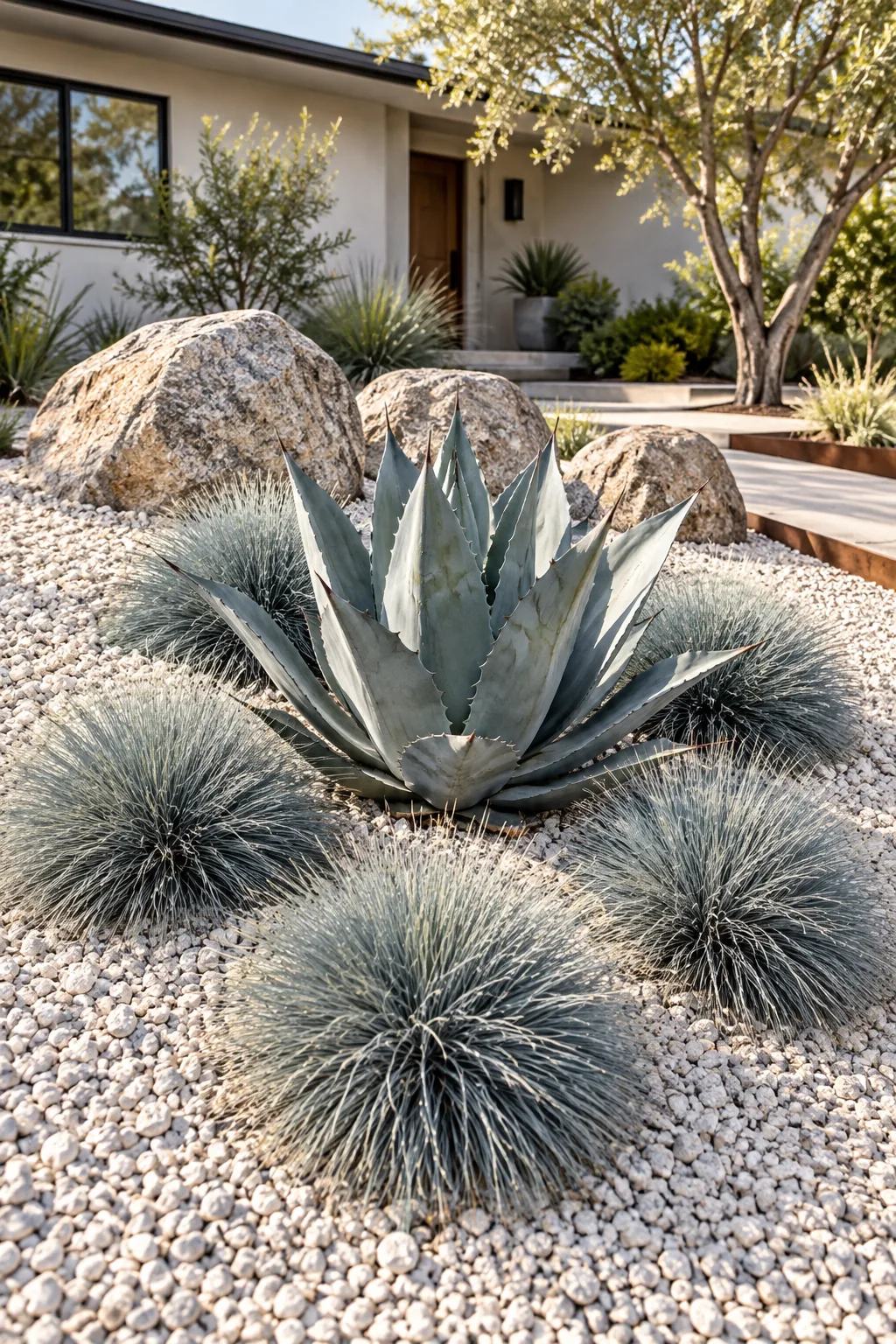
Plant one large, sculptural agave as the focal point on the highest part of the berm to anchor the entire visual space. Positioning this dramatic architectural plant at the peak emphasizes the elevation change and draws the eye directly to your custom stone arrangement.
Selecting the Right Agave Variety
Choose a cold-hardy agave variety like the Parry’s agave or Whale’s Tongue if your region experiences winter freezes. Checking your specific hardiness zone before purchasing this expensive centerpiece ensures your modern focal point survives its first unexpected temperature drop unharmed.
Grouping Blue Fescue Around Agave
Surround the central agave with repeated drifts of silvery-blue fescue, planting the ornamental grasses in odd-numbered groupings of five to create deliberate rhythm. This gallery-like repetition against the pale stone highlights the contrasting textures between the spiky succulent and the soft, mounding grasses.
Laying the Commercial Weed Barrier
Roll out a heavy-duty, woven landscape fabric over the bare soil, overlapping the seams by at least six inches to block aggressive weeds. Pin the fabric down every three feet with landscape staples so it stays perfectly flat while you maneuver the heavy boulders into position.
Installing Drip Irrigation Lines
Run flexible half-inch drip irrigation tubing around the root balls of your new plants before you lay down the weed barrier or gravel. Pinning the emitters directly under the plant canopy delivers water efficiently to the roots without encouraging stray weed seeds in the surrounding rock.
The Gravel and Boulder Tonnage Chart
Use our printable two-page stone quantity chart to calculate exactly how many tons of stone to order based on your square footage. It covers everything from the crushed granite needed at 2-inch and 3-inch depths to boulder counts and steel edging length formulas.
Grab the complete printable gravel and boulder tonnage chart to plan your delivery, or reference this quick cheat sheet for a standard 100-square-foot bed.
| Material | 2-Inch Depth | 3-Inch Depth |
|---|---|---|
| 3/8-inch Crushed Granite | 0.8 Tons | 1.2 Tons |
| Weathered Boulders | 3 Rocks | 3 Rocks |
| Steel Edging | Perimeter length | Perimeter length |
Ordering and Scheduling the Stone Delivery
Request that your bulk material supplier drops the heavy boulders first, followed by the crushed granite pile closer to the street. Staging the materials in this exact order prevents the massive rocks from crushing your carefully raked gravel during the final placement phase.
Spreading the Crushed Granite Layer
Distribute 3/8-inch crushed granite evenly across the entire exposed soil surface, keeping the depth consistent. I learned the hard way that taking the time to spread this final layer carefully creates a stable, walkable surface that stays neatly inside your new metal borders.
Washing the Granite Dust
Spray the newly spread crushed granite lightly with a garden hose to wash the fine quarry dust down into the lower gravel layers. Rinsing the stones reveals their true pale gray color and helps the angular pieces settle tightly together for a firmer walking surface.
Leveling the Gravel Across the Yard
Use a heavy-duty push broom to sweep the freshly spread granite off your paver walkways, ensuring the stones sit slightly below the metal lip. Pushing the excess dust away from the delicate plant bases allows them to breathe properly while maintaining a clean, sharp border.
Illuminating the Rock Garden
Install low-voltage brass spotlights at the base of your largest agave and angle them upward to cast dramatic shadows across the boulders at night. Hiding the wiring under the gravel layer keeps the daytime aesthetic pristine while completely transforming the yard’s evening curb appeal.
5 Modern Rock Garden Styles to Copy
Choose a distinctive stone and plant palette to match your home's architecture.
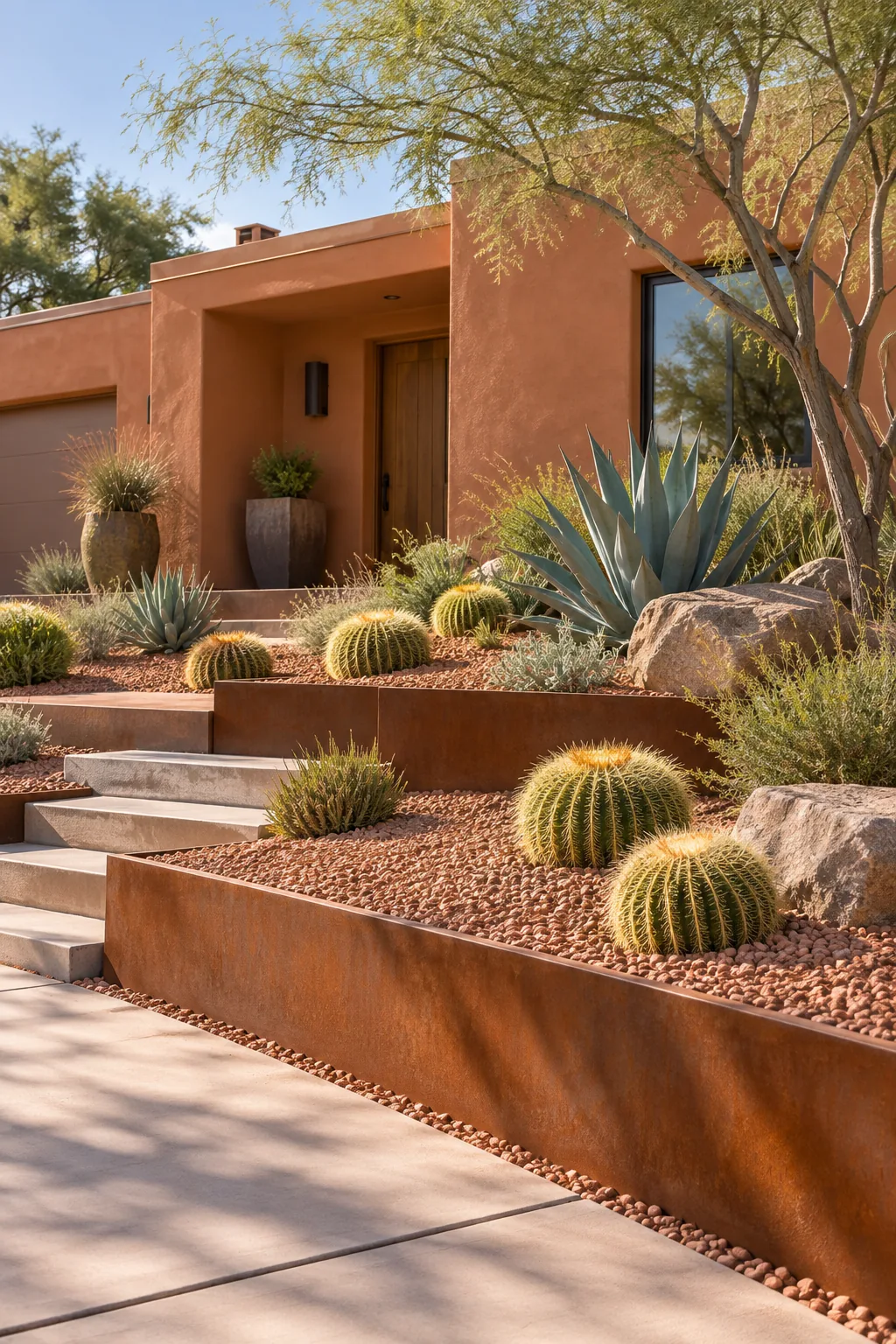
Desert Modern: Warm terracotta stones and corten steel walls create a striking desert aesthetic that perfectly complements golden barrel cacti.
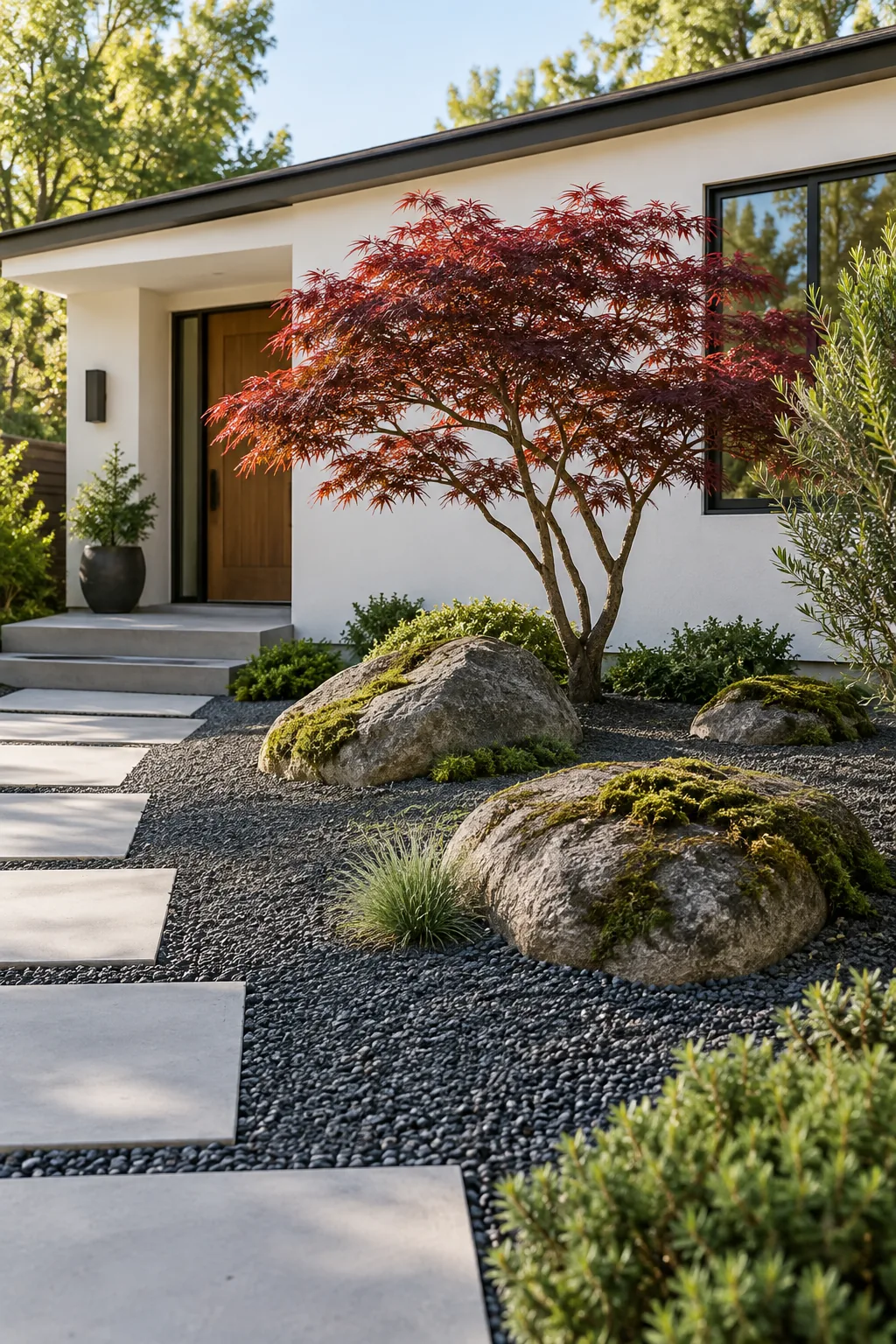
Zen Minimalist: Dark basalt gravel provides a dramatic, high-contrast background that makes a single sculptural Japanese maple pop.
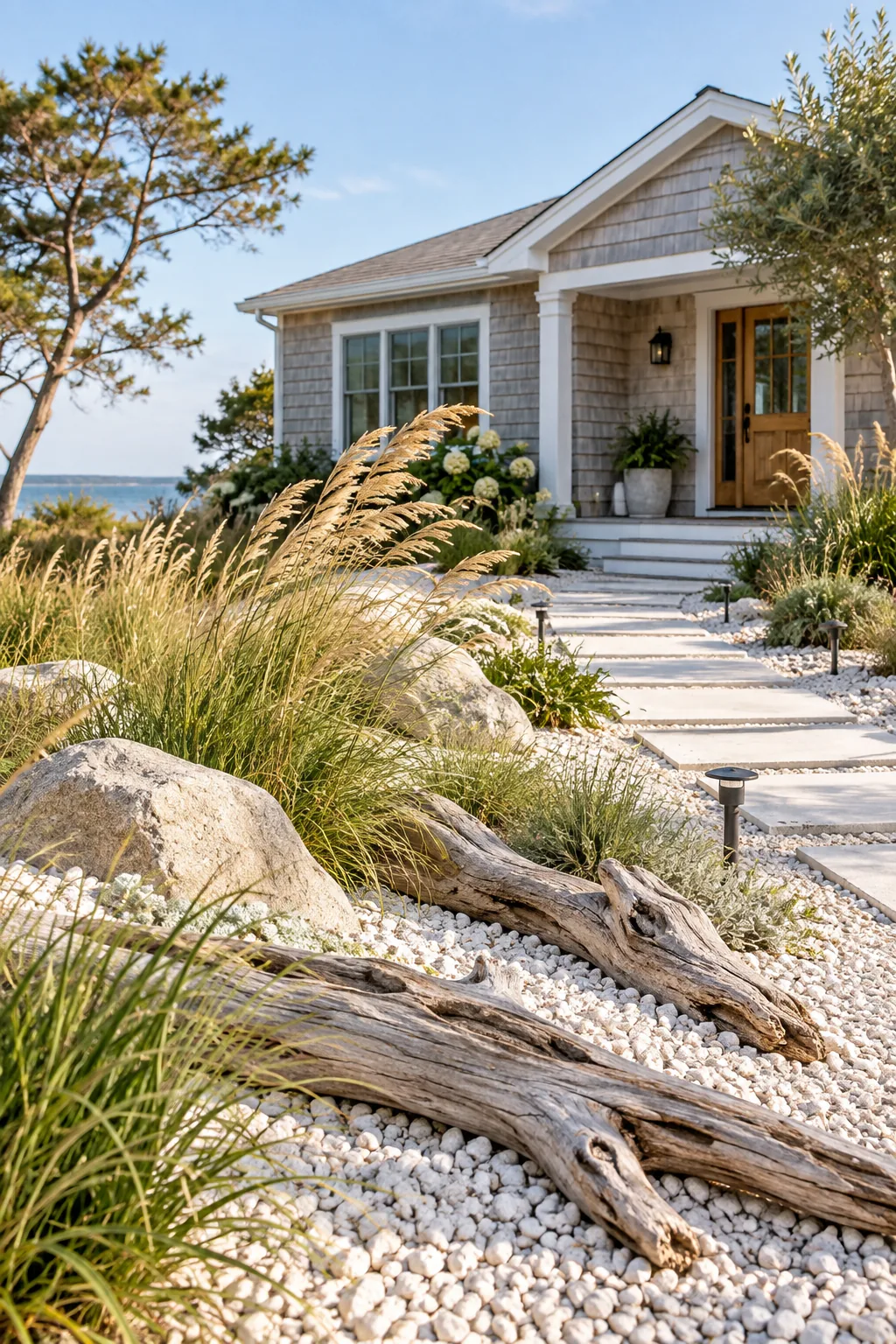
Coastal Contemporary: Bright white marble chips and large driftwood accents mimic a serene beach landscape right in your front yard.
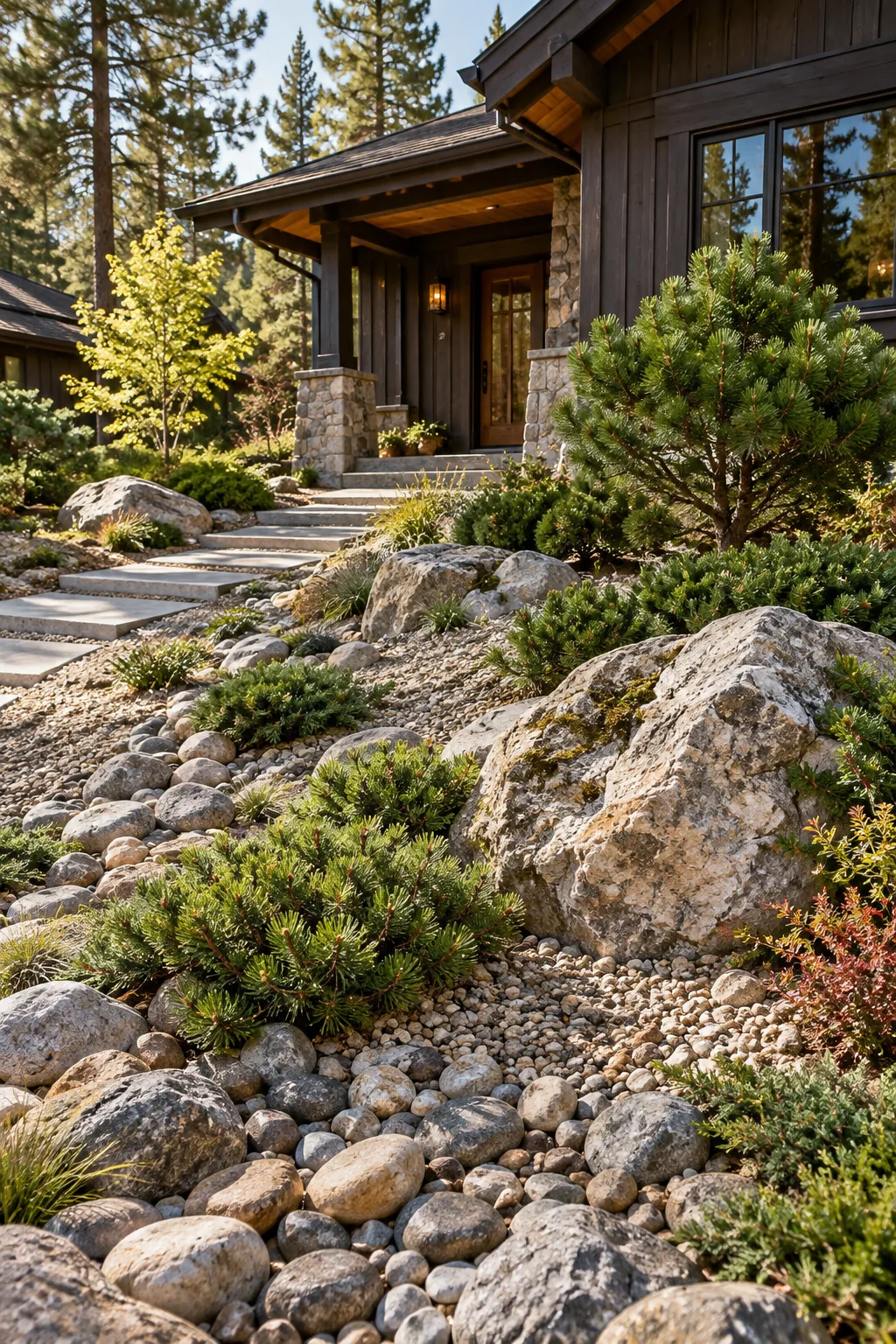
Woodland Alpine: A varied mix of river rock and rugged limestone boulders creates a natural mountain-inspired look for rustic homes.
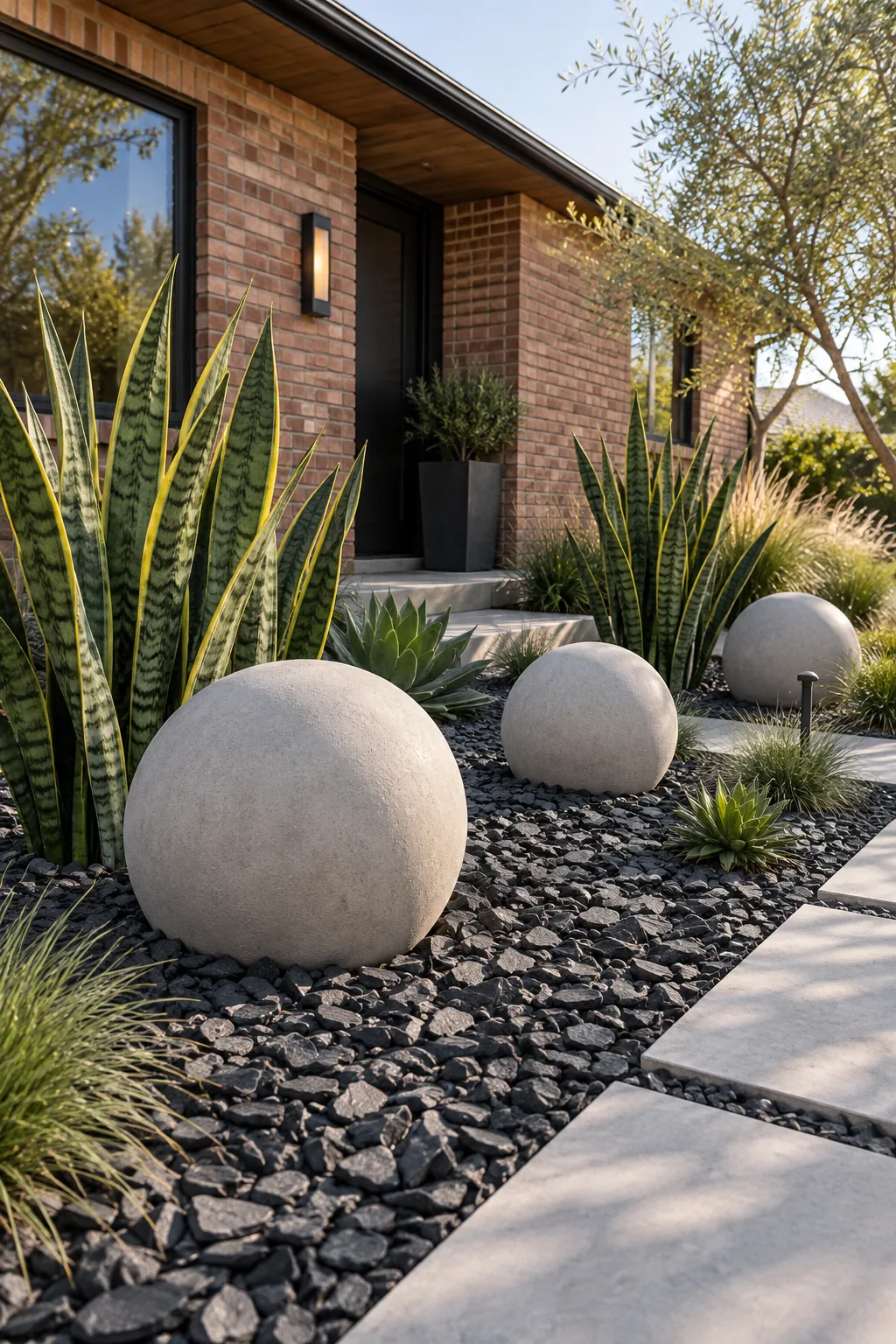
Urban Industrial: Swap traditional boulders for smooth concrete spheres resting on black slate chips to achieve a bold industrial edge.
Raking and Final Garden Maintenance
Finish the installation by pulling a wide landscaping rake across the crushed granite to smooth out high spots and lock the angular stones in place. Raking is my favorite part of the process, because those crisp lines instantly erase installation footprints and give the front yard that intentional, modern gallery aesthetic.
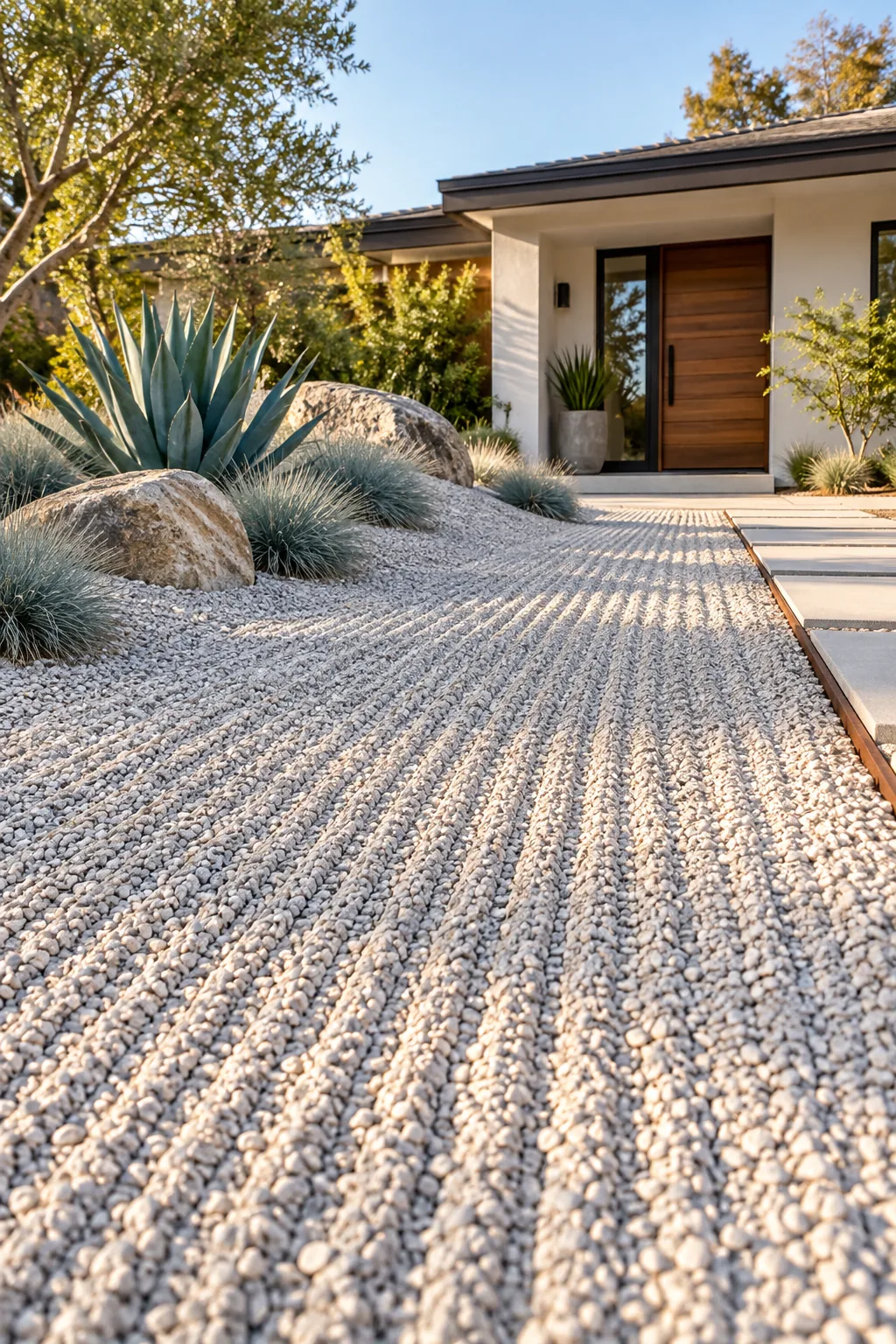
A modern rock garden requires far less water and mowing than a traditional lawn, but it still needs light seasonal upkeep to stay pristine.