
Smart Garden Design Layouts: Your 3-Tier Planting Guide
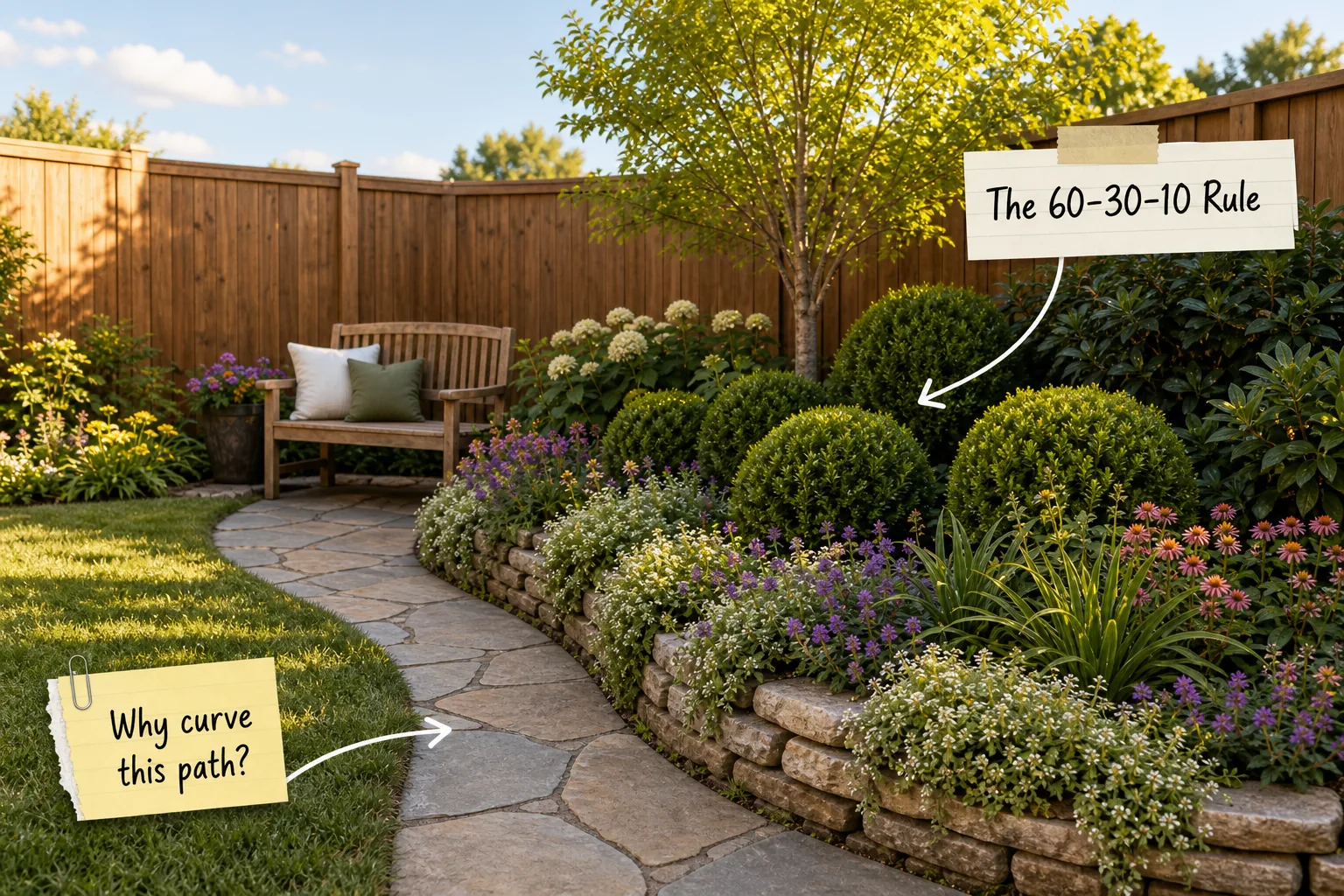
Master the 60-30-10 layering rule to build a beautifully structured, professional-looking backyard corner and get your complete 3-tier planting guide. You will be able to map out, select, and arrange a perfectly proportioned landscape bed that thrives across every season.
Why Curve the Garden Path?
A deliberate curve slows the visual journey, making a compact backyard feel significantly deeper and far more expansive. This sweeping hardscape line forces the eye to explore the entire layered planting bed rather than rushing straight toward the rear property boundary.
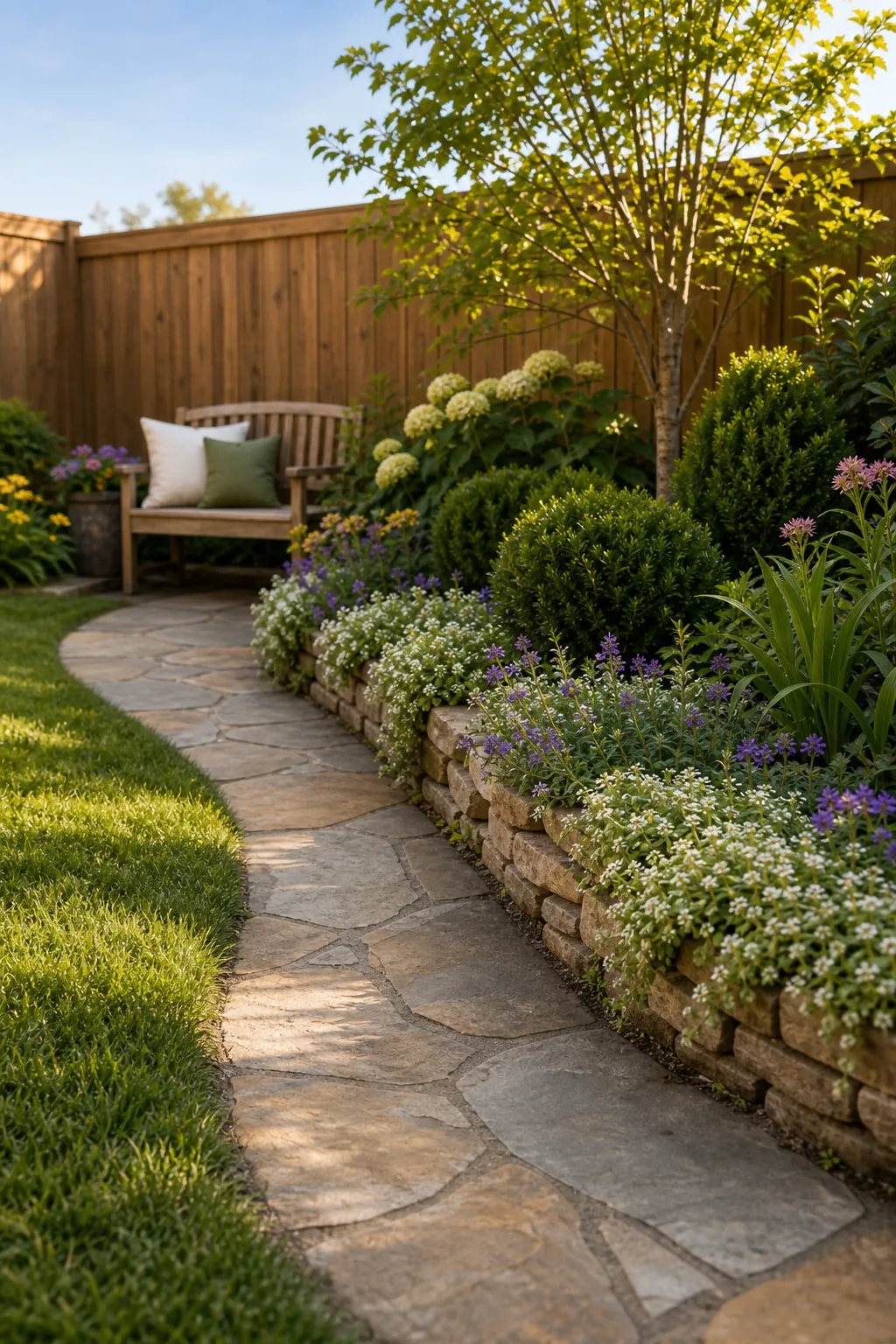
To ensure two people can pass comfortably without stepping into the soil, maintain a minimum 36-inch width for the flagstone walkway. This generous dimension provides enough clearance for trailing plants to drape over the border without ever becoming a tripping hazard.
Mapping the Hardscape Flow
Establishing the correct walkway dimensions ensures your garden remains accessible while protecting the delicate root zones of your border plants. Calculating these hardscape measurements before digging prevents costly layout mistakes that could compromise the overall structural flow of your outdoor space.
| Path Type | Minimum Width | Primary Function | Border Clearance |
|---|---|---|---|
| Main Walkway | 36 inches | Two-person passing | 8 inches |
| Secondary Path | 24 inches | Single-file access | 6 inches |
| Maintenance Trail | 18 inches | Pruning access | 4 inches |
| Patio Transition | 48 inches | Gathering flow | 12 inches |
Sticking strictly to these established pathway widths guarantees that your masonry work will harmoniously support the surrounding organic elements. Providing adequate hardscape clearance allows your foreground creepers to reach their mature spread without requiring constant, unnatural pruning to keep walkways clear.
Understanding the 60-30-10 Rule
The secret to a balanced, professional-looking landscape is dedicating specific proportions of your bed to different plant types. This essential formula prevents the chaotic look of a random plant collection by anchoring the design with highly reliable, year-round volumetric structure.
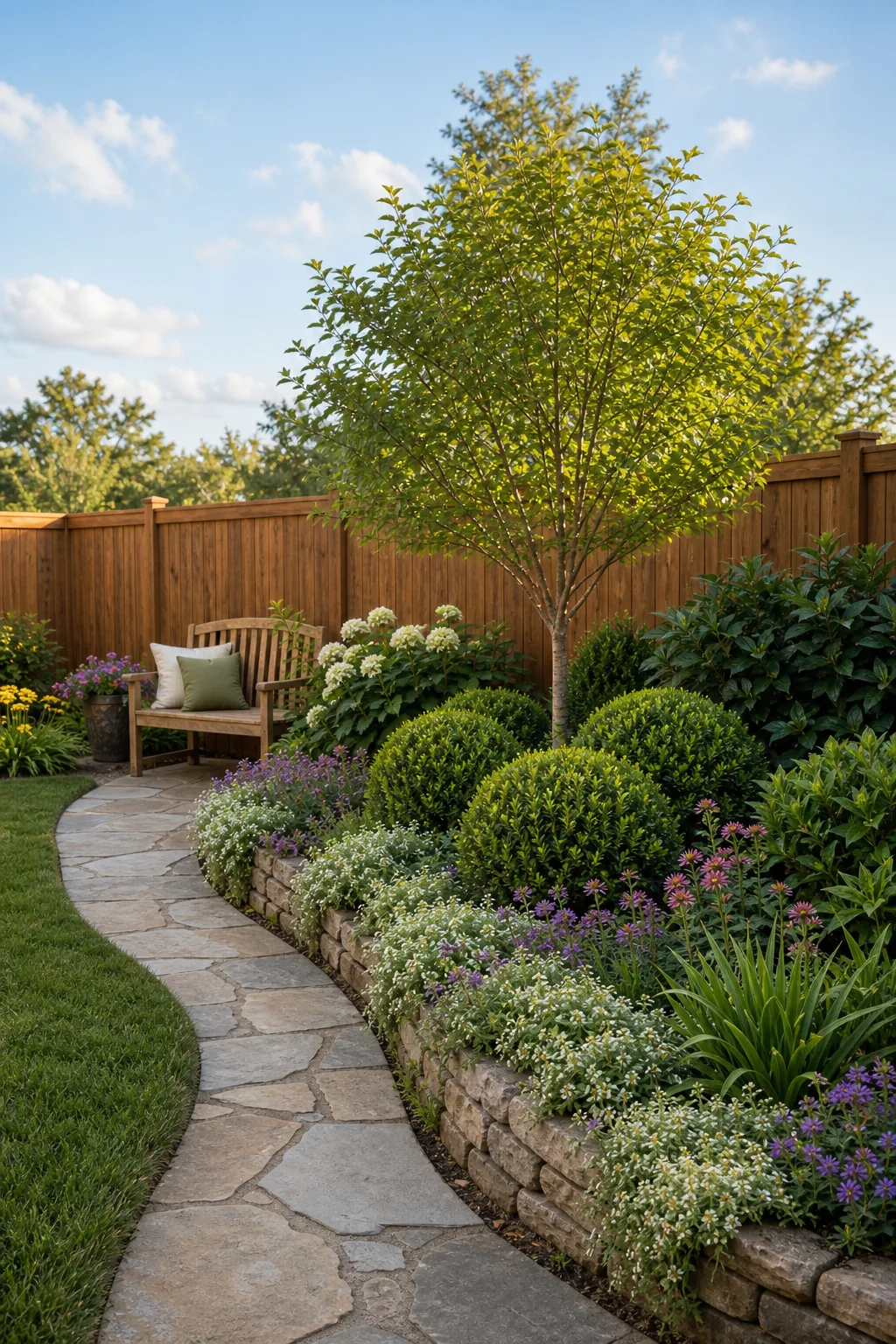
You must dedicate 60 percent to evergreen structure, 30 percent to flowering or deciduous fillers, and 10 percent to a standout specimen. This calculated ratio ensures the garden retains its architectural shape and visual weight even during the dormant winter months.
Calculating Your Visual Mass
Translating these percentages into a physical layout requires mapping your total bed square footage into distinct functional zones. Plotting these specific areas on paper before visiting the nursery prevents you from overspending on flashy seasonal blooms that completely lack winter presence.
- Measure the total square footage of your prepared planting bed.
- Multiply the total by 0.60 to find your evergreen square footage.
- Multiply by 0.30 to determine your seasonal flowering filler space.
- Reserve the final 10 percent for your single architectural focal point.
Following this sequential calculation ensures that your underlying evergreen structure will always successfully dominate the temporary, fleeting seasonal color. Designing by the numbers eliminates guesswork and guarantees a landscape that looks intentionally designed rather than haphazardly assembled over several separate weekends.
Planting the Anchor Tree
Placing the tallest element at the back of the bed draws the eye upward and establishes a strong sense of scale. The trunk of this small ornamental tree serves as the foundational visual anchor that the lower tiers will continually build upon.
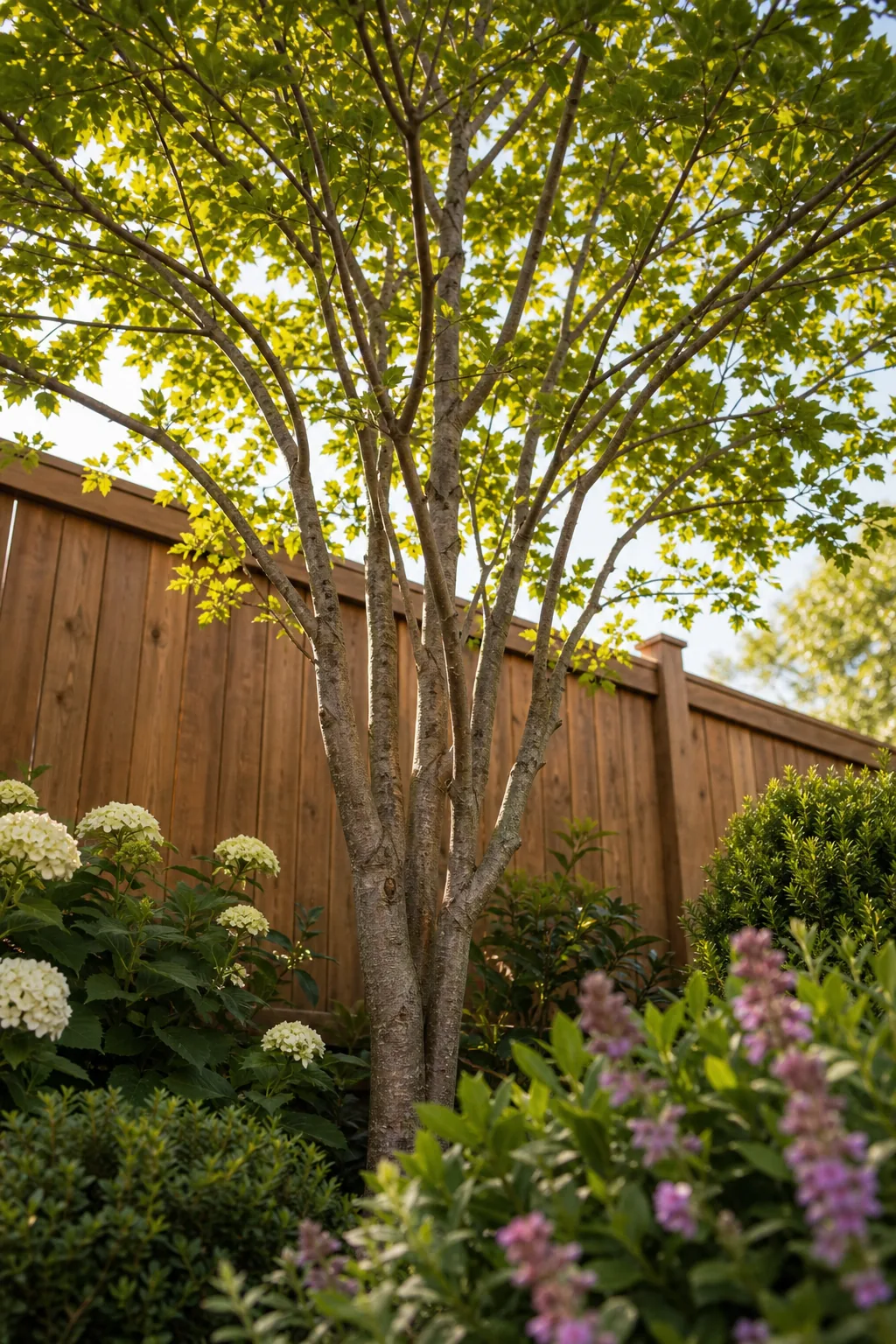
Placing your tree too close to a boundary is a common error that leads to cramped roots and a lopsided canopy. Always calculate your spacing before digging the hole to protect your fence line and ensure healthy, symmetrical branch development.
Preparing the Root Zone
Giving your focal point the best possible start requires digging a wide planting hole that actively encourages rapid horizontal root expansion. A properly prepared excavation site prevents the young tree from becoming root-bound and ensures it can access vital deep-soil nutrients.
Establishing the Evergreen Structure
The middle layer relies on dense, rounded shrubs to provide year-round weight and hide the bare lower trunks of the anchor tree. This solid green belt creates a unified, opaque backdrop that makes the colorful foreground plants pop brilliantly against it.
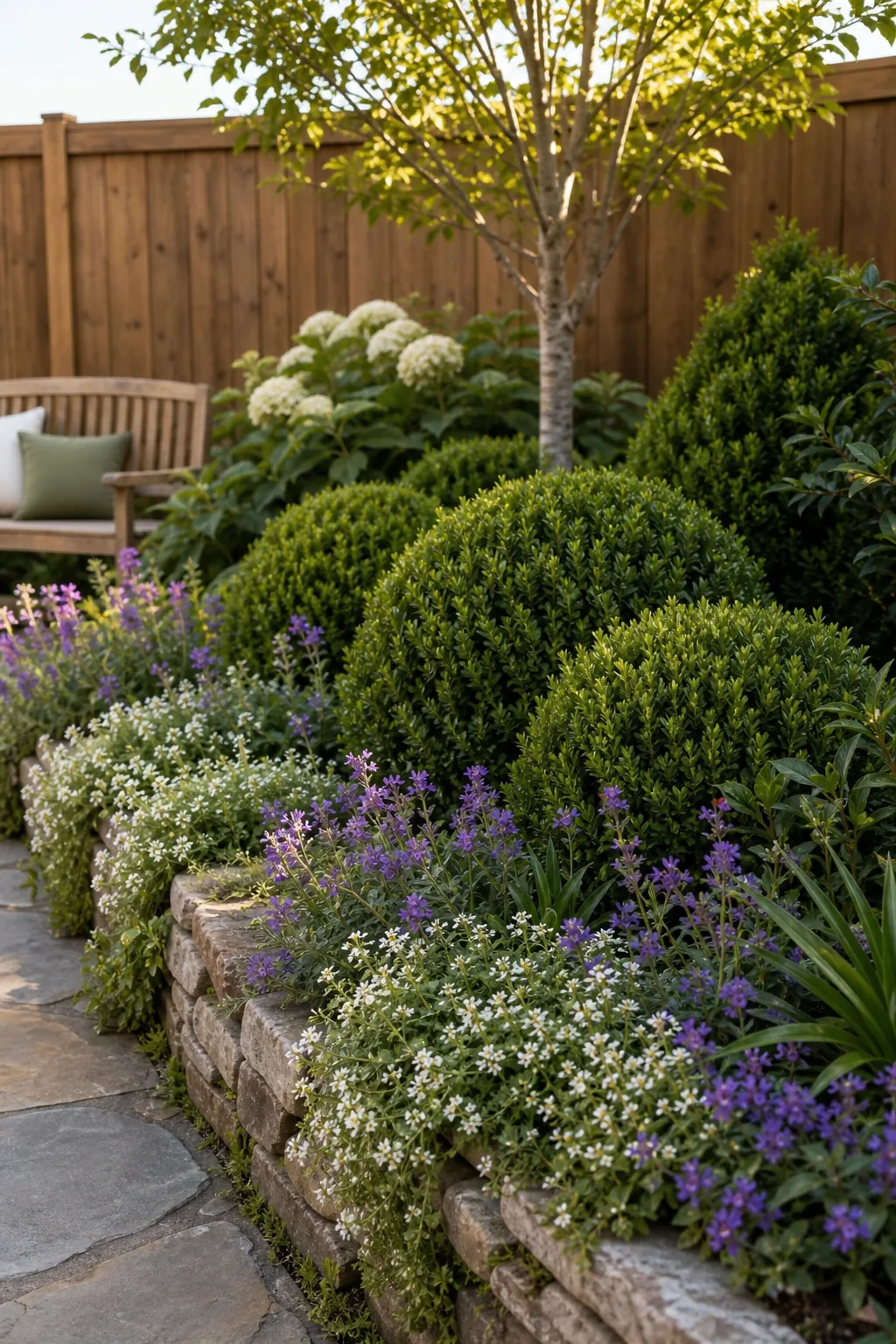
You should space these structural shrubs roughly 3 feet apart on center to create a continuous but distinct hedge effect. This specific measurement allows individual plants to touch gracefully at maturity without severely stunting their natural lateral branching or airflow.
Maintaining Continuous Hedges
Keeping your middle layer dense and vibrant requires dedicated corrective pruning just as the vigorous new spring growth hardens off. Shaping these shrubs correctly prevents them from becoming bare and woody at the base, which would completely ruin the solid structural backdrop.
- Always sanitize your pruning shears with rubbing alcohol between cuts.
- Trim the top of the hedge slightly narrower than the base.
- Remove dead interior branches to promote healthy internal air circulation.
- Avoid heavy shearing during late autumn to prevent winter dieback.
Adhering to these maintenance practices guarantees that sunlight can successfully reach the lower foliage of your evergreen tier. Consistent light exposure is the only way to maintain the dense, unbroken visual weight required to support the 60-30-10 landscaping rule year after year.
Softening with a Spillover Edge
In the foreground, soft creeping plants drape elegantly over the stone border to break up rigid hardscaping lines and blend the transition. This trailing foliage creates a romantic, highly established look that grounds the entire composition naturally into the surrounding green lawn.
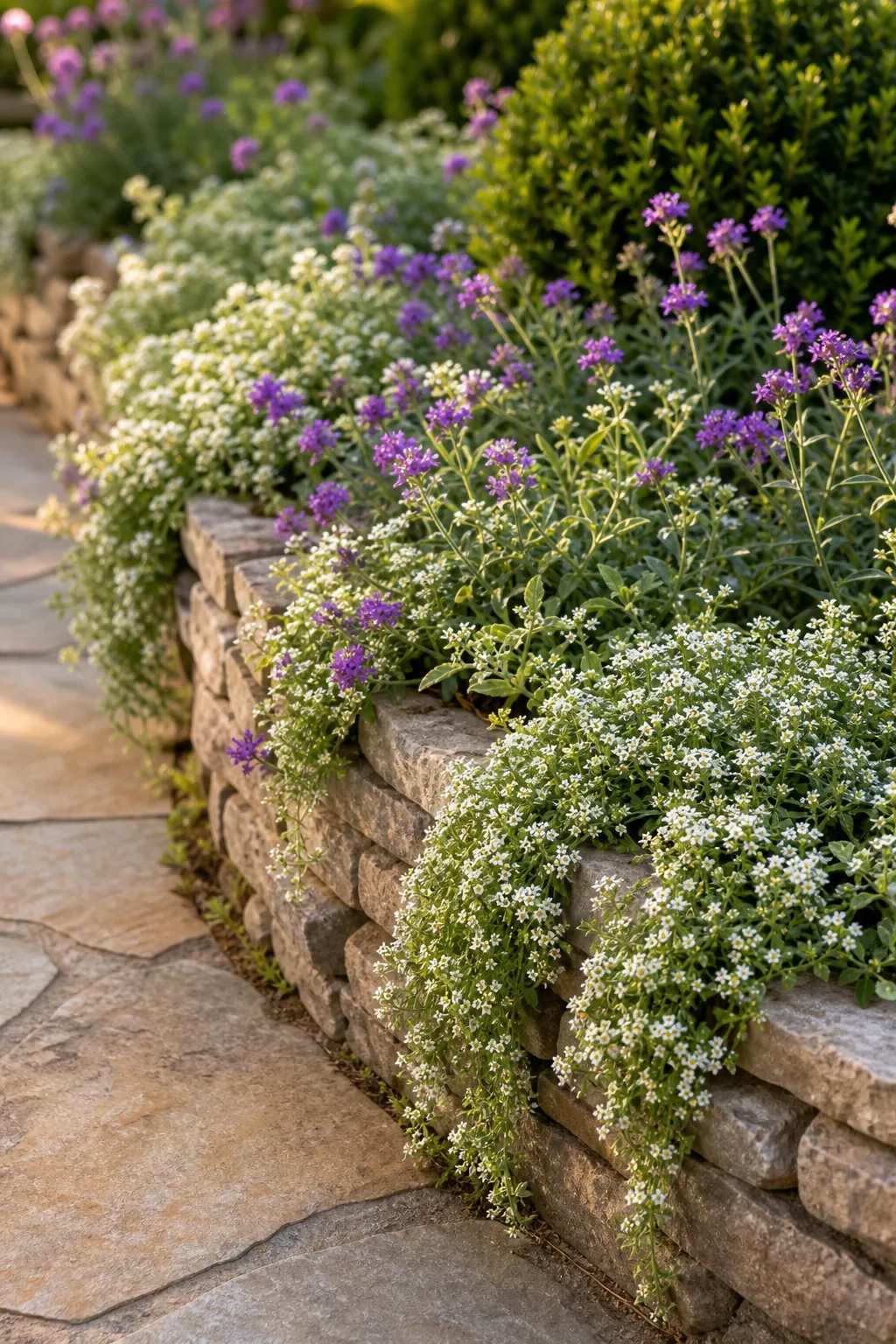
Plant these trailing varieties 6 to 8 inches behind the retaining wall edge so their delicate roots have adequate soil volume. Positioning them too close to the stone face causes rapid drying during summer heat waves and severely restricts essential nutrient uptake.
Managing Soil Volume at the Border
The perimeter of any raised bed dries out significantly faster than the protected center, requiring highly strategic plant selection for the front tier. Choosing resilient, shallow-rooted varieties ensures your border remains lush even when the stonework radiates intense, baking afternoon heat.
Your Complete 3-Tier Planting Guide
Delivering on our promise, you can now combine these distinct zones into a cohesive, professional-grade landscape blueprint. Stacking these layers sequentially ensures every single plant receives adequate sunlight while contributing perfectly to the overall architectural volume of the garden bed.
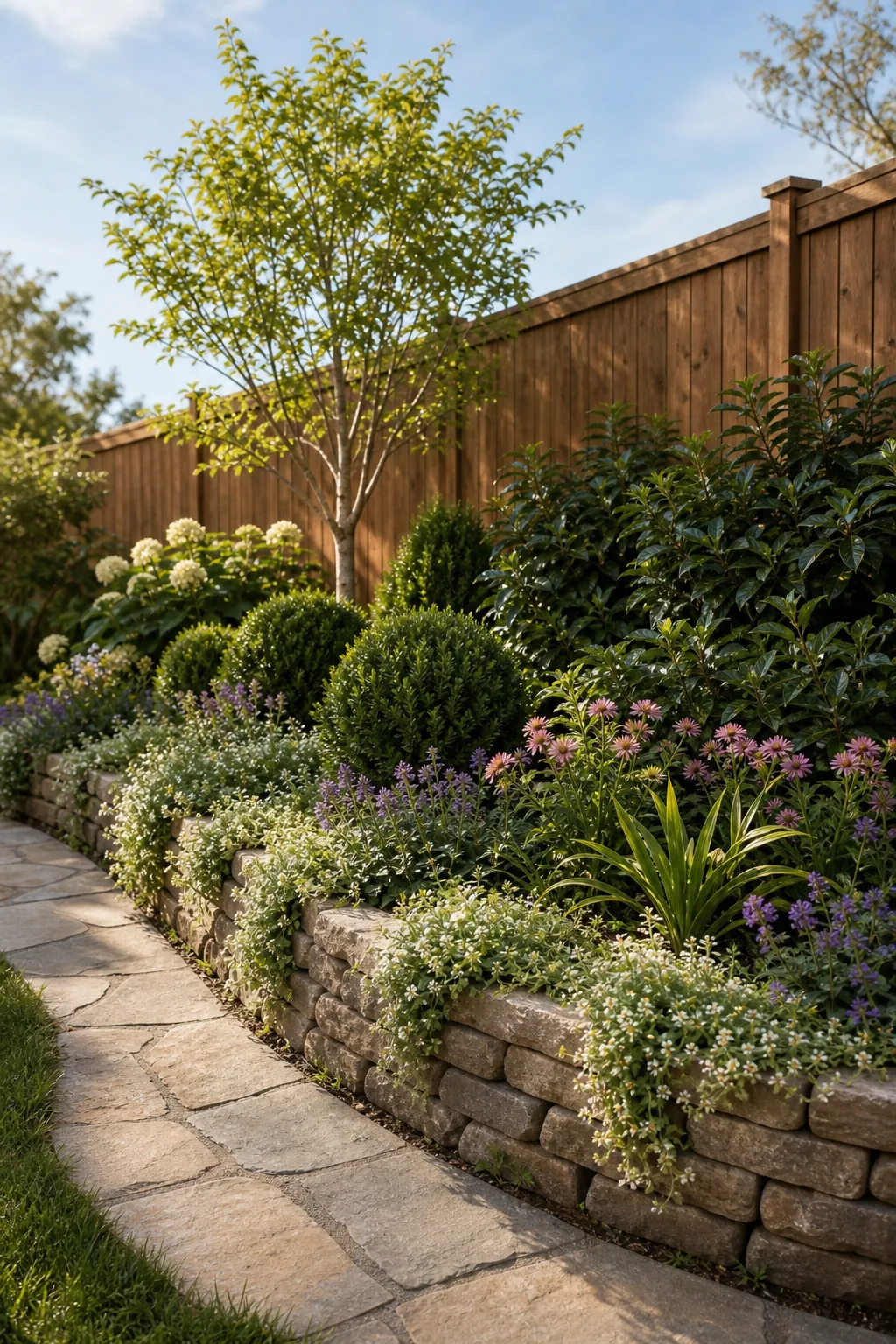
To ensure your garden bed looks intentional from every angle, verify that your selected plants fit neatly into these three distinct height categories. Maintaining strict vertical discipline prevents aggressive growers from overshadowing the delicate, trailing foreground species during the peak summer months.
Selecting Plants for Each Tier
Matching specific species to their designated height brackets prevents vigorous growers from aggressively shading out your delicate foreground creepers. Sourcing cultivated varieties with highly predictable maximum sizes is absolutely crucial for maintaining the stepped profile without requiring constant, labor-intensive corrective pruning.
Spacing for Mature Growth
It is incredibly tempting to overplant a new garden bed to achieve an instantly full, lush appearance on installation day. However, packing juvenile plants tightly together guarantees severe root overcrowding, poor air circulation, and rampant fungal disease within just three short seasons.
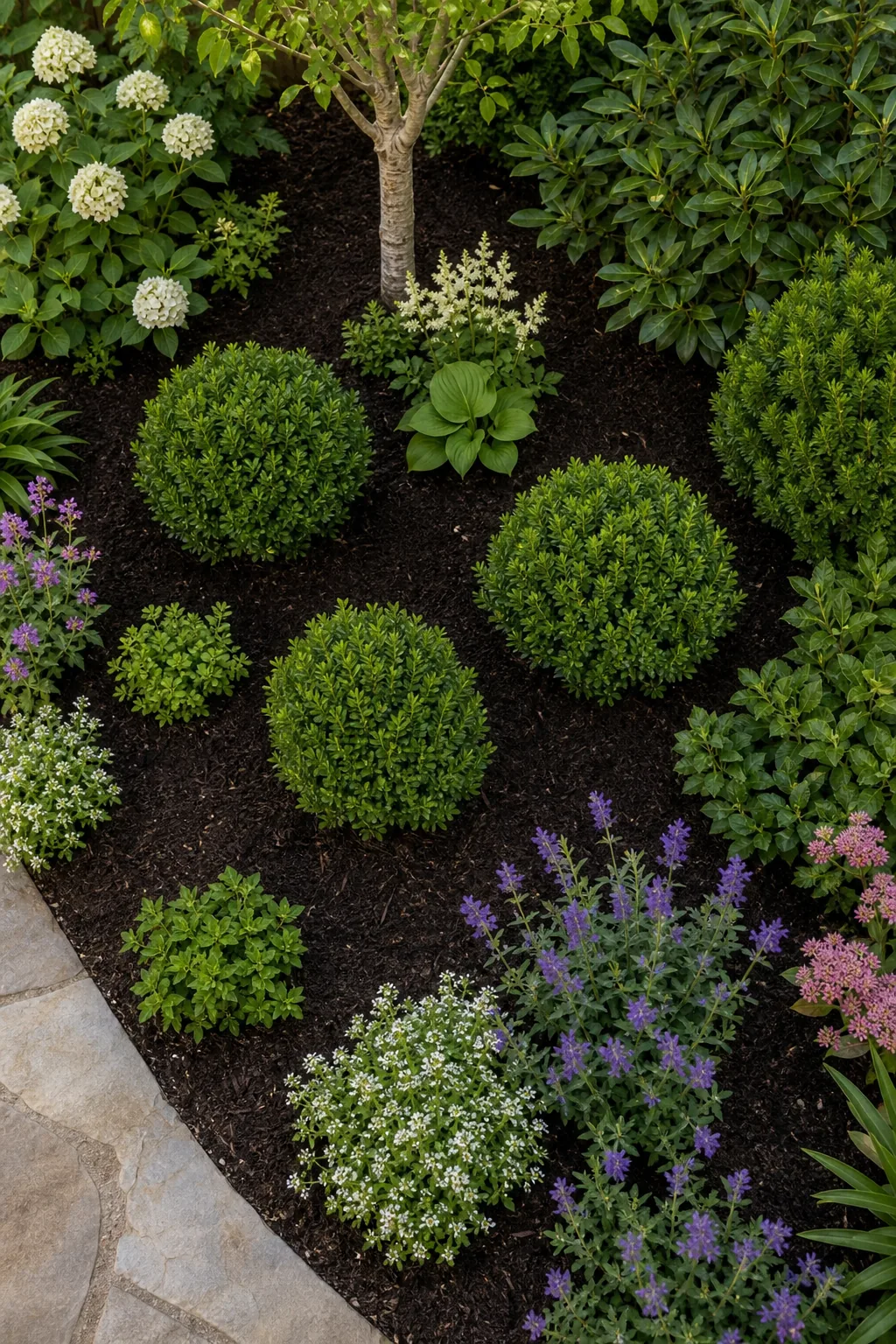
You must leave 12 to 18 inches of bare, mulched soil between young plants to accommodate their eventual mature spread. This deliberate negative space prevents fierce root competition and ensures each distinct tier can reach its full genetic potential without interference.
Mulching the New Garden Bed
Applying a strict two-inch layer of shredded hardwood mulch effectively regulates soil temperature and suppresses aggressive weed germination in those intentional bare gaps. Always keep the organic mulch pulled back slightly from the base of every stem to prevent moisture-induced crown rot.
Sequencing Seasonal Color
To manage the 30 percent flowering layer effectively, you must carefully orchestrate a succession of blooms so the bed remains dynamic. Relying on species that all flower simultaneously creates a spectacular two-week display followed by endless months of flat, uninteresting green foliage.
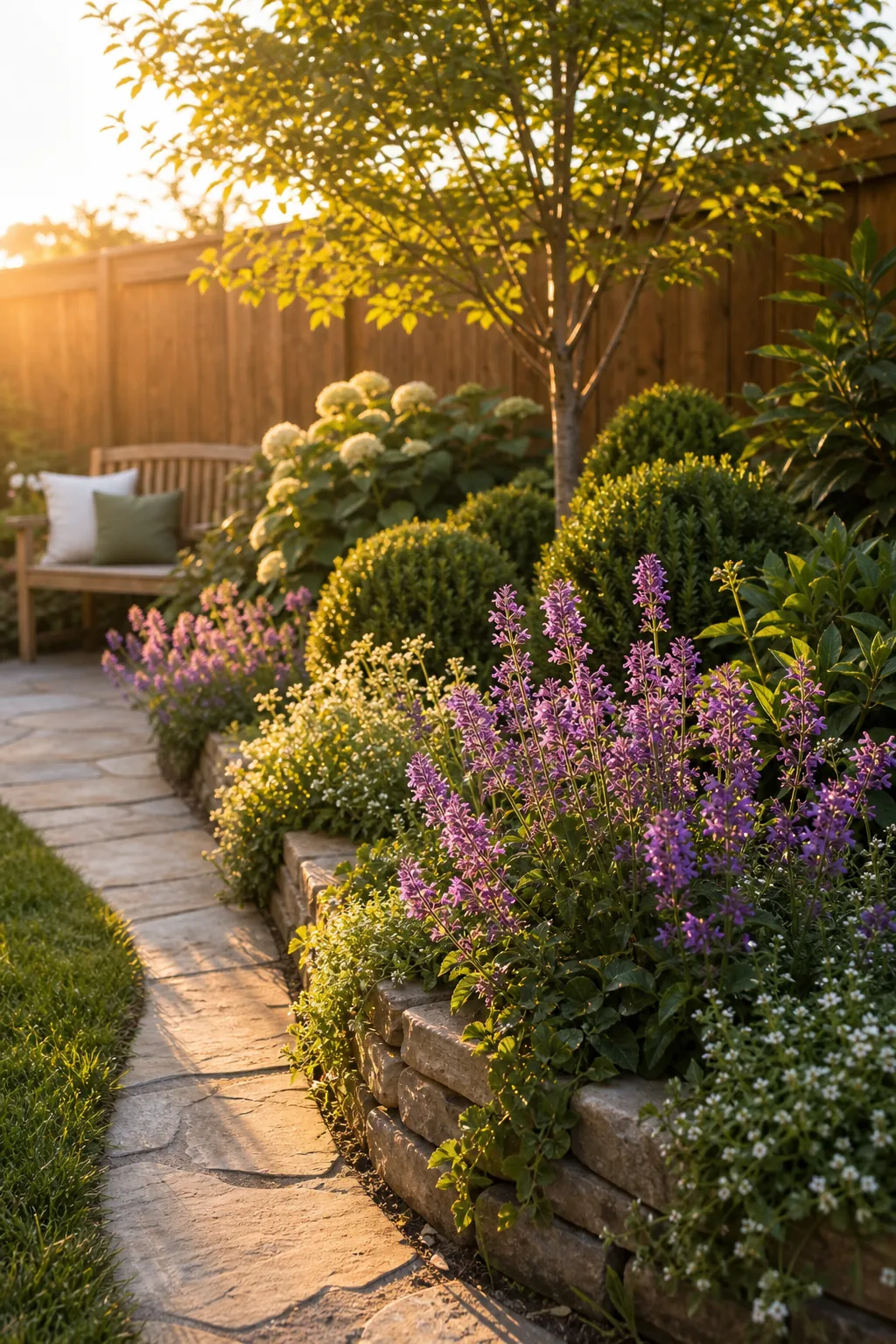
Select perennials that offer 2 to 3 distinct bloom periods across spring, summer, and fall to maintain continuous visual interest. Staggering these flowering cycles ensures your carefully structured garden always features a fresh burst of color against the solid evergreen backdrop.