
Small Apartment Living Room Layouts: The Clearance Guide
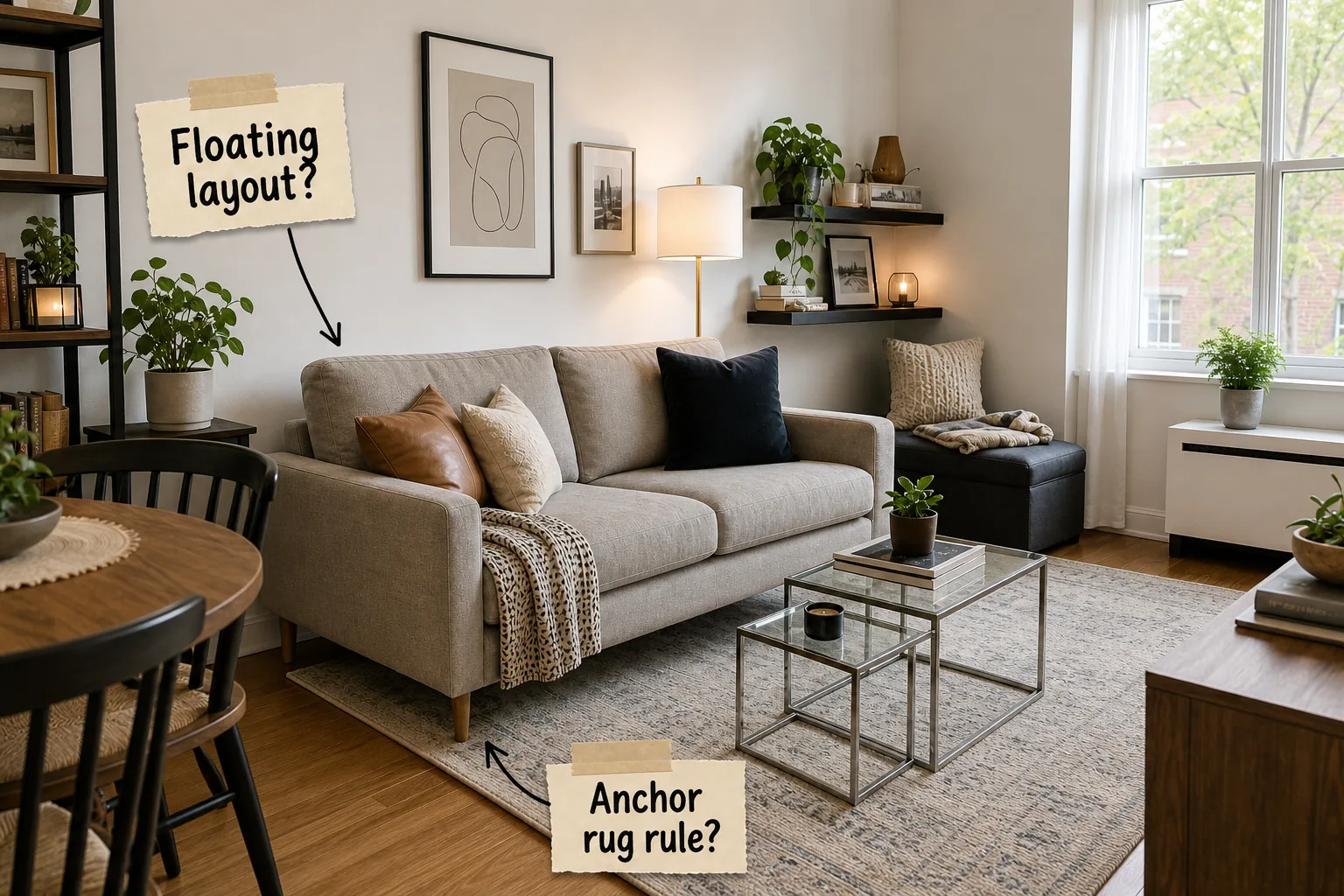
Welcome to your definitive small space layout and clearance guide, designed to help you master your compact floor plan. You will be able to arrange your furniture with exact spacing, correct rug placement, and highly functional traffic flow for everyday living.
The Anchor Rug Rule
Start your layout from the ground up by properly sizing your area rug to unite your primary seating arrangement. A rug that is too small leaves furniture floating aimlessly, while a properly sized foundation instantly defines the living zone.
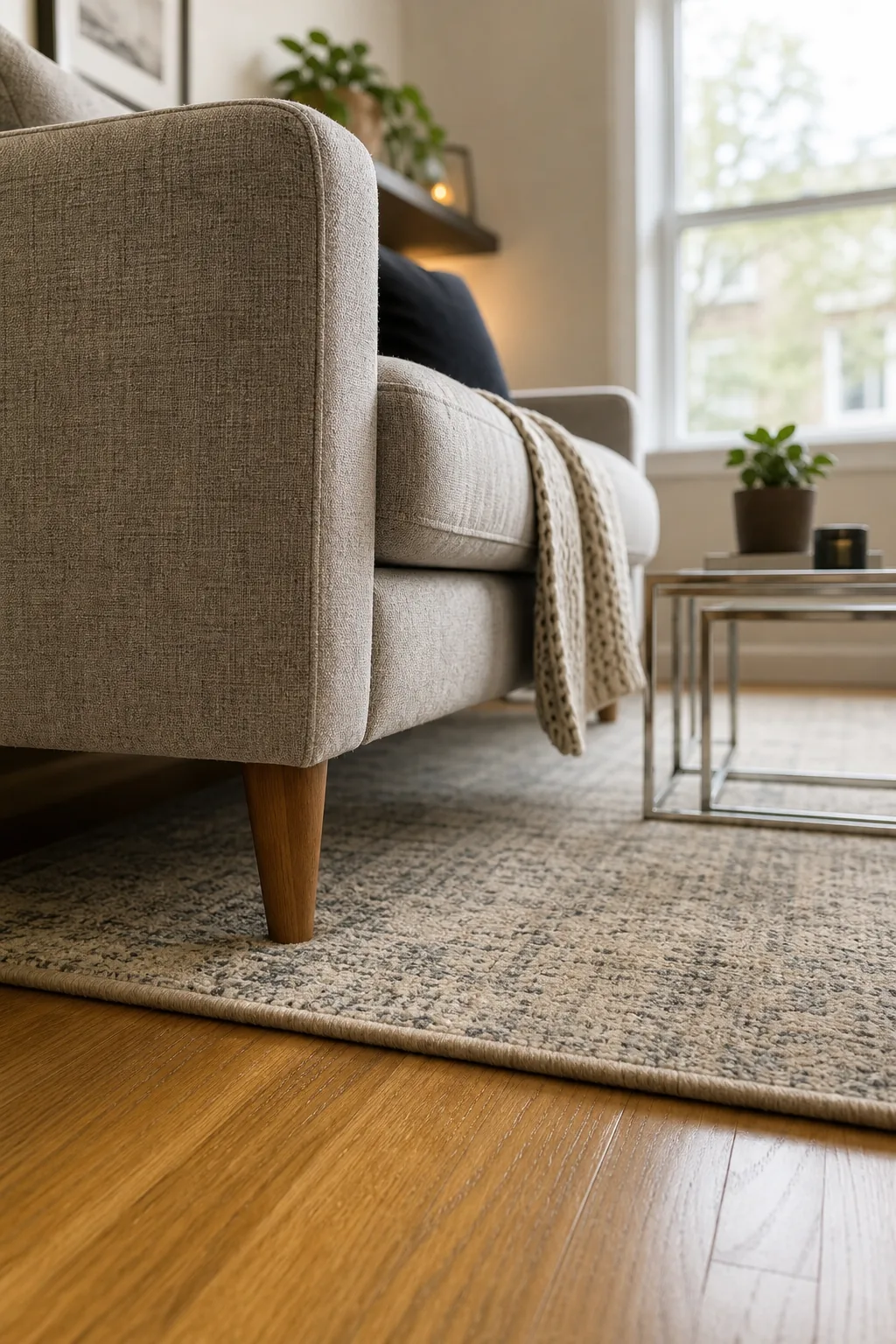
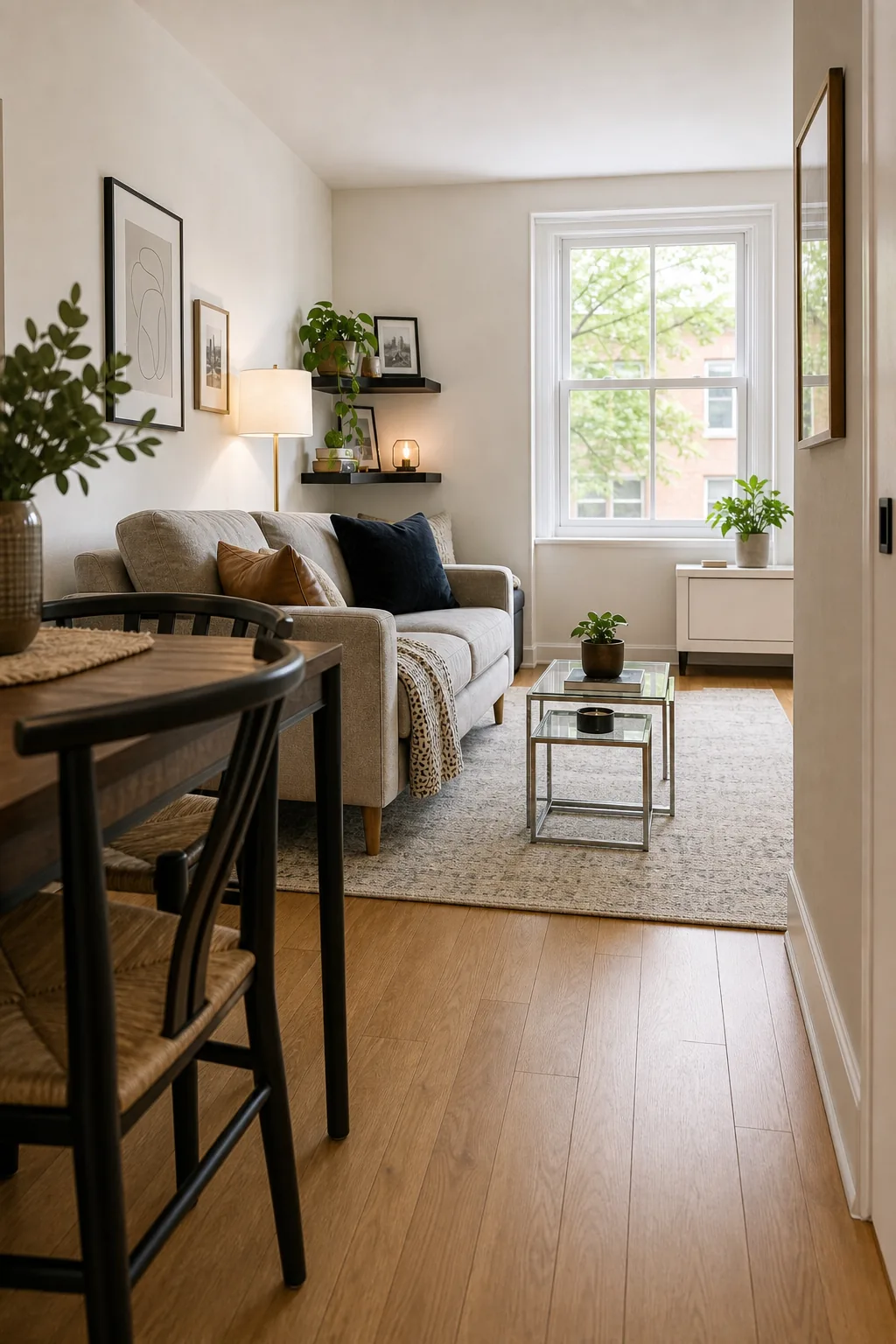
By practicing the anchor rug rule and resting just the front legs of the sofa onto the rug edge, you connect the pieces together visually without requiring a massive, wall-to-wall carpet that overwhelms a compact room and hides your beautiful hard flooring.
Selecting the Right Rug Texture
Beyond physical dimensions, the material of your area rug plays a crucial role in how spacious your apartment feels. Heavy, high-pile carpets absorb natural light and visually shrink the floor plan, making the room feel enclosed and heavily weighted.
- Choose flatweave cotton or low-pile wool blends to maintain a crisp, low-profile foundation that reflects ambient light.
- Incorporate subtle geometric patterns to draw the eye outward, creating an optical illusion of a wider floor span.
- Avoid thick shag materials under heavy furniture, as they create uneven surfaces and make moving chairs difficult.
Maintaining a sleek floor profile ensures that your foundational layer supports the furniture rather than competing with it. This streamlined approach keeps the visual weight low, allowing your carefully chosen seating pieces to stand out beautifully.
Why You Need a Floating Layout
Pushing furniture flush against the wall highlights the room’s hard boundaries and makes a compact space feel rigid. Creating a deliberate gap behind your main seating introduces much-needed breathing room and softens the architectural edges of the apartment.
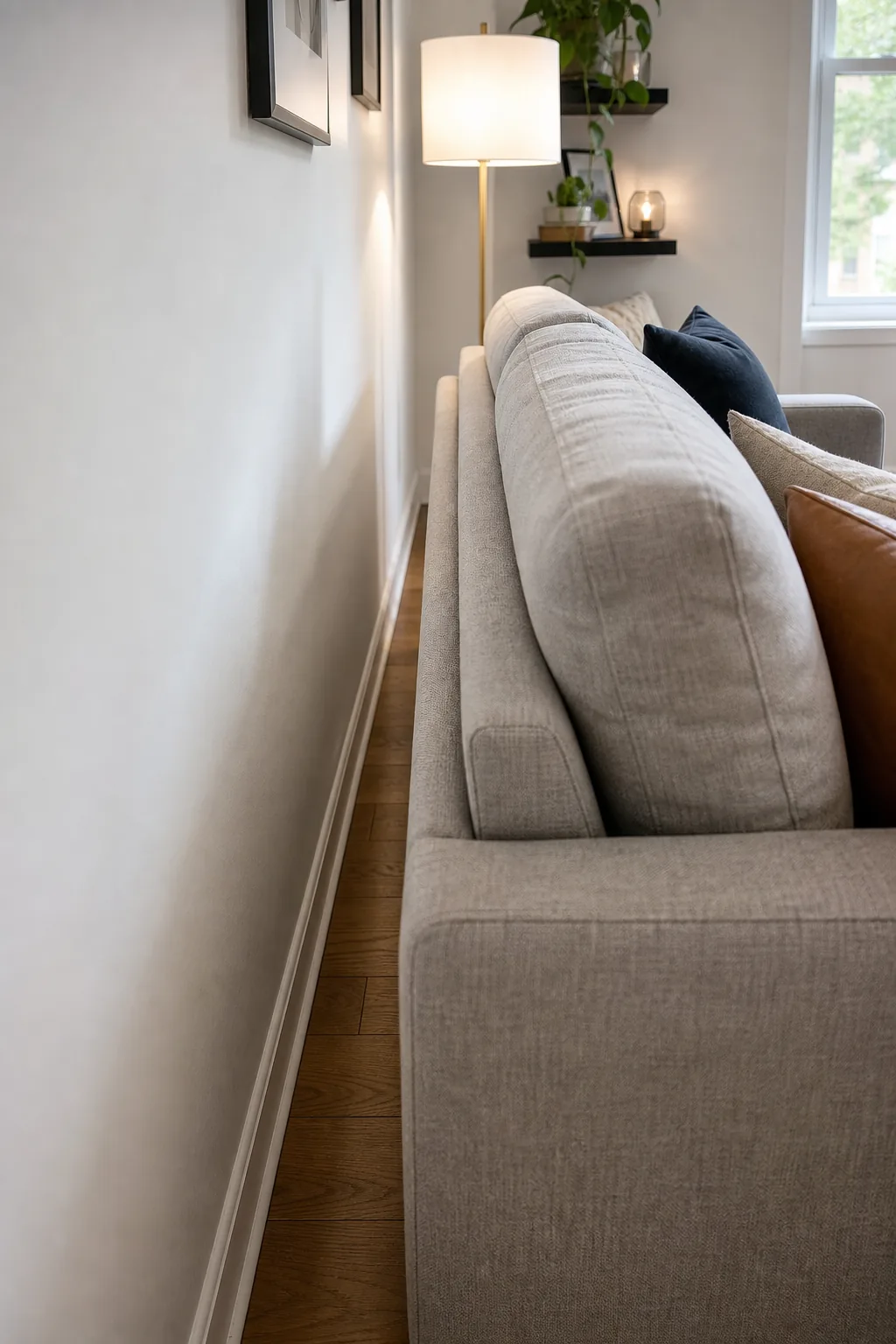
Implementing a floating layout by pulling the sofa out just 3 to 5 inches creates a shadow line that tricks the eye into perceiving deeper, continuous space beyond the furniture, instantly making the room feel larger and much more intentionally designed.
Managing Cable Clutter Behind the Sofa
When you pull seating away from the wall, you inevitably expose the electrical outlets and charging cords that power your living room. Leaving these wires visible destroys the clean, intentional aesthetic you just created with your new spatial arrangement.
- Mount a slim power strip directly to the lower back frame of your sofa using heavy-duty adhesive strips.
- Route all device charging cables along the furniture legs, securing them tightly with reusable hook-and-loop cable ties.
- Run a single, braided extension cord from the wall outlet to the hidden power strip to minimize visual clutter.
Consolidating your power sources keeps the newly created shadow line crisp and free of distracting tangles. This meticulous attention to detail ensures your floating furniture arrangement looks sophisticated and deliberate from every possible angle in the room.
The 18-Inch Clearance Standard
Coffee table placement requires a delicate balance between providing comfortable legroom and keeping your daily essentials within easy reach. Positioning the table too far away strains your posture, while keeping it too close creates a frustrating tripping hazard.
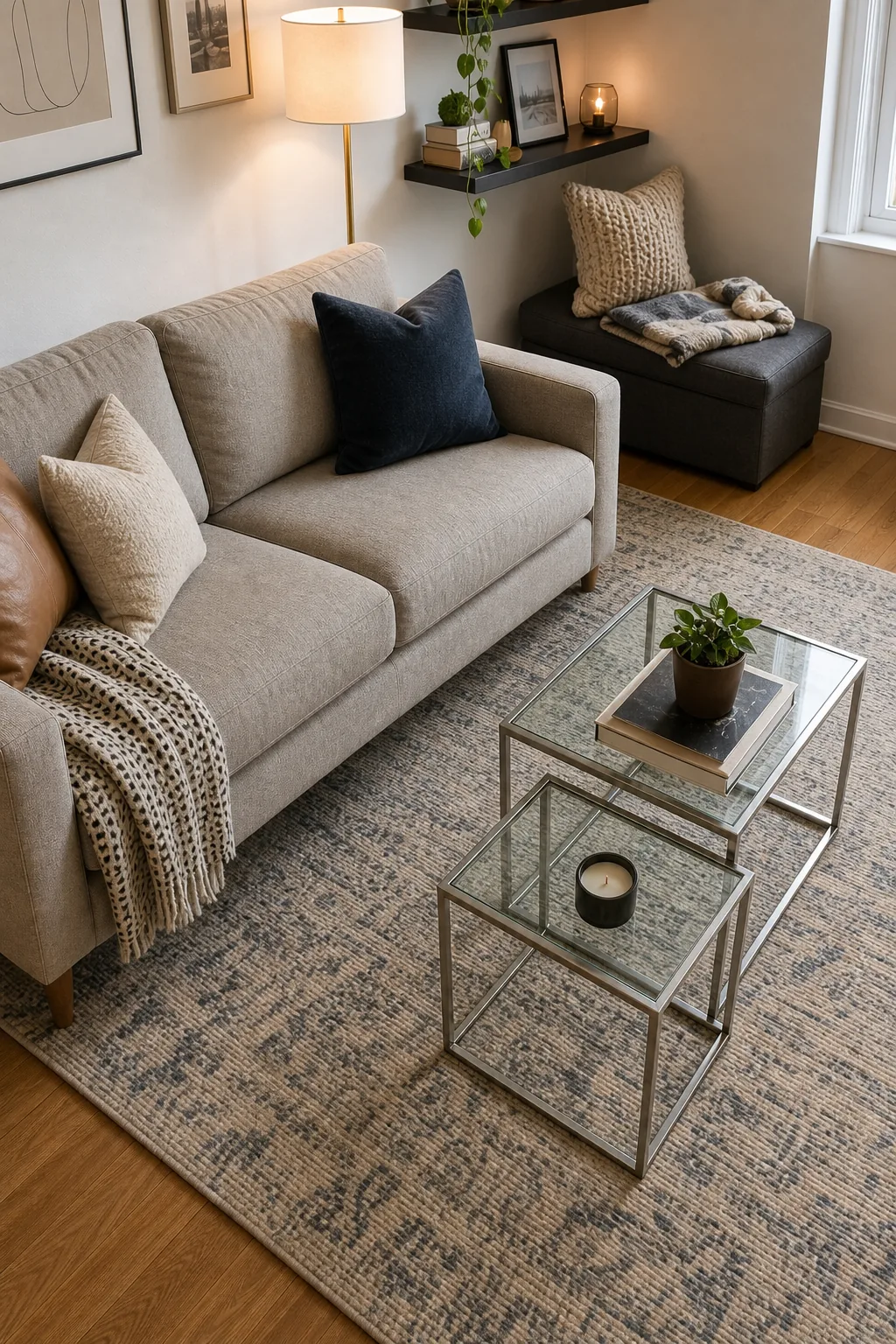
Maintaining exactly an 18-inch clearance of negative space between the sofa seat and the coffee table edge ensures optimal ergonomics for both lounging comfortably and entertaining guests, allowing people to move freely without feeling trapped.
Choosing the Ideal Coffee Table Shape
The geometry of your central table dictates how smoothly you can navigate the tight clearances of a small living room. Sharp corners on rectangular tables often become painful obstacles when maneuvering through a restricted 18-inch walkway.
Opting for circular or oval surfaces naturally guides foot traffic around the seating area without snagging clothing or causing bruises. This simple geometric shift makes the entire central zone feel significantly more accommodating and fluid.
Managing Visual Weight with Glass
In a restricted footprint, the materials you choose are just as important as their physical dimensions. Solid, blocky furniture absorbs light and stops the eye, making the entire living room feel instantly smaller and heavily congested.
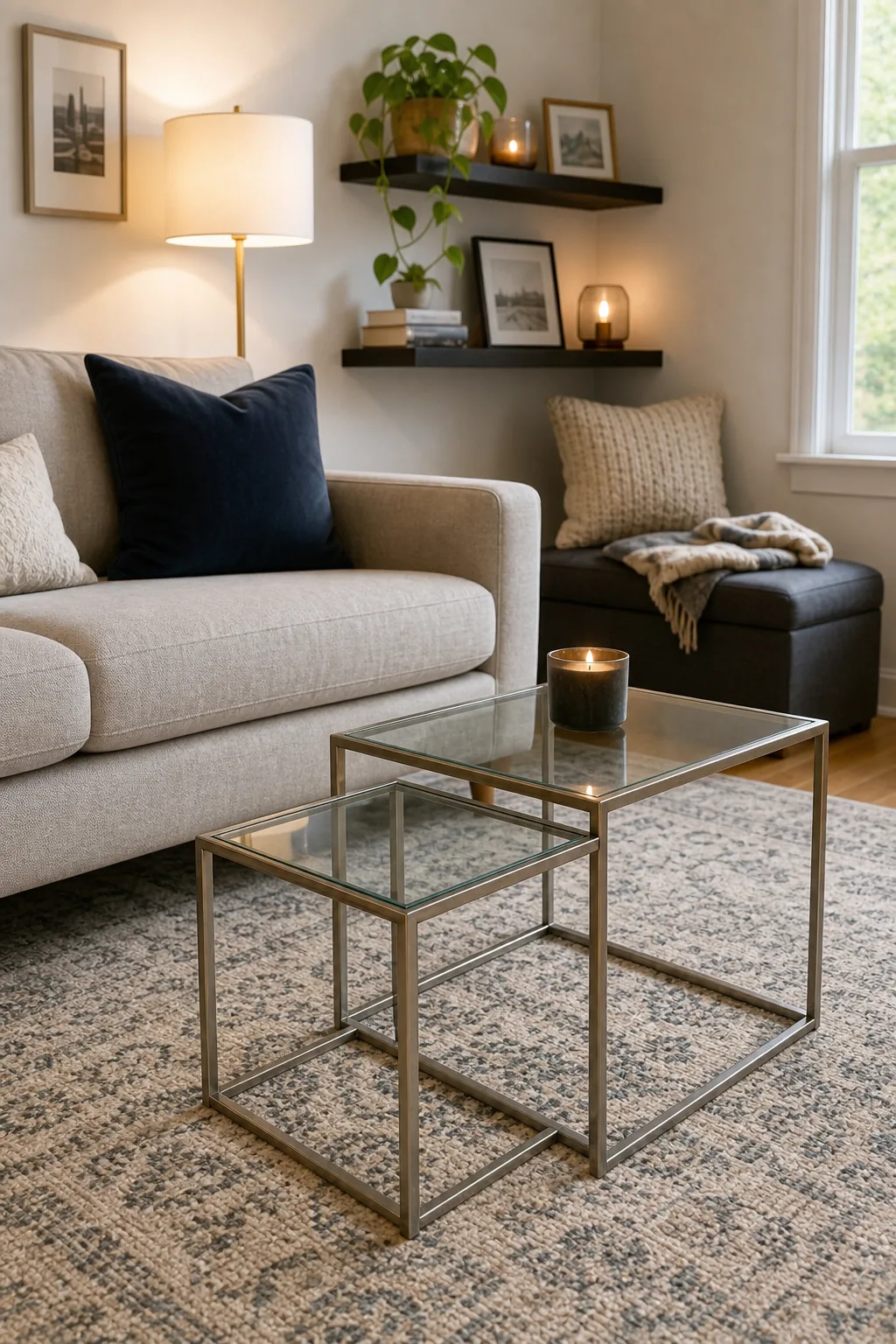
Selecting pieces with low visual weight, such as transparent glass tops and thin wireframe bases, provides essential surface area without interrupting the continuous visual flow of the patterned rug beneath them, keeping the floor plan entirely open.
Balancing Heavy and Light Furniture
Achieving harmony in a small apartment requires contrasting your grounded, upholstered seating with airy, transparent accent pieces. Pairing a solid fabric sofa with delicate metal and glass tables prevents the room from feeling overwhelmingly heavy while maintaining full daily functionality.
Building a Multi-Use Corner Zone
Awkward corners often become neglected dead space in small apartments, but they offer perfect opportunities for secondary functions. Activating these empty alcoves adds valuable utility to your home without intruding on the central traffic paths.
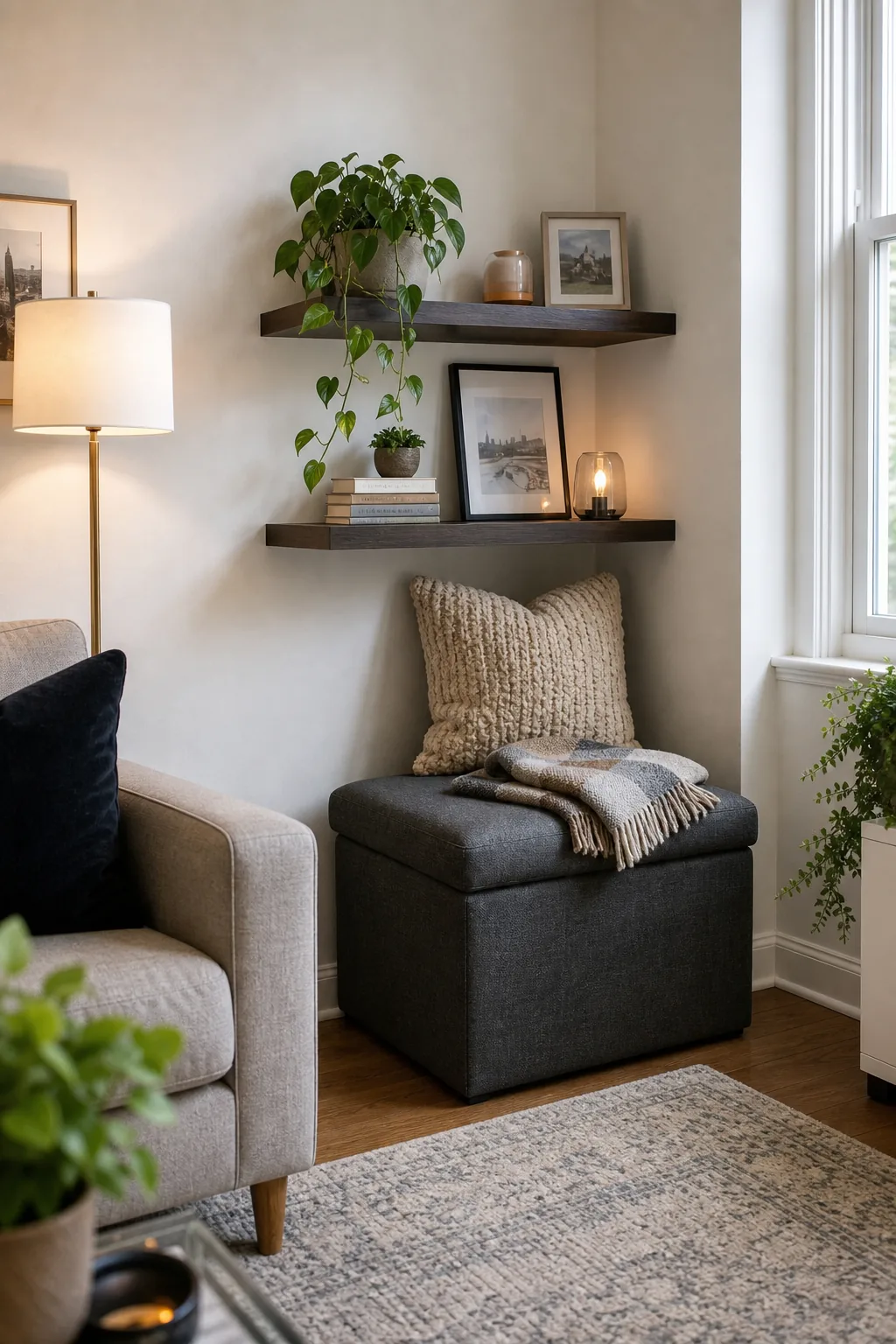
Tucking a low-profile ottoman beneath a sleek floating shelf establishes a dedicated multi-use zone that can serve as a cozy reading nook, extra guest seating, or a compact temporary workstation for remote days.
Lighting Your Secondary Zones
Illuminating your newly created corner setups is essential for making them feel like intentional destinations rather than afterthoughts. Install a plug-in wall sconce directly above the floating shelf to provide focused task lighting without sacrificing any valuable floor or surface area.
Layering Vertical Wall Space
When floor space is severely limited, drawing the eye upward is the most effective way to balance the room. Leaving walls completely bare above low-profile seating can result in a heavy, bottom-weighted aesthetic that visually compresses the room.
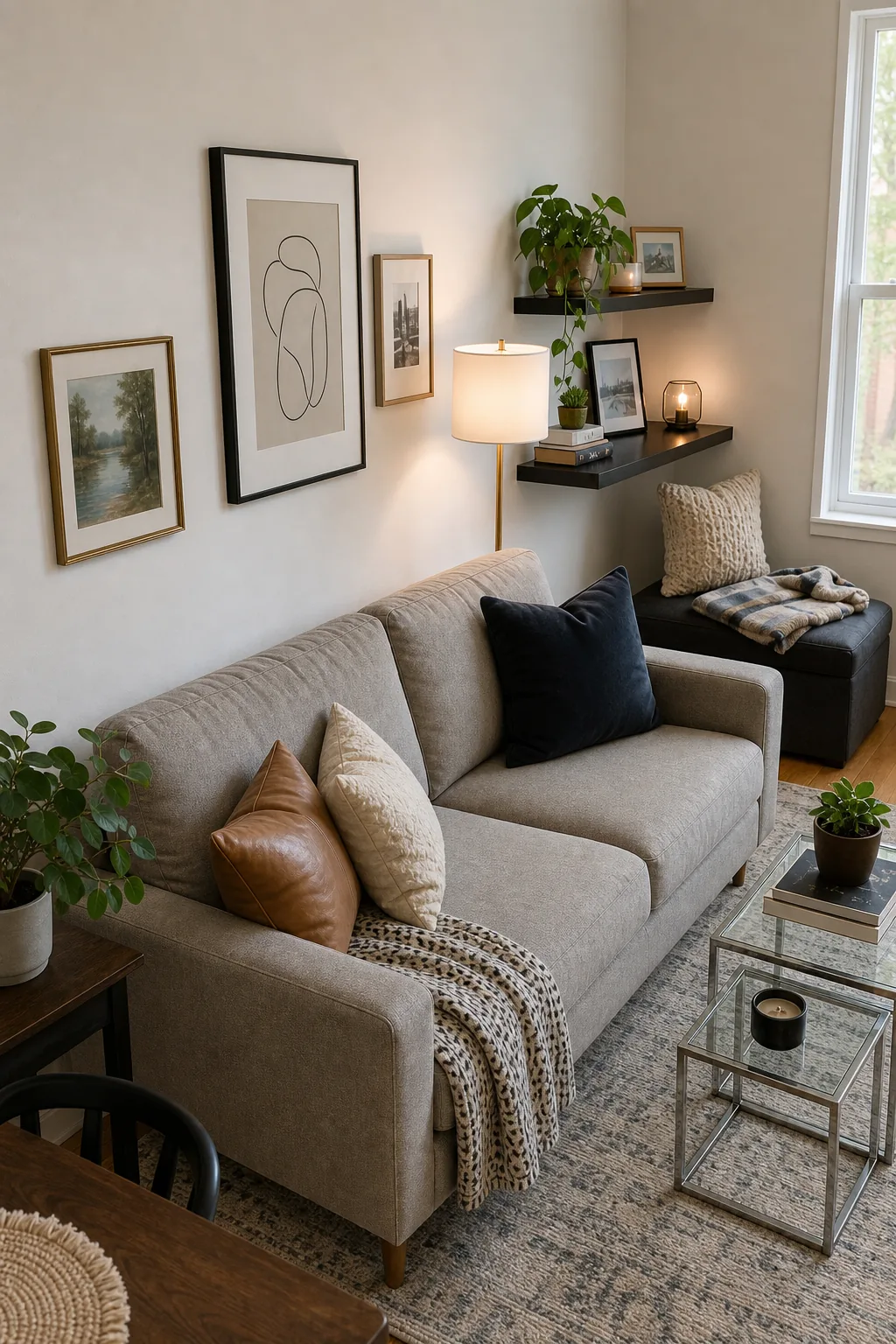
Installing staggered floating shelves and framed art directly above your seating pulls attention away from the tight footprint and dramatically emphasizes the room’s overall ceiling height, making the entire apartment feel dramatically more expansive.
Selecting Proportionate Wall Art
To maximize the vertical illusion, choose artwork that spans at least two-thirds the width of your sofa. Hanging a single oversized canvas or a tightly grouped gallery wall creates a unified focal point that anchors the space without cluttering the visual field.
The Small Space Layout & Clearance Guide
A successful room relies on consistent spacing across every zone to ensure smooth traffic flow and daily functionality. When multiple pieces compete for limited square footage, exact measurements prevent the arrangement from feeling chaotic and cramped.
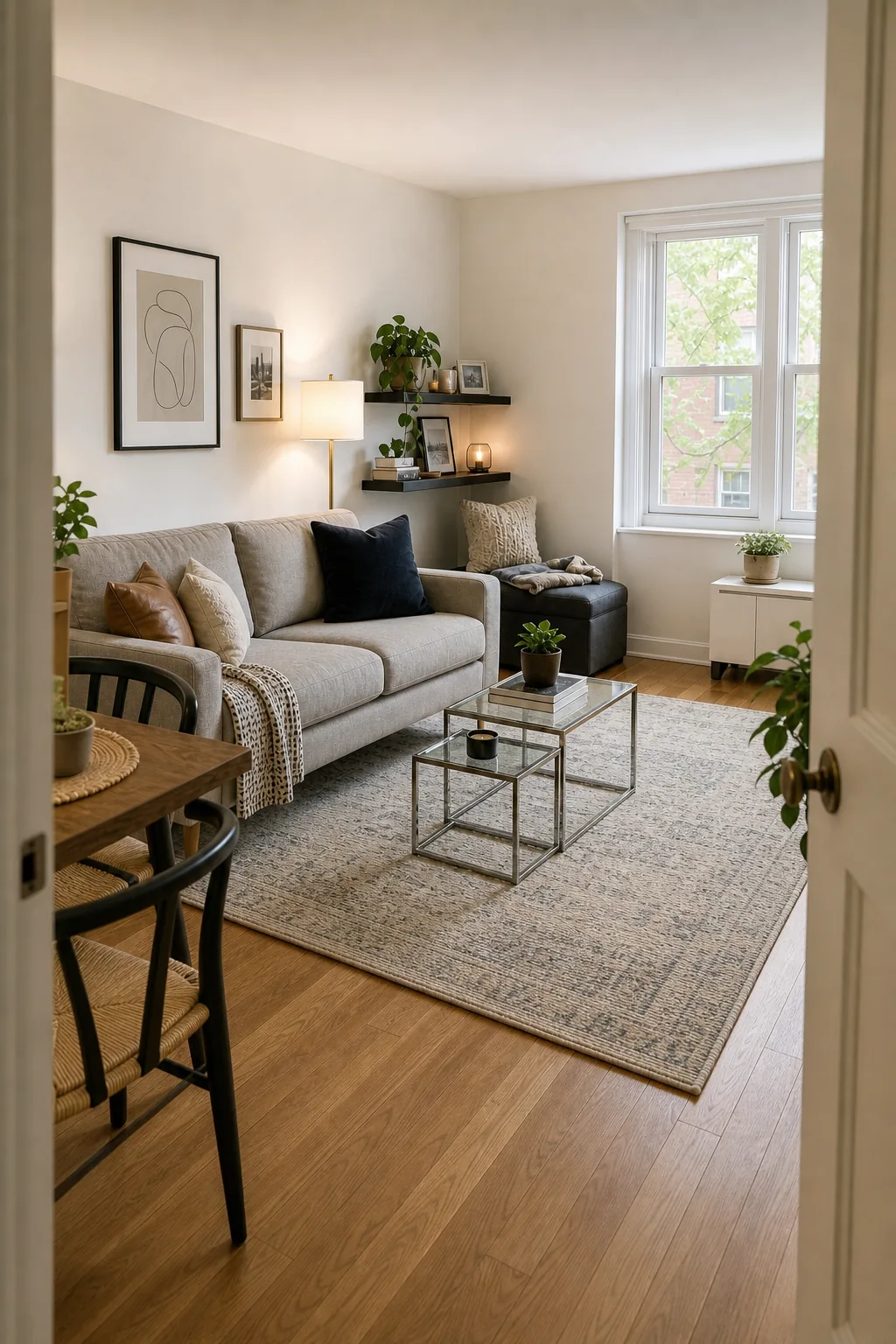
Use this definitive layout and clearance guide to verify your exact measurements, ensuring that every piece of furniture relates properly to the surrounding architecture and connects seamlessly to each other for a perfectly balanced aesthetic.
| Sofa to Coffee Table | 18 inches of negative space |
| Major Walkways | 30 to 36 inches clear |
| Sofa to Wall | 3 to 5 inch floating gap |
| TV to Seating | 1.5x the screen diagonal |
Mapping Out Your Traffic Flow
Translating these structural clearances into real life requires mapping the primary routes you walk every day. Trace the invisible line from your entryway to the kitchen, ensuring no furniture corners aggressively pinch this vital 30-inch pathway during your daily routine.
Final Checks for Your New Layout
Before finalizing your heavy furniture placement, physically walk through the room’s natural pathways to test the flow. Even perfectly measured clearances can feel restrictive if they intersect with high-traffic routes or block natural light.
Run through these final spatial checks to guarantee your newly arranged living room is as highly functional and breathable as it is stylish, ready for everyday enjoyment.