Front Patio Furniture Layouts: The Measurement Fit Sheet
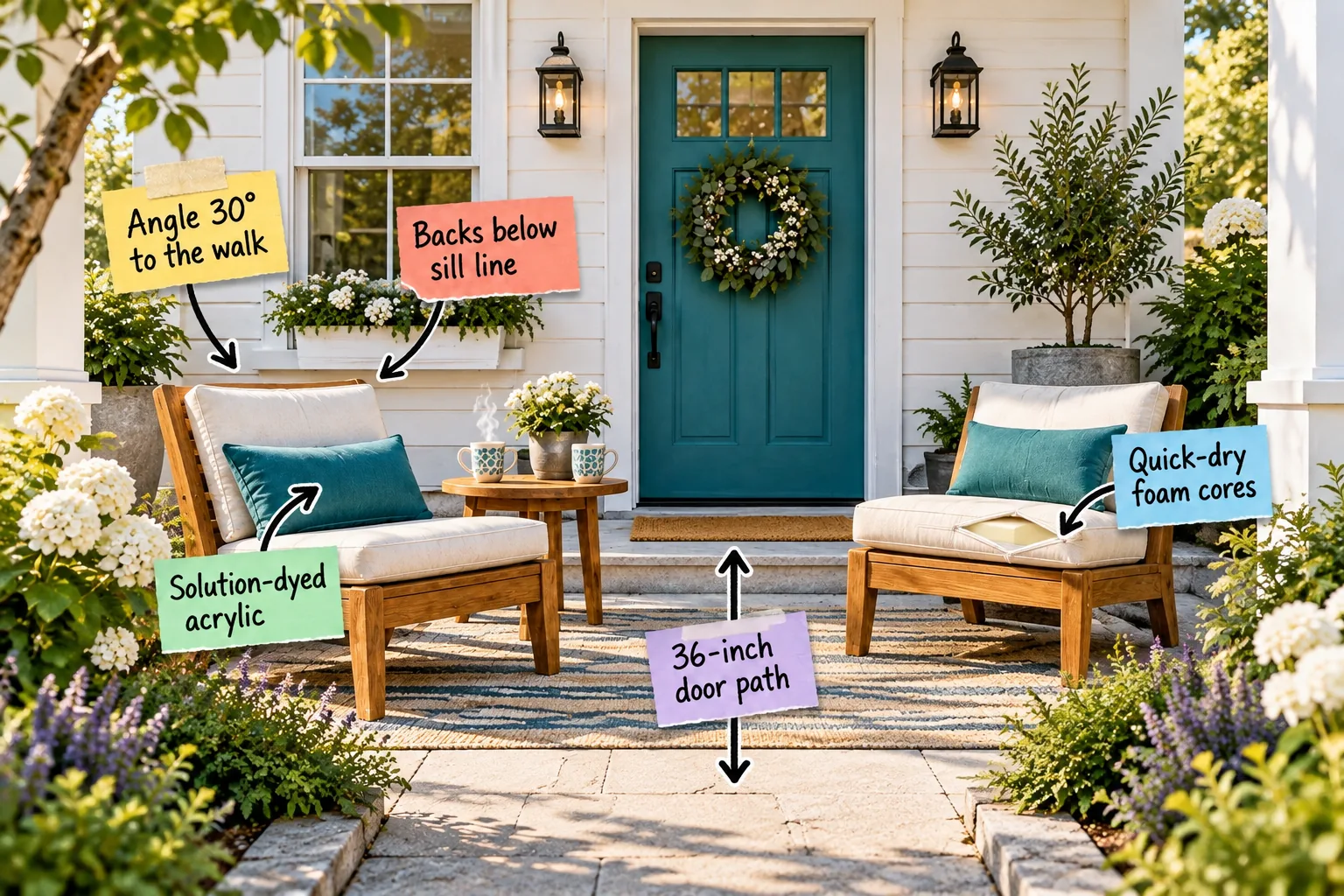
You will be able to arrange your front seating with exact clearances and angles that invite conversation without blocking your front door using our Front Patio Fit Sheet. Print this one-page measurement sheet to find the exact chair angles, table sizes, and walkway clearances for your specific patio depth.
The 36-Inch Door Path
When I redesigned my own Denver entryway, I learned quickly that establishing a minimum 36-inch clear path from the top step to the front door is the non-negotiable first move. This primary circulation route ensures comfortable daily access and leaves plenty of room for welcoming guests.
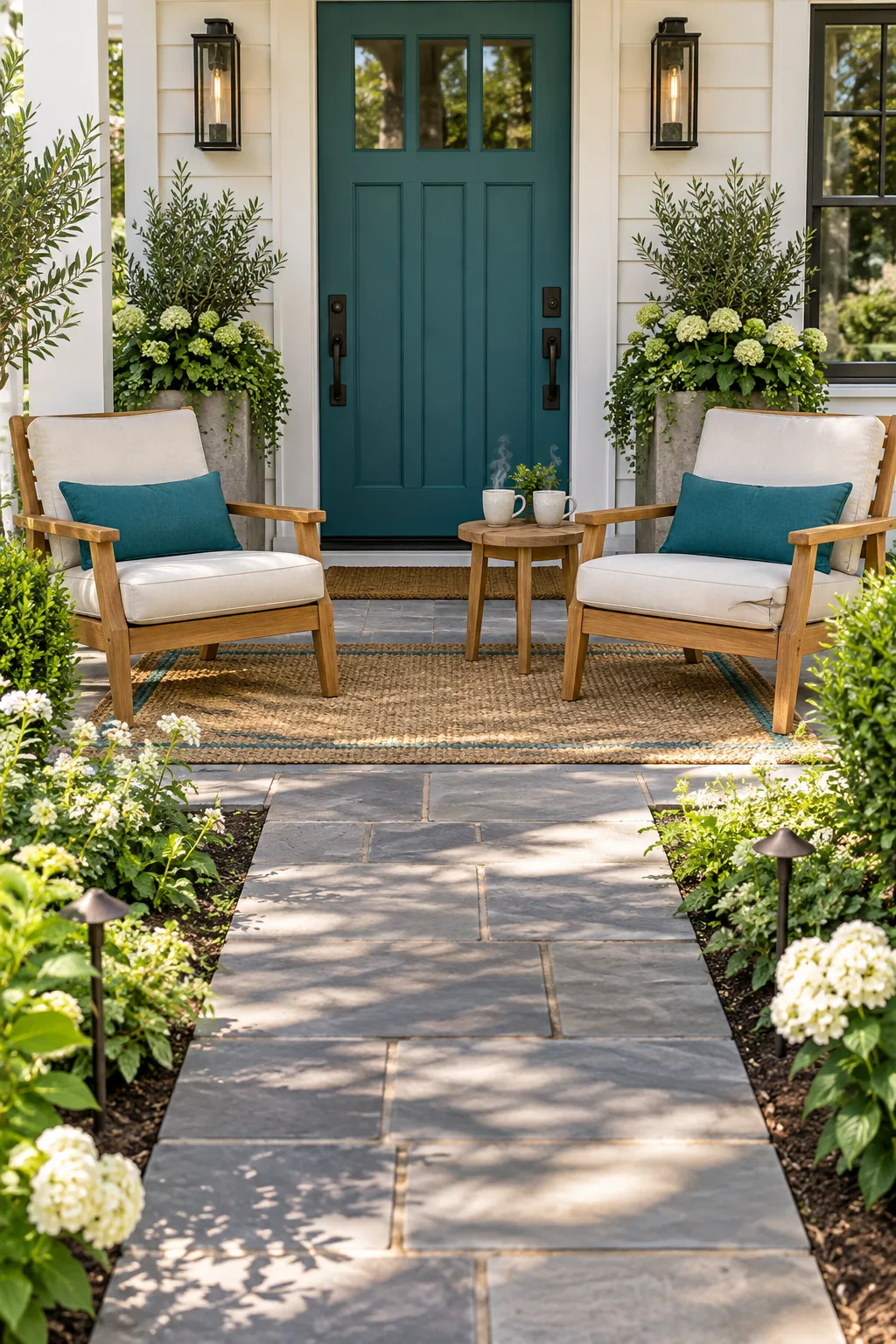
Leaving this central artery completely unobstructed instantly makes the approach feel purposeful rather than cluttered, blending Western practicality with an Eastern sense of flowing energy.
Evaluating Your Approach Path
Take time to walk your front walkway from the street to the steps before moving a single chair. Observing how visitors naturally navigate the approach helps you understand exactly where this mandatory clearance zone must begin and end.
Defining the Central Axis
Treat your front door path as a formal axis that divides the patio into balanced zones. Applying symmetrical spatial planning prevents the seating arrangement from feeling haphazard and guarantees that anyone walking up to the house feels a clear sense of direction.
Balancing Hard and Soft Elements
A successful entryway relies on the careful tension between the rigid geometry of the architecture and the welcoming curves of your seating. Striking this balance ensures the front porch feels like a curated outdoor room rather than a sterile concrete transit zone.
Angling Chairs Toward the Walk
Rather than placing lounge chairs parallel to the street, turn them inward at a 30-degree angle to the front walkway. This specific geometry creates an inviting, conversational posture that welcomes approaching guests while maintaining a clear view of your surrounding neighborhood.
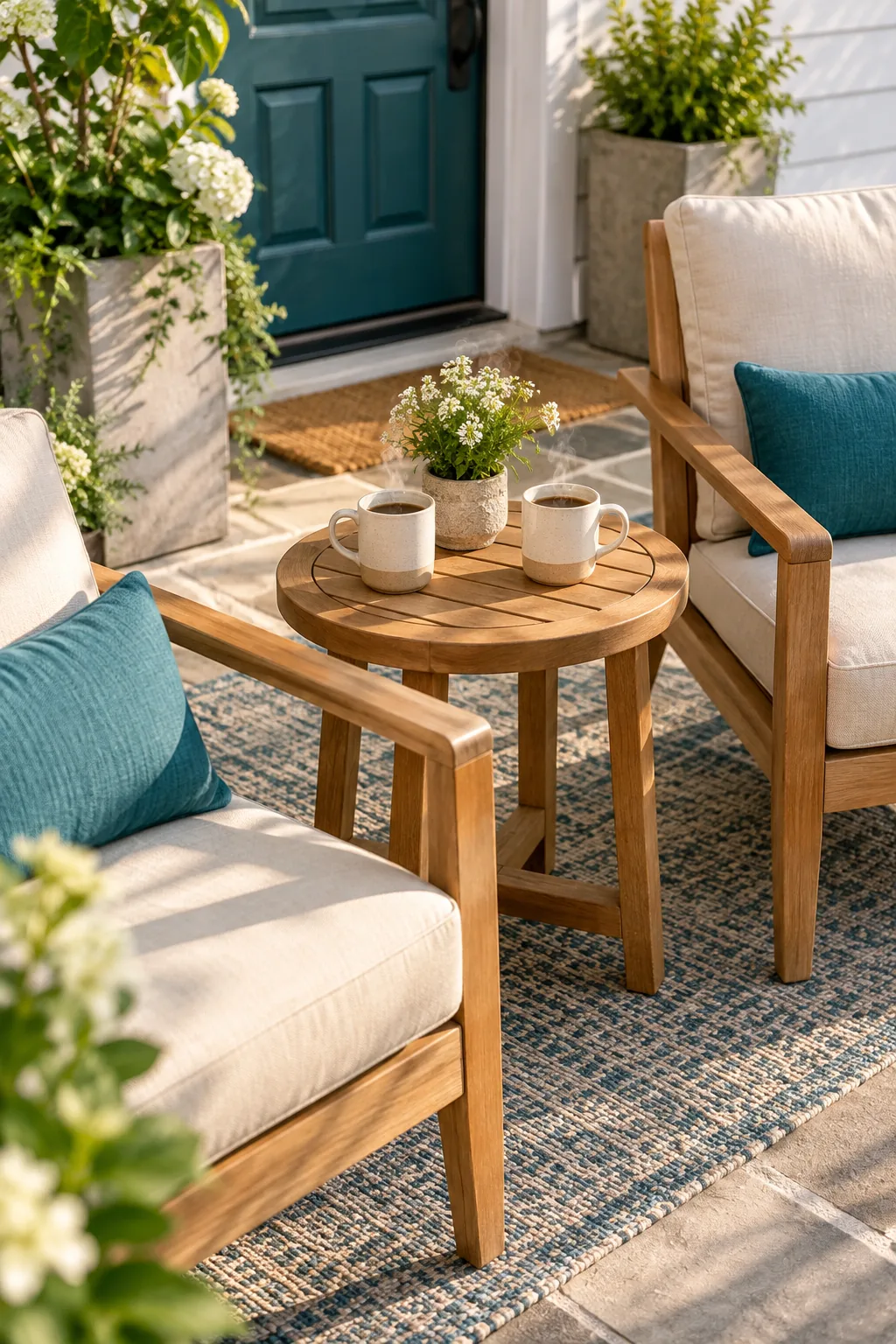
This angled placement naturally guides the eye toward the front door, reinforcing the welcoming energy of your home’s exterior and establishing a clear boundary for the lounge area.
Creating a Conversational Focus
When chairs face each other slightly, they form an invisible triangle of engagement that encourages casual morning chats. This subtle inward rotation softens the rigid grid of typical front porches and introduces a more relaxed, organic flow to the hardscape.
Maximizing Neighborhood Connection
A well-angled seating arrangement bridges the gap between private sanctuary and public community space. By keeping sightlines open to the sidewalk, you create an environment that naturally encourages waving to neighbors and participating in the daily rhythm of your street.
Measuring Your Window Height
Grab a steel tape measure and determine the exact distance from the patio floor to the underside of your front window sill. Documenting this specific vertical dimension is critical before you fall in love with a lounge chair that ultimately proves too tall.
Keeping Backs Below the Sill Line
Select low-profile lounge chairs that respect your home’s architecture by keeping the top rail below the front window sill line. Pushing furniture flush against the house might seem like a space-saver, but it often creates larger issues for your home’s exterior integrity.
Preserving Interior Natural Light
Maintaining that crucial clearance beneath the window sill ensures that your front rooms continue to receive unobstructed sunlight throughout the day. A dark entryway interior often results from oversized patio furniture casting heavy shadows directly through the front-facing glass.
Sizing the Drink Table
In my recent Washington Park project, anchoring the seating with a small, round drink table positioned exactly between the chairs transformed the space into a true morning retreat. A 16- to 18-inch diameter provides just enough surface area for two mugs without encroaching.
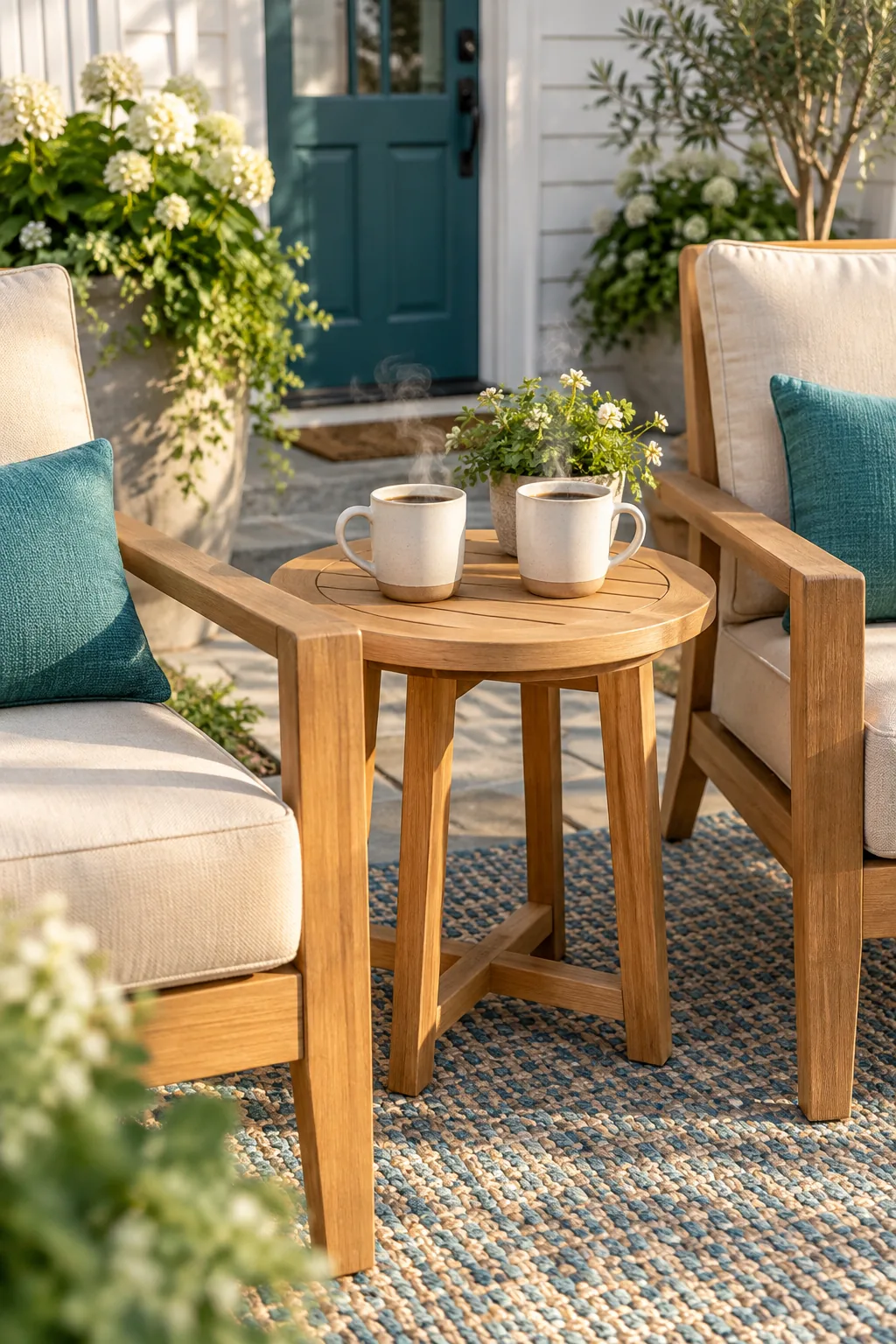
Keeping the table compact ensures you have a functional resting spot that never competes with the primary walkway or forces guests to detour around sharp corners.
Selecting Weathered Teak Accents
Choosing teak for these small accent tables introduces a warm, tactile element that gracefully silvers over time. This natural aging process requires minimal maintenance and bridges the gap between the crisp painted siding of the house and the organic landscape.
Choosing the Right Teak Finish
Unfinished Grade-A teak contains natural oils that repel moisture and insects without requiring heavy varnishes. Allowing the wood to weather naturally into a silvery gray reduces your seasonal maintenance while providing a beautiful, organic contrast to painted exterior siding.
Assessing Your Patio Depth
Before finalizing any purchases, measure the exact distance from your front wall to the top of the porch stairs. Understanding how this total depth dictates your layout helps you accurately angle your chairs to protect the mandatory central circulation route.
The Front Patio Fit Sheet
Once you use our printable fit sheet on your clipboard to determine the correct furniture scale, I always specify solution-dyed acrylic fabrics to prevent fading on street-facing patios exposed to harsh sunlight.
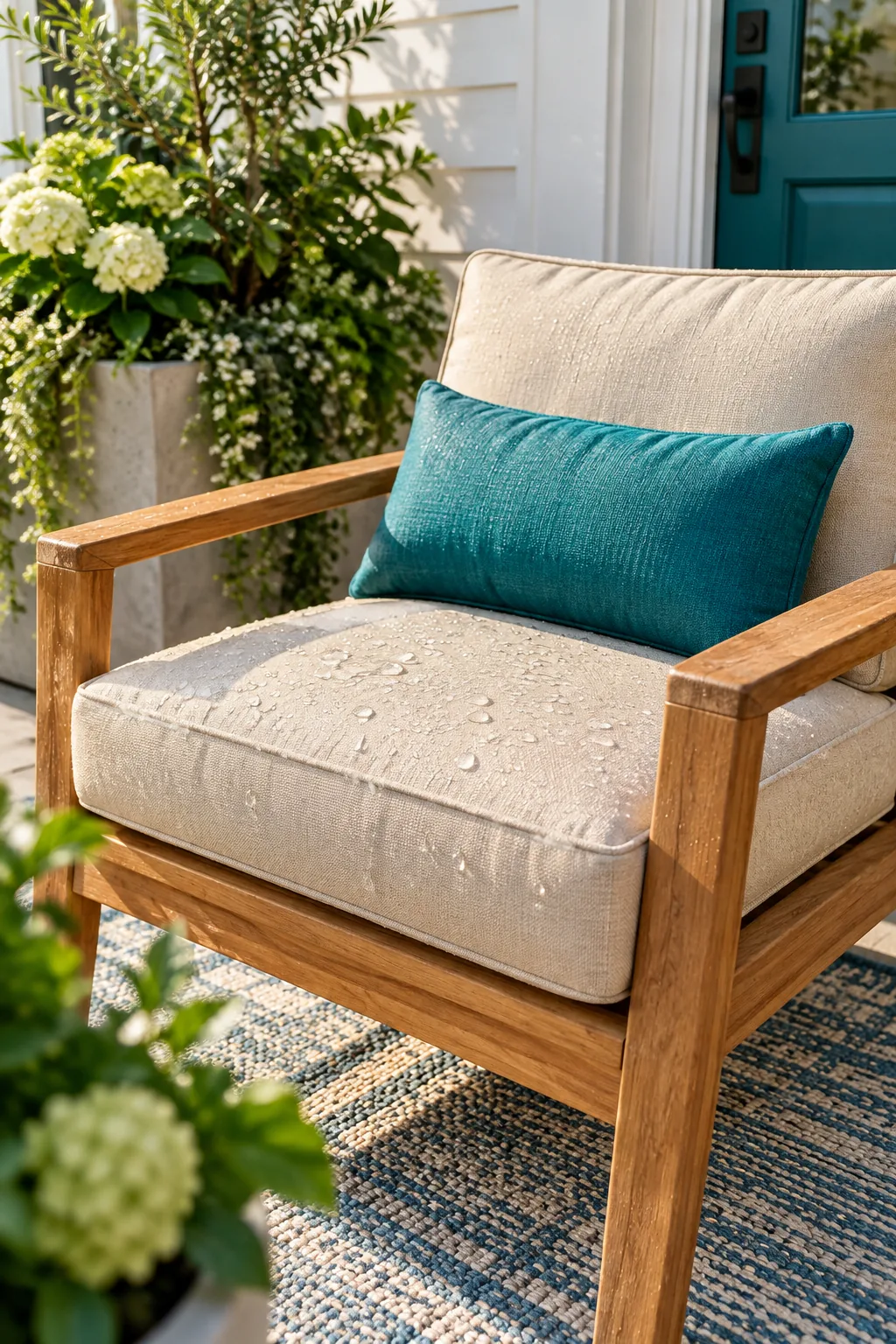
These UV-resistant textiles ensure your setup remains pristine, so you can confidently apply the exact maximum chair-back height, chair angle, and drink-table diameter required for your specific patio depth.
| Patio Depth | Chair Angle | Table Diameter | Max Back Height |
|---|---|---|---|
| 6-foot | 15 degrees | 14 inches | 28 inches |
| 8-foot | 30 degrees | 16 inches | 30 inches |
| 10-foot | 45 degrees | 18 inches | 32 inches |
Choosing Solution-Dyed Acrylic
Front patios often face harsh, direct sunlight that quickly degrades standard outdoor fabrics into dull, chalky versions of their original colors. Solution-dyed acrylic is essential because it locks the color deeply inside the yarn during the manufacturing process.
Resisting Mildew and Stains
Beyond UV protection, high-quality acrylic weaves naturally repel water and resist the mildew growth that typically plagues shaded porches. This synthetic composition means accidental coffee spills or muddy paw prints can be easily brushed away without leaving permanent marks.
Harmonizing Exterior Colors
When selecting your durable acrylic fabrics, pull inspiration directly from your home’s fixed architectural elements. Matching a vivid teal lumbar pillow to your freshly painted front door creates a cohesive, designer-finished look that ties the entire exterior palette together.
Quick-Dry Foam Cores
Street-facing furniture must recover quickly from unpredictable weather, which is why seating built with open-cell foam cores is an absolute necessity. This porous internal structure allows rainwater to pass straight through rather than soaking in like a dense traditional sponge.
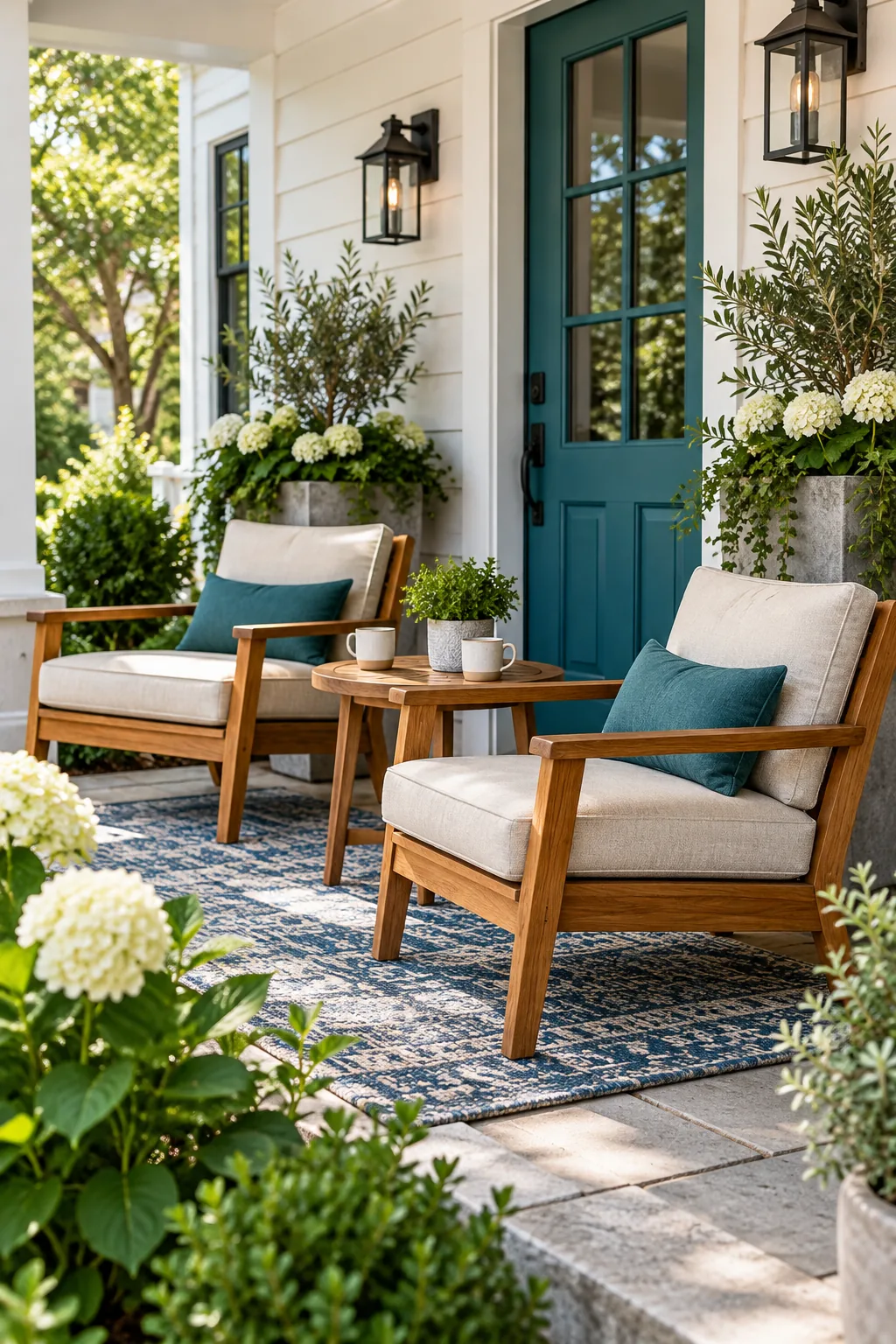
This rapid drainage system keeps your seats completely dry and ready for comfortable use shortly after a heavy summer rainstorm passes.
Maintaining Cushion Shape
Open-cell foam not only drains efficiently but also retains its crisp, boxy silhouette far better than standard poly-fill. Investing in structured inserts guarantees that your front entryway maintains a tailored, architectural appearance rather than looking slouchy or deeply creased.
Preparing for Seasonal Shifts
Even with quick-dry materials, establishing a simple winter storage plan extends the lifespan of your investment. Lightweight foam cores make it incredibly easy to move the cushions into a garage or deck box when the first heavy snow is forecasted.
Grounding the Space With Texture
Introducing a low-pile outdoor rug beneath the seating arrangement visually anchors the furniture and prevents the chairs from feeling like they are floating on the concrete. Select a subtle geometric pattern that complements the house trim without overwhelming the compact footprint.
Layering the Welcome Zone
In my own home, I finished the patio by softening the hard edges of the teak furniture and concrete walkway with structured planters. These organic layers define the seating zone beautifully without cluttering the carefully measured clearances we established earlier.
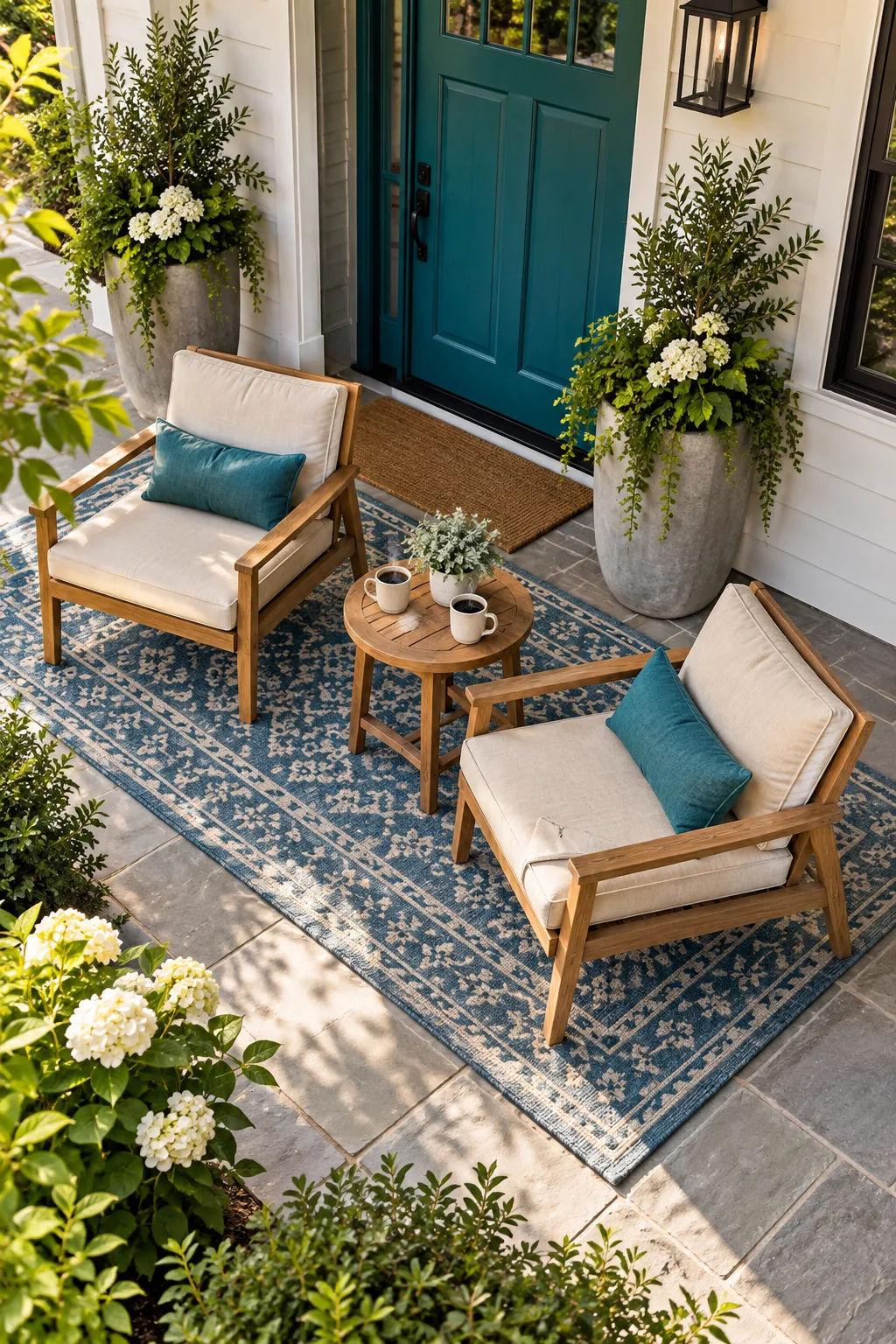
Before you sit down to enjoy your first morning coffee, walk through the approach exactly as a guest would to verify the flow.
Front Patio Styling Variations
Find the perfect material palette to complement your home's exterior architecture.
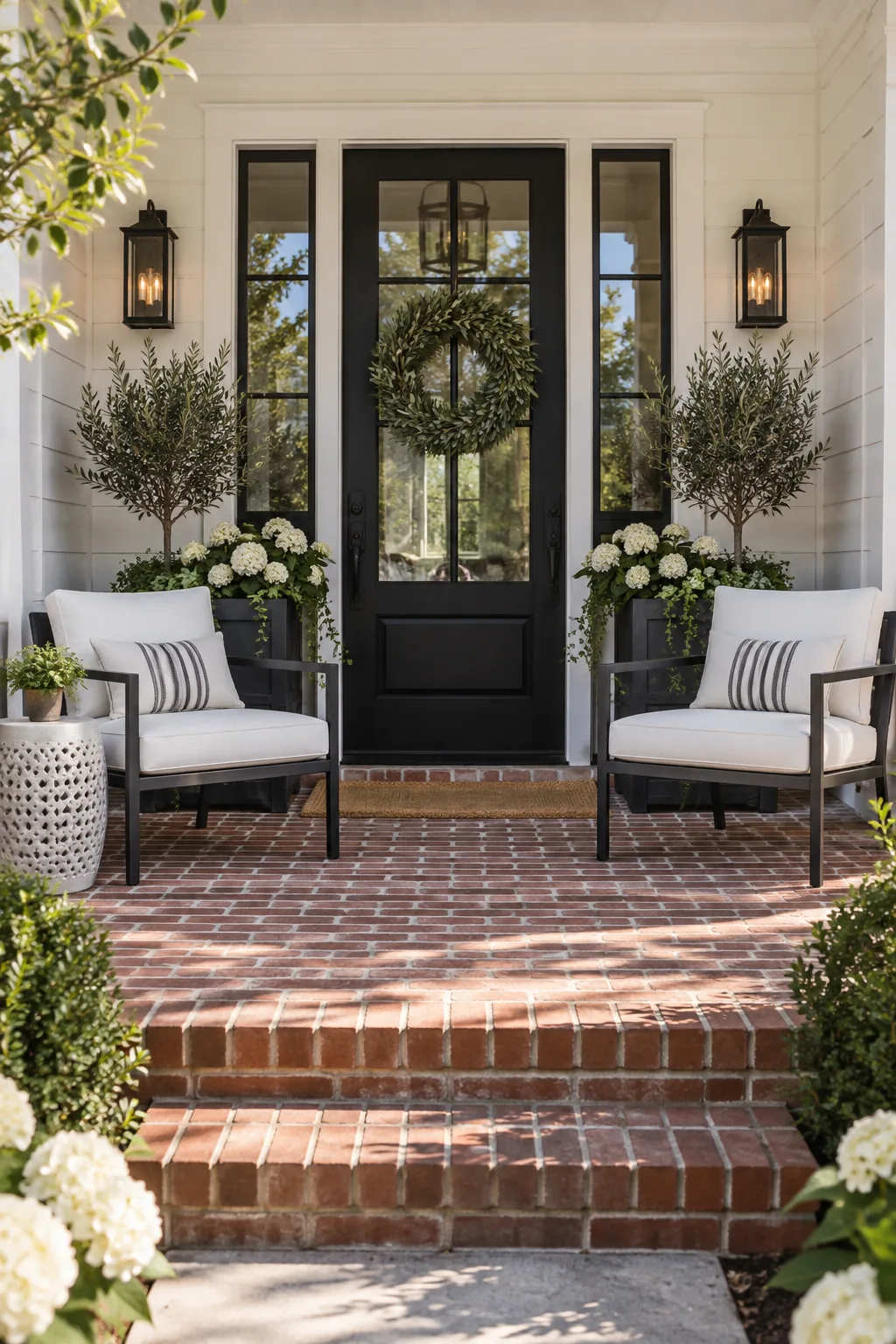
High-Contrast Modern Farmhouse: Black metal lounge chairs and crisp white cushions create a high-contrast modern farmhouse entry. Copy the symmetrical placement to frame a classic glass-paneled door.
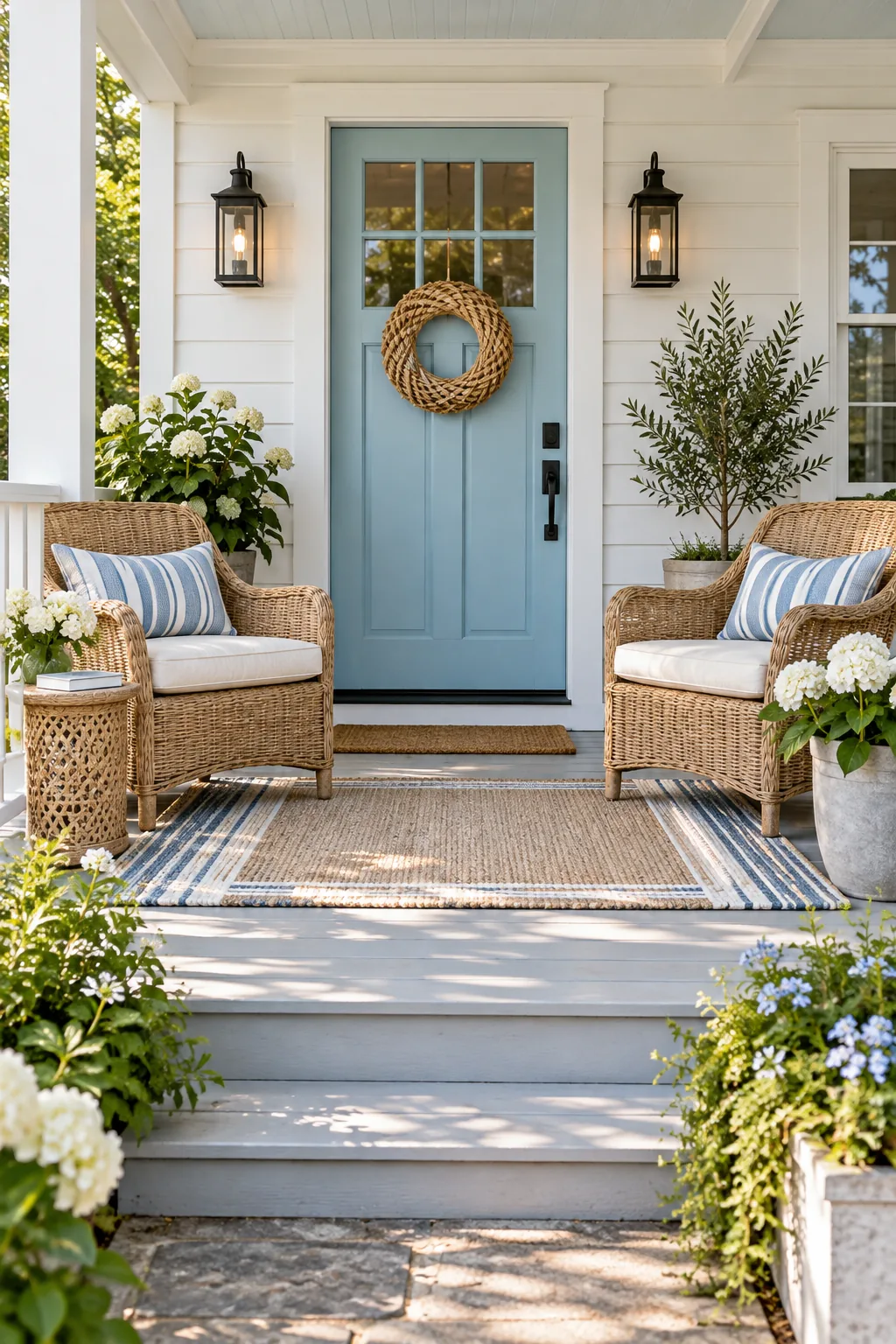
Relaxed Coastal Cottage: Woven rattan seating and pastel blue accents bring a relaxed coastal cottage feel to the porch. Use striped lumbar pillows to draw the eye inward.
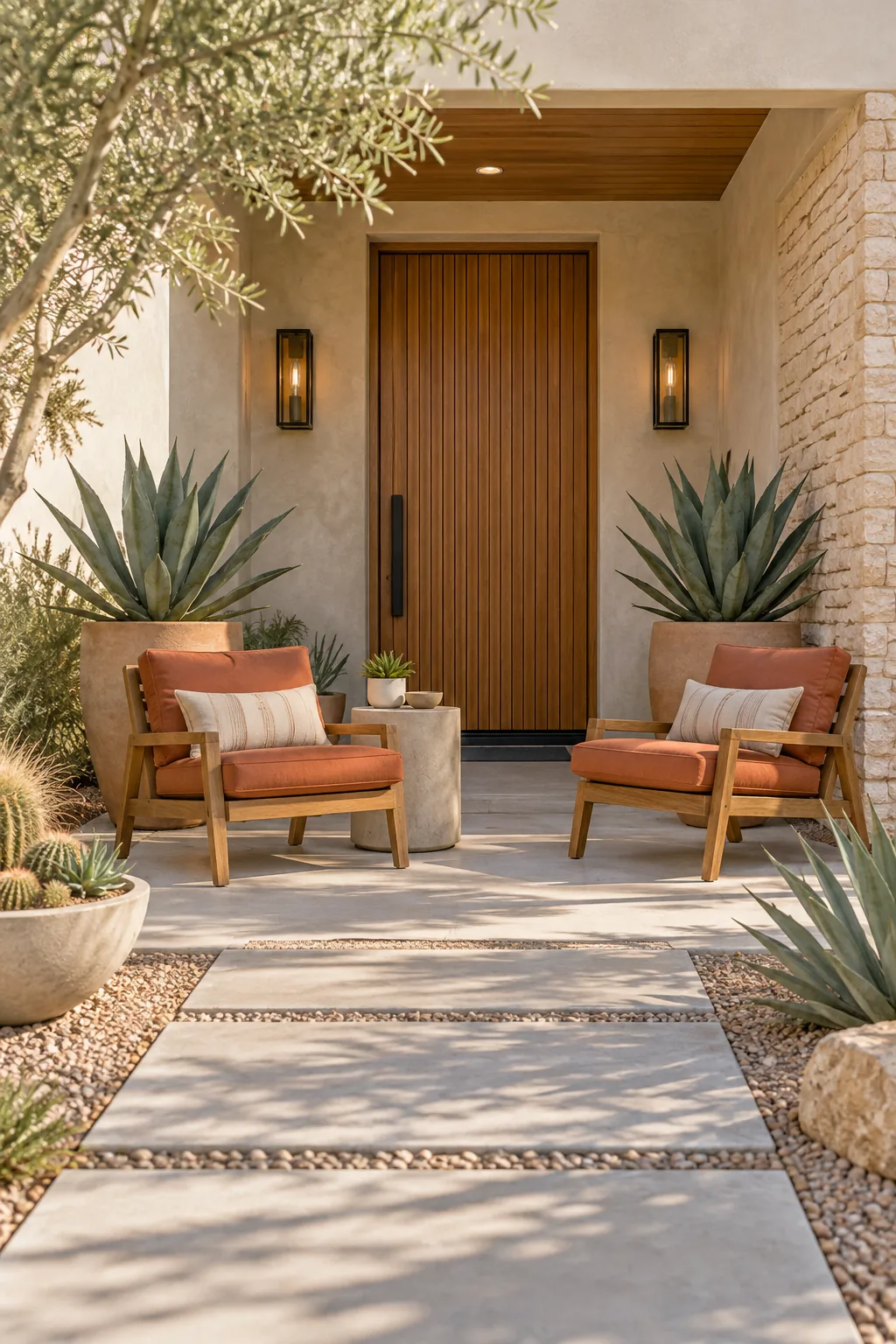
Warm Desert Modern: Warm acacia wood and terracotta tones echo the surrounding desert landscape. Add structural agave planters beside low-profile seating to complete the arid modern aesthetic.