DIY Privacy Trellis Build & Climbing Vine Planting Sheet
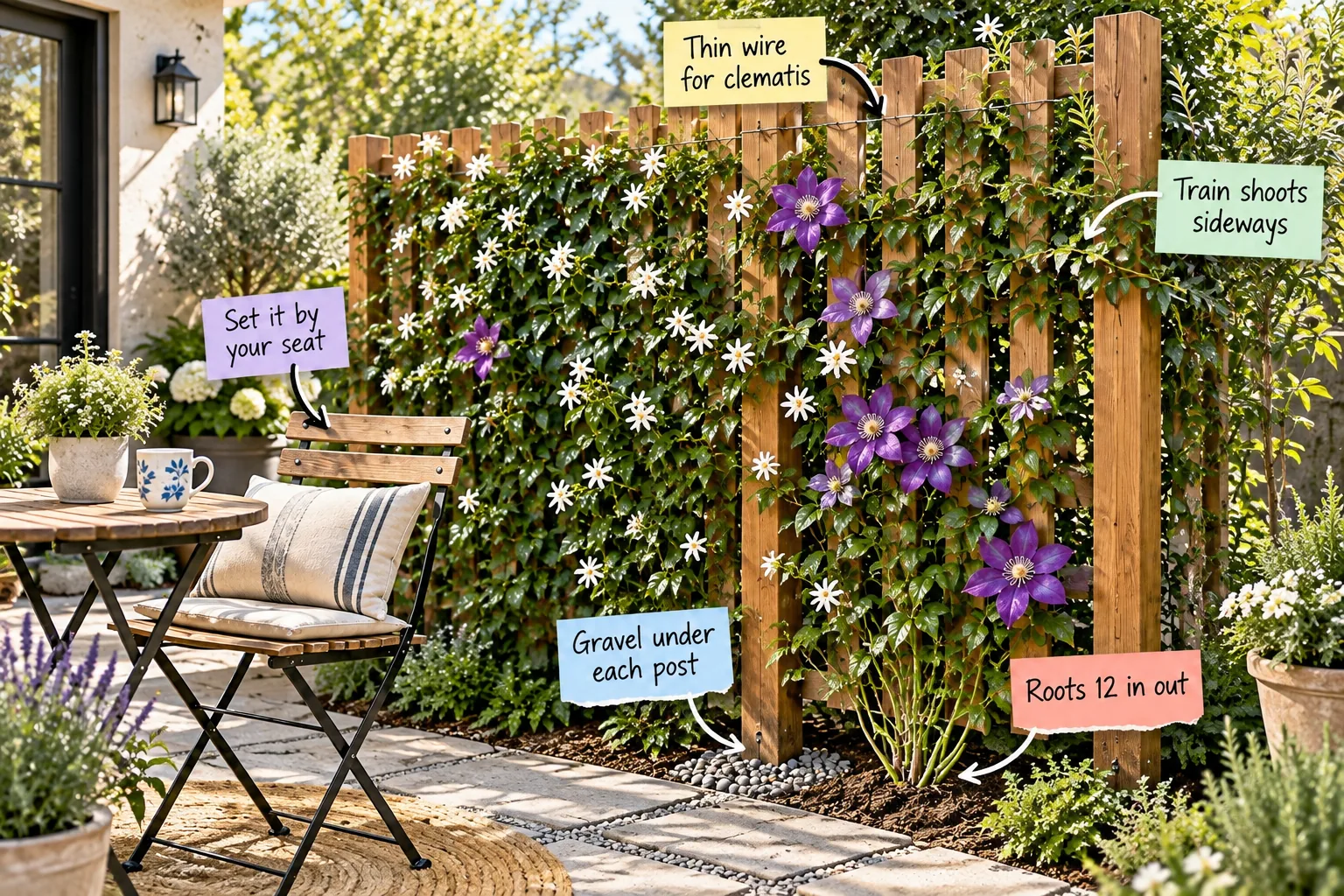
If you want to turn a crowded patio into a secluded backyard retreat, you can build a sturdy cedar screen and plant a thriving vine combination using our printable trellis build and planting sheet. Grab the guide to get exact post depths, wire spacing, and climber pairings for your growing zone.
Position the Screen for Maximum Patio Privacy
When I first set up my Austin patio, it felt completely exposed to the neighbors until I moved my privacy screen directly against the seating footprint. Set it by your seat to maximize the visual blocking angle before you ever dig a hole.
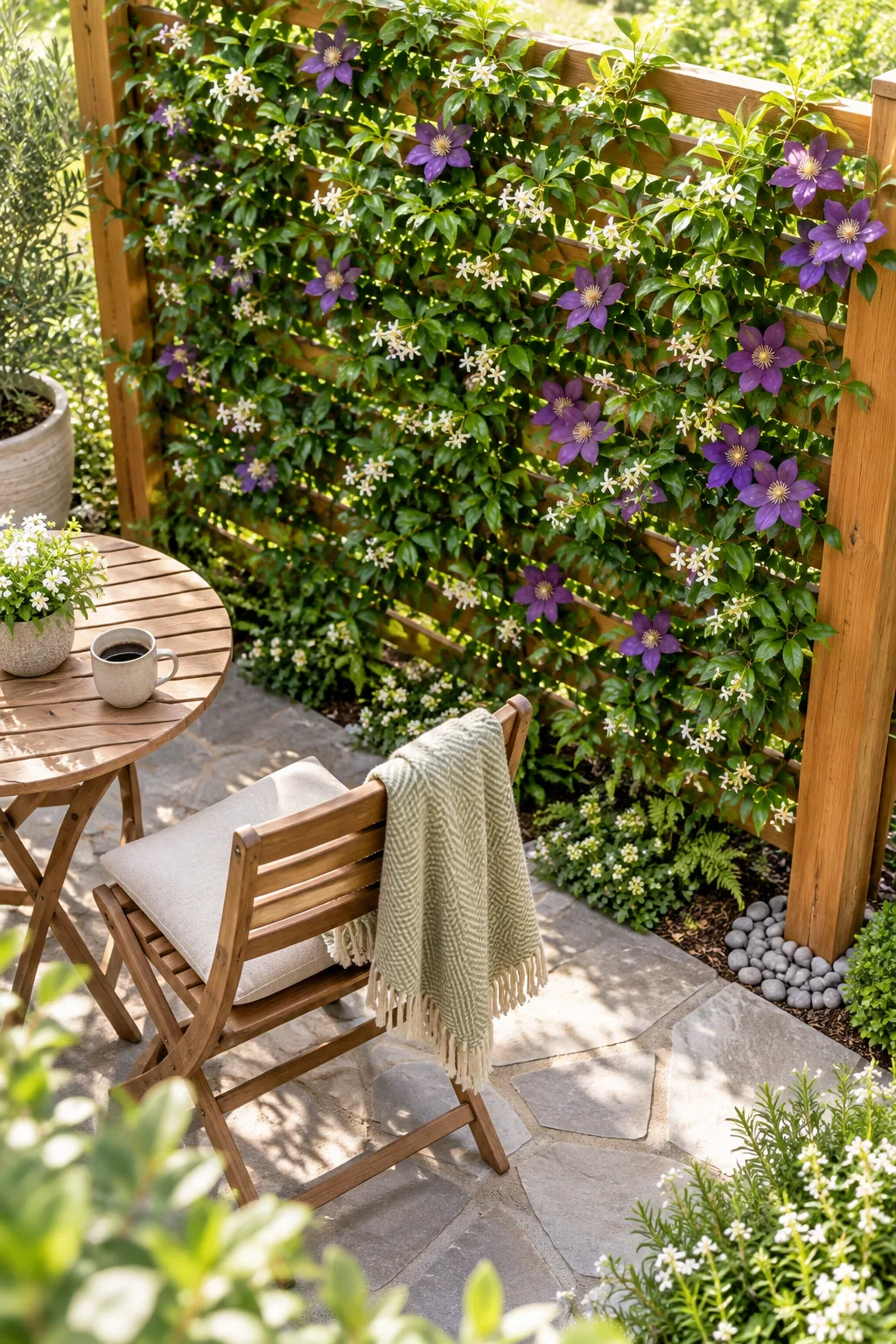
Sit in your favorite bistro chair and measure the direct sightlines to determine the exact width and height your trellis needs to be. Blocking the view from a seated position requires far less lumber than trying to fence the entire yard border.
Calculate Post Depth and Wind Load
A fully leafed privacy screen acts exactly like a solid sail, catching heavy gusts that can easily snap shallow foundations. You must bury your cedar posts deep enough to support the mature wind load of the vines without leaning over time.
| Trellis Height | Minimum Post Depth | Hole Diameter |
|---|---|---|
| 4 feet | 18 inches | 8 inches |
| 6 feet | 24 inches | 10 inches |
| 8 feet | 32 inches | 12 inches |
Always factor in your local winter conditions by digging the post holes at least six inches below the frost line. This crucial extra depth prevents freezing ground moisture from violently heaving your wooden posts upward during the coldest months.
Secure the Post Foundations with Gravel
I always set my heavy cedar posts deep into the ground, but I make sure to add a thick layer of drainage gravel beneath them. Putting crushed gravel under each post prevents surrounding soil moisture from wicking up and rotting the wood.
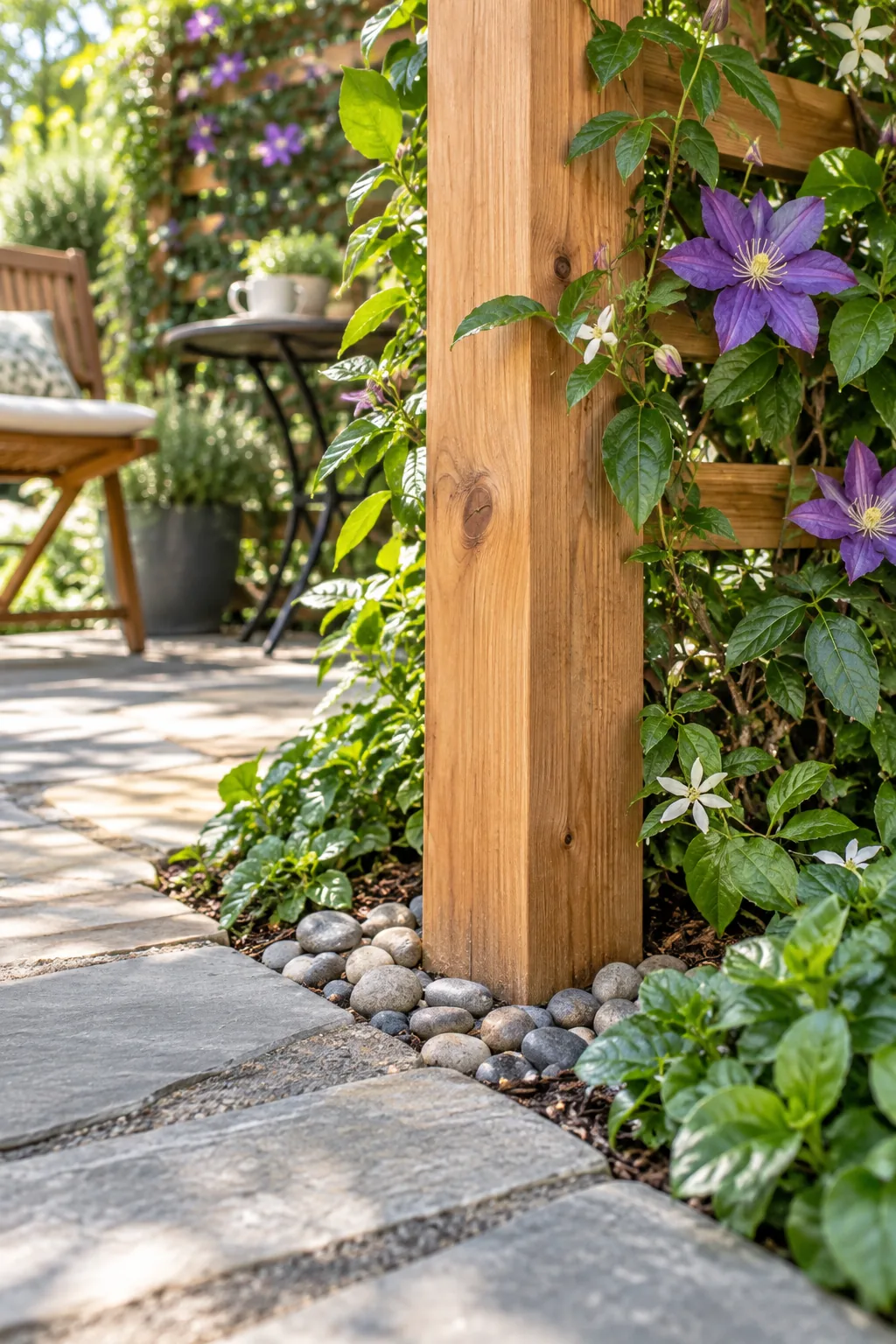
Even naturally rot-resistant cedar can fail prematurely if standing water constantly pools around the buried structural wood. Avoid these common foundation errors to ensure your new privacy trellis stands strong and perfectly plumb for years to come.
Select the Right Cedar Grade
Choosing the correct lumber grade dictates exactly how long your living screen will survive the harsh outdoor elements before rotting. Always purchase ground-contact rated cedar for the buried main posts, while lighter rough-sawn slats work perfectly for the upper horizontal privacy rails.
Add Thin Wire Support for Clematis
While thick horizontal cedar slats provide excellent visual privacy, delicate blooming climbers simply cannot wrap their short leaf stalks around wide wood. You must add micro-supports to give these tender vines something they can actually grip.
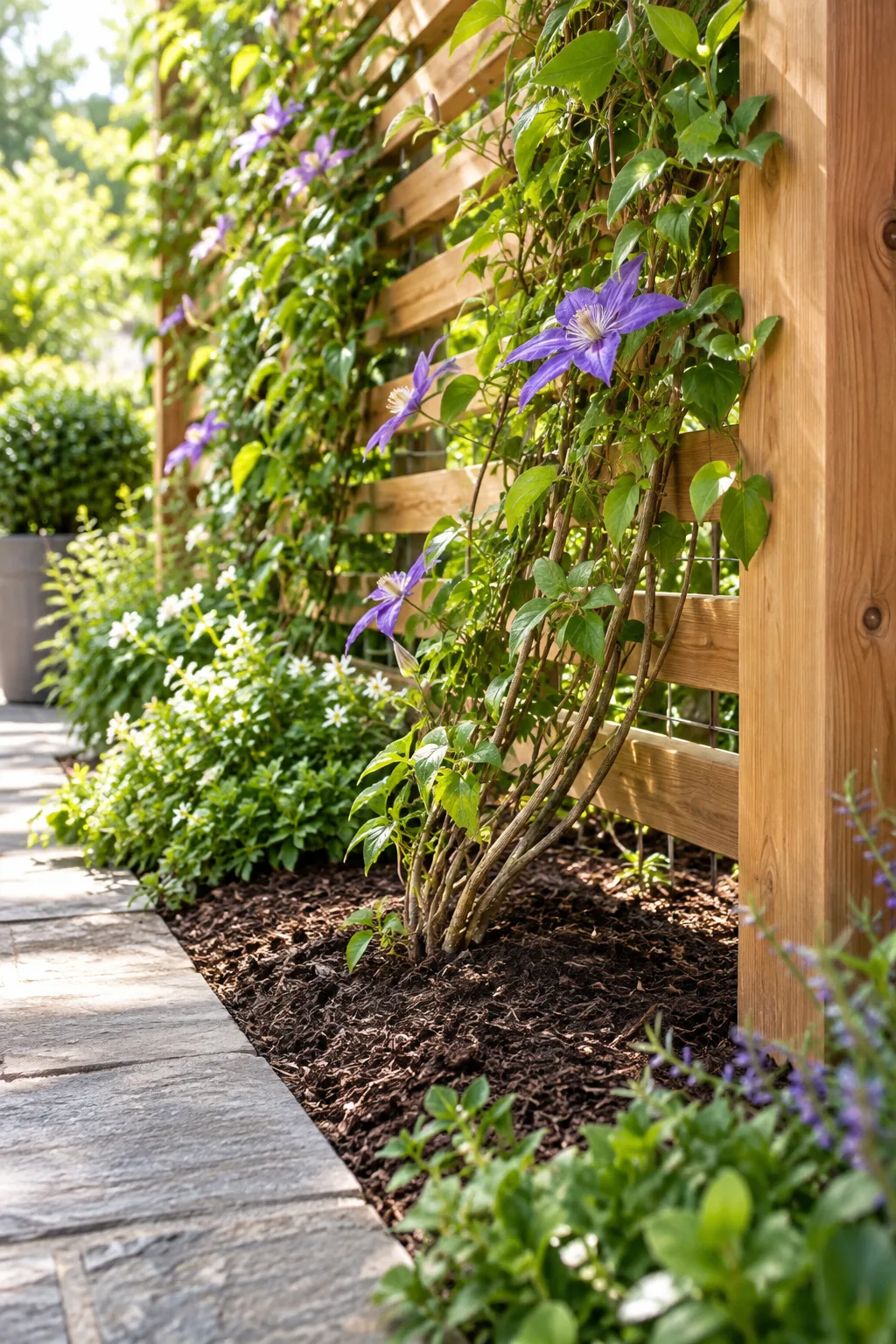
Run a fine galvanized thin wire for clematis horizontally between the heavy wooden slats to create an invisible climbing ladder. The delicate tendrils will curl tightly around the metal wire, anchoring the blooming stems securely against the heavy spring winds.
Space Wires for Different Climbers
Different vine species require vastly different support spacing, so place your wires 12 inches apart for twining honeysuckle or 6 inches apart for delicate tendril climbers. Keep the metal lines completely taut by installing small steel eye hooks and adjustable turnbuckles at the ends of each run.
Plant Roots Twelve Inches Out
I learned the hard way that planting delicate vines directly against a concrete patio edge severely stunts their growth due to harsh lime leaching. Keep the sensitive root ball planted with the roots 12 in out from the main post base.
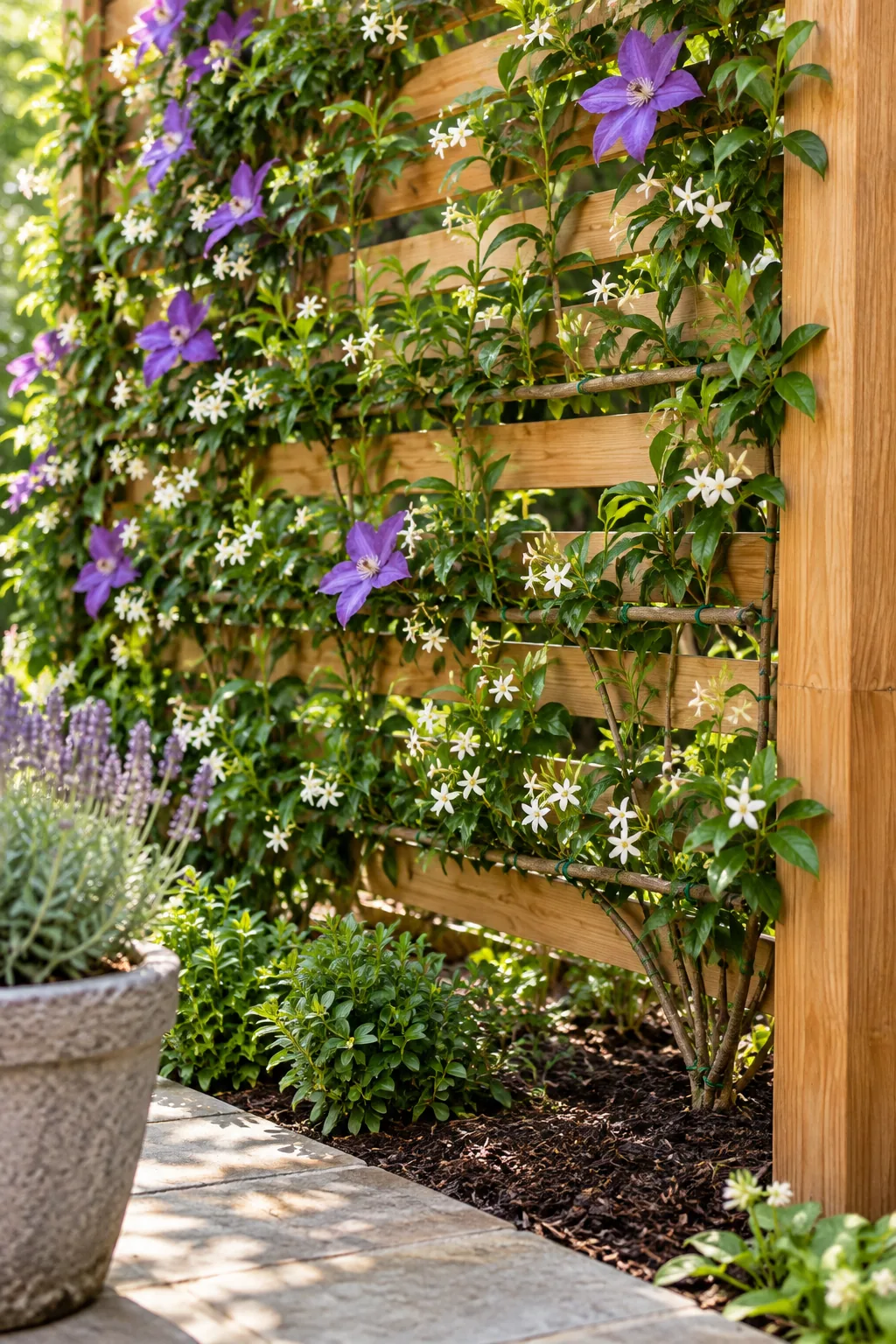
Proper planting distance protects the roots while allowing you to angle the growing stems gently back toward the wooden trellis structure. Follow this exact sequence to prepare the planting hole correctly before putting your climbers into the garden bed.
- Loosen the compacted garden soil to a full depth of eighteen inches.
- Mix in a generous bucket of rich organic compost for drainage.
- Measure exactly twelve inches away from the wooden post base.
- Tilt the top of the root ball slightly toward the trellis.
Thorough soil preparation guarantees your new vines will quickly push out the deep anchor roots necessary to survive their first harsh summer.
Condition the Soil for Heavy Feeders
Fast-growing privacy vines are notoriously heavy feeders that quickly deplete the surrounding soil of essential blooming nutrients. Work a slow-release granular organic fertilizer into the top three inches of mulch to provide a steady summer nutrient supply.
Train Shoots Sideways for Dense Coverage
If you let your climbing vines race straight to the top of the structure, you will end up with bare woody stems at eye level. You must train shoots sideways along the lower horizontal cedar slats to build a solid base.
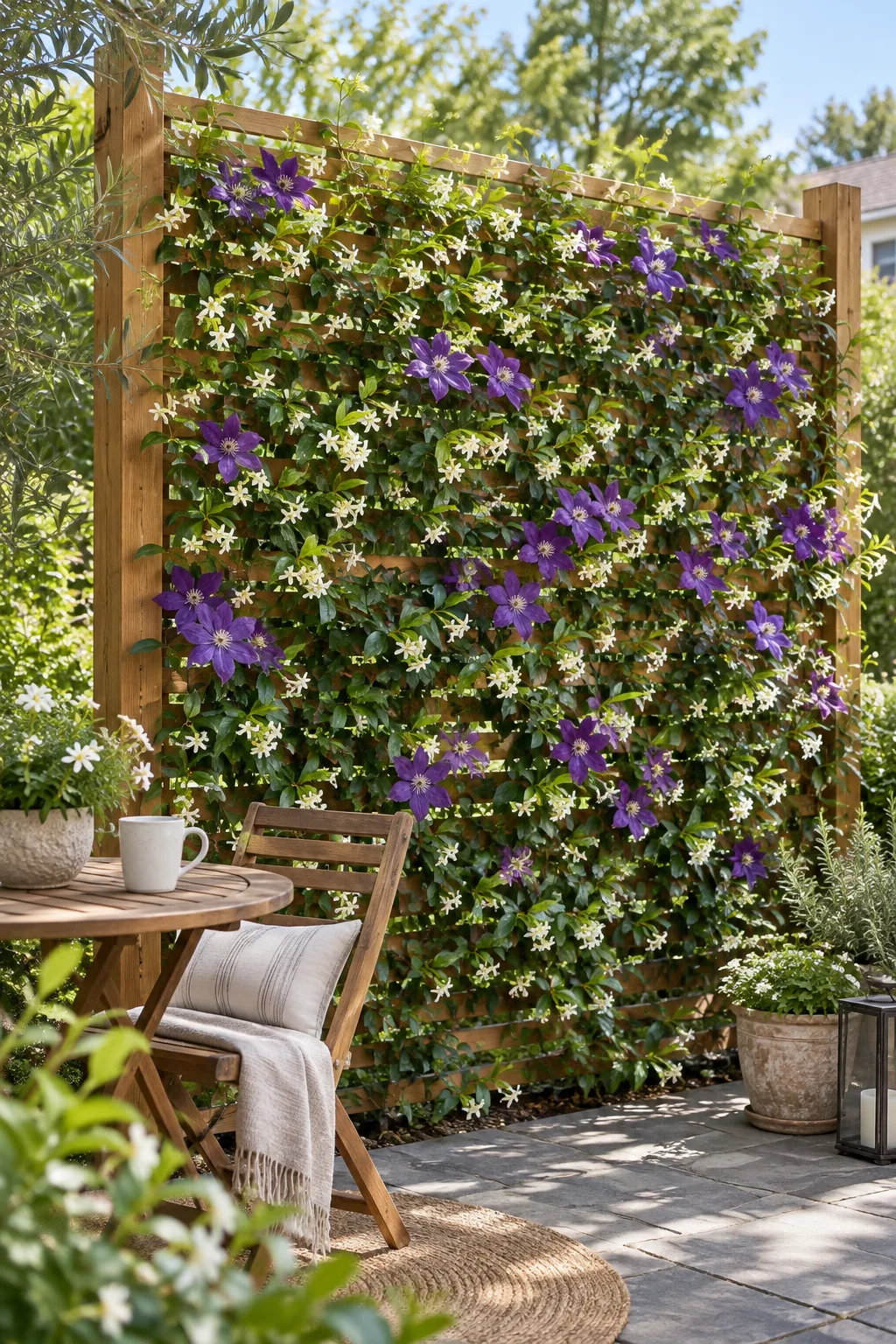
Tying the main stems horizontally forces the plant to push out dense, leafy vertical side shoots that completely fill in the visual gaps. This simple training technique guarantees a thick, lush wall of green leaves right at your seated eye level.
Tie Stems with Soft Materials
Stiff plastic zip ties will brutally cut into the rapidly expanding stems of your jasmine as the woody vines mature over the hot summer. You need forgiving materials that stretch and degrade naturally as the plant gains structural girth.
Check your garden ties monthly and immediately loosen any knots that are visibly biting into the bark to ensure healthy sap flow.
Pair Your Climbing Vines Strategically
Combine a sturdy evergreen base layer with a dramatic seasonal bloomer to keep your patio privacy screen looking lush and vibrant all year round. Star jasmine provides a permanent glossy green backdrop that perfectly hides the wooden framework.
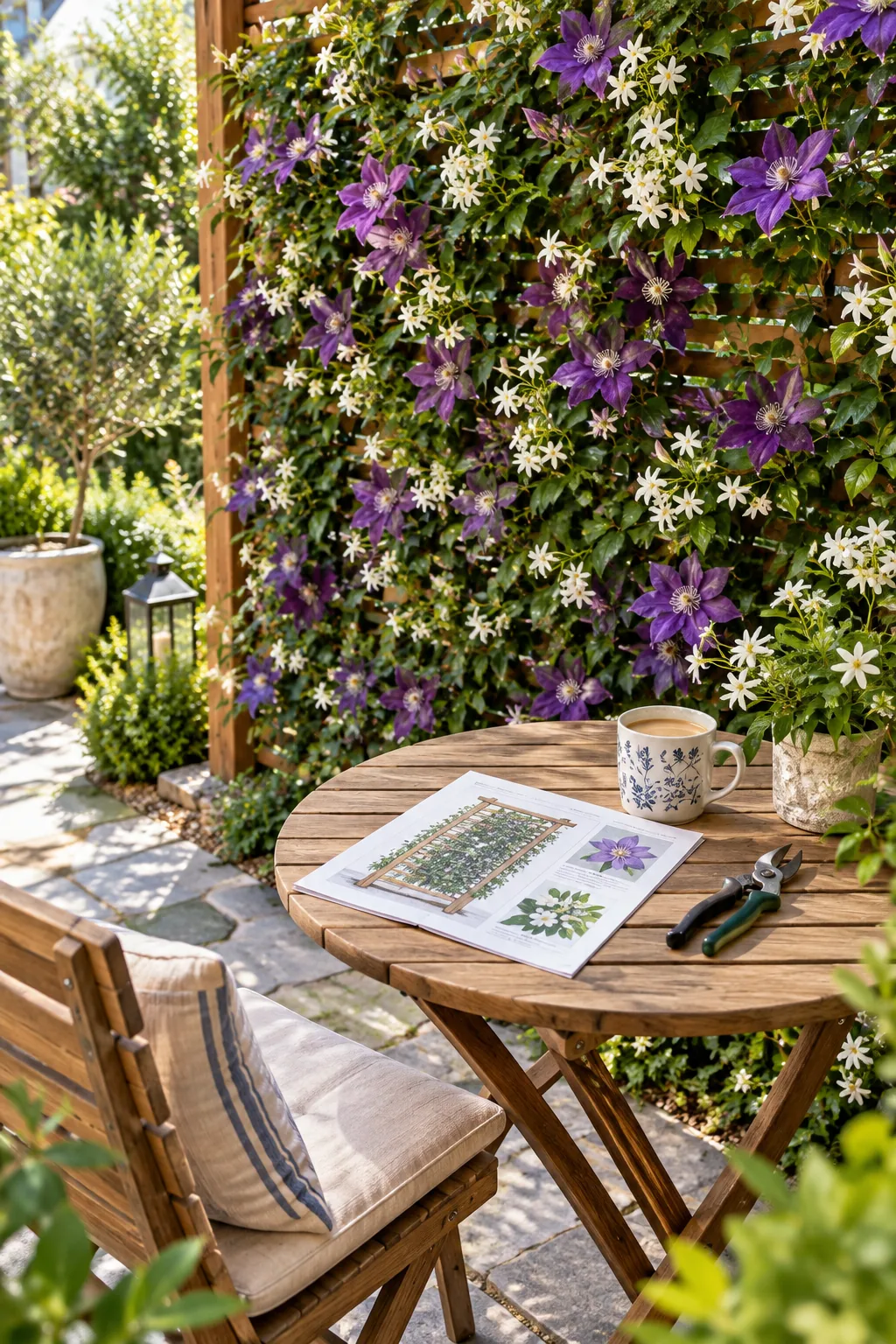
Weave a vibrant violet-purple clematis directly through the established jasmine foliage for a breathtakingly bright mid-summer floral display. The dense evergreen leaves protect the sensitive clematis roots from the baking sun while highlighting the delicate purple petals.
Match Bloom Times Across the Season
Selecting vines with staggered blooming windows ensures your outdoor seating area enjoys continuous color from early spring through late autumn. Pair an early blooming climbing rose with a late-season sweet autumn clematis to extend the floral show.
Download the Trellis Build and Climber Sheet
Use our comprehensive printable reference sheet to confidently plan out your exact lumber materials, hardware measurements, and zone-specific climbing plants. Keeping your spacing specs handy during the messy installation process prevents costly woodworking mistakes.
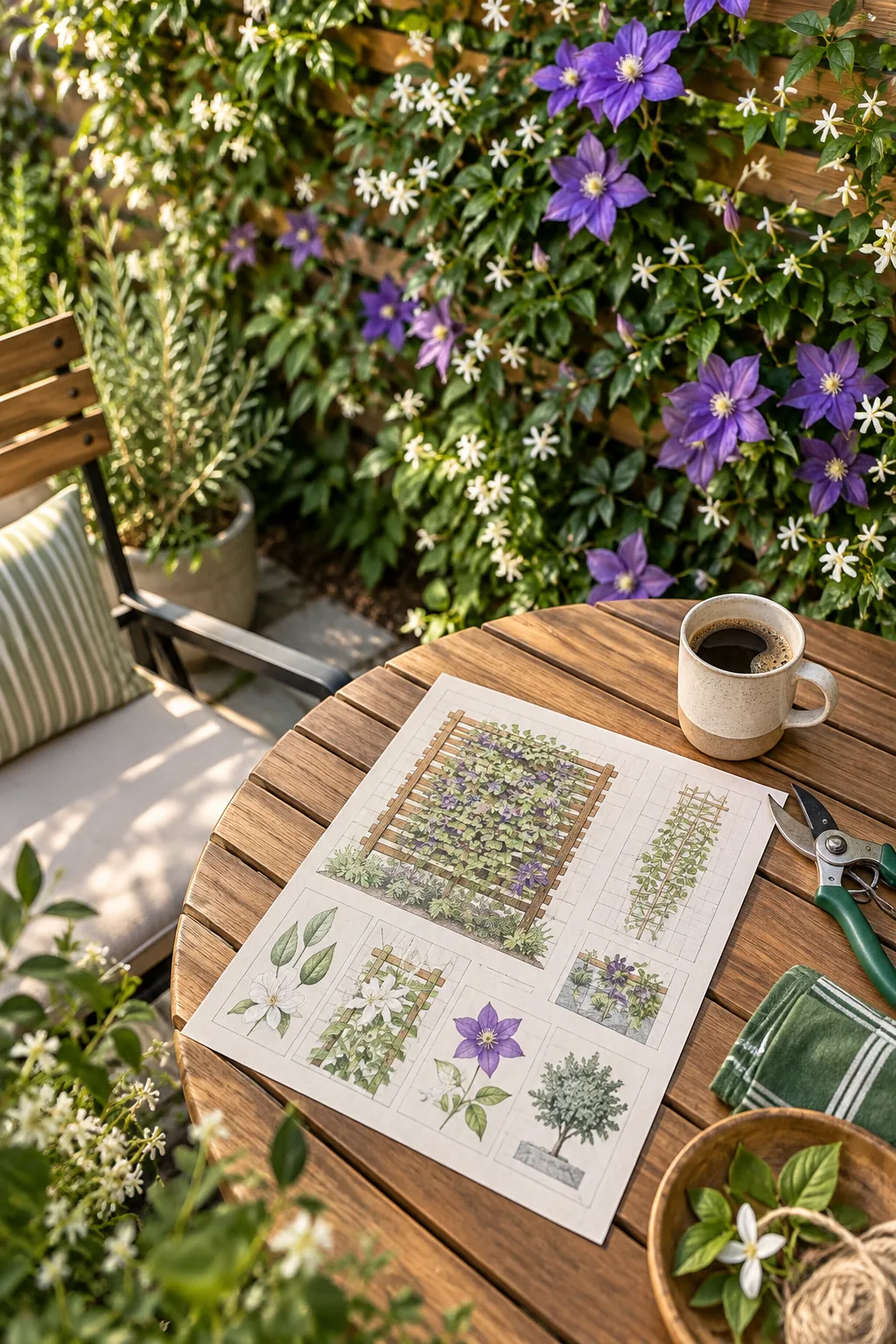
This free printable guide includes a precise post-depth calculator based on your target trellis height and exact wire spacing measurements. It also features a detailed climber pairing chart tailored specifically to your local USDA growing zone.
Water Deeply During the First Year
Newly planted privacy vines require consistent, deep watering to establish the massive root systems needed to support rapid vertical growth. Soak the base of the trellis thoroughly twice a week rather than giving the plants a shallow daily sprinkle.
Maintain the Living Screen
I keep my backyard foliage incredibly thick by selectively pruning out any brittle deadwood right before the early spring growth push begins. Snipping away the old tangled growth directs the plant’s energy into producing fresh, vibrant green privacy leaves.
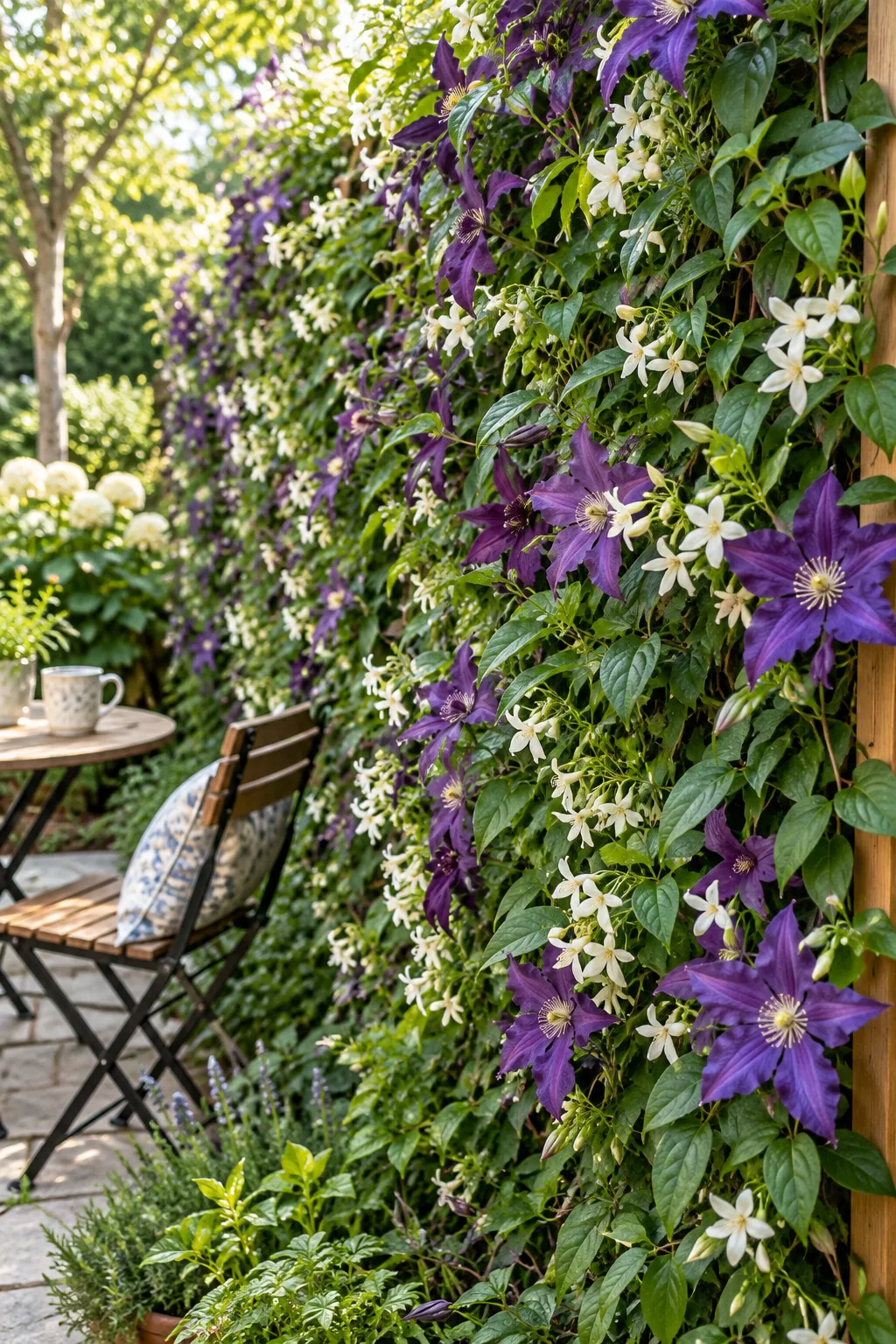
Guide new wandering tendrils back into the wire support system weekly during the peak growing season to maintain a neat appearance. Consistent tucking prevents the heavy top growth from pulling away from the wood and becoming dangerously top-heavy in the wind.
More Privacy Trellis Looks to Try
Discover how different materials and vine pairings can completely change the mood of your outdoor space.
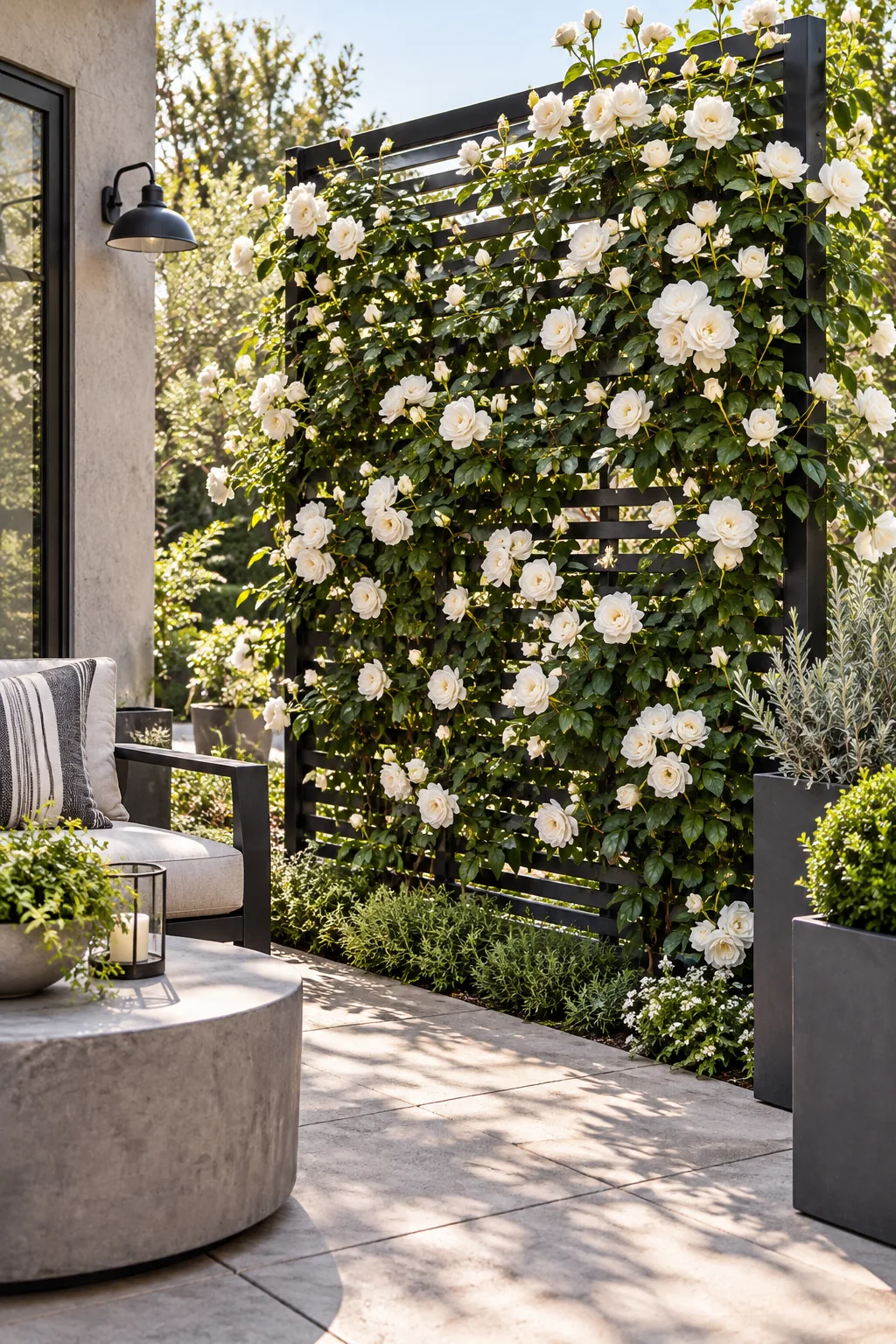
Modern monochrome black and white: Sleek black slats provide a striking high-contrast backdrop that makes pure white climbing roses pop instantly.
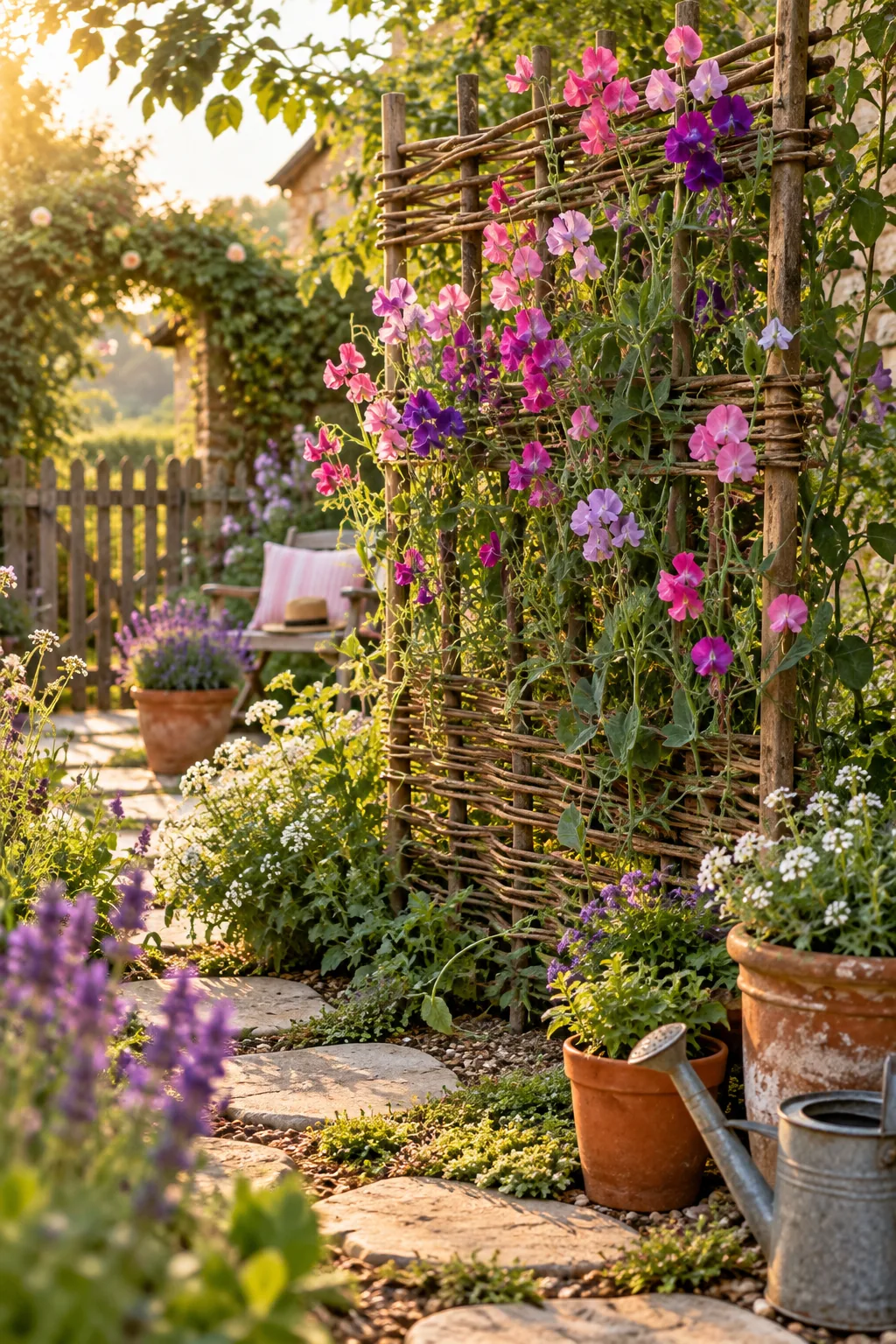
Rustic woven cottage garden charm: Natural woven willow branches blend seamlessly into informal garden beds while providing excellent grip for delicate sweet pea tendrils.
Industrial weathered copper pipe frame: Repurposed copper plumbing pipes develop a beautiful green patina over time that perfectly complements warm-toned trailing nasturtiums.
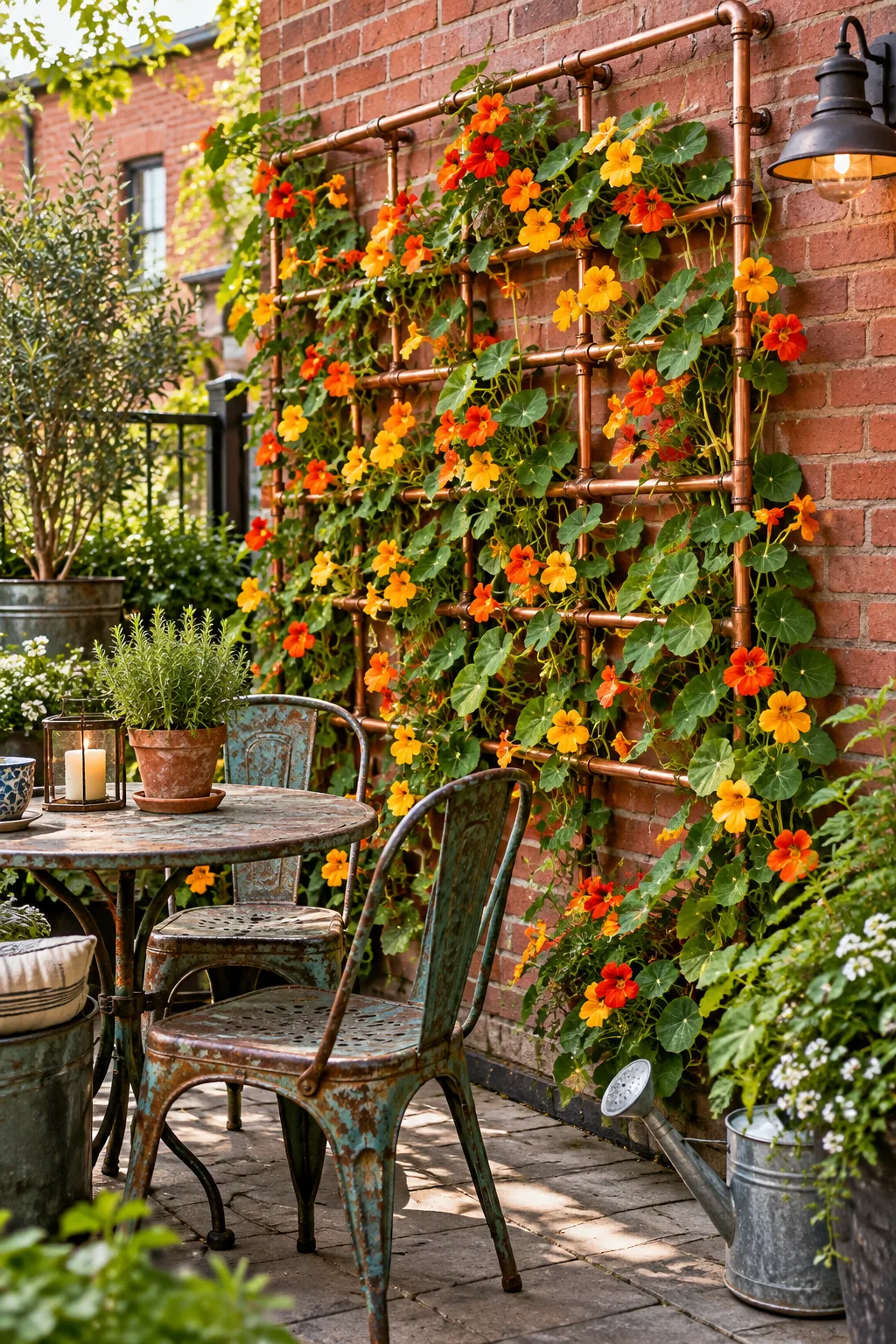
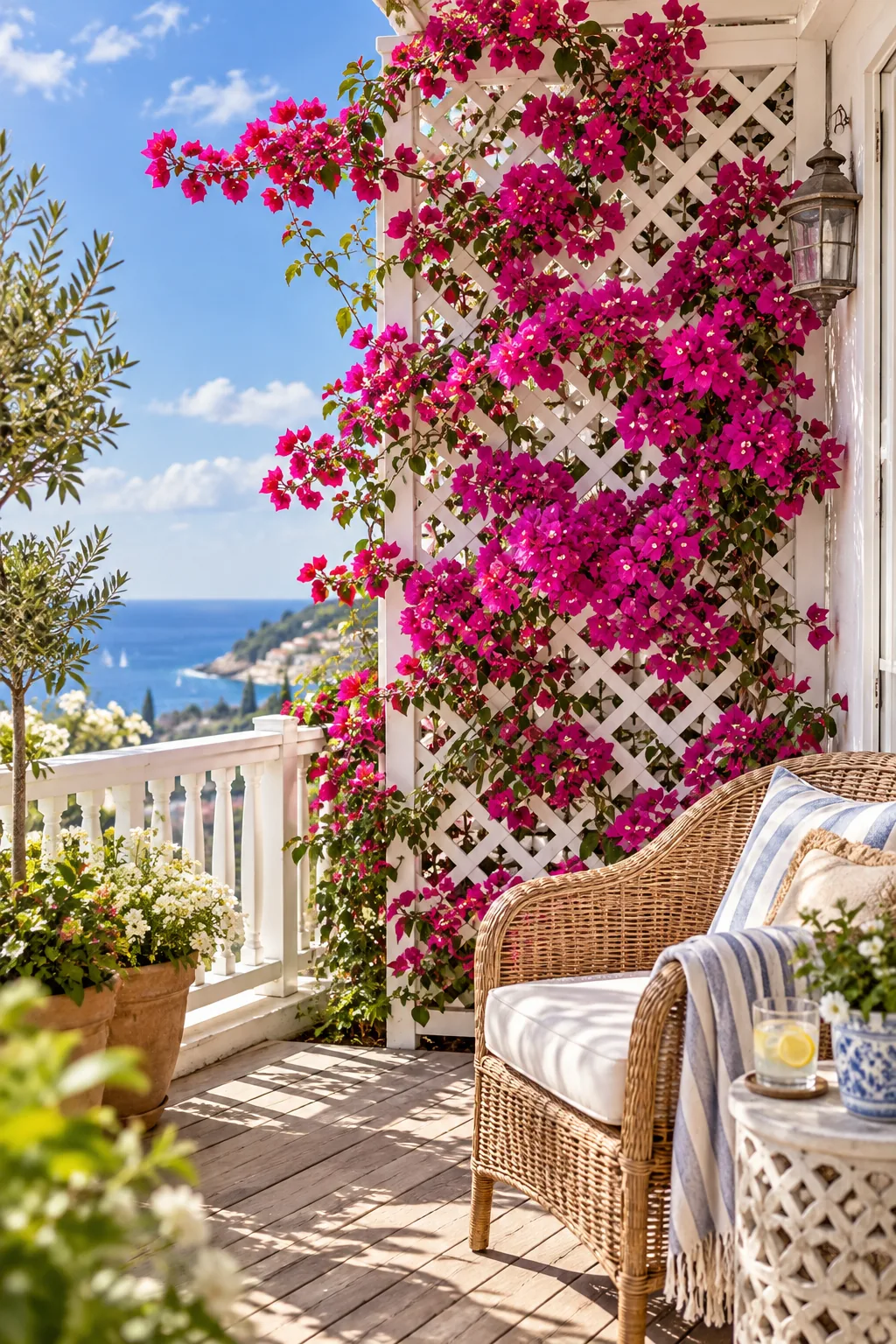
Coastal white lattice with bougainvillea: A traditional white painted lattice keeps small balconies feeling bright and airy while supporting heavy, vibrant tropical blooms.