
Low-Profile Outdoor Flower Arrangements for Patios
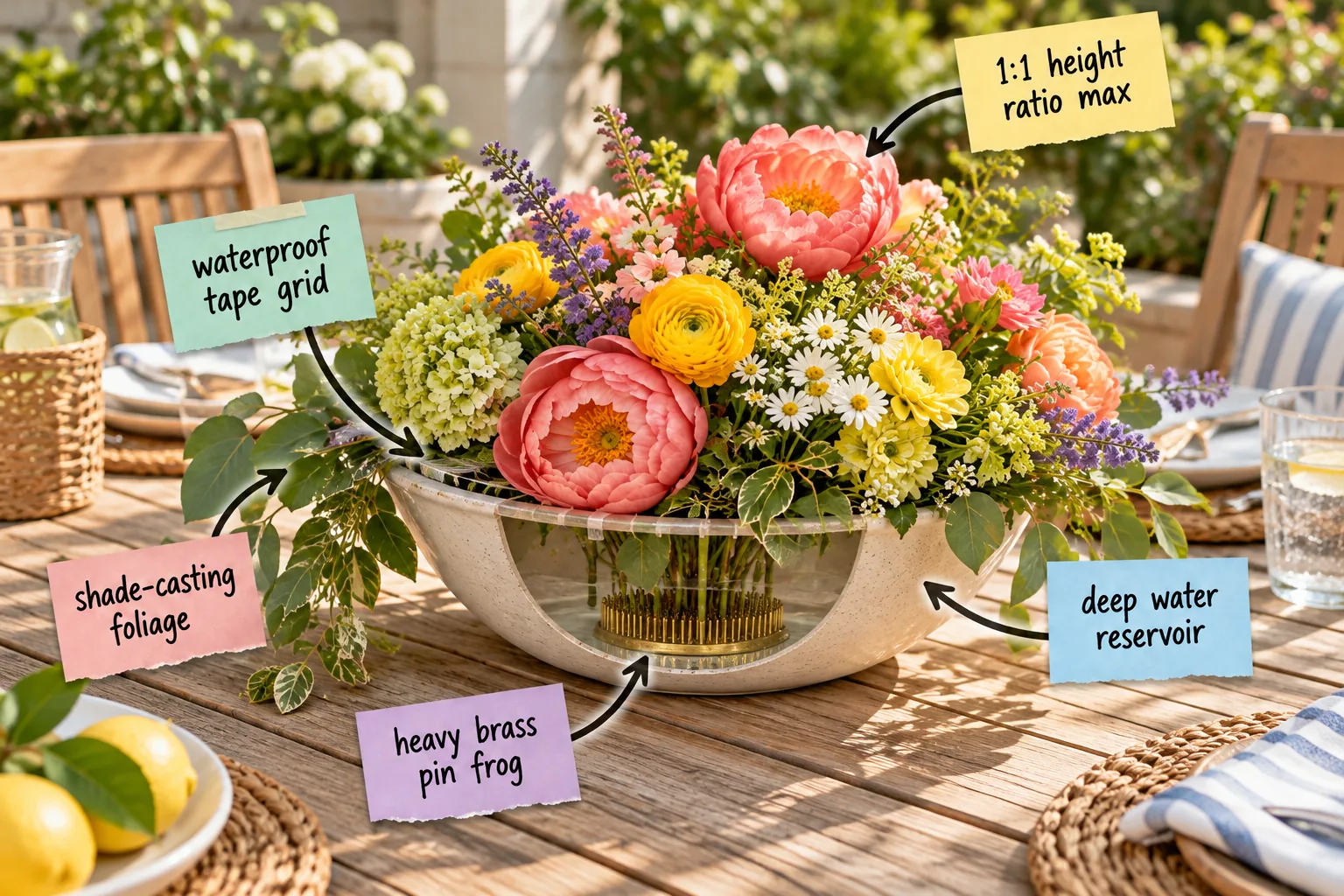
Welcome to the secret behind wind-proof patio florals that actually survive the summer heat. You will be able to build a sturdy, low-profile centerpiece using our exact heat-hardy stem shopping list and waterproof tape grid technique.
Choosing a Bowl with a Deep Water Reservoir
Begin with a wide, low ceramic bowl that holds a deep water reservoir of at least 3 to 4 inches. I once used a shallow dish for a July dinner party, and the blooms wilted before dessert.
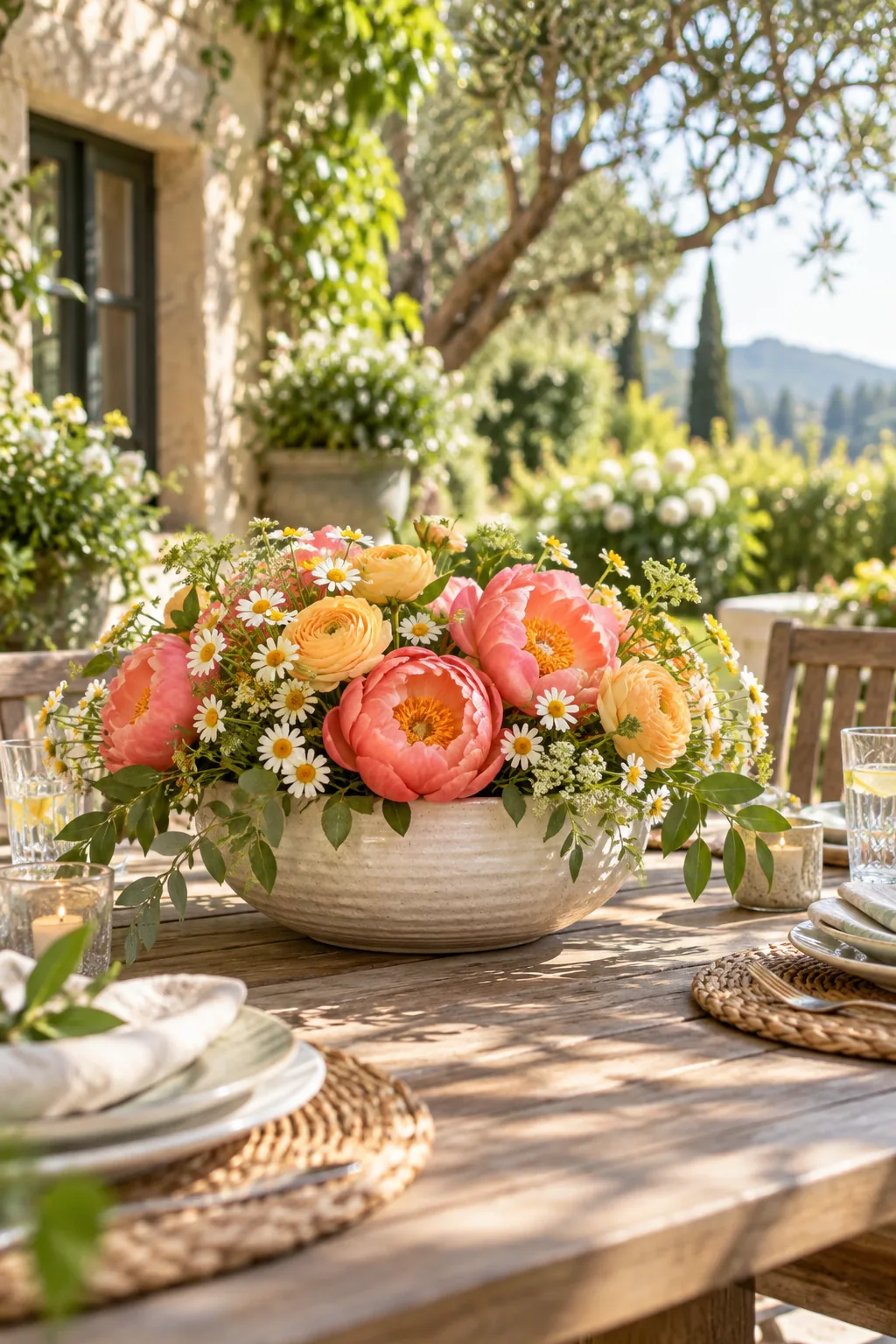
Outdoor arrangements face rapid evaporation from constant breezes, so that substantial water volume is critical to keep your stems fully hydrated in the relentless afternoon heat.
Evaluating Ceramic Thickness for Temperature Control
Select a vessel with thick ceramic walls rather than thin glass or lightweight metal. Dense clay acts as a natural insulator, preventing the sun from flash-heating your carefully prepared water supply during long outdoor cookouts.
Sizing the Vessel for Patio Tables
Measure your outdoor dining table to ensure the bowl leaves enough room for heavy dinner plates and serving platters. A centerpiece should anchor the space without forcing your guests to constantly shift their glassware out of the way.
| Table Shape | Ideal Bowl Diameter | Max Guest Count | Water Capacity |
|---|---|---|---|
| Round (48-inch) | 10 to 12 inches | 4 guests | 1.5 quarts |
| Square (60-inch) | 12 to 14 inches | 8 guests | 1.8 quarts |
| Rectangular (72-inch) | 14 to 16 inches | 6 guests | 2.0 quarts |
| Oval (84-inch) | 16 to 18 inches | 10 guests | 2.5 quarts |
| Picnic (96-inch) | 18 to 20 inches | 12 guests | 3.0 quarts |
Sticking to these precise bowl diameter ratios guarantees your floral arrangement feels intentionally scaled for the outdoor dining experience while holding enough water to sustain the blooms.
Anchoring the Center with a Heavy Brass Pin Frog
Place a 3-inch heavy brass pin frog at the very bottom center of the bowl. This dense metal anchor prevents the arrangement from tipping over in sudden patio breezes while holding thick foundational stems securely in place.
Preparing the Ceramic Surface for Adhesion
A heavy frog is useless if it slides around the bottom of the bowl. Proper adhesion requires a specific prep step before a single drop of water is added.
Applying Floral Putty for a Waterproof Seal
Roll a thick piece of waterproof floral putty into a continuous ring and press it firmly onto the underside of the brass base. Pushing the frog down with steady pressure creates a vacuum seal that easily withstands submerged conditions.
Securing Stems with a Waterproof Tape Grid
Build a waterproof tape grid across the rim using 1/4-inch clear floral tape. This invisible structure acts as a secondary support system above the pin frog.
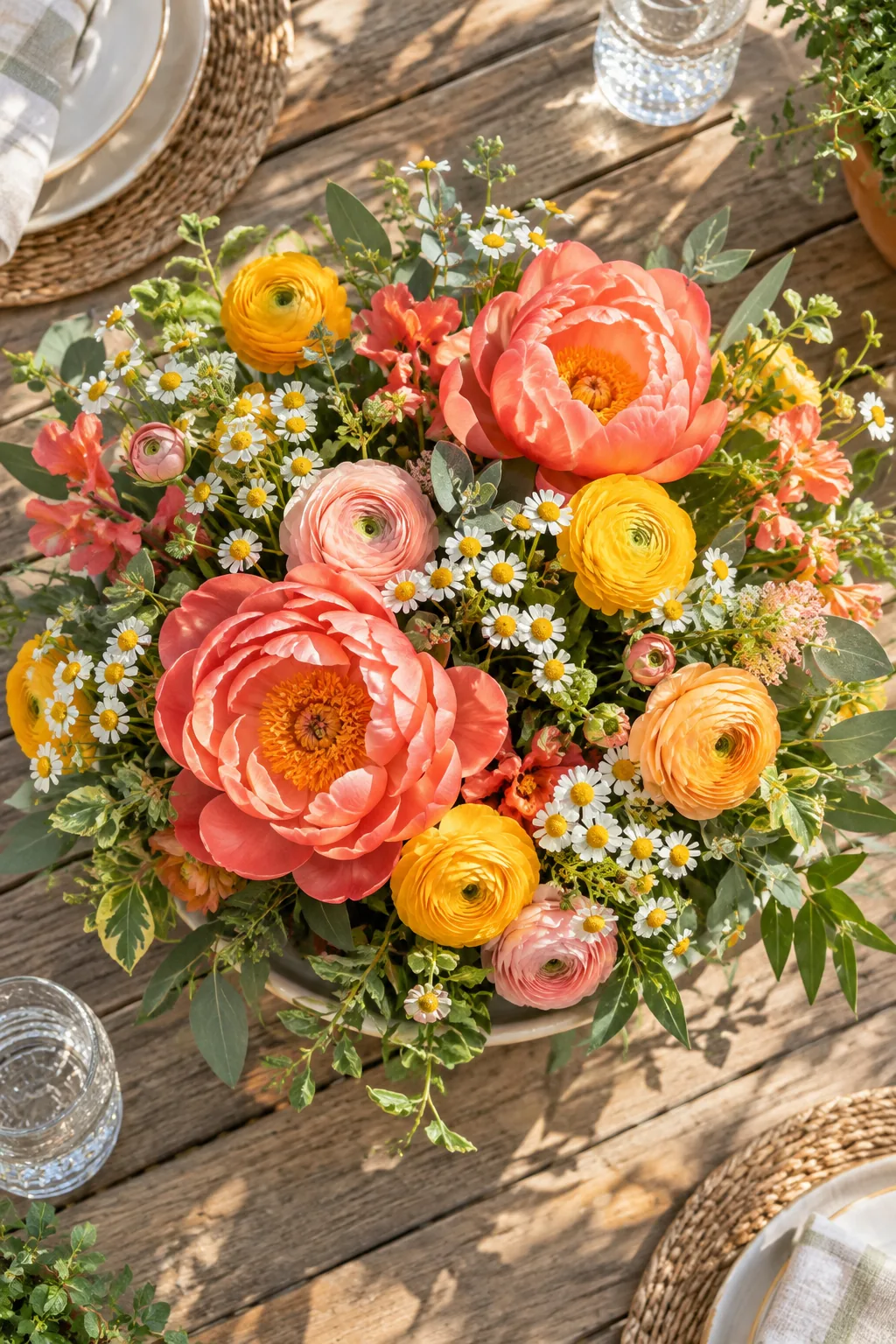
Keeping top-heavy blooms perfectly angled without sliding down the wide ceramic sides is much easier when this sticky framework shares the structural load with your metal base.
Spacing the Grid Lines for Thick Stems
Leave exactly one inch of open space between each strip of tape to accommodate the thickest peony and ranunculus stems. Tight grids will crush delicate green tissue and block water uptake during crucial midday heat.
Wrapping the Perimeter to Lock the Tape
Run a final continuous band of tape around the entire outer rim to lock the intersecting grid lines permanently in place. This perimeter seal prevents the tension of heavy leaning flowers from peeling your framework away.
Cooling the Water with Shade-Casting Foliage
Insert broad green leaves around the perimeter first to create shade-casting foliage. Overlapping these leaves slightly over the rim blocks direct sunlight from hitting the water reservoir.
- Trim the thickest foliage stems at a sharp 45-degree angle for maximum water uptake.
- Wedge the angled cuts directly into the outer rings of your heavy brass anchor.
- Fan the broad leaves outward until no open water is visible from a standing position.
Keeping the water cool significantly slows algae growth and stops your centerpiece from developing an unpleasant swampy odor before the party even begins.
Trimming Foliage to Prevent Submerged Bacteria
Strip absolutely every leaf that falls below the waterline before inserting the stem into the frog. Submerged greenery rots within hours outdoors, instantly clouding your deep reservoir and clogging the vascular systems of your expensive blooms.
The Low-Profile Patio Stem Recipe
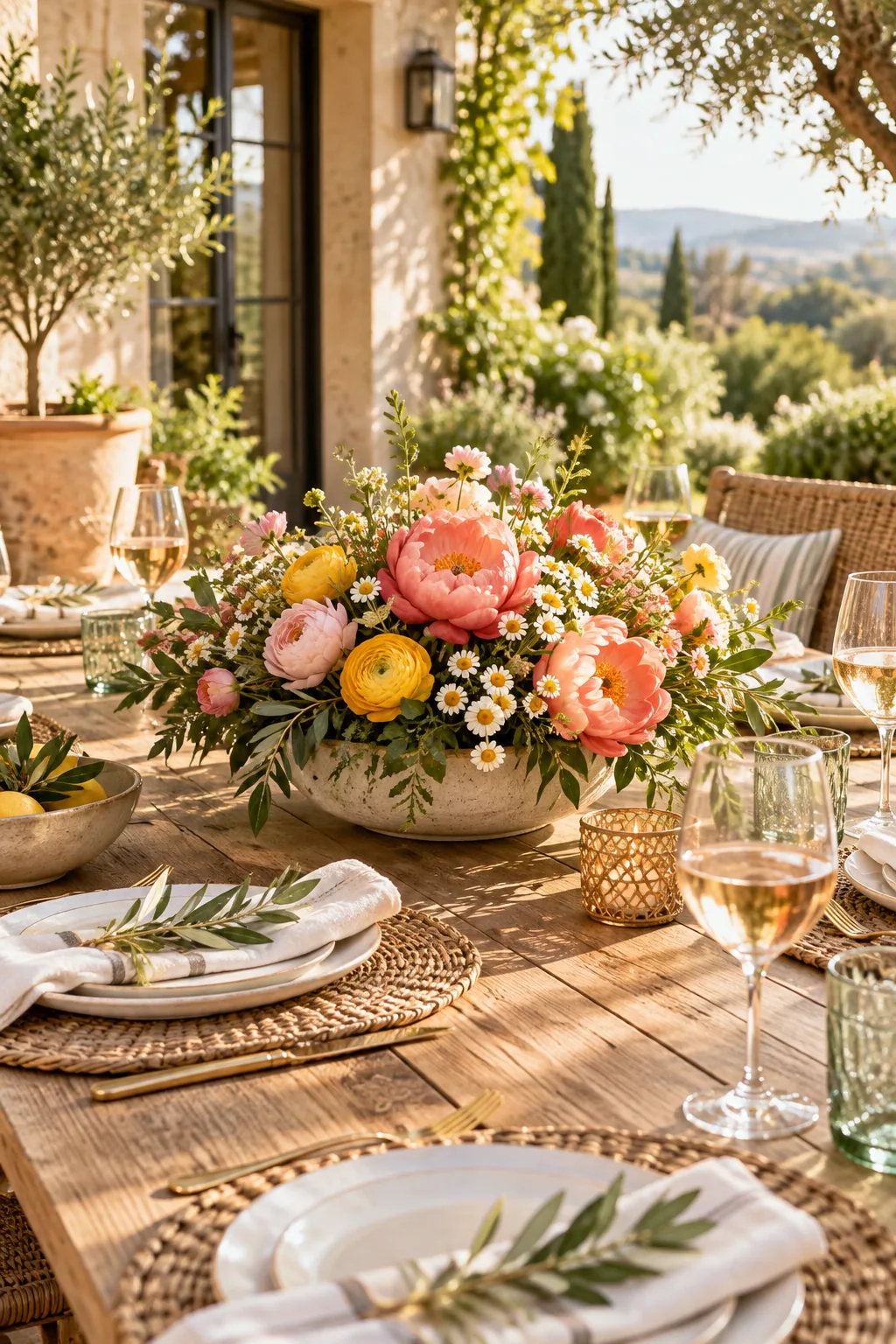
To recreate this exact lush look, use our heat-hardy stem shopping list: 5 Coral Charm peonies, 7 yellow ranunculus, 5 chamomile stems, and 4 stems of variegated pittosporum.
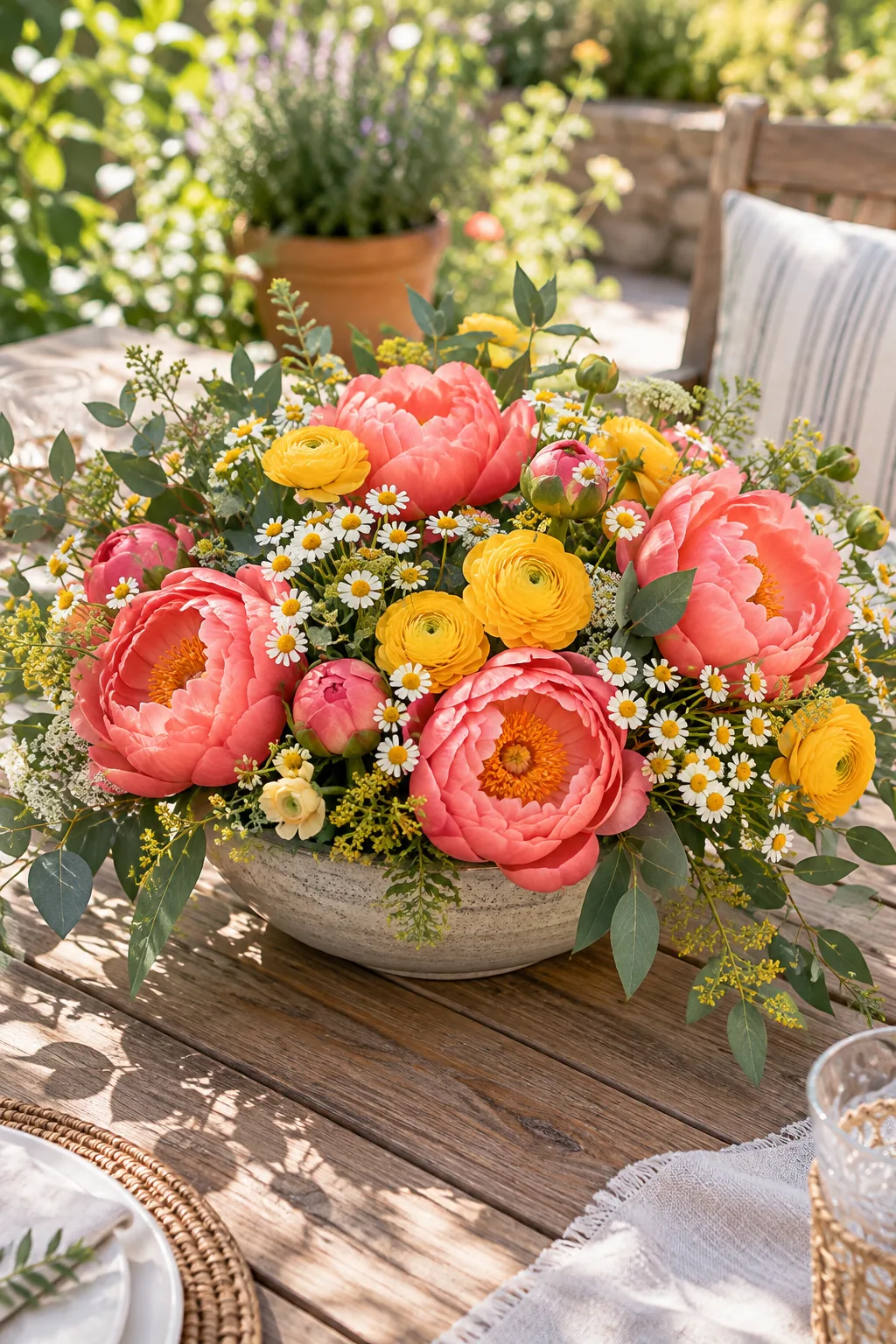
This specific mix balances large waxy focal flowers with delicate, heat-tolerant filler, ensuring your arrangement looks abundant without wilting under the open sky.
Sourcing Heat-Tolerant Filler Greens
Stick to woody-stemmed greens like pittosporum or seeded eucalyptus for your foundational layer. These tough, drought-resistant branches maintain their rigid structure and vibrant color long after softer spring greens have collapsed.
Capping the 1:1 Height Ratio Max
Trim your tallest stems to enforce a strict 1:1 height ratio max. The highest bloom should never sit taller than the physical height of the ceramic bowl itself.
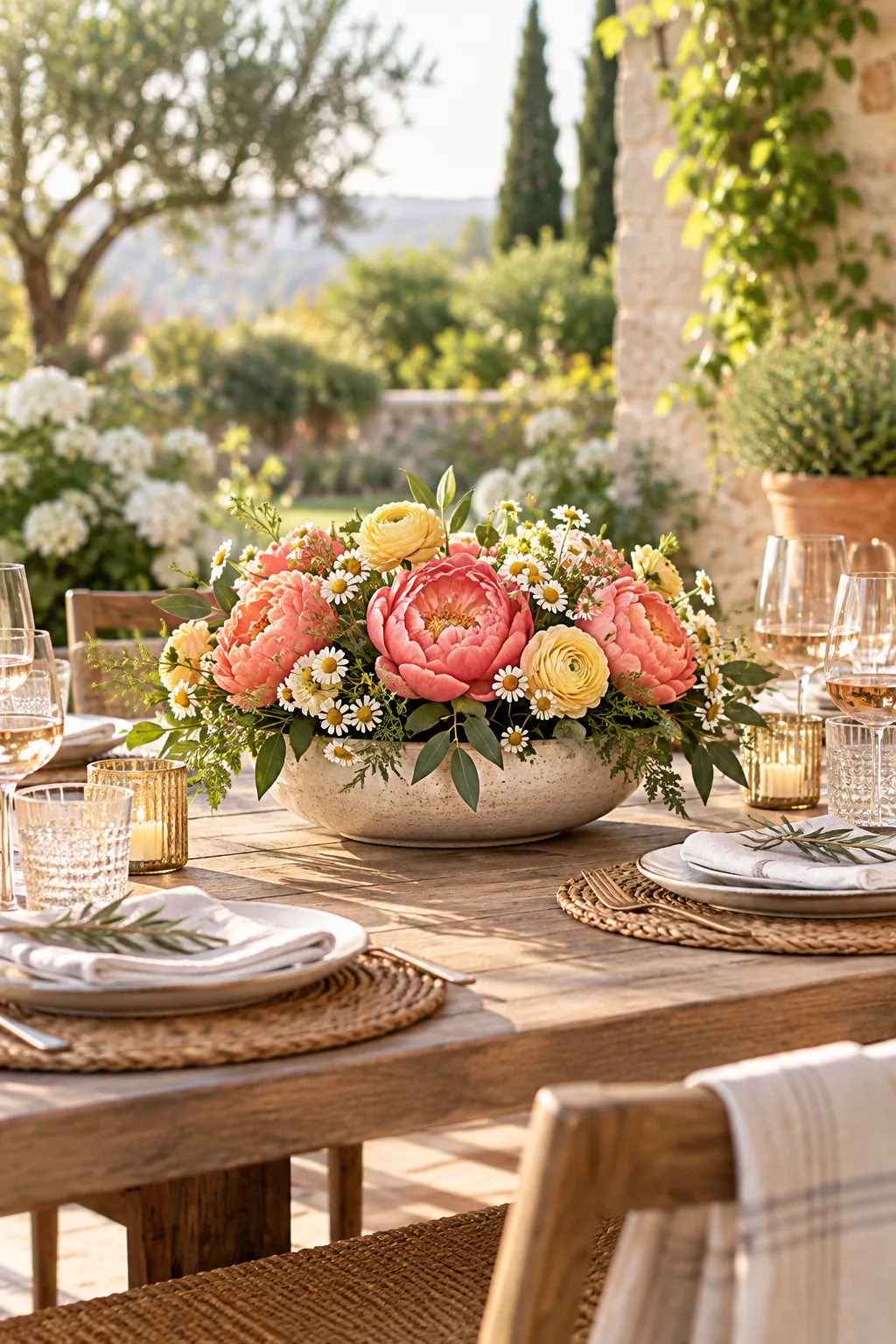
Maintaining this low center of gravity ensures your design easily withstands sudden gusts of wind, keeping the heavy water reservoir planted firmly on the table.
Measuring the Focal Blooms Against the Rim
Hold each primary flower against the outside of the vessel before making your final cut. Snip the stem exactly where it meets the table surface to guarantee the bloom head rests perfectly flush with your tape grid.
Selecting Heat-Hardy Patio Blooms
Even with a deep water reservoir, the wrong flower choice will ruin your centerpiece within hours. Knowing which popular blooms to avoid will save your arrangement.
Conditioning Waxy Focal Flowers Before Arranging
Always choose thick-petaled flowers for outdoor settings. I learned this the hard way when a batch of thin-petaled anemones crisped up during a patio brunch, proving that robust choices like ranunculus are essential.
Flushing the Reservoir to Prevent Algae
Place the bowl in your outdoor sink every three days and let the tap run gently into the center until the old water overflows. This rapid flushing technique replaces stagnant water without disturbing your carefully engineered stem grid.
More Wind-Proof Patio Centerpieces
Explore four different ways to style this low-profile bowl technique for your next outdoor gathering.
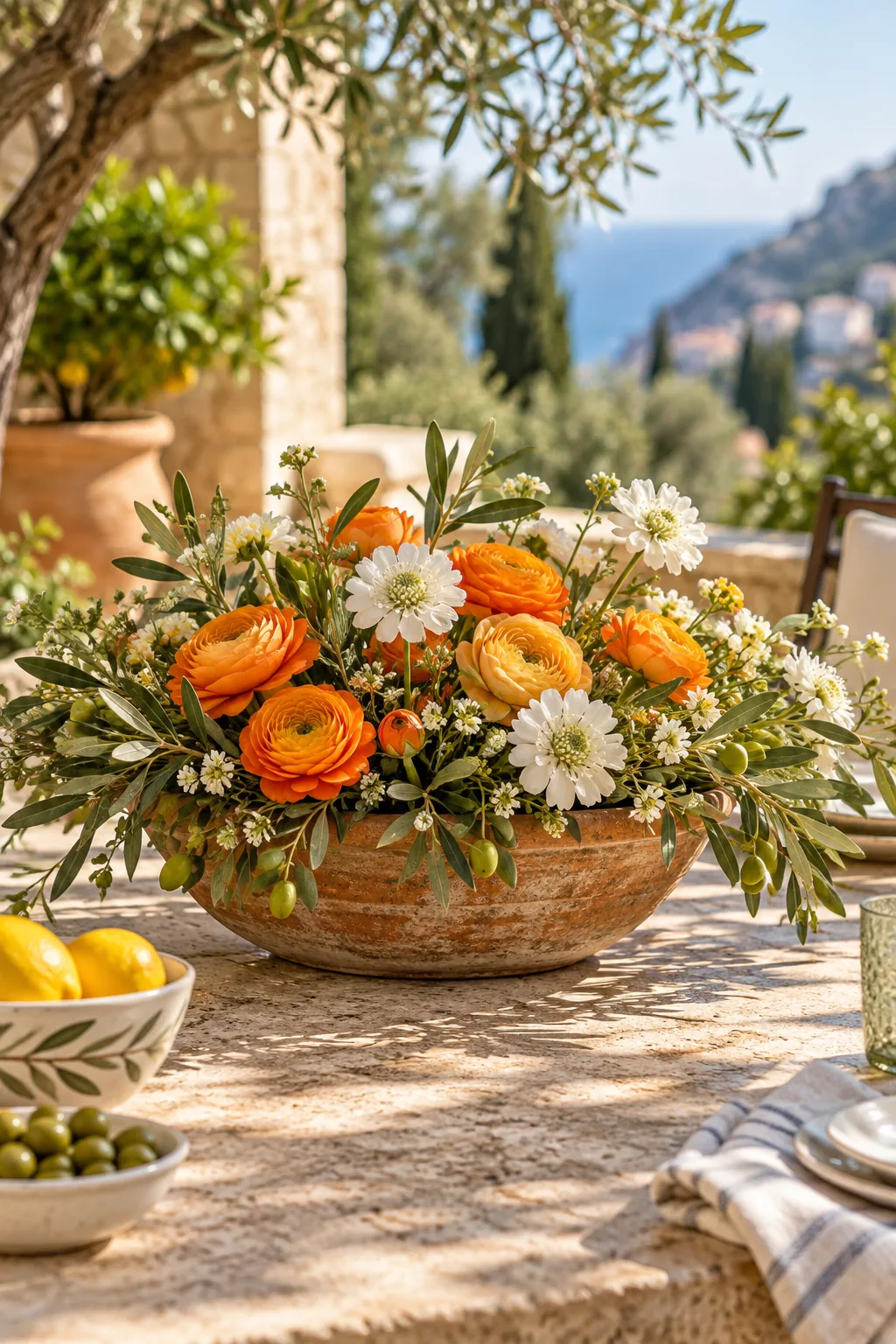
Mediterranean Citrus Terracotta Bowl: Olive branches and vibrant orange blooms bring a warm, coastal Italian feel to this rustic stone patio setting.
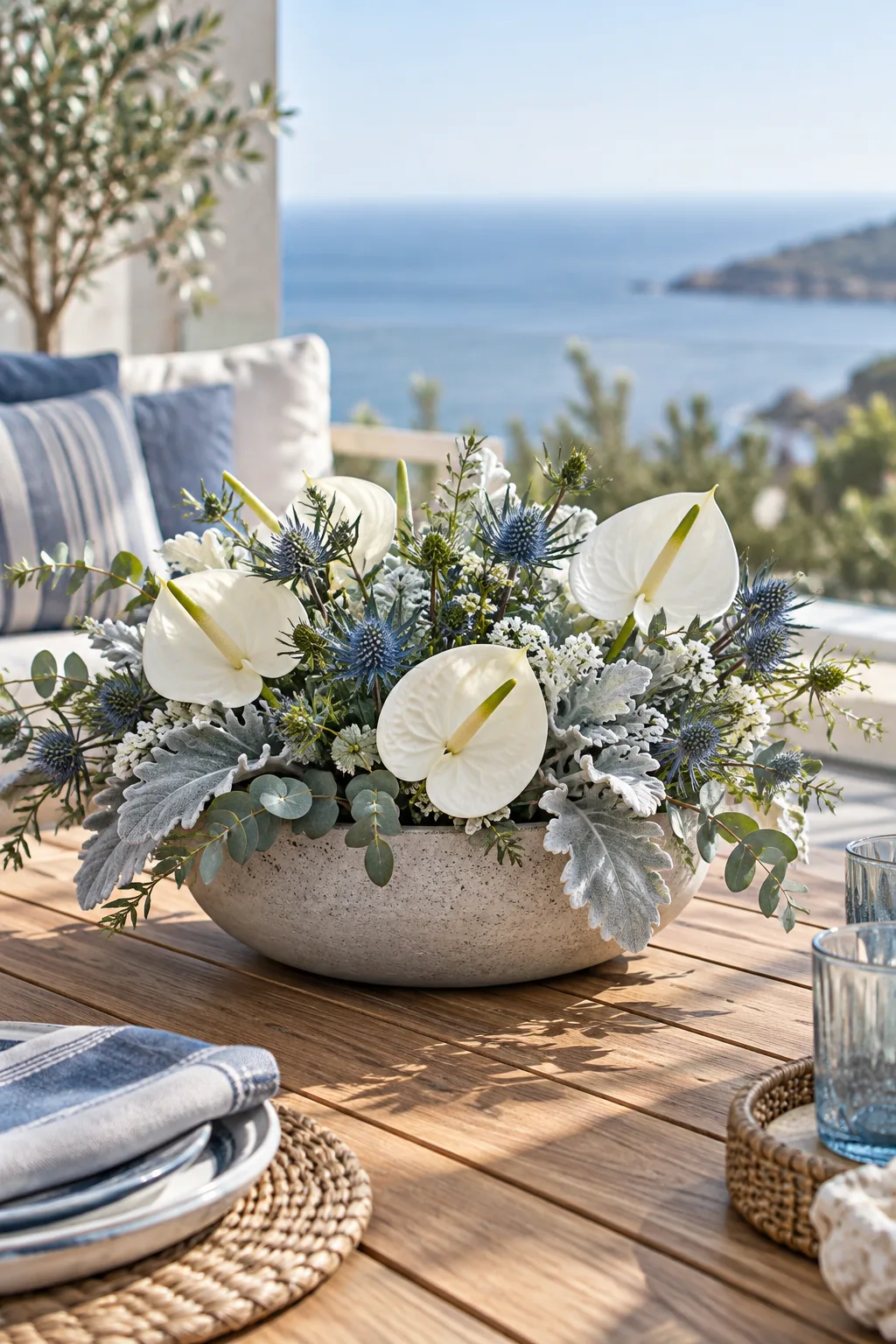
Modern Coastal Concrete Centerpiece: Structural white anthuriums and silver foliage create a minimalist, wind-resistant display perfect for a modern teak deck.
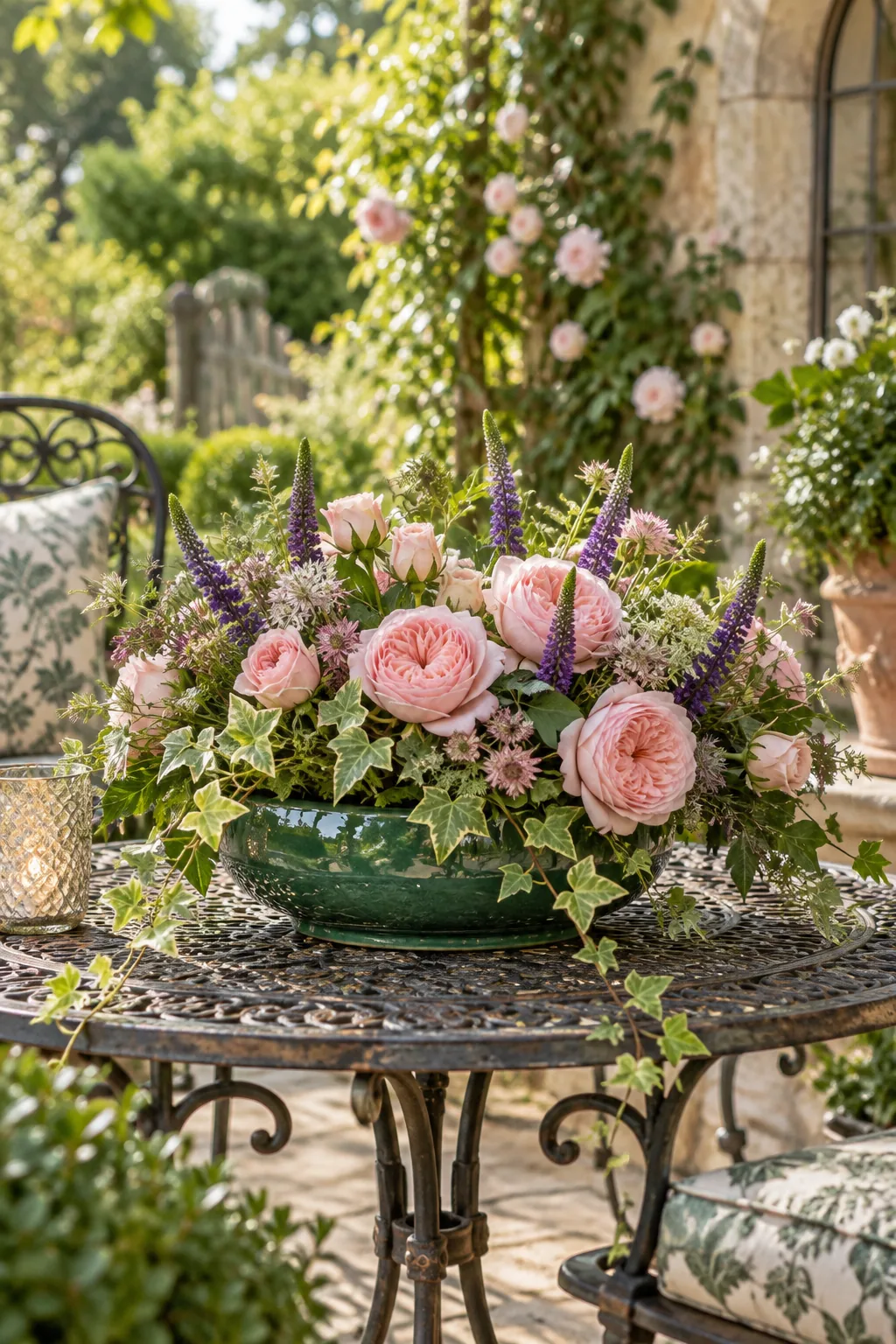
English Garden Glazed Bowl: Trailing ivy cools the water while lush pink garden roses add classic romance to a wrought iron dining setup.
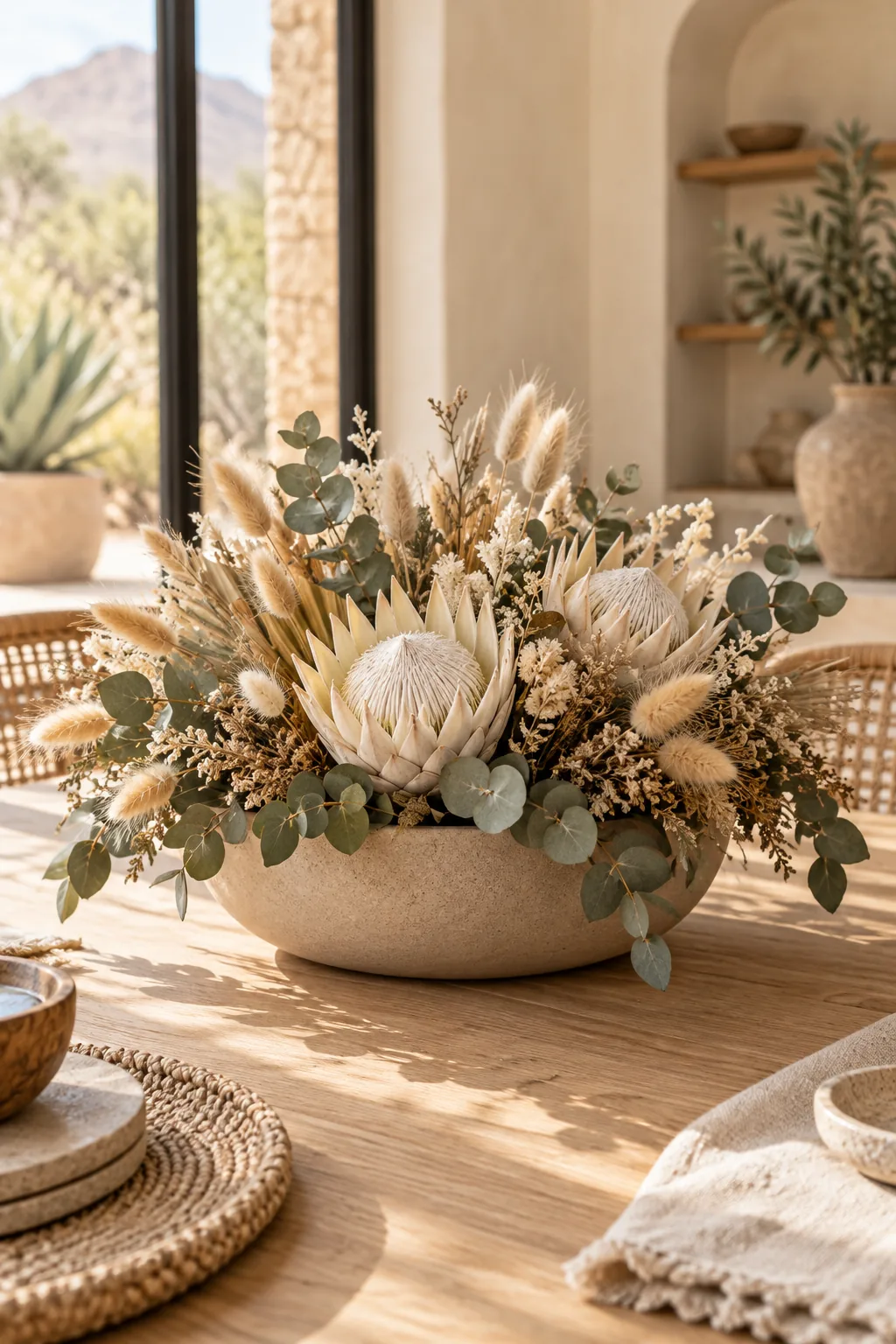
Desert Neutral Matte Arrangement: Drought-tolerant protea and dried grasses offer incredible heat resistance for scorching afternoon patios with zero wilting.
Daily Maintenance for Outdoor Centerpieces
Top off the water daily by pouring fresh, cool water directly through the tape grid. Constant evaporation means your stems will drink significantly more than they would inside an air-conditioned dining room.
Keep the bowl out of harsh midday sun when not entertaining, and remove any dropped leaves immediately to keep the reservoir pristine.