
How to Build a Stunning Wedding Candy Bar Without Overspending
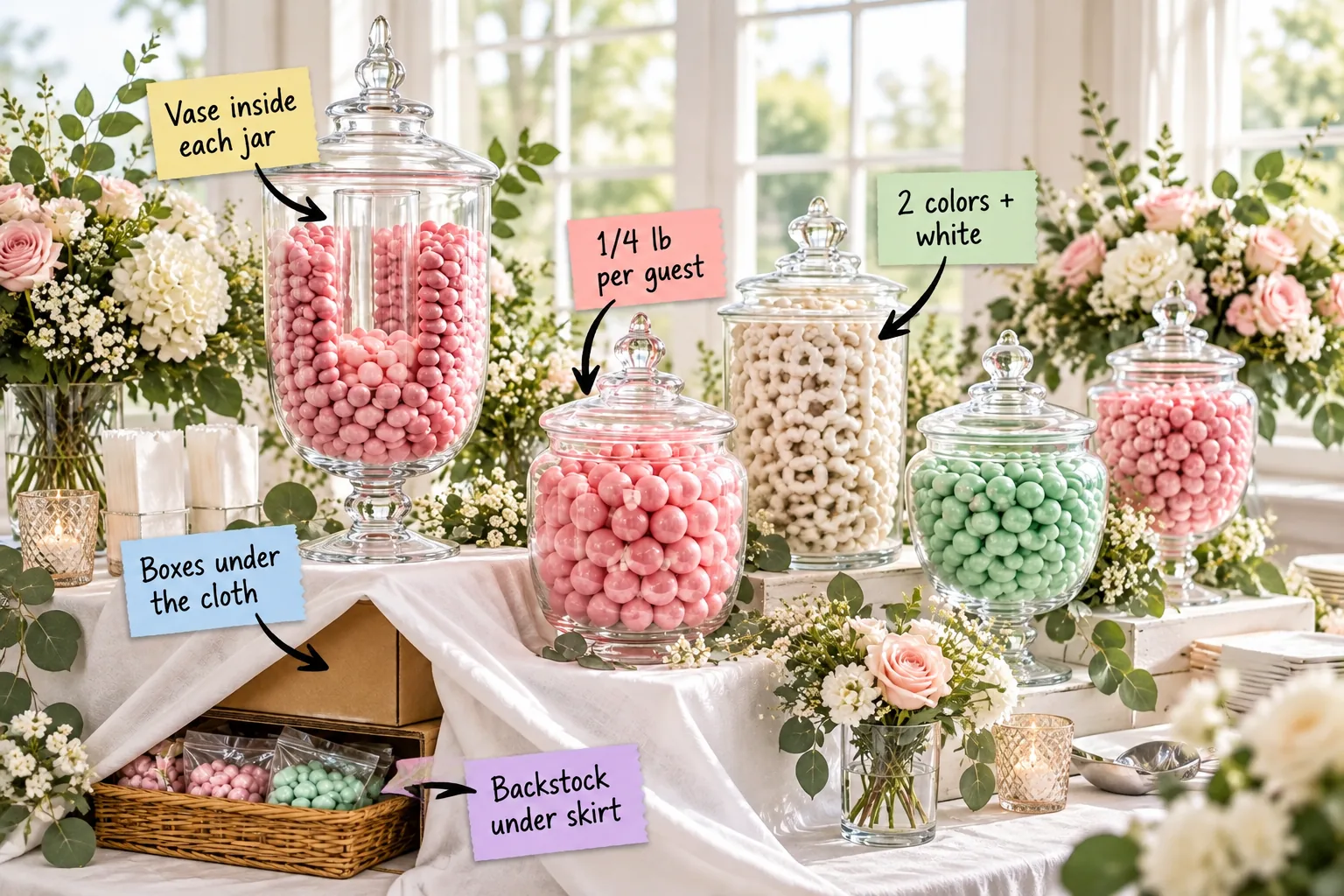
You will be able to calculate exactly how much candy to buy and set up a flawlessly tiered display using our printable pounds-per-jar quantity chart. I use these clever structural tricks in all my styling projects to create an abundant look without overbuying.
Building the Tiered Foundation
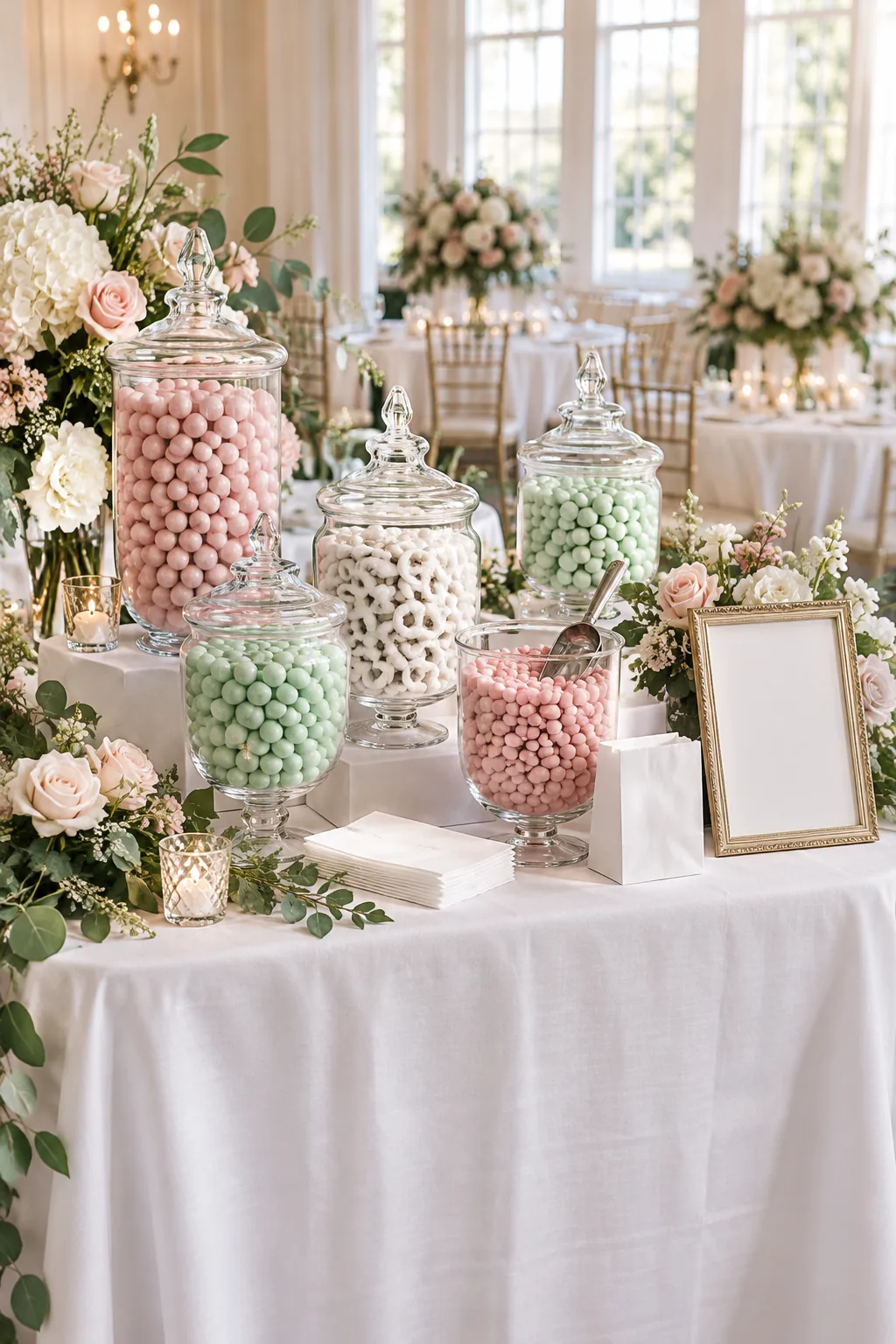
I always start my Boston event setups by placing sturdy cardboard box risers directly on the bare table. Draping a crisp white tablecloth over these hidden supports provides instant staggered heights.
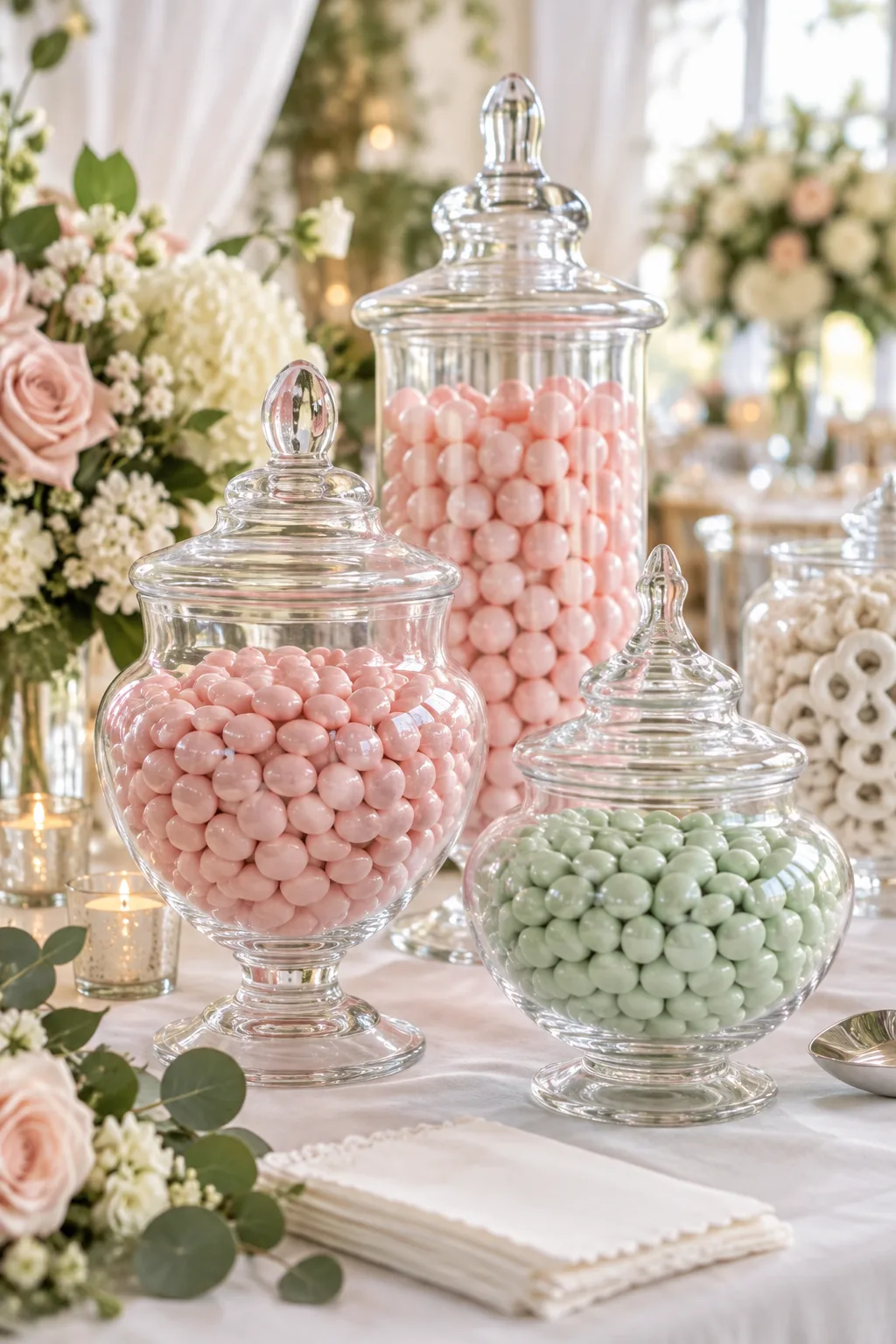
This hidden elevation ensures your back-row jars are fully visible to guests. The varied heights give the entire setup a professional, architectural presence rather than looking flat.
Selecting Your Apothecary Jars
Mix three to five different shapes of clear glass apothecary jars to keep the visual landscape interesting. You must ensure the neck opening of every jar is at least 4 inches wide.
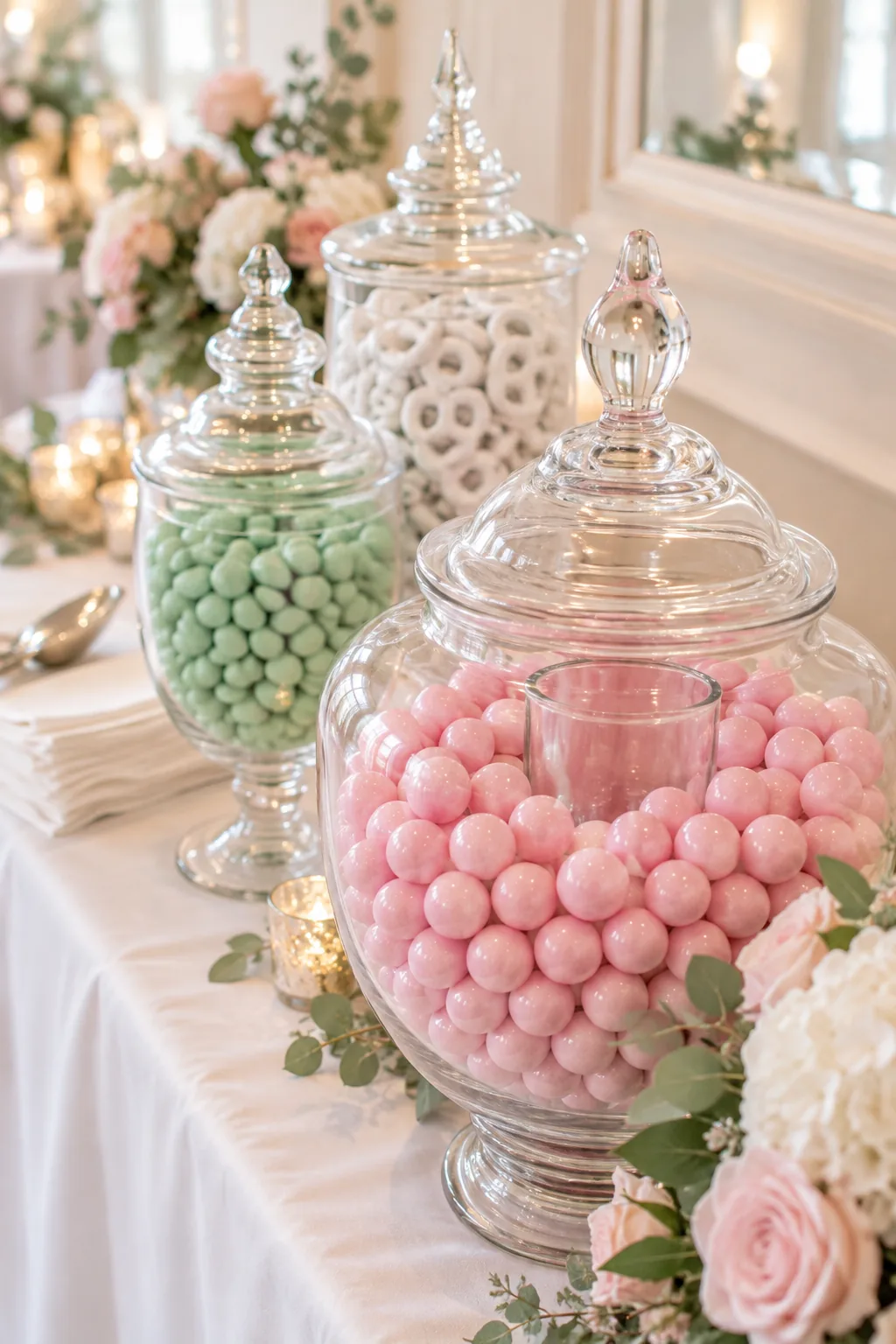
A wide opening guarantees a standard metal scoop can easily reach the bottom. Mixing tall, slender silhouettes with wide, squat bowls prevents the display from feeling repetitive.
The Hidden Vase Trick
Place a slim, clear cylinder vase upside down inside your largest jars before adding any sweets. Pouring candy only into the ring between the vase and the jar walls creates a brimming illusion while using 50 percent less product.
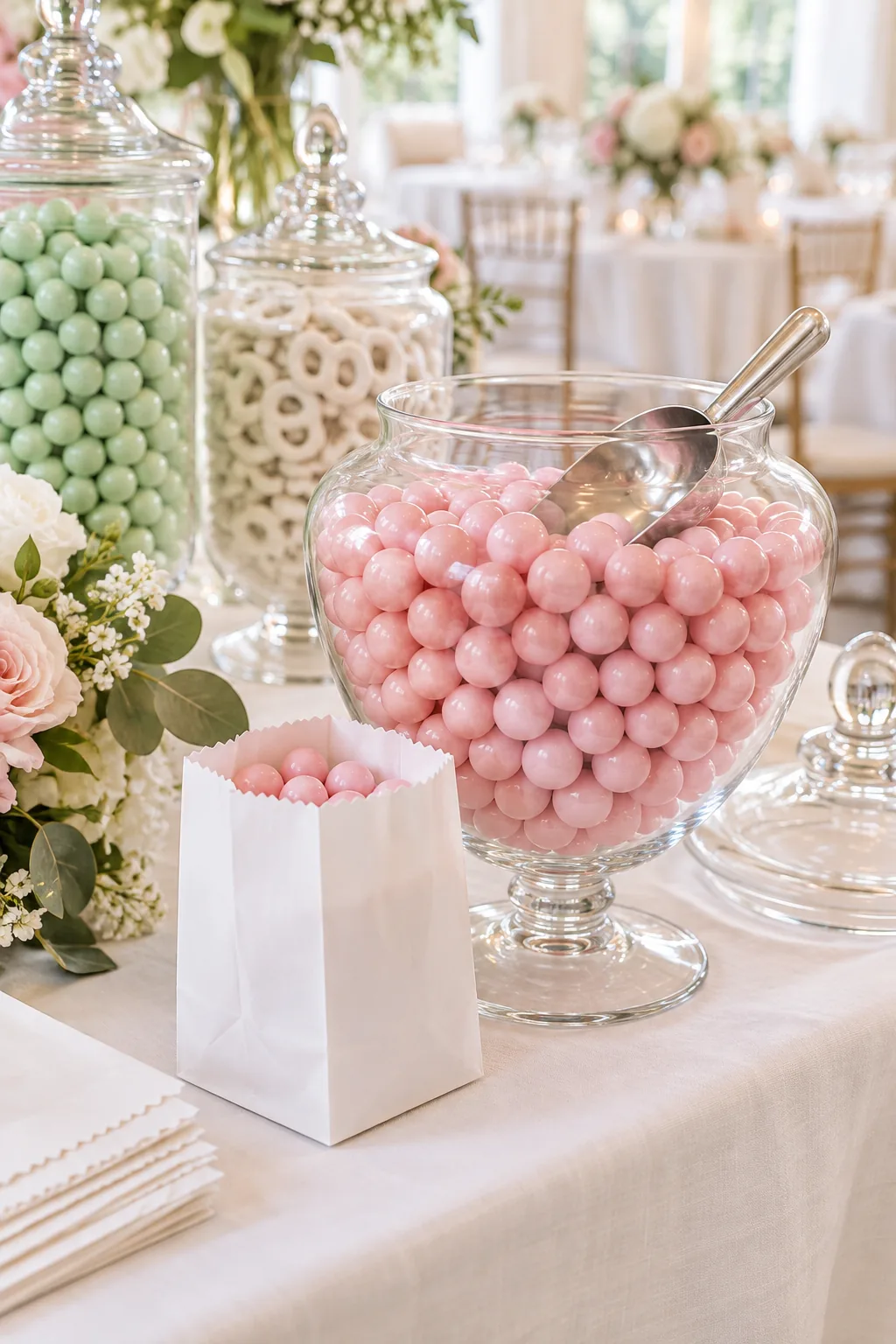
Executing this brilliant volume hack requires the right interior glass piece. You must keep the trick completely invisible to your guests for the magic to work.
Calculating Total Candy Needed
Plan for exactly 1/4 pound of candy per guest to ensure everyone gets a generous favor. This strict formula prevents you from hauling massive, heavy leftovers back home.
| Guest Count | Total Candy Needed | Standard Jars Needed |
|---|---|---|
| 50 guests | 12.5 lbs | 3–4 jars |
| 100 guests | 25 lbs | 5–6 jars |
| 150 guests | 37.5 lbs | 7–8 jars |
Following these exact ratios keeps your budget perfectly in check. You provide just enough abundance to look spectacular without wasting a single dollar on excess stock.
The Candy Quantity Cheat Sheet
Take the guesswork out of ordering with our printable reference guide, which I rely on for every wedding I style. This one-page chart details the capacity of standard jar sizes with and without the vase insert.
Having exact refill amounts listed on paper keeps you completely organized. You can hand the sheet straight to a bridesmaid so they know exactly what to restock.
Choosing a Cohesive Palette
Stick to a strict visual palette of two main colors plus white to keep the table looking elegant rather than chaotic.
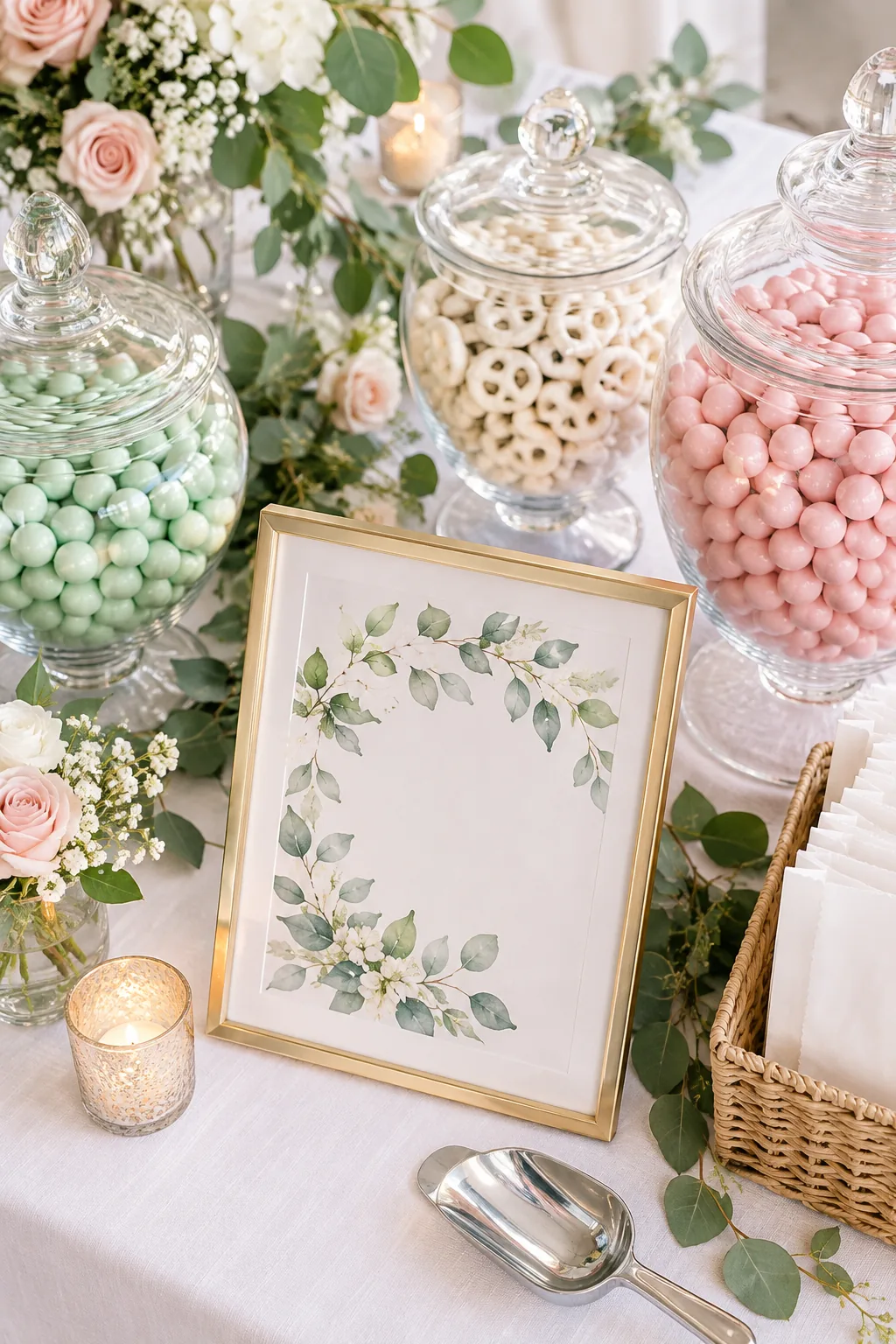
Using white yogurt-covered pretzels, mints, or coated almonds acts as vital visual breathing room. This neutral break allows vibrant hues like blush pink and mint green to truly pop.
Stashing Refills Out of Sight
Keep sealed backup bags of your most popular candies in a shallow basket hidden directly beneath the draped table skirt.
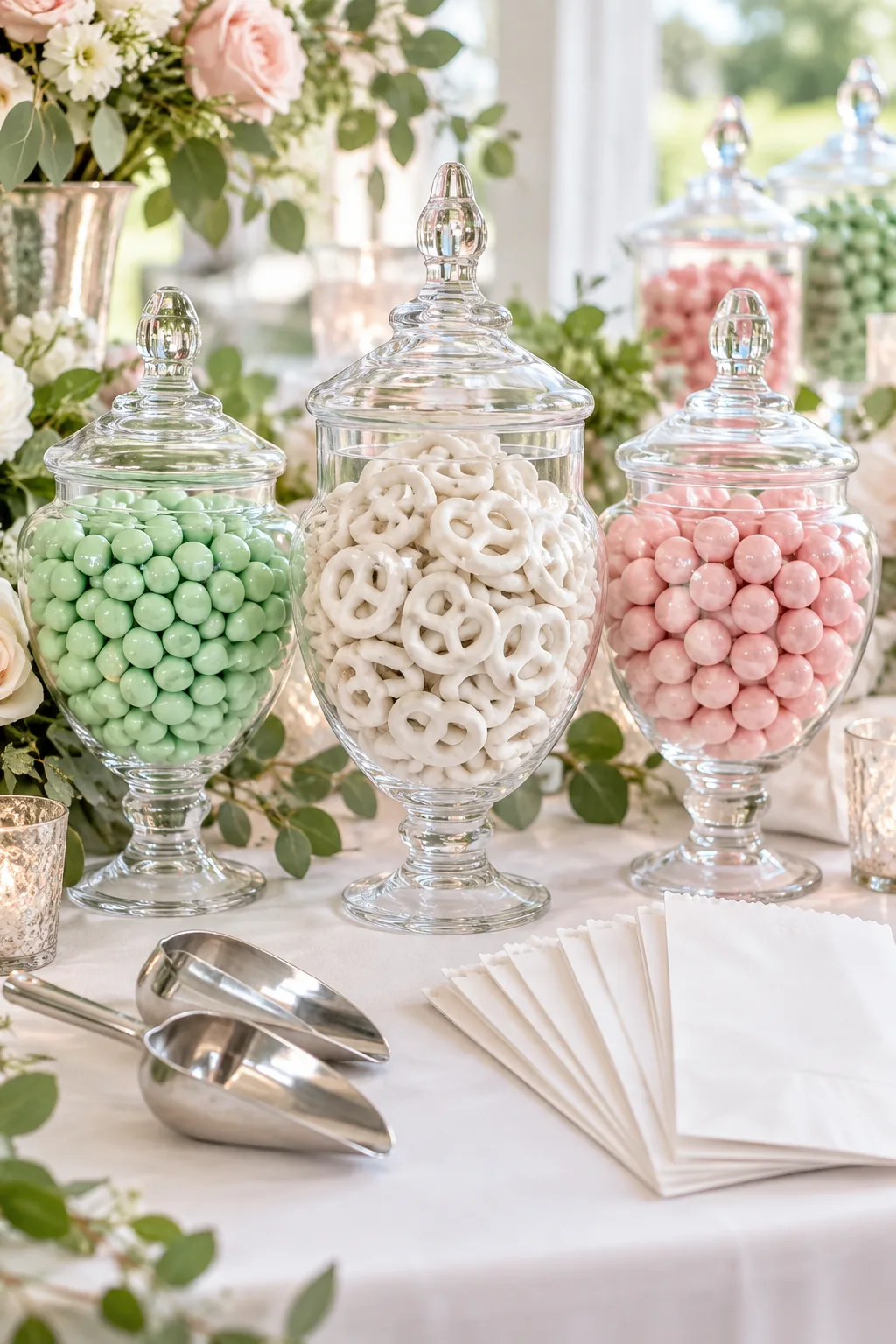
This strategic placement allows a coordinator to quickly and discreetly top off jars. You completely avoid hauling bulky cardboard boxes across a crowded reception room.
Candy Bar Styles for Every Reception
Discover how changing your containers and color palette completely transforms the mood of the dessert station.
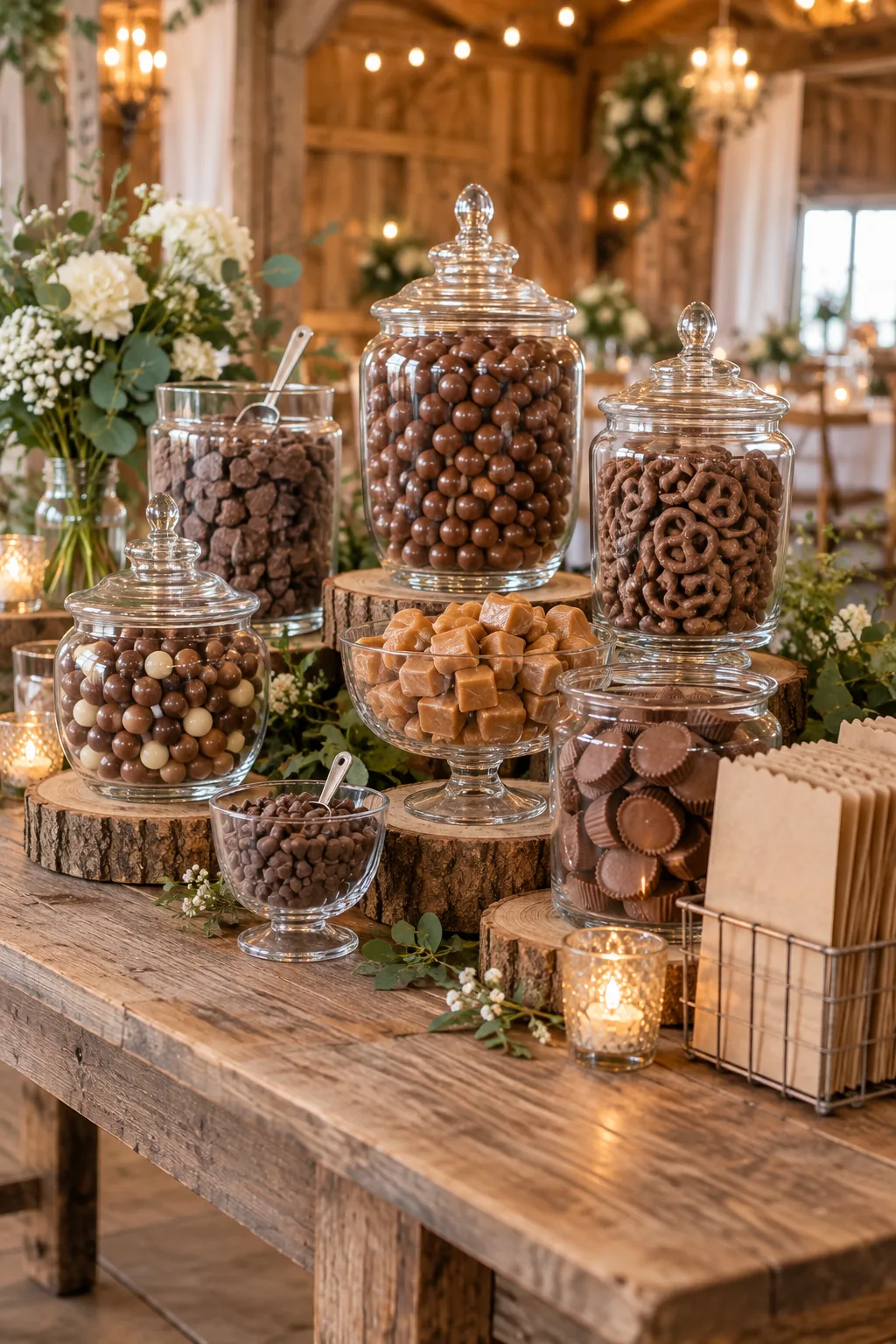
Rustic Kraft and Chocolate: Warm caramels and rich chocolates look right at home on natural wood slices with simple kraft paper bags.
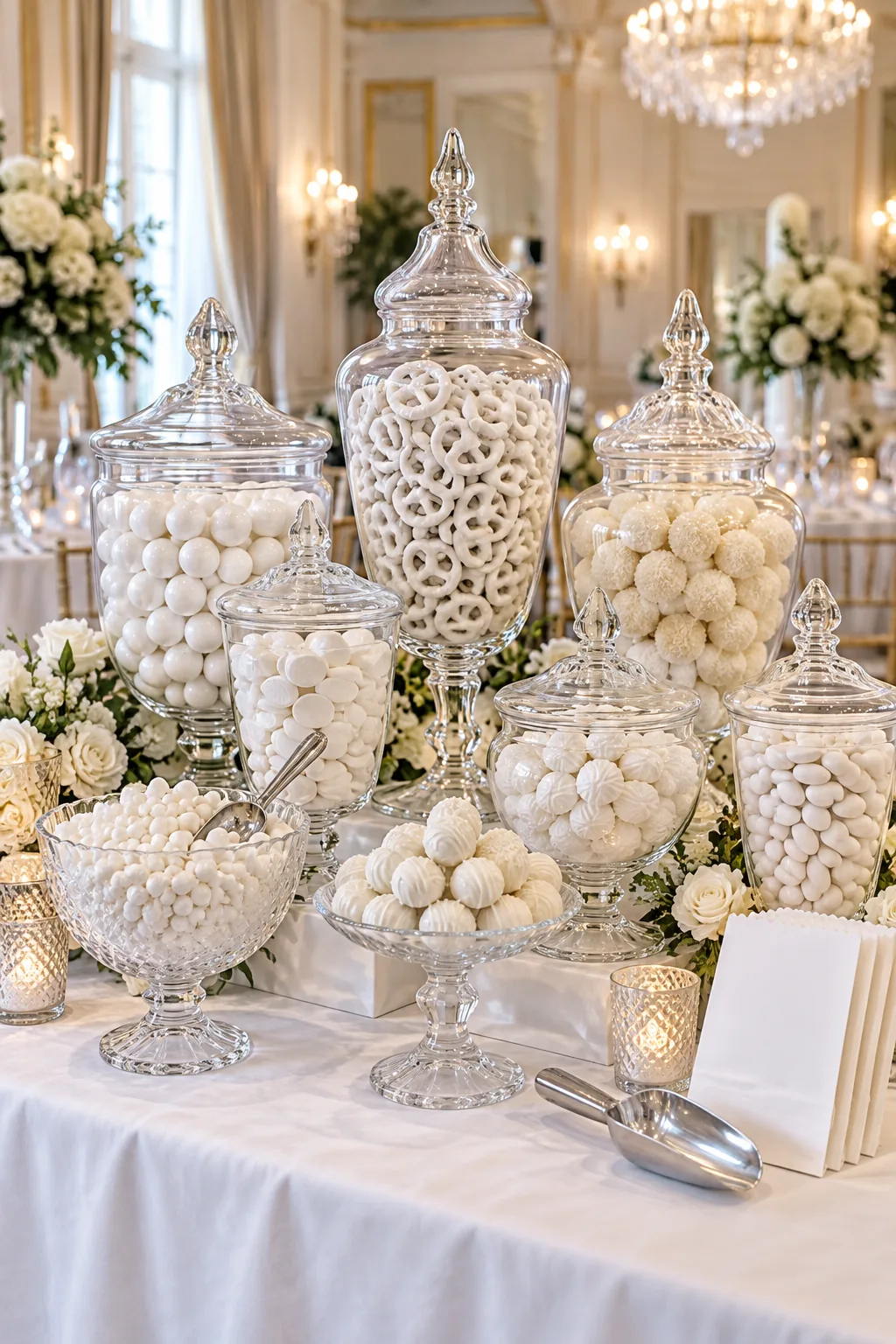
Monochromatic White Elegance: An all-white assortment in cut crystal jars delivers instant formality for a classic ballroom reception.
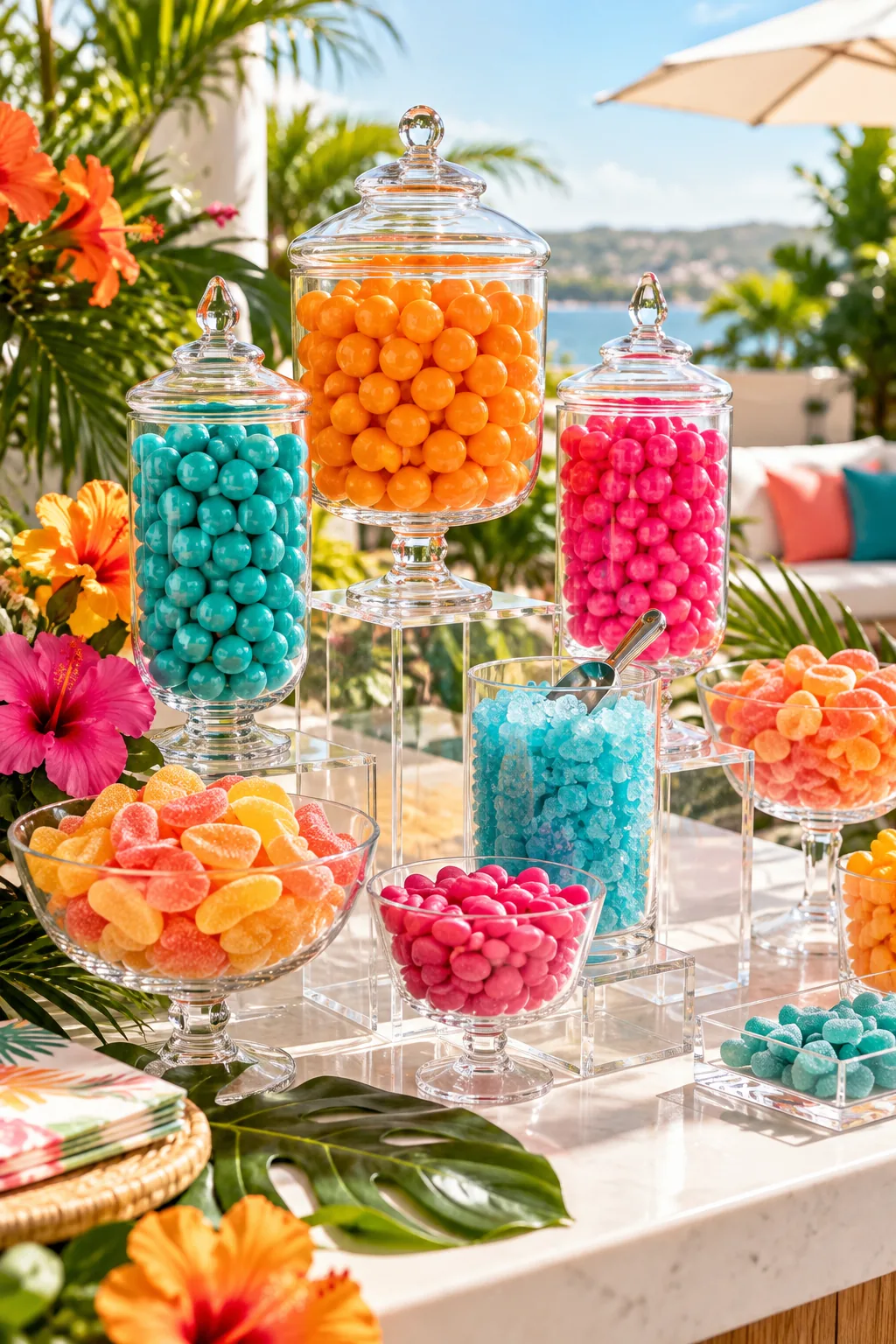
Vibrant Tropical Brights: Punchy tropical colors pop beautifully when displayed on modern, invisible acrylic risers in natural sunlight.
Scoops, Bags, and Guest Flow
Provide one dedicated metal scoop or pair of tongs per jar, a rule I enforce strictly to prevent flavor mixing. Fan out flat-bottomed paper bags at the front of the table so guests can easily serve themselves.
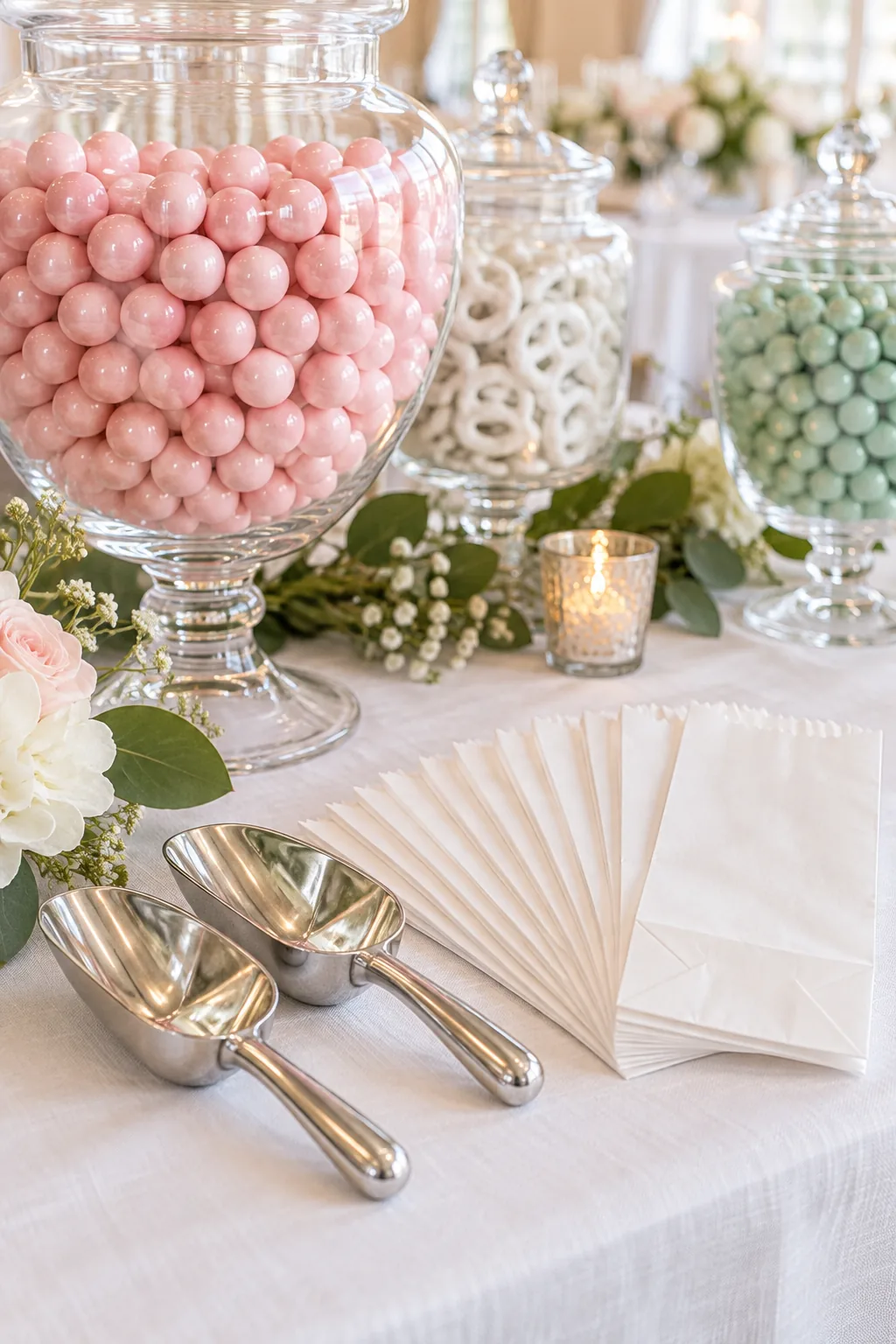
Before the first guest approaches the table, run through this quick final verification. Ensuring the station is fully ready for service prevents bottlenecks and keeps the line moving.