
11+ Brilliant Home Salad Bar Ideas for Your Next Party
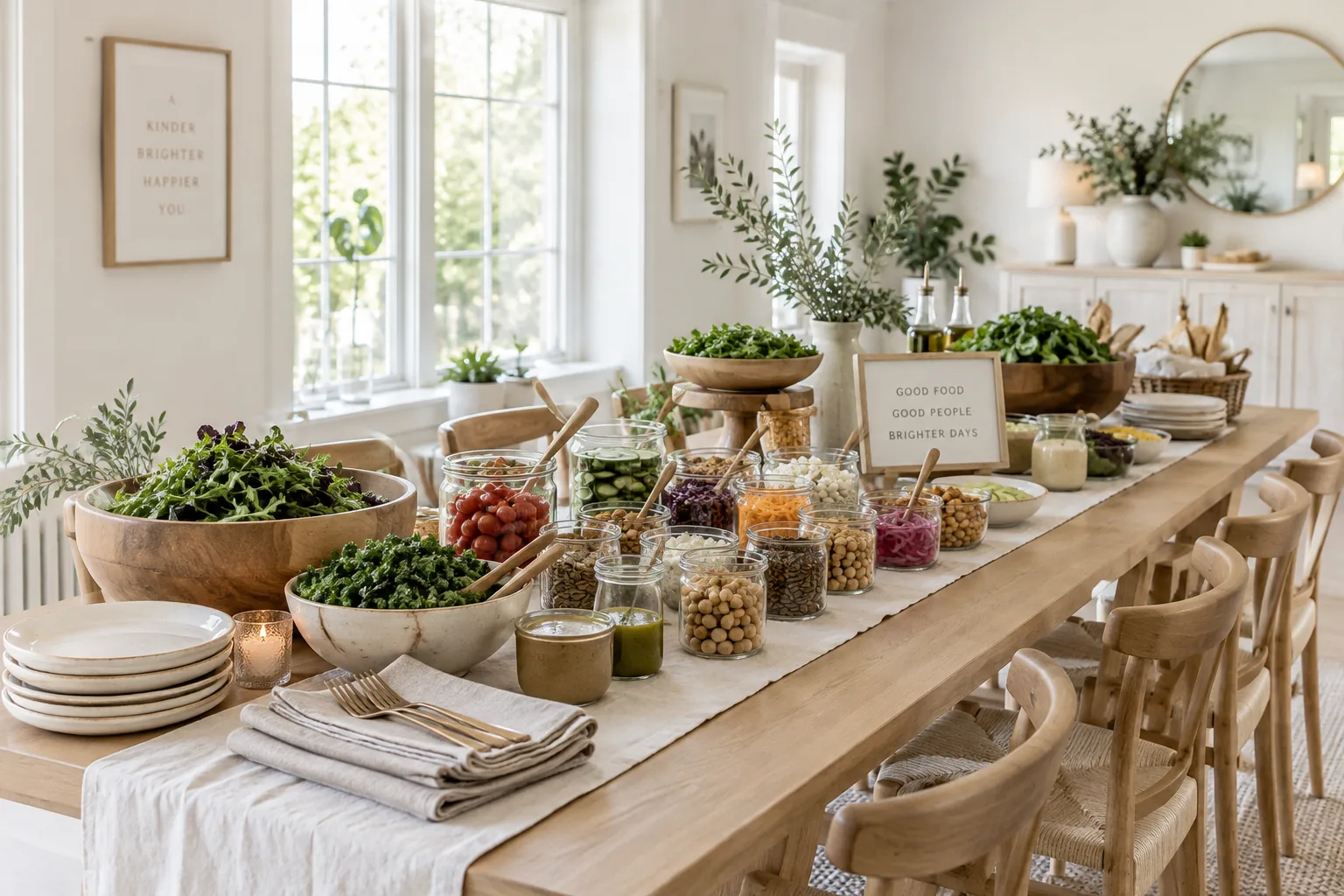
Setting up a home salad bar is my absolute favorite way to feed a crowd without spending all day at the stove. You just need a few smart styling tricks to make those simple bowls of greens and toppings look incredibly inviting.
1. Use Matching Jars
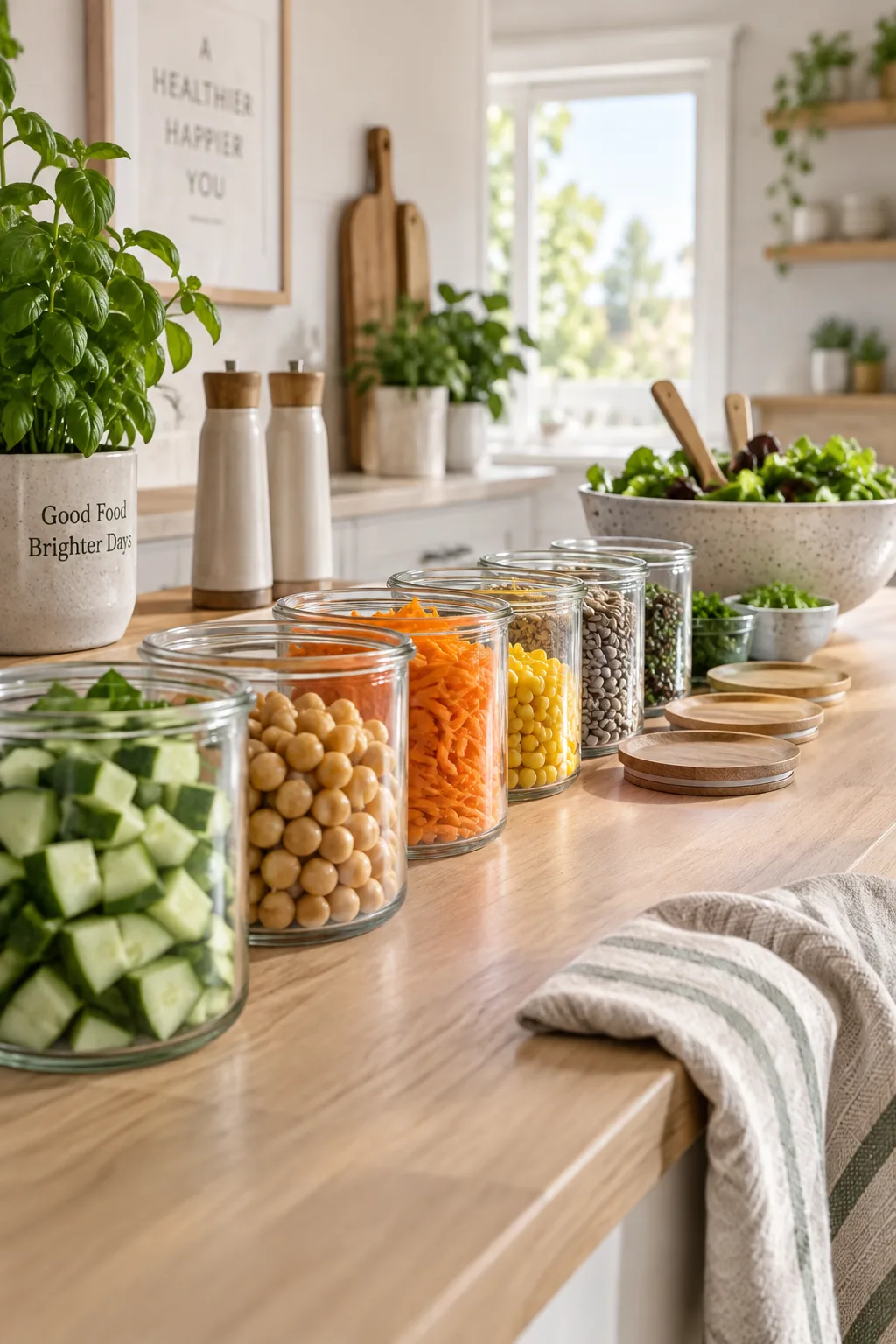
I always grab my collection of matching glass jars when prepping toppings the night before. You just pop the lids off right before guests arrive and line them up next to the greens.
Why it works: Uniform containers instantly make a chaotic mix of ingredients look like a cohesive, intentional display.
2. Start With a Big Table
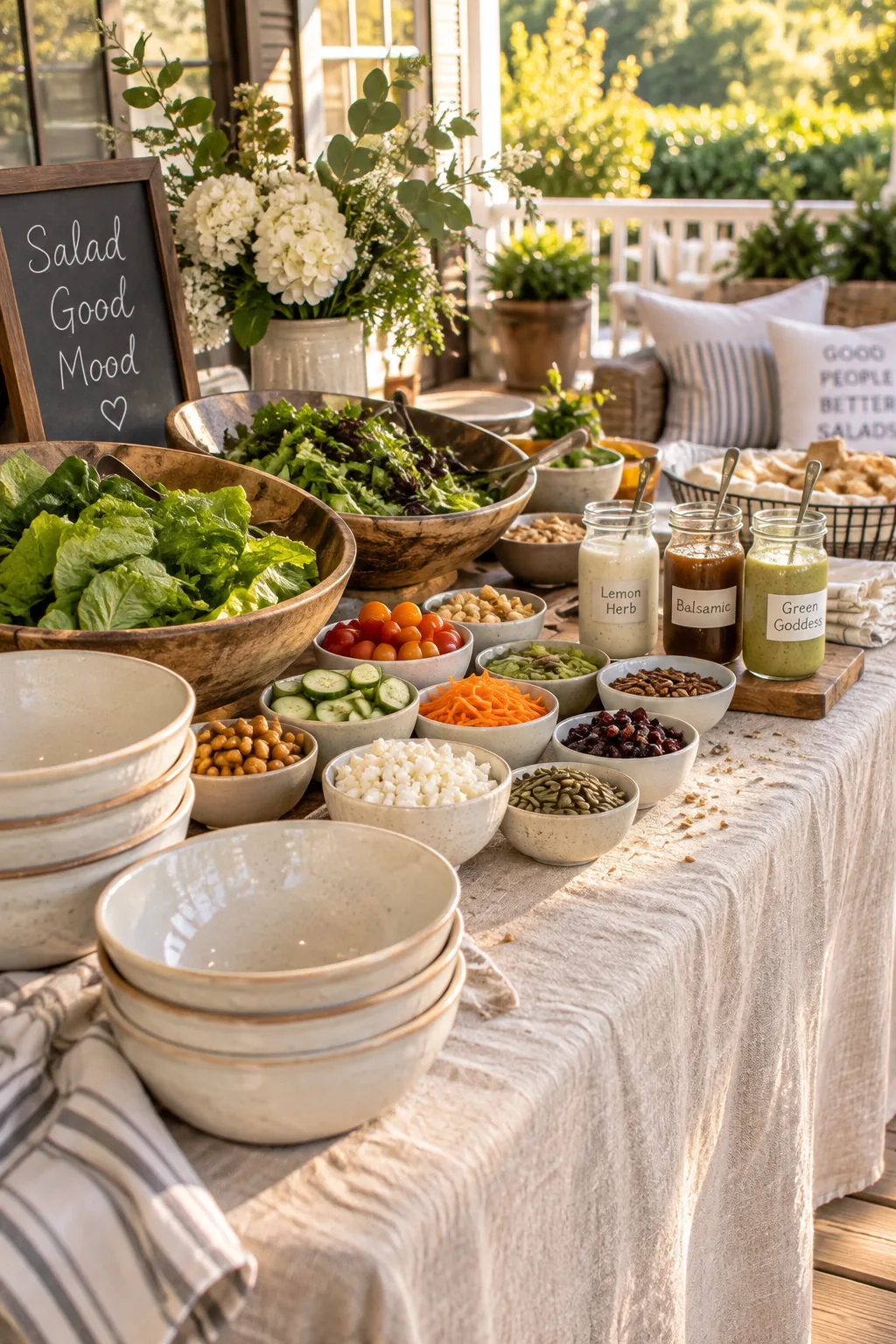
A standard six-foot folding table gives you exactly enough room for two large bowls of greens, ten toppings, and three dressings. It keeps the line moving without feeling cramped.
Cover it with a linen drop cloth instead of a standard tablecloth. The heavy texture hides the folding legs perfectly and catches inevitable spills.
Add a stack of oversized bowls at the very front. People need plenty of room to toss their creations.
3. Style by Color
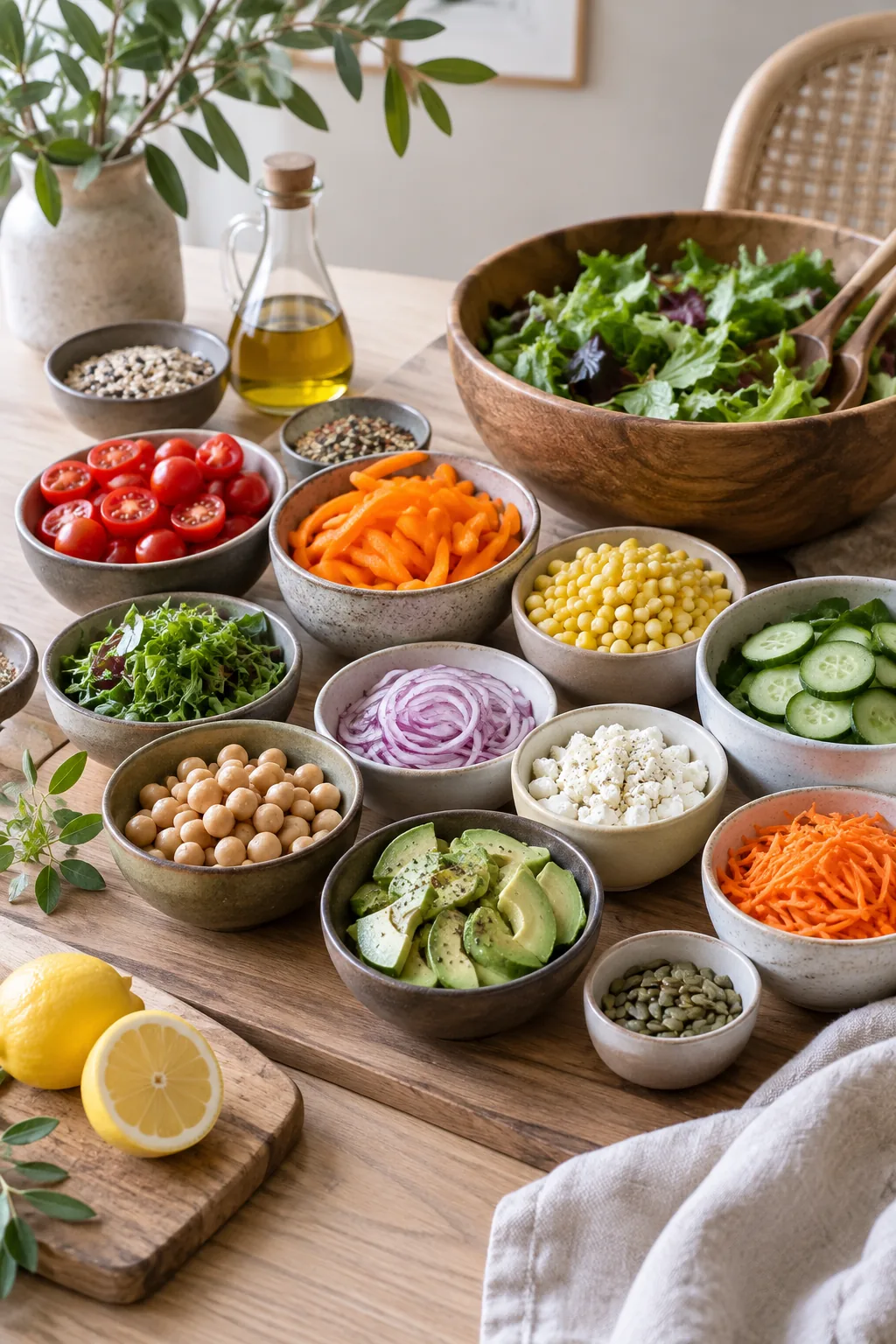
Group your salad toppings by color rather than food category to create a stunning visual gradient. Place bright red tomatoes next to orange bell peppers, followed by yellow corn and green cucumbers. This simple shift turns basic raw vegetables into a gorgeous centerpiece.
It makes the whole spread look incredibly fresh.
4. Anchor With Wood
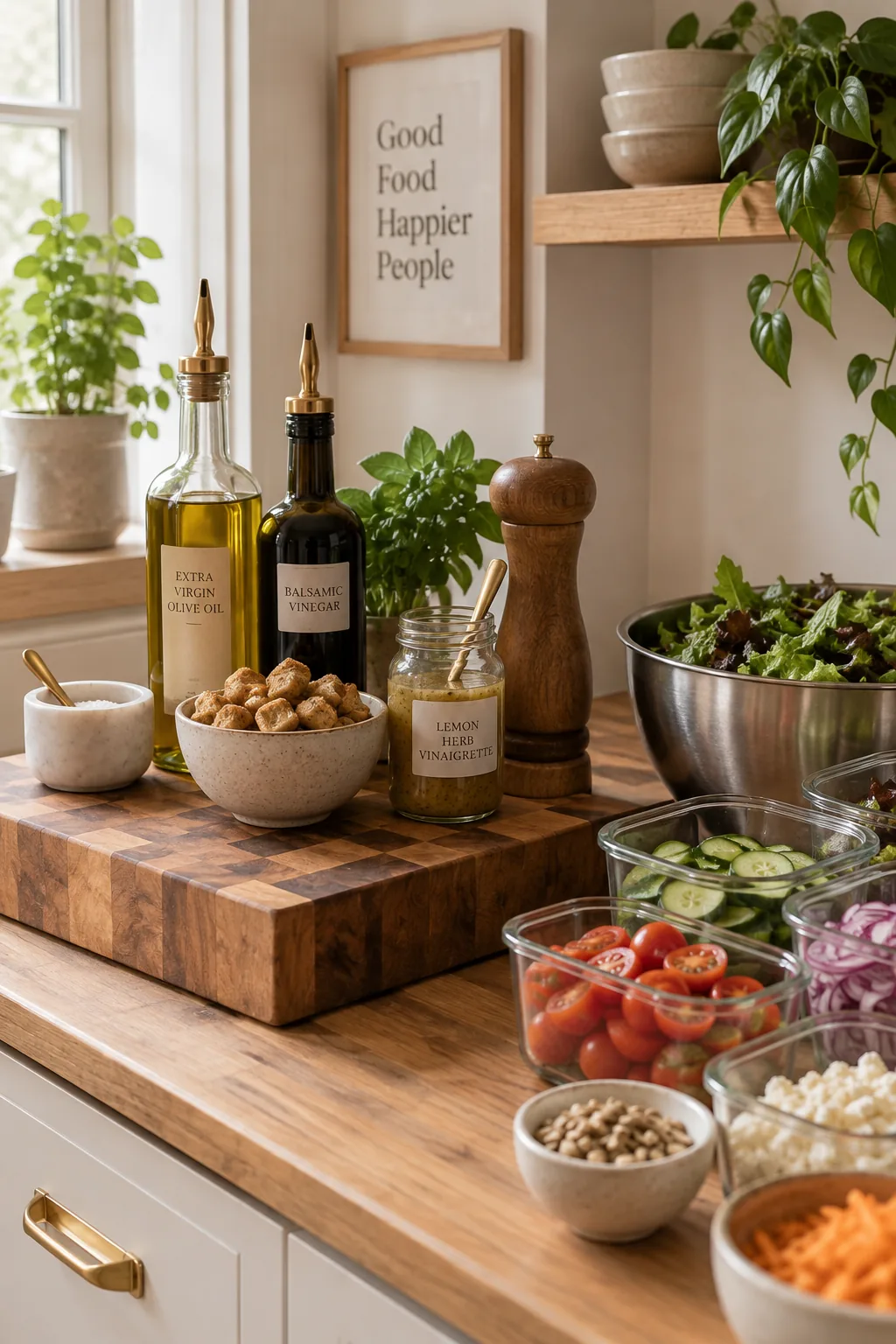
Wooden cutting boards naturally warm up the look of stainless steel bowls and glass containers. You can use a massive edge-grain board as a base to anchor your dressing bottles and croutons in one neat zone.
5. Elevate the Bowls
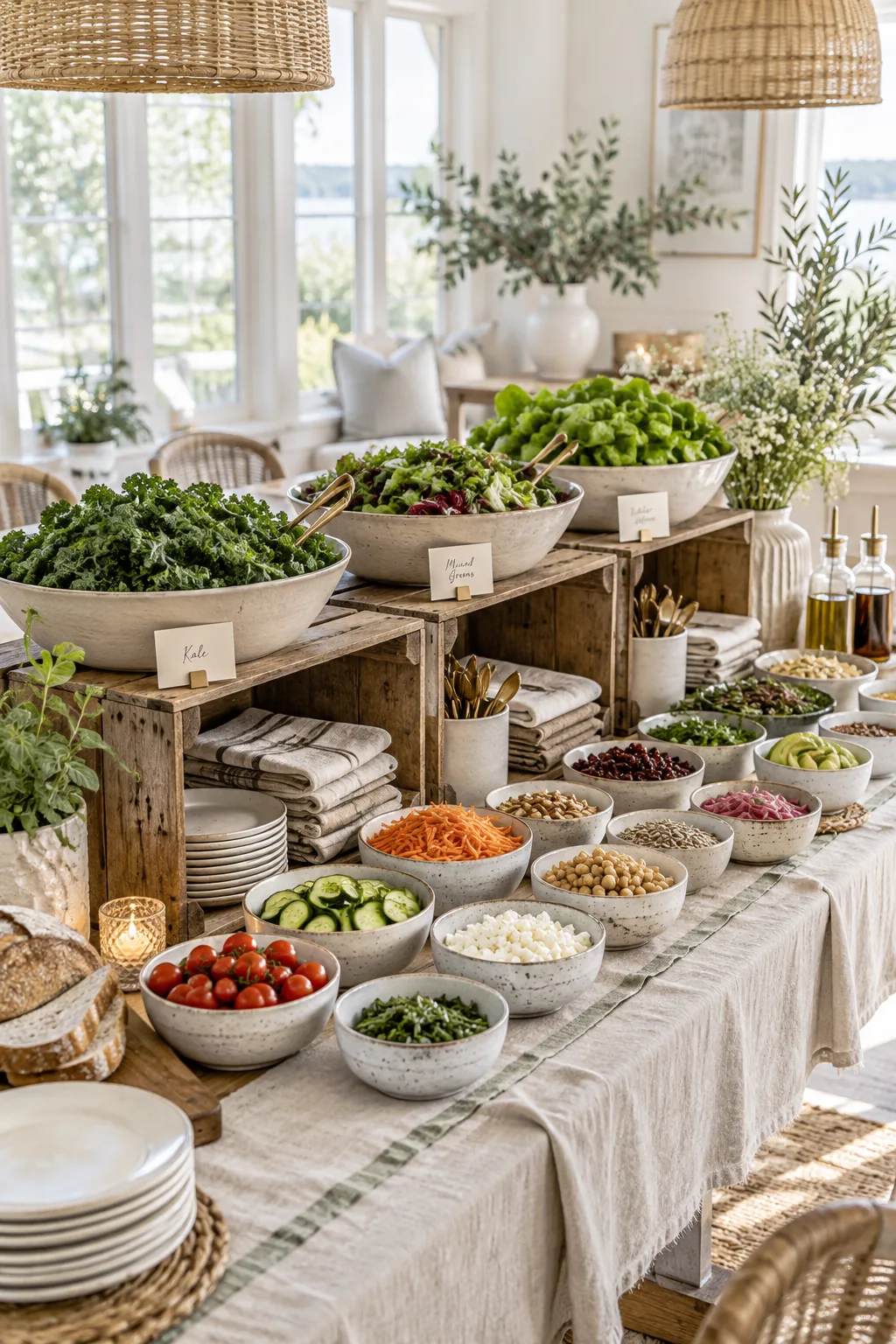
Varying the heights of your serving dishes is what keeps the table from looking flat and boring. Stack a few vintage wooden crates to elevate the bowls of lighter greens at the back of the table. You can tuck extra napkins and serving tongs into the empty spaces underneath. This setup naturally guides the eye across the entire spread while saving valuable counter space.
6. Manage the Tongs
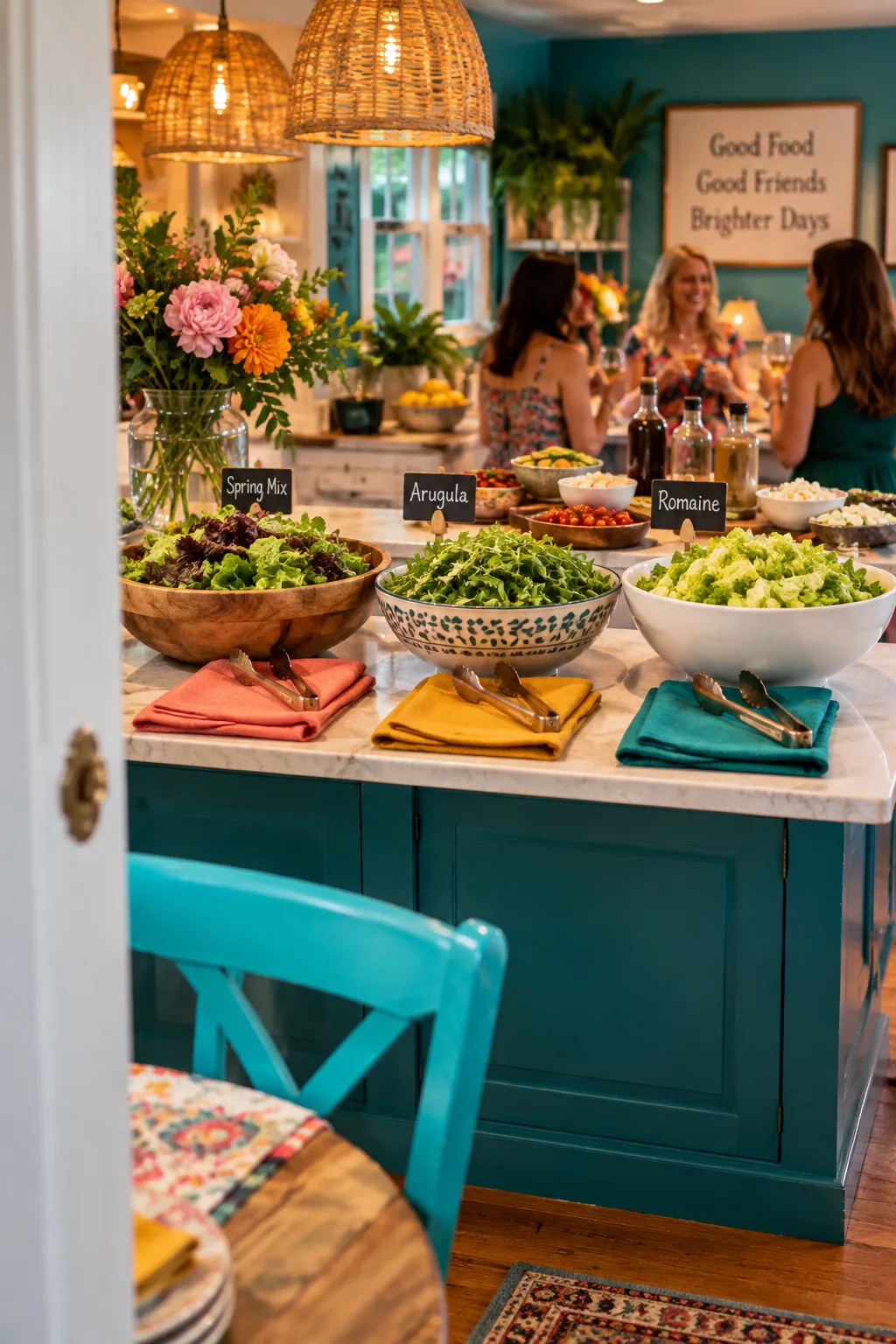
Three distinct types of greens require at least three different sets of long-handled tongs. Keep the utensils resting on a folded cloth napkin rather than letting them slide into the bowls. It stops the handles from getting sticky with dressing or wet from washed lettuce. Your guests will definitely appreciate keeping their hands clean while they build their plates.
7. Label the Dressings
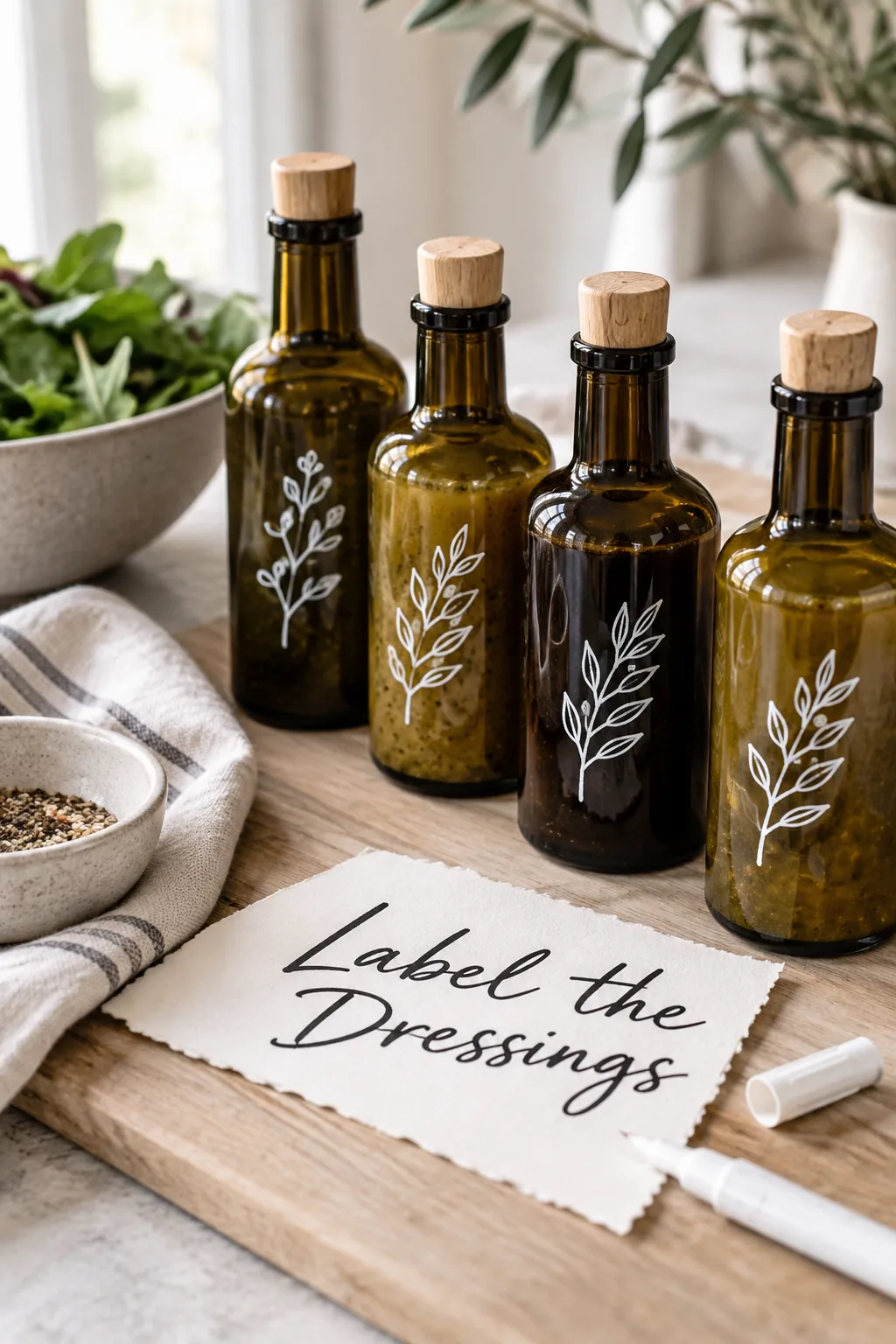
Label your homemade dressings using a white paint pen directly on dark glass bottles. It rubs right off with warm water later and looks much sleeker than sticky paper tags.
- Balsamic Vinaigrette
- Creamy Ranch
- Lemon Tahini
8. Serve in Skillets
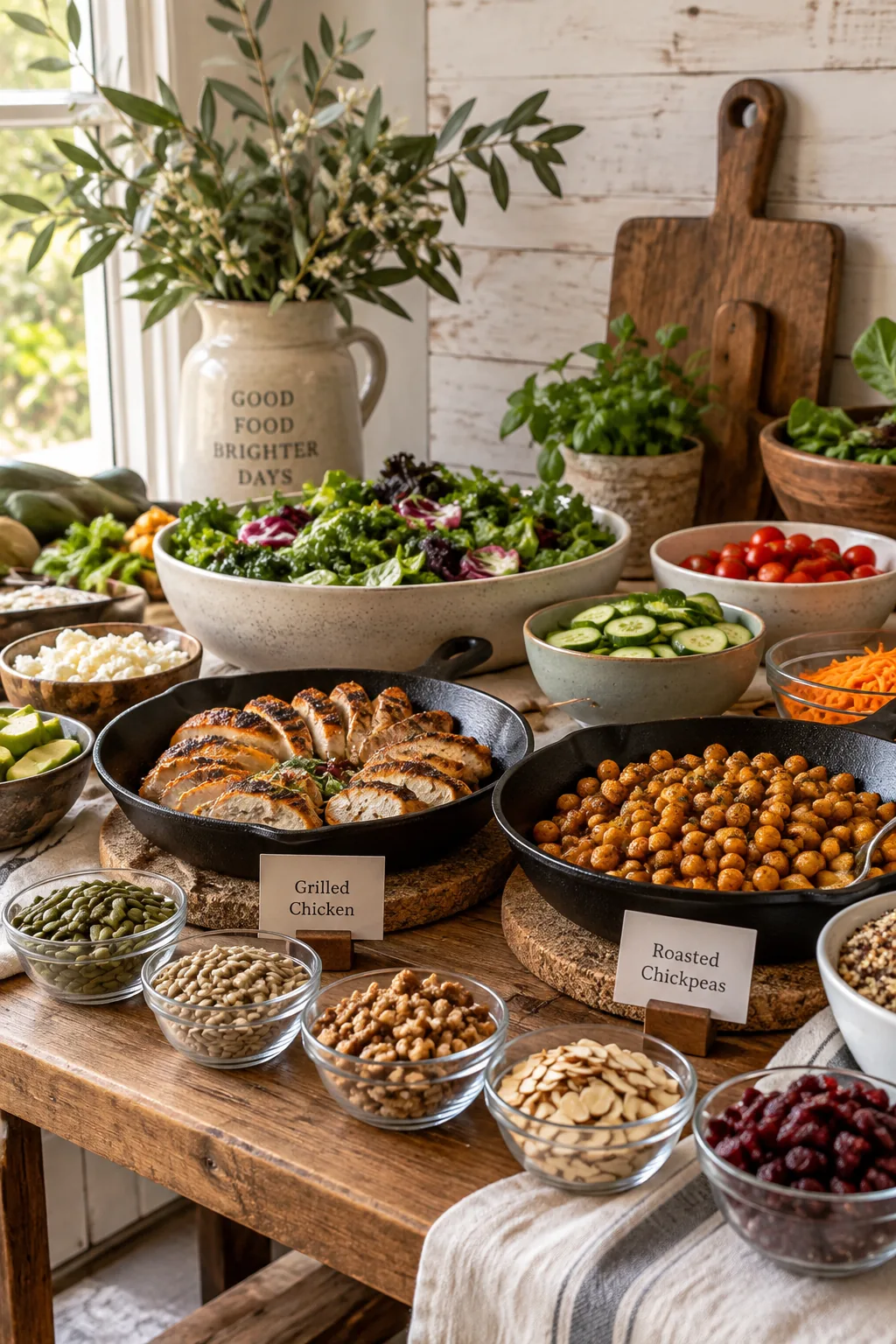
A rustic farmhouse aesthetic comes together instantly when you serve your proteins in cast iron skillets. Even if the grilled chicken or roasted chickpeas are served cold or room temperature, the heavy black iron anchors the lighter elements on the table. You can place the skillets on thick cork trivets to protect your surfaces and add another layer of texture. Surrounding the heavy pans with delicate glass bowls of seeds and nuts creates a really beautiful contrast. It feels hearty and substantial before anyone even takes a bite.
9. Drain the Liquids
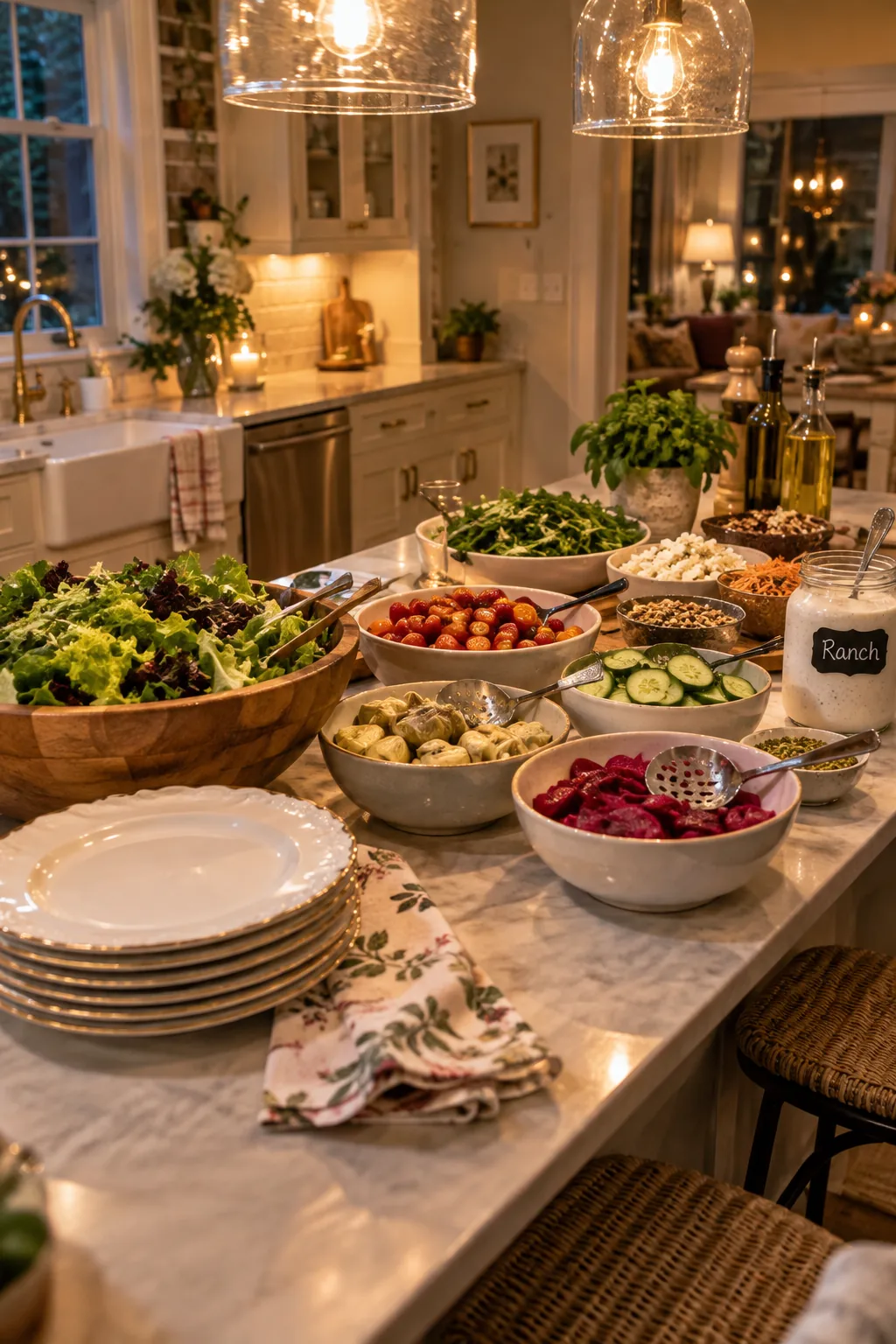
People tend to skip the messy, wet ingredients like marinated artichokes or beets if they don't have the right serving tools. Placing small slotted spoons in these specific bowls lets the excess liquid drain away before it hits the plate. Your guests end up with crisp salads instead of a soggy pool at the bottom of their bowls.
Nobody wants pink beet juice bleeding into their ranch dressing.
10. Build a Crunch Zone
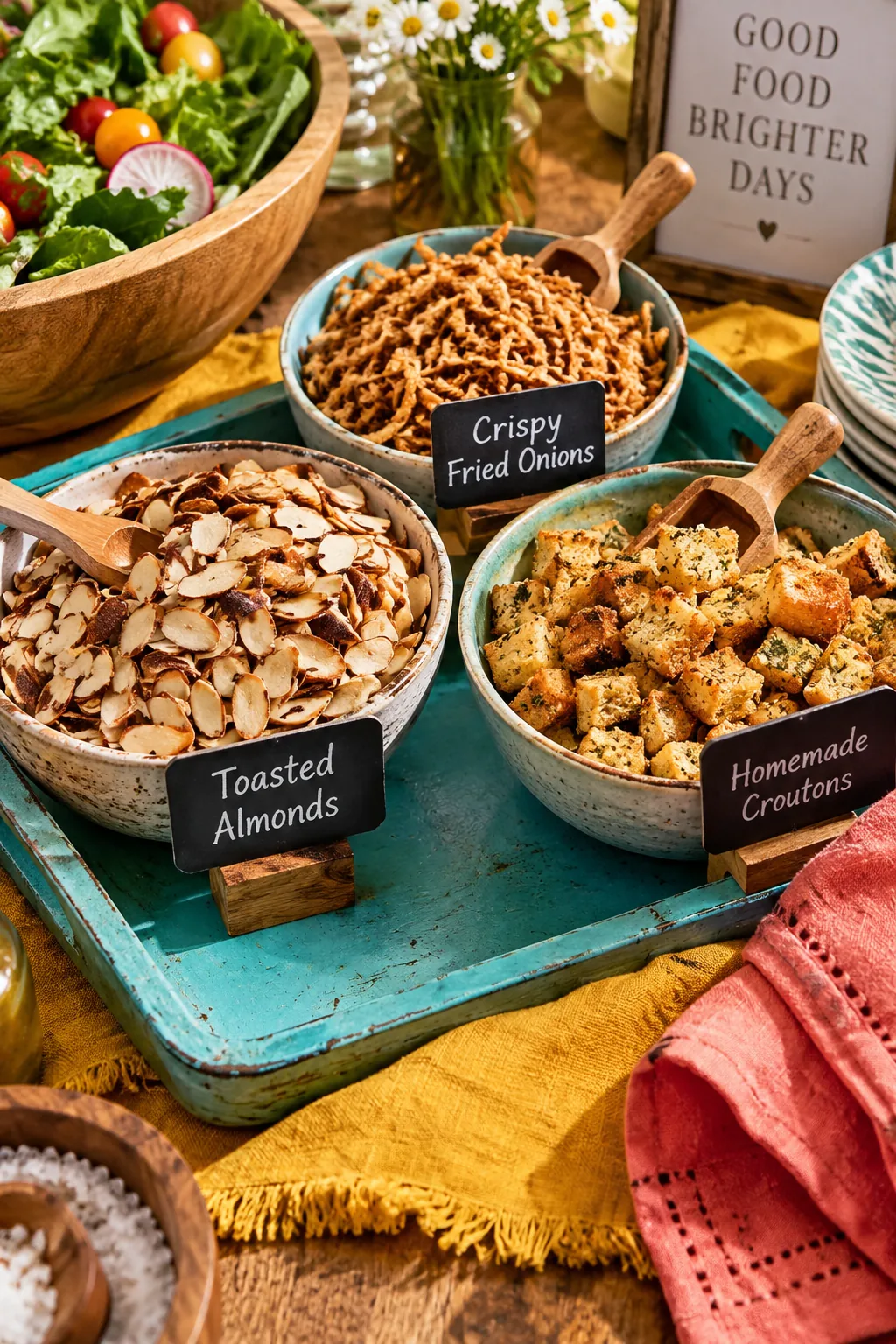
I always keep a dedicated crunch zone at the very end of my salad line.
This is where the toasted almonds, crispy onions, and homemade croutons live. Keeping them far away from the wet ingredients ensures they stay perfectly crisp all evening.
Use tiny wooden scoops for these dry goods to add a fun, mercantile vibe to the table.
11. Display Fresh Herbs
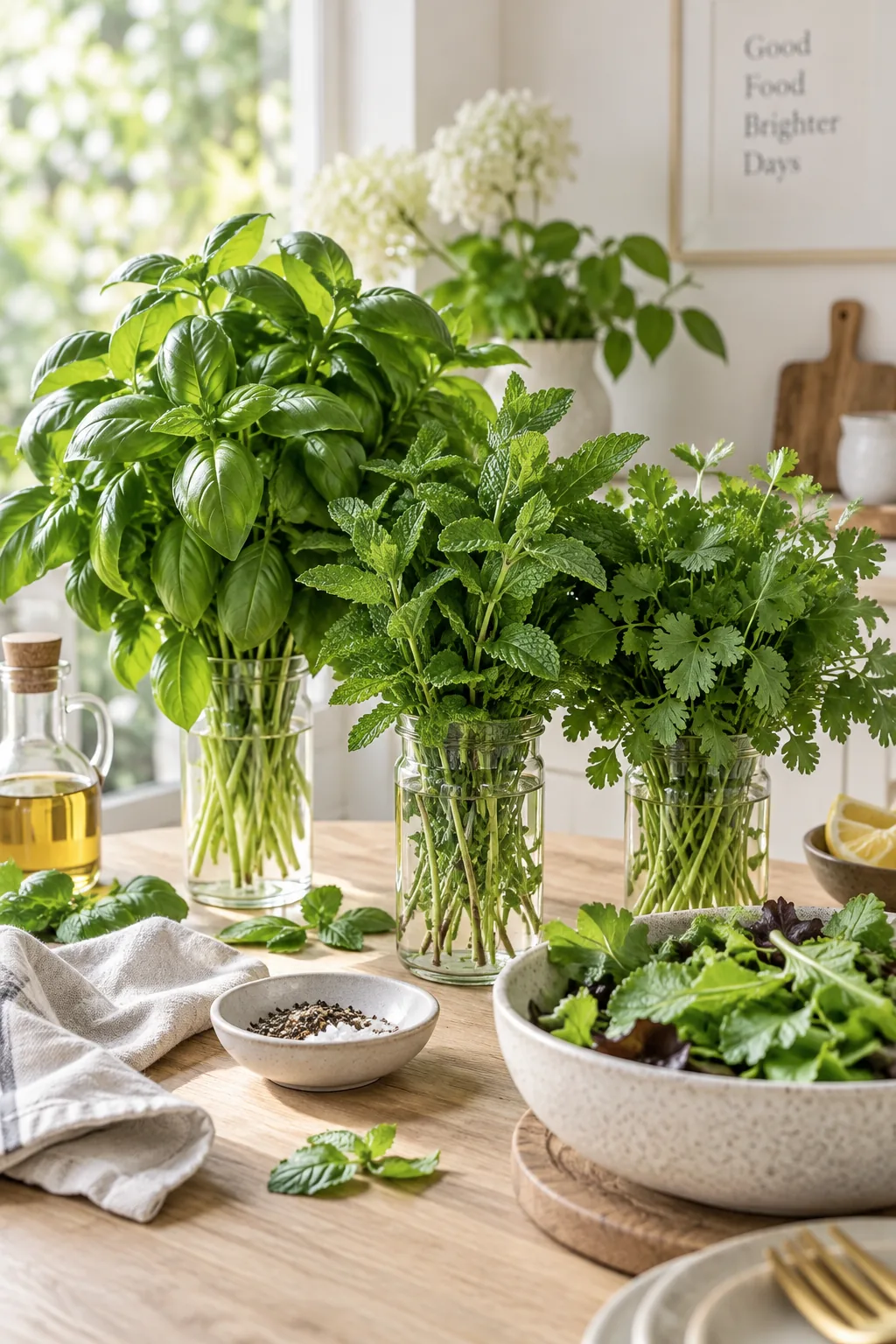
Fresh herbs wilt incredibly fast when they sit chopped in a bowl for hours. Displaying full bunches of basil, mint, and cilantro in sturdy water glasses acts as both functional food and beautiful greenery. Guests can just pinch off exactly what they want to add to their mix. It brings a gorgeous, fragrant garden element right into your dining room.
12. Create a Logical Flow
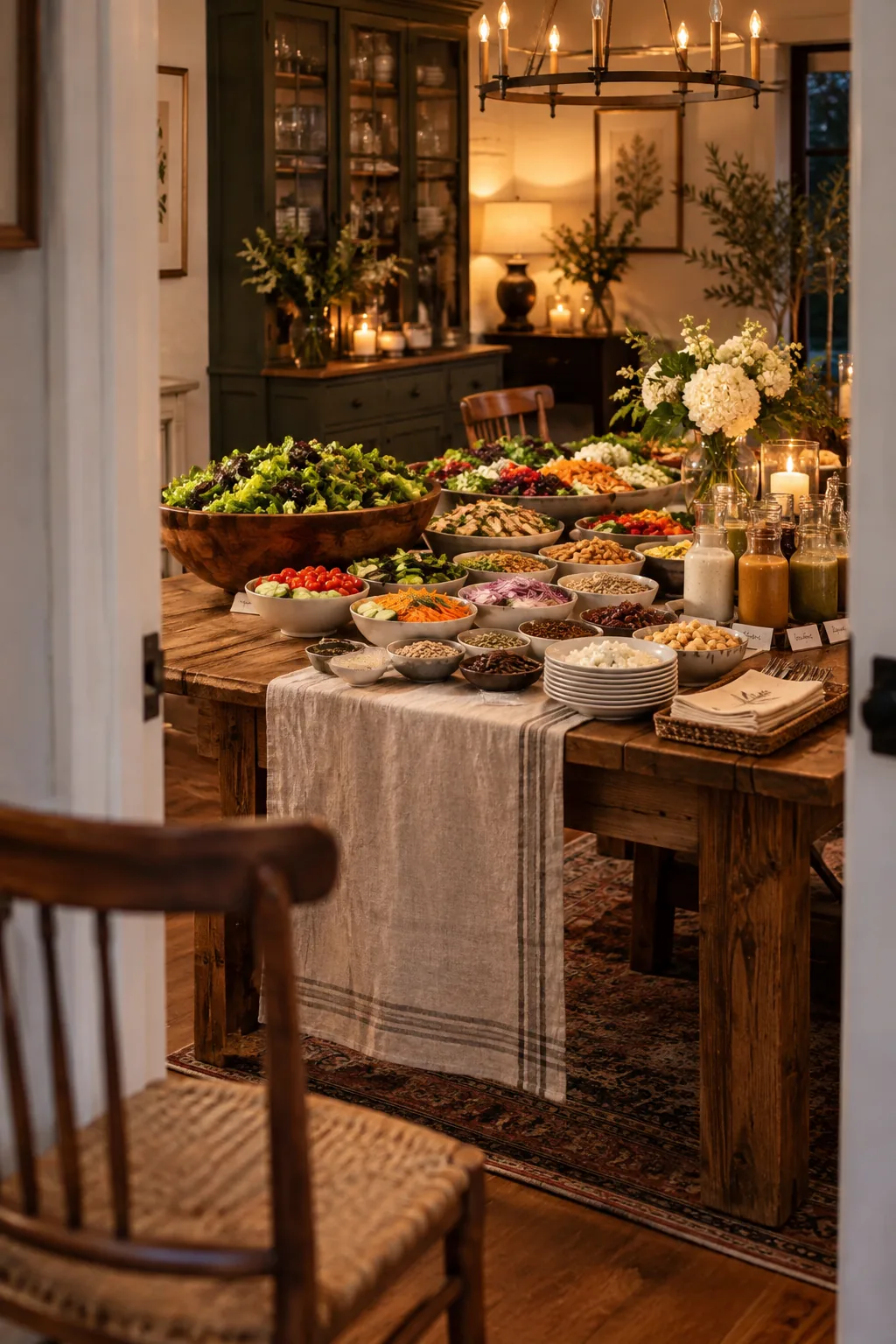
A logical flow is what makes a self-serve station actually work for a large group.
Start with the oversized salad bowls and greens, move to proteins, follow with colorful vegetable toppings, and end with dressings and seeds. This prevents awkward reaching and keeps the line moving in one smooth direction.
Place the napkins and forks at the very end so guests aren't juggling them while trying to serve themselves.