
Grocery Store Birthday Table Decorations: Shopping List & Map
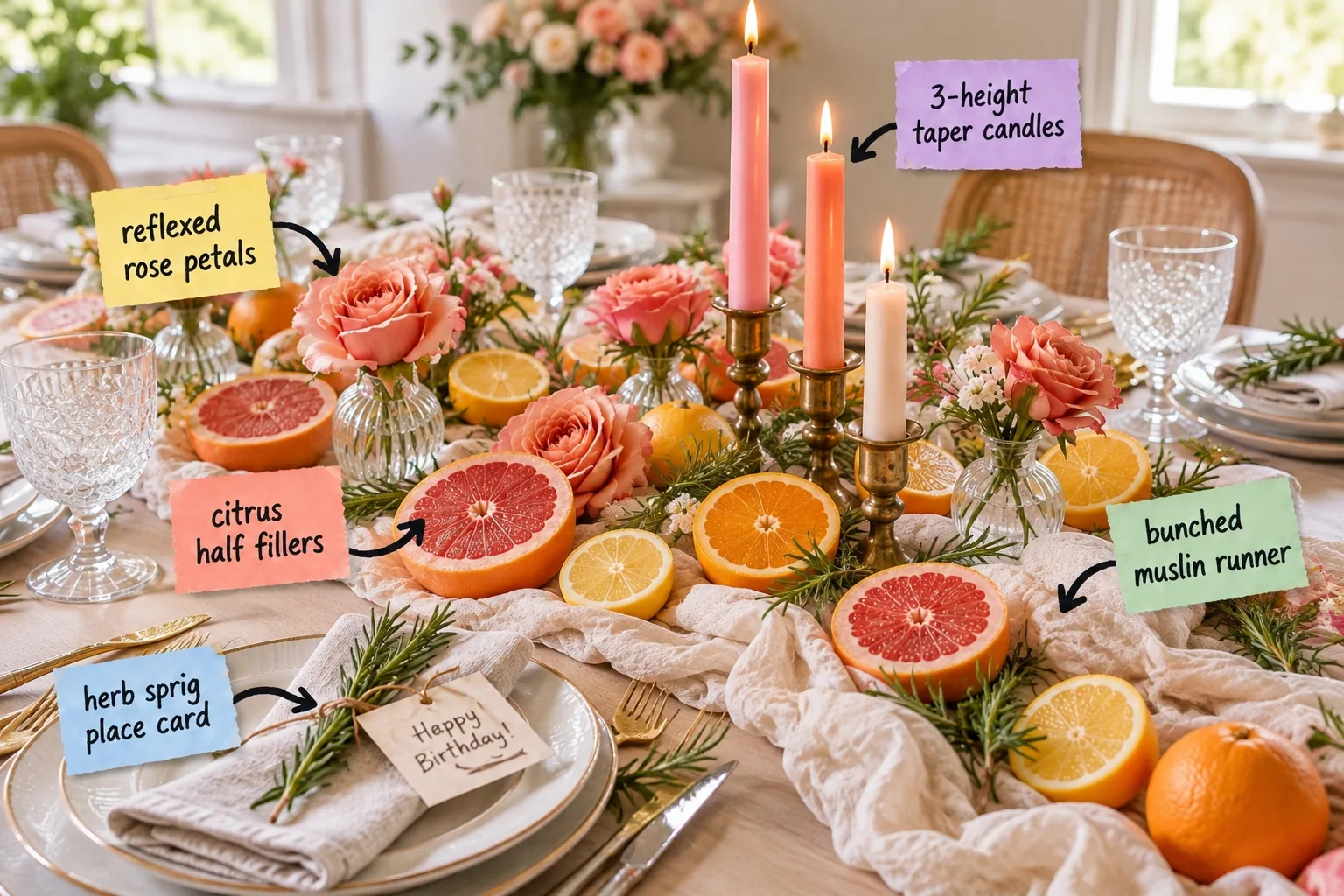
You can easily build a lush, budget-friendly citrus and rose tablescape using our exact grocery store decor shopping list and centerpiece spacing map. This guide gives you the precise quantities and placement rules to transform cheap supermarket flowers into a stunning event design.
The Foundation: Bunched Muslin Runner
Start by laying down unironed muslin to create a highly textured, voluminous base layer. I use a 10-foot length of fabric for the standard 6-foot dining table in my Boston apartment to allow for generous central bunching and a 12-inch drop.
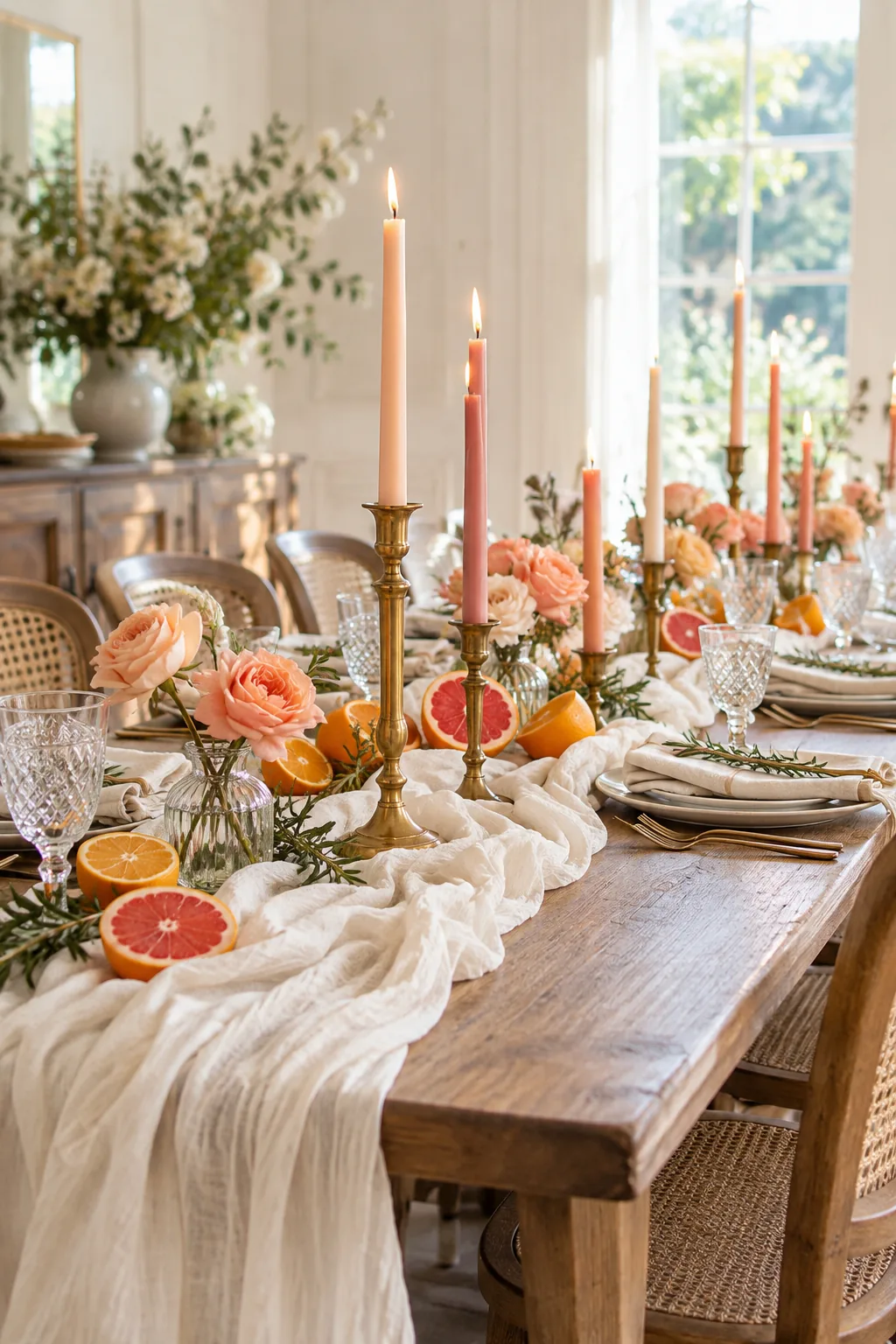
Getting that effortless, perfectly rumpled look requires a little prep work before the fabric ever hits the dining table.
Selecting the Right Muslin Weight
Choosing the correct fabric weight ensures your runner holds its shape without looking awkwardly stiff or laying completely flat against the wood.
- Lightweight gauze provides maximum crinkle but requires double the yardage.
- Medium-weight unbleached muslin holds the best structural volume for this exact look.
- Heavyweight cotton canvas lays too flat and resists natural bunching.
Protecting the Table Beneath the Runner
Unironed muslin provides wonderful texture, but its loose weave offers zero protection against accidental spills or condensation. Lay a narrow, waterproof silicone mat directly down the center of your wooden dining table before bunching the fabric on top to prevent permanent moisture rings.
Creating Structure: 3-Height Taper Candles
Anchor the centerpiece with clusters of brass candlesticks holding pink and peach tapers. I group 12-inch, 10-inch, and 8-inch candles together using vintage holders from a local flea market to create a visual triangle that draws the eye.
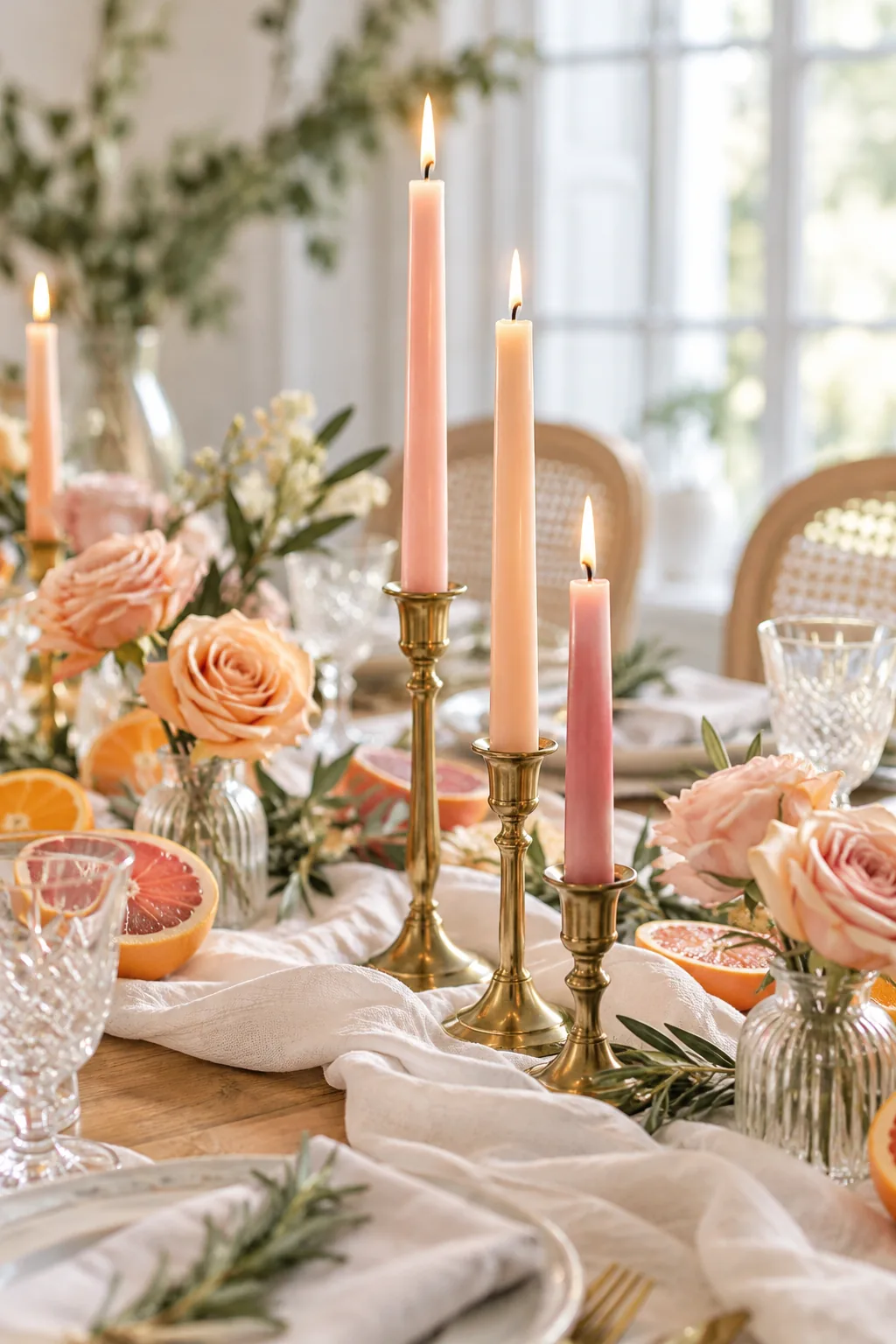
Sourcing Budget Brass Candlesticks
Finding enough metal candleholders for a long table can get expensive if you buy them brand new from boutique home goods stores.
Securing Tapers for Safety
Wobbly candles pose a major fire risk when surrounded by dry fabric and fresh foliage on a crowded dining surface. Warm the bottom of each taper with a lighter and press it firmly into the brass cup for a secure, upright fit.
Choosing Unscented Taper Candles
Always select completely unscented taper candles for any tablescape that involves serving a meal to guests. Strongly perfumed wax easily overpowers the delicate natural aromas of the fresh citrus halves and rosemary sprigs, ultimately ruining the flavor profile of your birthday dinner.
Preventing Candle Wax Drips
Protect your muslin runner and wooden table surface by taking proactive steps against melting wax before the party begins. Freeze your taper candles for at least four hours prior to lighting them to significantly slow down the burning and dripping process.
Final Lighting and Atmosphere Checks
Dimming the overhead fixtures allows the taper candles to cast a warm, inviting glow across the textured fabric and bright citrus. Walk around the fully set table one last time to ensure no stray rosemary sprigs sit dangerously close to an open flame.
Adding Color: Citrus Half Fillers
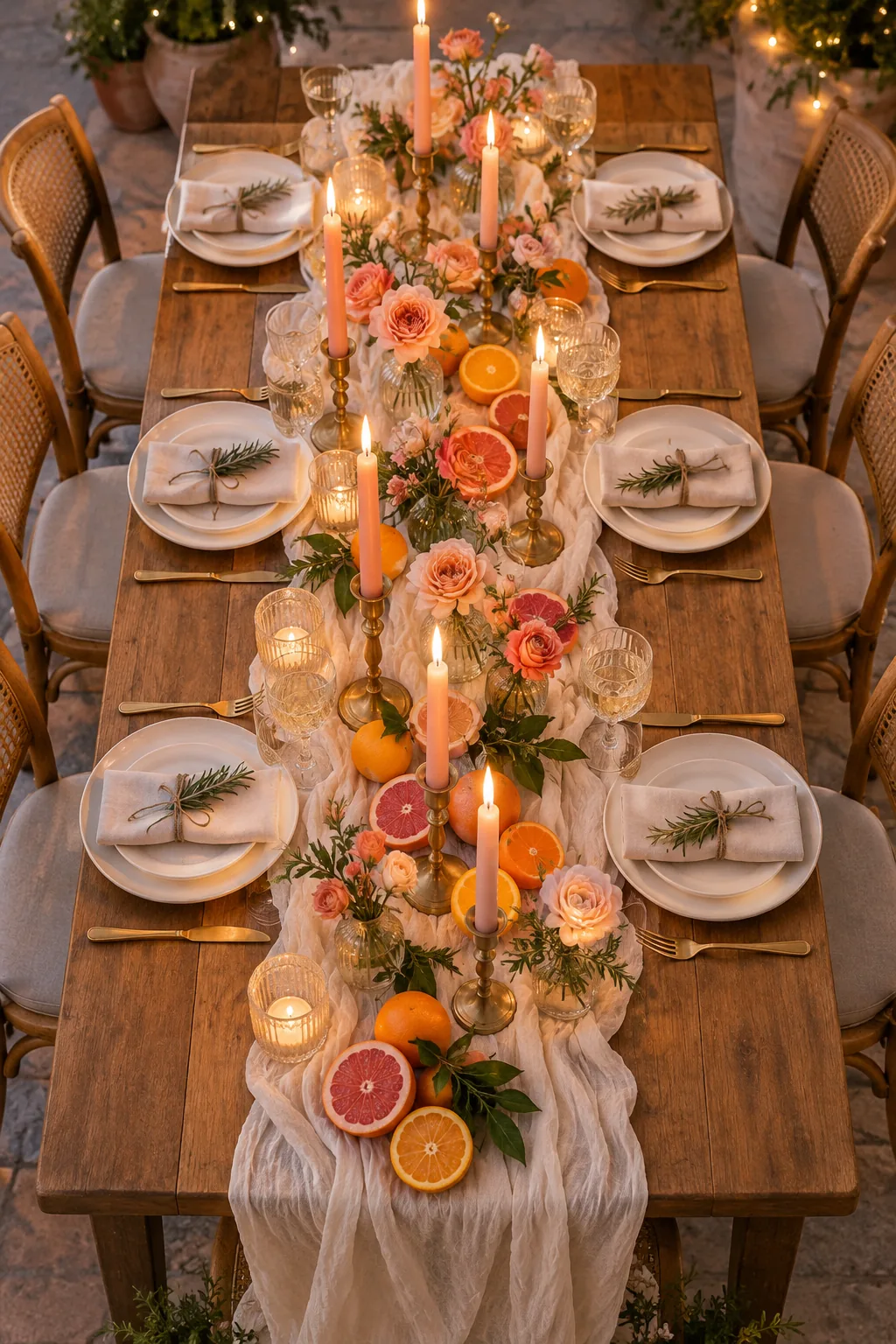
Nestle halved grapefruits, oranges, and lemons directly into the folds of the runner. Cut the fruit horizontally through the equator rather than stem-to-root for the best starburst pattern, spacing a citrus half every 8 to 10 inches along the fabric.
While much of this table can be set the night before, the fresh fruit requires careful timing to look its best.
Picking the Brightest Supermarket Citrus
Inspect the fruit carefully in the produce aisle to ensure you bring home the most vibrant, photogenic pieces for your centerpiece. Choose firm grapefruits and oranges with thick, unblemished rinds that will hold their circular shape well after being sliced open.
Managing Citrus Moisture on Fabric
Exposed fruit releases natural juices that can easily soak through your decorative runner and damage the dining table underneath. Pat the cut side of each citrus half firmly with a paper towel to remove excess surface moisture before nestling it into the muslin.
Elevating Supermarket Blooms: Reflexed Rose Petals
Make standard grocery store roses look like expensive garden varieties by gently peeling back their outer petals. Reflexing roses is my absolute favorite trick for brownstone dinner parties; I always place 2 to 3 reflexed stems into small ribbed bud vases.
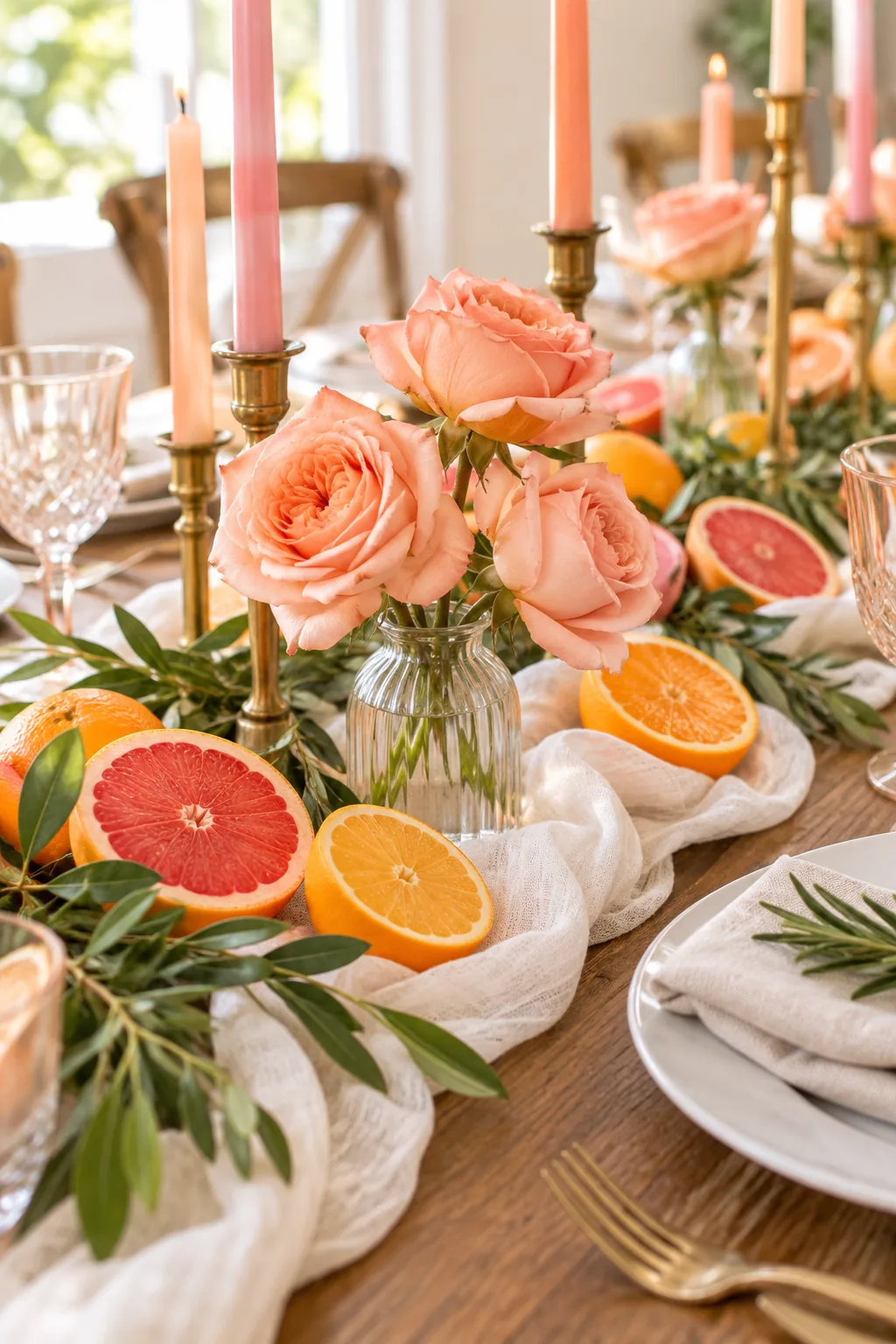
Choosing the Best Grocery Store Roses
Not all supermarket flowers respond well to the manual reflexing technique, so you must select the right bundles from the floral bucket. Look for roses that are already slightly open rather than tightly closed buds, ensuring the petals have enough flexibility to bend backward.
Preparing the Rose Stems
Proper stem preparation keeps your reflexed blooms looking vibrant and hydrated throughout the entire birthday celebration. Strip all the lower leaves off the stems and cut the bottoms at a sharp 45-degree angle to maximize their water absorption in the small vases.
Maintaining the Right Room Temperature
Fresh flowers and exposed fruit degrade quickly if your dining room becomes too hot before the party officially starts. Keep your thermostat set to 68 degrees Fahrenheit or lower during the setup process to preserve the structural integrity of the reflexed rose petals.
Selecting the Right Bud Vases
Keeping the floral arrangements low ensures they tuck neatly under the candle sightlines and never block cross-table conversation. Use clear ribbed glass bud vases that measure no taller than 4 inches to maintain the perfect structural proportion against the citrus halves.
Filling the Gaps: Loose Herb Sprigs
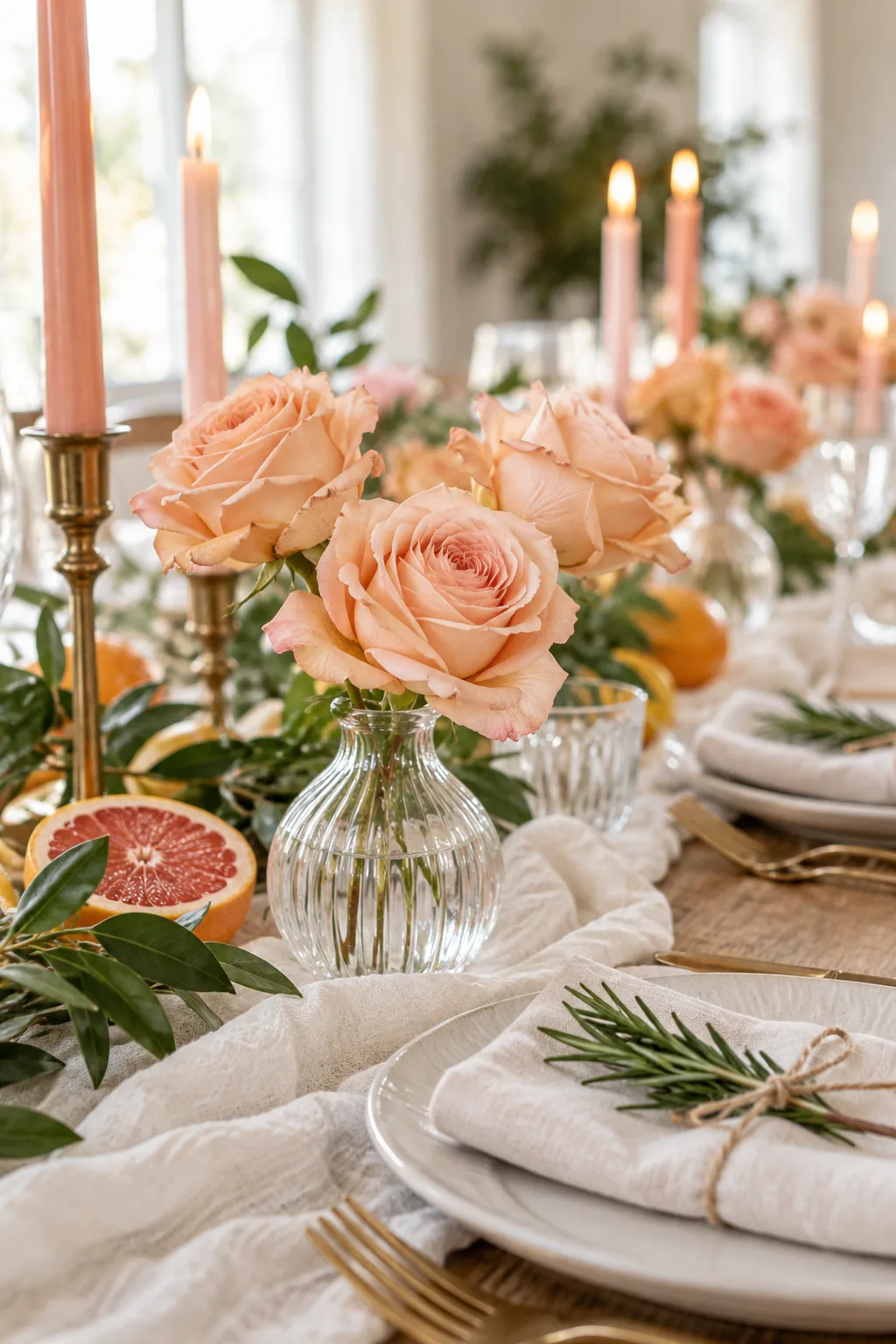
Use leftover rosemary sprigs tucked between the citrus halves and candlesticks to beautifully hide any bare runner spots. Cut these filler sprigs to 3 or 4 inches long so they blend naturally into the bunched fabric and add a subtle scent.
Harvesting and Washing Rosemary
Fresh herbs from the produce section often carry residual dirt that you definitely want to keep away from your clean table linens. Rinse the rosemary bunches thoroughly under cold water and let them air dry completely on a kitchen towel before snipping them into smaller sprigs.
Storing Leftover Herb Sprigs
You will likely have several usable rosemary stems left over after filling the runner gaps and building the place cards. Wrap these extra sprigs loosely in a damp paper towel and store them in the refrigerator crisper drawer to use for cooking later in the week.
Personalizing the Setting: Herb Sprig Place Cards
Finish each seat with a folded linen napkin topped with a single 5-inch rosemary sprig. Tie a small kraft paper tag stamped with a birthday greeting around the sprig using plain baker’s twine for a highly personalized, rustic touch.
Stamping the Kraft Paper Tags
Hand-stamped lettering provides a charming, tactile quality that printed place cards simply cannot match in this organic table setting. Use a permanent black ink pad and individual alphabet stamps to press each guest’s name or a simple birthday message onto the paper tags.
Selecting the Perfect Twine
The material you use to attach the name tags directly impacts the overall rustic aesthetic of the finished place setting. Opt for unbleached cotton baker’s twine or natural jute string rather than shiny synthetic ribbon to maintain the earthy, relaxed vibe of the tablescape.
Folding the Linen Napkins
A simple, structured napkin fold anchors the delicate rosemary sprig and provides a clean visual contrast to the rumpled muslin runner. Fold a standard 20-inch square linen napkin into a crisp rectangle and place it perfectly centered on the dinner plate.
Ironing the Napkins for Contrast
While the central muslin runner looks best heavily rumpled, the individual place settings require a much sharper presentation. Iron your linen napkins with heavy starch to create crisp, defined edges that beautifully contrast against the organic, flowing nature of the centerpiece.
Coordinating the Dinnerware
Keep your plates and bowls relatively understated so they do not compete with the vibrant citrus and reflexed roses. Simple matte white or soft cream stoneware provides the perfect neutral background, allowing the bright grapefruit halves and peach tapers to command all the attention.
The Blueprint: Grocery List & Spacing Map
Take this exact shopping list to the supermarket to gather all the necessary fresh materials for your tablescape without overspending.
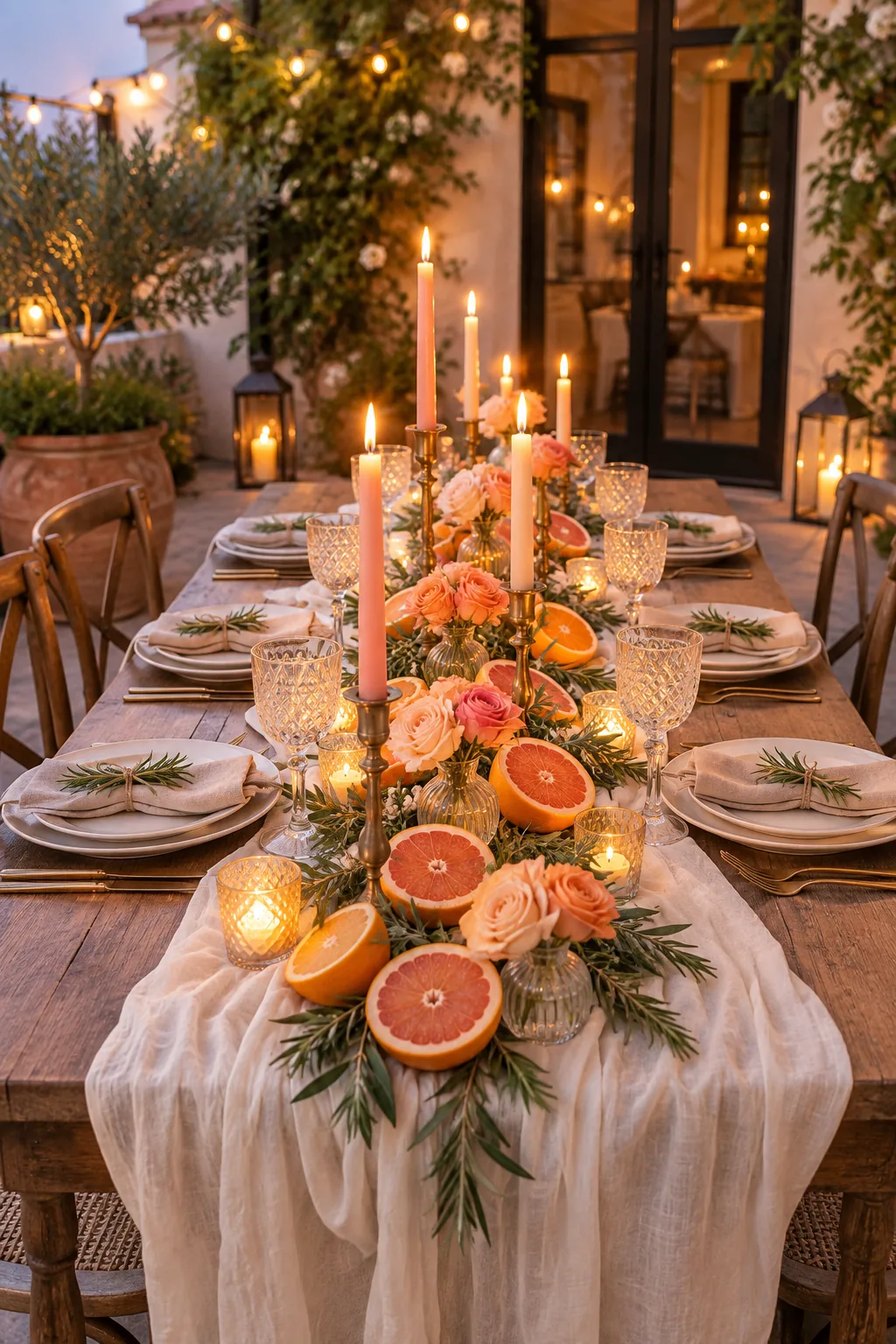
- 3 fresh pink grapefruits
- 4 large navel oranges
- 1 bag of standard lemons
- 2 dozen light peach roses
- 2 bunches of fresh rosemary
Follow this centerpiece spacing map to perfectly distribute your materials down the center of a standard rectangular dining table.
| Zone | Length | Candle Clusters | Bud Vases |
|---|---|---|---|
| Left Flank | 12 inches | 1 cluster | 2 vases |
| Center | 18 inches | 2 clusters | 3 vases |
| Right Flank | 12 inches | 1 cluster | 2 vases |
Adapting the Map for Round Tables
You can easily modify this linear spacing map to fit a standard 60-inch round dining table while keeping the same lush aesthetic. Coil the muslin runner into a dense central spiral, placing one large candle cluster in the middle surrounded by a ring of alternating citrus and bud vases.
Scaling Up for Long Banquet Tables
If you are hosting a larger birthday party, you can easily extend this spacing map to cover a 10-foot banquet table. Simply repeat the 18-inch central cluster pattern twice, ensuring you maintain the exact same ratio of taper candles to ribbed glass bud vases.
Planning for Easy Cleanup
Cleaning up this natural centerpiece takes only a few minutes once the birthday guests have finally headed home. Toss the spent citrus halves and wilted rose stems directly into the compost bin, then immediately soak the muslin runner in cold water to prevent wax stains.
5 Ways to Adapt This Grocery Store Centerpiece
Swap out the fruit and floral colors to match any season or room style.
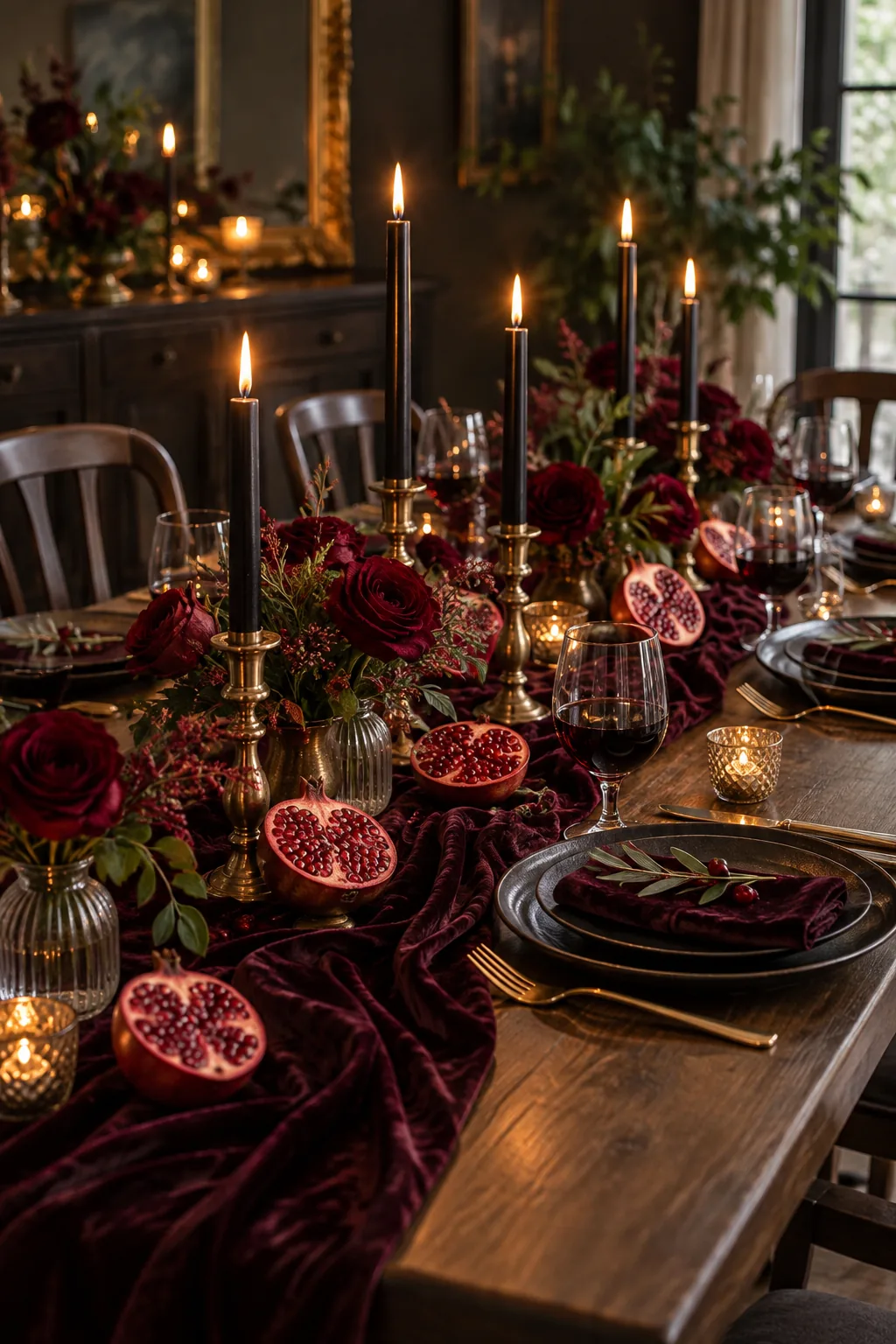
Moody jewel tone dinner party: Swap citrus for pomegranates and use dark velvet to create a moody, intimate evening atmosphere.
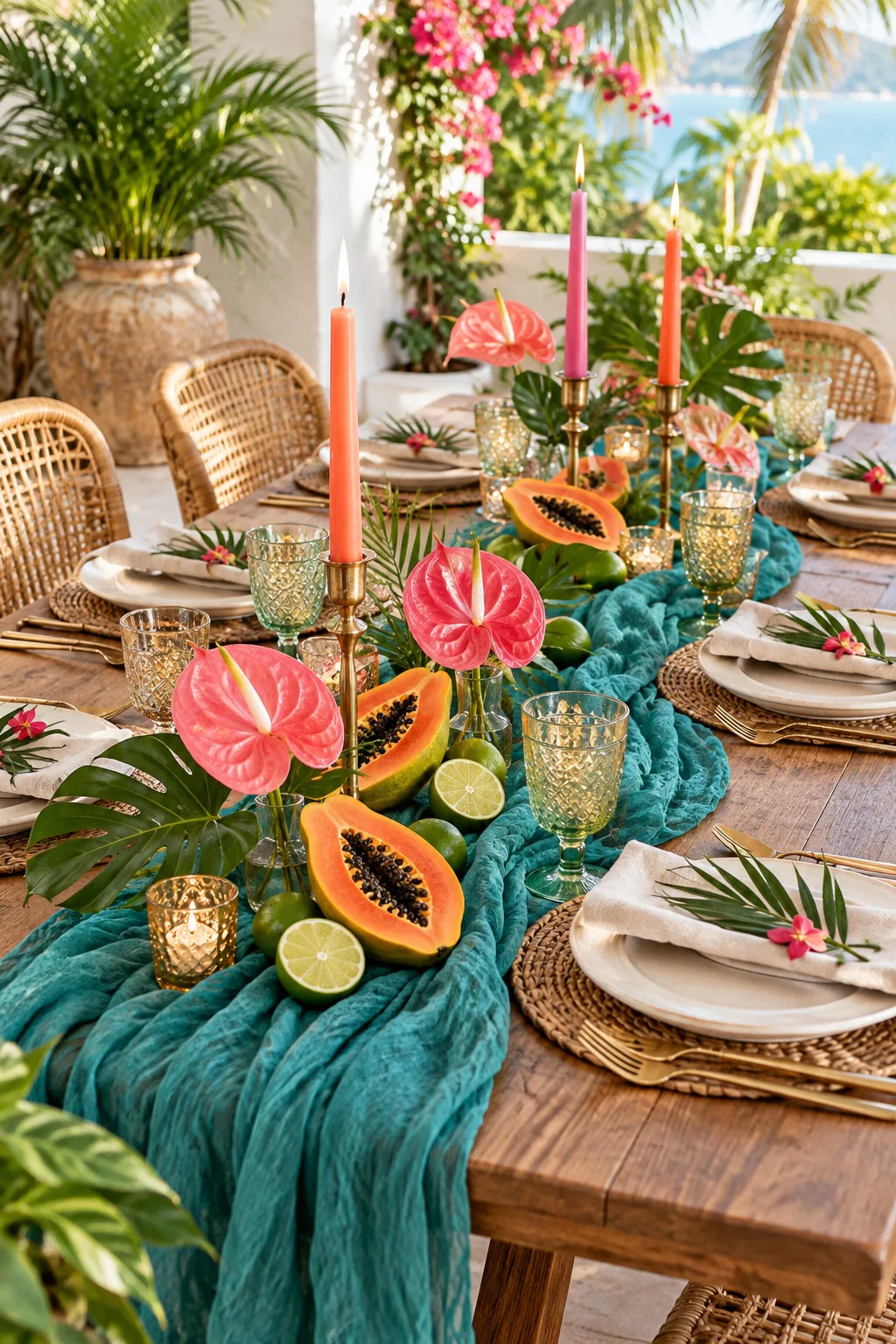
Tropical brights patio table: Halved papayas and bright pink anthuriums on a teal runner bring vibrant vacation energy.
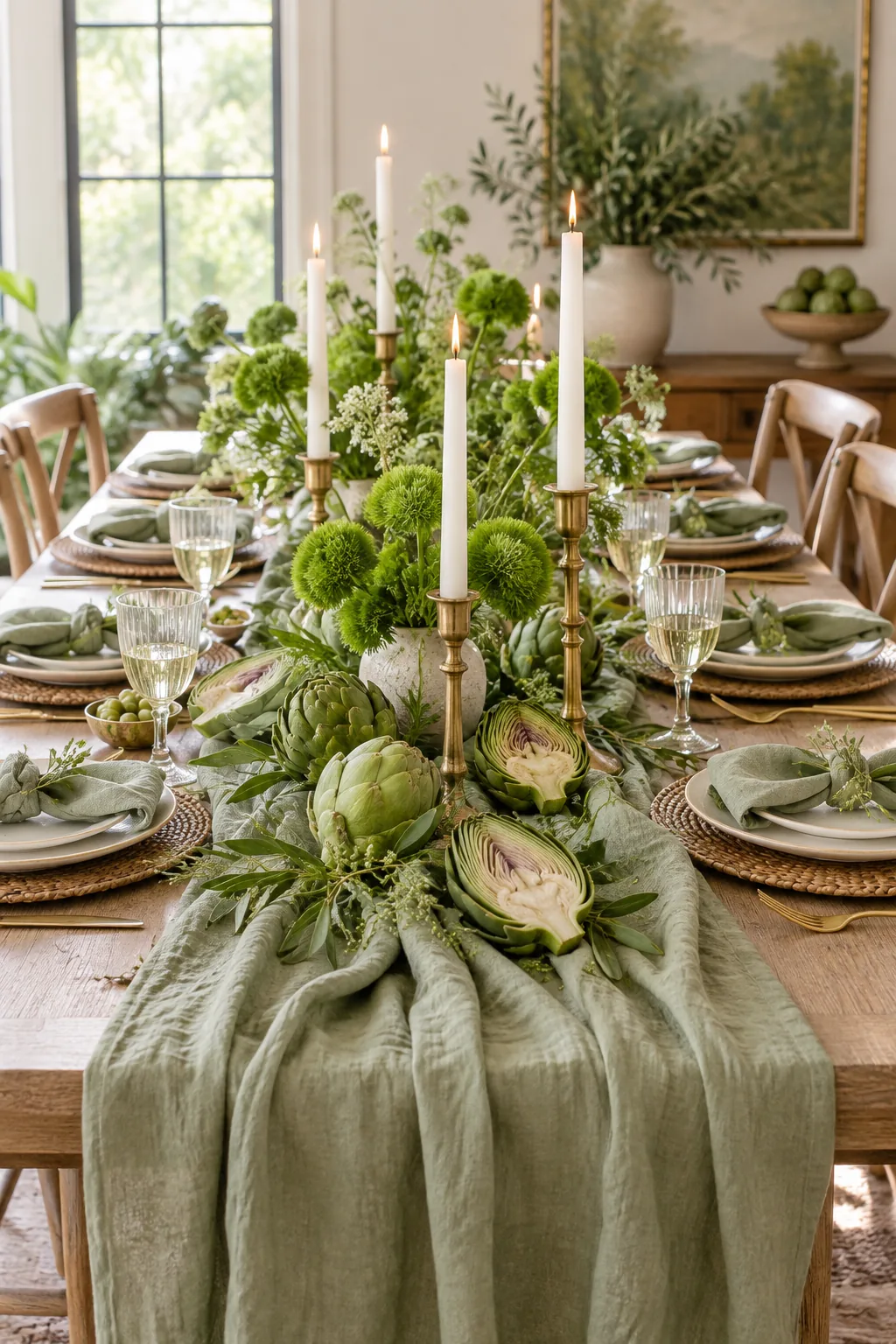
Monochromatic green spring setting: Artichoke halves and green trick dianthus on sage linen offer a fresh, monochromatic spring look.
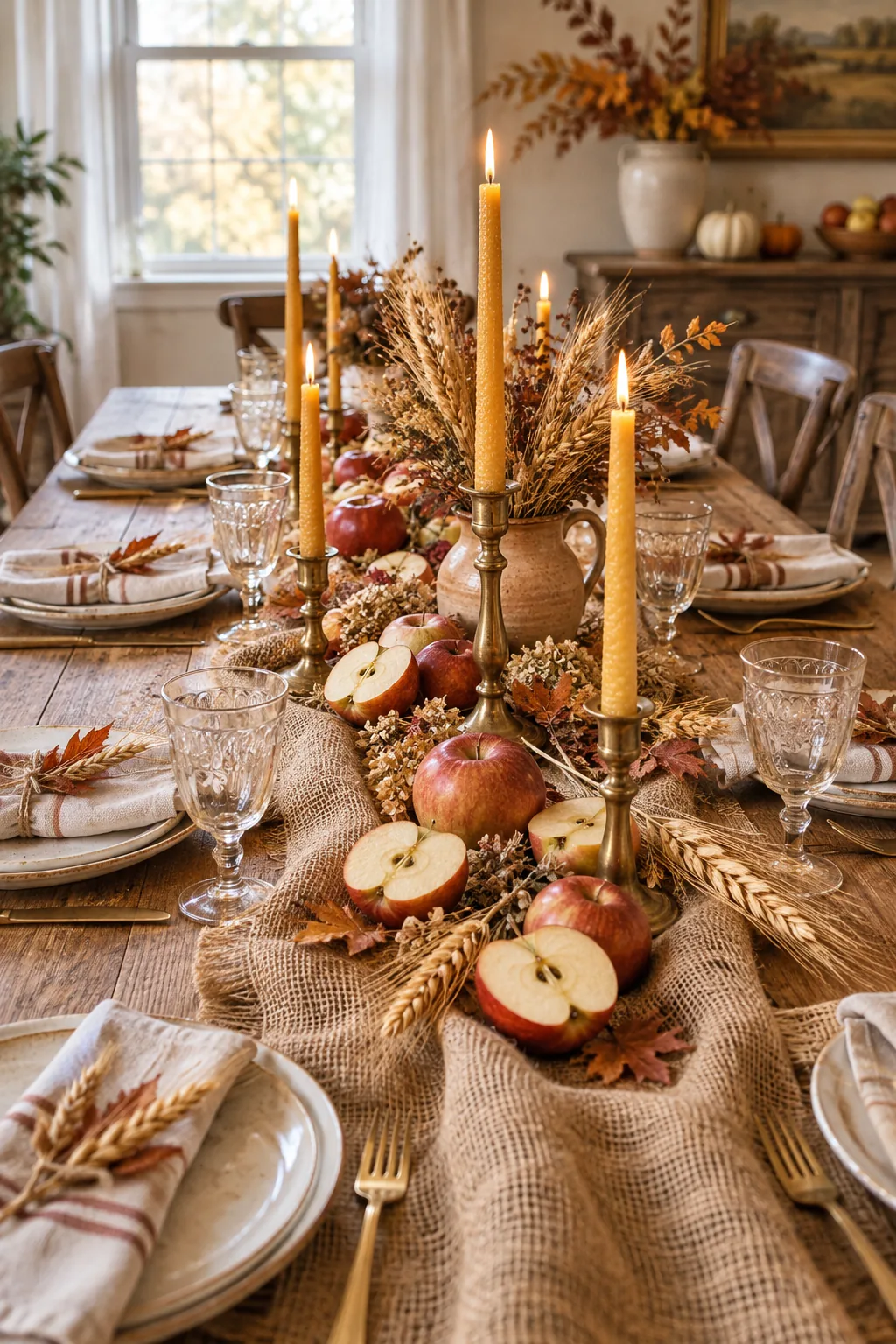
Rustic autumn harvest table: Halved apples and dried wheat on a burlap runner transition this concept perfectly for autumn.
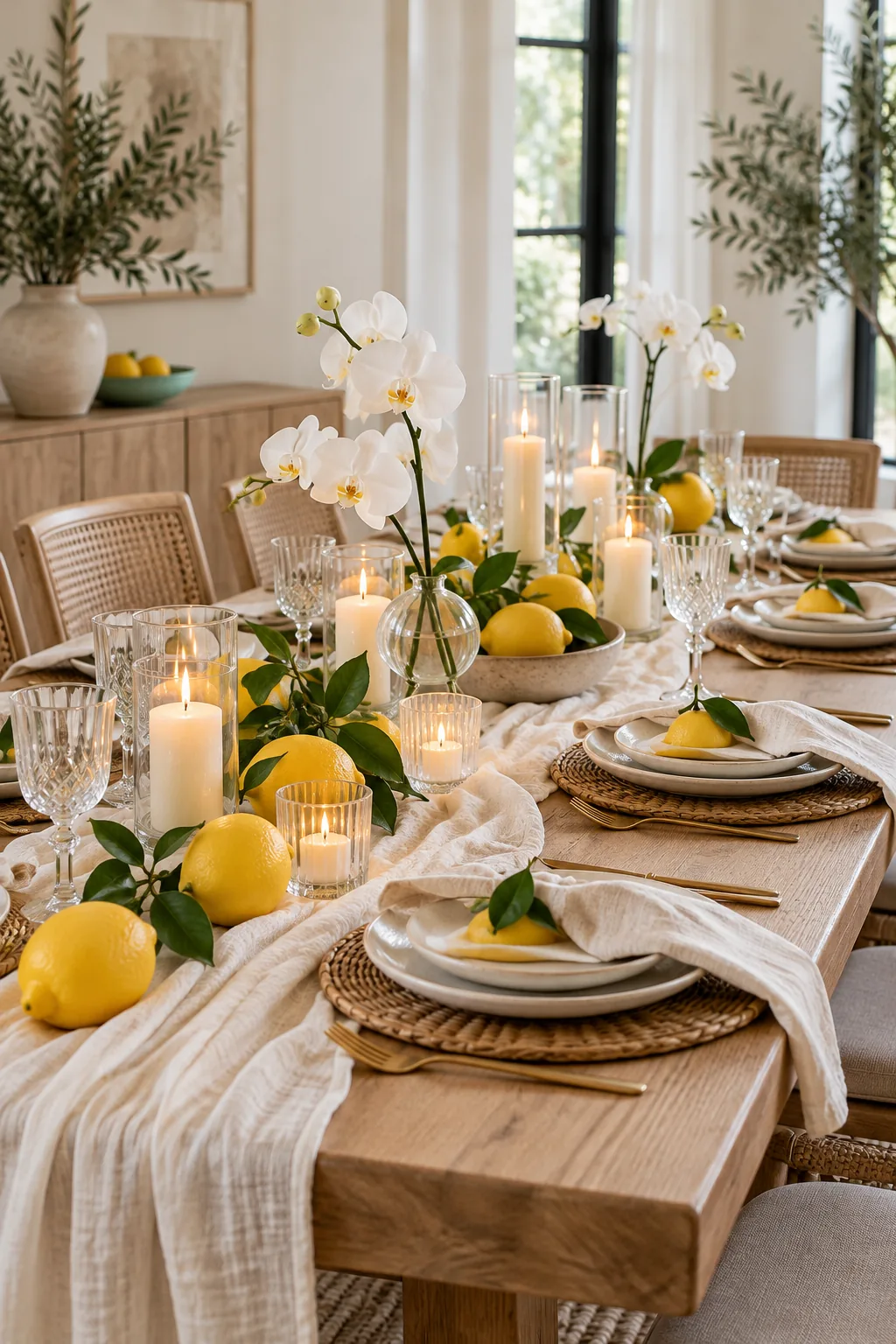
Minimalist modern bare wood: Whole lemons and single white orchids on a bare wood table keep the styling minimalist.
Setting Timelines: When to Prep and Cut
Manage your assembly timing carefully so you are not rushing right before the birthday dinner begins.
- Lay the runner and place the candles the night before.
- Reflex the roses and fill the bud vases 4 hours ahead.
- Cut the citrus exactly 2 hours before seating.
Lighting the candles and arranging the freshly cut citrus right at that two-hour mark ensures the fruit stays vibrant and the tapers burn beautifully through dessert.