
10+ Brilliant Butterfly Garden Ideas for Your Yard
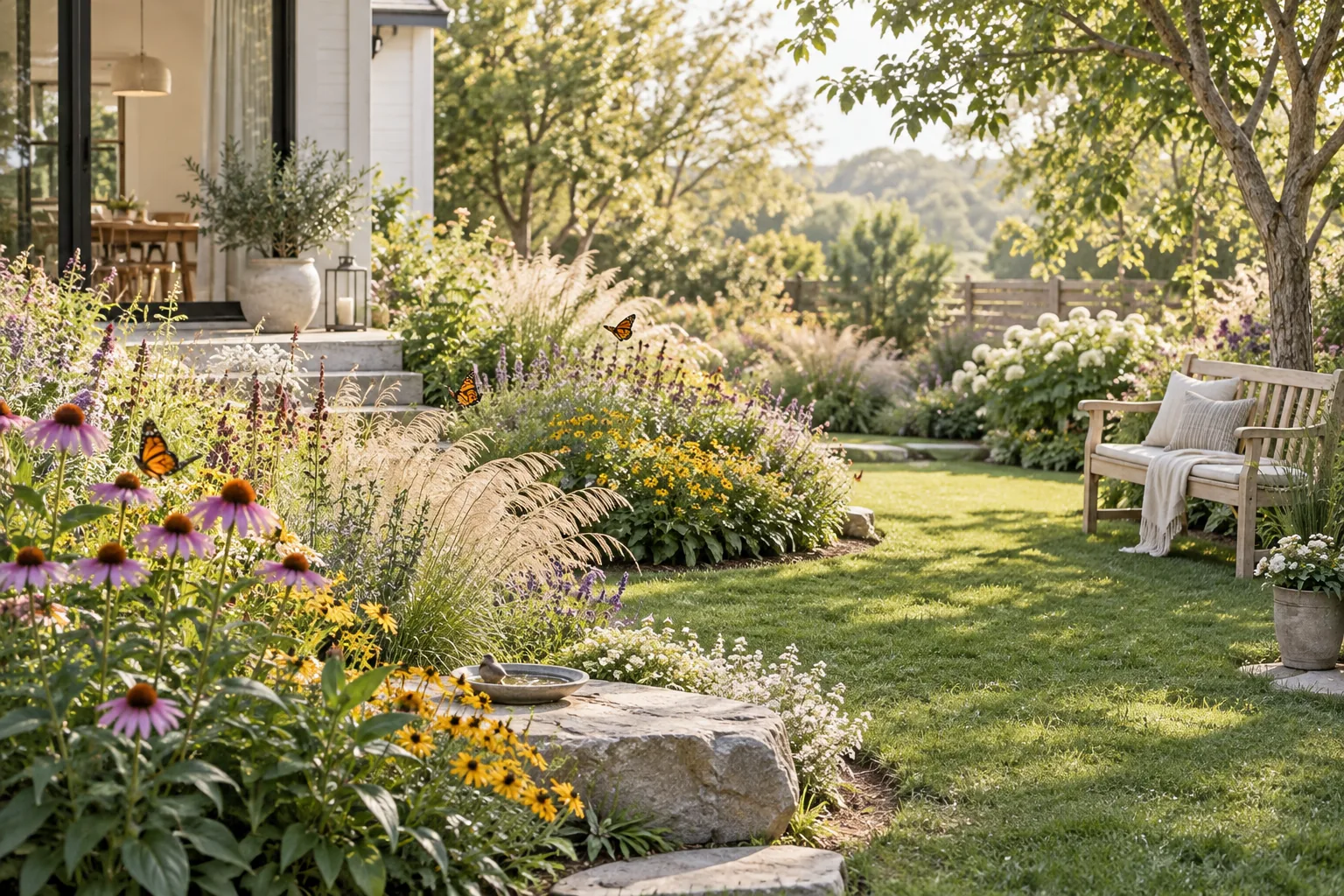
Creating a space that actually draws in pollinators is easier than you might think. You just need the right mix of host plants, nectar sources, and a few simple garden features.
1. Plant Flowers in Large Drifts
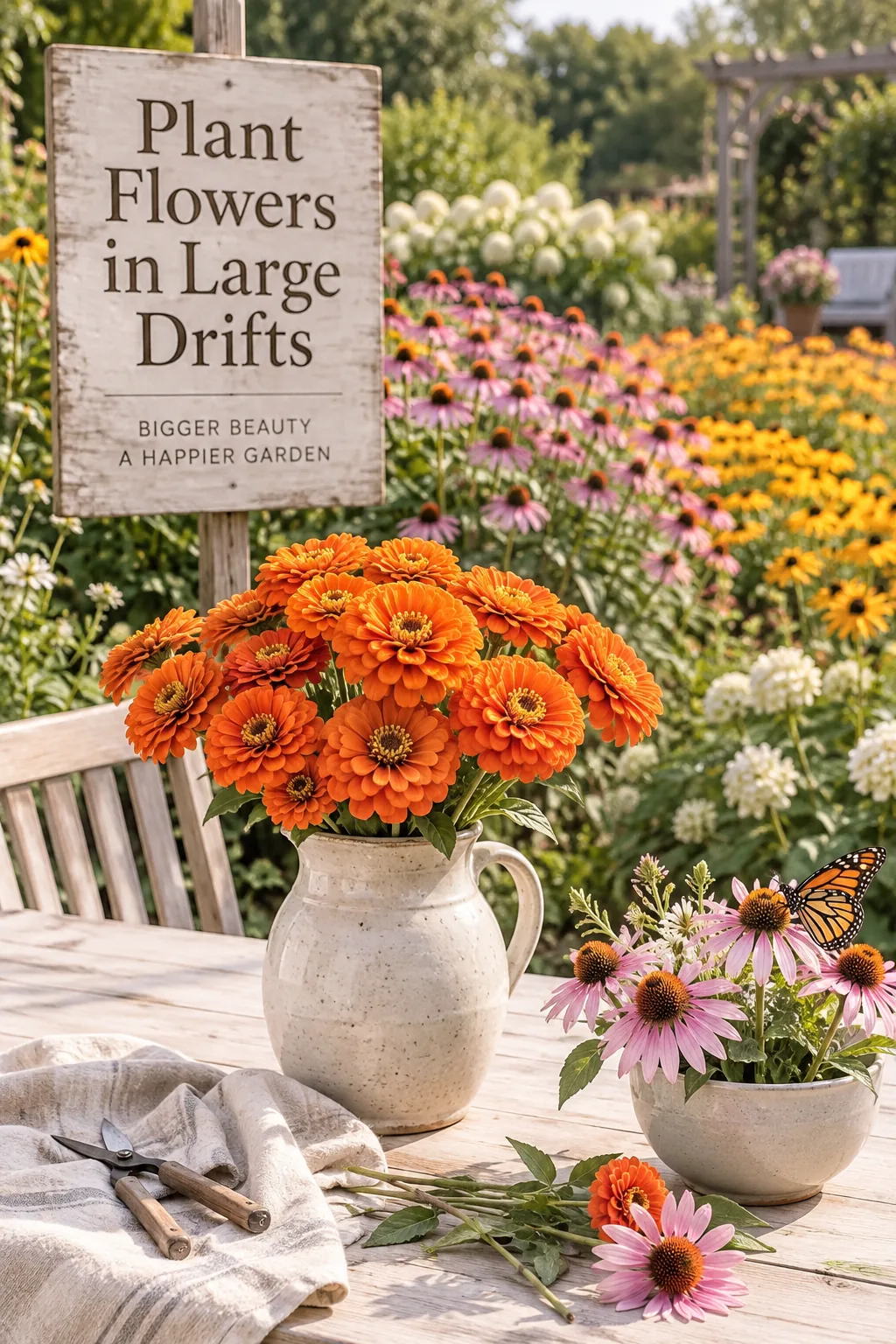
Grouping identical flowers together creates a massive target of color that butterflies can spot from high up. Single plants often get ignored.
I like to plant zinnias or coneflowers in clusters of at least three or five. It makes a huge visual impact in your beds.
This sweeping drift method also cuts down on your watering time. The roots shade each other as they grow in tight.
Why it works: Grouping identical flowers together creates a massive target of color that butterflies can easily spot.
2. Build a DIY Puddling Station
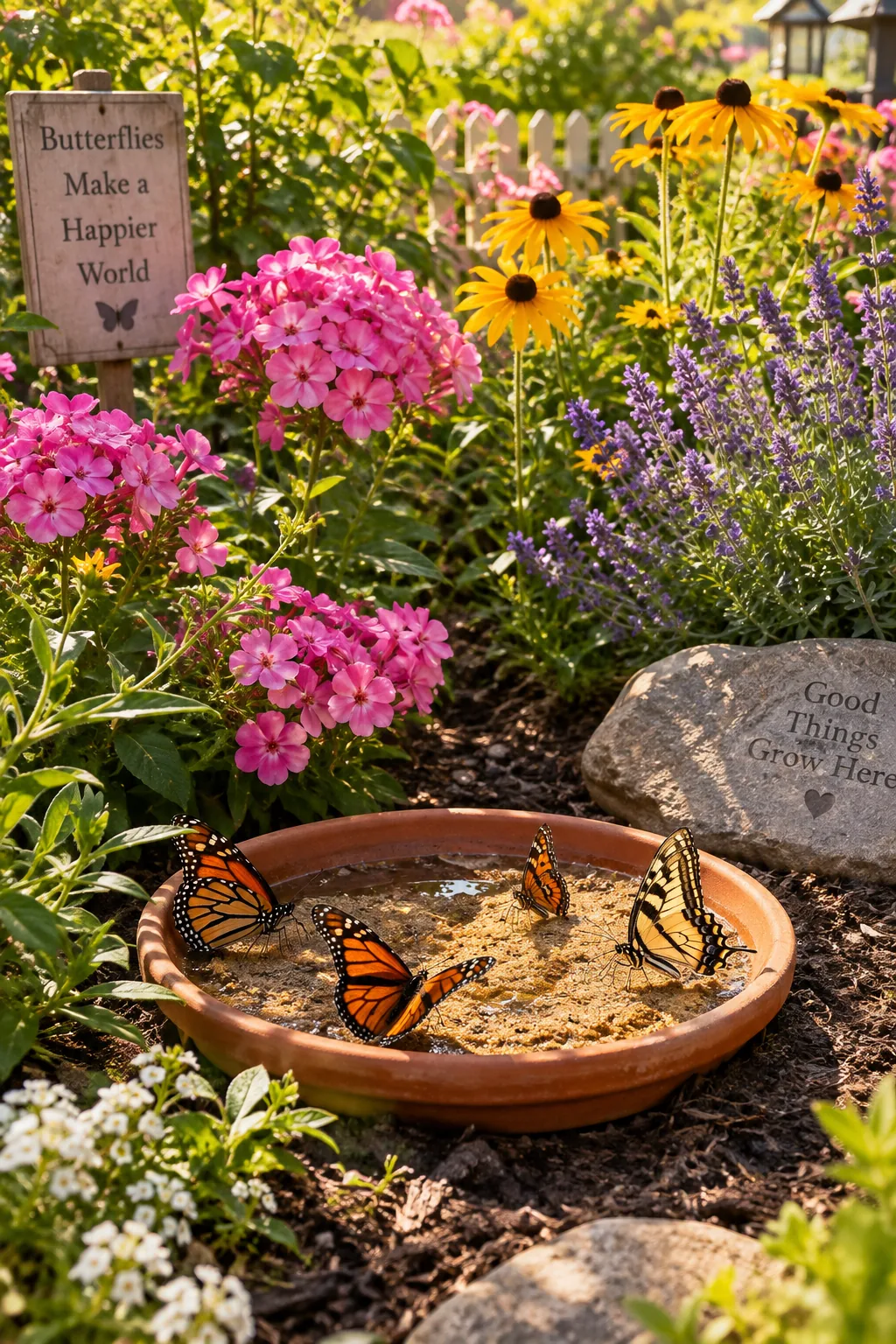
Puddles left behind on flat rocks after a rainstorm are always covered in butterflies drinking up minerals. You can recreate this natural watering hole by sinking a shallow terracotta saucer into the soil and filling it with coarse sand. Keep it damp, and sprinkle in a tiny pinch of sea salt or compost to provide the nutrients they crave. Place it right in the sun next to your brightest blooms. To make it perfect, add:
- A few flat resting stones
- Coarse builder's sand
- Fresh water daily
3. Create a Natural Windbreak
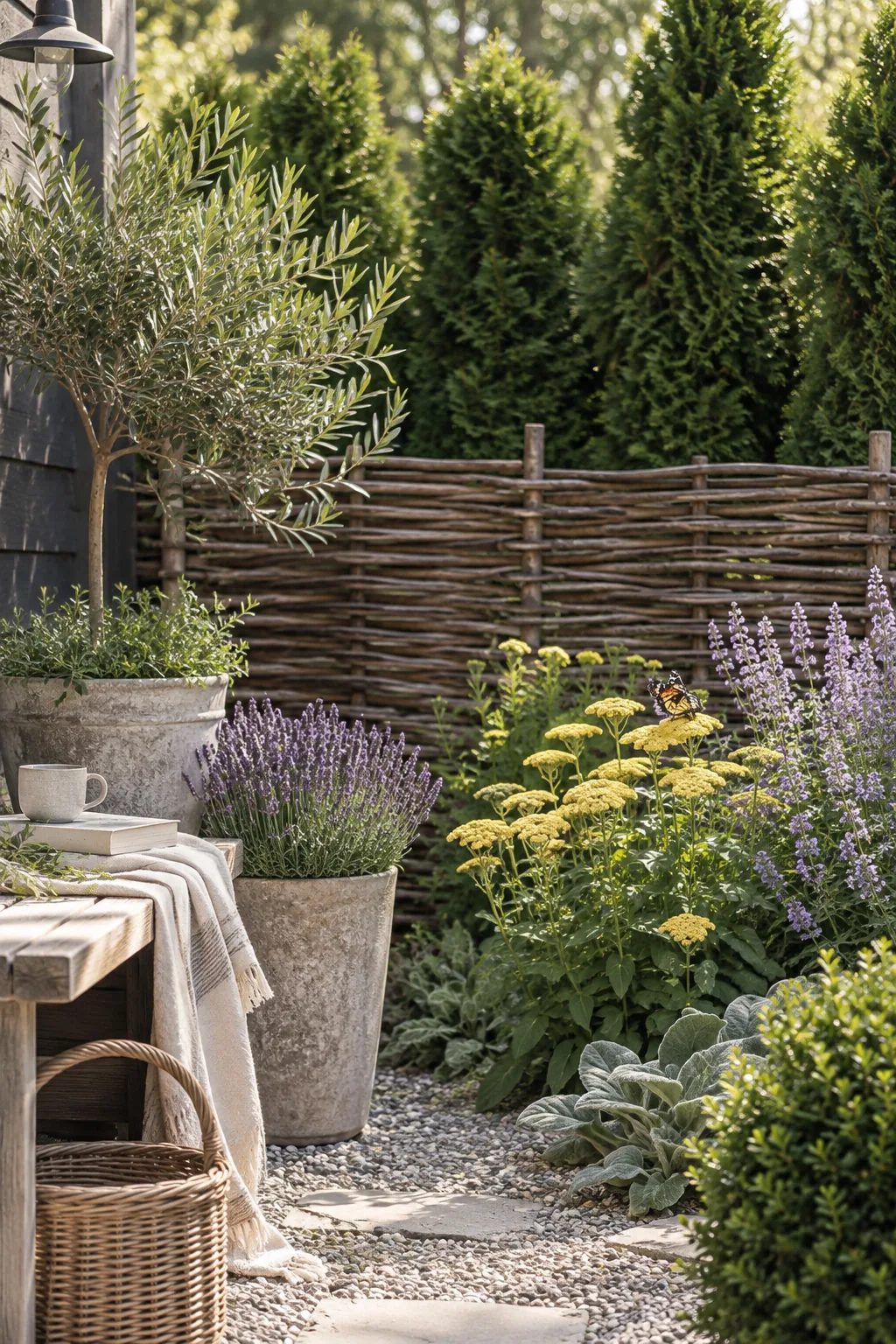
Providing a windbreak keeps fragile wings safe while they feed and rest. Butterflies will not stick around if they are fighting strong gusts.
A simple row of dense evergreen shrubs planted on the breezy side of your yard does the trick. You can also weave a natural willow wattle fence.
The sheltered pocket it creates traps the sun's heat. This keeps the nectar flowing and the insects active all afternoon.
Why it works: Providing a windbreak keeps fragile wings safe while they feed and rest.
4. Tuck Host Plants into Beds
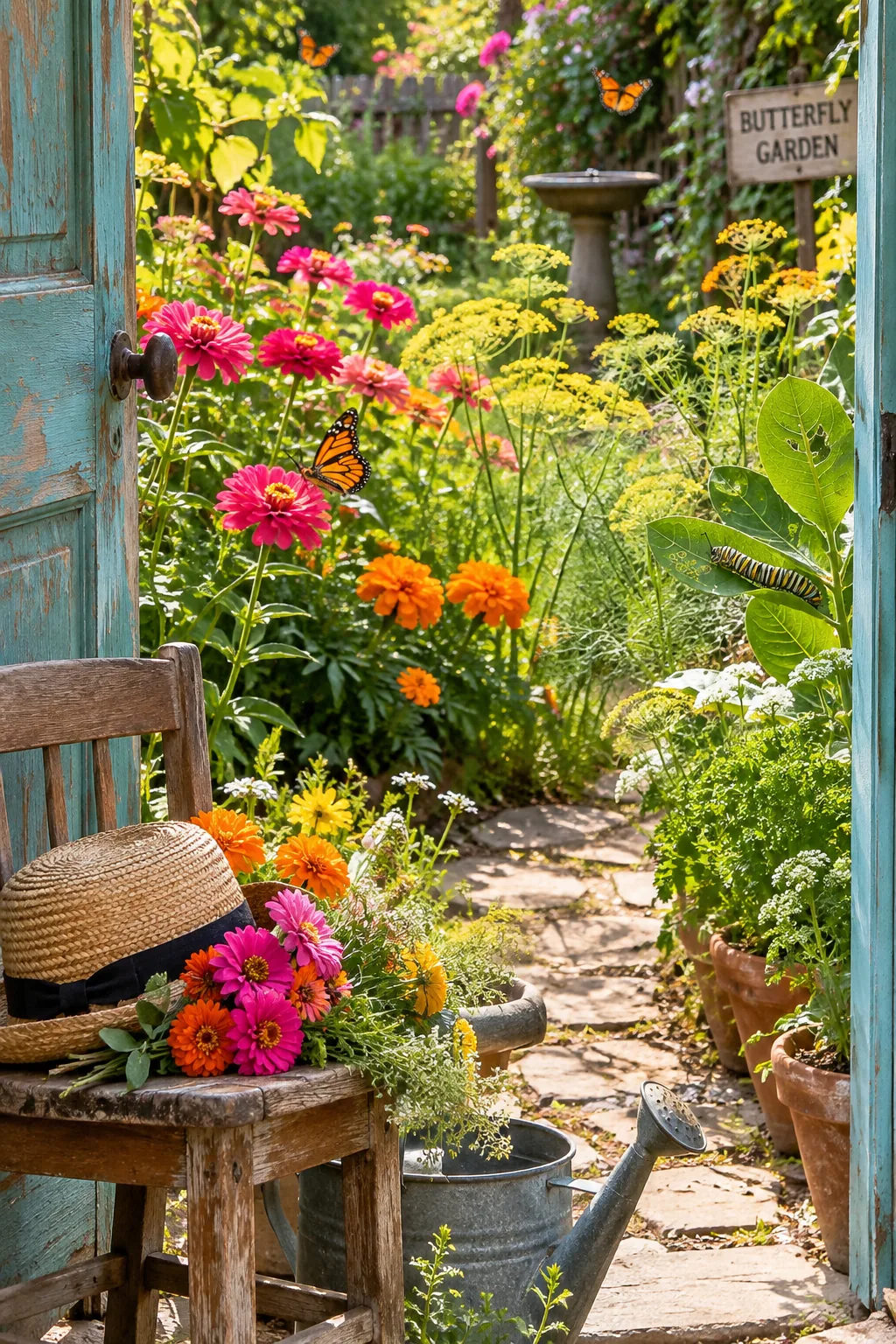
Caterpillars need to eat constantly, and a single monarch caterpillar can strip a milkweed plant bare in days. You have to plant for the babies, not just the adults. Tucking host plants like dill, fennel, and parsley into your regular flower beds gives them plenty of food. Just be prepared for chewed leaves and let them do their thing.
5. Ditch the Chemical Pesticides
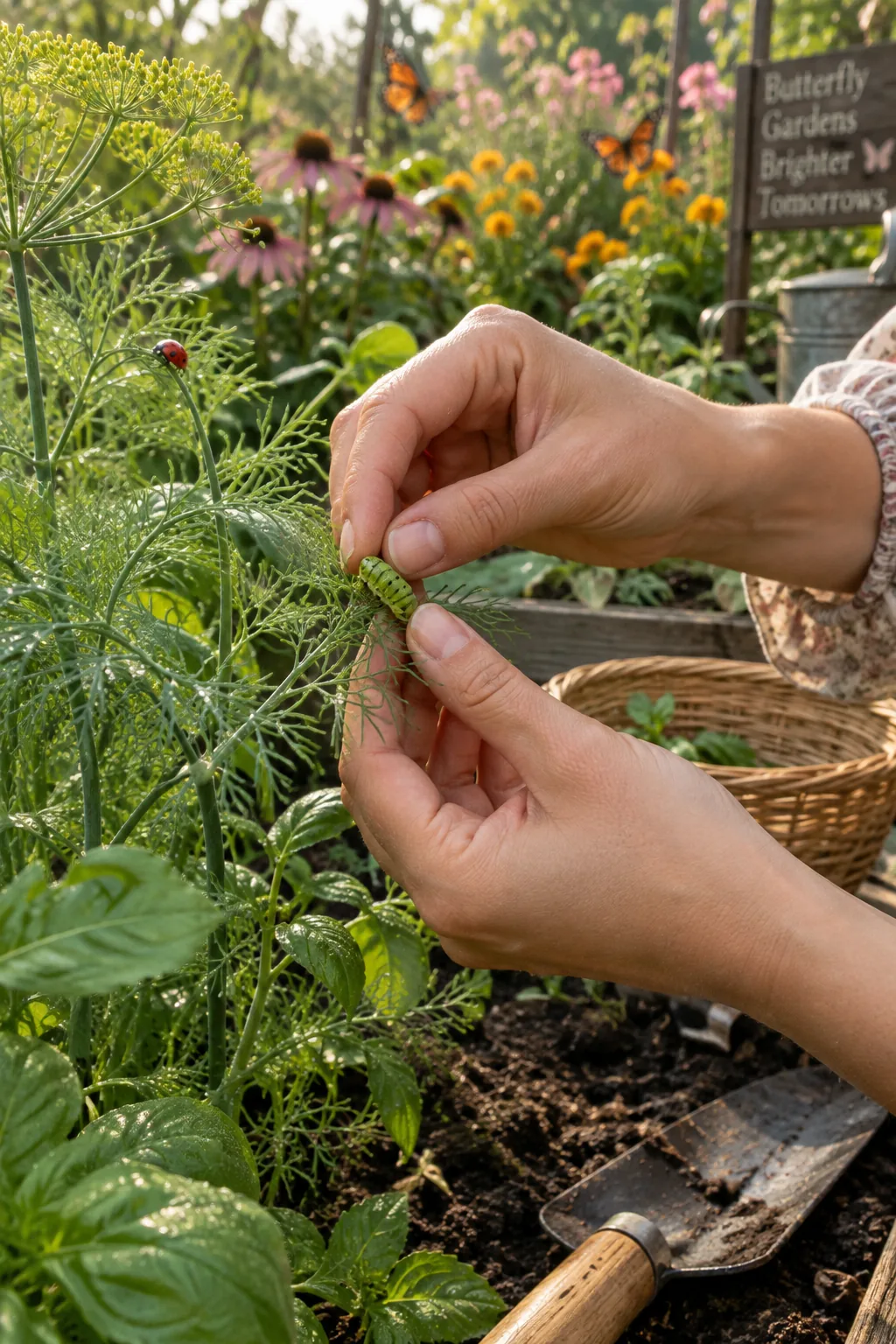
Skip the chemical pesticides completely if you want a thriving pollinator yard. Even organic sprays will wipe out the caterpillars you are trying to protect, so rely on ladybugs and hand-picking to manage pests instead.
6. Stagger Your Bloom Times
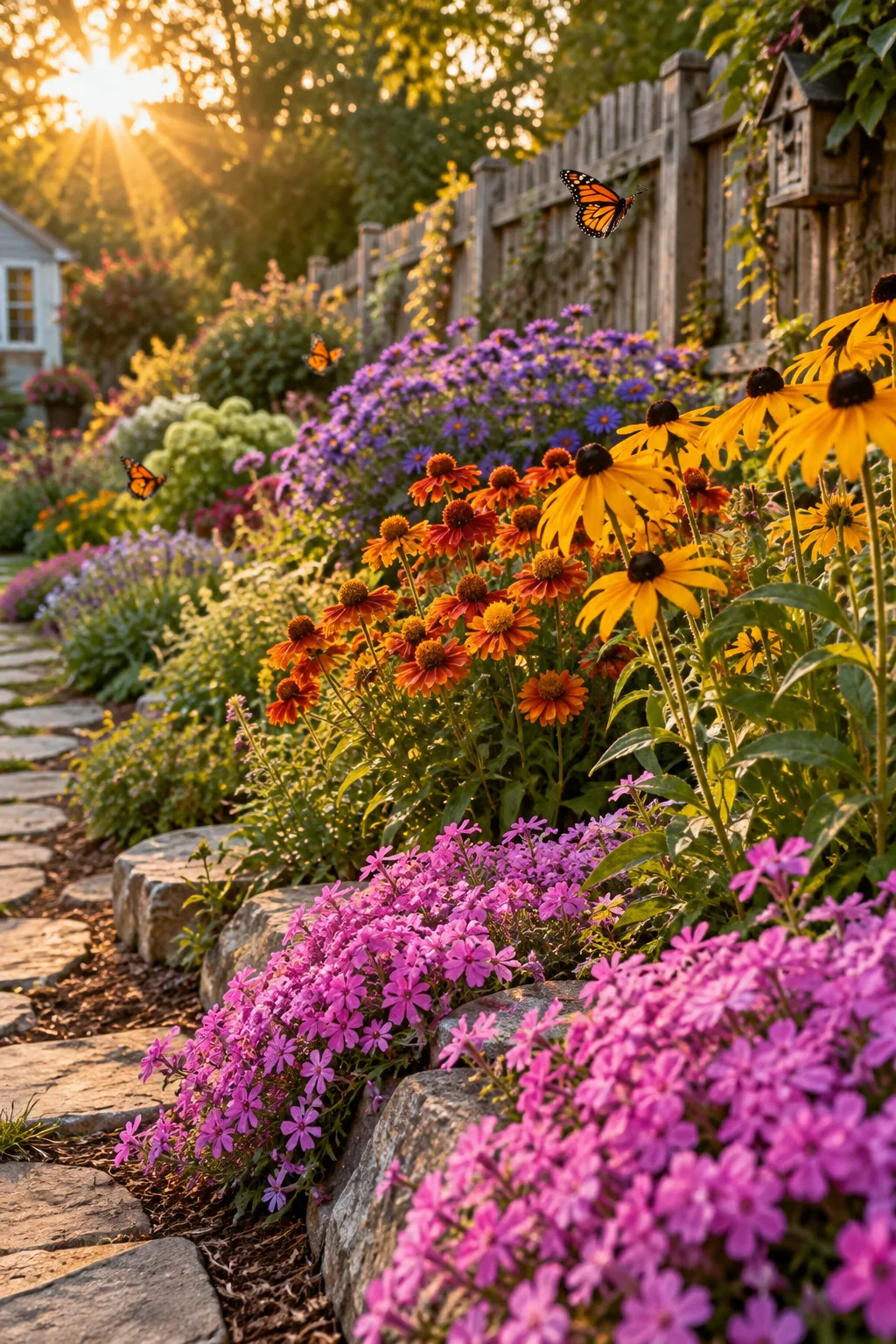
Planting flowers with different bloom times guarantees a steady food supply from early spring until the first frost. Butterflies wake up hungry and need late-season energy for migration. Mix early bloomers like creeping phlox with summer heavyweights and late-fall asters. This constant rotation keeps your yard alive with movement for months.
Why it works: Planting flowers with different bloom times guarantees a steady food supply from early spring until the first frost.
7. Add Flat Basking Stones
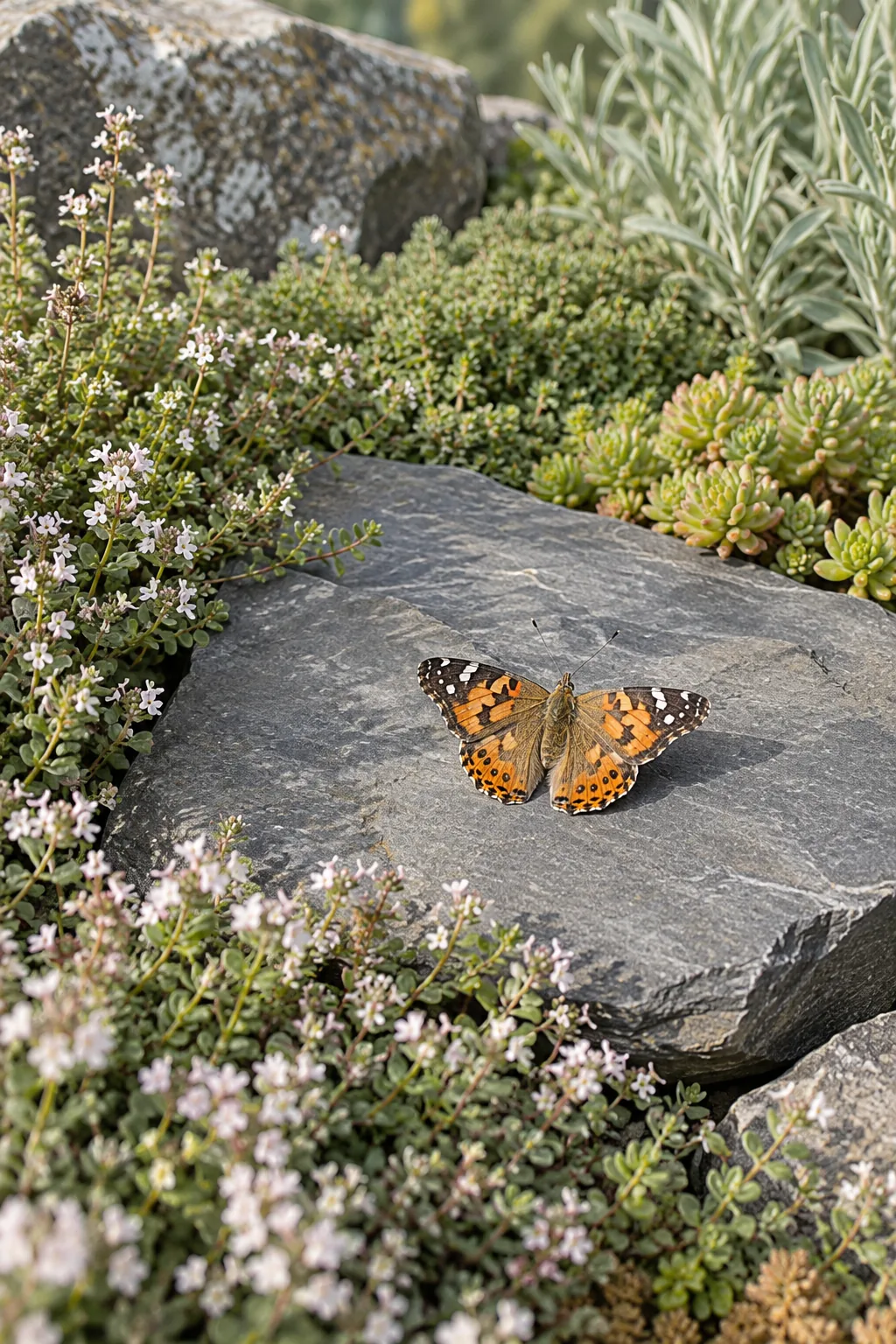
Butterflies love to bask on warm surfaces early in the morning to heat up their flight muscles. A large, flat basking stone placed in the sunniest spot of your garden acts like a natural solar panel for them. I usually hunt for a dark piece of slate or a smooth river rock. Nestle it right among the low-growing ground cover so they feel hidden from birds.
8. Dedicate a Native Plant Border
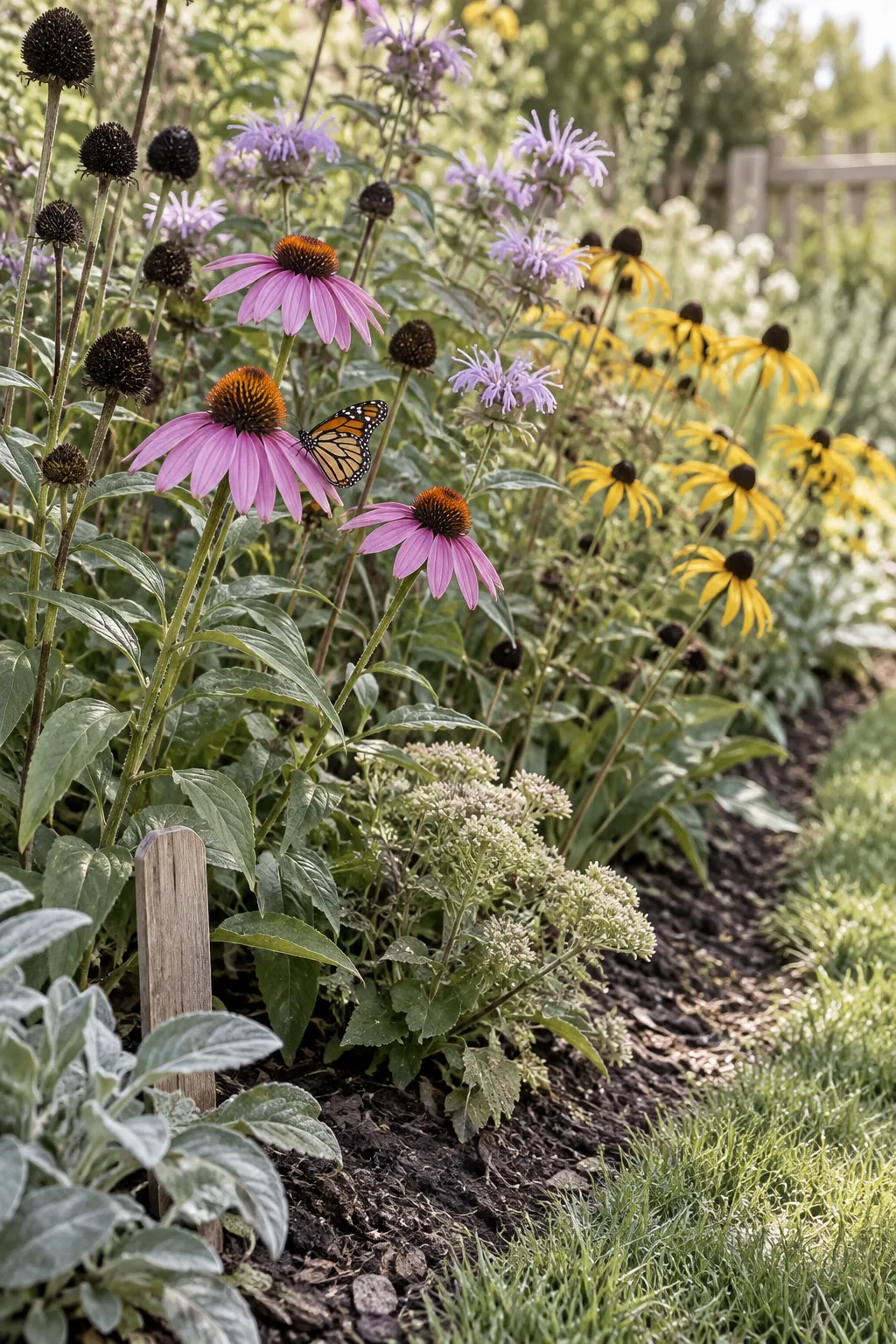
My absolute favorite thing I ever added to my yard was a dedicated native plant border. Native flowers evolved alongside local butterflies, making them the absolute best food source you can offer. I dug up a strip of struggling lawn and threw down a regional wildflower seed mix. Now it requires zero fertilizer and brings in species I had never seen before.
9. Design with Tiered Heights
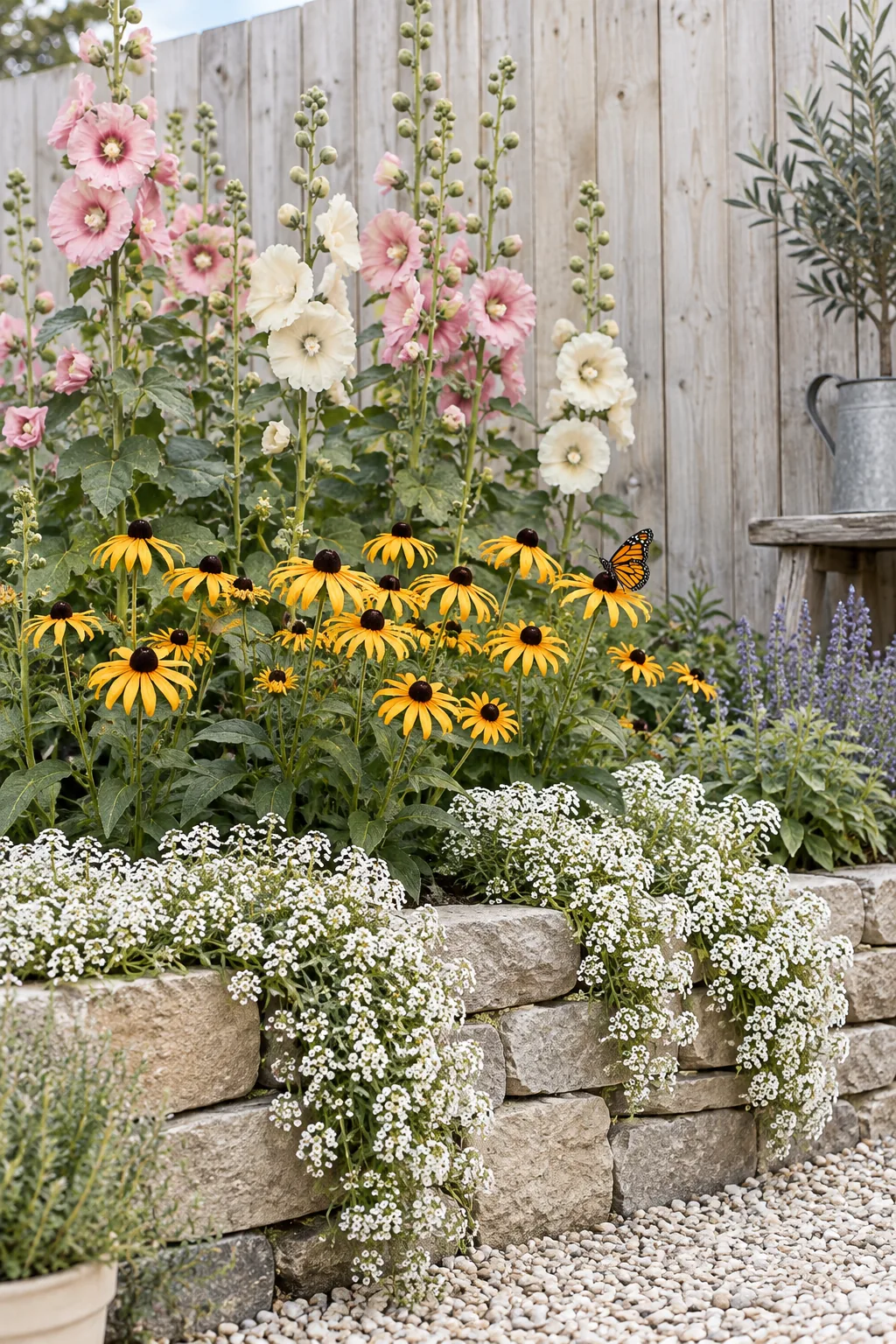
A tiered garden design creates a lush, wild look while giving pollinators different feeding heights. Tall hollyhocks in the back give way to medium black-eyed Susans, with trailing alyssum spilling over the front edges. This staircase effect means every single bloom gets direct sunlight. It also makes your flower beds look incredibly full and professionally landscaped.
10. Stick to Warm, Vibrant Colors
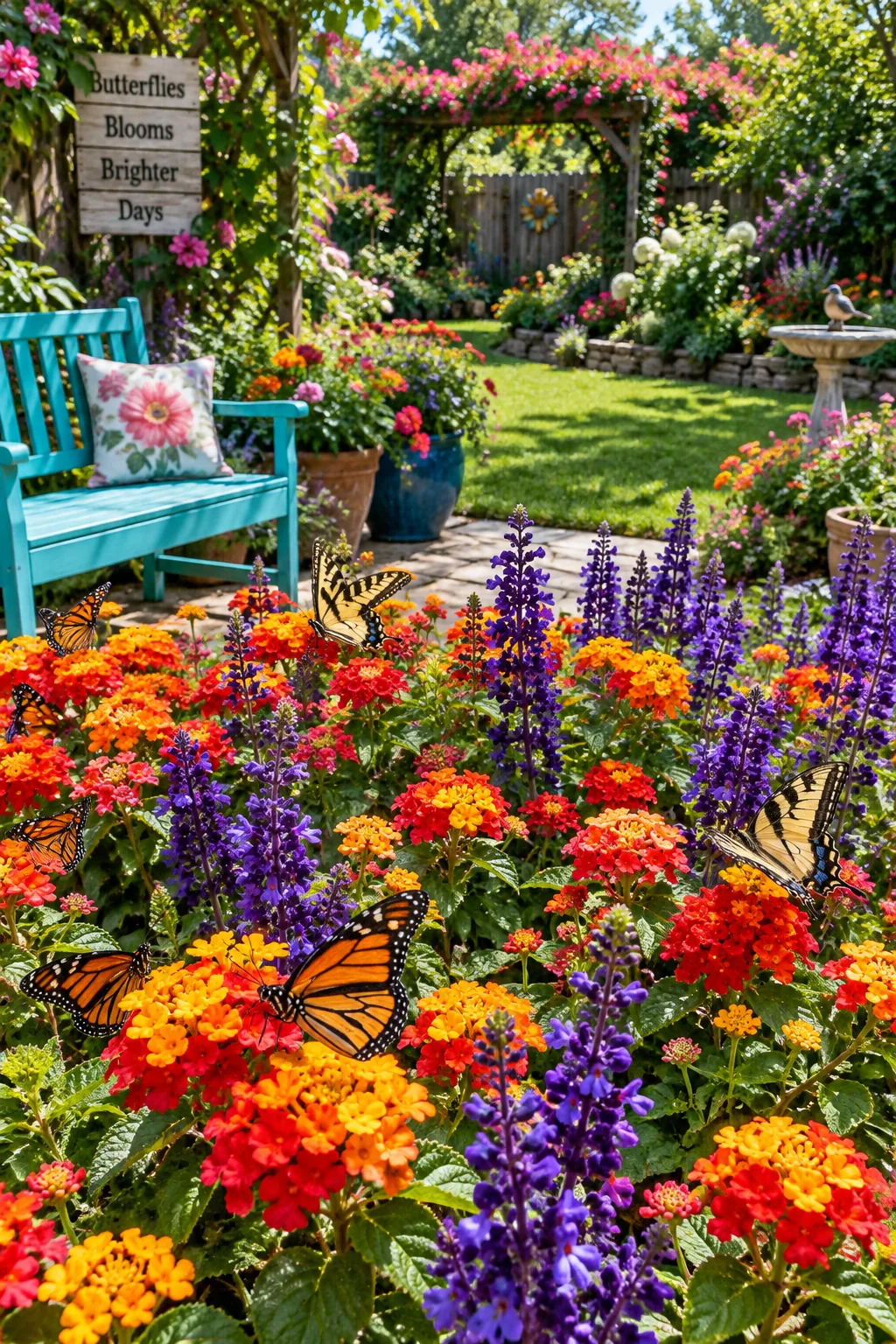
Butterflies have a visual spectrum that makes them highly attracted to red, yellow, orange, and purple flowers. They tend to ignore green and white blooms entirely.
Sticking to a vibrant, warm-toned color palette acts like a neon sign for passing pollinators. I love mixing fiery lantana with deep purple salvia.
The contrast pops beautifully against a green lawn. Plus, flat-topped flowers in these shades give them a perfect landing pad.
11. Hang a Fruit Feeding Station
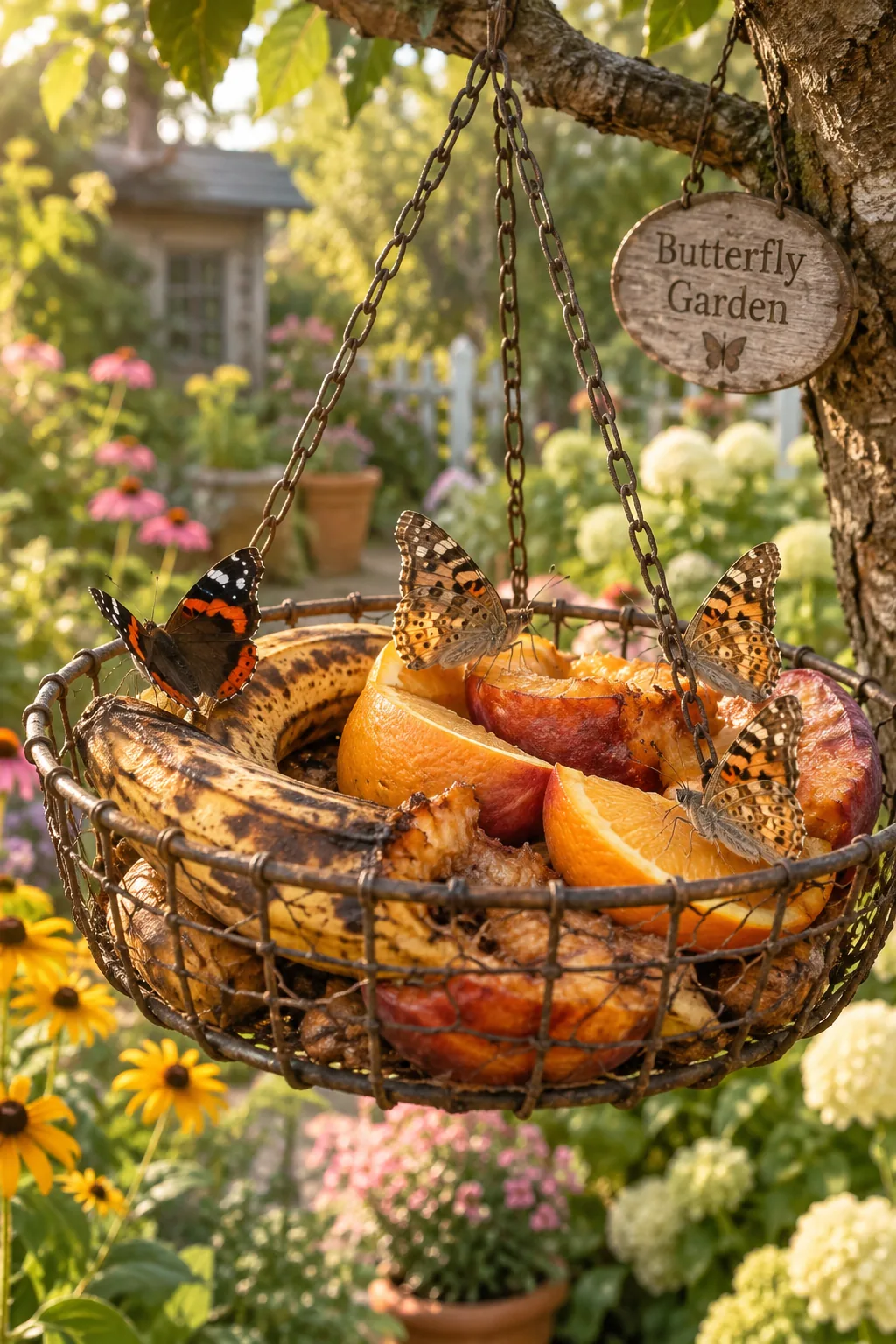
Overripe fruit sitting on the compost pile always attracts a massive crowd of painted ladies and red admirals. You can make a simple feeding station by hanging a small wire basket from a tree branch. Toss in your mushy bananas, sliced oranges, and bruised peaches. The natural sugars ferment slightly in the heat, providing a huge energy boost for the adults.