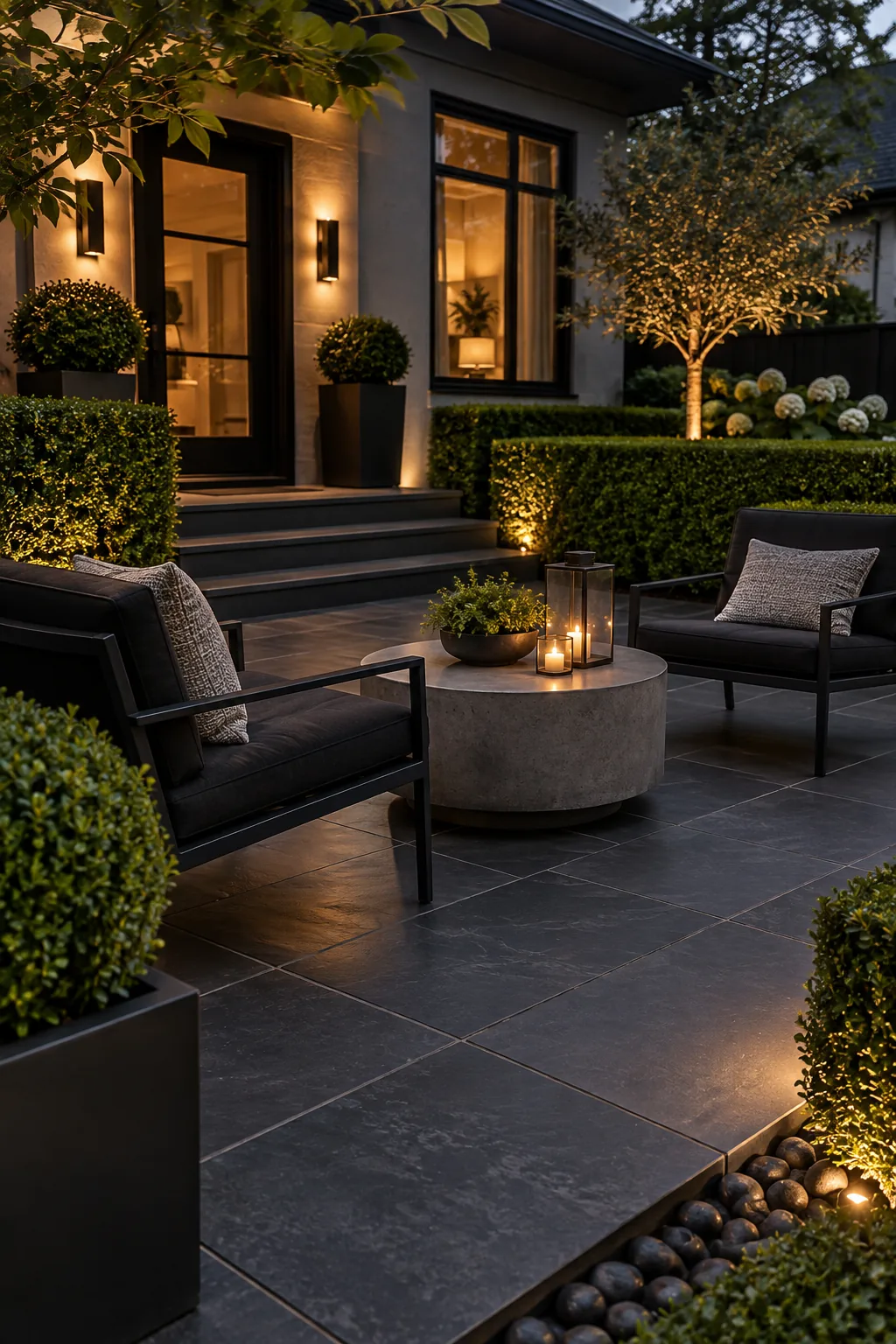
Front Yard Patio Layout: The Complete Spacing Guide
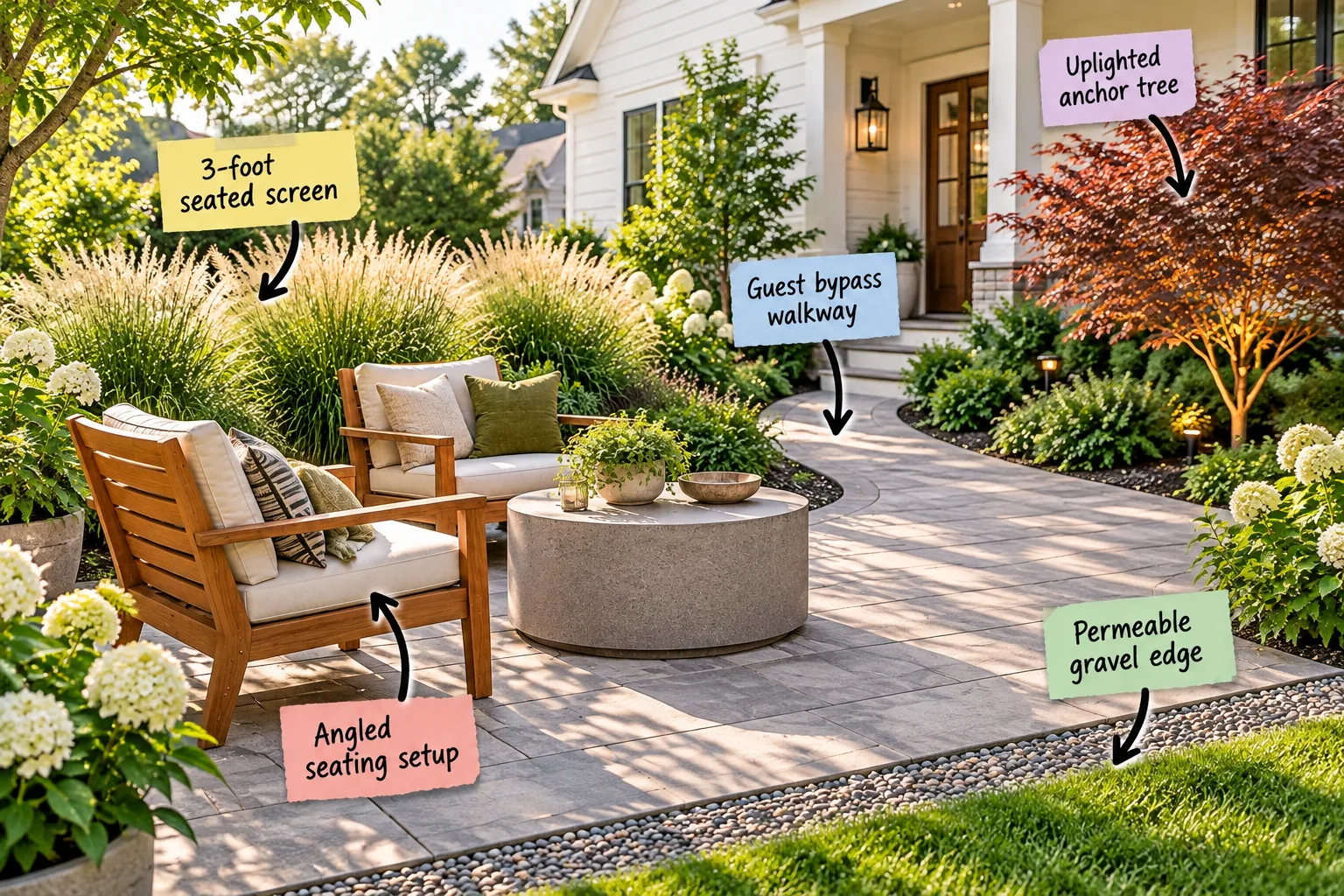
If you have been wondering how to plan the perfect front yard retreat, our downloadable Front Patio Spacing Guide gives you the exact dimensions you need to balance privacy, seating, and walkways. You will be able to measure, place, and arrange every zone using real designer clearances so your space feels welcoming without sacrificing traffic flow.
The Front Patio Spacing Guide
Establishing a functional footprint is the secret to a front yard patio that feels intentional rather than cramped. Start by downloading your spacing guide and mapping out a 10×12 foot minimum footprint, which comfortably fits standard seating without overwhelming your front lawn.
Before you finalize your layout and start ordering expensive pavers, verify these three critical site conditions to avoid costly teardowns later.
Sizing Your Primary Gathering Zone
Your primary gathering zone requires enough square footage to accommodate furniture while leaving breathing room around the edges. I always recommend adding an extra 24 inches of depth beyond your furniture footprint so chairs never slip off the patio.
| Furniture Layout | Minimum Width | Minimum Depth |
|---|---|---|
| Two Chairs & Table | 8 feet | 6 feet |
| Four Chairs Circular | 10 feet | 10 feet |
| Sofa & Two Chairs | 12 feet | 10 feet |
Using these baseline dimensions ensures your family can actually relax and move freely without feeling boxed in by the surrounding landscaping.
Mapping the Property Lines
Staking out your property lines guarantees your new hardscape respects local zoning laws and neighbor boundaries. Drive wooden stakes at the corners of your planned patio and leave at least 36 inches of clearance from public sidewalks.
Digging the Perimeter Trench
Excavating a precise trench prevents your gravel from spilling out into the grass every time you mow. Use a half-moon edger to cut a straight, vertical wall exactly 4 inches deep along the lawn side.
- Remove the turf and topsoil carefully to avoid disturbing the compacted paver base.
- Line the bottom of the trench with commercial-grade weed barrier fabric.
- Tuck the fabric edges under the pavers to stop weeds from sprouting through the rocks.
Taking the time to install this fabric layer drastically reduces how much weeding you will need to do during the hot summer months.
The Permeable Gravel Edge
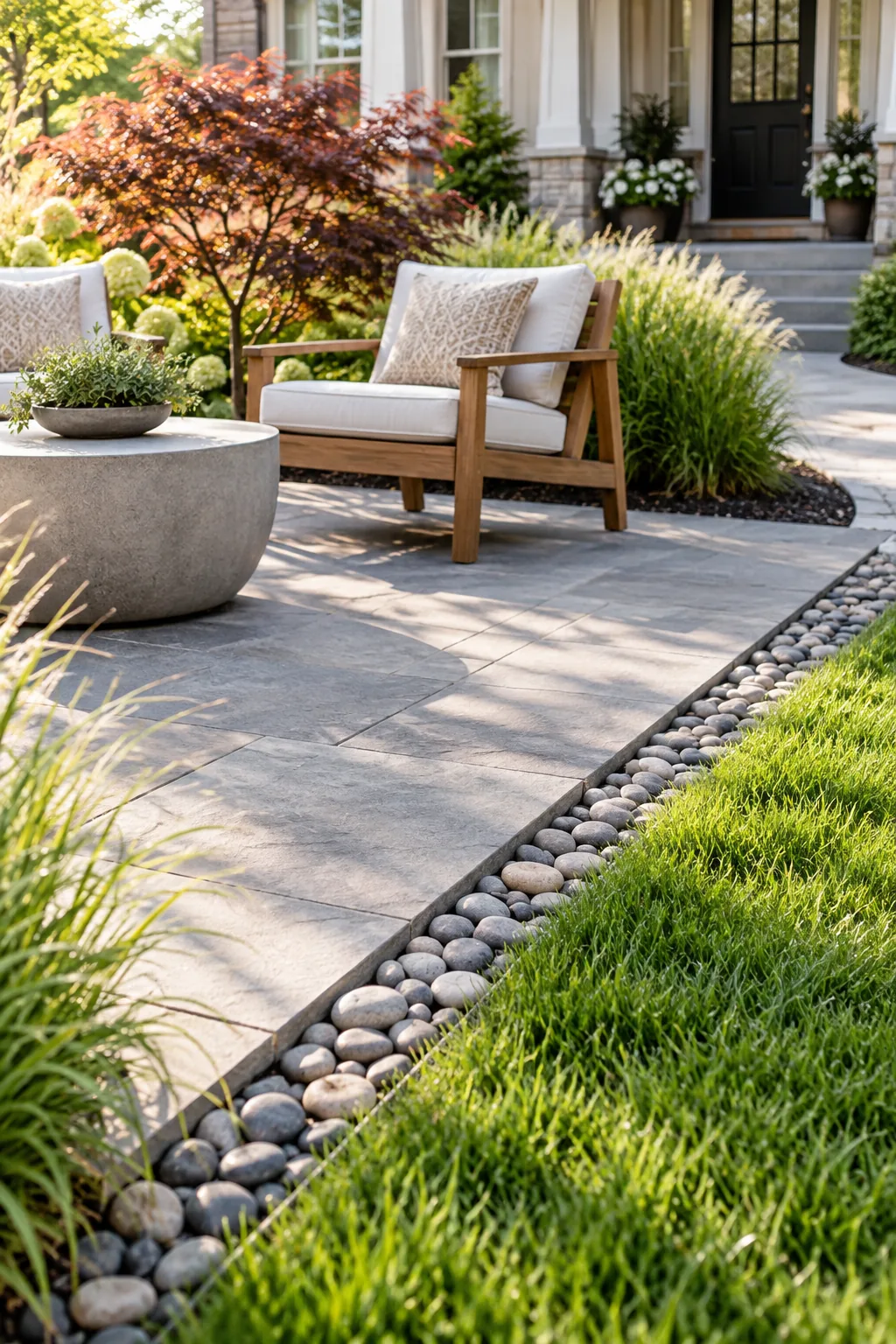
A clean transition between your hardscape and the lawn keeps the entire design looking crisp while actively managing rainwater runoff. Dig a 4 to 6-inch wide border trench along the perimeter to frame the paver space.
Fill this perimeter trench with 1-inch river rock to capture roof runoff and prevent muddy edges from creeping onto your clean patio.
Selecting the Right River Rock
The stone you choose for your permeable edge needs to be heavy enough to stay put during heavy rainstorms. Avoid lightweight pea gravel, which washes away easily, and opt for smooth, rounded river stones sized between 1 and 2 inches in diameter.
Preventing Weed Growth
Even with fabric installed, airborne seeds can eventually sprout in the dust that settles between your river rocks. Spraying a natural vinegar solution along the gravel border once a month keeps the edge looking perfectly manicured all season long.
Spacing Your Ornamental Grasses
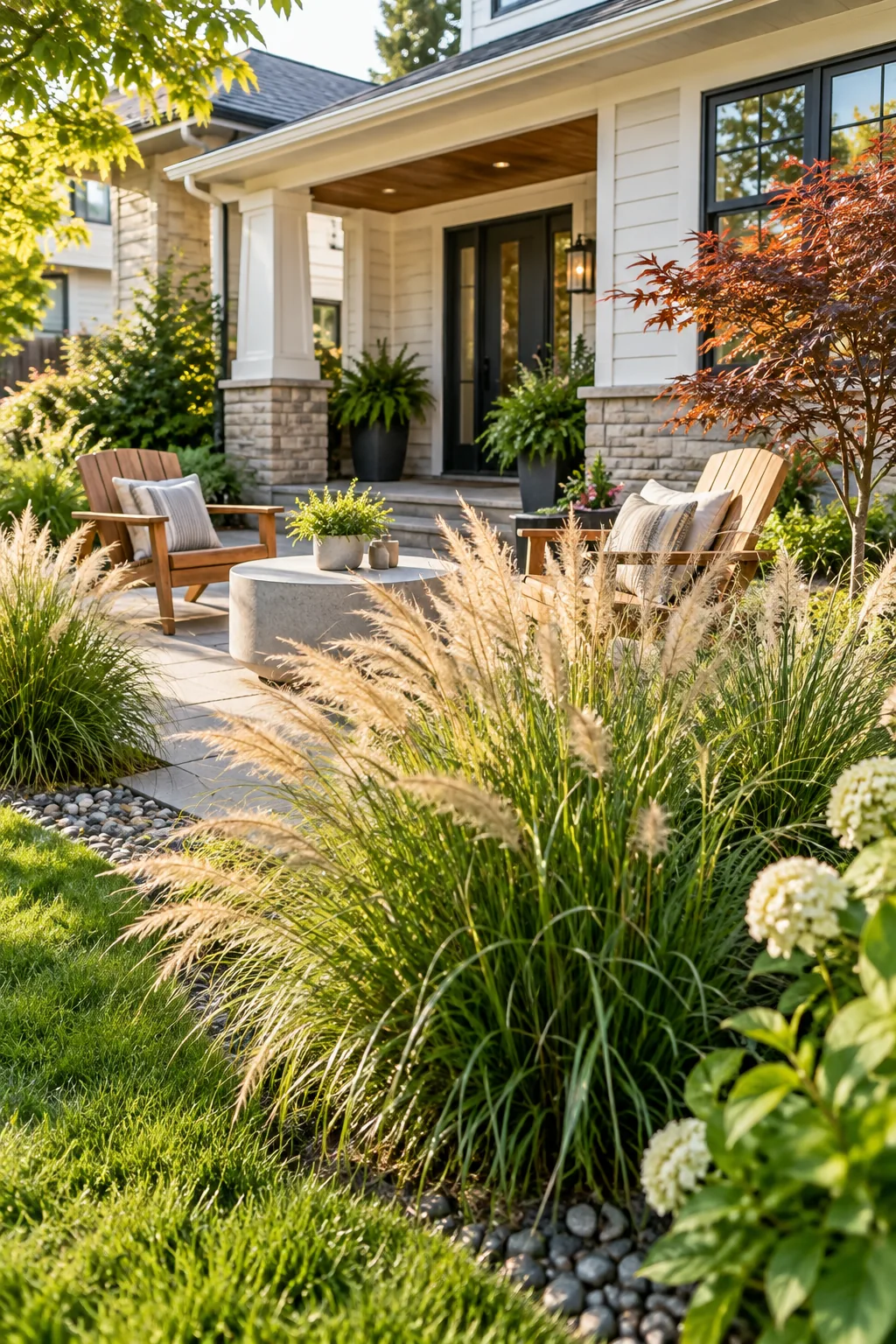
Planting your grasses at the correct intervals ensures they grow into a solid, continuous screen rather than looking spotty. Check the plant tag for the mature spread and space the root balls exactly 24 to 36 inches apart depending on the variety.
The 3-Foot Seated Screen
Creating a sense of privacy from the street without building an unfriendly fortress is all about strategic plant heights. I used dwarf fountain grass in my own Austin front yard, and it completely transformed how often we actually sit outside.
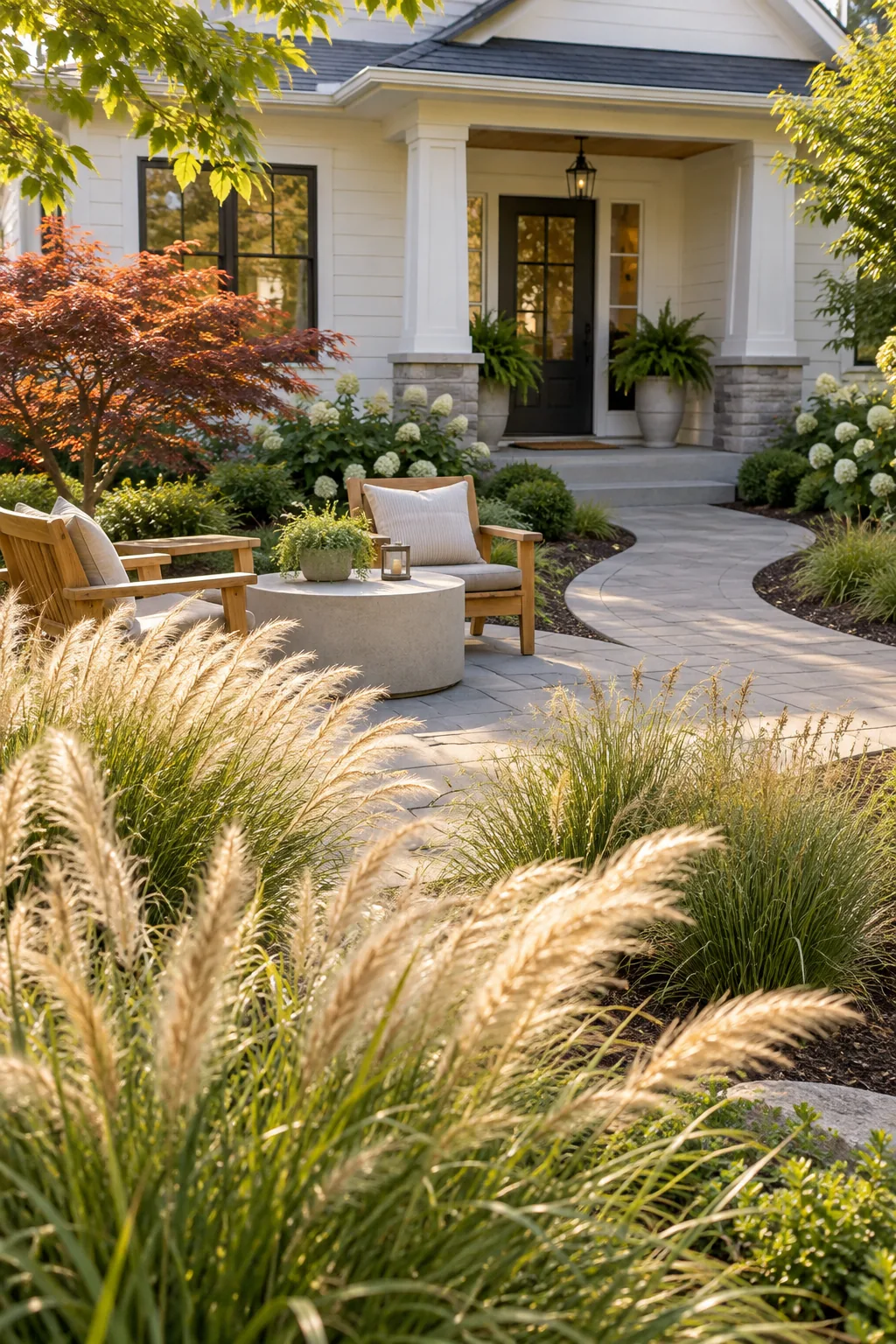
Select ornamental grass varieties with a 36-inch mature height to perfectly obscure seated guests while keeping your home’s beautiful facade visible to passersby.
Maintaining the Privacy Barrier
Keeping your natural screen looking tidy requires a heavy annual pruning just before the spring growth begins. Cut the dormant grass blades down to 4 inches above the soil using sharp hedge clippers to encourage lush new shoots.
Watering Your Boundary Plants
Newly planted ornamental grasses need consistent moisture to establish deep roots along your patio edge. Install a simple drip irrigation line beneath the mulch to deliver water directly to the root zone without constantly wetting the foliage.
Routing Traffic Away From Seating
A gentle curve in your walkway naturally directs foot traffic around the patio rather than straight through it. Sweep the path outward by at least 24 inches from the edge of your furniture zone to create a comfortable buffer.
The Guest Bypass Walkway
Visitors need a clear, welcoming path to your front door that doesn’t force them to weave through your morning coffee setup. When I first laid out my path, I made it too narrow and guests kept clipping the chairs!
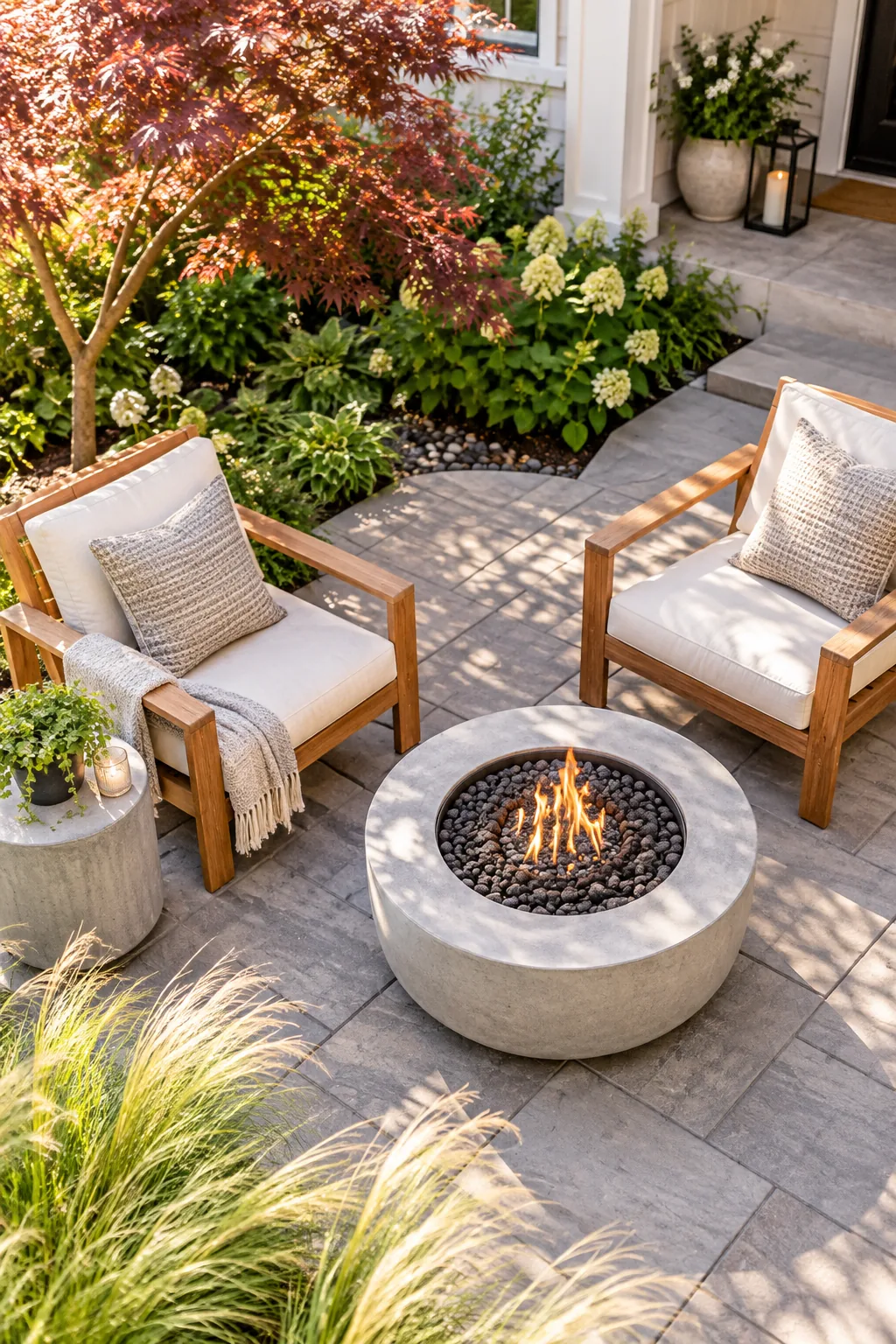
Design a minimum 48-inch pathway width for this main artery so two people can walk side-by-side without interrupting the seating area.
Choosing Non-Slip Walkway Pavers
The materials you select for this high-traffic bypass route must remain safe even when wet from morning dew or rain. Choose concrete pavers with a heavy textured finish rather than smooth, polished natural stone that gets incredibly slick.
Leveling the Pathway Surface
A perfectly level walkway prevents tripping hazards for visitors approaching your front porch. Use a 4-foot level across the pavers during installation, ensuring a slight 1-inch drop per 4 feet away from the house for proper drainage.
Positioning the Anchor Chairs
Start your furniture arrangement by placing the heaviest chairs at the back corners of the patio footprint. This grounds the layout and gives you a clear visual boundary for placing the smaller accent pieces without crowding the walkway.
The Angled Seating Setup
How you position your furniture dictates whether the space feels like a waiting room or a cozy outdoor living room. I always tell my workshop attendees that simply rotating their chairs changes the entire vibe of the yard.
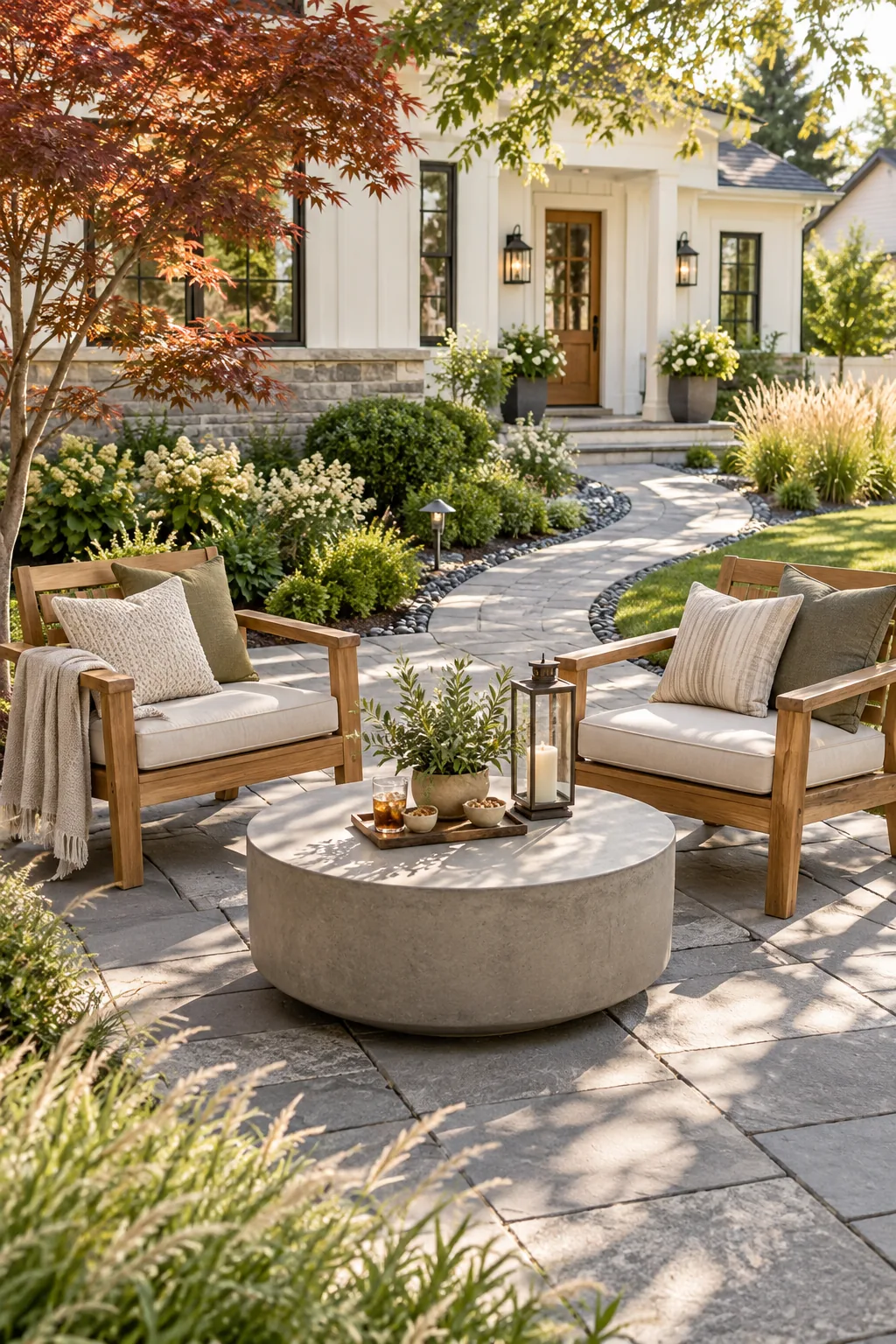
Turn your chairs inward at a 15 to 30-degree angle to encourage conversation rather than having your guests stare blankly at the street.
Selecting Weather-Resistant Furniture
Front yard furniture takes a beating from both neighborhood activity and daily sun exposure. Invest in solid teak or powder-coated aluminum frames that will not rust or blow away during strong seasonal storms.
Securing Cushions in High Winds
Nothing ruins a relaxing patio faster than chasing your seat cushions down the street after a gust of wind. Always buy cushions equipped with sturdy fabric ties or velcro straps that anchor directly to the chair frame.
Sizing the Center Coffee Table
The diameter of your coffee table should comfortably service all surrounding chairs without dominating the center space. A 30 to 36-inch round table is usually the perfect scale for a standard four-chair setup.
Coffee Table Clearance
Once your chairs are angled, you need to lock in the ergonomic spacing around your center table so everyone can relax comfortably. Pushing furniture too close together makes the patio feel instantly cluttered and impossible to navigate.
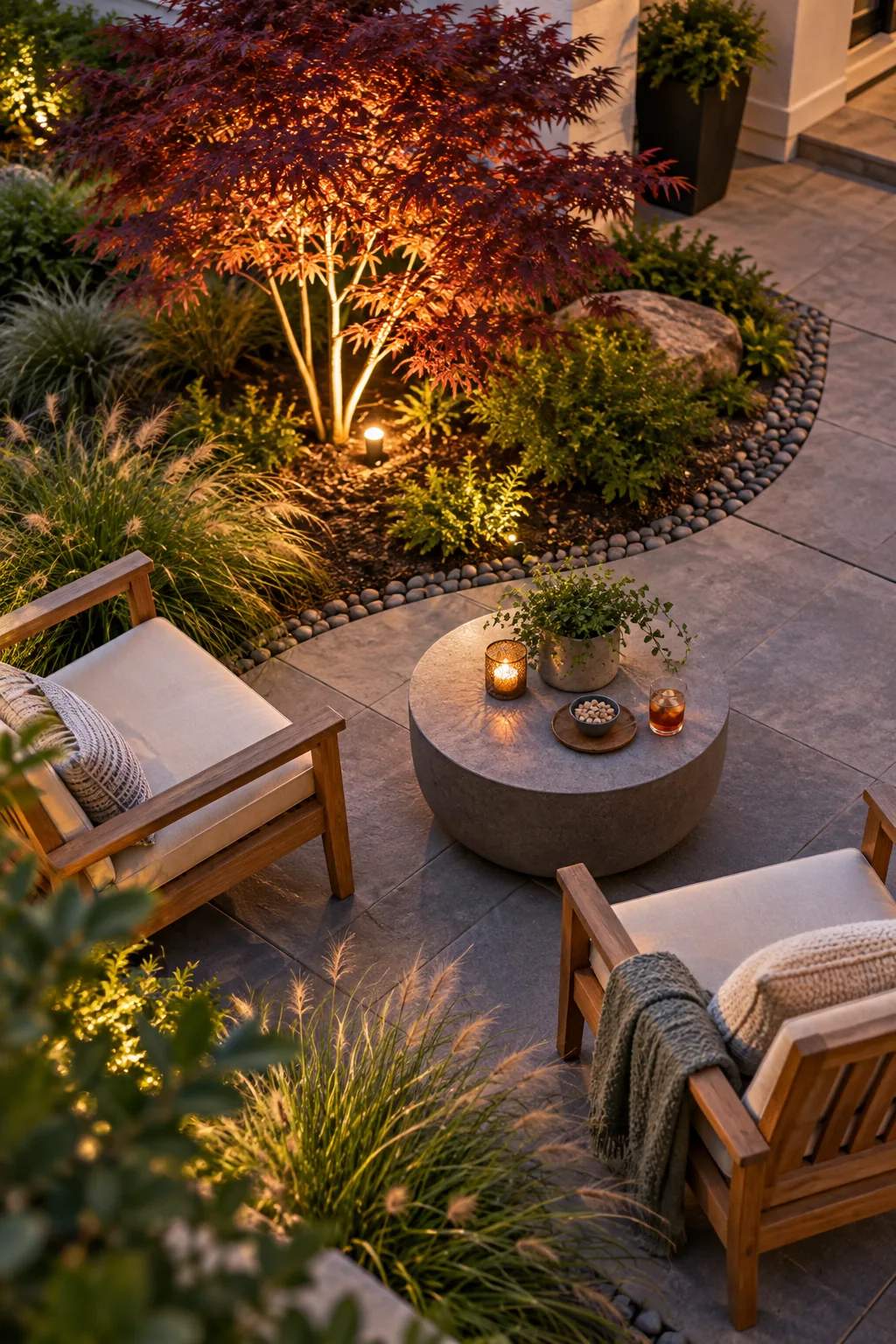
Leave exactly 14 to 18 inches of clearance between the seat edge and the table for easy beverage reach without crowding legroom.
Leaving Room for Foot Traffic
Beyond the immediate table clearance, ensure there is enough room behind the chairs for people to pull out and sit down. Maintain at least 24 inches of walk space behind any chair backed up against the patio edge.
Selecting a Heavy Concrete Table
A substantial center table anchors the entire seating arrangement and withstands heavy weather beautifully. Concrete or composite stone tables offer the perfect weight and durability for an exposed front yard environment.
Selecting a Compact Ornamental Tree
The tree you choose must stay small enough that its mature canopy will not eventually overwhelm the seating area. Japanese maples or dwarf redbuds are excellent choices because they rarely exceed 15 feet in height when fully grown.
Wiring the Low-Voltage Lighting
Burying your landscape lighting wires protects them from lawnmowers and keeps the patio looking professionally installed. Dig a narrow 6-inch slit trench along the paver edge to safely hide the low-voltage cables from sight.
The Uplighted Anchor Tree
Anchor the corner nearest your house with a small ornamental tree to give the patio essential vertical interest. I planted a beautiful little laceleaf maple by my porch, and lighting it up was the best design decision I made.
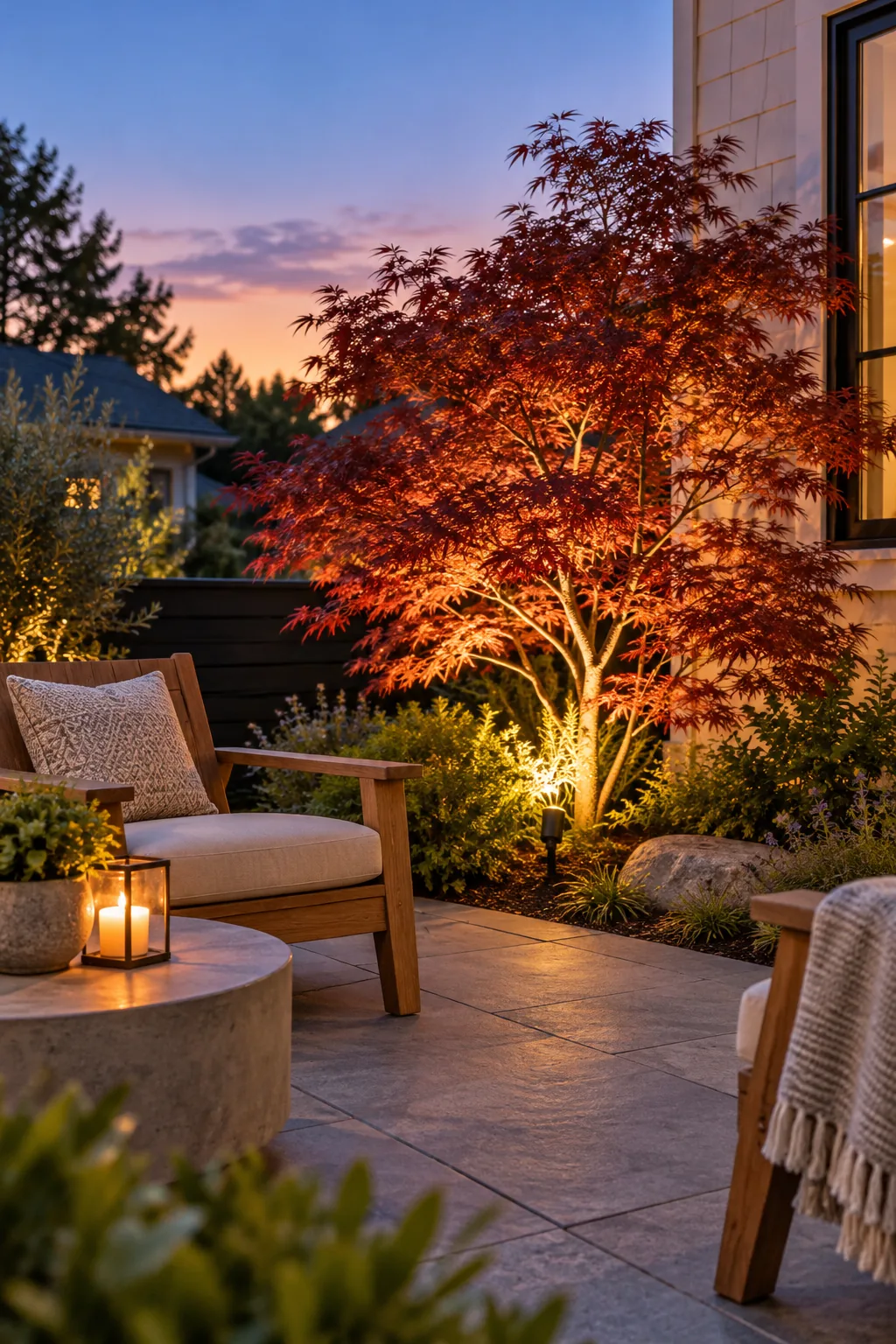
To get that high-end architectural look at night, the exact placement of your landscape lighting matters just as much as the fixture itself.
4 Front Patio Styles to Inspire Your Layout
Once you have the spacing down, choose a material palette that complements your home's exterior.
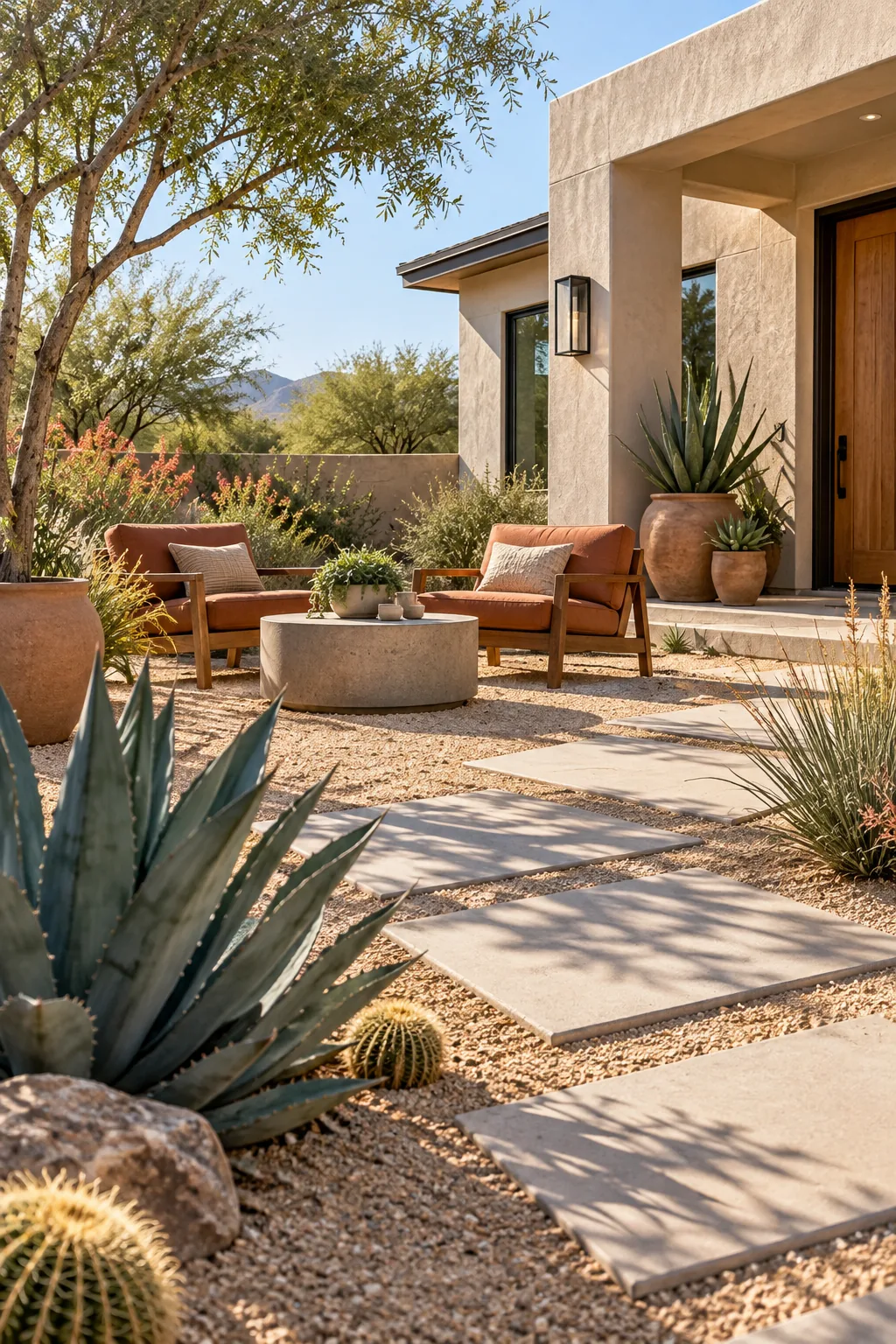
Modern Desert: Swap traditional pavers for oversized concrete pads and gravel to achieve a drought-tolerant, architectural look.
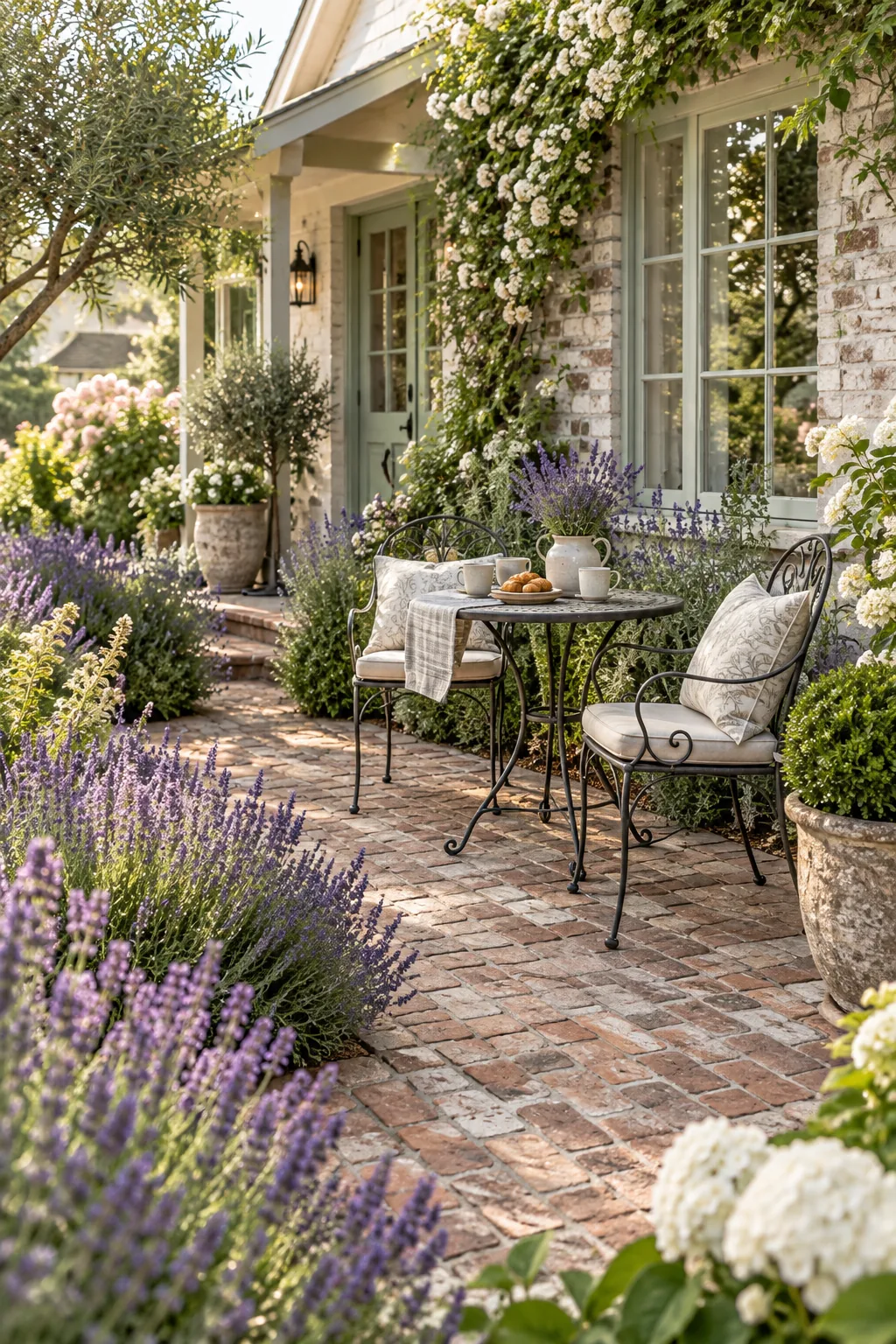
Cottage Garden: Reclaimed brick laid in a herringbone pattern brings instant historic charm when bordered by fragrant lavender.
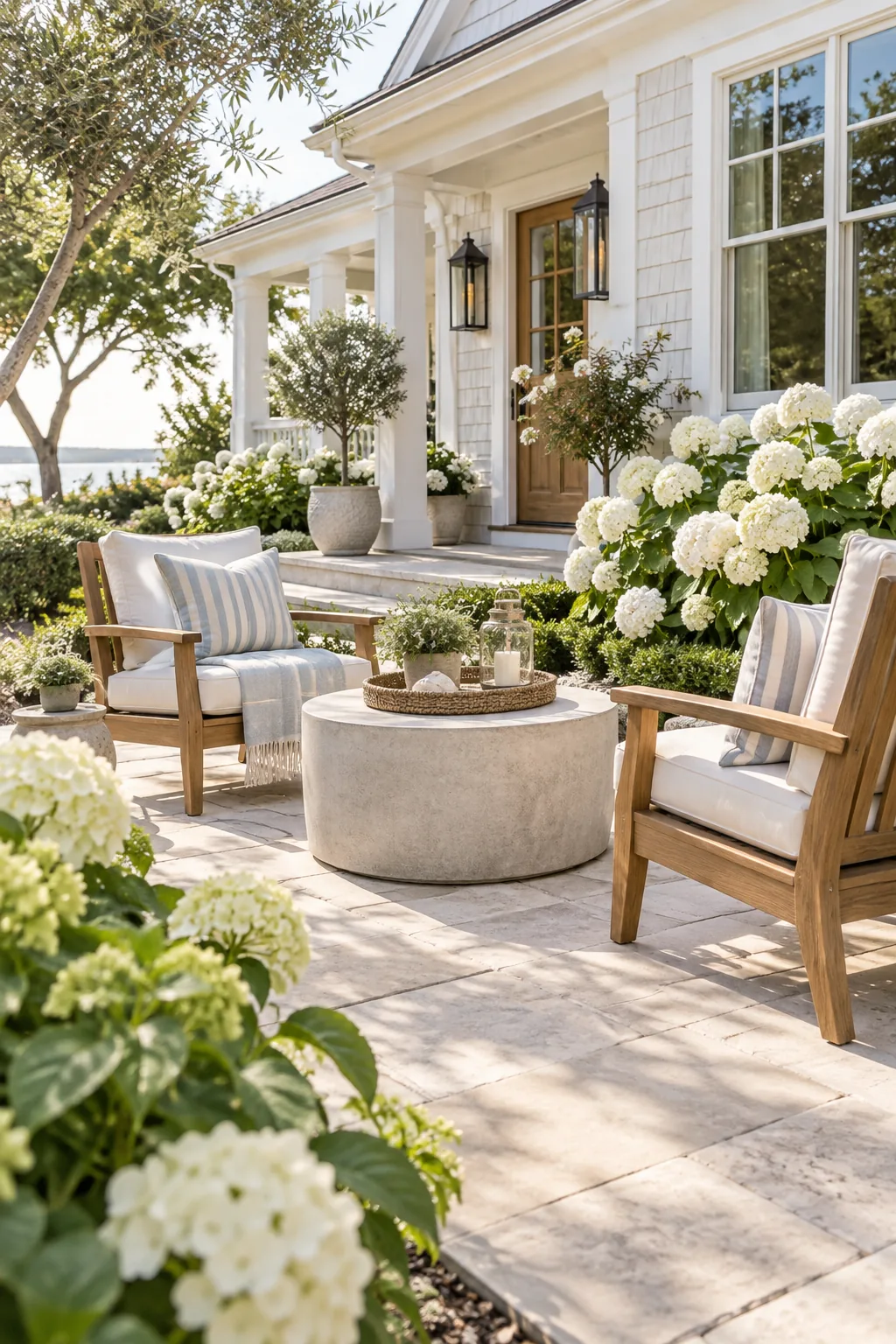
Coastal Transitional: Pale limestone reflects the sun beautifully while classic teak furniture withstands salty coastal breezes.
Urban Minimalist: Stick to a strict palette of dark slate, crisp white, and deep green for a sophisticated city exterior.