
Outdoor Furniture Layout Guide: Clearances & Tape-Out Sheet
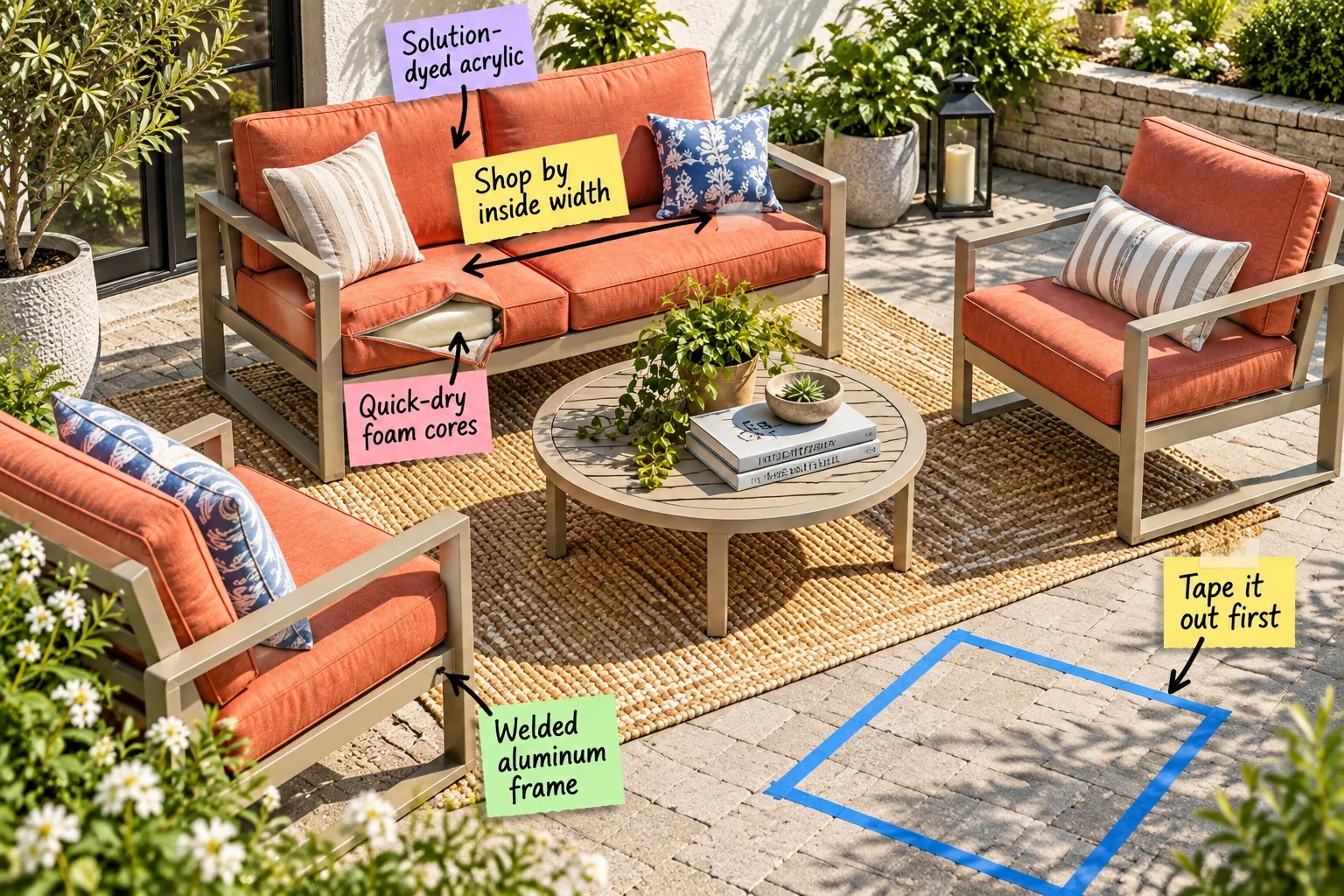
Grab our printable Patio Clearance Sheet to map exact walk paths, tape out your furniture footprint, and confidently choose durable outdoor materials. You will easily measure exact clearances and test layouts on your patio before buying a single piece.
Visualizing the Footprint with Tape
In my own Denver backyard, I always mark out a new layout with blue painter’s tape to reveal exactly how much breathing room remains around the pieces. This physical outline helps you test the crucial 18-inch reach distance between a sofa and a coffee table.
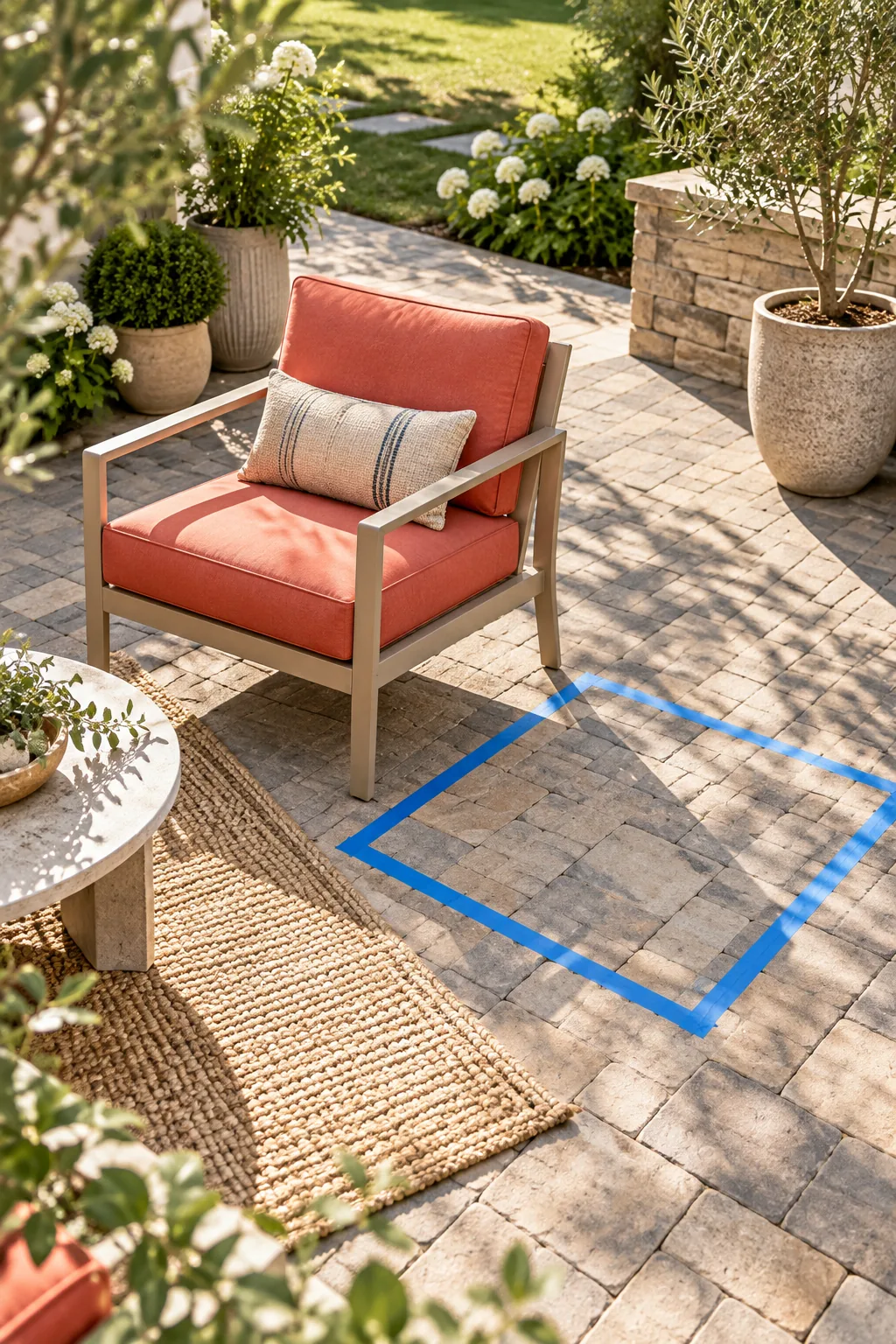
Testing the Coffee Table Reach
Leaving too much space in the center of your seating arrangement makes conversation difficult and forces guests to strain when setting down a drink. Keep your central tables within easy arm’s reach while maintaining enough clearance for knees and legs.
Your Printable Clearance & Tape-Out Guide
I created The Patio Clearance Sheet after watching too many clients order oversized sectionals that completely blocked their sliding glass doors. Keep this printable guide handy for standard measurements, like maintaining 36-inch main walk paths across your patio.
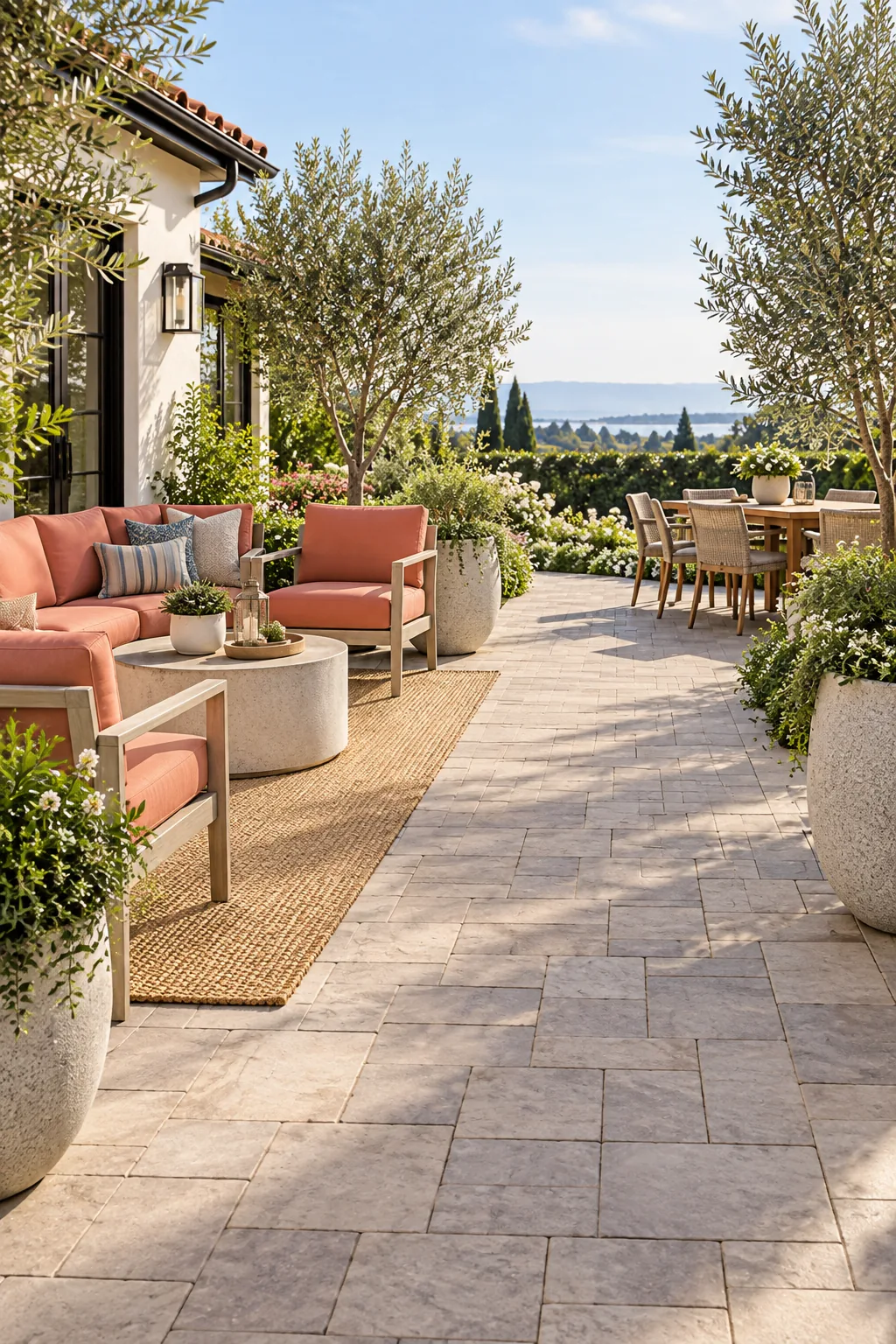
Before you start marking up the pavers, gather a few basic supplies and follow this sequence to ensure your floor plan is accurate and easy to adjust.
Mapping the Main Traffic Arteries
Primary pathways connecting your house to the lawn or pool require generous proportions to prevent bottlenecks during busy summer gatherings. Treat these routes like indoor hallways, ensuring no chair backs or side tables encroach on the necessary walking space.
Securing Secondary Walkways
Minor paths between individual lounge chairs or around fire pits can be slightly tighter but still demand spatial respect. Always preserve a minimum of 24 inches for these secondary routes so guests can navigate the perimeter without awkwardly stepping into the landscaping.
Essential Walk Paths & Dining Push-Back
For dining areas, always measure 36 inches from the table edge to any wall so guests can push back comfortably. Generous clearances anchor the seating zone and prevent dangerous tripping hazards along your main traffic routes when chairs are pulled out.
Accommodating Heavy Dining Chairs
Outdoor dining chairs are often significantly heavier than their indoor counterparts, making them much harder to slide across textured stone or brick. Providing ample push-back clearance ensures your guests never feel trapped against a heavy railing or built-in planter box.
Grounding the Space with Rug Overhang
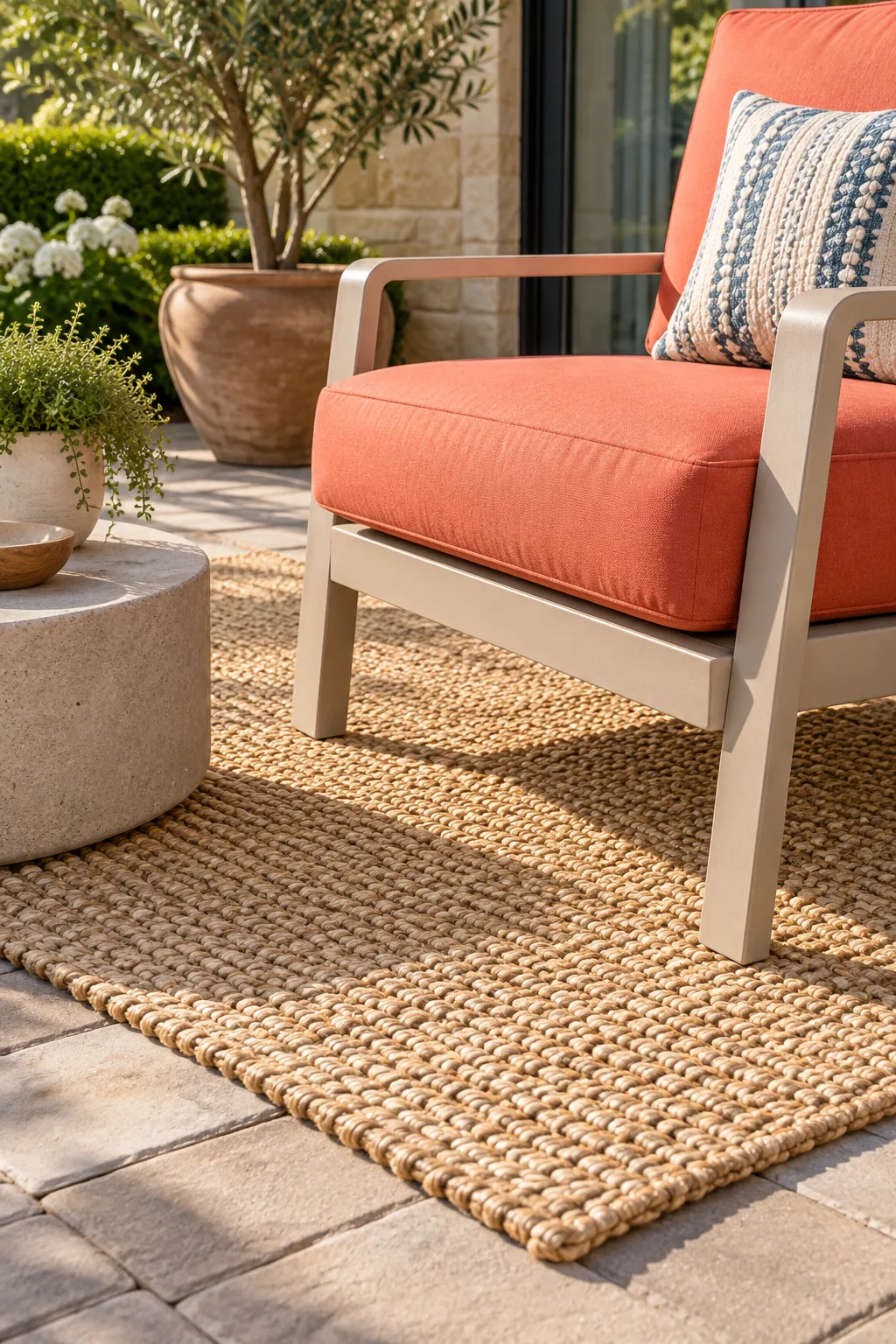
An outdoor rug visually anchors a seating zone, but it must extend at least 12 to 24 inches beyond the front legs to keep the arrangement looking intentional. Matching your rug dimensions to your furniture layout prevents the patio from feeling disjointed.
| Furniture Layout | Minimum Rug Overhang | Ideal Rug Size |
|---|---|---|
| Sofa & two chairs | 12 inches front legs | 8×10 feet |
| Dining table (4 seats) | 24 inches all sides | 9×12 feet |
Sizing Rugs for Sectional Sofas
Large L-shaped sectionals demand even larger textiles to ensure the corner piece does not awkwardly straddle the binding edge. Always size up to a generous nine-by-twelve rug when working with massive modular units to maintain a cohesive, grounded aesthetic.
Selecting the Right Rug Material
Even the perfectly sized rug will fail if it absorbs too much rainwater and refuses to dry. Seek out tightly woven polypropylene fibers that naturally repel moisture and resist the mildew growth commonly found in natural jute or sisal alternatives.
Planning for Fire Pit Clearances
Open flames require far more caution than a standard coffee table when positioning your surrounding lounge chairs. Maintain a strict minimum of 36 inches between the fire pit edge and your seating to protect synthetic fabrics from stray sparks and extreme heat.
Incorporating Cantilever Umbrellas
Massive cantilever umbrellas provide essential shade but demand a substantial footprint for their heavy weighted bases. Tape out a dedicated three-foot square tucked slightly behind your main sofa to accommodate the base without obstructing your carefully planned primary walking paths.
Leaving Room for Planters
Lush potted greenery softens the harsh edges of metal furniture, but these heavy containers quickly consume valuable square footage. Always mark out your intended planter locations with tape to ensure they do not awkwardly pinch the entrances to your main seating zone.
Testing the Layout at Night
A floor plan that flows beautifully during the day can become a treacherous obstacle course after the sun goes down. Walk your taped-out footprint at night using only your exterior landscape lighting to identify any subtle tripping hazards or confusing transitions.
Measuring Usable Seat Space
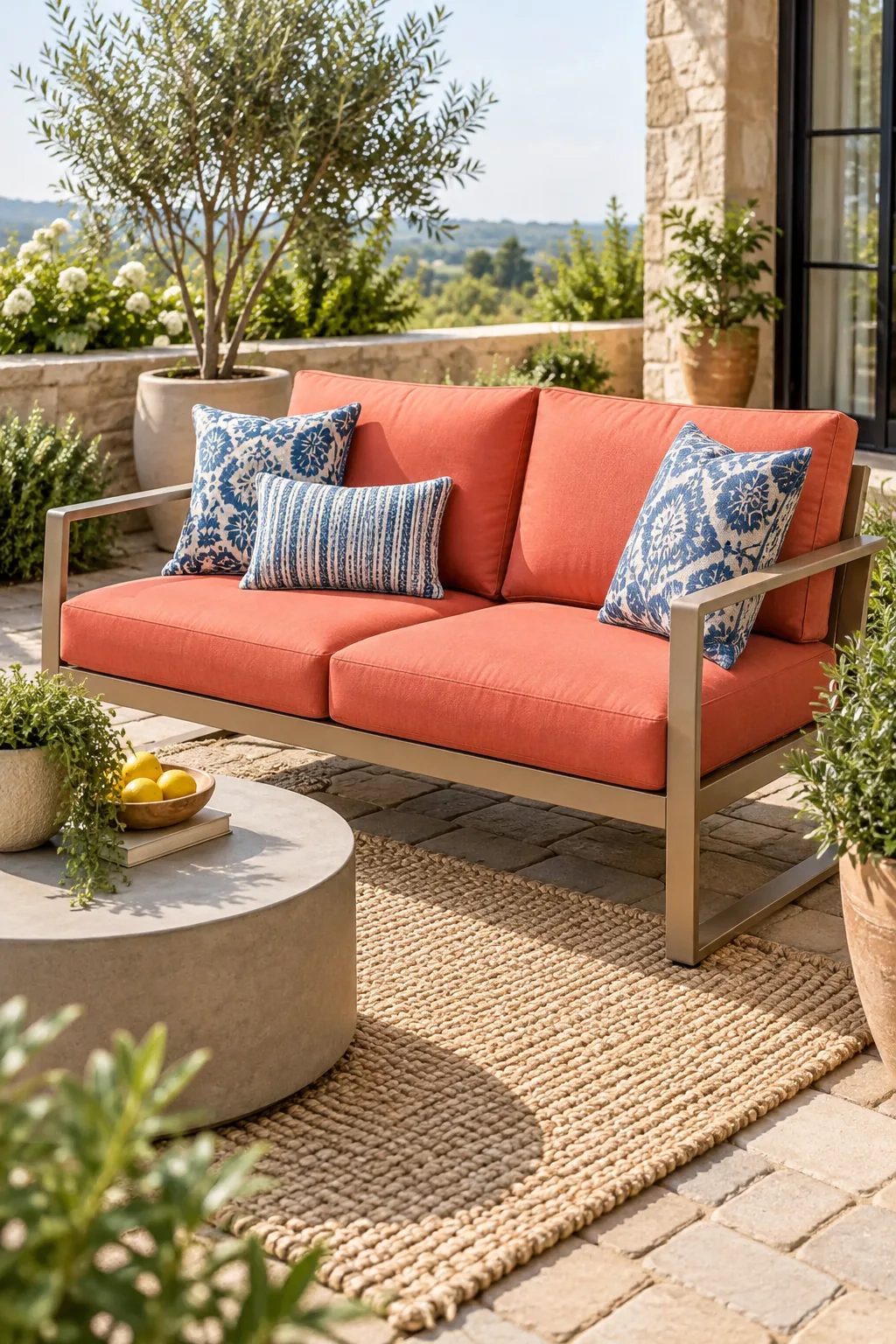
Overall frame width is highly deceptive on pieces with thick, angled arms, so you must always shop by inside width to determine the actual usable space. Look for a minimum of 24 inches of inside width per person to guarantee comfortable lounging.
Accounting for Angled Backrests
Deep seating requires careful attention to the backrest pitch, as a severe angle pushes the body forward and reduces the effective depth of the cushion. Test the pitch against your own height to ensure your knees bend naturally at the frame edge.
Evaluating Seat Height Clearances
Low-profile modern furniture looks incredibly sleek but can be punishing on the knees when standing up. Ensure your seat height remains close to the standard 18 inches if you frequently host older relatives who appreciate a more supportive, accessible lounge chair.
Matching Tables to Sofa Proportions
A delicate bistro table looks entirely out of place next to a massive, overstuffed sectional sofa. Always scale your accent tables to match the visual weight of your primary seating, ensuring the surfaces are easily reachable from a relaxed, reclined position.
Evaluating Frame Construction
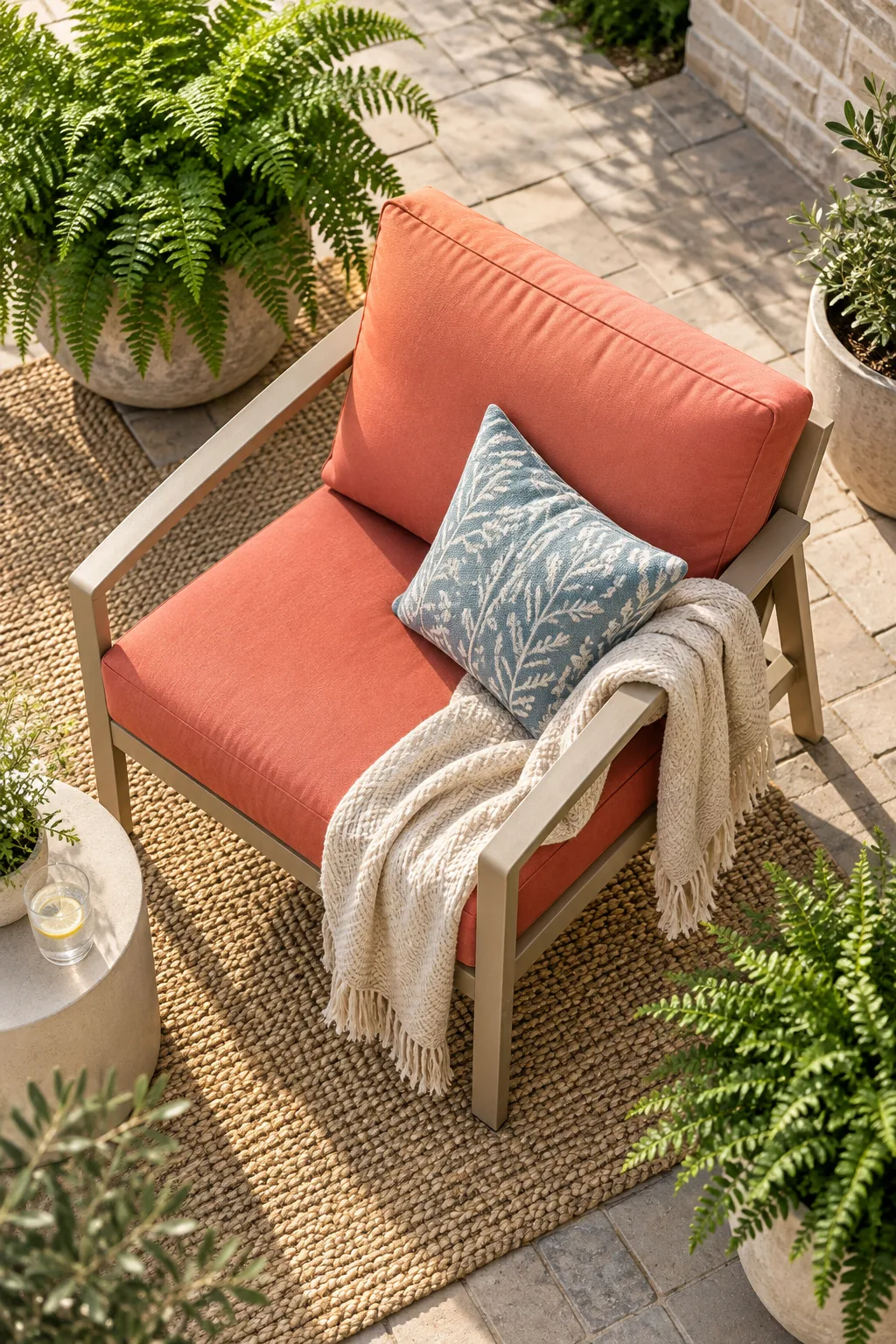
I recently replaced a client’s bolted patio set that collapsed in high winds, swapping it for a rigid, wobble-free welded aluminum frame. These seamless, continuous joints eliminate weak points and naturally resist rust, easily surviving heavy summer storms without bending.
Comparing Powder-Coated Finishes
Raw metal quickly succumbs to oxidation, making a baked-on powder coating essential for long-term durability in coastal or humid climates. This thick, resilient finish resists chipping and fading far better than standard liquid paint applications, keeping your frames looking pristine.
Checking Hardware and Fasteners
If your chosen furniture requires assembly, the included hardware must be capable of withstanding the elements alongside the frame. Always verify that every visible bolt and screw is forged from marine-grade stainless steel to prevent ugly rust streaks from ruining your pavers.
Upgrading to Quick-Dry Cores
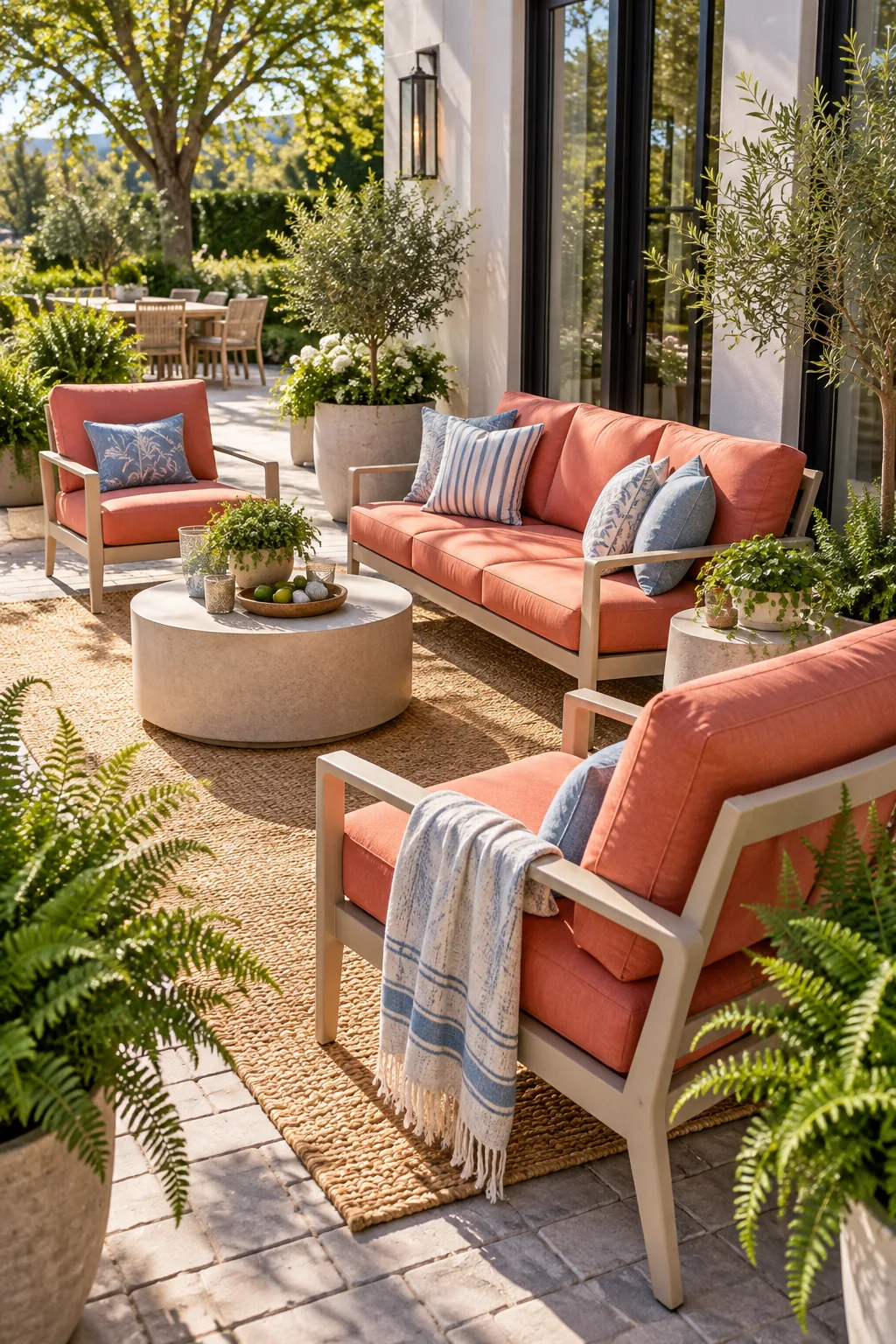
Standard indoor foam acts like a sponge, but specialized open-cell, quick-dry foam cores are designed to let heavy rainwater pass straight through the cushion. This porous interior ensures your seating is completely dry and ready to use just a few hours after a downpour.
Cushion Thickness and Density
A thicker cushion does not automatically guarantee better support if the internal foam lacks the proper density to hold your weight. Seek out firm, high-density inserts that measure at least five inches thick to prevent bottoming out against the rigid metal frame.
Adding Lumbar Support Pillows
Deep outdoor sofas often lack the targeted lower back support necessary for extended afternoon reading sessions. Incorporating firm lumbar pillows allows you to customize the seat depth for individual guests while introducing a welcome pop of contrasting color to the arrangement.
Managing Moisture with Mesh Bottoms
Even the best open-cell foam struggles to drain if the fabric cover traps water inside the casing. High-quality outdoor cushions feature a breathable mesh panel hidden on the underside, allowing trapped moisture to escape rapidly and preventing hidden mold colonization.
Protecting Against Wind Uplift
Lightweight cushions become dangerous projectiles during sudden summer thunderstorms if they are not properly secured to the frame. Look for heavy-duty velcro straps or hidden fabric ties that keep your expensive seating exactly where it belongs when the wind begins to howl.
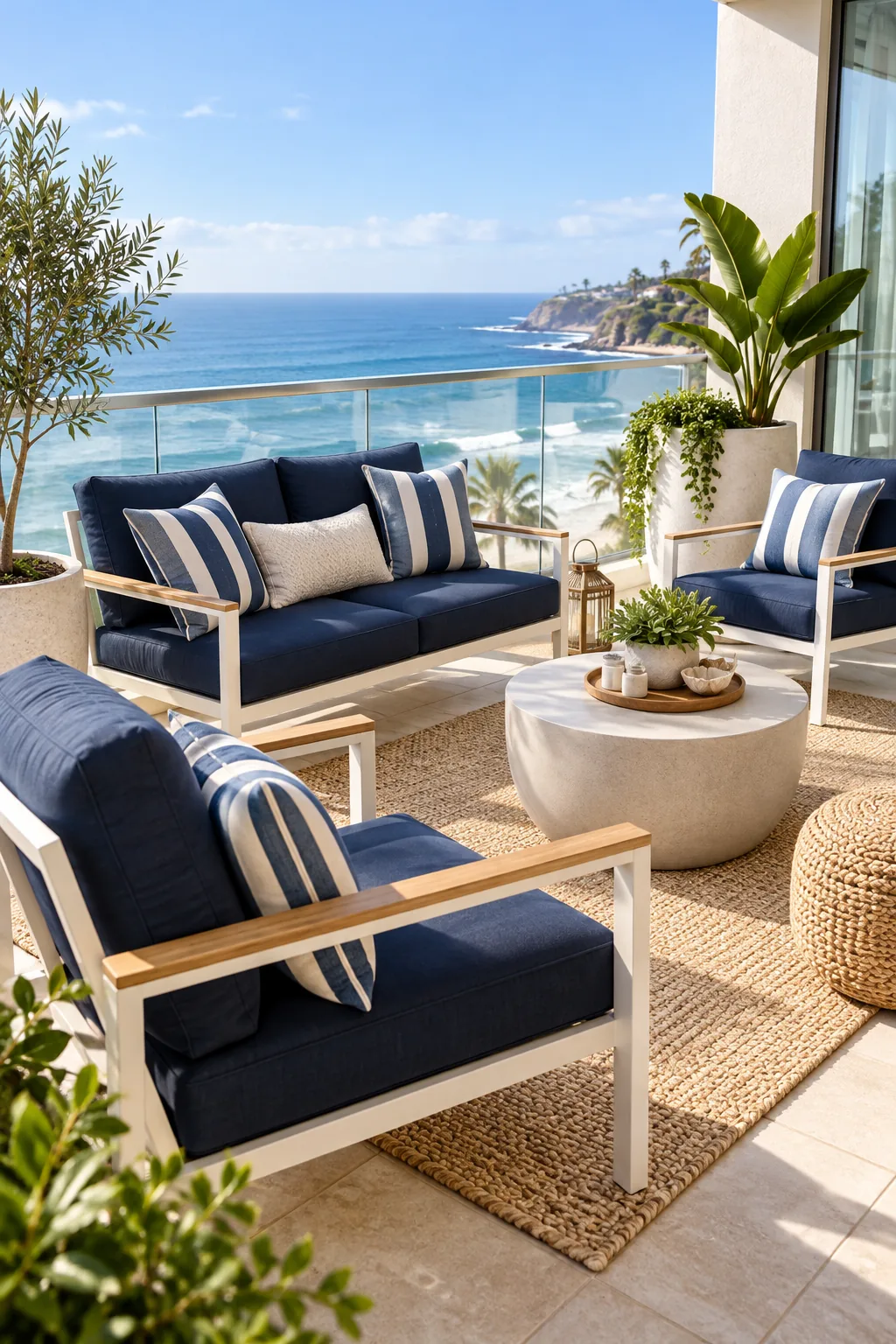
Three Distinct Outdoor Furniture Looks
Discover how the same spatial planning rules apply beautifully across completely different patio styles.
Modern Coastal Balcony: Crisp white frames and navy upholstery create a nautical feel; copy this look by pairing sleek metal lines with warm teak armrests.
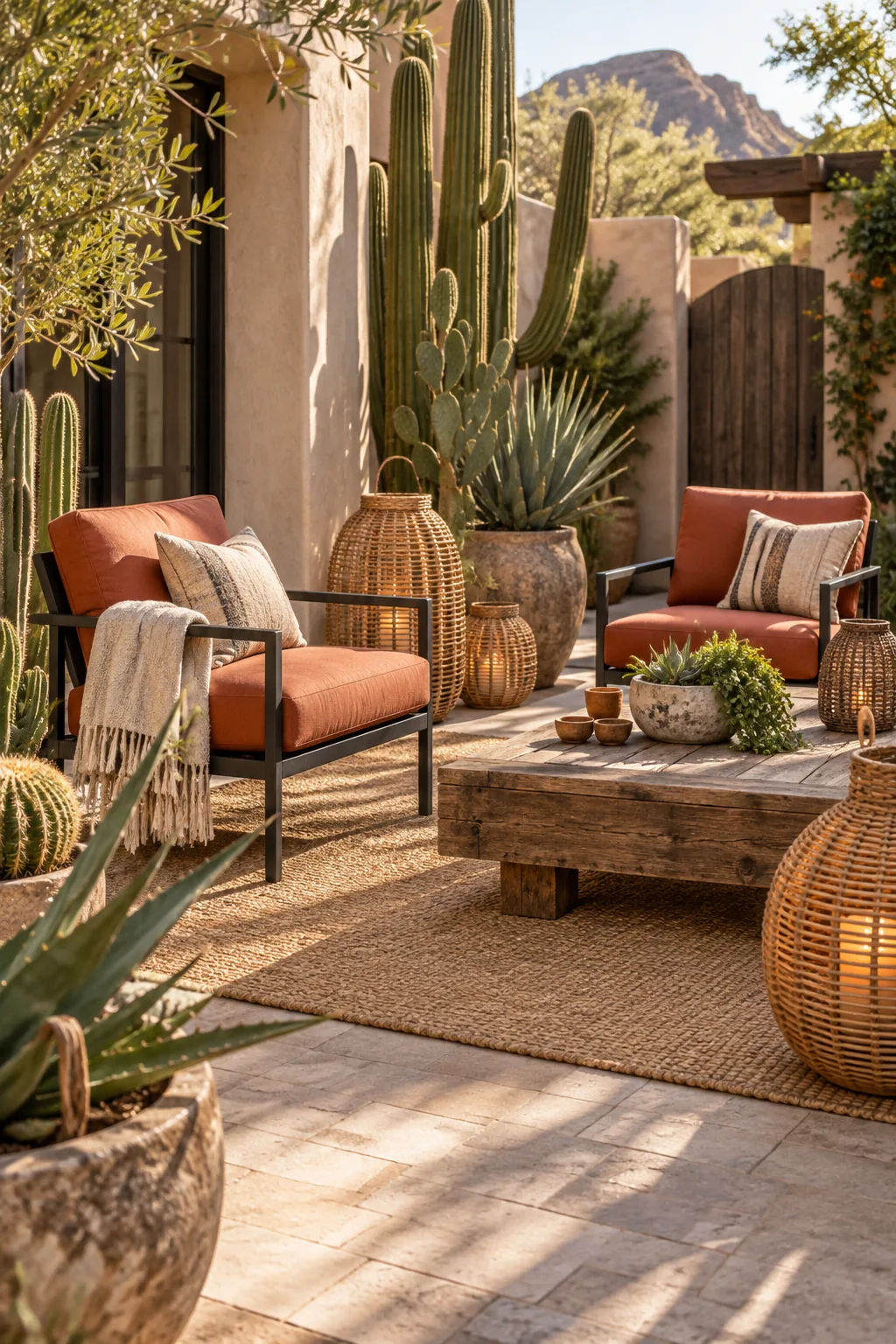
Desert Boho Courtyard: Earthy terracotta fabrics warm up stark black metal; introduce natural texture through oversized woven lanterns and low-profile wooden coffee tables.
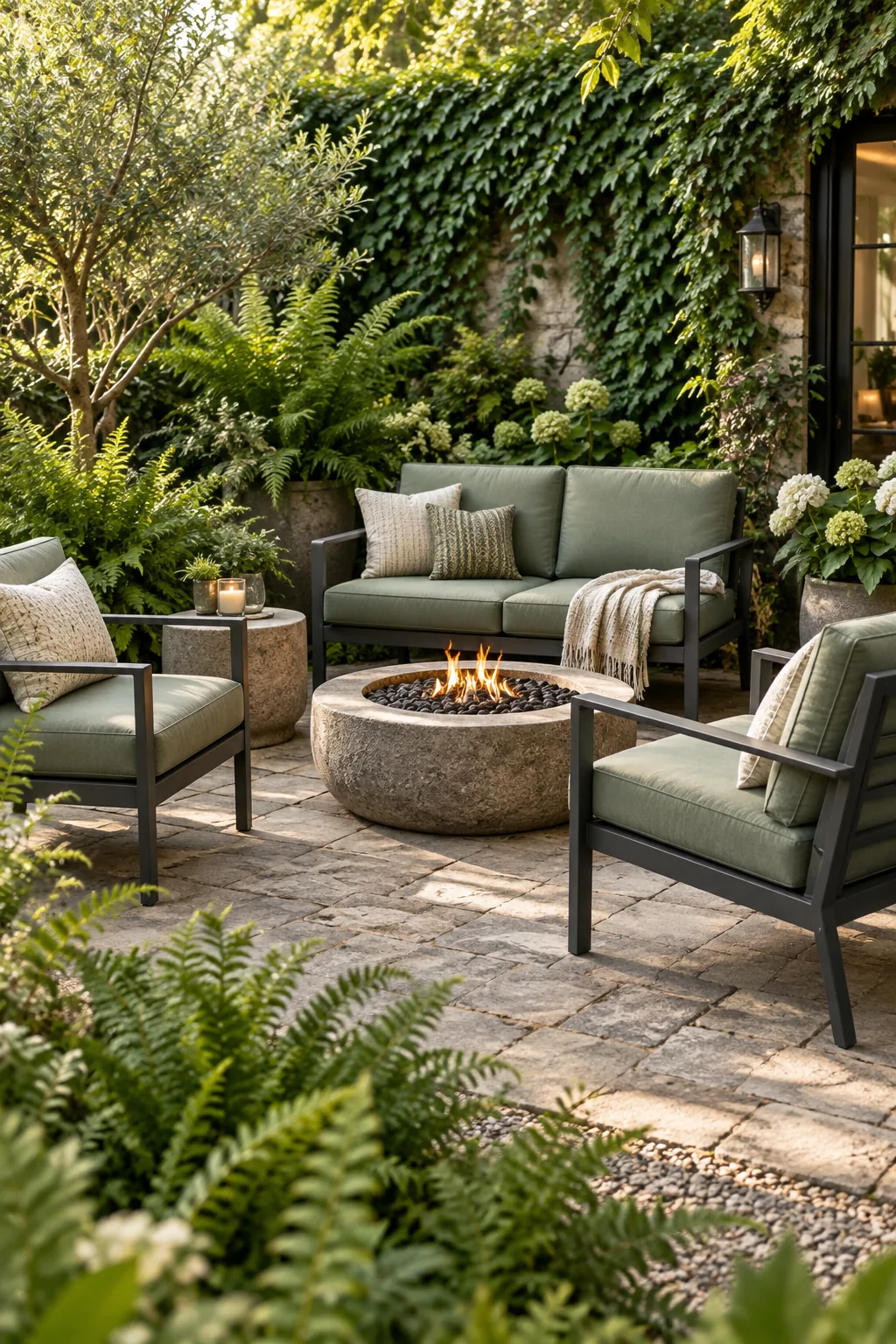
Lush Garden Terrace: Deep charcoal frames recede into the background while sage cushions blend with the foliage; use this palette to make a small garden feel larger.
Investing in Fade-Proof Fabrics
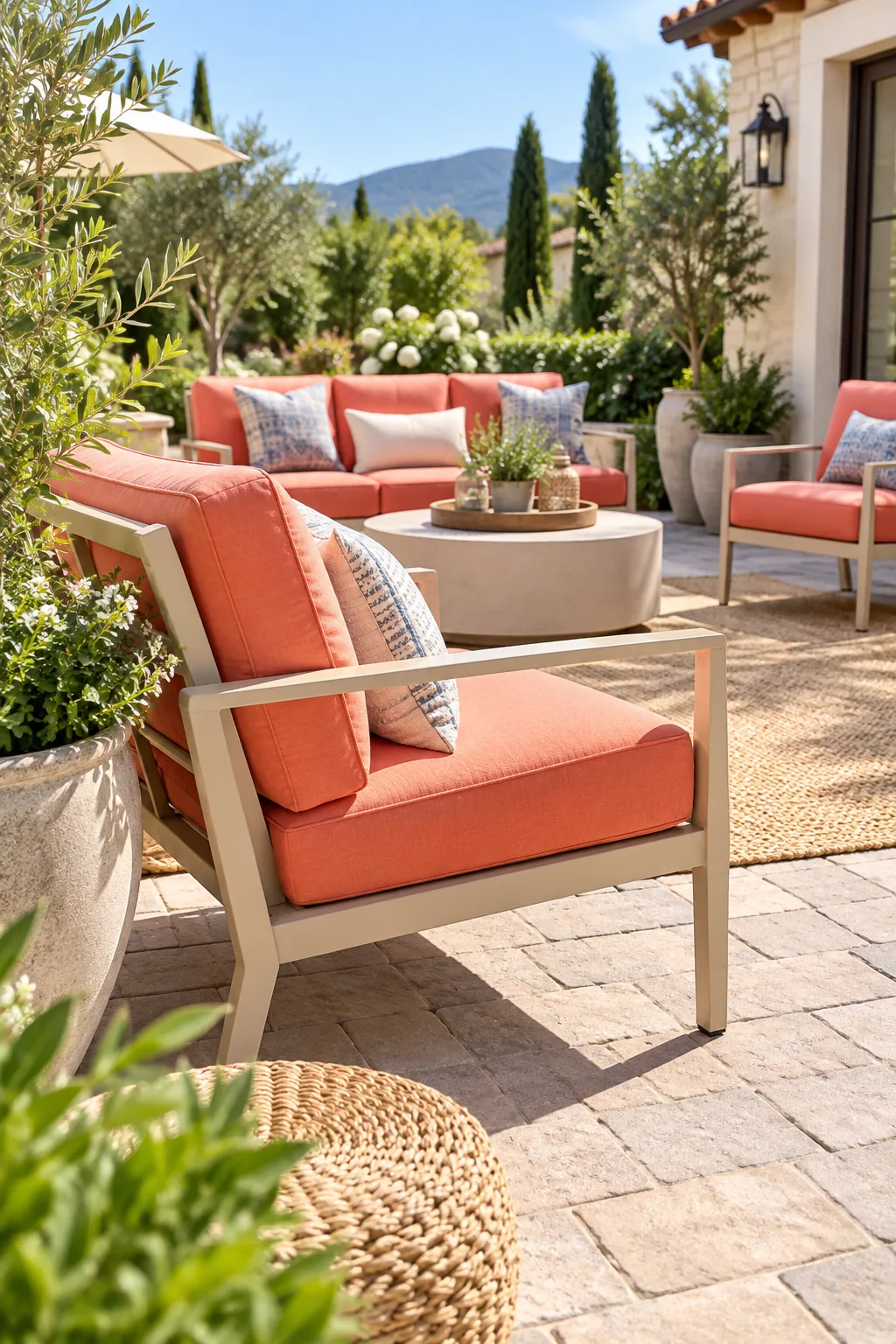
Direct sunlight quickly bleaches standard polyester, so you should always specify solution-dyed acrylic where the color pigment is mixed directly into the liquid polymer. This manufacturing process ensures the fabric remains vibrant, fade-proof, and easy to clean with bleach if necessary.
Even the most carefully planned layout cannot save a patio if your materials degrade rapidly after just one season in the harsh sun.